




Abstract
C5–C7 light hydrocarbons are important components in petroleum and are extensively employed as an auxiliary approach in petroleum research. Consensus on the mechanism of light hydrocarbon generation has not yet been achieved. In this study, 20 gas samples were collected from the western part and northern margin of the Qaidam Basin. The molecular and carbon isotopic compositions of C1–C3 gaseous hydrocarbons and C5–C7 light hydrocarbons, as well as the carbon isotopes of oils were analyzed. Based on the relationships between carbon isotopes (13C) of individual light hydrocarbons and calculated vitrinite reflectance, it suggests that organic matters play a fundamental role in the carbon isotopes of light hydrocarbons, and maturity mainly affects the carbon isotopes of n-alkanes in light hydrocarbons. In addition, carbon isotopic differences between n-, iso- and cyclo-alkanes indicate that light hydrocarbons with different structures are produced from various biological precursors. Besides, carbon isotopes of individual light hydrocarbons can be used to estimate the δ13Ckerogen and distinguish cracked gas. On the one hand, small isotope fractionation between iso-alkanes and kerogen is observed. Average carbon isotopic compositions of iso-pentane (i-C5), 2-methylpentane (2-MC5) and 3-methylpentane (3-MC5) can provide a similar δ13Ckerogen with actual values. On the other hand, the carbon isotopic difference between 2-MC5 and n-C6 generally decreases with increasing maturity. Combined with the parameter (2-MC6 + 3-MC6)/n-C6, kerogen-cracked gases are characterized by high δ13C2MC5–δ13CnC6 and low (2-MC6 + 3-MC6)/n-C6 values, whereas oil-cracked gases exhibit the opposite features.
Introduction
C5–C7 light hydrocarbons are important compounds in petroleum and are widely used to investigate source type, maturity, secondary alteration and petroleum accumulation (Dai, 1992; Hu et al., 2007, 2017; Huang et al., 2022; Jarvie, 2001; Mango, 1997; Thompson, 1987). Several studies were conducted to explore the mechanism of light hydrocarbon generation, but no consensus has been achieved. Two major mechanisms are proposed to explain the formation of C5–C7 light hydrocarbons. The first mechanism is thermal cracking. Most researchers believe that light hydrocarbons are intermediate products of kerogen and long-chain alkanes during the thermal cracking process (Philippi, 1975; Thompson, 1979; Tissot and Welte, 1978). Hunt (1984) proposed that light hydrocarbons are mainly formed in the middle-late stage of oil generation and that the generation of light hydrocarbons with different structures is dominated by different maturities. Chung et al. (1998) analyzed the carbon isotopes of several light hydrocarbons in crude oil and revealed that iso- and cyclo-alkanes in C7 light hydrocarbons are primarily produced from different bio-precursors. The second mechanism is catalytic cracking. According to the invariance ratio of iso-alkanes in C7 light hydrocarbons, Mango et al. (1994) proposed that C7 light hydrocarbons are mainly generated through the catalytic reaction. Besides, Whiticar and Snowdon (1999) analyzed the stable carbon isotopes of C5–C8 individual light hydrocarbons in oil, and observed clear carbon isotopic relationships between individual light hydrocarbons. They interpreted this phenomenon as a steady-state kinetic relationship for the generation of light hydrocarbons.
Previous researchers mainly employed crude oil to study the mechanism of light hydrocarbon generation. However, light hydrocarbons will inevitably evaporate during oil sampling and storage, the original molecular and carbon isotopic compositions of light hydrocarbons could be affected. Cañipa-Morales et al. (2003) conducted evaporation experiments of light hydrocarbons and claimed that even minor evaporation losses of light hydrocarbon affects some parameters. Natural gas stored in steel cylinders has no evaporation of light hydrocarbons during sampling and storage. Therefore, natural gas can provide the original molecular and carbon isotopic compositions of C5–C7 light hydrocarbons.
Due to the low volumes of light hydrocarbons in natural gas, previous research mainly obtained the carbon isotopes of several light hydrocarbons with relatively high contents. The solid phase microextraction (SPME) method is an effective sample preparation technique for enriching trace hydrocarbons in natural gas (Li et al., 2014). This enrichment process has little effect on carbon isotopic fractionation, which is very helpful to analyze trace hydrocarbons in gas and oil (Chen et al., 2021; Li et al., 2014; Skarpeli-Liati et al., 2010). Thus, combining SPME technique with gas chromatography–isotope ratio mass spectrometry, more carbon isotopes of individual light hydrocarbons in natural gas can be obtained.
Light hydrocarbons are usually distributed in both the gaseous and liquid phases. Several studies have shown that the separation of the gas and oil mainly affects the aromatic contents while having little effect on most light hydrocarbons (Carpentier et al., 1996; Mango et al., 1997). In addition, this separation has limited effects on the stable carbon isotopes of individual light hydrocarbons (Bjorøy et al., 1994; Carpentier et al., 1996).
Natural gases in the western part and northern margin of the Qaidam Basin are generated from different organic matters and maturities, which is adapted to study the mechanism of light hydrocarbon generation. We collected gas samples from these two areas (Figure 1(c)) and analyzed the composition and carbon isotopes of C1–C3 gaseous hydrocarbons and C5–C7 light hydrocarbons, as well as the carbon isotopes of the whole oil in the same wells and fields. The main objective of this research is to further investigate the mechanism of light hydrocarbon generation.
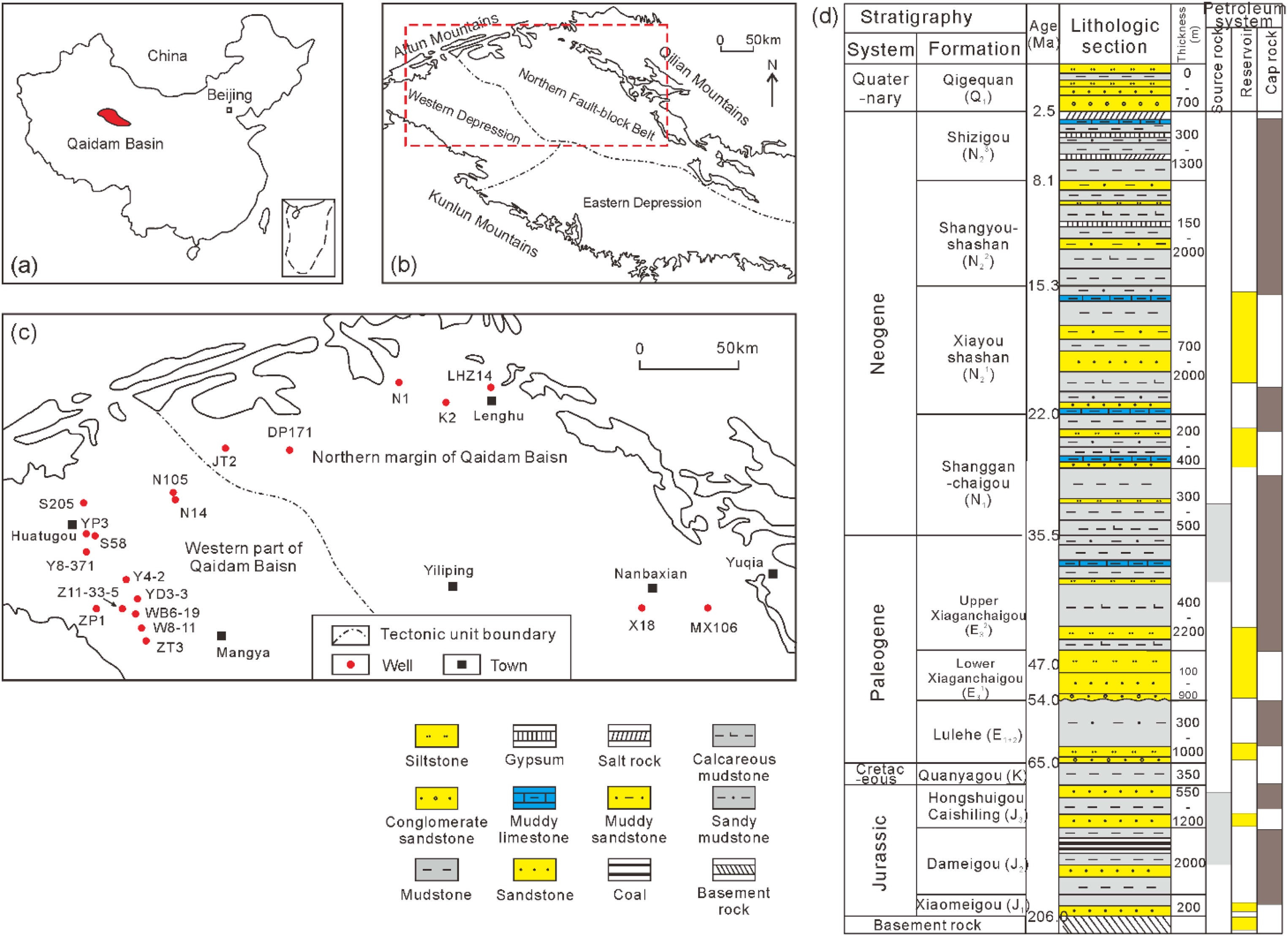
Major tectonic units and sample sites in the Qaidam Basin. (a) Location of the Qaidam Basin (red area) in China. (b) An overview map of the major tectonic units in the Qaidam Basin. The red dotted rectangle indicates the sampling areas. (c) Distribution of sample sites (red dots) in the western part and northern margin of the Qaidam Basin. The dotted black line roughly denotes the dividing line between the western part and northern margin of the Qaidam Basin. (d) A generalized stratigraphic column of the Qaidam Basin.
Geological setting
The Qaidam Basin is an intracontinental basin located in northwest China (Figure 1(a)). The basin is surrounded by the Qilian Mountains, Altun Mountains and Kunlun Mountains (Figure 1(b)). The depositions in the Qaidam Basin are mainly composed of the Mesozoic and Cenozoic lacustrine sediments (Fu et al., 2016). The basin is divided into three tectonic units, namely the northern fault-block belt, the western depression and the eastern depression. Three tectonic units share different oil and gas systems. In this study, gases were collected from the western part and northern margin of the Qaidam Basin (Figure 1(c)).
In the western part of the Qaidam Basin, the source rocks are mainly saline lacustrine mudstones and calcareous mudstones in the Lower Xiaganchaigou–Shangganchaigou Formations (Figure 1(d)). Major source rocks exhibit four features. First, total organic carbon (TOC) contents range from 0.1 to 2.7%, with an average of 0.4%; second, kerogen types are mainly type II and some type III; third, vitrinite reflectance (Ro) values vary from 0.40% to 1.30%; fourth, the carbon isotopes of source rocks are from −26.0% to −24.0‰ (Hanson et al., 2001; Huang et al., 1991; Zhang et al., 2017; Zhu et al., 2005). In the northern margin of the Qaidam Basin, source rocks are mainly lacustrine mudstones and swamp coals in the Xiaomeigou and Dameigou Formations (Figure 1(d)). The major source rocks display four characteristics: TOC varies from 1.5% to 3.5%; kerogen types are predominantly type III and some type II; Ro values are generally higher than 1.40%; the carbon isotopes of source rocks are from −31.4‰ to −21.5‰ (Fu et al., 2010; Ritts et al., 1999; Zhai et al., 2013; Zhang et al., 2005).
Samples and analytical methods
Samples
Twenty gas samples were collected from the major oil and gas fields in the Qaidam Basin. Among these samples, thirteen are from the western part and seven are from the northern margin of the basin (Figure 1(c)). During gas collection, the gas samples were stored in the steel cylinders by directly connecting the cylinder and wellheads. Besides, forty oil and condensate samples were collected at the same wells and fields. In this study, all geochemical analyses were conducted at the Key Laboratory of Petroleum Resources Research, Chinese Academy of Sciences.
Molecular and stable carbon isotopic compositions of natural gas
The procedure to obtain the molecular and stable carbon isotopic compositions of gas follows Chen et al. (2020). The C1–C4 hydrocarbons were examined by using a gas chromatograph (GC). The non-hydrocarbons (N2 and CO2) were analyzed on a high-resolution mass spectrometer (MS). The analytical uncertainty is less than 2.0%. Stable carbon isotopes of C1–C3 hydrocarbons were analyzed by a Finnigan Mat Delta Plus isotope ratio MS. An internal standard (methane, δ13C = −28.5 ± 0.5‰) was used to monitor instrumental stability. The carbon isotopic composition is expressed as δ13C values relative to the international standard Vienna Pee Dee Belemnite (VPDB; Hut, 1987). Analytical precision is better than 0.5‰.
Molecular and stable carbon isotopic compositions of C5–C7 light hydrocarbons
The compositions of light hydrocarbons were analyzed on a GC coupled with a MS. The GC was equipped with a 100-m fused silica column (0.25 mm i.d., 0.5 μm film). The oven temperature settings were as follows: begin at 40 °C (holding 15 minutes), then increase to 120 °C (holding 20 minutes) at a rate of 2 °C/min and finally to 290 °C (holding 20 minutes) at a rate of 12 °C/min. After the measurement, compounds were determined based on the NIST library database, and relative contents were calculated through peak area integral on the gas chromatograms.
Stable carbon isotopes of C5–C7 individual light hydrocarbons were measured by a combined approach composed of the SPME technique coupled to gas chromatography–isotope ratio mass spectrometry (GC–IRMS). The accuracy of the SPME–GC–IRMS method was examined by Li et al. (2014), who compared the δ13C values measured from GC–IRMS and SPME–GC–IRMS. Their analyzed results show that the difference between these two methods is less than 0.3‰, and the precision is better than 0.5‰ for SPME–GC–IRMS method. In this research, SPME equipped with CAR/DVB/PDMS fiber was employed to enrich C5–C7 light hydrocarbons. First, natural gases were transferred from steel cylinders to glass containers (500 ml) by using the drainage method. Second, the SPME needle was inserted into the glass container, extending fibers to enrich the C5–C7 light hydrocarbons at 25 °C for 20 minutes. Third, the SPME needle was injected into the GC to release adsorbed hydrocarbons. The oven temperature settings and GC column were the same as in the experiment analyzing the composition of light hydrocarbons. An interlaboratory recognized CO2 standard was analyzed to conduct GC–IRMS calibration and δ13C value calculation, as described by Li et al. (2014). The analyzed CO2 standard is in agreement with the recommended values, and the deviation is less than 0.3‰ for the measured values.
Stable carbon isotopes of oil
Stable carbon isotopes of oil were examined on a Thermo Fisher MAT 253 stable isotope ratio MS. IAEA-600 caffeine (Coplen, 2011) was used as the reference material to evaluate the stability of instrument. The analytical uncertainty is less than 0.3‰.
Results
Chemical compositions and stable carbon isotopes of C1–C4 gaseous hydrocarbons
Natural gases from the western part and northern margin of the Qaidam Basin display clear differences in chemical composition and stable carbon isotopes (Table S1). Gases from the western part of the Qaidam Basin show three features. First, gases are dominated by wet gases with an average dryness coefficient (C1/C1–5) of 0.89. Second, stable carbon isotopes of methane (δ13C1) range from −42.1 to −28.6‰, with an average of −37.7‰. Third, the stable carbon isotopes of ethane (δ13C2) vary from −29.8 to −20.5‰, with an average of −26.0‰. Gases from the northern margin of the Qaidam Basin exhibit three characteristics. Gases are dominated by dry gases with an average dryness coefficient of 0.94; the δ13C1 values range from −46.8 to −23.1‰, with an average of −31.9‰; the δ13C2 values vary from −30.5 to −20.8‰, with an average of −23.7‰.
Chemical compositions and stable carbon isotopes of C5–C7 light hydrocarbons
Chemical compositions and stable carbon isotopes of light hydrocarbons show an obvious difference between the western part and the northern margin of the Qaidam Basin (Table S1). Light hydrocarbons from the western part of the Qaidam Basin are characterized by high contents of n-alkanes (Figure 2(a)) and high 13C values of methylcyclohexane (MCC6) (Figure 3). While light hydrocarbons from the northern margin of the Qaidam Basin are featured by high contents of MCC6, benzene and toluene (Figure 2(b)) and low 13CMCC6 values (Figure 3).
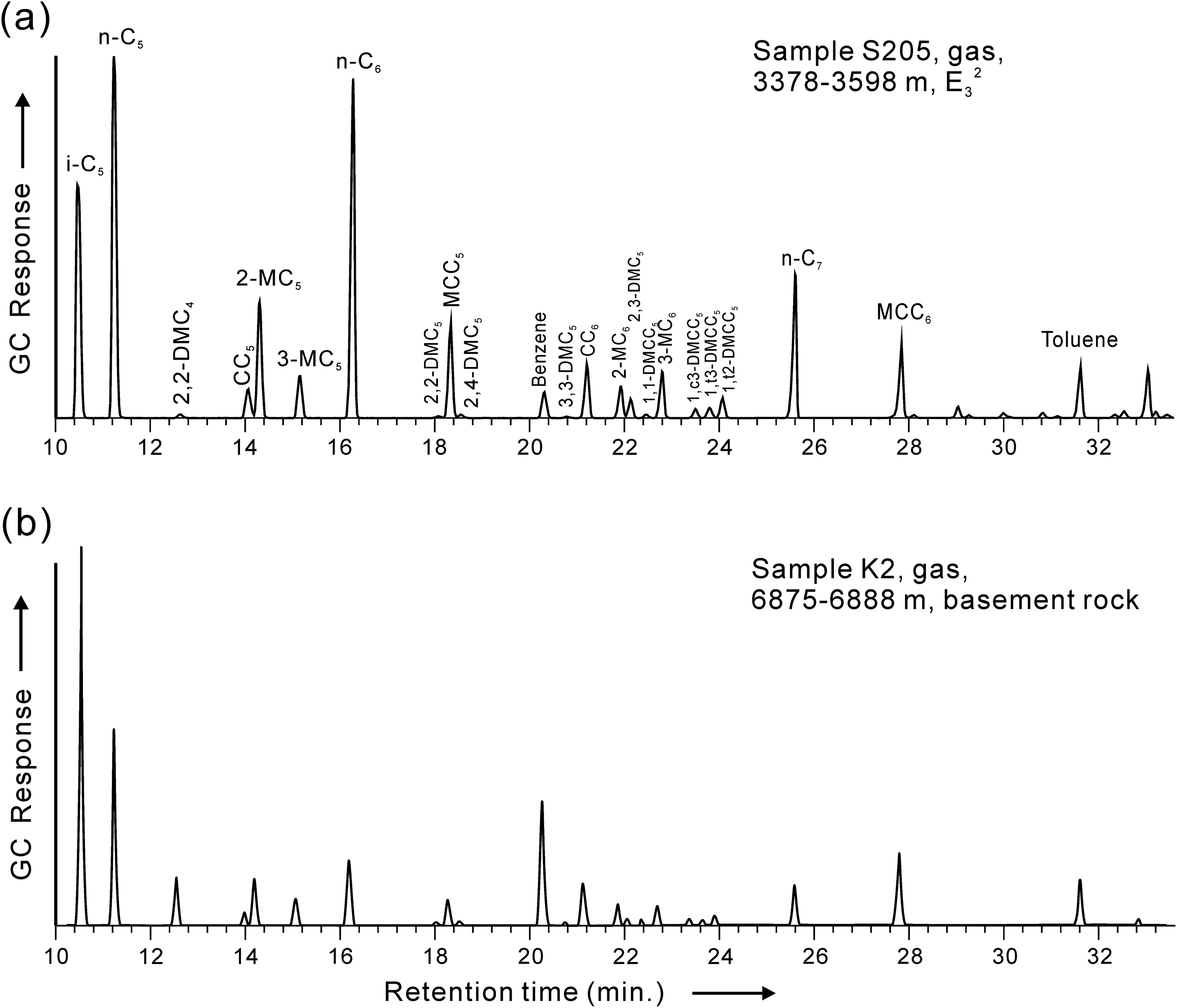
Representative gas chromatograms of light hydrocarbons (C5–C7) in natural gas. (a) Sample S205 from the Shizigou oil field in the western part of the Qaidam Basin. (b) Sample K2 from the Kunteyibei field in the northern margin of the Qaidam Basin. 2,2-DMC4 = 2,2-dimethylbutane; 2-MC5 = 2-methylpentane; 2,2-DMC5 = 2,2-dimethylpentane; MCC5 = methylcyclopentane; 2-MC6 = 2-methylhexane; CC6 = cyclohexane; 1,1-DMCC5 = 1,1-dimethylcyclopentane; 1,c3-DMCC5 = cis-1,3-dimethylcyclopentane; 1,t3-DMCC5 = trans-1,3-Dimethylcyclopentane; MCC6 = Methylcyclohexane.
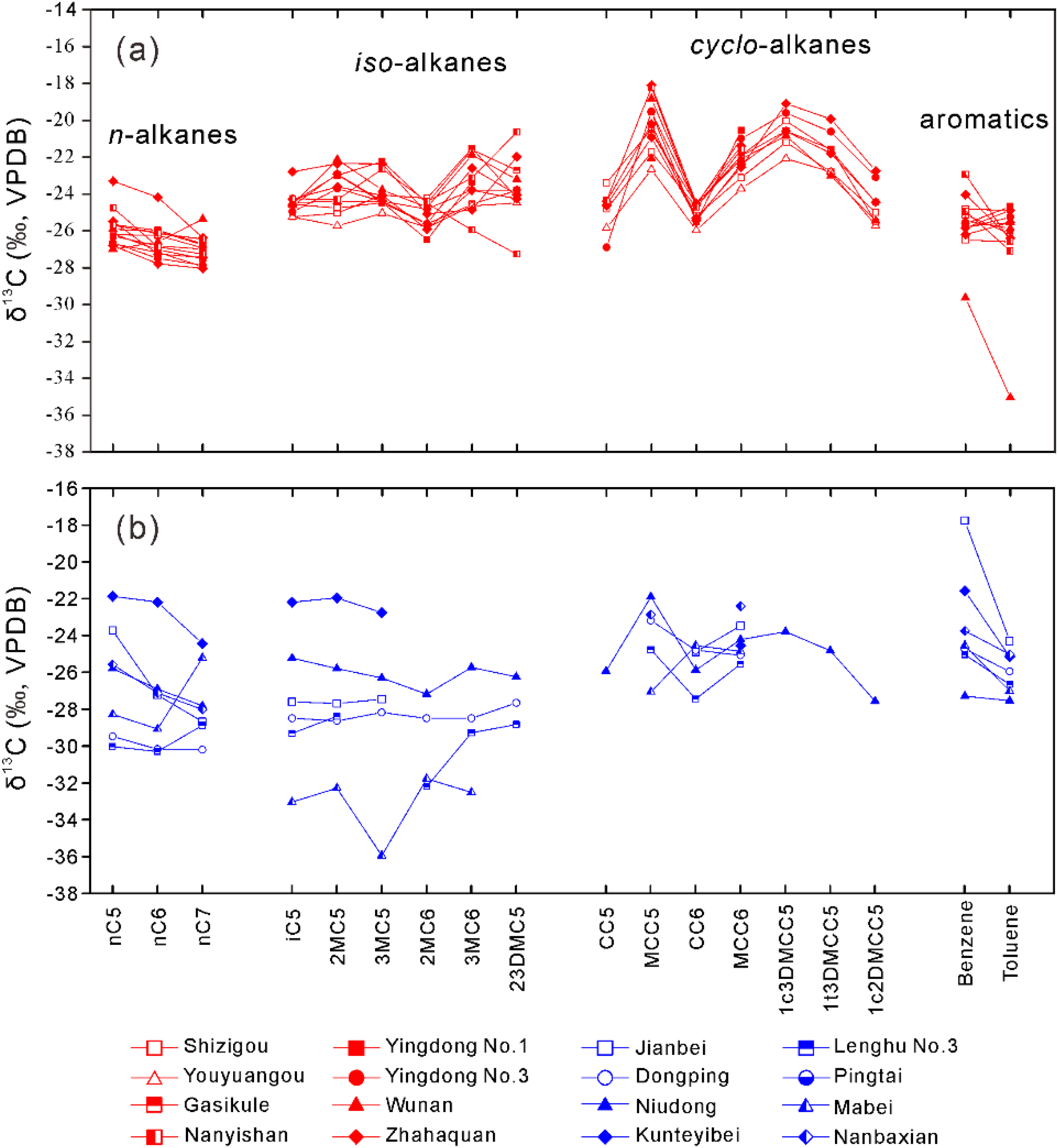
Stable carbon isotopes of individual light hydrocarbons in the C5–C7 range. (a) Isotope data from the western part of the Qaidam Basin (red symbols). (b) Isotope data from the northern margin of the Qaidam Basin (blue symbols).
Stable carbon isotopes of oils
The stable carbon isotopes of oils in the western Qaidam Basin differ significantly from those in the northern margin of the Qaidam Basin. In the western part of the Qaidam Basin the stable carbon isotopes of oils and condensates range from −26.6 to −24.9‰, with an average of −25.5‰ (Table S2). Previous studies observed that oils in the western Qaidam Basin display heavy carbon isotopes, roughly from −26.0 to −24.0‰ (Zhang et al., 2017; Zhu et al., 2005). They suggest that oils in the western Qaidam Basin were generated from sapropelic organic matters with anomalous 13C-enriched isotopic composition in saline lacustrine environment (Huang et al., 1991; Zhang et al., 2017; Zhu et al., 2005). In the northern margin of the Qaidam Basin, the stable carbon isotopes of oils and condensates vary from −32.1 to −23.9‰, with an average of −28.4‰ (Table S2). Previous studies suggest that the 13C values of oils generated from sapropelic organic matters usually range from −32.0 to −30.0‰ (Hu et al., 2005b) and those produced from humic organic matters vary from −27.0 to −25.0‰ (Chen et al., 1998). Based on this criteria, oils and condensates from Dongping and Lenghu No. 3 fields were mainly formed from sapropelic kerogen; oil from Kunteyibei field was mainly from humic kerogen; oil samples in other fields from northern margin of Qaidam are mixtures generated from sapropelic and humic kerogens.
Discussion
Genetic type of natural gas
C1–C3 and C5–C7 fractions in natural gas may be dominated by different sources (Chen et al., 2020; Dai, 1993). Thus it is necessary to investigate the genetic type of gas based on these two fractions before studying the genesis of light hydrocarbons. Take gases from the western part of the Qaidam Basin as an example. On the one hand, the diagram of δ13C1 versus C1/(C2 + C3) is widely used to identify the genetic type of natural gas (Bernard et al., 1978; Whiticar, 1999). Figure 4(a) shows that most gases in the western Qaidam plot in the thermogenic area, with a trend to type-II kerogen, and several gases fall within and near the region of type-III kerogen. This result reveals that most gases in the western part of the Qaidam were generated from sapropelic organic matters, whereas some gases from the Zhahaquan and Nanyishan fields were produced from humic organic matters. On the other hand, the relative contents of n-C7, MCC6 and DMCC5 can be used to study the genetic type of natural gas (Dai, 1993; Hu and Zhang, 2011; Leythaeuser et al., 1979; Wu et al., 2015; Yu et al., 2014). Figure 4(b) exhibits that almost all samples (except one from Nanyishan field) from the western part of the Qaidam distribute in the area of sapropelic type, indicating that light hydrocarbons in the western part of Qaidam were mainly generated from sapropelic organic matters. Based on the genetic types determined by the C1–C3 and C7 fractions, a comprehensive result is achieved. Most gas samples from the western part of the Qaidam are oil-type gas, while several from Zhahaquan and Nanyishan fields are mixed gas (Table S1). Using the same method at the northern margin of the Qaidam Basin, it suggests that gas samples from the Niudong and Kunteyibei fields are coal-formed gas and one sample in Lenghu No.3 field is oil-type gas, and other samples are mixed gas (Table S1).
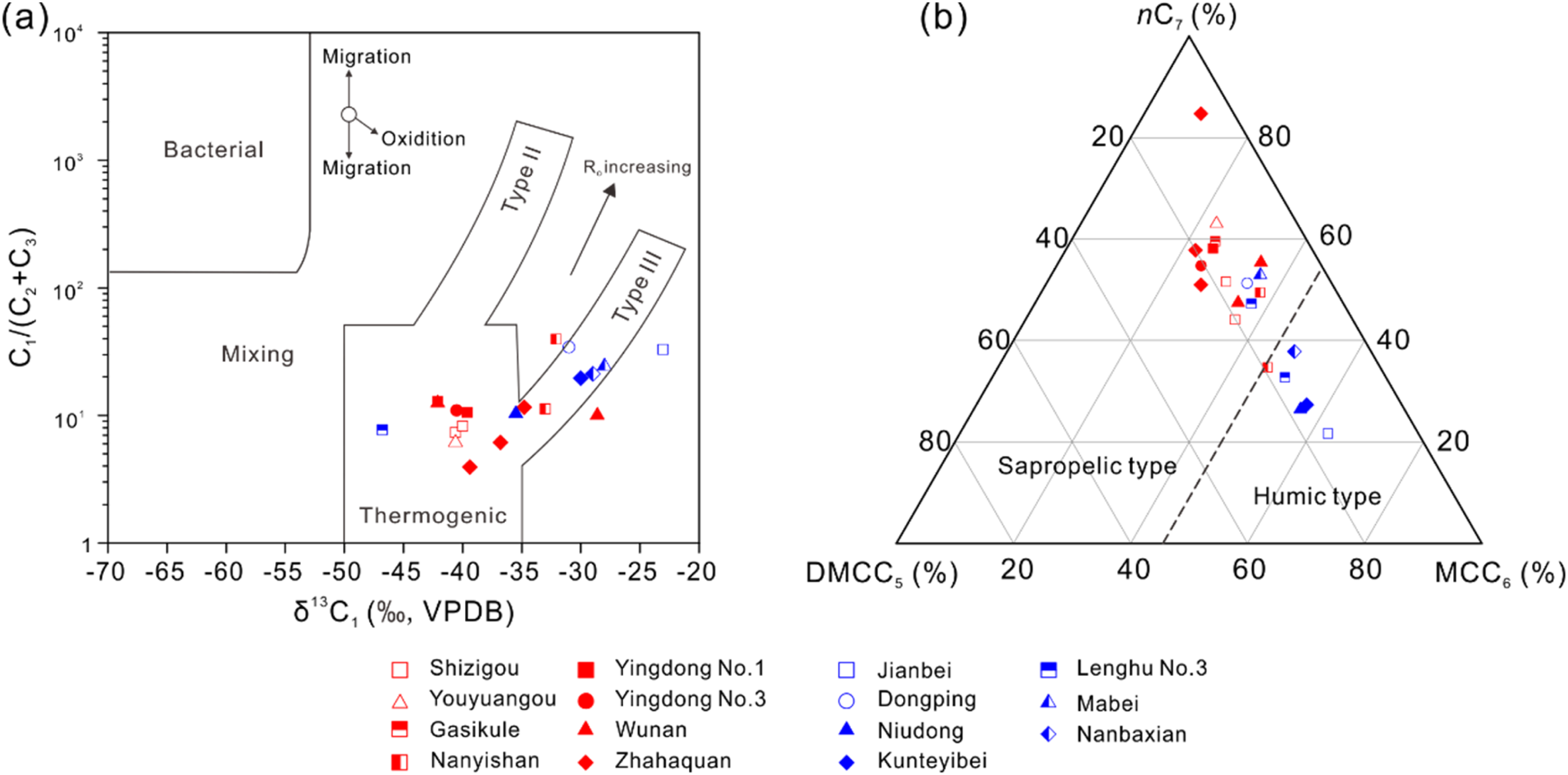
(a) A cross-plot of δ13C1 versus C1/(C2 + C3) and (b) a ternary diagram of the C7 series of natural gases from the western part (red symbols) and northern margin (blue symbols) of the Qaidam Basin.
Because C1–C3 and C7 fractions in mixed gas are dominated by different sources, while the two fractions in oil-type gas are produced from similar sources, as is coal-formed gas. To minimize the influence of mixing, the geochemistry data of oil-type gas and coal-formed gas is utilized to investigate the mechanism of light hydrocarbon generation.
Carbon isotopic variation of individual light hydrocarbons
It is widely accepted that the source plays a fundamental role in the carbon isotopic compositions of light hydrocarbons. However, the maturity effect on the carbon isotopic variation of individual light hydrocarbons is under debate. Based on the results of pyrolysis experiments, researchers proposed that carbon isotopes of n-alkanes, iso-alkanes and aromatics in light hydrocarbons become heavier with increasing maturity (Rooney et al., 1998; Xie et al., 2019). While crude oil analysis suggested that mainly carbon isotopes of n-alkanes in light hydrocarbons become heavier with increasing maturity (Chung et al., 1998; Li et al., 2017). Thus the influence effects on carbon isotopic compositions of light hydrocarbons need to be further studied. In this research, the carbon isotopes of C5–C6 light hydrocarbons are used due to no co-elution in these light hydrocarbons. Figure 5 shows the relationships between the 13C of representative n-alkanes, iso-alkanes, cyclo-alkanes and aromatics in light hydrocarbons and calculated vitrinite reflectance (Ro, %). The effects of source and maturity on the carbon isotopes of light hydrocarbons are investigated.
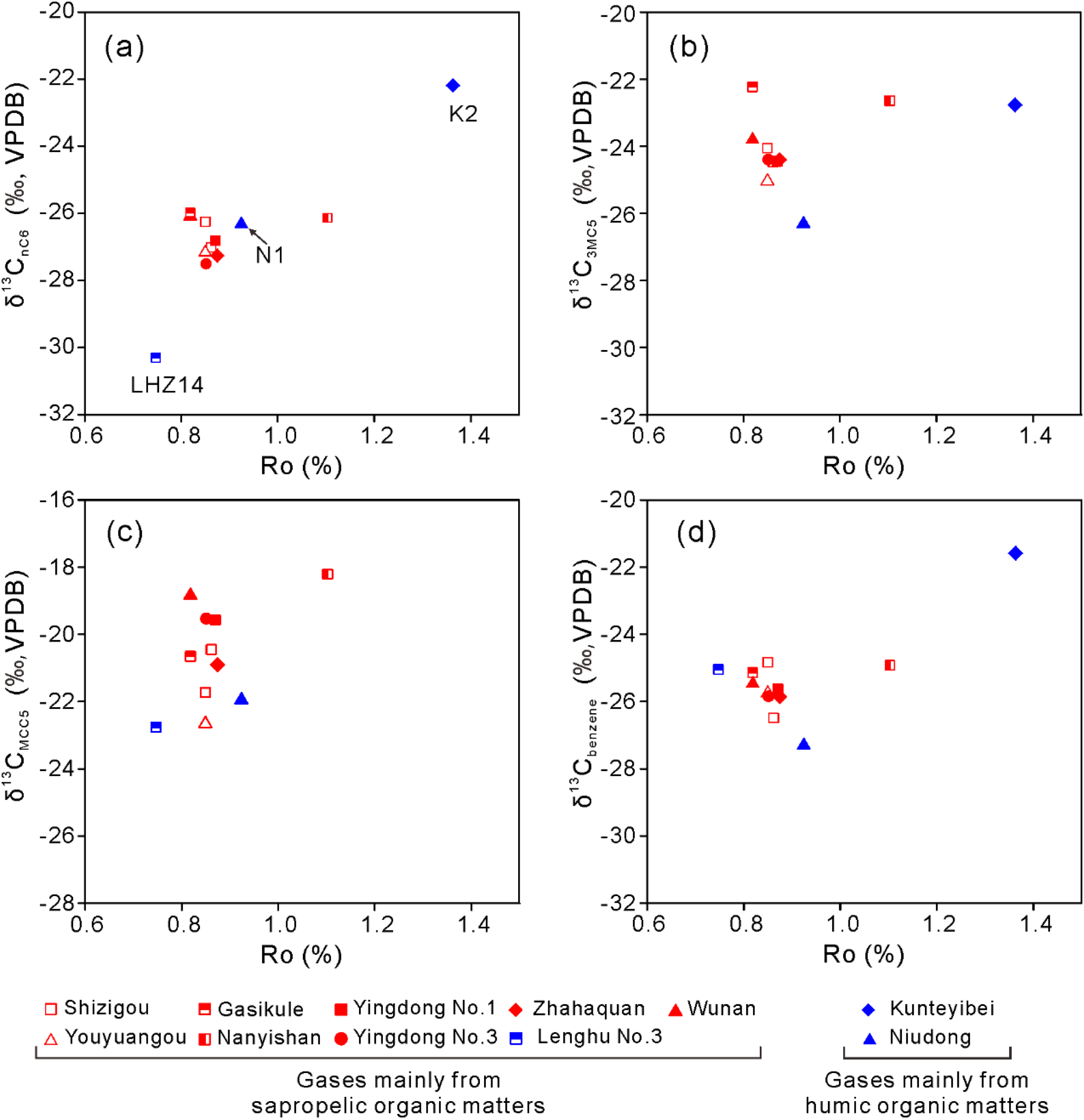
Diagrams of (a) δ13CnC6, (b) δ13C3MC5, (c) δ13CMCC5 and (d) δ13CBenzene versus Ro for oil-type and coal-formed gases.
Figure 5(a) to (d) displays that the δ13C values of n-C6, 2-methylpentane (2-MC5), MCC5 and benzene in Dongping, Lenghu No.3 and Mabei fields are smaller than those in other fields. Previous studies have found that the carbon isotopes of source rocks in Dongping, Lenghu No.3 and Mabei fields are lighter than those in other fields (Fu et al., 2010; Zhai et al., 2013; Zhang et al., 2017). Therefore, it indicates that the source plays an important role in the carbon isotopic compositions of individual light hydrocarbons.
Figure 5 shows different correlations between Ro and individual light hydrocarbons. First, Figure 5(a) exhibits a positive correlation between 13CnC6 and Ro, indicating that the carbon isotopes of n-C6 increase with increasing maturity. This phenomenon is commonly interpreted as the preferential breakage of the 12C–12C bond under thermal stress (Xie et al., 2019). Figure 6(a) displays that the contents of n-C6 decrease gradually with increasing maturity, which implies the cracking of n-C6 as maturity increases. During this process, the preferential breakage of 12C–12C bond causes the enrichment of 13C in the remaining n-C6 compounds. Second, Figure 5(b) shows no clear relationship between Ro and δ13C2MC5, indicating that thermal maturity has little effect on δ13C2MC5. In addition, previous studies discovered that the carbon isotopes of pristane and phytane changed little with increasing maturity (Pagani et al., 2000), suggesting that maturity has little effect on the carbon isotopes of iso-alkanes. Third, Figure 5(c) displays no clear relationship between Ro and δ13CMCC5, which reveals that maturity has little effect on δ13CMCC5, consistent with previous studies (Chung et al., 1998; Clayton and Bjorøy, 1994). Fourth, Figures 5(d) and 6(b) exhibit the relationships between isotopes and contents of benzene and Ro, respectively. The maturity effect on the benzene from oil-type gas is unclear, but it may be notable for that from coal-formed gas. K2 and N1 gases were produced from similar sources, but the former shows a higher content and heavier carbon isotope of benzene than the latter. Considering the maturity difference between K2 and N1 gases, it is inferred that increasing maturity may affect the generation of aromatics in light hydrocarbons. A study by Le Métayer et al. (2014) revealed that isotopically lighter methyl groups would be removed with increasing maturity. This demethylation process may result in the isotopic enrichment of benzene. In all, it is inferred that the source plays a fundamental role in the carbon isotopes of light hydrocarbons, and maturity mainly affects the carbon isotopes of n-alkanes and probably aromatics in light hydrocarbons.
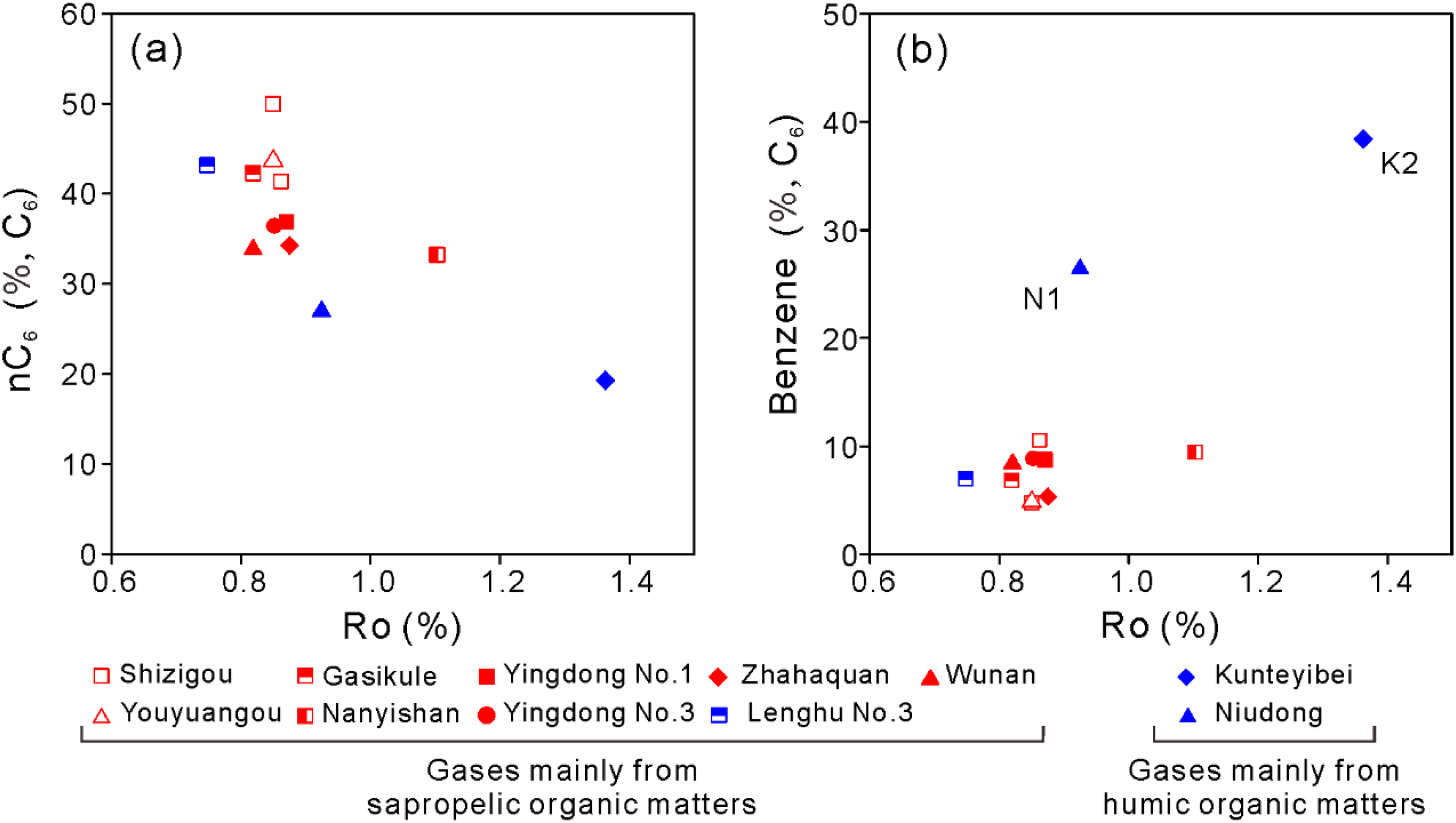
Diagrams of (a) n-C6 and (b) benzene contents versus Ro for oil-type and coal-formed gases.
The genetic relationships between individual light hydrocarbons can be obtained by comparing their carbon isotopic differences. Previous studies have demonstrated that the carbon isotopes of hydrocarbons generated from common sources are similar, even within 2.0‰ at a high maturity stage (Clayton, 1991; Peters et al., 2005). Figure 7(a) shows that the isotopic difference between δ13C2MC5 and δ13CnC6 is up to 4.0‰. This large isotopic difference suggests that 2-MC5 and n-C6 are generated from different biological precursors. The isotopic difference between δ13CMCC5 and δ13CnC6 is up to 8.0‰ (Figure 7(b)), and that between δ13CMCC5 and δ13C2MC5 is up to 4.0‰ (Figure 7(c)), indicating that they are produced from different precursors. Besides, Figure 7(d) exhibits a small difference between δ13C2MC5 and δ13C3MC5, within 2.0‰, which suggests that the methylpentanes are formed from a common source. In general, n-, iso- and cyclo-alkanes and aromatics in light hydrocarbons are most likely generated from different biological precursors.
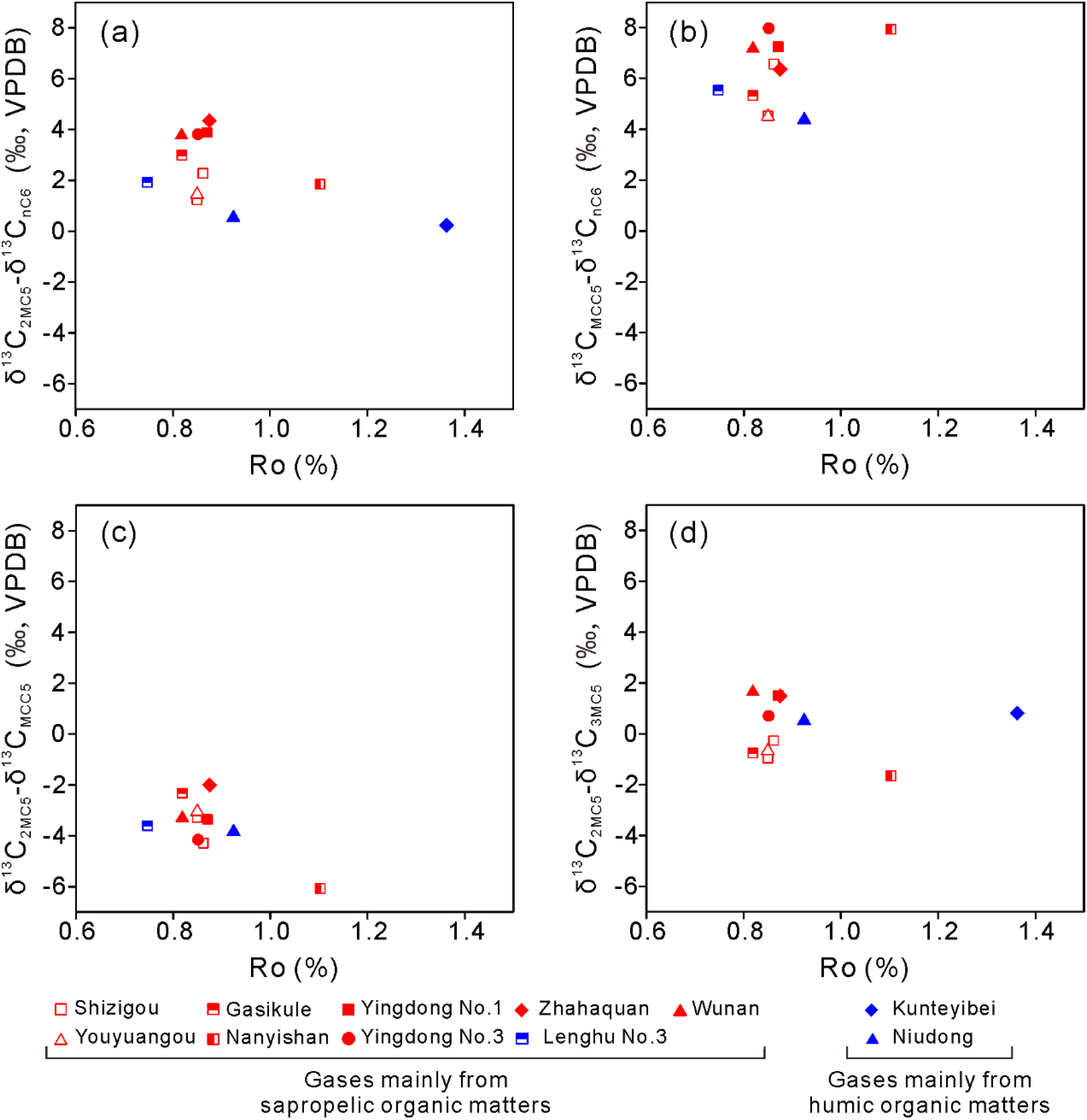
Diagrams of (a) δ13C2MC5–δ13CnC6, (b) δ13CMCC5–δ13CnC6, (c) δ13C2MC5–δ13CMCC5 and (d) δ13C2MC5–δ13CnC6 versus Ro for oil-type and coal-formed gases.
Figure 8 shows the carbon isotope fractionation of individual light hydrocarbons relative to their sources. The carbon isotope of source rock is calculated according to the observations that the δ13C of whole oil is usually 1–2‰ smaller than the source (Clayton, 1991; Peters et al., 2005). It can be seen that δ13C values of individual light hydrocarbons are lighter and heavier than their kerogens. According to the normal kinetic isotope effect, the δ13C of hydrocarbon products is usually lighter than their kerogens. Previous research suggests that the heavier δ13C of hydrocarbon than the δ13C of kerogen may be caused by four factors, such as increasing maturity (Bjorøy et al., 1994; Clayton and Bjorøy, 1994), biodegradation (George et al., 2002), thermochemical sulfate reduction (TSR) (Xiao et al., 2011) and various sources of light hydrocarbons (Chung et al., 1998; Whiticar, 1999). The maturity, biodegradation and TSR have limited effect on heavy δ13C. First, according to the discussion above, maturity mainly affects the δ13C of n-alkanes and probably aromatics in light hydrocarbons. The heavy δ13C values of iso-alkanes and cyclo-alkanes are insensitive to maturity. Second, based on the diagram of δ13C1 and C1/(C2 + C3) (Figure 4(a)), biodegradation has no effect on these samples. Third, gases that suffer TSR are usually characterized by high K1 values (Song et al., 2017; Xiao et al., 2011) and the presence of H2S (Dai et al., 2018; Zhu et al., 2006). Gas samples in this study show normal K1 values and no H2S. Therefore, maturity, biodegradation and TSR effects have limited influence on the heavy δ13C of iso-alkanes and cyclo-alkanes in light hydrocarbons.
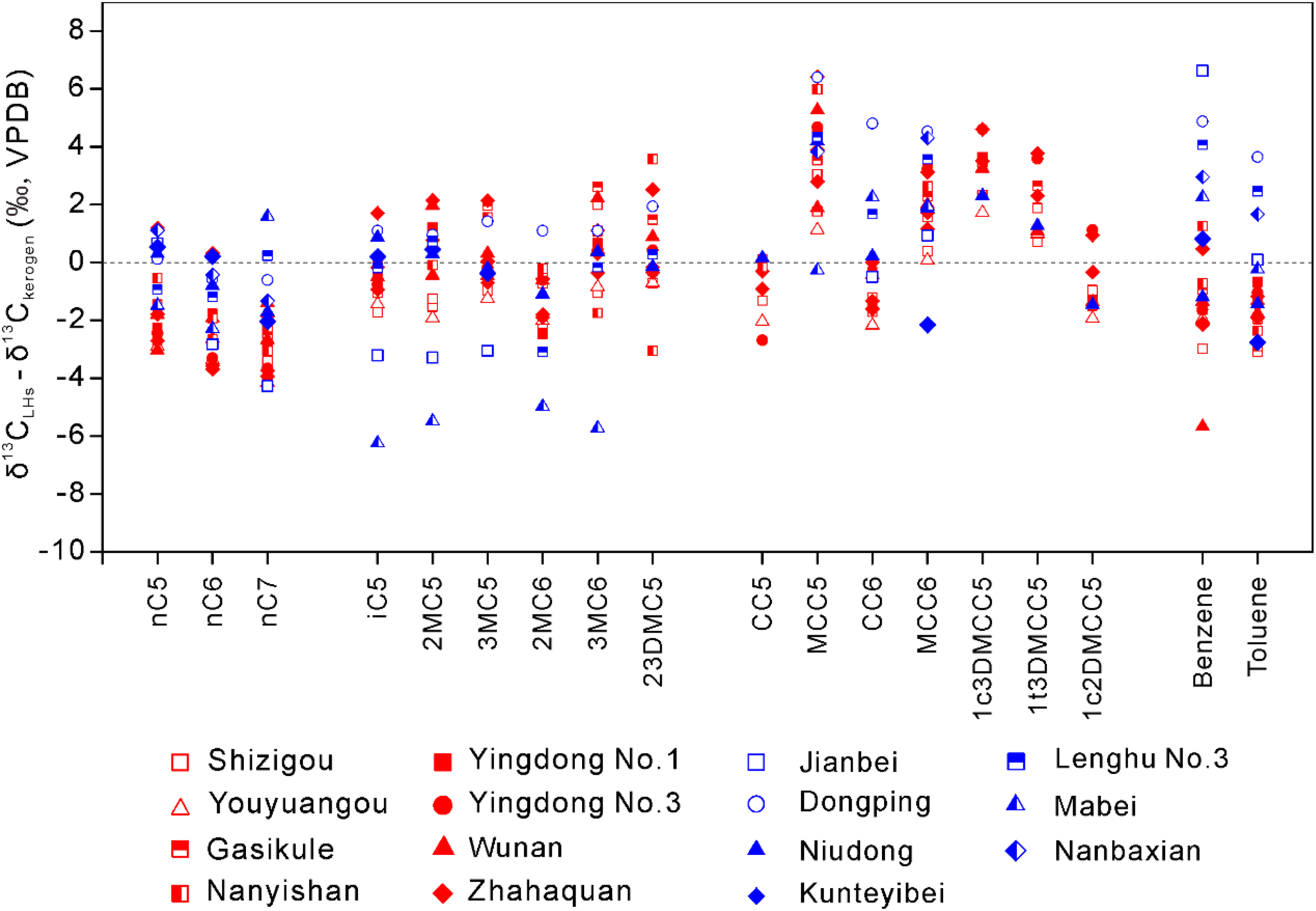
Carbon isotope fractionation of individual light hydrocarbons relative to their sources. The carbon isotopes of the source are calculated by the data of δ13Coil which is usually smaller 1–2‰ than the δ13Ckerogen based on previous studies (Clayton, 1991; Peters et al., 2005).
Previous research suggests that the individual light hydrocarbons are generated from different bio-precursors (Chung et al., 1998; Whiticar, 1999). Several studies on carbon isotopes of sedimentary organic matters reveal that organic mixtures in sediments display a large isotopic range, while TOC displays a small range of 13C value (Freeman et al., 1990; Zhang et al., 2020). Integrating these studies, we inferred that the several light hydrocarbons with heavy carbon isotopes are most likely generated from various organic matters.
Application of carbon isotope of individual light hydrocarbon
Estimated δ13C value of original kerogen
Previous studies mainly introduced two ways to estimate the δ13C value of original kerogen by using δ13C values of natural gas (Chung et al., 1988) and whole oil (Clayton, 1991). In this study, we find that the δ13C of iso-alkanes in light hydrocarbons exhibits little carbon isotope fractionation relative to their kerogens, while n-alkanes, cyclo-alkanes and aromatics display large fractionation. The δ13C of iso-alkanes in light hydrocarbons may be useful to estimate the δ13Ckerogen. Among iso-alkanes, iso-pentane (i-C5), 2-MC5 and 3-methylpentane (3-MC5) were selected to estimate the δ13Ckerogen, because of their relatively high contents and good separation in GC analysis. The estimated δ13Ckerogen values are listed in Table S1 and are in the range of actual values (Fu et al., 2010; Zhai et al., 2013; Zhang et al., 2017).
Gas mixing can be studied by comparing the estimated δ13C of kerogen from natural gas and light hydrocarbons. The isotope of kerogen can be calculated by natural gas mainly through the kinetic model (Liu and Tang, 1998; Tang et al., 2000) and Rayleigh distillation theory (Chung et al., 1988; Clayton, 1991). The kinetic model quantifies the kinetic isotope effect for every reaction and considering gas source differences, and this model is followed by many researchers (Fu et al., 2019; Xiong et al., 2004; Zhang et al., 2019). Because of the lack of methane generation yield in previous thermal simulation experiments of kerogen from the western part of the Qaidam Basin, it is unfortunately impossible to estimate the δ13C of kerogen by using the kinetic model. Rayleigh model simplifies gas generation from the kerogen with several assumptions, and is utilized to estimate the δ13C of kerogen in this study. The calculated results are shown in Table S1. The estimated δ13Ckerogen values are obviously higher than the actual values, which is mostly attributed to the lack of δ13C4 data. Ignoring this, we just examine the correlation between δ13Ckerogen values estimated from natural gas and light hydrocarbons. Figure 9 shows a positive correlation between two estimated δ13Ckerogen values for oil-type and coal-formed gases. But for mixed gases, for example, samples DP171, MX106 and W8-11, they distribute away from this positive relationship. Besides, oil-type samples Y8-371 and YP3, also plot away from the positive relationship. This may be caused by the hydrocarbon mixing from different maturities (Wang et al., 2008; Zhang et al., 2008).
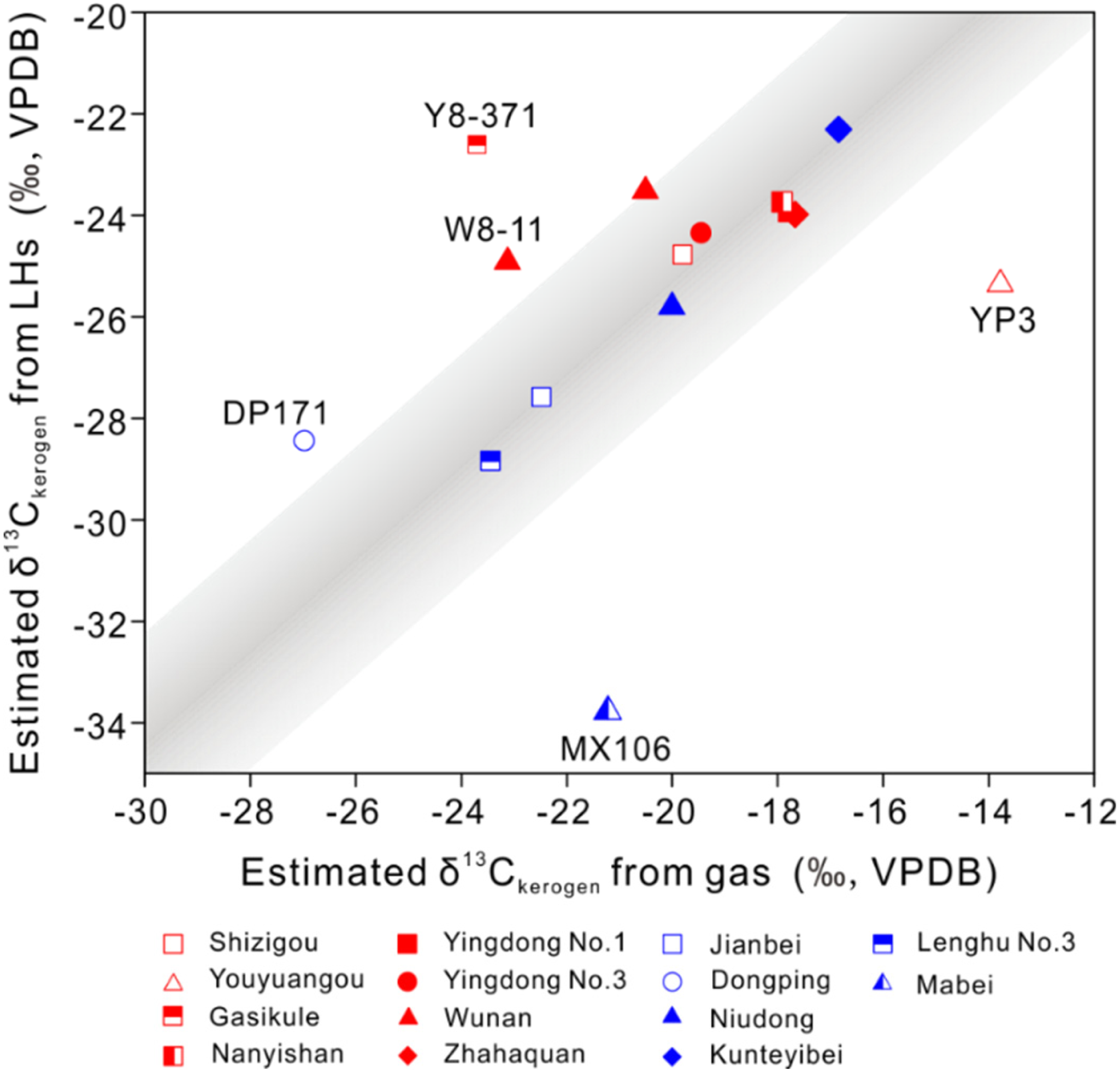
A cross-plot of estimated δ13Ckerogen obtained from light hydrocarbons versus δ13Ckerogen calculated from gas. The grey area denotes the supposed positive relationship between two estimated δ13Ckerogen values. The samples plotted in the grey area are oil-type and coal-formed gas, and the samples distributed outside the grey area are mainly mixed gas.
Identification of kerogen-cracked gas and oil-cracked gas
Identifying gas generated by the primary cracking of kerogen or secondary oil cracking is crucial in gas resource evaluation and exploration. Based on pyrolysis experiments, previous studies suggest that (2-MC6 + 3-MC6)/n-C6 is much greater for gas derived from secondary cracking of oil than for gas from primary cracking of kerogen (Hu et al., 2005a). As maturity increases, the n-alkanes become isotopically heavier, while the iso-alkanes remain nearly isotopically unchanged. The carbon isotopic difference between iso-alkanes and n-alkanes would decrease with increasing maturity. Figure 7(a) exhibits a roughly negative correlation between δ13C2MC5‒δ13CnC6 and Ro, indicating that δ13C2MC5‒δ13CnC6 decreases with increasing maturity. Figure 10 shows that samples with low (2-MC6 + 3-MC6)/n-C6 ratios (<0.5) are characterized by high δ13C2MC5–δ13CnC6 values (>1.0), while ones with high (2-MC6 + 3-MC6)/n-C6 ratios (>0.5) are featured by low δ13C2MC5–δ13CnC6 values (<1.0). Thus, gases generated by primary cracking of kerogen display higher δ13C2MC5–δ13CnC6 values than those generated by secondary cracking of oil.
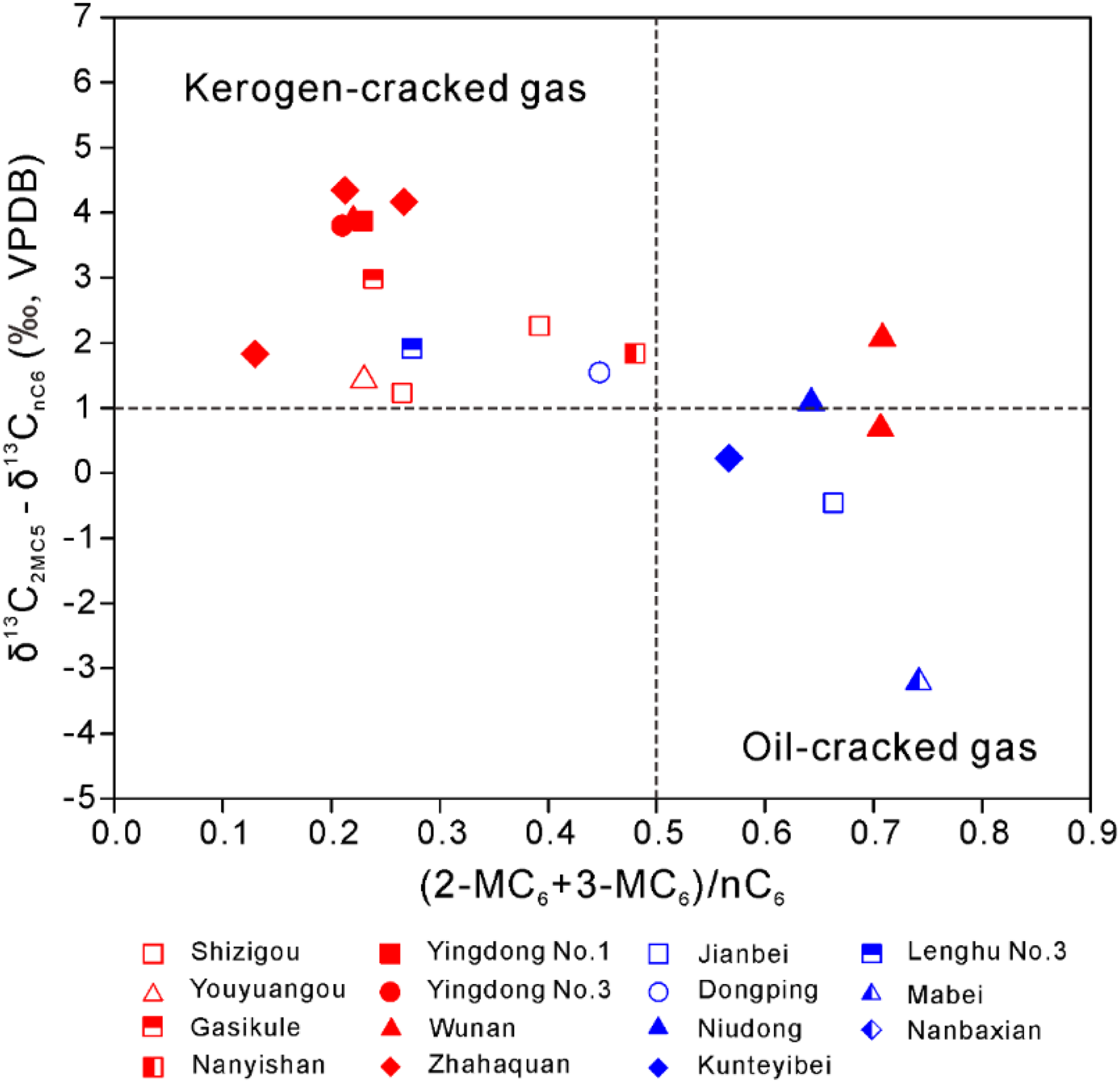
A cross-plot of (2MC6 + 3MC6)/n-C6 versus δ13C2MC5‒δ13CnC6.
Based on these two parameters, we inferred that most gases in the study area are kerogen-cracked gases, while several samples from Wunan, Dongping, Kunteyibei and Mabei fields are oil-cracked gases. These results are similar to those of previous studies (Fu et al., 2019; Guo et al., 2021; Tian et al., 2020). Furthermore, this new discrimination method is adapted to identify kerogen-cracked and oil-cracked gases in Tarim Basin. Previous studies show that natural gas from the Kela2 field is mainly kerogen-cracked gas (Qin et al., 2005). The δ13C2MC5‒δ13CnC6 value of one sample here is 1.4 (Huang et al., 2017), indicating kerogen-cracked gas. The natural gas from the Hetianhe gas field is mainly oil-cracked gas (Hu et al., 2005a). The δ13C2MC5‒δ13CnC6 values here range from −1.6 to −1.0 (Huang et al., 2017), which also implies oil-cracked gas.
Conclusions
In this study, we analyze the molecular and carbon isotopic compositions of C1–C3 gaseous hydrocarbons and C5–C7 light hydrocarbons, as well as the carbon isotopes of oils to investigate the genesis and application of light hydrocarbons. Based on the isotopic variation of individual light hydrocarbons, it indicates that the source plays a fundamental role in the carbon isotopes of light hydrocarbons, and maturity mainly affects the carbon isotopes of n-alkanes in light hydrocarbons. The n-, iso- and cyclo-alkanes and aromatics in light hydrocarbons are generated from different biological precursors. These results suggest that the generation of light hydrocarbons is mainly related to thermal cracking instead of catalytic reactions. Besides, iso-alkanes in light hydrocarbons can be used to estimate δ13Ckerogen, and kerogen-cracked gas shows higher δ13C2MC5‒δ13CnC6 than oil-cracked gas.
Some problems are still not well resolved in this study. One fundamental problem is the gap in this article to estimate the δ13C of kerogen by using kinetic model. Though previous studies had obtained methane generation yield in thermal simulation experiments from the northern margin of the Qaidam Basin (Fu et al., 2019), related parameters are not found in the western part of the Qaidam Basin. Therefore, the kinetic model is not utilized in this study. Conducting thermal simulation experiments to obtain gaseous hydrocarbon yields in western Qaidam will be helpful. Another problem is studying the isotopic variation of light hydrocarbons in coal-formed gas. Based on the systematic study of C1–C3 and C7 fractions, only two coal-formed gases are screened and utilized in the genesis of light hydrocarbons. Thus, more coal-type gases are required to get a better understanding of the mechanism of light hydrocarbon generation.
Supplemental Material
sj-xlsx-1-eea-10.1177_01445987221147370 - Supplemental material for Stable carbon isotopic compositions of individual light hydrocarbons in the C5–C7 range in natural gas from the Qaidam Basin, China
Supplemental material, sj-xlsx-1-eea-10.1177_01445987221147370 for Stable carbon isotopic compositions of individual light hydrocarbons in the C5–C7 range in natural gas from the Qaidam Basin, China by Chen Zhang, Daoyong Zhang, Wenli Ma, Kefei Chen, Jing Li and Shixin Zhou in Energy Exploration & Exploitation
Footnotes
Data availability statement
All geochemical and isotopic data are available in the supplementary information.
Declaration of conflicting interests
The author(s) declared no potential conflicts of interest with respect to the research, authorship, and/or publication of this article.
Funding
The author(s) disclosed receipt of the following financial support for the research, authorship, and/or publication of this article: This work was supported by research grants from the Key Laboratory of Petroleum Resources Research, Gansu Province (grant number SZDKFJJ20211001) and the National Nature Science Foundation of China (grant numbers 42172178, 41402128, 42272192).

Supplemental material
Supplemental material for this article is available online.
References
Supplementary Material
Please find the following supplemental material available below.
For Open Access articles published under a Creative Commons License, all supplemental material carries the same license as the article it is associated with.
For non-Open Access articles published, all supplemental material carries a non-exclusive license, and permission requests for re-use of supplemental material or any part of supplemental material shall be sent directly to the copyright owner as specified in the copyright notice associated with the article.
