




Abstract
Methylated 2-methyl-2-(4,8,12-trimethyltridecyl)chromans are salinity-sensitive biomarkers that have been detected in immature – early mature petroleum and sediments. In this study, the occurrence and distribution patterns of 2-methyl-2-(4,8,12-trimethyltridecyl)chromans were investigated in a set of lacustrine sediments from Nördlinger Ries of southern Germany and marine sediments from the South China Sea. Among all of the 2-methyl-2-(4,8,12-trimethyltridecyl)chroman isomers detected, 8-Me-2-methyl-2-(4,8,12-trimethyltridecyl)chroman presented with high abundance in sediments deposited in hypersaline environments, while absent in samples from normal marine environments. In contrast, 5,7,8-triMe-2-methyl-2-(4,8,12-trimethyltridecyl)chroman was more enriched in sediments from marine environments. This study also showed that the ratio of 5,7,8-triMe-/5,8-diMe-2-methyl-2-(4,8,12-trimethyltridecyl)chroman can be applied as a potential salinity indicator on account of a positive correlation with other 2-methyl-2-(4,8,12-trimethyltridecyl)chroman salinity indicators. This ratio can be an alternative indicator of paleosalinity when 8-Me-2-methyl-2-(4,8,12-trimethyltridecyl)chroman is absent or present in quite low abundance. The content of 2-methyl-2-(4,8,12-trimethyltridecyl)chroman isomers may be affected by freshwater supply and lithology. Molecular simulations showed that 5,8-diMe-2-methyl-2-(4,8,12-trimethyltridecyl)chroman has a higher thermal dynamic stability than 7,8-diMe-2-methyl-2-(4,8,12-trimethyltridecyl)chroman. Thus, the ratio of 5,8-diMe-2-methyl-2-(4,8,12-trimethyltridecyl)chroman/7,8-diMe-2-methyl-2-(4,8,12-trimethyltridecyl)chroman may be a potential maturity parameter for sediments at a low thermal mature stage.
Keywords
Introduction
Identification and occurrence of 2-methyl-2-(4,8,12-trimethyltridecyl)chromans
Mono-, di- and trimethyl-2-methyl-2-(4,8,12-trimethyltridecyl)chromans (2-methyl-2-(4,8,12-trimethyltridecyl)chromans (MTTCs)) have been widely detected in sediments and crude oils (Fan et al., 1988; Sheng et al., 1987; Sinninghe Damsté et al., 1987, 1989). Their chemical structures, origins and potential applications in geology and geochemistry were first studied in detail by Sinninghe Damsté et al. (1987). MTTCs can be considered structurally as similar to tocopherols which have suffered elimination of a hydroxyl group (at the C-6 position; Figure 1). These compounds can be detected in the aromatic fractions of source rock extracts and crude oils.
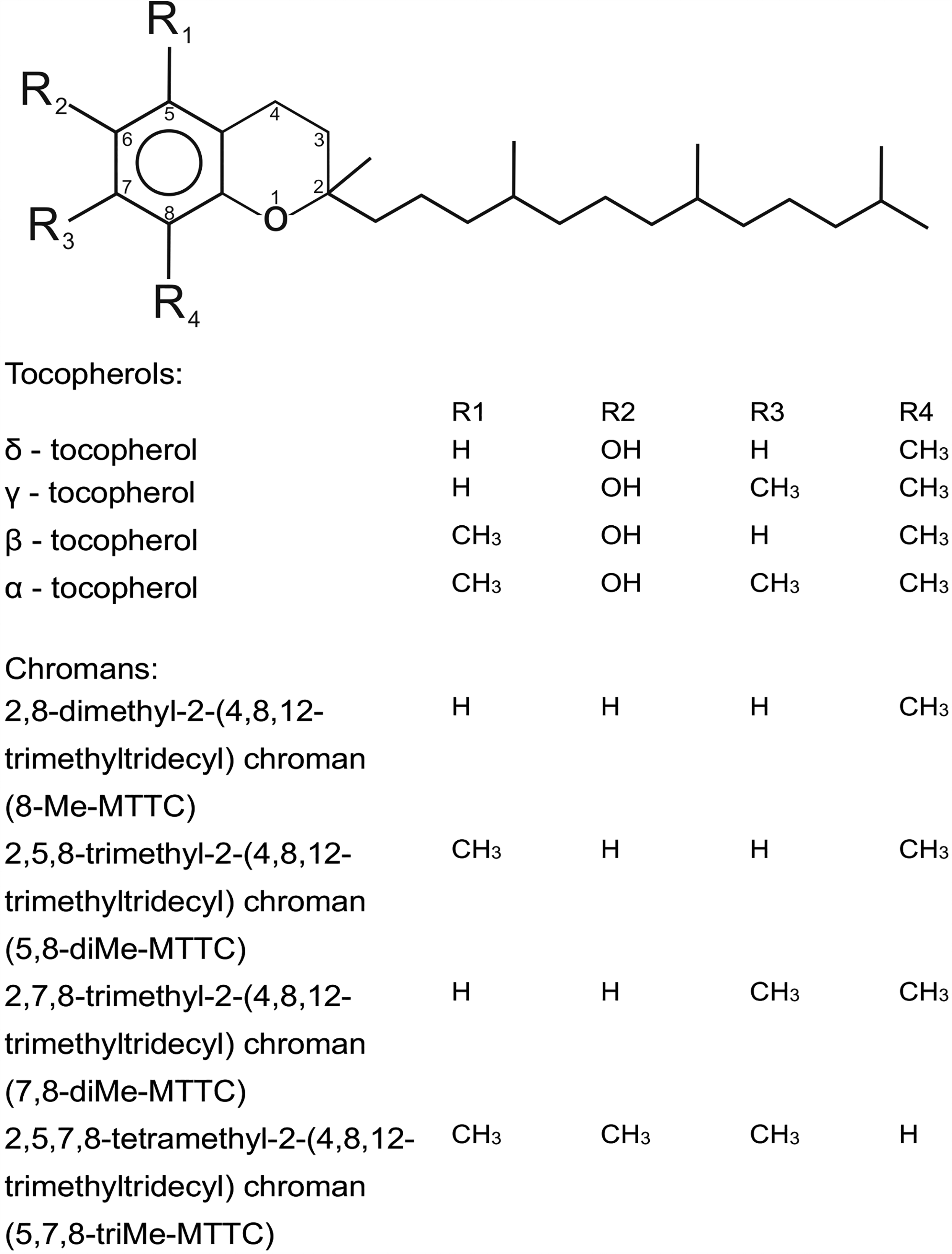
The chemical relationships between the structures of tocopherols and chromans.
In addition to their occurrence in Carboniferous, Silurian and Ordovician source rocks and crude oils, MTTCs have also been found in Early Cambrian to Quaternary source rocks (sediments) or crude oils (Jiang et al., 2019). MTTCs appear to be preserved mainly in organic sediments related to evaporation environments with high salinity. Due to their low thermal stabilities, they are possibly enriched in sedimentary organic matters and crude oils with low thermal maturities and have not yet been discovered in mature to highly mature oils or sediments.
The origin of MTTCs
Tocopherols occur widely in organisms and modern sediments and are similar to chromans in structure (Figure 1). However, tocopherols have been excluded as precursors of MTTCs because it seems improbable that only the phenolic hydroxyl group would be lost during diagenesis, without any other structural modifications (Sheng et al., 1987; Sinninghe Damsté et al., 1987). The origin of MTTCs thus remains a controversial issue. Some studies have suggested that MTTCs may be derived from bacterial biogenesis. Sinninghe Damsté et al. (1987) proposed that 8-Me-MTTC is likely to be a biosynthetic product of non-photosynthetic bacteria in deep bottom waters. The 8-Me-MTTC% (8-Me-MTTC/total MTTC × 100) showed a positive relationship with the gammacerane index and a negative relationship with pristane/phytane (Pr/Ph) ratios, demonstrating that MTTCs may be produced in the euxinic portions of water columns (Jiang et al., 2018a, 2018b). Van Kaam-Peters and Sinninghe Damsté (1997) assumed that MTTCs may be derived from photoautotrophs that assimilate carbon via the Calvin cycle. The carbon isotope values of MTTCs suggested a unified phytoplanktonic origin (Grice et al., 1998; Lu et al., 2007; Sinninghe Damsté et al., 1993; Zhang et al., 2012).
Li et al. (1995) synthesized MTTCs in the laboratory from alkylated phenols and phytol. Thus, an alternative formation pathway of MTTCs was postulated through condensation of alkylated phenols with phytol during diagenesis. It was also shown that MTTCs can produce pristane under certain conditions (Li et al., 1995). The covariance of triMe-MTTC abundance with perylene indicated that MTTCs may also be derived from higher plants (Tulipani et al., 2015). Pyrolysis with gas chromatography (GS) isotope-ratio mass spectrometry (MS) was used by Tulipani et al. (2013) to measure the δ13C of trimethylphenol and pristenes produced by pyrolysis of 5,7,8-trimethyl-MTTC and the results suggested that the formation of chromans may be related to side chain cracking of phytol.
Therefore, the generation mechanisms of the MTTCs found in sediments and petroleum are still under discussion.
The application of MTTCs in geochemistry
The MTTCs found in sediments have been widely applied in the study of depositional environments, even though their origins are still ambiguous. Previous observations showed that the 5,7,8-trimethyl-MTTC dominates and 8-methyl-MTTC is completely absent in non-hypersaline sediments, while 8-methyl-MTTC is enriched in sediments from hypersaline environments (Schwark et al., 1998; Sinninghe Damsté et al., 1987, 1993; Wang et al., 2011; Zhu et al., 2005). Some MTTC ratios, such as 5,7,8-triMe-/8-Me-MTTC, 5,7,8-triMe/total MTTC (MTTCI) and 5,7,8-triMe-/7,8-diMe-MTTC, have been applied as indicators of palaeohypersalinity (Sinninghe Damsté et al., 1987, 1993; Wang et al., 2011).
The diMe-MTTCs isomers could also have potential for assessing thermal maturity due to the differences in thermal dynamic stabilities among different isomers. Bao et al. (2009) found that the 5,8-/7,8-diMe-MTTC ratio displays a regular increase with increasing maturity when Ro is <0.65%. This indicates that MTTCs may be useful maturity indicators for oils and sedimentary organic matter with low maturities (Bao et al., 2009; Chen et al., 1997; Huang, 2006). However, Jiang et al. (2018a, 2018b) suggested that the 5,8-/7,8-diMe-MTTC ratio is not an effective maturity parameter because the change of this ratio with thermal maturity is not obvious in immature and low mature source rocks. Less work has been done on the thermal stability assessment of those MTTC isomers in the previous literature.
In this study, we identified MTTCs in a set of immature lacustrine sediments from the Nördlinger Ries of southern Germany and marine sediments from the South China Sea. The distribution patterns are then discussed. A new MTTC-based salinity parameter is proposed. Moreover, the thermal dynamic stability of two diMe-MTTCs was derived based on molecular simulations, the vitrinite reflectance of both lacustrine and marine sediments was derived and discussed.
Geological settings and samples
A sum of 27 immature samples were collected from two regions, including 11 lacustrine sediments from the Nördlinger Ries of southern Germany and 14 marine sediments from the South China Sea.
The Nördlinger Ries, a circular sedimentary basin with a diameter of 20 km, is located about 100 km to the northwest of Munich in southern Germany (Figure 2(a)), which was taken as a lake formed by volcanic eruption but later proved to be an impact crater due to the presence of the coquartz created by meteorite strikes (Rullkötter et al., 1990; Stöffler, 1966). Rainfall was the main freshwater input because the extended material that formed around the crater prevented other freshwater supplies (Rullkötter et al., 1990). The basement of the crater consists of suevite (meteorite impact brecciae) containing high-pressure modifications of quartz, which were formed by meteorite impact into the late Jurassic carbonate sediments of the Schwàbische Alb mountain range about 15 Ma ago. Overlying the suevite, the Miocene sediments include a 140 m thick laminite series, 60 m of marl and a clay layer at the top. A total of 11 samples were collected from three Miocene lithological intervals in well NR-1973 (Figure 2(b)). All samples are immature with vitrinite reflectances (Ro, %) <0.5% (Rullkötter et al., 1990).
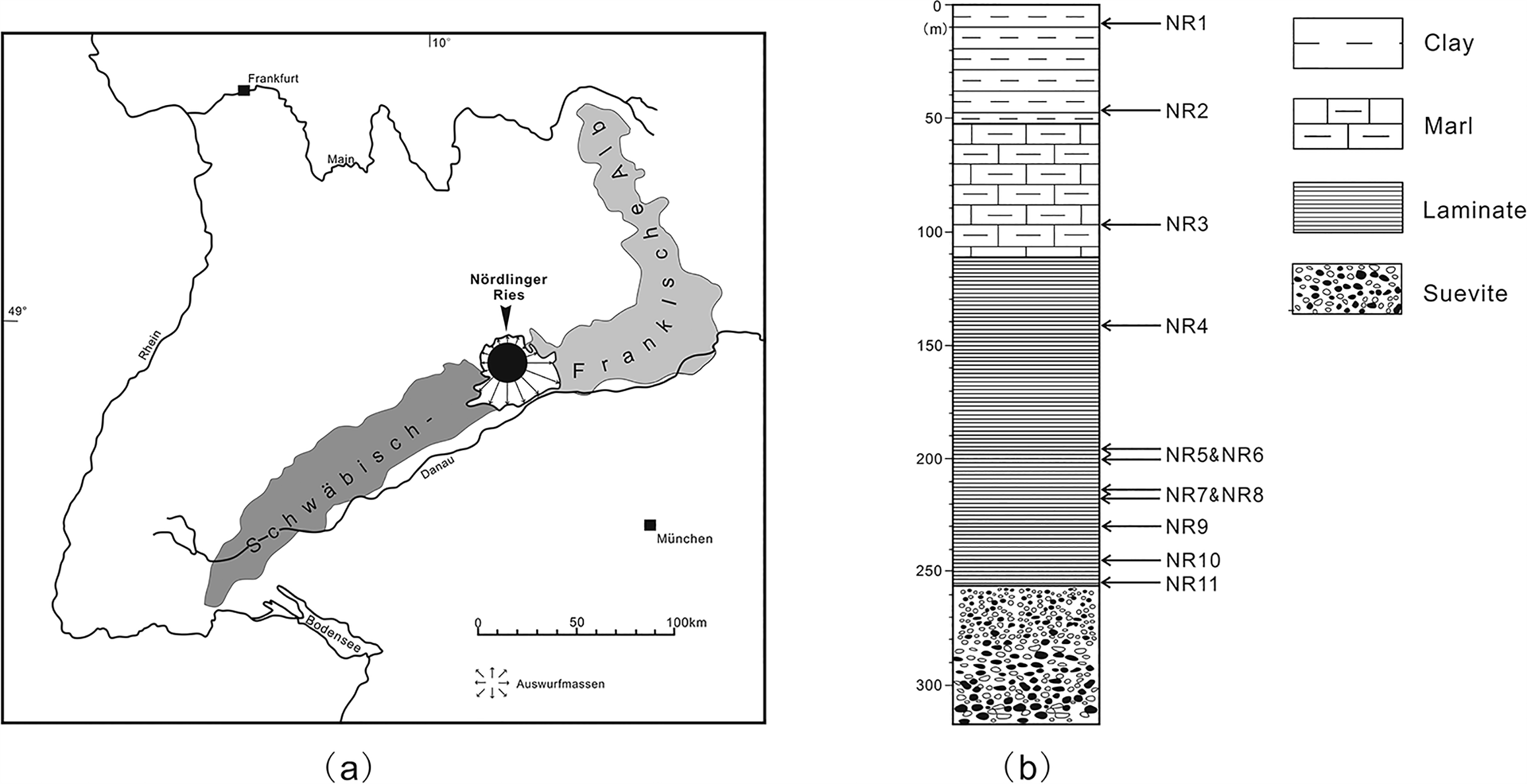
The location of Nördlinger Ries south Germany (a) and lithological column of Miocene and the depths of samples for this study (b).
Marine sediments samples were collected from the Shenhu area in the South China Sea, which belongs to the Baiyun Sag of the Pearl River Mouth Basin. A total of 14 samples were selected from SC2 and SC3 wells in the Shenhu GMGS4 gas hydrate drilling area (Figure 3). The lithology of marine samples, silty clay or clayey silt, vary slightly with depth (Zhang et al., 2020).
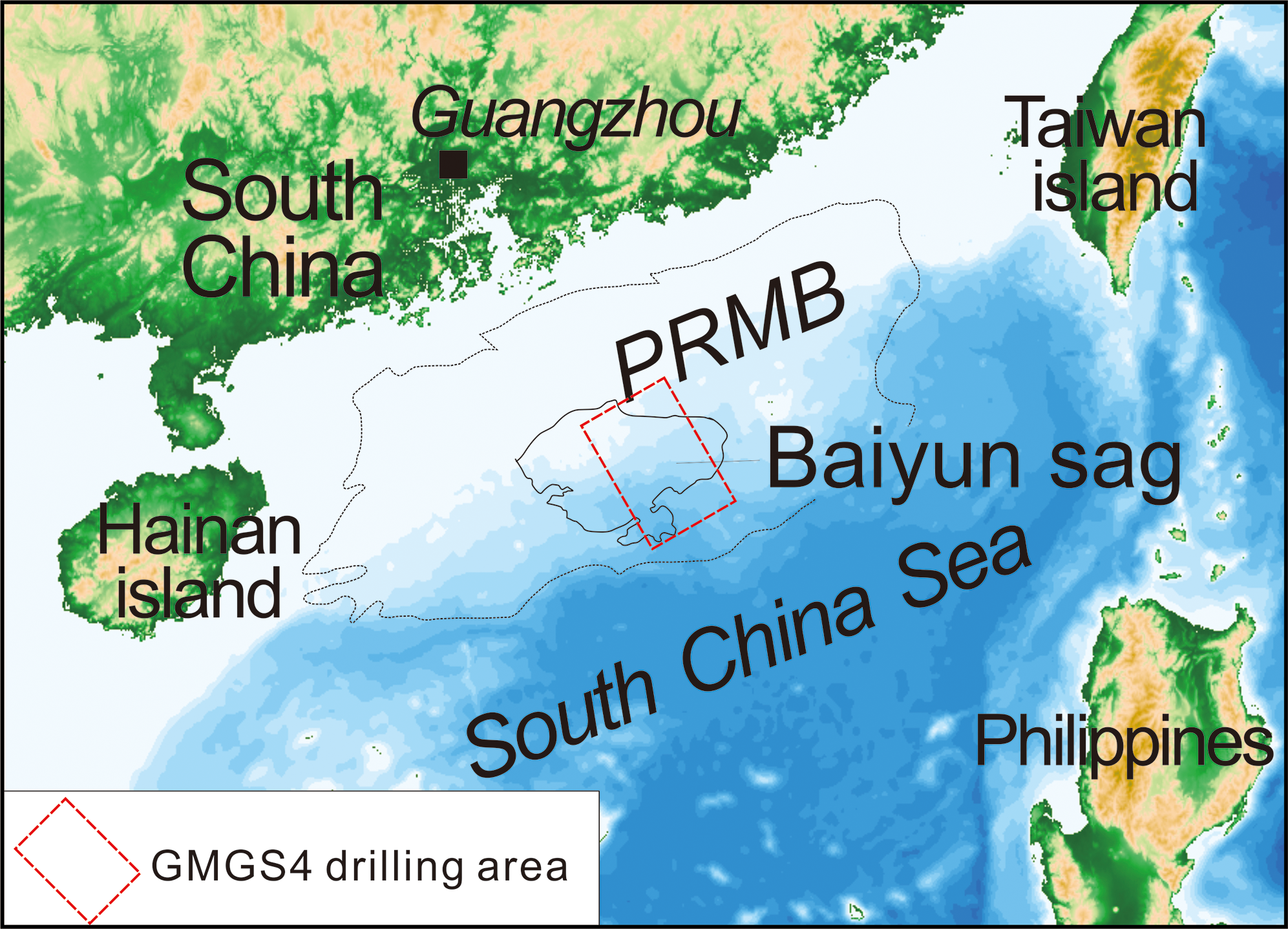
Geologic setting and locations of the gas hydrate drilling and coring sites in the Shenhu area, South China Sea (Zhang et al., 2020).
Methods
GC–MS analysis
All rock samples were ground into powder in a crusher to <80 mesh. A Soxhlet apparatus was used for extracting soluble organic matter with 400 mL of dichloromethane:methanol as a solvent (93:7, v:v). Then 50 mL of n-hexane were used to precipitate asphaltenes from the soluble bitumen. The remaining were fractionated into saturated, aromatic and NSO fractions, by liquid chromatography (alumina/silica gel columns, 2:3) with 30 mL n-hexane, 25 mL dichloromethane:n-hexane (2:1, v:v) and 25 mL dichloromethane:methanol (93:7, v:v) as eluents, respectively.
The saturated fractions were analysed by an Agilent 6890 GC–Agilent 5975i MS system, using an HP-5MS fused silica capillary column (30 m × 0.25 mm × 0.25 μm). The oven temperature of the GC system was maintained at 50 °C for 1 min, increased at 20 °C/min to 120 °C, and then increased at 3 °C/min to 310 °C, before being finally held at 310 °C for 25 min. The aromatic fractions were analysed using an Agilent 7890B GC–Agilent 5977A MS system with an HP-5MS fused silica capillary column (60 m × 0.25 mm × 0.25 μm). The initial GC oven temperature was set at 80 °C for 1 min, increased to 310 °C at a rate of 3 °C/min and was then held at the final temperature for 20 min.
Helium was utilized as the carrier gas with a speed of 1.0 mL/min for the GC of saturated and aromatic fractions. Under electron ionization mode, the ionization energy of MS was 70 eV with the scanning range of m/z 50–600.
Computational details of molecular simulation
The molecular structures were constructed by GaussView 6 software, saved in GIF format initially. Then the original documents were converted to executable files for Gaussian 09 code. All calculations were in Gauss 09 code and performed by Sichuan University of Science and Engineering High Performance Computing Center (Xiao et al., 2019; Yang et al., 2019). Through density functional theory, the B3LYP method was used to calculate zero-point energy correction, frequency and geometric optimization at the 6-311++G (d, p) level. According to the equation, △G = △H–T·△S, the Gibbs-free energies of the two MTTCs can be obtained, in which △H means the enthalpy, T is the normal temperature (298.15 K) and △S means the entropy.
Results and discussion
Bulk geochemical characteristics of samples
The total organic carbon (TOC) content of the Nördlinger Ries lacustrine sediments was in the range of 1.19% to 13.50% with an average value of 5.65%. The total sulphur (TS) content varied from 0.68% to 8.85% with an average value of 2.48% (Table 1), indicating the strong heterogeneity of these samples. The hydrogen index (HI) ranged from 264 to 791 mg HC/g rock, averaging 616 mg HC/g rock. According to the HI (mg HC/g TOC) versus Tmax (°C) plot, the lacustrine samples from Nördlinger Ries contain type I and II kerogens (Figure 4(a)). Additionally, an average Tmax of 428 °C, with a range of 379 °C–440 °C, indicates that the Nördlinger Ries lacustrine sediments are still at the immature stage.
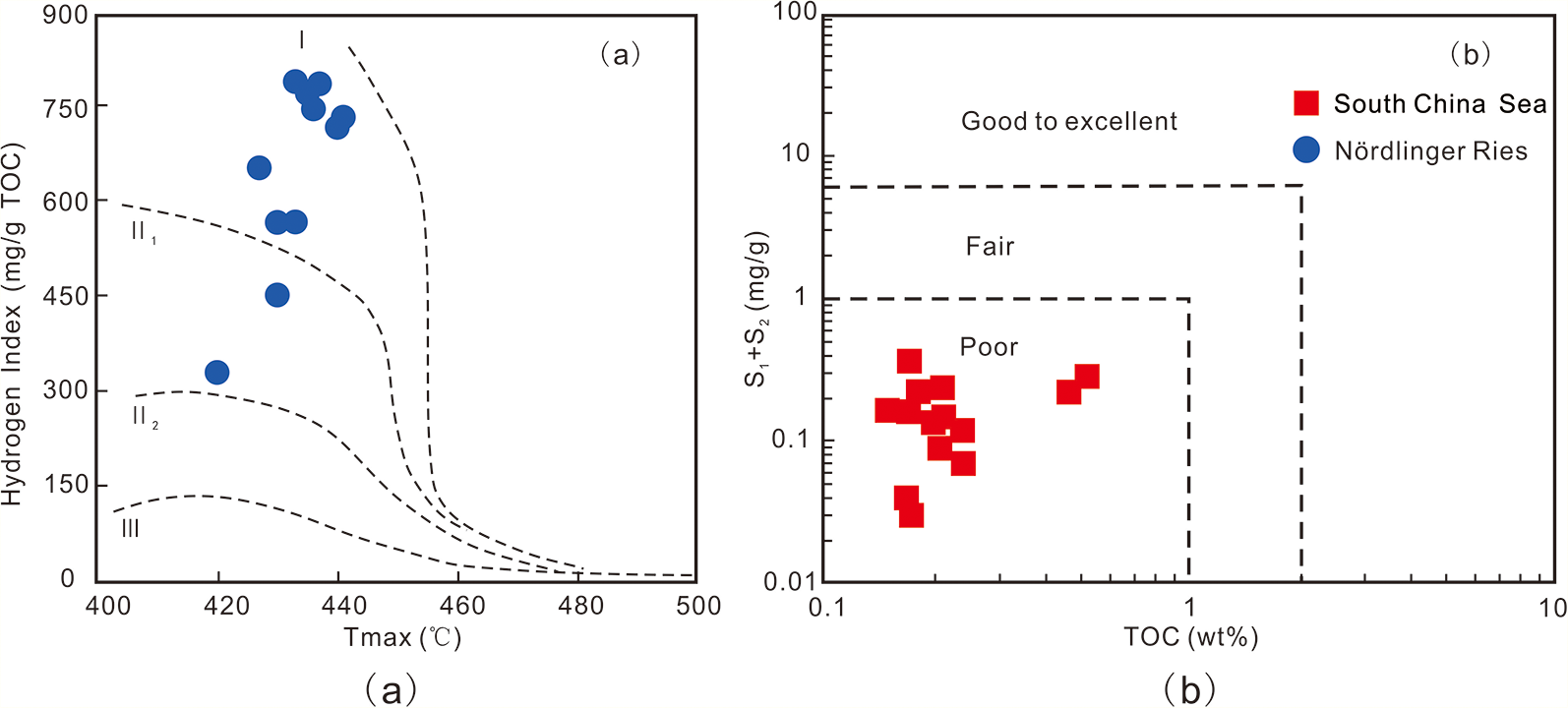
The cross-plots between (a) HI and Tmax for lacustrine sediments from the Nördlinger Ries and (b) between (S1 + S2) and TOC content (wt%) for marine sediments from South China Sea.
Geochemical parameters based on MTTCs for sediments from Nördlinger Ries.
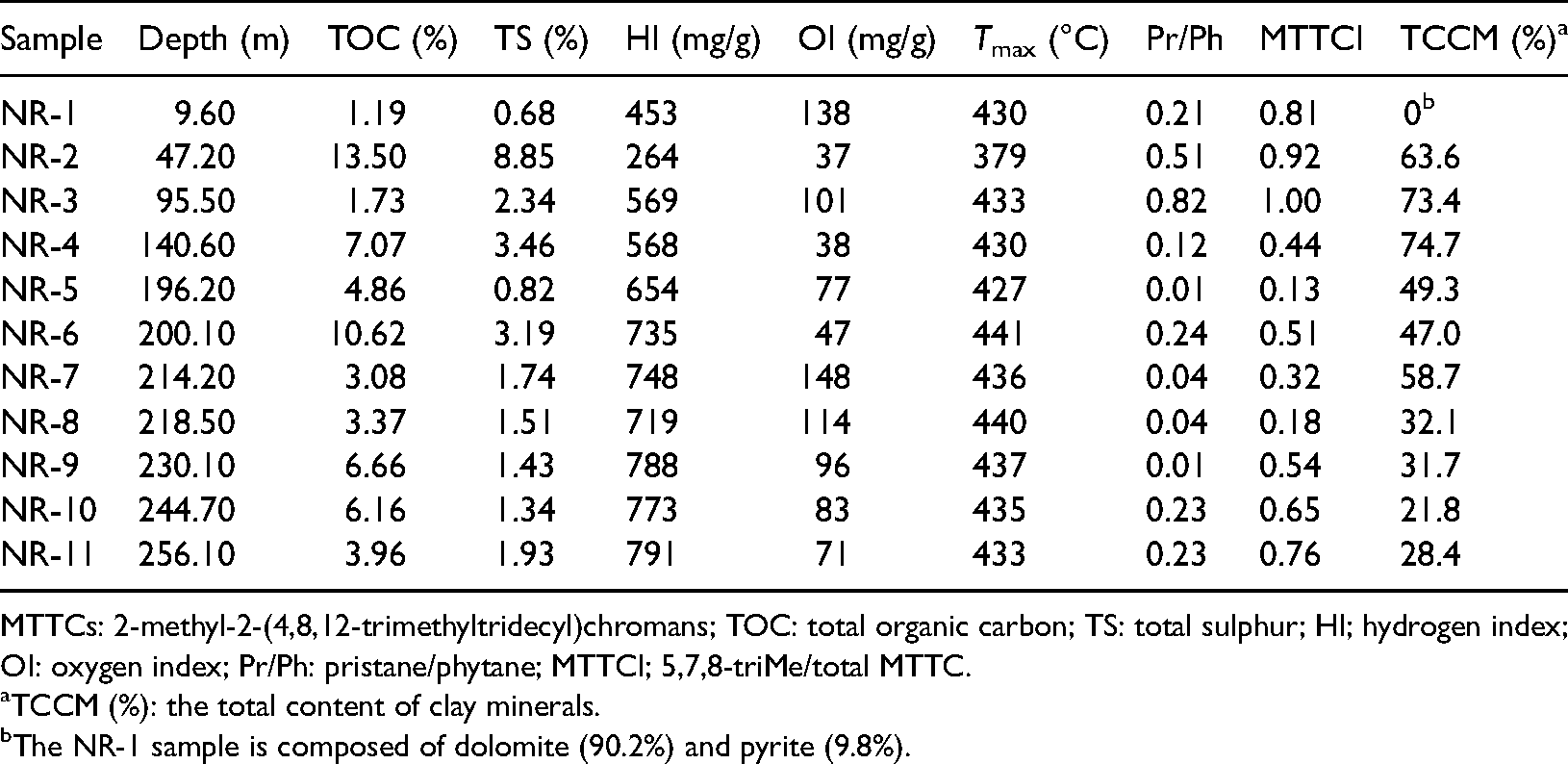
MTTCs: 2-methyl-2-(4,8,12-trimethyltridecyl)chromans; TOC: total organic carbon; TS: total sulphur; HI; hydrogen index; OI: oxygen index; Pr/Ph: pristane/phytane; MTTCI; 5,7,8-triMe/total MTTC.
TCCM (%): the total content of clay minerals.
The NR-1 sample is composed of dolomite (90.2%) and pyrite (9.8%).
The TOC and TS values of marine sediments collected from the South China Sea was very low, with an average value of 0.24% and 0.21%, respectively (Table 2). The S1 + S2 (mg HC/g rock) versus TOC (wt%) plot suggests that the marine samples are poor source rocks with low hydrocarbon potential (Figure 4(b)). The burial depth of these samples ranges from ∼80 to 200 m. They are all immature sediments with no significant change in maturity.
Geochemical parameters based on MTTCs for sediments from South China Sea.
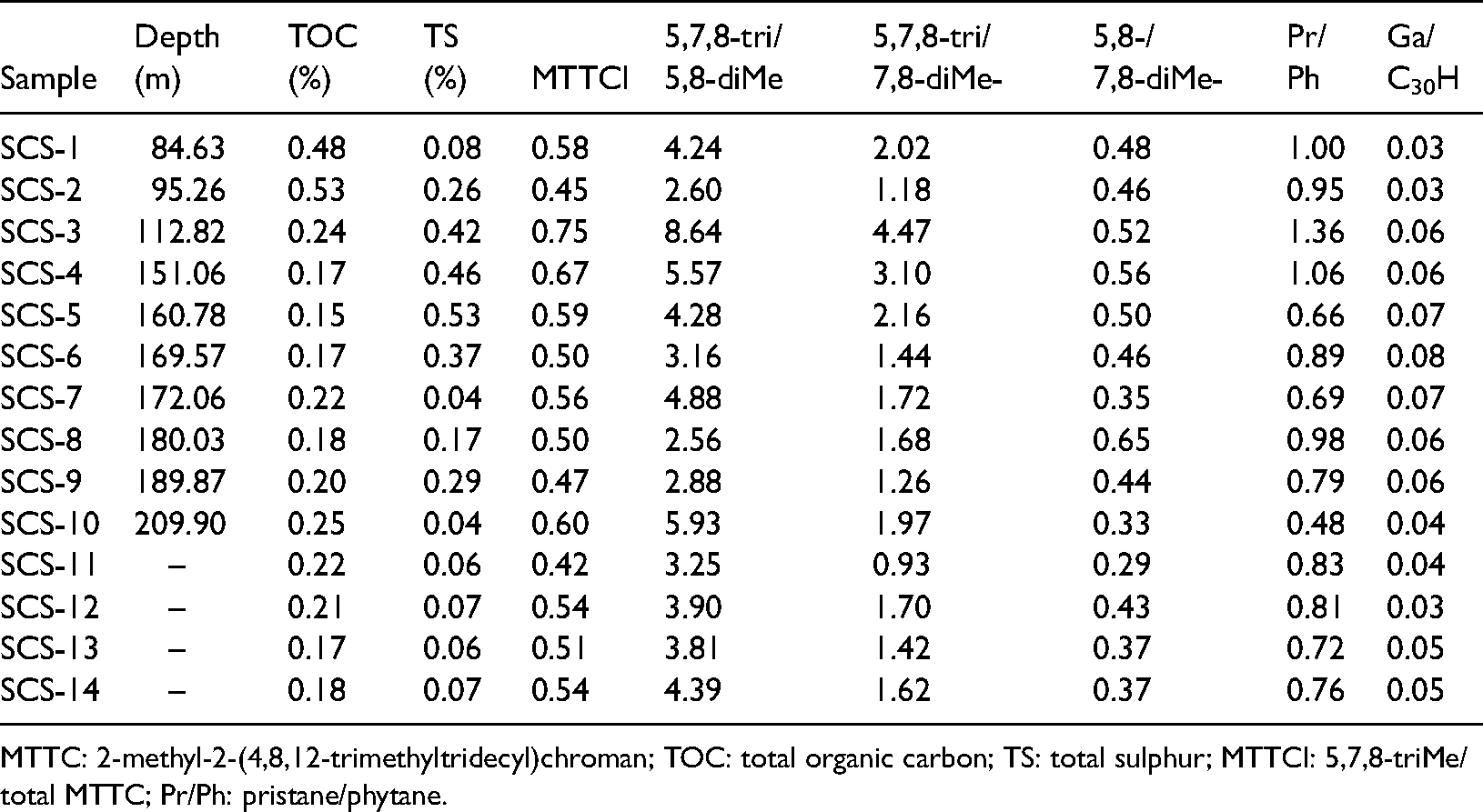
MTTC: 2-methyl-2-(4,8,12-trimethyltridecyl)chroman; TOC: total organic carbon; TS: total sulphur; MTTCI: 5,7,8-triMe/total MTTC; Pr/Ph: pristane/phytane.
The identification and occurrence of MTTCs in lacustrine and marine sediments
The identification of MTTC isomers was made by comparison of their elution orders in mass chromatograms and mass spectra with those reported in the literature (Sheng et al., 1987; Sinninghe Damsté et al., 1987). Figure 5 shows the mass chromatograms (m/z 121, 135 and 149) of aromatic fractions of selected sample extracts in this study.
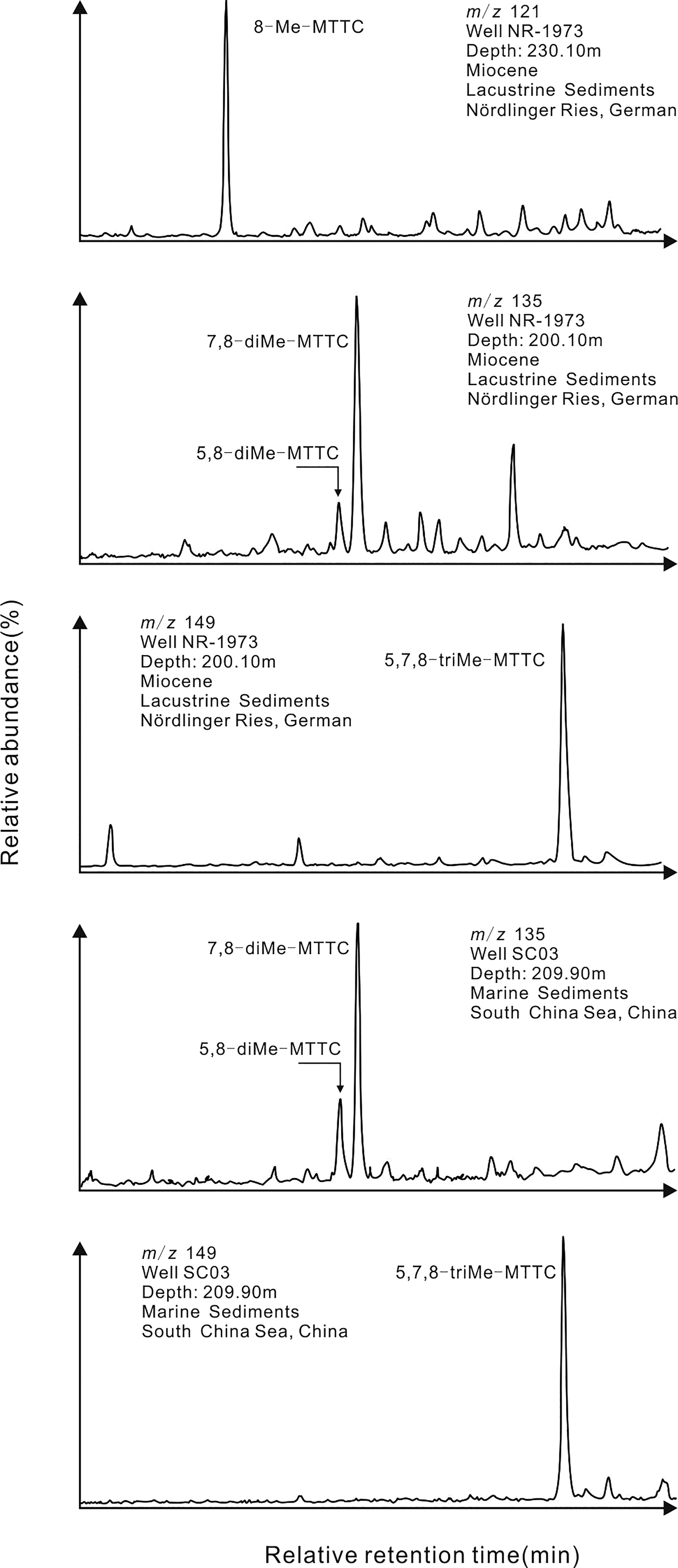
Mass chromatograms of m/z 121, 135 and 149 indicating the identification of the 2-methyl-2-(4,8,12-trimethyltridecyl)chromans (MTTCs).
Four MTTCs isomers were detected in the Nördlinger Ries samples. 8-Me-MTTC or di-Me-MTTCs were absent in several samples. With depth increasing, the MTTCI ratio () of the Nördlinger Ries samples increased slightly from the surface to a depth of 50 m, then decreased drastically, reaching nearly 0.1 at ∼200 m, followed by a narrow fluctuation and the ratio kept increasing within depths (Figure 6(b) and Table 1).
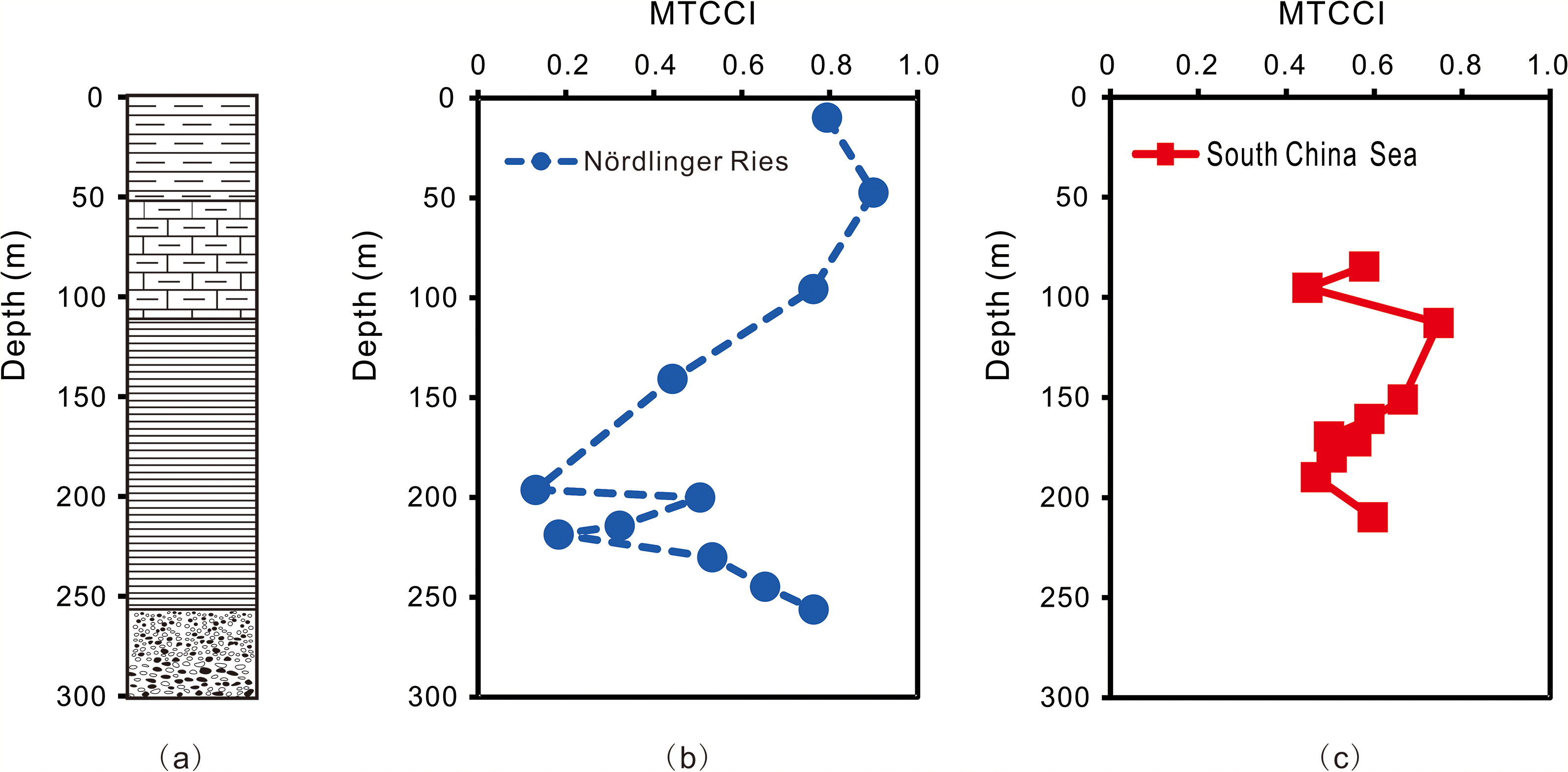
Lithological column of the Nördlinger Ries (a) and variations of MTTCI with depth for sediments from the Nördlinger Ries (b), South China Sea (c).
However, only three MTTCs compounds were detected in the aromatic fractions of the South China Sea samples. 8-Me-MTTC was absent from all samples from the South China Sea and 5,7,8-triMe-MTTC dominated in all MTTC isomers. As the depth increased, the MTTCI ratio of South China Sea remained roughly constant around 0.5, with an average of 0.55 (Figure 6(c) and Table 2). The maximum and minimum of MTTCI were 0.70 and 0.42, respectively. Compared with Nördlinger Ries sediments, the variations of MTTCI in the South China Sea samples were negligible.
The assessment of paleosalinity by MTTCs
The relative abundance of MTTC isomers appears to be related to paleosalinity (Sinninghe Damsté et al., 1987). The dominance of 8-Me-MTTC generally indicates good preservation conditions, with a strong reducing, hypersaline (>120‰) and stratified water depositional environment. Otherwise, the occurrence of significantly abundant trimethyl-MTTC indicated a non-hypersaline depositional environment (Schwark et al., 1998; Sinninghe Damsté et al., 1987, 1993; Wang et al., 2011; Zhu et al., 2005).
Due to the trace presence of 8-Me-MTTC in non-hypersaline environments, the ratio of 5,7,8-triMe-MTTC/8-Me-MTTC proposed by Sinninghe Damsté et al. (1987) has been widely applied to determine paleosalinity. A high 5,7,8-triMe-MTTC/8-Me-MTTC ratio (>100) was thought to represent a non-hypersaline environment, whereas a low ratio (<2) indicated a hypersaline environment during deposition. Sinninghe Damsté et al. (1989, 1993) proposed a new MTTCI ratio for a more elaborate characterization of paleosalinities, based on many experimental data. However, the reason why the distribution of MTTC compounds is indicative of paleosalinity is still under investigation.
Both 5,7,8-triMe-MTTC and 8-Me-MTTC occurred in most samples from the Nördlinger Ries. The ratio of 5,7,8-triMe-/8-Me-MTTC was below 2.0, except for samples in the upper and lower part (8.6 and 5.0, respectively), suggesting that most of the rocks were deposited in a hypersaline environment. However, 8-methyl-MTTC was absent in samples from the South China Sea. This confirms the marine origin and relatively low salinity within the deposition of these rocks. The low abundance of gammacerane in the South China Sea samples with the gammacerane index generally <0.1 also indicates the sedimentary environment with low salinity and unobvious water stratification (Table 2). Based on the positive correlation between the 5,7,8-triMe-/8-Me-MTTC ratio and the 5,7,8-triMe-/7,8-diMe-MTTC ratio, the latter was also proposed to indicate salinity (Tong et al., 2018; Wang et al., 2011). Wang et al. (2011) also proposed a proxy for non-hypersaline environment assessment, which was divided into mesosaline environments (40‰–120‰ salinity), normal marine environments (30‰–40‰ salinity) and semi-saline to freshwater lacustrine environments (1‰–30‰ salinity), in terms of the boundary values of 5,7,8-triMe-/7,8-diMe-MTTC as 2 and 15, respectively.
In this study, the 5,7,8-triMe-MTTC/7,8-diMe-MTTC ratio of the majority of samples from the South China Sea was <2, which indicated the samples were deposited in a mesosaline environment with a salinity value of 40‰–120‰. In the middle part, the ratio was >3, indicating that the salinity here may be relatively low. Therefore, the whole depositional environment is assessed as a mesosaline-normal marine environment. The excellent positive linear relationship between 5,7,8-triMe-/5,8-diMe-MTTC and MTTCI suggests that the ratio of 5,7,8-triMe-/5,8-Me-MTTC can also be a potential paleosalinity indicator (Figure 7(a)). Moreover, referred to the paleosalinity values raised by the MTTCI and 5,7,8-triMe-MTTC/7,8-diMe-MTTC ratio (Schwark et al., 1998; Wang et al., 2011), a new classification on paleosalinity was raised in this study, a mesosaline environment is divided when 5,7,8-triMe-/5,8-Me-MTTC is <5. The ratio of 5,7,8-triMe-/5,8-Me-MTTC >13, corresponds to a freshwater to semi-saline environment, and the value of 5,7,8-triMe-/5,8-Me-MTTC in the range of 5–13 can divide into ‘normal marine salinity’ zone.
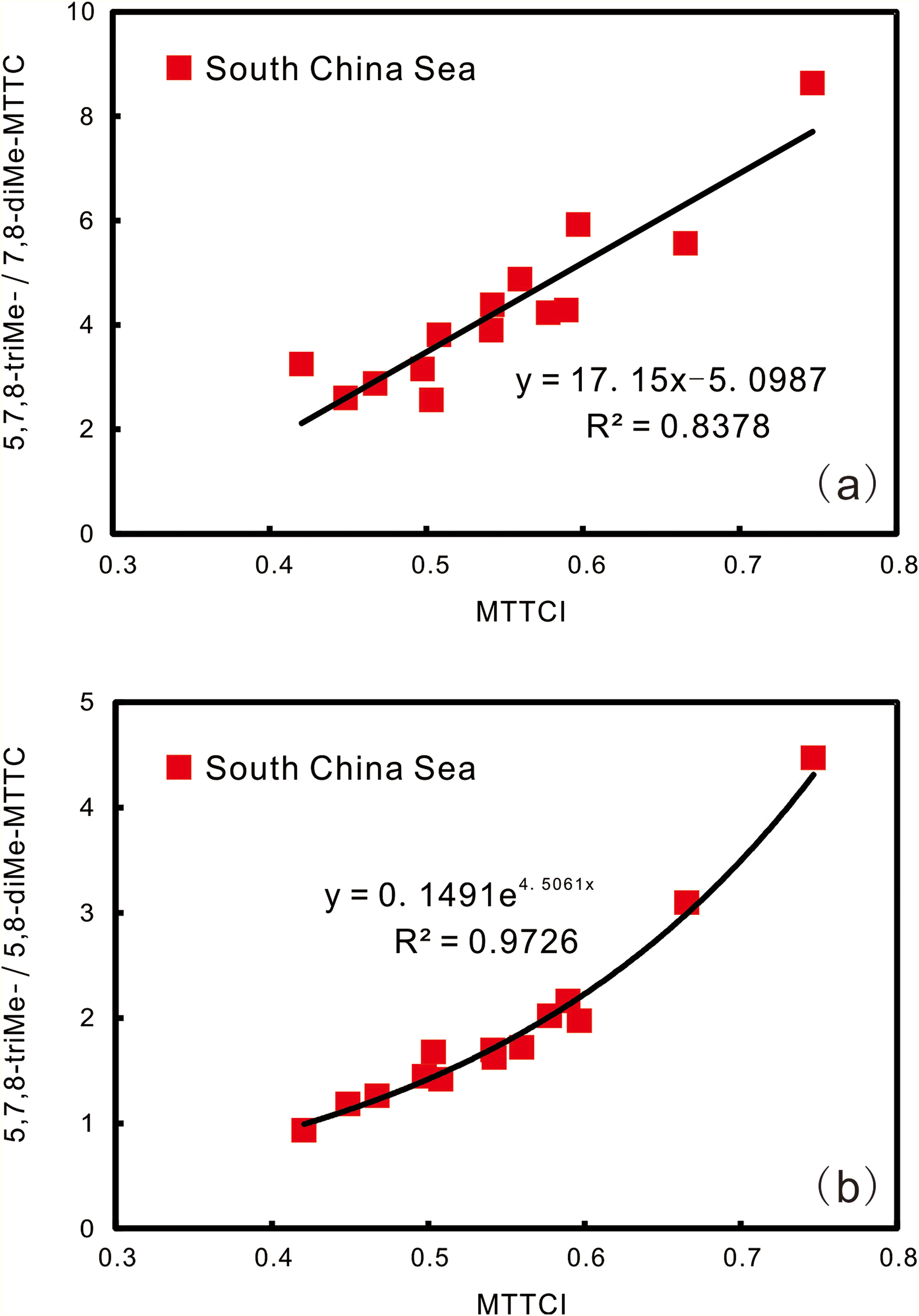
Cross plot of 5,7,8-triMe-/5,8-diMe-MTTC (a) and 5,7,8-triMe-/7,8-diMe-MTTC (b) versus MTTCI.
The distribution of MTTCI and 5,7,8-triMe-/7,8-diMe-MTTC has a positive correlation with Pr/Ph, but not an evident linear relationship (Wang et al., 2011). Therefore, the relative content of trimethyl and dimethyl MTTC may be related to reducing conditions during diagenesis, whereas there was no significant effect on the total content of MTTC isomers. Figure 8 illustrates the cross plot of MTTCI value against the Pr/Ph ratio, which was established to distinguish a ‘normal’ marine from a hypersaline environment (Schwark et al., 1998; Wang et al., 2011). Among which, four salinity zones were defined as hypersaline (with salinity>120‰), mesosaline (40‰–120‰ salinity), normal marine saline (30‰–40‰ salinity) and brackish to freshwater (1‰–30‰ salinity). All samples of the South China Sea plot in the region of a ‘normal’ marine environment, which was in agreement with interpretations from both the 5,7,8-triMe-/7,8-diMe-MTTC ratio and the 5,7,8-triMe-/5,8-diMe-MTTC ratio.
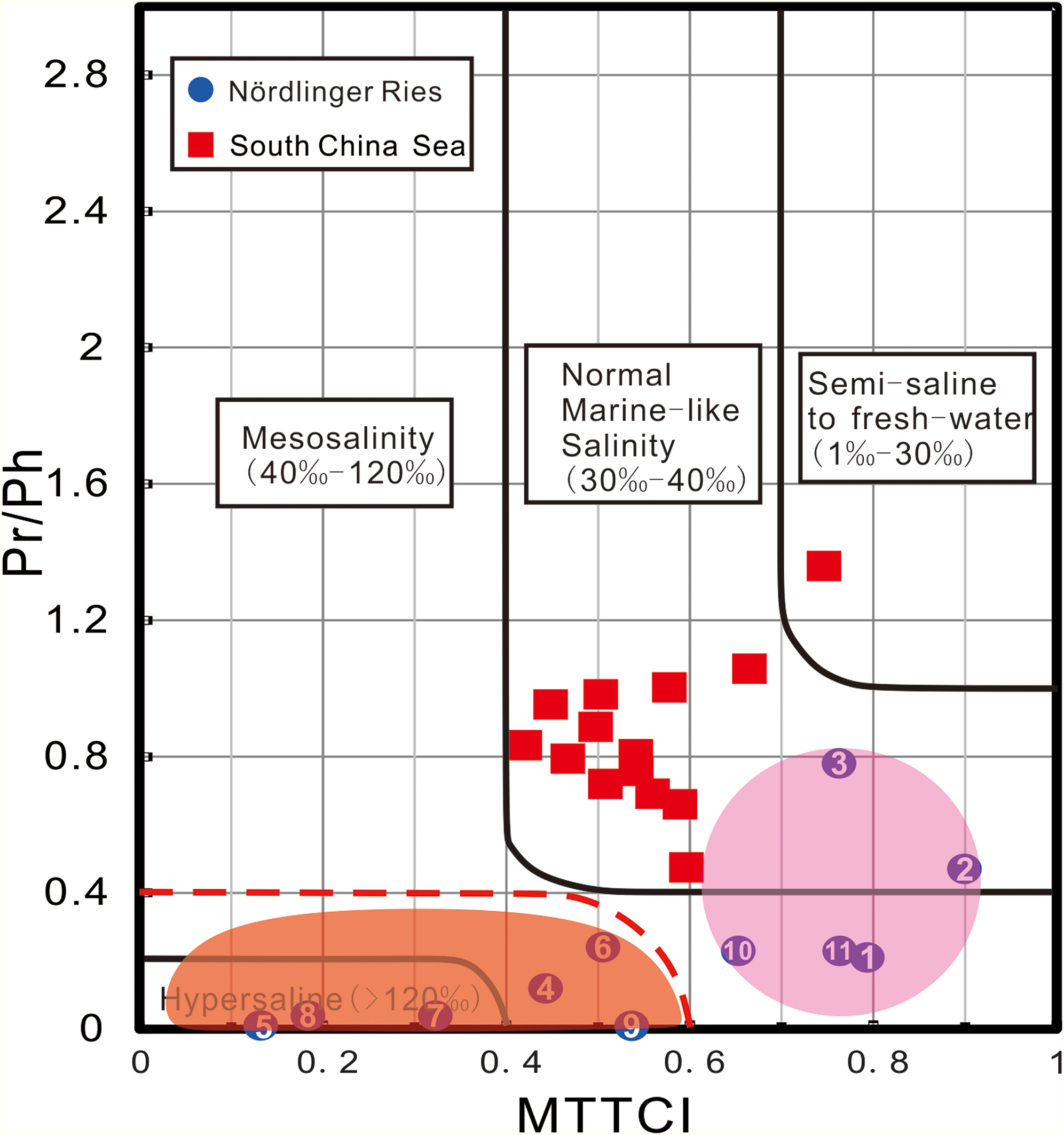
Cross plot of MTTCI versus pristane/phytane ratio with indications of data for normal marine and hypersaline environments (modified from Wang et al., 2011).
The irregular distribution of MTTCs in the Nördlinger Ries
The distribution patterns of MTTCs from sediments of Nördlinger Ries differed distinctly (Figure 6(a), Figure 8). The cross-plot of MTTCI versus Pr/Ph in the sediments of the Nördlinger Ries showed substantial variations (Figure 8). All samples were divided into two parts. Sample Nos. 4 to 9, which all belong to the laminate series, were divided together with MTTCI <0.6 and Pr/Ph <0.24, representing a relatively high salinity (>40‰) in the laminite deposition, meanwhile, the general lithology remained homogeneous (Figure 2). Other samples (the upper and bottom of samples, those are, No.1 to No. 3, No. 10 and No. 11) were deposited in a low salinity environment with MTTCI >0.6 and Pr/Ph >0.23. The research showed that the upper and bottom rocks are mainly composed of clay and carbonates. Therefore, we assumed that the evenly distribution of MTTCI can be related to the lithology.
The distribution of MTTCs is related to paleosalinity. Thus, the supply of freshwater, such as rainfall and riverine incursions, could affect the paleosalinity and further impact the distribution of MTTCs (Sinninghe Damsté et al., 1993; Tulipani et al., 2014, 2015). In the Nördlinger Ries, rainfall was the main freshwater input and the paleoclimate was semi-arid (Rullkötter et al., 1990). During the early Miocene, the water column was a mesosaline environment (sample nos. 10 and 11) and the salinity gradually increased (sample nos. 4–9), which may be representative of the evaporitic period. The small-scale variations resulting from occasional rainfall were also visible from kerogen analyses performed under a microscope (Rullkötter et al., 1990). However, during the late Miocene, the salinity of the water column decreased (sample nos. 1–3) and gradually reached the normal marine salinity range (30‰–40‰), may indicate that the overall rainfall increase at this time. Furthermore, Barakat et al. (2012, 2013) proposed that contributions of higher plants could not be negligible. Due to the bimodal distribution pattern of normal alkanes (Figure 9) and the existence of some biomarkers originating from higher plants (e.g. phyllocladane) in the upper sediments, we speculate that riverine incursions were another supply of freshwater during the late Miocene, which may have also led to the rapid decrease in paleosalinity.
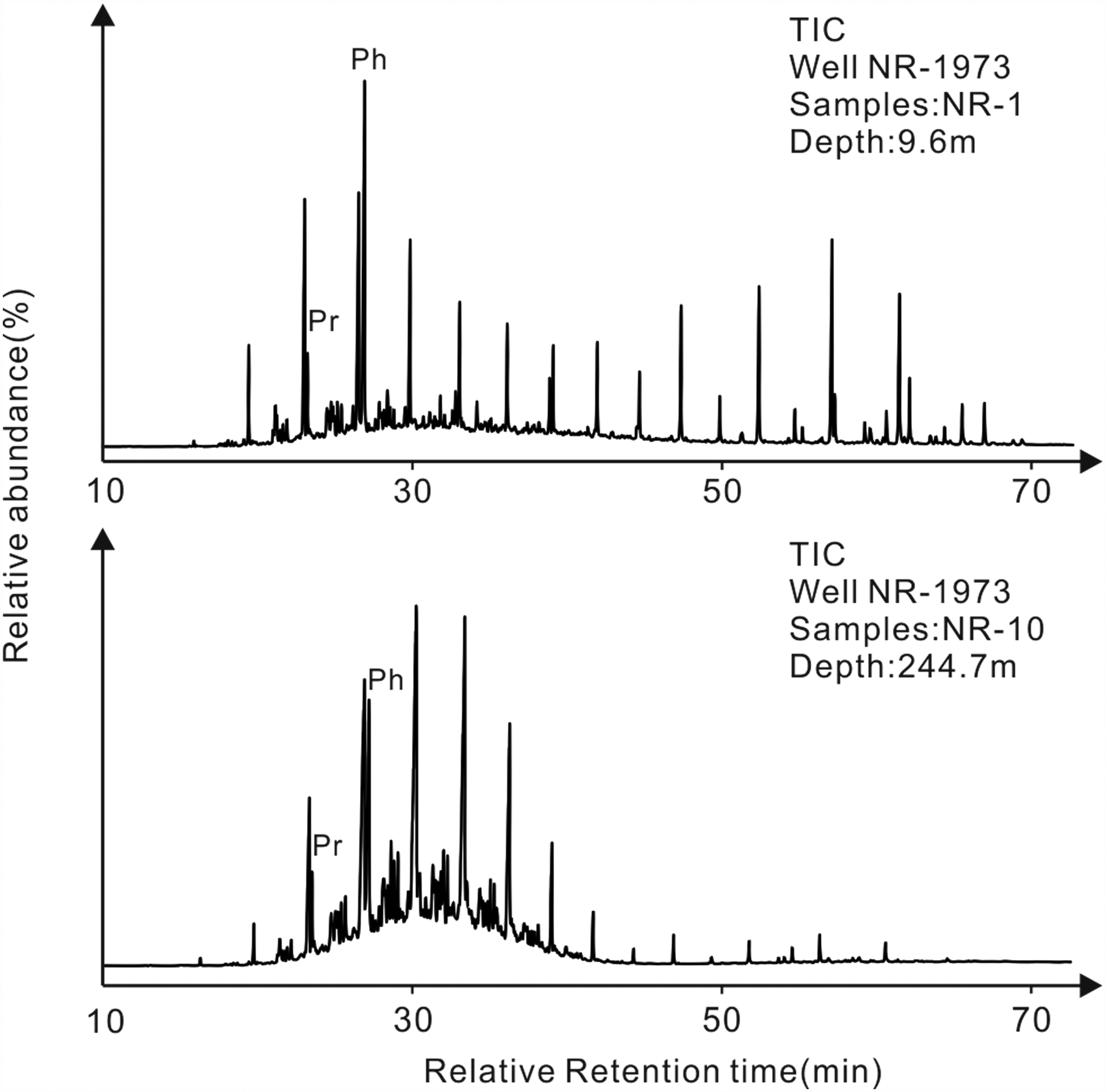
Total ion current chromatograms of saturated hydrocarbon fractions from the upper and lower samples of sediments from the Nördlinger Ries.
In addition, the clay mineral content varies greatly in samples of Nördlinger Ries, which have strong vertical heterogeneity (Table 1). Clay minerals play a catalytic role in the diagenetic conversion of organic compounds in sediments. MTTCs may be formed by the condensation reaction of alkylated phenols with phytol during early diagenesis (Li et al., 1995; Tulipani et al., 2013). Thus, the clay mineral content may affect the generation of MTTCs. This can be roughly inferred from the high MTTCI of clay stone samples (nos. 1 and 2). Since the formation mechanism of MTTC compounds is not clear, the impact of clay mineral content on their distribution is still a conjecture.
Above all, the supply of freshwater and lithology may play major roles in the distribution of MTTCs. The effect of clay minerals should also be taken into account.
The stability of MTTCs based on molecular simulations
A molecular simulation is an effective approach for measuring molecular microstructures and calculating the macro nature of a given system. Quantum chemical calculations were performed to determine the electron energy, internal energy, enthalpy and Gibbs-free energy, of the MTTCs. The results reveal that 5,8-diMe-MTTC has a relatively low energy than 7,8-diMe-MTTC (Table 3). Therefore 5,8-diMe-MTTC is more stable than 7,8-diMe-MTTC, which is consistent with the previous study based on the analysis of structures (Bao et al., 2009; Chen et al., 1997; Huang, 2006). Thus, it is theoretically feasible to use the 5,8-diMe-/7,8-diMe-MTTC ratio as a maturity indicator at stages of low maturity. Bao et al. (2009) suggested that 5,8/7,8-diMe-MTTC has an excellent exponential relationship with Ro in immature and low mature samples. Compared with the hopanes, steranes and MPI1 related maturity parameters, the diMe-MTTC maturity parameter may be more suitable at the low mature stage (Ro < 0.65%) In this study, the shallow depositions in Nördlinger Ries and South China Sea could not contribute to sufficient maturity variations, in consequence, the 5,8/7,8-diMe-MTTC ratio varied slightly in all samples (Tables 1 and 2).
The result of thermal stability calculation.
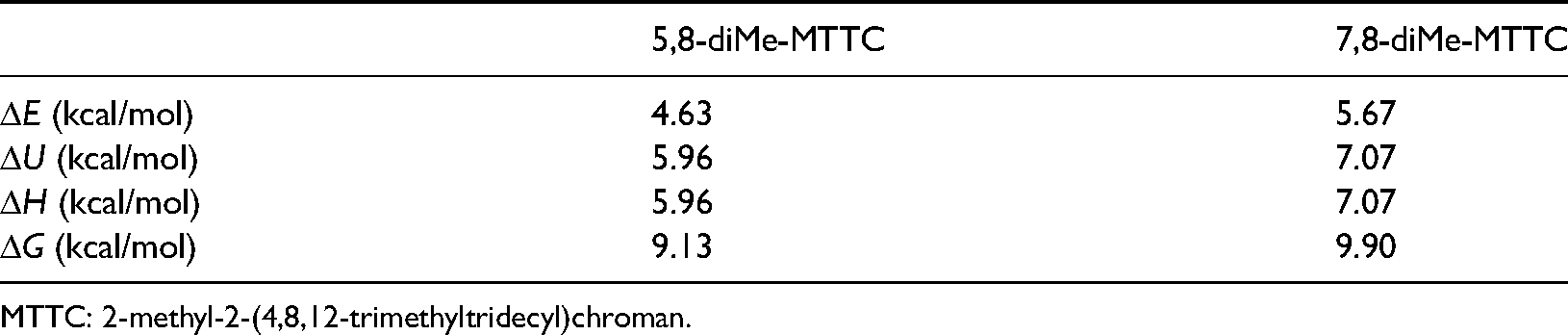
MTTC: 2-methyl-2-(4,8,12-trimethyltridecyl)chroman.
Within a narrow range of depths in Well NR-1973, all samples from Nördlinger Ries were immature with vitrinite reflectances (Ro, %) <0.5% (Rullkötter et al., 1990) and Tmax < 450 °C (Table 1). The distributions of n-alkanes show an obvious odd carbon preference with an average carbon preference index (CPI) value of 3.95 (Figure 9 and Table 1). Based on the formula between 5,8-/7.8-diMe-MTTC and Ro (%) raised by Bao et al. (2009), the calculated vitrinite reflectance (Rc, %) in sediments from the Nördlinger Ries was from 0.37 to 0.42, correlated well with the results above. And Rc in samples from the South China Sea ranged from 0.41 to 0.45 (Table 2), indicating they are immature sediments.
Conclusions
Four methylated MTTC isomers were identified in a set of lacustrine sediments from Nördlinger Ries and in marine sediments from the South China Sea.
Among these MTTCs, 8-Me-MTTC was more abundant in hypersaline environments. Whereas in mesosaline and normal marine environments, 5,7,8-triMe-MTTC dominated and 8-Me-MTTC was occasionally absent. The 5,7,8-triMe-/5,8-diMe-MTTC ratio displayed a good linear relationship with MTTCI, suggesting that 5,7,8-triMe-/5,8-diMe-MTTC could be a potential molecular salinity indicator. Values of 5,7,8-triMe-/5,8-Me-MTTC <5, 5 to 13, and >13, respectively, were inferred as mesosalinity, normal marine salinity and semi-saline to freshwater environments, respectively. Because of the relatively higher content of 5,8-diMe-MTTC, 5,7,8-triMe-/5,8-diMe-MTTC was more suitable for paleosalinity determination when 8-Me-MTTC was absent.
The MTTC parameters suggested that the paleosalinity of Nördlinger Ries varied significantly during the Miocene deposition period. The variation of MTTCs may mainly be related to lithology and freshwater supply, including rainfall supply and riverine incursions. All data showed that samples of the South China Sea were deposited in normal marine environments.
The thermal dynamic stability of MTTCs was calculated by molecular simulations and the relative stability order of the dimethyl MTTC compounds was determined to be 5,8-diMe > 7,8-diMe-MTTC. Therefore, the ratio of 5,8-diMe-MTTC/7,8-diMe-MTTC could be applied theoretically as a maturity indicator for oils and sediments at relatively low maturity stages.
Footnotes
Acknowledgement
This research was financially supported by the project of China Geological Survey (Project No. DD20201114) and the Guangzhou Science and Technology Project (Grant Number 201909010002). The authors thank Shi Shengbao, Zhu Lei and Zhang Jianfeng of China University of Petroleum (Beijing) for their assistance in the experiment. We would like to thank Professor Ralf Littke and Dr Laura Zieger of RWTH University (Germany) for providing the samples of Nördlinger Ries sediments. Our deepest gratitude goes to the editors and reviewers for their careful work and thoughtful suggestions that have helped improve this paper substantially.
Declaration of conflicting interests
The authors declared no potential conflicts of interest with respect to the research, authorship, and/or publication of this article.
Funding
The authors disclosed receipt of the following financial support for the research, authorship, and/or publication of this article: This research was financially supported by Oil and Gas Survey, China Geological Survey (Project No. DD20201114) and the Guangzhou Science and Technology Project (Grant Number 201909010002).
