Abstract
A solar tri-generation system comprises of photovoltaic thermal collectors that are used for the production of electrical power and domestic hot water simultaneously. This study presents the performance analysis of a micro-solar tri-generation system that fulfills the requirements of an off-grid single-family lodging. The main functions of this system include domestic hot water, electrical power, and cooling power production. A set of five photovoltaic thermal panels were modeled together. The electrical power generated was stored in a battery, while the hot water generated was passed through a flow diverting valve. This valve directed some of the hot water to an absorption chiller, while the remaining portion was sent to an insulated thermal storage tank for later use. Energy and exergy analyses were performed to evaluate the extracted energy’s quality and efficiency. The overall thermal energy efficiency achieved was 50.53%. The extracted energy in the form of hot water was 3777.5 W. The electrical power generated was 2984.6 W, which was sufficient for the small single-family lodging. The coefficient of performance of the absorption chiller was found to be 0.6152. The exergy efficiency achieved was 36.88%. The exergy extracted by hot water was 234.3 W, while the electrical exergy generated was 2984.6 W. The exergy extracted during refrigeration was found to be 91.22 W. Furthermore, varying wind speeds and tilt angles affected both the energy and exergy efficiencies. The tilt angle must be kept at less than 45°, and the optimum wind speed was determined to be 35 km/h.
Keywords
Introduction
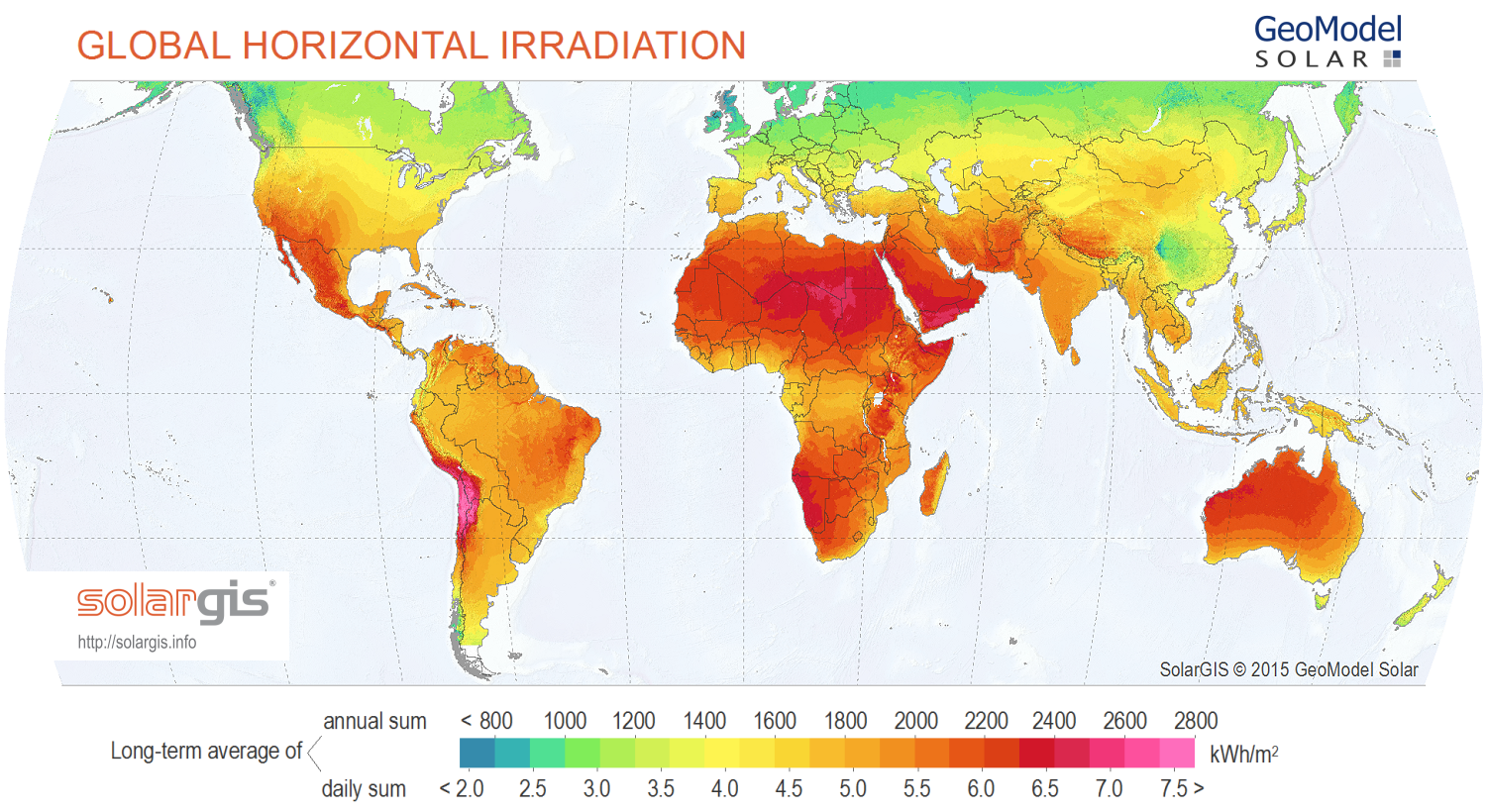
It is well known that energy is the primary engine and active ingredient for all growth and development (Shafiee and Topal, 2009; Sorrell et al., 2010). Traditional and unsustainable energy is polluting the environment and causing harmful emissions. On the other hand, renewable energy sources do not pollute the environment during consumption and have minimal impact on human health and ecosystems. For this reason, the impact of renewable energy on sustainable development needs to be studied thoroughly. Among renewable energy sources, solar energy is the least expensive and is abundantly available almost anywhere in the world (Solargis, 2019). As large parts of the populations of developing countries live off the grid, supplying power to remote regions is not financially feasible, and there is an urgent need to find a sustainable way to supply energy to these distant regions. Renewable energy can be a major provider of power in such regions, as connecting these regions to existing systems is expensive. In such regions, micro-solar plants with a capacity of less than 5 kW can be introduced. These micro-solar plants utilize photovoltaic thermal (PVT) collectors which are hybrid devices that produce hot water and electricity simultaneously. A major advantage of PVT collectors is that they are able to utilize waste heat, which is otherwise lost to the environment, in conventional solar devices that are used for cooking and domestic hot water (DHW) (Fraisse et al., 2007; Kalogirou and Tripanagnostopoulos, 2006). Such PVT devices are comprised of semiconductors. At the point when an electron on the n-side receives sunlight, it diffuses it into the p-side, prompting a stream of current. These PVT systems can likewise be incorporated with lithium bromide (LiBr)-based absorption chillers to fulfill the need for cold water and air conditioning during hot weather. Thus, these systems have excellent potential as an all-weather solution.
To assess a thermal system, such as the PVT system, energy and exergy efficiencies should be calculated. The energy efficiency of a system is determined by the percentage of input energy that is converted to useful output energy. An energy analysis is based on the first law of thermodynamics and only manages the quantity of energy (Bejan, 2016; Çengel et al., 2019). Meanwhile, exergy is a measure of the useful work that a system can perform. The exergy analysis is carried out using the second law of thermodynamics and manages the qualitative aspect of energy systems (Bejan, 2016; Çengel et al., 2019). Wang et al. (2020) studied the influence of the slot parameters of the slotted fins on the overall performance and the exergy destruction by numerical simulation, and the optimal parameters corresponding to the best overall performance and the minimum exergy destruction were obtained by the method of computational fluid dynamics (CFD). Zhang et al. (2019) theoretically analyzed exergy flow and exergy destruction of heat transfer and mass transfer between two air states using exergy theory and a two-film model. A thermodynamic analysis of a multi-generation system based on solar energy was conducted by several researchers (Al Moussawi et al., 2016; Angrisani et al., 2016; Baghernejad et al., 2016; Ghasemkhani et al., 2018a; Hands et al., 2016; Sharma and Singh, 2017; Wang and Fu, 2016). Ghasemkhani et al. (2018b) performed thermodynamic analysis of a tri-generation system based on energy efficiency, exergy efficiency, and power. Ahmadi et al. (2014) presented a multi-objective optimization method for a solar-based multi-generation system and evaluated the system performance exergetically. Gude et al. (2017) investigated a low-temperature solar-based desalination system through an exergy and energy analysis. It was reported that the highest exergy destruction was related to the condenser, and the highest exergy efficiency (0.78%) was obtained for a low-grade heat source. Islam et al. (2018) studied a solar-based multi-generation system which was combined with thermoelectric generators through energetic and exergetic viewpoints. They showed that an increase in the mass flow rate of the working fluid in the solar heat transferring module resulted in a higher amount of work done by the turbines and thermoelectrics. El-Emam and Dincer (2018) assessed a solar parabolic trough system which was coupled with an absorption cooling system, desalination unit, and electrolyzer for multi-generation purposes. The overall system performance was studied through an exergy analysis and resulted in maximum and minimum exergy efficiencies of 39% and 21.7%, respectively.
In this study, a small-scale solar tri-generation system was simulated in the Transient System Simulation Tool (TRNSYS) software. The TRNSYS software is a simulation tool that is currently widely used in the industrial and scholarly community (Ghorbani et al., 2018). The system is a combined cooling, heating, and power (CCHP) system based on a PVT collector. Energy and exergy analyses of the system were performed to predict the first and second law efficiencies. Furthermore, the effects of varying wind speeds and tilt angles on the energy and exergy efficiencies of the system were investigated. The present work is to contribute to the literature by highlighting tools and guidelines that can be used to understand and size off-grid solar tri-generation systems.
Solar tri-generation system
The main component of the solar tri-generation system was the PVT collectors that were used for the production of electrical power and DHW. After being heated in the PVT panel, some of the water was fed to an absorption chiller specially designed for use in solar energy systems. The ambient temperature utilized for the model was 35°C and the solar irradiance was determined to be 580 W/m2. The flow diverter was set so that 25% of the hot water generated in the PVT was sent to the hot water inlet of the absorption chiller. An insulated thermal storage tank with a capacity of 350 L was modeled. This tank was used to store hot water for later use. The overall system parameter selection for the tri-generation was chosen to fulfill the energy demands of a typical small house during peak time in Jeddah, Kingdom of Saudi Arabia (KSA). The details and parameters of the main components used in this model are described below.
PVT cells
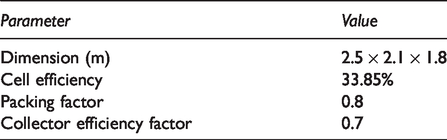
The PVT cells were modeled based on the Quadsun CPV CHP 33-500 with certain parameters, as given in Table 1 (Quadsun, 2019). A set of five PVT panels were modeled together while considering the energy needs of a small-family lodging.
Parameters of the PVT panel (Quadsun, 2019).
Absorption chiller
The absorption chiller utilized in this system was modeled on the Rotartica single effect, hot water fired thermal solar line absorption chiller, which was specially designed to function as an air conditioner. The chiller has a 4.3 kW cooling capacity and a coefficient of performance (COP) of 0.6152 (Rotartica, 2019).
TRNSYS simulation model
A weather data file was utilized to characterize the ambient conditions in the model. It was used to provide the weather conditions for Jeddah for the specified period of time (one year in our case). Room temperature water was fed through a pump to the PVT panel, which received solar irradiation, thereby generating electrical power and heating water via concentrated solar thermal energy.
The electrical power generated was stored in a battery, while the hot water generated was passed through a flow diverting valve. The valve directed some of the hot water to the absorption chiller, while the remaining portion was sent to an insulated thermal storage tank for later use. Approximately 25% of the hot water generated was sent to the absorption chiller, which utilized its thermal energy to pump heat and produce an air conditioning effect. Figure 1 shows a schematic diagram of the TRNSYS model for the solar tri-generation system used in this study.
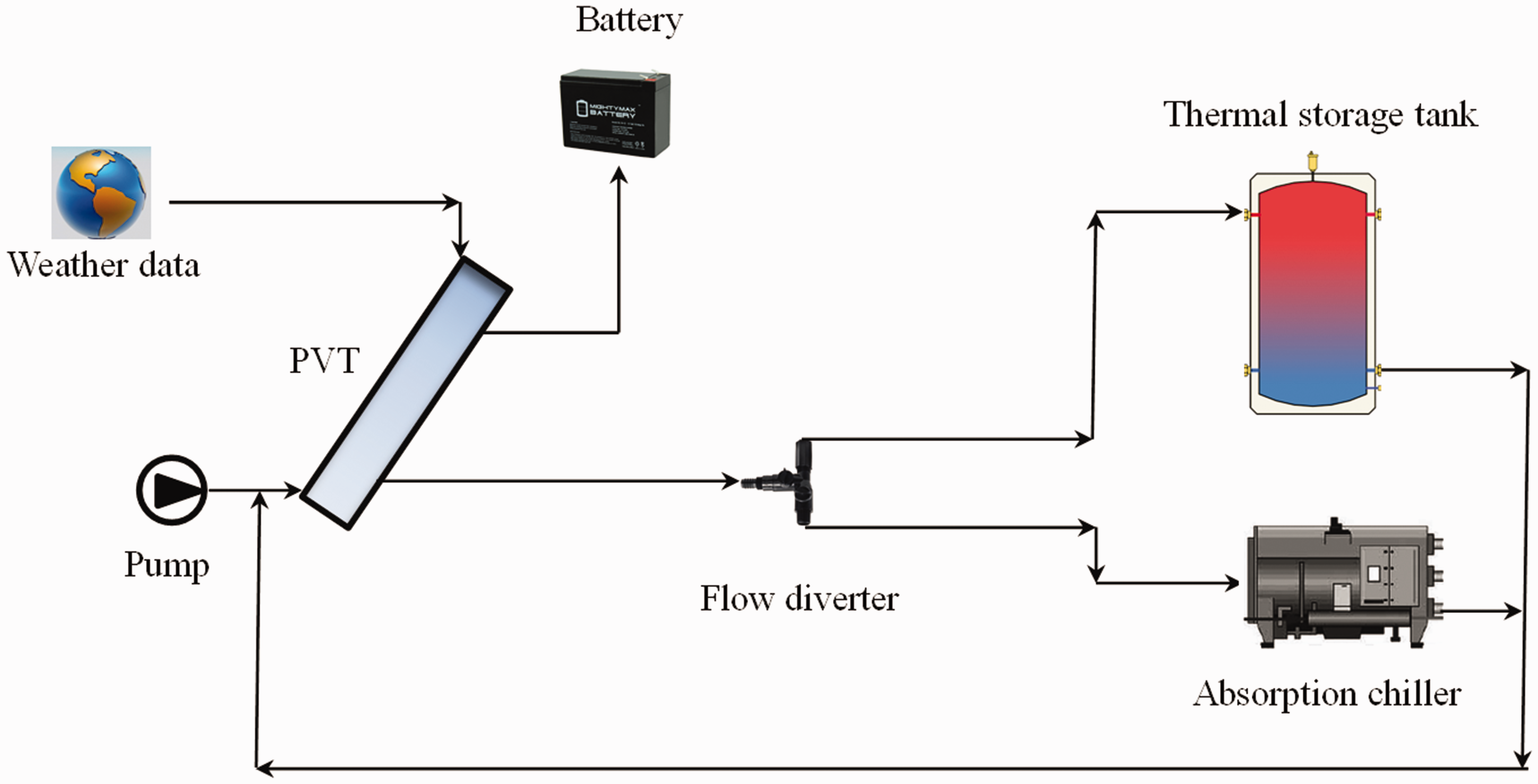
Schematic diagram of the TRNSYS model for the solar tri-generation system.
Energy and exergy analysis
An energy analysis gives information about the quantity of energy that exists in a system, while exergy is a measure of the quality of the energy. While energy efficiency provides information about the upper limit of incident solar radiation that is converted into a useful form of energy (Çengel et al., 2019), exergy efficiency measures the potential of that energy to produce useful work. In this section, the energy and exergy analysis performed on the system that was developed in the TRNSYS environment is described. In the analysis, the ambient temperature was assumed to be 35°C, and the atmospheric pressure was taken as 100 kPa.
Energy analysis
The equations used for the energy analysis of the system are given below. The incident radiation on the PVT panels is given by equation (1) (Abuelnuor et al., 2017; Baghernejad et al., 2016)



The energy extracted in the absorption chiller is given by the following equation


Exergy analysis
A high water flow rate implies that more pumping power is required. Lower flow rates imply that less pumping power is required and a higher work potential exists due to higher temperatures. However, increasing the entropy of the system reduces the exergy. Hence, an exergy analysis is necessary to determine the optimum flow rate for maximum work potential. It should be noted that the exergy of the electrical power was assumed to be equal to its energy. The exergy received by the PVT panel is given by the following equation (Mathkor et al., 2015)



The exergy recovered during refrigeration is given as follows (Mathkor et al., 2015)



Results and discussion
Actual data for the weather conditions prevalent in Jeddah, KSA, were applied to analyze the effect of ambient conditions on the PVT panel. It was found that, although the quantity of energy in the system was significant, the exergy analysis was more efficient for determining the performance of the system.
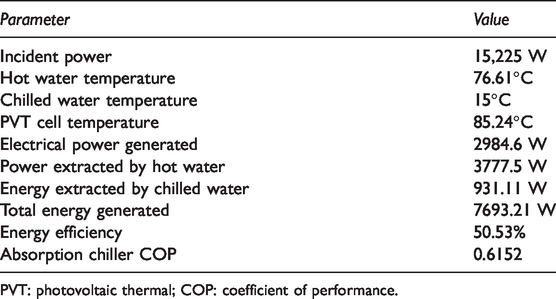
The system, as shown in Figure 1, was simulated in the TRNSYS environment, and the results of the energy analysis are presented in Table 2. In the analysis, the wind speed was assumed to be 15 km/h, and the tilt angle of the PVT panel was kept at 0°. The total flow rate of hot water from the PVT panel was set at 104 kg/h. Of that amount, 78 kg/h of flow was directed into the insulated storage tank, while the remaining amount was directed into the absorption chiller. The chilled water temperature was set at 15°C. The hot water coming out of the chiller was very close to the ambient temperature; therefore, it was re-circulated into the PVT panel.
Results of the energy analysis.
PVT: photovoltaic thermal; COP: coefficient of performance.
The overall thermal energy efficiency achieved was 50.53%. A large portion of this energy (3777.5 W) was extracted in the form of hot water. The electrical power generated was 2984.6 W, which was sufficient for the small single-family lodging. The COP of the absorption chiller was found to be 0.6152.
Table 3 presents the results of the exergy analysis. The incident exergy was lower than the incident energy because the solar power had less potential to do work than the electrical power. This low exergy was due to the irreversibility of the photovoltaic conversion process. There was also a significant waste of solar exergy incident on the module. The PVT conversion process with heavily available silicon modules, despite their advantages and widespread availability, demonstrated an enormous loss of exergy (Calderón et al., 2011).
Results of the exergy analysis.
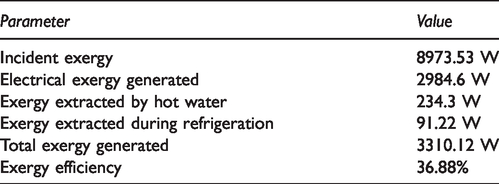
In this analysis, the electrical exergy was assumed to be equal to its energy because the entire amount of electrical energy has the potential to do useful work. The chilled water had less exergy than energy. Hence, the total exergy output was less than the energy output and the exergy efficiency stood at 36.88%. The variation in energy efficiency with respect to the wind speed is shown in Figure 2. There was a very slight variation in the energy efficiency due to a decrease in wind temperature with increasing wind speed. The variation in the amount of electrical power generated with wind speed is shown in Figure 3. The energy extracted from the hot water initially decreased because of the drop in cell temperature, as shown in Figure 4. However, the drop in cell temperature was reversed after the wind speed became 35 km/h, which led to an increase in the energy extracted by the hot water. The variation in exergy efficiency is shown in Figure 5. It can be seen that the variation in exergy efficiency bore a close resemblance to that of the electrical power generation, as the electrical exergy comprised approximately 92% of the total exergy. Hence, the optimum wind speed was determined to be 35 km/h.
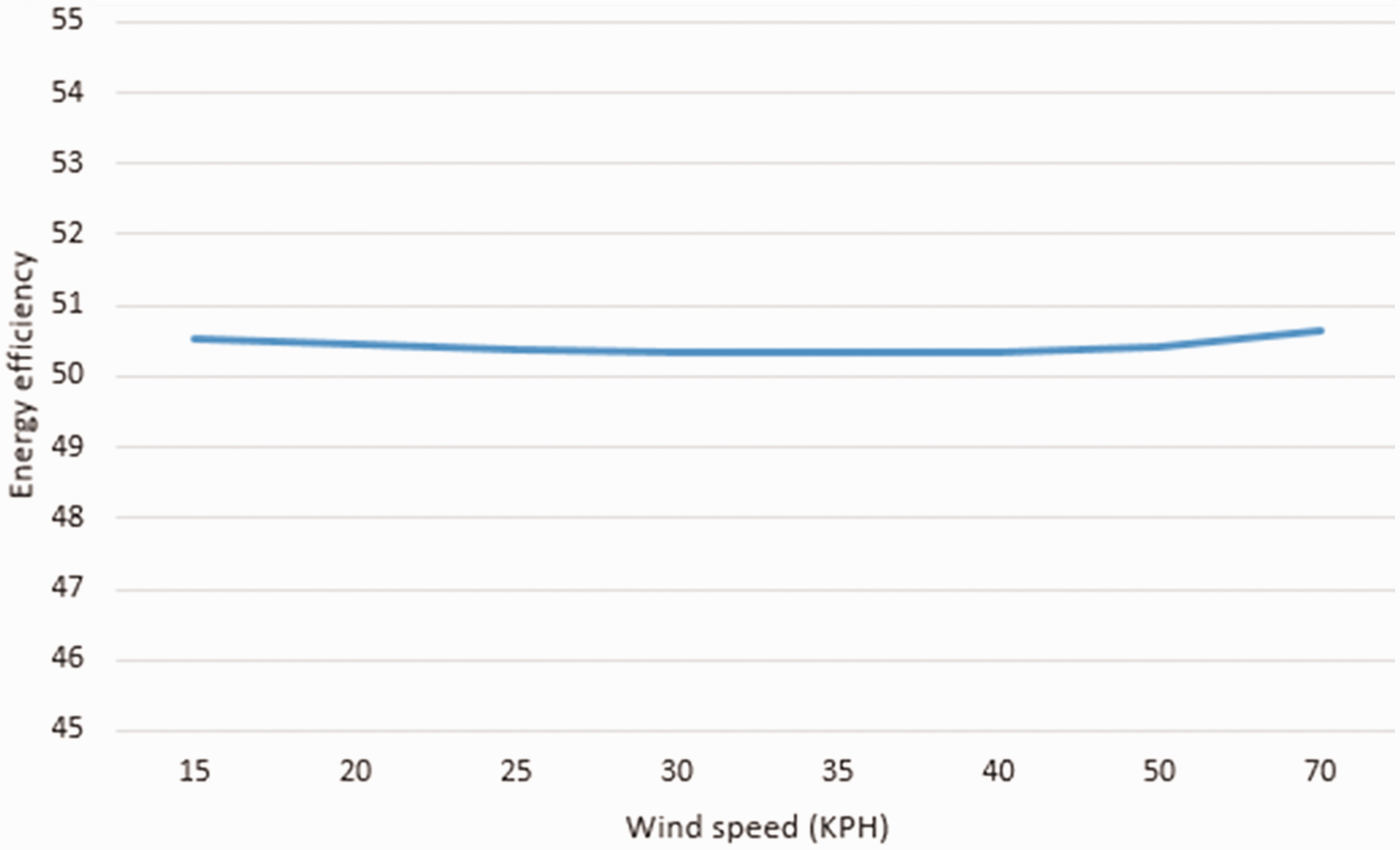
The variation in energy efficiency with wind speed.
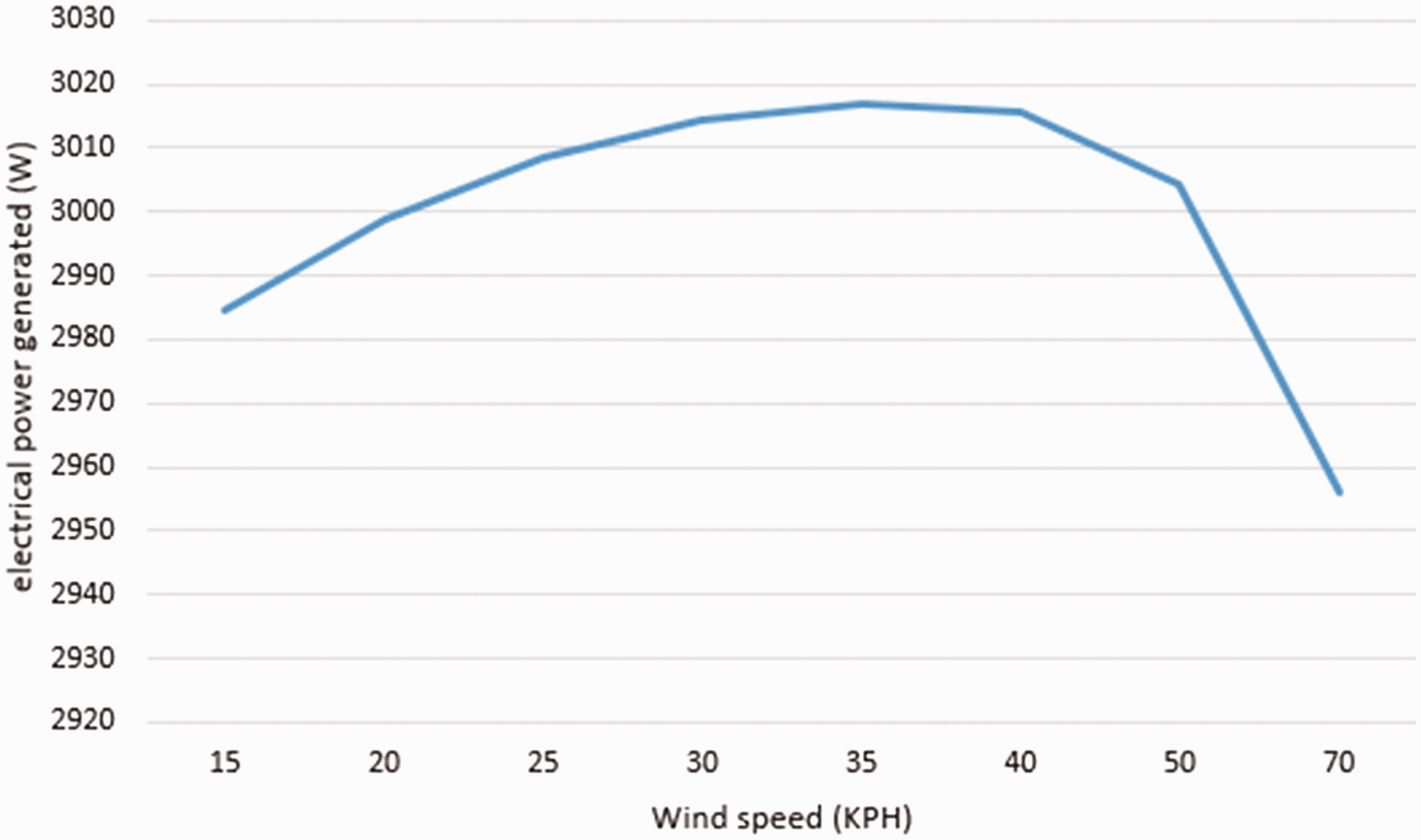
The variation in electrical power generated with wind speed.
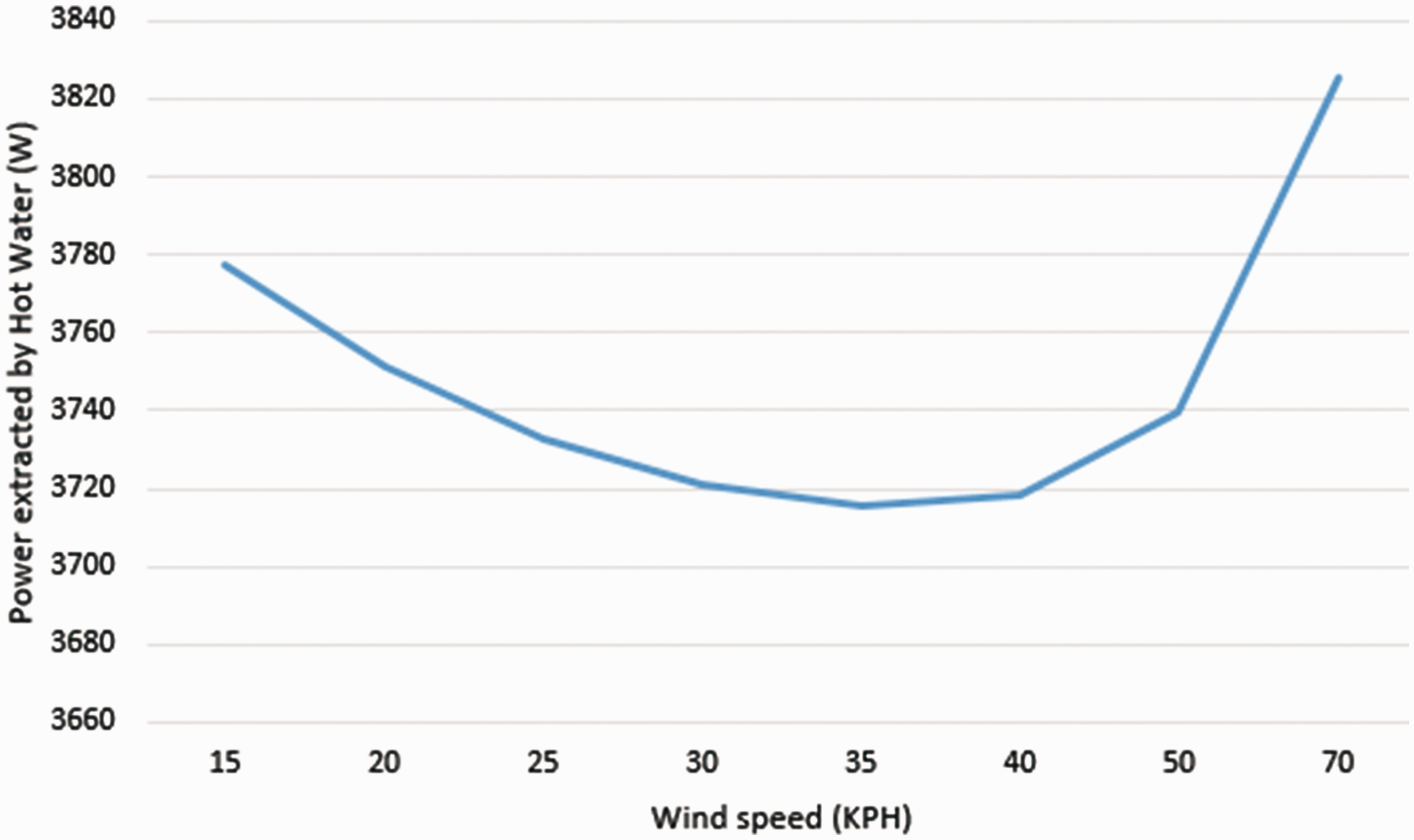
The variation in energy extracted by hot water with wind speed.
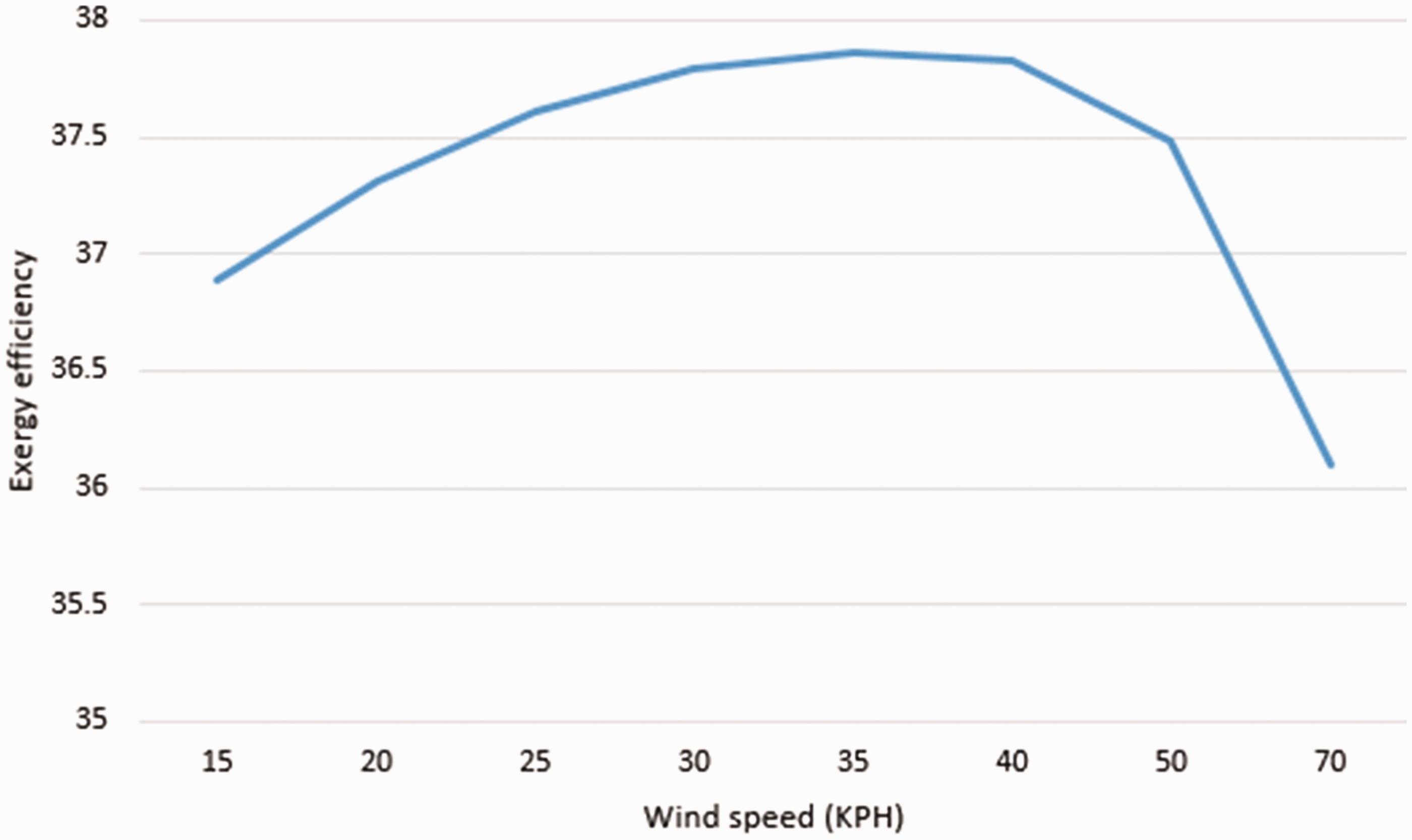
The variation in exergy efficiency with wind speed.
Figure 6 shows the variation in energy and exergy efficiencies with different tilt angles. There was a slight change in the efficiencies until the tilt angle reached 45°, as prior to that angle, direct solar radiation fell on the panel. However, after 45°, a portion of the solar radiation was blocked, which obviously affected the amount of electrical power generation. Hence, the efficiencies were lower once the panel angle exceeded 45°.
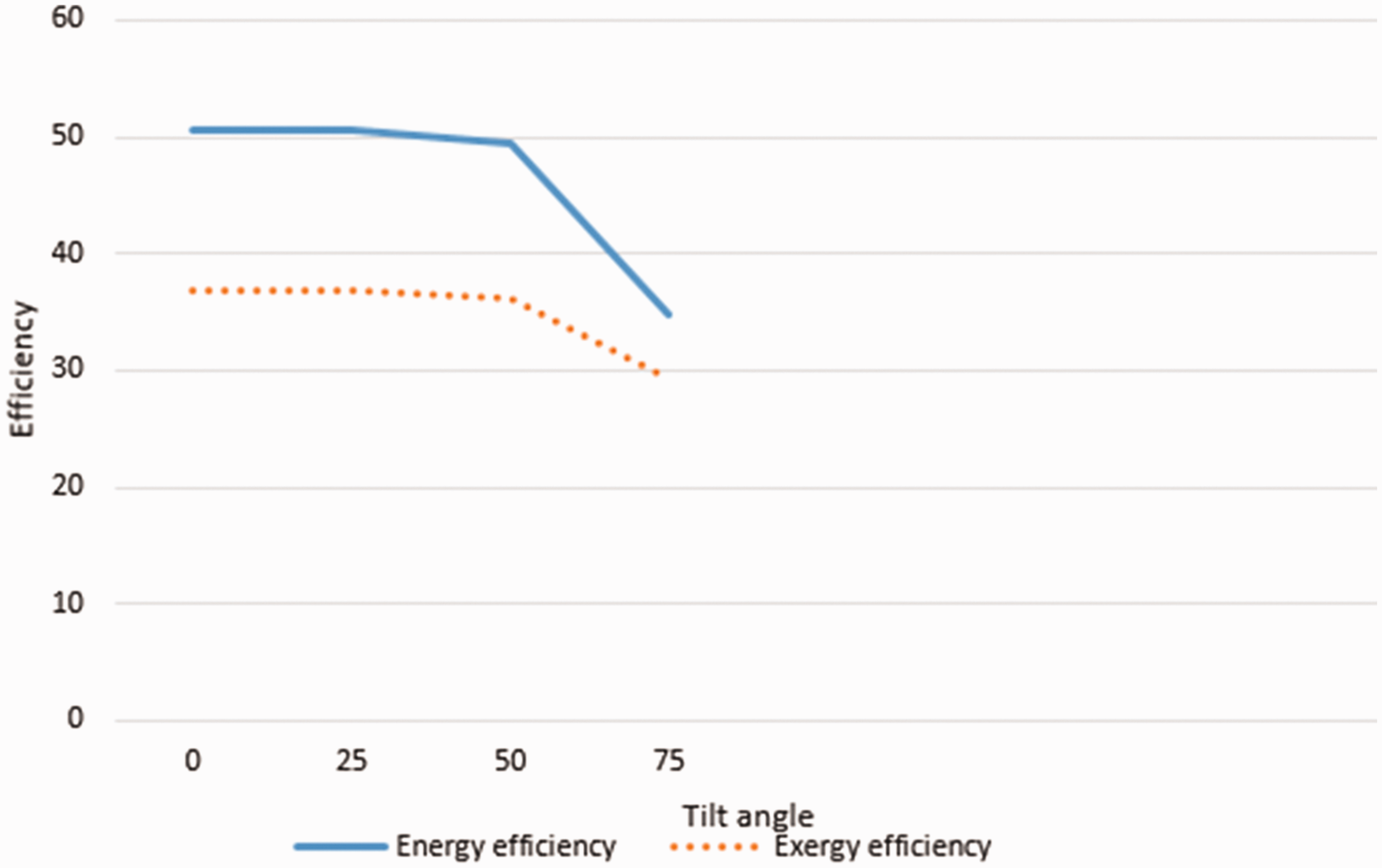
The variation in energy and exergy efficiency with tilt angle.
Exergy is always destroyed when a process involves a temperature change. This destruction is proportional to the entropy increase of the system together with its surroundings (Çengel et al., 2019). Figure 7 presents a schematic diagram of the exergy transfer and sources of exergy destruction of the system. The largest source of exergy destruction in the solar tri-generation system was the PVT panel. This was due to the high quality of the solar energy, which heated the fluid at low temperature. This led to the creation of significant irreversibility between significantly different temperatures. The second largest source of exergy destruction was the thermal storage process, which caused losses to the environment. The third source of exergy destruction was the absorption chiller generator. This was due to the temperature difference between the generator and the heat source. The remaining exergy destruction in the system occurred in small quantities in the pump and other components, such the valves. Exergy destruction in these components was caused by heat transfer, losses, and friction. Therefore, a reduction in exergy destruction in the PVT panel, as well as other components in the solar tri-generation system, would lead to increased thermal efficiency in the system.
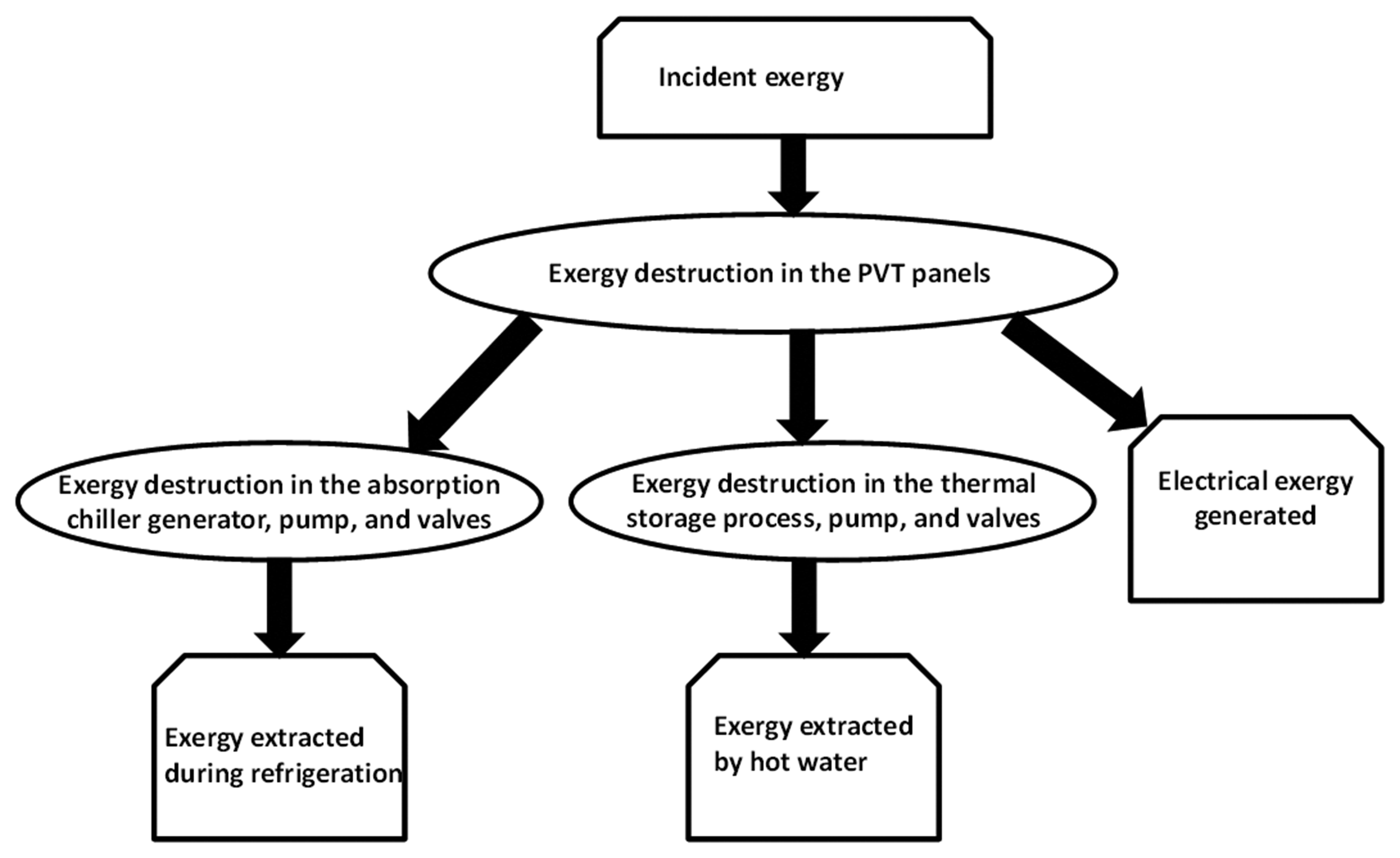
A schematic diagram of the exergy transfer and sources of exergy destruction of the system.
Validation of results
The results have been validated from the literature available as per the following details: Zhai et al. (2009) studied a solar tri-generation system using a parabolic trough solar collector. Although the energy efficiency achieved in their study was 58%, compared to 50.53% in this study, the exergy efficiency they achieved was only 15.2%, compared to 35.87% in this study. The higher exergy efficiency achieved in the present study was due to the higher electrical power generation capacity and module efficiency used in the system. Ranjan et al. (2016) presented an energy and exergy analysis of a solar power-based water distillation system. The energy and exergy efficiencies achieved were 30.42% and 4.93%, respectively, and were attributed to the large energy and exergy destruction in the basin liner, water body, and glass cover used to create the system. Koca et al. (2008) performed a first- and second-law analysis of a latent heat storage system based on a solar collector made up of phase changing material. Although the energy efficiency achieved was 45%, the exergy efficiency was limited to 2.2%. Ghasemkhani et al. (2018a) performed a thermodynamic investigation of the tri-generation system using the first and second laws of thermodynamics. The energy and exergy efficiencies achieved were equal to 17.37% and 18.82%, respectively.
Conclusion
In this study, a tri-generation system (CCHP system based on a PVT collector) was developed. The system was designed with consideration for the electrical power and DHW requirements of a small-family lodging located off-grid. This solar CCHP system was able to produce 2984.6 W of electrical power, 3777.5 W of heating power, and 931.11 W of cooling power, with an incident solar radiation of 580 W/m2 over a collection area of 26.25 m2, which was sufficient to satisfy the energy requirements of a small-family lodging. An energy and exergy analysis for the system was performed and presented. Although the exergy efficiency was lower than the energy efficiency due to the destruction of exergy in the hot water generation and refrigeration processes, it was still higher than the values obtained using conventional solar collectors when used for cooking as an example, which implied that an improvement in energy generation was attained. The results also implied that energy efficiency cannot be used as a standalone measure to select the most desirable system. Exergy was the more relevant parameter for determining the suitability of a system for a specific function because it is a true measure of work potential. Furthermore, to arrive at the optimum wind speed and tilt angle of the module in the present study, the effects of varying wind speeds and tilt angles on the variation in energy and exergy were investigated. It was found that varying wind speeds and tilt angles affected both the energy and exergy efficiencies. For the current system, the tilt angle must be kept at less than 45° to ensure that maximum solar energy is available to the PVT panel. The optimum wind speed in the present study was determined to be 35 km/h.
Footnotes
Declaration of conflicting interests
The author(s) declare no potential conflicts of interest with respect to the research, authorship, and/or publication of this article.
Funding
The author(s) disclosed receipt of the following financial support for the research, authorship, and/or publication of this article: This project was funded by the Deanship of Scientific Research (DSR), King Abdulaziz University, Jeddah, Saudi Arabia, under grant no. KEP-4-135-38. The authors, therefore, acknowledge with thanks DSR technical and financial support.