




Abstract
Minimum miscible pressure is a key parameter to screen and design miscible gas injection projects. The aim of this paper is to establish a correlation with only a few input parameters to easily and accurately predict minimum miscible pressure for the reinjection of produced gas with high acidic components. First, the critical parameters of equation of state for each component of the crude oil were obtained through fitting pressure-volume-temperature (PVT) experimental results. Based on the analytically calculated minimum miscible pressures from mixing-cell method, an empirical correlation for predicting minimum miscible pressure in the displacement of crude oil by produced gas was regressed. Finally, the correlation’s accuracy was tested by comparing the minimum miscible pressures predicted from the new proposed correlation to other previous correlations and 20 experimental slim-tube minimum miscible pressures of 12 oil samples. The results indicate that the analytically calculated minimum miscible pressures from the mixing-cell method have a relative error of 0.5% compared to the slim-tube experiment results, which supports its reliability. Furthermore, the new proposed correlation is observed to be superior in terms of the average relative error being only 6.4% for all the 75 analytically calculated minimum miscible pressures and 20 experimental slim-tube minimum miscible pressures, which is lower than the average relative error obtained from other previous correlations.
Keywords
Introduction
Gas flooding is regarded as a promising enhanced oil recovery method for oil reservoirs by achieving miscibility (Arne et al., 2000; Chen, 1995; Knut and Lars, 2002; Murty and Al-Khayat, 1989; Teletzke et al., 2005; Zhang et al., 2013). Recently, the most common injection mediums are hydrocarbon (lean gas, enriched gas), CO2, and N2 (Chen et al., 2011; Kulkarni and Rao, 2005; Lai et al., 2015; Liu et al., 2019; Meng et al., 2018; Sabyrzhan et al., 2010; Wu et al., 2019). The minimum miscible pressure (MMP) of hydrocarbon injection is always low (Nikolay et al., 2017; Olawale and Hoffman, 2014). CO2 often is used as injection gas not only because it can achieve miscibility with crude oil at relatively low reservoir pressure, but also because there are potential environmental benefits of reducing the greenhouse effect (Hrvoje et al., 2009; Izgec et al., 2005; Li et al., 2006; Song et al., 2019; Sumeer and Xingru, 2014). N2 (flue gas) also is used as injection medium because of its low price and extensive source even though it is more difficult to achieve miscibility than CO2 (Sayegh et al., 1987).
The injection gases usually are not miscible upon the first contact with the reservoir crude oil. However, miscibility can be developed gradually with multi-contact by a mass transfer of components between the gaseous and liquid phases (Guo et al., 2010; Johns et al., 1994; Zhu et al., 2015). There are three multi-contact mechanisms (Tang et al., 2004): the vaporizing gas drive (VGD), the condensing gas drive (CGD), and combined condensing/vaporizing drive (CV). In the VGD process, generally referred to as lean gas drive, miscibility develops at the flood front. In the CGD process, commonly referred to as enriched gas drive, miscibility develops at the injection point. In the CV process, miscibility develops at the middle of transition zone (Stalkup, 1987; Tang et al., 2005; Zick, 1986).
MMP is a key parameter to design gas flooding project. It can be calculated by using experimental method, analytical calculation, compositional simulation, and empirical correlation (Ahmed, 1997; Abiodun et al., 2012). The slim-tube experiment is commonly used to determine the MMP for a given crude oil displaced by gas. MMP is often graphically obtained by the inflection point or intersection of two lines that define immiscible and miscible performance regimes on a plot of pressure versus recovery (Yuan et al., 2004). Although slim-tube experiment is the preferred method for testing MMP since both condensing and vaporizing mechanisms can be captured, it is expensive and time-consuming. Analytical calculation and compositional simulation are faster; however, they rely on the accurate fluid characterization by equation of state (EOS). Empirical correlation usually involves simple formulae developed by regressions of slim-tube experimental data. As those correlations are usually derived based on the specific reservoir conditions of crude oil and injection gas, they are limited to oil and injection gas of similar type. Although empirical correlation may be less accurate than other methods, it can quickly predict MMP and screen potential reservoir for miscible gas flooding, particularly when detailed fluid characterizations are not available.
Many correlations to predict MMP of enriched gas, lean gas, N2, and CO2 have been built. Benham et al. (1960) established some graphical correlations based on calculated critical temperatures and pressures of selected fluids system to predict the approximate conditions for a miscible displacement of reservoir fluid by enriched gas. Based on Benham et al.’s data, Glaso (1985) derived MMP prediction correlations for hydrocarbon, CO2, and N2 gas miscible flooding as the function of temperature, C7+ molecular weight of the oil, C2–C6 molecular weight, and C1 mole percent of the gas. Kuo (1985) established a correlation for the enriched gas which consists of methane and intermediates, such as ethane to butane, based on Peng–Robinson EOS to generate phase envelopes for selected gas/oil systems. Firoozabadi and Aziz (1986) built a correlation for estimating MMP of nitrogen and lean gas based on 13 measured slim-tube experimental data. Eakin and Mitch (1988) established a correlation of MMP based on 102 measured data with rising bubble apparatus. Several CO2 MMP correlations have been published. Yelling and Metcalfe (1980), Metcalfe (1982), Alston et al. (1985), Sebastian et al. (1985), Dong and Huang (2000), Yuan et al. (2004), Shokir (2007), Johns et al. (2009), Zhang et al. (2016), and Lai et al. (2017) established different MMP correlations for pure CO2 and impure CO2. Rutherford (1962) found that miscibility between reservoir oil and displacing gas is a function of the pseudocritical temperature of the injected fluid. Jacobson (1972) found this to be true if the critical temperature of H2S and CO2 was adjusted slightly by multiplying a factor of 0.85. Glaso (1990) established a correlation for estimating the MMP of nitrogen based on 18 measured MMP data. Yurkiw and Flock (1994) evaluated 15 MMP correlations for rich gas, lean gas, and nitrogen and their results support the applicability of EOS-based methods for accurate MMP predictions.
Produced gas (PG) reinjection is an effective developing method and has been applied in many oilfields (Chen et al., 2017a, 2017b; Kassenov and Kaliyev, 2016; Li et al., 2016; Zakaria, 2011). The PG is usually a mixture of CO2, H2S, C1, and C2–C6. There are a fairly large number of reservoirs where the molecular percentages of acid gas components (CO2, H2S) are high in the PG (Xu et al., 2015; Zhang et al., 2016). The developed correlations may not be applicable for the prediction of MMP of the PG with high acidic gas components. Therefore, this paper intends to establish a correlation to easily and accurately predict MMP for the reinjection of PG with high acidic gas components. First, the critical parameters of the EOS for each component of the crude oil were obtained through fitting pressure-volume-temperature (PVT) experimental results. On this basis, an empirical correlation for predicting MMP in the displacement of crude oil by PG was regressed. Finally, the correlation accuracy was tested by comparing the MMPs predicted from the new proposed correlation to the ones in other previous correlations and 20 experimental slim-tube MMPs.
Proposed correlation for MMP
MMP calculation using analytical method
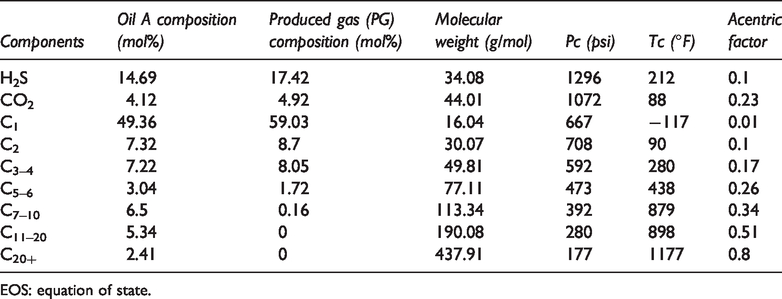
Based on its characterization, the crude oil (A) of oilfield K in Kazakhstan, with high H2S and CO2 content, was divided into nine pseudo-components. In oilfield K, the PG was reinjected into the reservoir to maintain the reservoir pressure and enhance oil recovery. The composition of oil A and PG is given in Table 1. The C20+ fraction of the crude oil has a density of 907 kg/m3. The reservoir temperature of oilfield K is 212°F. The parameters of the EOS were adjusted using Eclipse PVTi (developed by Schlumberger) to match the laboratory’s PVT data. Molecular weight of the plus fraction was adjusted to match the oil density. The critical parameters of the EOS for each component after adjustment are presented in Table 1.
The pseudo-composition of crude oil and produced gas and the critical parameters of EOS.
EOS: equation of state.
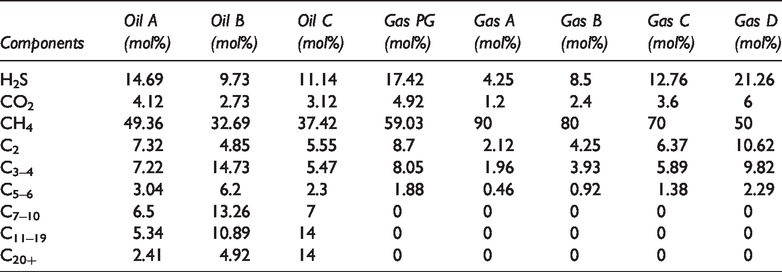
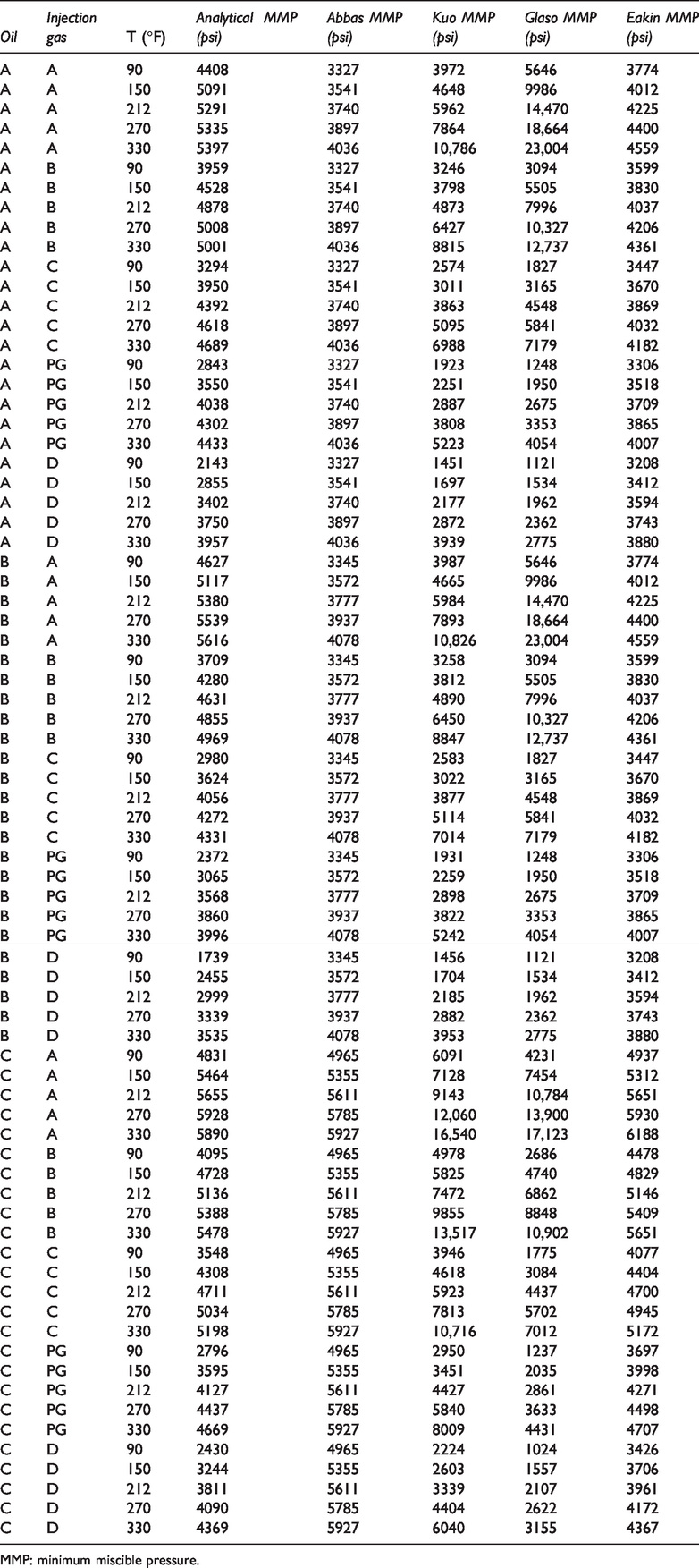
As slim-tube experiment is expensive and time-consuming, we used the mixing-cell method to calculate MMP. The mixing-cell method is that a series of PVT cells are interconnected and initially filled with oil and the gas is mixed in the upper cell at a trial pressure and the equilibrium phases are calculated assuming that complete mixing occurs within the cell (Abiodun et al., 2012; Tadesse et al., 2012). The mixing-cell method, by multiple contacts of equilibrium gas and oil with fresh gas and oil to find the key tie, has the advantage of high precision and quick calculating speed. The MMP of oil A displaced by PG is 4038 psi as determined by the mixing-cell method. Compared to the slim-tube experiment result of 4060 psi, a relative error of 0.5% supports the reliability and correctness of the mixing-cell method. Based on the original reservoir fluid, two oil and four gas samples are virtually manufactured by changing the components’ composition, as shown in Table 2. The analytical MMPs of oils A, B, and C displaced by gases PG, A, B, C, and D at temperatures 90, 150, 212, 270, and 330°F are calculated by the mixing-cell method. The results are presented in Table 3.
Composition of different reservoir fluids and injection gases.
Comparison of MMPs estimated from correlations to analytical calculated MMPs.
MMP: minimum miscible pressure.
The new correlation of MMP
The MMPs of oils A, B, and C displaced by gases PG, A, B, C, and D at temperatures 90, 150, 212, 270, and 330°F are also calculated by currently used correlations (shown in Appendix 1), and the results are presented in Table 3. Figure 1 shows the comparison between the analytically calculated MMPs and the predicted MMPs from several currently used correlations. As shown, the MMP predicted by correlations varies significantly. The maximum (average) relative error for the 75 analytically calculated MMPs is 104.3% (22%) for Abbas correlation, 180.8% (32.7%) for Kuo correlation, 326.2% (61.7%) for Glaso correlation, and 84.5% (11.9%) for Eakin correlation. Although Eakin correlation is the most reliable among these four correlations, it is still not sufficiently accurate; in some cases, the relative errors are over 1400 psi. Thus, a new correlation is required to predict MMPs for PG reinjections.
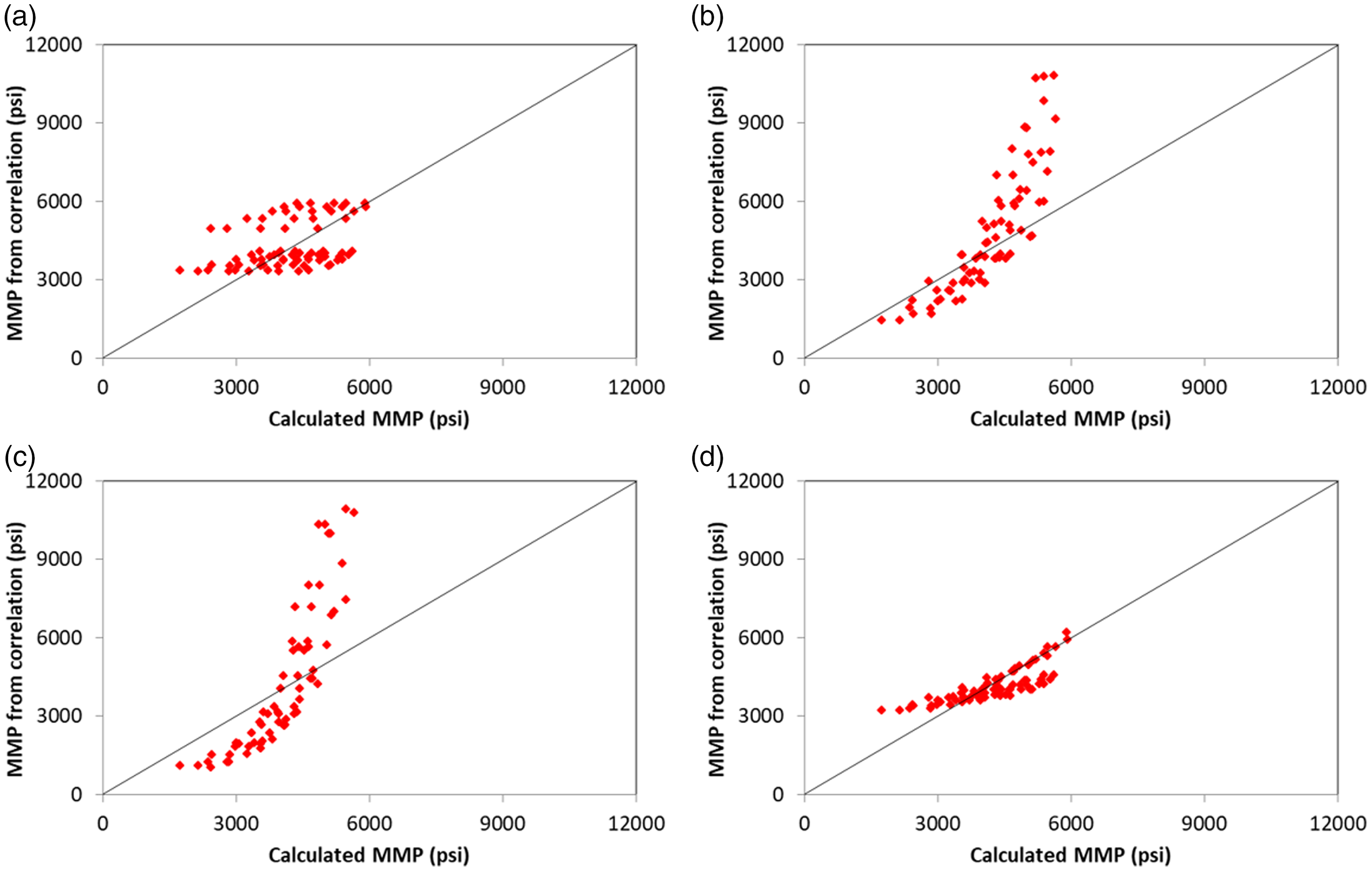
Comparison of analytical calculated MMPs with predicted MMPs from currently used correlations. (a) Abbas correlation, (b) Kuo correlation, (c) Glaso correlation, and (d) Eakin correlation. MMP: minimum miscible pressure.
As for other correlations, we selected four input parameters for predicting MMP: temperature, molecular weight of heptane plus in the oil, molecular weight, and molecular percentage of intermediates (C2–C6, CO2, and H2S) in the gas. We found a good fit for the analytically calculated MMPs as shown in Figure 2. The equation for fit is

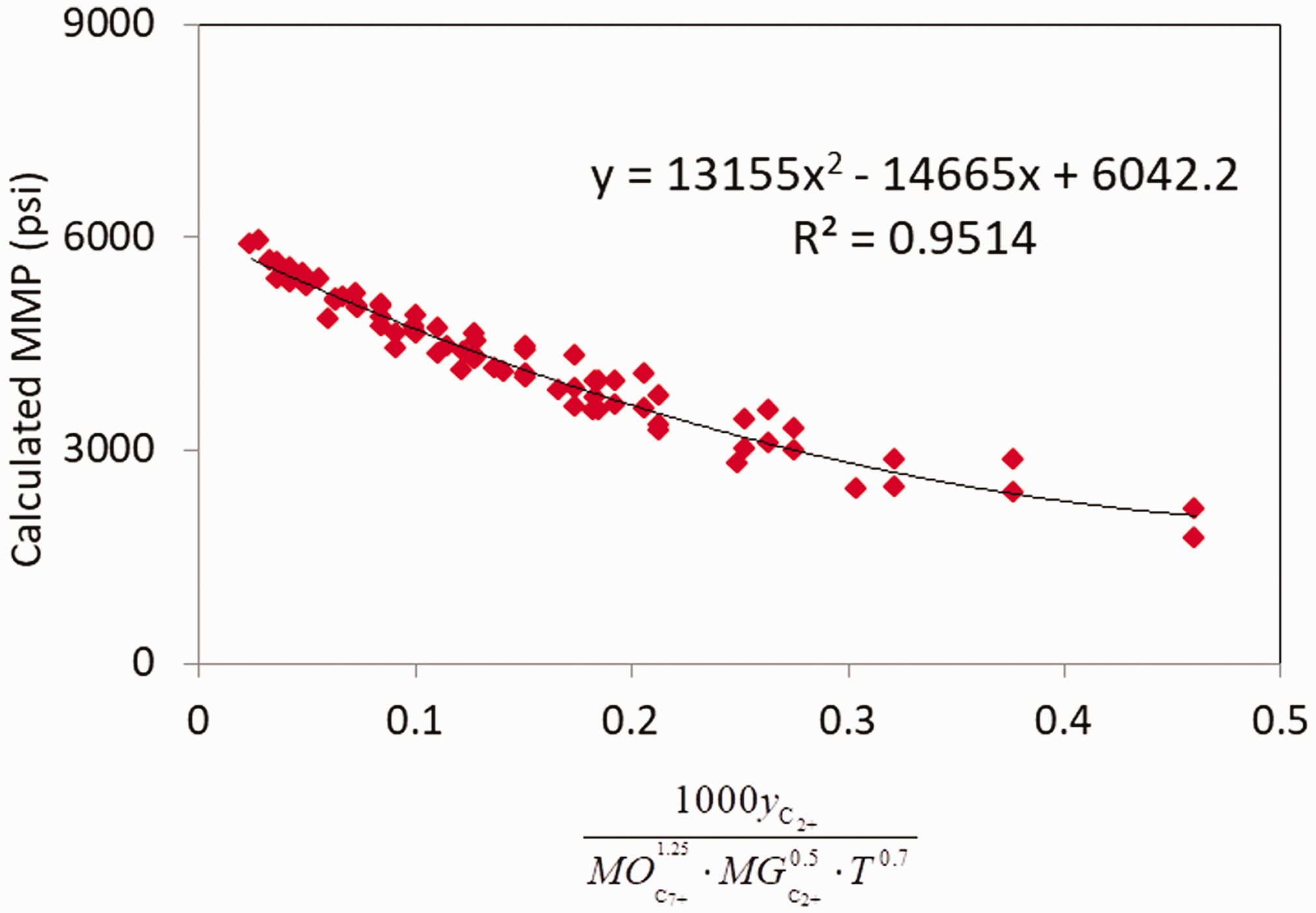
The new proposed correlation based on analytical calculated MMPs. MMP: minimum miscible pressure.
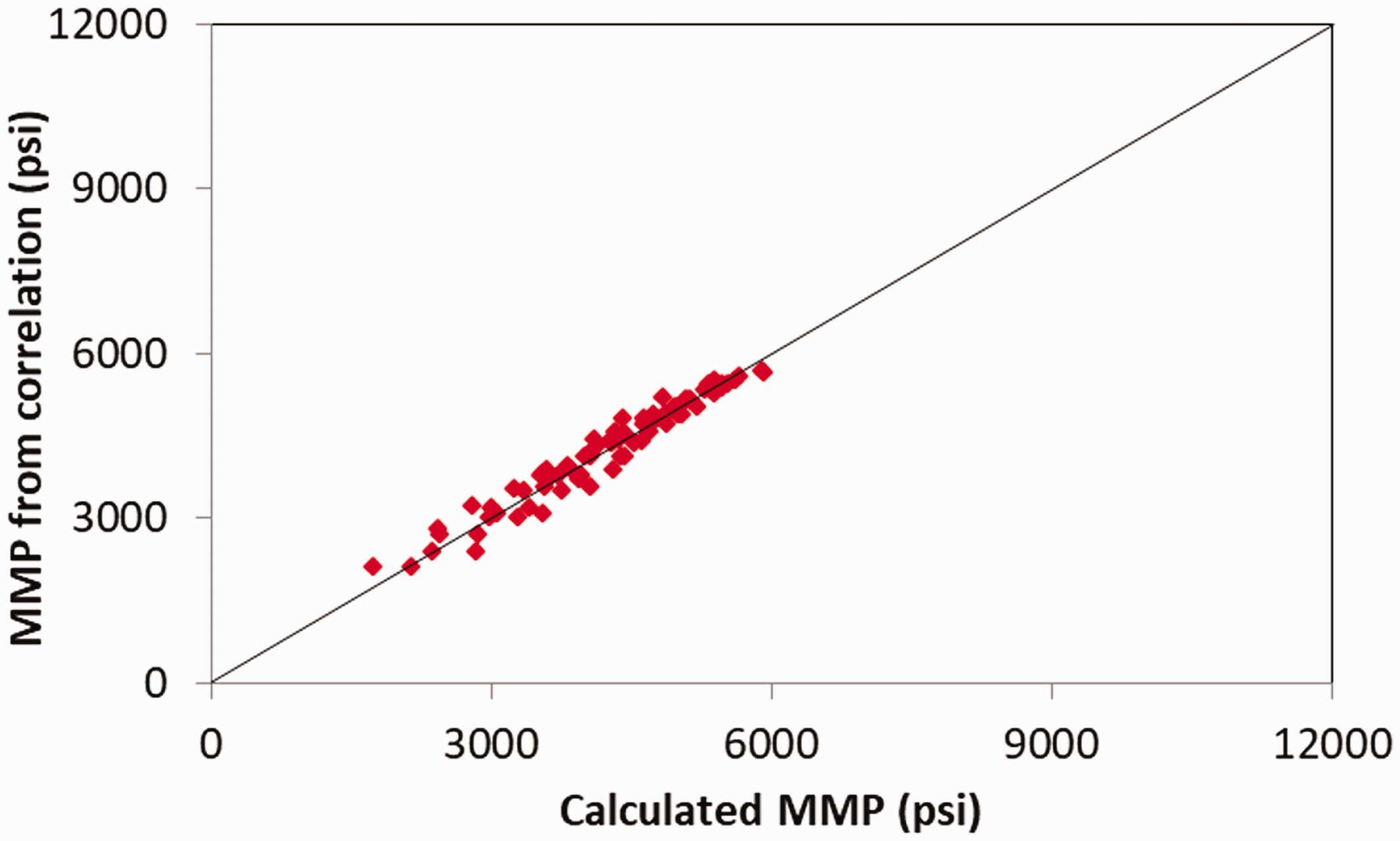
Comparison of analytical calculated MMPs with predicted MMPs from the new developed correlation. MMP: minimum miscible pressure.
The maximum relative error and the average relative error of the new proposed correlation for the 75 analytically calculated MMPs are 19.5 and 4.8%, respectively. The correlation coefficient of the new correlation is 0.9514. Figure 3 and Figure 4 shows the comparison of the analytically calculated MMPs and the predicted MMPs from the newly developed correlation. As shown, the new proposed correlation is superior to the other four correlations.
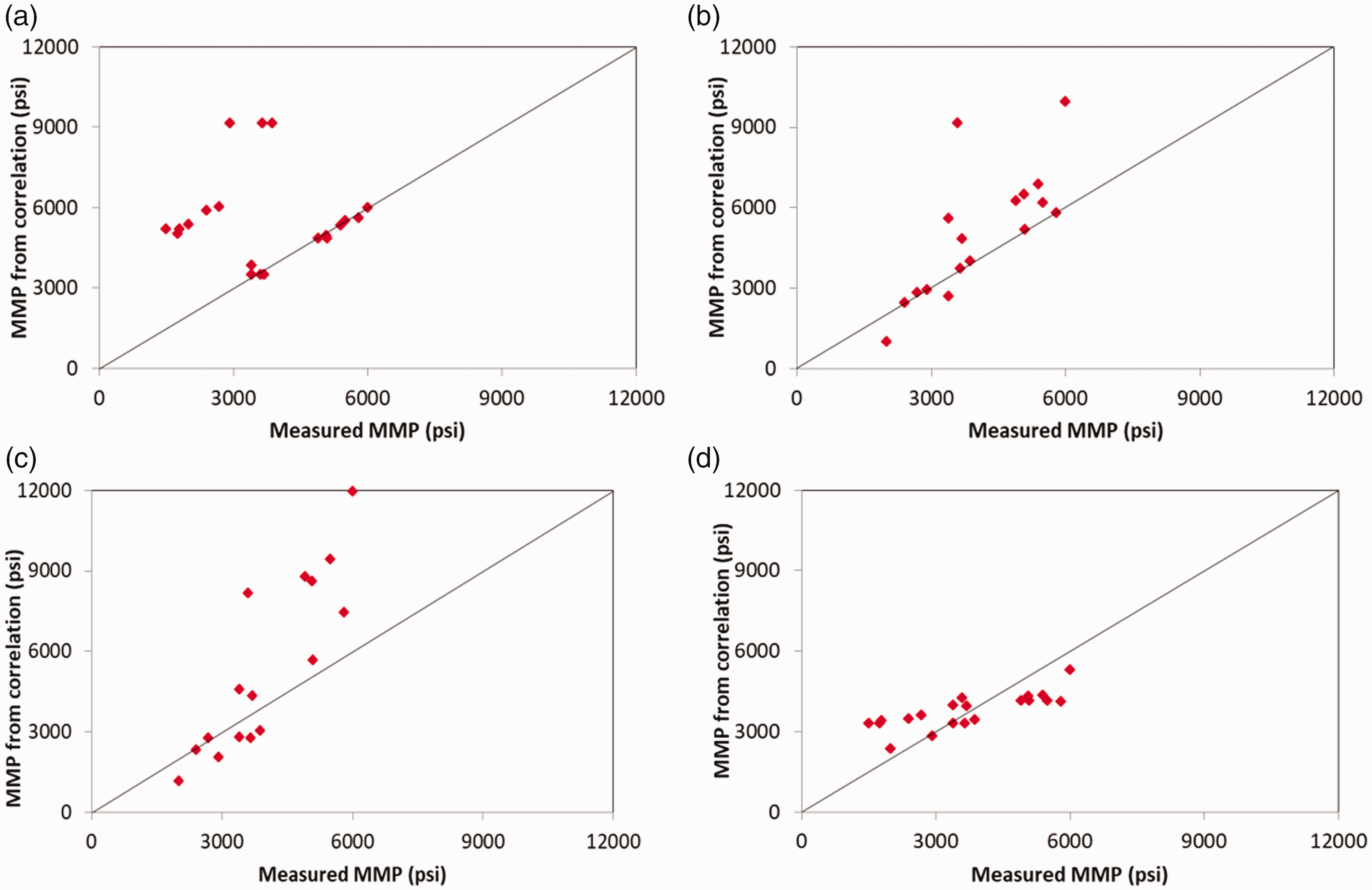
Comparison of experimental slim-tube MMPs with predicted MMPs from currently used correlations. (a) Abbas correlation, (b) Kuo correlation, (c) Glaso correlation, and (d) Eakin correlation. MMP: minimum miscible pressure.
Verification of the new correlation
There are some published data providing the results of slim-tube experiments with 12 oil samples (shown in Table 4) which were used to test the accuracy of the new correlation. The new proposed correlation and the other four correlations predicted the slim-tube MMPs. The results are presented in Table 4. Figures 4 and 5 compare the experimental slim-tube MMPs with the predicted MMPs of the developed and currently used correlations. The maximum (average) relative error for the 20 experimental slim-tube MMPs is 246% (80%) for Abbas correlation, 155% (29%) for Kuo correlation, 161% (50%) for Glaso correlation, 120% (30%) for Eakin correlation, and 32% (14%) for the new proposed correlation. This illustrates that the new proposed correlation is more accurate than all other correlations in predicting MMP.
Comparison of MMPs estimated from correlations to slim-tube MMPs.
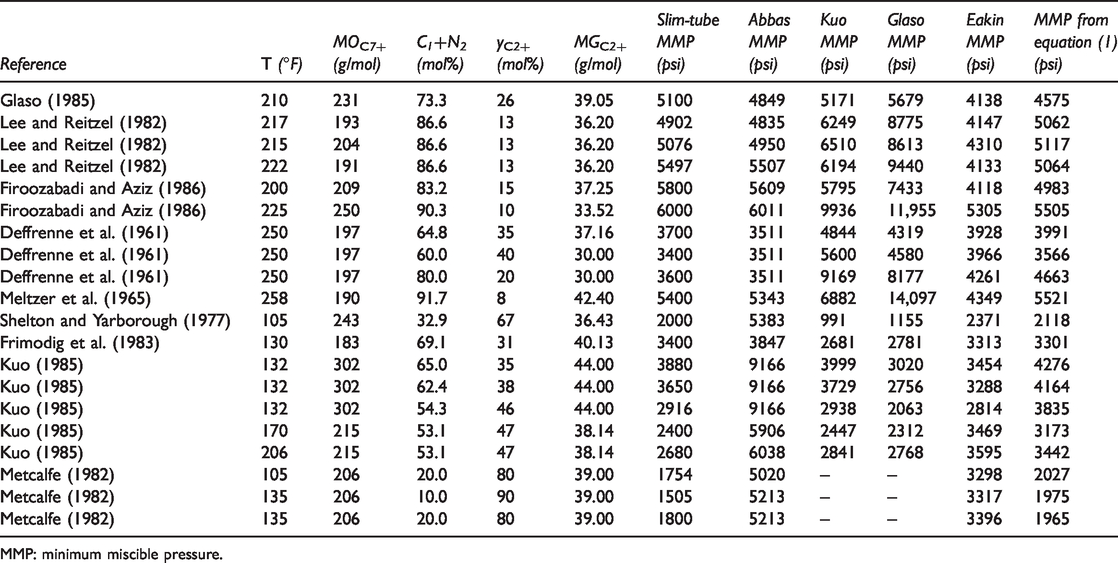
MMP: minimum miscible pressure.
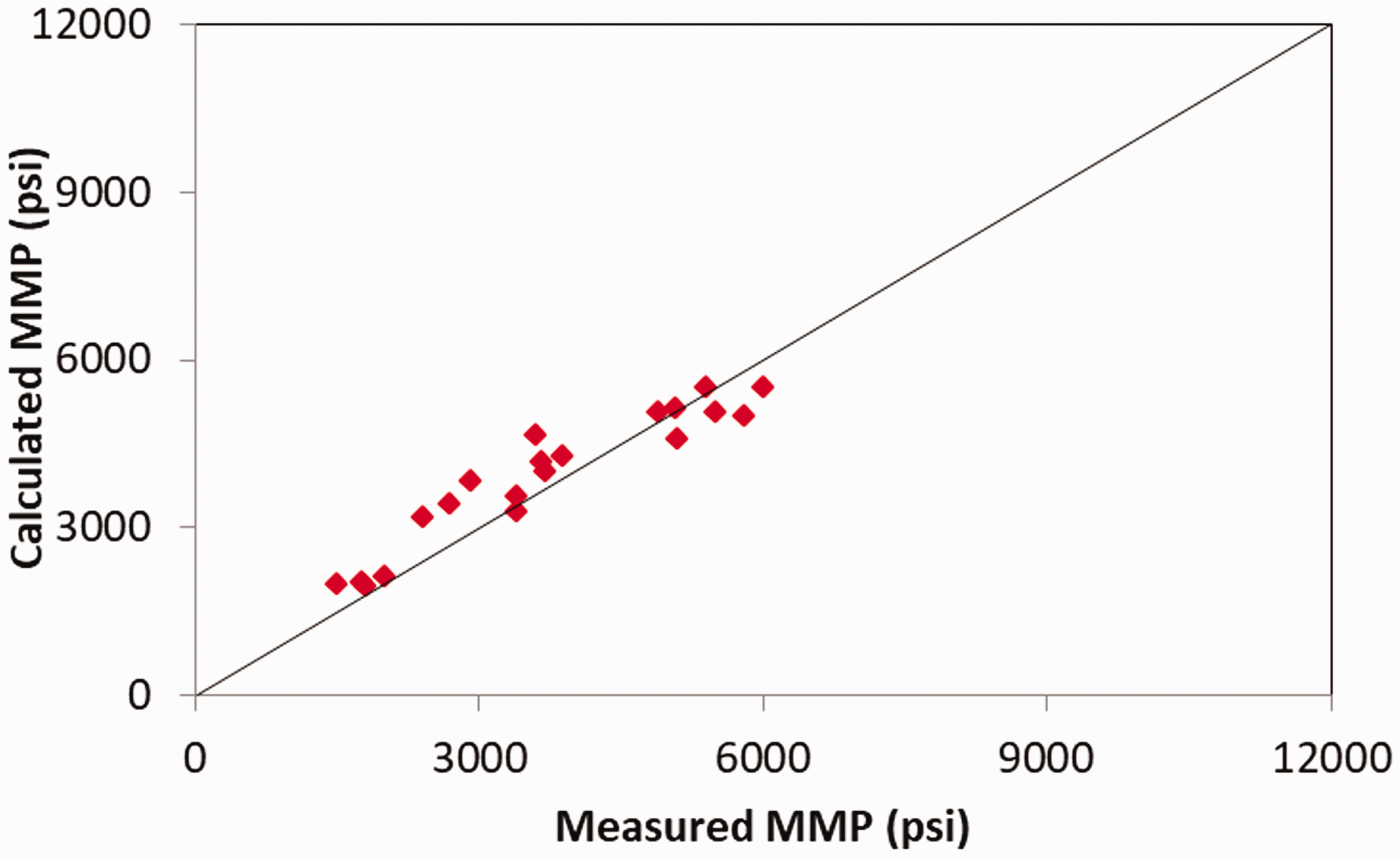
Comparison of experimental slim-tube MMPs with predicted MMPs from the new developed correlation. MMP: minimum miscible pressure.
In order to improve the accuracy of prediction, the 75 analytical calculated MMPs and 20 experimental slim-tube MMPs from displacement tests reported in the literatures were regressed to obtain a new correlation (shown in Figure 6) as follows

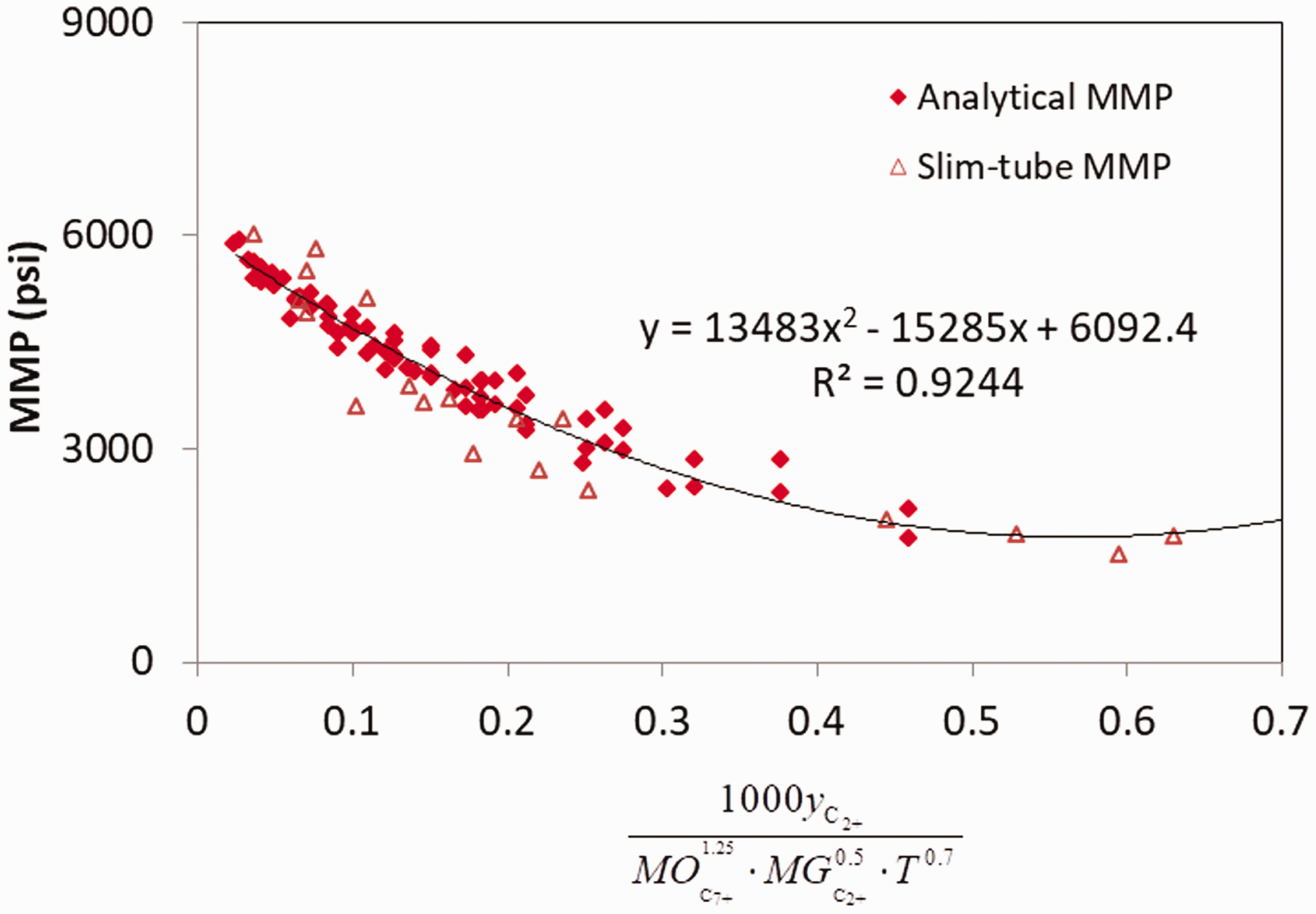
The new proposed correlation based on analytical calculated MMPs and experimental slim-tube MMPs. MMP: minimum miscible pressure.
The new correlation incorporating the slim-tube MMPs has the average relative error of 4.6% for the 75 analytical calculated MMPs, of 11% for the 20 experimental slim-tube MMPs and of 6.4% for all 95 MMPs (shown in Figure 7). The correlation coefficient of the new correlation is 0.9244. It should be pointed out that the new proposed correlation is based on the characteristics of 15 oil samples and therefore it is limited to oils of similar type. In other words, the new proposed correlation is limited to the conditions of MO C 7+ ranging from 183 to 302 g/mol, MG C 2+ ranging from 30 to 44 g/mol, the molecular percentage of C1 ranging from 10 to 91.7%, the molecular percentage of CO2 ranging from 0 to 45%, the molecular percentage of H2S ranging from 0 to 45%, and the reservoir temperature ranging from 90 to 330°F.
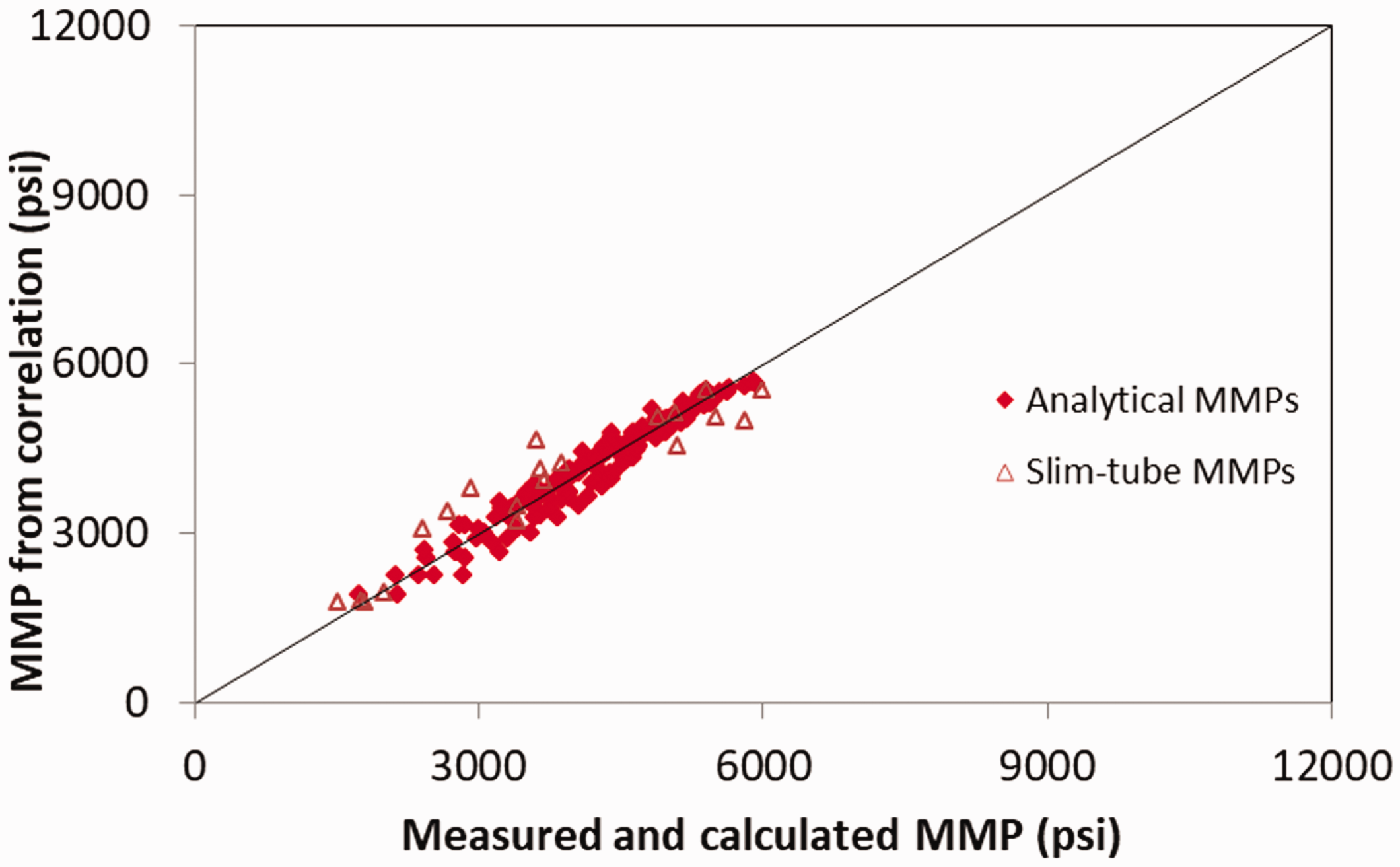
Comparison of analytical calculated MMPs and experimental slim-tube MMPs with predicted MMPs from the new developed correlation. MMP: minimum miscible pressure.
Conclusions
An empirical correlation for predicting MMP in the displacement of crude oil by PG was regressed based on 75 analytical calculated MMPs from mixing-cell method and 20 experimental slim-tube MMPs. The following conclusions can be summarized from the results of this work:
Good agreement between the analytically calculated MMP from the mixing-cell method and the results of the slim-tube experiment, with a relative error of 0.5% indicates that the analytically calculated MMPs with a wide range of temperatures and reservoir fluids can be used to develop an empirical correlation. The new proposed correlation with an average relative error of 6.4% for all the 75 MMPs shows its accuracy. The proposed correlation’s predictions are more precise than other previous correlations. The new proposed correlation is limited to the conditions of MO
C
7+ ranging from 183 to 302 g/mol, MG
C
2+ ranging from 30 to 44 g/mol, the molecular percentage of C1 ranging from 10 to 91.7%, the molecular percentage of CO2 ranging from 0 to 45%, the molecular percentage of H2S ranging from 0 to 45%, and the reservoir temperature ranging from 90 to 330°F.
Footnotes
Declaration of conflicting interests
The author(s) declared no potential conflicts of interest with respect to the research, authorship, and/or publication of this article.
Funding
The author(s) disclosed receipt of the following financial support for the research, authorship, and/or publication of this article: This work was supported by the Major Projects of China (2017ZX05030).
