




Abstract
Air pollution poses a serious threat to human health and the general ecosystem both in South Africa and globally. This is mostly caused by the mining and combustion of fossil fuels, such as coal. There are some known pollutants associated with coal mining and combustion that are emitted into the air, resulting in various health implications that affect children the most as they are the most vulnerable. In this study, the levels of certain air pollutants in schools in the vicinities of coal mines were assessed. A cross-sectional study design was adopted. Five schools were purposively selected for this study. Air samples were collected inside and outside the classrooms of each school. Radiello® passive air samplers were used to measure the levels of sulphur dioxide, nitrogen dioxide and ozone while filter pumps were employed for lead (Pb). Standard laboratory analytical methods were employed for the analysis. Estimates of the possible health risks resulting from exposure to airborne sulphur dioxide, nitrogen dioxide and ozone were performed using the United States Environmental Protection Agency Human Health Risk Assessment framework. The non-cancer risk of sulphur dioxide, nitrogen dioxide and ozone was determined using the hazard quotient. The results of this study revealed that sulphur dioxide, nitrogen dioxide and ozone were detected within and outside the classrooms at various levels. For example, the concentration of sulphur dioxide within the classroom ranged from 3.0 to 38 µg/m3. Outside the classroom, sulphur dioxide levels detected were much higher ranging from 17 to 84 µg/m3. The results of the non-carcinogenic risks from exposure to nitrogen dioxide, sulphur dioxide and ozone via inhalation route were less than 1.0. The elevated levels of these pollutants in the vicinity of schools investigated should be a cause for concern for all the stakeholders in the education sector. Therefore, appropriate measures need to be taken urgently to safeguard the health of the concerned community.
Introduction
Over the past decades, there have been major developments in terms of advancements in technology and industrialisation throughout the world. These have further resulted in a rapid and increased urbanisation and population. The sudden influx and concentration of people in different parts of the world have meant that many resources are consumed. In addition, the large influx of people has impacted negatively on the environment, thereby resulting in various environmental challenges. One such problem is environmental pollution, which is primarily caused by the mining and combustion of fossil fuels, such as coal. This has further led to several other problems such as climate change and global warming. This environmental pollution is a serious issue all over the world, especially in the industrialised nations. This has posed a serious threat to human health, plants, animals and the earth’s ecological systems. Numerous studies have indicated that the combustion of fossil fuel, such as coal used for electricity generation in most countries is largely responsible for air pollution (Liu et al., 2001; Kampa and Carstanas, 2008; Liu et al., 2015; Younger, 2004). This fossil fuel combustion is reportedly the single largest pollutant accounting for 80% of anthropogenic greenhouse gas emissions (Akpan and Akpan, 2012; Quadrelli and Peterson, 2007). Importantly, these greenhouse gases are reported to be largely responsible for climate change and global warming (Akpan and Akpan, 2012; Barnard and Bhattacharya, 2011; Moore et al., 2008). All these problems are having a widespread effects on human health as well as on the ecological and societal systems (Hassan et al., 2016; Longobardi et al., 2016; Wardekker et al., 2012).
The World Health Organisation (WHO, 2016) reported that an estimated 6.5 million deaths are ascribed to urban outdoor air pollution annually. In India, for example, about 55% of Delhi’s population is reportedly directly affected by air pollution that can translate into 3000 ‘premature deaths’ annually due to air pollution-related diseases (Centre for Science and Environment, 2012).
South Africa’s experience regarding the issues of coal mining and combustion is similar to that reported in other countries. This is because South Africa largely depends on coal for electricity generation. According to ESKOM (the Electricity Supply Commission), this country produces about 224 million tonnes of marketable coal per year (ESKOM, 2016). This results in South Africa being known as one of the largest exporters of coal worldwide; in fact, it is the world’s fifth largest coal exporting country (Eberhard, 2011; ESKOM, 2016). In fact, this coal mining and combustion is responsible for the high levels of air pollution (Department of Environmental Affairs and Tourism, 2005). The country releases 170 million tons of carbon dioxide (CO2) annually, about 0.7 million tons of nitrogen oxides and about 1.5 million tons of sulphur oxides into the environment through electricity generation (Lloyd, 2002). These unsustainable levels of pollutants released into the environment over the years have caused much harm to the health of people, especially those living in communities where these mines and power stations are situated (Wright et al., 2011). In fact, it is of grave concern that the most susceptible and neglected population ‘subject to serious health effects from air pollution may be those who live very near major exposure routes’ (Brugge et al., 2007). This view is in line with the air quality model report of WHO (2016) which indicated that ‘92% of the world’s population lives in places where air quality levels exceed recommended limits’.
According to Greenpeace Africa, an estimate of 2200 premature deaths per year is reported due to emissions from coal-fired power plants. This figure includes 200 deaths of young children (Baillie, 2015).
In all these incidences, it is to be noted that children in these polluted communities are reported to be the most vulnerable. Based on recent investigations, the environment in which they live and learn is highly polluted (Albers et al., 2015; Naidoo et al., 2013; WHO, 2017). They are more vulnerable to the effects of any environmental hazard exposure than any other segment of the society because their bodies are still fragile and their organs still developing (Millennium Ecosystem Assessment, 2005; WHO, 2017). The implications of the health problems resulting from air pollution are identified as the major reason for absenteeism among American school children (Meng et al., 2012; Park et al., 2002). In South Africa, absenteeism due to various health problems that result in hospital admission is also a major issue among school children in these polluted environments as indicated in the studies of both Albers et al. (2015) and Naidoo et al. (2013). In fact, it is reported that South African children are major victims of air pollution and this invariably happens within their homes and schools (Mathee, 2003). In their comparative study, Zwi et al. (1990) examined the respiratory health status of children living in this present study area (Mpumalanga Province) and other less polluted areas. The results revealed that children in the polluted areas were suffering from different respiratory problems such as a cough, asthma, wheezing and chest colds compared to the control group. The researchers went further and asserted that the reason for this was the fact that these children attended schools in a pollution exposed environment.
Air pollutants and health implications
Other than carbon monoxide (CO) and CO2, coal contains several pollutants that are released into the air which invariably affect human health and the general ecosystem (Sabbioni et al., 1984). Examples of these pollutants, as investigated in this study, are ozone (O3), sulphur dioxide (SO2), nitrogen dioxide (NO2) and lead (Pb). Several studies conducted in South Africa and other countries have indicated that exposure to these pollutants may be associated with serious diseases such as increased respiratory ailments, reduced lung function, nervous system damage in children, cardiovascular diseases, cancer in various forms and an increased number of deaths (Albers et al., 2015; Brunekree and Holgate, 2002; Burt et al., 2013; Dockery and Pope, 2002; Leonarte et al., 2009; Mathee, 2003; Okonkwo et al., 2001; Olaniyan et al., 2017; Stieb et al., 2002; Tang et al., 2008; Wright et al., 2011).
People who live near combustion sources such as coal-fired plants are reported to be exposed to higher levels of any of these pollutants (Bryan and Loscalzo, 2017; Guarnieri and Balmes, 2014; Liu et al., 2012). For example, a comparative study was conducted in the US between people living in residential areas that were in proximity to coal-fired plants and those who were not in proximity to coal-fired plants. The results revealed an association between residential proximity to fuel-fired power plants and hospitalisation rate for respiratory diseases such as asthma compared with one that had no power plant (Liu et al., 2012). Another study conducted in South Africa in schools located around mine dumps indicated that these school children are exposed to high levels of air pollutants such as SO2 inside their classrooms. These children were reported to have suffered from asthma attacks as a result of these pollutants (Nkosi et al., 2017).
Similarly, in South Africa, Albers et al. (2015) examined respiratory health implications and the associated risk factors in children living in two towns in Mpumalanga (Emalahleni and Middelburg) where air pollution levels are high. The result of this study indicated that these children were exposed to air pollution both in their schools and homes and as a result were diagnosed with various health problems which resulted in the absence of some students at certain times. Thirty-four per cent of the children had experienced a respiratory infection from their childhood up to the present time. About 16.5% of the children were diagnosed with bronchitis, asthma (7.1%), chest coughs (10.1%), 25% (phlegm), and others. Likewise, in Taiwan, studies among children in schools located around coal-fired plants revealed that exposure to arsenic might contribute to DNA damage, asthma and allergic rhinitis in children (Wong et al., 2005). In Oslo, Norway, on the other hand, long-term exposure to NO2 has been reported to result in lung cancer among mine workers (Nafstad et al., 2003). Similarly, in Japan, school children exposed to NO2 were also found to have suffered from respiratory illnesses (Shima and Adachi, 2000).
Mine workers exposed to SO2 in the United States are invariably reported to die from chronic lung diseases (Bridbord et al., 1979). Studies on school going children have also reported an association between exposure to SO2 and illnesses resulting in absenteeism in Korea (Park et al., 2002) and Europe (Sunyer et al., 2003). A study conducted in New Orleans revealed that a high concentration of Pb in the blood was responsible for an 89% increase in deaths from cardiac diseases (Menke et al., 2006). For children, Pb according to the US Centre for Disease Control and Prevention has been regarded as one of the most dangerous environmental threats (Hou et al., 2017). Recent studies have reported that exposure to Pb from soil, water and dust can lead to several health problems such as elevated blood Pb levels which lead to impaired cognitive development in children (Hou et al., 2017). Studies conducted in South Africa and various other places have also reported that exposure to Pb affects children’s IQ levels negatively (Heinze et al., 1998; Koller et al., 2014; Malcoe et al., 2002; Mathee, 2004; Schutz et al., 1997; Schwartz, 1994).
These chemicals may also affect pregnant women. For example, a research study conducted at the University of Southern California revealed that pregnant women who breathe air heavily polluted with O3 are at risk of giving birth to children afflicted with intrauterine growth retardation (Salam et al., 2005). It is also reported that O3 exposure is a major cause of absenteeism among school children in Southern California communities where about 83% experience upper respiratory illnesses (Gilliland et al., 2001).
Furthermore, these pollutants when deposited on the ground seep into the soil, thereby leading to the permanent degradation of the soil and also affects the pH of the soil (Čakmak et al., 2014; Cui et al., 2015; Hou et al., 2017). One of the studies conducted in Emalahleni has reported a high concentration of the different heavy metals, namely cobalt (Co), chromium (Cr), nickel (Ni) and Pb in the soils due to atmospheric deposition (Maya et al., 2015). These metals are reported to have contaminated and reduced the quality of the soil and damaged the plants (Maya et al., 2015).
In terms of agriculture, the best soil in the country is largely found in this area, which makes the province the largest producer and supplier of food in South Africa (Bureau for Food and Agricultural Policy, 2012). Unfortunately, due to coal mining activities, the quality of the soil has reduced drastically over the years. This has continued to affect the quality of agricultural produce negatively, thereby leading to increases in food prices all over the country (Bureau for Food and Agricultural Policy, 2012). Farmers in this area, for example, complained that the pollution had had a severe effect specifically on their maize crop thereby leading to the contamination and death of several tonnes of the crop and more tonnes will be lost in the future (Bureau for Food and Agricultural Policy, 2012).
High concentrations of these toxic elements in the soils with the acidic pH affect plants and pose a great risk to the health of people who consume the contaminated agricultural products (Ochieng et al., 2010). With regard to water quality, these pollutants coming from coal mines and power stations through atmospheric deposition and surface run-off have also caused serious degradation to South African water systems (Cloete et al., 2017; Zibret, 2013).
This has further resulted in acidification of the water and has affected the health of the people and animals that depended on the water for drinking (Bureau for Food and Agricultural Policy, 2012; Ochieng et al., 2010). Poor people who do not have the money to buy safe drinking water might have to depend on the contaminated water not even minding the effects this could have on their health (News24, 2012). A study conducted on a particular stream in Mpumalanga revealed contamination and mortality of aquatic bodies by various heavy metals such as Pb and cadmium (Cloete et al., 2017). It is to be noted that when these contaminated aquatic organisms such as fishes are consumed, they can pose a great danger to human health (Cloete et al., 2017; Ochieng et al., 2010). Studies have reported that ingestion of these metals (e.g. Pb) from soil, water and dust can lead to several health problems such as neurotoxicity, kidney toxicity, sterility, anaemia and hypertension (Hou et al., 2017).
The effects of pollution in this area are not only limited to humans but also animals in this area were also found to have been affected in various ways. For instance, farmers in this area have continuously complained about the severe pollution which is also affecting their cattle’s drinking water, which, in turn, affects milk production and quality. They also reported negative impacts on the fertility of their cattle and their inability to reproduce (Bench Mark Foundation, 2014).
Methods and materials
Research site
The study was conducted in the town of Emalahleni, which is situated on the Highveld of the Mpumalanga Province of South Africa. Emalahleni, formerly known as Witbank, means a place of coal. In the Mpumalanga Province (formerly known as the Eastern Transvaal Highveld), coal mining activities have been in existence as far back as the 18th century (Maya et al., 2015; Munnik et al., 2010).
About 45 collieries and 12 power stations are situated on the Highveld of the Mpumalanga Province and most of these are concentrated in the town of Emalahleni (Yende, 2016). In fact, about 220 million tons of coal are mined in Mpumalanga per year, which is equivalent to around 90% of South Africa’s annual total coal mine yield (Baillie, 2015). Emalahleni is a coal mining town that also supplies the coal to neighbouring power stations for electricity generation. In addition, there are a number of smelting companies around the mines which use the coal in the foundries (Maya et al., 2015). The Department of Environmental Affairs declared this air pollution hotspot a Highveld priority area in terms of the National Environmental Management: Air Quality Act 39 of 2004 (Department of Environmental Affairs, 2011; Munnik et al., 2010). Air pollution in this area is characterised by a mixture of different toxic substances such as hydrocarbons and greenhouse gases at high concentrations (Pone et al., 2007). In fact, several reports have indicated that Witbank (Emalahleni) has the highest concentrations of these various pollutants in the atmosphere and the dirtiest air in the world (Maya et al., 2015; Munnik et al., 2010; Zibret, 2013). All these factors have had negative effects on this environment, the health of people and the general ecosystem as well (Zibret, 2013). In fact, conversations with a number of the town’s residents revealed that almost every evening one would notice smog emanating from the coal-fired plants and several other industries. Furthermore, a conversation with one of the selected schools’ principals revealed that there were approximately 15 mines in the general vicinity of her school and sometimes when it is windy, the coal dust blows into the classrooms (Olufemi, 2011, personal communication).
Furthermore, due to the development as a result of industrialisation that brought increased job opportunities, Emalahleni has doubled its population in the last 10 years (South African Cities Network, 2014).
Sampling procedures
There are about 25 schools in this local municipality. When selecting the sample, the researcher contacted the local Department of Education who indicated that schools that were within the coal mining and combustion precinct would be the most appropriate to choose. Five schools that were closest to the coal mines and coal-fired plants were chosen. After the schools were selected, the researcher approached the principal in each school to explain what needed to be done. In order to maintain the anonymity of the schools, these were identified as School A, School B, School C, School D and School E.
Collection of air samples
The aim of collecting air samples was twofold. First, we hypothesised that compounds such as NO2, SO2, O3 and Pb would be readily available in the air. The hypothesis was based on the fact that the schools were in the proximity of the coal mines and the allied industries. Furthermore, this hypothesis is influenced by the 2005 WHO Air Quality Guidelines (WHO, 2005) designed to offer global guidance on reducing the health impact of air pollution (Millennium Ecosystem Assessment, 2005; WHO, 2011). Specifically, Radiello cartridges (samplers) measuring the presence of NO2, SO2, O3 and a filter measuring the presence of Pb were used. Second, the levels or densities of each of the identified compounds in the air within the vicinity of the participating schools were established. Four samplers were set up in each school. Two types of samplers were put in the classrooms, and two were put outside the classrooms (on the school premises). One sampler was used to collect both NO2 and SO2. The other sampler was used to collect only O3. The first setting up of equipment and sample collection for NO2, SO2 and O3 commenced on 5 June 2012. The O3 samples were taken for analysis after seven days. Two weeks were allocated for the sampling of NO2 and SO2. Accordingly, for these two compounds, the collection period was 5–19 June 2012. To collect Pb, sampling pumps with filters were used over a period of seven days (12–19 June 2012). In this instance, two sampling pumps were set up at two schools, namely School C and School E. The pumps were connected to an electricity power source and the filters were fixed onto the mouth of each pump. The filters were then used to collect air particles from the school environment. Upon collection of the equipment at School E on the seventh day, it was evident that the pump had been tampered with. However, the equipment at School C was intact.
Quality control
Quality control involves the use of certain procedures to verify that the analytical methodology used for sample analysis fulfils the requirements for quality. In this work, the following quality control measures were taken:
Method blanks were analysed to monitor possible contamination. Samples were analysed in duplicates to monitor precision.
Specifically, the Radiello samplers for the air analysis were sealed in plastic tubes and were then stored and transported in ice coolers from the sampling site to the laboratory. Each sample was labelled clearly and this was recorded in a quality log book. For quality process in the laboratory, samples were received and kept in the refrigerator until analysis. The air samples were prepared with the blank Radiello sample that was not exposed to the field to check. In addition, the quality control procedure for the air sampling and monitoring carried out in this research work included preventative maintenance of equipment and calibration of equipment.
Analysis of samples
In sum, 10 Radiello cartridges were collected for the determination of NO2 and SO2. In addition, 10 cartridges were collected for the determination of O3. Concurrently, one filter was collected for the analysis of Pb (the other one was tempered with at School E). During the testing for the presence of NO2 and SO2, initially, the extraction of the cartridges was performed with diluted hydrogen peroxide. The main analysis after the extraction involved the use of ion chromatography. On the other hand, O3 was determined by spectrophotometric analysis in accordance with the method published by Radiello®. Finally, to test for the presence of Pb the exposed filter was initially subjected to acid digestion followed by graphite furnace atomic absorption spectroscopy.
Human health risk assessment (HHRA)
The HHRA framework is useful for estimating the human health risk that could occur from exposure to a known pollutant (Thabethe et al., 2014). It is predictive and uses existing exposure data to measure the health effects of human exposure to a particular pollutant (Briggs et al., 1996). Human exposure was explained in terms of the average daily dose (ADD) and was computed using equation (1)

Recommended values in equations of the daily exposure dose of NO2, SO2 and O3.
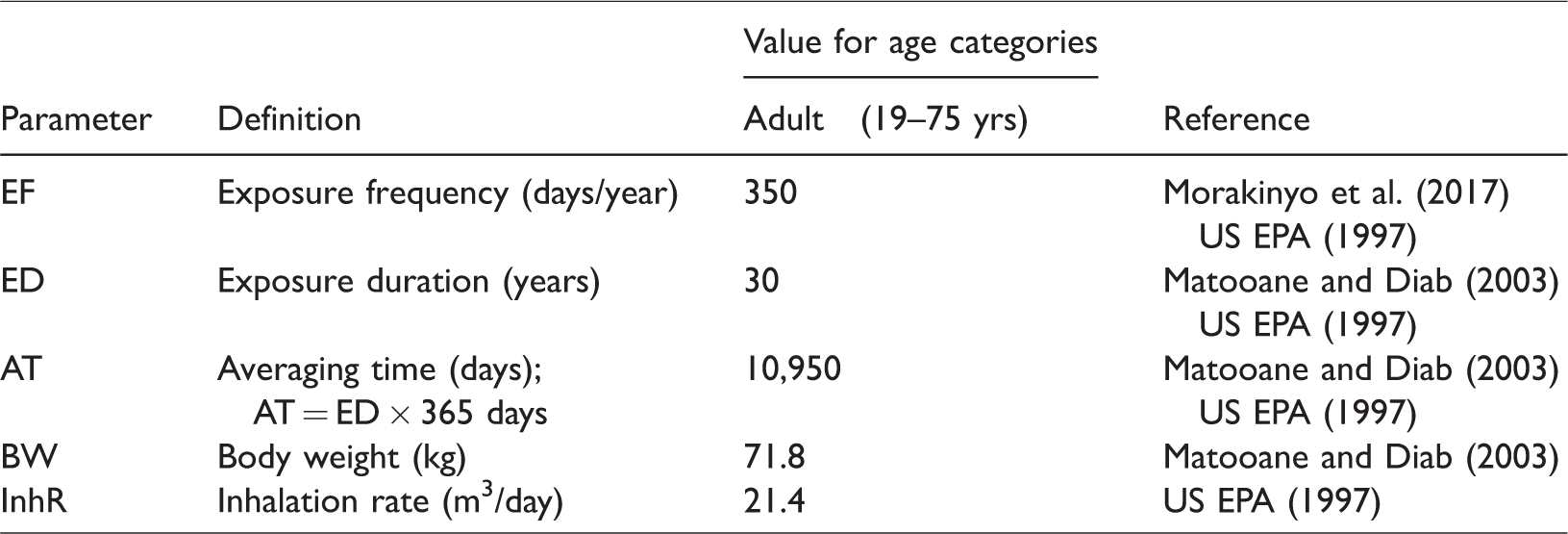
The non-cancer risks of NO2, SO2 and O3 for the study population adults were estimated using the hazard quotient (HQ). The HQ measures the presence or absence of adverse health effects due to exposure to a pollutant (Muller et al., 2003; US EPA, 1997). It is defined by dividing the ADD from each exposure route by a definite reference dose (RfD)

RfD is the maximum daily exposure limit allowable for humans (Li et al., 2014: 845). For this present study, the 24-hour NO2 (188 µg/m3), SO2 (125 µg/m3) and the 8-hour O3 (120 µg/m3) as stipulated by the national ambient air quality standard for South Africa and the South Africa standards – Air Quality Act (Act 39 of 2004) were used.
An HQ of 1.0 is the benchmark of safety. An HQ that is <1.0 indicates an insignificant or ‘negligible risk, that is, the pollutant under scrutiny is not likely to induce adverse health effects, even to a sensitive individual. An HQ > 1.0 indicates that there may be some levels’ of risks to sensitive individuals as a result of exposure (US EPA, 1989).
Results
Before presenting the results of this present study, it is perhaps prudent to highlight South Africa’s acceptable levels of the pollutants reported here. Table 2 shows the national ambient air quality standards for NO2, SO2, O3 and Pb as proposed by the Department of Environmental Affairs (RSA) (2004).
National ambient air quality standards for NO2, SO2, O3 and Pb.
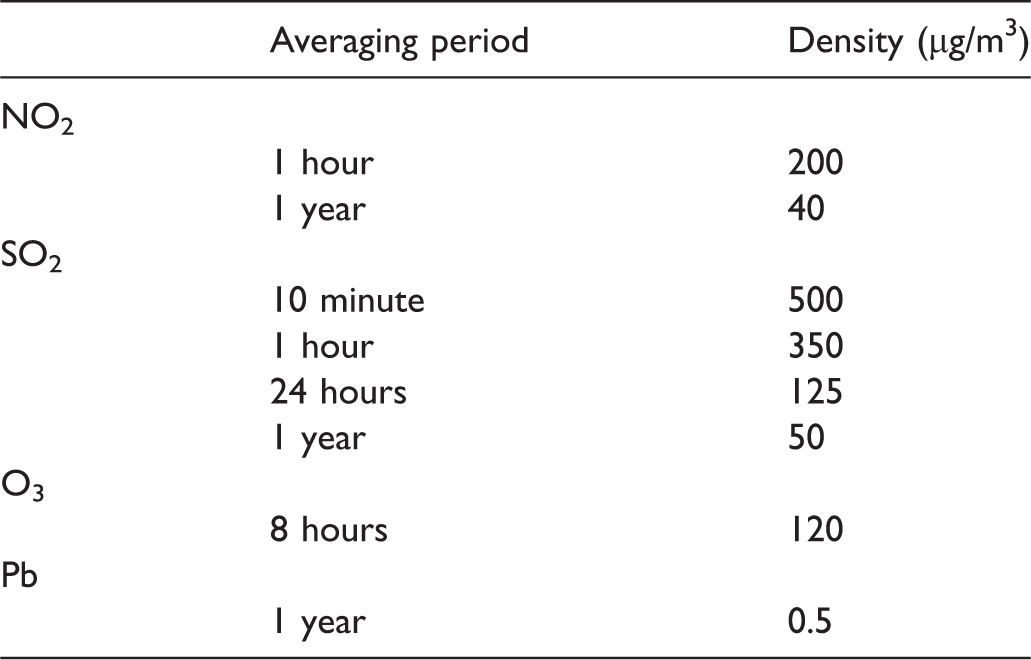
Source: Adapted from Department of Environmental Affairs, RSA (2004).
It should be explained that it is difficult to argue for the actual benchmarking with the national ambient air quality standards (Department of Environmental Affairs, 2004) and the (WHO, 2011) values as the averaging periods differed. All one can do is to extrapolate using the given values; however, a disadvantage of doing that would be speculative in nature. The compounds detected in the air were NO2, SO2 and O3. When presenting the results, all the calculations in respect of the determination of NO2, SO2 and O3 concentrations were based on an average ambient temperature that was obtained from the South African Weather Service. Table 3 shows the concentrations depicting of NO2, SO2 and O3 in the air in the vicinity of the schools. The values were provided here to give a better picture of how the pollutants may affect teaching and learning in schools.
Concentrations of NO2, SO2 and O3 measured inside and outside the classrooms in each school.
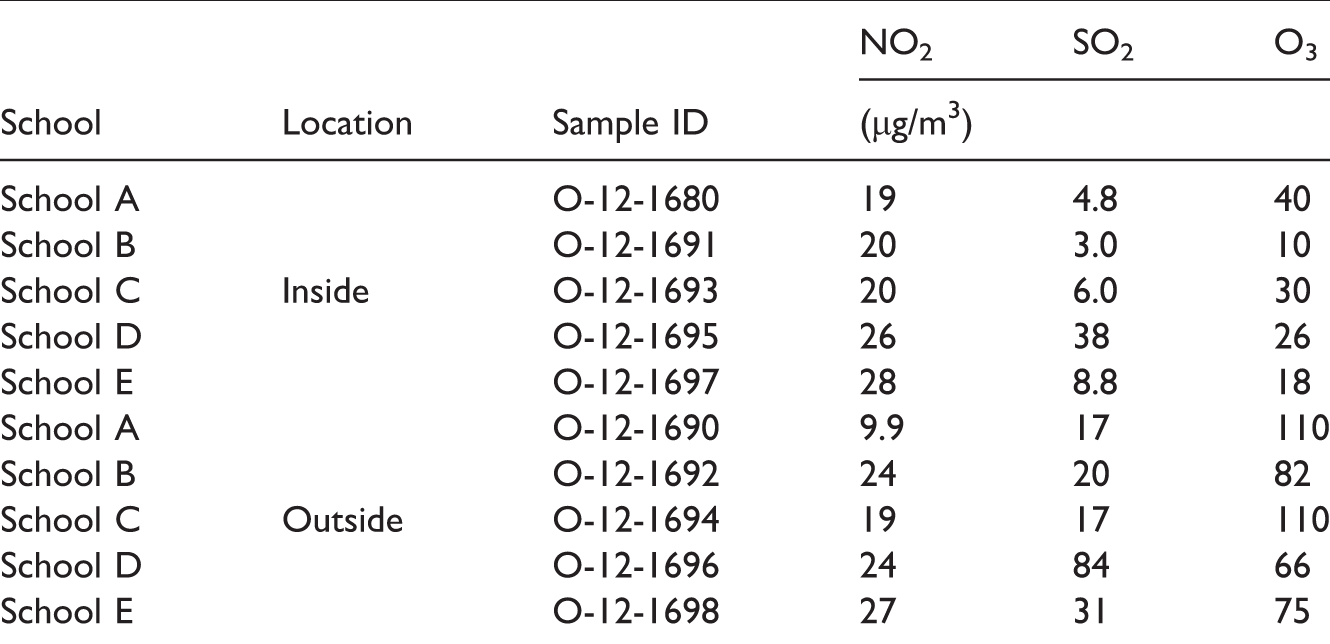
It is observable from the table that the concentrations of NO2 within the classrooms ranged between 19 and 28 µg/m3, while the levels obtained outside the classroom ranged from 9.9 to 27 µg/m3. In fact, the results show that NO2 concentrations within and outside the classrooms were relatively constant. According to the WHO (2011), the recommended values for exposure to NO2 should be at a rate of 40 µg/m3 on an annual mean and 200 µg/m3 on a 10-minute mean. It needs to be explained that an x-hour mean is calculated every hour and averages the values for x hours. Consequently, a 10-minute mean entails exposure to the indicated amount of 200 µg/m3 in 10 minute. Both within and outside the classrooms, learners in this study were exposed to relatively low levels of NO2 (see Table 2).
In terms of SO2, the concentrations within the classroom ranged between 3.0 and 38 µg/m3 while outside the classrooms, they ranged from 17 to 84 µg/m3. These results indicate that the amounts of SO2 were extremely high within the classrooms of School D. The recommended exposure values to SO2 should be at a rate of 20 µg/m3 on a 24-hour mean and 500 µg/m3 on a 10-minute mean (WHO, 2011). It may be observed from Table 2 that the SO2 levels within the classrooms were well below the recommended levels with the exception of school D. Outside the classroom, however, the levels were at the threshold limit for School B, while they were high for School E and School D, respectively. In terms of O3, the concentrations ranged between 10 and 40 µg/m3 within the classroom while it was between 75 and 110 µg/m3 outside the classroom. According to WHO (2011), it is recommended that the acceptable levels of exposure to O3 should be at 100 µg/m3, on an 8-hour mean. The results presented in Table 2 show that in all the schools, the exposure levels to O3 were acceptable inside the classrooms. However, they were beyond the acceptable limit outside the classrooms in School A and School C.
As indicated previously, the filter for Pb placed at School E was found to be tampered with. In fact, the filter did not take any particulate material, so no results could be reported from it. However, a Pb reading could be assessed from the filter placed at School C. With respect to the presence of Pb, atomic absorption spectroscopy was used after acid digestion of the exposed filter. The results indicated that the Pb density was <0.007 µg/m3.
The results of the analysis for non-carcinogenic risks from exposure to NO2, SO2 and O3 via the inhalation route are presented in Table 4. All the HQ values of adults for all the studied schools are less than 1.0. This finding is consistent with the outcome of a study conducted by Morakinyo et al. (2017) where they determined the HHRA of sub-10 µm and gaseous pollutants in an industrial area.
HQ values for NO2, SO2 and O3.
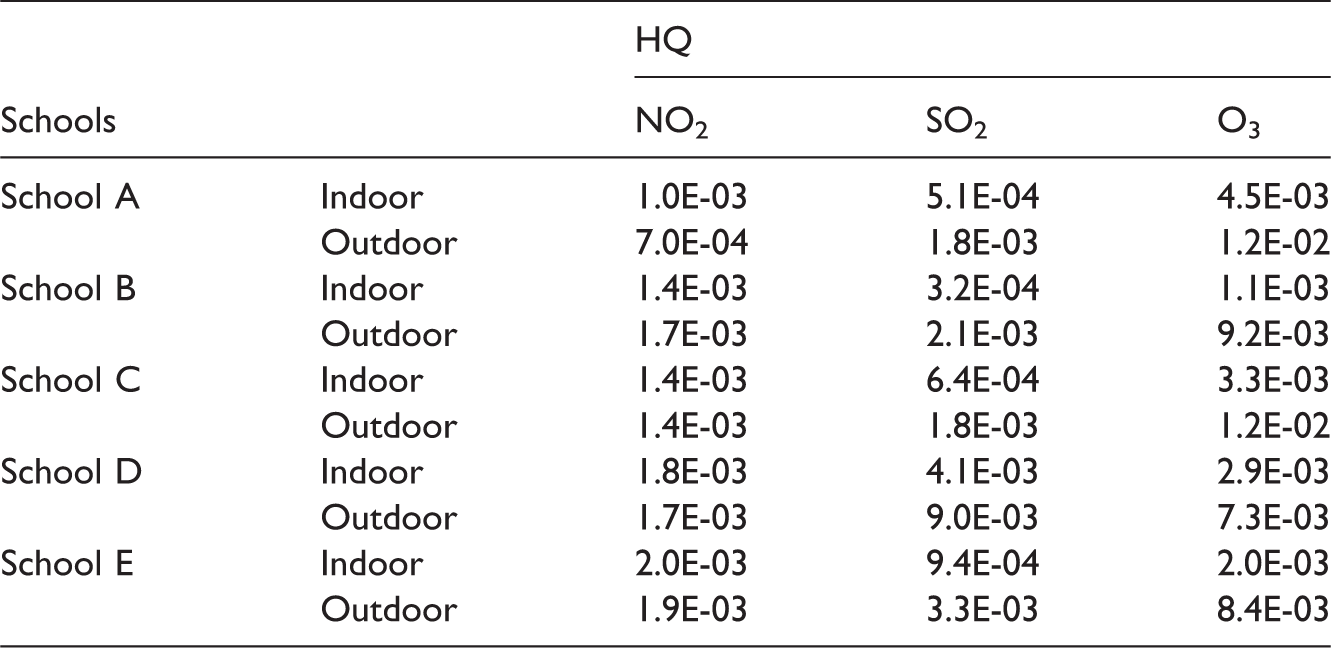
HQ: hazard quotient.
An HQ of less than 1 signifies that the concentration of NO2, SO2 and O3 will likely pose no threat to public health. This implies a negligible risk, even to a sensitive individual. However, recent epidemiological studies have revealed that exposure to low levels of NO2 could increase emergency room hospitalisation for acute and obstructive lung diseases in the general population (Chen et al., 2012; Santus et al., 2012). ‘It has even been previously established that no level of exposure to O3 is safe since health risk has been found to be associated with O3 even at concentrations below the recommended standards’ (OECD, 2008).
Discussion
In this study, the levels of certain air pollutants in schools in the vicinity of coal mines were assessed. The results of this study revealed that pollutants such as SO2, NO2, O3 and Pb were indeed present in the vicinity of the schools. The reality is that exposure to these pollutants may result in harmful health effects (either short term or long term) even when present at low levels (Norman et al., 2007).
For example, exposure to SO2 can affect the respiratory system and the functioning of the lungs. Problems arising from this exposure are associated with coughing, mucus secretion, aggravation of asthma and chronic bronchitis that ‘make people more prone to infections of the respiratory tract’ (WHO, 2011). SO2 is also reported to be the main cause of irritations of the eyes (Norman et al., 2007; WHO, 2011). The fact that concentrations of SO2 in some of the study schools were high is a cause for concern. This finding is similar to a study conducted in Montreal, Canada, where it was reported that increased emissions of SO2 resulted in the prevalence of asthma among children who live and attend school in proximity to petroleum refineries (Deger et al., 2012).
With regard to NO2, concentrations inside and outside the classrooms were at levels between 19 and 28 µg/m3. This may look innocuous when compared to the WHO (2011) guidelines of 40 µg/m3 on an annual mean, but the point is that it was present within the school environment. This corresponds with a study conducted in Helsinki, Finland where the levels of NO2 both inside and outside the school were at minimal levels compared with the recommended guidelines (Mukala, 1999). Furthermore, the authors affirm that both short- and long-term exposure to this pollutant resulted in respiratory health problems such as coughing among the children (Mukala, 1999). In this present study, the main issue, however, is prolonged exposure to NO2 by the community. In fact, epidemiological studies have shown that symptoms of bronchitis in asthmatic children increase proportionately with long-term exposure to NO2 (WHO, 2011).
The results pertaining to O3 show that in all the schools, the exposure levels were acceptable within the classrooms. However, they were beyond the acceptable limit outside the classrooms in School A and School C. For instance, O3 is reported to be responsible for breathing problems. A study conducted in New York reported a similar finding where increased levels of ambient O3 resulted in chronic asthma and hospital admissions among exposed children (Lin et al., 2008). However, it is generally reported that O3 may trigger asthma, reduce lung function and cause lung diseases (WHO, 2011).
In this study, the level of Pb measured at School C was found to be < 0.007 µg/m3. This level of Pb could be low when compared with the recommended limits. In the US, for example, the recommended air quality level for Pb is 1.5 µg/m3 for a maximum quarterly calendar average (the United States Environmental Protection Agency, 2012). In fact, the WHO (2004) recommended value is 0.5–1.0 µg/m3 on an annual mean.
A positive aspect of the Pb value in this study is that when compared with other studies, the level was low. A study conducted in the Western Cape Province of South Africa reported high levels of Pb in the air of the school environment. In that particular study, it was found that children were at risk of excessive exposure to environmental Pb and over 90% of their blood had levels of 10 µg/m3 (Mathee et al., 2006). Similarly, a Nigerian study reported high levels of Pb in the air of the school environment and also in the urine of children in both urban and rural schools, which were above the recommended WHO AQGs (Esimai and Awotoye, 2009).
It may be argued, however, that the concentrations of some of the air pollutants reported in this study were at minimal levels. The problem here, though, is prolonged exposure. For instance, learners starting in Grade 8 in one of the schools are likely to be exposed to the pollutants for the next five years if they are to study there until Grade 12. The compounded effect of this exposure is a cause for concern. Therefore, it is critical that better environmental pollution management systems should be implemented by the mines and the allied industry. This could be achieved by these entities assisting in ensuring that there is a marked decrease in the amounts of the pollutants they churn out. Major reductions will certainly assist learners and educators breathing pollution-free air. With regard to this issue, it is argued that an important issue is the fact that health benefits accrue in the long run from improvements in environmental management (Remoundou and Koundouri, 2009). For example, in Europe, it has been shown that a considerable reduction in pollutants such as SO2 has been observed in the last decade (Devalia et al., 1993).
Conclusions
This study assessed the levels of certain air pollutants in schools in the vicinities of coal mines. The study was conducted in a coal mining town wherein there are also coal-fired electricity generating power stations and ferro-metal foundries. Four different compounds (SO2, NO2, O3 and Pb) were investigated.
The findings revealed that pollutants were present in the air in the vicinity of the selected schools in this study. A source of concern with regard to the pollutants identified here is the fact that they are responsible for a number of harmful effects. Some of the harmful effects of these pollutants were outlined in this study.
It may be possible that these school children are aware that some of their health problems may be linked to the pollution in their environment but the fact remains that they have no control over the problem. The main conclusion in this study relates to the fact that the presence of pollutants in the schools is a source for concern.
Significantly, Section 24 of the Constitution of the Republic of South Africa Act 108 0f 1996 states that …everyone has a right. to an environment that is not harmful to their health and well-being; and to have the environment protected for the benefit of the present and future generations, through reasonable legislative and other measures that – (i) Prevents pollution and ecological degradation; (ii) Promote conservation; and(iii) Secure ecologically sustainable development, and the use of natural resources while promoting justifiable economic and social development. (Goolam, 2000: 124)
It is evident that what the people are experiencing in the polluted areas is a complete departure from what has been stated in the constitution.
It is extremely crucial that the environment in which these children live and learn is safe in terms of their health. This statement is in line with the World Health Organisation reports …the physical, social and intellectual development of children requires an environment, which is both protected and protective of their health. A growing number of diseases in children are linked to unsafe environments in which they live, play, learn and grow. (Pityana, 2001: 323)
Recommendations
The results of this study warrant that certain recommendations should be made. Globally, environmental issues are becoming more serious every passing day. It is important, therefore, that future generations should not inherit polluted or completely destroyed environments. In this study, the levels of certain air pollutants in schools in the vicinities of coal mines were assessed. Based on the results of this study, it was shown that air pollutants were present inside the selected schools. It is recommended, therefore, that a monitoring equipment be stationed around the schools to manage the air quality. A crucial aspect of air quality management is the continuous monitoring of air quality data. Monitoring of the quality of the air provides an avenue for specifying the scientific basis for policy formulation and measurement of compliance with a stipulated guideline for enforcement purposes.
Not only that we want to recommend that learners and the educators should undergo medical check-ups from time to time. This is because, while it may be argued that the levels of some of these pollutants as reported in this study were not that high, exposed members of the concerned community nonetheless spend most part of their lives in the schools. The presence of learners and their educators in this environment on a daily basis means that they are vulnerable to the pollution effects of these compounds. For instance, while it may appear that the level of Pb found in the air in this study was not too high, this could still cause major health problems for children. The Pb content may be a problem with children because it is reported that ‘… even small exposures are associated with reduced IQ, increased ADHD and other health problems in children… No safe blood-lead level for children has been identified’ (Young, 2012). The fact that their schools are sited around these industries makes this issue even more urgent because they are exposed to these chemicals on a daily basis. The situation is critical because the majority of these children were born and grow up in this polluted environment. If they are to be exposed to these chemicals until adulthood, then their health prospects are really compromised.
On the part of the mining industries, we recommend that they should adopt the best environmental practices or the best available operations to reduce the environmental problems resulting from their operations. The government also should adopt the ‘polluter pay policy’ to serve as a deterrent for unwanted pollution of the environment by the mining companies. All these precautions are necessary to achieve a higher level of environmental equity.
If the people polluting the environment today in the past had been educated about pollution and how it could pose a great danger to human health and the general ecosystem, we would not have been encountering all these problems today. Therefore, there is an urgent need to begin to educate these young people about the environment and how to protect and preserve it in order to prevent future problems.
It has been realised that South Africa, like other nations, is already in the process of shifting from the use of non-renewable to renewable sources of energy. Therefore, it is recommended that the government should speed this process up in order to combat the pollution resulting from the use of coal.
Finally, the government is advised that it should not site schools close to polluting industries in the future and, if possible, existing schools should be relocated.
Footnotes
Acknowledgements
We would like to thank Brian Cowan and Andreas Trüe of the Consulting and Analytical Services of the Council for Scientific and Industrial Research (CSIR) for their contribution with regard to both the data collection and analysis of this work.
Declaration of conflicting interests
The author(s) declared no potential conflicts of interest with respect to the research, authorship, and/or publication of this article.
Funding
The author(s) disclosed receipt of the following financial support for the research, authorship, and/or publication of this article: This study was financially supported by the office of the Dean of Humanities, the Tshwane University of Technology, Pretoria, South Africa.