




Abstract
Increasing petroleum explorations indicate that the formation of many reservoirs is in close association with deep hot fluids, which can be subdivided into three groups including crust-derived hot fluid, hydrocarbon-related hot fluid, and mantle-derived hot fluid. The crust-derived hot fluid mainly originates from deep old rocks or crystalline basement. It usually has higher temperature than the surrounding rocks and is characterized by hydrothermal mineral assemblages (e.g. fluorite, hydrothermal dolomite, and barite), positive Eu anomaly, low δ18O value, and high 87Sr/86Sr ratio. Cambrian and Ordovician carbonate reservoirs in the central Tarim Basin, northwestern China serve as typical examples. The hydrocarbon-related hot fluid is rich in acidic components formed during the generation of hydrocarbons, such as organic acid and CO2, and has strong ability to dissolve alkaline minerals (e.g. calcite, dolomite, and alkaline feldspar). Extremely 13C-depleted carbonate cements are indicative of the activities of such fluids. The activities of hydrocarbon-related hot fluids are distinct in the Eocene Wilcox Group of the Texas Gulf Coast, and the Permian Lucaogou Formation of the Jimusaer Sag and the Triassic Baikouquan Formation of the Mahu Sag in the Junggar Basin. The mantle-derived hot fluid comes from the upper mantle. The activities of mantle-derived hot fluids are common in the rift basins in eastern China, showing a close spatial relationship with deep faults. This type of hot fluid is characterized by high CO2 content, unique gas compositions, and distinct noble gas isotopic signatures. In the Huangqiao gas field of eastern China, mantle-derived CO2-rich hot fluids have created more pore spaces in the Permian sandstone reservoirs adjacent to deep faults.
Introduction
It has been demonstrated that hot fluid activities are common in petroliferous basins and are of significant importance to the formation of petroleum reservoirs (e.g. Du et al., 2007; Jin et al., 2006a; Lv et al., 2005; Ma et al., 2010; Qian et al., 2006; Zhu et al., 2008). Hot fluid-altered reservoirs have been reported in the Tarim Basin in northwestern China (Jin et al., 2006a; Lv et al., 2005; Qian et al., 2006; Zhu et al., 2008), and the deep carbonate reservoirs in the Sichuan Basin in southwestern China were also suggested to have been reformed and optimized by hot fluids (Du et al., 2007; Ma et al., 2010). It is believed that the chert reservoir in the Parkland gas field in Canada was formed by hot activities as well (Packard et al., 2001). The proposition of “hydrothermal dolomite” stimulated more extensive studies of deep carbonate reservoirs, and an increasing number of hydrothermal dolomite-related reservoirs have been reported in recent years, further emphasizing the importance of hot fluids for the formation of deep reservoirs (Davies and Smith Jr, 2006; Hurley and Budros, 1990; Jiao et al., 2011; Lavoie et al., 2010; Luczaj et al., 2006; Smith Jr, 2006; Zhang et al., 2015). Deep petroleum reservoir is the new realm of hydrocarbon resources worldwide. In the past two decades, China has gained huge success in deep petroleum exploration; a series of giant petroleum reservoirs were discovered in the depth ranging from 4500 to 6000 m and even deeper (Jia et al., 2008; Jin, 2005; Liu et al., 2008; Zou et al., 2014). Thus, knowledge of the effect of deep hot fluids on the accumulation of hydrocarbons is important for future explorations.
Nevertheless, great difficulties still remain with the research on the origin of deep fluids in petroliferous basins, owing to a lack of identification features and/or the mixing of fluids from multiple sources in most cases. Accurate identification of fluid sources is of course essential for understanding the interactive processes between fluids and reservoirs and cannot be avoided during the research on hot fluid-related reservoirs. In this paper, hot fluids in petroliferous basins are classified into three types based on our related researches in the last 20 years. The first type is crust-derived hot fluids, which originate from old rocks or even the crystalline basement below the target reservoir. The second type is hydrocarbon-related fluids, referring to fluids formed during the hydrocarbon generation, crude oil cracking, and thermochemical sulfate reduction (TSR) reactions. These fluids are also formed within the earth’s crust but are specifically related to source rocks and hydrocarbon generation processes. The third type refers to fluids that derive directly from the mantle and is therefore termed as mantle-derived fluids. Combined with recent case studies, we will present the identification criteria of these three hot fluids and discuss possible reaction processes and corresponding reservoir characteristics. These findings will facilitate further studies on deep hot fluids in petroliferous basins.
Crust-derived hot fluids
Crust-derived hot fluids are common in petroliferous basins, and their flow paths are normally controlled by deep faults. Activities of crust-derived hot fluids can be caused by magmatic processes deep in the basin and are therefore usually associated with specific volcanic–magmatic events. For example, most hot fluid activities in middle to western China are related to the Emei mantle plume during Permian. In contrast, some hot fluid activities are caused merely by the introduction of deep-seated hot fluids to shallower regions through deep faults and exhibit no relations with volcanic–magmatic events. In consequence, crust-derived hot fluids in different regions may show distinctive characteristics, and there is no universal criteria to identify them. Here we take the Tarim Basin in northwestern China as an example and will summarize and discuss the characteristics of crust-derived hot fluid activities in this basin.
Characteristics of crust-derived hot fluids in the Tarim Basin
The Cambrian–Ordovician carbonate rocks in the Tarim Basin have experienced remarkable hydrothermal alterations in geological history. Significant amounts of dissolved pores and large numbers of reservoirs bedded, lenticular, or dendrite in shape were formed during the fluid activities, providing plenty of space for the storage of hydrocarbons (Jin et al., 2006a; Lv et al., 2005; Qian et al., 2006; Wang et al., 2004; Zhao et al., 2014; Zhu et al., 2005, 2008). Distinctive compositions and diagenesis of the reservoirs allow them to be divided into three types: fluoritized reservoir, silicified reservoir, and hydrothermally altered dolomite reservoir.
(1) Fluoritization of carbonate and related reservoir
Large-scale fluoritization was observed in the carbonates of the Middle-Upper Ordovician sequence from TZ-45 well. The drill cores between 6077.00 and 6150.00 m mainly contain grey granular-clast limestone and considerable amounts of fluorite white, pale yellow, or lavender in color. In particular, an approximately 14 m continuous fluorite layer occurs between 6093.50 and 6107.50 m (Zhu et al., 2005), accompanied by a number of fluorite veins in adjacent granular-clast limestone. The fluorite was suggested to be formed during metasomatism of carbonates by deep hot fluids, supported by a homogenization temperature of 260–310°C for the fluid inclusions hosted in the fluorite (Jin et al., 2006b). Meanwhile, significant amounts of dissolved pores were formed during the invasion of the hot fluids, providing important reservoir space. Further studies demonstrate more common occurrences of fluorite in the Ordovician carbonates, including those from TZ-1, TZ-12, TZ-16, and TZ-47 wells, as well as the Sanchakou and Kepingxikeer outcrops in Bachu area (Zhang et al., 2007).
The reservoir of TZ-45 well mainly comprises limestone and fluorite. Fluorite layers are believed to be an important part of the reservoir because of their high porosity and wide occurrences. The fluorite was formed through metasomatism of calcite by F-enriched hot fluids. Theoretical calculation indicates that the replacement of calcite by fluorite can introduce a decrease in volume by 33.5% (Zhu et al., 2005). As a result, plenty of intergranular spaces were formed during the metasomatic processes. The intergranular spaces further facilitated fluid activities and the formation of dissolved pores, resulting in better reservoir properties. Intergranular pores and dissolved pores provided major reservoir spaces in fluorite layers and were generally filled by migrated crude oils.
(2) Silicified reservoir
Silicified carbonate reservoirs were recently found in the Yingshan Formation of Ordovician from SN-4 well in the central Tarim Basin, with a daily natural gas production of 38 × 104 m3 (Yun and Cao, 2014). The reservoir is strongly silicified and can be divided into three segments: lower silicified segment, middle limestone segment, and upper silicified segment. The upper and lower silicified segments are mainly composed of subhedral–euhedral quartz containing microcalcite inclusions, calcite, and minor amounts of pyrite. Its reservoir spaces include high-angle cracks, crack-related voids, and intergranular pores between quartz (Figure 1). The distribution of the reservoir spaces is heterogeneous, and the porosity of the silicified carbonate can reach 3–20.5%.
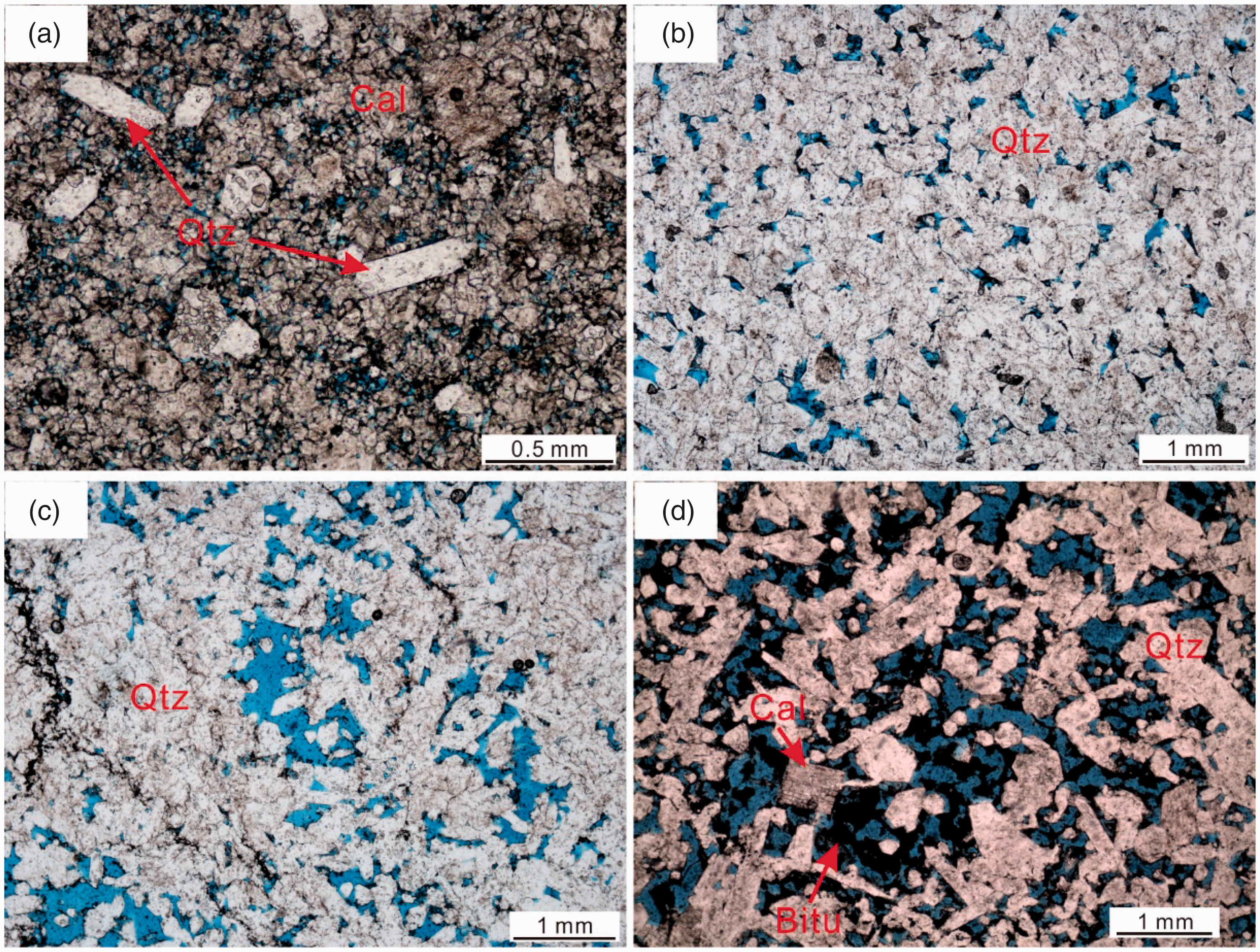
Microscopic petrology and pore characteristics of silicified segment of Shunnan 4 well in Tazhong area. (a) Euhedral quartz grains are common in the fine-grained limestone. Strong recrystallization led to the formation of fine-grained calcite (plane polarized); (b) and (c) strong silicification and pervasive intergranular spaces between subhedral–euhedral quartz grains (plane polarized); (d) plenty of intergranular pores are partly filled with bitumen (plane polarized). Qtz, Cal, and Bitu indicate quartz, calcite, and bitumen, respectively.
δ30Si (V-NBS28) and δ18O (V-SMOW) values of quartz in silicified carbonates range from 2.1 to 2.7‰ and from 16.5 to 23.5‰, respectively. δ13C (V-PDB) values of secondary calcites (euhedral calcite and macro-crystalline calcite) in silicified carbonates are −2.01‰ (N = 10) and −2.17‰ (N = 3), respectively; their δ18O (VPDB) values are −10.56‰ (N = 10) and −10.30‰ (N = 3), respectively. In addition, the 87Sr/86Sr ratio of the secondary calcite 0.709555 (N = 8). Compared with surrounding rocks (δ18O = 9.82, N = 9; 87Sr/86Sr = 0.708848, N = 4), the calcite is obviously more depleted in δ18O and enriched in 87Sr. Fluid inclusion microthermometric measurements indicate a formation temperature of 150–190°C for the silicified carbonates. Generally, the fluid salinity decreases with the increasing homogenization temperatures.
In spite of similar fluid features and sources, the silicified reservoirs from SN-4 well exhibit characteristics distinctive from the chert reservoir in the Parkland gas field in Canada. It is believed that the SiO2-enriched hot fluids associated with the silicified reservoirs are critically saturated for dolomite and strongly unsaturated for calcite (Packard et al., 2001). In the Tarim Basin, the SiO2-bearing hot fluid was transported upward through NE strike-slip faults. Surrounding rocks were dissolved by the acidic hot fluid and crystalline quartz precipitated. Meanwhile, large amounts of CO2 were released and silicified reservoirs were formed. Twisted positions of strike-slip faults were favorable for the interactions between hot fluids and carbonates, facilitating the formation of silicified reservoirs.
(3) Hot fluid-altered dolomite reservoir
Dolomite is widely distributed within the Lower Ordovician and Cambrian strata in the Tarim Basin. Dolomite reservoirs with certain amounts of hydrocarbons have been found in drilling wells of XH1, XH2, DG1, Z-4, TS-1, H-4, F-1, T-1, HT-1, ZS-1, TS-1, etc. In July of 2016, the deepest drill (8408 m) of Asia was completed in the northern Tarim Basin. The drilling work showed about 1524 m thick dolomite starting from the depth of 6884 m. Several segments of high-quality reservoirs were also discovered in the depth interval of 7000–8000 m, with minor amounts of light oil. These drilling wells not only provide valuable information for the research on dolomite reservoirs but also demonstrate profound exploration prospects in deep dolomite reservoirs in the Tarim Basin.
Detailed lithological, mineralogical, and geochemical investigations indicate that the Lower Palaeozoic dolomite has been extensively altered by deep hot fluids (Zhu et al., 2015a). Both experimental observations and thermodynamic calculations demonstrate that hot fluids can dissolve deep-buried carbonates and create more reservoir spaces, whereas fill up the voids in shallow-buried carbonates and reduce the porosity (Duan and Li, 2008; Zhu et al., 2015b). Therefore, hot fluids have the ability to dissolve carbonate in deep strata and precipitate carbonate in shallow strata during upward migration. In other words, deep dolomite strata can be good reservoirs under the impact of deep hot fluids. For example, the porosity of dolomite in TZ-1 well increases by 9.1% from 7000 to 8400 m. Hydrocarbon reservoirs have been discovered in deep-buried dolomite reservoirs in the Tarim Basin (ZS-1 and ZC-1C wells).
Identification criteria of deep hot fluids in the Tarim Basin
(1) Lithological and mineralogical characteristics
During the interactions between hydrothermal fluids and surrounding rocks, changes of temperature and pressure can result in the precipitation of new minerals that fill up the existing reservoir spaces or cracks. Such minerals include calcite, dolomite, quartz, fluorite, barite, sphalerite, chlorite, pyrite, etc. (Jin et al., 2006a, 2006b; Zhu et al., 2008). The mineralogy of the cements is mainly controlled by the compositions of hot fluids and the interactions between hot fluids and surrounding rocks.
Calcite and dolomite are the most common cements. For example, karst caves in Ordovician carbonates in the northern Tarim Basin are usually partly or completely filled up by macro-crystalline calcite. Geochemical analyses indicate that the origin of macro-crystalline calcite cements is in close association with hot fluids (Zhu et al., 2013). Quartz normally occurs in the form of crystal druses in fractures or vugs. Local siliceous metasomatism can also be observed in some cases. The other minerals, such as fluorite and sphalerite, usually occur in restricted areas.
Characteristic mineral assemblages can serve as effective indicators for the activities of deep hot fluids. For example, quartz–dolomite–fluorite is the dominant mineral assemblage indicating deep hot fluid activities in S-15 well in the northern Tarim Basin, TZ-45 well in the central Tarim Basin is characterized by the quartz–calcite–fluorite assemblage, and the major hydrothermal minerals in TZ-12 well in the central Tarim Basin are sphalerite–pyrite–chlorite.
(2) Fluid inclusion analyses
Deep hot fluids usually show higher temperature than that of the formation water. For example, hydrothermal dolomite is suggested to form at temperatures of at least 5–10°C higher than the surrounding rocks (Davies and Smith, 2006). Generally, the homogenization temperature (Th) of typical hydrothermal minerals (e.g. calcite, dolomite, and fluorite) in deep carbonate strata is higher than that of the formation water as well. In addition, fluid inclusion analyses indicate that hydrothermal fluids often have higher salinities than seawater.
In the northern Tarim Basin, most Ordovician calcite cements show a Th of 66.6–105.8°C, implying that they might mainly precipitate from formation water. Th values indicative of hydrothermal activities have only been detected in restricted areas of the northern Tarim Basin. For example, calcite cements in T737 and T740 wells are characterized by average Ths of 158.1 and 144.2°C, respectively. In addition, ice melting temperature measurements demonstrated that the cements precipitated from hot fluids with a salinity of 16.8 wt% NaCl eq. Compared with most area of the northern Tarim Basin, the Ordovician calcite cement in the central Tarim Basin mostly precipitated from fluids with higher temperatures and salinities, with a Th of 139.2–180.8°C and a salinity of 13.2–18.9 wt% NaCl eq. Consequently, it has been widely accepted that these calcite cements mainly precipitated from deep hydrothermal fluids. In conclusion, the Ordovician carbonates in the central Tarim Basin have experienced strong alterations by hydrothermal fluids, whereas weaker impacts of hydrothermal fluids have been identified on the Ordovician carbonate reservoirs in the northern Tarim Basin.
(3) Geochemical analyses
Hydrothermal minerals (e.g. calcite, dolomite, and quartz) normally inherit the geochemical characteristics of deep hot fluids. For example, hydrothermal minerals are often characterized by significantly low δ18O values, high 87Sr/86Sr ratios, high Fe or Mn contents, and abnormal enrichment of Ce (Hu et al., 2010; Jacquemyn et al., 2014; Jin et al., 2006a; Zhang et al., 2009; Zhu et al., 2013).
In the central Tarim Basin, Ordovician calcite veins yield δ18O (V-PDB) values ranging from −7.9 to −14.3‰. The 87Sr/86Sr ratios of the veins are much higher than that of coeval seawater (Veizer et al., 1999), ranging from 0.709049 to 0.719503. REE patterns of the veins are also distinctive from those of the surrounding rocks, represented by remarkable positive Eu anomalies (δEu) in the range of 1.39–76.03. Hot fluid-altered Cambrian dolomite in the central Tarim Basin exhibit δ18O (V-PDB) values ranging from −5.1 to −10.9‰, and 87Sr/86Sr ratios of 0.709361–0.709975. Besides, the dolomite is enriched in Fe, Mn, and Ba, of which the abundances can reach 3158, 173.5, and, 4000 ppm, respectively. These geochemical characteristics can all be used to trace the activities of deep hot fluids.
Hydrocarbon-related hot fluids
Origin and composition of hydrocarbon-related hot fluids
Under high temperatures and high pressures, organic acids (e.g. carboxylic acid) and acidic gases (e.g. CO2) can be generated directly from thermal maturation of kerogen (Barth and Bjørlykke, 1993; Lewan and Fisher, 1994) or produced by the reaction between hydrocarbons and water, which can alter the quality of deep reservoirs through dissolution/precipitation processes (Surdam et al., 1985). In the presence of sulfate, H2S and CO2 can be generated through TSR; TSR may also modify reservoir spaces (Hao et al., 2015). In China, large superimposed sedimentary basins generally contain multiple layers of source rocks, and the reservoirs adjacent to the source rocks were commonly altered by hydrocarbon-related acidic fluids (Pang et al., 2012). This demonstrates that hydrocarbon-related hot fluids are common in petroliferous basins, emphasizing their potential role in the formation of deep petroleum reservoirs.
In the classical theory of hydrocarbon generation, certain amounts of organic acid and CO2 can be generated during early to middle maturation stages (Tissot and Welte, 1984). Recent studies showed that CO2 and carboxylic acids can be produced even in the late maturation stage (>160°C) when H2O and inorganic minerals are involved in the generation of hydrocarbons (Pan et al., 2006; Seewald, 2003). In petroliferous basins with active source kitchens, the rise of CO2 contents accompanies increasing burial depths and formation temperatures. For example, the CO2 content increases nearly linearly with the formation temperature in the Texas Gulf Coast and the Norwegian continental shelf (Figure 2). In the Eocene Wilcox Group of the Texas Gulf Coast, the CO2 content exceeds 4 mol% when the burial depth reaches 3048 m (Smith and Ehrenberg, 1989). These phenomena demonstrate that source rocks are an important source of acid fluids in petroliferous basins. Under deep burial conditions, hydrocarbon-related hot fluids are characterized by large amounts of carboxylic acids and CO2, favorable for the modification of reservoir spaces and the migration of hydrocarbons.
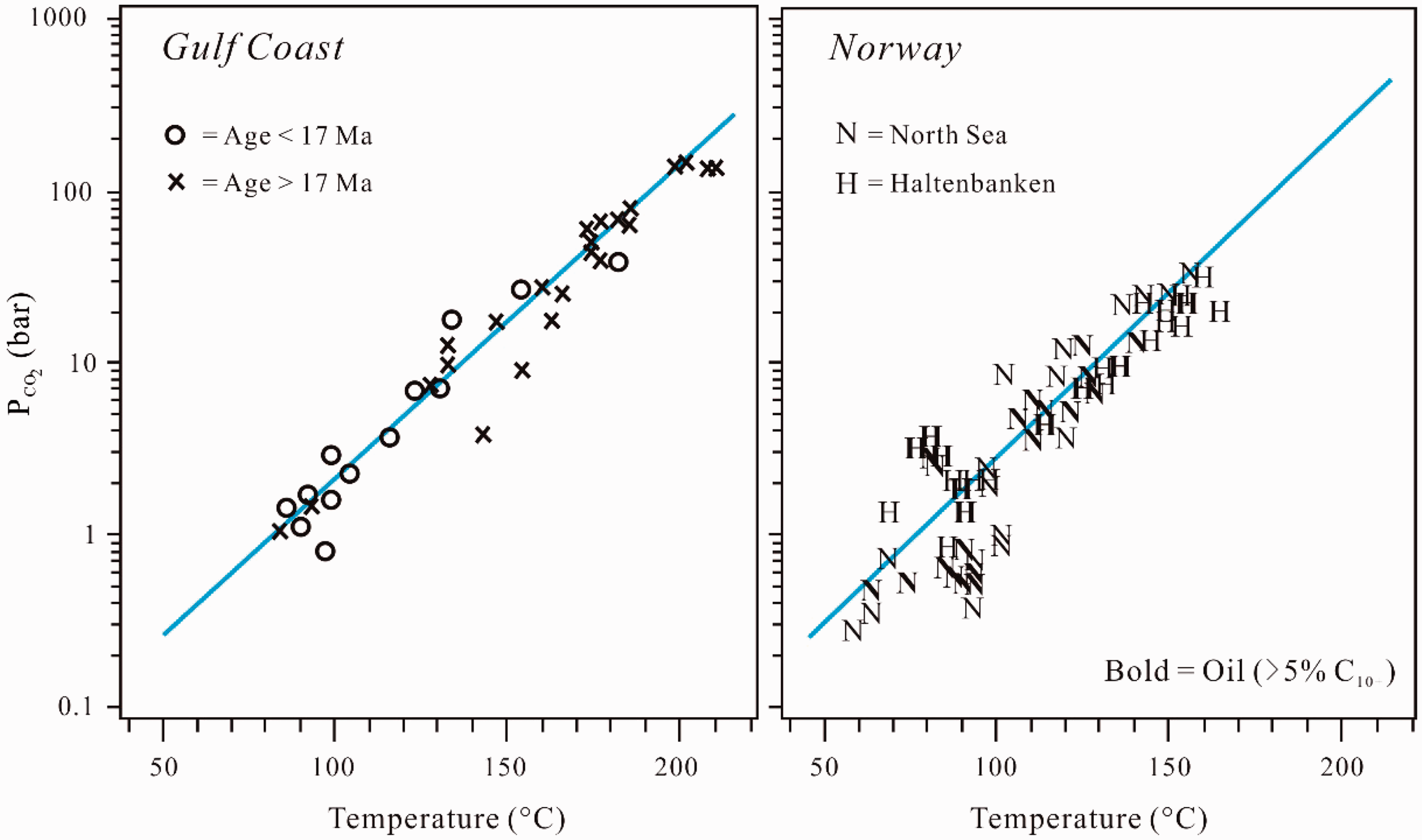
Cross-plots of CO2 partial pressure and formation temperature of the Eocene Wilcox Group of the Texas Gulf Coast in Mexico and of the Triassic and Jurassic reservoirs of Norwegian continental shelf (Smith and Ehrenberg, 1989).
Indicators of hydrocarbon-related hot fluids
Hydrocarbon-related hot fluids can dissolve carbonates and alkali feldspars, leading to the precipitation of secondary minerals. Meanwhile, isotopic compositions of related rocks can be significantly altered via isotopic exchange with the hot fluids. Stable carbon and oxygen isotope signatures of some typical areas associated with hydrocarbon-related hot fluids are summarized in Figure 3. The δ13C and δ18O values of carbonate cements tend to decrease with increasing formation temperatures. Generally, the diagenetic calcite shows obviously negative δ13C signature when hydrocarbon-related hot fluids were involved. Therefore, the δ13C and δ18O signatures of carbonate cements/veins are to some extent instrumental to infer the activity of hydrocarbon-related hot fluids.
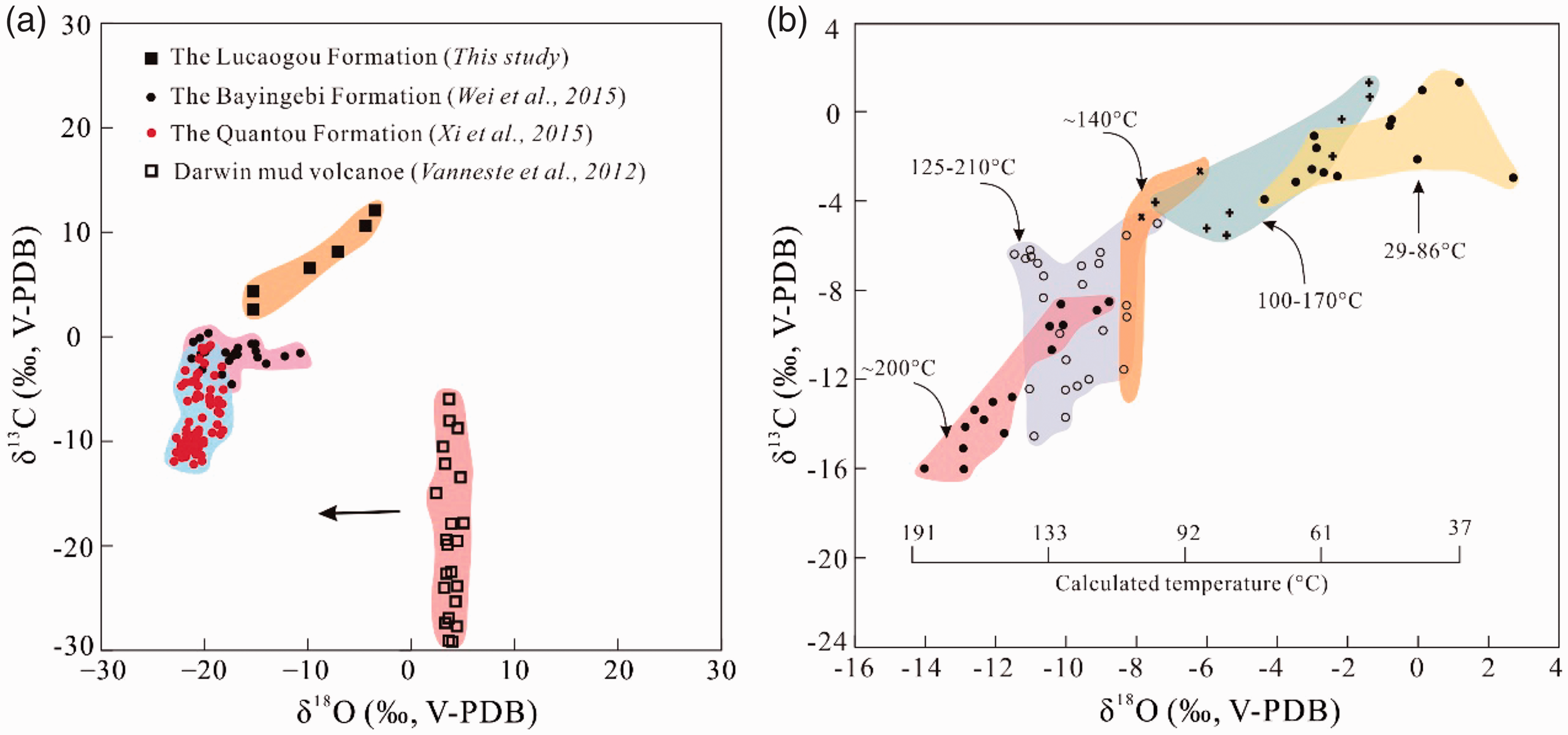
(a) The δ13C–δ18O plots of carbonate cements from typical reservoirs altered by hydrocarbon-related fluids; (b) the relationship between formation temperature and δ13C–δ18O variations of carbonate cements from the US Gulf Coast (after Franks and Forester (1984)).
The activity of hydrocarbon-related hot fluids can be easily identified in clastic reservoirs because of low primary carbonate content in clastic rocks. In the Songliao Basin, the δ13C and δ18O values (V-PDB) of calcite cements in early Cretaceous Quantou Formation sandstone reservoirs range from −13.3 to −0.9‰ and from −21.7 to −12.1‰, respectively (Xi et al., 2015). Based on the isotopic signatures, it is suggested that these calcite cements precipitated from hydrocarbon-related hot fluids derived from adjacent mudstone layers (Xi et al., 2015).
Early diagenetic carbonate cements may be present in clastic reservoirs or mudstones. Under such circumstances, careful petrological observations and detailed geochemical analyses are needed to accurately evaluate the effects of hydrocarbon-bearing hot fluids. For example, carbonate cements are common in Early Cretaceous Bayingebi Formation conglomerate reservoirs in Chagan Sag (Wei et al., 2015). Calculated diagenetic temperatures based on δ18O signatures of the cements demonstrated that the calcite and ferrocalcite cements with δ13C values ranging from −4.5 to 0.38‰ were formed during early diagenetic stages, whereas the dolomite and ankerite cements with δ13C values ranging from −2.2 to −0.1‰ were possibly formed during late diagenetic stages. Compared with the positive δ13C values of the primary carbonate minerals in the mudstones (1.6–4.7‰), it is concluded that both the inorganic carbon in primary carbonate cements and the organic carbon in buried organic matters were released and then incorporated into secondary carbonate cements during diagenetic processes (Wei et al., 2015).
The Triassic Baikouquan Formation is an important conglomerate reservoir in the Mahu Sag of the Junggar Basin (Kang et al., 2018). Calcite cements in the conglomerates are characterized by extremely negative δ13C values as low as −70‰ (V-PDB; unpublished data). Considering the high formation temperature of 90–100°C, the formation of these calcite cements is suggested to be closely associated with the deep Permian source rocks. The Permian Lucaogou Formation in the southern Jimusaer Sag is an important tight oil reservoir in China (Wu et al., 2016). It is a dolomitic lacustrine sequence containing certain amounts of terrigenous sediments and tephra. In the segments rich in secondary dolomite, the δ13C values can be lowered by 4–6‰ (Figure 4), and the δ13C values decrease with increasing total organic carbon (TOC) contents (Wu et al., 2017). These isotopic signatures indicate that hydrocarbon-related hot fluids have participated in the dissolution of primary carbonates and the formation of dissolved pores, providing important reservoir spaces for tight oils.
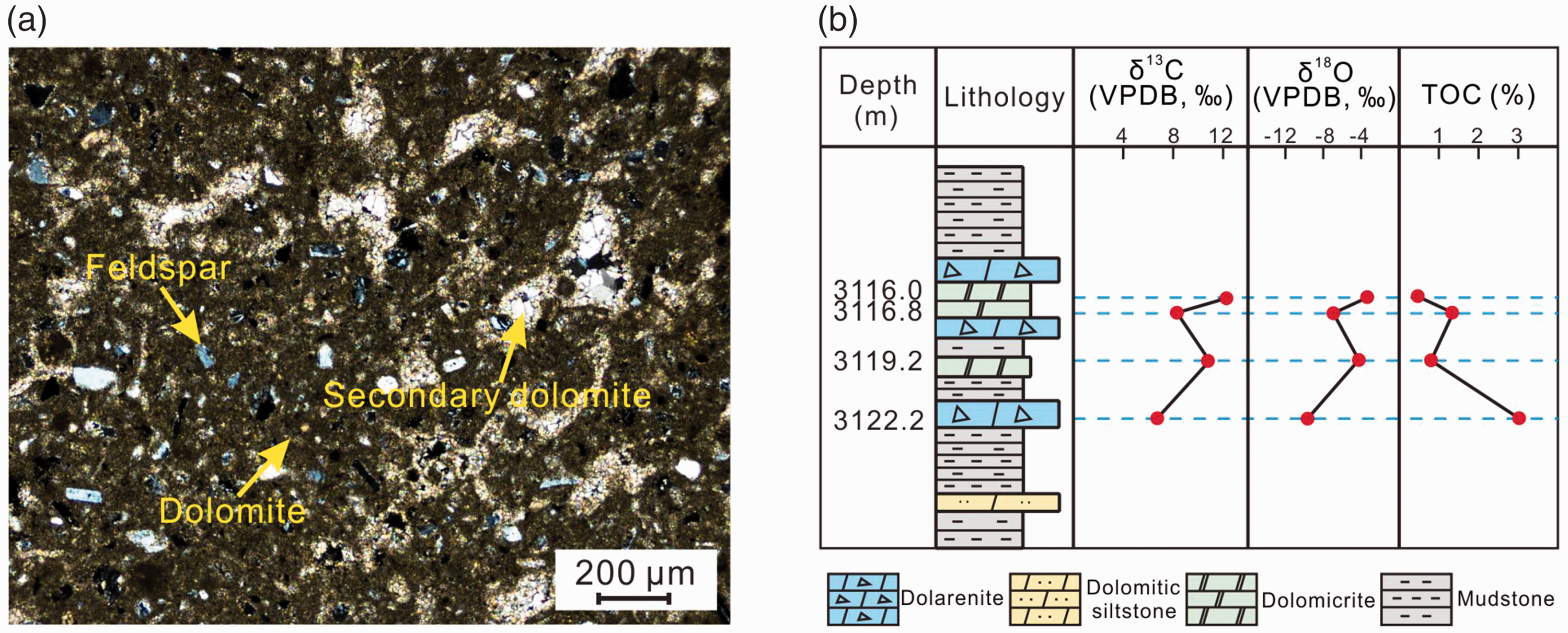
Microscopic feature and variation of δ13C and δ18O values of typical rocks of the Lucaogou Formation in the Jimusaer Sag, modified after Wu et al. (2017). (a) Photomicrograph showing secondary dolomite formed by hydrocarbon-related hot fluids (cross-polarized light); (b) characteristics of lithology, δ13C and δ18O, and TOC of typical section of Lucaogou Formation. TOC: total organic carbon; VPDB: vienna pee dee belemnite.
In carbonate reservoirs, the effect of hydrocarbon-related fluids on the δ13C values of carbonate rocks is buffered by the large amount of inorganic carbonates. Therefore, the δ13C value may not be an unambiguous parameter for identification of hydrocarbon-related fluids in carbonate sequences. Nevertheless, occasional studies indicate that δ13C values of carbonate sequences can also be altered by hydrocarbon-related fluids in some cases (Pueyo et al., 2011).
Mantle-derived hot fluids
Identification of mantle-derived fluids
Jin et al. (2009) reported the compositions of fluid inclusions in mantle xenoliths and corundum megacrysts. Their results showed that mantle-derived fluids are mainly composed of CO2, CO, and H2, with minor N2, CH4, C2H4, and C2H6. The activities of mantle-derived fluids are strong in the Cenozoic rift basins at eastern China. These mantle fluids are rich in CO2, even economically viable CO2 accumulations have been documented in the Huangqiao area of Jiangsu province, the Lishui sag of the Donghai Basin, and the Fuchangde area of the Songliao Basin (Jin et al., 2002; Su et al., 2014; Wei et al., 2009).
Gas compositions and noble gas isotopes have been used to trace the presence of mantle-derived fluids. Jin et al. (2007) reported that mantle-derived fluids are characterized by a CO2/3He ratio ranging from 0.3 × 10⁹ to 30 × 109, a CH4/3He ratio ranging from 105 to 107, a N2/Ar ratio ranging from 83.6 to 700, and a N2/3He ratio ranging from 105 to 106. The crust is rich in organic matter and its CO2/3He, CH4/3He, N2/Ar, and N2/3He ratios are usually 2–4 orders of magnitude higher than those of the mantle (Jin et al., 2007). The helium and carbon isotope cross-plot has already been used to decipher the source and origin of corresponding fluids (Figure 5; Hu et al., 2009).
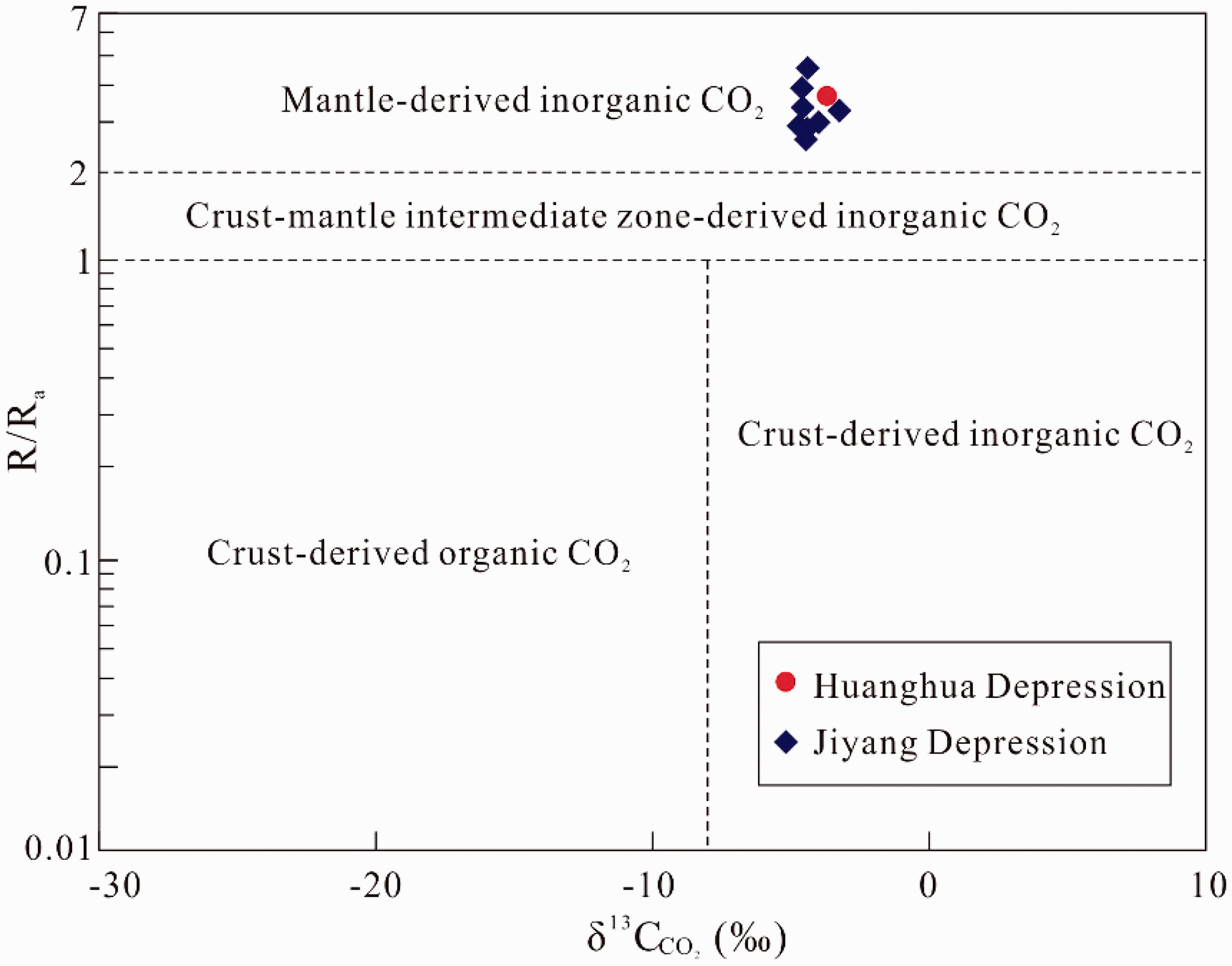
Carbon and helium isotopic identification index of CO2 from different sources (after Hu et al. (2009)). R refers to 3He/4He ratio of samples. Ra refers to 3He/4He ratio of atmosphere (1.4 × 10⁻⁶).
In fact, it is difficult to trace mantle-derived fluids in sedimentary basins; when the mantle-derived fluid enters a sedimentary basin, it will mix with preexisting fluids and leave little well-preserved information for its action. Sometimes, researchers can use typical secondary minerals to indirectly trace the activity of mantle-derived fluids. For example, high-concentration mantle-derived CO2 can react with sandstone to form dawsonite (NaAlCO3(OH)2) in sandstone reservoirs (Gao and Liu, 2007).
Effect of CO2-rich fluid on the evolution of sandstone reservoir in Huangqiao gas field
The activity of CO2-rich mantle-derived fluids is believed to be common in the petroliferous basins in eastern China (Jin et al., 2002). The traces of the accumulation of mantle-derived CO2 were obvious, even CO2 gas reservoirs were explored and/or exploited in the Huangqiao area of the Subei basin, the Lishui sag of the Donghai Basin, and the eastern Fuchangde area of the Songliao Basin (Su et al., 2014; Wei et al., 2009). It has been accepted that the heat and favorable matters brought by mantle-derived fluids promoted the petroleum accumulations in eastern China (Jin et al., 2002; Su et al., 2014; Wei et al., 2009). In this study, Huangqiao CO2 gas field is chosen as a case to discuss the effect of mantle-derived CO2 on the evolution of pore spaces in sandstone reservoirs.
Huangqiao gas field is one of the largest exploited onshore CO2 gas fields in China. The gas is mainly composed of CO2, with minor condensate oil. The CO2 was mainly ascribed to mantle origin, with contributions from shallow CO2 of metamorphic origin and minor organic-derived CO2 (Wang et al., 2008). The source rock of the condensate oil was suggested to be the mudstone of the Middle Permian Gufeng and the Upper Permian Longtan formations (Liu et al., 2014). CO2 accumulated quickly at high temperatures, inducing local alteration and displacement of previously charged oil, which favored the extraction of the light component of oil into CO2-rich fluids (Huang et al., 2012). The sandstone of the Upper Permian Longtan Formation is the major reservoir rock, exhibiting poor physical property and high heterogeneity. Clearly, CO2 can play important roles during the alteration of reservoir quality and the accumulation of hydrocarbons, which explains the coexistence of CO2 and condensate oil in the Huangqiao gas field.
Our observations showed that the activity of CO2-rich fluids was in close association with faults. X3 and X2 wells were located near and far away from the fault zone, respectively (Figure 6). The straight-line distance between the X3 and X2 wells is about 1 km, and the physical properties of the reservoir rocks are quite different (Ren et al., 2017). The sandstone of X3 well is characterized by relatively higher porosity (9–13.12%, avg = 9.92%) and high permeability (0.337–815.68 md, avg = 128.02 md). The physical property of the sandstones in X2 well is relatively worse with an average porosity of 6.91% and an average permeability of 0.96 md. In X3 well, high-temperature mantle-derived CO2 is suggested to have migrated into the reservoir section and accumulated. The presence of CO2 can lower the pH of the formation water, resulting in intense dissolution of the carbonate cements and K-feldspar. The characterized mineral assemblage is authigenic quartz, dawsonite, siderite, and kaolinite (Figure 7(a) and (b)). Dawsonite is an indicative mineral of high partial pressure of CO2 (Hellevang et al., 2005). Therefore, the pervasive distribution of dawsonite in the reservoir section of X3 well (Ren et al., 2017) indicates that large amounts of CO2 charged into the reservoir during diagenetic stages. In X2 well, the influence of high-pressure and high-temperature mantle-derived fluids is much weaker. No obvious dissolution of alkaline minerals has been observed. On the contrary, prominent carbonate cementation has occurred in the reservoir section, represented by minerals of ankerite, siderite, and calcite (Figure 7(c) and (d)).
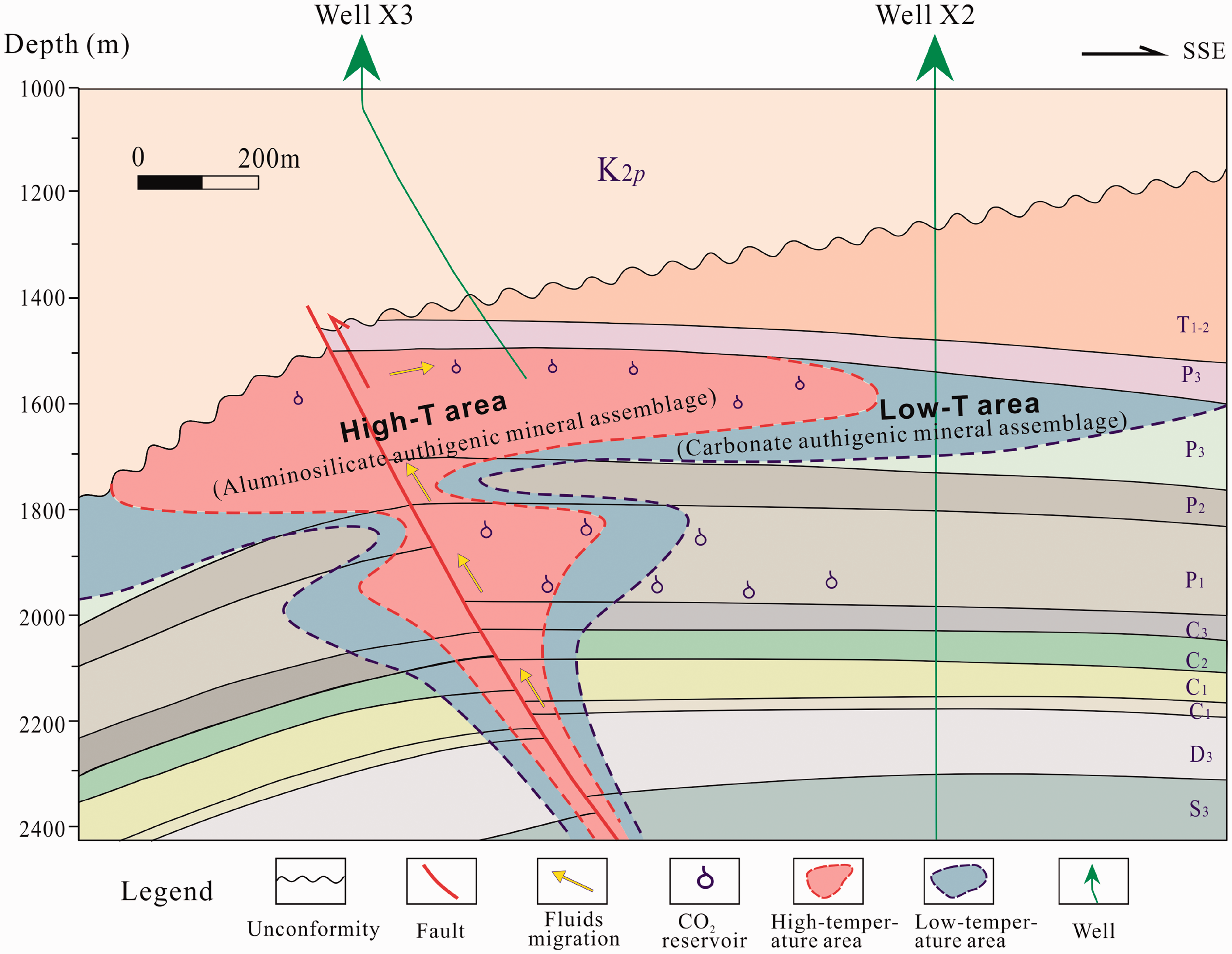
A model for the formation of reservoir spaces influenced by mantle-derived CO2-rich fluids: a case study from the sandstone of Upper Permian Longtan Formation in Huangqiao area, eastern China.
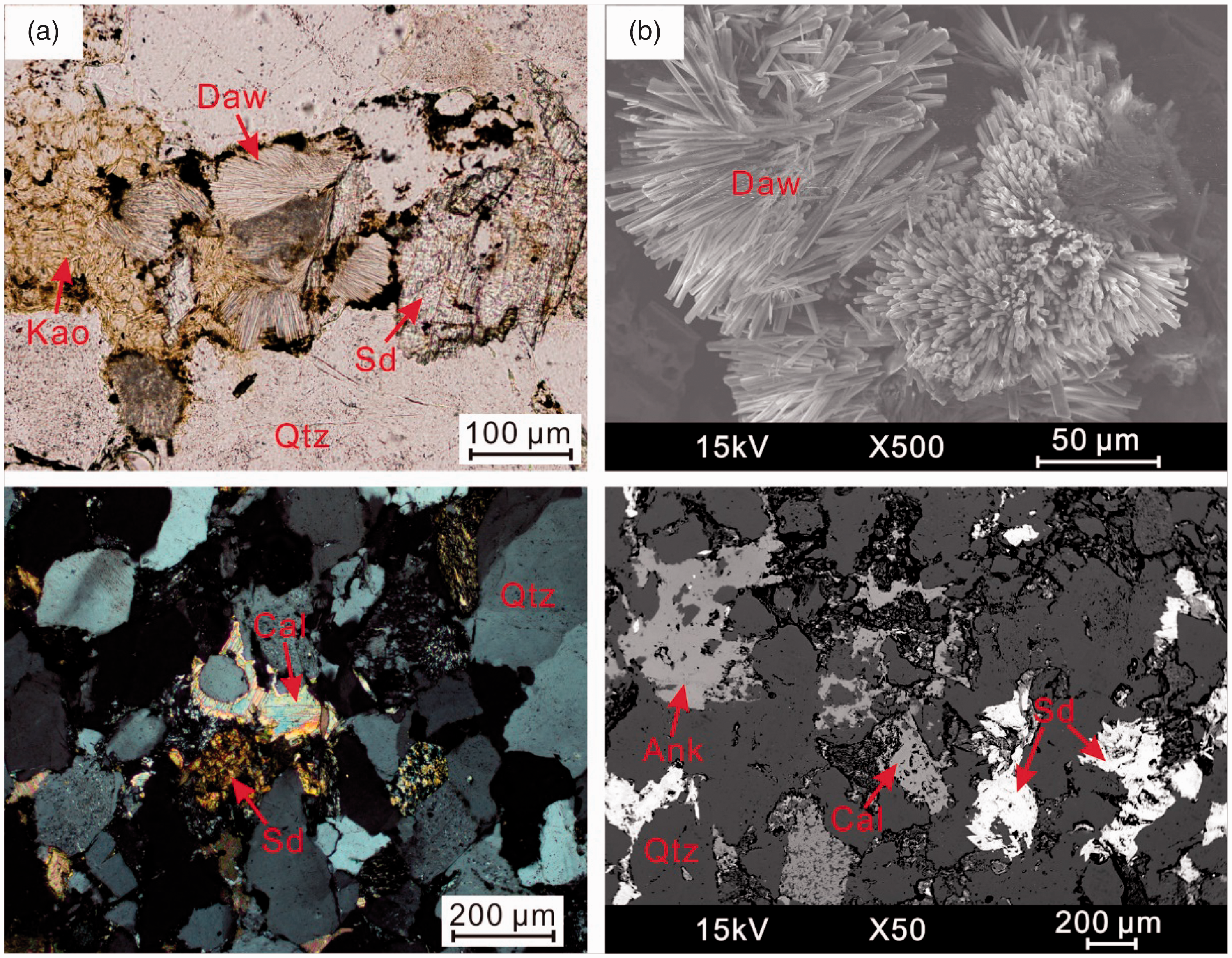
The characteristic mineral assemblages in the Upper Permian Longtan Formation sandstones of Well X3 and X2. (a) A microscope photo showing the coexistence of quartz, kaolinite, siderite, and dawsonite from Well X3 (plane polarized); (b) a scanning electron microscope photo of the same sample as in (a), showing needle-like radial dawsonite; (c) a microscope photo showing the coexistence of quartz, calcite, and siderite from Well X2 (cross-polarized); (d) a backscattered electron image of the same sample as in (c). Kao, Sd, Daw, and Ank represent kaolinite, siderite, dawsonite, and ankerite, respectively.
Based on the above observations, we proposed a model for the formation of a special reservoir influenced by mantle-derived CO2 (Figure 6). Mantle-derived CO2 migrated to shallow reservoir rocks along faults. The CO2-rich acid fluids could improve the porosity and permeability of adjacent reservoir rocks through intense dissolution of alkaline minerals (e.g. carbonate). It should be pointed out that the influence area of the CO2-rich fluid is limited, and the reservoir quality can lower significantly away from the fault zone. Therefore, the hydrocarbon exploration should be focused on reservoir sections along the fault zone in similar regions worldwide.
Summary and conclusions
Hot fluids in petroliferous basins can originate from multiple sources, including supercritical fluids from the mantle (e.g. CO2), deep fluids from old rocks or even the crystalline basement, and acidic fluids associated with generation of hydrocarbons (e.g. carboxylic acid, CO2). These fluid activities can occur at different stages during basinal evolution and play important roles in the generation, migration, accumulation, and even preservation of hydrocarbons within the petroliferous basin.
The reservoir properties can be reformed and optimized by hot fluids. First, alkaline minerals (e.g. calcite and orthoclase) can interact with acidic hot fluids, leading to the formation of dissolved pores; second, additional residual pores can be formed by metasomatic reactions such as fluoritization, silicification, and hydrothermal dolomitization. In addition, hot fluids can also exhibit positive influence on the migration and accumulation of hydrocarbons. For example, mantle-derived supercritical CO2 fluids were associated with the accumulation of light hydrocarbons in the Huangqiao gas field in eastern China.
Tracing the source of hot fluids involves comprehensive research works, including tectonic background analyses, observations of typical authigenic mineral assemblages, fluid inclusion studies, geochemical investigations of elemental or isotopic signatures, etc. In this study, we summarized the typical mineral assemblages and signatures of C, O, and Sr isotopes in representative basins where hot fluid activities are distinguishable. The current review can provide an instrumental reference for further research. Due to the different tectonic backgrounds and geological settings in different basins, as well as distinctive characteristics and reaction processes of hot fluids in different regions, great challenges currently still remain with the research on hot fluids in petroliferous basins.
Footnotes
Declaration of conflicting interests
The author(s) declared no potential conflicts of interest with respect to the research, authorship, and/or publication of this article.
Funding
The author(s) disclosed receipt of the following financial support for the research, authorship and/or publication of this article: This study was financially supported by the National Natural Science Foundation of China (Grant No. 41230312) and the National Science and Technology Major Project (Grant No. 2016ZX05002006-005).