




Abstract
Old Mesoproterozoic−Cambrian successions have been regarded as an important frontier field for global oil and gas exploration in the 21st century. This has been confirmed by a recent natural gas exploration breakthrough in the Sinian and Cambrian strata, central Sichuan Uplift, Sichuan Basin of SW China. However, the accumulation mechanism and enrichment rule of these gases have not been well characterized. This was addressed in this work, with aims to provide important guidance for the further exploration while enriching the general studies of the oil and gas geology in the old Mesoproterozoic–Cambrian strata. Results show that the gas field in the study area is featured by old target layers (Sinian–Lower Cambrian), large burial depth (>4500 m), multiple gas-bearing intervals (the second and fourth members of the Sinian Dengying Formation and the Lower Cambrian Longwangmiao Formation), various gas reservoir types (structural type and structural–lithologic type), large scale (giant), and superimposing and ubiquitous distribution. The giant reserves could be attributed to the extensive intercalation of pervasive high quality source rocks and large-scale karst reservoirs, which enables a three-dimensional hydrocarbon migration and accumulation pattern. The origin of natural gas is oil cracking, and the three critical stages of accumulation include the formation of oil reservoirs in Triassic, the cracking of oil in Cretaceous, and the adjustment and reaccumulations in the Paleogene. The main controlling factor of oil and gas enrichment is the inherited development of large-scale stable paleo-uplift, and the high points in the eastern paleo-uplift are the favorable area for natural gas exploration.
Keywords
Introduction
Mesoproterozoic–Cambrian successions (ca. 16 Ga–485 Ma) are traditionally not viable oil and natural gas exploration targets due to their long and complex geological history and relatively great burial depth, and thus discovered petroleum resources there only account for less than 1% of the total geological strata (Klemme and Ulmishek, 1991; Wang and Han, 2011). However, with the depletion of hydrocarbon reserves hosted in shallower rocks, Mesoproterozoic–Cambrian units are increasingly being explored for their hydrocarbon potential, resulting in significant discoveries, such as the Khazzan gas field in Oman (Rylance et al., 2011), the breakthrough in Amadeus Basin, Australia (Edgoose, 2012; Swanson-Hysell et al., 2012), and the success in Tarim and Sichuan basins in China (Zheng et al., 2013; Zhu et al., 2012; Zou et al., 2014a). In addition, some of these reservoirs occur at the boundary between the Cambrian and the Proterozoic, indicating that they may be of particularly general geological significance (Carminati et al., 2010; Du et al., 2012; Liang et al., 2009; Pedersen et al., 2007; Sahu et al., 2013; Zou et al., 2014a). Therefore, the study of the Mesoproterozoic–Cambrian petroleum systems has been research highlights recently (Bhat et al., 2012).
Present works indicate that the organic matter commonly has been highly to over mature in these successions due to their old ages, and gas is the main hydrocarbon component with a small amount of oil (Bhat et al., 2012; Klemme and Ulmishek, 1991; Wang and Han, 2011). The great burial depth and the complex tectonic history perplex the accumulation mechanism. For instance, the Khazzan gas field in Oman is characterized by gas contents of different maturities, which indicate multiple episodes of accumulations (Millson et al., 2008). Therefore, studies on oil and gas reservoirs in these successions have been both highlights and difficulties in the field of petroleum geology/geochemistry and Pre-Cambrian to Cambrian geology (Bhat et al., 2012; Kelly et al., 2011).
The Sichuan Basin is a large superimposed petroliferous basin in SW China, and within the basin more than 70 years of exploration have made many breakthroughs, among which the success in the Proterozoic (Sinian)–Cambrian successions is one of the most typical practices in this field globally (Du et al., 2014; Zou et al., 2014a). The oil and gas exploration in the Sinian–Cambrian successions of the Sichuan Basin started in the 1940s and was focused in the central paleo-uplift. In 1964, the first large mono-block gas field, Weiyuan Gas Field, was discovered in the southwestern slope of the paleo-uplift, with the target layer of the Sinian Dengying Formation. Then, in the subsequent 40 years of continued exploration, the complexity of oil and gas accumulation and the limitations of exploration technology have greatly hindered the exploration progress. This was changed after 2006, along with the advancement of exploration technology and the enhancement of geological studies. Some intervals of the Dengying and Longwangmiao formations in the eastern paleo-uplift are proposed to act as good reservoirs (Du et al., 2014; He et al., 2008; Li et al., 2000; Song, 1996; Wang et al., 1997; Xu et al., 2002; Zhang and Tang, 1986; Zhang and Zhang, 2002). Then exploration wells were drilled there, with certain huge breakthroughs, such as the Well Gaoshi 1 in the second member of Dengying Formation (Deng 2 Member) with daily test gas production capacity reaching up to 102 × 104 m3 and some gas shows in the Longwangmiao Formation in 2011, and the Well Moxi 8 in the Longwangmiao Formation with daily test gas production capacity reaching up to 191 × 104 m3 in 2012. From then on, more and more achievements have been made in the Sinian–Paleozoic natural gas exploration, known as the Anyue Giant Gas Field. Such discovery confirms the potentials of the Sinian–Paleozoic ancient carbonate rocks in the central Sichuan Basin.
Overall, the long exploration experience as outlined above also indicates the huge complexity of gas reservoir formation (Zhao et al., 2011, 2012). In view of this complexity, studies from different perspectives have been carried out continuously in the process of exploration of the Anyue Gas Field. Attention has been paid to hydrocarbon source rocks (Li et al., 2015a; Wei et al., 2013; Zeng and Guo, 2015; Zou et al., 2014b), reservoir rocks (Li et al., 2014; Ma, 2016; Wen et al., 2016; Yao et al., 2013), genesis of natural gas and bitumens (Chen et al., 2017b, 2017a; Shi et al., 2017; Wei et al., 2015; Wu et al., 2016; Zheng et al., 2014), and accumulation pattern (Luo et al., 2015; Shi et al., 2017). However, general synthesis of natural gas accumulation and enrichment is still insufficient. This limits the guidance for further exploration and general studies of the oil and gas geology in the old Mesoproterozoic–Cambrian strata.
To provide new data for this issue, this study investigates the basic characteristics and forming conditions of the Anyue Gas Field and addresses the enrichment law of natural gas.
Geological setting
Paleo-uplift in the central Sichuan Basin
The Sinian–Paleozoic petroleum systems in the Sichuan Basin occurred in the paleo-uplift in the central basin (Xu et al., 2014). This paleo-uplift is featured by the most ancient formation, largest scale, longest continuous evolution, hugest denudation, and largest cover area among all the uplifts of the entire basin (Figure 1). In the early 1970s, based on the analysis of drilling and seismic data, this paleo-uplift was found. It has clear shapes in the Pre-Permian paleogeographic map, with the NEE-trending axis. The core is in the proximity of the Ya’an area, and strata are more and more denuded from Sinian to Cambrian, Ordovician, and Silurian from the southwest to the northeast (Xu et al., 2014). The projected paleo-uplift area on the Silurian denudation part can reach 6.25 × 10⁴ km2. The paleo-uplift presently is manifested as a nose uplift with NE-trending axis. Higher structural zones in Leshan, Weiyuan, Gaoshiti, and Moxi areas tilt toward the northeastern Longnvsi and Guang’an areas (Figure 1). Based on the geometry of the paleo-uplift based on the −6000 m contour corresponding to the Cambrian base, it is 120–200 km wide in the north and south and 350 km long in the east and north, with a projection area of 5.43 × 10⁴ km2.
Present morphological map of the Cambrian base in the Sichuan Basin and the distribution of the paleo-uplift in the central Sichuan Basin.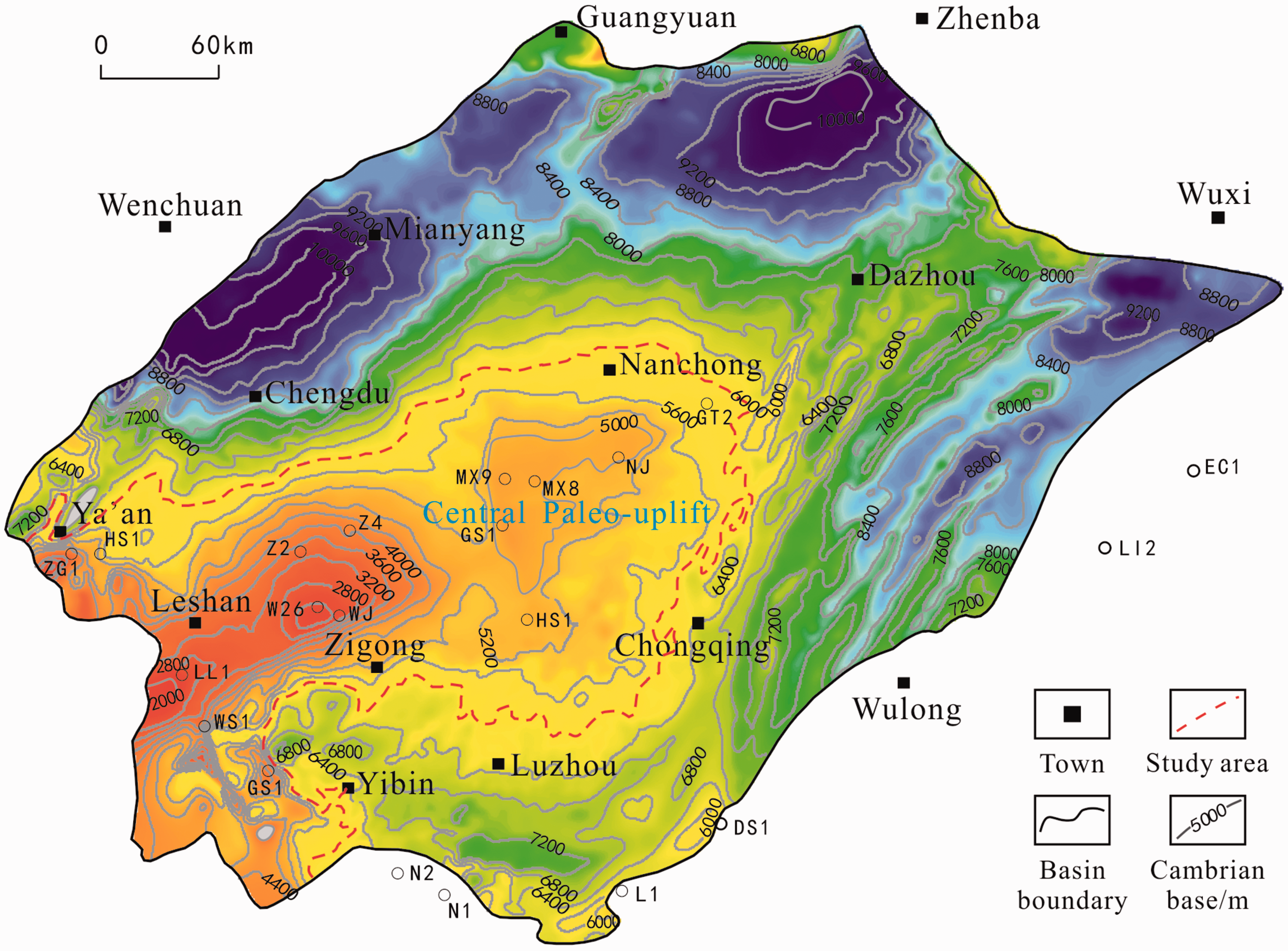
Stratigraphy
The gas-bearing intervals in the study area include the Sinian Dengying Formation and the Lower Cambrian Longwangmiao Formation. As shown in Figure 2, the Sinian Dengying Formation can be divided into four members according to the current stratigraphic division scheme in the Sichuan Basin, among which the second and fourth members (Deng 2 and Deng 4 Members) are abundant in cyanobacteria that contributes to the formation of algae-bound thrombolite, algae-bound frame dolomite, and wavy-columnar algae stromatolite (Li et al., 2013). Meanwhile, the Cambrian can be divided into five members, from bottom to top including Qiongzhusi, Longwangmiao, and Canglangpu Formations in the Lower Cambrian; Gaotai Formation in the Middle Cambrian; and Xixiangchi Formation in the Upper Cambrian. The lithology of the Qiongzhusi Formation is mainly black carbonaceous mudstones and shales, with spherical limestone tuberculosis; the Canglangpu Formation is mainly purple red-gray sandstones and siltstones and black gray shales; the Longwangmiao Formation is mainly sandy dolomites and micritic dolomites intercalated with sandy and argillaceous dolomites; the Gaotai Formation is mainly sandy and micritic limestones intercalated with quart sandstones; and the Xixiangchi Formation is mainly interbedded sandy and micritic dolomites.
Generalized stratigraphy and source–reservoir–cap assemblages of Sinian–Cambrian strata in the Gaoshiti–Moxi Area of the central-basin paleo-uplift.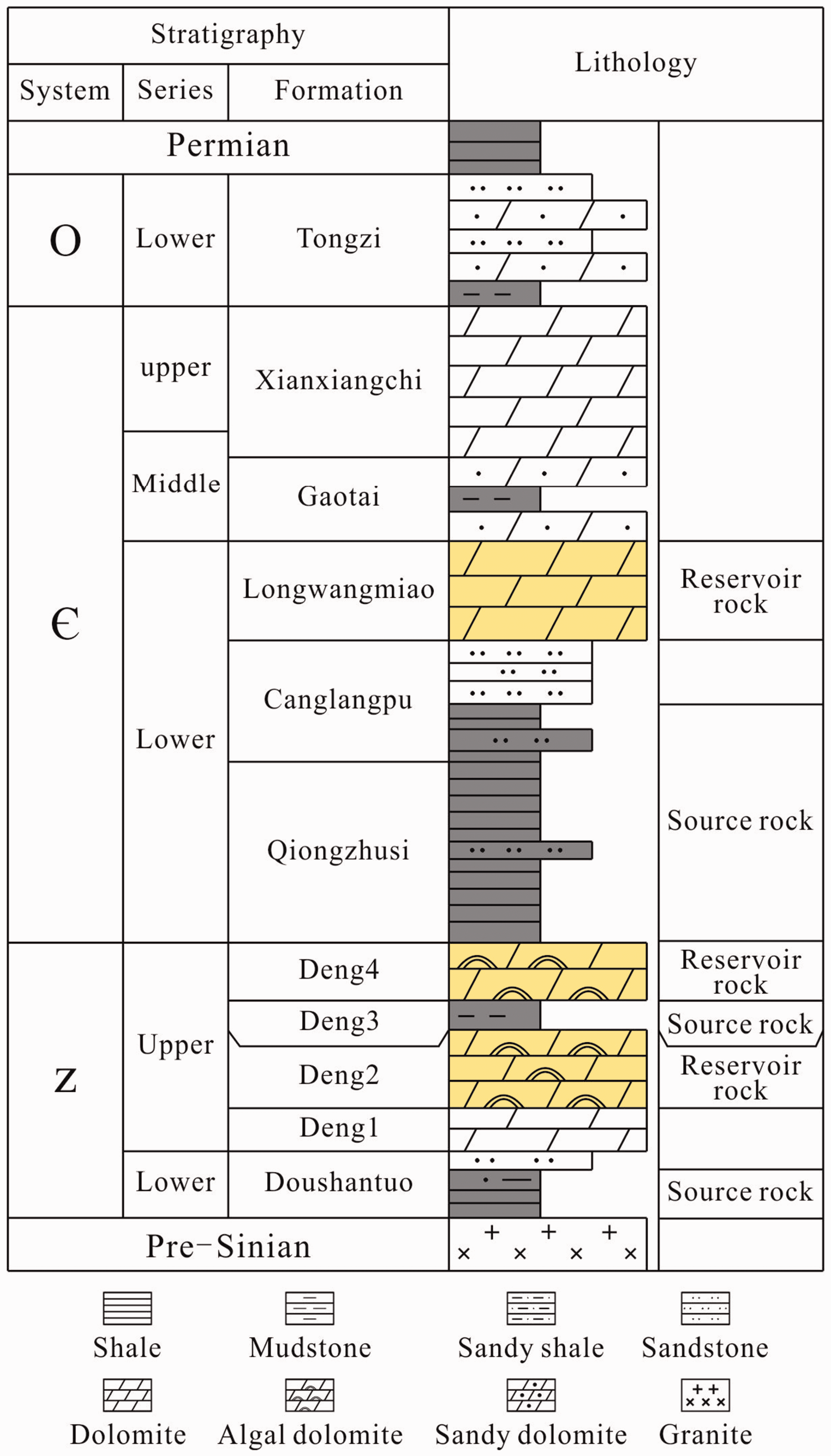
After the deposition of Sinian successions, the upper Yangtze Region was uplifted during the Tongwan Movement, which caused the denudation of Dengying Formation to different degrees in different areas. The largest denudation took place in the Ziyang and its western areas, where all the Deng 4 and Deng 3 Members and part of the Deng 2 Member were eroded. Meanwhile, the Deng 4 Member in other areas were mostly preserved more or less (Yang et al., 2014). As for the Cambrian strata, the Caledonian Movement resulted in the erosion in the western part of the Moxi Structure in the core of the central-basin paleo-uplift, the intensity of which decreased eastward along the axis of paleo-uplift. The main Moxi structure and the Cambrian strata on its eastern part were basically preserved.
Basic characteristics of gas reservoirs
Various gas-bearing layers and gas reservoir types
There are several gas-bearing layers in the Sinian and Lower Paleozoic successions in the study area as outlined above, including Sinian Deng 2 and Deng 4 Members and Cambrian Longwangmiao Formation. Moreover, there are some gas shows in the Xixiangchi Formation, such as the low gas production in the Well Baolong1, the daily gas production of 2.11 × 10⁴ m3 in Well Moxi23 in the Longnvsi Structure, and the daily gas production of 13.64 × 10⁴ m3 in Well Nanchong1 in the Nanchong Structure. Thus, the Xixiangchi Formation is expected to be the new sequence for production besides the Dengying and Longwangmiao formations.
For the gases in these reservoirs, it has been proved that there are mainly four types of gas reservoirs developed on the background of the central-basin paleo-uplift (Figure 3): the structural reservoir with unified gas–water interface (e.g. the Dengying Formation in the Weiyuan Gas Field and Gaoshiti–Moxi Area), lithological reservoir (e.g. the second member of the Dengying Formation in the Ziyang Structure), stratigraphic–lithological reservoir (e.g. the Deng 4 Member in the Gaoshiti–Moxi Area), and structural–lithological reservoir (e.g. the Deng 4 Member in the Gaoshiti–Moxi Area).
Gas reservoir profiles showing the distribution of gas reservoirs in the Dengying Formation (a) and Longwangmiao Formation (b), central-basin paleo-uplift, Sichuan Basin.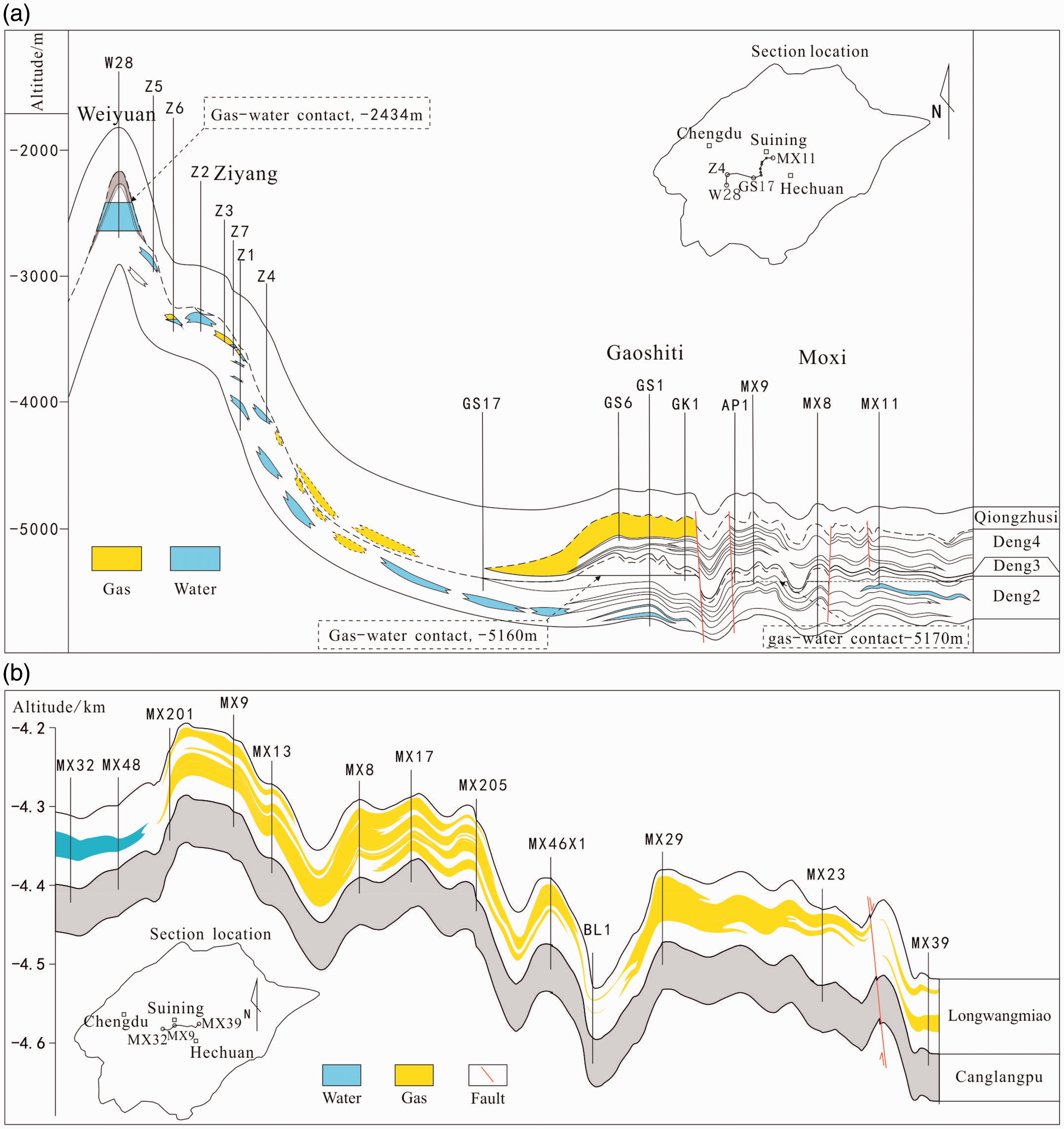
Huge buried depth, high reservoir temperature, and high pressure
The Dengying and Longwangmiao gas reservoirs in this study are the most ancient ones in the Sichuan Basin. The Dengying Formation is the first set of Sinian carbonate strata with the age of about 570 Ma, while the Longwangmiao Formation is the first set of Cambrian carbonate strata with the age of about 510 Ma. Such gas reservoirs are featured by huge buried depths: in the Gaoshiti–Moxi Area, the average buried depth of the Longwangmiao Formation gas field is over 4650 m, that of the Deng 4 Member is over 5000 m, and that of the Deng 2 Member is over 5400 m, all of which should be categorized as (super-)deep gas reservoirs (Figure 3). Such deep and ancient reservoirs are first found in China, and they are also uncommon even globally (Liu et al., 2017; Zou et al., 2014b).
These reservoirs are featured by high reservoir temperature and high pressure. According to the measured stratigraphic data, the reservoir pressure of the Longwangmiao Formation in the Moxi Area is 75.8–76.4 MPa, the average pressure in the middle of the gas reservoir is 76 MPa, and the pressure coefficient is about 1.65, which should be categorized as high pressure gas reservoir. The formation temperature of the Longwangmiao reservoir is 137.5–143.9℃ and the average temperature in the middle of the reservoir is 141.4℃, belonging to high temperature reservoir. Meanwhile, the average pressure and pressure coefficients of the Deng 4 Member reservoir in the Gaoshiti–Moxi Area are respectively 56.7 MPa and 1.12, indicating normal pressure gas reservoir, while the average temperature of the middle reservoir is 153.4℃, suggesting high temperature reservoir. Different temperature and pressure characteristics of the Sinian and Cambrian reservoirs in the study area could reflect complex and different oil and gas accumulation process, which will be discussed below (“Process and model of the formation of gas reservoirs” section).
Large scale, high production, and good testing results
Sinian and Cambrian reservoirs in the study area are typically featured by their large scale. The gas-bearing area of the Longwangmiao gas reservoir in the Moxi Area is the largest mono-block gas reservoir in Chinese gas exploration history, with an area of approximately 800 km2 and reserves of 4403.83 × 108 m3. As for the Dengying gas reservoir, the gas-bearing areas of the Deng 4 and Deng 2 Member reservoirs in the Gaoshiti–Moxi Area are approximately 7500 and 900 km2, respectively, with respective reserves of 10,000 × 108 and 2000 × 108 m3.
High single-well production and good testing results are also typical features of the Dengying and Longwangmiao reservoirs in the Gaoshiti–Moxi Area. Especially, there are already 21 industrial gas wells in the Longwangmiao reservoirs of the Moxi Area until June 2014, with accumulated daily gas production of 1984 × 104 m3 and average single-well gas production of 104.4 × 10⁴ m3. Among them, there are 10 wells whose daily gas production amounts exceed 100 × 104 m3. At present, testing wells of the Longwangmiao reservoir in the Moxi Area have stable gas production, small pressure change, and overall good testing results.
Formation conditions and mechanism of giant gas fields
The formation of giant hydrocarbon accumulations depends on the good match among six critical elementary factors according to the classical petroleum geological theory, i.e. source rocks, reservoir rocks, cap rocks, migration, trap, and preservation (Tissot and Welte, 1984).
Widely distributed multiple sets of high-quality source rocks
Parameters showing the quality of Sinian and Cambrian possible hydrocarbon source rocks in the Sichuan Basin.
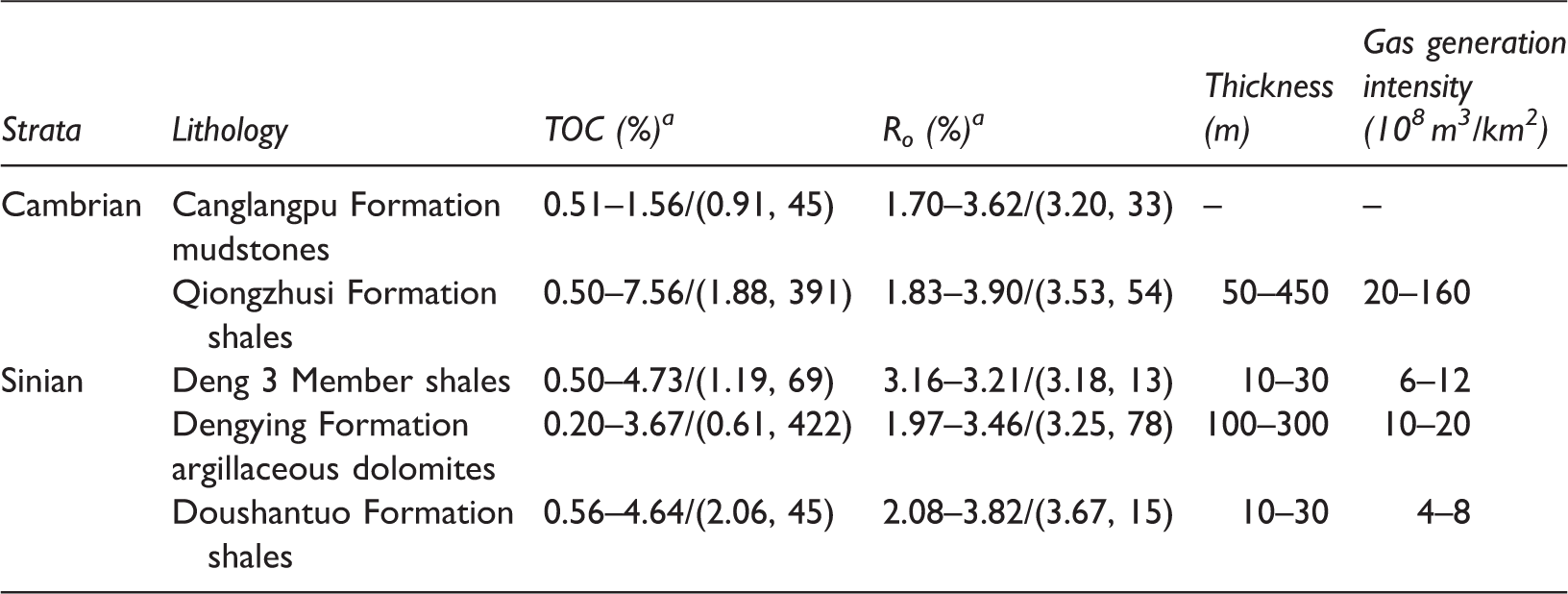
The data format of TOC and Ro are “range/(mean, sample number)”. “–” denotes no data available.
High organic abundance, large thickness, and extensive distribution
The Doushantuo shales are characterized by 10–30 m of thickness, 5 × 10⁴ km2 of area within the basin, and 0.56–4.64% of TOC (averaging 2.06%); the Deng 3 Member shales are characterized by 10–30 m of thickness, 7 × 10⁴ km2 of area within the basin, and 0.5–4.73% of TOC (averaging 1.19%); the Lower Cambrian shales are characterized by 140 m of average thickness and 15 × 104 km2 of area within the basin, of which the Qiongzhusi Formation shales are 50–450 m thick (Du et al., 2014; Wei et al., 2013; Zou et al., 2014b), with the TOC of 0.5–7.56% (averaging 1.88%).
Strong gas generation capacity
Sinian and Cambrian source rocks in the study area have relatively strong hydrocarbon generation capacity, which are 4–8 × 10⁸, 10–20 × 108, 6–12 × 108, and 20–160 × 108 m3/km2, respectively, for the source rocks of Doushantuo Formation, Dengying Formation, Deng 3 Member, and Qiongzhusi Formation (Du et al., 2014). It should be specially noted that high-quality Lower Cambrian source rocks are significantly controlled by the Deyang–Anyue taphrogenic trough (Zou et al., 2014a), and the hydrocarbon generation center is in the west of the Gaoshiti–Moxi Area. The total thickness of the Qiongzhusi source rocks in the center can reach 300–450 m, which can be three to six times of the source rocks in other areas. The gas generation intensity in the center can be as high as 100–180 × 108 m3/km2, that is four times of the source rocks in other areas. Therefore, it can be concluded that the gas generation center of the Qiongzhusi source rocks controlled by the Deyang–Anyue taphrogenic trough provides sufficient hydrocarbons for the near-source petroleum systems (Xu et al., 2000; Zou et al., 2014a).
Large-scale superimposition of multiple sets of high-quality reservoirs
There are multiple sets of high-quality dolomite reservoir rocks in the study area, including those from the Deng 2 Member, Deng 4 Member, and Longwangmiao Formation (Figure 4).
Basic characteristics and distribution of the Sinian Dengying and Lower Cambrian Longwangmiao Formation reservoirs in the central-basin paleo-uplift of the Gaoshiti–Moxi Area.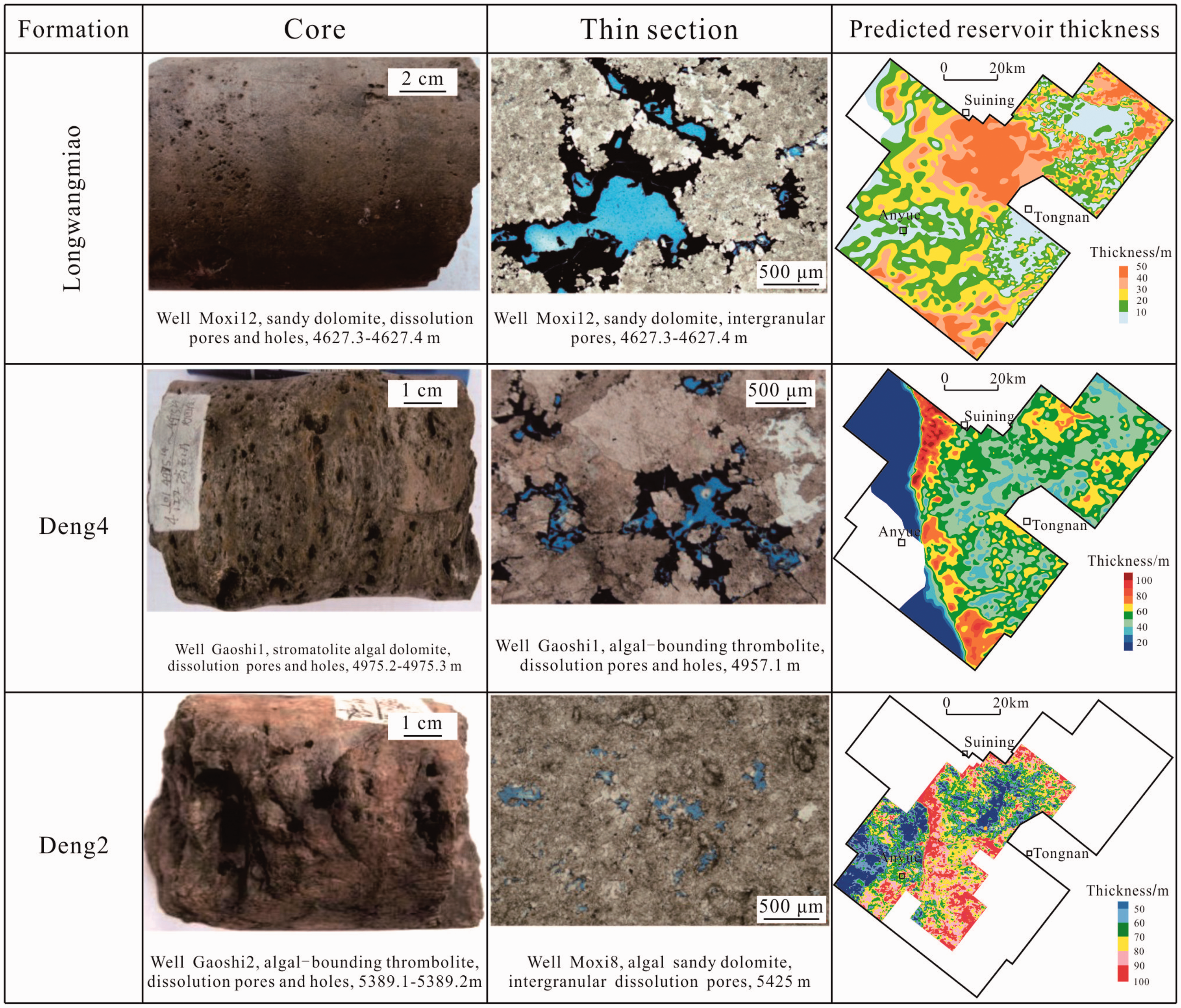
Good reservoir quality and huge accumulative thickness
The main reservoir spaces in the Sinian Dengying Formation are fractures, pores, and holes, and the main lithologies are algae-bound thrombolites and sandy dolomites associated with mounds and shoals (Figures 4 and 5) (Huang, et al., 2009; Mo et al., 2013; Shan et al., 2016). The maximum porosity of this reservoir is 9.88%, and the average is 3.86%; the permeability varies from 0.0054 to 9.03 mD, with the average of 2.12 mD. As for the Deng 2 and Deng 4 Members, they have the most developed reservoir layers and accordingly the largest accumulative thicknesses (Figure 3). The thicknesses of the Deng 2 and Deng 4 Members, respectively, vary with the range of 28–340 and 47.75–148.23 m, with corresponding average thicknesses of 93.36 and 88.54 m. The Qiongzhusi shales act as the seal with porosity of < 3%, permeability of (0.001–0.02) × 10−3 µm2, average throat radius of 0.6–1.2 µm (Zhang et al., 2015).
Microphotographs showing the basic characteristics of the Sinian Dengying and Lower Cambrian Longwangmiao Formation reservoirs. (a)–(c) and (d)–(f) are the Dengying Formation and the Longwangmiao Formation, respectively. (a) Well Gaoke 1, 5150.49 m; (b) Well Gaoshi 1, 4960.30 m; (c) Well Zi 6, 3741.90 m; (d) Well Moxi 7, 4638.14 m; (e) Well Moxi 12, 4655.22 m; (f) Well Moxi 13, 4615.79 m.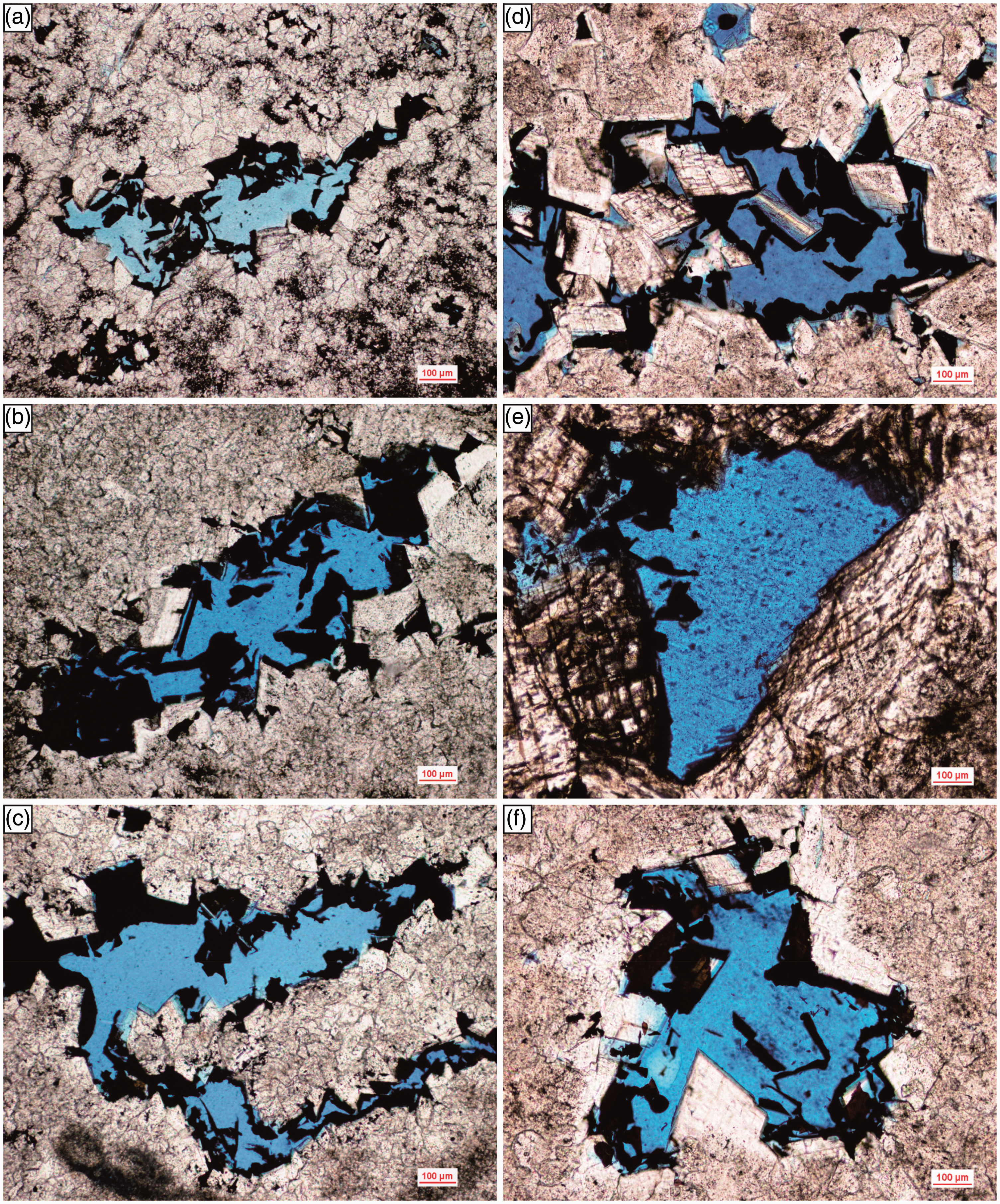
As for the Longwangmiao reservoirs, the main reservoir spaces are pores (holes), and the main lithology is shoal-related sandy dolomites (Figures 4 and 5) (Li et al., 2015b). The maximum porosity and permeability of this reservoir are 18.48% and 4.24 mD, respectively, with corresponding mean values of 4.78% and 0.0005–78.5 mD. The reservoir thickness significantly varies within the basin, with the thickest part in the Moxi Area. In single wells, reservoir thickness varies from 3.1 to 64.5 m, with an average of 39.1 m.
Pervasive superimposition and wide distribution
One of typical characteristics of the high-quality dolomite reservoirs in the study area is their pervasive superimposition and wide distribution. This is controlled by the large-scale superimposition of favorable reservoirs and dissolution-influencing areas.
For example, controlled by mound and shoal facies as well as hypergene dissolution and influenced by multiple episodes of the Tongwan Movement, Sinian Dengying reservoir rocks in the study area are extensively distributed within the whole basin (Hao et al., 2017; Wang et al., 2016; Yao et al., 2014). According to prediction results by seismic data (Figure 4), it is suggested that the Deng 2 Member reservoirs in the Gaoshiti–Moxi Area are generally thicker than 50 m, and the area with thickness over 80 m can reach approximately 1500 km2. Meanwhile, in the Deng 4 Member reservoirs, the area with thickness over 50 m can reach approximately 2200 km2.
As for the Longwangmiao reservoir rocks, they are also controlled by the distribution of shoal facies and effects of hypergene dissolution like the Dengying reservoirs. Specifically, the hypergene karsitifcation during the Caledonian Orogeny significantly influenced the reservoir development in the paleo-uplift. The superimposition of large-scale developed grained dolomites and Caledonian–Hercynian bedded karstification contributed to the widely developed high-quality reservoir rocks. According to the prediction results by seismic data (Figure 4), the area with thickness over 20 m in the Longwangmiao Formation reservoir can reach 2200 km2 in the Gaoshiti–Moxi–Longnvsi Area.
Good configuration of source and reservoir rocks
Based on the above results, it is clear that there are high-quality source and reservoir rocks in the study area. This, however, cannot ensure large hydrocarbon accumulations. Good configuration and association of source and reservoir rocks is a prerequisite (Wu et al., 2017; Yang et al., 2017).
Source–reservoir assemblage and spatial configuration
Source rocks and reservoir rocks are widely superimposed in the vertical direction and extensively contacted in the horizontal direction (Yang et al., 2014; Figures 2 and 6). To be specific, the Qiongzhusi Formation shales largely overly on the Deng 4 Member reservoirs in the Gaoshiti–Moxi Area, while they have a lateral contact with the Dengying reservoirs in the western taphrogenic trough, which enables oil and gas to migrate a short distance laterally to the Deng 4 reservoirs. The coupling of the Doushantuo shales and Deng 2 reservoirs as well as Cambrian shales and Longwangmiao reservoirs is categorized as the classic assemblage of lower source and upper reservoir (Figure 6).
Source–reservoir assemblages and migration channels in the Sinian–Cambrian successions in the central-basin paleo-uplift of the Sichuan Basin.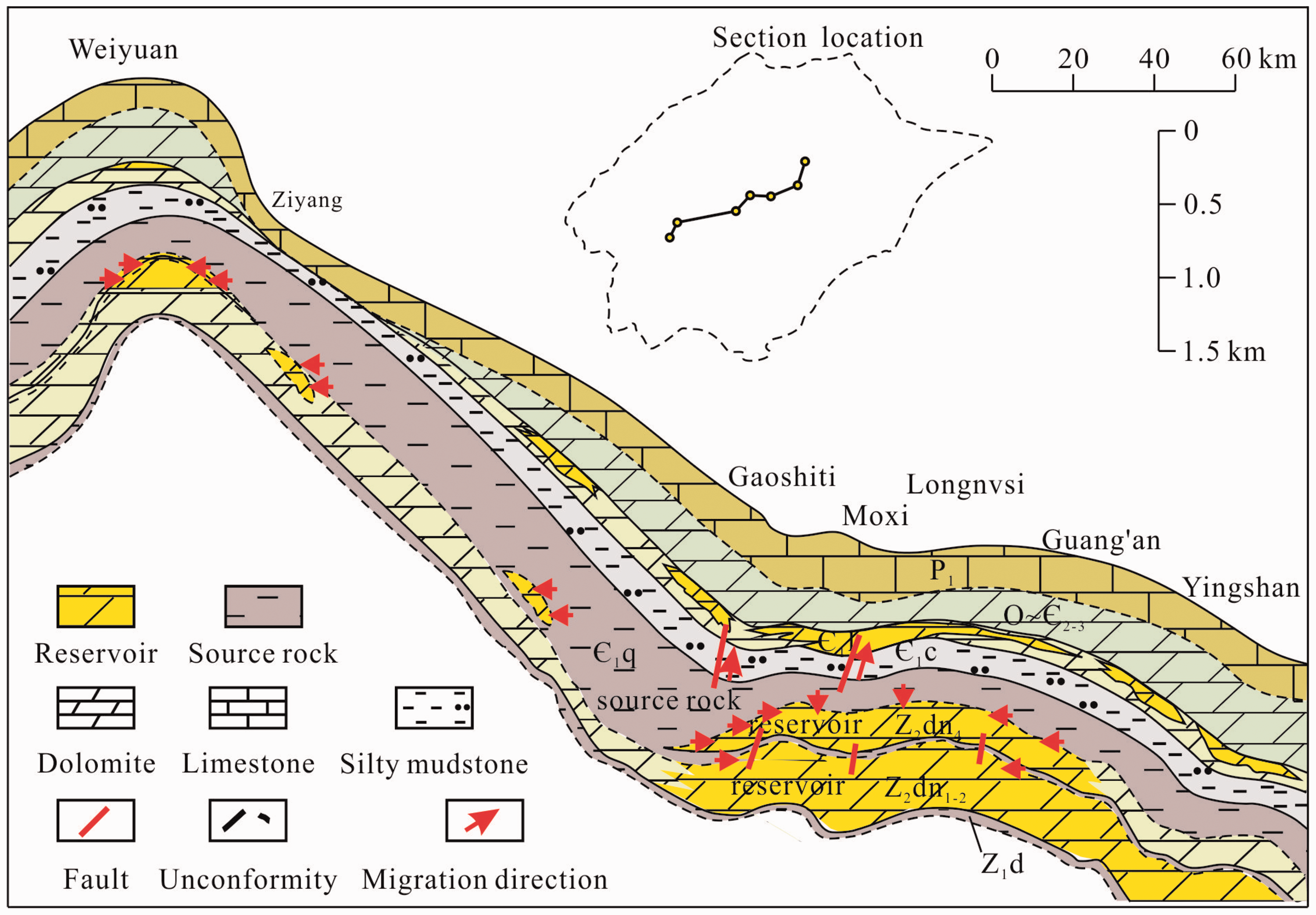
Mesh-like migration system
There are multiple unconformity surfaces and a large number of fault systems in the study area, which effectively connects reservoirs with source rocks to form a mesh-like migrating system (Figure 6), which is significantly favorable for the large-scale hydrocarbon migration and accumulation in the paleo-uplift. The unconformity surfaces on the top of the Deng 2 and Deng 4 Members provide the channel for lateral migration of hydrocarbons, and the high-angle tensional fault–fracture systems deeply cut down into source rocks, providing the pathway for vertical migration of oil and gas.
Mechanism and controls of the formation of gas reservoir
Gas genesis
The genesis of natural gases accumulated in the Dengying and Longwangmiao reservoirs can be kerogen- or oil-cracking in theory, according to their high maturity and high reservoir temperature. Based on the identification scheme using ln(C1/C2) − ln(C2/C3) (Behar et al., 1992; Prinzhofer and Huc, 1995), their genesis can be determined. As shown in Figure 7, the ln(C1/C2) values are generally less fluctuating, while ln(C2/C3) values significantly vary, which are typical features of oil-cracking gases. However, it should be noted that there are still some differences among three gas reservoirs. The ln(C1/C2) values of the Sinian Dengying gases in the Gaoshiti–Moxi Area are the largest, while those of the Dengying gases in the Weiyuan Area are similar to those of the Longwangmiao gases in the Gaoshiti–Moxi Area. Therefore, if can be concluded that the gas maturity in the central Sichuan Basin should be the highest, and the low amount of ethane leads to the high value of ln(C1/C2), which is consistent with the results of bitumen reflectance (Shi et al., 2017).
Correlation of ln(C1/C2) and ln(C2/C3) of Dengying and Longwangmiao Formation gases in the Sichuan Basin. The distinguishing criteria are after Behar et al. (1992) and Prinzhofer and Huc (1995).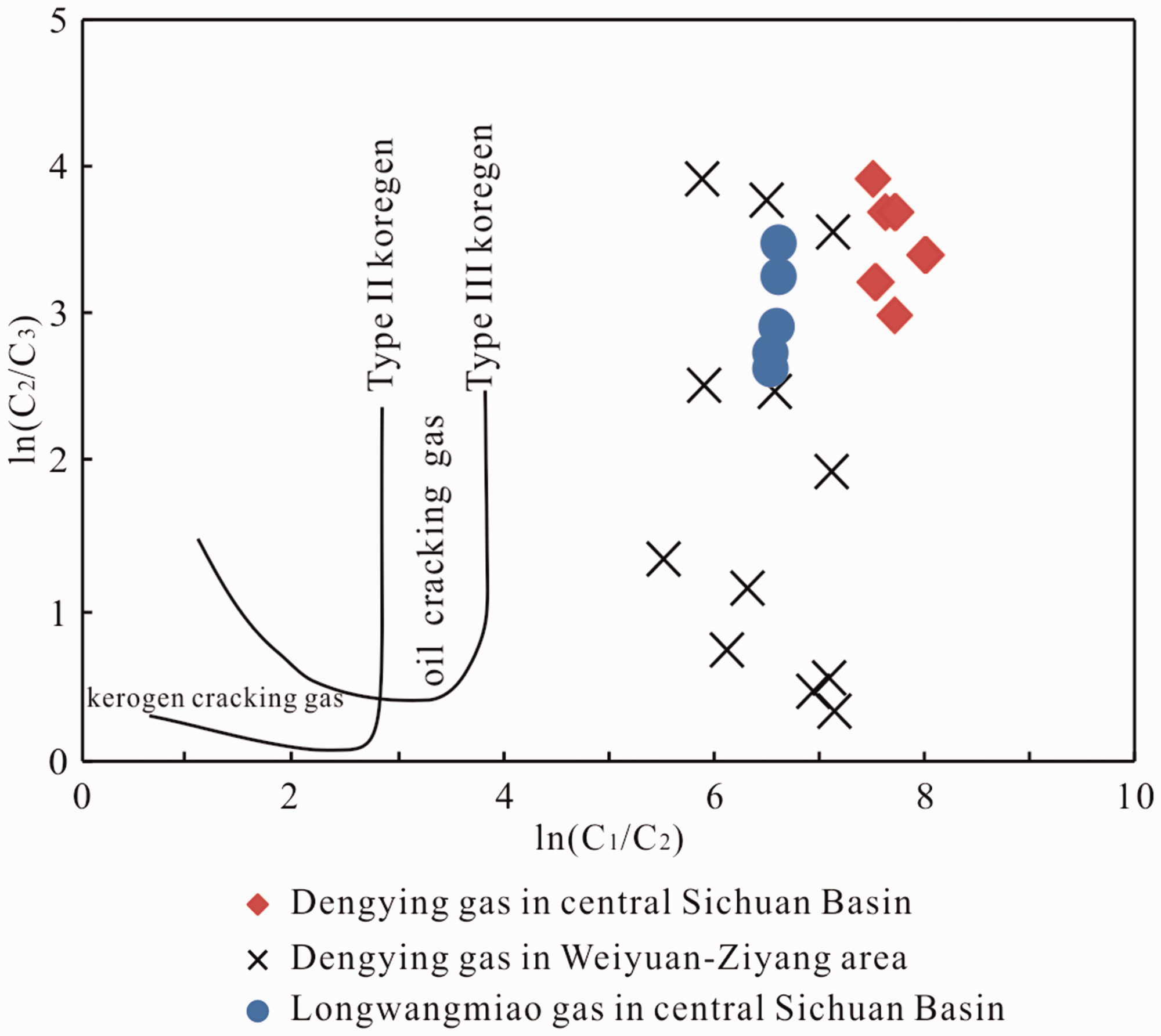
To further characterize the gas genesis, the correlation of natural gas methane carbon isotopes is correlated with natural gas components (Bernard diagram; Bernard et al., 1978) (Figure 8). It is found that natural gases in all the three accumulations correspond to Type II kerogen, with different maturities. Among them, the maturity of the Dengying gases in the central Sichuan Basin is higher than that in the Dengying gases of the Weiyuan Area, which is further higher than that of the Longwangmiao gases in the central Sichuan Basin. Such conclusions are consistent with the understanding above (Figure 7).
Bernard diagram characterizing genesis of Dengying and Longwangmiao gases in the Sichuan Basin. The distinguishing criteria are after Bernard et al. (1978), Faber and Stahl (1984), and Whiticar (1996). Data are cited from Liang et al. (2016), Wei et al. (2014, 2015), and Zou et al. (2014b).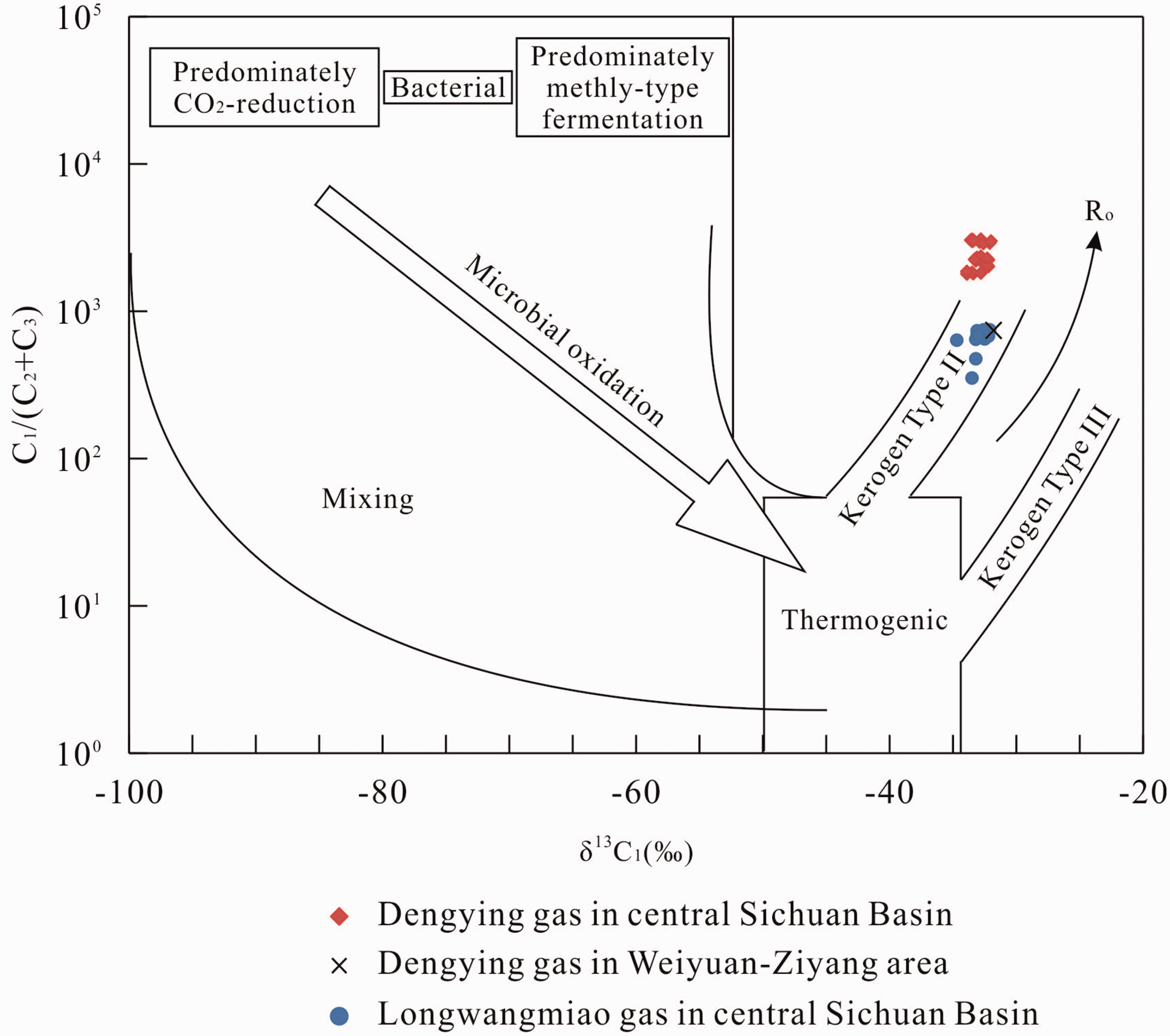
It can be concluded from above analysis that the natural gases in both Sinian and Cambrian reservoirs are dominantly oil cracking in genesis, and the gas maturity of the Dengying Formation reservoir in the central Sichuan Basin is higher than those of the other two reservoirs, which could be attributed to the different burial thermal evolution. All the natural gases are of similar origins, i.e. Type II kerogen, which is consistent with the source rock development of the Qiongzhusi shales.
Process and model of the formation of gas reservoirs
Multiple episodes of tectonic movements including Tongwan, Caledonian, Hercynian, Indosinian, and Yanshanian–Himalayan Movements contributed to the good matching between the inherent evolution of paleo-uplift in the study area and the thermal evolution of source rocks (Figure 9), which are regarded as the critical factors that resulted in the formation of the giant gas field. There are mainly three stages in the natural gas accumulation process (Figure 10).
Stratigraphic burial history of the central-basin paleo-uplift, taking Well Gaoshi 1 as an example. Evolution of paleo-uplift and associated Dengying and Longwangmiao gas accumulations.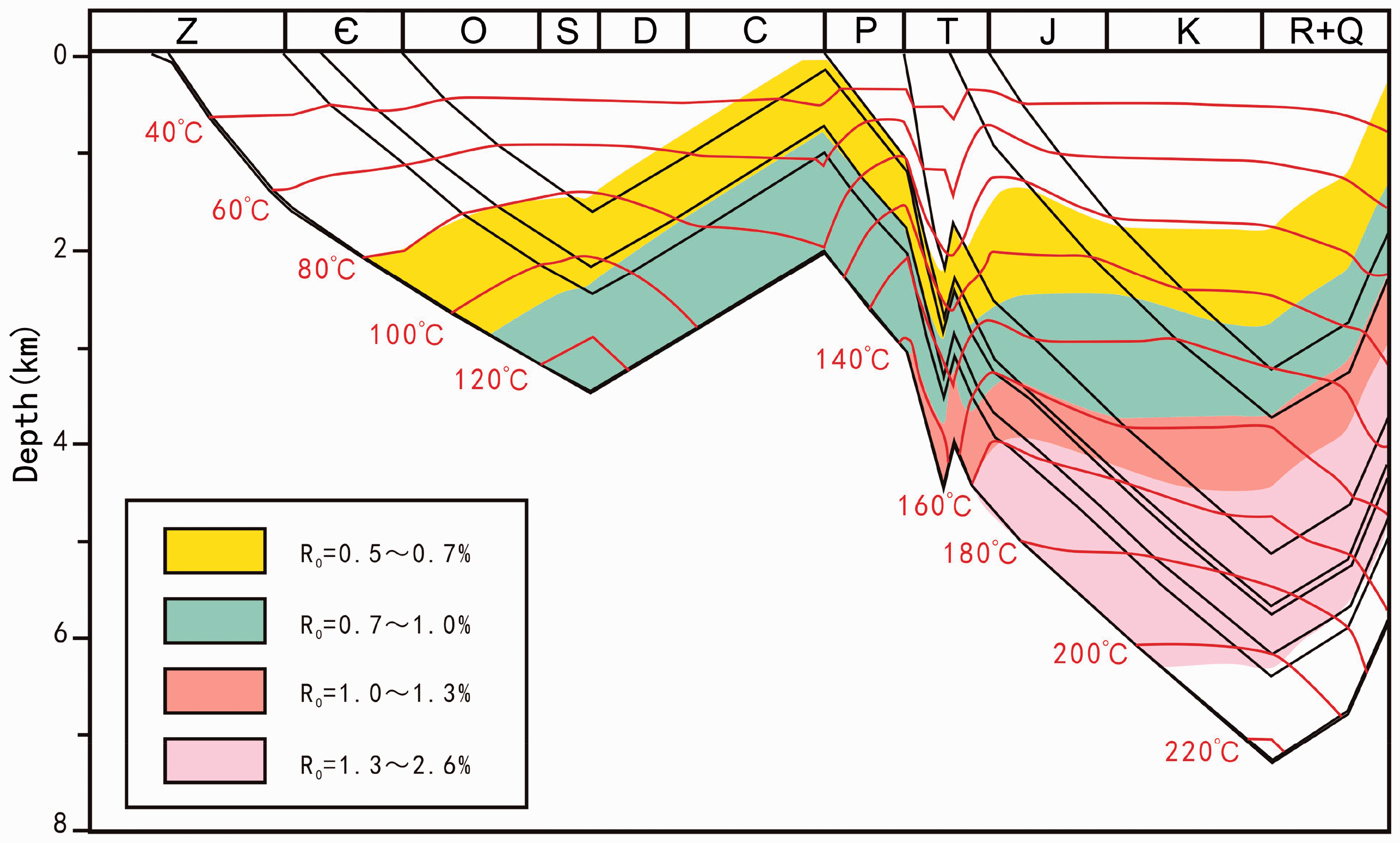
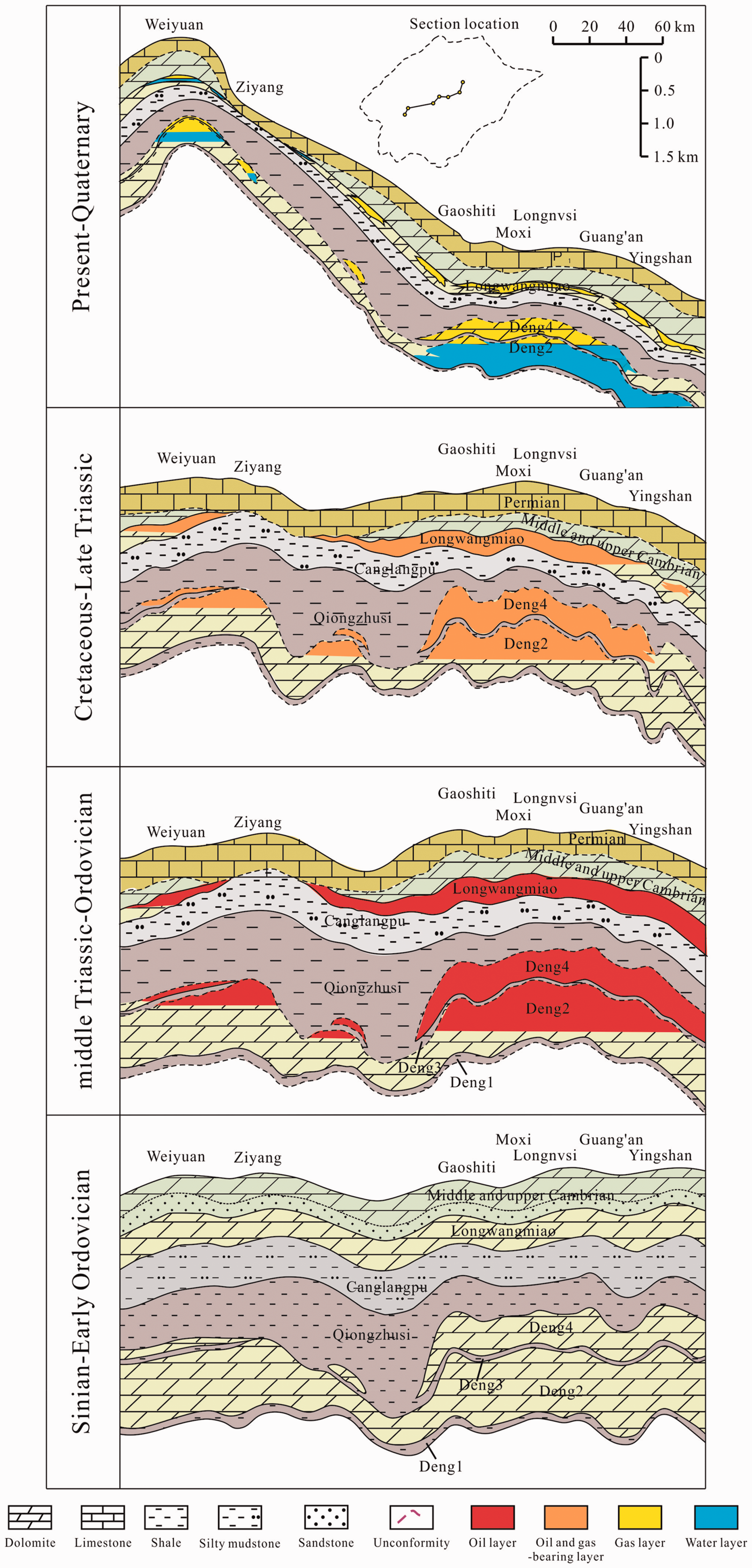
Formation of paleo-oil reservoirs
This stage consists of the first hydrocarbon generation stage from Ordovician to Silurian and the second hydrocarbon generation stage from Permian to Triassic.
During the Late Ordovician, source rocks in the high points of the paleo-uplift entered into the low maturity stage, while those in the slope and depression areas entered into the mature stage, generating liquid hydrocarbons, which then migrated to the top of the paleo-uplift. At the end of Silurian, the uplift due to the Caledonian Movement terminated the first episode of hydrocarbon generation.
Then, the continuously deepening burial since the Early Permian enabled the source rocks to enter into the second hydrocarbon generation stage. By the end of the Permian, source rocks in the slope and depression areas had entered into the “oil window” (Ro is between 1.0 and 1.4%). Then, source rocks in the top of the paleo-uplift entered into the oil window at the end of the Middle Triassic (Ro is between 1.0 and 1.2%), when the source rocks in the slope and depression had entered into the high maturity stage (Ro is between 1.2 and 1.8%). Both Sinian and Cambrian source rocks were in the peak periods of hydrocarbon generation and expulsion from the Permian to Middle Triassic, which contributed to the formation of the giant paleo-oil reservoirs in the central-basin paleo-uplift. Wang et al. (2014) analyzed the fluid inclusions in the Dengying reservoir and found there were two-stage fluids with homogenization temperature of 110–130 and 160–210℃. Yuan et al. (2014) analyzed the fluid inclusions in the Longwangmiao reservoir and found three-stage fluids in the reservoir, with the homogenization temperatures being at 110–133, 143–167, and 190–210℃. All these characteristics show the complex hydrocarbon charging process in the Dengying and Longwangmiao reservoirs.
Cracking of paleo-oil reservoirs
Accumulated oils as well as dispersed liquid hydrocarbons in reservoirs began to crack as the burial depth and formation temperature kept increasing since the Late Triassic. From the Late Jurassic to Cretaceous, source rocks were buried at depths more than 5000 m, corresponding to the gas generation peak (Ro is 1.9% in the Late Jurassic and 3.1% in the Late Cretaceous). Gases in the paleo-uplift could either come from over mature source rocks or cracked oils. By the Late Cretaceous, such accumulated and dispersed paleo-oils had basically already cracked into gas.
Adjustment and final formation of gas reservoirs
Gas reservoirs that had been formed by the Late Cretaceous did not always preserve, because there is a Himalayan Tectonic Deformation after the Cretaceous. This results in the adjustment and final formation of gas reservoirs. For example, the paleo-high structure belt in the Gaoshiti–Moxi–Longnvsi Area in the middle and eastern paleo-uplift inherently subsided, which led to the in situ accumulation and preservation of oil-cracking gas, and then the final formation of the gas reservoir. In contrast, the structural inversion taking place in the Ziyang–Weiyuan Area in the western paleo-uplift made the Ziyang Paleo-Structure High become the northern slope belt of the Weiyuan Anticline. As a consequence, most of the oil-cracking gases might be adjusted and reaccumulated in the Sinian gas reservoirs in the Weiyuan Anticline, with only a limited amount of gases remaining in the Ziyang Area.
Formation and development of paleo-uplift
The formation of oil and gas accumulations could be influenced and hindered by multiple geological factors in the processes of hydrocarbon generation, expulsion, migration, accumulation, preservation, and destruction (Sun et al., 2016; Tao et al., 2016). The enrichment degree and rule depends on the matching and superimposition of these multiple elements (Tissot and Welte, 1984). Gas enrichment in the study area is controlled by the paleo-uplift, which is an inherently developed uplift originating in Sinian, featured by both syn-deposition and erosion (Wang et al., 1997). The evolution of the paleo-uplift significantly controlled the gas accumulation in the Sinian and Cambrian strata.
Influenced by regional extensional activity and the Tongwan Movement karstification, the landform in the Precambrian of the study area is generally high in the middle and southwest while low in the southeast. There is a north–south taphrogenic trough in the Deyang–An’yue–Hebaochang Area, on the east of which the paleo-high locations were superimposed with the Tongwan Movement erosion, forming the remnant karsts featured by both sedimentation and erosion (Figure 10), which is the infant Sinian paleo-uplift (Du et al., 2014). Multiple episodes of the Tongwan Movement karstification contributed to the widely spread high-quality dolomite reservoirs in Deng 2 and Deng 4 Members (Li et al., 2000; Figures 2 and 4). Moreover, the development of taphrogenic trough laid the foundation for the deposition of the high-quality hydrocarbon source rocks in the Cambrian, i.e. the Qiongzhusi shales.
The Qiongzhusi Formation tends to thicken in the direction from the core to the periphery of the central-basin paleo-uplift, which indicates that synsedimentary structural uplift had begun to develop since the deposition of the Qiongzhusi Formation. It stably developed before the Permian, and there were several overall uplifting activities leading to the weathering and erosion. The top part of the paleo-uplift was denuded, and since then the tectonic setting of the paleo-uplift rarely changed. During this stage, the underwater uplift during the deposition of the Longwangmiao Formation controlled the large-scale development of shoals surrounding the paleo-uplift, which could be the foundation of the high-quality reservoirs. The uplifting caused by the Caledonian and Hercynian Movements resulted in the erosion in the upper part of the paleo-uplift, and at that time widely spread high-quality reservoir rocks were formed due to the hypergene karstification along the layers within shoal bodies.
The internal tectonic activity within the basin is mainly manifested as uplift in the southeast and subsidence in the northeast. The two wings of the paleo-uplift differentially subsided, and the axis of the paleo-uplift slightly migrated toward the southeast (Figure 10). During this stage, the paleo-uplift inherently developed, enabling the Cambrian source rocks to remain in the oil window until Triassic (Figure 9). Moreover, the presence of paleo-uplift provided an area favorable for hydrocarbon migration due to relatively low fluid pressure, which controls the distribution of paleo-oil reservoirs.
Influenced by the large-scale thrusting of the Longmenshan Fold and Thrust Belt and the rapid settlement of the western Sichuan Foreland Basin, the relative heaving of the paleo-uplift was further expanded. As a consequence, the axis further migrated to the southeast, the western part of the paleo-uplift was strongly uplifted, and the eastern part stably developed. The superimposition of paleo and present structures formed the present uplift belt (Figure 10). During this stage, the eastern structures stably evolved, which was favorable for the in situ enrichment and preservation of paleo-oil-cracking gas, and provided good tectonic background for the formation of the giant gas field.
Favorable zones for natural gas enrichment
High points in eastern paleo-uplift favorable for gas enrichment
During the Permian–Triassic hydrocarbon generation peak period, the high points of the paleo-uplift served as the long-term and stable oil and gas migration and accumulation zone. The Gaoshiti–Moxi–Longnvsi Structural Belt in the eastern paleo-uplift were inherently always in the weak deformation zones along the axis of the paleo-uplift (Figure 10), which was conducive to the formation of oil and gas reservoirs and the preservation of in situ oil-cracking gas reservoirs. In contrast, the Ziyang–Weiyuan Area in the western part of the paleo-uplift were in the Yanshan–Himalayan Tectonic Belt and thus influenced by strong deformation during the oil cracking and dry gas generation stages, when large amounts of oil-cracking gases were reaccumulated although some of them were leaked. The discovered giant gas field with the exploration area of 7500 km2 in the Sinian–Cambrian of the Gaoshiti–Moxi Area verified the role of the eastern high points of the paleo-uplift as the favorable natural gas accumulation zones.
North–south belt-like zone in the Gaoshiti–Moxi Area favorable for gas enrichment in Dengying reservoirs
There are obvious differences in the natural gas enrichment and production capacity in the Dengying reservoirs of the eastern paleo-uplift, which could be attributed to three main factors. The first one is the differential reservoir thickness, and the thicker areas are distributed along the north–south belt-like zone in the western part of the Gaoshiti–Moxi Area (Figure 4). The second factor is that reservoirs are of higher quality in the belt-like zones due to the more developed karsts, which could be regarded as the “sweet spot” (Figure 4). The third factor is that the appropriate contact of belt-like high-quality reservoirs and source rocks in the western Gaoshiti–Moxi Area makes the effective near-source accumulation of natural gas possible (Figure 6). The testing results have verified that wells with daily gas production larger than 30 × 104 m3 are mostly located in the predicted favorable areas.
Superimposed area of paleo and present uplifts in the Moxi–Longnvsi Area favorable for gas enrichment in Longwangmiao reservoirs
In the condition with large-scale development of karst reservoirs and extensive distribution of high-quality hydrocarbon source rocks, the superimposed area of paleo and present uplifts in the Moxi–Longnvsi Area is most favorable for the enrichment of in situ oil-cracking gases in the Longwangmiao reservoir (Figure 10), which has been in the high position since the Permian. Such area is the current high gas production area, and the proven reserves of 4400 × 108 m3 have been identified. In contrast, the western region of the paleo-uplift was closed to the denudation line of the Longwangmiao Formation and it was uplifted in the later tectonic movements. As a consequence, the structure in this area gradually turned into a monocline. The preservation suffered strong destruction, which resulted in the destruction of gas reservoirs and thus the present reservoir mainly produces water, which is not favorable for exploration.
Conclusions
The discovery of the Sinian–Cambrian giant gas field in the central paleo-uplift, Sichuan Basin, is a new successful case in such old sequences worldwide and has significant implications both in exploration and scientific study. This gas field is featured by old strata (Sinian to Cambrian), huge buried depth (generally > 4500 m), multiple gas-bearing intervals (Deng 2 Member, Deng 4 Member and Longwangmiao Formation), various gas accumulation types (structural, stratigraphic, and structural–stratigraphic ones), large scale (giant), and superimposed and pervasive distribution. The formation of the giant gas field can be attributed to the interbeding and superimposition of multiple sets of high-quality hydrocarbon source rocks and large-scale karst reservoirs as well as the mesh-like hydrocarbon charging system. The main gas genesis is oil cracking, and the main accumulation stages include paleo-oil reservoir formation during the Triassic, oil-cracking during the Cretaceous, and the adjustment and final formation during the Palaeocene. The main controlling factor of gas enrichment is the effective matching between the inherently developed large-scale stable paleo-uplift in the central Sichuan Basin and the evolution of various accumulation-related elements. Favorable areas are the high points in the eastern paleo-uplift. Specifically, high gas production areas in the Sinian Dengying Formation are in the north–south belt-like zone in the west of the Gaoshiti–Moxi Area, while those in the Cambrian Longwangmiao Formation are in the superimposed areas of paleo and present uplifts in the Moxi–Longnvsi Area.
Footnotes
Acknowledgements
We thank the colleagues from the Southwest Oil and Gas Field Company who devote much to this work. We thank the Editor-in-Chief, Prof. Yuzhuang Sun and two anonymous reviewers for their constructive reviews, which help to improve the article.
Declaration of conflicting interests
The author(s) declared no potential conflicts of interest with respect to the research, authorship, and/or publication of this article.
Funding
The author(s) disclosed receipt of the following financial support for the research, authorship, and/or publication of this article: This work was funded by the PetroChina Science and Technology Major Project Grant (No. 2016E-0602).