




Abstract
The main lithofacies of the upper Ordovician Wufeng Formation is black shale, which is one of the most important source rocks of shale gas reservoir in middle–upper Yangtze region, SW China. To make a convincing study on the reservoir characteristics of Wufeng Formation, four rock core samples were collected from an exploration shale gas well and their mineral composition, pore characteristics, specific surface area, organic geochemical characteristics, organic matter maturity, and methane adsorption capacity were analyzed. The results show that clay minerals and quartz are the major mineral composition of Wufeng Formation shale, and the Brittleness Index indicates a possible better efficiency during the prospective hydraulic fracture process. The pore types of Wufeng Formation shale are various, and the total pore porosity ranges between 2.19% and 2.97%, while the permeability ranges from 0.12 × 10⁻³ µm2 to 0.18 × 10⁻³ µm2, and the specific surface area varies between 11.52 cm2/g and 19.73 cm2/g. The total organic carbon content of Wufeng Formation shale varies between 3.22% and 4.87%, representing the great hydrocarbon generation ability, while the Ro stably ranges between 2.48% and 2.60% and presents an over-mature stage so that mass generation of hydrocarbons from shales occurred during the geological history. Compared with the existing information of some shales from different geological ages in middle–upper Yangtze region, Wufeng Formation shales possibly have a relatively preferable methane adsorption capacity. In general, despite it possesses a thinner thickness, as for as its reservoir characteristics, Wufeng Formation plays an unneglectable role in the reservoir combination system of Wufeng Formation and its overlying the Lower Silurian Longmaxi Formation.
Keywords
Introduction
With the increasing demand of fossil fuel energy, unconventional natural gas, such as tight gas, coal-bearing methane, and shale gas have been received much attention from many countries. Especially, due to large reserve, shale gas has gradually become the focus of energy industry (Clarkson et al., 2012). Shale gas is commonly served as a self-contained and source-reservoir system, in which hydrocarbon gases dominated by methane derived from organic matter through biogenic and/or thermogenic processes (Clarkson et al., 2012). Usually, shale gas is stored as (1) free gas in pore-fracture system, (2) adsorbed gas in inorganic minerals and organic matter, and (3) possibly dissolved gas in oil and water (Curtis, 2002). Different from conventional resources, gas shales always are characterized by tight, low permeability, and low porosity, indicating that it is not appropriate to use traditional methods to develop shale gas. Thus, the study of shale gas reservoir characteristics is particularly important.
How to make commercial exploit of shale gas is still a worldwide problem that directly limits the shale gas utilization at a certain degree. Fortunately, owing to the progress of the techniques such as horizontal drilling and hydraulic fracturing, commercial production of shale gas has made great success in the America, and was stepped forward in other countries, such as Canada, Australia, India, Poland, Argentina, and China (Qian, 2006; Rani et al., 2015).
Recently, China has made a big progress in the development of shale gas. Meanwhile, many researches were made relating to the marine shale gas reservoir in southwestern China (Wang et al., 2014). In 2012, the first shale gas well (Well-JY1) in Fuling County of Chongqing, southeastern Sichuan Basin, with the target stratum of the Lower Silurian Longmaxi Formation shale (simply LMX shale), yielded shale gas flow of 20.3 × 10⁴ m3/day (7200 Mcf/day). Since then, southeastern Sichuan Basin becomes one of the shale gas exploration emphases in China (Chen et al., 2015a). As another important shale gas target seam, compared with the Longmaxi Formation and the Niutitang Formation gas reservoirs, the upper Ordovician Wufeng Formation in middle–upper Yangtze region has only been paid attention in recent years (Chen et al., 2015b; Liu et al., 2015a; Wang et al., 2014; Wu et al., 2013; Xie et al., 2013; Yang et al., 2015). For examples, Xiong et al. (2015) made a research of the pore structure characteristics of Wufeng Formation. Liang et al. (2015) studied the pore fractal characteristics of Wufeng Formation. However, present studies have not realized the reservoir characteristics of Wufeng Formation and the genuine role of Wufeng shales in the reservoir combination of Wufeng Formation and Longmaxi Formation.
In this study, a typical shale gas exploration well was chosen to study the reservoir characteristics of Wufeng Formation, including the mineral composition, pore structure, organic geochemical, organic matter maturity, and methane adsorption capacity, which present a detailed description of reservoir characteristics of the upper Ordovician Wufeng Formation shale.
Geological setting
The middle–upper Yangtze region mainly contains the cratonic basins in Sichuan province, northern and eastern Guizhou province, eastern Yunnan province, central Hubei province, and northern Hunan province (Figure 1). The superimposed petroliferous basins were developed in complex plate tectonic system, with typical characteristics of multi-stages, multi-times, multi-layers, and multi-cycles. In this region, there are four primary regional hydrocarbon source rocks (i.e. lower Cambrian, lower Silurian, middle Permian and upper Permian) and seven secondary regional hydrocarbon source rocks (i.e. upper Simian, upper Ordovician, lower Ordovician, middle Devonian, lower Carboniferous, lower Triassic and upper Triassic–Lower Jurassic) (Cai et al., 2005). The upper Ordovician Wufeng Formation shale is one of the most important regional hydrocarbon source rocks in Southwest China (Chen et al., 2004; Li, 2015) (Figure 1).
The Yangtze region and the distribution of Wufeng Formation shale.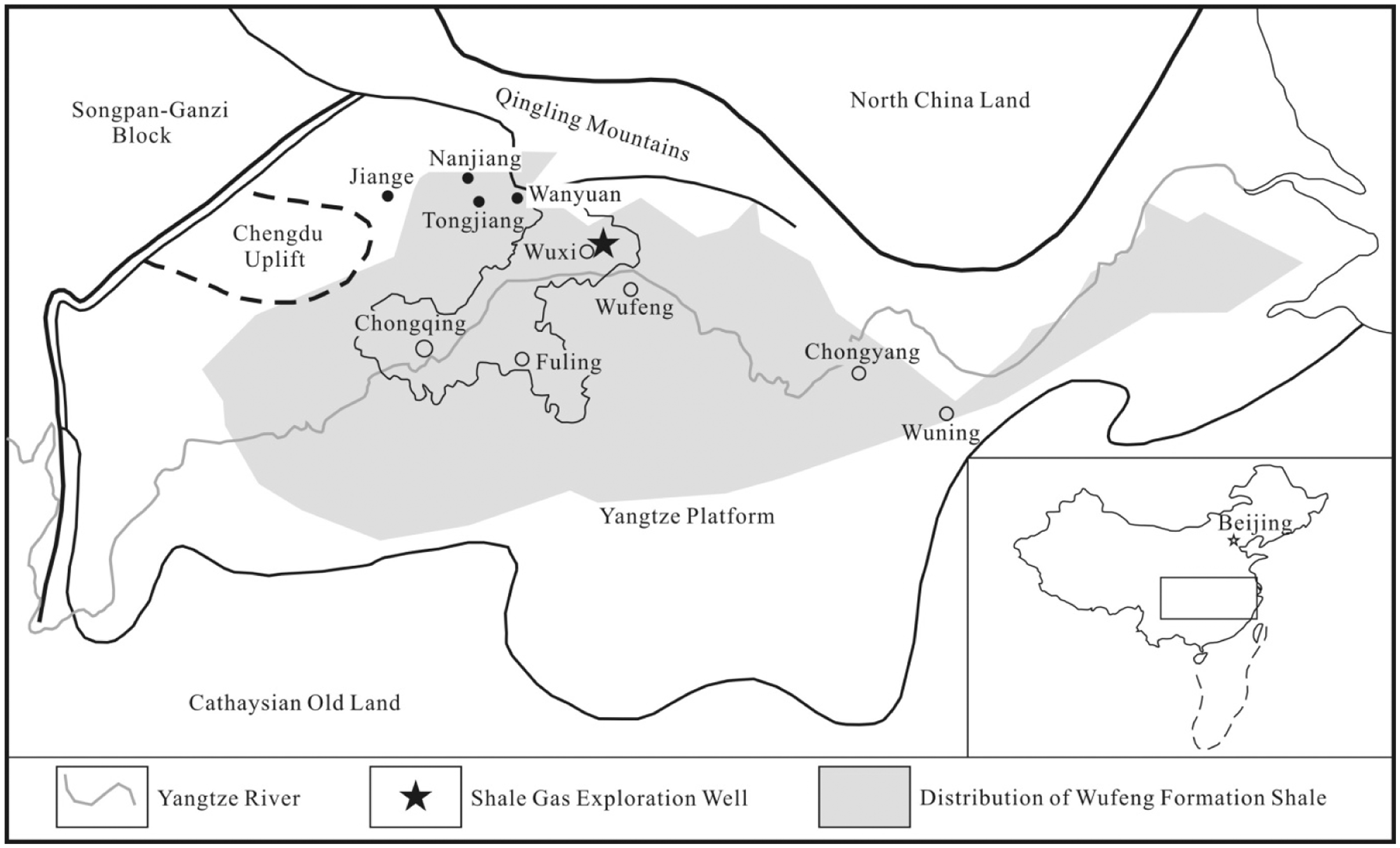
The Wufeng Formation is marine muddy sediment and its main lithofacies are black shale and a few of mudstone (Chen et al., 2004). There is about 1 m-thick sandstone and/or limestone on the top of black shale in the region of central and eastern Sichuan basin and the area from Chongyang County in Hubei province to Wuning County in Jiangxi province (Figure 2). The Wufeng Formation has a thickness of 1.8–52.4 m (Li, 2015), and it has conformable contact with the underlying Linxiang Formation and the overlying Lower Silurian Longmaxi Formation (Figure 2).
The columnar section of Wufeng Formation in Well-WQ2.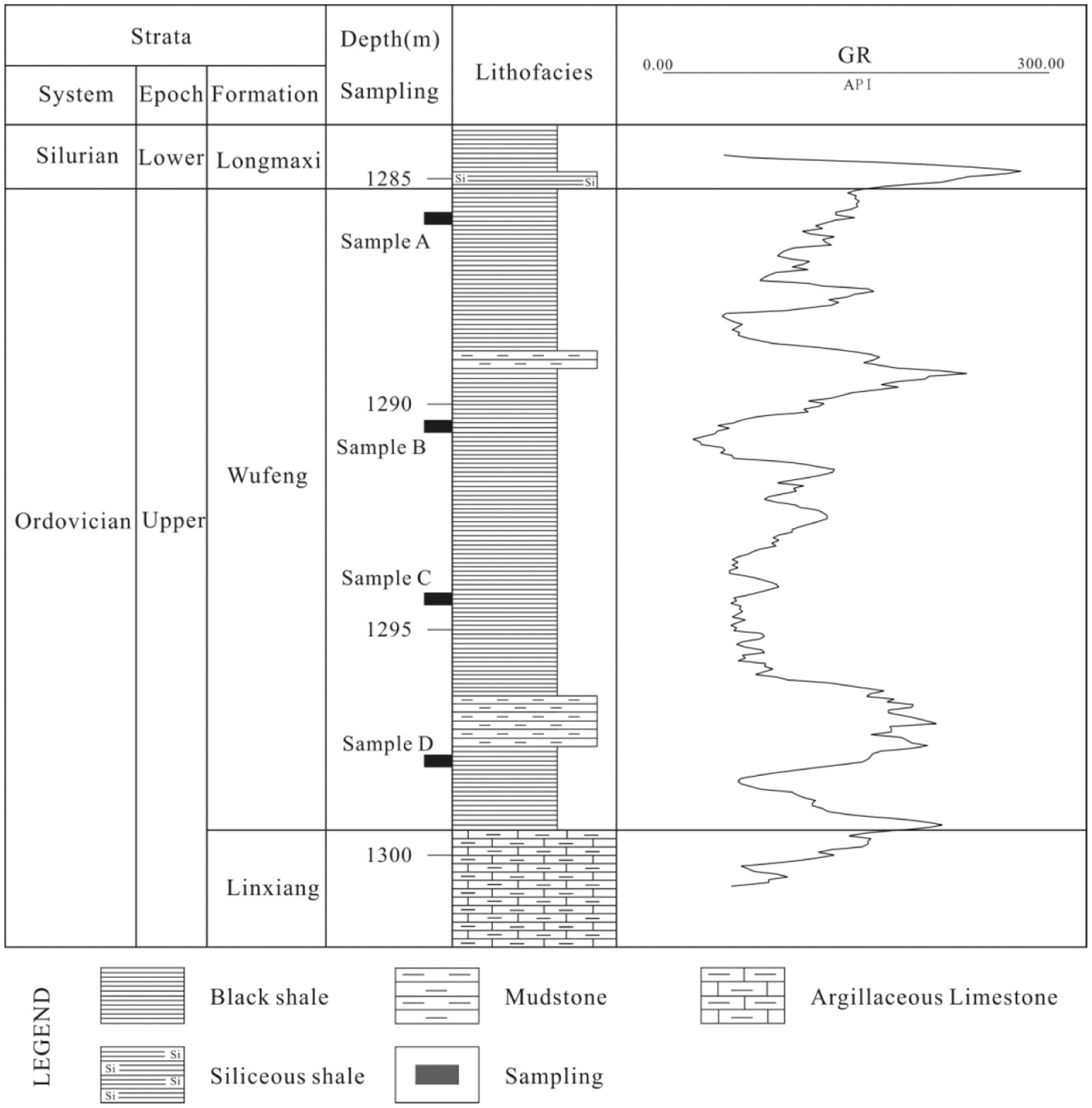
The Well-WQ2 is a shale gas exploration well, located in the Wuxi County, northeast of Chongqing (Figure 1). The thickness of Wufeng Formation in Well-WQ2 is 13.8 m that is pretty approximate to the average thickness of Wufeng formation (Figure 2), indicating that samples from Well-WQ2 are rather typical for the research of Wufeng Formation.
Sampling and experimental methods
In this study, four core samples were collected from Well-WQ2. The four samples from the top down are marked as Sample A, Sample B, Sample C, and Sample D (Figure 2).
Each sample was crushed into powder with a grain size smaller than 150 µm for x-ray diffraction (XRD) to quantify the mineral content by using an instrument of ZJ207 at 40 kV and 40 mA with a Cu Kα radiation. Stepwise scanning measurements were performed at a rate of 2°/min in the range from 3° to 45°.
The total organic carbon (TOC) analysis was performed on a ZJ294 type TOC analyzer after removing the carbonates by diluted hydrochloric acid based on the method by Pan et al. (2015). The vitrinite reflectance (marked as Ro) of shales was obtained from bitumen reflectance (simply Rb) determined polished core samples under reflected light with an instrument of ZJ257 microscope photometer with immersion objective, then calibrated by the reference of Jacob (1985). The calculation method had been approved by International Committee of Coal and Organic Petrology (ICCP) in 1992 (Xiong, 2009). The Ro of each sample is the average from 30 randomly statistics. Shale porosity was quantified by mercury intrusion porosimetry, and pore microstructure was observed in an EOL JSM-6610LV Scanning Electron Microscope (SEM). The specific surface area was determined by the Brunauer–Emmett–Teller method (BET) method with an instrument of ASAP 2010.
The methane adsorption capacity was tested by using an instrument of Rubotherm ISOSORP-HP. Each sample was analyzed under the regulated temperature condition of 30℃, 60℃, and 90℃ (that is, 303 K, 333 K and 363 K) in a stably regulated pressure. Thereafter, referencing the Langmuir monolayer adsorption theory (Yang et al., 2015), the adsorption isotherm curve was calculated by using the Langmuir monolayer adsorption theory.
Results and discussion
Mineralogy characteristics
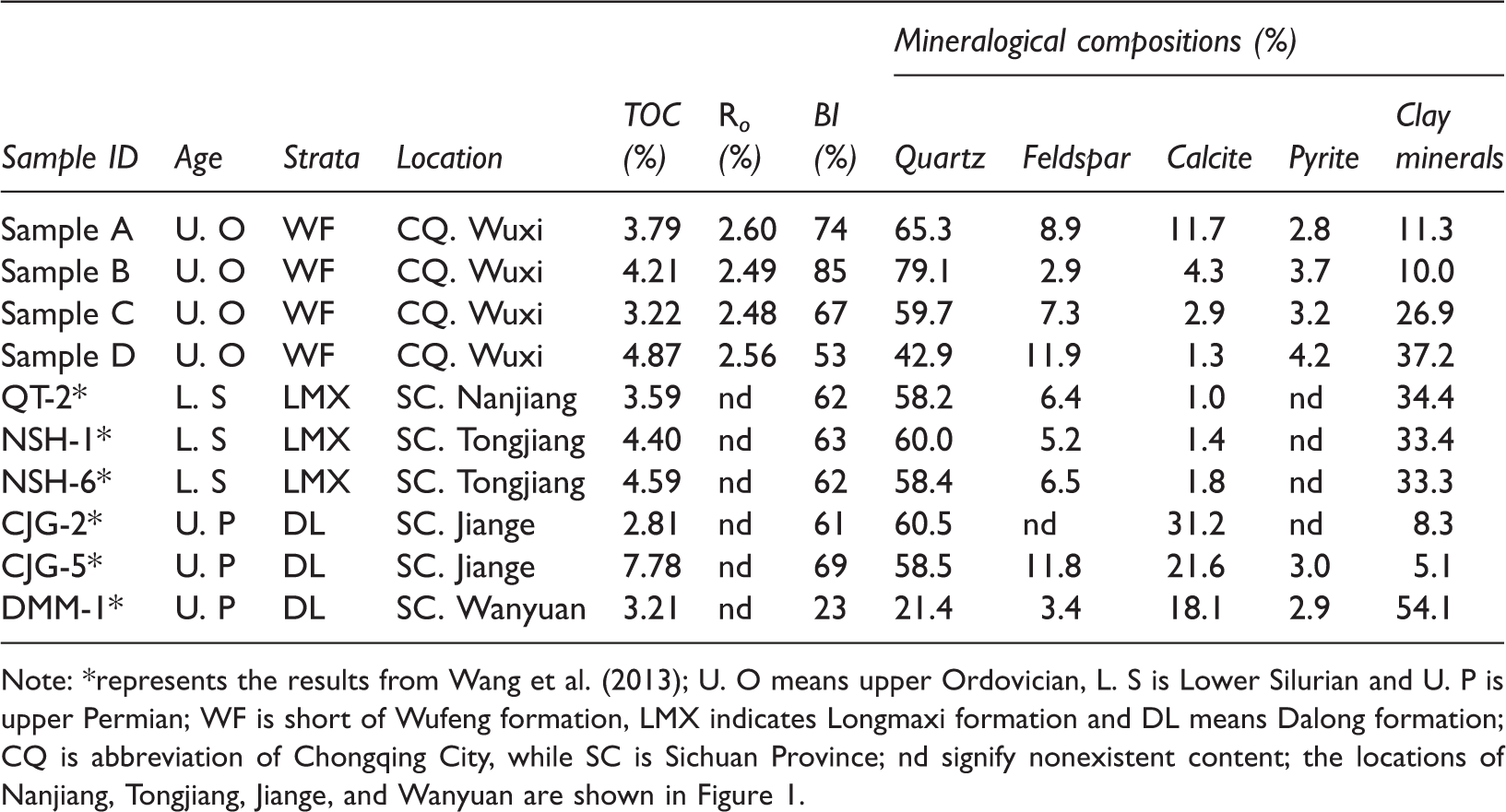
The mineral composition of black shales of Well-WQ2, as well as some LMX shales and Dalong Formation shales (simply DL shales) from Wang et al. (2013) are tabulated in Table 1. There is a large variation in the quartz and clay minerals content. The total quartz content averages 61.8% and ranges between 42.9% and 79.1%, while clay minerals content averages 21.4% with a range from 10.0% to 37.2%. Besides, the average content of feldspar, calcite and pyrite is 7.8%, 5.1%, and 3.5%, respectively (Table 1). Compared with LMX shale and DL shale, the content of quartz in this study is close to the data of LMX shale and a little bigger than DL shale's, while clay minerals is prevalently less than LMX shale and a little bigger than DL shale (except the sample DMM-1) (Table 1, Figure 3). Moreover, there is little difference in the contents of feldspar and pyrite between the investigated shales and the contrast samples (LMX shale and DL shale).
Triangular plot of mineral composition of shales in this study area. The basic geological information of the investigated shales. Note: *represents the results from Wang et al. (2013); U. O means upper Ordovician, L. S is Lower Silurian and U. P is upper Permian; WF is short of Wufeng formation, LMX indicates Longmaxi formation and DL means Dalong formation; CQ is abbreviation of Chongqing City, while SC is Sichuan Province; nd signify nonexistent content; the locations of Nanjiang, Tongjiang, Jiange, and Wanyuan are shown in Figure 1.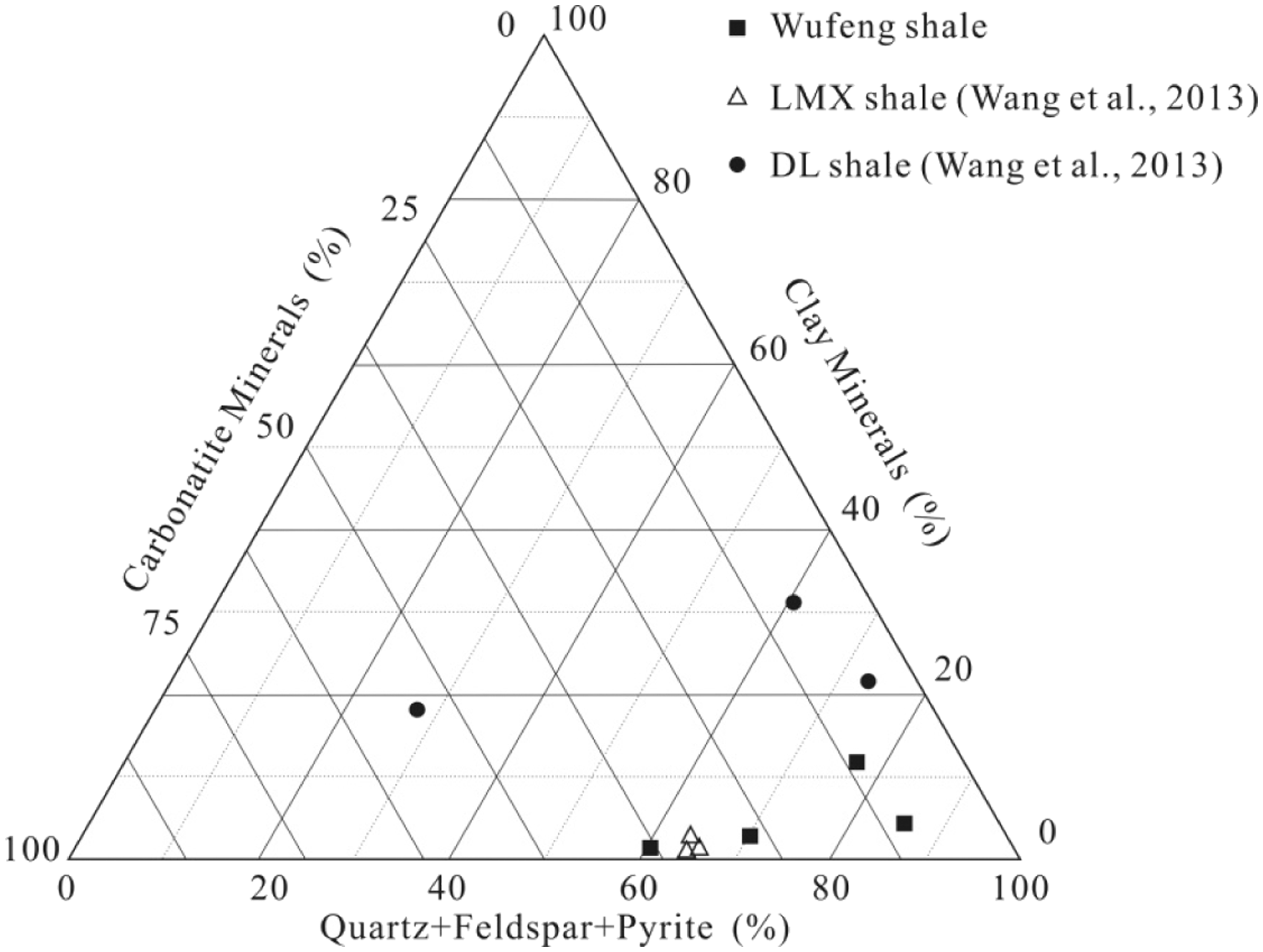
The clay minerals in the Wufeng Formation include chlorite, illite, and illite-smectite mixed-layer mineral (I-S mixed-layer). The content of each clay mineral of studied samples is relatively similar (Figure 4). The content of chlorite varies from 2% to 6%; illite occurs with a percentage of 38–49%, while I-S mixed-layer ranges from 47% to 58%.
The composition of clay minerals of selected shales.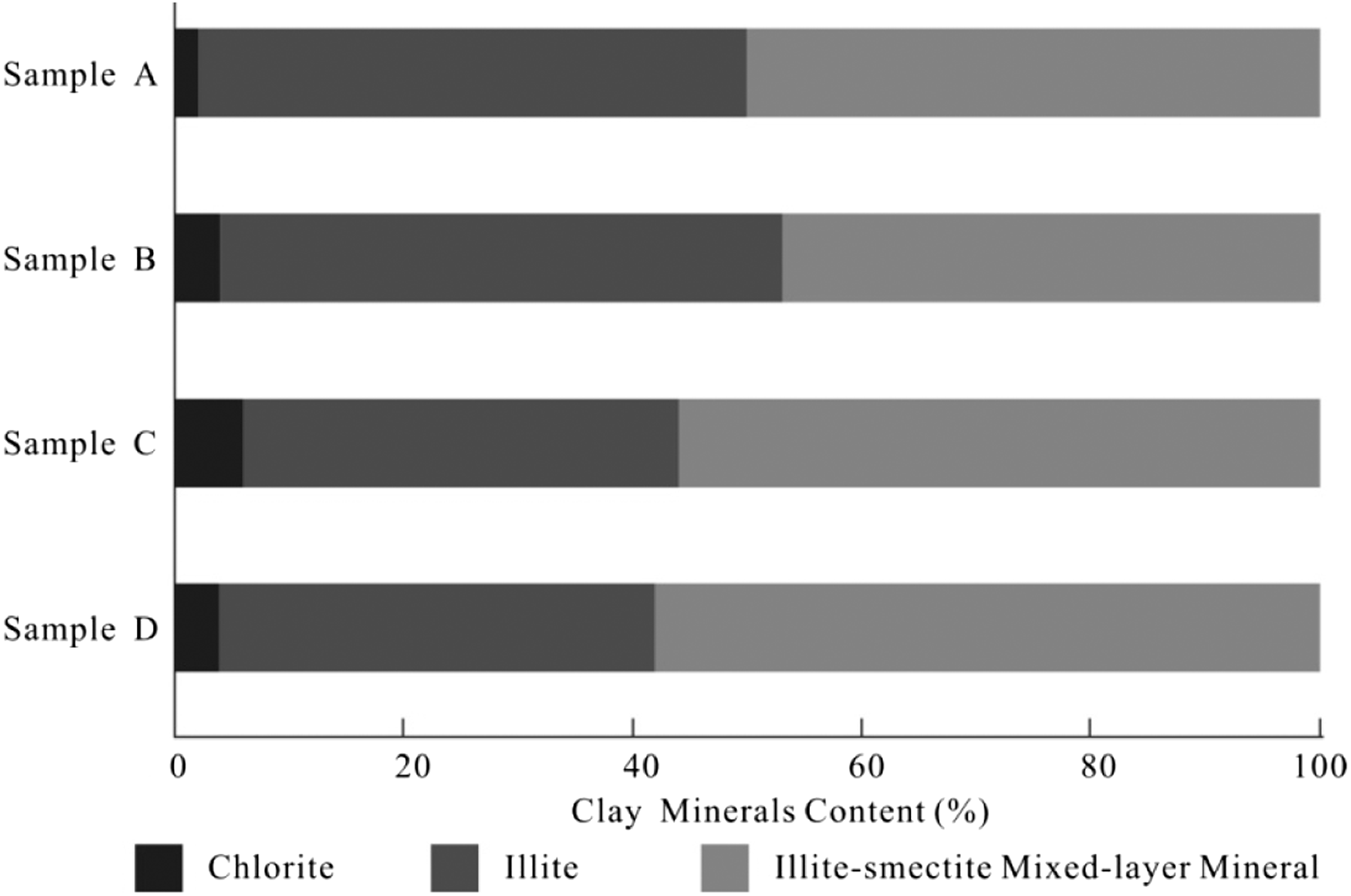
In addition, the content of some mineral composition could impact brittleness level of shale and the Brittleness Index (BI) of shale could be calculated by the following formula (Jarvie et al., 2007):

Based on equation (1), the BI of study shales are calculated and the results are given in Table 1. BI is a key parameter for rock mechanics character, which has a great effect on the reservoir reclaim by hydraulic fracturing (Liu et al., 2015b; Lu et al., 2013). The BI of study shales averages 70% and ranges from 53% to 85% (Table 1), which is little bigger than the BI of LMX shale and DL shale as shown in Table 1. According to Chen et al. (2015a), LMX shale is the most potential reservoir for shale gas in Sichuan Basin for its big gas production after the operation of hydraulically fracturing. However, the BI indicates that Wufeng Formation shale will probably have a relatively better result in the process of hydraulic fracture than LMX shale and DL shale.
Pores structure analysis
Unlike the conventional reservoirs, such as sandstones and carbonates, shale gas reservoir has a more complex type in pore structure and pore size distribution. The pore structure and size of shale has a great influence on the storage and transport mechanism of gas in shales (Chalmers et al., 2012a; Chen et al., 2014; Niemeijer et al., 2009; Tian et al., 2015).
There are four types of pores existing in the investigated samples (Figure 5). The most common pore in the shales is organic micropores that always occur inside the organic matter. There are also some inter-granular pores in clay minerals (Figure 5b). The inter-granic micropores have a positive influence on gas adsorption and storage but a negative influence on porosity and permeability due to the water sensitive of clay minerals. The third pore type is the pores of framework minerals that is found in feldspar (Figure 6a), quartz (Figure 6b), framboidal pyrite (Figure 5c), and calcite (Figure 5d). This kind of pores has poor connectivity. In addition, micro-fractures (Figure 5e, 5f and 6c) were also found in selected shales. Generally, the organic micropores and inter-granular pores are the main space for shale gas storage, while micro-fractures provide the main contribution to gas permeability.
Pores of Wufeng shales come from different origin and development position. SEM pictures of different types of Wufeng shales.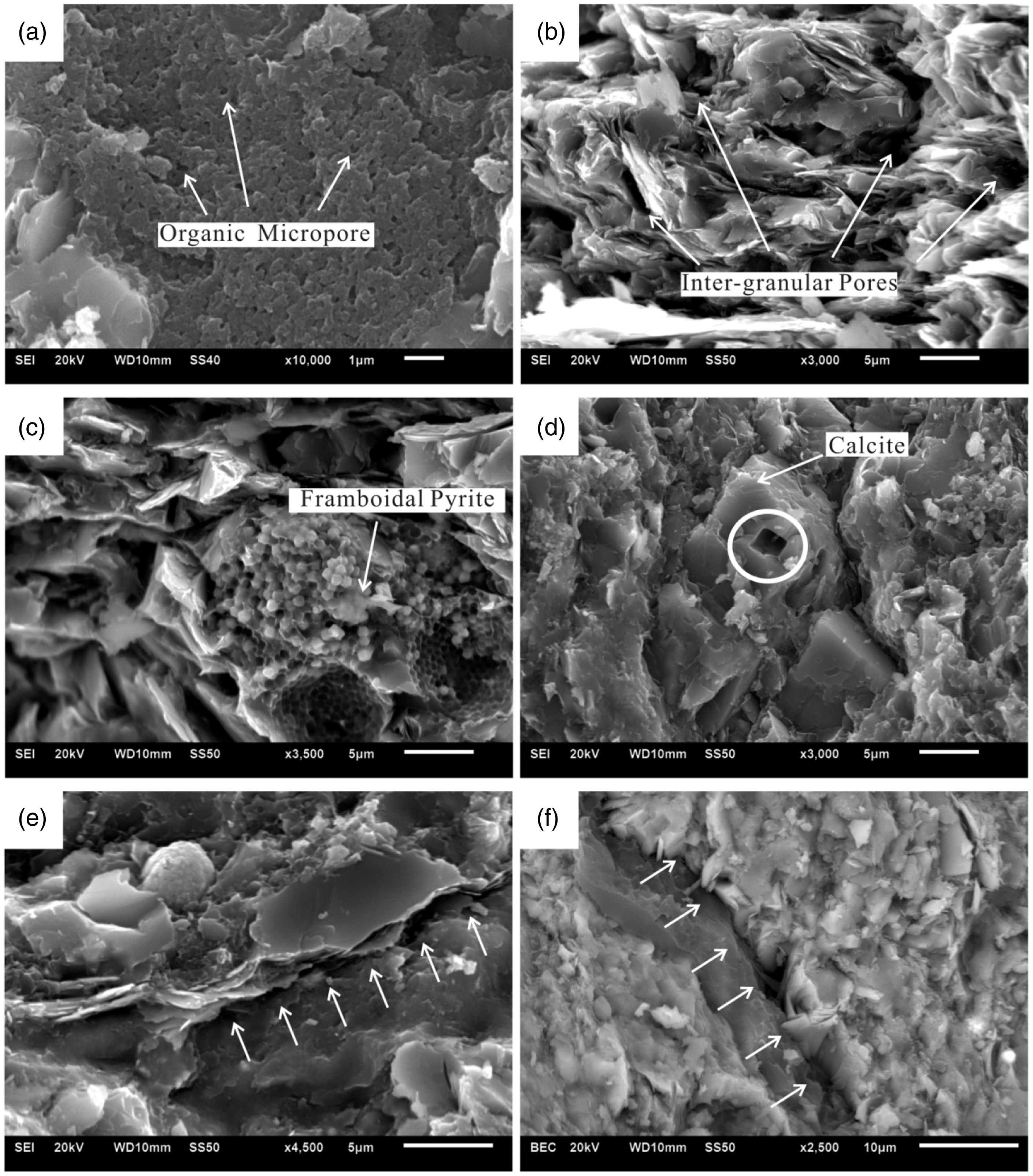
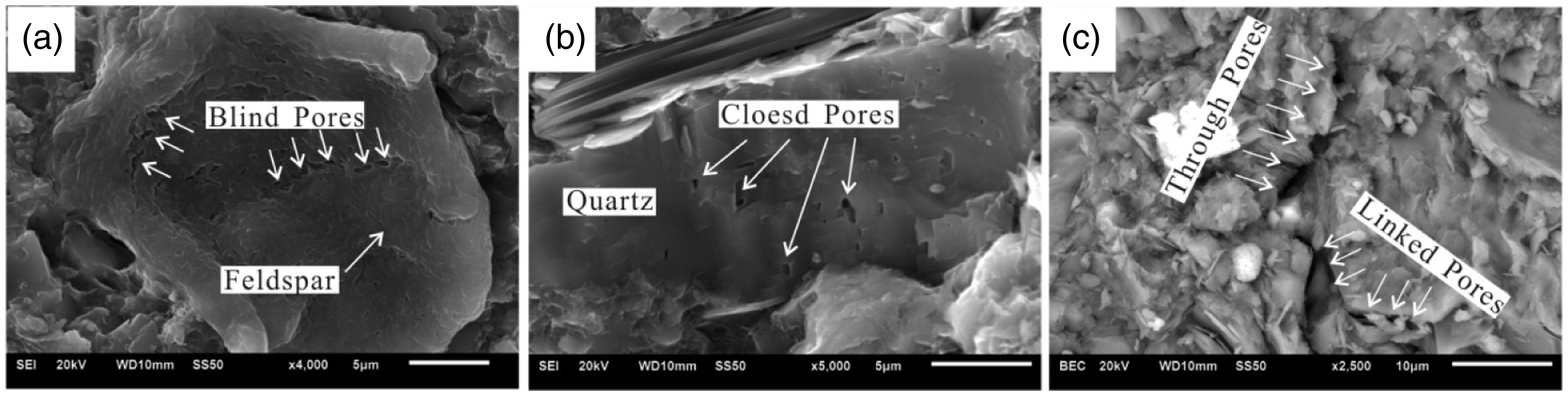
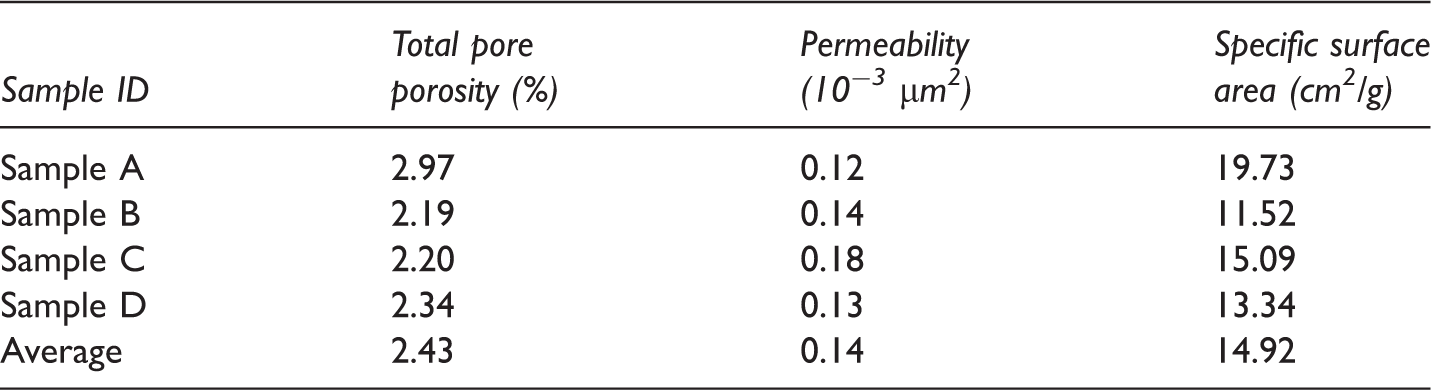
In addition, based on connective property of pores, the pores are divided into four shapes (Rani et al., 2015): closed pores, blind pores, linked pores, and through pores. SEM pictures show that lots of blind pores (Figure 6a) and close pores (Figure 6b) in study samples, and there are few linked pores and through pores (Figure 6c). Blind pores and close pores have low connectivity makes low permeability (Pan and Connell, 2015). Besides, the illite, the main composition of clay minerals, takes on scaly or silk-thread form and clogs the pore structure and/or throat, which possibly changes linked pores into through pores or changes blind pores into closed pores, even changes linked pores and/or through pores into blind pores and/or close pores. Thus, permeability and porosity may further reduce. This classification for pores demonstrates that the connectivity lacks, which results in a low permeability in study samples.
Moreover, the pore size, according to the International Union of Pure and Applied Chemistry (IUPAC), was recommended for the geoscientists, where micropore is defined as its widths less than 2 nm, while mesopore between 2 and 50 nm, and macropore greater than 50 nm (Chalmers et al., 2012b). In order to quantitatively analyze the pore-throat size distribution, mercury intrusion porosimetry (MIP) was used. However, limited by the measurement precision, MIP could not distinguish the specific distribution of micropore, it is mainly good at the analysis of micron-sized pores (namely, mesopore and macropore) that primarily control the shale permeability and connectivity between inner pores (Chen et al., 2016; Clarkson et al., 2013). Thus, MIP results represent an indication of accessible pore distribution. Obtained from MIP, the statistical histograms and curves (Figure 7) for pore-throat size demonstrate that, 1) the mesopore occupy a large portion of the whole statistics; 2) the statistical curve is characterized as bimodal distribution. The left maximum peak represents the small pore-throats with a radius less than 0.1 µm, and the right one stands for the pore-throats of radius range from 1 µm to 30 µm; 3) the size, type and their distribution of the pore-throats in study shales are relatively stable, four samples have the similar statistical curve; 4) few statistical number is greater than 30 µm, and none of them surpass 50 µm.
The distribution histograms of pore-throat size in study samples obtained from mercury intrusion porosimetry (MIP).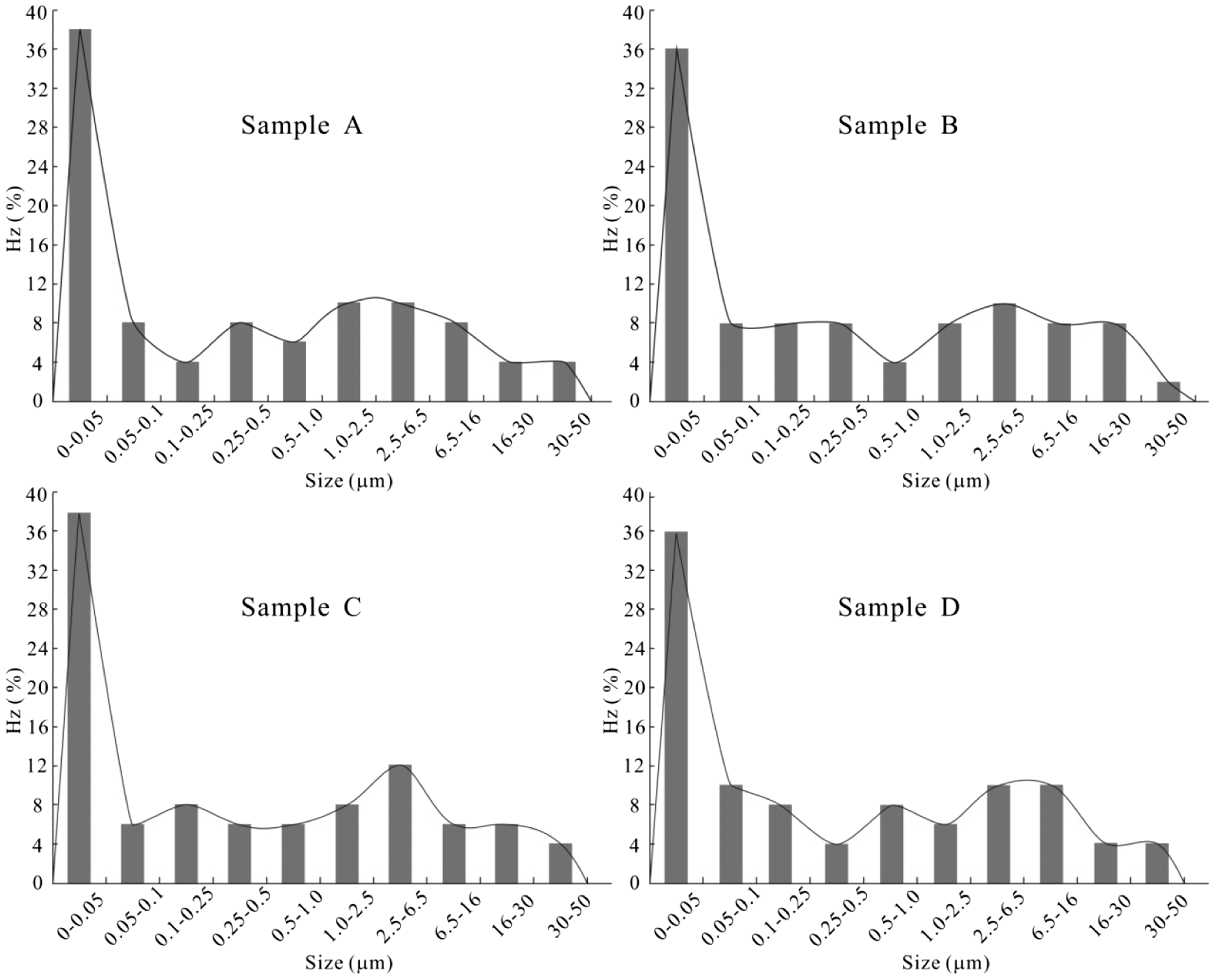
Pore characteristics of study samples.
Organic geochemical characteristics
Total organic carbon
The TOC content can greatly represent hydrocarbon generation ability, which is a key factor for the abundance estimation of organic matter and for the assessment of shale gas reservoir. The TOC content of the collected samples, averaging 4.02% and varying between 3.22% and 4.87% (Table 1), is approximately equal to the TOC content of referential LMX shale (Table 1), which may be attributed to their comfortable contact relationship and similar depositional environment. Thus, it could be speculated that Wufeng Formation shale and LMX shale probably contain approximate hydrocarbon potential. Moreover, the TOC content of study shales is generally greater than DL shales for contrast (except No. CJG-5*) in Table 1, which indicates Wufeng Formation shale is prone to a greater hydrocarbon potential than DL shale.
Organic matter maturity
Thermal evolution for organics defines organic matter maturity that characterized by Ro in this study. According to the general classification standard for organic matter maturity, Ro < 0.5% means immature stage, 0.5% < Ro < 2.0% indicates mature stage and Ro > 2.0% shows over-mature stage. The Ro stably varies between 2.48% and 2.60% and averages 2.53% (Table 1), which demonstrates that the organic matter evolution is in the over-mature stage for all the study shales and that mass generation of hydrocarbons from shales probably occurred during the geological history.
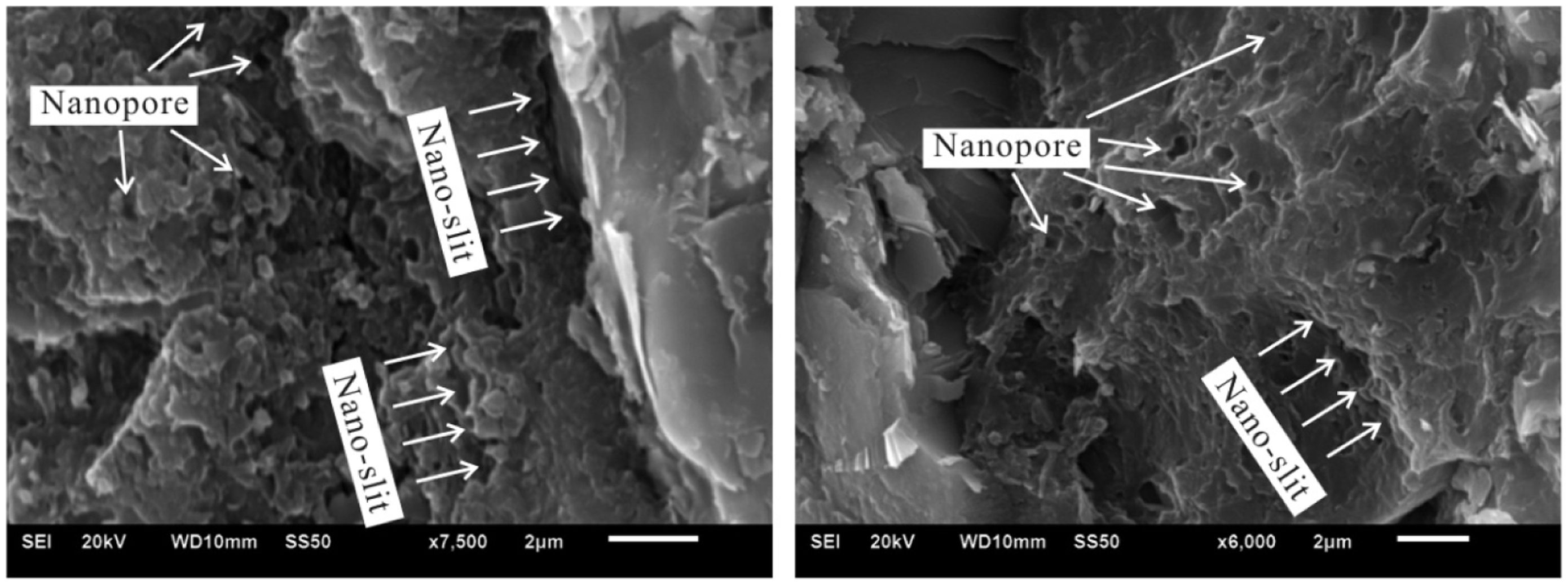
Maturity is not only the evolution index of mature stage but also the important parameter for controlling the development of porosity of shale. By the increase of maturity, the development of porosity in shale increase dramatically (Chalmers and Bustin, 2008). In this study, although statistical samples are limited, a similar law occurred (Figure 8). The correlation between Ro and porosity is positive (Figure 8, R2 = 0.781). It may be speculated that mass generation of hydrocarbons from organic-shale made an abnormal high pressure environment that led the primary migration of shale gas, which causes abundance of organic nanopores and/or nano-slits that give rise to the increasing of porosity (Figure 9). The speculated reason have been given to explain the positive relationship between Ro and porosity, however, more statistics and researches are needed to verify it.
Plots showing the relationship between Ro and porosity. Scanning electron microscope (SEM) pictures of organic nanopores and nano-slits of Wufeng shale.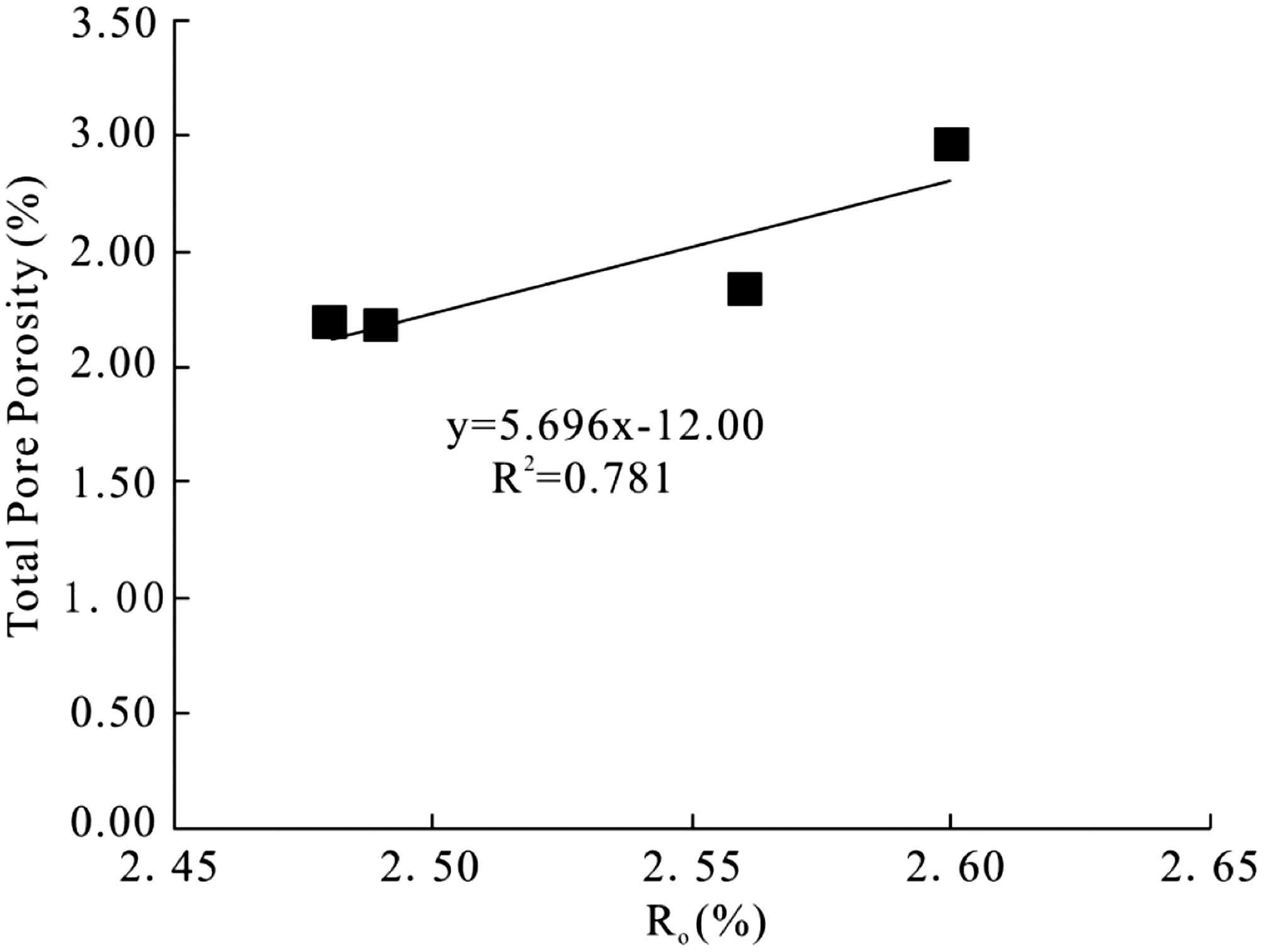
Methane adsorption capacity of shales
Methane sorption isotherms of two study samples were, respectively, measured at 30℃, 60℃, and 90℃. Sample A contains the maximum Ro of study samples (Figure 10a), while sample C possesses the minimum (Figure 10b). In addition, the adsorption isotherm curves were calculated based on the Langmuir monolayer adsorption theory (Figure 10). From the horizontal direction of Figure 10, when the temperature is constant, under the condition of low pressure (8 MPa), the methane adsorption rises rapidly with increasing pressure, then the rising tendency goes gently at higher pressure until adsorption saturated. In terms of 30℃ sorption isotherms, the saturation occurs at 10 MPa to 12 MPa, then methane adsorption reveals a slow downtrend. For 60℃, the saturation occurs at 12 MPa to 14 MPa, and it looks as if there is no saturation point for 90℃ with the laboratory pressure varying, all which demonstrate that the higher temperature the higher pressure needed for saturated adsorption. However, under the reservoir-forming condition underground, pressure may not be the key factor to affect adsorption quantity because that only when the pressure drops a lot (close to atmospheric pressure) the adsorbed methane in shales can be desorbed thoroughly. Moreover, in vertical (Figure 10), under the isobaric condition, the adsorption quantity of each shale sample declines along with increasing temperature, it reveals that temperature rising will enable the adsorbed methane to be desorbed. The adsorption quantity decrement from 30℃ to 60℃ is greater than which from 60℃ to 90℃, which demonstrates that the higher temperature the closer for methane adsorption capacity. It could be speculated that temperature makes great influence on methane adsorption capacity.
Methane sorption isotherms of two Wufeng shale samples, respectively, measured at 30℃, 60℃, and 90℃ (lines stand for the isotherm curve calculated by the Langmuir monolayer adsorption theory).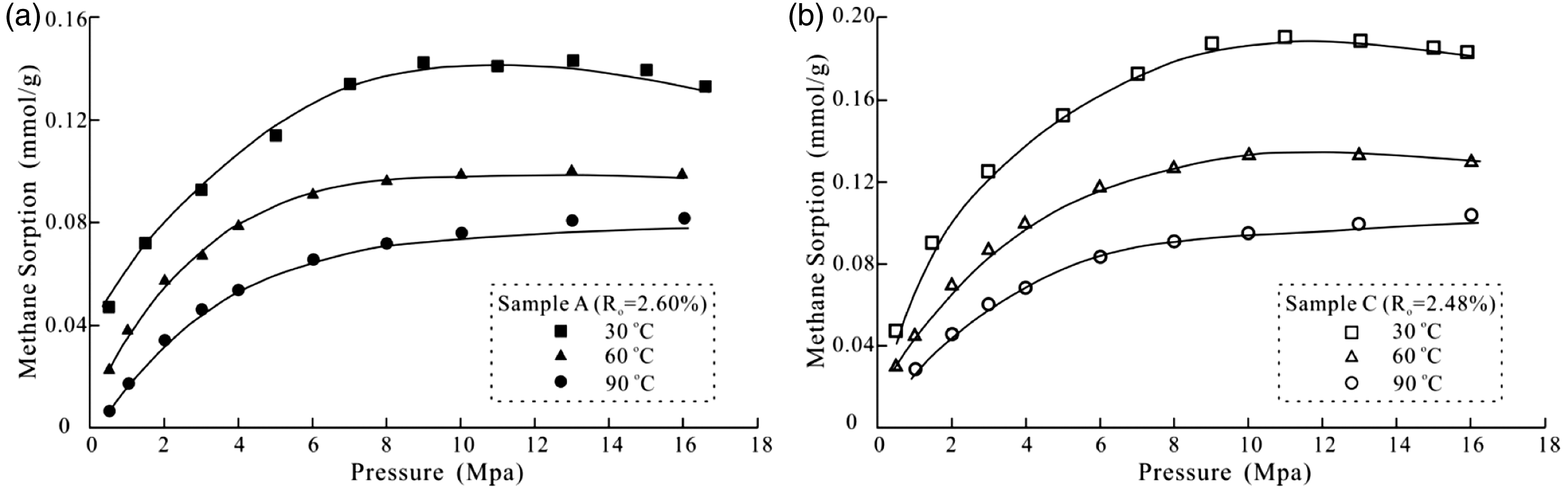
The 30℃ methane sorption isotherms were chosen for its greater adsorption quantity for both study samples and contrast shales. All these sorption isotherms own common tendency, namely rising substantially, saturated adsorption, then slight decrease. This indicates a high adsorption capacity for all participant shale samples. By contrast in vertical, Sample C in this study contains a larger adsorption capacity than others, while Sample A ranks in the middle.
Pan et al. (2015) and Yang et al. (2015) reported that sample with higher Ro usually showed a lower methane adsorption capacity and vice versa, and this may be independent of geological ages. The two samples also accord with the law. The Ro of Sample C (Ro = 2.48%) is the smallest in Figure 11, then its adsorption capacity is the greatest. The referenced samples CQ_024 and CQ_008 contained a higher over-mature (Ro = 3.23% and 3.10%, respectively), and they presented a lower adsorption quantity. In addition, the Ro of Sample A (Ro = 2.60%) is the biggest of all study samples, by the law from Yang et al. (2015), other samples collected for this research probably contain a adsorption capacity greater than Sample A and smaller than Sample C. All which means the Wufeng Formation shales possibly have a relatively larger adsorption capacity than most of the referenced LMX shales under the same condition (mainly, same temperature and same pressure).
Methane sorption isotherms comparison between two Wufeng shale samples (this study) and LMX shales (Yang et al., 2015) at 30℃ (solid curves were calculated by the Langmuir monolayer adsorption theory; dotted curves adopted from Yang et al. (2015); LMX means the Longmaxi Formation).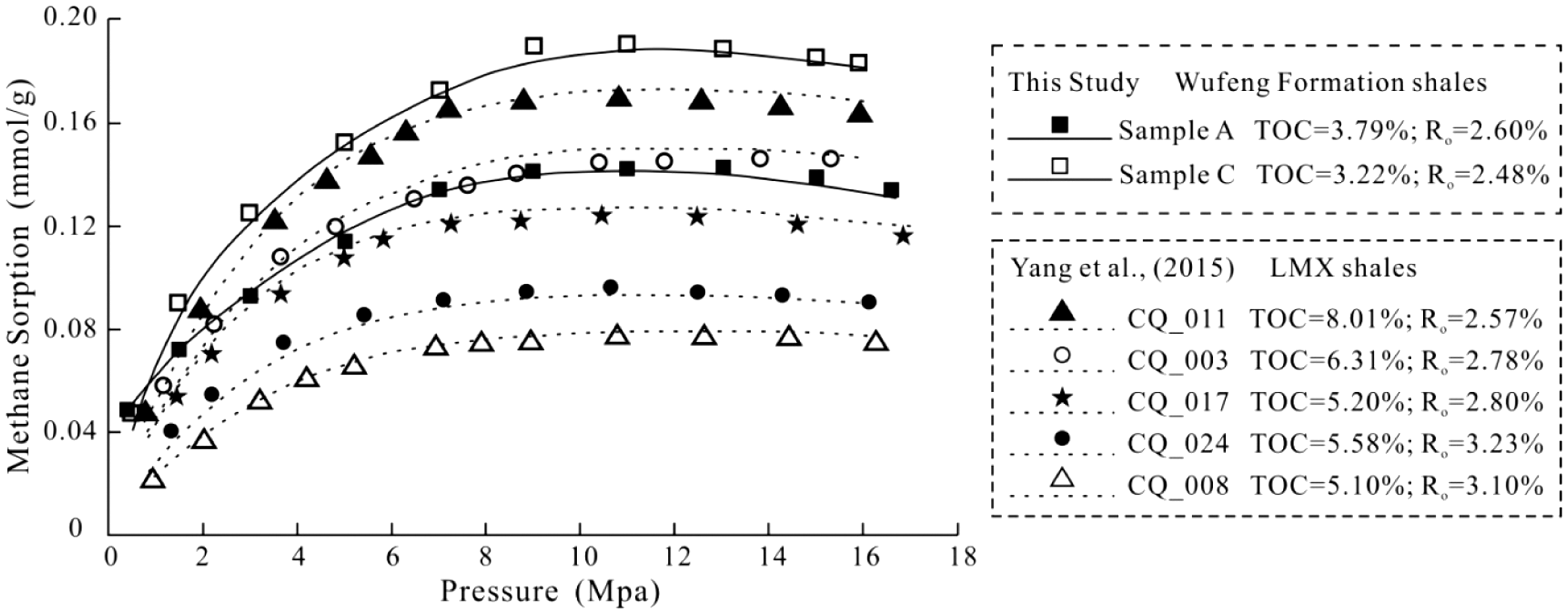
Conclusion
Based on a typical case of four rock core samples collected from a exploration shale gas well and the mineralogy characteristics, pore structure properties, organic geochemical characteristics, and methane adsorption capacity have been tested and discussed. The shale gas reservoir characteristics of the upper Ordovician Wufeng Formation shale in middle–upper Yangtze region were analyzed in detail. The main conclusions can be drawn as follows:
Clay minerals and quartz are the major mineral composition of Wufeng Formation shale, and its relatively higher BI indicates a possible better efficiency during hydraulic fracture process. The pore types of Wufeng Formation shale are various, and the total pore porosity ranges between 2.19% and 2.97%, permeability ranges from 0.0012 × 10⁻³ µm2 to 0.0018 × 10⁻³ µm2, and the specific surface area varies between 11.52 cm2/g and 19.73 cm2/g. The TOC content of Wufeng Formation shale, ranging between 3.22% and 4.87%, represents a great hydrocarbon generation ability, and its Ro, varying stably between 2.48% and 2.60%, reveals an over-mature stage. The TOC and Ro demonstrate that mass generation of hydrocarbons from shales most likely occurred during the geological history. The Wufeng Formation shales possibly have a relatively preferable methane adsorption capacity. If temperature constant, the methane adsorption rises rapidly with increasing pressure at beginning, and then the rising tendency goes gently at higher pressure until adsorption saturated. However, the higher temperature the higher pressure needed for saturated adsorption. Besides, if on the isobaric condition, temperature rising will enable the adsorbed methane to be desorbed. Despite that the Wufeng formation contains a thinner thickness, as for as its reservoir characteristics, Wufeng Formation plays an unneglectable role in the reservoir combination system of Wufeng Formation and its overlying Lower Silurian Longmaxi Formation.
Footnotes
Acknowledgments
This study would not have been possible without the assistance of the Chongqing Institute of Geology and Mineral Resources, especially their help in the field work, geological sampling, and some experimental analyses.
Declaration of conflicting interests
The author(s) declared no potential conflicts of interest with respect to the research, authorship, and/or publication of this article.
Funding
The author(s) disclosed receipt of the following financial support for the research, authorship, and/or publication of this article: The CNPC Innovation Foundation (2014D-5006-0102), Foundation for the Author of National Excellent Doctoral Dissertation of PR China (201253), National Natural Science Foundation of China (41302104), the Program of Excellent Young Scientists of the Ministry of Land and Resources (201311105) and the Project of Chongqing Municipal Bureau of Land and Resources (CQGT-KJ-2014010).