




Abstract
Using the disconnected capitalism thesis, a study of the financialised hospitality sector investigates whether management mitigates the impact of in-work poverty (IWP) for workers. Rather than introduce efforts to alleviate the plight of workers, IWP is exacerbated through policies that encourage insecurity and low pay. Management justifies these actions through forms of misbehaviour, by adopting values reflecting market rationalism that display little regard for the responsibility organisations have to their employees. Adopting a ‘take it or leave it’ approach to work and placing blame on employees themselves for IWP, managers disassociate the organisation and themselves from the plight of employees and begin to identify them as ‘the other’. The study therefore identifies how deeper disconnects between capital and labour emerge within financialised environments, where management fail to offer the fundamental components of an employment bargain that can prevent IWP. Ending IWP, therefore, represents a challenge for policy, practice and attitudinal change.
Introduction
This article is concerned with the impact of financialisation on workplaces, and interrelationships between organisational policies, management misbehaviour and how they underpin in-work poverty (IWP). Over the last 20 years, despite record employment rates, the proportion of IWP has grown to outstrip out-of-work poverty, affecting as many as one in eight workers (Innes, 2020). Prior to the pandemic, rates of IWP rose to their highest level of 17% of households, and increased to 42% among families with three or more children (McNeil et al., 2021). Factors explaining the increase and persistence of IWP still, to some extent, blame the poor for a lack of skills, low self-esteem and bad attitudes, etc., but also highlight the rise of specific family types vulnerable to poverty (single mothers, etc.), demographics (race, ethnicity gender, age, etc.), housing costs, lack of affordable and flexible childcare and poor welfare benefits (Innes, 2020; McNeil et al., 2021).
Less attention is given to the role that poor quality and precarious employment has played in the persistence of IWP (Shildrick et al., 2012). Employers have a vital role in the prevention of IWP by providing living wages, access to secure and sufficient working hours, and progression opportunities (Findlay et al., 2019; Goulden, 2010; McKnight et al., 2016). Some organisations have recently started to introduce financial well-being (FWB) policies, but very few have specific policies aimed at reducing IWP, particularly in the low paid hospitality, catering, retail and leisure sectors (Chartered Institute of Personnel and Development [CIPD], 2022). To understand this lack of employer intervention, much greater attention must be paid to the multiple contexts and social relations in which organisations and managers operate and the constraints these factors impose on them. Financialisation is one such context where it is seen as contributing to a growing divergence between employer objectives in work and employment and the constraints on their capacity to deliver to employees a sustainable employment bargain (Appelbaum and Batt, 2014; Dundon and Rafferty, 2018; Thompson, 2011). This identification of a disconnect between employer and employees caused by financialisation is central to the disconnected capitalism thesis (Thompson, 2003, 2013). Financialisation has been accused of contributing to greater inequality through various forms of management misbehaviour at a corporate level (Appelbaum and Batt, 2014), but a full evaluation of the links between it and outcomes for labour remains incomplete (Ackroyd and Thompson, 2022). Further, the interrelationship between financialisation and IWP is still an area that has so far received limited attention, so this study is timely in its concern with the above issues.
For this study, the chosen context is the hospitality sector, specifically large hotels. Studies have identified several managerial regimes in the sector reflecting the pressures facing these organisations according to size, location, etc. (Nickson, 2013). These regimes include those located in the larger, city outlets and chains that introduce policies operating on the ‘softer’ side of human resource management (Hoque, 2000; Knox and Walsh, 2005) as organisations recognise that the employee plays a critical role in service delivery and consequently organisational performance (Fair Work Convention [FWC], 2022; Kusluvan et al., 2010). The sector has also always been associated with more traditional benefits available to its employees, such as tips, works canteens, access to leisure facilities, etc. (Wickham et al., 2009). Yet, in recent years, parts of the hospitality sector have become increasingly financialised. Changing trends in hotel ownership, particularly in large multinationals, began in 1990s, when global chains began to divest from their physical assets, choosing instead to achieve growth through franchising, management contracts, and outsourcing their services (Mooney and Baum, 2019). This has led to complex ownership configurations in hotels, with multiple stakeholders concerned with returns on property and land and business profits (Melissen et al., 2016). Large firms dominate the market with fast-changing business structures that are evident in the form of partnerships, alliances, franchising and off-shored ownership models coupled with multi-employer sites and outsourcing (Robinson et al., 2019).
It is within this context of growing financialisation in the hotel sector that the article addresses two interrelated questions:
How do the priorities of shareholder value and subsequent HR policies contribute to IWP in the financialised hospitality sector?
Do organisations operating within financialised hospitality attempt to mitigate IWP, or does management misbehaviour underpin its conditions?
In answering these questions, the article makes several contributions to the literature. The first is to the disconnected capitalism thesis, by highlighting how financialisation can cause a deeper disconnect between employers and employees that goes beyond even the meagre bargain and trade-off between skills and employment highlighted in the original thesis. The second is to reveal how management participate in forms of misbehaviour which normalise and legitimise this deep disconnect, by disassociating the organisation from responsibility for IWP through blaming and othering those experiencing it, viewing these employees as ‘the other’.
The article begins with an overview of the literature concerning IWP and then moves on to discuss financialisation, management misbehaviour and the disconnected capitalism thesis. This is followed by a discussion regarding the implications for work, employment and IWP in the hospitality sector. The article then moves on to outline the method and key findings, before providing a discussion and concluding thoughts.
IWP as a lived experience
IWP remains a contested term which is difficult to define and measure. In the simplest of terms, poverty can be defined as not having enough resources to sustain a reasonable standard of living; the resources lacking are wide-ranging, including income, housing, fuel and food, but would also include a lack of opportunity, such as education (McKendrick, 2016). Employment conditions are just one of a range of factors which contribute to the incidence of IWP, which include inadequate social security, rising housing costs, access to affordable childcare, and health (Joseph Rowntree Foundation [JRF], 2023; McNeil et al., 2021). In the UK and EU, however, income poverty remains a key focus, which is measured as household income below 60% of median income (McKnight et al., 2016). IWP is then usually considered to be households that fall into this category where at least one adult is working (McNeil et al., 2021). IWP has remained a persistent feature among working-age adults in the UK. In 2020/21, 61% of all working-age adults who were in poverty belonged to a household where at least one adult was working, representing 11% of all workers overall (JRF, 2023).
The relationship between low pay and poverty is often debated. Low pay does not necessarily lead to poverty, as the status of IWP is determined by the overall income of the household that the worker belongs to (Lee and Sobeck, 2012). Yet, there is a clear association, where almost half of people who are experiencing IWP live in a household that has a low paid member (Hick and Lanau, 2017). Precarious and low paid work has been shown to be directly linked with workers experiencing IWP, as these jobs create and sustain the conditions through which poverty thrives (McBride and Smith, 2022; Richards and Sang, 2021). Research by Findlay et al. (2019) has highlighted that employers can play a significant role in poverty or its prevention and can take a range of measures to address financial well-being, of which the most impactful are paying a living wage and ensuring employees have secure and sufficient working hours. The same study, however, also highlights that employers in financialised environments are often constrained from making improvements to pay by shareholders. Therefore, work remains a critical factor in the incidence of IWP.
Furthermore, while there is a heightened awareness of IWP among academic and policy circles (McBride and Smith, 2022), employers’ understanding of employees’ financial well-being or their experiences of poverty remains more limited (CIPD, 2022). This study is also concerned with the awareness and attitudes surrounding IWP among employers, as they are shown to contribute to how poverty is experienced. Despite the previous evidence that positions work as a cause of IWP, it is often perceived as the fault of the individual, whether that be poor choices or moral failings, reflecting longstanding and popular perceptions held within society of the ‘undeserving poor’ (Shildrick and Rucell, 2015). While sociologists have attempted to challenge these views, the idea that the poor themselves are to blame for their circumstances holds firm in popular and political discourses, which stigmatise and other those experiencing poverty, through the use of negative stereotypes (Shildrick and Rucell, 2015). Furthermore, recent public and political discourses in the UK have reinforced a division between those who are viewed as the deserving and undeserving poor. Governments of all political persuasions have hailed work as the best route out of poverty, based on the notion that poverty is caused by individual failings (McBride et al., 2018; Shildrick et al., 2012). Those in poverty are labelled ‘shirkers’ and contrasted with ‘workers’, or ‘strivers’; hence, policies towards the poor are hostile and targeted at addressing moral failings, poor choices and lack of budgeting and financial skills (Innes, 2020; Pemberton et al., 2016).
Therefore, while defined earlier in this article in terms of household income, poverty as a concept is not simply an economically disadvantaged position, but a lived experience of social disadvantage (McBride and Smith, 2022), where those in poverty are subject to stigma and shame (Lister, 2015, 2021). As such Lister (2021) argues that poverty must also be understood as a social relation, one in which ‘the poor’ are othered and considered a distinct and separate category of people by the more dominant ‘non-poor’ through discourse, attitudes and actions, which has a profound effect on the ways in which poverty is both perceived and experienced. The social position of the poor is stigmatised to the extent that those experiencing poverty will also other the poor, in an attempt to distance themselves from the undeserving (Garthwaite, 2016); they may be unwilling to describe their circumstances in this way, or even concede that poverty still exists within the UK, choosing instead to normalise their everyday hardship so as not to associate themselves with ‘the poor’ (Shildrick and MacDonald, 2013). Yet, how othering might take place within an employment context remains an underexplored avenue for research.
Financialisation and the disconnected capitalism thesis
Thompson (2003, 2005, 2013) identifies financialisation as an accumulation regime where organisations prioritise the demands of capital markets and shareholders as their primary performance metrics. Previous accumulation regimes identified managers as retaining a degree of discretion and control, as well as broader concerns with sales revenue and market share. In addition, management had discretion over how to allocate earned profits, including investment and innovation (Clark, 2009). The financialised regime involves a shift in how firms generate profits, so that the focus is on the increasing influence of financial considerations at the corporate level (Ackroyd and Thompson, 2022). Shareholders are identified as the key organisational stakeholders, and pressure is increased on corporate and workplace level managers to provide profit maximisation and adequate levels of short-term returns on investments. Value is extracted through innovation in metrics and measures established in capital markets to the benefit of shareholders (Appelbaum and Batt, 2014; Clark, 2009).
The emergence of this form of accumulation regime has led to debates regarding its impact on wealth creation, job growth and employment conditions (Clark, 2009). The disconnected capitalism thesis argues that there is a growing divergence between employers’ objectives for labour around demanding greater commitment, while at the same time degrading investments in skills, training, career development, employability and pensions. Although not always generalisable across different national business systems where its effects can be mediated by the embeddedness of local institutional, sector and firm level arrangements and established practices, research has found that financialisation contributes to a disconnect between capital and labour, and ultimately, broken employment bargains caused by the pursuit of shareholder value, which leads to a squeeze on labour costs (Appelbaum and Batt, 2014; Thompson, 2003). This realisation of value is sometimes achieved through the interventions of ‘active investors’, where the performance metrics of shareholders disconnect managerial discretion away from distributing resources to other organisational stakeholders, e.g. employees. This disconnect is enacted throughout the labour process as a focal point for productivity gains for shareholders (Thompson, 2013) in the form of redundancies, outsourcing, increasing reward insecurity, downward pressure on pay, work intensification and use of insecure/casual workers (Cushen and Thompson, 2016). While workers on non-standard contracts are particularly vulnerable to this risk, Ackroyd and Thompson (2022) note that this insecurity and precariousness applies not just to the peripheral workforce but has spread across into the core workforce. Furthermore, financialisation undermines long-term investment in staff due to an impatience with culture and ‘soft’ or high-performance approaches to human resource management (Clark, 2009; Dundon and Rafferty, 2018; Thompson, 2011). In doing so, financialisation is not the cause of trends such as low pay, the standardisation of work, intensified work or insecure and precarious contracts, but represents a force that exacerbates such trends (Thompson, 2013).
Financialisation, the disconnected capitalism thesis and the hospitality sector
The setting for the study’s exploration of the impact of financialisation on IWP is the Scottish hotel sector, where 155,000 were employed in 2019, representing 6% of the labour force (Fraser of Allandar Institute, 2020) contributing over £1bn to the economy (Trades Union Congress [TUC], 2019). In the context of high demand for hospitality employment (Wickham et al., 2009), some benefits from working in the sector do exist. Studies point to pockets of competitive and high pay in specific occupations, such as chefs. Traditionally, other rewards for working in hospitality can include benefits such as tips, provision of meals, subsidised accommodation, car use, and access to leisure and social facilities, although these can sometimes be used to justify lower wages. The nature of work can also be rewarding as it involves high levels of social interaction. On an informal basis, and part of the old bargain in the sector, there could be tolerance from management of petty pilferage of food items to supplement wages (Ackroyd and Thompson, 2022; Ditton, 1977; Mars and Nicod, 1984). Larger and luxury chain hotels have also reported favourable uptake of ‘softer’ best practice HRM measures in recruitment, training and performance management (Guegnard and Mériot, 2009; Hoque, 2000; Knox and Walsh, 2005). There are also claims that the sector, albeit for the few, is an ‘absolute meritocracy’, which offers a degree of social mobility as workers can climb the occupational ladder, including through inter-company migration (FWC, 2022; Wickham et al., 2009).
At the same time, the emphasis on shareholder value, and accompanying financial targets and discipline threatens to exacerbate trends that may break employment bargains in the sector and lead to IWP. Employers rely heavily on casual, part-time and temporary labour to adjust staffing levels quickly in line with seasonal demands and to keep the cost of labour down (Davidson et al., 2011; Tracey, 2014). Even permanently employed workers are often expected to provide a degree of numerical flexibility by being prepared to work irregular hours (Knox and Walsh, 2005). The sector is heavily reliant on workers who occupy a weaker labour market position, who are more likely to be vulnerable and viewed as cheap disposable labour by employers, such as women, young people, those with caring responsibilities and migrants (Goh and Lee, 2018; Warhurst et al., 2008). Even at the upper end of the market, the link between skills and better pay in the hotel sector remains weak, with the minimum wage widely accepted as the ‘going rate’ (Kusluvan et al., 2010; Lloyd et al., 2013; Nickson, 2013; Warhurst et al., 2008). Additionally, the demand for numerical flexibility from employers and the seasonality of the sector mean that hourly paid workers often find themselves short of hours during quiet periods (Warhurst et al., 2008). Using these methods, employers effectively transfer the financial costs and risks of guaranteeing hours and stable employment usually borne by the employer to the employee (Burgess et al., 2013).
This shifting of risk further heightens the precarity of workers’ financial situations by creating insecurity of income and increasing employment vulnerability, as it ‘places people at risk of continuing poverty and injustice resulting from an imbalance of power in the employer-work relationship’ (TUC, 2008: 3). The propensity of low paid and poor-quality jobs to prevent workers from escaping poverty lead Shildrick et al. (2012) to use the broader term of ‘poor work’, which encompasses any form of work which is experienced as low paid, low skilled and insecure. Workers from the accommodation and food services are the second most likely to experience IWP after the retail sector, which JRF (2023) attribute to a high incidence of low median pay. The sector also employs the highest proportion of low paid workers, with 52% of workers earning less than two-thirds of median hourly pay (Cominetti and Slaughter, 2020). This high proportion of low paid workers inevitably leads to increased low-income households, which goes some way to explaining why a third of all households with a worker from this sector are in poverty, rising to 50% when focusing on households with children (Baum et al., 2023). Furthermore, work in the hotel sector is notorious for precarious working hours, with approximately 19% of the workforce employed part-time, and many more in casual and zero-hours contracts (Baum et al., 2023). As part-time and insecure working hours further reduce the income of the household, this again is associated with IWP, as 18% of these workers are in poverty compared with just 9% of full-time workers (JRF, 2023).
There are, however, some noteworthy institutional arrangements that could mitigate the impact of financialisation in the sector and relieve IWP. There is traditionally, limited or no trade union recognition to give employees a voice (Lucas, 2009). At the time of this research, employment law in the UK is also seen to have failed to lift the sector out of low pay and insecurity because of weakness in the substance, enforcement and penalties of UK labour law (Metcalf, 2019). Since the late 1990s, however, Scotland has had devolved, legislative powers, and so the hotel sector operates within a different institutional and regulatory framework than the rest of the UK. Employment law remains one of the UK government’s reserved powers, However, in response, Scottish governments have established a ‘soft’ legislative Fair Work (FW) framework with the aim of building ‘inclusive growth’ and to make Scotland a FW nation by 2025 (Heery et al., 2020; Sisson, 2019). FW has five dimensions covering security, worker voice and explicit support for collective bargaining, as well as respect, opportunity and fulfilment (FWC, 2016). A Fair Work in Hospitality Inquiry has been established to consider current worker experiences in the sector and the extent of fair work across all five dimensions, as well as: understanding the long-term aims and ambitions of the sector; the barriers to FW; positive examples of FW to replicate across the wider sector; identifying the levers and recommendations to encourage FW; and, to raise awareness and deliver FW in the sector.
The above begins to provide some explanation as to how financialisation can exert pressure to create disconnects between hospitality management and employees, and enable IWP in the Scottish hotel sector. In addition, it raises the potential for mitigation of such effects through the traditional perks of hotel employment, high-commitment HR policies associated with training and career development, and external regulatory requirements under FW, but this raises questions relating to whether these institutional arrangements can compel management to mitigate the threat of IWP in the sector. This study focuses at workplace level and on the actions of local hotel management who cope with these contradictory pressures, using the concept of management misbehaviour. Studies of ‘misbehaviour’ by managers in the context of financialisation have focused on the corporate level where motivations for their actions are attributed to market rationalism, which encourages certain forms of management misbehaviour that operate on the cusp of illegality. This misbehaviour can include criminal wrongdoing, linked to business failures and cover-ups, e.g. Lehman Brothers. Managers have access to resources that can provide significant gains, as well as limited regulation controlling what they do (Ackroyd and Thompson, 2022). Financialisation has helped drive these examples of management misbehaviour that have contributed to widening wage inequality. Senior management specifically benefit from new deals that shelter them from competitive and market forces that they unleash on organisations (Kunda and Ailon-Souday, 2005). These managers receive enormous and disproportionate returns, generated through purchasing share options highlighted in studies of venture capitalists and private equity, exacerbating inequality and poverty. Forms of management misbehaviour can reap excessive salaries and reward packages, and avoid or evade paying corporate tax (Appelbaum and Batt, 2014; Dundon and Rafferty, 2018).
To add to this literature on financialisation and the disconnected capitalism thesis, this study follows Ackroyd and Thompson’s (2022) call for a greater focus on what typically happens outside of extreme corporate management misbehaviour, where there is no infringement of regulation, but where managers push the boundaries of acceptability. In particular, they argue for further exploration of: ‘managerial behaviour that is everyday conduct but the morality of which – if not the legality – is disputed’ (Ackroyd and Thompson, 2022: 118).
Moreover, attention will be focused on the treatment and behaviour by management towards those at the bottom end of the income scale (Kalinina and Shand, 2018; Speke et al., 2022). In particular, what other forms of misbehaviour undermine the responsibility management have to their employees at the level of the firm/enterprise, e.g. how othering might take place within a financialised employment context. It is these interrelationships between the financialised accumulation regime, organisational practices, management misbehaviour and connections to IWP further down organisational hierarchies that this study will explore.
Method
A case study strategy was selected to explore these interrelationships for several reasons. Firstly, the research questions examine managers’ HR policies within a financialised context and the resultant consequences for workers; a key strength of the case study strategy is it allows for multiple perspectives to be explored within a live and bounded context, enabling a deep exploration of how and why phenomena occur (Yin, 2018). Furthermore, while other studies of IWP have explored worker perspectives (McBride et al., 2018; Richards and Sang, 2021), few studies have attempted to do so in employees’ workplaces. This allows for this study to make a unique contribution by exploring how the disconnects in employment bargains manifest in financialised and low paid hospitality work, but also more widely in understanding better the role of the employer in the persistence of IWP.
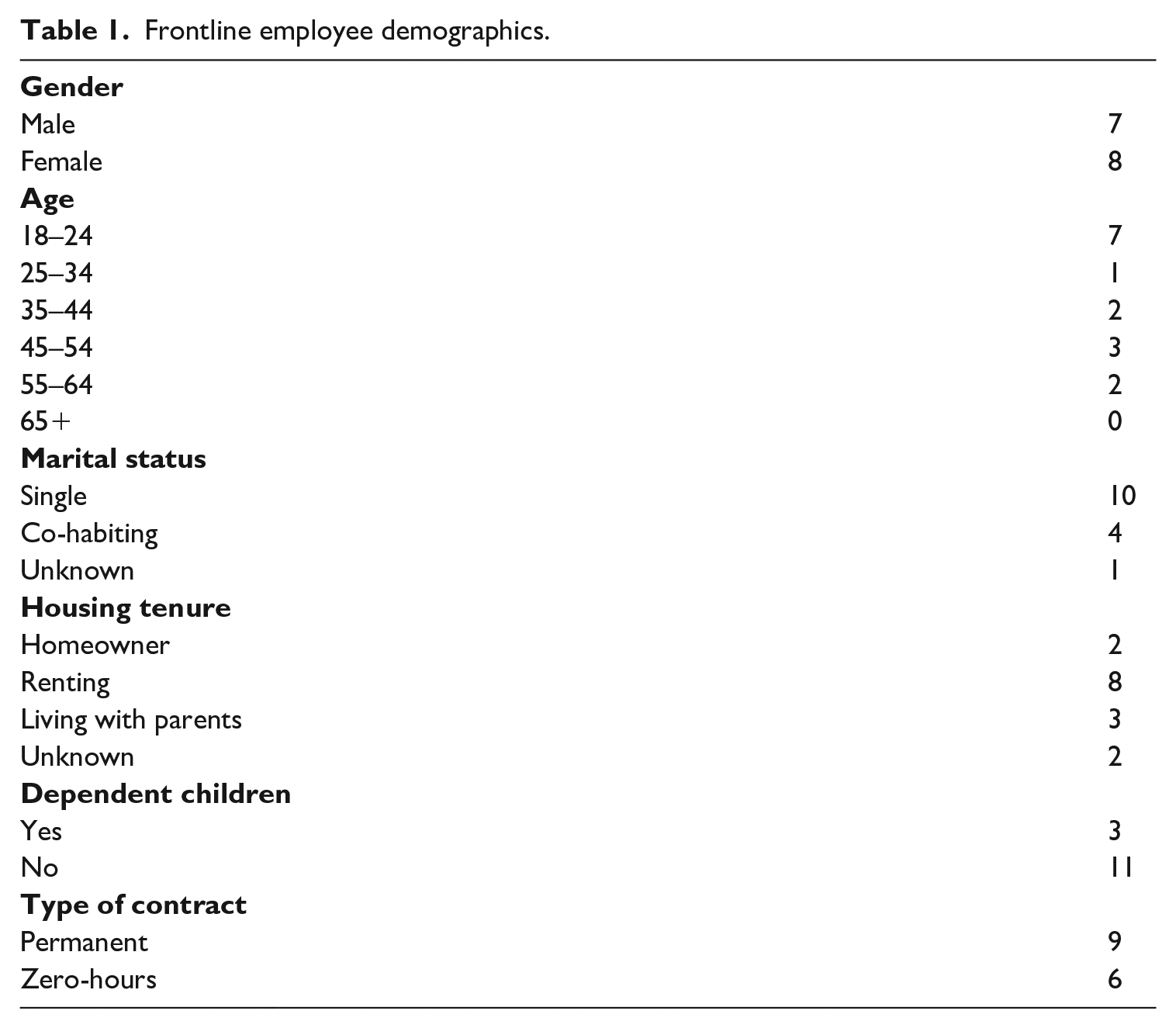
The data for this study was gathered from two large hotels in city centre locations in Scotland. Each hotel was of comparable size, pursuing a high-end market strategy, and operating under similar financialised pressures. Lux1 was a four-star hotel and had recently completed a transfer of ownership to a multinational hotel chain. Immediately prior, the hotel had been part of a boutique UK hotel chain owned by a private equity group, who operated the hotel brand under franchise. Lux2 was a five-star hotel, operated under franchise by a multinational hotel chain. In each case, the multinational chain operated in over 100 countries, and employed approximately 8000 people in the UK in Lux1, and 9000 in Lux2. In total, 30 semi-structured interviews were conducted across both hotels, at various levels of the organisation. Participants were divided into three categories: senior managers and HR practitioners (n = 7), line managers and supervisors (n = 8) and frontline employees (n = 15). A tailored interview guide was prepared for each group of participants. The interviews with senior management and HR staff focused on organisational strategy, HRM practices and awareness of poverty within the organisation. Line managers were asked more about what financial hardship they were aware of within their own teams. Interviews were carried out with a range of frontline employees across a spread of departments in each hotel, and with a range of differing personal circumstances (see Table 1).
Frontline employee demographics.
It is important to recognise the challenges associated with researching IWP. The complex and multidimensional nature of IWP makes it difficult to define and identify (McBride and Smith, 2022). Furthermore, participants may not recognise themselves as experiencing poverty, or be reluctant to do so, given the associated stigma and stereotypes (Richards and Sang, 2019; Shildrick and MacDonald, 2013). This complexity also raised a number of important ethical considerations for the design and execution of the study, as the researchers were also mindful that reference to this participant group as ‘the poor’ can have a stigmatising and othering effect (Lister, 2021). Therefore, rather than an explicit investigation of IWP, the study was designed to look at the overall experience of low paid hospitality work, where IWP was one of many issues that were explored. Frontline participants were not asked to identify themselves as experiencing IWP, nor did the researchers actively seek out participants with specific indicators of poverty. Instead, participants were recruited on the basis that they were paid below the voluntary living wage, which was £9 per hour at the time of data collection, given that any employee in this position would be vulnerable to financial hardship. Interviews with frontline employees asked about their own experiences of managing on low wages, and their awareness of poverty among their colleagues. These more sensitive questions were asked towards the end of the interviews, to allow time for rapport to be built between the researcher and participant. At the end of each interview, some brief demographic information was collected from the participants about their personal circumstances and income, which was optional. The researcher used this opportunity to signpost participants who had disclosed instances of financial hardship to relevant advice agencies such as the Citizens Advice Bureau where appropriate.
Further ethical considerations arose regarding how the participants were recruited to the study, as they were nominated through the case study organisations. Ensuring informed consent and anonymity to participants was therefore crucial. Prior to fieldwork and the recruitment of the case studies, ethical approval was sought and granted from the departmental ethics committee at the University of Strathclyde. To ensure that informed consent was truly gained, the researchers met with each participant to fully explain the participant information document and to assure participants of the independence of the researchers from the case study organisations. Additionally, participants were also given the opportunity to withdraw, following which two participants opted not to continue.
While the sample size for the study was small, it is still sufficient for achieving both quality and saturation in qualitative organisational research (Saunders and Townsend, 2016), and semi-structured interviews allowed for rich and in-depth data to be gathered. Interviews lasted between 30 and 60 minutes, and were recorded and transcribed verbatim. The analysis phase focused on the managerial regimes at the enterprise/business unit level, where we explored management policies and attitudes and employees’ experiences of IWP. The data was open coded and a thematic analysis was conducted to identify emergent themes which were common to both cases.
Findings
The first section of the findings identifies the influence of financialisation on employer HR policies and the disconnect this causes, including the emergence of IWP. The second section explores whether embedded practices like traditional perks or more contemporary HR policies mitigate IWP in a financialised setting.
Financialisation, disconnection and IWP in hospitality
Financialisation shaped the managerial regime in each of the cases, as there was clear evidence of shareholder metrics and the influence of ‘active investors’ on HR policies. Each case study hotel operated under a franchise arrangement, with the day-to-day running devolved to an executive management team under the leadership of a general manager (GM). Both hotels referenced a similar strategy to achieve the desired levels of profitability and performance. The main key performance indicator (KPI) of Lux1 had been to deliver £3m in profit annually for their private equity investors. In Lux2, similar targets were set, however there was a stronger focus on the monitoring and measurement of a wider set of KPIs, which included service level metrics, sales, customer satisfaction, employee engagement and absence levels.
HR strategies and policies
In terms of workforce strategy, both hotels were expected to maintain levels of employee engagement and customer satisfaction through daily monitoring of feedback. As such, the initial image portrayed by each hotel was that staff were a highly valued stakeholder within the organisation, who were critical in a high-quality service that would generate the profit for the organisation. Lux2, in particular, referred to the link between meeting ‘brand standards’ and employee satisfaction: ‘Look after your staff and they will be happy. They will then look after the guests and the guests will return’ (GM, Lux2).
Yet the operationalisation of the above financial targets and KPIs created disconnects and tensions within the organisations. Managers in each hotel reported that they were committed to producing higher revenues to generate increased profits for shareholders. The reality, therefore, was that activist investors prescribed tight control of labour costs. Profit maximisation was the key area of concern, with little managerial discretion. These concerns included an impatience with the ‘soft’ elements of HR built into KPIs, stating that their investors showed little interest in customer and guest satisfaction, provided it did not fall below a certain level. Instead, harder KPIs such as sales, profit margins and conversion rates were the metrics that the hotel owners were most interested in: ‘All the rest kind of becomes irrelevant but from an owner’s point of view it would be sales and revenue’ (GM, Lux2). It was also recognised that the ownership structure and accompanying KPIs concerning profit constrained the level of pay management could award:
If it was family-owned you’d probably have a lot more in the pot to play with when it comes to salaries and wages . . . What we’ve got is equity partners involved. This is a part of a £600 million agreement with an equity partner that has put that £600 million into the portfolio, that is expecting a return because they promised their investors a return on their investment as well. (GM, Lux1)
These financialised priorities transferred into hiring policies that produced clear disconnects between the gains secured for owners and the interests of employees. A significant proportion of their labour force was employed on a flexible and insecure basis. Each hotel’s core, permanent workforce was ‘skeleton’ and based on the number of staff required to run the hotel during the quietest week of the year. Lux2 had 260 members of staff, 90 of whom were employed on a zero-hours contract (ZHC). Lux1 had 292 members of staff, with approximately half of the workforce employed on a ZHC. This managerial approach to employment was viewed as a necessary requirement for profitability, being the most viable way to operate and cope with the seasonal demands of the business while meeting the requirements from shareholders for returns on investment. To support this approach, a weekly payroll meeting was held in each hotel, where the staff rotas for each department were interrogated by management to ensure that the number of working hours was reduced to the minimum required. In Lux1, this practice was branded as a ‘work–life-balance’ initiative to prevent employees working too many shifts, but the real reasons were to cut costs. In Lux2, the GM revealed the true nature of these meetings:
We measure absolutely everything. I mean everything. From hours worked, to shift patterns, labour and how much it costs, to where we buy those teacups from. I mean everything is measured.
These policies were accompanied by manifestations of management misbehaviour that exhibited a refusal to take any responsibility for the outcomes of the above on their employees. Other studies have reported a ‘state of amnesia’ (Clark, 2009) or limited awareness (Findlay et al., 2019) regarding the causes of management’s lack of responsibility for such HR outcomes and impact on employees. This study, however, reveals management misbehaviour reflected a form of disconnect that reflected a ‘take it or leave it approach’ to the ‘bargain’ they offered employees. This perspective was apparent in the views of senior management within both hotels, where management felt that being transparent about the employment that was offered was all that was needed to fulfil their side of the bargain. Management felt that they were being open regarding the terms of employment offered to employees, including the degree of exploitation, and had no further obligation:
If I’m honest, you can understand why certain people maybe are aggrieved with [ZHCs], because they feel it’s a profitable business and people should be guaranteed work . . . [Employees] think they’re underpaid and overworked. Well, we’ve never told you we’re going to pay you any differently. We never told you that we’re not going to give you the hours that we need to give you to run the business. We’ve not breached our side of the contract. You just need to maybe decide whether you’re in the right job or not. For some people, it’s not the right job for them and that’s it. (GM, Lux1) I use the word transparent. When someone comes to work here, I like to think we deliver what we say, you know? If you want to come, here’s the contract, here’s the hours, here’s you can expect to work. I would hate to think – I know it’s never happened, we’ve never not fulfilled the contract to someone. Or promised them something and then delivered something different. (GM, Lux2)
Management also justified these attitudes with claims that those on ZHCs preferred their contractual status. Management in Lux1 claimed to review the casual contracts at least twice a year, offering a permanent contract with a set number of hours to staff based on an average of what they had worked over the preceding 12 weeks. The GM stated that the majority of staff who were offered contracts refused them, choosing instead to stay on a ZHC. This was a set of employee preferences that could not be corroborated in any of the frontline interviews.
Within this context, worker participants identified IWP and attributed its causes to low wages and insecure working hours imposed by their employer. All workers reported their own experiences of managing on low wages: ‘we’re all in the same boat, trying to pay our bills’. Participants described themselves as ‘getting by’ on their wages, but could only ‘just pay their bills’ or perhaps had ‘more coming out than I do coming in’ (Rebecca, Lux1). Additionally, participants identified some groups as more vulnerable to IWP than others. Those subjects who still lived with their parents tended not to be in the most serious levels of hardship but only because they still had financial support from their families. A common view among the participants was that those on ZHCs were among the hardest hit in terms of financial worries and hardships (covering living costs and paying essential bills) brought about by their struggles to secure enough working hours each week. In addition, certain demographics such as age and gender added to vulnerability to IWP. Young people were identified as such a group where they were no longer living with their parents, i.e. students who were struggling and those who did not have traditional family support.
There’s staff that are young, that don’t have a mum and dad or they’ve come through life, obviously, falling on hard times. As you know, living in Scotland is pricey. The housing’s pricey. There’s definitely a lot of struggles among the team to survive on the wage. (Jessica, Lux2)
A common observation among participants was that they also could become aware of poverty among their younger co-workers through conversations about food. As one participant recounted: ‘I was speaking to a colleague today and I asked him if he was getting a video game that was out today, and he turned around and he said, “I barely have enough to eat let alone video games”’ (George, Lux1).
Furthermore, employees also indicated that IWP was gendered, and often described situations where women were particularly hard hit by low wages: ‘Every woman I know in here who’s got children is struggling’ (Laura, Lux1).
The ways in which participants coped with low wages varied, depending on their circumstances. Lacking any voice or hope of guaranteed minimum hours, participants who were employed on a ZHC had to rely on their own individualised strategies for how they coped in the months where they did not get enough working hours. These strategies included using accrued annual leave, working overtime when available, and using tips to supplement their wages.
Are hospitality employers mitigating or providing pathways out of IWP for their workforces?
The weaknesses in UK employment law and other regulatory protection were apparent as both employers had a policy of awarding pay based only on the UK minimum wage, with no supplements for overtime working or unsocial hours. Moreover, there was, as with the wider sector (Lucas, 2009), no recognised trade union, and workers, therefore, had no collective means by which they could bargain with their employer to increase their wages beyond the level of the minimum wage or to introduce premiums for overtime and unsocial hours. In this context, this section continues the analysis relating to the second question of the study and whether employers are mitigating the impact of poverty.
Traditional rewards and perks in hospitality
While the hospitality sector has traditionally offered some perks to alleviate poor terms and conditions, the findings below suggest that these had a limited impact on mitigating IWP. Tips were seen as one way to supplement wages; however, rather than being seen as a perk of working in the sector, the variability of these supplements to wages did not top up the participants’ income enough to escape hardship:
It’s minimum wage and tips are very varied. You could do a Friday night and then get fairly decent tips but because of the amount of staff members that we have on, 10 or so each day, it gets split evenly across everyone. So, tips-wise, it doesn’t keep you enough to be like, that’s me sorted for that day. (George, Lux1)
Both case study organisations provided their staff with a free canteen, but how it was used often suggested to participants that their co-workers were experiencing hardship:
You’ll actually find staff that will sometimes come into the canteen when they’re not working to get fed, because some of them can’t actually afford to eat, which is really, really sad. Poverty does definitely happen in here, absolutely. There’s a lot of people struggling. (Jessica, Lux2)
Moreover, in the environment outlined above where everything was measured and counted (even the teacups), there was less tolerance by employers of forms of employee misbehaviour, such as petty pilferage or ‘fiddles’ of hotel material among low paid staff as a way to allow them to make ends meet (Ditton, 1977; Mars and Nicod, 1984). One supervisor reported how an employee lost their job over a poverty crisis issue:
There literally was a lady that really used to struggle. But unfortunately, she lost her job for stealing. It does happen, and you can see it. She, unfortunately, lost her job for stealing bread and things, like bread, and teabags, and milk. Which is, when you think about it, she shouldn’t have done it, it’s stealing. But it’s also really sad, in the fact that she felt that she had to, because she’d no money. (Jessica, Lux2)
Upskilling and employability opportunities
The literature (Kunda and Ailon-Souday, 2005; Thompson, 2003) suggests that even under financialised management regimes there is acknowledgement of the need to provide development and independence among the workforce to mitigate the disconnects between employer and employees. The cases provided limited evidence of such provision for either internal progression or to improve employability. Each organisation operated an online learning management system (LMS) for mandatory and induction training. Yet, beyond health and safety and on-the-job coaching, much of this training was superficial, involving introducing company values, personal grooming standards and the need for work–life balance. Opportunities for training to help with progression and employability were ad hoc and inconsistent, depending on the department workers were in, and their occupational status.
To be honest, in terms of stepping up, I suppose, it just depends on what department that you’re really in. A lot of the positions are always filled. So usually, if you do step up and you’re in that role for a long time. You do start to think, I need to move on to somewhere else, because you need to move on and move up. (Jessica, Lux2)
Other career opportunities had reportedly disappeared because of previous rounds of delayering. Employee participants also reported how opportunities for progression were available for students developing careers in hospitality, but for those who entered the hotels that were not studying for a degree, chances to progress even to team leader roles were limited. Organisations offered subsidised fares for taxis for those workers on unsocial hours shifts, but inconsistency in payment also acted as a barrier, as staff could not undertake the required shifts that involved a promotion or ‘acting up’ because they could not afford the increase in travel costs.
Financial well-being and other support for the low paid
The attention to the financial well-being of staff and efforts to reduce IWP were minimal. Staff in both organisations were paid below the real living wage (a voluntary hourly rate, higher than the UK statutory minimum), and opportunities to gain additional income were non-existent. There were minor reward schemes based on monthly star employees, but cash incentives for these schemes were usually minimal (£5 vouchers). Rather than reducing IWP, these schemes were deliberately seen as ways the organisation could keep the hourly rate of pay low: ‘I think our line around [pay] was, whilst we can’t pay enough, what other perks can we do?’ (GM, Lux2). Additionally, at times even these nominal benefits came under scrutiny from the hotel’s ‘active investors’. The GM of Lux2 gave the example of car parking, which was charged at a rate of £4 to customers but free for staff: ‘It’s something we come under pressure with a lot from the ownership, you know, “Why are we doing this? Our staff should be paying to park here.”’
In explaining this approach by management, as with other studies (CIPD, 2022; Findlay et al., 2019), a lack of awareness of IWP was a factor, especially among the GMs and senior HR representatives:
No, no I don’t, no. I’ve never seen that [IWP], actually. No. It’s a short answer, I genuinely haven’t. (GM, Lux2) Not that I’m aware of. But if somebody was, then that’s when we would refer them to that Hospitality in Action . . . But no, not that I’m aware of here. (HR Manager, Lux1)
In contrast, some line managers identified employees suffering from IWP and purchased some items of the company uniform for staff that struggled to afford them. Among participants working in payroll, there was greater awareness of poverty and hardship, as they dealt with requests for advances on wages, or were aware of employees who were subject to wage arrestments – deductions by creditors who had applied formally through the courts to take deductions from the employee’s wage as payments towards an unpaid debt. However, perceptions among line managers were more variable. One assistant manager in Lux1 commented: ‘As far as I know now, there’s nobody that’s come to me saying that they are struggling.’ Others were less sure, acknowledging that staff often had to budget due to low wages but unaware of any hardship:
They’re all quite budget-conscious so it’s difficult to say . . . there’s not anything that would concern me to say, ‘they’ve not enough money to feed themselves’ or anything like that. (Manager, Lux2)
At the same time, there were further manifestations of management misbehaviour through the expression of morally questionable attitudes towards IWP that deflected blame from the organisation. Management respondents suggested it was the personal failings of employees that were to blame for their plight. Both GMs suggested that accepting the terms and conditions of the employment offered was very much the choice of the worker, and so if hardship was experienced, this was, again, the fault of the individual. Managers felt IWP was due to employee failings, such as a lack of budgeting skills, poor decision making, or inexperience in dealing with financial matters, rather than the result of low pay, particularly with regard to young people: ‘It’s usually just the youngsters who are just not very good in managing their finances. They struggle’ (Supervisor, Lux1). Another added:
It's not down to the wages being horrendously bad . . . it’s quite a young team that I have got. They like to go out and party, they like to buy all their nice things, they don’t really know how you make the sacrifices to be able to have the house and that kind of thing. (Assistant Manager, Lux1)
These views overlooked how employees in the UK under the age of 25 were paid the lower rate of the statutory National Minimum Wage in comparison to older employees, who received National Living Wage. In Lux1, several of the supervisors attributed any financial hardship they saw amongst staff to a culture of socialising amongst staff: ‘I know at the end of the month, everyone is quite, really skint. Then, they rely on their tips a lot. That is part of the culture, because everybody always ends up going out all the time.’ These attitudes also displayed a woeful lack of awareness regarding how working women with children were at the forefront of those suffering from IWP.
Furthermore, financial hardship was also attributed to personal circumstances, rather than low wages or the availability of hours: ‘It wasn’t down to how much they were getting paid. It was other things, like debt’ (Assistant Manager, Lux1). These accounts suggest that managers were keen to shift any blame or responsibility in causing financial hardship away from the organisation and low wages, and onto the employees themselves.
Discussion
In the context of debates relating to interrelationships between the financialised accumulation regime, organisational practices, management misbehaviour at the workplace level and connections to IWP, this study sought to answer two research questions: first, how do the priorities of shareholder value and subsequent HR policies contribute to IWP in the financialised hospitality sector; and second, do organisations operating within financialised hospitality attempt to mitigate IWP, or does management misbehaviour underpin its conditions?
In answering the first question, the findings demonstrate that contemporary HR policies were subjected to the influence of ‘activist investor’/owner metrics and other pressures. The focus on short-term returns, profit maximisation and the measurement of all costs led to a clear disconnect between employer and worker. Employers continued to demand that employees exhibit the qualities of their brand through customer service and high levels of discretionary effort. Yet, and in line with the disconnected capitalism thesis (Thompson, 2003, 2013), the financialised hotel sector could not offer even the most basic and fundamental employment bargain. Instead, wages were low, work was insecure, and there remained greater vulnerability to these pressures among disadvantaged groups such as the young, women with children and other vulnerable adults. In addition, as Thompson (2005) has highlighted, financialisation exposes even the core, permanently employed workforce to greater risk. For employees that were able to secure permanent employment contracts, their lives remained characterised by hardship and precarity, as low wages prevented them from successfully crossing the poverty line (Shildrick et al., 2012), or being able to move forward from living at home.
The findings make several contributions to the debates around the intersection between financialisation, disconnected capitalism and poverty. For some workers in experiencing new employment bargains under financialisation, the findings demonstrate a deeper disconnect than is envisaged under the original disconnected capitalism thesis. Specifically, for some workers in the large hotel sector, IWP can be part of the everyday experience of work. IWP manifested through a struggle to make enough to afford the basics of food and shelter.
Mitigating measures by employers were inadequate. The traditional perks from working in the sector remained (e.g. tips, canteens, etc.) (Guegnard and Mériot, 2009; Wickham et al., 2009), but such was the harshness of trying to exist on low wage work in the financialised setting that they were either subject to scrutiny and uncertainty from the ‘activist investors’/owners regarding costs, or were part of individual strategies by workers to prevent real hunger (tips and works canteens) that offered only minimal relief. Moreover, under financialisation, the type of ‘softer’ HRM policies that may improve employability and independence among workers, and which previously characterised the management regime in the large hotels (Hoque, 2000; Knox and Walsh, 2005; Wickham et al., 2009), appear to have been eroded, or open to only a few at graduate level, placing doubt over whether the sector is ‘an absolute meritocracy’ (FWC, 2022).
Previous research has sought to explain failures to mitigate the impact of financialisation on poverty, pointing towards managers prevented from increasing wages or improving job quality where shareholders and private equity groups were involved in pay setting decisions and also a lack of awareness among management, or amnesia over the impact of their policies (Clark, 2009; Findlay et al., 2019). These pressures and failures are present in the above data, but this study contributes further by identifying specific forms of management misbehaviour that undermine the responsibility management have to their employees. Over and above the usual attention given to tax non-compliance, taking value out of companies and executive pay (Appelbaum and Batt, 2014), this study provides insight into forms of management misbehaviour that have been identified not as illegal, but as ‘morally disputable’ (Ackroyd and Thompson, 2022: 118), where managers attempted to deflect attention and blame for IWP from the organisation onto the workforce. Specifically, the study identifies attitudes towards those experiencing IWP, revealing the ways in which disconnections are normalised and legitimised, as management participate in forms of misbehaviour to justify and reinforce the validity of a broken employment bargain.
This misbehaviour emerged in two discrete ways. The first, redolent with market rationalism, is a ‘take it or leave it’ approach to terms and conditions. Managers argued that the only obligation owed to employees was transparency regarding the terms of employment offered, which assumes workers have alternative choices. Under financialised capitalism, therefore, industrial democracy can be reduced to workers being clearly informed of the terms of their own exploitation – a transparent disconnected capitalism. Such assertions were further justified by employers who claimed employees preferred and opted for ZHCs even when offered a permanent contract. As stated, little evidence of any such choice emerged in the data from employees, suggesting that this work is accepted not as a matter of choice, but as a consequence of limited opportunities available (Shildrick et al., 2012). The problems associated with ZHCs were positioned firmly as a risk that employees willingly accepted, and as the organisation had been transparent in their offering, the fault for poverty in these circumstances lay with the worker. In adopting this ‘take it or leave it’ approach, managers disassociated the organisations from the causes of IWP.
Secondly, beyond the notion that poverty was a problem and risk associated with the worker, managers considered employees themselves to be the cause of their own hardship. Consistent with the findings of Lister (2021), poverty was not simply a disadvantaged economic position, but a lived experience associated with stigma, in which the poor themselves were blamed for their circumstances and treated harshly as a result. This article reveals how, despite assertions that work is the best route out of poverty, and portrayals of workers as ‘strivers’ not ‘shirkers’ (Pemberton et al., 2016), such stigmatisation continues in the workplace where the poor cannot escape poverty, nor the moral censure that accompanies it. The findings add to other studies (Richards and Sang, 2021; Shildrick et al., 2012), which found that employers harshly treated those experiencing low pay, blaming personal attributes and moral failings, and thus capturing the ‘othering’ of the poor in an employment setting. Moreover, our research reveals how forms of management misbehaviour are a key mechanism that encourages such ‘othering’. Rather than admit the plight of those suffering IWP as a failure of the employment bargain, managers, as part of the more powerful ‘non-poor’, disassociate, create and maintain distance from the stigmatised ‘poor’, who are treated as the other: as a separate social group about whom assumptions are made based on derogatory stereotypes (Lister, 2015, 2021). Combined, these two forms of management misbehaviour reinforce the earlier claim that the ‘disconnect’ between capital and labour can go deeper than the ‘constrained rewards’ outlined in the original thesis (Ackroyd and Thompson, 2022; Thompson, 2003, 2005). Employers exhibited brazen rationalisations based on the prioritising of KPIs and meeting shareholder interests, where both senior managers and line managers effectively ‘washed their hands’ of their responsibility for workers’ welfare. Managers therefore disconnected themselves from any obligations towards those that they viewed as other, and by extension, undeserving.
In terms of implications for practice and policy to alleviate the above, the key actions remain liveable wages, secure working hours and progression opportunities, and wider support for FWB (CIPD, 2022; Findley et al., 2019; Goulden, 2010; McKnight et al., 2016). What this study suggests, however, is that before changes to organisational practice can occur, there is work to be done in terms of challenging the attitudes of managers in the sector, who, in their misbehaviour, have begun to disconnect and disassociate from the low paid worker. If the powerful stereotypes underpinning such disconnects are to be meaningfully challenged, there is a need not just for better awareness of IWP among employers, but greater understanding of working conditions as a cause of poverty.
It is noted that the above findings occur in a country (Scotland) committed to being a Fair Work nation by 2025. The absence of any reference to the impact of ‘soft’ FW regulation to alleviate pressure on those suffering IWP in the study may be attributed to several factors. These include: the recognised weaknesses of ‘soft’ regulation in improving workers’ conditions, and, therefore, some level of compulsion may be the answer. In addition, the timing of the study was within the context of the reforming focus of the Scottish government being targeted on areas such as social care, rather than hospitality (Cunningham et al., 2022; Gall, 2021). The article, however, was written at a point of political transformation within the wider UK with the election of a Labour government committed to ‘a new deal for working people’, and raises questions regarding the prospects this may have for those experiencing IWP. The vision of the Labour government’s Green Paper is:
. . . to build a Britain where people in every part of our country, regardless of their background, can get good quality jobs that are a source of pride, provide security, treat workers fairly, and pay a proper wage to live a good life on. (Labour Party, 2023: 3)
The commitment to ending IWP receives prominence in these proposals, and includes: maintaining rises in the minimum wage in line with inflation; the introduction of Fair Pay Agreements negotiated through sectoral collective bargaining; a new single status of worker, benefiting those denied rights and protections based on their casualised contracts; banning ZHCs and contracts without a minimum number of guaranteed hours; and, simplifying statutory recognition thresholds for trade unions. At the same time, and without pre-judging the outcomes, it has been found that efforts to introduce forms of sectoral bargaining in under-represented, low paid sectors (e.g. Scottish social care) are extremely difficult, and commentators believe it can only occur if it has statutory backing (Ewing et al., 2018). Moreover, the wider commitments to ‘a new deal for working people’ will be subject to consultation and employer influence. This raises fears that, as with the era of the Blair and Brown New Labour governments (Smith and Morton, 2006), Labour may broaden, rather than deepen employment protections, leaving the prevailing neoliberal approach to regulation intact, promising limited relief for IWP.
We acknowledge that a small qualitative study of two hotels cannot be generalisable across the UK hospitality sector or different national business systems where the effects of financialisation can be mediated by the embeddedness of local institutional, sector and firm level arrangements and established practices (Thompson, 2013). As a result, we recommend further research into IWP across hospitality and other financialised, low paid sectors, e.g. privatised social care, along with greater recognition of the impact of demographic characteristics such as race, ethnicity and migrant work.
Conclusion
This study of the financialised hospitality sector finds management can contribute to IWP through: HR policies that encourage insecurity and low pay; the creation of a ‘take it or leave it’ approach to employment bargains; and, the justification of their actions through forms of misbehaviour that identify the poor as ‘the other’. Combined, these actions reveal deeper disconnects between capital and labour, where management fail to offer the fundamental components of an employment bargain that can prevent IWP. The danger is that, in the absence of attitudinal change among management, as well as policy and practice interventions by governments and employers, IWP will persist in the workplace.
Footnotes
Declaration of conflicting interests
The authors declared no potential conflicts of interest with respect to the research, authorship, and/or publication of this article.
Funding
The author(s) disclosed receipt of the following financial support for the research, authorship, and/or publication of this article: This research received funding from the University of Strathclyde Student Excellence Award.
