



Abstract
This mixed-methods study explores the intersection of the ‘gig’ economy and welfare state in Australia, exploring how ride-share work has provided a pathway into paid work for three traditionally disadvantaged groups: individuals with disability, with caring responsibilities, or aged 45 and over. It examines these workers’ motivations for the work and explores how the welfare system shapes their experiences. The study finds push factors, such as past labour market discrimination and limited alternatives, and pull factors, like the relative flexibility of the work, which allows for the accommodation of planned and unplanned absences, are driving individuals into the ‘gig’ economy. The authors identify a duality about these experiences. On the one hand, the work represents a de facto form of ‘workfare’. On the other, the welfare system is cushioning the work’s job and income insecurity, providing individuals with flexibility and security unavailable elsewhere, an unintended policy outcome the authors label ‘accidental flexicurity’.
Introduction
On-demand, app-based ‘gig’ or ‘online labour’ platforms create, intermediate and combine localised labour and product markets for services (Clark et al., 2022; De Stefano, 2016; Möhlmann et al., 2021; Rosenblat, 2019), including ride-share driving and food delivery work. This type of work is often considered precarious, with high levels of income variability and job insecurity (Goods et al., 2019; Peticca-Harris et al., 2018). Increasingly, there is evidence that workers who encounter structural barriers in formal labour markets are turning to the ‘gig’ economy to find paid work. For instance, a recent ILO report (2021: 22) found platforms provide an ‘important source of work opportunities for migrants’. Similarly, in Australia, where this study is located, individuals with disability, temporary visa holders and those who spoke a language other than English at home are overrepresented, relative to the general population, in the ‘gig’ economy (McDonald et al., 2020: 5).
This study explores how three traditionally disadvantaged groups of workers navigate one segment of the ‘gig’ economy, ride-share work, and how this work interacts with Australia’s welfare regime. The three target cohorts are workers with disability, those with caring responsibilities, and those aged 45 and over. These groups at times overlap and further have shared labour market experiences. For example, there is ample evidence that workers from these groups face discrimination and structural barriers in labour markets (e.g. Diminic et al., 2019b; Haile, 2022; O’Loughlin et al., 2017; Ranzijn et al., 2006; Ruhindwa et al., 2016). Most research to date on disadvantaged groups in the ‘gig’ economy has focused on migrant workers (e.g. van Doorn and Vijay, 2021), with Harpur and Blanck (2020) a notable exception exploring disability and the ‘gig’ economy. Far less attention has been paid to how the ‘gig’ economy interacts with the welfare state.
The nexus between the ‘gig’ economy and the welfare state warrants further exploration, particularly as members of the three cohorts, overrepresented in ‘gig’ work, also often receive some income from the state. Previous research has questioned whether platforms extract a benefit from the public sphere and the state (Goods et al., 2019; Thelen, 2018). Little is known, however, about how participation in the ‘gig’ economy interacts with existing government initiatives to stimulate labour market participation and the welfare system (e.g. Autor et al., 2016). This study, therefore, examines how the motivations and lived experiences of workers from the examined cohorts are shaped by the welfare system and reveals how the existing policy regime and regulations in Australia, which were largely designed with conventional employer–employee arrangements in mind (Ramia, 2020), are experienced in the context of ‘gig’ work, which is often premised on independent contracting relationships between platforms and workers.
The setting for our study is Australia, a liberal market economy (Hall and Soskice, 2001) with a welfare regime centred on a ‘work first’ approach – i.e. a workfare state (Marston and Dee, 2015; Ramia, 2020). To explore the experiences of workers from the three groups we draw on original survey data, qualitative interviews and a policy analysis to answer the main research questions:
Why do ride-share workers with disability, caring responsibilities, or aged 45 and over work in the Australian on-demand ‘gig’ economy? How are their experiences of the work shaped by any interactions with the welfare system?
This article demonstrates first that this form of ‘gig’ work has provided a pathway into paid work for marginalised and/or welfare-reliant individuals and second that this ‘gig’ work is sustained when buffered by welfare payments, an arrangement that could be perceived as the state subsidising ride-share driving platform capital and firms. These findings, when combined, reveal a duality not intended by policy design, where on the one hand the work represents a de facto form of ‘workfare’ with welfare subsidising low-paid work for platforms. On the other hand, due to the nature of the cohort, some of these workers experience what we coin ‘accidental flexicurity’, where workers (by accident rather than policy design) have access to enhanced working time flexibility while offsetting the increased job insecurity with additional income security received from government payments (Muffels and Wilthagen, 2013; Wilthagen and Tros, 2004).
The remainder of this article is structured as follows. First, we review the academic literature on ride-share driving as a subsection of the ‘gig’ economy and provide context on its regulatory status in Australia. We then discuss the nature of the Australian labour market and operation of the welfare state. Next, we detail our mixed-methods research design. In our findings, we return to the research questions and first engage with the reasons why these cohorts choose this form of work. We then consider how the interaction of work and welfare shapes their experience of work. This is followed by our discussion and conclusion.
‘Gigging’ and ride-share work in the Australian context
A distinction can be made between cloud- and app-based forms of ‘gig’ work (De Stefano, 2016). Cloud-based work takes place wholly online (e.g. platforms like Upwork or Freelancer) and can span borders, while app-based work is highly localised, with workers and end users in the same locale. App-based work includes ride-share driving, our focus in this article. There are several key characteristics of on-demand ‘gig’ work in Australia (Stewart and Stanford, 2017). First, workers are required to provide some of the means of production, in the case of ride-share driving a vehicle – shifting some of the economic risks onto workers. Second, platform firms commonly engage workers as independent contractors and remunerate them on a piece rate rather than hourly basis – which results in higher levels of income insecurity (Goods et al., 2019; Svetek, 2022). This, in turn, as discussed below, has consequences for how the welfare system interacts and treats these workers. At the same time, as workers are in a non-exclusive relationship with platform firms and are permitted to work across multiple platforms, a practice called ‘multi-apping’ (Goods et al., 2019), this means that the employment insecurity of the work is somewhat cushioned (Svetek, 2022). Third, the work is characterised by high job insecurity, with workers having no guarantees for future ‘gigs’.
In Australia, the ‘gig’ economy has burgeoned since the early 2010s. For instance, the Actuaries Institute (2020) found economic activity in the ‘gig’ economy had grown ninefold between 2015 and 2020. Although estimates about the size and the percentage of the labour force engaged in ‘gig’ work vary (Actuaries Institute, 2020; McDonald et al., 2020), ride-share driving is one of the most prevalent forms of ‘gig’ work undertaken. As an economic activity, ride-share driving commenced in Australia in 2012 when Uber Technologies entered the market (Department of Industry, 2018). A large-scale survey by McDonald et al. (2020: 6) established that Uber (based on its ride-share and food delivery activities) was the second most commonly used platform by ‘gig’ workers, with 18.6% of respondents working via Uber.
In comparison to other countries where the legality of ride-share services is still contested, in Australia it is now legalised as legislators opted to change taxi regulations to accommodate the ride-share business model (Department of Industry, 2018). This is in contrast to other countries, particularly in continental Europe such as Denmark, the Netherlands and Sweden, who enforced existing taxi laws and required platforms to abide by them (Oppegaard et al., 2019; Pelzer et al., 2019; Thelen, 2018). Similarly, while contested by workers and unions (Butler, 2022), the independent contractor classification used by ride-share platforms has been upheld by the relevant Australian tribunals and courts (Barratt et al., 2022). Hence, the legality of the service as well as the classification debates appear settled in favour of the platforms for the time being.
Besides the legal context, the way ride-share work is organised in Australia has three characteristics particularly salient for this article. First, platforms have low entry barriers and do not rely on traditional recruitment methods with their inherent conscious and unconscious biases (Timming, 2019). Instead, subject to market demand for services, all workers who meet these organisations’ eligibility criteria – typically a valid driver’s licence, compliant vehicle, evidence of working rights, and a police or background check – can access the platform and commence work. Indeed, the relative ease of entry is one of the reasons why individuals undertake this work (Goods et al., 2019; Harpur and Blanck, 2020).
Second, ride-share platforms’ preference to engage workers as independent contractors rather than employees affects both the flexibility of the work and how it is understood and treated by the welfare system. Australia’s labour laws categorise work through a binary classification that distinguishes between socially protected employment and contracting (Stewart and Stanford, 2017). 2 The use of the contracting classification constrains how much overt managerial control platforms can exercise over workers (see e.g. Veen et al., 2020). Critically, platforms are unable to dictate ‘when’, ‘where’ and for ‘how long’ workers are available. As a result, workers enjoy relatively high levels of temporal flexibility, although this is circumscribed by other external factors. Market demand, for instance, dictates what times and days of the week are most ‘profitable’ for the driver, typically weekends and evenings (Peticca-Harris et al., 2018; Rosenblat, 2019). Moreover, the localised nature of ride-share work means workers need to be in relatively close proximity to customers (Peticca-Harris et al., 2018; Rosenblat, 2019). Worker autonomy is further constrained and manipulated by the platforms. For instance, platforms actively seek to influence ‘when’ and ‘how long’ drivers stay on the road by relying on economic nudging, behavioural science, and gamification techniques that are embedded in their algorithmic management systems (Lee et al., 2015; Möhlmann et al., 2021; Rosenblat, 2019).
Third, and complicating the picture, while engaging workers as contractors, the work also has some hallmarks of employment. For instance, although for taxation purposes workers are required to do their own administration and comply with Australia’s goods and services tax (GST), also known as value added tax in other jurisdictions, workers as contractors do not invoice customers for services rendered. Differing from traditional contracting, all payments in ride-share work are handled, collected and paid by the platform – a source of confusion for the Australian welfare agency discussed below. Workers further have no discernible opportunity to grow their own businesses, as the platform constrains their ability to generate goodwill or an independent client base. In the Australian context, the concept of working time on platforms is also blurred. Waiting times, while unremunerated, are likely to be considered ‘work’ under migration regulations (e.g. Verma v. Minister for Immigration & Anor, 2017) whereas interpretations for welfare payment regulation remain unclear.
Hence, the way in which ride-share platforms operate blurs the traditional divide between contracting and employment, with the work retaining some characteristics associated with both. This, in turn, poses new challenges for regulators, legislators and the welfare state.
The Australian labour market and operation of the welfare state
Australia’s labour market is considered amongst the more flexible of advanced capitalist economies, in part due to policy settings which themselves predate the emergence of ‘gig’ work (ILO, 2016; Laß and Wooden, 2020). It is evidenced, for instance, by relatively low scores on OECD (2021) indicators for employment protections for temporary forms of work. Like other liberal market economies such as the UK, USA and New Zealand (Baccaro and Howell, 2017; Hall and Soskice, 2001; Peck, 2001; Thelen, 2014), Australian governments have pursued neoliberal labour market reforms (Cooper and Ellem, 2008; Ramia, 2020).
Since the late 1990s, Australian welfare reforms have followed a similar neoliberal trajectory shaped by two dominant yet connected agendas (Ramia, 2020: 206). First, there has been a reconfiguration of the welfare state towards a more workfare-based system, where the state has required those who receive benefits to participate in state-sanctioned work or formal training (Ramia, 2020). Second, there has been increased ‘welfare conditionality’ (Ramia, 2020) where recipients are compelled to contribute to society in ‘market terms’, forcing them to engage in activities such as performative job searching and comply with stringent income and asset tests (Ramia, 2020: 206). The presence of private, for-profit employment service providers has been central to this neoliberalised welfare agenda. To receive unemployment benefits, individuals are required to connect with an employment service provider and develop a ‘Job Plan’ that sets out an individual’s ‘mutual obligations’, including actively looking for work or undertaking training. Individuals must be willing to ‘undertake any paid work that is not unsuitable’ (Australian Government, 2022, emphasis added). Australia’s version of workfare has therefore embraced a ‘work first’ approach (Marston and Dee, 2015; Peck, 2001). These reforms have resulted in an increasingly punitive welfare system (Klein et al., 2022; Ramia, 2020).
Australia’s policies contrast with those of coordinated market economies, like the Netherlands and Denmark, which have ‘flexicurity’ based labour market regimes (Dekker, 2010; Jensen, 2011; Wilthagen and Tros, 2004). ‘Flexicurity’ in these countries is a labour market policy model that seeks to enhance employer competitiveness by providing employers with relatively high numerical flexibility, making it easier to hire and fire – resulting in higher job insecurity. Flexicurity is premised on the idea that ‘job insecurity can be buffered by employment and income security’, the latter provided by the state (Svetek, 2022: 1211). Workers under flexicurity systems are compensated for higher job insecurity through a welfare system that ensures relative socio-economic security, providing workers with subsidised training (enhancing employability and therefore employment security) and adequate social protection in case of retrenchment (increasing income security). In theory, this should increase labour market inclusion for workers, including vulnerable workers, as barriers to entry and exit are reduced (Wilthagen and Tros, 2004). However, as Svetek (2022) found, income and employment security do not compensate for job insecurity, which has a negative relationship with individual psychological wellbeing. One of the hallmarks of on-demand ‘gig’ work is its high levels of flexibility and job insecurity. How this type of work interacts with welfare systems has, however, been under studied.
Australia’s income support system for those with disability, caring responsibilities or over the age of 45
People with disability in Australia – defined as any limitation, restriction or impairment that restricts everyday activities and has lasted or is likely to last for at least six months – have among the lowest employment participation rates in the OECD (Disabled Peoples Organisations Australia, 2018). The Australian Bureau of Statistics (2019) (ABS, hereafter) highlights that the unemployment rate of people with disability, at 10.3%, is more than double the unemployment rate for those without disability. Workers face barriers to employment due to discrimination, stereotyping and stigma (Ruhindwa et al., 2016). Moreover, even when such barriers are overcome, workers with disability are more frequently subjected to ill treatment at work than the general population (Fevre et al., 2013).
Workers with caring responsibilities are defined as people who provide any informal assistance (help or supervision) to people with disability, chronic illness, or older people (aged 65 years and over). Caring is highly gendered, with women more likely to be carers than men (ABS, 2019). One of the major difficulties associated with caring responsibilities is balancing informal care work with paid work. As Diminic et al. (2019a: 838) note, ‘as caring hours increase, employment levels reduce’. The balancing act that carers face in juggling care and work results in them having ‘significant unmet financial needs’ (Temple and Dow, 2018: 1857).
The third cohort considered are workers aged 45 and over. The ABS classifies older people as over 65, however workers between the age of 45 and 65 are often considered ‘mature’ workers, and can experience age-related barriers to labour market participation (ABS, 2004). Negative generalisations of older workers continue to be ‘subscribed to, and experienced in workplaces’ in Australia (O’Loughlin et al., 2017: 98). Older workers have higher rates of long-term unemployment (Ranzijn et al., 2006), with people aged 55 to 64 years having a long-term unemployed rate of 41% compared with 18% for the age group 15 to 24 years (Gilfillan, 2016).
These groups are not discrete. For instance, the prevalence of disability and caring responsibilities are significantly higher amongst older Australians. Moreover, older Australians are more likely to be carers and also to have a disability (ABS, 2019), with 37.4% of primary carers identified as having a disability – underscoring this overlap. There is often a skill underutilisation of individuals from disadvantaged groups within the labour market (Rafferty, 2020). Thus, ride-share driving, with its relatively low entry barriers, may present a new labour market opportunity for some (see also Harpur and Blanck, 2020).
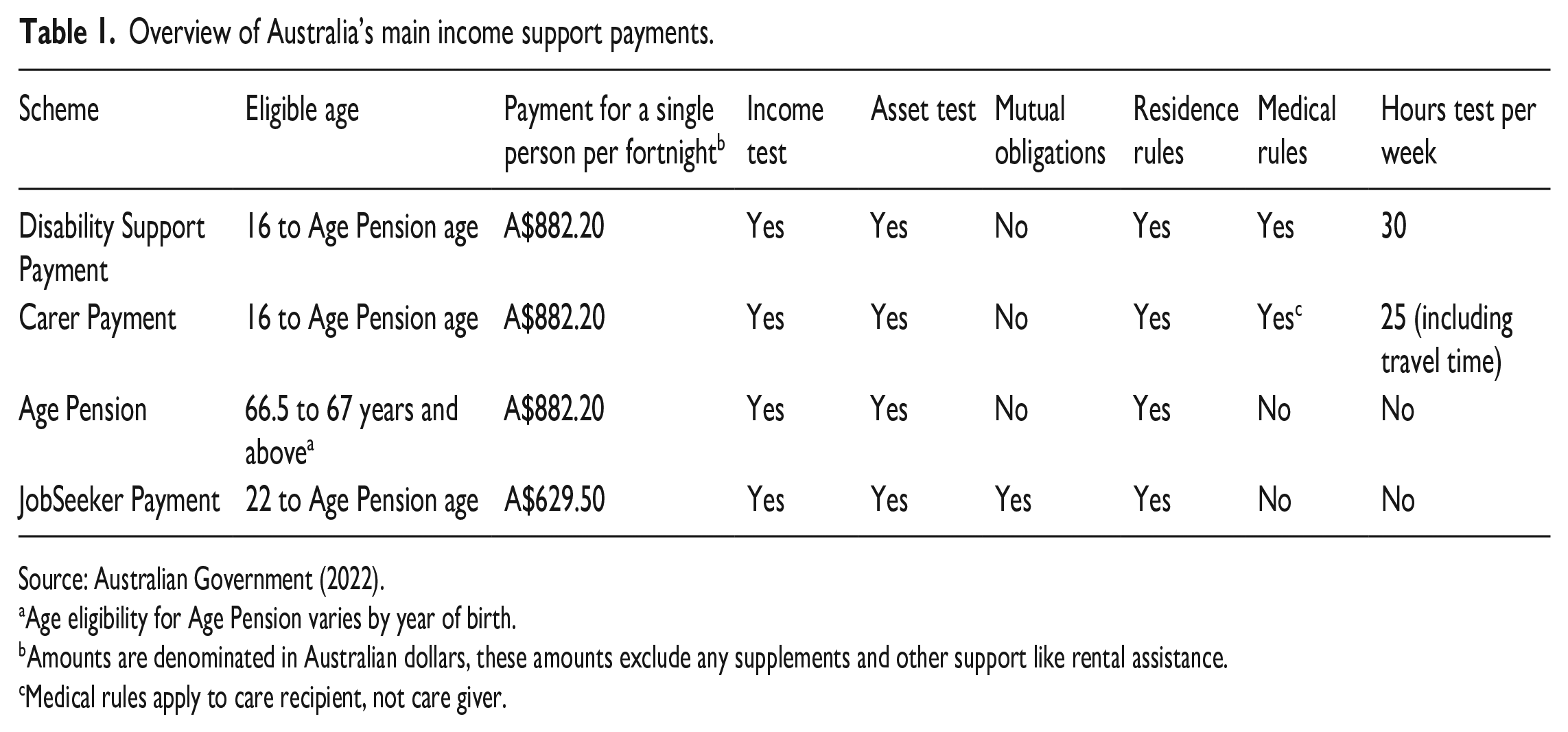
There are four main income support payments most frequently accessed by these three cohorts: the Disability Support Pension, the Carer Payment, 3 the Age Pension and the JobSeeker Payment. The key features of the four income support payments are summarised in Table 1. All four payments allow people to receive welfare benefits to varying degrees while also undertaking paid work. JobSeeker specifically requires individuals to seek or undertake paid or unpaid work as part of their ‘mutual obligations’. The four payments are all designed from a work-based welfare perspective underpinned by a labour market activation agenda (Greer, 2016; Marston and Dee, 2015; Ramia, 2020). Notably, their design is focused on employment, meaning they are less well aligned with other forms of work such as independent contracting including ‘gig’ work, especially due to the blurring of the features of employment and contracting we identify above.
Overview of Australia’s main income support payments.
Source: Australian Government (2022).
Age eligibility for Age Pension varies by year of birth.
Amounts are denominated in Australian dollars, these amounts exclude any supplements and other support like rental assistance.
Medical rules apply to care recipient, not care giver.
The design of these payments creates both actual and perceived barriers that shape whether, and if so for how long, individuals are willing to undertake paid work. Income and hours tests, for example, prescribe under what circumstances support payments are reduced, suspended or cancelled – creating a financial disincentive to work beyond each threshold. Moreover, hours restrictions on the Disability Support Pension and Carer Payment may inhibit an individual from engaging in suitable work.
For the Disability Support Pension (Department of Social Services, 2021a), there is an income test and the number of hours that a worker can work was, at the time of data collection, capped at 30 hours. The Carer Payment (Department of Social Services, 2021a) has the same income test as the Disability Support Pension, however the hours test operates slightly differently: recipients were able to work, study or be in training for a maximum of 25 hours a week, inclusive of travel time to and from these activities (Australian Government, 2022). A notable difference between the Age Pension and the previously described payments is the existence of the Work Bonus that operates in addition to the income test (Department of Social Services, 2021b). It incentivises recipients to (continue to) engage in paid work, allowing pensioners to earn up to an additional A$7,800 a year without losing their maximum pension (Department of Social Services, 2021b). 4
The JobSeeker Payment is Australia’s main unemployment benefit, available to those who are unemployed or temporarily unable to work or study due to sickness, illness or injury (Australian Government, 2022). The payment is designed using a labour market activation agenda (Greer, 2016), requiring recipients to look for and engage in paid work. Notably, it is the smallest of the income support payments, with a more stringent income test and lower cut-off thresholds. It is also worth noting that the JobSeeker Payment was more generous at the height of the COVID-19 pandemic in 2020–2021 (the time of the study’s data collection). As the pandemic and Australia’s lockdown measures wound down, so did the quantum of the payment, with some experts and welfare groups arguing that at current levels it deliberately subjects people to a life of poverty (Klein et al., 2022).
The ability to access income support payments in times of need may shape perceptions and experiences of work. A report commissioned by Uber, for instance, found that 64% of new workers on its platform in Australia during the COVID-19 crisis were ineligible for government support (Accenture, 2021), with the absence of welfare acting as a likely ‘pull’ factor into this part of the labour market. Not all workers in this study received, or were eligible for, income support payments, nor do the payments align with individuals’ self-reporting of their circumstances. For instance, not all individuals with disability will be eligible for the Disability Support Pension but may rely on the JobSeeker Payment. Moreover, within the cohort of workers aged 45 and over, those of pension age (67 years) may receive the Age Pension (subject to, for example, asset tests) whereas those under this age threshold are ineligible.
Methods
The study adopted a mixed-methods (quantitative–qualitative) single case design (Yin, 2013). It used a multi-channel sampling approach, relying on both ‘purposeful’ sampling (Patton, 2002), recruiting for information-rich participants from the target cohorts, and ‘opportunistic’ sampling techniques (Creswell, 2013) engaging with those individuals from these cohorts who responded to the project’s advertisements. The research was undertaken with the support of a large multinational ride-share platform operating in Australia, who, as an industry partner, made a minority financial contribution to the study with the majority of project funds from a university. The study was undertaken under an ethics protocol approved by the first and fourth named authors’ university’s Human Research Ethics Committee, ensuring independence of the researchers from the industry partner and no coercion of participants to join the study.
The first stage of the project was a recruitment survey with participants recruited through the platform’s driver newsletter. The survey was advertised as follows on two occasions in June 2021:
Researchers from The University of Sydney are doing new research to understand how rideshare partners with a disability, workers over the age of 45, and those with care responsibilities use [platform] as a flexible work option. Therefore, they have put together a short survey. Participating in the study is completely voluntary and confidential. Your individual responses will not be shared with [organisation]. If interested please follow the link below to answer some short questions.
The advertisement targeted individuals who identified as belonging to the target cohorts. This inclusion was not based on whether or not individuals received welfare payments. As a result of the purposeful sampling, however, the collected data contain self-selection bias (Heckman, 1990). First, individuals from the target cohorts were more likely to respond as they were explicitly encouraged to participate. Second, the survey was only advertised via the newsletter and therefore attracted the interest of those individuals who engaged with the organisation’s communications, meaning that those who ignored or did not pay attention to these were missed. Third, individuals who undertook but ceased ride-share work were also not captured. Hence, the data and findings should be treated with caution and cannot be generalised to the wider driver population.
To ensure the confidentiality of the respondents the survey link in the advertisement was securely linked to the first and fourth authors’ university’s survey platform. Respondents thus directly engaged with the researchers and not the platform company. At the start of the survey, participants were assured of the research’s confidentiality, anonymity, and that the research data would not be shared with the organisation. Moreover, as part of the participant information statement and consent, the funding arrangement between the research team and platform was disclosed as follows:
The research is carried out by The University of Sydney. The study is supported by an Industry Partnership Grant, with [platform] and The University of Sydney both providing financial support for this project. [The platform] will receive a report based on the findings of the study. [The platform] and any of its affiliated entities will not be provided with access to the research data, including survey responses and interview transcripts. All information provided to the research team will be treated as confidential and will solely be used as part of the report and academic publications.
Participants were required to provide explicit consent before they could participate in the survey. For the interviews, a similar process was adopted, with all participants provided with a soft copy of the participant information statement, whereas digital consent was also obtained from all participants through a separate, secure consent survey. Interviewees were given a A$50 gift card to compensate them for their time commitment and any expenses and incidental costs incurred. To avoid financial inducement, this was not disclosed until after they had agreed to an interview.
The survey had six sections: (1) demographic background information, including residency status as this is salient for the ability to access welfare, (2) experiences of labour market discrimination, (3) a job satisfaction instrument, (4) questions on experiences with ride-share driving and sources of income, (5) interactions with the welfare system, and (6) willingness to participate in qualitative interviews.
The survey contained screening questions to determine whether respondents belonged to the target cohorts, allowing us to tailor the invitations and statistically explore differences in responses. To determine whether respondents considered themselves as having a disability and to what extent it affected their ability to work, we used two questions from an existing survey instrument (HILDA), with participants asked: ‘Do you have any long-term health condition, impairment or disability (such as these) that restricts you in your everyday activities, and has lasted or is likely to last, for 6 months or more?’ (1 – Yes, 2 – No, 3 – Do not wish to disclose). As well as: ‘Does your condition(s) limit the type of work or the amount of work that you can do?’ (1 – Yes, 2 – No, 3 – Unable to do any work, 4 – Do not wish to disclose). To establish whether participants were carers, we used the Australian Census question (ABS, 2023): ‘In the last two weeks, did you spend time providing unpaid care, help or assistance to family members or others because of a disability, a long-term illness or problems relating to old age?’ (1 – Yes, 2 – No, 3 – Do not wish to disclose). We further asked: ‘On average, how many hours do you spend each week providing that unpaid care, help or assistance?’ (1 – 1–9 hours, 6 – 60 hours or more). Besides the ‘age’ question from the demographics section, to distinguish within the cohort of workers aged 45 and over we also asked respondents: ‘Do you consider yourself retired?’ (1 – Yes, 2 – No). Further to these self-identification questions, we adapted a question from the HILDA survey to the context of ride-share driving to query what sources of income respondents had, besides ride-share driving. This included whether they received any income support payments.
Similar to Kingston et al. (2015), we used two questions to explore whether respondents had experienced any forms of work-based labour market discrimination. The first question focused on their experiences looking for work: ‘In the past two years, I have personally felt discriminated against while
To examine the respondents’ satisfaction with ride-share work, we used a six-item job satisfaction instrument using a five-point Likert scale (0–4) (0 – ‘Extremely dissatisfied’, 4 – ‘Extremely satisfied’) based on the HILDA survey, with earlier studies using this instrument including, but not limited to, Clark (1996) and Wooden and Warren (2004). We slightly adapted the questions to reflect that ride-share work is performed under independent contracting arrangements in Australia, with the work at times portrayed as an entrepreneurial activity rather than a job. As a result, we opted to refer to ‘work’ rather than a ‘job’ in the questions. We did not pilot these changes. The instrument measured six aspects of satisfaction, including earnings, security, 5 the work itself, work hours, flexibility and overall satisfaction.
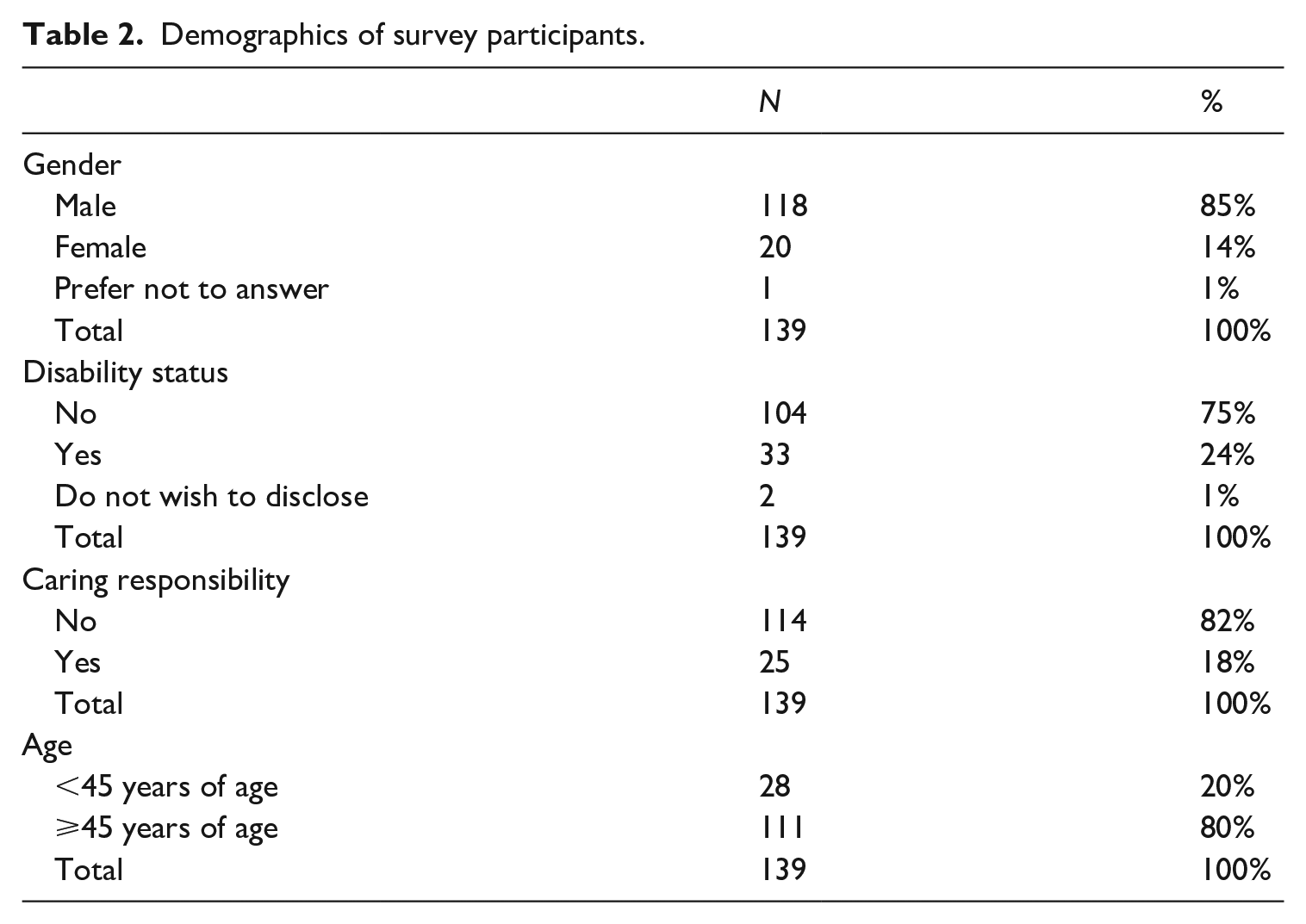
A total of 158 survey responses were received, with respondents who completed fewer than 30% of the survey questions excluded leaving 139 usable responses. The targeted nature of the survey influenced who responded to the survey, as reflected in the demographics shown in Table 2. For instance, individuals from the three target cohorts were represented well above the proportions that they are usually found in the Australian labour market (ABS, 2019). Furthermore, McDonald et al. (2020: 41) found that workers in transport like ride-share driving were significantly more likely to be temporary residents and less likely Australian citizens. In our sample, however, most respondents indicated that they had residency rights either as Australian citizens (82%) or permanent residents 6 (6.5%). Moreover, our sample has a higher percentage of females and older participants compared to the general Australian platform workforce (McDonald et al., 2020). Given that women are overrepresented as carers in the general population, and older workers were a target cohort, this is unsurprising.
Demographics of survey participants.
Due to the relatively small sample and varying levels at which the three cohorts were present as well as the distribution of the data, nonparametric Mann–Whitney U tests (see e.g. McKnight and Najab, 2010) and the Fisher–Freeman–Halton Exact Test (Lydersen et al., 2007) were used to explore whether there were statistically significant differences in responses. This included testing whether individuals belonging to different groups or who received income support payment reported different experiences in terms of labour market discrimination or levels of job satisfaction. Given the limitations of the quantitative data, the statistical findings should be interpreted with caution, but they do provide useful context to the experiences of work and the welfare system.
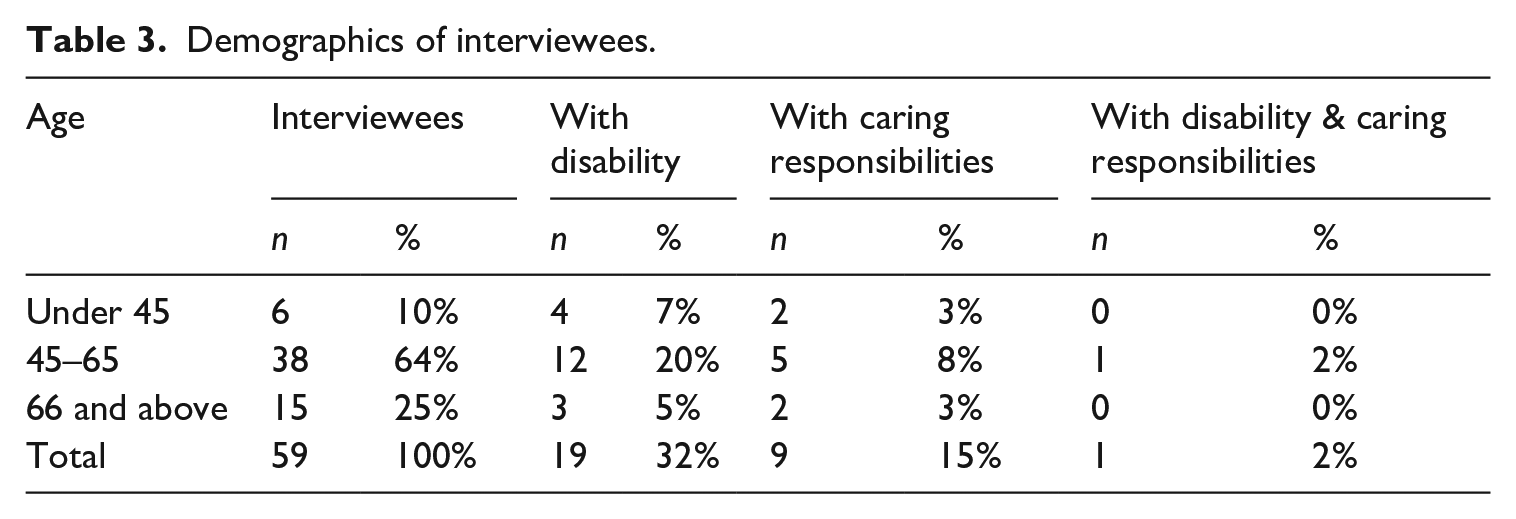
In the second, qualitative stage of the project, semi-structured interviews were conducted with drivers with disability, caring responsibilities, or aged 45 and over. The survey generated 88 leads and resulted in 58 interviews, with one other participant recruited via a different research project. Of the 59 interviewees, 49 identified as male and 10 as female. Interviews were completed in June and July 2021, and were between 20 and 90+ minutes in length, averaging 39 minutes. As described above, the experiences of ride-share work and Australia’s welfare system were substantially shaped by the COVID-19 pandemic, with radical short-term changes to the income support system, temporary wage subsidies for employers (called JobKeeper), lockdowns of major urban areas, and increased exposure to the virus in settings such as ride-share driving, which may have impacted recruitment and participant responses.
The interviews were conducted by three of the authors and a research assistant. Prior to the commencement of the interviews, participants were sent the participation information statement via email and at the start of the interview provided with an opportunity to ask clarification questions about the project, including the arrangement between the researchers and the platform. The interviewees broadly fell into the categories in Table 3, noting that participants may have met more than one of the eligibility criteria.
Demographics of interviewees.
The interviews were transcribed and coded using NVivo software. A thematic analysis was undertaken (Fereday and Muir-Cochrane, 2006), where a global understanding of the interview data was developed and categorised based on emergent themes to understand the perspectives of the interviewees. The coding was undertaken by two of the authors and a research assistant, using a priori established codes as well as emergent themes. The original, primary empirical data collected in the study were complemented with a review of relevant documents and policies, which analysed academic literature, reports, industry documents and government policies relating to the employment of the groups under study to assess and understand the Australian labour market context, barriers and opportunities for the three cohorts of workers.
Findings
In this section, we first examine why workers from the target cohorts have chosen to do ride-share work and consider how prior experiences such as labour market discrimination shaped their motivations for ‘gig’ work. Second, we consider how the interaction between ride-share work and the welfare state affected their experience of work.
Motivations for ‘gig’ work – finding opportunities in a market with limited choices
As noted in the literature review, workers from the three target cohorts often face barriers to labour market entry, potentially prompting them to consider ride-share work as an alternative non-standard form of work.
As part of the survey, participants were asked if they had been discriminated against ‘while looking for work’ and ‘at work’ in the past two years. Over a third of all participants (36.7%) indicated that they had experienced discrimination looking for work, with no significant difference between members of the three cohorts and other respondents in the sample population. Further, one in four participants (25%) indicated experiences of discrimination at work. The Fisher–Freeman–Halton Exact Test (Lydersen et al., 2007) revealed there was a statistically significant association between disability status and discrimination at work (2-sided, p = 0.015), with workers with disability more frequently reporting experiencing discrimination at work. The qualitative interviews revealed that some of this was experienced in the form of inappropriate passenger behaviour while ride-share driving, whereas the interviews also highlighted various discriminatory accounts in other paid work and employment.
Participant expectations about the prospects of securing a job through more conventional recruitment processes were low: ‘I think that I reached an age where nobody would even want to consider me as a potential employee’ (Participant 21, Male, 60, with disability). Another worker’s experience demonstrates that this can be compounded if the person belongs to multiple disadvantaged groups: . . . because of my disability some people as soon as they see you on crutches, they assume that you can’t do the job, but also because of my age some people – as I say, even though you are qualified for the job and you have experience in that area, you don’t get a look in. (Participant 26, Male, 69, with disability)
Negative labour market experiences had led individuals from the target cohorts to seek ride-share work and, echoing the quantitative findings, go some way to explaining their satisfaction with this work. Ride-share work was therefore primarily viewed in positive terms, as it provided an important source of income, though potentially one of last resort. Indeed, some participants were acutely mindful of their limited labour market alternatives and the well-reported deficiencies and insecurities associated with ride-share work (e.g. Josserand and Kaine, 2019; Peticca-Harris et al., 2018; Rosenblat, 2019), as one worker with a mental health condition explained: It is, before tax, slightly under minimum wage. After you take the GST out and the cost of running the car, it would be somewhere around half to three quarters of minimum wage. Which, while I’m not happy about it, I can’t do anything about it, and I can’t currently get any other job. So, I can’t do anything about it, so it’s the best I’ve got. I am trying to get another job, and I think I might have it, but for the last two years, [ride-share] has been all I’ve got. (Participant 20, Male, with disability, under 45)
The accessibility and relatively low barriers to entry of the work (particularly in recruitment) were highlighted as a key positive difference from ‘regular’ employment. The absence of traditional recruitment and selection processes meant workers perceived fewer biases and obstacles to overcome, as one explained bluntly: ‘[Platform name] definitely aren’t discriminating against age. They couldn’t care less, all you have to do is have a pulse and drive’ (Participant 39, Male, 57). A worker with a mental health condition, in turn, explained her experiences with being overlooked for other options in the labour market: I don’t know that people do it deliberately but as soon as you put on [a job] application in your medical part of the application that you have schizophrenia people aren’t likely to invite you to an interview. On paper I don’t look like the best candidate available. . . I’ve got limited options where people will give me a chance really with the stigma of schizophrenia hanging over my head. (Participant 27, Female, 51, with disability)
Working was also reported as providing important personal meaning and socio-psychological benefits to individuals, reflecting the broader literature about the importance and meaning of work (Budd, 2011). For example, a worker who identified as having a physical disability reported: ‘The best part of the job is just literally the fact that it’s something I can do with the physical injuries that I’ve got, and talking to people, because otherwise I don’t really get out of the house much’ (Participant 10, Female, 55, with disability). Although the ability to engage in paid work was viewed as a positive, at the same time interviewees reported experiences of discrimination by customers while driving based on their age, gender, disability, ethnicity and nationality. For example, intergenerational differences were perceived by some as directly impacting their experience of ride-share work: ‘you get rated down [by customers] because you’re old, or whatever, or you didn’t have the right music on the radio [in the vehicle] or something’ (Participant 16, Male, 78). Other drivers expressed concern that existing societal biases and prejudices also filtered through to ride-share work.
Workers’ individual circumstances varied quite markedly, as did their motivations for work, reflecting previous studies (Josserand and Kaine, 2019). However, for workers with disability, three main factors emerged from the interviews that help to explain their overall satisfaction with ride-share work. First, they had experienced discrimination in finding other jobs, as highlighted above. Second, there was a desire to work. Third, ride-share work met the needs of workers with disability in a way that other work does not. The suitability of ride-share work for workers with disability included the flexibility in ‘when’, ‘where’ and ‘how much’ work was to be undertaken. An issue for individuals with disability is the need to accommodate both planned and unplanned absences – particularly for individuals with episodic and fluctuating disabilities (Lightman et al., 2009). As workers explained, the ability to start and stop the work without repercussion (other than foregoing potential earnings) meant that it was more suitable than employment: ‘I can do it when I want to. If I’m having a bad day or too tired or then I can just decide I don’t want to do it that day. So, I don’t have to’ (Participant 4, Female, 62, with disability). Another worker explained that this temporal autonomy was a major benefit: ‘Yeah look if my back was fine, I’d probably be doing [platform name] like full-time. And that way I wouldn’t have to rely on JobSeeker’ (Participant 13, Male, 46, with caring responsibilities). In contrast to groups like temporary migrants who are excluded from welfare, for those who could access it, their income support payments positively shaped their work experience and satisfaction.
Despite these advantages, workers also reported that the work brought distinct challenges. Workers with physical disabilities, for instance, reported being unable to perform parts of the role, such as lifting bags for customers who desired this service: ‘I say to passengers, “Look, I’m sorry, I’ve got osteoporosis, I can’t lift your bag into the boot”. Some men would be disgusted. . . it comes back to 65-year-old white men. . . they expect you to be a slave for their $4.55 fare’ (Participant 46, Female, 57, with disability). A worker who identified as having a cognitive disability explained, in turn, how the platform’s rating systems and user expectations exacerbated his mental health condition, highlighting the challenges for workers with non-visible conditions: It’s mental health – depression. . . it is a disability for all purposes. And personally, I’m saying toward the negatives, I’m saying that I’m not always in a happy mood, I’m not always wanting to engage with people. And sometimes yeah like it can be difficult, especially with the ratings. Like sometimes I just don’t want to be assessed based on that mood. The customer may not know that I’m in a bad mood, but they still have that expectation. (Participant 1, Male, 26, with disability)
For workers with caring responsibilities the main attraction of ride-share driving was the ability to balance unpaid care and paid work, with one worker explaining how this work was best suited to meeting these competing priorities. However, there was a trade-off between flexibility and economic advantage, particularly when comparing ride-share work to employment: It’s the only job I can do that allows me to care for my mum. You can log on and log off whenever you please, they must not change that, that is the beauty of this job. This is not the sort of job you want if you are paying off a mortgage, this is the job you want when you can’t get a job anywhere else, and you just need to keep your head above water. (Participant 34, Female, 64, with caring responsibilities)
For older workers, the experience of ride-share work was contingent on their labour market positionality and life stage (including access to the Age Pension). For some, it was mainly an economic imperative, finding that at their age there were few alternatives in the labour market: I lost my job because of COVID, and I found it very difficult at the age of 54 to get a new start doing anything. When [the platform] was first invented years ago I expressed an opinion to my partner that I wouldn’t mind giving that a bit of a go as a part-time thing. Then because I was finding it very difficult to find work my partner suggested why don’t you, just as a part-time thing just do [platform] and see if you can make any money doing it. (Participant 33, Male, 54)
Others, however, considered ride-share as a transition pathway into retirement, as one explained: ‘I’m at a point now where I’m over 60 and I don’t want to work full-time, so this seems to be perfect for me. . . I consider myself semi-retired at the moment’ (Participant 37, Male, 62). Finally, others derived an important sense of purpose and meaning from the work: I can’t relate to retirement. Retirement to me is like retiring from life, and that’s something that I don’t want to do ever. I enjoy being active, I enjoy doing things, but I enjoy doing it for the monetary side as well, it’s always nice. . . I’m just happy to keep going as long as I can, till I drop dead maybe. (Participant 31, Male, 68, with disability)
Ride-share drivers and their interaction with the welfare system
To understand how interactions with the welfare system shaped the experiences of ride-share work, we again draw on both quantitative and qualitative insights. First, using the survey data, we explore whether workers’ job satisfaction with ride-share work was affected by receiving income support payments, providing a potential indicator for the nexus between the ‘gig’ economy and the welfare state. Drawing on the interviews, we then unpack workers’ experiences of, and interactions with the welfare state as ride-share drivers.
The job satisfaction scores in Table 4 reveal that the surveyed workers, including those from all three cohorts, are overall satisfied with ride-share work. The flexibility of the work scored the highest (mean 3.58 out of 4) and had the smallest standard deviation. There was also relatively high satisfaction with the work itself (mean 3.06). There were relatively lower satisfaction scores on security (mean 2.54) while the lowest satisfaction was with earnings (mean 2.32).
Job satisfaction of survey participants.
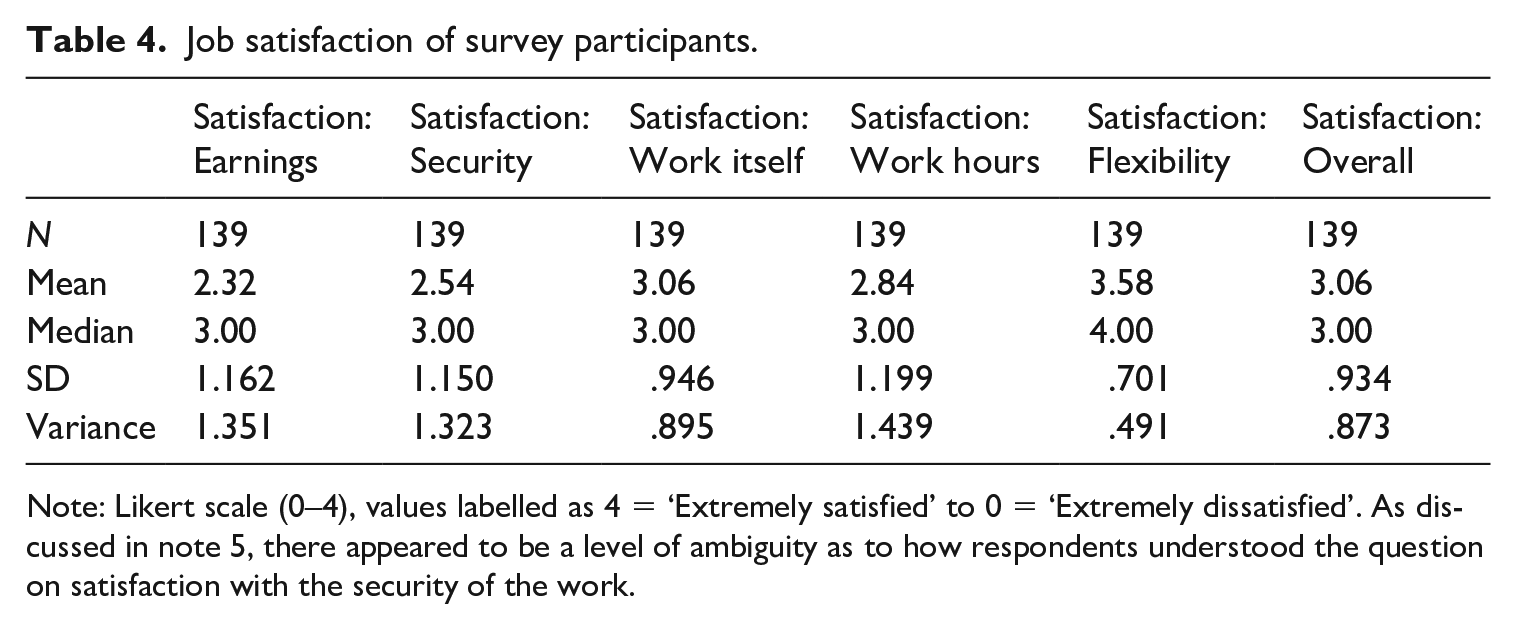
Note: Likert scale (0–4), values labelled as 4 = ‘Extremely satisfied’ to 0 = ‘Extremely dissatisfied’. As discussed in note 5, there appeared to be a level of ambiguity as to how respondents understood the question on satisfaction with the security of the work.
Mann–Whitney U tests (McKnight and Najab, 2010) revealed that workers who were currently receiving one of the three pensions (the Age Pension, Disability Support Pension or Carer Payment) were significantly more satisfied with the terms of work (U = 889, p = 0.05), flexibility (U = 895, p = 0.05), work hours (U = 934, p = 0.1) and the work overall (U = 956, p = 0.1) than those who did not receive these pensions (including JobSeeker recipients). While the statistical significance of the latter two tests was weak, it suggests that the relative security of an income outside of ride-share work may positively affect the experience of the work. This may reflect the experience of work being improved when income insecurity is reduced, but also may reflect the platform having a more satisfied workforce when their income is effectively state subsidised. Other factors, such as the opportunity to participate in paid work where it is denied elsewhere, may also play a role. Again, the satisfaction with the work itself, for instance, may relate to the psychological and social meaning (Budd, 2011) individuals derive from labour market participation.
Conversely, recipients of Australia’s unemployment benefit, the JobSeeker Payment, were statistically less satisfied than the other workers with their earnings (U = 225, p = 0.05), 7 though the number of participants was very small (n = 8), meaning future research should examine this relationship.
We further examined whether an individual’s ability to access income support payments affected their level of job satisfaction. We found that respondents who indicated that they were unable to access Australia’s unemployment benefit reported lower levels of satisfaction with ‘earnings’ (U = 1067, p = 0.1) and ‘security’ (U = 909, p = 0.05). 8 This again suggests the nexus between the relative security that workers experience in their job and the ability to rely on the welfare system in times of need shapes experiences and perceptions of work. Moreover, holders of temporary visas were significantly less satisfied with the security (U = 1248, p = 0.05) of the work compared to Australian citizens and permanent residents, underscoring that while the ‘gig’ economy may have been an opportunity for workers to access income throughout the COVID-19 crisis (the context in which the research took place), these workers likely recognise the relative labour market insecurity of their situation, likely exacerbated by more accessible and higher quantum of income support payments temporarily available at the time.
While exploratory, the survey findings suggest that experiences of ride-share work are shaped by relative labour market circumstances and the ability of individuals to access income support payments to either provide a baseline of income or supplement their income in times of stress or crisis. In the qualitative section below, we unpack these findings in more detail and further highlight how the welfare system shapes participation in, as well as enhances and detracts from the experience of, work.
For many of the interviewees, their total income constituted both income support payments and ride-share driving, however managing both, and their interaction, was not straightforward. The interviews with recipients of income support payments (which are overseen by an Australian government agency called Centrelink) revealed two overarching challenges, both a direct consequence of how ride-share work is organised. First, drivers highlighted challenges in reporting income from ride-share driving to the agency, which impacted their eligibility for, or level of, welfare support. Second, drivers described ambiguities relating to the interpretation of the welfare conditionality, such as work time thresholds and calculating reportable income, associated with their payments.
Inconsistent and incorrect advice from Centrelink for the reporting of income from ride-share driving was a major annoyance for many drivers. Incorrect advice by the agency to several interviewees – corroborated by the research team with the relevant department – meant that in some instances workers were required to ‘guestimate’ future earnings even though ride-share income is variable in terms of hours worked and income per hour (Services Australia, 2022): . . . because I’m driving an erratic number of hours, the number for quarterly [periods] changes every time. . . Centrelink is demanding the number before I’ve done all the hours, so I don’t have the numbers and can’t report it, and they can’t give me an answer as to how I’m supposed to do it. (Participant 20, Male, under 45, with disability)
In some instances, reporting issues resulted in workers being (temporarily) denied income support payments: . . . it was completely absurd in terms of fortnightly income reporting they wanted to do, they switched me back to the annualised reporting. . . So basically, I went without government income or without age pension for a month while that was getting resolved. (Participant 8, Male, 68, with caring responsibilities)
The interpretation of the tests and requirements associated with workers’ income support payments (see Table 1) shaped how those who received them experienced and undertook ride-share work. A key question in relation to the hours test, for instance, is ‘what is considered working time’, a test which makes much more sense for employment, remunerated by an hourly wage, than ‘gig’ work which is paid by piece rates. A question emerges on whether ‘idle’ waiting times between rides – when drivers are logged into the app and available for work but are not working – count towards their working hours. In the absence of clarity from the welfare agency, drivers resorted to their own interpretations. One driver who received the Disability Pension, for instance, considered it only included time with passengers: ‘That’s the advice me and my doctor have come up with and I’m pretty sure Centrelink haven’t actually told me in so many words that is the definition of work, but I’m confident it is’ (Participant 3, Male, 62, with disability).
Drivers who received the unemployment benefit (JobSeeker Payment) further explained how in some instances their earnings from ride-share driving did not count towards their job search requirement monitored by the privatised employment agencies since they performed the ride-share work as independent contractors. ‘[A]s far as I remember, even though I was doing [platform], I was still required to look for work, because [platform] wasn’t employment. Which sounds more like a bug in a system that just couldn’t handle self-employment’ (Participant 20, Male, under 45, with disability). Discussions with officers in the relevant government department revealed that in theory the work should have satisfied such requirements. One possible explanation for the rejection may have been the variability of the income from ride-share work.
Income testing, whether the income was derived from ride-share work or elsewhere, was found to have a perverse effect on drivers’ motivations to engage in this type of paid work. This issue was most pronounced around the JobSeeker and Age Pension payments, although the Age Pension was deemed somewhat less problematic by participants due to the existence of the Work Bonus Income Bank, which provided workers with some exempt income and allowed them to average their income over a year (Department of Social Services, 2021b). Nonetheless, as one age pensioner explained, the design of the payment directly affected the quantum of work that she was willing to perform: . . . it limits my ability to work. I can make a choice. If I do go over that threshold, then my pension’s cut. And the more money I would earn out working then the more my pension would be cut. . . So, it’s a balancing act about how much you earn and how much you receive on the pension. (Participant 2, Female, 66, with caring responsibilities)
The survey data shed further light on this, revealing that around half of the individuals receiving income support payments were interested in undertaking more ride-share work yet felt the current rules prevented them from doing this. Moreover, some participants even regarded the ‘gig’ economy as an opportunity to get out of the welfare system altogether: ‘I hated being dependent on Centrelink. So, the money that I make, although like I said it’s not fantastic money, it is my own money. It’s real money where I can actually feel that I’ve earned that money’ (Participant 33, Male, 54).
Discussion
The growth of the ‘gig’ economy has created avenues into paid work for workers traditionally excluded or disadvantaged in finding employment (Harpur and Blanck, 2020; McDonald et al., 2020; van Doorn and Vijay, 2021). As a new form of work organisation, ‘gig’ work is creating tensions with existing welfare systems, and limited scholarly attention has been paid as to how the ‘gig’ economy interacts with welfare systems. In the Australian context, we find that the welfare system has not kept up with the nature of on-demand ‘gig’ work such as ride-share driving, creating circumstances which may appear illogical, with disincentives for full labour market activation, and at times compromising individuals’ (ongoing) access to income support payments. With work changing in ways originally not anticipated by policymakers, this has led to unforeseen consequences and ‘accidental’ policy outcomes.
The study makes two important contributions to understanding the rationale for workers from the three targeted cohorts to undertake ride-share work, and how the Australian welfare system shapes their experiences of this type of ‘gig’ work.
First, we show how ride-share driving has provided an opportunity for members of these cohorts to find work where employment has proven difficult or impossible. The characteristics of the sample, however, necessarily circumscribe the claim here, as it only applied to those individuals from these cohorts who could satisfy the requirements of the platform (including having a valid driver’s licence, were able to clear police checks, and had access to a vehicle), as well as were (physically and cognitively) able to perform the work. The fact that we found workers from these cohorts who welcomed this work, in part due to the relative ease of entry and exit, is noteworthy. Structural barriers like discrimination coupled with unsuitable work rules within employment meant some of these workers had been excluded from paid work. Moreover, from a work organisation perspective, for workers with disability, for example, the nature of ride-share work and its relative flexibility to determine ‘when’ and ‘how long’ to work for allowed them to accommodate planned and unplanned absences, which made it markedly different from, and preferable to, employment. Notably, many of the participants welcomed the opportunity provided by the platform to engage in paid work, highly valuing the psychological and social meaning (Budd, 2011) they derived from it. This was also reflected in their responses to the job satisfaction instrument. At the same time, workers were aware that this opportunity came from a less than full array of work options, in part being pushed rather than pulled into this kind of work. While this work may be tolerable, some workers reported effectively selling their labour at a discount in exchange for the flexibility and the opportunity to work at all.
Second, the access some participants in the study had to the Australian welfare state profoundly shaped their experience of the work, in a way which has not been explored in the extant literature. Workers who received income support payments were in a better position to sustain themselves despite the untrammelled market forces and inter-worker competition that platforms seek to create (Burawoy, 1985; Veen et al., 2020). This was also reflected in the survey responses, with workers who received income support payments being more satisfied with ride-share work in terms of work itself, its flexibility, work hours, and the work overall. This, in turn, suggests that the relative security of a regular welfare payment – supplemented by ‘gig’ earnings – may positively shape worker experience by cushioning the relative insecurity of this flexible work. While not intended by the welfare system originally, the income support payments provided the ‘accidental flexicurity’ we refer to.
These two contributions, when considered together, mean that the experiences of the workers from these cohorts are embedded within a duality. On the one hand, the experiences of some can be conceptualised as ‘accidental flexicurity’, defined as a situation where the flexibility and high levels of job and income insecurity of the ‘gig’ economy are unintentionally cushioned by the welfare state, and which materially improves their experience of and satisfaction with the work. Our data suggest that workers with disability, caring responsibilities or aged over 45 might be willing to tolerate poorer working conditions in the ‘gig’ economy (vis-a-vis traditional employment) due to the increased temporal flexibility coupled with the income support payments they received. These findings are in stark contrast with the experiences of migrant workers, for instance, who often resort to ‘gig’ work and compete with one another in the absence of welfare and a safety net (van Doorn and Vijay, 2021).
On the other hand, it could also be argued that ‘gig’ platforms benefit from a form of ‘welfare-subsidised’ work. In the Australian context, the fact that ride-share work has been legally endorsed (Barratt et al., 2022) means the state could be considered as facilitating this type of work as a de facto form of workfare (Peck, 2001), while simultaneously contributing to and accelerating ‘market despotism’ and a race to the bottom for others (Burawoy, 1985; Veen et al., 2020).
The duality of ‘gig’ work providing ‘accidental flexicurity’ or a form of ‘workfare’ for individuals from the three cohorts appears to be a result of work organisation changing more rapidly than the welfare system. The findings make clear that the labour market impact of the ‘gig’ economy was not fully anticipated or understood by the state, as ‘gig’ work structurally differs from the male breadwinner employment model that the welfare state was originally designed around (Ramia, 2020). We are therefore in a situation where the welfare state is, through hours and income tests and a disorderly approach to categorising work, inadvertently impeding this cohort of workers from engaging in more paid work. This sits in contrast with the objectives of successive welfare reforms from the 1990s, at least at the level of rhetoric (Marston and Dee, 2015; Ramia, 2020).
Critically, while the experience of workers in this study can be conceptualised as a form of ‘accidental flexicurity’, it has to be noted that the design and operation of the Australian labour market and welfare system distinctly lack some of the key characteristics of a genuine flexicurity model (Jensen, 2011; Svetek, 2022; Wilthagen and Tros, 2004). Within this study, while based on a very small sample, the lack of genuine flexicurity was most clearly pronounced and reflected in the fact that recipients of Australia’s JobSeeker unemployment benefit were statistically less satisfied with their earnings from ride-share driving than the other workers, with their income support most reflective of workfare welfare arrangements (Marston and Dee, 2015). Moreover, these workers reported most of the problems with the welfare agency in terms of their income support payments being cut or suspended because of their ‘gig’ work earnings.
The study raises several important policy questions about the Australian state but also for other jurisdictions more widely. At a macro level, the findings are a reminder that policymakers have an opportunity to reimagine and improve the interaction between labour market and welfare regimes. In the Australian context, there remains an opportunity to consider these policy areas in a more integrated way and move away from the engrained workfare approach. Reorienting towards a model of social protection to provide workers with enhanced employment and income security would require major institutional change, particularly in the welfare domain.
At the operational level, the study highlights policy ambiguity and misalignment. First, while workfare regimes are purported to stimulate labour market participation, we show how the design of welfare rules is disincentivising individuals from working to their fullest ability, especially those with fluctuating health conditions or caring commitments – with these workers potentially putting their relative income security at risk if they exceed the hours test of their payments. Thus, there is an opportunity to remove such disincentives to work and increase participation. Second, given the entrenchment of platforms, labour market and welfare regulations need to be adapted accordingly. The question of classification of ride-share drivers (employee or contractor), while settled in Australia for the time being, could be revisited. Moreover, the Australian government elected in May 2022 is considering legislating a new mechanism to enhance standards for ‘employee-like’ workers in the ‘gig’ economy. Also, on the welfare system side of the equation, there is scope to improve processes and practices to better support ‘gig’ workers, including providing individuals with greater clarity around reporting and compliance.
Limitations
While this study has provided novel insights about the intersection of the ‘gig’ economy and the welfare system, it is not without limitations. First, our survey data were collected in a highly targeted fashion. While the survey instrument was not piloted, it used standard, validated questions and was primarily designed for interview recruitment purposes as well as to generate some preliminary insights. Further quantitative research is needed to examine and validate some of our preliminary insights, e.g. around experiences with discrimination in ‘gig’ work. Second, data collection was conducted in the context of COVID-19 lockdowns, a period when the Australian welfare system was temporarily more generous.
Future research
The findings highlight a need for future research on the experiences of traditionally disadvantaged workers and their experiences in the ‘gig’ economy as well as on the intersection of the ‘gig’ economy and welfare systems.
As our findings show, the work organisation of platforms represents an opportunity for traditionally disadvantaged groups in the labour market to access paid work. The findings further suggest that genuine flexicurity arrangements may lead to better experiences of ‘gig’ work, warranting further cross-country comparative study. We note, however, that in two of the countries with such arrangements, Denmark and the Netherlands, ride-share driving as a form of work organisation invoked a significantly different regulatory response, which forced ride-share platforms into the mould of existing taxi regulations (Oppegaard et al., 2019; Pelzer et al., 2019; Thelen, 2018). To the extent ride-share work is still available in these countries it does not reflect the low entry variant found in Australia, however opportunities to explore other forms of ‘gig’ work may exist. A question further remains whether greater policy alignment between the regulation of ‘gig’ work and welfare rules can result in better outcomes for workers, labour markets and the state. This raises the need to further explore whether platforms act parasitically on the welfare state and public infrastructure (Goods et al., 2019; Thelen, 2018) or represent an opportunity for greater levels of labour market participation, or a combination of both.
Conclusion
This mixed-methods study explored why workers with disability, caring responsibilities or aged 45 and over work in the Australian on-demand ‘gig’ economy as ride-share drivers. We further examined how their experiences of the work were shaped by their interactions with the welfare system. The research contributes to the existing literature by exploring the intersection of the on-demand ‘gig’ economy and welfare state. The findings reveal first that ‘gig’ platforms have provided a pathway into the world of work for marginalised and/or welfare reliant individuals. Second, we highlight how low-paid ‘gig’ work was better sustained when buffered by welfare payments. While motivations for the work are multifaceted, ranging from an opportunity for social inclusion to economic necessity, we find that the ability of ride-share work to accommodate planned and unplanned absences is something often absent in more traditional work. In the Australian context, we uncover a duality for those workers from these cohorts who had interactions with and received income support payments from the state. On the one hand, the work represents a de facto form of ‘workfare’ where welfare is subsidising low-paid work for platform capital. On the other hand, these workers experience what we coin ‘accidental flexicurity’ and find themselves in a situation where their income support payments cushioned the job and income insecurity normally associated with ‘gig’ work. The findings highlight a need for further research on the intersection of the ‘gig’ economy, the broader labour market and the welfare state.
Footnotes
Acknowledgements
We want to acknowledge and thank the editor and two anonymous reviewers for their feedback on the earlier versions of the manuscript. The authors also wish to express our gratitude to the ride-share workers who participated in this study as survey respondents and/or interviewees. We also want to thank Dr Andreea Constantin, Ms Lisa Gulesserian, Mr Rick Sullivan and Dr Nate Zettna for their expert research assistance at various stages of the project.
Declaration of conflicting interests
As outlined in the manuscript and indicated with the original submission, the project was funded through an Industry Partnership Grant from the University of Sydney Business School. As part of this grant, a major ride-share platform, as the industry partner, provided a minority financial contribution to the project.
Funding
We also want to thank the University of Sydney Business School for providing the Industry Partnership Grant as well as the platform organisation for its support.
