




Abstract
The job demands–control/support (JDC/JDCS) models are highly influential in the HRM and employee well-being literature. Despite the high face validity, however, research has failed to find convincing empirical support for the ‘buffer’ hypothesis suggested by the JDC/JDCS models. In this article the authors explore this issue from three perspectives. First, they test the controversial ‘buffer’ hypothesis using a large nationally representative matched employer–employee sample from Britain. Second, they examine the role of teamwork HRM practices as a moderator of the buffering effect of job control against job demands on employee well-being. Finally, incorporating occupational level data into the analysis, the authors further explore the moderating effects of teamwork under different occupation-specific work intensity. The analysis suggests that there is strong evidence supporting the ‘buffering’ hypothesis. Also, it was found that teamwork moderates the buffering effect for employee intrinsic job satisfaction. Finally, the moderating effect of teamwork differs between occupations with different levels of work intensity.
Introduction
The job demands–control (JDC) model developed by Karasek (1979) considers work stress a function of an employee’s job demands and control (Karasek, 1979). It posits that job demands lead to stress but having control over the work process helps mitigate the negative effects of job demands on employee well-being. The JDC model has two central components: the ‘strain’ hypothesis and the ‘buffer’ hypothesis. The ‘strain’ hypothesis concerns the additive nature of the effects of job demands and control on mental strain and the ‘buffer’ hypothesis emphasizes the mitigating effect of job control against job demands. Later, social support is added as a third dimension, extending it into the job demands–control–support (JDCS) model, which argues that the buffering effect of job control becomes stronger when the levels of social support at the workplace are higher (Karasek and Theorell, 1990).
The JDC/JDCS models have important implications for employee well-being and managerial practices. The ‘strain’ and ‘buffer’ hypotheses predict the most stressful jobs to be those ‘high-strain’ jobs where employees are subject to high levels of demands but have little control over their work. These jobs generate severe strains and pose high risks for health and well-being. Job control, however, provides an effective way to help employees cope with the demands at work. It does not only reduce work stress independently, but also mitigates the negative effect of job demands on employee well-being. The latter has direct implications from a managerial perspective because, if the ‘buffer’ hypothesis holds true, more efficient prevention of strain among employees can be achieved by increasing job control without necessarily lowering job demands.
Due to their simplicity and high face validity, the JDC/JDCS models hold a central place in understanding work stress and employee well-being at the workplace. Although research has generally found support for the ‘strain’ hypothesis, the empirical evidence for the ‘buffer’ hypothesis has been limited in the literature. In recent reviews, for example, most JDC studies have failed to detect the interaction effect between job demands and control, even in those considered to be of a high-quality design (Gonzalez-Mulé et al., 2021; Häusser et al., 2010). Taris (2006) even suggests that the ‘buffer’ hypothesis is a ‘zombie’ theory and should be eliminated from future investigations.
Despite the controversies, the JDC/JDCS models have been highly influential in the human resource management (HRM) literature. For example, underpinned by the ‘strain’ hypothesis, there has been an increased interest in how HRM practices such as teamwork can promote positive work attitudes in order to achieve ‘mutual gains’ (Gallie et al., 2012; Ogbonnaya, 2019; Van Mierlo et al., 2005). Building upon JDCS’s social support thesis, we argue that teamwork practices are a potential moderator of the buffering effect of job control through decentralizing decision-making power, facilitating learning and knowledge sharing and fostering a collective sense of belonging, which all lead to support and back up behaviour among team members. Moreover, we argue that the moderating effect of teamwork practices varies across occupations with different levels of work intensity, defined as the rate of speed, effort and energy required to perform job tasks (Green et al., 2021). Job control is likely to provide a stronger buffering effect against job demands for those working in a team environment in high-intensity jobs than those in low-intensity jobs.
This article seeks to contribute to the JDC/JDCS, teamwork and employee well-being literature in three ways. First, one major explanation for the lack of evidence of the ‘buffer’ hypothesis is varied conceptualization and measurement of job demands and control and insufficient statistical power due to the small sample sizes employed in previous research (Gonzalez-Mulé et al., 2021; Kain and Jex, 2010). In this study, we will use theoretically grounded measures of job demands and control from a large nationally representative matched employer–employee dataset to test the controversial ‘buffer’ hypothesis. Secondly, drawing on the JDCS model, we will investigate teamwork practices as a potential moderator of the relationship between job demands and control and their impact on employee well-being. Finally, we argue that the moderating effect of teamwork may further vary across occupations with different levels of work intensity. By linking HRM practices and employee well-being to occupation level variables, we shed some new light on how employee well-being is jointly influenced by contextual factors such as teamwork practices and occupations.
Theoretical framework
The JDC model
Karasek’s job demand–control model is one of the most influential theoretical frameworks to understand employee well-being in the organizational literature. The JDC model is centred around the simple idea that employee well-being is a function of two essential job-related constructs – job demands and job control – in the work process (Karasek, 1979). In this model, job demands refer to aspects of work that require employees’ physical and mental effort in performing their job tasks, typically including work time pressure and workload demands. Job control, on the other hand, refers to the degree to which employees can influence the way they perform job tasks, which includes skills discretion and decision authority. There are two theoretical perspectives underpinning the JDC model. The first is the ‘strain’ hypothesis, which assumes independent effects of job demands and control on employee well-being. The second perspective is the ‘buffer’ hypothesis, which points to a potential interactive effect between job demands and job control. That is, job control reduces work stress more effectively as job demands increase.
The nature of the relationship between employee well-being, job demands and job control outlined in the JDC model has its root in the conservation of resources (COR) theory, which suggests that stress is triggered by perceptions of a potential resource loss, experiences of an actual resource loss, or insufficient gain after resource investment (Hobfoll, 1989). In the context of work, job demands represent a significant threat of resource losses to employees due to excessive workload and time pressure (Karasek, 1979). Demanding jobs often lead to the perception of a potential loss of resources as employees may have insufficient time and capacity to meet the demands or these resources will not be adequately recovered afterwards (Luchman and González-Morales, 2013; Wu, 2016). Job control, in contrast, is an effective means to protect against resource losses. Decision authority and work autonomy provide employees with the ability to intervene and change the work environment if a potential threat to resources is perceived (Luchman and González-Morales, 2013). When experiencing high job demands, employees with high job control can restructure certain job aspects (such as timing, pace and methods of the job tasks) in the way to meet their own schedules so that the job demands are easier to cope with. Moreover, job control can lead to autonomous regulation and self-motivation (Sheldon and Elliot, 1999), which will protect individuals from energy depletion (Wu, 2016) and facilitate skills and competency acquisitions for future resource gains (Dawson et al., 2016).
Not only does job control help reduce stress, but it also buffers the negative effects of job demands on employee well-being. The essence of the ‘buffer’ hypothesis is that employees can handle job demands more efficiently if greater job control is available to them. Parker and Sprigg (1999) have provided a good account on why control can buffer the negative effect of job demands, suggesting that autonomous employees are able to actively manage the work process, channelling the job demands into the best solutions to make sure these demands are met successfully. In other words, employees with greater job control have more ‘options’ to optimize the solutions to minimize the potential harm of job demands in performing job tasks.
Although there is ample empirical evidence supporting the ‘strain’ hypothesis, research has thus far found it difficult to produce conclusive evidence of a significant interaction effect between job demands and control as proposed in the JDC model (Gonzalez-Mulé et al., 2021; Häusser et al., 2010). Demerouti and colleagues (2001) further developed the job demands–resources (JDR) model, extending job control to job resources which include other work features (such as rewards and feedback), based on the idea that any resource, not just control, may counter job demands and affect employee well-being. Although this line of research has produced some support for the proposed interactions, the evidence of a multiplicative effect between demands and control or resources remains elusive in the JDC and JDR literature (Gonzalez-Mulé et al., 2021; Parker et al., 2017).
A number of explanations have been proposed to account for the discrepancies. A first methodological concern is the low statistical power and homogeneous samples used in previous research. Testing the ‘buffer’ hypothesis requires testing statistical interactions based on large sample sizes (Aguinis and Stone-Romero, 1997). However, most studies on the ‘buffer’ hypothesis have used relatively small sample sizes, which do not have adequate power to detect a valid statistical interaction (Fila et al., 2017; Gonzalez-Mulé et al., 2021). In addition, Kain and Jex (2010) suggest that not only do previous studies use small sample sizes, but most of them are also occupation-specific, leaving a question mark over the generalizability of these findings. A further concern is that different instruments underlying the same concepts have been used across JDC studies in the literature (Fransson et al., 2012; Gonzalez-Mulé et al., 2021). In order to minimize the bias from these methodological concerns, we use two measures of job demands and job control grounded in the theoretical JDC model from a large and matched nationally representative workplace and employee sample to test the multiplicative ‘buffer’ hypothesis:
Hypothesis 1: There is a positive interaction effect between job demands and job control on employee well-being.
Job demands–control–support, teamwork and occupations
In addition to methodological issues, researchers have also explored the lack of support for the ‘buffer’ hypothesis from the theoretical perspective. It has been argued that, for example, job control is not necessarily a stress buffer for everyone and its ‘buffering’ effect may vary depending on the individual circumstances and work context (Fila et al., 2017). These individual and contextual variables include individual differences such as gender, cultural background and personality (Fila et al., 2017; Parker and Sprigg, 1999), job features such as job demand types and occupations (Baka, 2020; Sparks and Cooper, 1999) and workplace characteristics such as role clarity and social or organizational support (Bliese and Castro, 2000; Karasek and Theorell, 1990).
One of the most influential theoretical extensions of the JDC framework along these lines is the JDC–social support (JDCS) model where social support is added as the third dimension. Social support can be seen as a form of social capital at the workplace (Sader et al., 2021) which helps individual employees acquire task information, assistance and social companionship through interactions with other people in the work process (Nahapiet and Ghoshal, 1998; Sader et al., 2021). Although it may not provide employees with the ability to directly intervene in the job task itself, social support alters the work environment so that employees can handle stress through improved cooperation and problem-solving. The JDCS model also posits that the job control–demands relationship is more prominent when social support is high, suggesting a three-way interaction effect between job demands, control and social support on employee well-being.
Following the thrust of the JDCS model, we argue that teamwork HRM practices, as a form of workplace social support, will moderate the relationship between JDC and employee well-being. In essence, we predict a three-way interaction effect between job demands, job control and teamwork on employee well-being. We expect that job control will mitigate the negative effect of job demands more effectively in a team-oriented environment. There is a wealth of theoretical thoughts and growing empirical evidence underpinning this three-way interactive relationship. Firstly, teamwork practices, especially those of an autonomous nature, concern decentralizing and redistributing decision power to individual employees (Boxall and Winterton, 2015; Gallie et al., 2012). As such, teamwork involves transferring decision authority from upper management to teams, where team members create a self-managing environment to collectively contribute to decision-making and problem-solving. This directly leads to improved effectiveness of job control as a buffer against job demands by allowing employees to have more flexibility regarding how the job tasks should be performed. Autonomous teams, for example, have control over the process of production and can decide when, where and how to complete their jobs (Gallie et al., 2012), which in turn helps reduce the threat to potential resource losses and helps employees preserve resources.
Secondly, teamwork facilitates knowledge sharing between team members (Felstead et al., 2019), which allows individuals to use job control more effectively. It has been suggested that employees invest energy and time to develop their skills to prevent resource losses and acquire future resource gains as a stress-coping strategy (Ren and Chadee, 2017). Previous research has firmly established the link between teamwork and employee learning and skills development. Barrett (2001), for example, suggests that learning from others is an effective way of developing skills in a complex work system. Gallie et al. (2012) find that when teams are empowered, employees are motivated to share expertise and specialist knowledge in order to improve collaboration, overcome common problems and accomplish team goals. This is particularly the case for problem-solving where problems are identified and solved on an ongoing basis with workable solutions circulated and communicated to other members within the team (Felstead et al., 2010).
Finally, teamwork fosters a collective sense of orientation and belonging through team member interactions and establishes an environment where individuals develop reciprocal behaviours. Mathieu et al. (2008) suggest that teamwork is likely to fail if team members do not trust and support one another when needed. Indeed, the nature of teamwork is to create a social context that pools individuals with complementary strengths to accomplish common goals (Van der Vegt et al., 2000). Teamwork creates a shared understanding of individual team members’ expectations and obligations (e.g. knowledge, skills and abilities), which leads to coordinated task-related assistance and support (House, 1981; Wildman et al., 2012). By working towards a common objective, individuals develop shared values and norms, resulting in raised levels of social capital within the team (Salas et al., 2015), an important resource that helps employees cope with job demands through reciprocal behaviours among team members (Meng et al., 2018).
Despite its positive impact, research has also pointed to the ‘dark side’ of teamwork, where the negative effect of job demands on employee well-being can be potentially magnified through work intensification. Gallie et al. (2012) argue that teamwork could be used as a strategy of heightened managerial control which internalizes organizational values and standards reinforced by group norms and peer pressure. Another explanation for the ‘dark side’ of teamwork is that conferring power on employees actually increases work intensification, which negatively affects employee well-being (Haber, 2016; Ogbonnaya, 2019). Pérez-Zapata and colleagues (2016) suggest that the feelings of autonomy can lead to self-management which generates additional demands and reduces external resources in a boundary-less work context. These arguments have been supported by empirical work. Gallie and colleagues (2012), for example, find greater pressure in self-managing teams. Similarly, Kalleberg et al. (2009) report that employees working in teams experience higher levels of stress and exhaustion. More recently, Ogbonnaya (2019) also finds that teamwork is positively associated with job demands, which leads to increased job-related anxiety. In line with these findings, we derive the following hypotheses:
Hypothesis 2a: There is a positive three-way interaction effect between teamwork, work intensification and job control on employee well-being.
Hypothesis 2b: There is a negative three-way interaction effect between teamwork, work intensification and job control on employee well-being.
Finally, the moderating role of teamwork in the JDC relationship may also vary across occupations. More specifically, we argue that the moderating effect of teamwork is stronger for those in occupations with high work intensity. The reasons why we think occupations play a role in the JDC and teamwork relationship are two-fold. First, job demands are inherently occupation-specific. Occupational structure has long been argued as an important contextual factor in understanding organizational behaviour (Johns, 2006). Fila et al. (2017), for example, suggest that the way individual employees perceive and handle job stressors varies across occupations. Occupations are composed of job tasks which are collections of functionally similar work assignments (Williams et al., 2020). Each job task has a range of characteristics associated with physical and psychological costs (e.g. task complexity, skill requirement, time pressure and emotional demands), both of which are potential sources of job demands (Bakker and Demerouti, 2007). Employees in the same occupations, therefore, are expected to perform similar core tasks and exposed to similar job demands (Glomb et al., 2004; Sparks and Cooper, 1999).
Second, employees in high-intensity occupations are more likely to benefit from teamwork. This is because high-intensity job tasks are demanding in nature and require adequate planning, skills sets and physical actions to tackle (Wood, 1986). Teamwork pools complementary skills and knowledge from individual employees to accomplish job tasks which are challenging to individuals (Ogbonnaya, 2019). As such employees in high-intensity occupations will find teamwork more beneficial than those in low-intensity occupations. Following this line of reasoning, we propose the following hypotheses:
Hypothesis 3a: The moderating effect of teamwork on the relationship between JDC and employee well-being is stronger for those in occupations with high work intensity.
Hypothesis 3b: The moderating effect of teamwork on the relationship between JDC and employee well-being is weaker for those in occupations with low work intensity.
Data and methods
The data
In order to empirically test the hypotheses, we need data from individual, workplace and occupational levels. As common method variance is an increasing concern in JDC/JDCS studies and management research in general (Jakobsen and Jensen, 2015; Kain and Jex, 2010), we minimize this type of bias by using data from different independent data sources. The individual and workplace data come from the 2011 Workplace Employment Relations Study (WERS). The 2011 WERS is the latest wave, and the only data source of this kind, in a series of national employment relations studies that collect matched information from both individual employees and workplaces independently in Britain. Information on HRM practices (e.g. training, teamwork, rewards, representation) is collected through structured face-to-face interviews with the most senior manager responsible for human resource management at the workplace. Information on employee well-being is collected through a self-completion questionnaire which was randomly distributed to up to 25 employees at the same workplace.
The occupational level data come from the UK Skills and Employment Survey (SES) series, which are nationally representative cross-sectional labour market surveys that collect information on the changing pattern of job quality and skills over time. One unique aspect of the SES series is that they collect rich information on job characteristics such as job tension, overtime work, job required effort and learning. To increase the sample size of each occupation, we pooled the data from the 2001, 2006, 2012 and 2017 surveys and obtained a total sample of 17,900 respondents nested within 82 3-digit Standard Occupational Code 2000 (SOC 2000) occupational units, which is also available in the 2011 WERS data. In the next step, we merged employee, workplace and occupational variables derived from these data sources. Excluding missing values on control variables left us with 19,441 and 19,421 employees (on the two employee well-being measures respectively), 1,902 workplaces and 81 occupational groups. Our final analytical sample thus contains 19,441 valid observations.
Dependent variable
Employee well-being is measured by intrinsic job satisfaction and psychological well-being in the WERS employee questionnaires. Intrinsic job satisfaction is one of the most important aspects of work-related subjective well-being (Slemp and Vella-Brodrick, 2014; Williams et al., 2020). In the 2011 WERS, the questions reads ‘How satisfied are you with the following aspects of your job?’ and respondents were asked to rate the following items on a 1 to 5 scale: (1) sense of achievement, (2) scope for using initiative, (3) amount of influence and (4) work itself. The mean value of these responses was calculated and used as a measure of intrinsic job satisfaction. Psychological well-being is measured by a question that reads ‘Thinking of the past few weeks, how much of the time has your job made you feel each of the following?’ Respondents were then asked to indicate how frequently they experience the following psychological states in their job on a 1 to 5 scale: (1) tense, (2) depressed, (3) worried, (4) gloomy, (5) uneasy and (6) miserable. These items are derived from Warr’s (1990) anxiety–contentment and depression–enthusiasm scales and their mean value was calculated as a measure of employee psychological well-being. The Cronbach’s alpha values of these two well-being scales are 0.87 and 0.91, respectively.
Independent variables
Job demands have been measured in many different ways, which potentially contributes to the inconsistent findings on the ‘buffer’ hypothesis (Gonzalez-Mulé et al., 2021; Kain and Jex, 2010). We operationalize job demands using two items on a 1 to 5 scale in the 2011 WERS employee questionnaire, which read ‘My job requires that I work very hard’ and ‘I never seem to have enough time to get my work done’. This measure captures the two most important theoretical aspects of Karasek’s conceptualization of job demands (i.e. workload and time pressure) and has been widely used in previous research (Dawson et al., 2016; Häusser et al., 2010). We constructed a scale by taking the mean value of these two items. The two-item Spearman–Brown reliability value of this scale is 0.58.
Job control is measured by a question on a 1 to 4 scale in the 2011 WERS employee questionnaire. The question reads, ‘In general, how much influence do you have over the following?’, covering five aspects of job control: (1) work tasks, (2) pace of the work, (3) method of the work, (4) order of the work and (5) control of work time. This commonly adopted measure reflects individual employees’ control over task-related decision latitude (Dawson et al., 2016; Fila et al., 2017). We calculated the mean value of these five items and use it as the measure of job control. The Cronbach’s alpha value of this scale is 0.82.
Teamwork is measured in the 2011 WERS management questionnaire by asking the following questions about the teamwork practices implemented at the workplace: (1) what is the proportion of employees working in teams and whether there exist (2) interdependent working teams, (3) joint-decision-making working teams and (4) specific products or services working teams. All questions are dichotomous except for the first one, which was converted into a dummy using the median split. We calculated the mean value of these four items to create a teamwork index. The Kuder–Richardson reliability value for dichotomous-item scales is 0.63.
Work intensity measures the rate of employee input required to perform work assignments and it varies by occupations due to the nature of job tasks. We measure this using two questions in the SES series: (1) ‘How often does your work involve working at very high speed?’ and (2) ‘How often does your work involve working to tight deadlines?’, both on a 1 to 7 scale. We derived occupational work intensity through three steps. First, we calculated work intensity scores by averaging the responses to those two questions. The two-item Spearman–Brown reliability value of this individual level measure is 0.64. We then aggregated this score to the occupational (3-digit SOC 2000) level and computed the weighted mean value of all individual work intensity scores within each occupation using the sample weights. This measure is very similar to the one used in Green et al.’s (2021) study of occupational work intensity in the UK. Finally, we split the occupational work intensity measure into a dummy variable using the median split where 1 indicates high work intensity and 0 otherwise. Examples of high-intensity occupations are production managers, legal professionals and business and finance associates, and examples of low-intensity occupations include librarians, general administrative occupations, leisure and travel services.
Finally, based on previous research, we introduced a set of standard individual and organizational control variables from both 2011 WERS employee and management data to capture the heterogeneity between the individuals and workplaces in the analysis. These include age, gender, education levels, tenure, contract type, full-time employment, union membership, workplace size, industry and private sector. A descriptive summary of all the variables is presented in Table 1.
Descriptive statistics (N = 19,441).
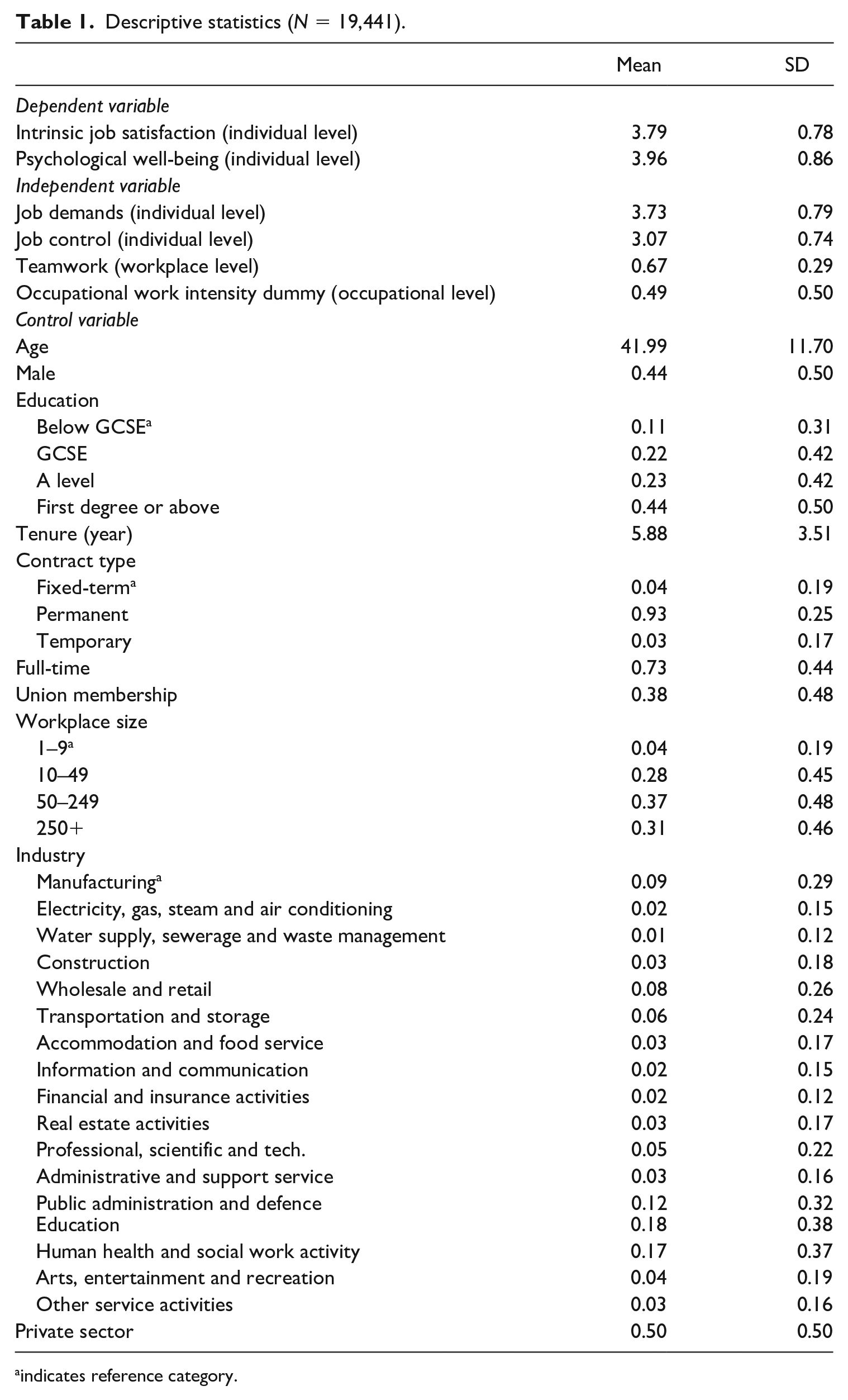
indicates reference category.
Analytical approach
Given that employees are nested within workplaces and occupations simultaneously in our sample, we employ a cross-classified multilevel model which allows two or more units to be specified at a higher level (Goldstein, 1994). We have developed three hypotheses on the relationships between JDC, teamwork, occupation-specific work intensity and employee well-being (see Figure 1). The empirical analysis will start with investigating the interaction effect between job demands and job control on employee well-being at the individual level to test the ‘buffer’ hypothesis (H1). We then introduce teamwork as a moderator to test the cross-level three-way interaction effects between job demands, job control and teamwork on employee well-being (H2). Finally, we test the hypothesis that the moderating effect of teamwork further varies between occupations with different levels of work intensity (H3). There are two possible ways to test H3: estimating (1) a four-way interaction model on the whole sample, or (2) two separate three-way interaction models on high-intensity and low-intensity samples split by the occupation-specific work intensity dummy. However, as four-way interaction models are often very difficult to interpret and vulnerable to a number of methodological concerns such as multicollinearity and overfitting (Gelman et al., 2020; Shieh, 2011), we report our analysis based on separate model estimations.
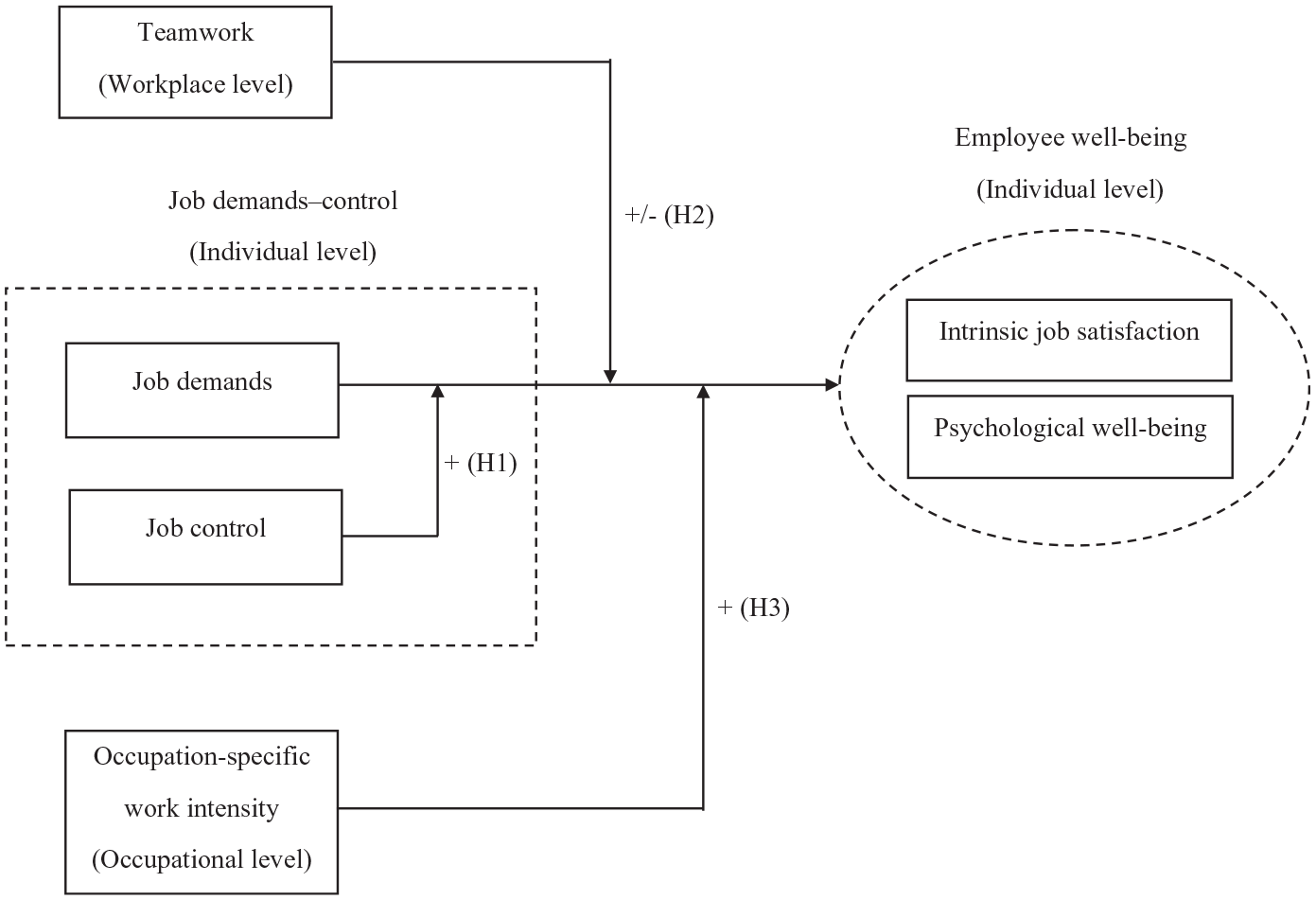
JDC, teamwork, occupation-specific work intensity and employee well-being: Hypotheses.
Results
The hypotheses
We started with the ‘buffer’ hypothesis of the JDC model at the individual level using intrinsic job satisfaction and psychological well-being as dependent variables. We first estimated the direct effects of job demands and job control on employee well-being and then included an interaction term between demands and control in the model. The results in Table 2 suggest that after controlling for a wide range of workplace and individual characteristics, job demands are negatively associated with while job control is positively associated with the two well-being measures, both of which are in line with the literature. More importantly, the interaction effects between job demands and job control on intrinsic job satisfaction and psychological well-being are both positive and significant. This confirms that job control does buffer the negative effect of job demands on employee well-being. Hypothesis 1 is therefore fully supported.
Job demands, control and employee well-being: The ‘buffer’ hypothesis.
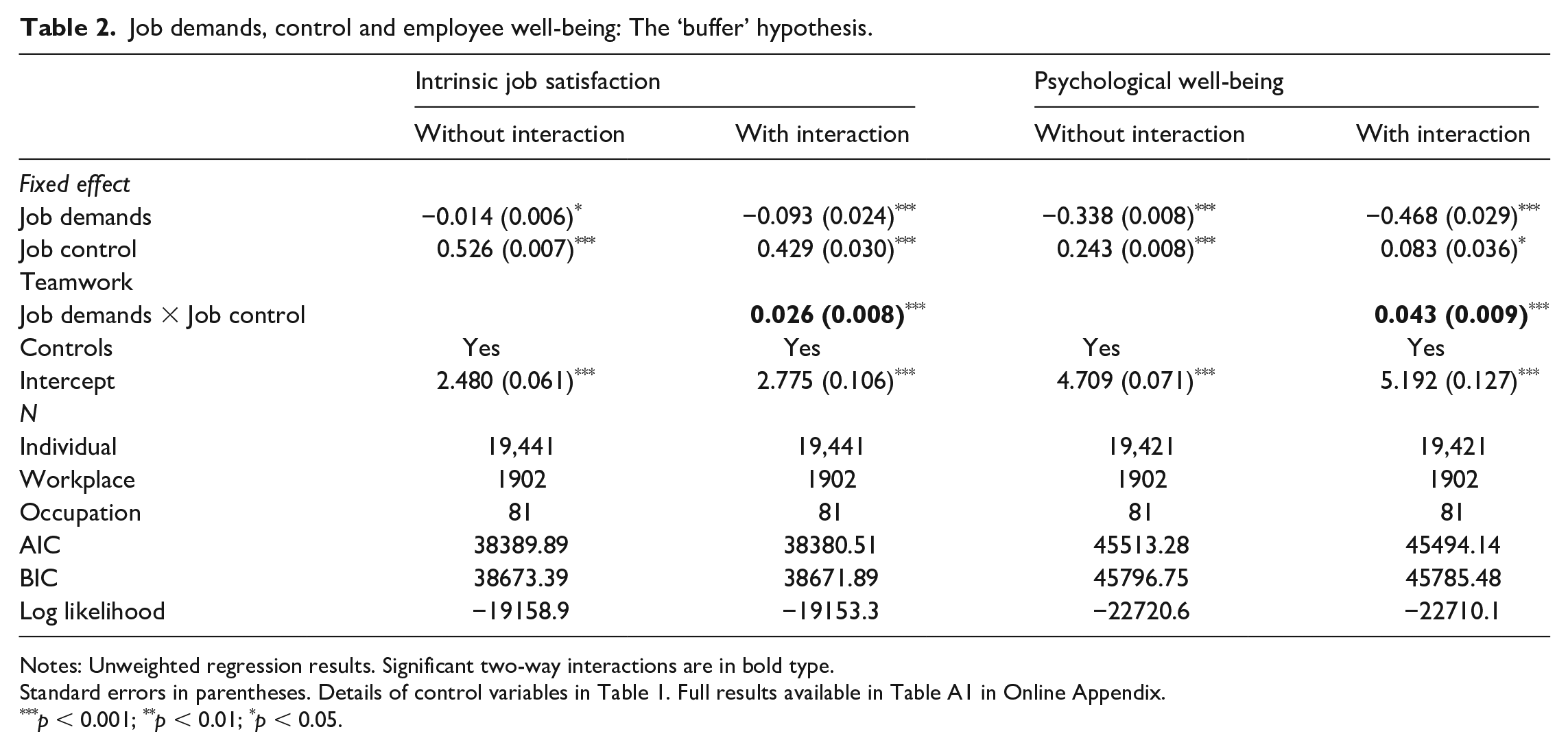
Notes: Unweighted regression results. Significant two-way interactions are in bold type.
Standard errors in parentheses. Details of control variables in Table 1. Full results available in Table A1 in Online Appendix.
p < 0.001; **p < 0.01; *p < 0.05.
Our second hypothesis tested the moderation role of teamwork in the JDC and employee well-being relationship. Grounded in the JDCS and recent teamwork literature, we hypothesized that teamwork moderates the JDC and employee well-being relationship through coordinated team behaviour or work intensification, two possible mechanisms that lead to the opposite moderating effects. In order to test this hypothesis, we first used job demands, job control and teamwork as independent variables and then introduced a three-way interaction term between these variables to the model. As can be seen in Table 3, the three-way interaction term is positively and significantly associated with intrinsic job satisfaction, but not with psychological well-being. Therefore, Hypothesis 2a is partially supported but Hypothesis 2b is not supported.
JDC, teamwork and employee well-being: Teamwork as a moderator.
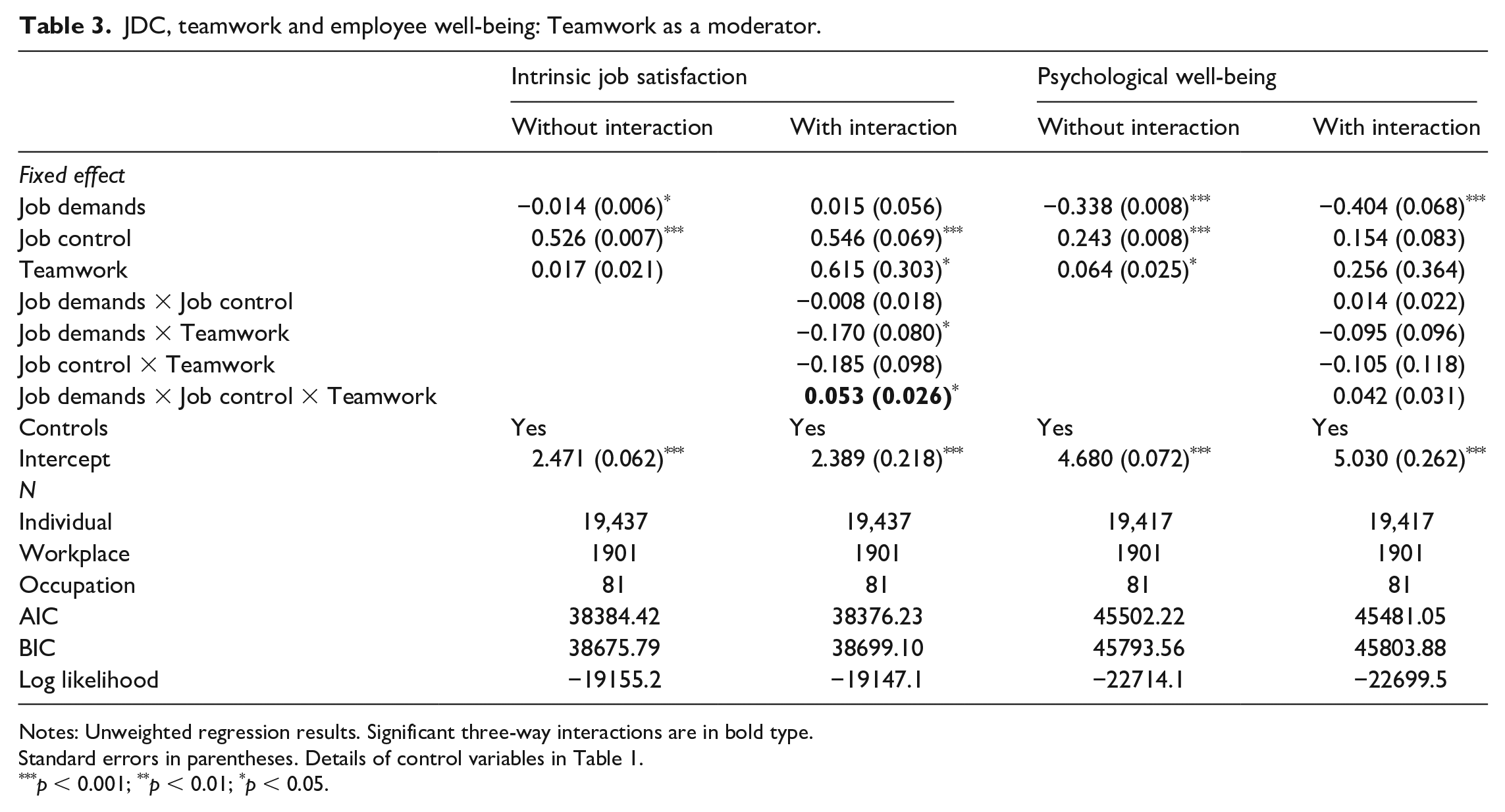
Notes: Unweighted regression results. Significant three-way interactions are in bold type.
Standard errors in parentheses. Details of control variables in Table 1.
p < 0.001; **p < 0.01; *p < 0.05.
Finally, we tested the hypothesis that the moderating effect of teamwork varies across occupations. Specifically, the moderating effect would be stronger for those in occupations with high levels of work intensity. We tested this hypothesis by repeating the three-way interaction model in Hypothesis 2 using two sub-samples with different levels of occupation-specific work intensity. The results in Table 4 show that there are no significant relationships between the three-way interaction term with intrinsic job satisfaction or psychological well-being in the low-intensity sample whereas the two relationships are both significant and positive in the high-intensity sample. This suggests that teamwork moderates the JDC and employee well-being relationship for employees in high-intensity occupations but it does not have any moderating effect in low-intensity occupations. Therefore, Hypothesis 3 is partially supported.
JDC, teamwork and employee well-being: Teamwork as a moderator by occupation-specific work intensity.
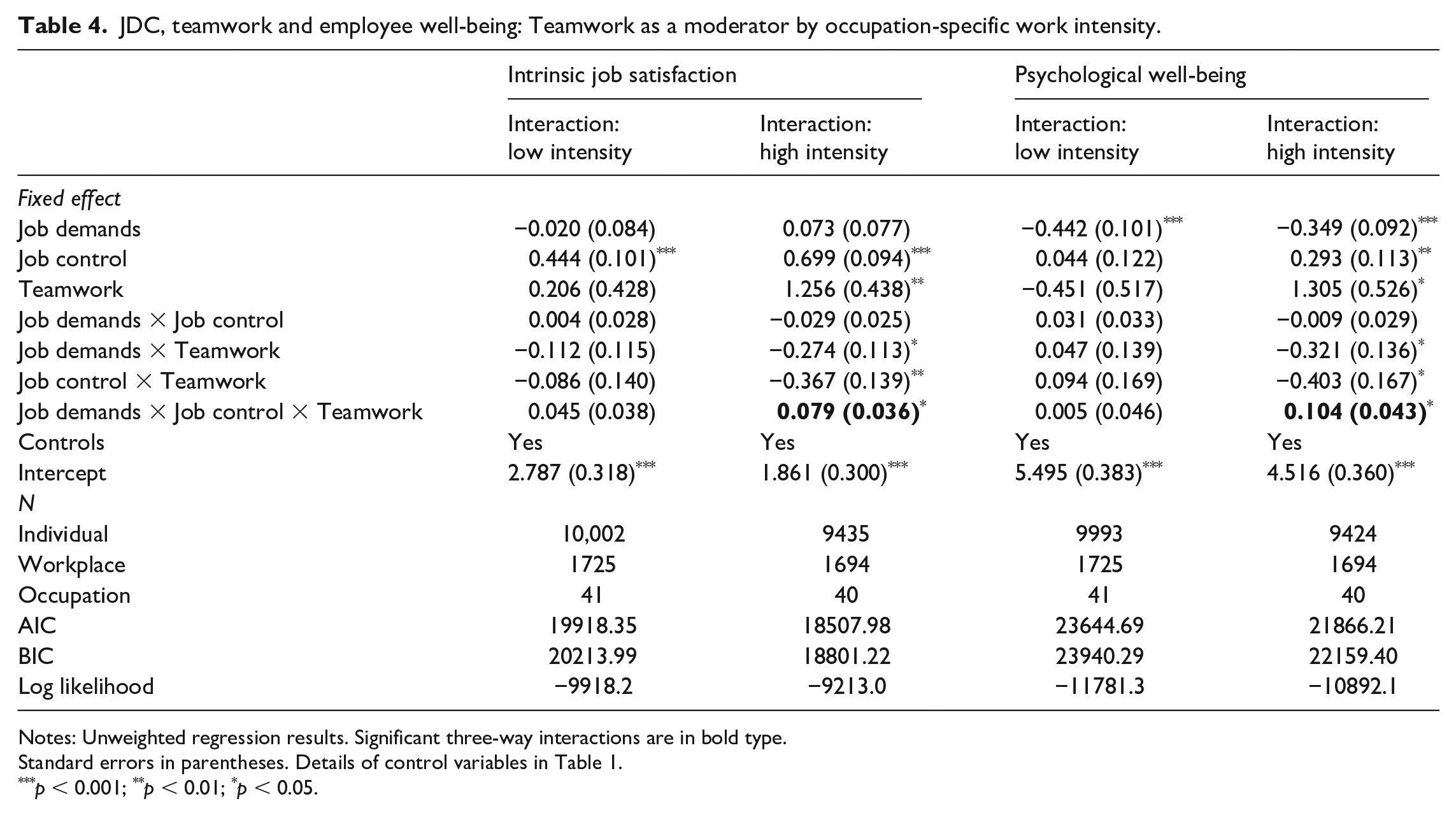
Notes: Unweighted regression results. Significant three-way interactions are in bold type.
Standard errors in parentheses. Details of control variables in Table 1.
p < 0.001; **p < 0.01; *p < 0.05.
Robustness checks
When testing the hypotheses, we used four items to construct intrinsic job satisfaction. Two of them, ‘scope for using initiative’ and ‘amount of influence’, are inherently related to job control (r = 0.49 and 0.55, respectively). It is possible that the observed significant relationship largely results from the way intrinsic job satisfaction was constructed rather than the mechanism proposed in the hypotheses. In order to minimize this potential source of bias, we used the other two items, ‘sense of achievement’ and ‘work itself’, which are less correlated with job control (r = 0.35 and 0.31, respectively), to create an alternative measure. We re-ran all the analyses using this alternative measure of intrinsic job satisfaction and the pattern of the results remained unchanged (see Table A2 in Online Appendix), suggesting the analysis is robust to different measures of intrinsic job satisfaction.
In addition, when we calculated the occupational work intensity scores, we pooled four waves of the SES data from 2001 to 2017 to ensure the sample size of each 3-digit occupational unit group was sufficient. However, it is possible that work intensity changes within occupations over time, which could affect the analysis. In order to ensure our findings are robust, we used the 2012 SES data only (which are closest to the 2011 WERS data) and calculated the occupational work intensity scores at the 2-digit SOC 2000 level (due to the small N). The models with interaction terms are reported in Tables A3.1 and A3.2. As can be seen, the analysis yielded very similar results.
Finally, we included more management practices (besides teamwork) that can potentially affect employee well-being at the workplace in our models to check if they would alter the findings. We followed White and Bryson (2018) and created four indices of management practices including: (1) participation practices, (2) development practices, (3) selection practices and (4) incentives practices. The measures and reliability scores are available in the Online Appendix. The analysis suggests that our findings are robust to the inclusion of these additional management practices. We report the results in Tables A4.1 and A4.2.
Discussion
Summary
This article explored the relationship between job demands–control and employee well-being in the context of teamwork and occupations. The influential JDC model suggests that job demands lead to stress but having control over one’s work can counteract some of the negative effects on employee well-being. This simple idea has informed much of HRM research that aims simultaneously to maximize organizational performance and employee well-being through empowerment management practices such as teamwork to achieve ‘mutual gains’ (Gallie et al., 2012; Ogbonnaya, 2019). There are, however, prominent methodological and theoretical issues which deserve further exploration. The first one is that research has been struggling to find empirical evidence to support the ‘buffer’ hypothesis suggested by the JDC model due to insufficient statistical power and varied measures of job demands and control (Gonzalez-Mulé et al., 2021; Kain and Jex, 2010). Using a cross-classified multilevel model on a large UK nationally representative employer–employee matched sample, we found strong evidence which supports the ‘buffer’ hypothesis proposed by the JDC model. That is, there is a positive and highly significant interaction effect between job demand and control on employee intrinsic job satisfaction and psychological well-being even after controlling for a wide range of individual and organizational characteristics.
The second issue we explored is the role of teamwork as a potential moderator of the JDC and employee well-being relationship. A more theoretically focused explanation to the lack of empirical evidence supporting the ‘buffer’ hypothesis is that there are moderators missing in the model which distorts the picture (Fila et al., 2017). Built upon the JDCS model, we argued that teamwork moderates the relationship between JDC and employee well-being because by pooling employees with different skills and expertise to work towards a common goal, teamwork empowers employees, facilitates knowledge sharing and creates a sense of belongings between individual team members, all of which strengthen the ‘buffering’ effect of job control against the negative impact of job demands on employee well-being. However, the literature on the ‘dark’ side of teamwork points to a second possible moderating mechanism by which teamwork is seen as a means to shift responsibilities and intensify work, resulting in negative employee well-being outcomes. Our analysis showed that teamwork indeed moderates the relationship between JDC and intrinsic job satisfaction whereas the same effect was not observed in psychological well-being.
Finally, we explored how the moderating effect of teamwork varies by occupations. To test this hypothesis, we estimated the moderating effects of teamwork on two sub-samples with high and low occupation-specific work intensity, respectively. The analysis revealed that teamwork does not moderate the JDC and employee well-being relationship for those in low-intensity occupations whereas it does for those in high-intensity occupations, confirming that teamwork is more effective in helping employees handle work stress when the job is demanding and intense. This is the case for both intrinsic job satisfaction and employee psychological well-being.
In addition to testing those hypotheses, our analysis also showed that job demands and job control have different impacts between intrinsic job satisfaction and employee psychological well-being. Although job demands have negative effects on both well-being measures, their impact on intrinsic job satisfaction is less severe. The effect of job control also has a stronger impact on intrinsic job satisfaction than it does on psychological well-being. This seems to suggest intrinsic job satisfaction and psychological well-being capture different dimensions of employee well-being (Guest, 2017). Although the two well-being variables have been extensively studied, there have been, with only a few exceptions (Bakker, 2018; Van Yperen and Hagedoorn, 2003), limited attempts to differentiate the two well-being dimensions and study their implications over behavioural outcomes, which is essential to some of the modern HRM perspectives such as the mutual gains framework.
While job demands and job control have varying impact on intrinsic job satisfaction and psychological well-being, the positive effect of teamwork on employee well-being is relatively consistent for those who work in occupations with high levels of work intensity between the two measures of employee well-being. This finding sheds some new light onto the ongoing debate in the HRM literature about whether the merits of teamwork practices such as improved productivity are at the cost of employee well-being (Haber, 2016; Ogbonnaya, 2019). Although it will likely lead to intensified work, it has been argued that work pressure, when it is managed well, in fact can facilitate employee motivation, which in turn translates into intrinsic satisfaction and a sense of achievement (DeChurch and Mesmer-Magnus, 2010; Gallie et al., 2012). Our analysis confirms that for those working with demanding job tasks, not only can teamwork improve employee well-being, but it can also enhance the buffering effect of job control against the negative impact from job demands on intrinsic satisfaction as well as psychological well-being.
Theoretical contributions
In sum, this study advances our understanding of the JDC model, teamwork and employee well-being in three ways. Firstly, due to the lack of empirical support, the ‘buffer’ hypothesis of the JDC model has been criticized to be a ‘zombie’ theory. By linking employer and employee data from a nationally representative survey, we found strong evidence that job control buffers the negative effect of job demands on employee well-being. Secondly, previous research suggests that the use of teamwork practices is a double-edged sword. While teamwork can help improve productivity, it often comes at the cost of employee well-being. Our analysis showed that the effect of teamwork as a moderator is nuanced. Teamwork can enhance the ‘buffering’ effect of job control against job demands on employee well-being. However, this pattern is only observed for intrinsic job satisfaction. Thirdly, if we take occupations into consideration, the moderating effects of teamwork are positive and significant on both intrinsic job satisfaction and psychological well-being for those in occupations with high work intensity, suggesting that teamwork can play an even more prominent role in maintaining employee well-being in an increasingly demanding working environment.
Limitations
Despite the significant contributions, this study has a few limitations. We have looked at four forms of teamwork but by no means exhausted the list. Also, in order to achieve a better understanding of the general relationship between teamwork and employee well-being, we used a summary index approach to measure the intensity of teamwork practices implemented in the workplace. Although the index approach has been widely used in previous HRM research, it is still possible that individual team practices differ in their relationships with employee well-being and bundling them together will leave some important questions unanswered such as which practices have the most effect on employee well-being (Gallie et al., 2012). Finally, our data are cross-sectional and as such we are not in a position to infer causation. Future research will benefit from longitudinal research designs that explore the dynamic relationship between JDC, teamwork, occupations and employee well-being.
Practical implications
The research findings have important practical implications. Firstly, at the individual level, the fact that job control buffers the negative effect of job demands once again confirms that employee empowerment provides an effective means to help workers deal with stress at work. The ‘buffering’ effect explicitly points to the need to confer job control to those who work under extensive pressure to reduce negative well-being outcomes. Secondly, teamwork practices can be effective means to help employees deal with stress at work. Teamwork not only provides individual employees with decentralized decision-making power, but it also boosts the additional buffering effect against job demands on intrinsic job satisfaction. Finally, our analysis shows that occupations play an important role in the relationships between JDC, teamwork and employee well-being. This is because job demands vary across occupations and those in occupations of high work intensity are more vulnerable to work stress and therefore need extra HRM support such as teamwork and other social support.
Conclusions
This study explored the relationships between job demands–control, occupation-specific job demands, teamwork and employee well-being. Using a cross-classified multilevel framework and measures from three independent and nationally representative data sources, we showed that job control buffers the negative effect of job demands on employee well-being. In addition, teamwork enhances this buffering effect when employees work in a highly demanding environment. The results have laid out a promising foundation for future research which may consider integrating job demands–control, teamwork, occupations and individual employee well-being in a single framework to achieve a more comprehensive understanding of the relationship between the management practices and employee outcomes.
Supplemental Material
sj-pdf-1-eid-10.1177_0143831X221128345 – Supplemental material for In search of the ‘buffering’ effect in the job demands–control model: The role of teamwork HRM practices and occupations
Supplemental material, sj-pdf-1-eid-10.1177_0143831X221128345 for In search of the ‘buffering’ effect in the job demands–control model: The role of teamwork HRM practices and occupations by Min Zou, Ying Zhou and Mark Williams in Economic and Industrial Democracy
Footnotes
Acknowledgements
The authors would like to thank helpful comments from the Editor and two anonymous reviewers.
Declaration of conflicting interests
The authors declared no potential conflicts of interest with respect to the research, authorship, and/or publication of this article.
Funding
This study was a re-analysis of data that are publicly available from the UK Data Archive at http://doi.org/10.5255/UKDA-SN-7226-7 and  . The authors would like to thank the UKRI/ESRC (refs ES/S008470/1 and ES/S008470/2) for funding this study.
Supplemental material
Supplemental material for this article is available online.
Author biographies
References
Supplementary Material
Please find the following supplemental material available below.
For Open Access articles published under a Creative Commons License, all supplemental material carries the same license as the article it is associated with.
For non-Open Access articles published, all supplemental material carries a non-exclusive license, and permission requests for re-use of supplemental material or any part of supplemental material shall be sent directly to the copyright owner as specified in the copyright notice associated with the article.
