




Abstract
This article presents the findings of a case study that aimed to understand the specific leadership styles that are valued by women and men lay representatives in the Public and Commercial Services Union (PCS) and to determine the gendered implications for increasing women’s leadership and representation in trade unions. Survey responses from PCS lay representatives (reps) show the majority of women and men agreed that the leadership style they value, and that makes a good union leader, is post-heroic (communal) leadership. This approach is associated with leadership characteristics such as being helpful, sensitive and kind and are generally practised by women. This contrasts with male union leaders who are associated with a traditional, heroic (agentic) leadership style characterised by confidence, self-reliance and decisiveness. Although some differences exist that highlight gender issues, both women and men lay reps have positive attitudes towards increasing women’s representation and participation in union leadership.
Keywords
Introduction
Several interrelated themes span the critical discourses of unions, gender and leadership. These include the historical subordination of women in trade unions, gender stereotyping and the prevalence of male leadership styles practised by union leaders (Berg et al., 2012; Briskin, 2012; Kirton and Healy, 2012; Ledwith, 2012). Colgan and Ledwith (2000: 244) note that, ‘within trade unions women have been systematically excluded from mainstream power structures through the gender politics of closure. Thus, women are outsiders even within their own unions.’ Similar concerns are raised by Kirton and Healy (2008), who question how women who are underrepresented within leadership roles can influence decision making within purported representative democracies such as trade unions. It is within this context that an examination of these issues is timely. Drawing on the literature and empirical research this article seeks to contribute to the leadership and gender debate in unions by identifying the leadership styles that are valued by PCS lay representatives in order to help determine the gendered implications for increasing women’s leadership and representation in trade unions.
Initially it is important to clarify what union proportionality and representation are. Gender proportionality in union structures exists where females and males are represented in the same proportion as the membership (Kirton, 2015: 505). Whereas gender democracy considered within the context of Young’s (2000: 16) ‘deliberative democracy’ model is more inclusive of marginalised groups where actors:
. . . engage with each other, thereby promoting cooperation, solving collective problems and furthering justice via open discussion, and dialogue between competing parties in order to lead to agreed-upon policies. (Kirton and Healy, 2013: 48)
Feminists’ scholars view this approach as a way to reduce the gender democracy deficit found in unions (Briskin, 2012; Cockburn, 1995; Kirton and Healy, 2013). Various studies have examined the continued exclusion of women from leadership roles due to the leadership style practised in unions (Kirton, 2015; McEldowney et al., 2009). Therefore, if this a major barrier to women accessing leadership roles this needs to be a key focus of union activity as a means of promoting gender equality.
Briefly, the background to this research is that the Public and Commercial Services Union (PCS) received a grant from the Union Modernisation Fund to identify measures to improve gender proportionality within leadership roles across the union and at all levels. The authors examined different initiatives; however, this article presents the findings from an online survey administered in 2013 to PCS women and men lay reps to establish their views of the leadership attributes they value and that are required of a good union leader and the factors that will encourage women into leadership.
To clarify, lay reps (whether elected or appointed by the union) do not receive any remuneration for these roles and are either local or branch reps, although a few are members of national committees (ACAS, 2009: 4). Lay reps were chosen for this study as they have experience of leadership roles in PCS and are responsible for representing their members.
Three research questions were developed to explore the issues. First, what leadership attributes do PCS lay reps value and believe are required to be a good union leader? Second, are there differences between what women and men lay reps believe makes a good leader? Third, are there differences between women and men lay reps’ attitudes towards representative democracy and how can women be better represented and participate in leadership structures?
The article initially presents a literature review exploring the wider leadership discourses, the specific context of union leadership, gender proportionality and representative democracy. This is followed by a brief overview of the history and structure of the PCS, a large United Kingdom union. The research methods are discussed and the findings from an online survey to PCS lay reps presented. The discussion and conclusion consider the challenges and benefits of different leadership styles that may encourage women into leadership roles and increase their representation.
Leadership and gender
There is a plethora of leadership descriptions, but little consensus on an agreed definition (Northouse, 2018). Consequently, defining leadership is far from straightforward and there are different interpretations of what constitutes ‘good leadership’, but it tends to be described in terms of attributes or characteristics (Berg et al., 2012; Carroll et al., 2019).
Contemporary leadership discourses are mainly constructed around the heroic and post-heroic debate and associated with certain attributes that have gender connotations. Heroic leadership is described as transactional, autocratic and task based (agentic, male), an approach that advocates a single charismatic, authoritarian leader (Carroll et al., 2019; Ford, 2010). Whereas, post-heroic leadership is regarded as a set of practices with the leader using empowerment, delegation, facilitation and an interpersonal (communal) style (Fletcher, 2004; Oshagbemi and Gill, 2003).
Berg et al. (2012: 404 with reference to Fletcher, 2004) contend that post-heroic leadership is based on a logic of effectiveness ‘deeply rooted in feminine-linked images and wisdom about how to “grow people” in the domestic sphere’ while ‘heroic’ leadership theory has a logic of effectiveness that is deeply rooted in masculine-linked images and wisdom about how to ‘produce things’ in the work sphere of life. Consequently, when women use post-heroic leadership (communal and caring style) it is often taken for granted and is therefore ‘invisible’ and expected. Conversely, when men practise post-heroic leadership it is recognised and commended (Fletcher, 2004: 655). The persistence of these beliefs about what leadership is, premised on gender roles and power, means that post-heroic leadership can be, ‘a simple reconstitution of an old model with new language’ (Fletcher, 2004: 658). Therefore, it may be a mistake to assume that post-heroic forms of leadership are less dominated by forms of masculinity (Berg et al., 2012: 404). This presents obvious barriers for women union lay reps as they occupy roles that have been predominantly performed by men (Kirton and Healy, 2012).
The extent to which post-heroic leadership will address issues such as gender and stereotyping is debateable as critics highlight several paradoxes. Post-heroic leaders are often presented as gender and power neutral, when in fact the opposite applies (Fletcher, 2004: 648). Tourish (2013) considers this issue in terms of what he calls the ‘dark side of transformational leadership’ and argues that in practice it may create authoritarian organisations (as opposed to democratic) that are marked by cultures of conformity, in which followers feel they have little power to resist or disagree with the leader, irrespective of their actions.
Gender differences are also highlighted in the heroic and post-heroic literature resulting in what Berg et al. (2012: 404) describes as, ‘a binary conception of leadership, matching a masculine/feminine dualism’. Hence, McEldowney et al. (2009: 25) note that, ‘the male dominated leadership characteristics or traits make up the ascribed model for leadership, while the caring, nurturing, and relationship-building characteristics attributed to women are not seen as characteristics that had any bearing on one’s leadership ability’. This view reasserts the binary gender divide and reinforces stereotypes of what a leader is. An alternative perspective is provided by Simon and Hoyt (2018: 407), who comment on a meta-analysis conducted by Eagly and Johnson (1990) and Van Engen and Willemsen (2004) and conclude that, contrary to stereotypic expectations, ‘women were not found to lead in a more interpersonally oriented and less task oriented manner than men’.
Another perspective that influences leadership discourses is that expectations of a leader can be influenced by beliefs about the attributes of women and men and what constitutes their roles (Bellou, 2011: 2821; Eagly and Karau, 2002: 573; Heilman, 2001: 658). Arguably, this is reinforced by gender stereotyping and societal expectations that, ‘women take care and men take charge’ (Prime et al., 2009: 30). Bryant-Anderson and Roby (2012: 274) remark that, ‘compared to men, women’s leadership is described as organised around an orientation to care and help’. Thus, when comparing leadership styles there can be a focus on the supposed differences between women and men (Bellou, 2011). As discussed, women are stereotyped as possessing communal (post-heroic) leadership characteristics such as being helpful, sensitive, empathetic, unselfish, warm and kind, while men display agentic behaviours associated with confidence, self-reliance, forcefulness, dominance and decisiveness (Heilman, 2001; Simon and Hoyt, 2018: 403). The agentic characteristics used to describe men are generally those associated with what is perceived to be effective heroic leadership and necessary for a successful leader (Hoyt and Burnette, 2013: 1307). This implies that for women to succeed in leadership roles they must exhibit heroic (agentic) leadership styles, while also demonstrating the post-heroic characteristics (communal) expected of them, namely the caring aspect (Briskin, 2011).
A further argument suggests women’s leadership style may differ from men’s not because of any biological imperative related to their gender, but partly due to the historical subordination of women. Kirton and Healy (2012: 981) note that women are often seen to ‘choose participative management styles and to be willing to share available resources owing to their lack of social power rather than owing to essential (biological or psychological) characteristics’. They question the style required to be a union leader and conclude that to fit in, ‘some women adopt male agentic characteristics’ (Kirton and Healy, 2012: 981). This can create a ‘double bind’ situation where highly communal women leaders are seen as vulnerable and not considered authoritative enough, while highly agentic women are criticised for lacking ‘communal skills’, not caring and are penalised (Carli and Eagly, 2011: 108).
Kirton et al. (2010: 42) found that the attributes commonly identified as needed for union leaders are, ‘being collaborative, a willingness to listen to others, recognition of their own weaknesses, being prepared to be wrong and open to changing their mind’. In practice, these leadership attributes are not always apparent. A cross-generational study of women chief executive officers (CEOs) examining why so few are female found that stereotyping of gender roles and unconscious bias continue (Blair-Loy, 2001). Women are expected to fulfil caring and domestic roles, described by Blair-Loy (2001) as ‘Family devotion schema’, whilst at the same time undertaking a CEO role.
Sandberg (2013) offers an alternative perspective and suggests that internal and external barriers to leadership roles result in gender inequity for women. The phrase ‘lean-in’, coined by Sandberg (2013), describes women who have not ‘lean(ed)-in’ to their careers as much as men have, and as a consequence of non-engagement (leaning out), isolation and systematic bias continue to be a barrier for women accessing leadership roles. Critics of this stance suggest that it is more complex than Sandberg’s (2013) proposition and that gender stereotyping continues to be a barrier and ‘lean-in’ lacks empirical evidence (Arnold and Loughlin, 2019: 94; Chrobot-Mason et al., 2019).
A problem with the literature identified by Acker (1990: 140) is the differing discourses, and labour process theory has been criticised for ignoring power, control and feminist studies. Similarly, Wajcman (2000: 184) argues that power-based gender relations and debates have been defined as ‘outside the scope of the field of industrial relations’ and therefore literature espouses a normative ideology in which the standard worker is considered male, and women work to supplement the family income. Furthermore, ‘management, trade unions and the state are institutions who all contribute to the gendering process’ (Wacjman, 2000: 196). More recent evidence indicates that this still remains an issue (see Cooper, 2020; Kirton, 2017; Kirton and Healy, 2013: 42).
Representative democracy and union leadership
Women constitute around half of the United Kingdom workforce, with a disproportionate number in part-time jobs compared to men (Office for National Statistics, 2018). In the public sector approximately 65% of the workforce is female, while in the Civil Service women account for nearly 54% (Office for National Statistics, 2018). For over a decade women’s trade union membership has been higher than men’s (Certification Office, 2018), yet women occupy fewer leadership roles (Ledwith, 2012). Trade Union Congress Equality Audits (TUC, 2014, 2018) found that women, relative to the proportion of male membership, remain underrepresented in shop stewards, branch officers and the National Executive Committee (NEC) roles, but overrepresented in union learning and equality roles.
In 2018 the TUC (2018: 9) reported that 19 out of the 55 members of the TUC General Council were women and of the 51 trade unions surveyed only 15 general secretaries were female. In the 10 largest unions, women’s representation on the NEC increased from 35% in 2000 to 40% in 2012, while the number of full-time paid national officials grew from 22% in 2000 to 40% in 2012 (Kirton, 2015).
Despite the predominance of female membership and unions’ attempts to increase both gender proportionality and representative democracy, the male domination of leadership roles continues (Kirton, 2015). The criticism levelled is that unions have, ‘typically been biased in the composition of their officials and activists towards relatively high-status, male, native-born, full-time employees’ (Colgan and Ledwith, 2002: 169 with reference to Hyman, 1994). From this perspective, unions continue to be described as ‘male, pale and stale’, with women, especially black and minority ethnic women, excluded and underrepresented (Kirton and Healy, 2012: 979). Critics of this situation argue that in the current era of feminised membership, a focus on actions that ensure women’s equality and gender democracy is vital for unions (Kirton, 2017).
Historical debates of women’s exclusion from union leadership roles mirror some of the heroic and post-heroic discourses and highlight their lack of social power and the patriarchal practices that marginalise women and limit their access to leadership roles (Rose, 1988; Tomlinson, 2005: 405). Colgan and Ledwith (2002: 169) refer to Michels’ (1911) ‘iron law of oligarchy’ in which leaders acquire power and influence and use it to try to protect their privileged position, forming in-groups. These can be formed around a shared social identity (e.g. gender, race, religion or political persuasion), with in-groups using their power and influence to stereotype both out-groups and solutions as problems. The development of a masculine culture and heroic leadership styles further impedes women accessing union roles (Colgan and Ledwith, 2000: 243). Therefore, to ensure representative democracy and extend women’s participation at all levels it is vital that unions challenge the power status quo that reinforces male dominance in union leadership positions (Healy and Kirton, 2013). Opinions vary as how to achieve this.
Pitkin (1969) examined the political arena and identified a crucial dividing line and a distinction between different forms of representation. In order to ensure women are represented she differentiated between descriptive and substantive representation (Pitkin, 1969). Descriptive representation is women ‘standing for women’ and is conceived as an enabling condition for substantive representation in which women are ‘acting for women’ (Celis and Childs, 2008: 420). Critics argue that descriptive representation does not necessarily guarantee that women will represent/act on behalf of women any more than men (Phillips, 1998, cited in Celis and Childs, 2008). There is some evidence that once women are elected or appointed to union leadership positions they do press for policies and practices to promote women’s participation and inclusion (Kirton and Healy, 1999).
Initiatives to redress women’s inequality inside trade unions have taken a number of forms. Measures to promote substantive representation of women in unions and improve representative democracy include gender equality strategies such as reserved women’s seats, women only networks, equality committees, women only conferences and courses. A study of unions in the UK and New Zealand found that, ‘women’s structures positively contribute to union revival strategies’ and lead to increased levels of union members’ engagement at work (Parker and Douglas, 2010: 439–440). However, there is some scepticism that these measures are only effective if women leaders see gender as an issue and identify themselves as an oppressed social group (Cockburn, 1995; Kirton and Healy, 2013: 52).
Both nationally and internationally, efforts directed at using gender equality strategies to increase women’s participation and representation in union leadership have resulted in different outcomes (Page, 2011). A study of 10 UK unions examining policies to increase women’s presence in union activities found that equality initiatives, such as women’s committees and reserved seats for women on the NEC, do not increase their participation or level of representation in union leadership roles (Kirton, 2015). Similarly, international studies show that regardless of attempts in Belgium to expand women’s representation by introducing mainstream initiatives such as Charters to promote gender equality, men still dominate in senior union leadership roles (Ravesloot, 2013). A comparable situation exists in Denmark’s Confederation of Trade Unions, where half of the members are women, and despite having reserved seats are still underrepresented in all positions as rank and file members perceive union leadership as a ‘man’s role’ (Hansen, 2013). Cooper (2020) sought to understand senior women union leaders’ experiences in Australia of jobs and careers and the impact of gender on union activity. The findings showed that caring commitments and women’s exclusion and marginalisation from key decision making acted as barriers and limited their union leadership careers (Cooper, 2020).
Notwithstanding the problems identified with attempts to increase gender proportionality in unions, there are examples of successful international initiatives. An in-depth study of the German Verd.di union found gender mainstreaming activities such as women’s quotas that prescribe the representation of women in all decision making bodies and delegate elections, according to the proportion of female membership, can achieve better female representation in leadership roles at all levels, as well as revitalise union membership (Kirsch, 2013).
A comparative study by Blaschke (2015) of Austrian and German unions examined female representation on executive councils, federal boards, regional levels, branch levels, and delegates to congress and works councils. The findings showed there is a higher likelihood of a woman being elected as president and vice-president in unions where members are highly qualified, but also noted the overall low levels of female union density in both countries (Blaschke, 2015). A study of female professionals in the French CFDT union (Confédération Française Démocratique du Travail) found that an increase in women’s representation was attributed to having time off from work to undertake union roles (Guillaume and Pochic, 2013). Similarly, women’s participation in leadership roles can also be increased by providing separate development training as this promotes gender awareness and solidarity (Briskin, 2006).
In summary, the literature outlines the broad current leadership heroic and post-heroic discourses linked to debates about women’s participation and representation in trade union leadership structures. Two main literature threads are apparent: one is the gendered traits of union leaders and the other is the lack of women’s representation in union leadership structures. A general absence of women from union leadership roles and the prevalence of heroic (agentic) leadership styles make it important to examine the implications of heroic and post-heroic leadership for both gender proportionality and representative democracy in PCS.
Research methods
As discussed previously, the research was undertaken within the Public and Commercial Services Union. The PCS was formed in 1998 following the merger of the Civil and Public Services Association and the Public Services and Commercial Union and predominantly organises throughout the Civil Service, government agencies and privatised industries. The PCS is the tenth largest union in the UK with 185,785 members (Certification Office, 2018). It is the UK’s largest trade union representing Home Office staff, and those working in its agencies, non-departmental bodies and outsourced contracts (PCS, 2019a). The PCS is ranked joint fifth in the top 10 TUC unions for gender equality initiatives (Kirton, 2015): these include holding national women’s seminars, providing women only training and employing a national women’s officer.
Although PCS women constitute 62% of union membership, female representation in union roles is lower (PCS, 2019b). For example, only 45% of workplace PCS reps are women, 31% of members of the General Executive Council are women reps (divisions by department or company), 32% of annual delegates to conferences are women and 43% of ordinary NEC members are women (PCS, 2019b). In 2019, the senior executive of the PCS comprised of a general secretary and assistant secretary (both male) and four vice-presidents (three women and one man). The elected PCS National Executive Committee (NEC) consists of 17 men and 13 women (PCS, 2019a). Representation of women on the PCS NEC increased from 33% in 2012 to 43% in 2018 (Kirton, 2015; PCS, 2019b). While the number of PCS national paid women officers grew from 22% in 2000 to 47% in 2012 (Kirton, 2015). However, despite discussion by the PCS NEC, currently there are still no women’s reserved seats on the Committee (PCS, 2019b). These statistics outline the challenges for female representation and refute Sandberg’s (2013) ‘lean-in’ approach as PCS women have engaged but lack proportional representation at all levels of union roles.
In terms of the research design, rather than developing and testing hypotheses, an interpretative and exploratory approach was used (Silverman, 2013). The main research instrument employed was an online survey and prior to designing this, a detailed literature review was undertaken to identify key debates around leadership, gender studies, representative democracy and gender proportionality with reference to trade unions. This proved useful for the design of the survey and determining the heroic (agentic) and post-heroic (communal) leadership attributes used to identify the key leadership preferences of lay reps for a good PCS leader.
Due to time constraints and the financial resources available, the most appropriate method for data collection was an online national survey to PCS lay reps who all had access to an office-based computer. Callegaro et al. (2015) outline some of the issues with online surveys. The advantages include the speed of data collection, accessibility to respondents, ease of administration and the anonymity of respondents can potentially result in more truthful answers. Disadvantages can be the practicalities of accessing and completing an online survey and the potential for respondent bias.
The survey questions were developed in consultation with the PCS National Equality Coordinator to ensure each was relevant in a union context and piloted with 20 lay reps not included in the main data collection. Valuable comments and feedback received from respondents in the pilot resulted in some questions being removed and the overall length of the survey reduced.
The survey contained biographical questions that covered items such as gender, age, ethnicity and a list of the main roles lay reps undertake. The next section examined the leadership attributes PCS lay reps value and believe are required to be a good union leader and whether these could be categorised as agentic or communal. As there was no definitive list of heroic (agentic) or post-heroic (communal) leadership characteristics, the literature was reviewed and 18 key attributes identified, nine in each category (Appelbaum et al., 2003; Bellou, 2011; Ford, 2010; Kirton and Healy, 2012). These attributes were then randomly mixed so that it was not apparent which item was agentic or communal and to avoid potential bias. The following statement was included in the survey to assist lay reps in identifying the most important leadership attributes: ‘this section seeks your views on what makes a good leader. When we talk about leaders, we are not just talking about those national PCS leaders, leadership skills are needed at all levels. Please look at the list of attributes and tick the top five attributes you think are required by PCS officials to be a good leader.’ Once the data had been analysed the authors ranked the attributes in terms of the lay reps’ responses.
The final section of the survey examined if there were differences between women and men lay reps’ attitudes towards gender proportionality and representative democracy, using a five-point Likert scale ranging from strongly disagree to strongly agree. It is important to mention that previous studies of leadership have been mainly qualitative with little quantitative comparative analysis of agentic and communal attributes.
In terms of distribution, the union provided a list of all the PCS lay reps who were then emailed a short description of the research, an invitation to participate and a hyperlink to the online survey. Considerable effort was made to ensure that participants had equal access to information and that the survey complied with both European and US benchmarks for webpage design. SurveyMonkey was the data collection tool used. Confidentiality was guaranteed and only the authors received the completed questionnaires and had access to the data, although participants could request a copy of the final report in which findings were anonymised.
The data were analysed using an independent sample t-test. The advantage of using statistical inferences and analysis is that it tests whether there are significant differences between women and men lay reps’ union leadership preferences and their views of representation and proportionality.
Findings
This section presents the biographical information and results for the three research questions cited above. The survey was emailed to lay reps and a total of 507 respondents undertook the survey, of which 41 (8%) were excluded due to missing values, leaving a total of 466 completed questionnaires. As a national survey, all UK regions were well represented in terms of gender, ethnicity, region and government departments. The gender response rates were 51% women (N = 237) and 49% men (N = 229) and is representative as it almost exactly matched the overall distribution by gender of PCS lay reps at the time of the research (PCS, 2015).
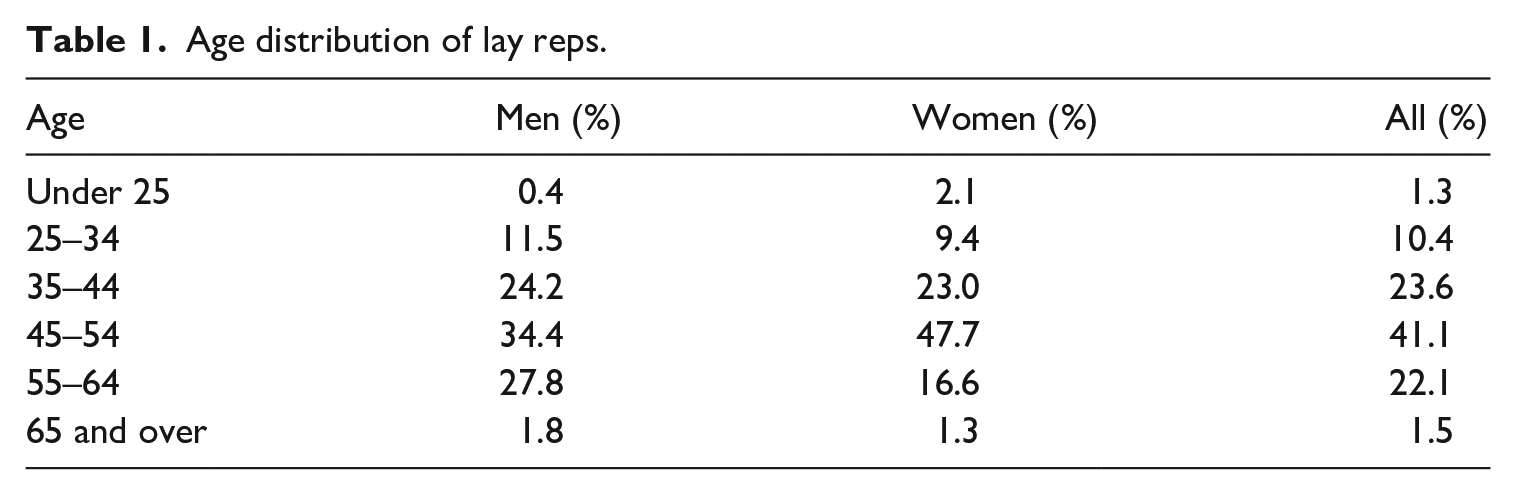
The age distribution of lay reps (Table 1) shows that the majority were aged between 45 and 54 years, with male respondents more evenly distributed than women. The (mean) average age for women was 47 years (SD = 8.90) and for men 48 years (SD = 9.77).
Age distribution of lay reps.
Both groups had been PCS union members for an average of 16 years and lay reps for nine years (Table 2). The largest proportion (38.6%) from both groups had been a PCS lay rep for less than four years. A comparison of the average length of time as a PCS rep found that for women it was 8.1 years (SD = 7.44) and for men 10.6 years (SD = 9.73). Men were both union members and lay reps slightly longer than women.
Number of years as a PCS member and as PCS lay official by gender.
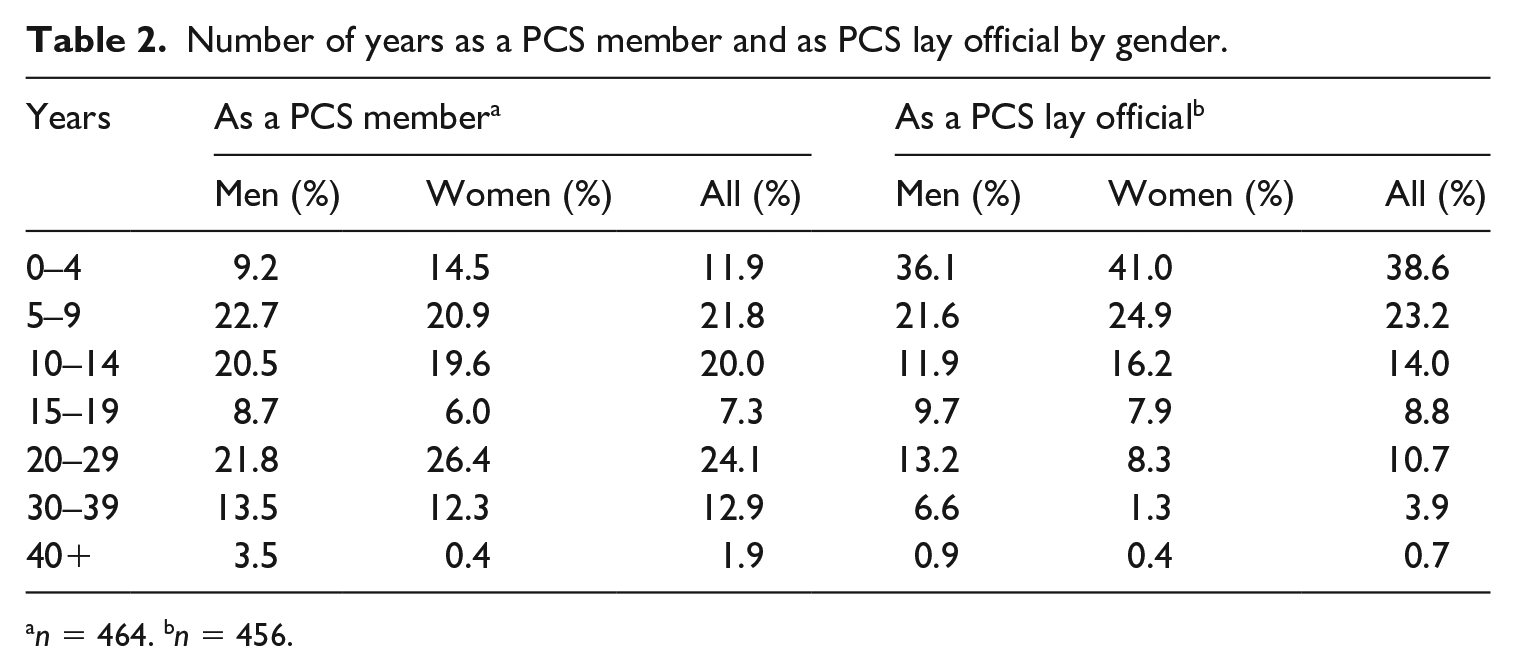
n = 464. bn = 456.
Respondents worked in all 11 PCS target employment sectors, although most were employed in ‘Tax Revenue’ (22%) or ‘Welfare’ (30%). The other nine sectors combined made up less than 50% of responses and covered: Borders (6%), Commercial (5%), Defence (7%), Education (5%), Justice (8%), Transport (3%), Environment (5%), Government (5%) and Other (6%).
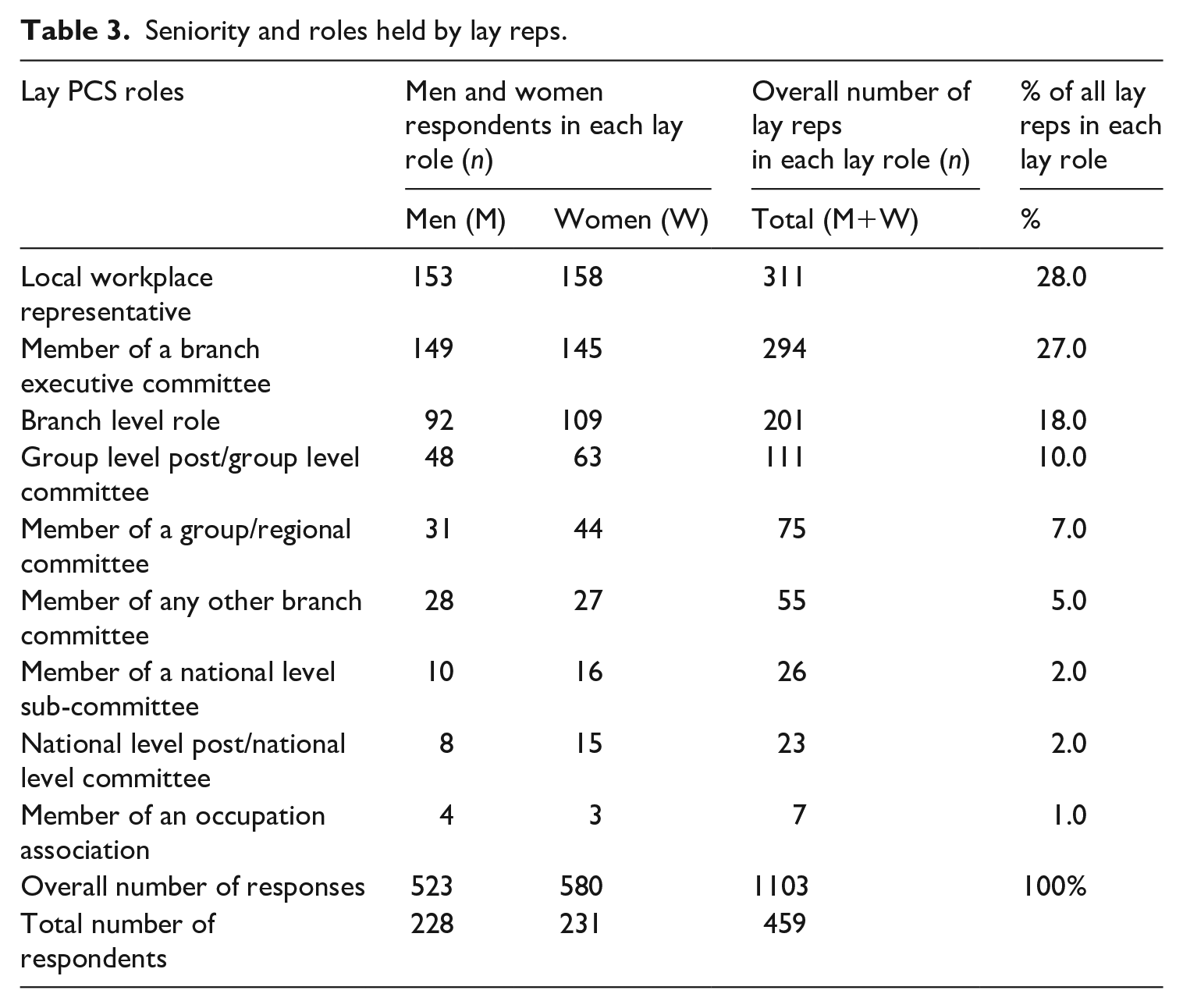
The results for the question about roles (Table 3) showed that 459 respondents (231 women and 228 men) held a total of 1103 PCS lay roles. The largest proportion (28%) were local workplace reps (although some reps also had different roles). Role differences between women and men were relatively small, even at branch executive committee level. The mean average number of roles was 2.4 (2.5 for women, 2.3 for men). Women lay reps held more posts than men, but this was mainly due to a small number of women undertaking multiple roles.
Seniority and roles held by lay reps.
Most respondents worked full-time, although women were more likely to be part-time than men. Seven out of 10 respondents lived with a partner and just over a third had dependent children. Sixty per cent of lay reps had parents who had been either union members or lay reps.
Attributes of a good union leader
The survey aimed to identify what attributes lay reps value and that could increase women’s representation and participation in union leadership roles in PCS. The survey analysed whether these attributes were heroic (agentic) or post-heroic (communal) (Table 4).
Most important attributes required to be a good PCS leader.
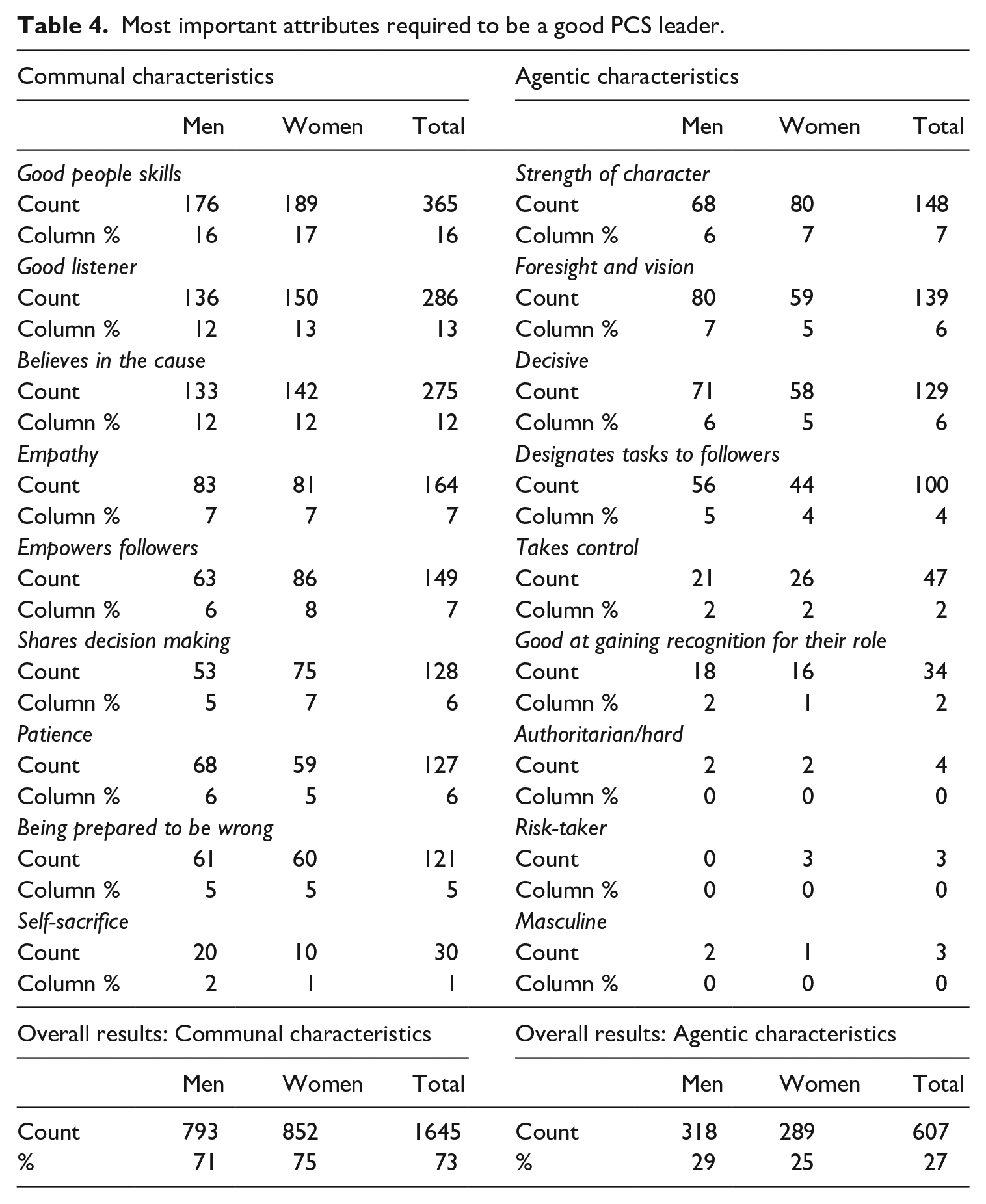
Seventy-three per cent chose communal attributes compared to 27% who selected agentic. The ‘top five attributes’ were communal and associated with post-heroic leadership namely: ‘Good people skills’, ‘Good listener’, ‘Believes in the cause’, ‘Empathy’ and ‘Empowers followers’. The agentic attributes of ‘Strength of character’, ‘Foresight and vision’ and ‘Decisive’ were 6th, 7th and 8th respectively. Communal characteristics were 9th, 10th, 11th and 15th, while agentic were 12th to 14th and also in the lowest three (16th to 18th).
Mean scores were compared (using an independent sample t-test) for each of the 18 communal and agentic leadership attributes (see Table 4) to test if women or men were significantly more likely to identify specific leadership attributes as important, based on their gender. In 14 of these there was no significant difference, suggesting that women and men lay reps value similar attributes in their leaders. However, there was a significant difference for four of the attributes.
On average, women lay reps (M = 0.38, SE = 0.03) were more likely than men (M = 0.29, SE = 0.03) to indicate that ‘empowers followers’ was an attribute required to be a good leader. This difference, –0.09, BCa 95% CI [–0.188, –0.002], was significant, t (446.3) = −2.08, ρ = 0.038. Women lay reps (M = 0.33, SE = 0.03) were also more likely than men (M = 0.24, SE = 0.029) to indicate that ‘shares decision making’ was necessary for a good leader. This difference, –0.09, BCa 95% CI [–0.178, –0.003], was significant, t (445.17) = −2.1, ρ = 0.036.
Men (M = 0.09, SE = 0.019) were more likely than women (M = 0.04, SE = 0.014) to indicate that ‘self-sacrifice’ was a characteristic required to be a good leader. The difference, 0.05, BCa 95% CI [0.004, 0.09], was significant, t (397.08) = 1.97, ρ = 0.049. Overall, men (M = 0.36, SE = 0.032) were more likely than women (M = 0.26, SE = 0.029) to believe that the agentic characteristic ‘foresight and vision’ was required to be a good leader. This difference, 0.1, BCa 95% CI [0.024, 0.183], was significant, t (440.26) = 2.37, ρ = 0.018.
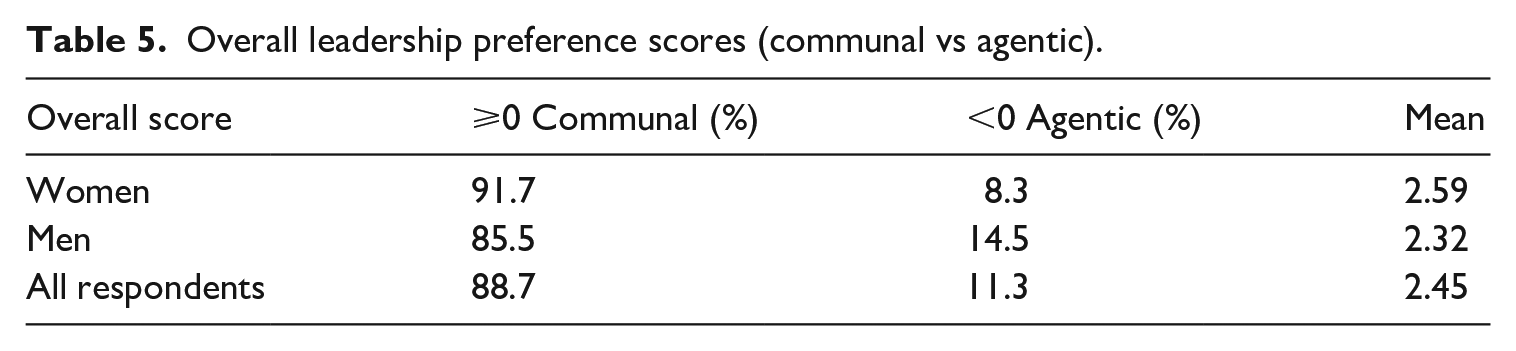
The second research question examined whether there were differences, based on gender, between what women and men lay reps believed makes ‘a good leader’ (communal vs agentic). In order to determine an overall leadership preference, a scoring system was constructed (see Table 5). This was achieved by assigning +1 for each communal attribute ticked by the respondent and −1 for every agentic attribute, these were then added together to give an overall score ranging from +5 to −5. The more positive the score, the higher the respondent valued communal leadership attributes. Conversely, the more negative the score, the more agentic attributes were valued. By comparing the mean scores (and standard deviations) for women (M = 2.59 SE = 0.117) and men (M = 2.32, SE = 0.199), the findings show there was no significant difference in means, –0.27, BCa 95% CI [–0.619, 0.093], t (437.92) = −1.51, ρ = 0.132.
Overall leadership preference scores (communal vs agentic).
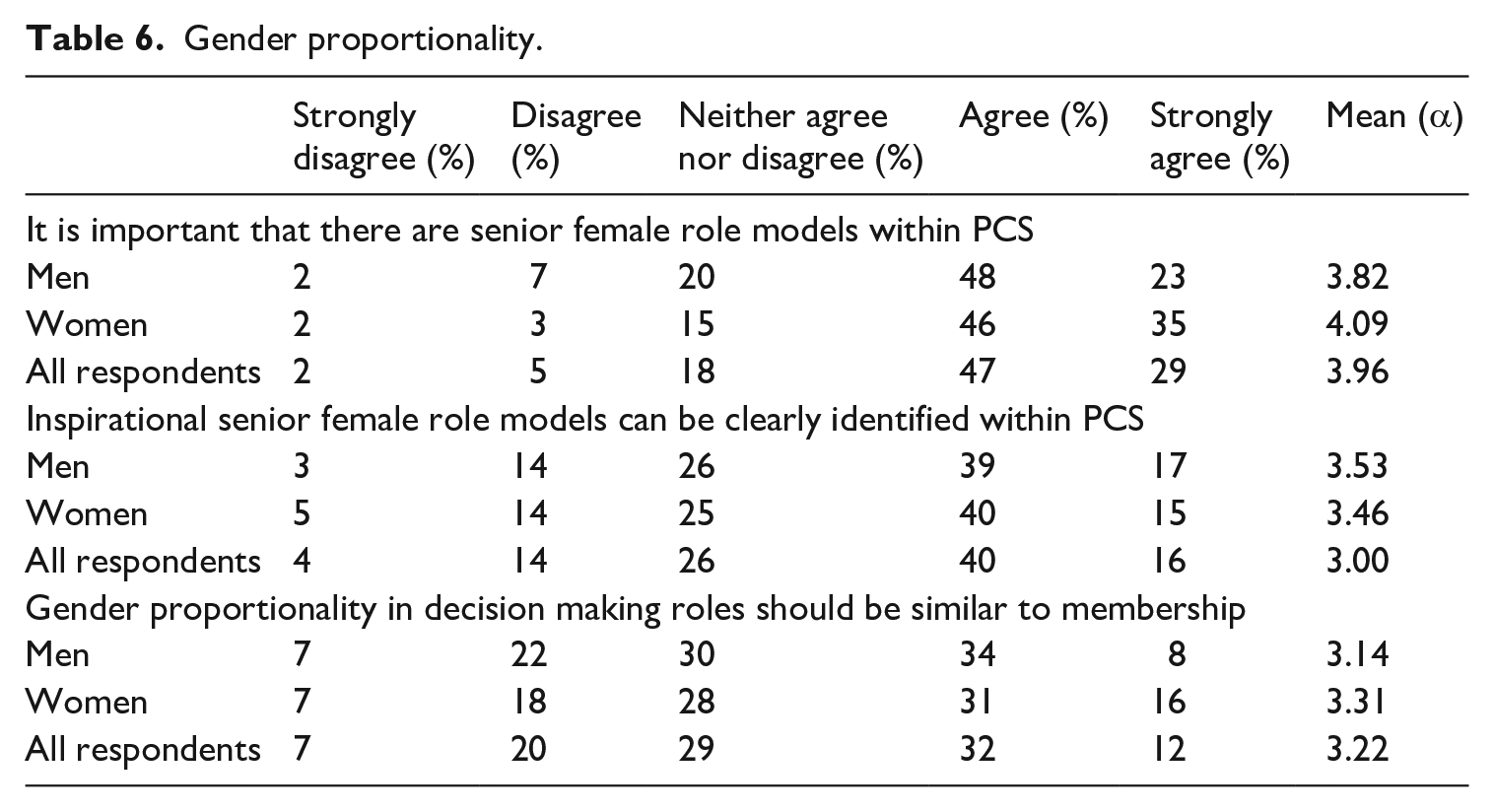
In order to determine if there were any implications for leadership style, the final research questions examined whether there were differences between women and men’s attitudes towards gender proportionality and representative democracy (Tables 6 and 7). Three quarters of all respondents agreed that, ‘it is important that there are senior female role models within PCS’. Women lay reps felt more strongly (M = 4.09, SE = 0.06) about this issue than men (M = 3.82, SE = 0.06). This difference, –0.27, BCa 95% CI [–0.447, –0.079], was significant, t (437) = −3.13, ρ = 0.002. Just over half of all respondents could clearly identify inspirational senior women role models within PCS, although 18% could not and 26% were unsure. This difference was not significant, t (441) = 0.74, ρ = 0.460. Forty-four per cent agreed with the statement ‘Gender proportionality in decision making roles should be similar to membership’, 29% were undecided and 27% disagreed. There was no significant difference, t (441) = −1.65, ρ = 0.1; BCa 95% CI [–0.398, 0.038], between women (M = 3.31, SE = 0.08) and men (M = 3.14, SE = 0.07).
Gender proportionality.
Representative democracy.
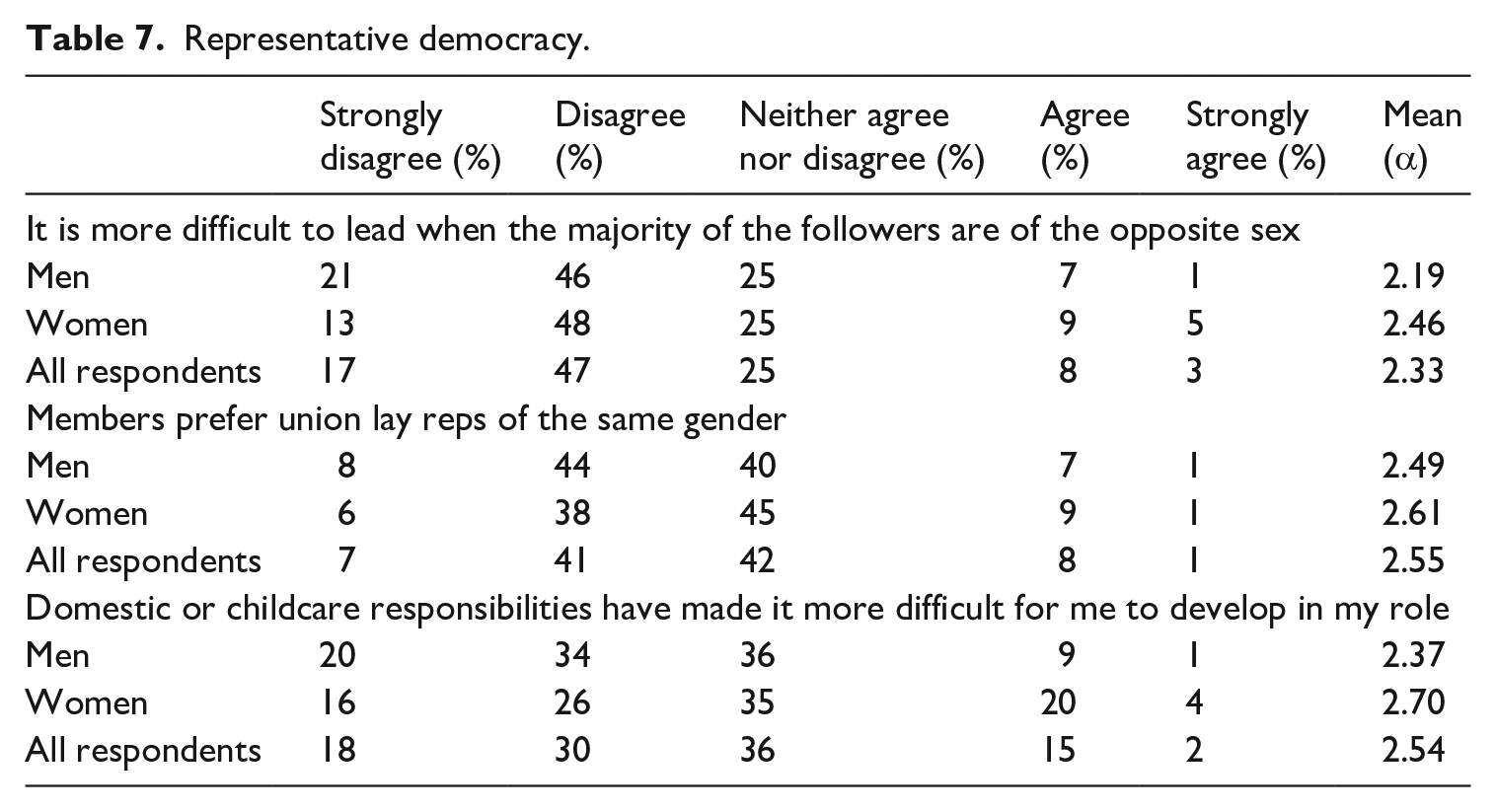
Lay reps’ views of representative democracy (Table 7) reveal that almost two thirds of all respondents disagreed that, ‘It is more difficult to lead when the majority of the followers are of the opposite sex’. However, women were more likely (M = 2.46, SE = 0.07) than men (M = 2.19, SE = 0.06) to find it difficult to lead when the majority of followers were male. This difference, –0.27, BCa 95% CI [–0.451, –0.116], was significant, t (427.27) = −3.081, ρ = 0.002. Only 9% of all respondents agreed that, ‘Members prefer union lay reps of the same gender’. There was no significant difference, t (436) = −1.53, ρ = 0.126; BCa 95% CI [–0.257, 0.035], between women (M = 2.61, SE = 0.05) and men (M = 2.49, SE = 0.05).
The majority of women (42%) disagreed with the statement ‘Domestic or childcare responsibilities have made it more difficult for me to develop in my role’, those in agreement (24%) were significant, particularly when compared to male responses. The mean difference between women (M = 2.70, SE = 0.07) and men (M = 2.37, SE = 0.06) was significant, –0.33, BCa 95% CI [–0.5, –0.129], t (428.75) = −3.32, ρ = 0.001.
Discussion and conclusion
Overall, there is a high degree of consensus between PCS women and men lay reps about the leadership attributes required of union leader and that could encourage women into union leadership roles and increase their representation and participation, but there are also some significant differences. The following discussion revisits the three research questions and considers some of the issues that the PCS union needs to consider for increasing women in leadership positions and the potential wider implications for unions in general.
The first question examines the attributes lay reps value and believe are required to be a good PCS union leader. The findings show that the assumption that a binary division may exist between women and men lay reps, based on gender preference for agentic and communal leadership, is more nuanced. The majority of lay reps (88%) believe that the most important attributes for a leader are communal, such as ‘good people skills’, ‘believes in the cause’, ‘sharing decision making’ and ‘good listener’. These attributes are generally associated with women and post-heroic leadership, contrasting with historical notions that effective leaders are men with agentic leadership skills (Hoyt and Burnette, 2013) and challenging masculine discourses of what constitutes a successful leader (McEldowney et al., 2009). Potentially, if communal leadership is valued and promoted more women in PCS may undertake union leadership roles, fostering a more inclusive representation.
The findings for the second research question indicate there are few differences, based on gender, between women and men PCS lay reps’ views apart from four attributes. ‘Empowers followers’ and ‘shares decision making’ are significantly more important for women lay reps than men and associated with post-heroic, caring leadership attributes (Briskin, 2011). In contrast, for men, ‘self-sacrifice’ and ‘foresight and vision’ are statistically more important to be a good leader. The agentic attributes lay reps selected that were 6th, 7th and 8th are stereotypical male leadership characteristics, suggesting these continue to remain influential factors in determining what makes a good leader (Carroll et al., 2019). Whether these findings reflect socialised expectations of what constitutes a leader is unclear but highlights the problem with attempts to define leadership and separating the discussion from gender (Berg et al., 2012).
Leadership debates based solely on gendered (communal or agentic) traits may be misleading, particularly if the issue is not just solely about gender, but due to the persistent subordination of women and their lack of social power which excludes them from union leadership roles (Colgan and Ledwith, 2000; Kirton and Healy, 2012; Simon and Hoyt, 2018). The findings of this study concur with Kirton and Healy (2012) that the continued use of stereotyped masculine attributes to determine union leadership roles will not encourage women’s participation or increase their representation.
An issue for consideration is that although PCS lay reps express a preference for post-heroic and communal leadership, they may work in environments that champion the heroic style and the view that, ‘women take care and men take charge’ (Prime et al., 2009: 30; Briskin, 2011). It is therefore important to ensure that the leadership attributes promoted by unions are not merely a replication of agentic models. If this proves to be the case, heroic behaviours could persist and women in unions continue to be marginalised from leadership roles (Tourish, 2013). At the same time, the concerns identified with post-heroic leadership cannot be ignored and whether it proves to be more rhetoric than reality remains unclear and requires wider changes across unions to confront gender inequality (Fletcher, 2004).
Responses to the final research question reveal both women and men lay reps are positive about gender proportionality and representative democracy, although some differences are apparent. There is agreement (48%) that members do not prefer lay reps of the same gender, but women can find it difficult to lead when most followers are men. This may resonate with Pitkin’s (1969) argument for descriptive and substantive representation to be applied by the PCS union to ensure that more women are leading women. As noted previously, however, it cannot be assumed that woman will represent women (Celis and Childs, 2008).
Sandberg’s (2013) notion of ‘lean-in’ is important for unions to consider when developing women leaders and ensuring potential barriers are removed. Therefore, in terms of future developments and approaches and based on this study’s findings, PCS may be better targeting resources at developing post-heroic, communal leadership skills in lay officials as a means of fostering gender mainstreaming, improving women’s representation and ensuring women are confident in leading both genders (Briskin, 2011).
A potential paradox is that post-heroic leadership becomes a means by which a gender divide is maintained in unions, but packaged differently (Fletcher, 2004; Heilman, 2001). Thus, women’s communal leadership remains invisible as this is what is expected of women and they continue in union roles they have always historically undertaken. In contrast, males who adopt a communal style are commended and occupy high profile leadership roles (Fletcher, 2004; Ledwith, 2012).
The broader implications for unions of leadership, gender proportionality and representation are complex and illustrate some differences this study identified and our contribution to this debate. The binary male/agentic and female/communal divide is changing in PCS and lay reps’ views highlight that their preference is for a more inclusive style that values women’s communal attributes and not heroic leadership, which is not necessarily the case in other unions or wider society (Hoyt and Burnette, 2013). This suggests that communal/post-heroic leadership could offer an alternative solution to achieving gender equality in unions if clear feminised leadership attributes are promoted and valued.
Arguably, some of the issues identified, such as the double bind women can experience, and the way leaders are differently evaluated based on their gender, mean that the way forward for women in leadership is not without challenges. This also raises broader questions as to why women may have to change their leadership style or adopt a particular approach in order to gain leadership positions. To address this the findings of this study could be used by PCS in a campaign aimed at changing perceptions of leadership and women leaders, rather than prescribing how they should lead.
Currently PCS has a 62% female membership base and therefore addressing gender proportionality has the potential to further boost union membership and redress the imbalance of women in union leadership roles. This requires initiatives that increase women’s proportionality and develop higher profile female union role models (Kirsch, 2013; Kirton, 2015). For example, providing 50% reserved seats for women in PCS on the NEC to increase their proportionality and representation in decision making structures could achieve this as well as championing positive female role models in PCS. The findings have wider implications for leadership and gender as women’s union membership continues to grow and they constitute the main group in some unions. A potential longer term solution to gender inequality is for unions to focus on changing the systems that devalue women or obstruct their advancement.
Limitations with the research are that it examines a large single union in the UK and the views presented are only those of lay reps and it therefore cannot be assumed these reflect the broader membership. Consequently, there is a need to test the research findings with wider PCS members and other unions to establish if there are similarities or differences. Nevertheless, the findings of this study can assist PCS, with its predominately female membership, to approach the challenge of increasing women’s representation in leadership. The fact that women are outsiders even in their own union is a continuing concern for all unions. However, the findings of this study can assist the PCS in understanding from their lay reps’ views the measures that could inform gender equality initiatives and increase women’s representation.
In conclusion, this article contributes to the leadership debate in unions and argues that current leadership and gender discourses are contentious, while the gendered traits of union leaders and lack of women’s representation in union positions is an ongoing problem. Potentially, post-heroic leadership offers a means of increasing women’s representation in unions by recognising and promoting the importance of communal attributes and encouraging women to utilise these in leadership roles. This would, firstly, challenge historical leadership stereotypes as inappropriate for modern, progressive trade unions, and secondly, increase the mobilisation of women in trade unions.
Footnotes
Acknowledgements
The authors would like to thank the Editors and two anonymous reviewers for their invaluable comments on earlier versions of this article. The collaboration of the PCS is gratefully acknowledged. Our thanks are extended to all the survey respondents.
Declaration of conflicting interests
The author(s) declared no potential conflicts of interest with respect to the research, authorship, and/or publication of this article.
Funding
The author(s) disclosed receipt of the following financial support for the research, authorship, and/or publication of this article: This work was supported by the British Academy-Mid Career Fellowship Ref MD/120056.
