




Abstract
Work and family are sources of both satisfaction and conflicting demands. A challenge is to identify individuals at risk for conflict and factors that potentially reduce conflict. This study investigated how gender and socioeconomic status (SES) were associated with work–family interference (WFI) and family–work interference (FWI) and how control at work and at home related to WFI and FWI. Data from 1991–1993 and 1997–1999 of the Whitehall II study of British civil servants, including 3484 (827 women and 2657 men) employees in three SES-levels, were analysed. Women reported a higher risk for WFI and FWI. High SES employees reported higher WFI. Less control at home increased risks for WFI and FWI as did low control at work but only for WFI. This suggests that high SES women are especially at risk for conflict and that aspects from the spheres of both work and home should be considered in further research and practice.
Introduction
Work and family are two social domains of major importance for many working women and men (Butler et al., 2005; Michel et al., 2011). These domains may place high demands on the individual and conflicting demands involve a risk for negative health effects (Amstad et al., 2011), but the multiple roles of work and family may also be a source of well-being and satisfaction (Barnett and Hyde, 2001; McNall et al., 2010). Gender has been a major focus in the research on work and family (Geurts and Demerouti, 2003) but there is still no consensus about if and how the imbalance between work and family differs between women and men. Income and education have frequently been included as control variables in studies about work and family (Leineweber et al., 2012; Voydanoff, 2004), but few studies investigate how employees with different socioeconomic status (SES) could combine work and family (DiRenzo et al., 2011; Schieman et al., 2009).
As work and family can be sources of both satisfaction and of conflicting demands, a major challenge lies in identifying factors that can reduce the potential conflicts between these two life domains. Studies have shown that control at work facilitates the balance between work and family for employees (DiRenzo et al., 2011; Grzywacz and Butler, 2005; Thomas and Ganster, 1995; Voydanoff, 2004). Similarly, but less studied, control at home has been shown to reduce the conflict between the domains of family and work (Lapierre and Allen, 2012). The relation between control at work and control at home and various outcomes can differ depending on gender and SES (Griffin et al., 2003; Grönlund, 2007). However very few studies have investigated whether control at work and at home relate to the possibility to combine work and family in different ways depending on gender (Butler et al., 2005; Voydanoff, 1988) and socioeconomic position (DiRenzo et al., 2011).
The aim of this study was to investigate how gender and SES were associated with work–family interference (WFI) and family–work interference (FWI) and to investigate how control at work and control at home are related to WFI and FWI for women and men with different SES. Data from phase 3 (1991–1993) and phase 5 (1997–1999) of the Whitehall II study of British civil servants were analysed. This included 3484 (827 women and 2657 men) employees in three different employment grades (senior administrative, executive/professional and clerical/support).
Work–family interference and family–work interference: Are there differences depending on gender and SES?
The work–family research has been dominated by the role strain perspective of the work–family interface postulating that responsibilities from separate domains compete for a limited amount of time, physical energy and psychological resources (Greenhaus and Beutell, 1985; Grzywacz and Marks, 2000). Work–family interference has been recognized as consisting of at least two distinct, though related, concepts: work interference with family (WIF) and family interference with work (FIW) (Amstad et al., 2011; Byron, 2005; Frone et al., 1992). The two concepts have, to some extent, been shown to have different antecedents, where work domain variables, such as job stress and schedule flexibility, relate more strongly to WFI than to FWI, and non-work domain variables, such as number of children, marital status and hours spent on housework, relate to both WFI and FWI (Byron, 2005). Most empirical research has focused on the ‘work–family’ dimension (Hammer and Demsky, 2014), and as the measures used in this study explicitly ask about ‘family’, the term ‘family’ is used here although non-working life can include more aspects than just the family. The term ‘interference’ refers to the extent that responsibilities and expectations from one domain interfere with another domain and thereby compete for individuals’ limited amount of time and energy (Schieman et al., 2009). Interference is used interchangeably with ‘conflict’.
Gender has been a major focus in the research about work and family (Geurts and Demerouti, 2003). It has been suggested that there are differences between women and men when it comes to the amount of involvement (Frone et al., 1992), responsibility (Pleck, 1977), psychological importance (Greenhaus and Beutell, 1985) and identity (Wiley, 1991) associated with the two domains. Specifically, family has been suggested as the more important sphere for women and work the more important sphere for men (Greenhaus and Beutell, 1985; Pleck, 1977; Wiley, 1991). The consequences of these suggested differences between women and men when it comes to WFI and FWI remain unclear, but empirical studies have shown that work involvement relates to higher WFI (Michel et al., 2011) and that family involvement relates to higher FWI (Frone et al., 1992). The empirical findings of gender differences in WFI and FWI are inconsistent. A meta-analysis of the antecedents of WFI and FWI found that men reported somewhat higher levels of WFI and women somewhat higher levels of FWI, although the differences between women and men were small (Byron, 2005). However, a Norwegian study of 3313 employees in eight occupational groups showed that women reported more conflict between work and family (in both directions), but also more facilitation (Innstrand et al., 2009b). Studies have also showed higher levels of work–family conflict among women in a representative sample of employees in Sweden (Leineweber et al., 2012) and in a sample of 10,950 employees from 15 European countries (Grönlund and Öun, 2010). Also in a national representative sample of employed adults in the US, women reported more work–family conflict (Voydanoff, 2004). This was also the case in a sample of 12,017 civil servants in Brazil (Härter Griep et al., 2016).
Considering that the theoretical arguments of how gender relates to WFI and FWI are vague and with empirical findings being inconsistent, we hypothesize that women and men do differ in levels of WFI and FWI, but are unable to predict in which direction.
Hypothesis 1a: There is a gender difference in work–family interference (WFI).
Hypothesis 1b: There is a gender difference in family–work interference (FWI).
Employees with higher SES often have more favourable working conditions with more resources such as authority, flexibility, control over the work situation, less non-routine work and better pay than employees with lower SES. These resources have been suggested to facilitate the possibility to combine work and family for employees with higher SES (Schieman et al., 2006). However, employees in higher socioeconomic positions also have more responsibility, more complex work tasks, higher demands, longer working hours and a higher level of job involvement than employees with lower SES (Schieman et al., 2006). Schieman et al. (2006) denoted the demanding situation that characterizes the work for employees with higher SES as the ‘stress of higher status’ and found that higher status employees reported higher levels of conflict between work and family than employees with lower SES. The advantages in resources for higher status employees thus failed to counterbalance the demands when it came to the possibility to combine work and family. That employees with higher SES are more exposed to WFI has also been reported in other studies (DiRenzo et al., 2011; Öun, 2012) and was supported by meta-analytic findings showing that a higher income was related to more WFI (Byron, 2005). Also higher education has been positively associated with more work–family conflict (Härter Griep et al., 2016; Leineweber et al., 2012; Voydanoff, 2004).
When it comes to the degree that family interferes with work (FWI), differences depending on SES are unclear. It can be argued that employees with higher SES have chosen work as their main domain and would be less engaged and committed to the family domain (cf. Frone et al., 1992; Greenhaus and Beutell, 1985; Wiley, 1991). However, it might not be possible to disregard demands from the family and in combination with a higher burden at work, the total workload from both work and family might result in a perception of higher FWI for employees with a higher socioeconomic position (DiRenzo et al., 2011). Then again, employees with a higher SES often have a higher income and the means to buy services that may reduce their FWI, but some demands from the family might not be possible to deal with by non-family members. This may explain why a higher income was not related to FWI in the meta-analysis by Byron (2005). As the research is limited and the theoretical arguments are unclear, we base our hypotheses on a previous study showing that employees with a high socioeconomic position reported higher FWI (DiRenzo et al., 2011). Thus, we form the following hypotheses:
Hypothesis 2a: Employees with higher SES experience higher WFI.
Hypothesis 2b: Employees with higher SES experience higher FWI.
The way SES relates to WFI and FWI may differ between women and men. Based on the traditional gender-role model, men would fulfil their family identity by being breadwinners while women’s family identity includes fulfilling domestic and family obligations (Wiley, 1991). To hold a high position at work implies the need to devote a lot of time and energy to the job. This might be more difficult for women in high positions to fulfil if they have more family responsibilities than men with the same position. Thus, based on the traditional gender-role model, women with high SES would experience more interference between the domains of work and family than men with the same social status. Similarly, men with low SES would have more difficulties to fulfil their breadwinner role and thereby experience more WFI and FWI than women at the same level. However, Schieman et al. (2006) found support for an egalitarian role balance model, i.e. that women and men with the same SES showed equal levels of WFI in a representative sample from Canada. On the contrary, in Sweden, women managers have been found to report significantly more conflict between demands from paid and non-paid work compared to men managers and women and men non-managers (Frankenhaeuser et al., 1989; Nyberg et al., 2015). Grönlund and Öun (2010) analysed data from 10,950 employees in 15 European countries and found that women, that were as committed to their careers as men, experienced more work–family conflict (but also more satisfaction) than did men. In the United Kingdom, white-collar women stood out as a group with high levels of work–family conflict (without a corresponding level of work–family satisfaction) compared with white-collar men and blue-collar women and men (Öun, 2012). Despite some contradictions in previous research, most studies have found that there are differences between women and men within similar positions. Based on this research we form the following hypotheses:
Hypothesis 3a: The increased risk of WFI by higher SES is stronger for women than for men.
Hypothesis 3b: The increased risk of FWI by higher SES is stronger for women than for men.
Control at work
It has been suggested that more control and flexibility at work increase the permeability between work and family. This eases the transition between the two domains, but also adds to the interference (Clark, 2000; Schieman et al., 2006). Most previous studies have shown that schedule flexibility (Byron, 2005; Kelly et al., 2011; Thomas and Ganster, 1995), work control (Grönlund, 2007; Hughes and Parks, 2007; Thomas and Ganster, 1995) and autonomy (DiRenzo et al., 2011; Grzywacz and Butler, 2005; Innstrand et al., 2009a) were associated with less negative interference between work and family. However, some studies have found that autonomy (Schieman et al., 2006), control at work (Lapierre and Allen, 2012) and flexible work arrangements (Higgins et al., 2014) did not reduce negative interference between work and family. Also, schedule control has been found to be associated with more overtime among both women and men (Lott and Chung, 2016). Despite some contradictory findings, we base our hypotheses on that most studies suggest that control at work reduces the conflict between work and family. The relation between control at work and FWI is less studied, but it has been found that the relation between autonomy at work and FWI was weak (Grzywacz and Marks, 2000; Michel et al., 2011) and thus we hypothesize as follows:
Hypothesis 4a: Lower control at work is associated with higher WFI.
Hypothesis 4b: Lower control at work is associated with higher FWI, but this relation is weaker than the relation between control at work and WFI.
There are indications that control at work does not reduce WFI in the same way for all groups of employees. In a US study of 1027 employees, high levels of control at work were shown to increase the negative effect of demands on work–family conflict, but only for women (Voydanoff, 1988). A diary study of 46 non-professional dual-earner couples also found that control increased the negative effects of job demands on work–family conflict and, in that study, this was the case both for women and men (Butler et al., 2005). However, another study found that a high level of control at work buffers the effect of work demands, especially for women (Grönlund, 2007). In a sample of 10,608 participants from 21 countries, higher levels of control over work schedules were found to be linked to less work–family conflict especially for women (Lyness et al., 2012). Similarly, it has been suggested that flexible work arrangements are particularly beneficial for women experiencing work–family conflict (Weeden, 2005). Yet another study found that autonomy at work reduced WFI more for employees with higher social status than for employees with lower social status (DiRenzo et al., 2011). These studies suggest that the association between control at work and the interference between work and family is complex and that it is worth investigating not only control per se, but how control at work interacts with gender and SES. However, as previous research provides little guidance and theoretical arguments that support the formulation of hypotheses regarding the way control at work would interact with SES and gender we formulated the following explorative research questions:
Explorative research question 1a: Does control at work moderate how gender and SES relate to WFI?
Explorative research question 1b: Does control at work moderate how gender and SES relate to FWI?
Control at home
Control at home may also affect employees’ possibilities to balance work and family, but studies that investigate control at home in relation to work and family interference are scarce. One of the few exceptions is a study by Lapierre and Allen (2012) that included a limited number of participants (205 employees recruited by email to Canadian municipal government managers). This study found that less control at home was associated with more WFI and more FWI (Lapierre and Allen, 2012). Based on this study, we form the following hypotheses:
Hypothesis 5a: Lower control at home is associated with higher WFI.
Hypothesis 5b: Lower control at home is associated with higher FWI.
When control at home and at work were related to anxiety and depression, using Whitehall II data, low control in both domains was negatively related to the outcomes, but the severity of the consequences of low control differed between women and men and for employees with different SES (Griffin et al., 2003). Women with low and middle SES who reported low control in either of the domains had the highest risk for depression and anxiety, but for men it was the group with middle or high SES who were at highest risk for both depression and anxiety if they reported low control at home. Thus, it seems as if control at home may have different effects for women and men with different SES, but as we are not aware of any study that has investigated the interaction between control at home, gender and SES in relation to interference between work and family, we do not hypothesize the direction of these effects, but form the following explorative research questions:
Explorative research question 2a: Does control at home moderate how gender and SES relate to WFI?
Explorative research question 2b: Does control at home moderate how gender and SES relate to FWI?
Method
Participants
All non-industrial civil servants aged 35–55 years who were working in the London offices of 20 departments between 1985 and 1988 were invited to participate in the Whitehall II study. With a response rate of 73% the final cohort consisted of 10,308 participants (3413 women and 6895 men) (Marmot and Brunner, 2005). Although the respondents were mostly white-collar (office) workers, they covered a wide range of grades. Twelve non-industrial civil service grades of employment were grouped into three employment grades: senior administrative, professional/executive and clerical/support (Marmot et al., 1991). Phase 1 (1985–1988) involved a clinical examination and a self-administered questionnaire. In 1989/1990 all of the original study participants were sent a postal questionnaire (phase 2) and all participants were invited to take part in a further screening examination and questionnaires in 1991–1993 (phase 3). Data were then collected at every other phase with postal questionnaires only (phase 4: 1995–1996; phase 6: 2001; phase 8: 2006) or with both questionnaires and screening (phase 5: 1997–1999; phase 7: 2003–2004; phase 9: 2008–2009; phase 11: 2012–2013) (see Marmot and Brunner, 2005). Out of the original cohort, 86% completed the questionnaire at phase 3 (8815 in total; 2758 women and 6057 men). At phase 5 the response rate was 76% (7870 in total; 2397 women and 5473 men). Of the original cohort, about 74% answered both questionnaires at phase 3 and phase 5 (7666 in total; 2327 woman and 5339 men). Of those who had answered the questionnaires at phases 3 and 5, 5002 (1342 women and 3660 men) were still working at phase 5. The present study is based on the 3484 (827 women and 2657 men) working participants who had complete data for the independent variables and background variable at phase 3 (1991–1993) and who had completed the questions of the dependent variables of WFI and FWI at phase 5 (1997–1999), on average five years later. Table 1 shows the characteristics of the participants whose answers were analysed in this study as well as those who were not included in the analyses due to internal attrition (incomplete questionnaires) or external attrition (not participating in phase 3 or phase 5) as well as those who chose the alternative ‘not applicable’ for the WFI and FWI questions at phase 5. Compared with those not included in this study due to attrition, those in the effective sample were more often men, younger, had higher SES, were working full-time, married/cohabiting, had somewhat more children, less caring responsibility for an aged or disabled relative, reported more control at work and lower control at home. However, there were no differences in WFI (χ2 = 0.955; p = .620) or FWI (χ2 = 1.92; p = .166) at phase 5. There were rather few (138 persons) who had answered ‘not applicable’ on the questions about WFI and FWI. This group more often included women, in the low or intermediate grade, somewhat older, working part-time, single/divorced/widowed, had no children, lower control at work but with more control at home compared with the effective sample.
Comparing the effective sample with those not included in the present study due to attrition as well as those who had chosen the ‘not applicable’ alternative for the WFI or FWI questions at phase 5.
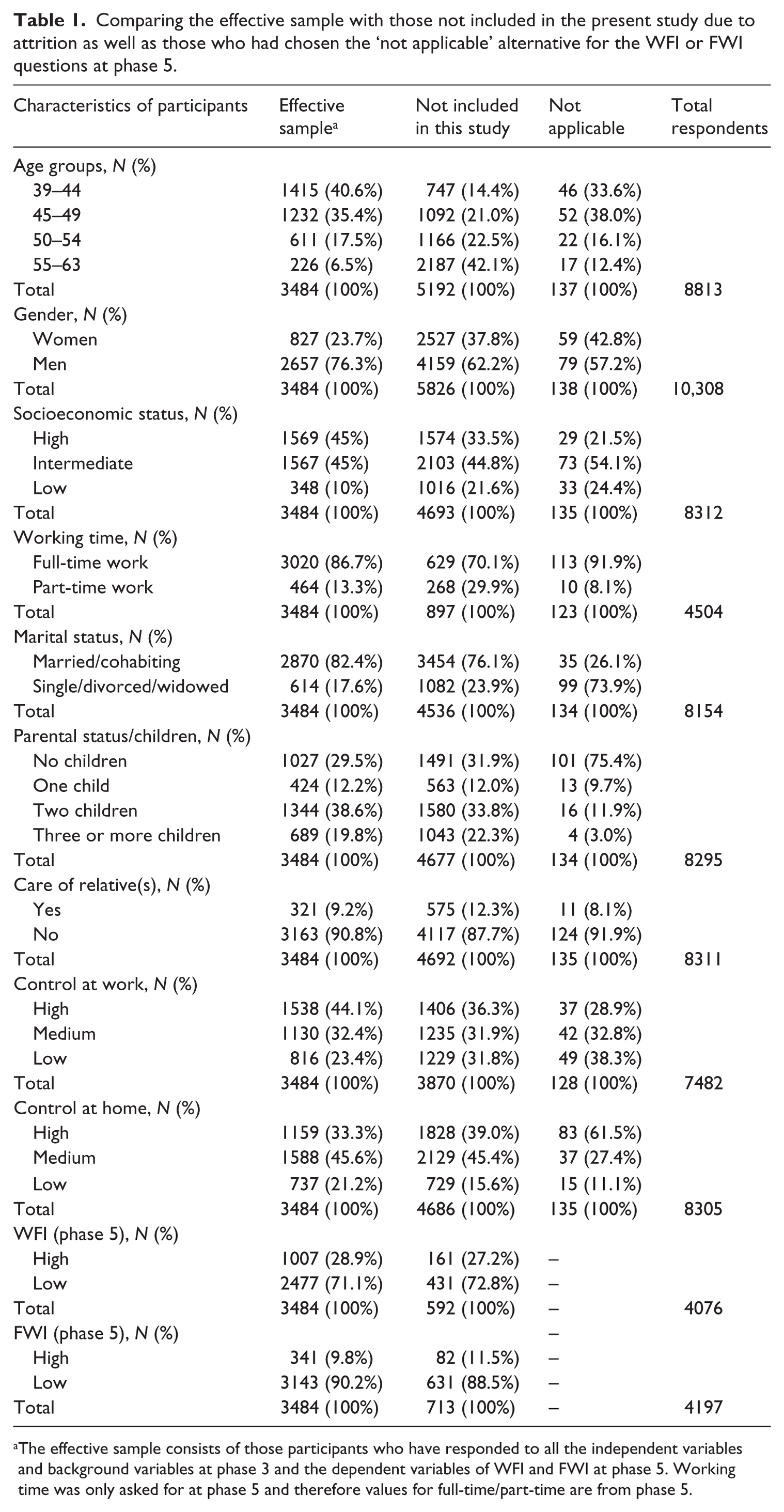
The effective sample consists of those participants who have responded to all the independent variables and background variables at phase 3 and the dependent variables of WFI and FWI at phase 5. Working time was only asked for at phase 5 and therefore values for full-time/part-time are from phase 5.
Ethical approval for the Whitehall II study was obtained from the University College London Medical School committee on the ethics of human research. All study participants gave informed consent to participate.
Measures
Gender and socioeconomic status
Gender was measured by asking the participants to report their biological sex (0 = men; 1 = women). The term gender was used to indicate that differences between women and men can arise from various sources such as culture, experiences and biology. SES was measured at phase 3 (1991–1993) by asking the participants about their civil service grade title. This title was used to group the participants into three different employment grades: senior administrative, professional/executive and clerical/support (Marmot and Brunner, 2005). This measure of employment grade is a comprehensive marker of socioeconomic circumstances as it is related to salary, level of responsibility at work and educational level (Stringhini et al., 2012). Different levels of SES were formed as follows: high SES = senior administrative, intermediate SES = professional/executive, low SES = clerical/support.
Work–family interference (WFI) and family–work interference (FWI)
Work–family interference and family–work interference were measured at phase 5 (1997–1999), each with four items, which were adapted from the National Study of Midlife Development in the US (MIDUS) (Chandola et al., 2004). Both WFI and FWI had the following response options: 1 = not at all, 2 = to some extent, 3 = a great deal and 4 = not applicable. The questions about work–family interference (WFI) started with the sentence ‘To what extent do your job responsibilities interfere with your family life?’ followed by the questions: ‘Your job reduces the amount of time you can spend with the family’; ‘Problems at work make you irritable at home’; ‘Your job involves a lot of travel away from home’; and ‘Your job takes so much energy you don’t feel up to doing things that need attention at home’. The internal consistency coefficient (Cronbach’s alpha) for WFI was .66. The questions about to what extent family interfered with work (FWI) started with the sentence: ‘Do your family life and family responsibilities interfere with your performance in any of the following ways? Would you say:’ followed by the questions: ‘Family matters reduce the time you can devote to your job?’; ‘Family worries or problems distract you from your work?’; ‘Family activities stop you getting the amount of sleep you need to do your job well?’; and ‘Family obligations reduce the time you need to relax or be by yourself?’ The internal consistency coefficient (Cronbach’s alpha) for FWI was .82. Due to skewed distributions, especially among the FWI answers, the WFI and FWI were dichotomized so that those who had answered ‘a great deal’ on any of the four questions that compose each variable were categorized as having high WFI and FWI respectively. Using this definition, 28.9% of our sample were categorized as having high WFI and 9.8% were categorized as having high FWI.
Control at work and control at home
Control at work was measured with the following nine items: ‘Do you have a choice in deciding HOW you do your work?’; ‘Do you have a choice in deciding WHAT you do at work?’; ‘Others take decisions concerning my work’; ‘I have a good deal of say in decisions about work’; ‘I have a say in my own work speed’; ‘My work time can be flexible’; ‘I can decide when to take a break’; ‘I have a say in choosing with whom I work’; and ‘I have a great deal of say in planning my work environment’. Responses for these questions were ‘often’, ‘sometimes’, ‘seldom’, ‘never/almost never’ and scored from 1 to 4. The internal consistency coefficient (Cronbach’s alpha) for control at work was .79. Control at work was divided into three categories (0 = low, 1 = medium, 2 = high) based on tertiles (Bosma et al., 1997).
Control at home was measured with a question with six response alternatives (disagree strongly, disagree moderately, disagree slightly, agree slightly, agree moderately, agree strongly) for the following question: ‘At home, I feel I have control over what happens in most situations’ (Griffin et al., 2003). Responses were categorized in three groups where those who had answered that they disagreed (strongly, moderately or slightly) or agreed slightly were categorized as having low control at home (= 0); those who answered that they agreed moderately were categorized as having medium control at home (= 1); and those who answered that they agreed strongly were categorized as having high control at home (= 2).
Covariates
The analyses were adjusted for several variables that previous research has related to WFI or FWI (Byron, 2005; Geurts and Demerouti, 2003; Griffin et al., 2003; Grzywacz and Marks, 2000; Leineweber et al., 2012). These variables were: age, marital status (1 = married/cohabiting; 0 = single/divorced/widowed), parental status and number of own children (0 = no children; 1 = one child; 2 = two children; 3 = three or more children) and care of or help to (an) aged or disabled relative(s) (1 = yes; 0 = no). Adjustments were also made for working part-time, which was measured by dichotomizing work hours per week (part-time = working fewer than 30 hours/week), with imputation from a variable that specifically asked about part-time work, where work-hours values were missing. Work hours and part-time work were only measured at phase 5.
Statistical analysis
Logistic regression was used to estimate ORs for work–family interference (WFI) and family–work interference (FWI) at phase 5 (1997–1999) depending on the participants’ age, gender and SES at phase 3 (1993–1995) (Model 1). In Model 2, part-time work (from phase 5), marital status, parental status/number of children and care of relative(s) from phase 3 were added. Finally, in Model 3 control at work and at home (medium and low compared to high) from phase 3 (1993–1995) were added. In order to investigate whether the association with WFI and FWI differed between women and men with different SES and if the association between the independent variables of control at work and control at home and the dependent variables of WFI and FWI varied depending on gender and SES, a formal test of effect modification was carried out by extending Model 3. Two-way interactions between gender and SES were tested as well as the two- and three-way interaction terms among gender and SES combined with the measures of control at work and control at home. For control at work the interaction terms were: gender by SES; gender by control at work; SES by control at work; gender by SES by control at work. For control at home the interaction terms were: gender by SES; gender by control at home; SES by control at home; gender by SES by control at home. All analyses were performed using the statistical package of IBM SPSS Statistics V.22.
Results
The descriptive statistics in Table 2 showed that both women and men, irrespectively of SES, were more likely to report low, rather than high, WFI and FWI. The frequencies of employees who reported high control at work were highest among high SES employees and lowest among low SES employees. This was the case for both women and men. Control at home was more equally distributed between the SES groups, with most employees reporting high or medium control at home.
Prevalence and proportions stratified on gender and socioeconomic status (SES) for all variables in the study. N = 3484 (827 women, 2657 men).
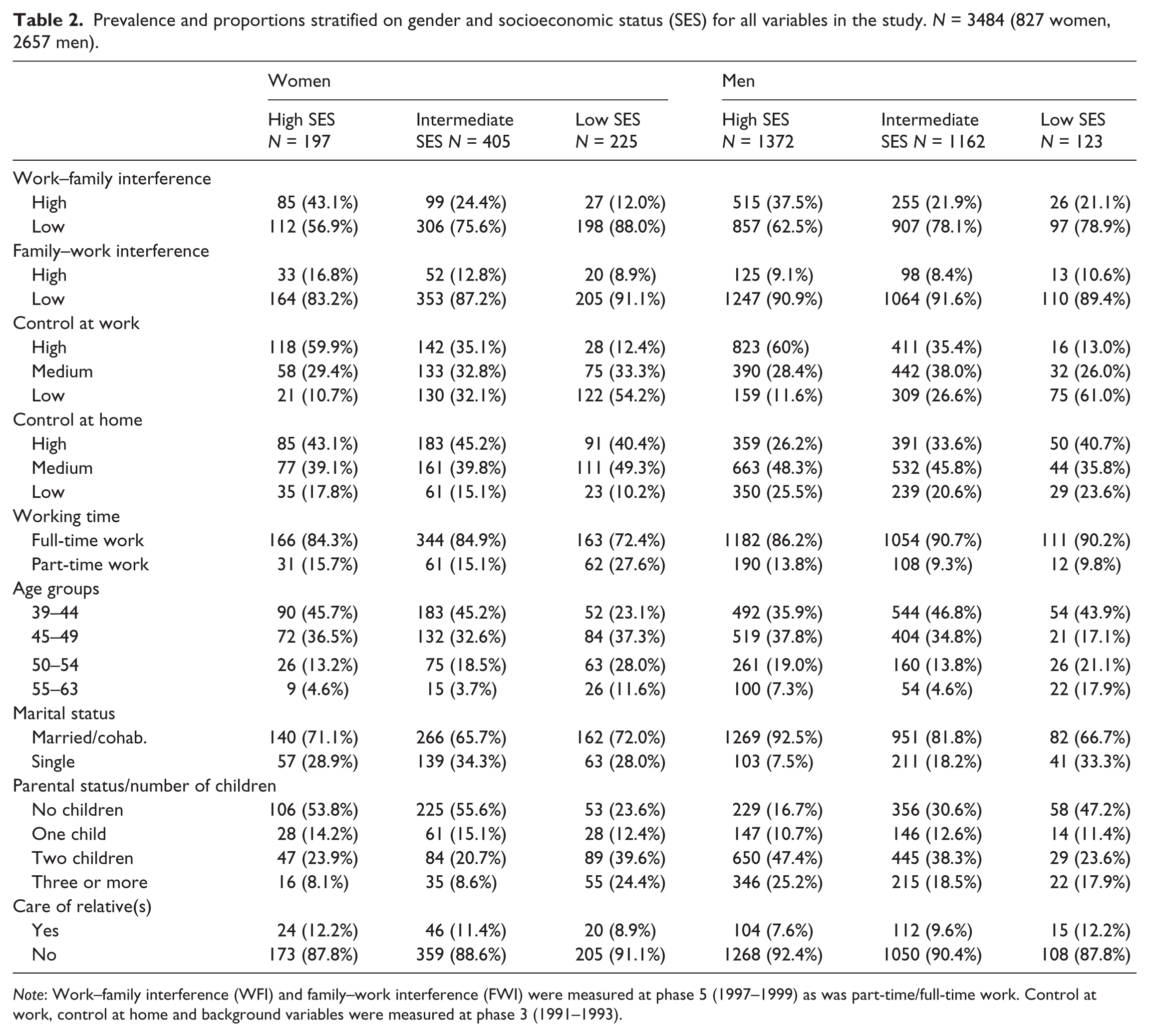
Note: Work–family interference (WFI) and family–work interference (FWI) were measured at phase 5 (1997–1999) as was part-time/full-time work. Control at work, control at home and background variables were measured at phase 3 (1991–1993).
Differences in WFI and FWI depending on gender and socioeconomic status
The results of the logistic regression of WFI (Table 3) showed that in the first model, gender was not significantly related to WFI. In Model 2, where part-time work and family-related variables (marital status; parental status/number of children; care of relative) were added, gender became a significant predictor of WFI. Women reported more WFI than men and this effect was somewhat pronounced when control at work and control at home were added in Model 3 (OR for gender in Model 3: 1.31; CI: 1.07–1.61; p = .009).
Odds ratio (95% confidence interval) for work–family interference (WFI) and family–work interference (FWI) at phase 5 (1997–1999) by gender, socioeconomic status (SES) and control at work and at home from phase 3 (1991–1993). N = 3484 (women: 827; men: 2657).
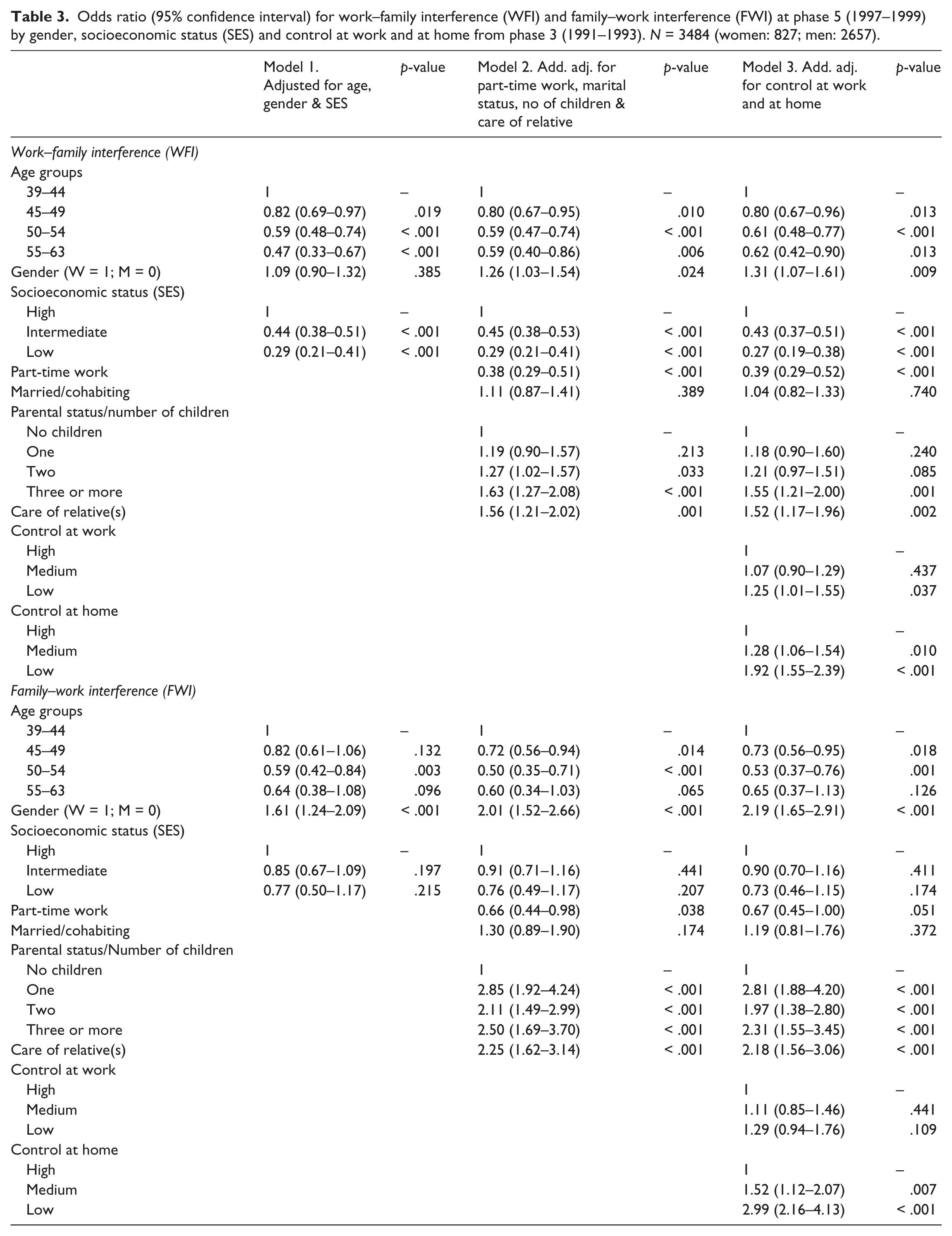
In FWI, women reported higher levels in all models (OR in Model 3: 2.19; CI: 1.65–2.91; p < .001). The results of the logistic model also showed that there was a gradient in WFI so that the higher the SES, the more WFI (Table 3). All SES groups differed from each other (p < .01). However, there were no differences in FWI between the employees with different SES in the logistic regression (Table 3).
There was a significant two-way interaction effect between gender and SES in relation to both WFI (p = .027) and FWI (p = .042), as shown in Table 4, where the results are stratified by gender. For women, WFI had the form of a gradient. Women with intermediate SES reported lower WFI than women with high SES (OR: 0.40; CI: 0.27–0.60; p < .001) and women with low SES reported lower WFI than women with intermediate SES (OR: 0.41; CI: 0.25–0.69; p = .001) (the test between intermediate and low SES women is not shown in the table). Among men, lower WFI was reported among employees with intermediate (OR: 0.44; CI: 0.37–0.53; p < .001) and low SES (OR: 0.43; CI: 0.26–0.69; p < .001) compared with men with high SES, but men with intermediate and low SES did not differ in WFI (p = .890) (the test between intermediate and low SES men is not shown in the table).
Odds ratio and 95% confidence interval for work–family interference (WFI) and family–work interference (FWI) at phase 5 (1997–1999) stratified by gender and socioeconomic status (SES) from phase 3 (1991–1993). P-values for two- and three-way interactions. N = 3484 (women: 827; men: 2657).
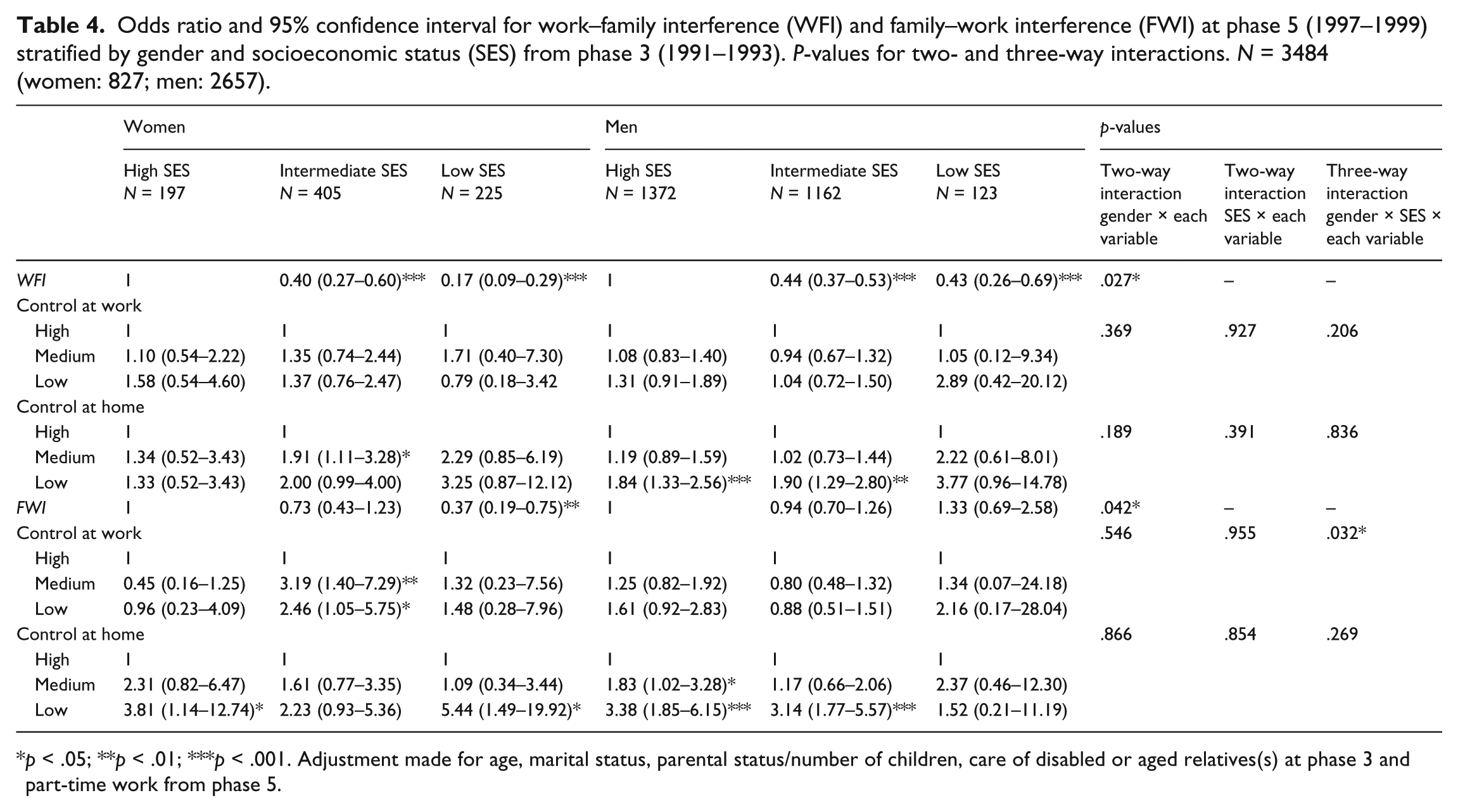
p < .05; **p < .01; ***p < .001. Adjustment made for age, marital status, parental status/number of children, care of disabled or aged relatives(s) at phase 3 and part-time work from phase 5.
In FWI also, there was tendency for a gradient among women. Women with intermediate SES reported lower (although not significant) FWI than women with high SES (OR: 0.73; CI: 0.43–1.23; p = .232) (Table 4). Women with low SES reported significant lower FWI than women with high SES (OR: 0.37; CI: 0.19–0.75; p = .005) (Table 4). Among men, FWI did not differ significantly between employees with different SES.
To graphically show the interaction effects in WFI and FWI, women and men were included in the same analyses with high SES men as the reference group (OR = 1). Figure 1 shows the results illustrating that high SES women reported the highest level of WFI but also that high SES men reported higher levels of WFI than intermediate and low SES men and intermediate and low SES women. There was a clear WFI gradient among women. Figure 1 also shows that high SES women reported higher levels of FWI than high SES men. The figure shows a tendency for a gradient among women in FWI and the lack of such a gradient for men.
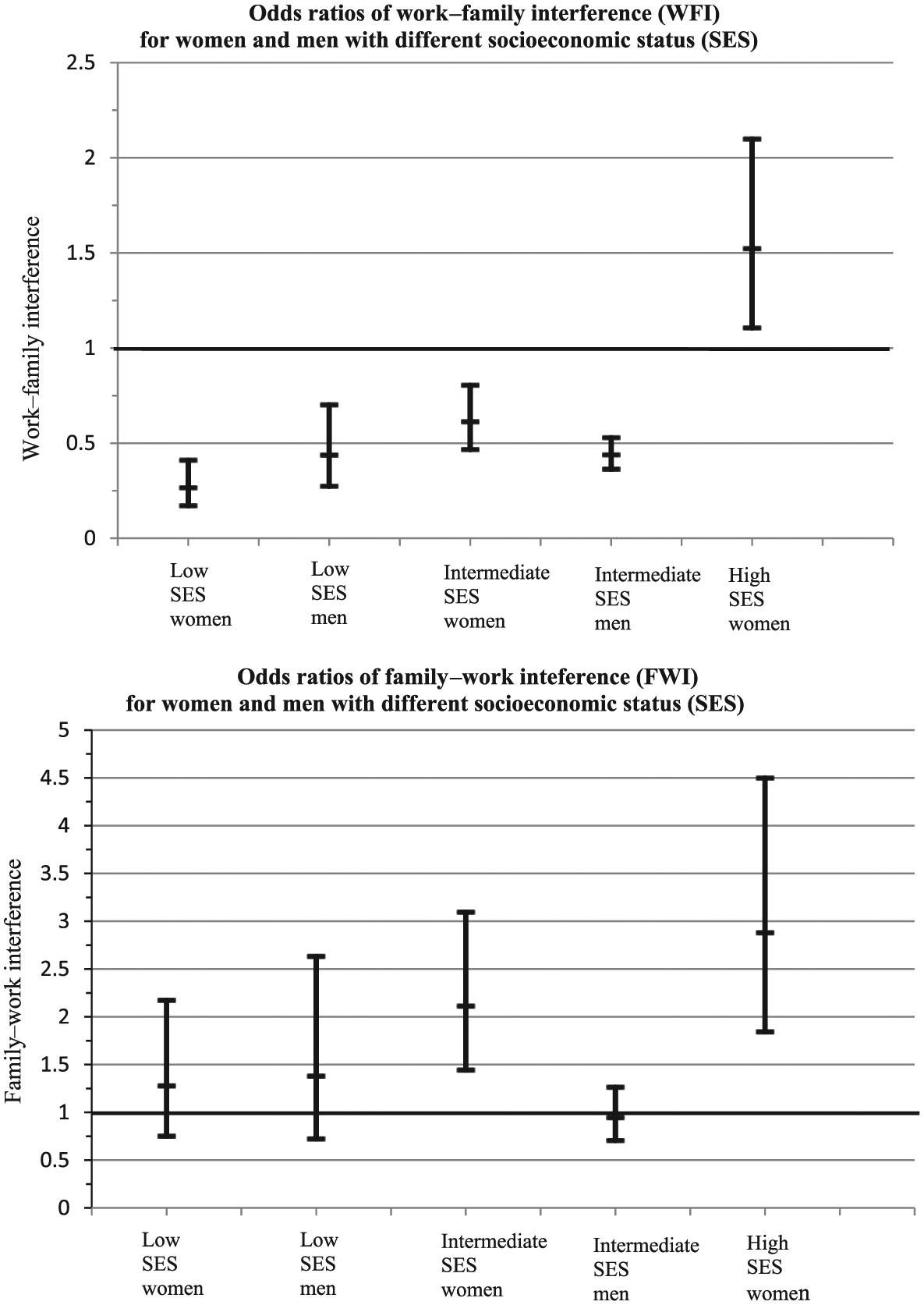
Interaction between gender and socioeconomic status (SES) in relation to work–family interference (WFI) and family–work interference (FWI). Odds ratio and 95% confidence interval. High SES men is the reference group (odds ratio = 1). N = 3484 (women: 827; men: 2657); pWFI = .027; pFWI = .042.
Control at work and control at home in relation to WFI and FWI
Low control at work was associated with more WFI, but was not significantly related to FWI (Table 3). There was no significant interaction effect between gender, SES and control at work in relation to WFI (Table 4), but there was a significant three-way interaction effect between control at work, gender and SES in relation to FWI (p = .032) (Table 4). This significant three-way interaction effect indicates that control at work did not relate to FWI equally for women and men with different SES. However, the small numbers of respondents in some of the groups makes the results for specific group differences tentative.
Low levels of control at home were associated with more WFI (OR: 1.92; CI: 1.55–2.39) and more FWI (OR: 2.99; CI: 2.16–4.13) (Table 3). There were no significant interaction effects between gender, SES and control at home in relation to WFI or FWI (Table 4).
Discussion
Differences in WFI and FWI depending on gender and socioeconomic status
In line with Hypothesis 1a, women reported more WFI, but only after adjusting for part-time work and family-related variables. The effect of gender was pronounced when adding control at work and control at home. Hypothesis 1b was supported as there was a clear difference between women and men in FWI. Similarly to WFI, the gender effect of FWI was pronounced after adjusting for part-time work, family-related variables and control at work and at home, with women having more than twice the risk for high FWI after considering all these aspects. These results suggest that situational factors associated with family and work contribute to gender differences in WFI and FWI. It seems plausible that the total workload, due to obligations from both work and family, combined with restricted resources in terms of control to handle these demands, explains part of the differences in WFI and FWI between women and men. This finding from the present study follows previous studies showing that women reported higher levels of WFI (e.g. Innstrand et al., 2009b; Öun, 2012; Voydanoff, 2004) and FWI (e.g. Byron, 2005), but is at odds with research showing no gender differences in FWI (DiRenzo et al., 2011) or that men report more WFI (Byron, 2005). The inconsistent findings concerning gender differences in previous research may partly be due to the situational factors that are included in the analyses.
As there was a clear socioeconomic gradient in WFI, Hypothesis 2a was confirmed. This is in line with research showing that employees with higher SES report more WFI (DiRenzo et al., 2011; Schieman et al., 2006), as do employees with a higher income (Byron, 2005) and a higher education (Härter Griep et al., 2016; Leineweber et al., 2012; Voydanoff, 2004). Schieman et al. (2006) used the term ‘stress of higher status’ and meant that when it comes to WFI, the positive features of work that are typically associated with a higher social status cannot compensate for the high demands that also come with high status positions. It is important to note that WFI and FWI measure stressors, rather than stress responses. Among women, there was a tendency for a socioeconomic gradient also in FWI, but not among men, thus there was only partial support for Hypothesis 2b. That the socioeconomic gradients in WFI and FWI were more apparent among women than among men supports Hypotheses 3a and 3b and is in line with previous studies (Frankenhaeuser et al., 1989; Grönlund and Öun, 2010). These results support the traditional gender-role model (Wiley, 1991). The small number of women in the high grades, both in the civil service (Office for National Statistics, 2014) and in other parts of the labour market (Eurostat, 2008; World Economic Forum, 2014) is likely, at least to some extent, to reflect the difficulties for women in high positions to combine work and family. It is worth noting that in the present study sample, 54% of the women with high SES did not have children. The corresponding figure for men with high SES was 17%. However, the results showed that also men with high SES experienced higher WFI than men with lower SES, which gives some support to the egalitarian gender-role model suggesting that women and men in the same socioeconomic positions face comparable work-related challenges. This model was supported by Schieman et al. (2006). Overall, these results show that both gender and SES are important factors to consider when it comes to one’s possibilities to handle work and family.
Control at work and at home in relation to WFI and FWI
Low control at work was associated with a higher level of WFI but not with more FWI, thus confirming Hypothesis 4a, but not Hypothesis 4b. Previous research (Grzywacz and Marks, 2000; Michel et al., 2011) has shown an association between control at work and FWI, albeit weak, but in the present study control at work was not related to the perception of how family interfered with work. The association between control at work and WFI is in line with the reasoning that more control and flexibility at work increase the permeability between the domains of work and family and that such permeability facilitates the transitions between the two domains (Clark, 2000; Schieman et al., 2006). This has also been found in empirical studies (Byron, 2005; Grzywacz and Butler, 2005; Hughes and Parks, 2007; Innstrand et al., 2009a; Thomas and Ganster, 1995). However, high control and flexibility at work have also been found to increase the risk of conflict between work and family (Higgins et al., 2014; Lapierre and Allen, 2012; Schieman et al., 2006). The significant interaction between control at work, gender and SES in relation to FWI indicates that the relation between control at work and FWI, to some extent, differs depending on gender and SES levels. Thus, the answer to the explorative research question 1b was affirmative. However, this was the only (out of four) three-way interaction effect that reached statistical significance. The answer to the explorative research question 1a was thus non-affirmative. When the significant interaction was stratified on gender and SES, few associations remained significant. These circumstances limit the possibility to draw conclusions about specific group differences and indicate that how control at work relates to the interference between the domain of work and family has to be studied further.
Low and medium level of control at home contributed to a markedly higher risk both of WFI and FWI (supporting Hypotheses 5a and 5b). As compared to control at work, control at home has been substantially less researched in relation to WFI and FWI (Lapierre and Allen, 2012), but the results from the present study show that control at home is an important factor for employees in order to be able to combine work and family. Lapierre and Allen (2012) have suggested that high control at home increases the latitude to adjust the demands from the family to fit the demands from work and thus be able to fulfil demands from both spheres with less interference. As there were no significant interaction effects, control at home seemed to be of similar importance for women and men within all SES levels. This means that the answer to the explorative research questions 2a and 2b was non-affirmative.
Methodological considerations and future research
A limitation is that this study was conducted among white-collar British civil servants so that findings may not be generalizable to other working populations. Child-care and elderly-care services in the United Kingdom are limited and only to some degree funded by public means. Although this is the case in many European countries, differences in social security systems between countries are likely to influence employees’ possibilities to combine work and family. It is therefore necessary to replicate the study in other contexts, preferably in different countries with other social security systems (e.g. Öun, 2012) and with employees from both the private and public sectors. Also, the data were collected some years ago and the situation might have changed. However, the global gender gap index (considering gender equality across health, education, economy and politics) shows only marginal changes in the United Kingdom since 2000 (World Economic Forum, 2014), indicating that gender inequalities are still an issue.
Due to internal or external attrition, the employees included in the analyses differed to some extent from those who were excluded. However, no differences were found in WFI or FWI between the analytic sample and those not included due to attrition. Another issue relates to the fact that the number of participants with low SES was substantially fewer than those with intermediate and high SES. However, as most previous studies of WFI and FWI are based on middle and high level employees (DiRenzo et al., 2011), including employees with low SES must be considered an advantage. The sample was further characterized by few women with high and intermediate SES and few men with low SES. Although reducing the power to analyse gender and SES differences, these differences mirror the European labour market (Eurostat, 2008). Another issue is that a stronger effect might have been found if a more elaborated measure of control at home had been used, but we were limited to the measure available. There is little research of the concept of control at home and future studies should endeavour to include valid measures of this concept. Future research could also consider investigating SES in a broader context, including factors such as the SES of any partner and the family income. Also the situation of a potential partner (working full-time or working part-time, being home to take care of children, being home because of illness or unemployment) seems relevant to investigate further in future studies. Another aspect is that the individual is part of larger systems such as an organization, a certain sector (private or public) and a society. This study focused on the individual level, but investigating several levels is highly relevant. Another methodological issue relates to the fact that the current study aim was not to investigate how gender and SES or control at work or control at home predicted changes in the interference between work and family over time; this would have been the case if baseline values of WFI and FWI had been included. Instead, the two-wave analysis used here enabled separating the time points for measuring the independent and dependent variables.
Conclusions
The results from this study suggest that woman and employees with high SES may be most at risk for interference between work and family, in both directions, which emphasizes the importance of considering gender and status in relation to WFI and FWI. Low control at work was associated with more WFI, while low and medium control at home increased the risk for both WFI and FWI. This study underscores the importance of not only investigating the work situation, but also the situation at home, to more fully understand the phenomena of WFI and FWI. It highlights the importance of facilitating combining work and family for employees with high SES, especially women, and to increase control both at work and at home in order to facilitate individuals’ efforts to combine two important domains of life, namely that of work and of family.
Footnotes
Acknowledgements
We thank all participating men and women in the Whitehall II Study; all participating Civil Service departments and their welfare, personnel and establishment officers; the Occupational Health and Safety Agency; and the Council of Civil Service Unions. The Whitehall II Study team comprises research scientists, statisticians, study coordinators, nurses, data managers, administrative assistants and data entry staff who make the study possible.
Declaration of Conflicting Interests
The author(s) declared no potential conflicts of interest with respect to the research, authorship, and/or publication of this article.
Funding
We would like to acknowledge those that have funded this work. The Whitehall II study has been supported by grants from the Medical Research Council; Economic and Social Research Council; British Heart Foundation; Health and Safety Executive; Department of Health; National Heart Lung and Blood Institute (HL36310), US, NIH; National Institute on Aging (AG13196), US, NIH; Agency for Health Care Policy Research (HS06516); and the John D and Catherine T MacArthur Foundation Research Networks on Successful Midlife Development and Socio-Economic Status and Health. HF was funded by the COFAS Marie Curie International Postdoc Fellowship Programme (2012-0091). PL was funded by the FORTE grant #2009-1758 to the Stockholm Stress Centre; and TC was supported by the International Centre for Life Course Studies in Society and Health (ICLS) (ESRC award no. RES-596-28-0001). JH was partially supported by the National Institute on Aging, NIH (R01AG013196).