




Abstract
This study investigates the potential of leveraging data from existing SBEM (Simplified Building Energy Model) energy certification models to generate dynamic simulation models for decarbonisation analysis. A case study of a healthcare centre in London was used to demonstrate the approach. The existing SBEM model was adapted into a dynamic performance model and tuned using measured energy data. The tuned model was then employed to simulate a range of refurbishment scenarios. Results indicate that achieving net-zero emissions will require a combination of building envelope upgrades, technical system improvements, and the installation of photovoltaic (PV) panels. To mitigate future overheating risks under projected climate scenarios, additional measures such as external shading or active cooling may also be necessary. To assess the scalability and accuracy of the method, the same approach was automated and applied to 164 additional NHS properties for stock-level assessments. At the stock level, simulated energy consumption closely matched measured averages across the portfolio. However, performance gaps in some individual buildings highlight the need for further investigation into SBEM model accuracy or refinement of model inputs to ensure reliable predictions when assessments are conducted at the building level.
Practical application
The National Health Service (NHS) aims to reduce its direct carbon emissions by 80% between 2028 and 2032 and achieve net-zero emissions by 2040. To support this target, it is essential to evaluate the current performance of NHS buildings and assess the impact of potential refurbishment measures. However, developing detailed dynamic simulation models for each property across the extensive NHS estate is time-consuming and resource-intensive. This study investigates the extent to which existing SBEM models, readily available through the UK’s building energy certification scheme, can be adapted and used as a data source to generate dynamic simulation models. These models can then support the assessment of refurbishment strategies at scale. The approach offers a practical and scalable solution for informing decarbonisation planning across large healthcare estates.
Keywords
Introduction
Primary care services serve as the initial access point to the UK’s National Health Service (NHS) for individuals seeking medical attention. Healthcare facilities are typically among the most energy and carbon-intensive building types due to their reliance on specialised equipment and stringent indoor environmental standards.1,2 In response, the UK has developed a range of standards and design guidelines for healthcare buildings, such as the Health Building Notes (HBNs) 3 and Health Technical Memoranda (HTMs), 4 which offer guidance on building performance and system design. Additionally, the UK NHS has set ambitious goals, becoming the first national health system in the world to commit to net-zero emissions, targeting 80% reduction in direct emissions between 2028 and 2032 and full net-zero by 2040. 5 Despite this, many healthcare facilities, including primary care centres, remain far from meeting these targets and need substantial improvements in energy efficiency.
One key strategy for decarbonising primary healthcare facilities is the identification of retrofit interventions to enhance the energy performance of underperforming buildings. Energy modelling provides a reliable method for evaluating and prioritising such retrofit options by estimating their impact on energy consumption. 6 The development of these models typically involves collecting detailed building data (including layout plans and elevations, fabric, technical systems, and usage patterns), generating simulation models, calculating energy use, and analysing outcomes. 7 However, generating these models, especially dynamic simulation or performance-based models, from the ground up can be both resource-intensive and time-consuming. 8
The European Union (EU) introduced the Energy Performance of Buildings Directive (EPBD) to encourage energy efficiency enhancements in both new and existing buildings across its member states. In response, individual governments established national Energy Performance Certificate (EPC) systems to deliver clear and accessible information on building energy performance to the public. 9 Despite the UK’s departure from the EU, EPCs continue to play a significant role in shaping energy policy within the UK’s building sector. An EPC provides an energy efficiency rating for a building, ranging from A (most efficient) to G (least efficient), along with calculated performance metrics and recommendations for energy-saving improvements. In most EU countries, a valid EPC is mandatory when a building is constructed, rented, or sold. Certified energy assessors are responsible for producing EPCs by conducting on-site inspections to gather data on the building’s envelope and technical systems. 9 This data is then processed using standard compliance modelling methods to calculate efficiency ratings. 10 The resulting EPC data, organised in a consistent and structured format, presents a valuable resource for building energy model development, as it allows for automated data extraction and substantially reduces the effort required for data collection.
In the UK, building compliance modelling typically relies on Simplified Building Energy Models (SBEM), which estimate monthly energy consumption and carbon emissions based on standard operating conditions defined in the National Calculation Methodology (NCM). 11 SBEM compliance models can be developed using simplified tools such as iSBEM, which contain only basic zone dimensions, adjacency types, and limited system parameters. However, compliance models can also be created using software such as DesignBuilder, which provides more detailed information on building geometry, zoning, constructions, and HVAC systems while still following the NCM framework for compliance. By contrast, performance-based dynamic simulation models incorporate actual operational parameters, such as occupancy patterns, temperature settings, and HVAC schedules, allowing for more detailed assessments of energy use. This makes them well-suited for ‘performance modelling’, which aims to predict realistic operational energy demand and is typically carried out in line with CIBSE TM54 12 or similar guidelines. 13 While EPC models are primarily intended for compliance purposes, those developed within software environments (e.g., DesignBuilder) can provide sufficiently detailed data to generate fully dynamic simulation models. These can produce more accurate predictions of operational energy performance and evaluate the impact of refurbishment measures, extending beyond the static and simplified nature of standard SBEM compliance outputs. Such models can support strategic decisions on retrofit interventions. Nevertheless, the application of this method, especially within the primary healthcare sector, remains relatively underdeveloped.
Moreover, using data from EPCs to develop dynamic simulation models offers an efficient method for quickly evaluating overheating risks linked to different refurbishment strategies, as these models allow for hourly analysis of indoor temperatures. Managing overheating in primary healthcare settings is particularly important due to the potential health risks it poses. Conditions such as heat stress, heat exhaustion, and heatstroke can be aggravated by elevated indoor temperatures, leading to serious health concerns. 14 In the UK, most primary care facilities depend on natural ventilation and typically lack mechanical cooling systems. While upgrades like improved insulation and increased airtightness can enhance energy efficiency during colder months, they can unintentionally contribute to overheating during warmer periods. The growing impact of climate change further intensifies these challenges, highlighting the need for healthcare professionals to actively engage in mitigating thermal discomfort and its health implications. 15 As such, evaluating the risk of overheating under future climate conditions should be a key aspect of any refurbishment strategy for primary healthcare buildings.
This study proposes a method for utilising SBEM compliance models generated in DesignBuilder to develop dynamic building performance models, which can subsequently be used to evaluate various refurbishment measures and assess overheating risks. To test this approach, a healthcare building in London was selected as a case study. Its most recent SBEM model was used as the basis for creating a dynamic simulation model. The simulation results from the model were compared with the building’s measured energy consumption data to fine-tune the model. Once tuned, the model was used to evaluate the energy-saving potential and overheating risks of various refurbishment packages under both current and future climate scenarios. The proposed approach was then scaled up and applied to additional NHS properties. Dynamic simulation models were developed from the corresponding SBEM models. The simulation results for all buildings were compared with measured energy consumption data to assess model accuracy, identify performance gaps, and evaluate the models’ potential for assessing refurbishment strategies. This method offers a practical framework that can be extended to other building types across the UK and Europe, contributing to wider decarbonisation efforts in the built environment.
Literature review
Dynamic simulation models have been widely used in healthcare buildings to evaluate the effectiveness of refurbishment measures such as improved insulation, HVAC upgrades, and the integration of renewable energy technologies.16,17 Buonomano et al. 18 applied dynamic simulation to assess various refurbishment scenarios across four representative buildings in a district hospital in Naples, Italy. The interventions included roof insulation, centralized heating regulation, thermostatic radiator valves, and programmable control of air handling units (AHUs). Among these, the time-programmable AHU regulation offered the highest cost-effectiveness, delivering significant energy savings during both winter and summer with minimal investment. In contrast, roof insulation had limited benefits, particularly in low-rise buildings, while involving high costs and long payback periods. Centralized heating regulation also proved more economically viable than room-level control.
Wang et al. 19 studied the impact of photovoltaic (PV) integration and green roofs on a hospital located in a hot summer, warm winter climate using EnergyPlus simulations. Green roofs reduced cooling energy demand by up to 11.7%. PV systems significantly reduced carbon emissions, with savings ranging from 13.79% to 27.43% as PV coverage increased from 10% to 20%. Silenzi et al. 20 evaluated the energy performance and payback period of innovative retrofits for a hospital in Genova, Italy. Proposed measures included façade void insulated panels, smart rotating windows with variable emissivity glass, and optical-fibre daylighting systems combined with dimmable LED lighting. Depending on the combination of interventions, the payback period ranged from 9.3 to 27.4 years.
Beyond energy efficiency, several studies have used dynamic simulation to explore strategies for mitigating overheating in healthcare settings. Short et al. 21 investigated the overheating risk, energy demands, and CO2 emissions in a typical UK hospital under current and projected future climates. Strategies assessed included natural and mechanical ventilation, passive cooling, perimeter heating, and thermal envelope upgrades. While passive solutions offered strong resilience, active cooling was deemed necessary by 2040. Gupta et al. 22 analyzed overheating in two London-based care homes, one modern and one older, under current and future climate conditions. Thermal simulations showed that night-time ventilation was the most effective passive solution under the current climate. In future scenarios, a combination of night ventilation, external shading, and high-albedo walls was most effective. By the 2080s, air-conditioning was the most effective option for thermal comfort, albeit with the highest energy demand, emphasizing the need for a balanced approach between passive and active systems.
These studies highlight the value of dynamic simulation in assessing the performance of refurbishment strategies related to both energy efficiency and overheating risk. However, most of the literature focuses on one or two case studies, limiting scalability. In large building portfolios such as NHS properties, collecting detailed data for each building to generate individual models is highly time-consuming and often unfeasible. This highlights the need for more efficient, scalable approaches to developing dynamic simulation models. In response to this challenge, in a different sector, Schwartz et al. 23 developed an automated process to generate dynamic simulation models for approximately 15,000 school buildings in England and Wales. Their approach leveraged data from multiple national databases, including Edubase, the Property Data Survey Programme, and Ordnance Survey.
Due to their widespread availability and the rich building-related data they contain, EPC models can support multiple important applications. Numerous studies have leveraged EPC databases to assess the current condition of building stocks through statistical analysis, providing a robust foundation for evidence-based policy-making. For example, EPC models have been employed to categorise buildings into archetypes, facilitating thermal performance analyses and supporting urban energy modelling and policy development. 24 They have also been used to establish updated baselines of building energy performance and evaluate the effectiveness of energy policies and renovation strategies. 25 Furthermore, EPC data serve as valuable tools for benchmarking energy use and CO2 emissions in the residential sector, aiding regional energy planning and guiding future retrofit scenarios. 26 Integration of EPC data with Geographic Information System (GIS) datasets has further enhanced spatial energy planning and enabled targeted retrofit strategies. 27 Building on this integration, an energy atlas for multifamily buildings has been developed to visualise energy consumption, renovation needs, and socio-economic conditions, thereby informing national retrofit strategies. 28
Despite the rich data contained in EPC models, including information on building fabric and HVAC systems, their use as a basis for generating dynamic building simulation models at scale remains underexplored. Previous research has illustrated the feasibility of converting EPC data into detailed EnergyPlus simulation models to analyse refurbishment options. 29 However, a scalable methodology that leverages EPC data to develop dynamic simulation models for assessing both energy performance and overheating risk under varying refurbishment and climate scenarios is still lacking.
Addressing this gap, the present study proposes a framework that transforms EPC data into dynamic simulation models capable of evaluating both energy performance and overheating risk. This approach accounts for current building conditions as well as future climate change scenarios, offering a scalable and practical method for comprehensive performance analysis at both the individual building and building stock levels.
Methodology
This study focused on a subset of NHS primary healthcare buildings for which SBEM models were developed using DesignBuilder software by the same EPC supplier organisation (a small practice). This selection helped minimise variability related to software use and assessor interpretation, while still offering insights into the method’s scalability. One of these buildings was selected as a detailed case study to assess the energy-saving potential and overheating risks of various refurbishment packages under both current and future climate scenarios. The remaining SBEM models were also converted using the same process to evaluate the scalability and reliability of the approach at the stock level.
Case study building
The case study building is an NHS facility located in London. The building has two floors and a total gross internal area of approximately 2800 m2. It primarily relies on natural ventilation, while heating is provided by three condensing gas-fired boilers that supply both space heating and domestic hot water. Radiators are used to distribute heat throughout various zones. The building lacks a centralised air conditioning plant, although 23 rooms are fitted with individual comfort cooling units.
Figure 1 presents the building’s geometry derived from the SBEM compliance model generated in DesignBuilder, along with several images and a breakdown of how the internal floor area is allocated to different activities. These activities are classified according to the activity types defined for primary healthcare buildings in the NCM, with each type having specific parameters, such as occupancy schedules, heating and cooling setpoints, occupant density, ventilation requirements, lighting levels, and equipment loads, all embedded in the SBEM model. The most prevalent activity type is office and consulting space, accounting for 55% of the building’s area, followed by circulation spaces (18%) and storage areas (12%). The building’s most recent SBEM model was used in this study to develop and run dynamic simulations. Case study building images, SBEM model geometry, and activity types.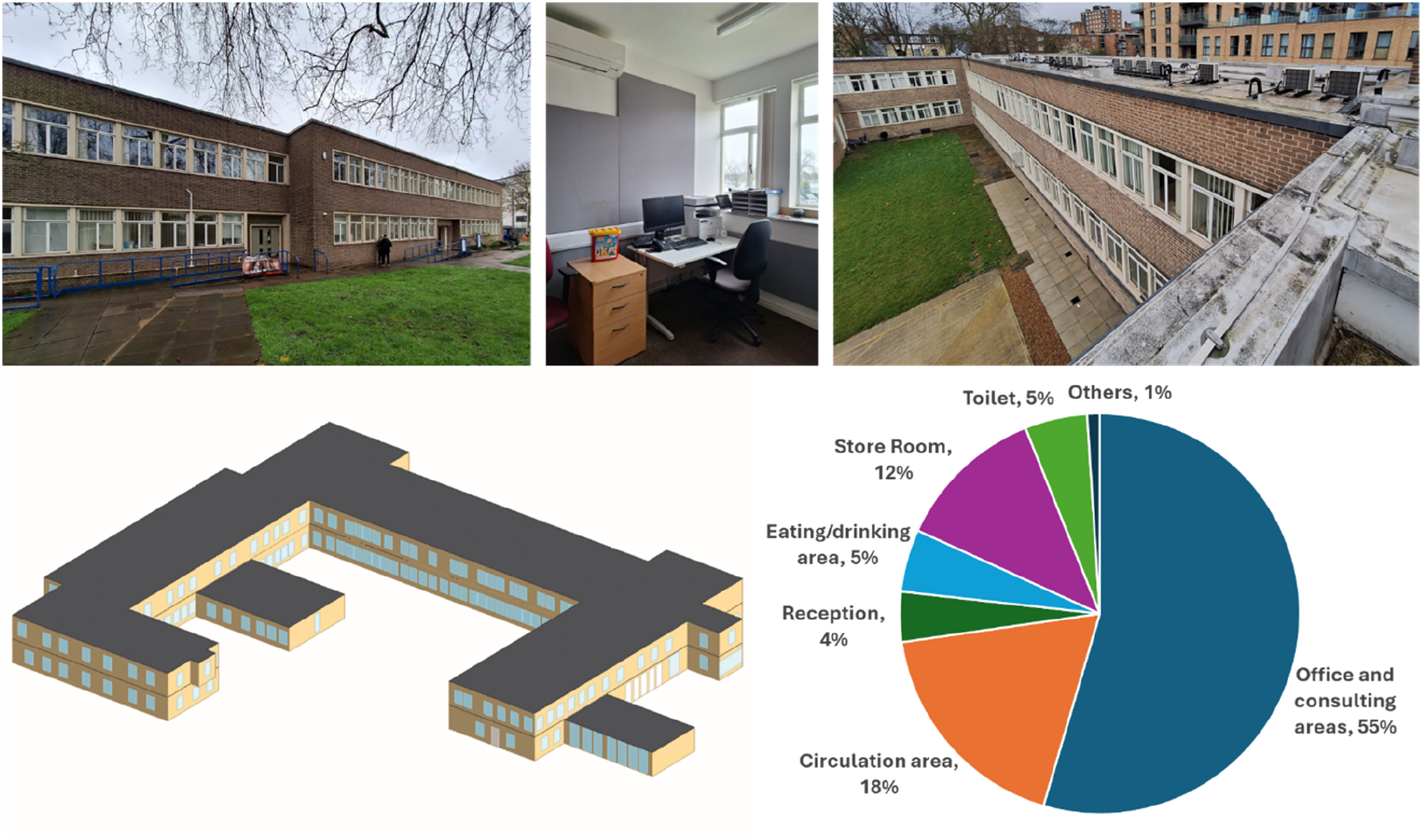
Model development
DesignBuilder offers various modelling modules, including SBEM for EPC compliance and a dynamic simulation interface linked to EnergyPlus. To facilitate detailed performance analysis, this study converted SBEM models into EnergyPlus Input Data Files (IDFs) for dynamic simulation. In DesignBuilder, the SBEM and EnergyPlus modules operate as separate environments, each maintaining independent datasets that are not always directly compatible. Transitioning from the SBEM module to EnergyPlus does not ensure an accurate or complete transfer of model data. Only certain elements, such as building geometry, activity zones, and equipment loads, are carried over reliably. Other key inputs may be lost or substituted with default values that do not accurately reflect the building’s actual features. To address this, the missing information was extracted from the SBEM model and used to update and refine the corresponding EnergyPlus IDFs.
With regard to building constructions, SBEM models offer only basic information, such as overall U-values and heat capacities, which are typically estimated based on the assessor’s observations and the building’s age. In contrast, EnergyPlus requires a more detailed definition of opaque constructions, including the specific material composition and thickness of each layer, information that SBEM models do not provide. To define construction elements in EnergyPlus, this study used the notional building constructions specified in the England and Wales National Calculation Methodology (NCM) as a typical build-up for the building stock. However, the overall U-values of these standard constructions often differ from those listed in the original SBEM models. To reconcile these discrepancies, the thickness of the insulation layer in the notional construction was adjusted to match the SBEM U-values. On the other hand, glazing data, such as U-values and solar transmittance (G-values), are accurately carried over during the SBEM to EnergyPlus conversion. Regarding infiltration, SBEM models express air permeability either through measured pressure test values or standard assumptions based on building age, using a unit of m3/h/m2 at a 50 Pa pressure differential. To enable compatibility with EnergyPlus, the SBEM-derived permeability values were converted to air changes per hour (ACH) using a divisor factor of 22, as recommended by CIBSE Guide A (Figure 4.15). 30 The factor was selected based on the relatively small volume of the enclosed spaces in primary healthcare buildings.
For building services, the Ideal Loads Air System in EnergyPlus was employed to simulate heating and cooling demands. Final energy consumption was then calculated during post-processing by applying the seasonal efficiency of the systems and accounting for the fuel type used. Ventilation rates for each zone were based on the minimum fresh air requirements specified in the SBEM model, which were defined according to the NCM activity types. Auxiliary energy use was estimated using data from the SBEM file, in accordance with NCM assumptions associated with different building service strategies. Domestic Hot Water (DHW) demand was also derived from the SBEM model, which applied standardised consumption rates. In the post-processing stage, both the efficiency and fuel type of the DHW system were considered. Furthermore, heat loss from the DHW storage tank was included in the energy balance, based on the tank’s volume and the minimum insulation standards required by building regulations. For lighting systems, the SBEM model provided information on target illuminance levels, lighting types, and luminaire efficacy. To integrate this data into the EnergyPlus model, lighting power density values were calculated and applied accordingly.
To ensure the accuracy of the developed model, a site visit was conducted in February 2024 to verify and validate the SBEM model input data against actual building conditions. Based on this comparison, necessary adjustments were made to enhance the accuracy of the dynamic simulation model. The resulting EnergyPlus Input Data File (IDF) was used to run simulations, and the outputs were post-processed to derive the final performance indicators. The building’s simulated energy performance was represented by annual electricity and gas consumption figures. These results were then compared with measured consumption data to evaluate the model’s predictive accuracy and to support further tuning. Once tuned, the model served as a baseline to generate multiple scenarios incorporating different refurbishment measures. These scenario models were used to assess the impact of each intervention on energy performance and to determine whether the building could meet the targets set out in the NHS Net Zero Building Standard. 31
In addition to energy simulations, this study includes an overheating assessment to evaluate the building’s thermal comfort conditions. For this purpose, the IDFs previously developed for energy performance modelling were modified to run new simulations focused on thermal comfort. Given that the case study building relies on natural ventilation and most rooms are equipped with fully openable windows, the simulations assume that windows are open during summer and occupied periods, allowing a ventilation rate of up to 4 ACH−1 for single-sided ventilation. 32 Single-sided ventilation was assumed because, based on the building’s layout, most rooms have windows on only one side and the doors are typically kept closed for privacy, preventing cross-ventilation.
Overheating performance was evaluated across the building’s zones using the three criteria defined in CIBSE TM52. Criterion 1 checks whether the operative temperature exceeds the adaptive comfort threshold for more than 3% of occupied hours. Criterion 2 assesses if any single day has temperature exceedance greater than 6 degree-hours. Criterion 3 evaluates whether the threshold is exceeded by more than 4 degree-hours during any single occupied hour. A zone was considered to fail if it did not satisfy at least two of these three criteria. 33
The overall methodology employed in this study is illustrated in Figure 2. The process of data extraction and model conversion from the DesignBuilder compliance module to the EnergyPlus simulation environment was automated using a custom Python script. While the full methodology, including refurbishment scenario analysis and overheating assessment, was applied to the case study building, the scalability of the approach was tested by applying the model generation and tuning process to additional NHS properties. For these buildings, dynamic simulation models were developed from their SBEM files, and the tuning process was conducted to improve model accuracy. The simulation results from the tuned models were then compared with measured energy consumption data to evaluate the scalability and reliability of the approach. The workflow for using the SBEM model to run dynamic simulations for the baseline building and refurbishment scenarios.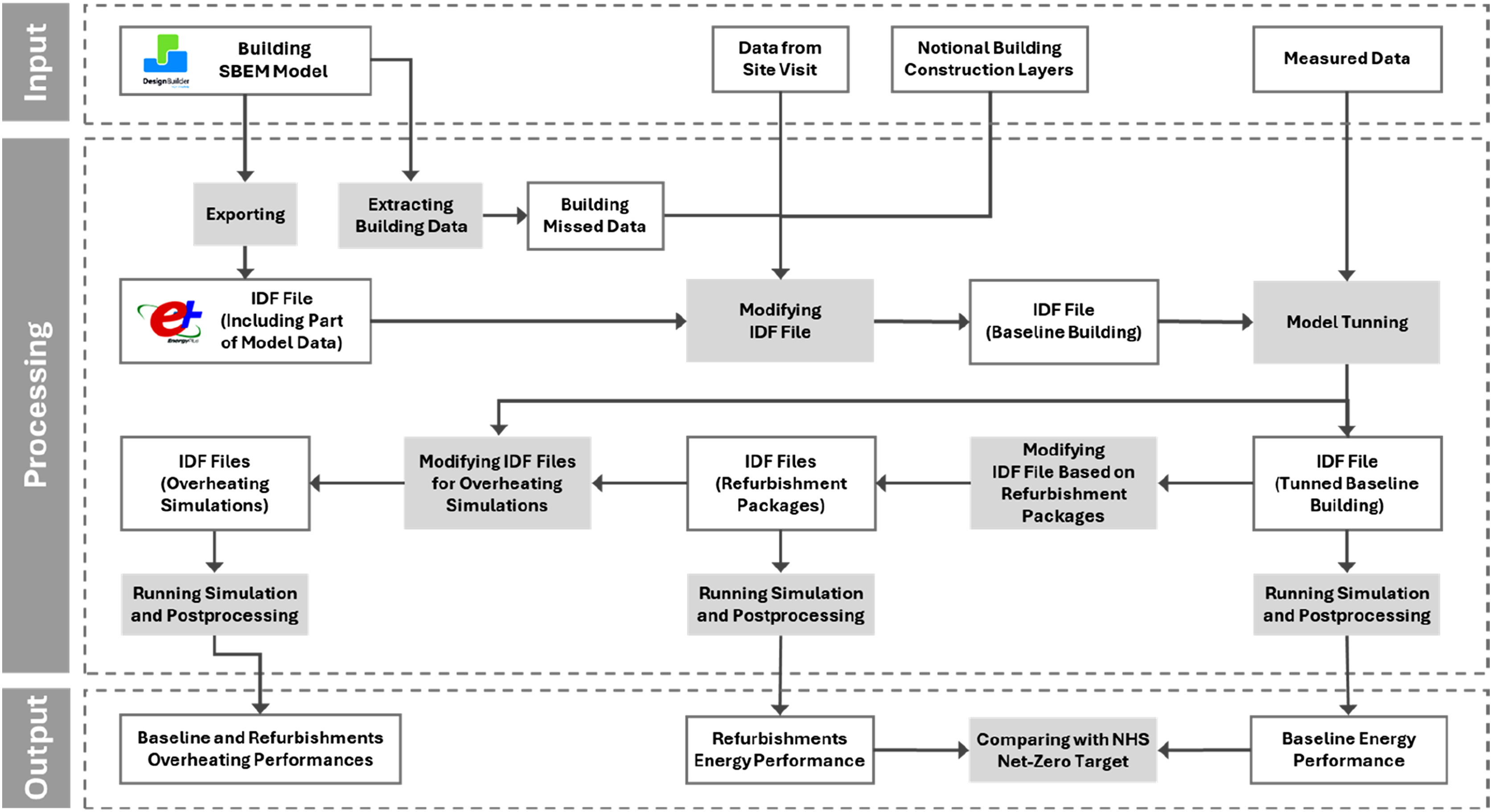
Refurbishment scenarios
Refurbishment packages considered in the study.
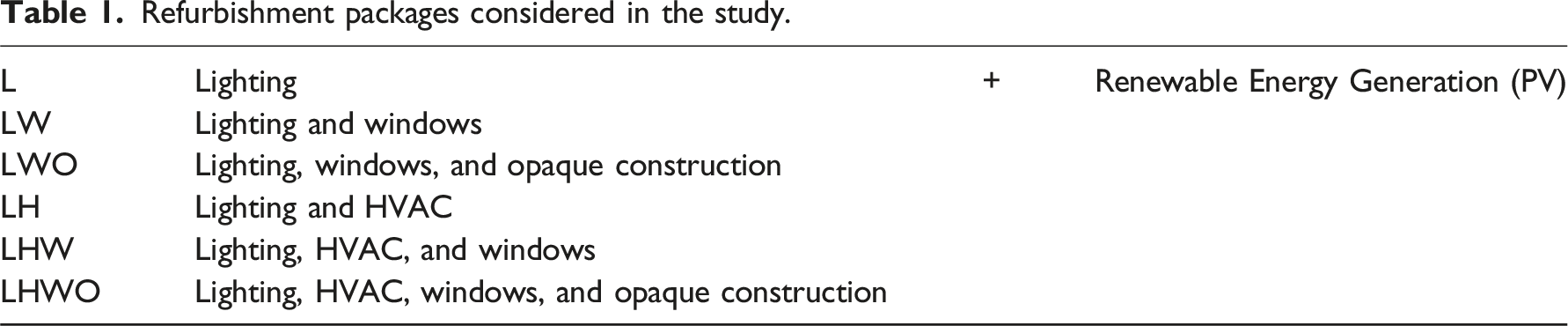
The first scenario involves only lighting replacement, representing minimal intervention. The second adds window replacement, while the third includes further improvements to the building’s opaque constructions. The remaining three scenarios expand upon these measures by upgrading the HVAC system, including replacing the existing gas-fired boilers with electric heat pumps. This staged approach was designed to allow flexibility in refurbishment strategies, accounting for various technical, economic, and practical constraints that may limit the feasibility of deep retrofits.
Detailed assumptions for the input data of the baseline building and refurbishment measures for the case study building.
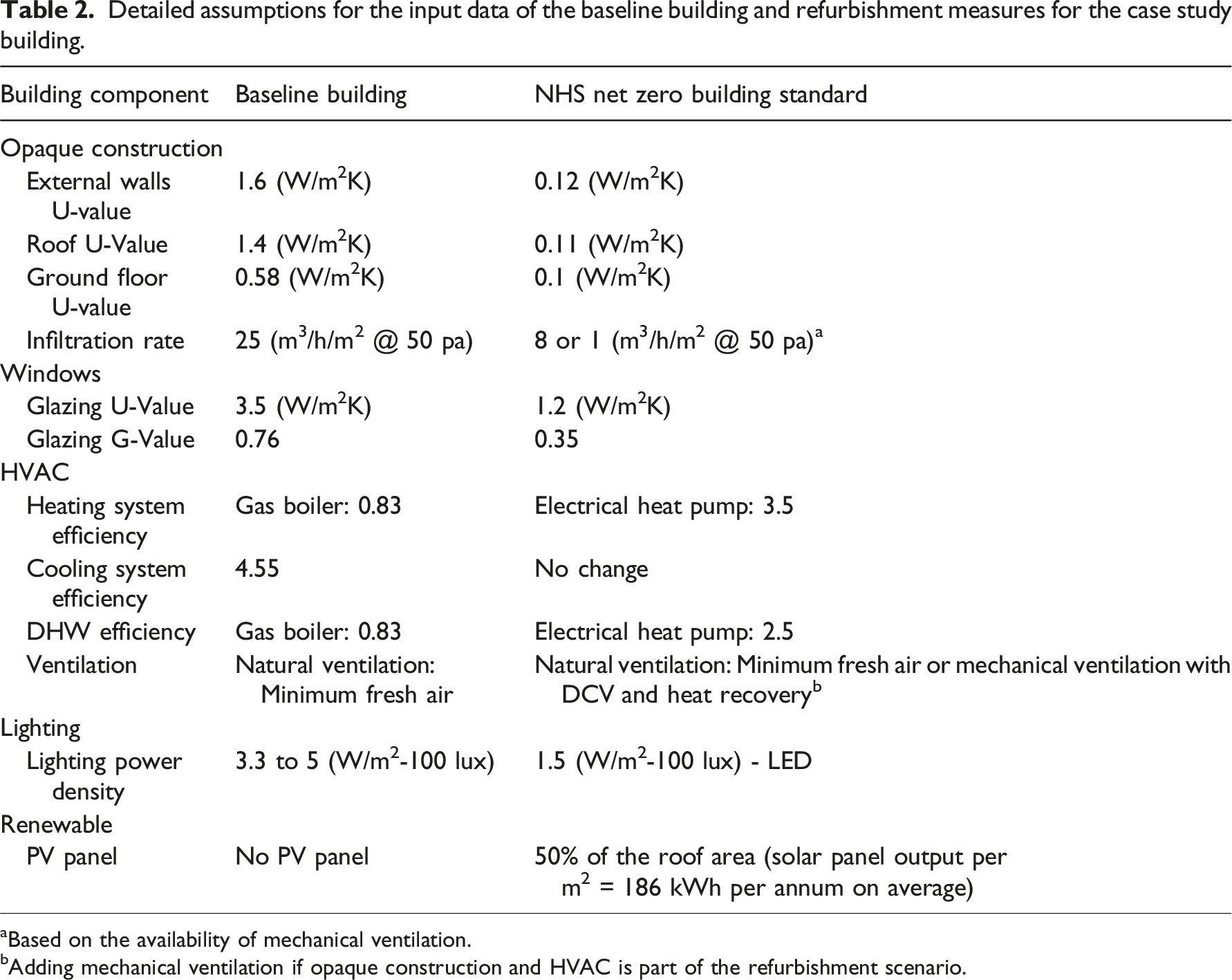
aBased on the availability of mechanical ventilation.
bAdding mechanical ventilation if opaque construction and HVAC is part of the refurbishment scenario.
Weather conditions
To assess the impact of different refurbishment packages on building performance, simulations were conducted using not only current weather conditions but also projected future climate scenarios for the 2030s and 2050s. The weather files were developed by the Centre for Energy and the Environment at the University of Exeter as part of the Prometheus Project. 34 For future scenarios, climate projections based on medium emission pathways and the 50th percentile (central estimate) of mean temperature change were selected. In the energy performance analysis, Test Reference Year (TRY) weather files were used, while Design Summer Year (DSY) files were applied for the overheating assessment.
Results and discussion (case study)
The dynamic simulation model was developed based on the SBEM compliance model generated in DesignBuilder, with refinements made using information gathered during the site visit to enhance its accuracy. These refinements included incorporating comfort cooling systems in zones not covered by the original SBEM model, correcting the building’s orientation, and updating the efficiency of the domestic hot water (DHW) system. After these adjustments, simulations were carried out, and the results were compared to actual measured energy consumption. Initial simulation results showed overestimated electricity consumption and underestimated gas consumption. Several factors can contribute to this discrepancy, including differences between actual building characteristics and input data, as well as variations in occupancy patterns, while standard schedules were used in the model.
As mentioned, the model input data was adjusted based on site visits to minimize discrepancies between the model and the actual building. To further improve accuracy and reduce the performance gap, additional tuning focused on occupancy and associated internal gains from equipment and lighting. Key parameters were systematically adjusted, and simulation results were compared against measured annual electricity and gas consumption using different occupancy factors (Figure 3). An occupancy factor of 0.85 (85% of default NCM assumptions) provided the closest agreement with measured data. Site observations, including several unoccupied rooms, support the use of this reduced occupancy factor as a reasonable representation of actual building use. Measured gas and electricity consumption compared to simulation results with varying occupancy factors.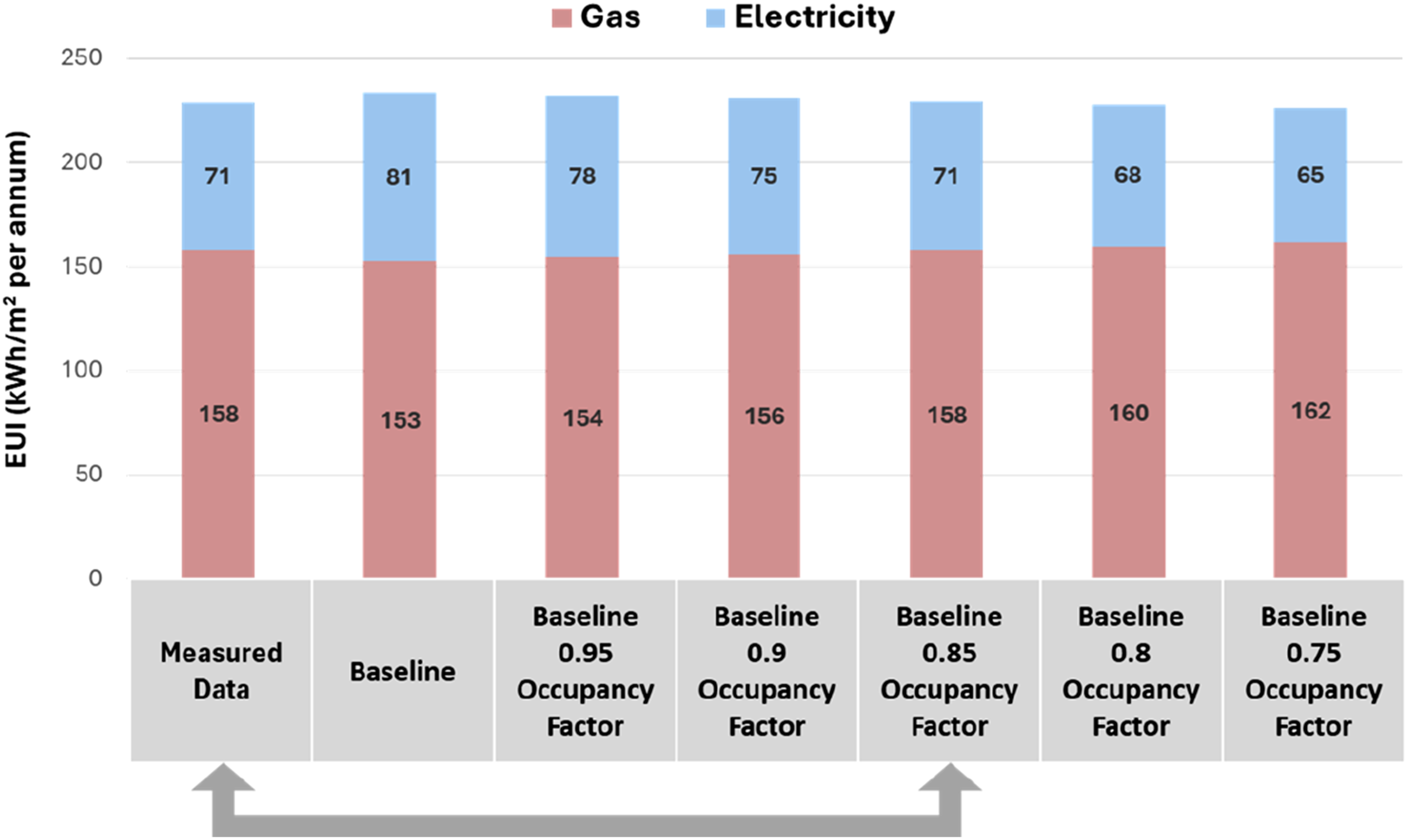
It should be noted that similarity in total annual gas and electricity consumption does not guarantee model accuracy, as errors in different parameters can cancel each other out. Also, several simplifications were applied during the modelling process, including converting infiltration rates from m3/h/m2 @ 50 Pa to ACH using a divisor factor, and assuming constant seasonal efficiencies for the heating system. These simplifications also, can affect model accuracy. Despite these limitations, tuning guided by measured data and site observations helps reduce the performance gap and produces a more reliable model, suitable for comparing the effects of different refurbishment measures.
Refurbishment scenario models were developed using the calibrated baseline model, with simulations conducted using both current weather data and projected weather conditions for the 2030s and 2050s. Figure 4 presents the simulation results across all scenarios. Replacing the existing lighting system (with a power density of 3.3–5 W/m2 per 100 lux) with energy-efficient LED lighting (1.5 W/m2 per 100 lux) reduces the lighting load from 25.2 to 10.2 kWh/m2. However, this also leads to a slight increase in heating demand, from 156 to 164 kWh/m2 under current weather conditions, due to reduced internal heat gains. As a result, this measure alone reduces total energy consumption by only 3%. Impact of refurbishment measures on building end-use energy consumption by EUI.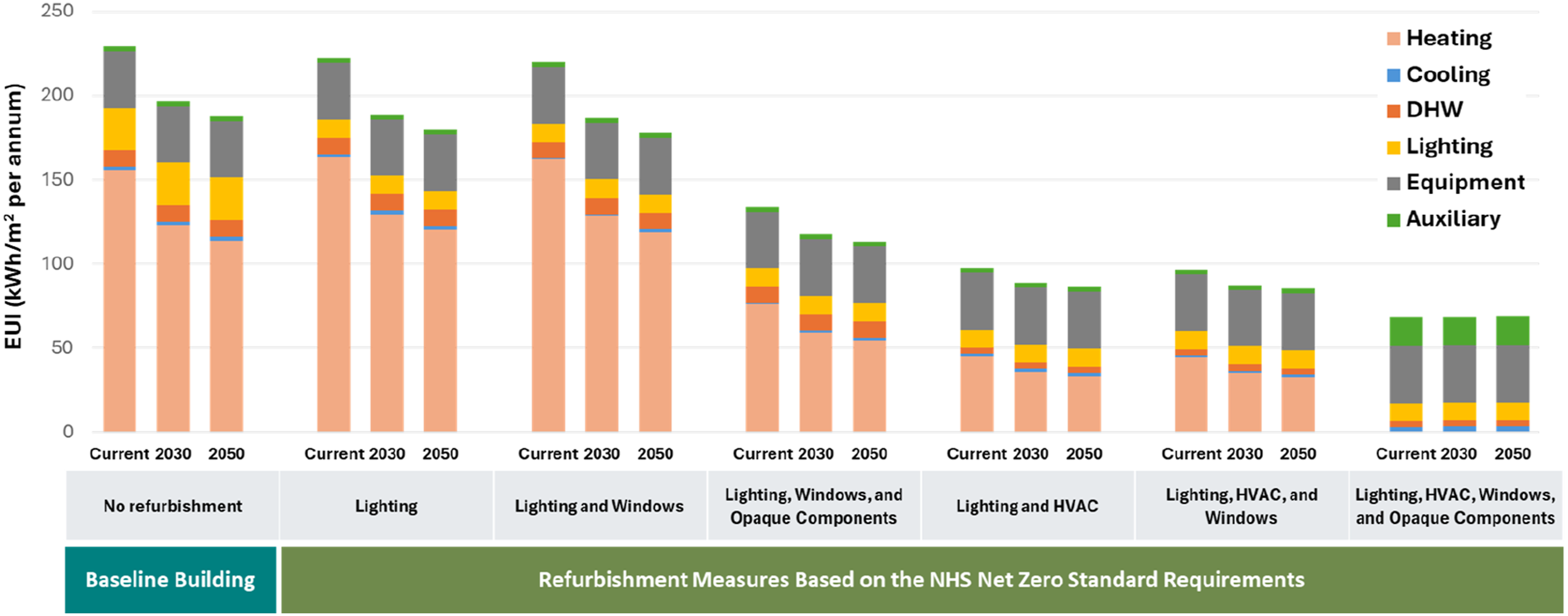
When lighting upgrades are combined with window replacements, the total energy consumption is reduced by 4% relative to the baseline. The limited effect of window replacement is due to the trade-off between improved U-values (reducing heat loss) and lower G-values (reducing solar heat gain), which tend to offset each other. The lower G-value specified in the NHS Net Zero Building Standard aims to mitigate the risk of overheating. Its implications are discussed later when the building’s overheating performance is evaluated.
Greater reductions are achieved when refurbishments also include the building’s opaque elements, such as walls. These upgrades improve thermal insulation and reduce air infiltration, significantly decreasing heating demand. When all three measures, lighting, window, and opaque construction upgrades, are applied together, total energy consumption is reduced by 41% under current weather conditions. This reduction is primarily driven by improvements in the opaque building elements. In this scenario, the post-refurbishment infiltration rate is assumed to be 8 m3/h/m2 @ 50 Pa, as outlined in Section 3 (Methodology). Nevertheless, achieving the transition from baseline to near net-zero fabric performance in practice can present challenges. Increased insulation may raise the risk of interstitial condensation, and thermal bridging can reduce the effectiveness of added insulation and hinder attainment of the specified U-values. These factors highlight the need for careful design detailing and moisture management in deep retrofit applications.
Replacing the gas boiler with an electric heat pump has a substantial effect on the building’s heating load and overall energy consumption due to the high efficiency of heat pumps. When lighting and HVAC system upgrades are implemented together, the total energy consumption is reduced by approximately 57% under current weather conditions. While lighting upgrades alone have a limited impact, since the reduction in lighting load is largely offset by increased heating demand, combining them with a high-efficiency heating system significantly improves the overall performance. In this combined scenario, the efficiency gains from the heat pump outweigh the increased heating load caused by reduced internal gains from lighting.
In the final refurbishment scenario, which incorporates all measures, including lighting, windows, opaque fabric, and HVAC system upgrades, the heating demand is reduced to approximately 1 kWh/m2. This significant reduction is achieved by introducing a mechanical ventilation system with demand-controlled ventilation (DCV) and heat recovery, along with reducing the infiltration rate to 1 m3/h/m2 @ 50 Pa. However, this scenario also results in increased auxiliary energy use due to the operation of the mechanical ventilation system.
It is also important to note that under future weather conditions, characterised by higher ambient temperatures, the building’s heating demand, and consequently its total energy consumption, is expected to decrease across all scenarios, as illustrated in Figure 4.
The performance of various refurbishment measures was evaluated against the energy targets defined in the NHS Net Zero Building Standard.
31
This standard specifies energy consumption limits based on building use categories, which were used to establish the net-zero energy target for the case study building. The standard identifies three space types—Low-Tech, Medium-Tech, and High-Tech—each associated with specific functions and energy thresholds. As the case study building functions as a primary healthcare facility, it contains only Low-Tech spaces, with no Medium-Tech or High-Tech areas. Within the Low-Tech category, two subtypes are relevant: • Type 1 Low-Tech spaces, including circulation areas, reception zones, and waiting rooms, have a maximum energy consumption limit of 35 kWh/m2/year. • Type 2 Low-Tech spaces, which include areas with minimal equipment use, such as offices, consultation rooms, teaching spaces, and dining areas, have a higher threshold of 70 kWh/m2/year.
To calculate the building’s overall energy performance target, the proportions of these two space types within the facility were considered. Based on this distribution, the calculated energy threshold for achieving net-zero operational emissions was determined to be 56 kWh/m2/year. Refurbishment scenarios were therefore assessed in relation to this benchmark to determine whether they enable the building to meet the NHS net-zero target.
Figure 5 illustrates the energy consumption of the baseline building and various refurbishment scenarios, disaggregated by fuel type and assessed under current and future weather conditions. The figure also shows the effect of installing photovoltaic (PV) panels covering 50% of the roof area, and compares total energy use with the net-zero target defined in the NHS Net Zero Building Standard. Impact of refurbishment measures on building gas and electricity consumption compared to the NHS Net Zero target.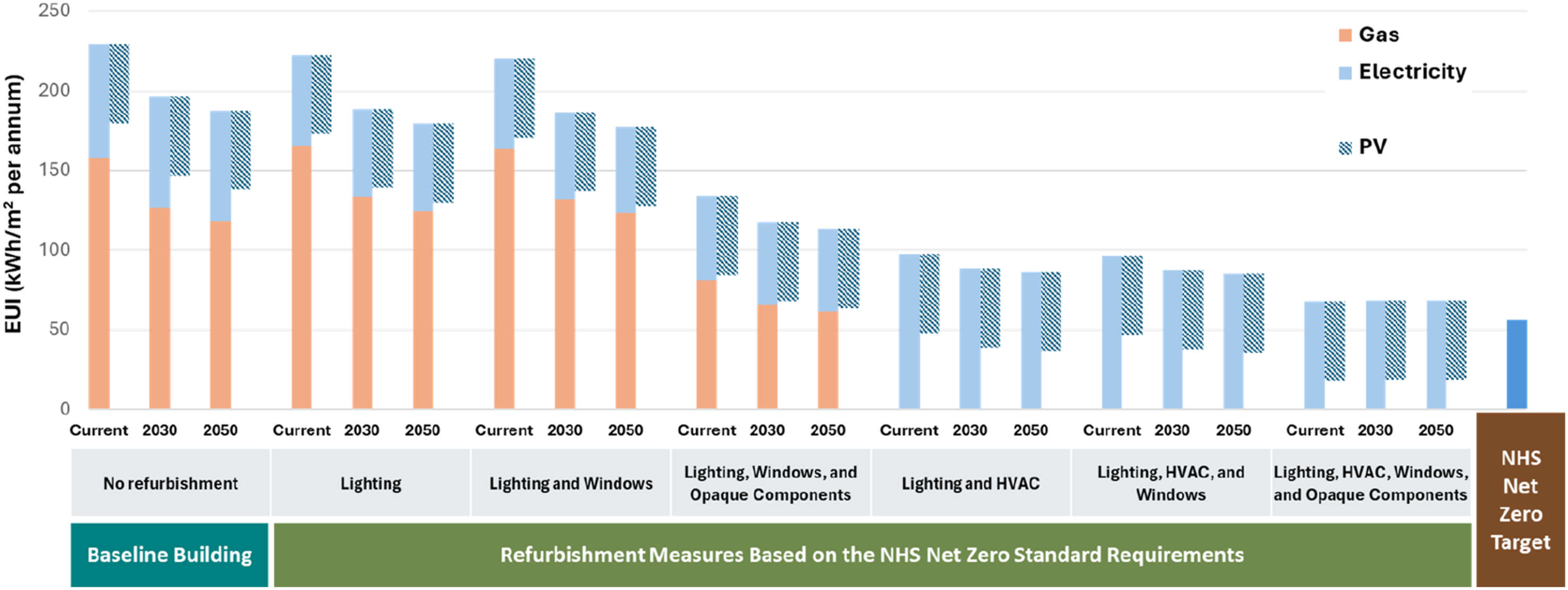
The results indicate that achieving the net-zero target is not feasible through envelope and lighting system upgrades alone. To meet the target, refurbishment measures must include replacement of the building’s HVAC system. Moreover, even with comprehensive refurbishment strategies, the target cannot be achieved without the integration of PV panels. However, it is possible to meet the net-zero target without undertaking any envelope improvements, which are often costly and disruptive to building operations. For example, by upgrading the lighting and HVAC systems and adding rooftop PV panels, the building’s energy consumption can be reduced to 48 kWh/m2/year, falling below the defined target of 56 kWh/m2/year. It should, however, be noted that replacing gas-boilers with heat pumps without improving building fabric requires detailed attention to hot water temperatures achieved in the hydronic system and may require extending the size of the heat emitters in a building.
It is also important to note that in this study, equipment loads were held constant across all scenarios. In practice, incremental improvements in the efficiency of electrical, ICT, and medical equipment could reduce internal gains and electricity demand. If such reductions are realised, it may be possible to meet the net-zero target without the need for onsite microgeneration. However, this would require a significant decrease in equipment-related energy consumption, which may not be achievable without broader systemic changes.
To assess the building’s performance in delivering thermal comfort under various refurbishment scenarios, summertime simulations were conducted across different weather conditions. Figure 6 presents the results of the overheating analysis based on the TM52 criteria. Approximately 12% of the building’s internal area is served by air conditioning (AC), and these zones are therefore excluded from overheating assessment. Overheating assessment results of the baseline building and refurbishment measures.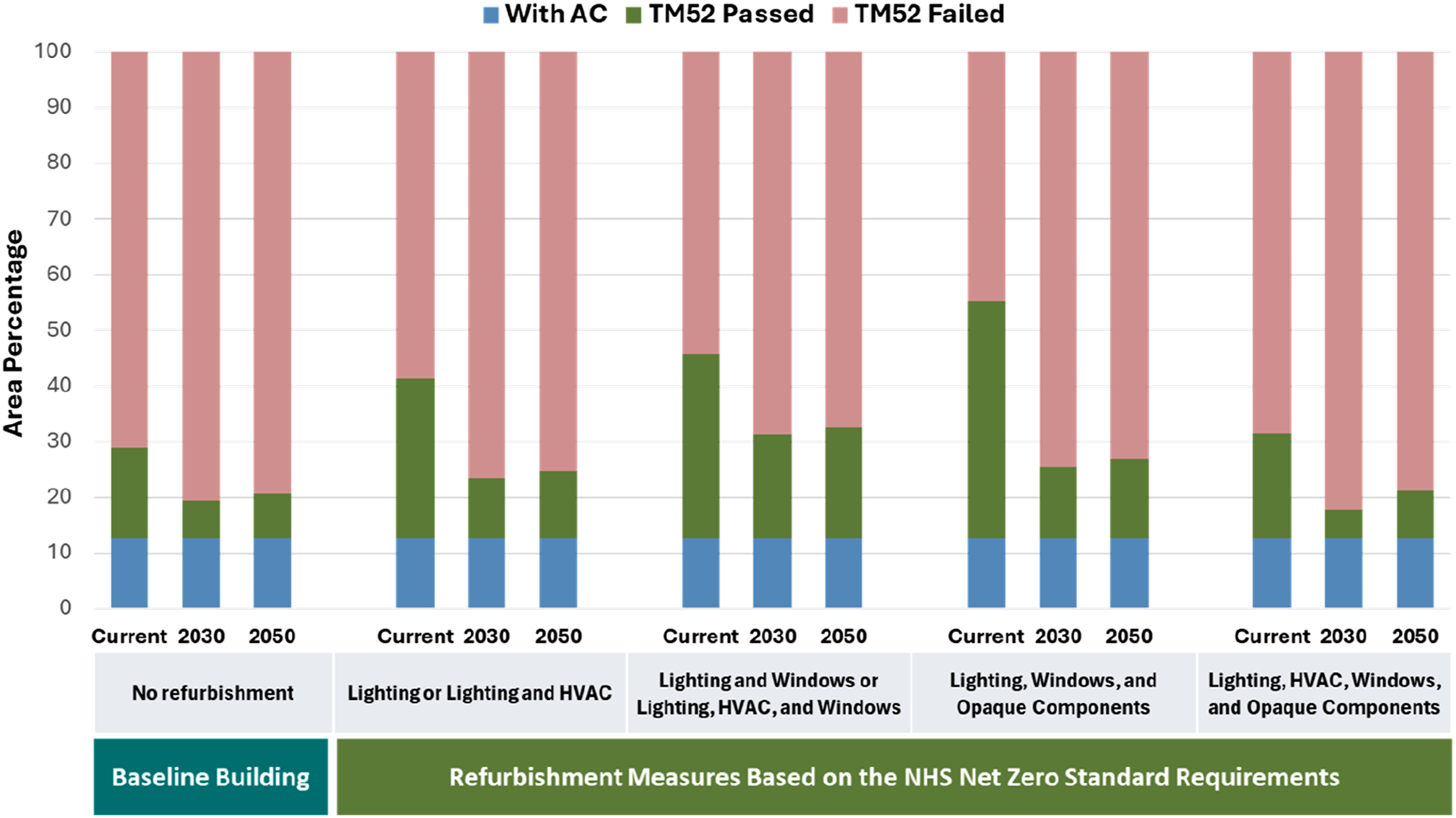
For the baseline scenario under current weather conditions, only 16% of the building’s area complies with the TM52 criteria, while 71% fails. This issue was corroborated during site visits, where several rooms were observed using portable fans (Figure 7). Under future weather projections, the situation worsens, with only 7% of the building area meeting the criteria. Presence of portable fans in various rooms of the case study building.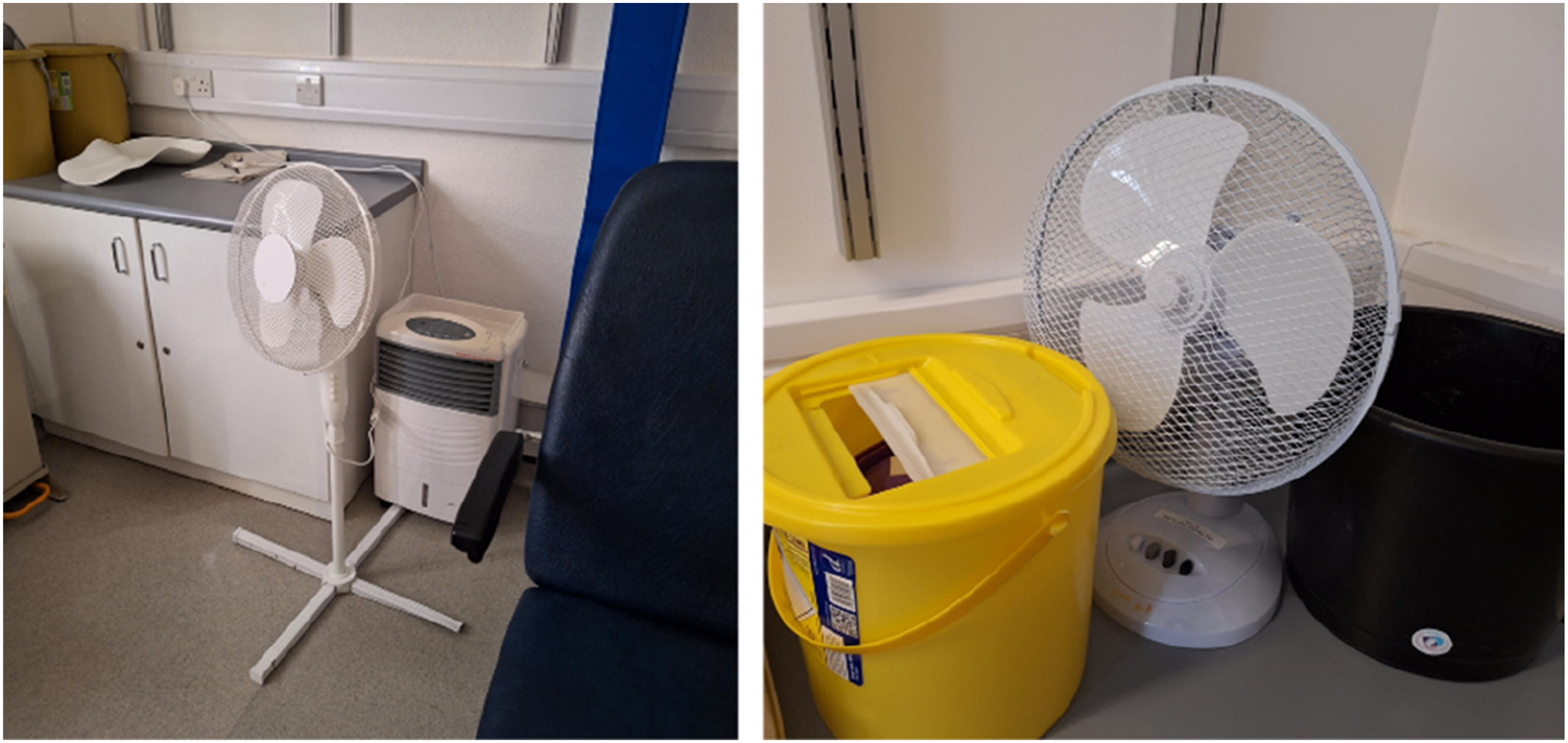
Refurbishment measures show potential in improving thermal comfort. For example, upgrading the lighting system, thereby reducing internal heat gains, increases the compliant area to 28% under current conditions and 11% under future conditions. Similarly, upgrading the windows improves the building’s resilience to overheating mainly due to the lower glazing g-value specified. While such measures may not significantly reduce total energy consumption, they contribute positively to thermal comfort. Improvements to opaque envelope components also help mitigate overheating. However, in scenarios that combine HVAC system upgrades with enhanced airtightness (infiltration rate reduced to 1 m3/h/m2 @ 50 Pa), overheating worsens compared to scenarios that exclude HVAC upgrades and maintain an infiltration rate of 8 m3/h/m2 @ 50 Pa. This indicates that excessive airtightness can exacerbate summertime overheating.
Overall, the results suggest that, even with the implemented refurbishment strategies, overheating remains prevalent in much of the building, particularly under projected future weather conditions. To achieve significant improvements in thermal comfort, additional interventions are required. These may include passive design measures, such as external shading devices, or active strategies, such as expanding the use of comfort cooling systems.
As mentioned, one strategy to mitigate overheating in buildings is the introduction of comfort cooling systems. This can be implemented by installing Direct Expansion (DX) units in zones with a high risk of overheating or by employing polyvalent heat pumps, which are more efficient and utilise low-GWP (Global Warming Potential) refrigerants, thereby supporting broader sustainability objectives. However, this approach can lead to an increase in energy consumption.
To evaluate the impact of introducing comfort cooling, the final refurbishment scenario, which includes upgrades to HVAC systems, lighting, windows, and opaque construction, was analysed both with and without the inclusion of a cooling system. The results of this analysis, along with the NHS Net Zero target, are illustrated in Figure 8. Incorporating a cooling system increases the building’s total energy consumption by approximately 6%, 7%, and 8% under current, 2030, and 2050 climate scenarios, respectively. Despite this increase, the results indicate that the installation of photovoltaic (PV) panels covering 50% of the roof area is sufficient to offset the additional energy demand. Consequently, the building can still meet the NHS Net Zero energy target even with the inclusion of a comfort cooling system. Impact of adding comfort cooling system on the building energy consumption.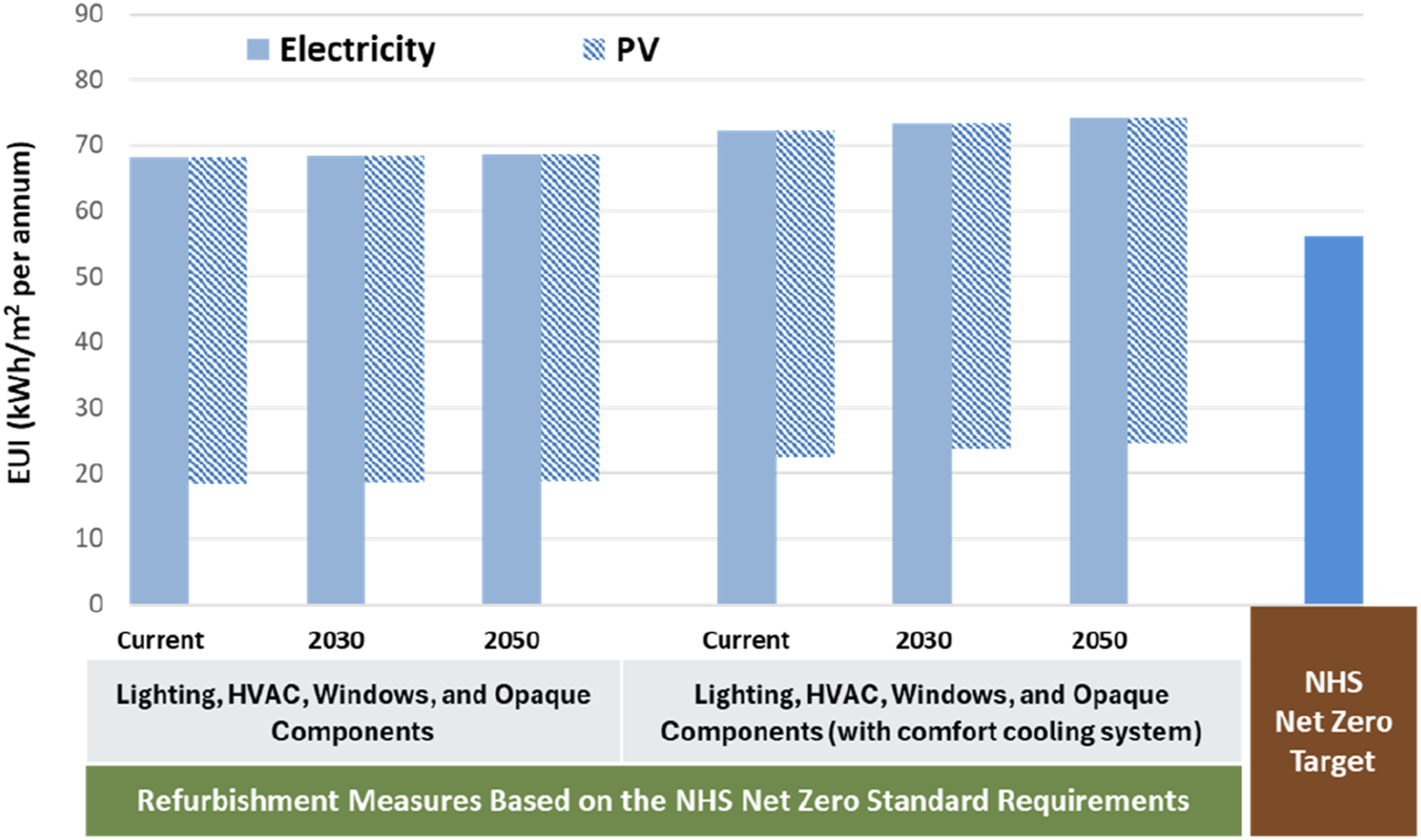
Model validation and feasibility across a large NHS building stock
Since the process developed to utilise data from SBEM models for generating dynamic simulation models is automatable, it can be scaled for broader applications. This enables its use not only for assessing individual building performance, as demonstrated in the case study, but also for analysing refurbishment strategies across large building stocks.
To evaluate the feasibility and accuracy of this approach, SBEM models for an additional 164 healthcare buildings in London were converted into dynamic simulation models using the same methodology applied to the case study. These buildings represent a diverse range of primary healthcare facilities, including small GP practices, medium-sized health centres, and larger community hospitals. The energy performance predicted by the baseline dynamic simulation models was then compared to measured energy consumption data, enabling an assessment of the modelling approach’s reliability at the stock level.
Figure 9 presents a comparison between simulated and measured electricity, gas, and total energy consumption for all buildings, including a best-fit line and a 1:1 reference line to visualise simulation accuracy. On average, the models overestimated electricity use, underestimated gas consumption, and therefore slightly overestimated total energy use. As electricity consumption in these buildings is largely related to lighting and equipment (with heating primarily supplied by gas), the overestimation of electricity likely reflects occupancy levels assumed in the NCM that exceed actual conditions. This interpretation is supported by site visits and discussions with building managers, which indicated that several areas across many facilities were underutilised. Furthermore, higher internal gains from overestimated occupancy would reduce heating demand, explaining the corresponding underestimation of gas use. To improve accuracy at the stock level, the models were fine-tuned by applying a uniform occupancy factor adjustment across all buildings, replicating the calibration approach used in the case study. An occupancy factor of 0.75 (representing 75% of the default NCM assumption) provided the most balanced results between simulated and measured data. Comparison of simulated baseline model results and measured electricity, gas, and total energy consumption for all buildings.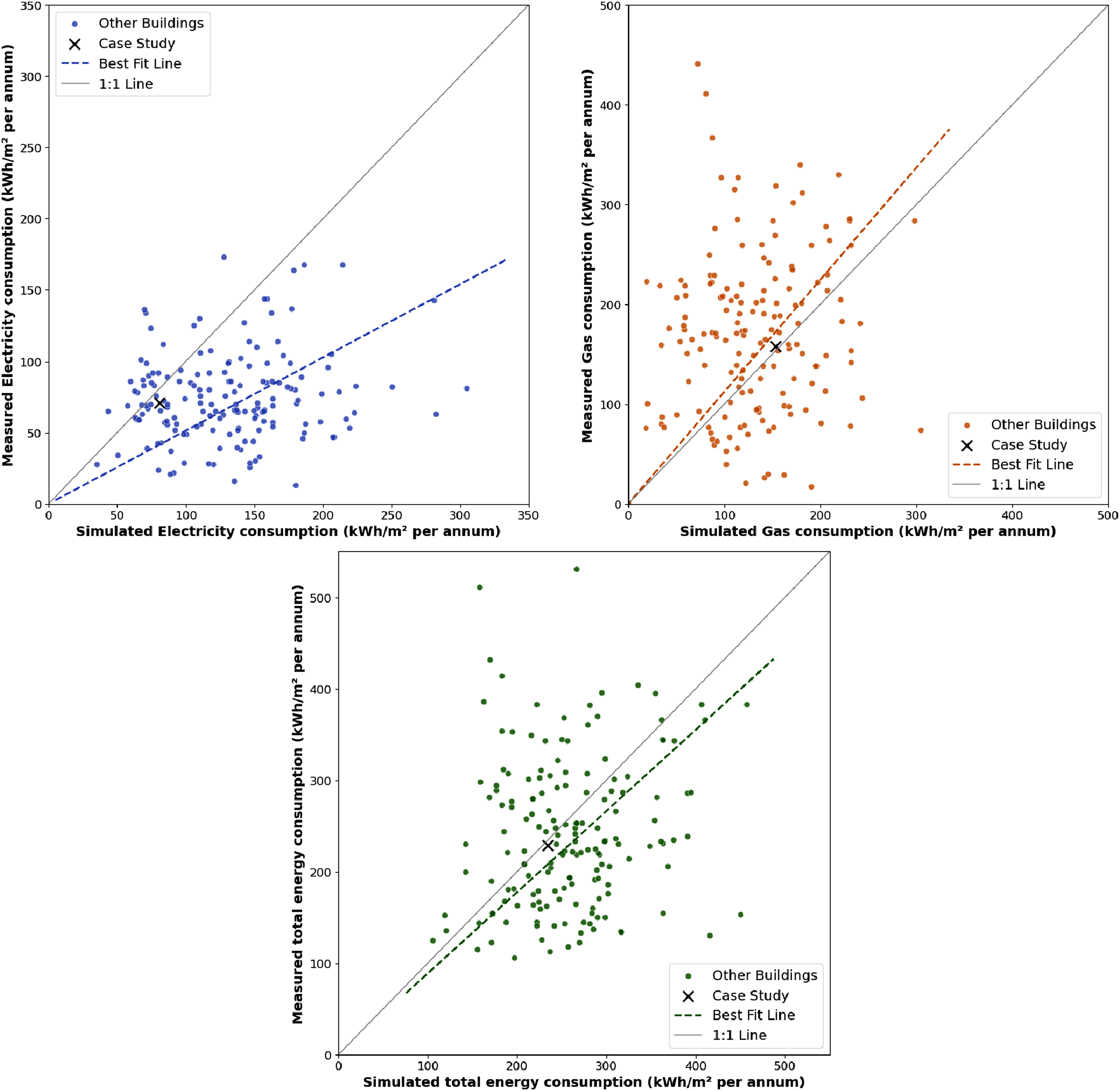
Statistical analysis of the performance gap in energy consumption for baseline and fine-tuned models.
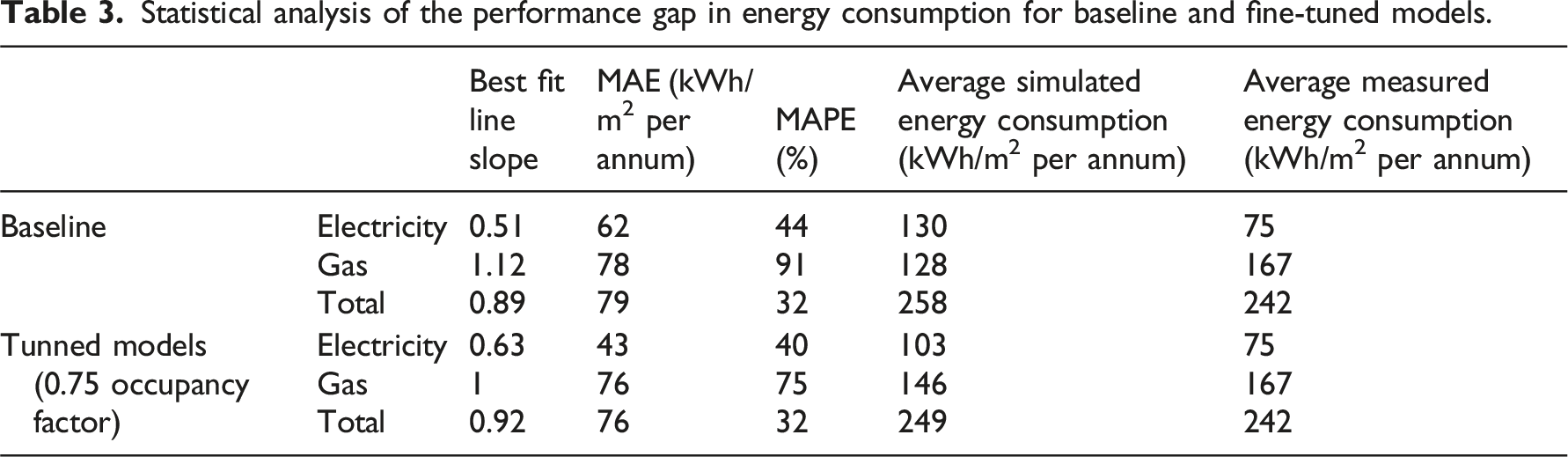
While the occupancy-based tuning improves overall accuracy at the stock level, it has limitations when applied to individual buildings. At the stock scale, variations in individual performance tend to offset each other, producing reliable aggregate results even when single-building predictions deviate. This makes the calibrated models suitable for assessing refurbishment strategies and identifying overall performance trends across large portfolios, where aggregate accuracy is more critical than exact precision at the individual level. In contrast, for individual buildings, particularly those with high performance gaps, further investigation into the accuracy of the original SBEM inputs or additional model refinements may be required. Such refinements could include adjusting occupancy patterns, ventilation rates, equipment loads, or operational schedules to better capture actual conditions.
Figure 10 illustrates the comparison between simulated and measured data after applying the occupancy factor. In this chart, buildings with a performance gap below 20% are visually distinguished from those exceeding this threshold. According to the analysis, 59 out of 164 buildings (36%) exhibit a performance gap below 20%, indicating good agreement between modelled and measured energy use. These buildings may be suitable for further use in building-level refurbishment assessments. However, the remaining 105 buildings show performance gaps greater than 20%, suggesting that additional tuning or data collection would be needed for building-level reliability. Comparison of simulated tuned model results and measured total energy consumption for all buildings, highlighting buildings with performance gaps below and above 20%.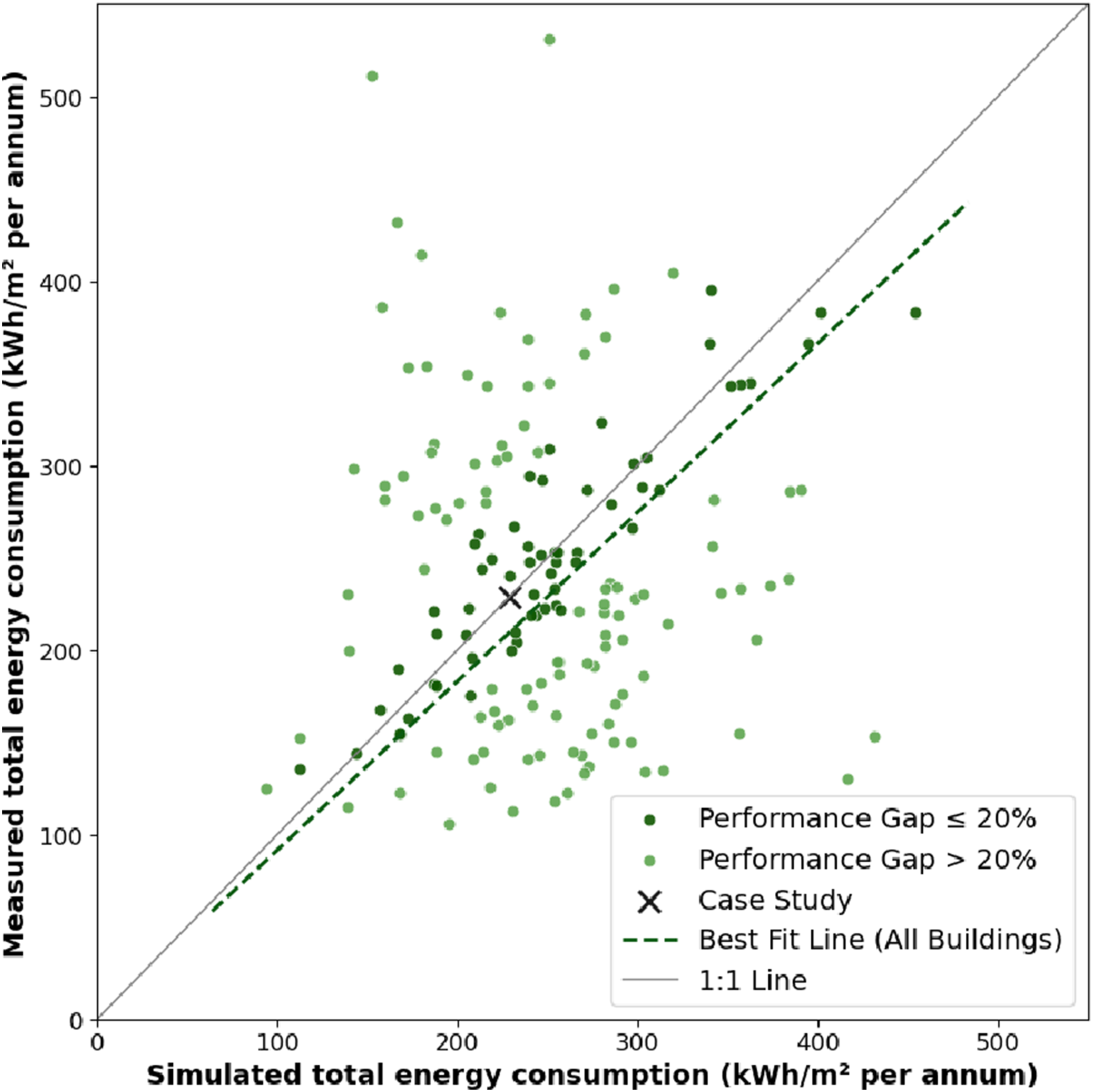
It is important to note that such discrepancies are not unique to models derived from SBEM data; even fully bespoke dynamic models frequently exhibit performance gaps, reflecting the inherent uncertainty in simulating complex, real-world operational behaviour. In this study, comparisons between measured and simulated energy use were based on annual electricity and gas consumption, which may mask deviations in shorter-term performance. Similar approaches have been widely adopted in stock-level analyses, where researchers validated model performance using annual EUI data due to the limited availability of granular operational data.35–37 This methodological alignment supports the broader applicability of the approach demonstrated in this study. In some cases, errors in building details can offset each other, producing reasonable agreement at the annual level, but potentially concealing discrepancies in specific end-uses or periods. While finer temporal calibration using measured data would improve building-level accuracy, the aim of this study was to demonstrate a method that leverages readily available data, such as EPC or DEC information, to develop dynamic simulation models at both the case-study and stock level.
Overall, the findings demonstrate that dynamic simulation models generated from SBEM-derived data, once calibrated with measured information, can achieve a reasonable level of accuracy at the stock level. This makes them a practical and scalable approach for assessing refurbishment strategies across large building portfolios. However, for individual buildings, especially those exhibiting significant performance gaps, further fine-tuning is required to ensure reliable and building-specific performance predictions.
Conclusion
This study evaluated the potential of using energy certificate models (SBEM models) to generate dynamic simulation models and assess the impact of various refurbishment measures. A SBEM model of a health centre in London, originally created by an energy assessor, was used to develop a dynamic simulation performance model. A site visit was conducted to assess the accuracy of the SBEM model, and the dynamic simulation model was adjusted based on data collected during the visit to improve its accuracy. Additionally, the model was fine-tuned using an occupancy factor to better align simulation results with measured energy consumption data. The tuned model was then used to simulate various refurbishment scenarios, allowing detailed evaluation of the building’s energy performance and overheating risk under different conditions.
The results indicate that SBEM models can serve as a valuable source for assessing the impact of refurbishment measures and identifying the most appropriate interventions for specific buildings. This is particularly beneficial when working with large building stocks, such as NHS properties, where developing individual models for each building would be time-consuming and impractical. In such cases, SBEM models can be adapted and their embedded data utilised to create dynamic simulation models for evaluating refurbishment scenarios. However, the case study revealed potential discrepancies between the SBEM model and actual building conditions. To ensure accuracy in dynamic simulation results, greater attention must be given to the SBEM model creation process, with a focus on minimising errors and improving input data quality.
For the case study building, achieving the NHS’s net-zero targets requires integrating on-site microgeneration technologies, such as photovoltaic (PV) panels, alongside improvements to the building envelope and technical systems. The results also highlight overheating as a significant concern, which the refurbishment measures considered cannot fully resolve. Additional strategies, such as external shading devices as passive solutions and comfort cooling systems as active interventions, are needed. Balancing energy performance goals with overheating mitigation is therefore critical in retrofit strategies, especially as active cooling may become necessary to ensure occupant comfort.
The approach of converting SBEM models into dynamic simulation models was automated and applied to the larger sample of 164 buildings. This analysis confirms that dynamic simulation models generated from SBEM data can be effectively scaled for stock-level assessments, providing a practical method for evaluating refurbishment strategies across large healthcare portfolios. While uniform tuning strategies, such as adjusting occupancy factors, improve overall accuracy and alignment with measured data at the stock level, their effectiveness varies across individual buildings. The results show that average simulated energy consumption closely matches measured averages at the stock level, supporting this approach when aggregate performance is the priority. However, at the individual building level, some models exhibit substantial performance gaps. Further investigation is needed in these cases to identify potential errors in the original SBEM data or to refine key input parameters for improved accuracy.
Footnotes
Acknowledgments
The authors are also grateful to NHS Property Services for their collaboration and support throughout the project and for providing the EPC models and the available measured energy data for their buildings. The EPC models were originally developed by Compliance365 for compliance purposes.
Declaration of conflicting interests
The author(s) declared no potential conflicts of interest with respect to the research, authorship, and/or publication of this article.
Funding
The author(s) disclosed receipt of the following financial support for the research, authorship, and/or publication of this article: This study was supported by funding from UCLPartners through the Connecting for Change programme.
