




Abstract
Practical application
The method facilitates occupant-centric control decision-making processes. A dynamic thermal simulation model of the building is created, and correlations are derived between external and internal conditions by a person familiar with thermal modelling. The correlations are used to derive instructions for the occupants on using their space. The instructions can be automatic in graphical form if weather forecast input is continuously provided, requiring a subscription to a weather forecast online provider. The approach follows bioclimatic principles and Fogg’s Behaviour Change Model to encourage the “ability” of end-users to predict their homes’ IEQ with no in-depth building physics knowledge.
Keywords
Introduction
In recent years, the implications of behavioural science have been seen as an effective action to tackle global emergencies - the climate crisis, energy crisis and fuel poverty. 1 Despite having a design to maintain acceptable indoor environmental quality (IEQ) using natural cooling and passive heating, without careful operation by the end users, the mechanical-assisted heating, ventilation and air-conditioning (HVAC) systems will be required and associated energy costs and carbon emissions will be increased. Studies which focus on post-occupancy evaluation showed that building performance gaps cause higher energy consumption than predicted design, and this is often driven by the way the end-users operate the building inappropriately and due to a lack of understanding of maintaining the IEQ in passive design measures. 2 Changes in household behaviour can lead to 5-15% savings in energy use. 3 If the building occupants are informed of predicted indoor environmental conditions for the next 1-2 days according to the real-time outdoor weather, an occupant-centric control approach could be a part of energy-efficient building operations to adjust indoor environmental conditions by integrating passive design strategies. 4 To promote pro-environmental behaviours for the end-users, simple, effective and easy-to-understand feedback systems are required 5 ; however, even less is known about how indoor condition predictions can be incorporated into behaviour change suggestions to develop behaviour change interventions.
Behaviour interventions are often developed from three components - ability (psychological and physical abilities), opportunities (physical and social factors) and motivation (attitudes, habits, etc.). 6 A behaviour model for persuasive design can be developed when these three elements occur at the same moment, as found in Fogg’s Behaviour Model. 7 The eco-feedback approach to behaviour change in the housing sector is one of the most needed and feasible options to reduce operational carbon emissions and meet net-zero targets. 8 Eco-feedback is a method which delivers feedback to occupants to encourage energy conservation and reduce environmental impacts.5,9,10 Making health behaviour changes to improve indoor environmental quality can be challenging in some cases; for example, personal exposure monitoring to improve asthma-related health requires additional support from healthcare professionals. 11 A simple, effective and user-friendly method, which can inform occupants about their understanding of, and interaction with, both mechanical systems and passive strategies opportunities, can increase the “ability” of end-users to predict the IEQ of their homes with no in-depth building physics knowledge. 12
The physics-based dynamic models are capable of building energy and thermal models according to the physical component of a system, whereas a data-driven model is capable of uncovering other hidden dynamics. 13 Physics-informed ensemble models for joint prediction are another promising approach of physics-informed machine learning (PIML). 14 Combining indoor environmental data with weather forecasts using a hybrid physics-based artificial neural network model could be implemented widely to provide location-specific indoor condition predictions to improve health warning systems. 15 The significances of contextual factors in the prediction models are required to evaluate advanced deep learning architectures that demand extensive historical databases for machine learning to train data, while using local indoor measurements could be time-demanding. 16 However, the biggest challenge of PIML is that it requires the effective integration of prior physical knowledge in modelling and the evaluation of developed PIML methods to increase model generalizability and ensure the physical plausibility of results. 17
A simple method, in contrast to a deep learning indoor prediction model, which informs occupants to correlate outdoor climate conditions to their time–microenvironment–activity by predicting indoor air temperatures, could be beneficial to alter their indoor environments appropriately without a significant reliance on building physics knowledge. 18 A correlation-based prediction is, however, context-dependent, and the results of IEQ prediction rely on the time-dependent nature of the buildings, occupants and weather-related boundary conditions of a room. Furthermore, utilising a bioclimatic approach with passive design opportunities can reduce energy consumption and improve the indoor environment.19–22 As discussed in 13, handcrafted selection of physics knowledge and a lack of benchmarks and evaluations are some of the challenges in developing machine learning prediction models. In addition, using those machine learning prediction models in participatory research requires further simplification to communicate with building users who might have limited knowledge of complicated prediction models. However, the simple IEQ predictions framework from a correlation study to incorporate into behaviour change suggestions has not been developed yet. This study aims to fill this research gap.
Indoor environmental predictions for a room are built on condition-based feedback, which heavily relies on several scenarios through the end-user’s actions in operating the room according to future weather. In this regard, predictive modelling can be developed from statistical techniques that use historical data to predict future outcomes by using a correlation study.23,24 Predicting the IEQ of a room could be varied by a number of factors, including location context, building envelope design, building operation modes and occupant-related factors, which altogether influence the boundary conditions of the building.25–27 For an existing building, if its orientation, built form, size of windows, and fabric energy efficiency are known and unchanged, the IEQ performance could be mainly altered by three factors: (i) the external climate, (ii) building operation modes (e.g., natural, and mechanical mechanisms for ventilation or the use of shading) and (iii) occupancy presence and their behaviours. Occupants at the centre of building operation have more benefits in maintaining comfort and indoor air quality (IAQ), as can be seen in an active house design approach. 28 However, a challenging question for an occupant-centric approach is how to simplify predicting indoor environmental conditions for the next 24 hours or a few days, according to real-time weather outdoors and appropriate building operation modes. This engagement needs to be aligned with occupants’ understanding of building operations and their preferred decision-making for the IEQ needs in their building.
An empirical study based on a hot-summer humid continental climate of Massachusetts found that the relationship between indoor and outdoor temperatures is non-linear in 16 homes, revealing that there is a strong temperature correlation at warmer outdoor temperatures and a weak temperature correlation at cooler outdoor temperatures. 29 A sensitivity analysis based on the temperate climate of Switzerland found that wind speed variation did not significantly impact IAQ throughout the year, while the still air had a high sensitivity to temperature and humidity level differences. 30 A mobile app study based on the Danish climate found that a simple correlation method can provide indoor air temperature predictions, while the accuracy of the IEQ predictions heavily relies on the context-dependent boundary conditions of a room and time-dependent weather. 31 Researchers often use indoor-outdoor climate correlations as non-experimental research to predict IEQ; however, a framework that can inform the participatory research by designers to use the indoor-outdoor climate correlations for IEQ predictions, particularly to promote pro-environmental behaviours for the end-users, has not yet been developed.
This work developed a framework to promote pro-environmental behaviours from the correlation between indoor condition parameters and outdoor climatic parameters to predict indoor air temperatures, ventilation and indoor illuminance of an existing room, considering suggestions for different passive measures. A comparison of different boundary conditions for the correlation study provides inferences from different evidence that help to make fair judgements about using IEQ predictions for further behaviour interventions. The methodology was evaluated to set the control setting of a room and establish the reference case. The focus of the work, in addition to the statistical correlation, is to demonstrate how the correlation model can be applied to behaviour change suggestions. Recommendations for practical implications are thus discussed from the findings of this work and other statistical tests; the latter primarily worked to understand the impacts of boundary conditions on the prediction frameworks. Therefore, this work will contribute to participatory design researchers and PIML-based indoor environmental prediction model developers.
Methodology
The proposed framework was designed to promote pro-environmental behaviours through the results of the IEQ predictions using the indoor-outdoor climate correlation model and predictive modelling. This work was tested using an occupied multi-family apartment building in Switzerland as a case study. The base-case simulation model was validated with measured indoor environmental data. This calibration was aimed at evaluating the control setting of the apartment to establish a reference case for further statistical regression studies. The framework consists of four stages (Figure 1). Using the base-case model, in the first stage, the predictive modelling approach was considered to use the indoor-outdoor correlation models in IEQ prediction. In the second stage, the modelling processes were developed to understand the impacts of boundary conditions on statistical regression by comparing the correlation results of statistical tests. In the third stage, the prediction benchmarks were defined to predict optimal adaptive thermal comfort, optimal indoor daylight illuminance and required indoor air quality. In the final stage, behaviour change suggestions were discussed by comparing the prediction results; therefore, the occupant would be able to alter the operation of the rooms to maintain the necessary IEQ. In practical terms, the framework can be applied as follows in two stages, which include four steps: (1) Create a dynamic thermal, ventilation and daylighting model of the specific building. (2) Carry out simulations and derive daylight, thermal and ventilation correlations. (3) Have access to forecasted hourly external conditions. (4) Use the correlation equations to calculate hourly indoor temperature, air flow rate, and daylight illuminance. Use the air flow rate to calculate contaminant concentration. A schematic representation of the proposed indoor-outdoor correlation model and predictive modelling approach for behaviour change suggestions.
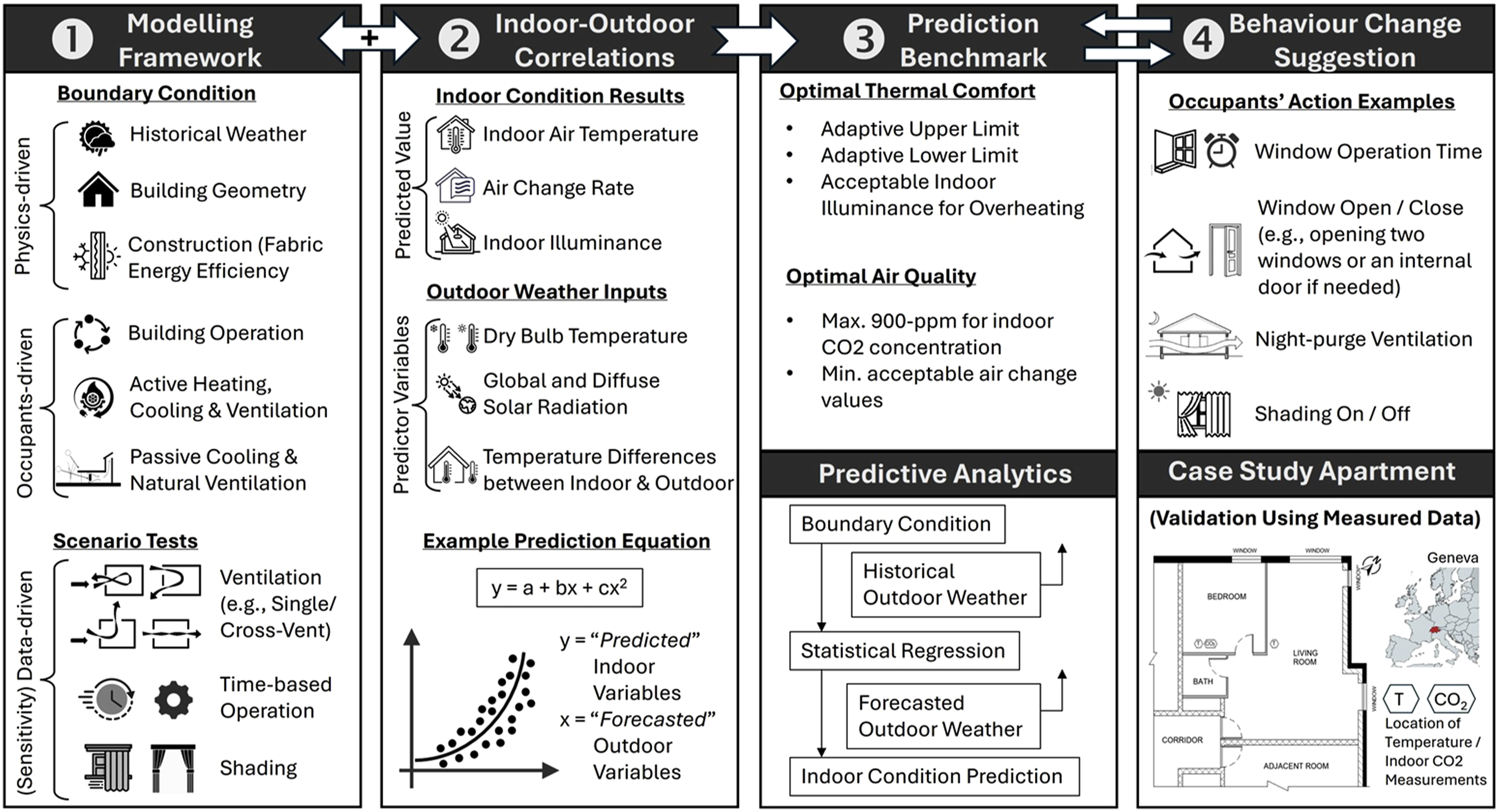
Steps 1 and 2 are carried out once for the specific building and require knowledge of dynamic thermal modelling (DTM) and access to a DTM and daylighting tool, as well as a good command of Excel for deriving correlations.
Modelling framework
Boundary conditions
For the correlation study, the predictability and accuracy are limited by the boundary conditions. The boundary condition of a room can be varied by different attributes such as building geometry, building operations through active and passive mechanisms, and the fabric energy efficiency of construction. By defining a specific boundary condition using historical weather, a base case could be set as a control group and produce a statistical regression for relevant prediction equations. As the IEQ of a room could be varied by time-dependent functions and several factors involved in the boundary condition of the room, random sampling techniques for correlation could be challenging to identify the relationship that exists between two variables. To enable the correlation patterns, context-based or boundary-based samples are essential, while this approach in itself consists of challenges to match the correlation samples and prediction scenarios to obtain more trustworthiness of the correlation predictions. Therefore, the statistical tests were performed in this work using pre-defined scenarios.
Case study apartment
The selected building was built in 1962 and renovated in 2020, located in Geneva’s urban district. Geneva is located in the eastern part of Switzerland and is characterised by a continental climate (Köppen climate classification: Cfb) with mild temperatures, fully humid and warm summer. July and August are the months with the highest outdoor dry bulb temperatures. We selected a one-bedroom apartment on the 8th floor of the building, shown in Figure 1, which is a multifamily housing with 56 apartments. The apartment has a total area of 65 m2, and there is cross-ventilation for the living room and single-sided ventilation for the bedroom. The construction details of the apartment were obtained from the PRELUDE H2020 project, indicating highly insulated external envelopes due to the given climate. 32 For validation purposes, the indoor air temperatures and outdoor air temperatures were measured in April-June 2023. The EnergyPlus simulation program 33 was used to perform base-case modelling.
Indoor-outdoor correlations
Correlation is a systematic pattern that determines whether a relationship exists between two variables. The correlation patterns can be analysed from longitudinal and cross-sectional views of correlations. For the building performance review, longitudinal studies are useful to identify the seasonal correlation and change over time in the building performance, while a cross-sectional study is beneficial to compare multiple variables and outcomes by taking “a snapshot” of selected samples at a single moment in time. 34 Therefore, in this work, one whole year that yielded 8760 samples was used to consider seasonal variations, whereas the 24-h profile was used to predict the IEQ conditions for a day.
Temperature correlation
The statistical regression studies and previous studies29,31 showed that a good coefficient of determination can be expected by correlating internal operative temperatures and external air temperatures. If the room was modelled using heat-balance mode by applying the heating set point temperatures, the response of fabric efficiency of the building envelopes to the external climates caused a smaller amount of variability in correlation plots while a strong positive linear temperature correlation can be observed. If the room was modelled using free-running mode by applying natural ventilation through the windows but the window opening time was controlled consistently for the whole year, the strength of temperature correlation was stronger in window opening scenarios against heat-balance scenarios. In this work, the prediction equations for indoor temperatures were generated by correlating internal operative temperatures and external air temperatures for different window-opening scenarios.
Ventilation estimations
In line with wind or buoyancy forces calculation equations from natural ventilation, 35 previous statistical regression studies showed a strong correlation between the airflow rate of a room, dry bulb temperatures, wind speed and the inverse of internal/external temperature. 36 In this case study, the ventilation correlations were weak and therefore estimations of natural ventilation were used based on the range indicated by the simulations varying between 2 ACH (Air Change Rate) and 5 ACH (to include infiltration).
Daylight correlation
Indoor illuminance is influenced by time-dependent direct, diffuse and global radiations. The Perez model uses the transition from an overcast sky to a low turbidity clear sky based on solar irradiance values to estimate daylight illumination. 37 This work referred to the Perez luminous efficacy model and calculated daylight from time step calculation with specified daylighting reference points to provide a single lux value of a room based on its associated weather file. The results of the single-node analysis of daylight simulation are useful to correlate with outdoor solar radiation; however, the results of daylight illuminance are within the limit of boundary conditions as the illuminance of a room could be significantly changed by the room and window designs such as orientation, building form, room size, fenestration design, glazing properties, shading obstructions and reflections on site and inside the room. It was found that a strong daylight illuminance correlation can be obtained by grouping samples from the same hours, this gives 24 daylight prediction equations for 24 hours and each equation consists of 365 samples for the whole year. 38
Predictive analytics
For the statistical regressions for tested scenarios, historical outdoor weather data from Meteonorm 39 which contained hourly data for one whole year was used to generate the prediction equations for the location of Geneva. For the model calibration, external dry bulb temperatures, humidity and solar radiation data were obtained from April to June 2023, from the nearby weather station which is 1.1 km away from the case study building.
These data were replaced with the historical outdoor weather file. When we plotted the correlation using scatter plots, it was noted that polynomial linear regressions fit a wide range of curvatures by minimising squared error and maximising the coefficient of determination (R2). That also showed a non-linear relationship between the outdoor weather data and the indoor environmental data. In a predictive modelling approach, the forecasted outdoor weather can be applied to the statistical regression equations, as suggested in Refs. 23,24.
Prediction benchmarks
The correlation equations generated from this work were expected to predict indoor temperatures, indoor illuminances and air change rate. Therefore, three post-data processing approaches were applied to this work to evaluate the IEQ predictions by the algorithms produced from the indoor-outdoor correlation models.
Adaptive thermal comfort bands
In a free-running condition of spaces, whether the predicted indoor operative temperatures are acceptable in that hour can be evaluated using the adaptive thermal comfort equations which suggest bands of thermal comfort indoors related to external ambient temperatures. For European and North American buildings, these have been integrated into current standards BS EN 16798-1
40
using equations (1) and (2). In this work, the acceptable indoor operative temperature was calculated from upper and lower limits using running mean outdoor temperatures considering free-running modes when the windows were expected to be opened.


where, θc = Optimal operative temperature for adaptive thermal comfort θrm = The exponentially weighted running mean of the daily mean outdoor air temperature θ(ed-1) = External outdoor air temperature of the day before.
Indoor illuminances
The illuminance value for a room is usually considered as the daylight quality of a room; for instance, it is recommended as 100 lux for bedrooms and 50 to 300 lux for living rooms in a dwelling. 41 Particularly in the UK context, BS EN 17037 recommends that the room overheating in a dwelling should be checked if a daylight illuminance of 500 lux is exceeded on 50% of the grid points for more than half of the daylight hours. 42 In this study, a 500-lux maximum threshold was considered to review the overheating of the rooms. However, this threshold alone is not directly applicable for the cut-off point to shade the room as detailed investigations should be performed to meet both indoor visual and thermal comfort requirements, considering seasonal and daily variations of multiple environmental factors to balance the daylight and overheating, as suggested in Refs. 40–43.
Indoor pollutant concentration
For a building occupier who may not be aware of the airflow rate, the narrative to communicate with them is important in providing feedback on the indoor condition prediction results. In every occupied space, carbon dioxide (CO2) is affected by occupancy; therefore, metabolic-based indoor CO2 is often used to review whether there are sufficient air change rates and whether the indoor air quality of a room is acceptable. In this work, the maximum acceptable indoor CO2 concentration was considered as 900 ppm.
40
For the calculation of internal contaminant concentration, a single-zone mass balance model was used44,45 as described in equations (3) and (4). For the evaluation of IAQ, the limits of concentration of internal pollutants are needed so a decision can be made. Similarly, other contaminants apart from CO2 can be calculated if the emission rate indoors is known. C(t) = the concentration in the room at time t in mg m−3 C(0) = the indoor concentration at time 0 in mg m−3 C(out) = Outdoor concentration Css = The steady-state CO2 concentration qv = the volume flow rate of supply air in m3 s−1 G = the mass flow rate of emission in the room in mg s−1 t = the time in s Vr = the volume of air in the room in m3


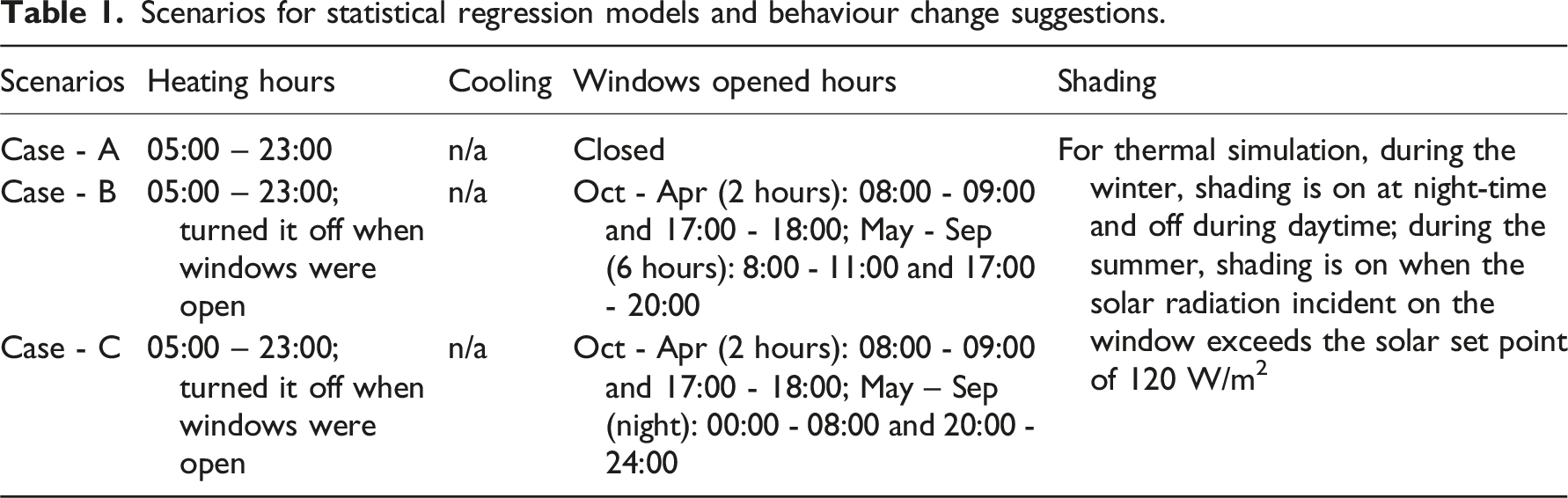
Scenarios for behaviour change suggestions
Scenarios for statistical regression models and behaviour change suggestions.
Results
Validating the base case simulation model
The measured indoor temperatures of the living room and bedroom were obtained from April to June 2023. This period can be considered representative of the intermediate and warm season in Switzerland in terms of external temperature and solar radiation.
Figure 2 presents external air temperature and solar radiation from a typical weather year obtained from Meteonorm
36
; it can be seen that during June, external temperatures approach typical values of summer months while solar radiation is at its peak. During April, typical spring temperatures prevail when heating is not needed for some periods; it also has temperatures very close to the annual average temperature of 11.2°C. Therefore, calibrating the model April-June (for which internal measurements were available), periods of the year susceptible to overheating are included as well as periods requiring intermediate heating. Geneva, Switzerland – Daily outdoor dry bulb temperature and solar horizontal radiation.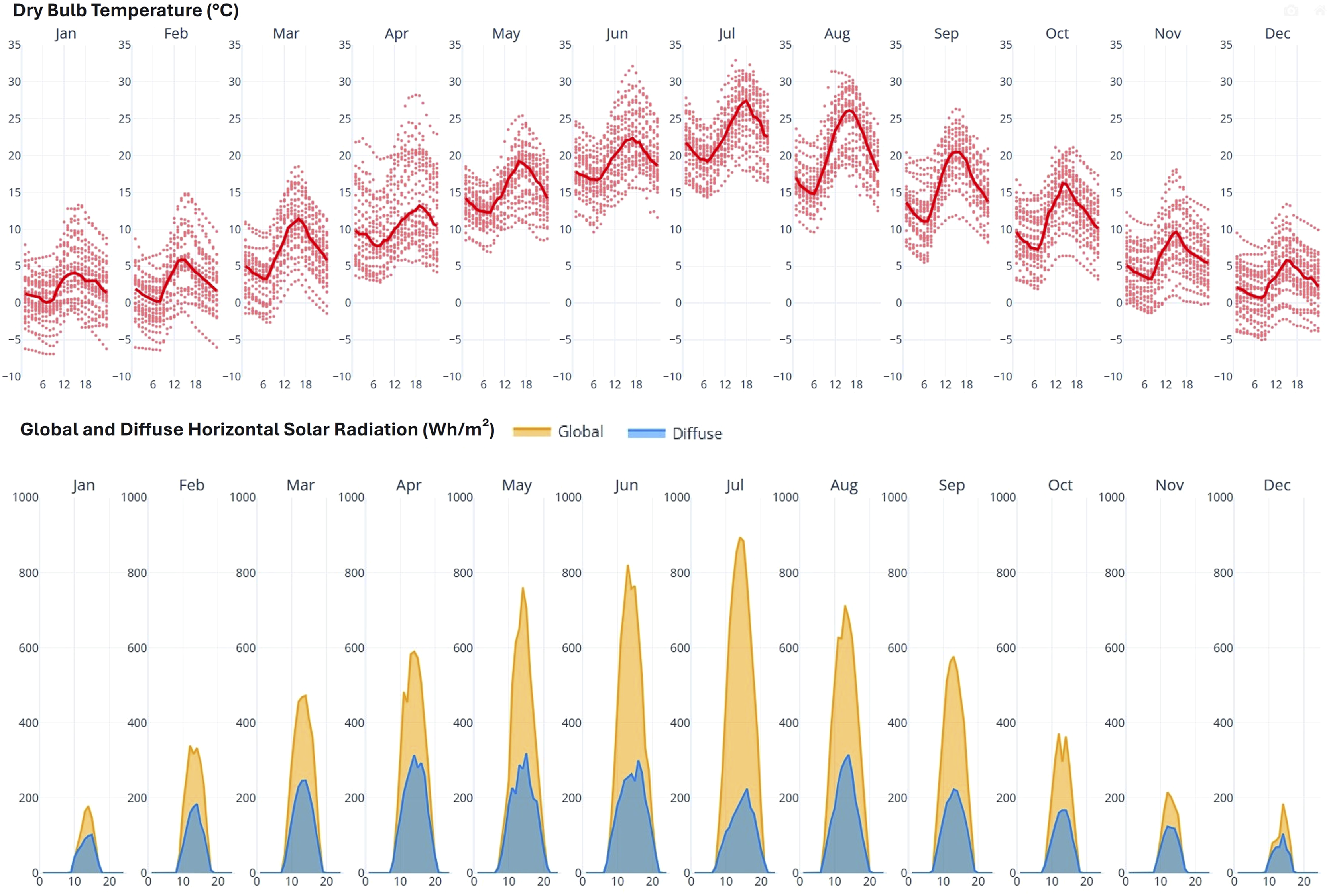
The outdoor weather data for the simulation model were obtained from the nearby weather station, which is 1.1 km away from the case study building. The inter-building effect was not applied in the simulation. Therefore, some discrepancies between the simulation model and the actual microclimate data around the building could be expected. The model was run and the accuracy was checked by comparing it with measured air temperature data on an hourly and monthly basis for 3 months (April 2023 -June 2023) by calculating MAE, NMBE, RMSE and CvRMSE values, as suggested in ASHRAE Guideline 14
48
and CIBSE TM63:2020.
49
Figure 3 presents the comparison of measured and simulated temperatures. Simulation model validation by comparing simulated and measured temperatures.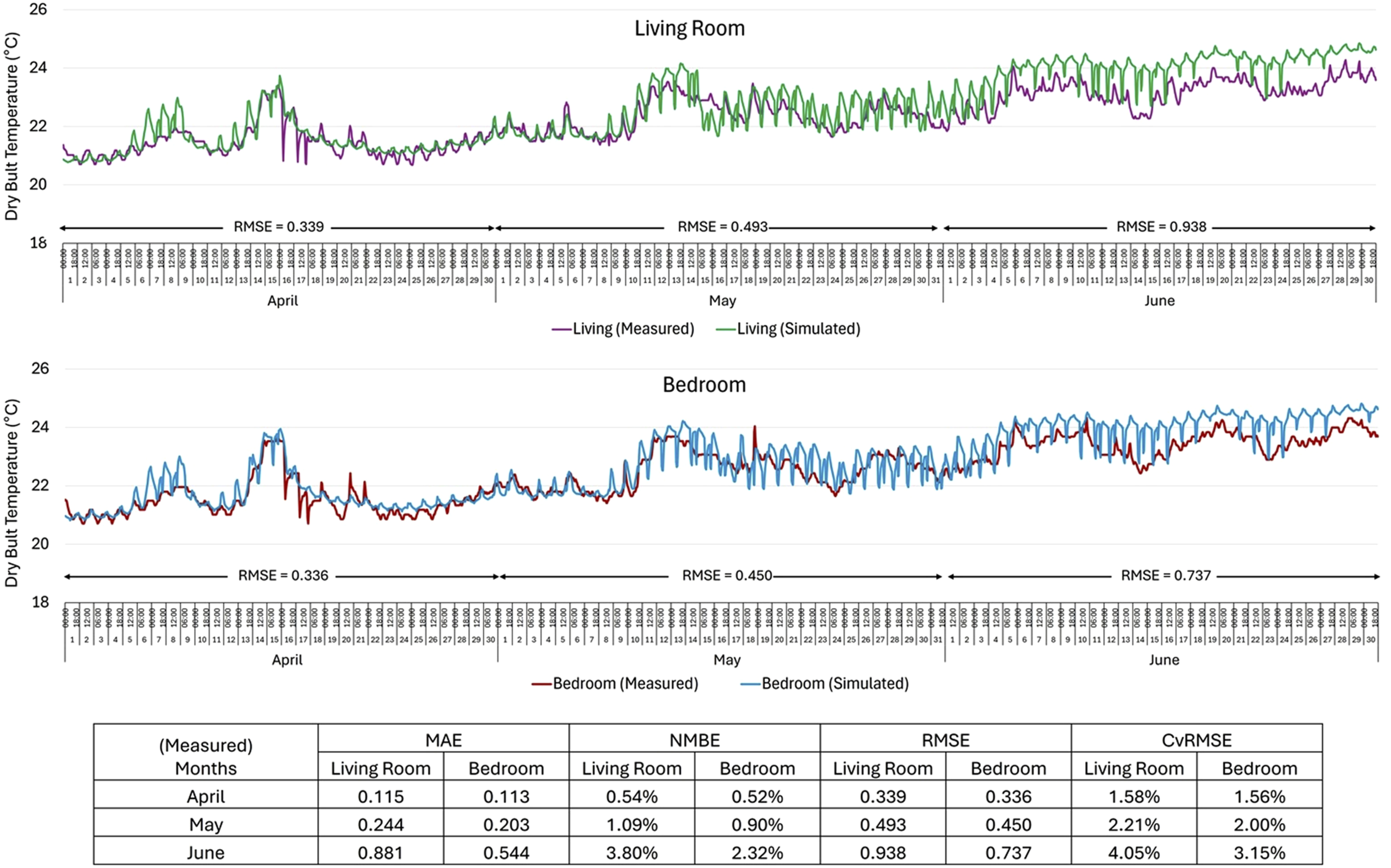
MAE (mean absolute error) is the arithmetic average of the absolute errors between the simulated and measured values. NMBE (normalised mean bias error) is the average error between the simulated and measured values, which is normalised by the mean of the measured values. RMSE (root mean square error) represents the sample standard deviation of the differences between measured and simulated values. Cv(RMSE) (coefficient of variation of the root mean square error) is derived by normalising the RMSE with the mean of the measured values. ASHRAE Guideline 14 recommends an MBE of less than 10% and a CVRMSE of less than 30% relative to hourly calibration data 48 which was achieved in this study (see Figure 2). It can be seen that the error was minimum in April and increased in May and June for all statistical values. This was due to the constraints in tracking window operations at the apartment at that time, when the increased summertime temperatures caused the extended time of using passive cooling.
Statistical regressions for tested scenarios
Using the base model, the statistical regression correlations were generated for the proposed scenarios (Table 1); therefore, the whole-year simulation results that yielded 8760 samples as hourly resolution data for indoor temperature, air change rate and indoor illuminance can be obtained. The longitudinal correlations between outdoor (independent) and indoor (dependent) temperature and ventilation variables were grouped from window-opened and window-closed modes, as shown in Figure 4. When the windows were closed in Scenario A, the correlations between outdoor dry bulb temperatures and infiltration rate can be obtained; however, the infiltration rate is almost constant at around 0.7 ACH to include the trickle ventilators. When the windows were opened in Scenarios B and C, the correlations of air flow rate with external conditions were not forthcoming due to the location of the apartment at the corner of the building. The simulations demonstrated that airflow rates of up to 5 ACH are established in the space. The range was between 2 ACH and 5 ACH to include infiltration. In this case, these values will be used to guide the occupants. Example of thermal and ventilation correlations for the living room and bedroom.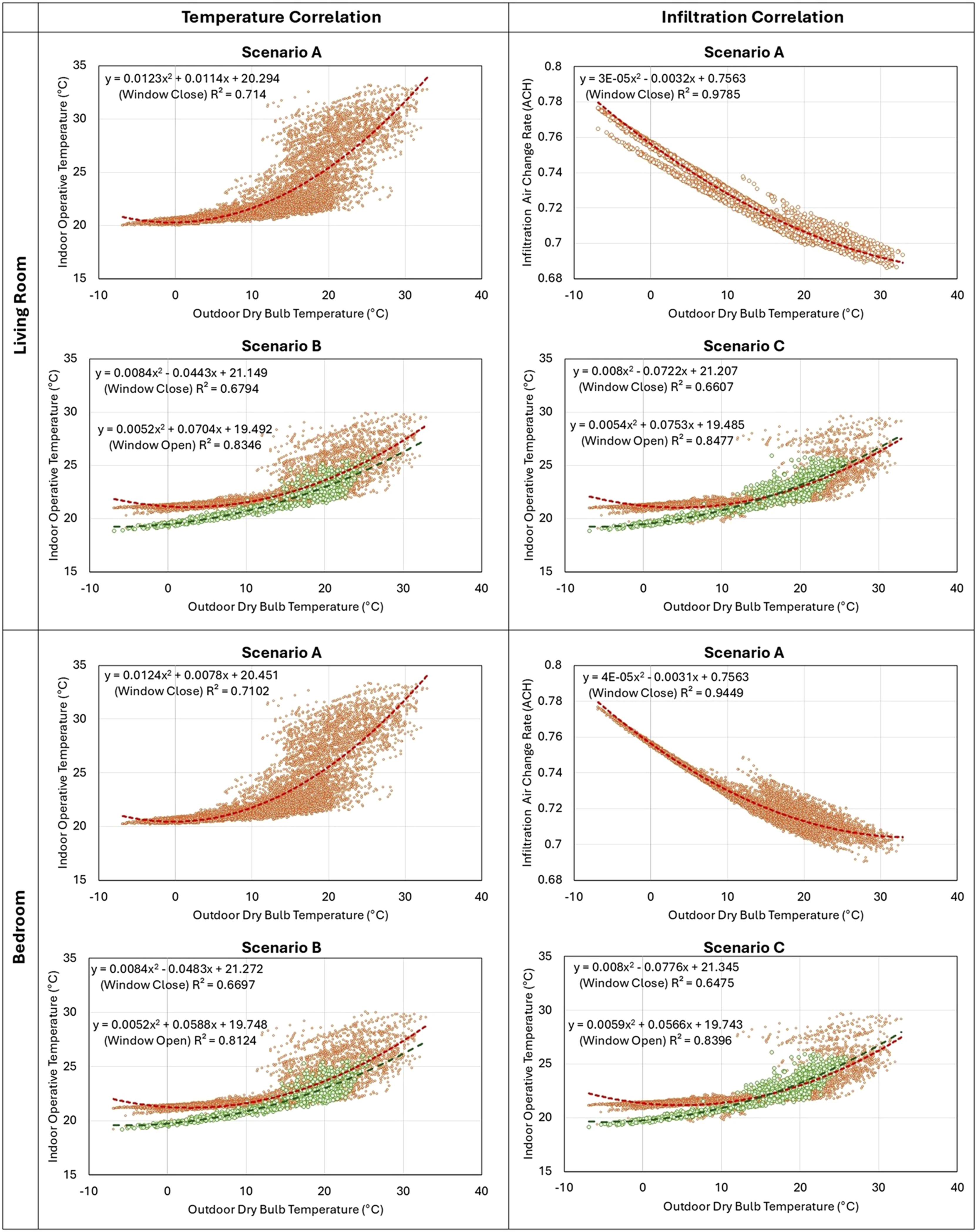
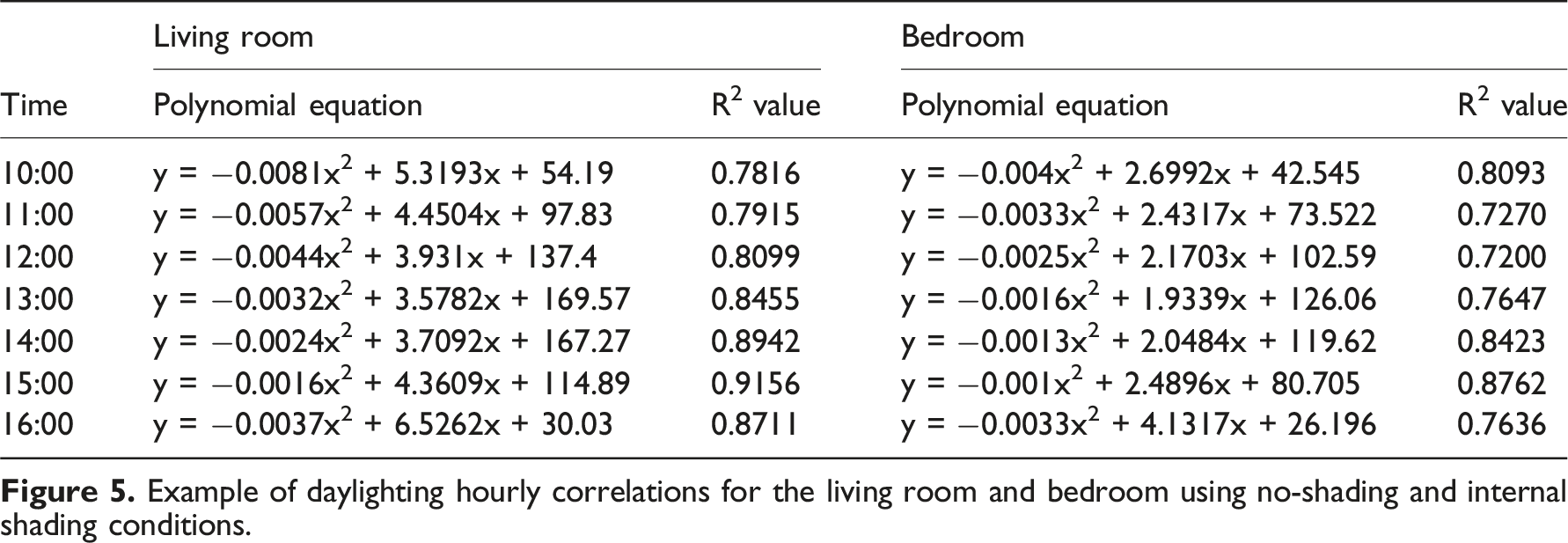
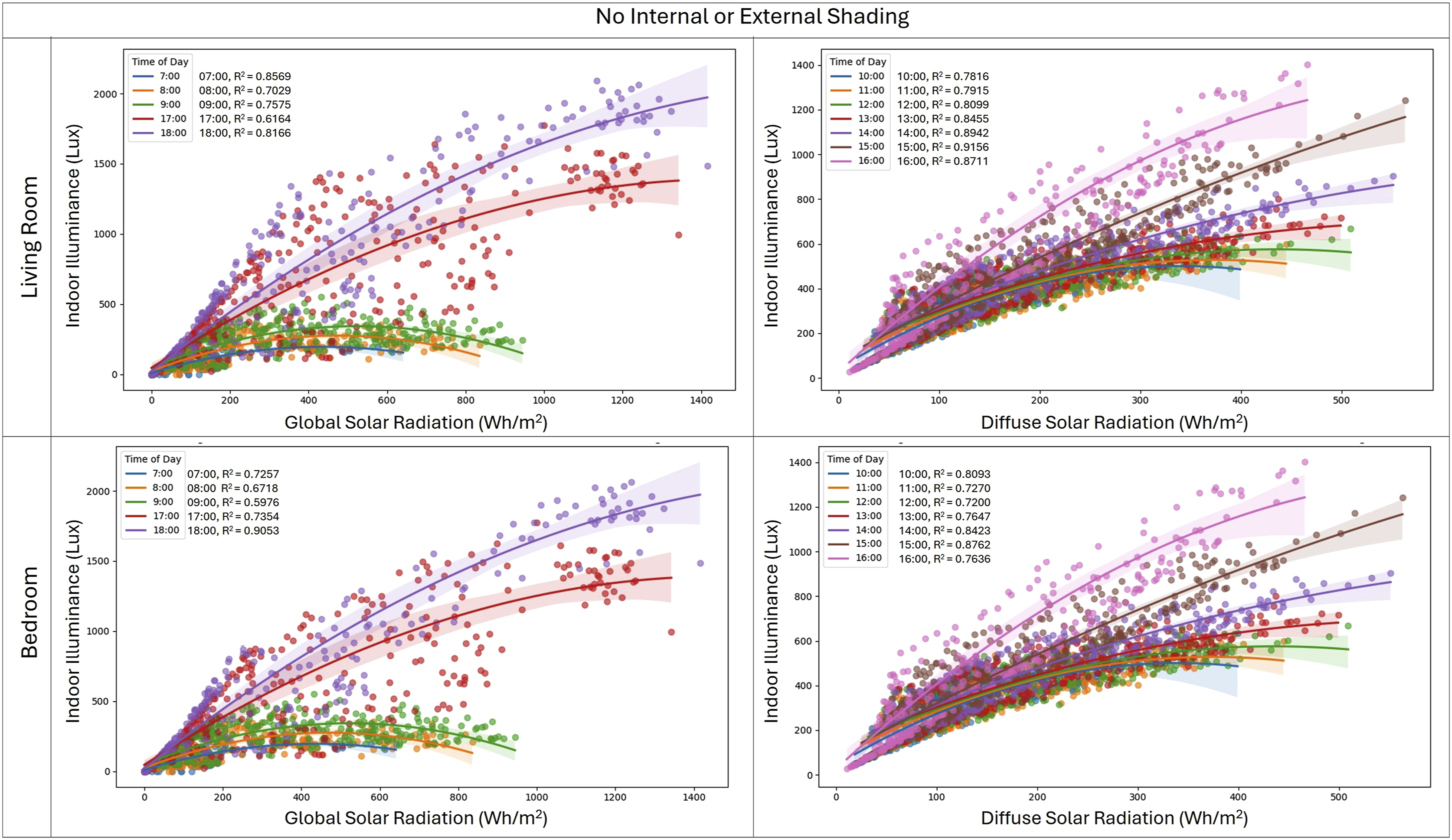
Example of daylighting hourly correlations for the living room and bedroom using no-shading and internal shading conditions.
Indoor temperatures and illuminance predictions
The internal temperatures of the living room and bedroom were predicted for 3 days in April and June using the equations generated from the statistical regressions for scenarios A, B and C. The internal temperatures were to be predicted using the relevant window opening modes over 24 hours. Adaptive comfort temperatures for lower and upper limits were also calculated to understand whether the indoor temperatures were within acceptable limits. It was noted that the external temperatures were below the maximum limits of 33°C, which was noted in the regression plots.
In Figure 6, when the external temperatures reached the upper limits of adaptive comfort temperatures in April, the internal temperatures were above acceptable adaptive temperatures. When the windows were closed in Scenario A, higher indoor temperatures reached above the upper limits of adaptive temperatures. When the windows were opened in Scenario B, the indoor temperatures could drop. These results showed evidence to suggest a behavioural change scenario for the occupants to operate the rooms according to scenario B to maintain necessary thermal comfort in April. In contrast to April, the external temperatures were significantly higher in June, and this also affected the internal temperatures at that time. In this regard, the behaviour change suggestions can be provided by informing the results of Scenarios B and C. Night purge ventilation used in Scenario C could provide a lower internal temperature in the daytime; however, this could be subject to the decision made by the occupants. Indoor operative temperature predictions with behaviour change suggestions, examples of 3-day comparisons for April and June.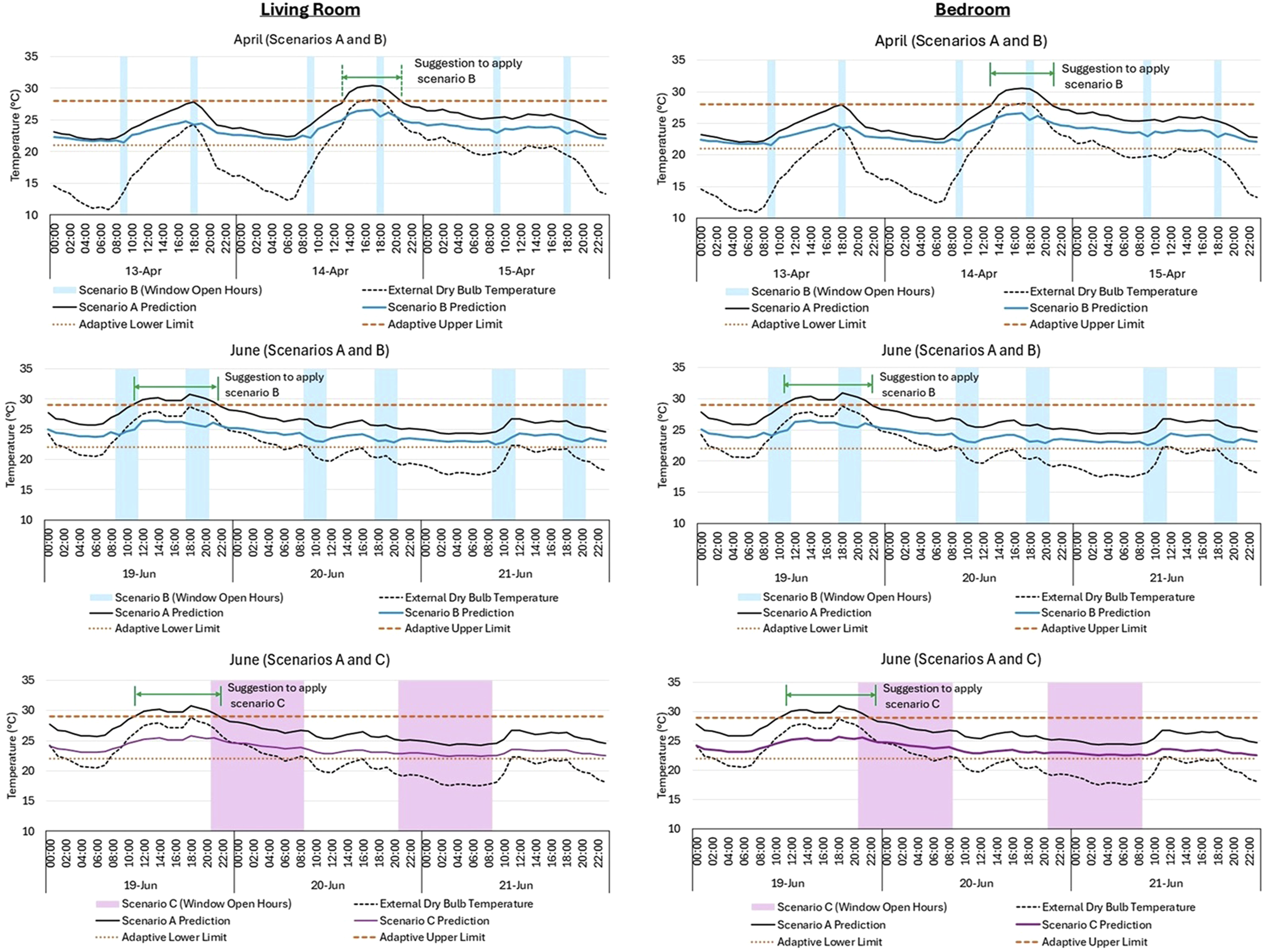
The area charts in Figure 7 demonstrate the indoor illuminance predictions for 10:00 to 16:00 using diffuse solar radiation values at that time. To understand the relationship between indoor illuminance and other environmental parameters, external dry bulb temperatures, global solar radiation values and predicted indoor temperatures were superimposed on these charts. The outdoor climate data showed that the peak values of dry bulb temperatures and diffuse solar radiations were found at different hours, and there were no correlations between each other. In scenario A, similar temperature profiles for the internal and external conditions were observed as the internal temperatures increased when the external temperatures increased. Higher indoor illuminances were found when the diffuse solar radiation dropped on the 13th and 15th of April, and a significant rise in indoor illuminance was found in the evening of the 14th of April, as the orientations of the room (driven by solar altitude and azimuth) had influenced the indoor illuminances. As the living room has larger glazing areas for windows compared to the bedroom, the indoor illuminance values of the living room were higher than the bedroom. Whilst hourly indoor illuminances were able to be predicted by correlating diffuse solar radiation at the hour, this work showed that the boundary conditions of the rooms had a significant impact on the prediction results of indoor conditions. While indoor illuminance values were predicted above 500 lux on the 13th and 15th of April, the prediction results for indoor temperatures showed that the indoor temperatures at that time were below the upper limit of adaptive comfort temperature. It was noted that there were limitations and uncertainty in using daylight correlations to predict acceptable thermal comfort by indicating 500 lux limits as potential overheating risks in the study climate. Indoor illuminance predictions for 10:00 to 16:00 using diffuse solar radiation (external dry bulb temperatures, global solar radiation values and predicted indoor temperatures are superimposed).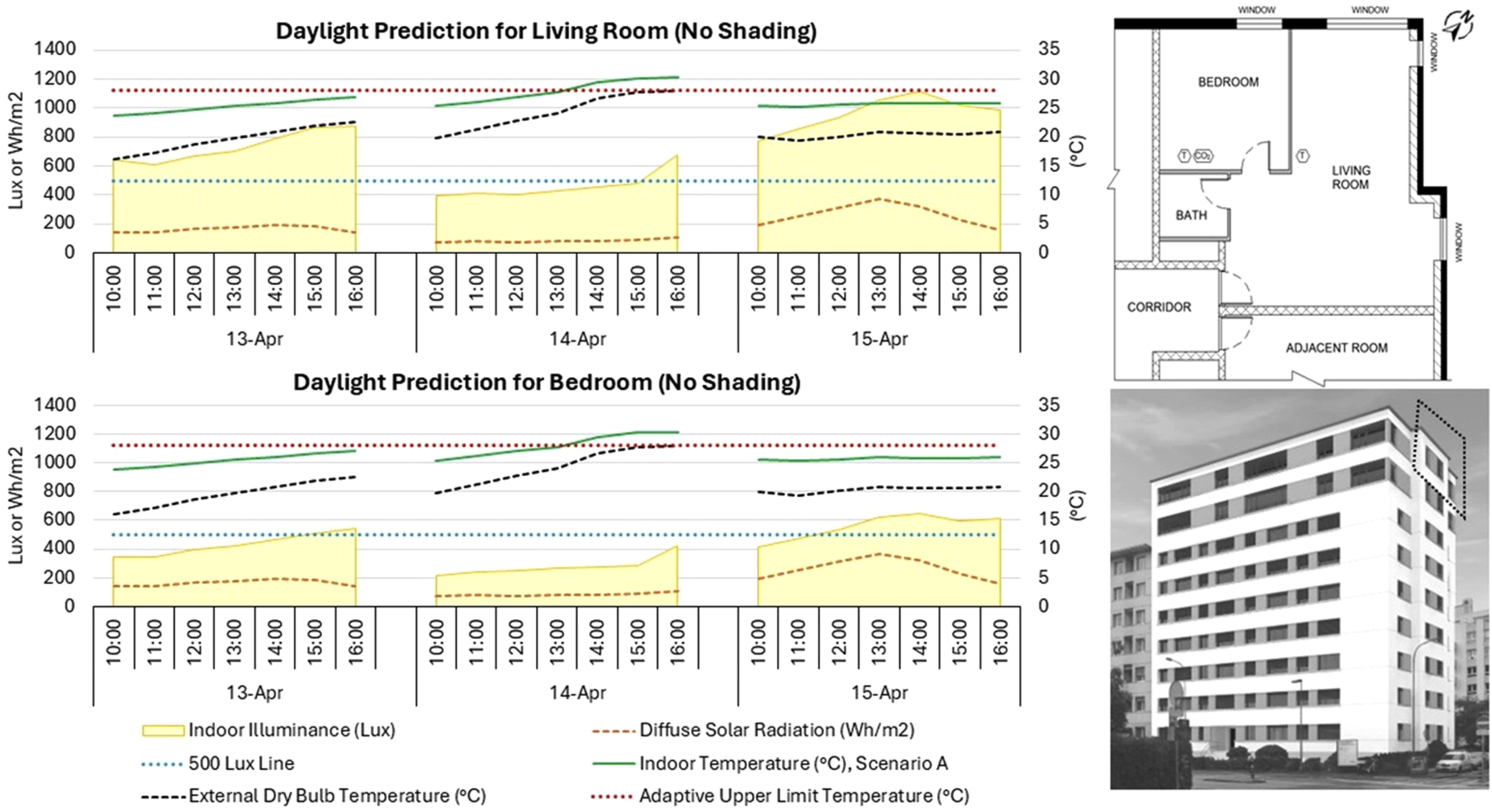
Air change rate and indoor CO2 concentration predictions
The air change rates from the infiltration mechanism were predicted for 3 days in April and June using the equations generated from the statistical regressions for scenario A; the variation of infiltration was limited between 0.69 and 0.78 ACH. Negative correlation plots in Figure 4 showed that the infiltration rate decreased when the outdoor dry bulb temperature increased. As indoor CO2 concentrations were generated from the occupancy profiles, the highest indoor CO2 concentrations were found in the early morning hours in both predicted and measured data, as shown in Figure 8. Indoor CO2 concentration predictions using ventilation correlation equations and single-zone mass balance model.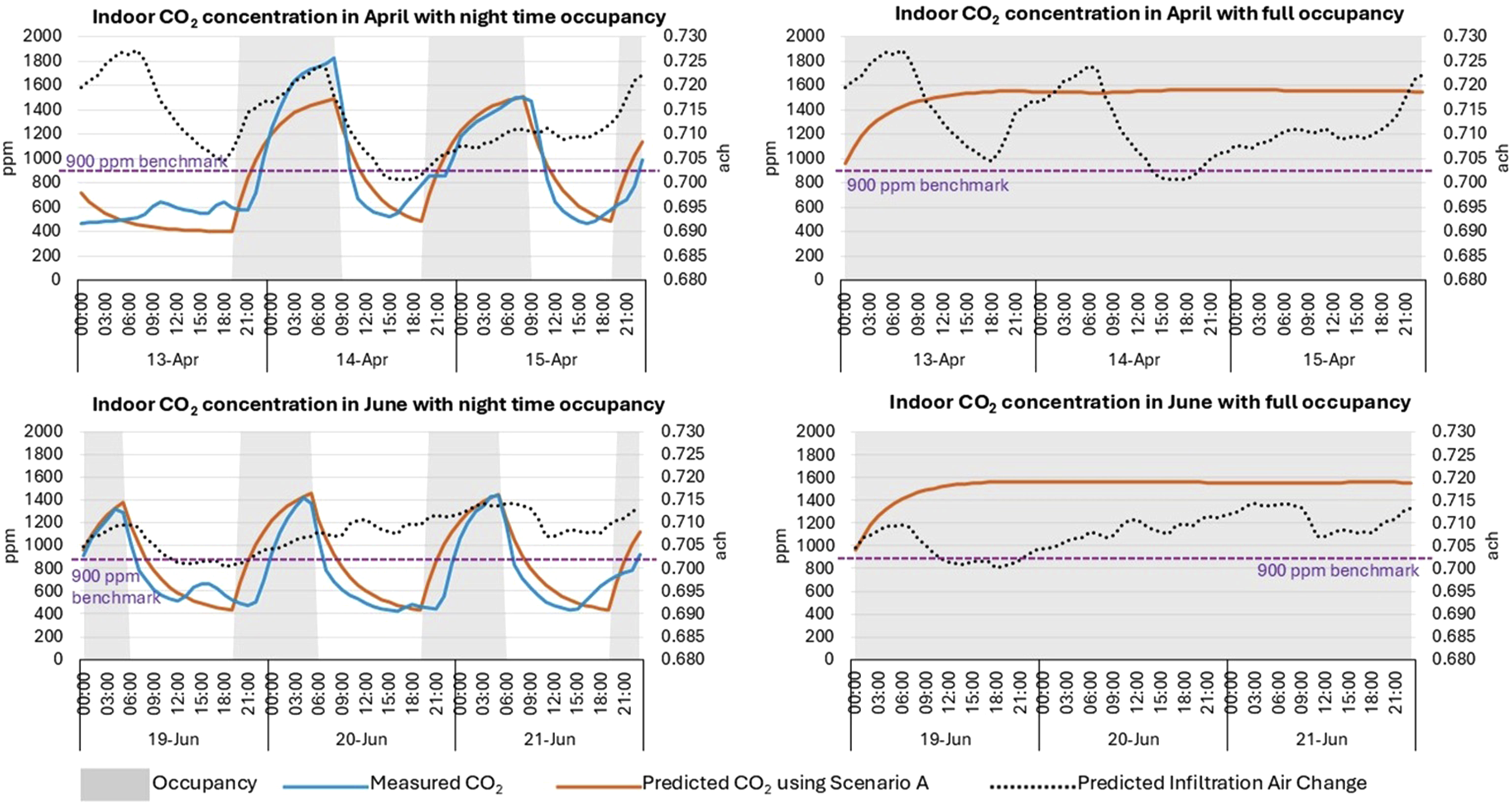
Due to the uncertainty in the CO2 emission rate of the occupant, which could vary subjectively, the discrepancies between measured and predicted indoor CO2 concentrations can be observed. The concentrations in the room decayed exponentially after the occupant left during the daytime. If similar prediction exercises were performed for full occupancy for Scenario A, higher indoor CO2 concentrations were observed throughout the days as infiltration alone was not able to increase the rate of decay. Besides the air change from infiltration, when the room had ventilation, the indoor CO2 concentrations were above the 900-ppm benchmark due to the occupancy of the room.
Behaviour changes suggestions for thermal comfort and indoor air quality
The results of the predicted indoor temperatures are shown in Figure 6 and this can be applied to evaluate whether the tested scenarios can ensure the thermal environment meets comfortable conditions. Figure 9 shows the box charts of the measured and predicted indoor temperatures; the lower and upper adaptive temperature limits are also indicated. Note that the operation settings of measured data and scenario B were the same; however, the discrepancies were found due to the strength of correlation obtained in Figure 4. In addition to Figure 6, the combined results of this comparison give different options for the occupant to consider desirable behaviour change to maintain the necessary thermal environment. For instance, the application of night purge ventilation could provide lower indoor temperatures than other scenarios; however, some people may prefer daytime ventilation. Comparison of measured indoor temperatures and predicted indoor temperatures for Scenarios A, B and C for the bedroom.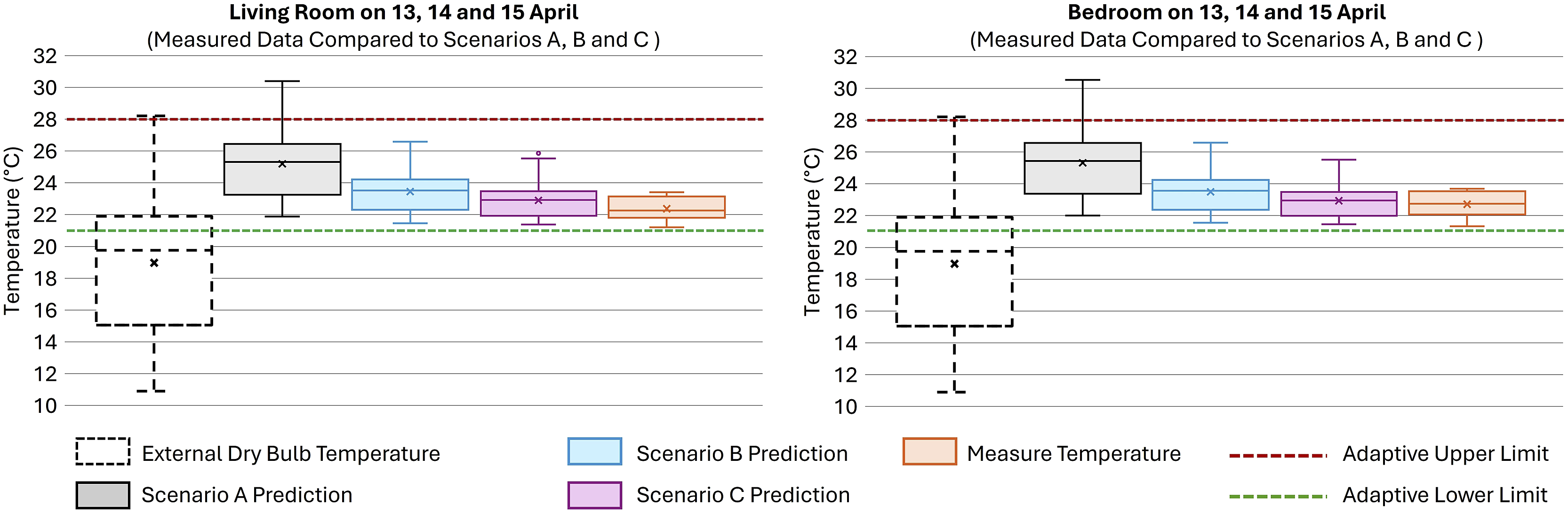
Simulations showed achievable ventilation rates between two and 5 ACH when the windows were opened, and an average infiltration rate of about 0.7 ACH when the windows were closed. To simplify the predictions for indoor air CO2 concentrations, air change rates of 2 ACH and 5 ACH were considered for the window-opened scenario, and 0.7 ACH for the infiltration rate was considered for the window-closed scenario for the tests performed (Figure 10). Comparison of indoor CO2 predictions using different window opening times.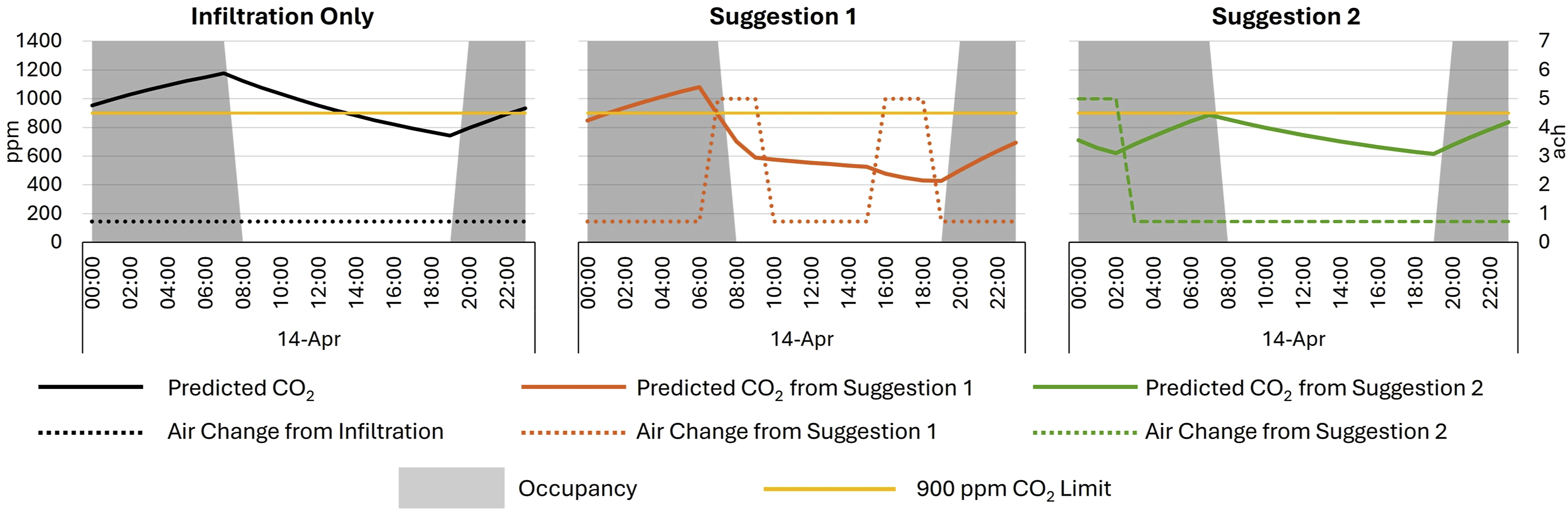
The predicted indoor CO2 concentrations for the window-closed scenarios (infiltration only) were above the 900-ppm limit. For Suggestion 1, the window was open for 3 hours in the morning and 3 hours in the evening. The indoor CO2 concentrations are lower but still above the 900-ppm limit (but less than 1000 ppm) before the window was opened for 3 hours in the morning, as the metabolic CO2 built up during sleeping hours. The difference between the prediction values of scenario 1A and 1B was the air change rate, and a higher air change could remove the indoor CO2 concentration to the outdoor CO2 concentration level of 400 ppm after the window opened for 3 hours in the evening before the room was occupied. For Suggestion 2, the bedroom was open for 3 hours after midnight. It was found that metabolic CO2 was reduced during the night compared to suggestion 1, but CO2 levels stay high during the day because of the closed windows, and a combination of suggestions one and two should be proposed. Finally, similar to the behaviour change suggestion for indoor thermal comfort, some occupants may find it a challenge to use night purge ventilation to maintain necessary indoor air quality, although the presented work was able to demonstrate different options.
Discussion
This work demonstrates how the indoor-outdoor environmental variables correlation model can be applied to predict the indoor environmental data for the next 24 hours. The base simulation model was created by validating measured and simulated indoor temperatures. The statistical regression models were generated for three scenarios that allowed obtaining correlation equations for prediction exercises. The comparisons of predicted indoor temperatures, indoor illuminances and indoor CO2 concentrations were evaluated using comfort and indoor air quality benchmarks; therefore, the potential use of indoor-outdoor climate correlation models for further behaviour change intervention can be presented. This section discusses how the findings of this work can be translated into practical applications, which will contribute to indoor environmental predictive modelling and participatory design research.
Recommendation for predictive modelling
The presented method integrates indoor-outdoor climate correlation models, bioclimatic design, and occupant-centric control decision-making processes. A framework for predicting indoor environments by correlating the internal environmental and external climatic variables is crucial for the daily operation of low-technology buildings to improve indoor conditions. Since correlation methods based on physics-based modelling and data-driven approaches have achieved great success in predicting indoor environmental conditions, the following observations from the studied apartment and recommendations on practical applications could be of interest for future physics-informed machine learning predictions for different buildings and other scenarios.
Boundary condition
As presented in Figure 1, the boundary conditions were defined by a physics-driven model (to take into account the physics rules, such as heat transfer and thermodynamics) and an occupant-driven model (to take into account the decision rules, such as the use of active heating and passive cooling). As the prediction equations for behaviour change suggestions are generated from the pre-defined models and scenarios, they are typically unreliable in out-of-boundary predictions (extrapolation). For instance, active heating (Table 1) was provided in the presented example; therefore, the prediction equations were influenced by the heating temperature setpoint values of 20°C, pre-defined window scenarios and fabric energy efficiency of the model. The results presented in this work agree with the previous study 31 that has shown that the accuracy of the IEQ predictions heavily relies on the context-dependent boundary conditions of a room and time-dependent weather. Therefore, we recommend observing the sensitivity of boundary conditions for different building operation scenarios to provide a wide range of options for behaviour change suggestions. By doing this, the judgment can be made by the participants for the behaviour change options.
Indoor condition prediction
The correlation equations presented in this work were generated from the results of one-whole year of simulated model. Therefore, it achieved good generalisation across the whole year, and the correlation equations were able to be applied to predict the indoor conditions at any time of the year if the boundary condition which is planned to be predicted is compatible with the reference samples used in the climate correlation model. In the correlation study, a trend which moves in the same direction does not mean there is a direct correlation between them. Due to the strengths and limitations of polynomial correlation equations, a gap between predictions and measured data was observed. Such correlation models have limitations which simply rely on their monotonic association between two variables. It does not inform the driver of causation, and the results could be varied by the confounding variables. Due to the limitations of a polynomial correlation, despite providing good fits within the range of data, it is expected that the equations have poor extrapolatory properties, and this could cause deterioration outside the range of the data. Therefore, we recommend that the correlation models require defining the maximum and minimum acceptable limits for benchmarks to provide reasonably acceptable predictions. Moreover, we must stress that the validation work presented in this work was based on 3 months of database. We therefore recommend that further study be conducted to compare and validate whether the prediction equations generated from monthly-based correlation equations differ from annual-based correlation equations. Furthermore, developing the correlation models for purely free-running stages without any forms of active systems could be of interest to compare their differences in the presented examples.
Prediction benchmark
In this work, the upper and lower limits of adaptive thermal comfort were referred to BS EN 16798, considering the location of Switzerland in Europe. 40 The results of this work showed that overheating was not observed while the predicted indoor illuminance values reached above 500 lux in the studied climate. Therefore, providing relevant benchmarks for the participants is essential for the context-dependent IEQ predictions. For instance, human subjects in tropical and European climates have significant differences and thermal perception. Necessary information for scenario selection and IEQ benchmarks is thus required to provide for the participants to use the correlation model effectively in future participatory designs. Despite those limitations, as the framework of the presented method can be tailored to meet different contexts, it can conclude with a call for more rigorous and pilot studies to evaluate the impacts of correlation models in developing behavioural change interventions.
Contribution towards participatory design development
According to Fogg’s Behaviour Change Model, the three components - ability, opportunities and motivation – contribute to altering the actions of the participants. Increasing these components, the participants find it easy to change their behaviours. Besides the process of applying the framework to the indoor-outdoor correlation model to predict indoor conditions, the recommendations from this experimental work would be beneficial for future implementation of behaviour change interventions.
Ability
In this work, the IEQ predictions were calculated using Excel, where the statistical regressions were manually assigned for different scenarios by using the forecasted weather and a series of correlation equations. The judgments of the results were made by the researchers, considering the benchmark discussed. The convenience and user-friendly format are essential for the end-users to predict the IEQ of their homes by selecting a scenario from various possible occupants’ activities. Understandably, the end-users would not be interested or able to select appropriate correlation equations by themselves. Rather, they would prefer to see how the indoor temperatures could change by opening windows for one or 2 hours, and when the indoor illuminance could reach more than 500 lux. Therefore, the narrative of this method needs to be translated into a user-friendly mobile app or desktop-based software to increase the end-user’s “ability” to select different options and be involved in future participatory designs.
Opportunity
Forecasting indoor temperatures is often used in smart buildings to reduce energy use, 50 whereas the use of sensors can provide real-time prediction and historical measures of the IEQ data. Besides energy savings, the end-users will also be interested in knowing the predicted IEQ of their rooms for different scenarios. The presented method can help to encourage the end-user’s opportunity to interact with their rooms without any privacy-related concerns, by adding numerical values of the forecasted weather for the next day to the designed mobile apps or desktop applications. This work presents a correlation model to predict indoor environmental conditions by using three scenarios for comparisons. In real-world scenarios, the occupants’ interaction with building operations could be different and different subjects could have different operation modes for meeting their requirements. Therefore, parametric simulation databases such as scenarios for various windows and shading functions, different heating and cooling hours, and fabric energy efficiency variations could be added to increase the opportunity for the occupants to select necessary behaviour changes.
Motivation and triggers
In future participatory designs, the information to “motivate” the interests of end-users is essential for behaviour change. Providing feedback on their behaviours in terms of energy cost increment, carbon emissions, and risks associated with poor IEQ results is essential in the development of participatory designs. For instance, a small temperature decrement by extending the window opening could reduce cooling and ventilation loads. Further information for rewards, such as energy loads and cost-saving results by integrating post-data results, can attract the participant’s motivation to be involved in the behaviour change interventions. Furthermore, this presented method can be applied to the eco-feedback design to enhance the implementation of the indoor condition prediction model for occupant-centric innovation in building control systems to promote sustainable behaviours. 9 Research has shown that statistical visualisation techniques, which often rely on mathematical data as a communication medium, are essential in any energy eco-feedback system, 10 as well as prediction results to engage with the end-users. Using the framework presented in this study, a further study would consider incorporating textual information, colour coding, and statistical visualisation techniques with eco-feedback visualisation to enhance its effectiveness to motivate further behaviour change suggestions.
Conclusion
This work aims to contribute towards participatory research for IEQ predictions to promote pro-environmental behaviours by the end-users to maintain acceptable IEQ with passive measures. The framework of indoor-outdoor correlation models consists of a narrative in translating the sophisticated scientific principles underpinning the way buildings and their systems are designed and operated as a simplified correlation process for the end-users to alter the building operation based on their knowledge. The examples of IEQ predictions were presented for three pre-defined scenarios, and the limitations of the method were acknowledged. This presented method can be used to design occupant-centric design strategies in predicting thermal comfort and indoor air quality of the existing building to improve the quality of microclimates. The results of the presented methods can produce easy-to-understand feedback systems, and it will help to encourage the user’s ability to interact with their rooms without any privacy-related concerns, by adding numerical values of the forecasted weather for the next day to the application developed for participatory designs to predict the IEQ of their rooms in different scenarios. To do so, recommendations for future research and to refine the effectiveness of the method are discussed. Therefore, the presented indoor condition predictions framework can be integrated into the eco-feedback participatory design and occupant-centric control of indoor environments to enhance behaviour-based efficiency measures through end-user actions in the existing buildings.
Footnotes
Declaration of conflicting interests
The authors declared no potential conflicts of interest with respect to the research, authorship, and/or publication of this article.
