




Abstract
Direct load control (DLC) for building HVAC systems, through preconditioning and setup/setback sequences, can substantially reduce electricity consumption during peak periods. Yet, the effectiveness of a DLC sequence strictly depends on the thermophysical attributes of a building and its occupants’ tolerance to variations in the thermal environment. The current one-size-fits-all approach to DLC disregards the inter-building diversity of these factors. This paper demonstrates the inter-building diversity of preconditioning and setup/setback needs by deriving unique DLC sequences for different buildings. To this end, variants of an EnergyPlus model representing a small commercial building in Toronto, Ontario are created by altering its envelope, HVAC capacity, and occupants’ temperature preference characteristics. Through a metaheuristic search, personalized DLC sequences that minimize the HVAC-related electricity costs and the time spent outside a preferred temperature range are estimated for each variant. These personalized DLC sequences were compared with six baseline DLC sequences. Unlike the baseline DLC sequences, the optimal sequences could attain an average of 20% reduction in HVAC-related electricity costs while keeping the time spent outside the preferred temperature ranges under 3% for all variants.
Practical application
This paper presents an optimization method to derive unique direct load control sequences demonstrating the inter-building diversity of preconditioning and setup/setback needs. The method is tested on a range of buildings with varying characteristics in a simulation environment. The findings of the study are useful in the domains of HVAC controls, demand response, and electrification of HVAC systems.
Introduction
Electrification is the process through which end uses that directly or indirectly rely on fossil fuels are powered by electricity from non-emitting generation capacity. 1 The process commonly includes replacing gas furnaces, water heaters, and boilers with heat pump systems, conventional vehicles with electric vehicles, and coal and gas-burning power plants with renewable energy sources. While electrification has been regarded as the main pillar for the decarbonization of our society, it represents a major challenge for electrical grid operators due to an increase in demand accompanied by increased uncertainty in generation.
Demand-side management (DSM) has emerged as a promising solution to address the risk of a supply-demand mismatch through dynamic electricity pricing. Consumers either manually or automatically change their electricity use to avoid on-peak rates. If this change is executed algorithmically through automation, it is commonly referred to as a direct load control (DLC). A widely used DLC example is preheating/precooling prior to the start of peak events and curtailing heating/cooling during peak periods.
An overview of DLC for HVAC systems
Different DLC sequences have been used for a wide range of building typologies – school buildings, 2 office buildings,3–6 shopping centres and retail buildings,3,7 data centres, 2 laboratory buildings, 4 and residential buildings.8,9 Demonstrations of the technology have been completed in a range of ASHRAE 10 climate zones and different utility jurisdictions – Zones 0 to four in various cities in Australia, 2 Zone 3 in Italy 7 and China, 5 Zone 4 in California, 4 Oregon, and Washington, 3 and Zone 6 in Ontario, 6 Quebec, 8 and New Brunswick. 9
While some of these studies used simulation2,5,7 or unoccupied laboratory buildings, 8 others conducted field experiments assessing the performance of DLC sequences in occupied buildings.3,4,6,9 Laboratory- and simulation-based studies had to rely on thermal comfort standards (e.g., ASHRAE Std. 55 11 ) to assess the impact on occupant comfort and satisfaction, which are not intended for transient thermal environments caused by DLC sequences and do not consider the broader effect of financial incentives due to dynamic electricity pricing on occupant behaviour. For example, ASHRAE Std. 55 limits temperature drifts or ramps to no more than 2.8°C for changes taking place over a two-hour period and 3.3°C for changes taking place over a four-hour period. These restrict how fast DLC sequences can recover from a setback/setup during a peak period.
Peak reduction potentials reported in the literature exhibit significant variation. This is partly because they are computed relative to a different baseline computation approach (i.e., an estimate of the demand without the DLC sequence). 12 Among the reviewed literature, only Piette, et al. 3 reported savings estimates with respect to multiple baseline computation approaches; specifically, an outdoor temperature-based regression approach and two different day-matching approaches. Lack of a standardized baseline calculation approach poses a challenge to quantify the performance of DLC sequences. Simulation-based studies did not suffer from this limitation, as they have access to a perfect baseline in the form of a simulation without a DLC sequence. Another factor contributing to the variation in performance levels is the diversity of metrics reported. 13 Metrics reported include electricity demand reduction, percent reduction in heating or cooling loads, or electricity demand by the HVAC systems. Further, these metrics can be calculated for the average, maximum, or minimum demand reduction sustained over a peak period.
The case for personalized DLC sequences
The effectiveness of a DLC sequence depends on the thermophysical properties of the building envelope, HVAC system sizing, and local climate. In line with this, Huang, et al. 14 investigated the temperature response during precooling and setup periods in five different commercial buildings, and revealed that the temperature slopes during precooling were between −1°C/h and −5°C/h and the temperature slopes during setup were between 1°C/h and 5°C/h. Similarly, Markus, et al. 6 conducted a field study in a 27-zone variable air volume (VAV) air handling unit (AHU) system implementing a DLC sequence with a two-hour and a 2°C precooling period followed by a 2°C setup. They observed that the temperatures rose to the setup temperature setpoints in nine of the zones in less than 2 hours after the beginning of a peak period. Perhaps more interestingly, temperatures reached the setup levels consistently in the same order, approximately at the same time during each unique peak period. This highlights that the precooling intensity and duration needs are unique, but predictable, for different spaces, and the DLC sequence parameters should be tuned to maximize demand flexibility.
Pardasani, et al. 9 reported that while the majority of their 567 participant households did not find a 2°C preheating noticeable, some reported discomfort. Sarran, et al. 15 and Khorasani Zadeh, et al. 16 identified a significant inter-household diversity in occupants’ thermostat use behaviour during peak periods. Simply put, the range of acceptable indoor temperatures is different for different individuals, imposing building/zone-specific limits on the allowable intensities for precooling/preheating and setup/setback periods.
Motivation and objectives
Despite the aforementioned factors highlighting the need for personalized building/zone-specific DLC sequences, the majority of the DLC sequences tested employed generic and heuristics-based preheating/precooling intensities and durations typically between 1 and 2°C and 1-2 hours and setup/setback intensities typically ranging between 1 and 2°C. Model-based predictive control (MPC) represents a framework to optimize DLC sequences in real time to minimize the electricity cost with dynamic pricing. For example, Gehbauer, et al. 17 employed non-linear programming to optimize temperature setpoints with time-of-use (TOU) pricing. Deng, et al. 18 formulated an MPC algorithm using a thermal network model and quantum annealing to search for optimal temperature setpoints with TOU pricing. Chen, et al. 19 employed the chaotic satin bowerbird algorithm and a neural network model to optimize temperature setpoints with TOU rate scenarios. Reynolds, et al. 20 also used a neural network formulation as a controller model and employed the genetic algorithm to identify the setpoints minimizing the electricity cost with TOU rates. Several other studies developed MPC algorithms for different dynamic pricing scenarios, climates, and building archetypes.21–24 However, MPC algorithms for demand flexibility so far have found limited application outside research, 25 particularly in small commercial buildings. 26 This can be attributed to the fact that MPC development tends to have a high engineering cost,27,28 which is expected to influence the initial cost for MPC software tools. In addition, integration of MPC algorithms, including configuration of a dedicated server and mapping BAS and external inputs and outputs, currently remains a labour-intensive task. 29 MPC deployments also require a modern BAS infrastructure, which is not always available in small commercial buildings. As a result, the benefits of MPC do not perfectly scale to small commercial buildings. 30
This paper develops a building performance optimization methodology to derive near-optimal ready-to-use DLC sequences for small commercial buildings. The gap that we intend to fill with this paper is a happy medium between complex model-based or model-free supervisory DLC algorithms and generic one-fits-for-all DLC sequences. We seek to answer two research questions: (1) What are the comfort and electricity cost reduction consequences of using generic DLC sequences? (2) How much do zone/building-specific personalized, but static, DLC sequences improve comfort and electricity cost reduction potential? To this end, variants of an EnergyPlus model of a standalone small commercial building are generated by adjusting its envelope, HVAC sizing, and occupant temperature preference properties. The study first investigates the comfort and electricity cost-saving potential implications of using generic DLC sequences indiscriminately for each variant. Then, the DLC sequence parameters for each variant are optimized by using the differential evolution algorithm.
Methodology
The methodology section presents the building performance simulation (BPS) model, which we used to emulate a small commercial building in Toronto, Canada. Then, the TOU rates and the parameters of DLC sequences aiming to minimize electricity costs through preconditioning and setups/setbacks are introduced. The optimization algorithm is introduced, and then the baseline DLC sequences are defined to act as a reference point for the assessment of the algorithm.
BPS model
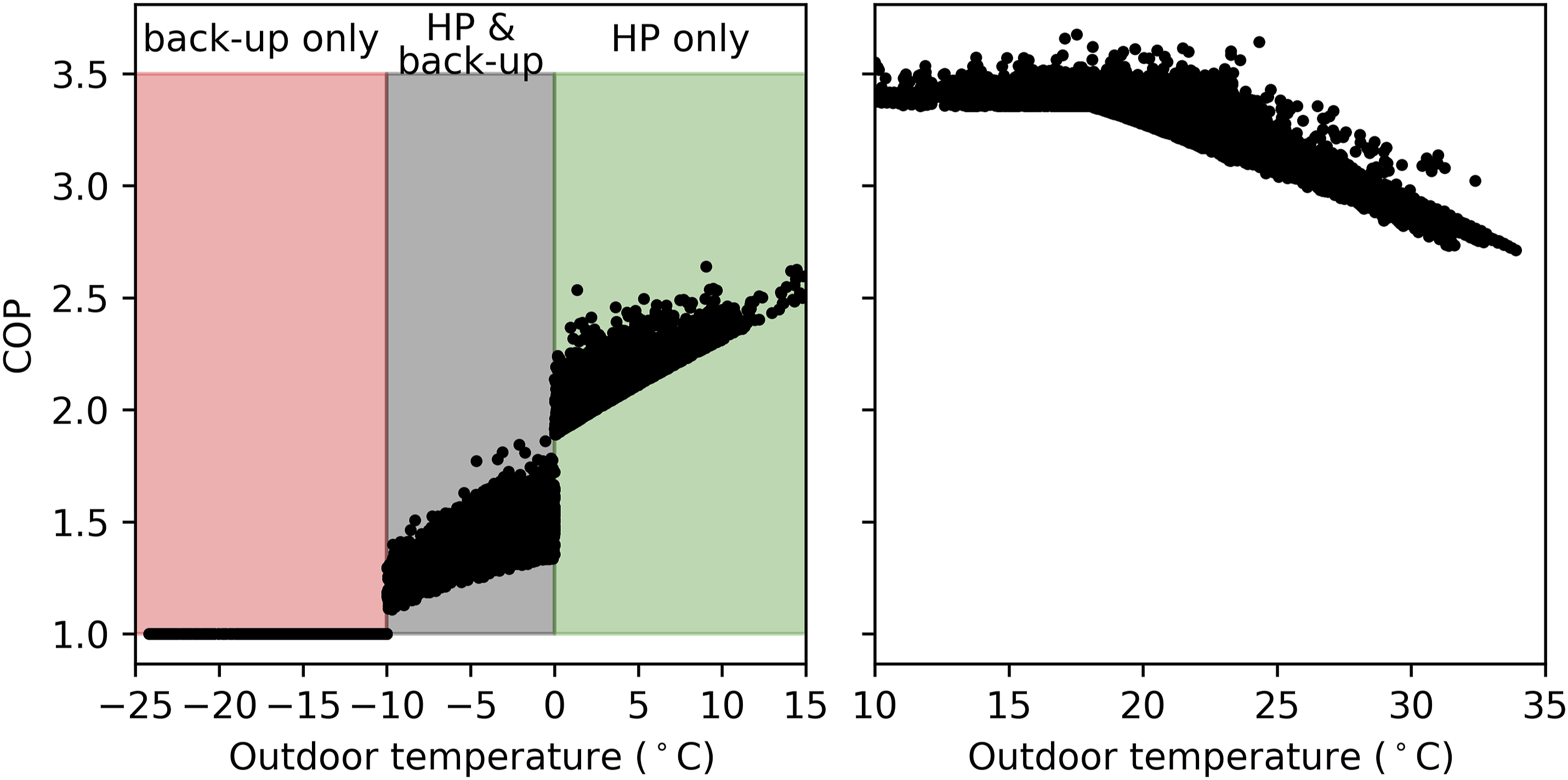
A BPS model representing a 458 m2 one-storey small commercial building in Toronto, Canada is built in EnergyPlus v23.1. The floor height of the building is 3.5 m and the average window-to-wall ratio (WWR) is 12%; Figure 1 presents the floor plan of the building indicating the geometry and the breakdown of WWR on each orientation. The building is comprised of three thermal zones: a 175 m2 lobby, 211 m2 for offices, and a 72 m2 electrical room. Each zone is served by a dedicated all-electric air-to-air heat pump. The gross-rated coefficients of performance (COP) of the heat pump for heating and cooling are assumed to be 2.75 and 3.0, respectively, with supplemental electric resistance heating for low-temperature operations. As shown in Table 1, the heat pumps are assumed to be available at outdoor temperatures higher than −10°C and the supplemental electric backup heating is assumed available at outdoor temperatures lower than 0°C. This led to the three distinct COP regimes shown in Figure 2. Floor plan of the building. Model parameters and definitions for envelope, HVAC sizing, and occupants’ temperature preference scenarios. Heating and cooling COP of the ASHP system at different outdoor temperature ranges.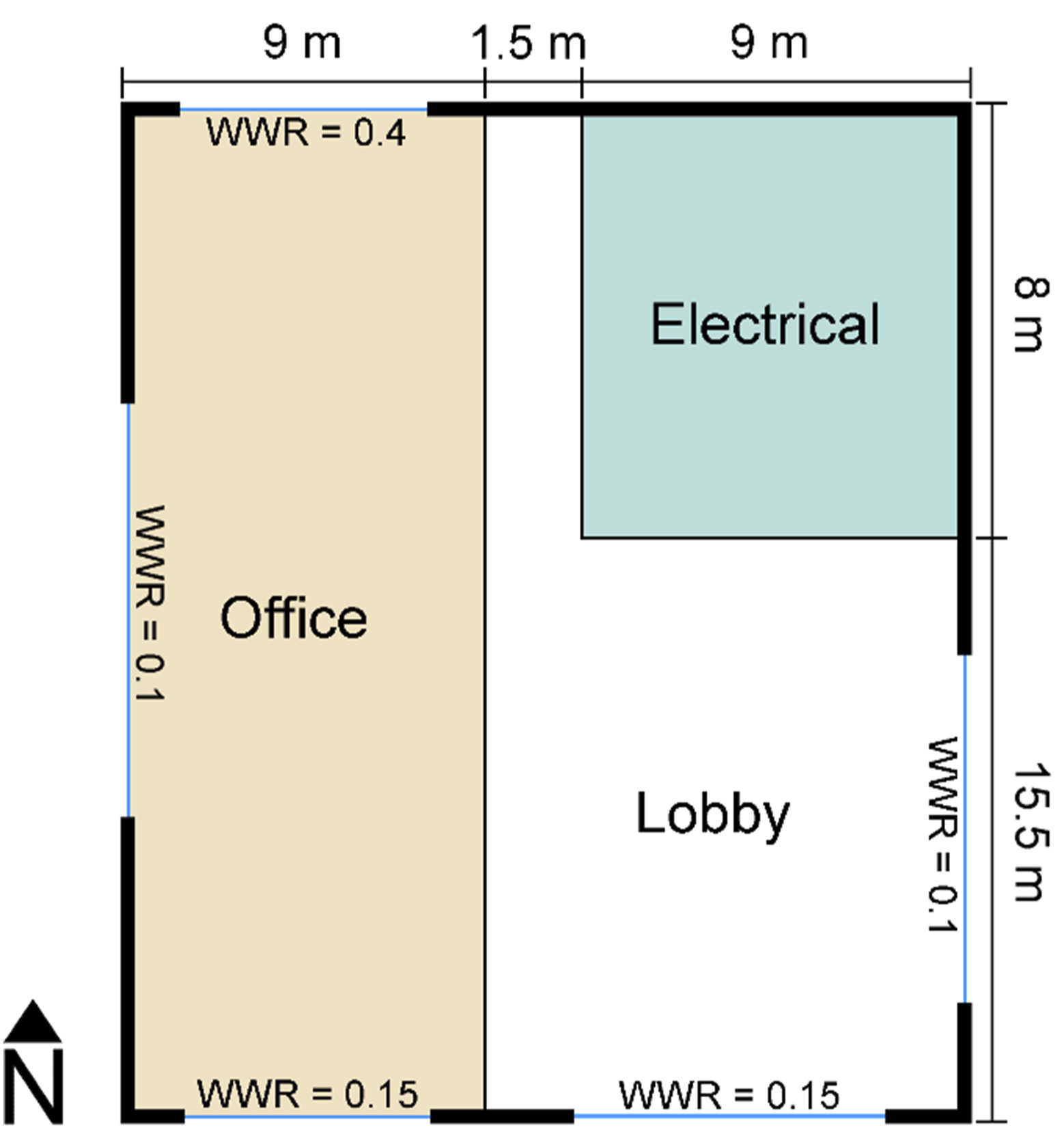
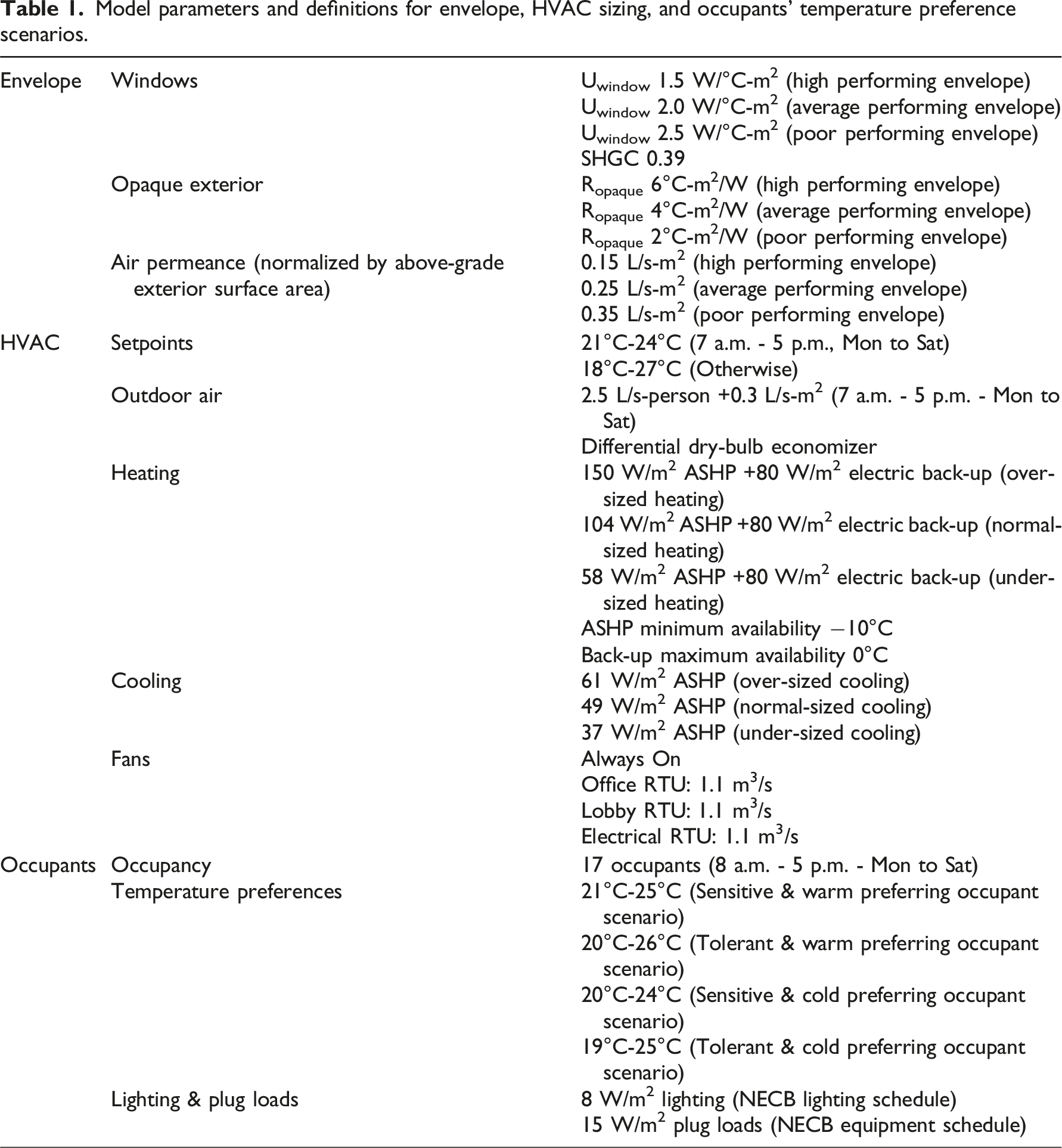
Each unit is coupled with a mixed-air single-zone air handler that uses a differential dry-bulb temperature-based economizer and is not equipped with any heat recovery capabilities. Up to 1.1 m3/s of supply air, comprised of a mixture of recirculated and outdoor air, is moved by each unit at a constant supply air pressure of 600 Pa and a supply air temperature (SAT) of 12.8°C in the cooling mode and 50°C in the heating mode. Canadian Weather Year for Energy Calculation (CWEC) data for Toronto is used for the year-long simulations 31 ; the simulations are performed using 15-min timesteps. The heating and cooling temperature setpoints are 21°C and 24°C, respectively, during operating hours between 7 a.m. and 5 p.m. on weekdays and on Saturdays. Outside the operating hours, heating and cooling temperature setpoints are 18°C and 27°C, respectively. During operating hours, ventilation is set to 180 L/s on the basis of 2.5 L/s-person for a design occupancy of 17 persons and 0.3 L/s-m2 per floor area. Note that the geometry of the building, thermal zones, and occupancy characteristics are based on a real small commercial building in Toronto, Canada. However, our analysis did not use the natural gas-based heating system of the actual building. Given the study’s focus on electrification and DLCs for HVAC systems, the emulator model was assembled with three air-source heat pumps (ASHP) serving the three thermal zones.
On average, each occupant, when present, is assumed to emit 125 W (i.e., light office work). Plug-in equipment and lighting loads are assumed to be 15 W/m2 and 8 W/m2, respectively, based on Bennett and O’Brien. 32 National Energy Code for Buildings (NECB) schedule A was used for occupant, lighting, and equipment schedules. 33 Typical of North American small commercial building construction, the walls and the roof are defined with lightweight materials with negligible thermal mass – that is, steel-framed wall and roof with cavity and rigid insulation. The floor is defined with 20-cm thick concrete, which accounted for most of the thermal mass of the building enclosure. The concrete floor surface was assumed exposed to the indoor air and there was no insulative finishings like carpeting, vinyl flooring, etc. This assumption likely enhanced a DLC algorithm’s ability to store heat in the fabric during the preheating/precooling cycles. In addition, Hendron and Engebrecht 34 recommends assuming an internal mass of the furniture and contents as 39 kg/m2. Given a 3.5 m column of air and density of indoor air of 1.2 kg/m3, the internal mass of the furniture and contents are accounted for with an indoor air capacitance multiplier of 9.3. Notably, these thermal mass-related assumptions play an important role in the temperature response during setpoint transition instances. While each building’s internal thermal mass amount and its distribution are expected to be somewhat different, the goal of this model was to have an emulator with plausible assumptions, which serves as a testbed for the assessment of the DLC algorithms.
As illustrated in Figure 3 36 variants of the base model are created representing three levels of envelope performance, three levels of HVAC sizing, and four different occupant temperature preference scenarios (3 × 3 × 4 = 36). Table 1 provides details regarding these scenarios. The envelope performance levels were taken from Ref.
27
where the average performance level corresponds to a NECB
33
compliant building for the local climate zone. Envelope scenarios poor and high correspond to thermal transmittance levels significantly higher and lower than the code-minimum envelope, respectively. The average HVAC sizing scenario was based on the actual building’s HVAC system information (i.e., nameplate thermal energy output capacity of the existing heating and cooling equipment). The under- and over-sized scenarios were generated by decreasing and increasing the heating and cooling capacities indicated in the average HVAC sizing scenario by 25%, respectively. Note that HVAC scenarios were created by varying the air-source heat pumps’ gross rated total heating and cooling capacities; all other HVAC-related model parameters (e.g., airflow rate, differential air pressure across the supply fan, supply air temperatures) were kept constant. Occupant preference scenarios represent four different plausible thresholds for thermostat override levels. They are inspired by Elehwany, et al.
35
Two of them represent occupants that accept up to a ±3°C variation from their preferred temperature of 22°C or 23°C (which we refer to as tolerant occupants), and the other two represent occupants that accept up to a ±2°C variation from their preferred temperature of 22°C or 23°C (which we refer to as sensitive occupants). Variations in temperature preferences are typical, and they can be explained with variations in the metabolic rates, clothing insulation levels, and other non-temperature physical variables (e.g., air speed, surface temperatures, etc.). Note that EnergyPlus was selected as the engine for our emulator model because it is a research-grade open-source tool, widely used in BPS research and practice, and it offers the flexibility of testing advanced control algorithms via its Python application programming interface (API). Envelope, HVAC sizing, and occupant preference scenarios.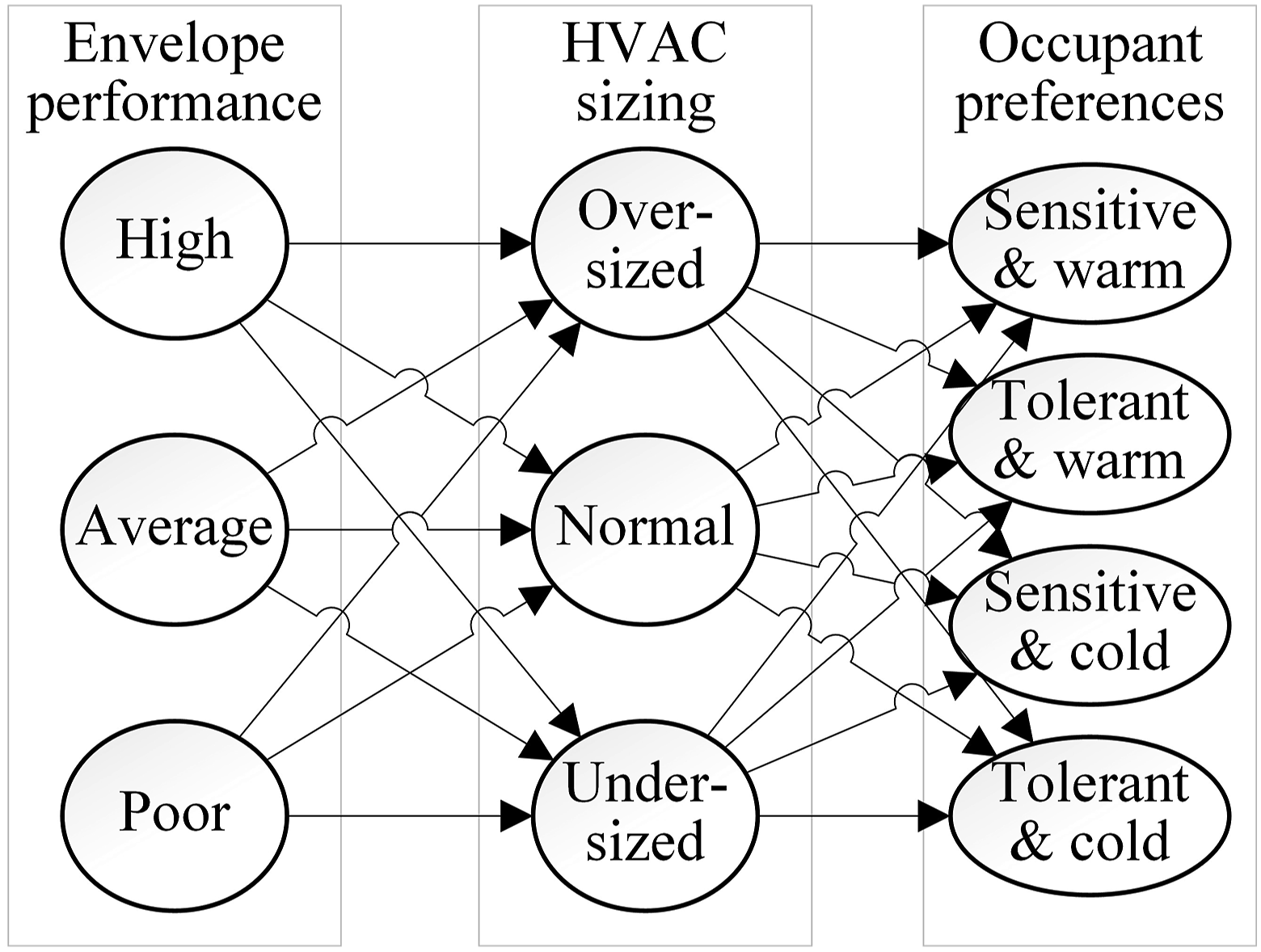
TOU pricing and DLC parameters
The TOU rates applicable to small commercial buildings in Ontario for 2023 are shown in Figure 4. In the heating season (i.e., November through April inclusive) on weekdays, there are two on-peak periods: in the morning between 7 a.m. and 11 a.m. & in the evening between 5 p.m. and 7 p.m. Because the default settings for the evening peak period already apply a setback temperature of 18°C in the heating season, a DLC intervention is relevant for the morning peak periods only. As shown in Figure 4, the heating season DLC sequence is defined with three parameters: preheating magnitude (ΔT
ph
), preheating duration (Δt
ph
), and setback magnitude (ΔT
sb
). TOU rates and DLC sequence shape and parameters for (a) Winter (November to April) (b) Summer (May to October). The acronyms HSP and CSP stand for the heating and cooling temperature setpoints, respectively.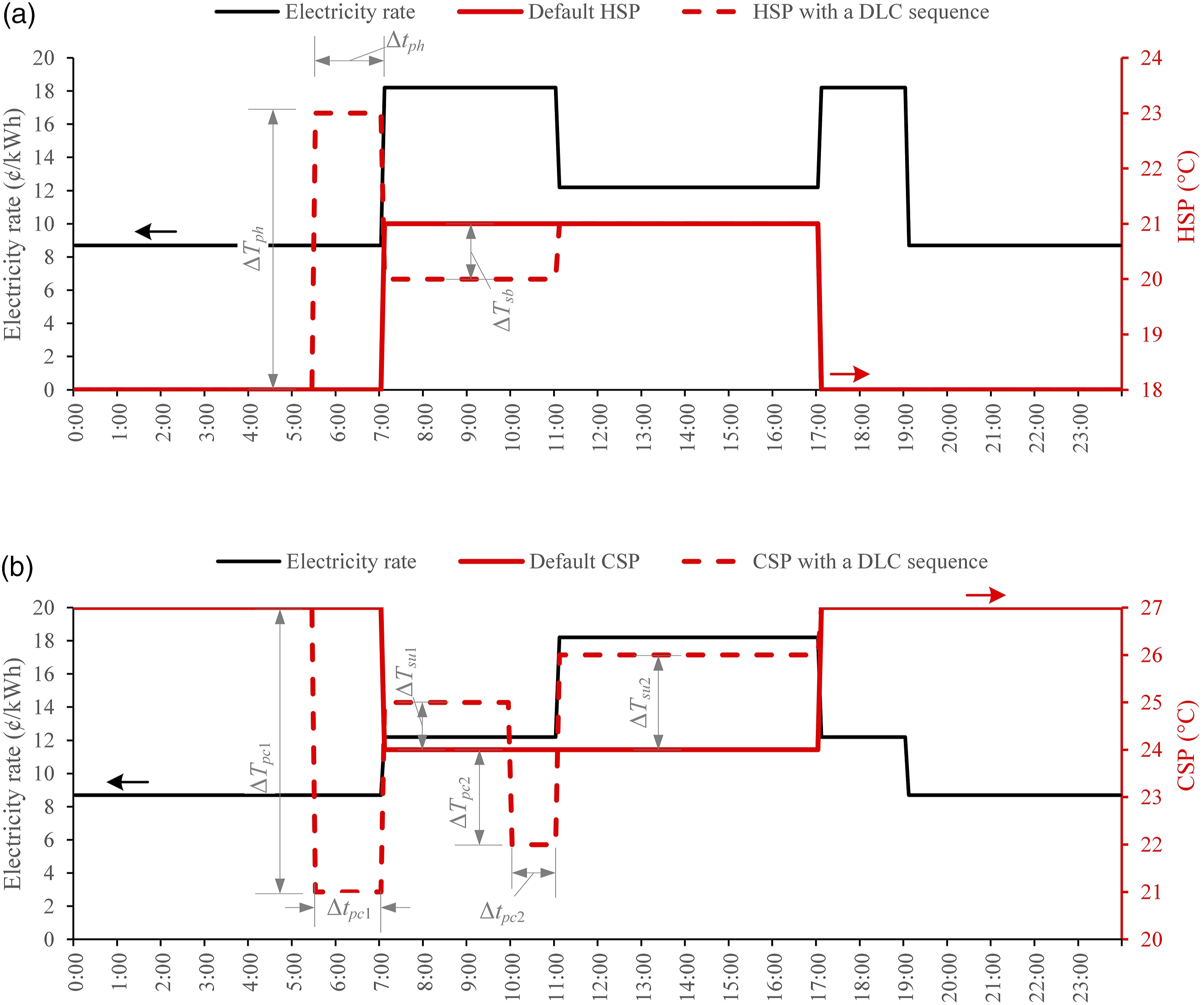
In the cooling season (i.e., May through October inclusive) on weekdays, there are two instances where the cost of electricity increases during operating hours. A transition from off-peak to mid-peak rates takes place at 7 a.m. and a transition from mid-peak to on-peak rates take place at 11 a.m. Thus, the cooling season DLC sequence is defined with six parameters: early morning precooling magnitude (ΔTpc1), early morning precooling duration (Δtpc1), early morning setup magnitude (ΔTsu1), late morning precooling magnitude (ΔTpc2), late morning precooling duration (Δtpc2), and late morning/afternoon setup magnitude (ΔTsu2).
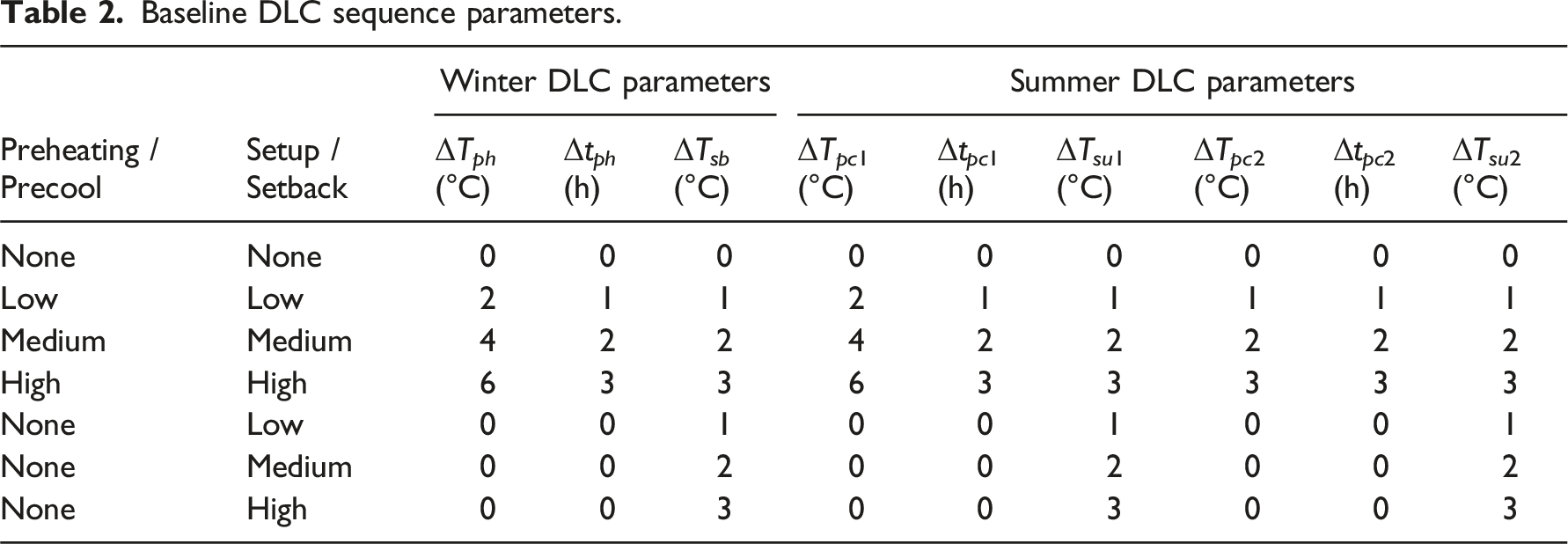
Baseline DLC sequences
Baseline DLC sequence parameters.
Optimization algorithm for DLC sequence derivation

Upper and lower limits for the DLC sequence parameters for the optimization algorithm.

Results and discussion
Figure 5 presents the evolution of the objective (i.e., cost defined in Equation (1)), the electricity cost, and the f
discomfort
term in multiple generations for the variant with high-performing envelope, oversized HVAC, and tolerant & warmer temperature preferring occupant scenarios. Each boxplot is an outcome of 72 simulations with various DLC sequence parameters. The results indicate that the median objective value of each generation iteratively reduces for the first five generations through resampling of high-performing DLC sequences. Similarly, the median electricity cost and f
discomfort
values slowly improved across multiple generations. Because of mutation and crossover, the diversity among the 72 members was largely retained after six generations. This diversity was essential to minimize the risk of getting stuck in a local minimum. The evolution patterns observed with the other variants were similar – that is, the median of the objective stopped improving in either the fourth or fifth generations. Thus, similar graphs were not included to avoid repetition. Evolution of the objective function, annual electricity cost and fraction of times spent outside low and high limits of comfort for the variant with high-performing envelope, oversized HVAC, and tolerant & warmer temperatures preferring occupants.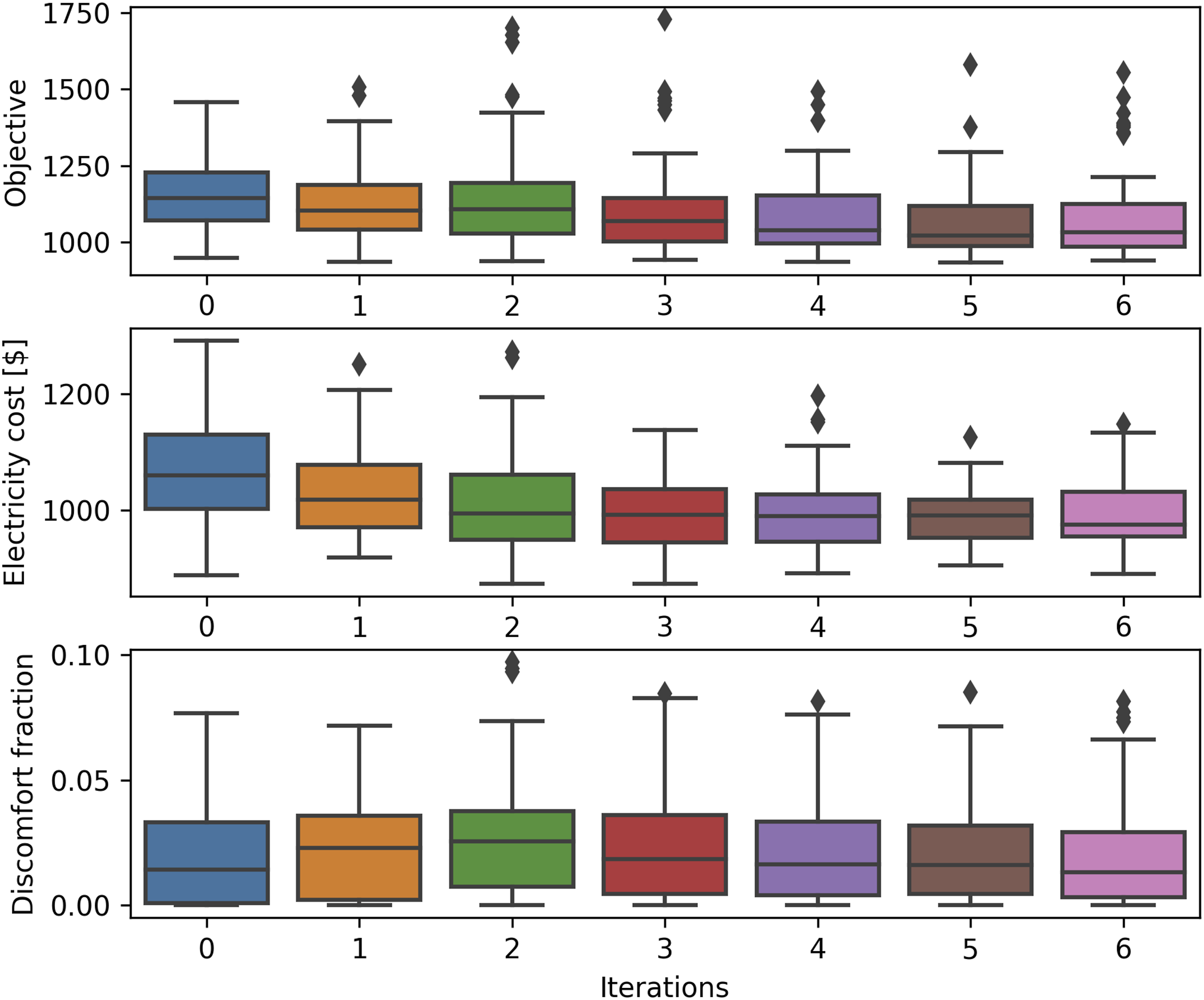
Figure 6 presents the pairwise relationship between the annual electricity cost and the f
discomfort
values for 504 (72 simulations/generation × 7 generations) different DLC sequences for the same variant. The results indicate that close to the x-axis there is great variation in the performance where DLC sequences can offer electricity cost savings with little to no f
discomfort
. Pairwise relationship between the annual cost and fraction of times spent outside low and high temperature limits during the optimization process for the variant with high-performing envelope, oversized HVAC, and tolerant & warmer temperatures preferring occupants.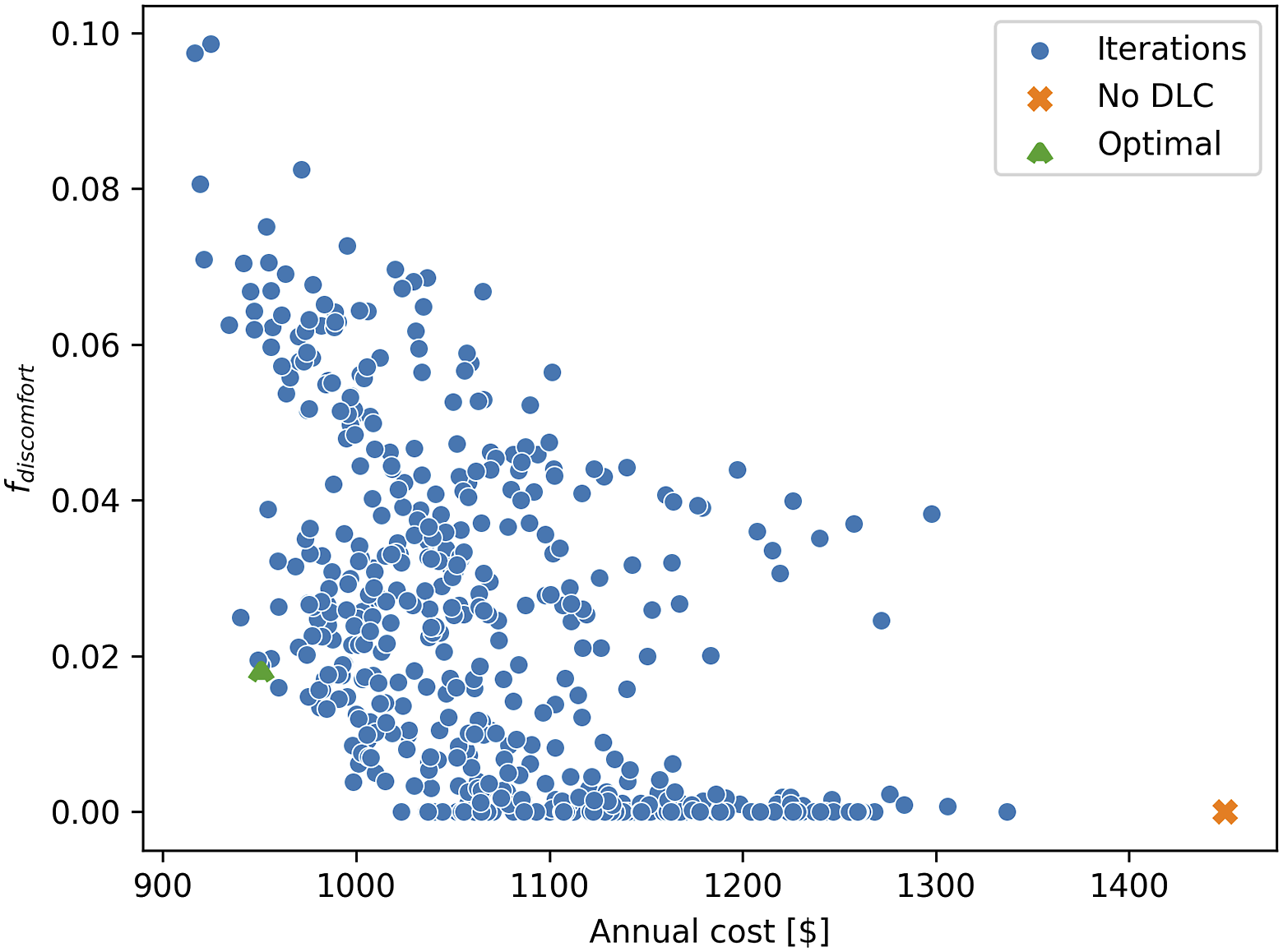
The optimal DLC parameters for each variant. µ and σ stand for mean and standard deviation. The labels he, ae, and pe represent high-, average-, and poor-performing envelope, respectively. The labels ns, us, and os represent normal-, under-, and over-sized HVAC, respectively. The labels one to four represent occupant temperature preference scenarios: tolerant & warm, sensitive & warm, sensitive & cold, and tolerant & cold, respectively. Refer to Table 1 for definitions of these attributes used in assembling the 36 scenarios.
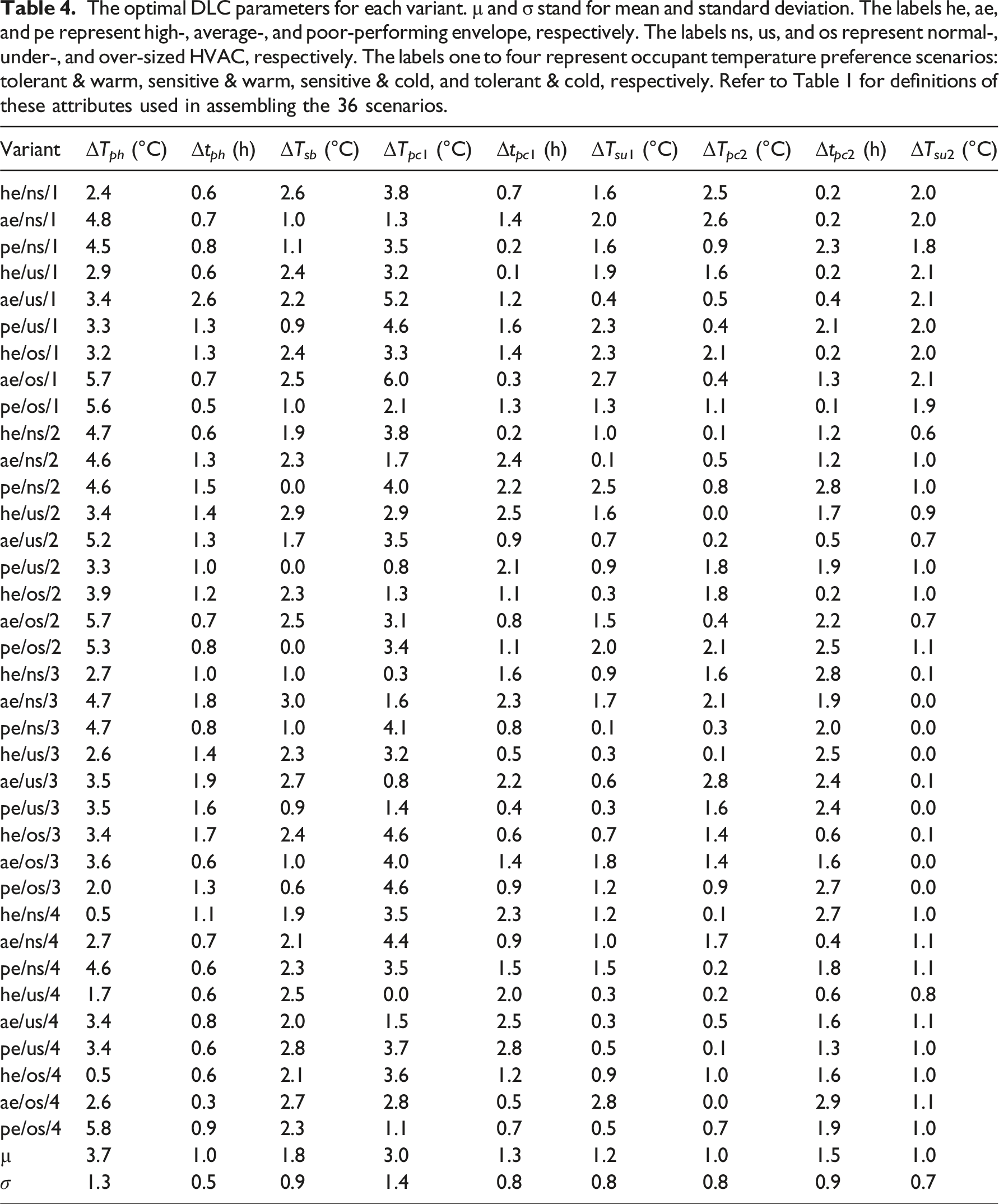
The mean and the standard deviation for the optimal morning precooling magnitude ΔTpc1 were 3°C and 1.4°C, respectively. And the mean and the standard deviation for the optimal morning precooling duration Δtpc1 were 1.3 h and 0.8 h, respectively. On average, the variants with the oversized HVAC scenario had an optimal ΔTpc1 value 0.8°C greater and an optimal Δtpc1 value 0.6 h shorter than those with the undersized HVAC scenario. Simply put, the variants with an oversized HVAC system could deliver the necessary precooling in a shorter period of time at a greater intensity. The optimal setup parameters ΔTsu1 and ΔTsu2 were typically confined by the upper limit of the preferred temperature ranges (i.e., 2°C for tolerant and warm, 1°C for sensitive and warm, 0°C for sensitive and cold, 1°C for tolerant and cold). However, a few of the variants with the undersized HVAC scenario ended up with smaller ΔTsu1 and ΔTsu2 values. This is likely because of the risk of frequent discomfort conditions due to longer recovery times with the undersized HVAC scenarios. The mean and the standard deviation for the optimal daytime precooling magnitude ΔTpc2 were 1°C and 0.8°C, respectively. And the mean and the standard deviation for the optimal daytime precooling duration Δtpc2 were 1.5 h and 0.9 h, respectively. On average, the optimal Δtpc2 was 0.8 h longer with the poor envelope scenario than with the high-performing envelope scenario. The results, in general, highlight the significance of inter-variant diversity of the optimal DLC sequences and the need for personalized building-specific DLC sequences. Figure 7 provides a visualization of this diversity. Notably, the variants of this study are built upon the same archetype – for example, same orientation, WWR, occupancy, lighting, and plug-in equipment load intensities. In reality, the inter-building diversity of optimal DLC sequences would even be greater, if the variants were generated from different small commercial building archetypes. The optimal DLC sequences for heating setpoints (HSP) and cooling setpoints (CSP) for each variant and their mean.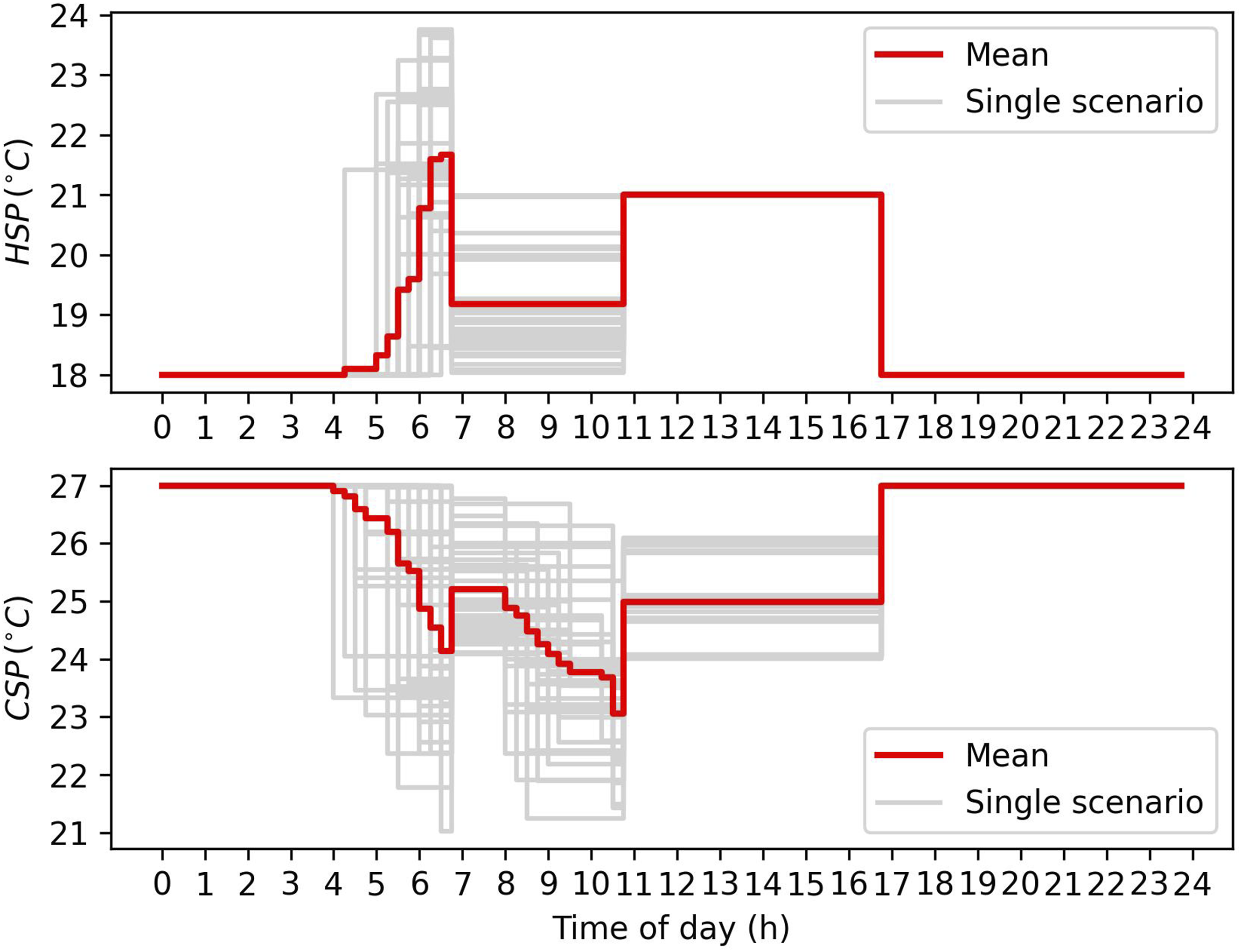
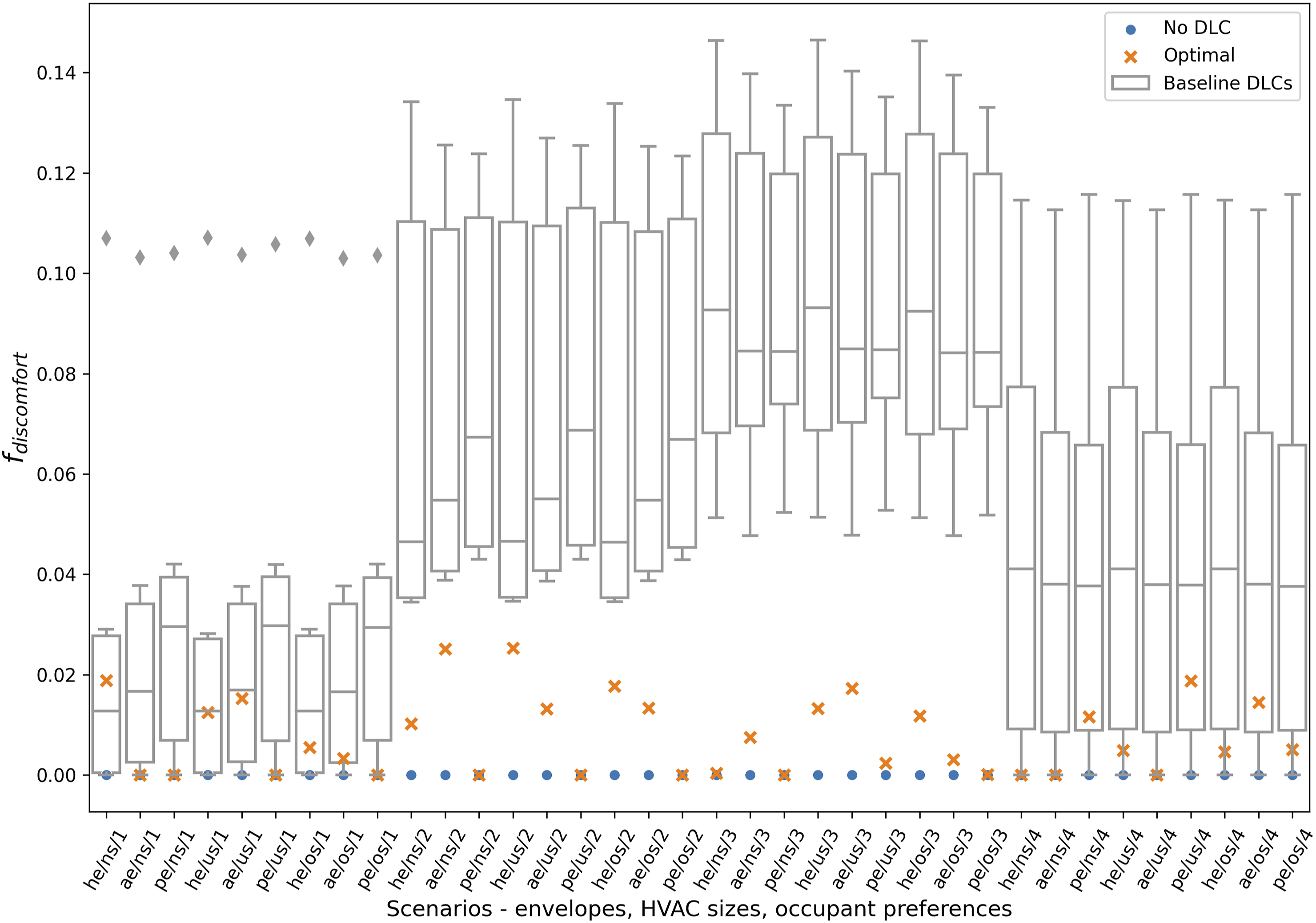
Figure 8 presents the annual electricity cost of the 36 variants with the optimal and baseline DLC sequences. The mean and standard deviation of the HVAC electricity cost savings with the optimal DLC sequences relative to the no DLC case were 20% and 7%, respectively. The average HVAC electricity cost savings were 28%, 20%, and 13% with the high-, average-, and poor-performing envelope scenarios, respectively. Despite these large variations in the percent cost savings, the absolute HVAC electricity cost savings were on average about $420 ($0.9 per m2 floor area) for all three tiers of the envelope scenarios. The average cost savings potential was 24% and 17% with the tolerant and sensitive occupant scenarios, respectively. This corresponds to an average of $490 of savings with the tolerant occupant scenarios and $340 of savings with the sensitive occupant scenarios. The electricity cost savings potential was on average $75 greater with an oversized HVAC system in contrast to an undersized HVAC system. This can be explained by an increased capacity to deliver intended heating/cooling energy during preheating/precooling periods. At least some of the baseline DLC sequences were able to achieve electricity cost savings comparable to the sequence estimated via optimization. However, the baseline DLC sequences caused many hours spent outside the preferred temperature ranges (see Figure 9). The optimization process maintained the f
discomfort
metric consistently under 3%. These findings highlight that the one-size-fits-all approach to DLC with generic sequences causes either discomfort or suboptimal electricity cost savings. The annual electricity cost with the six generic DLC and no DLC baselines listed in Table 2, and the optimal DLC sequences for the 36 variants. The labels he, ae, and pe represent high-, average-, and poor-performing envelope, respectively. The labels ns, us, and os represent normal-, under-, and over-sized HVAC, respectively. The labels one to four represent occupant temperature preference scenarios: tolerant & warm, sensitive & warm, sensitive & cold, and tolerant & cold, respectively. Refer to Table 1 for definitions of these attributes used in assembling the 36 scenarios. The fraction of time spent outside preferred temperature bounds with the six generic DLC and no DLC baselines listed in Table 2, and the optimal DLC sequences for the 36 variants. The labels he, ae, and pe represent high-, average-, and poor-performing envelope, respectively. The labels ns, us, and os represent normal-, under-, and over-sized HVAC, respectively. The labels one to four represent occupant temperature preference scenarios: sensitive & warm, tolerant & warm, sensitive & cold, and tolerant & cold, respectively. Refer to Table 1 for definitions of these attributes used in assembling the 36 scenarios.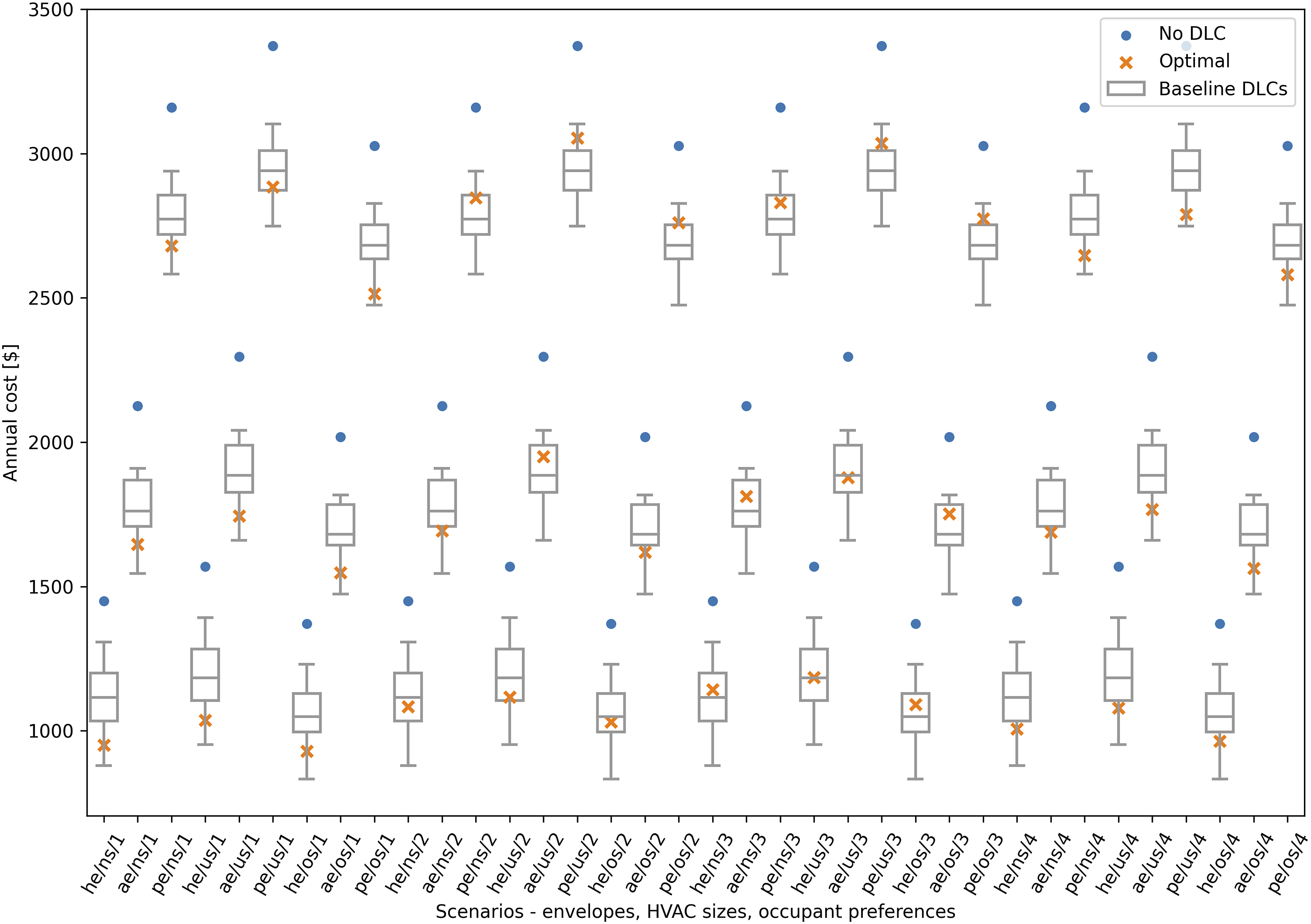
Unresolved issues
This paper demonstrated that DLC sequences that minimize the electricity cost while maintaining the temperatures within a user’s preferred temperature range are unique for each building. Optimal DLC sequences were derived for variants of a small commercial building archetype. These sequences can be implemented in programmable thermostats controlling electric HVAC systems in similar buildings. Choosing the right sequence requires a rough estimate of the envelope and HVAC-sizing characteristics. In some cases, these characteristics can be inferred from the building age (i.e., applicable code requirements of the vintage), retrofit history, and nameplate data regarding the HVAC system capacity. Alternatively, surrogate model- or inverse model-based envelope characterization approaches38–40 can be applied to gain insights into these attributes.
In this study, only a single set of winter and summer DLC sequences was derived. In reality, it is logical that the preheating/precooling needs during the shoulder season months differ from those during the core heating and cooling season months. Future work should derive different DLC sequences for the shoulder seasons. The same BPS-based global optimization approach can be employed to search for four sets of DLC sequences (Winter, Spring, Summer, Fall), instead of the two searched in this paper.
The estimation of optimal DLC sequences was done through a simulation-based investigation. Future work should implement them in actual small commercial buildings to assess occupant comfort, behaviour, and perception of DLC.
The DLC sequences studied in this paper incorporated both preconditioning and setup/setback. It is likely that some facility managers may have contractual constraints preventing them from applying temperature setups/setbacks. Future work should investigate the savings potential merely through preheating/precooling.
The DLC sequences employed in this study had instantaneous setpoint increases/decreases at transitions to/from preconditioning and setup/setback periods. Such rapid transitions in the Winter may cause inefficient electric or natural gas auxiliary heating systems to engage and cause abrupt peaks, which may pose risks at the building electric panel level or collectively at the substation level. During the real-world implementation, rebound mitigation sequences shall be incorporated such that setpoints transition incrementally over a reasonable period of time (e.g., 30-min). 41
This study was conducted in a jurisdiction where the on-peak to off-peak electricity cost ratio is about two. The cost of over-preconditioning is non-negligible. At higher on-peak to off-peak rate ratios, as preconditioning becomes cheaper, the tendency of an optimization algorithm would be to increase the preheating/precooling magnitudes and durations. At lower on-peak to off-peak rate ratios, the tendency would be to reduce preheating/precooling magnitudes and durations, as over-preconditioning would become a more expensive mistake. Future work should investigate different peak pricing scenarios. In addition, the scope of our findings is limited to small commercial buildings served by air-source heat pump systems. The findings should not be directly extrapolated to other building typologies with different HVAC configurations.
Conclusion and future work
In this paper, a metaheuristic search algorithm was employed to derive a personalized DLC sequence for each building typology separately. The algorithm estimated a unique DLC sequence that minimizes the electricity cost, and the time spent outside a preferred temperature range for each building.
The optimization was formulated by using 36 variants of an EnergyPlus model representing a standalone small commercial building in Toronto, Canada. These variants were generated by systematically altering the model’s envelope properties, HVAC system’s capacity, and occupants’ temperature preferences. The optimization algorithm was implemented to interact with the model via EnergyPlus’ Python API. The optimal DLC sequences were compared with six generic baseline DLC sequences. Of them, three apply preconditioning and setup/setback at varying intensities and durations. The rest only apply setup/setback at varying intensities and durations.
The results demonstrated the inter-building diversity in optimal DLC sequences (recall Research Question one in Subsection 1.3). For example, the mean and the standard deviation of optimal preheating magnitude were 3.7°C and 1.3°C, respectively. The mean and the standard deviation for the optimal precooling magnitude were 3°C and 1.4°C, respectively. The standard deviation (indicative of the inter-building diversity) of the DLC sequences could largely be explained by the differences in the building envelope, HVAC sizing, and occupants’ temperature preferences. For example, the optimal preheating magnitude for the variants with the high-performing envelope scenario was on average 1.6°C less than those with the poor-performing envelope scenario. The variants with the oversized HVAC scenario had an optimal precooling magnitude 0.8°C greater and an optimal precooling duration 0.6 h shorter than those with the undersized HVAC scenario. The HVAC electricity cost savings with the optimal DLC sequences also exhibit significant variation. While the mean electricity cost saving relative to the no DLC case was 20%, the standard deviation amongst the variants was 7%. None of the baseline DLC sequences could attain similar electricity cost savings without causing excessive discomfort (recall Research Question 2 in Subsection 1.3). The optimal DLC sequences could keep the time spent outside the preferred temperature ranges under 3% for all variants. Future work should investigate the effect of optimizing for a different DLC sequence for the shoulder season months in addition to the core heating and cooling seasons.
Footnotes
Declaration of conflicting interests
The author(s) declared no potential conflicts of interest with respect to the research, authorship, and/or publication of this article.
Funding
The author(s) disclosed receipt of the following financial support for the research, authorship, and/or publication of this article: This research is supported by a research contract with the National Research Council Canada (Contract number 1011603).

Appendix
List of symbols.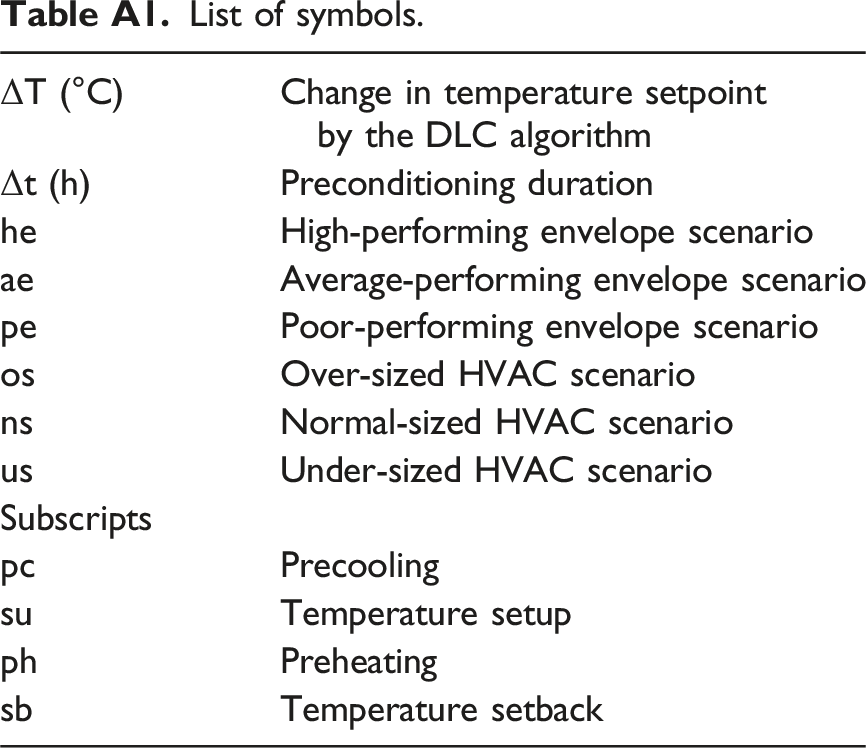
ΔT (°C)
Change in temperature setpoint by the DLC algorithm
Δt (h)
Preconditioning duration
he
High-performing envelope scenario
ae
Average-performing envelope scenario
pe
Poor-performing envelope scenario
os
Over-sized HVAC scenario
ns
Normal-sized HVAC scenario
us
Under-sized HVAC scenario
Subscripts
pc
Precooling
su
Temperature setup
ph
Preheating
sb
Temperature setback