




Abstract
The need for the construction industry to reduce both operational and embodied carbon emissions is urgent. Traditional insulation materials, while effective, require energy-intensive processes and non-renewable resources, making them unsustainable. Mycelium-based composites (MBCs) offer a sustainable alternative with low embodied carbon, biodegradability, and non-toxicity, and studies show promising thermal performance. However, accurate measurement of λ is crucial to ensure effectiveness, requiring an understanding of the factors influencing these measurements. This paper reviews the thermal conductivity of MBCs, covering 19 studies reporting λ values from 0.026 W/mK to 0.18 W/mK. Measurement techniques and their uncertainties are reviewed, as well as additional factors affecting λ, including moisture content, density, temperature, substrate, fungal species, and growth conditions. The influence of the fungal-skin layer and the anisotropic nature of MBCs is discussed. Standardised measurement protocols and thorough methodological reporting are emphasised to ensure comparability. By optimising intrinsic parameters like species-substrate combinations and growth conditions, MBC thermal performance can be improved. This paper informs on MBC thermal characterization, promoting broader adoption in the construction industry and advancing sustainable practices. Consequently, this review aims to guide future research and applications, aiding in reducing both operational and embodied carbon emissions.
Practical application
The whole-life impact, in energy use or associated carbon emissions, is increasingly used to define building material performance. In addition to operational performance, the constituent materials and associated production processes become very relevant. Consequently, interest in the use of ’would-be’ waste materials and natural building materials with, typically, low embodied carbon has increased significantly. This article aims to provide architects, building services engineers, and others involved in the design, specification, and use of building envelope materials with a state-of-the-art review of the thermal characterisation of bio-composite materials; knowledge of their development and thermal performance will help to inform their use.
Introduction
In recent years, the escalating climate crisis has brought in to focus the substantial contribution of the construction sector to global carbon emissions; this sector accounts for 35% of global CO2 emissions and generates between 45% and 65% of landfill waste.
1
This necessitates the pursuit of more sustainable practices within the construction industry, with the aim of both reducing operational carbon emissions and embodied carbon of building materials. Considering operational emissions, 64% of domestic UK emissions are due to heating, and similarly, 50%–70% of energy use for an average home in America is used for heating and cooling. In regions with harsher climatic conditions, these percentages are likely to be higher. Effective insulation can substantially reduce the high operational carbon emissions of buildings.2–6 Insulation materials are those that reduce the transfer of heat, primarily via conduction, from regions of a different temperature. This process can be described using Fourier’s law of heat conduction:

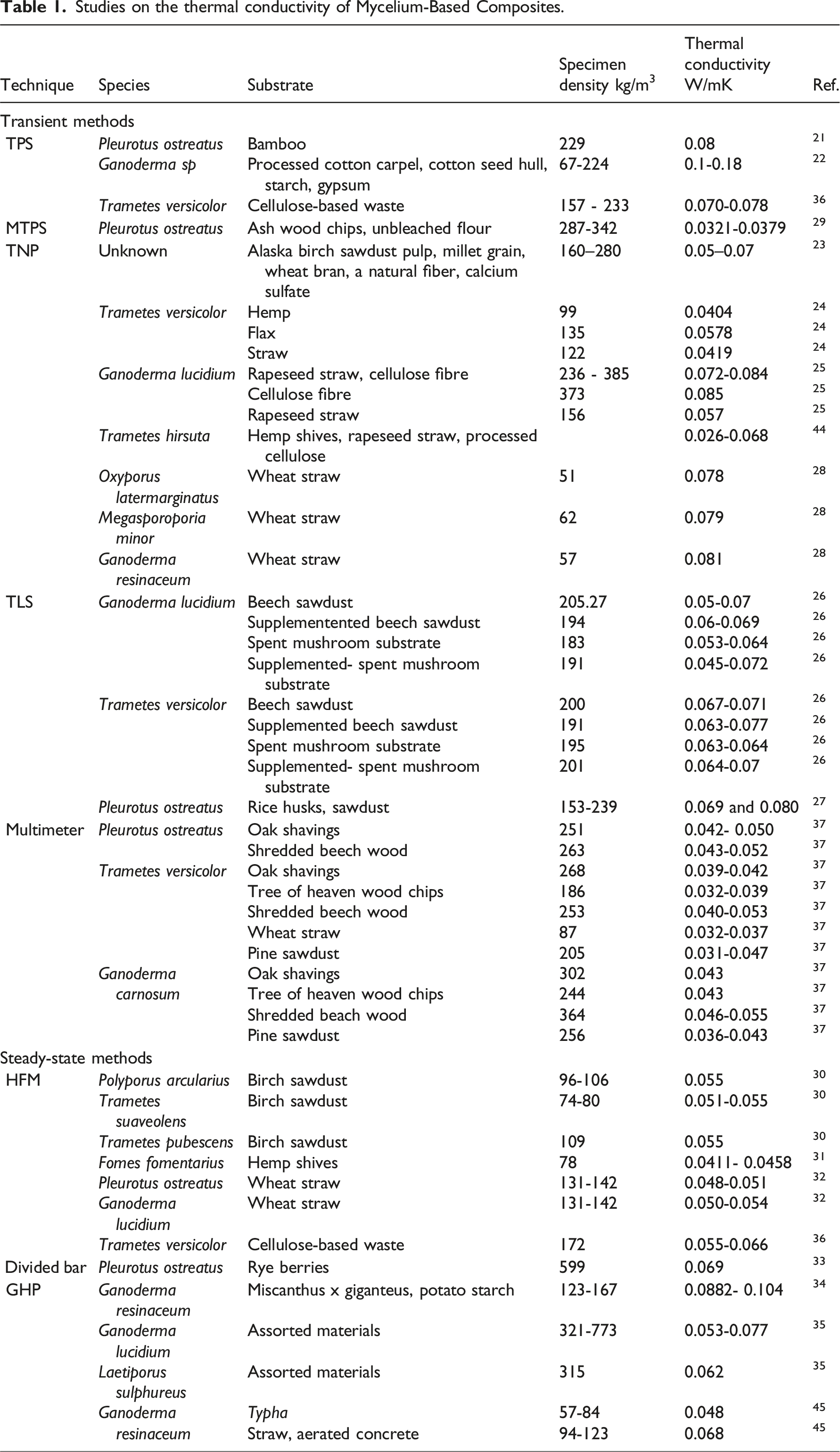
Studies on the thermal conductivity of Mycelium-Based Composites.
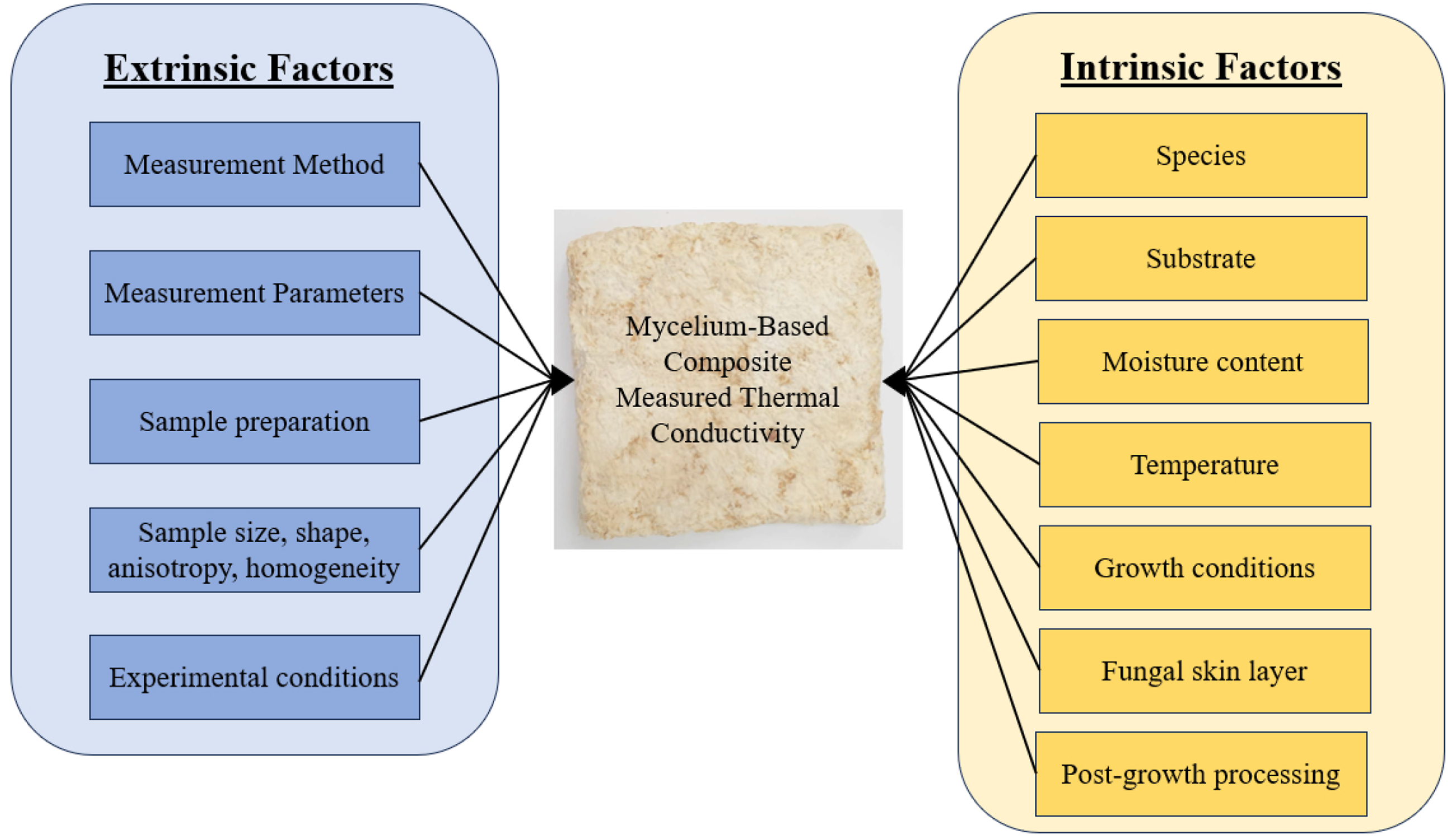
Extrinsic and intrinsic factors affected the thermal conductivity measurement of mycelium-based composites.
Mycelium based composites
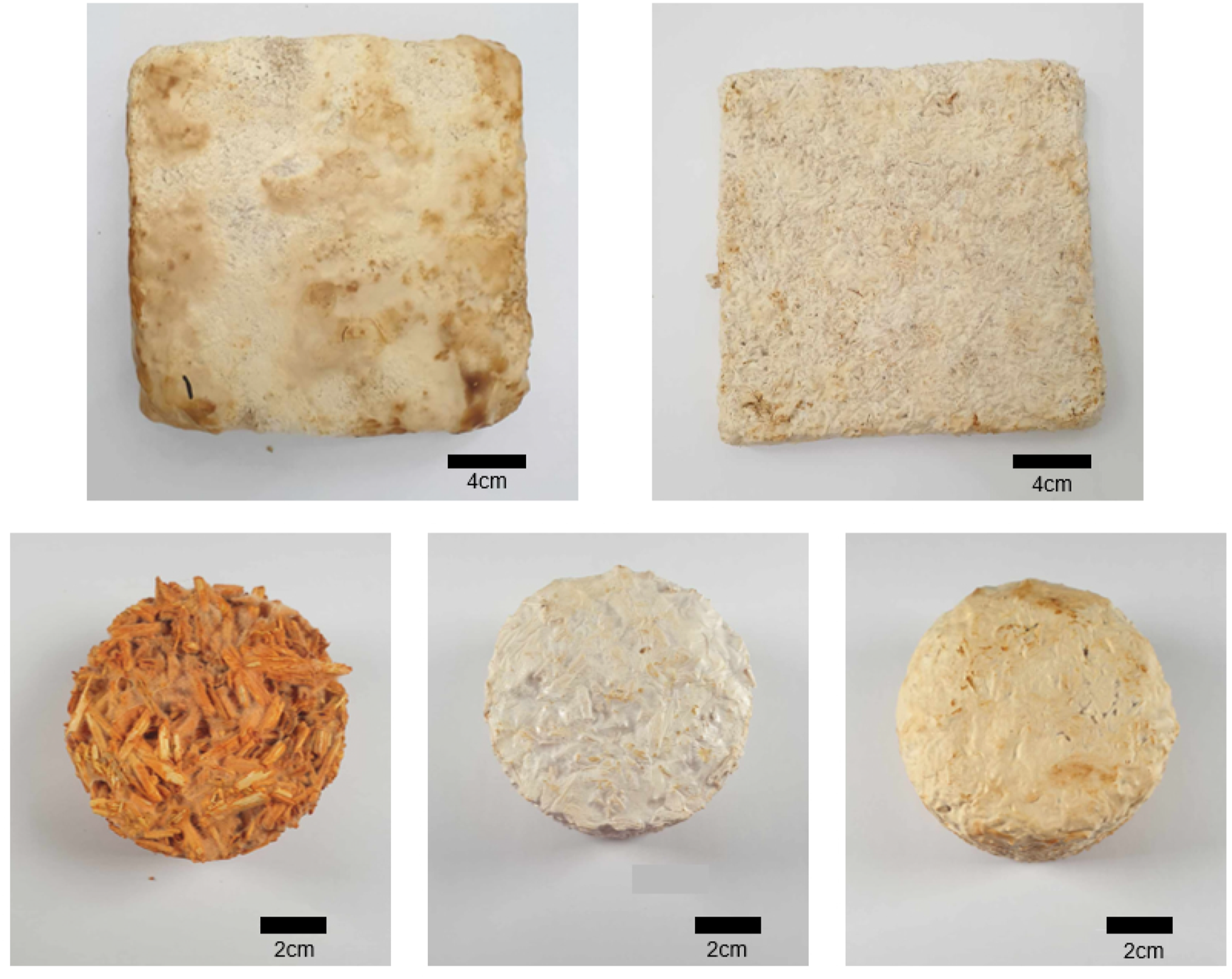
Figure 2 illustrates the steps in the production process of MBCs and Figure 3 shows different mycelium-based composites. Sterilised or pasteurised substrates serve as the foundation for inoculation with healthy fungal mycelium. This inoculation can be achieved through various methods, including the use of grains colonised by mycelium, liquid cultures, or mycelium cultivated on agar. To facilitate optimal fungal growth, the substrate is adjusted to the correct moisture level and may be enriched with nutritional supplements. Following inoculation, the substrate is encased in molds that define the final product’s shape, sealed with a permeable film to allow gas exchange, and incubated. The duration of this incubation period varies, influenced by factors such as the fungal species, substrate composition, environmental conditions, and the mold’s dimensions, typically ranging from several days to weeks. After complete colonization of the substrate by the mycelium, the formed composite is removed from the mold and subjected to drying at a sufficiently high temperature (approx. 50 °C–60 °C). This step is crucial as it terminates the mycelium’s biological activity, resulting in a stable, dry, and inert material.39,40 MBCs can be considered hierarchical materials from the microscale structure of the mycelium networks and mycelium-substrate interface, to the macroscale composite.
41
Mycelium is the vegetative part of a fungus, composed of tubular filaments called hyphae with diameters typically of the order 1-30 μm. Hyphal diameters vary depending on species and growth environment, as does their length which ranges from a few microns to several metres. The mycelium grows out from a spore or inoculation point via hyphal apical tip expansion. After apical extension, of which can be polarised according to environmental fields, the hyphae initiate random branching as a foraging strategy to acquire nutrients from a large area. Mycelial branching results in fractal-like colonies which can interconnect via hyphal fusion mechanisms to form a random fibre network structure. The branching density and network topology are controlled by the direction of hyphal polarisation and branching frequency, which are in turn controlled by nutritional and environmental conditions.
42
On the microscale, the MBC can be described in terms of the bio-polymer mycelium network, where the mechanical behaviour of the mycelium is shaped by the behavior of individual filaments and their spatial organisation within the network. This organisation affects the material’s density, porosity, and consequently its thermal properties. The way the fungus breaks down and chemically modifies the substrate also plays a critical role in defining material properties.
41
When observed on a larger scale, the resulting composites display significant anisotropy and variability. This anisotropy, or direction-dependent difference, is largely unpredictable and stems from how the substrate particles are dispersed throughout the material.
41
This can be seen in Figure 4(a)-(c)). Typical Mycelium-Based Composite production process. Assorted mycelium-based composites. (a)-(b) Optical light microscope images of the surface of two different, anisotropic mycelium-based composites. (c) Micro-CT scan of a mycelium-based composite. (d) Mycelium-based composite with a fungal-skin layer.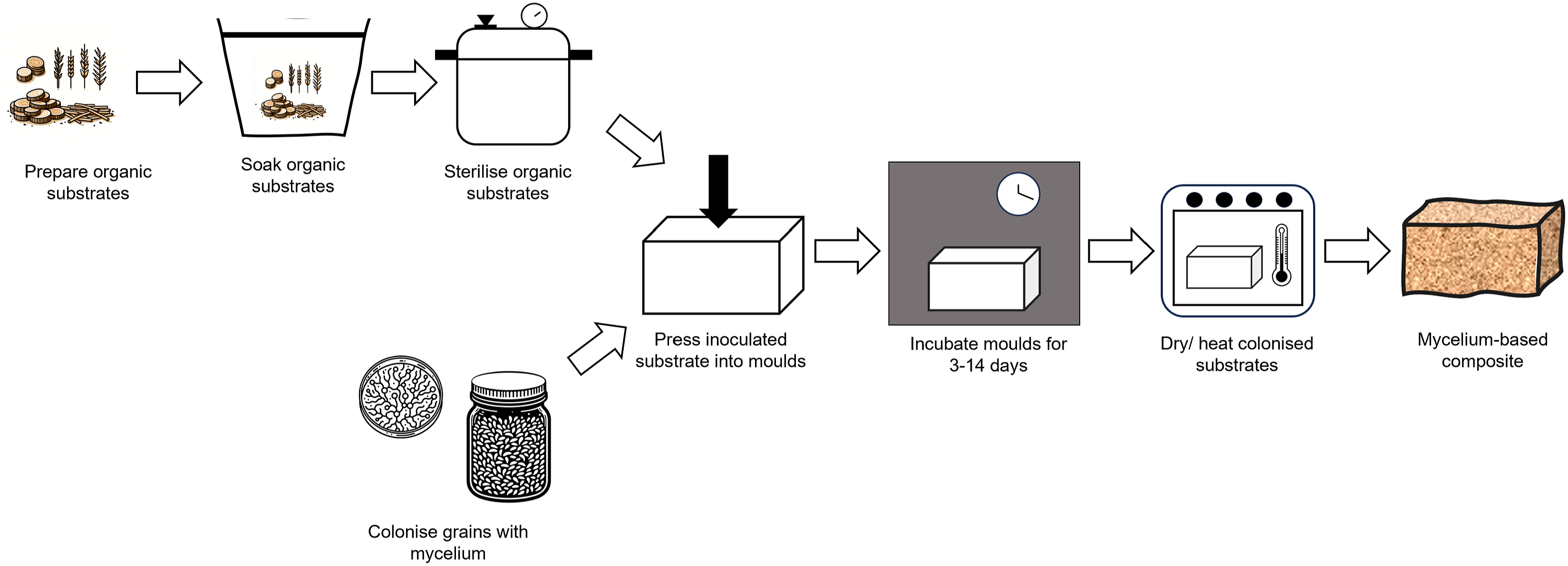
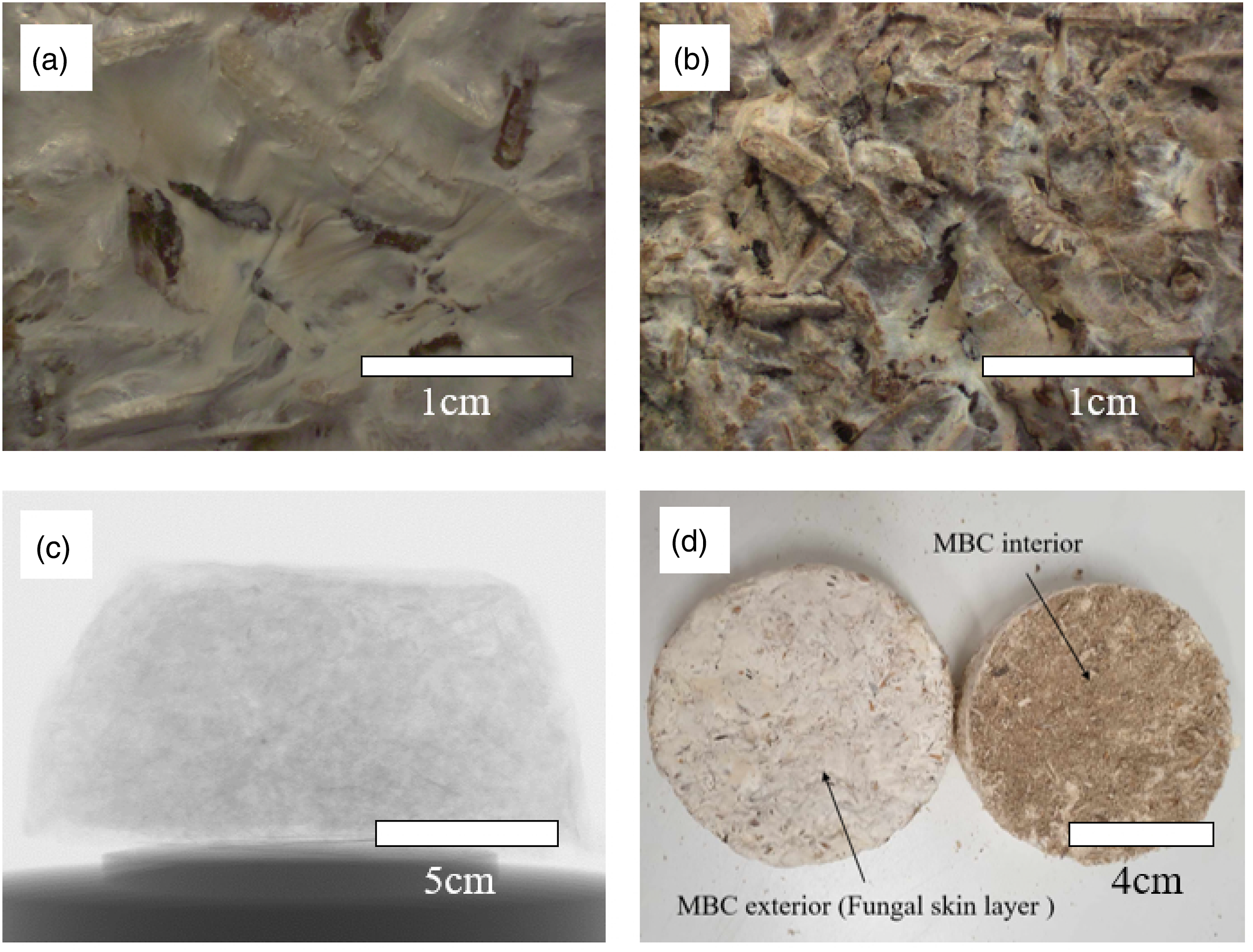
Hierarchical computational models based on the finite element method (FEM) and density distributions have been used to simulate the mechanical properties of mycelium-based composites. However, similar analyses have not yet been conducted to model their thermal properties. 43
Thermal conductivity measurement methods
Several methods have been used to measure thermal conductivity of MBCs. The choice of measurement method is a source of variation and uncertainty of λ i.e. extrinsic to the composite itself. These methods can be categorised into steady-state and transient methodologies.
Steady-state methods
In steady-state measurements, λ is determined by measuring the temperature difference under a steady-state heat flow through the specimen. λ is then given by the slope of the power versus the temperature gradient between both sides of the specimen. Steady-state methods are directly based on Fourier’s law. 46 These methods directly measure λ and are suitable for low-λ and composite materials. 47 However, steady state techniques do require relatively large specimens 47 ; this can be challenging when producing MBCs at a laboratory scale due to increased contamination risk, incubation space requirement, and increased time for colonisation.19,48 They also present other drawbacks such as parasitic heat losses, longer measurement time, and contact resistance because of the use of temperature sensors 47 ; this again can be problematic as MBCs can often have uneven surfaces. Although transient methods take a shorter time (i.e. seconds), the time required for the specimen to reach equilibrium temperature can take several hours (required between repeat measurements), and therefore transient methods do not necessarily offer a time-saving advantage. 49 Additionally, steady state methods have the advantage of one directional heat flow over a larger area which accounts for measurement of specimens with anisotropic thermal conductivity and composites (where larger areas need to be measured).9,50 This is particularly important for accurate measurement of MBCs, which are highly anisotropic composites.
Guarded hot plate
The guarded hot plate (GHP) is a commonly used and effective method for measuring λ of insulation materials, and is the most accurate of the steady-state methods.
52
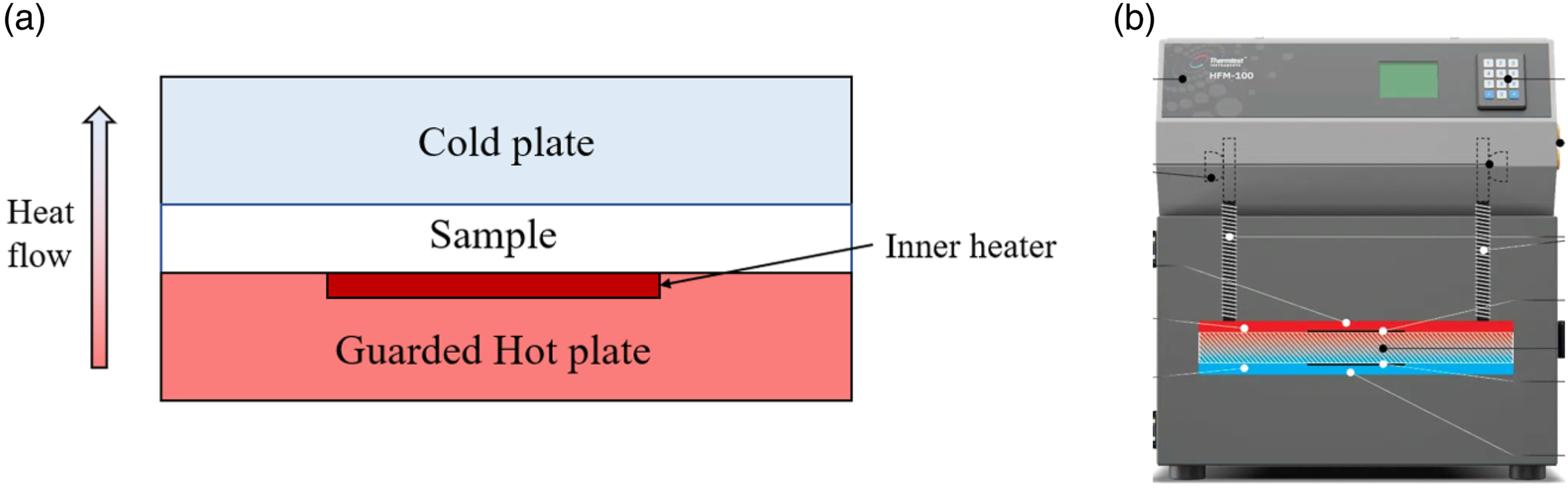
The measurement requires placing a solid specimen between two parallel temperature-controlled plates (Figure 5). The hot plate is heated by an inner heater to establish a desired temperature gradient such that the energy is transferred through to the cold plate through the specimen. A guarded heater and thermal insulation is used to prevent heat losses and to ensure heat transfer is restricted to the axial direction. Once the system reaches the steady state, λ can be calculated based on Fourier’s conduction equation from the heat flow, temperature gradient, and thickness at the steady state.
53
With the advantage of high accuracy, one disadvantage is that establishing a steady-state temperature gradient through a specimen is time-consuming, as is the case with other steady-state techniques. Other potential disadvantages are that the temperature gradient must be relatively large, the specimen width must be large, and that the contact resistance between the thermocouple and the specimen surface can pose a major source of error.
54
The requirement of large specimen sizes can be challenging for MBC prototypes manufactured at the laboratory scale for research. The GHP has been used by Travaglini et al. according to the ASTM C1044–12 standard.35,55 This standard describes a variation of the GHP, namely the single-sided mode. The size of the specimen used in this study was 85 × 55 × 30 mm which is much smaller than the standard measuring surface size of GHP apparatus which may pose issues of edge heat losses.
53
Steady state methods used to measure thermal conductivity of mycelium-based composites. (a) Diagram of the guarded hot plate method. (b) A heat flow meter.
51
Heat flow meter
The Heat Flow Meter (HFM) method is an accurate and widely utilised approach for assessing materials with low thermal conductivity. Its setup resembles that of GHP systems but distinguishes itself by employing transducers to quantify the heat flux density traversing the specimen. The measurement of heat flux throughout the heat transfer process facilitates the calculation of both thermal resistance and λ, using Fourier’s law. 56 The HFM is the most commonly used steady state method in the measurement of MBC thermal properties, and has been used in several studies according to ASTM-C518.30–32,36,57 λ has been measured using the HFM for large specimens by Gezer et al. and Wildman et al. with specimens of dimensions 300 × 300 × 40 mm and 500 × 500 × 105 mm respectively.32,36 It is critical when using the HFM that the specimen is sufficiently large, however, several studies failed to report the size of the specimen measured.30,31,57
Transient methods
Transient, non-steady, methods (Figure 6) measure the feedback response to a short pulse of heat and thus how the temperature distribution throughout the specimen varies with time. The test duration can be relatively short, as reaching equilibrium is not required.
47
However, computing the heat conduction equation is more complex as it requires resolving time-dependent heat flow equations, and before each measurement the composite must be in equilibrium with the external temperature and this can take several hours.
58
The additional complexity associated with solving heat equations means that it is important to adhere to the bounds in which the various devices operate.
49
Of significant advantage to MBC research and development laboratories, the test specimen size requires for transient methodologies can be much smaller than those required for steady-state testing.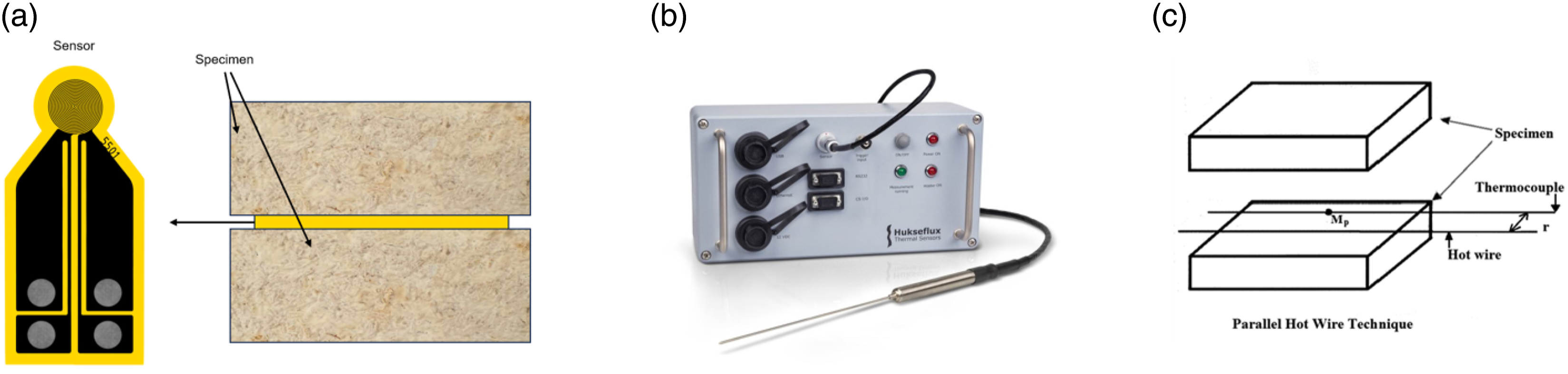
Transient plane source
The transient plane source (TPS) technique, is a popular method for rapid λ measurement, 47 and has been used by numerous studies involving MBCs.21,22,29,36 ISO22007-2 is the test standard for the TPS method suitable for materials with λ between 0.01 W/mK and 500 W/mK. 61 The standard mandates that the probing depth should be no less than 20 times the dimension of the largest particle encompassed within the specimen. This criterion poses a significant challenge when the specimen comprises larger substrate particles, such as wood chips. Consequently, it becomes imperative to report the size of the specimen under investigation to evaluate the veracity of the obtained results with a higher degree of reliability. When assessing the anisotropic measurement capabilities of the TPS method, it is important to note the specific application constraints, as specified in ISO22007-2:2022. 61 The TPS method is suited to materials where anisotropy is explicitly defined in radial and axial directions. The thermal properties of the material need to be the same along two of the principal axis but differ in the third, however MBCs are often randomly anisotropic. However, this anisotropic capability can be used to calibrate the TPS technique to steady-state methods due to its sensitivity to volumetric heat capacity input; Wildman et al. showed that an effective heat capacity can be used when using the anisotropic module to allow for comparison of axial thermal conductivity with the thermal conductivity measured using the heat flow meter method. 36 This study showed that the Hot Disk (HD) TPS method led to an over estimate in λ compared to the HFM of up to 40%, by measuring λ of a large specimen using the HFM before taking a cutting of the specimen for measurement with the HD. The overestimate of the TPS method when measuring anisotropic bio-based materials was further reported by Colinart et al. when measuring λ of a hemp based material, and may be reflected in the comparatively high λ values reported in studies of MBCs that adopted the TPS method. 62 Kerschbaumer et al. also found a 45% overestimate in λ of a rubber compound when comparing to a guarded HFM, and ascribed this to the anisotropic nature of the material measured, which again raises questions of how to deal with the anisotropic nature of MBCs when opting for TPS methods. 63 Furthermore, a smooth surface is required when using the TPS to ensure good surface contact, as specified in ISO22007-2:2022. 61 This can be a large source of inaccuracy in measuring λ of MBCs as, depending on the substrate used, the surface can be very uneven. The Modified Transient Plane Source (MTPS) technique represents an adaptation of the traditional TPS setup, incorporating a one-sided planar heat source alongside a guard or guard ring. This assembly is positioned perpendicular to the planar heat source and is brought into contact with one side of the test specimen. 64 Similarly to the TPS method, good surface contact is critical to accurate measurement. 65 Furthermore, the asymmetric measurement geometry of the MTPS method can make the method more prone to errors that propagate from poor contact. 64 The MTPS was used by Grenon et al. to measure λ of an ash wood chip-based MBC made using Pleurotus ostreatus to yield a value of λ as low as 0.0321 W/mK. The measurement was conducted according to ASTM D7984, a standard designed to measure thermal conductivity of fabrics. 65 Given the necessity of good contact resistance, which is significantly easier to achieve with a fabric material compared with a material based on wood chips adhered together, the accuracy of the MTPS in the context could be open to question. The authors acknowledge the low λ but do not acknowledge the possible systematic errors associated with the choice of measurement technique, and rather ascribe the low value to the unique combination of Pleurotus ostreatus with ash wood chips. 29 The issues with contact resistance are also relevant bio-based materials, including MBCs, based on other irregular substrates such as hemp chips and straw, of which are increasingly common substrates for bio-based materials in nature-based building design. 66
Thermal needle probe/ transient line source
The thermal needle probe (TNP), a transient line source (TLS) method, has been used by multiple studies to assess the thermal conductivity of MBCs.25,39,44 A single-needle probe consists of a needle with a heater and a thermistor inside. After inserting the needle probe into a material, a constant current is applied to the heater, and the temperature of the probe increases linearly over time, which is plotted using a logarithmic scale. The temperature of the material with respect to time is recorded at the thermistor. λ is obtained from an analysis of the approximately linear portion of the quasi-steady-state temperature-time response.67,68 The standard used for the single needle probe is ASTM-D5334; this standard is designed for the measurement of soil samples. 67 Xing et al. used the dual-thermal needle probe. 28 A dual-needle probe consists of two stainless-steel needles mounted in parallel. One needle contains a heater and the other contains a thermistor. After inserting the dual-needle probe into a specimen, a constant current is applied to the heater, and the temperature at the thermistor is recorded over time. 69 λ and volumetric specific-heat measurements of the specimen can be acquired at the same time from the measured time-dependent temperature response recorded at the thermistor. Other thermal properties, volumetric specific heat and diffusivity, can be computed based on the probe measurements. Currently, there is no recognized standard specific to the dual thermal needle probe method. 70 In a study by Kim et al. it was shown that when measuring different sand samples the single needle probe measured a higher λ than the dual needle probe. They also noted that when measuring solid or granular specimens (relevant to MBC measurement) it is necessary to apply thermal grease to reduce the thermal contact resistance to prevent underestimates of λ. 70 Livne et al. used a thermal needle probe device according to ASTM-D5334 to measure λ of their MBCs as low as 0.026 W/mK. 44 The device used specifies that a minimum resistivity of 50°C/W is required, which typically requires a density in excess of 2000 kg/m3 71 however, the authors do not report the specimen density at time of measurement and only report a density post-pressing, of which is less than 812 kg/m3 44 The size of the specimen is also not reported; the latter being important as the specimen size needs to be sufficiently large enough to ensure the heat pulse is not reflected off the boundary. 72 Kercbausher et al. found that the TLS method measured a 10% overestimate in λ of a synthetic rubber compared to a guarded HFM, and compared to a 46% overestimate as measured by the TPS method. In this study, they assumed the guarded HFM method gave an accurate measurement and that the values obtained using the two transient methods were providing overestimates. 63
Transient hot wire
The transient hot wire (THW) method is another transient method that has been used to measure thermal properties of MBCs. 27 The technique is based on recording the transient temperature rise of a thin vertical metal wire with infinite length when a step voltage is applied to it. The wire is immersed in a fluid and can act both as an electrical heating element and a resistance thermometer. 73 This method is most suitable, however, for the measurement of λ in fluids. 74 Mbabali et al. measured λ based on the ASTM-C1113–90 hot-wire method standard, however, this standard states that it is not an appropriate method for measuring thermal conductivity of anisotropic materials, and therefore the extent that the anisotropic nature of the MBC influences the accuracy of the measurement should be considered. 75 This standard is designed for refractories, substances defined as ”non-metallic materials having those chemical and physical properties that make them applicable for structures, or as components of systems, that are exposed to environments above 1000°F (811 K; 538°C)”; MBCs start to degrade at around 500K. 76
Factors influencing thermal conductivity
Intrinsic factors refer to the material’s inherent properties, such as composition, microstructure, and density. Extrinsic factors are those that affect the thermal conductivity of MBCs, but are not inherent to the material itself. These include environmental conditions, as well as factors related to the experimental setup. Numerous inherent factors influence the thermal conductivity measurements of MBCs. These include characteristics particular to MBCs, such as the interactions between the species and their substrates and the conditions under which they grow. Additionally, general factors affecting insulation materials, like moisture content and ambient temperature, also play a critical role in determining λ for MBCs. No studies to date have considered the influence of more than three of these parameters on λ simultaneously. It is also important to distinguish between measured, apparent, and effective thermal conductivity. When obtaining a λ measurement from a specimen, the measured thermal conductivity is the direct experimental data obtained under specific conditions and reflects the average heat transfer ability of the specimen. The apparent thermal conductivity incorporates all modes of heat transfer, including convection and radiation, which might occur in addition to conduction. The effective thermal conductivity is a theoretical value calculated to represent the overall conductivity of the material, accounting for the interaction and distribution of its various components.77,78
Moisture content
Moisture content of an insulation material refers to the amount of water present within the material. Some experimental investigations in building insulation materials (e.g. mineral wool, fibreglass, and polystyrene) have found that an increase of λ is always associated with rising moisture content.79–83 Water has a high thermal conductivity (0.592 W/mK at 290 K 84 ) compared to most insulation materials; some insulation materials have high porosity and therefore can absorb lots of water. 85 This replaces the volume of insulating air pockets within the material with high λ water, thereby increasing the efficiency of heat transfer within the material. It is therefore important that the MBC is properly dried out (i.e. no more mass change upon further drying) prior to thermal conductivity measurement. 80 Supporting this, Yang et al. measured the thermal conductivity of composites based on sawdust pulp and an unspecified fungal species before and after the drying process (i.e. live specimens vs inert, dried specimens) and found that the live specimens had λ = 0.13 – 0.40 W/mK, and those of dried specimens λ = 0.05 - 0.07 W/mK, which is to be expected in terms of both a smaller range of values and lower values. 23 While MBC insulation in solid walls is not directly exposed to external water sources, it can often be subjected to high moisture levels. 86 Verifying that λ reflects the dry product performance is crucial to avoid overestimation, however understanding how these values change under typical building moisture levels is also essential for predicting material performance in real-world applications. Ensuring the composite is thoroughly dried before installation is key not only for optimizing thermal efficiency but also to prevent potential degradation or mold growth, maintaining the integrity and effectiveness of the insulation.
Density
Typically for bio-based insulation materials, like MBCs, a reduction in density is presumed to lead to a reduction in λ. This is because of the presence of large amounts of dry air in the interiors of low-density material, which has a very low thermal conductivity (26.2 mW/mK at 0.1 MPa and 300 K). 87 To illustrate this, Collet et al. found λ of concrete-based hemp fibres increases by about 54% when the density increases by 2/3. 88 However, with open-cell insulation materials made from hemp fibres, Zach et al. found a reduction of λ with an increase in density due to the condensation inside the specimen. 89 Anh et al. reviewed the relationship between density and λ of a variety of bio-based materials and presented positive linear relationships between density and λ for 5 different bio-based materials. 80 Similar trends likely apply to MBCs, with the exact relationship varying depending on choice of substrate. A positive correlation between bulk density and λ was observed by Charpentier-Alfaro et al. across composites made using 3 different species and 5 different substrates. 37 The lowest values of λ were observed for the specimens made using wheat straw substrates, with the authors attributing the low thermal conductivity of these composites to the low density of the wheat straw. However, only the Trametes versicolor species was tested with wheat straw and therefore it is plausible that the improved performance was also partly due to the choice of species. 37 Travaglini et al. found that for composites based on wood with Ganoderma lucidium, increasing the density of the composite by 83% from 390 kg/m3 to 715 kg/m3 yielded an increase of 26% in λ from 0.057 W/mK to 0.072 W/mK, however a specimen of density of 564 kg/m3 yielded λ below that of a specimen of density 407 kg/m3, with their measured values being 0.056 W/mK and 0.069 W/mK respectively. 35 The influence of other factors can also be seen in the fact that this non-linear relationship between λ and density is reflected in their overall results where other experimental variables were deemed to have a more significant impact on the thermal performance. The study did not include an analysis of error with their results, nor biological replicates, and therefore these non-linear results may be anomalous. In a study using Fomes fomentarius with a hemp shiv substrate, Schmidt et al. measured λ and density of 19 specimens. With densities ranging from 74 kg/m3 to 83 kg/m3 and λ between 0.0411 W/mK and 0.0458 W/mK, their plots do not show a correlation between λ and density. 31 These results highlight a research gap within MBC development, specifically to understand the relative importance of density compared to other variables and the inherent biological and human variability associated with the production process.
Temperature
Several theoretical and practical studies have explored how the thermal conductivity of building insulation materials changes with temperature. Findings from these investigations indicate that λ typically rises as the temperature increases. This is because as temperature goes up, so does the rate at which heat is conducted, leading to a higher λ. However, this relationship typically holds within a narrow temperature range, often from −10°C to 50°C, with the increase in λ generally ranging between 20% to 30%.80,81,90–102Although no studies have directly measured the effect of temperature on λ of MBCs, the relationship between temperature and λ is significant in bio-based materials, as noted by Rahim et al. and Srivaro et al. in their respective studies. They observed that bio-based materials and rubberwood specimens exhibit a slight but consistent increase in λ when temperatures range from 10° to 40°C, following a linear pattern. The thermal conductivity of three different specimens of sheep wool, goat wool, and horse mane increases significantly by approximately 55% with increases in temperature.103,104 This underscores the importance of allowing specimens to climatise to the desired temperature at which the study is conducted, and for experiments to be conducted in controlled temperature environments. When using small, portable measurement devices (such as the Hot Disk), it is recommended for the test to be conducted within temperature-controlled incubators, with the specimen covered by a thermally insulative cover. As per standards, adequate time should be left between measurements to allow the material to return to the desired temperature. It is also advised that experiments be conducted within the temperature range of buildings to reflect their performance in situ. In the studies regarding the thermal performance of MBCs, there is a lack of consistent reporting of the temperature at which the measurement was taken. There is a need for future work to determine the dependence on temperature of the thermal conductivity of MBCs to assess how they perform in real-world scenarios where the exterior temperature will vary throughout the day and year.
Substrate
MBCs based on a variety of lignocellulosic substrates have been tested 17 ; this diversity is important for the utilisation of different waste streams depending upon regional availability. Substrate choice affects λ as a lower thermal conductivity base material will lead to a lower λ of composite as a function of it’s volume fraction.105,106 The choice of substrates, whether fibrous or particulate in nature and varying in size, can significantly influence the material properties of the composite. This influence arises from the diverse material properties of the substrate. Furthermore, the chemical composition (e.g. lignin and cellulose content) of the substrate will affect thermal performance as this determines the ability of the selected inoculating fungus to digest the substrate, colonize it, and bind it together. 107 Grenon et al. used ash wood chips with Pleurotus ostreatus to demonstrate the effect of reducing chip size on thermal performance. For composites made using large chips, there was a reduction in λ from 0.0379 W/mK to 0.0321 W/mK, however, the authors do not specify the size of the substrate particles in each case but rather refer to them as ”slightly larger”. 29 Livne et al. combined different substrates, hemp, straw, and cellulose to optimise λ. 44 They report values as low as 0.026 W/mK and explain these low values as being due to engineered air pockets within the material; the lowest value obtained in their study was, however, in a pure straw composite and the authors do not explain the specific distinctions in their composite that would yield significantly lower values compared to other studies based on straw substrates which have yielded λ between 0.041 and 0.081 W/mK.25,32,39 The authors also do not record the density of the composite before λ testing, and only report density post-pressing (which is done after measurements are taken); this information would have been useful in comparing between studies. Elsacker et al. measured λ of composites based on fibres from flax, hemp and straw and obtained thermal conductivities of 0.0578 W/mK, 0.0404 W/mK, and 0.0419 W/mK respectively, made using Trametes versicolor. They reported poor mycelial growth on dust flax and dust straw, and ascribe this to a lack of nutrient availability and air spaces. Their conducted tests revealed that the MBC performance depended more on the fibre condition, size, and processing, than on their chemical composition. 39 In another study on the effect of substrate on MBCs, Tsao et al. tested the thermal conductivity of composites made with substrates of different mixture ratios using Ganoderma lucidium. 25 They used rapeseed straw and cellulose in the following ratios: 1:0, 3:1, 1:1, 1:3, 0:1. The rapeseed straw represented a substrate with a high lignin, cellulose, and hemicellulose content, whereas the cellulose fibre had a lower lignin content and higher cellulose content. They found that the pure cellulose (0:1) substrate yielded the highest λ of 0.085 W/mK with the pure rapeseed straw (1:0) composite yielding the lowest λ of 0.057 W/mK. However increasing the proportion of cellulose did not lead to a linear increase in λ, with the values obtained between ratios 3:1 and 1:1 not being significantly different. This non-linearity is important to consider when optimising substrates ratios, particularly in choosing ratios for experimentation across the variable space. Furthermore, it should be noted that selecting a species of fungus with different lignin and cellulose-degrading capabilities may influence thermal performance of composite for a given substrate. Studying non-fibrous MBCs, Travaglini et al. used wood-based substrates with additional feedstocks, and separately with lamination. They found that the addition of a hemp feedstock yielded the highest recorded λ of 0.077 W/mK, whereas the lowest λ obtained was that of the composite made using a husk feedstock, demonstrating that supplementing substrates with extra nutrition does not always benefit thermal performance 35 Holt et al. used a substrate of processed cotton plant material to develop their composites. 22 They varied the particle size of the cotton material between composites, with particle sizes falling into six categories within the wider range of 0.1 - 51 mm; they found that for specimens inoculated using grain spawn the highest value of λ was obtained for the specimen based on particle sizes 0.1 - 12 mm, with the lowest value of λ for the specimens based on particle sizes 12 - 51 mm, 12 - 28 mm, and a mixture of 0.1 - 12 mm and 28 - 51 mm, possibly suggesting that the larger particle sizes dominate the smaller sizes. Interestingly, this result is not observed in the identical specimens inoculated using liquid culture where the lowest λ was observed in the specimen with particle sizes 0.1 - 51 mm, with the second lowest being that with sizes 0.1 - 12 mm, and the highest that with 12 - 51 mm. This may be because smaller particle sizes are more accessible to the fungus in liquid culture form, which is less established than that in grain spawn, and the particle sizes of the grains in the grain spawn warrant further consideration. 108
Species
14 different species tested with the most common being Pleurotus ostreatus and Ganoderma lucidium. Sydor et al. recommend use of selective white rot species, those that degrade lignin to a higher extent that cellulose, 109 although research into the feasibility of utilizing various fungi types (e.g., with different nutritional modes) for MBCs remains limited. Specifically, λ measurements have not been extended to non-white rot species, and there is still considerable potential for investigating optimal species. There is a need to explore the best species-substrate combinations, as a fungus’s ability to grow on a particular substrate depends on this relationship. To date, all species used in λ measurements of MBCs belong to the taxonomic class Agaricomycetes, and are often those that are commercially available for use as gourmet or medicinal mushrooms. Although only a limited number of species have been used in studies of the thermal performance of MBCs, approximately 70 species have been considered in studies assessing other metrics of MBCs. 109 It has been found that some species-substrate combinations are not suitable for MBC production due to slow growth or poor integrity, and therefore can not be subjected to thermal characterization. 30 Xing et al. compared the thermal conductivity of composites made using three different species, Oxyporus latermarginatus, Megasporoporia minor, and Ganoderma resinaceum, and they found λ to be 0.078 W/mK, 0.079 W/mK, and 0.081 W/mK respectively. The significance of these values was not reported, however, nor were biological replicates undertaken. Similarly, Wimmers et al. tested λ of composites made with Polyporus arcularius, Trametes suaveolens, and Trametes pubescens and found λ to be 0.055 W/mK, 0.051 - 0.055 W/mK, and 0.055 W/mK respectively, again with a lack of reporting on the significance of these values and without biological repeats on all species. 30 Schritt et al. used two species of fungus frequently used in MBC development, Trametes versicolor and Ganoderma lucidium, in their research. 26 They found that Ganoderma lucidium was unsuitable for MBC production when using a spent-mushroom substrate base, however Trametes versicolor was. The suitability of a species was determined based on the handling rate and growth coverage of the mycelium on the substrate, of which was poor for the Ganoderma lucidium species. Thermal conductivity measurements, however, were still made for both species and the lowest value of λ was obtained for the Ganoderma lucidium species for composites based on both sawdust substrate and spent mushroom substrate. Gezer et al. compared the thermal conductivity of panels made used Pleurotus ostreatus mycelium against those made using Ganoderma lucidium. 32 They also varied the incubation period of the composite, testing 10 days, 20 days and 30 days. They found that the lowest λ was for the MBC made with Pleurotus ostreatus species and a 20 day incubation, but interestingly found that the Ganoderma lucidium species had its lowest value with 10 days incubation, and highest with 20 days incubation. These results suggest there are different growth patterns, and underscore the importance of optimising growth parameters for a specific species. The study also raises the question about how to rank species in terms of their thermal performance, as the performance of different species will be a function of other input variables. With further research including a diverse range of fungal species, the optimal species can be chosen for a given substrate availability or for given growing condition constraints. In future work, it is important for studies to be conducted with biological repeats (>3) and for consideration of the strains of species used. There have not been studies conducted to date assessing intra-species performance, of which could be significant. Factors such as the general health of a culture used, the presence of any contamination in the growth process that may weaken growth of the mycelium, the age of the mycelum inoculum used etc. are all factors that effect growth of mycelium and therefore likely to effect thermal performance of the resulting composite. 108
Growth conditions
There is large variation in the production protocol and growth conditions of MBCs, from the preparation of substrates to the growth conditions of the composite, to the drying process. Variations on the production protocol include: different substrate sterilization methods, different substrate soaking times, different inoculation methods, different ventilation mechanisms in the molds, different temperature, humidity, and CO2 level during incubation, the use of one or two incubation stages, using different drying temperatures and duration, and many others. 39 The number of variables in the production process is vast, with different experimental approaches continuously being tested and developed. More work is needed to identify the most important variables with the goal of optimising thermal performance, along with assessments of how these factors contribute to other assessments of material quality such as the LCA, hygroscopic properties, and structural integrity. Holt et al. compared the thermal conductivity of specimens made using two different substrate inoculation methods; liquid culture and grain spawn. 22 The three lowest values of λ were obtained for specimens prepared using liquid culture, however, this was not observed across all specimens, and comparing specimens with identical composition it was found that for larger sizes of substrate particle, grain spawn inoculation yielded lower values of λ. Yang et al. assessed the effect of incubation time on λ, by comparing λ of specimens incubated for 2 weeks versus those for six weeks. 23 It was found that the specimens incubated for longer duration has a higher λ. This could be because the longer the mycelium has to grow and colonize the substrate, the less air pockets are left within the composite, and the density of the composite increases. As discussed in a previous section, Gezer et al. measured the effect of varying incubation time between 10 and 30 days on λ. 32 They found species-specific optimal incubation times, with the trend in λ with increasing incubation time also being different for the two species; in the case of the Pleurotus ostreatus species λ was maximum at 10 days, decreased after 20 days, then increased after 30 days, however the Ganoderma lucidium species λ was lowest at 10 days, increased after 20 days, and increased after 30 days. Optimal growth conditions will need to be determined for individual species. Mbabali et al also investigated the effect of incubation time, and used design of experiment to determine the influence of substrate type (risk husks vs sawdust), moisture content, and incubation time. 27 They determined the statistical analysis of variance for the responses against each of these factors using the Box-Behnken design. They found that the interaction between the substrate type and the water content had the strongest effect on λ, and found their model to be significant. Similar analyses would be useful in the future, with the inclusion of species, inoculation method, and other influencing factors.
Fungal skin
MBCs often develop a fungal skin layer; as the mycelium colonizes a substrate it creates a denser, tougher, outer layer due to the exposure to air and moisture evaporation, as shown in Figure 4. The formation of a fungal skin layer is important for the viability of MBCs for certain species-substrate combinations, as without this encasing the resulting composite can be brittle and lack integrity. 37 The presence of a fungal skin layer can significantly affect λ measurement, especially for transient methods of λ measurement and for thin specimens. Schritt et al. measured λ of composites produced using Trametes versicolor and Ganoderma lucidium at the edge and the center of the composite. 26 They found that the values obtained differed by up to 0.027 W/mK. The relative importance of the thermal properties of the outside versus inside of the composite, and the nature of the fungal skin layer, versus the variation in measurement setup, is unclear. The study used the thermal needle probe method, and the contact of the probe with the specimen when taking measurements on the inside versus the inside will be different. Furthermore, measurements taken at the edge of the specimen will likely be more susceptible to environmental temperature fluctuations and disturbances, which could explain the large errors observed in measurements taken at the edge of the specimen. Wildman et al. further investigated the influence of the fungal skin layer on the λ measurement with composites made using a Trametes versicolor strain. 36 They measured the thermal conductivity of 12 specimens, each with different composition, with the fungal skin layer on and off. They found that 10 out of 12 specimens tested showed a higher λ with skin on than with skin off, whereas radially 8 out of 12 specimens had a higher λ with the skin on. This suggests that the specific composition of each specimen and the characteristics of the fungal skin influence thermal performance in a way that requires further investigation into the material properties of each specimen before assumptions can be made about whether the fungal skin layer will lead to an increased or decreased λ for any specific MBC. The differences in λ due to the presence of a fungal skin will likely be more important when measuring small specimens. The authors suggest that removing the fungal skin, when possible, could lead to more representative thermal measurements of bulk thermal conductivity for scaled-up versions of composites.
Outlook and future perspectives
Standardisation in measurement techniques is crucial to ensure comparability across different studies and applications. Discrepancies in measurement methods can lead to variations in results of up to 40%, impacting the interpretation and applicability of data. It is essential to document the measurement methods used and report any deviations from recognized standards to ensure the reliability and validity of the collected data. In common with standard practices for thermal testing of materials, it is essential to document characteristics of the test specimen, including moisture content, homogeneity, age, surface flatness, and anisotropy.
It is important to optimise intrinsic factors such as species, substrate, and growth conditions for thermal performance. Thermal conductivity measurement techniques contribute significantly to variability, often more so than intrinsic factors. Thus, comparisons should be restricted to studies using similar techniques and should carefully consider associated measurement errors and calibration issues. Detailed reporting of methodologies in studies assessing MBCs’ thermal performance is necessary. e.g., when using the HFM to measure thermal conductivity, record of the equipment used, the standard to which the test is designed to meet, and the density of the specimen when tested, is important. Similar documentation is required when using methods like the TPS method, where additional factors such as surface flatness and material anisotropy should also be reported.
Further work is required to optimise parameters, explore different species-substrate combinations, and determine the relationships between these parameters. Studies probing how intrinsic parameters such as species, substrate, and conditions affect each other are also needed.
Once optimal species and substrates are identified, further work is needed to determine the qualitative and quantitative reasons why these combinations yield optimal performance, enabling future efforts to make systematic improvements. MBCs can be considered effective insulation materials with low thermal conductivity. However, to facilitate broader adoption by the construction industry, an enhanced understanding of the uncertainties in thermal conductivity measurements and state-of-the-art thermal performance of MBCs is necessary.
In conclusion, the future direction of research in MBCs should focus on standardising measurement techniques, optimising intrinsic parameters, and understanding the interplay between different factors affecting thermal performance. This can be achieved by thorough experimental testing of different MBCs, complemented by computational approaches using multi-physics modelling software (e.g. COMSOL). The use of computational methods would further enhance understanding, resolve uncertainties, and assist in optimising these complex and novel composite materials. Moreover, the detailed and transparent reporting of material condition and prevailing environmental conditions are essential for the reliable application of MBCs in sustainable building practices.
Footnotes
Acknowledgments
I would like to express gratitude for the technical assistance and expertise provided by Martin Naidu in his role as a senior laboratory technician at the University of Bath.
Declaration of conflicting interests
The author(s) declared no potential conflicts of interest with respect to the research, authorship, and/or publication of this article.
Funding
The author(s) received no financial support for the research, authorship, and/or publication of this article.
