




Abstract
This study reviews Soft Landings (SL) implementations, focusing on its role in achieving Low and Net Zero Emission (LZE) buildings and reducing the energy performance gap. With buildings contributing significantly to global carbon emissions, it is crucial to understand the effect of integrating approaches like SL for meeting Net Zero goals. Notably, this research identified that the extended 3-year aftercare phase of SL does not always lead to reduced operational carbon emissions. While SL promotes collaboration and structured delivery, its overall impact on consistently achieving LZE buildings remains unclear, largely due to insufficient in-use performance data. The paper advocates for integrating SL with other performance-based methods, emphasising the need for enhanced industry collaboration and data sharing to augment the understanding and effectiveness of SL in delivering LZE buildings.
Keywords
Introduction
With buildings accounting for approximately 30% of global energy sector emissions and a projected significant increase in global building floor area, the urgency for Net Zero emissions is paramount. Hence, integrative approaches like Soft Landings (SL) framework are of utmost importance to align building processes with Net Zero goals. Policymaking, regulations, and behavioural changes are essential to meet the ambitious target of zero-carbon building stock by 2050, emphasizing the necessity of rapid development and continued lesson learned culture. 1
The Post Occupancy Review of Building Engineering (PROBE) studies marked a pivotal shift in understanding building performance. It shed light on a significant issue within the UK construction industry, where buildings often failed to align with client and designer aspirations while falling short of user expectations. The study attributed these shortcomings to a lack of emphasis on operational outcomes during the design and construction phases, and the inadequate consideration of end-user needs during the briefing stage.2,3 This discrepancy underscored the necessity for a more user-centric approach. Hence, SL emerged as a promising tool, designed to enhance project continuity, streamline handover processes, and optimise performance. The initial concept SL framework, published in 2009 by Building Services Research and Information Association (BSRIA),4–7 was limited to ensuring that building users are capable of operating the building systems as per the designers’ plans through familiarization and extended involvement of the design and construction team beyond practical completion. 5 The current SL framework centres on aligning building performance with user expectations, enhancing user satisfaction, reducing operational costs, and improving energy efficiency.4–7
Since 2017, the UK Government mandated public projects, with over £3 million construction value, to adopt Government Soft Landings (GSL) along with Building Information Modelling (BIM). 8 GSL is a prescriptive policy document with incremental checks aligned with BIM adoption targets and a mechanism for monitoring costs. GSL is more focused on ensuring the building will meet and perform as per the client expectations. In reality however, GSL received much less resources and effort compared to BIM, hence its adoption has been “frustratingly slow” and mostly led by Education and Health sector.9,10 The perception of SL framework adoption as adding complexity and cost is the main barrier to its adoption. 10 Although BSRIA suggest that SL processes before practical completion are ‘cost-neutral’ or even ‘cost-savings’, in practice additional staff and extended review meetings and familiarization workshops pre-handover do incur costs. 11 This slow rate of adoption and lack of sharing of the evidence for projects success in delivering the design intents means that there’s not enough evidence to show how effective SL or GSL can be and what are the success criteria.
Despite many examples of SL adoption, there is little to no academic evaluation of success of SL claims, particularly with regards to reducing operational carbon emissions and delivering low and zero emission (LZE) buildings in practice. There are several case-studies and anecdotal success stories11–15 but in-depth analysis across projects that looks at in-use performance over time is scarce. Thompson et al. 16 performed the only study that has looked at a number of SL projects but their assessment is based on the first year of operational energy use only while to evaluate SL, the performance improvement over the extended aftercare period should be studied. To address this gap, this study aims to examine the empirical evidence to evaluate the success of SL in reducing performance gap and delivering LZE buildings. This work focuses on procedural barriers that SL or similar integrative approaches can address and does not cover the modelling related causes of performance gap, such as uncertainty in energy modelling.
Literature review
This section explores the barriers to realization of LZE buildings at every stage of project lifecycle and examines the scope of SL framework to address these barriers through literature review of first-hand SL experiences. It is essential to recognise the procedural scope and project influence of SL prior to evaluating its success in delivering LZE buildings and reducing the performance gap in projects.
Stage 1 | Inception and briefing
Stage 1 involves feasibility study, risk evaluation, and target setting; therefore, it is considered as the most influential time for any project.13,16 The three main barriers to realization of energy and carbon emission objectives at this stage are: 1) fragmented procurement and project delivery; 2) contrast between project owner’s key role and limited energy efficiency awareness; and 3) lack of early involvement of contractors, operation, and maintenance team.17,18
Procurement decisions vary based on specific project needs and manage the inherent project risks that affect the building performance. 16 The SL framework is designed to run alongside the procurement process, providing a structured approach that guides the project team through key project lifecycle stages, from inception to extended aftercare. Bordass et al. argued clearer role definitions, increased stakeholder involvement, on-site support during key phases, and a 3-year Building Performance Evaluation (BPE) period as the SL’s benefits over traditional procurement approach.5,6
The initial stage of SL focuses on setting realistic targets and success criteria through early engagement of the SL Champion, end-users, and Facility Management (FM) teams and review of past experiences.19–21 SL does not require early involvement of contractors which could negatively impact buildability. Early multi-stakeholder meetings offer an opportunity to the project owners to learn about potential energy efficient solutions and the end-user expectations. SL framework is flexible and user-driven, allowing for bespoke targets, 12 which makes project targets and their realization dependent on people’s expertise and client’s constant oversight and judgement of its success challenging.
SL’s emphasis is on setting realistic targets, while Papachristos et al. emphasized that setting ambitious goals can significantly boost team collaboration, particularly in projects aiming for flagship status and enhancing reputation. 13 However, considering the prevalence of cost cutting exercises, such ambitions should be supported contractually. Bobrova et al. state binding documents are essential for achieving client goals without constant oversight, outlining deliverables, sustainability objectives, and roles and responsibilities. 12 Performance-based initiatives, such as performance contracting, require clear definition of energy targets and verification methods, with a specified time period to ensure accountability towards operational performance. 14 Jain et al. reported two examples of performance contracting and SL. A success story of an office building, which 2 years post-completion still had an energy performance gap, yet performed better than the UK benchmark for a naturally-ventilated public office. 15 A poor DEC (Display Energy Certificate) performance in a school due to a conflict between the local council’s intention to promote low carbon technologies and school management’s practical and logistic issues with using biomass as fuel, which meant that gas boiler was used since handover. 14 In this case, neither SL’s early engagement, nor performance contracting helped reduce the operational carbon emissions, yet it can be argued that this is due to wrong operation of the building and if the low-emission systems are used the carbon emissions can significantly drop.
Stage 2 | Design
Stage 2 is when objectives turn into concepts and then into tender-ready designs. At this stage 1) lack of communication between different stakeholders 22 ; 2) compromise of energy efficient solutions due to insufficient budget; and 3) dominance of low-price criteria in tendering process for selection of contractors 18 are the main risks to realization of LZE buildings.
The SL framework improves collaboration and knowledge sharing through regular progress meetings to discuss the inevitable design changes, insights from comparable projects and past experiences, review performance metrics and design targets.7,11 SL does not help with budget related issues in projects. In fact, SL process might itself get subjected to such cost cutting exercises as was the case in the Lyell case-study presented by Mirzaie. 12 Only contractual obligation could avoid the compromise of energy efficient solutions during the vicious design change, cost cutting, and value engineering exercises as the project progresses.12,15
Papachristos et al. supported the application of SL framework by arguing that it enhances collaboration among project partners in construction project management operations and its benefits cannot be substituted with only early engagement and improvements in the design stage as that would demand considerably more work from the client given the current procurement approaches. 13
Stage 3 | Construction
The main risks during construction are twofold: 1) further cost cutting exercises; 2) poor workmanship. SL does not specify anything during construction beyond review meetings, such as direct monitoring. Construction audits could monitor performance, providing feedback to contractors about the efficiency of the construction process. 23 Otherwise, factors like poor workmanship or air leakage often remain unknown and affect building performance. Olivia et al. 23 argued that the overall strengthened accountability due to contractual obligation translates to higher chance of more robust construction quality checks. Post-construction tests like thermography and air-tightness assessments offer valuable feedback on building fabric quality and system efficiency, critical for assessing performance during construction and rectifying faults.
Mirzaie and Menzies 24 and Bunn et al. 25 illustrate the framework’s potential in achieving sustainable, energy-efficient building designs through the integration of SL with widely used building certifications like BREEAM and effective tracking of building operational energy and carbon emissions. Their work reveals significant limitations in SL’s capacity to manage risks during the construction phase.
Stage 4 | Pre-handover
The construction industry has a reputation of delivering buildings that are not fully tested due to time constraints. This combined with the existing skill gap in FM and building services within the industry can result in poor system functionality and building performance. 21 The SL pre-handover stage is designed to prepare for occupancy and is completed in planned intervals according to a building readiness program to ensure adequate commissioning time. Then feedback can be shared with the team to anticipate potential problems during handover.20,23 Active involvement of FM teams can bridge the skills gap. This hands-on experience with new technologies and construction methods, supported by training and knowledge from manufacturers and installers, enhances their expertise. 21
Hampshire County Council’s Gateway Review found that SL projects were better prepared for earlier handovers, with positive feedback from end users and clients. 10 On the other hand, Thompson et al. explored the relationships between themes of performance gap. Although, their considered sample size was small for any definitive conclusions, they found that commissioning and SL did not significantly correlate with lower performance gap or better performance against benchmarks. 16
Stage 5 | Initial aftercare
Buildings, as complex dynamic systems influenced by human factors, face challenges in maintaining conditions like temperature, air quality, and noise that affect occupant comfort and productivity. As the building occupation starts the problems with the building start to emerge. These can be of two forms, technological and operational issues. Therefore, continued commissioning and finetuning of operational parameters particularly in complex systems is crucial to ensure operational outcomes are met. Building operators and occupants should also receive information about the building and best use behaviour.
In the initial aftercare stage of SL, the FM team receives support in the early occupation phase, with SL representatives addressing occupier queries and logging building issues on-site. This stage includes a post-handover review to finalize outstanding items and optimize systems. 19 Continued seasonal commissioning in the first year is vital for efficient operation under various loads and uses. 16 Contractual inclusion of monitoring and aftercare is crucial for incentivizing regular team involvement. 12
Zhao investigated two low-carbon affordable housing Passivhaus projects in Scotland, one was built in 2011 by a private landlord and the other was built in 2015 by a housing association. The private landlord initiated a SL process to provide technical support and troubleshooting to the residents and resulted in establishing a support community among residents that supports each other in minimising energy use and maximising the benefits of the low-carbon technology. Positive low-carbon behavioural changes were recorded because of landlord support and community learning. This is while in the second block, residents expressed frustration about how little the low-carbon technologies installed in their houses were effectively communicated to them and said “if we understood this place better we’d be a lot happier”. 26
Stage 6 | Extended aftercare
Usually by this time the project liability period is ended, and project partners try to avoid any additional work after commissioning. Therefore it is common that some documented problems remain unresolved. 27 This is while the need for continued energy use monitoring persists to ensure the technical issues are resolved and systems are operated as efficient as possible. Furthermore, Post-Occupancy Evaluation (POE) can help understand the user journey and needs to ensure no issues are being missed. In most countries, including the UK, POE is not a requirement enforced by policy or legislation and there has been no systematic implementation of BPE initiatives. 28
Zallio and Clarkson surveyed 114 architects, consultants, and design managers with expertise in inclusive design and accessibility. Majority of the participants reported having no prior knowledge of toolkits to help explore the user journey and describe user needs, and knowledge of existing POE tools to gauge accessibility and inclusion within the building. 29 This validates the low uptake of post-design feedback and the importance of appropriate incentives and policy measures in support of extended aftercare and POE; highlights the lack of inclusion, diversity, equity and accessibility in the current POE methods 29 ; and incorporating the valuable feedback from POE into the procurement procedures. 30
SL’s extended aftercare is from year one to three post practical completion whereby periodic, structured, and independent energy and occupant survey via POE and SL review meetings are conducted. Reviewing the project performance after 1 year of occupancy when seasonal commissioning has passed 20 is essential for completing the virtuous circle for future projects, and to close the loop between design expectation and the actual performance.
Chater suggested that while the SL framework does not necessarily ensure a soft landing at handover, unlike the name, it does commit to ongoing extended support for space users and managers. Consequently, SL significantly boosts the likelihood of projects gradually achieving their intended energy performance and user satisfaction, although this process may require time, as exemplified by St John’s Primary School. 10 Except, one important barrier towards adoption of SL and reduction of performance gap is lack of interest towards building performance in the first place. 31 Liang et al. 27 argued that FM should be incentivized to reduce energy consumption in buildings, for example, through rebates based on saved energy. Although the extended aftercare offers a good opportunity for the FM team to learn how to monitor their building, it does not provide any incentives to continue monitoring or take any remedial actions.
Stage 6 represents the full extent of SL’s scope, which lacks provisions for long-term building resilience, adaptation to different uses or purposes, future demolition, and recyclability. Meanwhile, Frei et al. identified changes in building purpose as a contributing factor to the energy performance gap. 22
Empirical observations suggest that SL does not include provisions to address all the main barriers to realization of LZE buildings at every stage of project lifecycle. Particularly, SL does not require any budget consideration, contractual commitment, or construction audit to safeguard LZE features from cost cutting exercises during building design and construction stages. Although there is a sizable positive feedback regarding the role of SL in structuring procurement, planning, collaboration, handover, and commissioning ,11–16 there is a lack of quantitative verification of the correlation between SL and lowered performance gap or LZE buildings.
Research method
This study investigates the effectiveness of SL in achieving LZE buildings. A mixed-method content analysis of secondary data, including qualitative and quantitative project documentation, was employed. Peer-reviewed publications and various industry articles were searched for real-world examples of SL implementation from different sources including project stakeholders’ websites, BSRIA, Usable Building Trust, BRE, UKGBC, Designing Buildings, and CIBSE. Due to the scarcity of quantitative energy use values, additional information was sourced from EPC (Energy Performance Certificate) and DEC registers. In comparing these values, it is important to acknowledge that EPC and DEC do not report comparable energy or carbon values. For instance, the EPC compliance modelling only includes projected regulated energy use and excludes any unregulated loads. Yet as the only source of projected operating carbon performance during the design stage, the EPC ratings set the expectations for the building performance.
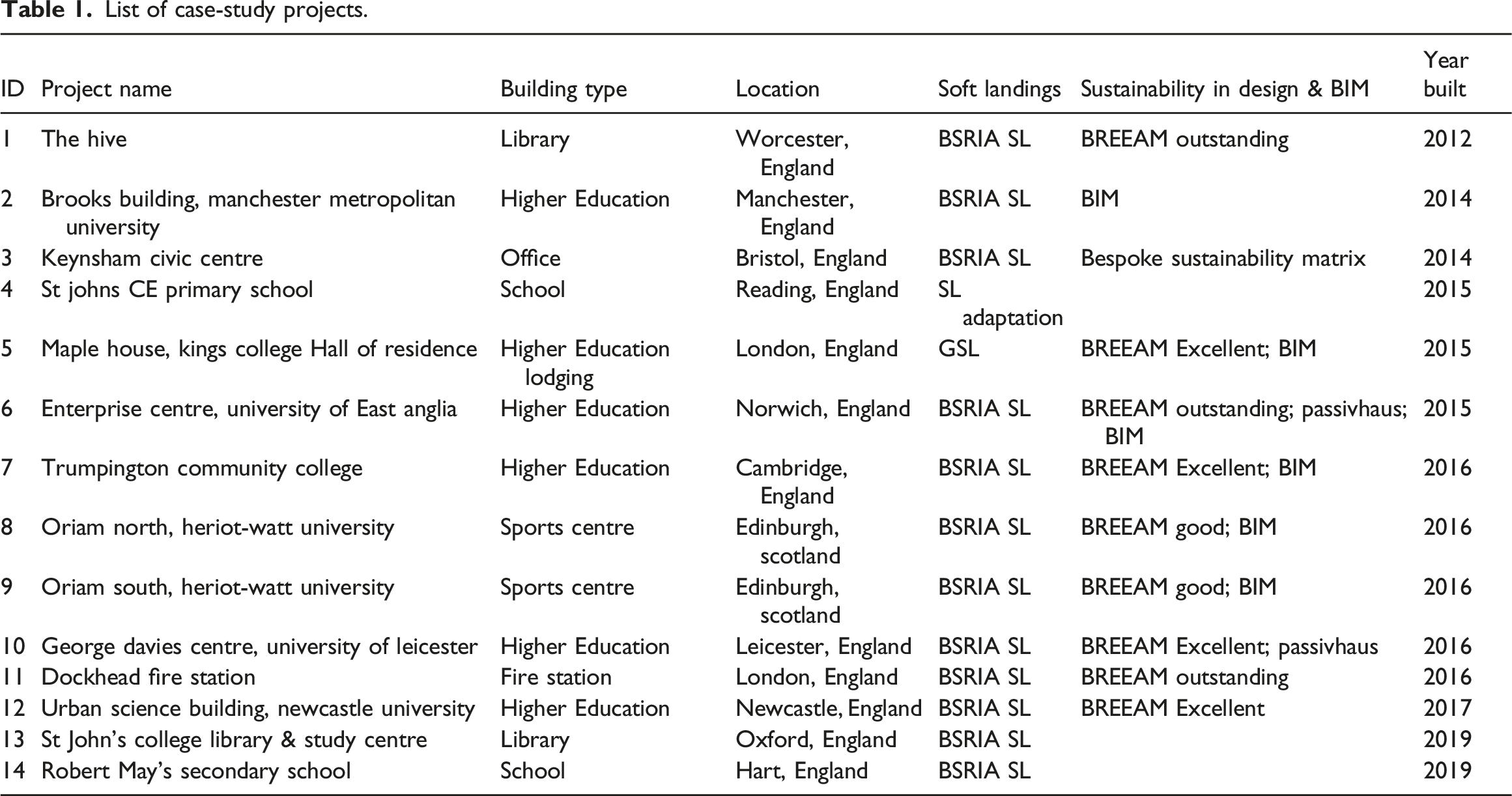
List of case-study projects.
Results
Table 1 presents an overview of 14 projects that implemented SL or GSL and their targeted and operational carbon emissions are publicly available, along with other key information such as building type and location.
Figure 1 presents the measured operational emissions of the projects against their estimated rate of CO2 emissions per square metre of floor area. Comparing the projected EPC operational carbon with the actual operating carbon emissions for each project over the years.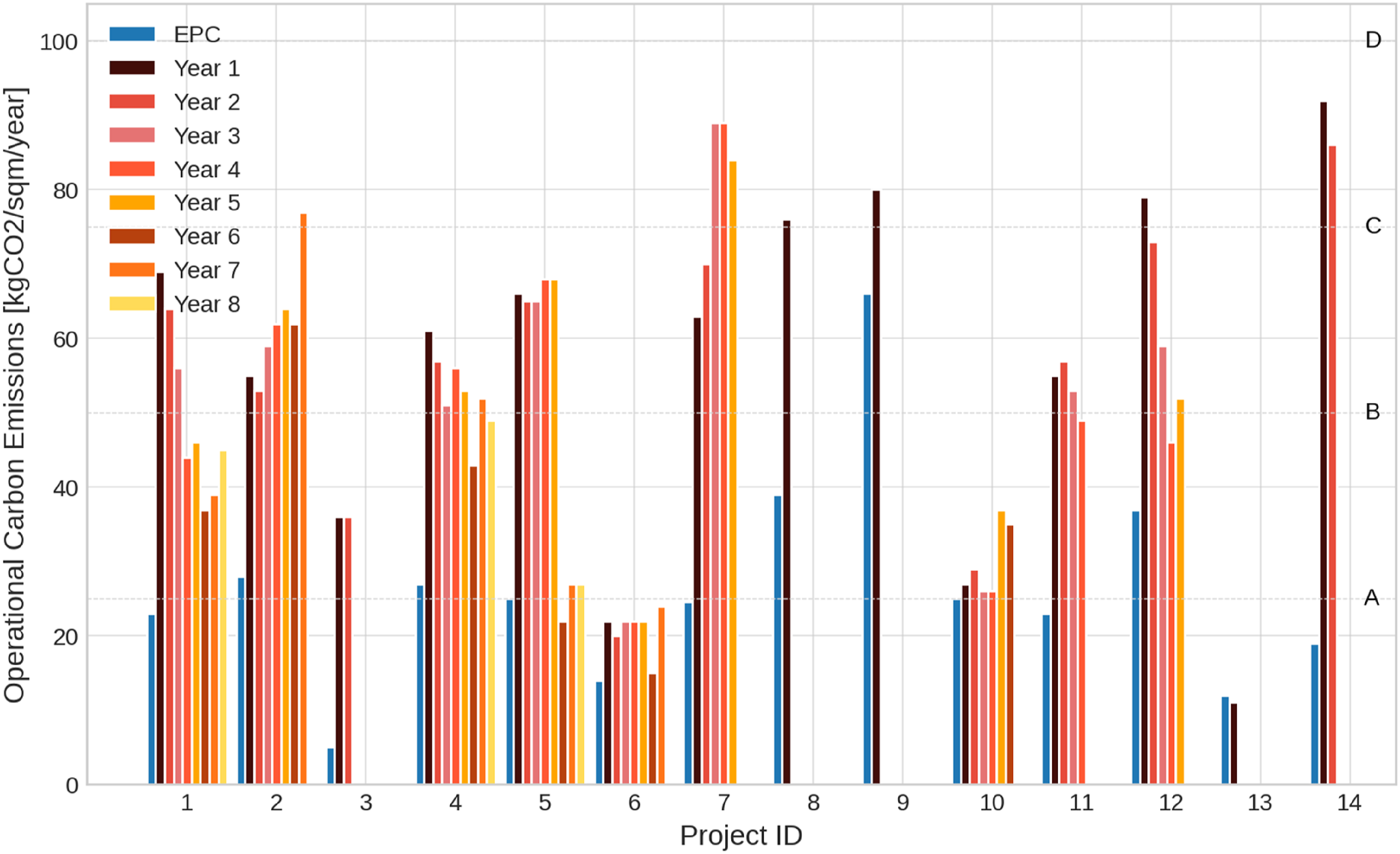
Figure 2 presents the performance gap between actual and targeted operational carbon emissions over the first 4 years of project operation to show the year-on-year effect of SL. Performance gap indicates how well a project meets its carbon emission targets, with values above one indicating that actual emissions are higher than the target. Performance gap between actual and targeted operational carbon emissions over the first 4 years of project operation.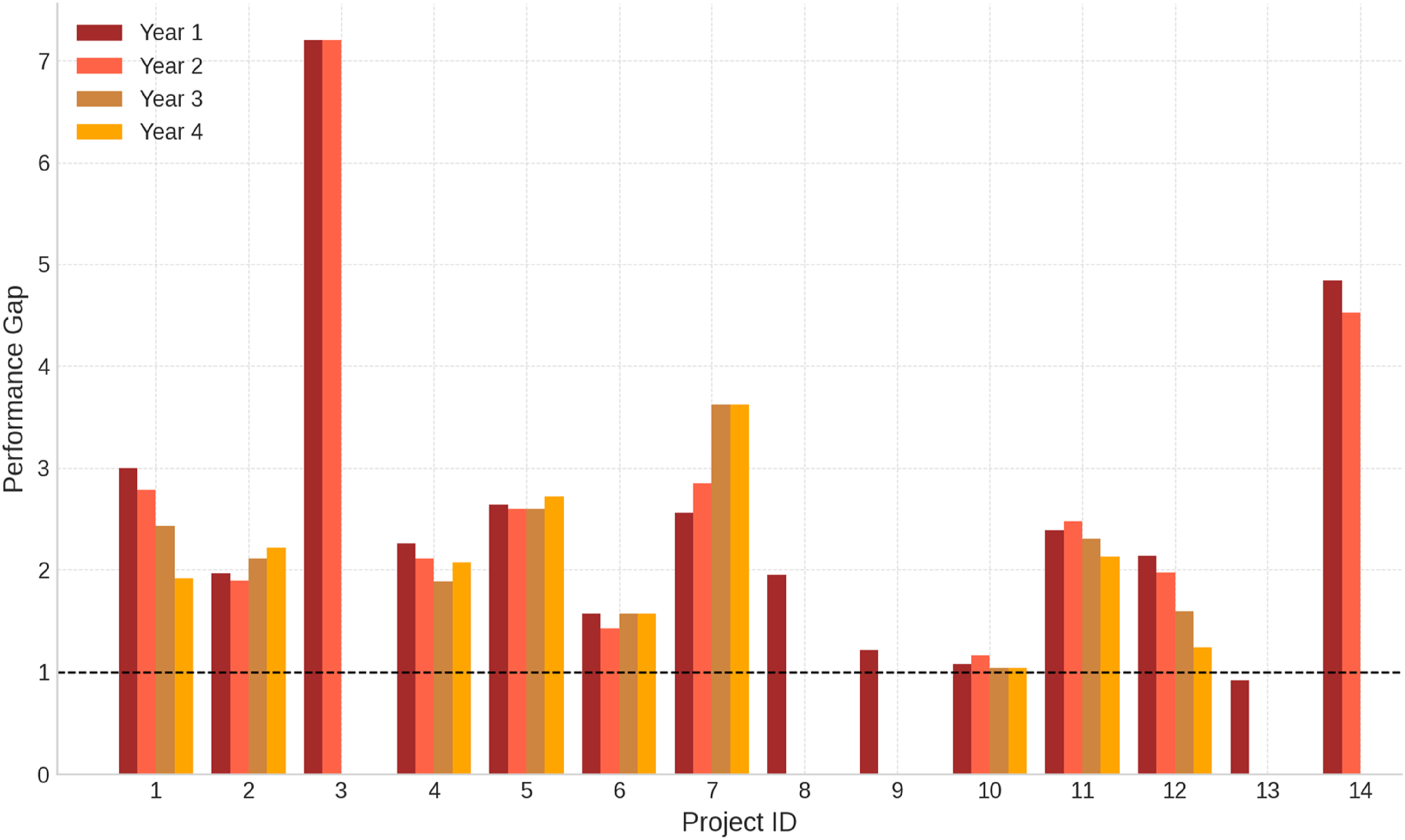
Projects 1, 4, 11, and 12 are the best examples of how SL helped the project reduce their operational carbon emissions yearly. In projects 2 and 7, carbon emissions have increased with time, during and after the extended aftercare. The annual carbon emissions of projects 5, 6, and 10 remained consistent throughout the extended aftercare period. Figure 1 shows that project 5, which is a student accommodation, had sustained improvement since 2021, 5 years after completion. Yet, it is difficult to know if this is due to continued partial occupancy or improved performance.
Enterprise Centre (Project 6) and George Davies Centre (Project 10) were results of combination of SL, Passivhaus and BREEAM certifications, which have achieved sustained high energy ratings and low performance gap. Although there is a slight increase in operational emissions almost 5 years after completion (see Figure 1), they continue to score A and B-rated DEC certificates.12,32 In comparison with examples of projects that followed SL and BREEAM certification and achieved D-rated (Project 7) and F-rated 33 DECs, the power of performance-based initiatives such as Passivhaus that incorporates operational performance metrics and quality assurance during design and build stages becomes evident.
Project 3, which has the highest performance gap (see Figure 2), achieved B-rated DEC (see Figure 1) by following an Energy Risk Register that identified barriers to A-rate DEC target and attempted to mitigate them at each stage of the project, from briefing through to building operation. The mitigation strategies informed the contract documents and building user guidance. The energy performance requirements was embedded into the contract documents.15,34
Discussion
Despite the limited number of case studies analysed in this research, they serve as indicative instances of the rarity with which projects achieve their carbon emission goals and the variable influence of the SL process on these outcomes. Echoing the findings of Thompson et al. 16 the SL approach did not significantly diminish the performance gap. Crucially, even the extended 3-year aftercare period of SL did not consistently result in lower operational carbon emissions in these projects.
The projects examined in this study, having received different awards or BREEAM certifications, were essentially “showcase” projects, celebrated for their success or serving as pilot cases for SL implementation. While their outcomes may not be universally applicable to all SL adoptions, they highlight the constraints of SL’s scope in achieving LZE buildings. Notably, Projects 2 and 7 illustrate the potential decline in building performance post-extended aftercare phase of SL, especially in the absence of adequate motivation for building operators and occupants to persistently monitor and maintain performance levels.
The main obstacles to adopting SL and achieving LZE buildings include cost factors, procedural complexities, and a general lack of incentives and interest in building performance. Conventionally, most designers and contractors are not interested in learning how their buildings perform in use. They are often too busy with their next project in hand, and most owners are certainly not interested in hiring their services to do so.5,35 Considering the outcomes of these exemplary buildings, it’s reasonable to argue that while SL facilitates improved collaboration and a more structured procurement and delivery process, it alone is insufficient for realizing LZE buildings. However, when combined with performance contracting and other performance-based initiatives like Passivhaus and NABERS, some success has been observed in producing low emission buildings, though the performance gap remains a significant issue. Moreover, SL lacks provisions for critical factors such as long-term building resilience, adaptability to different uses or purposes, future retrofitting, demolition, and recyclability.
This study did not specifically examine the modelling uncertainty factors contributing to the performance gap, but it underscores the importance of differentiating these through more accurate energy use estimations, in accordance with CIBSE TM54 guidelines or similar protocols. Such differentiation is crucial to better comprehend the procedural aspect of the energy performance gap and to assess the effectiveness of tools like SL in addressing it, following similar approaches as Papachristos et. al. 13
A significant limitation in this evaluation is the scarcity of projects that have implemented SL and reported their actual energy usage, carbon emissions, or DEC data. This lack of information presents a major barrier in assessing SL’s efficacy in achieving LZE buildings and bridging the performance gap. SL’s implementation is predominantly seen in Education and Health public sector projects.9,10 However, the information remains scattered across various client portfolios, impeding the generation of evidence-based reports to validate SL’s benefits. Consequently, progress in understanding SL, the performance gap, and its industry-wide implications continues to be slow, fragmented, and uneven.
Public and professional organizations, including BSRIA, have the potential to play a pivotal role in collecting, centralizing, and disseminating these insights to foster a more coherent and comprehensive understanding of SL and its impact on building performance.
Conclusion
This study highlights the limitations of SL in consistently delivering LZE buildings and narrowing the performance gap. Despite the exemplary nature of the analysed projects, SL’s efficacy in significantly reducing operational carbon emissions remains uncertain. Key barriers to SL adoption and LZE achievement include cost, complexity, and a lack of industry interest in building performance post completion. The research underscores the need for more publicly available in-use performance reporting and potential incentives for performance improvement during the building operation. Furthermore, combining SL with performance-based initiatives show more promising results. However, the dearth of comprehensive data on SL implementations hinders a conclusive evaluation of its effectiveness. The study calls for greater industry collaboration and information sharing to advance the understanding and application of SL in achieving LZE buildings.
Footnotes
Declaration of conflicting interests
The author(s) declared no potential conflicts of interest with respect to the research, authorship, and/or publication of this article.
Funding
The author(s) received no financial support for the research, authorship, and/or publication of this article.
