




Abstract
Automatic shading devices are widely employed in office buildings to enhance daylight comfort and reduce electricity consumption. However, conventional blinds control methods rely heavily on numerous sensors to monitor indoor daylight conditions, posing challenges in implementing automated control systems. A novel blinds control approach based on dynamic radiance and solar radiation energy prediction is proposed to address this issue. Instead of relying on illumination sensors, the method utilizes the Bidirectional Scattering Distribution Function (BSDF) and a sky model-based three-phase approach to calculate indoor illumination. Artificial neural networks are employed to predict transmitted solar radiation energy, thereby minimizing energy consumption. Furthermore, the multiple criteria decision-making model is applied to determine the optimal angle for the blinds. Simulation experiments demonstrated that this approach achieved a significant reduction of approximately 17% in energy consumption compared to a fixed angle of 90° in the cooling season. And the average illumination of the indoor work plane can be effectively maintained at the recommended level, as ensures improving occupants’ comfort.
Introduction
Buildings account for about 40% of the global energy consumption, and a large proportion of this energy is used for thermal comfort in buildings. 1 The direct solar radiance transmitted through the fenestration systems directly influences the energy consumption of lighting, cooling, and heating loads. 2 This implies significant potential for reducing building energy consumption by increasing daylight utilization while minimizing unwanted thermal transmission. Blinds consist of angle-adjustable slats and are commonly used shading devices to regulate daylight. Manual control has traditionally been employed, allowing users to adjust the blinds to achieve visual and thermal comfort. However, occupants often lack sensitivity to changes in daylight, and the primary reason for adjusting blinds angles is to prevent uncomfortable glare. 3 This reduces the utilization of sunlight and leads to additional lighting energy consumption.
In recent years, the importance of Building Automation and Control Systems (BACS) has been recognized in reducing the energy demand of buildings. 4 Various automatic control methods for blinds have been proposed to achieve different or similar objectives. There are three blinds control ways according to European standard EN 52120-1: manual control (class D), automatic control (class C), and a combined system that takes HAVC, blinds, and lighting into account (class A).
The control ways of class C are based on illumination or glare. The sun-cut method calculates the slats' angle that prevents direct sunlight. However, this method alone is insufficient to avoid discomfort glare. 5 Researchers have proposed methods for predicting glare, such as the Daylight Glare Index(DGI), 6 Daylight Glare Probability(DGP), 7 and Predicted Glare Sensation Vote (PGSV), 8 which predict uncomfortable glare based on the luminance of the glare source and background. Visual sensors have also been used to detect glare sources, as demonstrated in Michael Kim et al.'s study 9 using a low-cost, window-mounted, and programmable High Dynamic Range Image (HDRI) sensor. They developed a daylight glare control framework to track solar and detect exterior glare sources in real-time.
The control methods of Class A consider the energy consumption of cooling, heating, and lighting, indicating its higher potential for energy savings. The novel control methods are Simulation-based, such as Muhammad's study, 10 which used EnergyPlus as the daylight and thermal performance evaluation engine and a genetic algorithm to optimize the operation schedules of window blinds to save energy and enhance visual comfort. As seen in Sanghun Yeon et al.'s study, 11 artificial intelligence techniques have also been incorporated, which applied artificial neural networks (ANNs) to minimize the total lighting, cooling, and heating load through automatic slat control of blinds. They used EnergyPlus to simulate the total energy consumption of every possible angle and trained ANNs energy consumption prediction models using the datasets. In contrast, Jia Hu and Svetlana Olbina 12 developed an Illumination-based Slat Angle Selection (ISAS) model that predicts the optimum slat angle using ANNs models to indicate the illuminance of sensor points. The inter-reflected illuminance data used to develop the ANNs models was calculated by the Delight method in EnergyPlus. However, the accuracy of illuminance data obtained by simulation tools has been questioned. Rejane's experiment 13 compared the illuminance results calculated by EnergyPlus with data measured by photometers in an actual building and found a weak correlation between the model output and the estimated data.
Traditional methods relying on sensors focus much on daylight comfort and require frequent adjustments to the slats, which can disturb occupants and transfer their attention. Additionally, the hardware of illuminance sensors can be problematic since they are traditionally installed on the ceiling, while occupants focus on the illuminance levels along a working plane. The limited number of sensors cannot provide sufficient evidence to calculate a global optimum, given the non-uniform daylight distribution in an office. In contrast, simulation-based methods avoid the use of sensors, but previous studies have their limitations. For instance, predicting the total energy consumption of buildings may reduce energy consumption, but it ignores the demand for natural lighting in buildings. The Illumination-based Slat Angle Selection (ISAS) model also faces accuracy issues and relies heavily on detailed structure modeling, which increases migration's difficulty.
This study aims to design a generic blinds control method without sensors that save energy consumption and increase daylight comfort. Based on energy simulation, this research trained artificial neural networks (ANNs) prediction models to predict solar radiation heat through windows. The Dynamic Radiance method calculates the illumination of interested points without the limitation of real sensors. Based on the energy prediction models and illumination calculation method, the multiple criteria decision-making model is applied to ensure relatively low energy consumption and reasonable interior illumination levels.
Methodology
Framework of blinds control
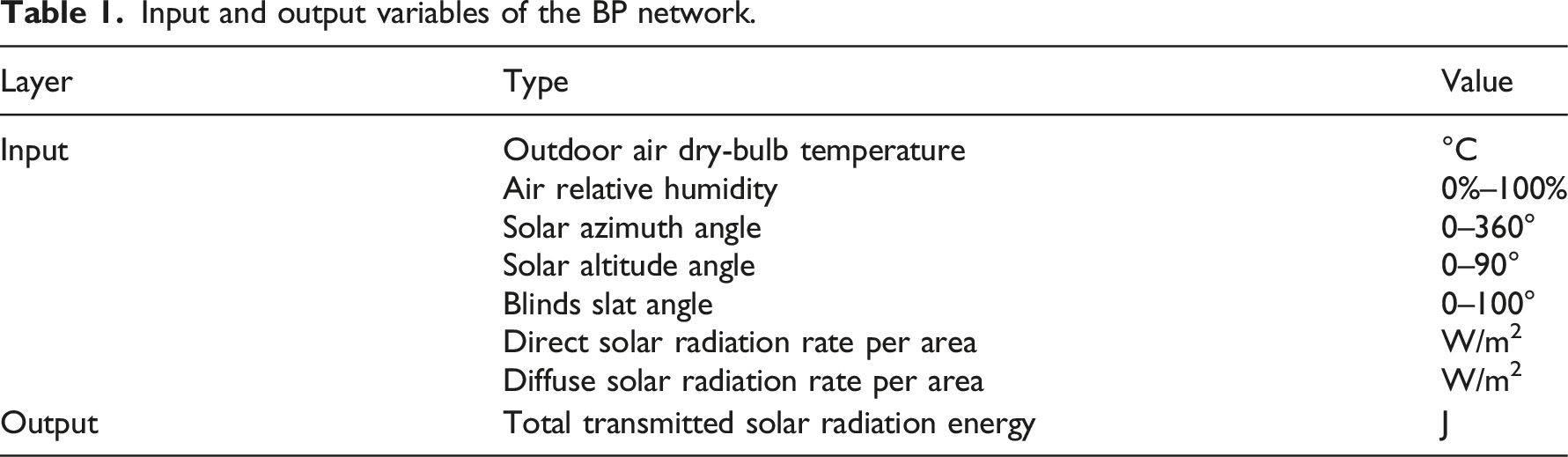
The framework of blinds control is illustrated in Figure 1. Energy consumption and daylighting performance are considered to determine the optimal angle for discrete control of blinds. To minimize the energy consumption of the HVAC system, artificial neural networks (ANNs) are utilized to forecast the solar radiation heat transmitted through blinds at different angles. Environmental parameters, including solar altitude, azimuth, and outdoor dry-bulb temperature, are inputs to the neural networks. The solar radiation heat data corresponding to blinds set at various angles are acquired through EnergyPlus simulations. These data are subsequently utilized to train the neural network. The flowchart of the proposed blinds control approach: (a) solar radiation prediction, (b) daylighting evaluation by dynamic Radiance, (c) decision-making of blinds angle.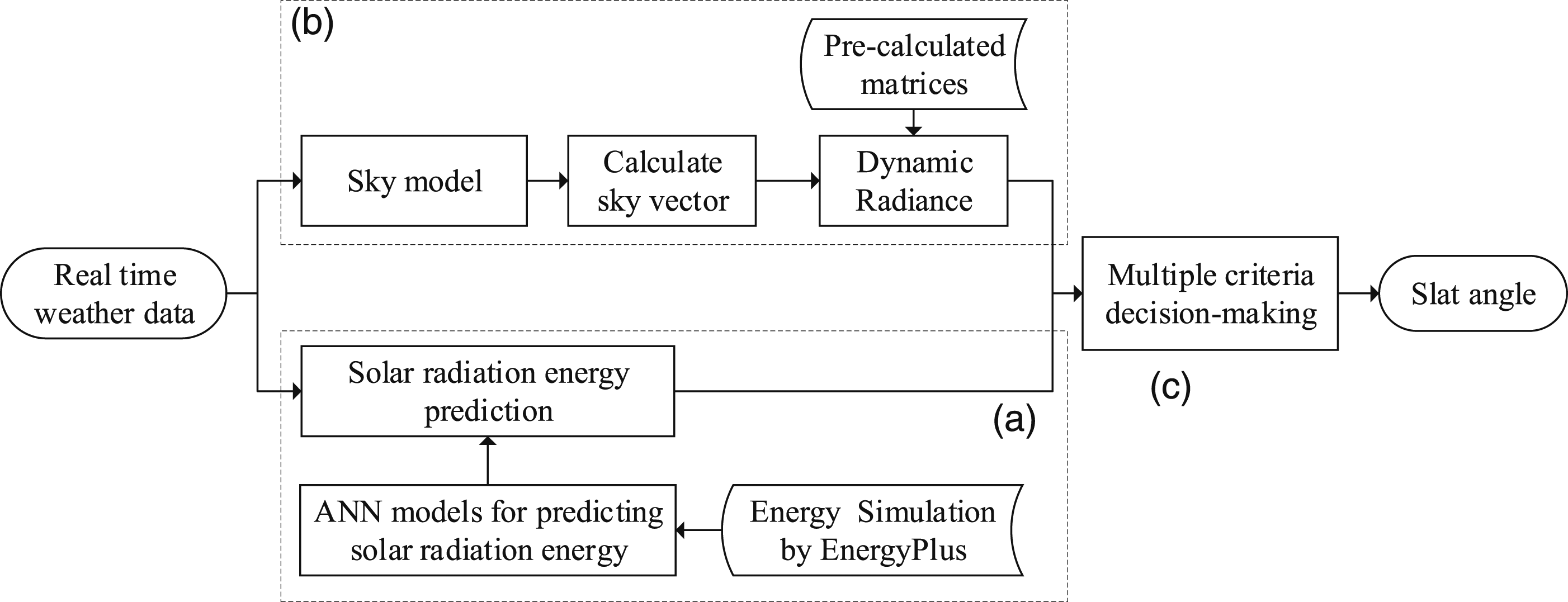
To evaluate the daylighting performance of blinds at different angles without relying on sensors, this research employs a method known as Dynamic Radiance. The purpose of Dynamic Radiance is to calculate indoor illuminance, and it does so by utilizing a combination of precomputed transmission matrices and real-time sky models. By estimating the illuminance distribution, it enables us to assess the daylighting conditions without needing physical sensors.
This research utilizes a multi-criteria decision-making method to integrate the energy consumption and daylighting criteria. This method allows us to determine the optimal angle for the blinds by considering multiple factors and objectives, including energy efficiency and daylighting performance. By synthesizing these criteria, the most suitable blinds angle can be identified, as strikes a balance between energy consumption and daylighting requirements.
Dynamic radiance
The dynamic Radiance method was proposed to address the limitations of simulating variable fenestration optics, which can alter the distribution of daylight within an interior space based on the position of the sun and the operating conditions.
14
This method is widely used to assess daylight availability in innovative window systems and conduct building design simulations. The method, as depicted in Figure 2, divides the flux transfer into three distinct phases for independent simulation: (1) transfer from the sky to the exterior of the fenestration, (2) transmission through the fenestration, and (3) transfer from the interior of the fenestration to the simulated space. Schematic overview of the three-phase method.
27
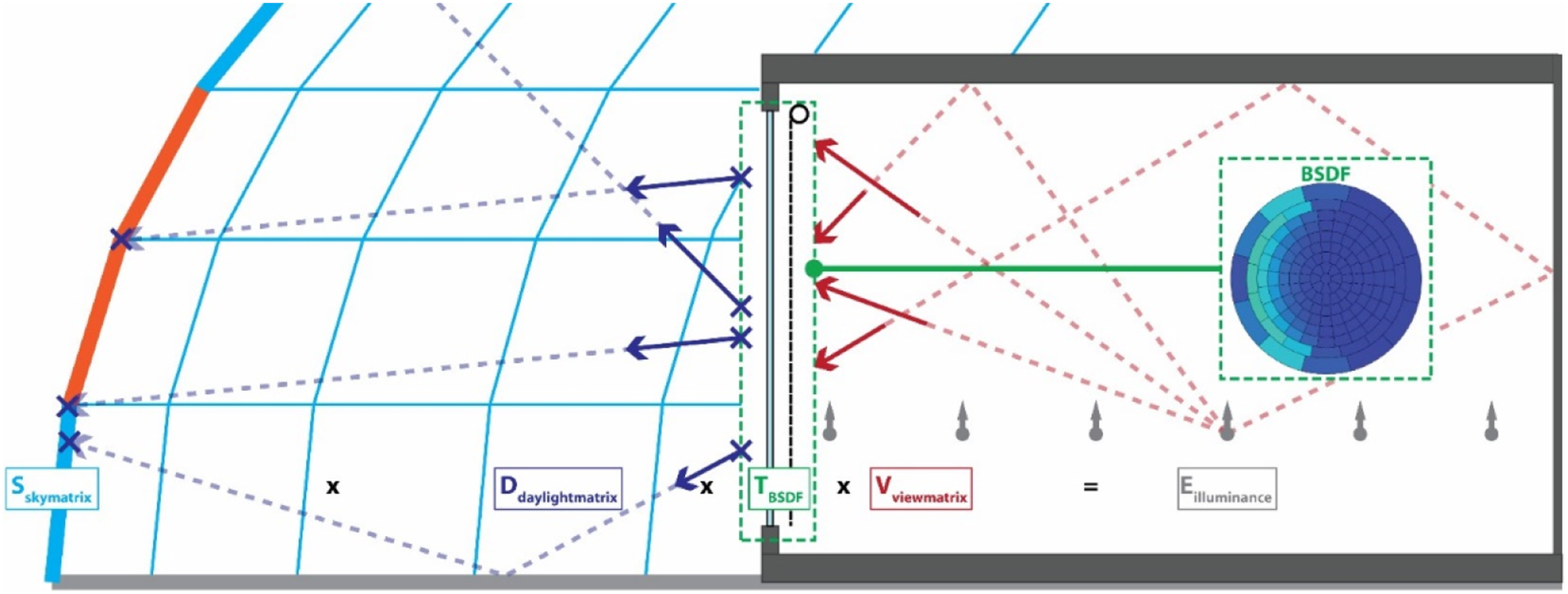
These three phases are described by matrices, which serve as coefficients. By inputting the sky illuminance distribution under specific daylight conditions into these matrices, the method outputs the illuminance of the simulated space. The following equation can represent the progress of the three-phase method:

The sky luminance distribution is crucial in determining the illuminance of interior points. Sky models can be used to describe the luminance distribution. They are mathematical representations or algorithms used to simulate the behavior and characteristics of the sky in daylight simulations. They aim to accurately reproduce the distribution of sunlight and skylight under various atmospheric conditions and at different times of the day. Sky models consider parameters such as solar position, cloud cover, atmospheric turbidity, and other atmospheric factors to generate realistic sky illuminance and luminance distributions. Several sky models are commonly used in daylight simulations, including the CIE Standard Clear Sky Model,
15
Perez All-Weather Sky Model,
16
and the Igawa All-Sky Model.
17
Each model has its equations and assumptions to approximate the sky conditions. Take the Perez model for example, as illustrated in Figure 3, let Schematic illustration of sky model.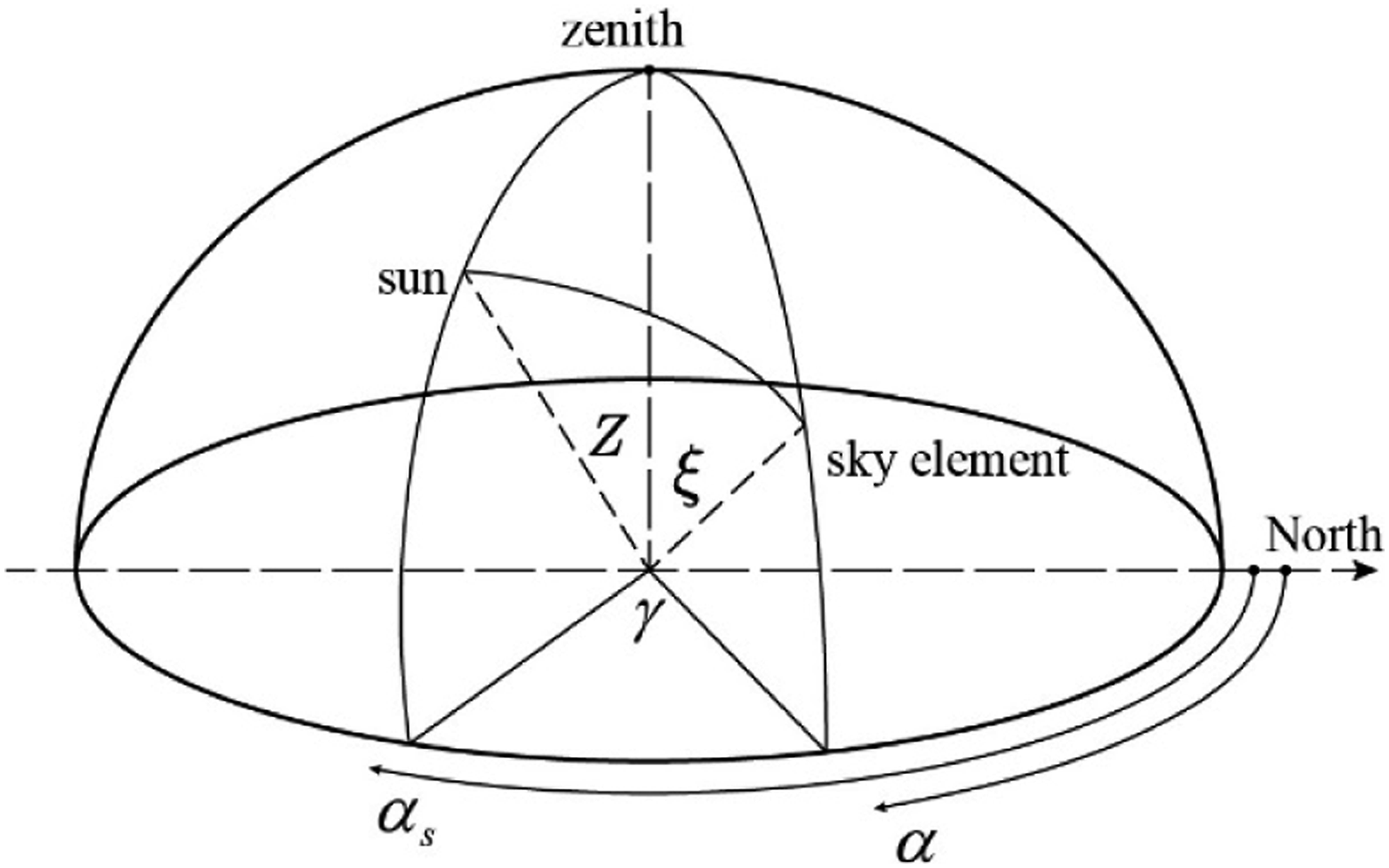


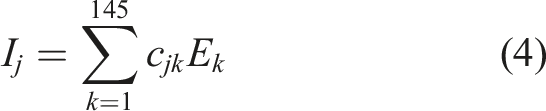
The transmission matrix is the transmission portion of the Bidirectional Scattering Distribution Function (BSDF). It relates incident flux directions to an outgoing flux distribution for a fenestration system. A full BSDF consists of a 145×145 matrix. The transmitted light on any interior vector is given by equation (4).
The implementation of dynamic Radiance based on Radiance. 18 Radiance is a powerful lighting visualization system that uses backward ray-tracing algorithms to produce physically correct results and images that are indistinguishable from real photographs. Radiance is widely used in lighting, daylighting, and solar control design and is embedded in several free and commercial architectural engineering design applications, 19 such as Honeybee, DL-Light, and DIVA. In addition to architects and engineers, Radiance is also used by fenestration, 20 shading, 21 daylighting, 22 and lighting manufacturers to develop and optimize both new existing lighting, daylighting, and solar control products.
Solar radiation energy prediction
Prediction method
The Backpropagation (BP) network, also known as a feedforward neural network or multilayer perceptron, is a widely used artificial neural network model. It is renowned for its ability to learn and generalize from input-output patterns, making it well-suited for classification, regression, and pattern recognition tasks.
The BP network consists of multiple layers of interconnected artificial neurons or nodes. These layers are typically divided into an input layer, one or more hidden layers, and an output layer. Each node in a layer is connected to every node in the subsequent layer, forming a directed acyclic graph. An activation function is also a crucial component of an artificial neural network. It is responsible for introducing non-linearity into the network's computations, enabling it to learn and model complex relationships between inputs and outputs. Several common activation functions are used in neural networks: Sigmoid, Rectified Linear Unit (ReLU), Hyperbolic tangent (tanh), and SoftMax.
The key feature of the BP network is its ability to learn by adjusting the connection weights between nodes. This learning process is achieved through a technique called backpropagation, which involves two main phases: forward propagation and backward propagation. The adjustment of weights is typically performed using optimization algorithms such as gradient descent or its variants. The BP neural network can be implemented using machine learning frameworks such as PyTorch and TensorFlow.

Input and output variables of the BP network.
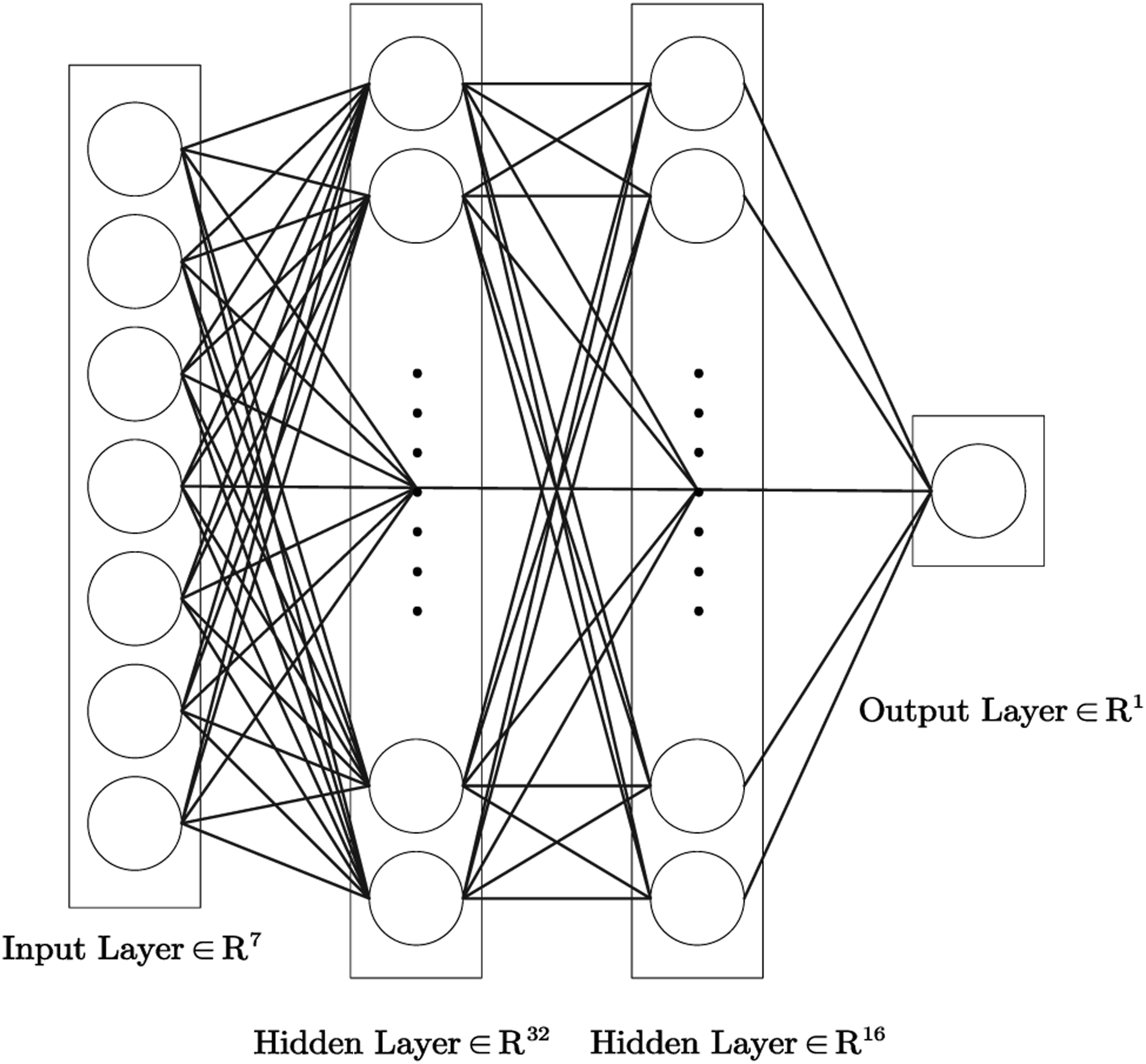
The structure of the BP network.
Simulation tools
EnergyPlus is a building energy consumption analysis and load calculation simulation software developed by the U.S. Department of Energy. It is an input and output calculation engine that contains function modules such as Daylighting, Shading, HVAC (Heating, Ventilation, and Air Conditioning), and Heat Transfer modules. In addition to fully integrated building solutions for HVAC and electronic equipment systems, EnergyPlus also features advanced fenestration calculations that allow for the simulation of thermal transmission under different controllable blinds conditions. That makes it an appropriate tool for analyzing solar radiation energy in buildings.
WINDOW is a software developed by Lawrence Berkeley National Laboratory for calculating the thermal and optical parameters related to windows, such as U-value, solar heat gain coefficient, shading coefficient, and visible light transmittance. It can be used in the design and development of new daylight devices. WINDOW can calculate the optical parameters of a glazing system under different shading states and integrates well with EnergyPlus. EnergyPlus can use the optical and heat transmission description outputted by WINDOW for heat balance calculation.
Energy simulation process
To acquire solar radiation heat data for training the BP network, annual simulations using EnergyPlus are conducted. The utilization of EnergyPlus for energy simulation is depicted in Figure 5, showcasing the process involved. The process of energy simulation: (a) obtain the BSDF file and define the EnergyPlus input file; (b) obtain the TMY date; (c) execute the simulation and obtain the out files.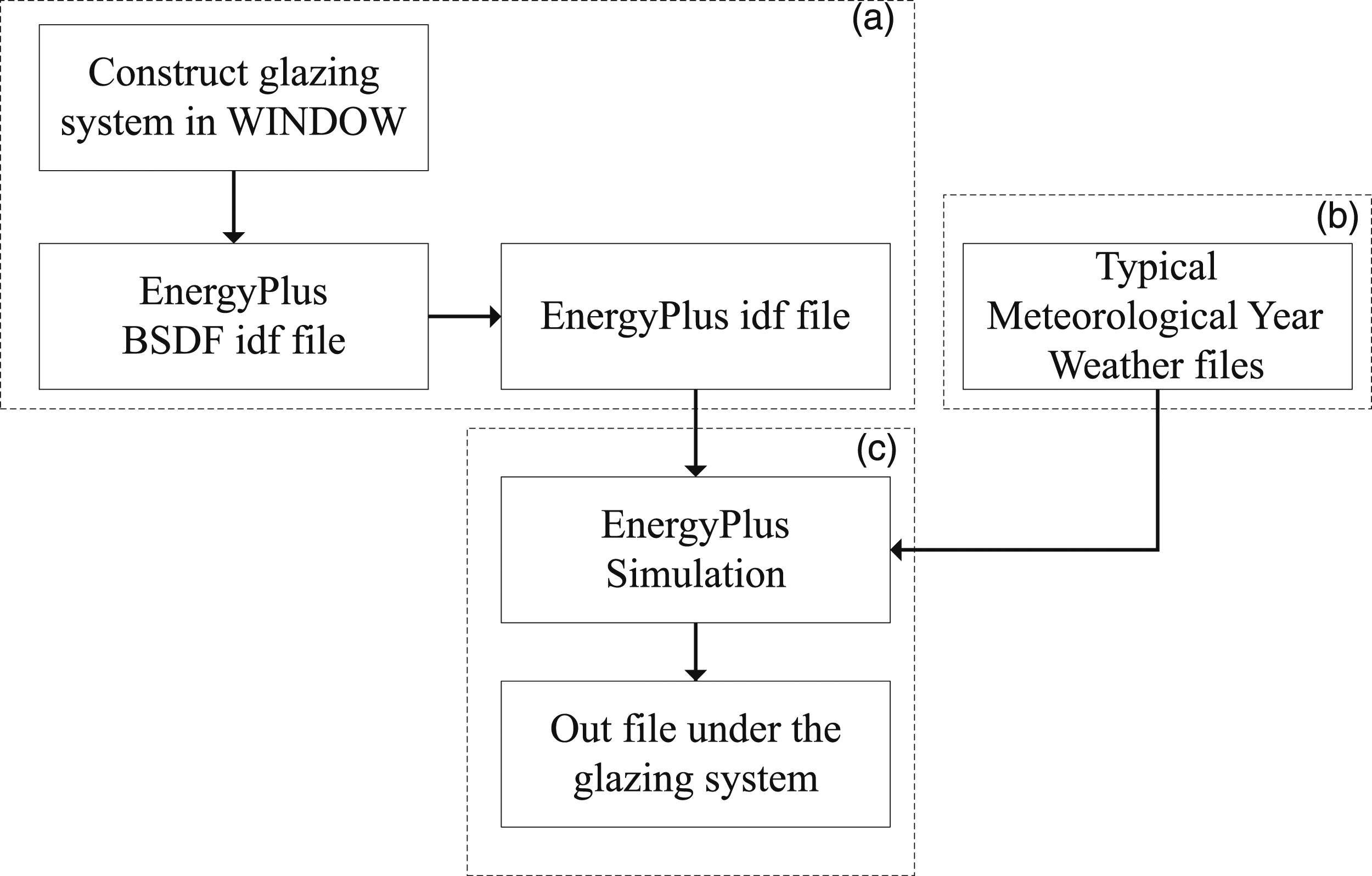
The first step involves obtaining BSDF files for the glazing systems, which describe their optical properties. Recent methods for obtaining BSDF data for glazing systems include evaluation analysis models, ray tracing tools, and data-driven modeling. 23 Considering the compatibility between WINDOW, EnergyPlus, and Radiance, this study uses WINDOW to calculate the BSDF files. The Input Data File (IDF) is the input file of EnergyPlus, which describes the materials and structures, HAVC systems, electrical systems of buildings, and simulation configurations. The BSDF data exported by WINDOW is saved in a matrix format in an IDF file, which can be used in the EnergyPlus IDF file to describe the properties of complex window systems. For building structures, simple buildings can be represented directly using coordinates in IDF, while complex buildings can be modeled using 3D software such as SketchUp. The HVAC system is modeled as an ideal system that can add or remove heat and moisture with 100% efficiency to evaluate ideal energy consumption. Although electrical equipment can also add to the air conditioning load, it is not configured since this study focuses solely on the solar radiation heat from the complex fenestration system. In addition to configuring IDF files, the typical meteorological files are also required. Typical meteorological data is not collected in a single year but is based on long-term meteorological data, which can accurately reflect the meteorological characteristics of the region.
BSDF data can only represent a single state of a complex window system. Therefore, for a blind that supports 0–180-degree rotation, the BSDF data should be calculated at fixed degree intervals and used in the simulation process. Additionally, the window system with the blinds retracted must be simulated since it may perform better. The simulation results are a set of CSV output data, including the date, time, temperature, humidity, solar zenith angle, solar azimuth angle, solar direct radiance, solar diffuse radiance, and total solar radiation energy with outputs recorded every 15 min.
Blinds control algorithm
Office building standard illumination.
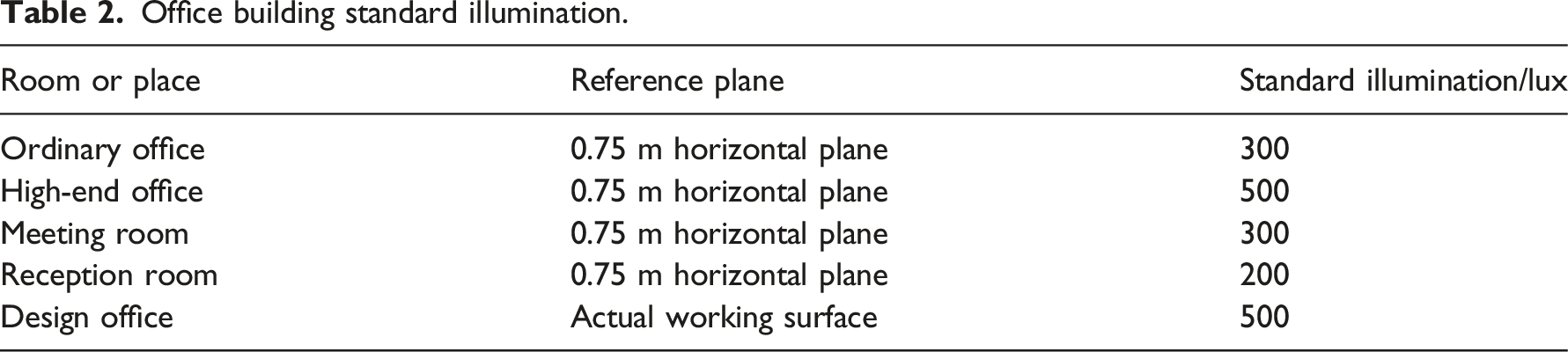
The illuminance uniformity is calculated by dividing the surface's minimum illuminance value by the average of the entire area. It is denoted by the symbol
The optimal slat angles for the blinds are denoted by 
The evaluation of daylight is performed by using the average illuminance and uniformity. The average illuminance and uniformity under angle j are denoted by 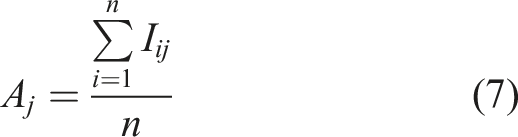

For multi-criteria decision-making problems, the commonly used method is the TOPSIS algorithm, which evaluates the Euclidean distance of the relative closeness between the options and the ideal solution. Therefore, by comparing these distance values, the final priority order of alternative solutions can be obtained. 25 The process of the TOPSIS algorithm is as follows.
(1) There are 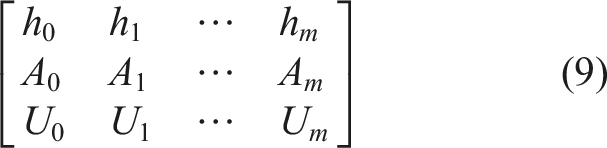
(2) Standardize the decision matrix. To facilitate subsequent processing, a standardized decision matrix is used. It is necessary to convert all indicators into maximum indicators. Regarding the transmitted solar radiation energy, it is desirable to reduce energy consumption during the cooling season and increase it during the heating season. Therefore, the standardization of the total transmitted solar radiation energy h differs between the cooling and heating seasons.
For the cooling season:
For the heating season:
The forward normalization formula for uniformity is:
Set the optimal range for average illumination as 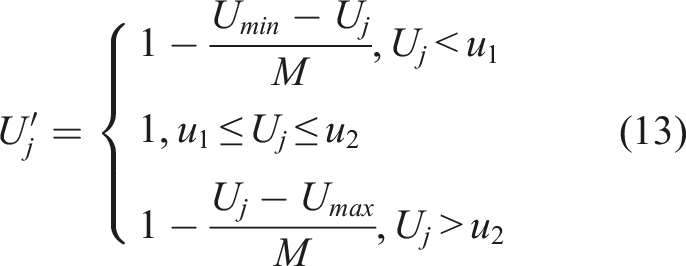
(3) A forward and standardized decision matrix is obtained after processing the indicator.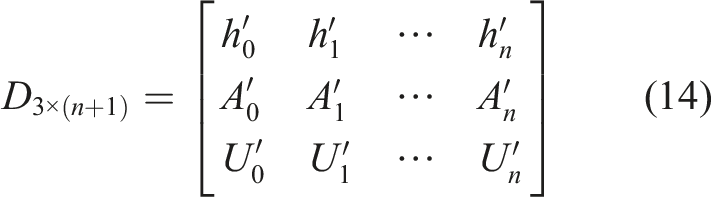
Determine the weights of the evaluation indicators based on the Analytic Hierarchy Process. The weight is 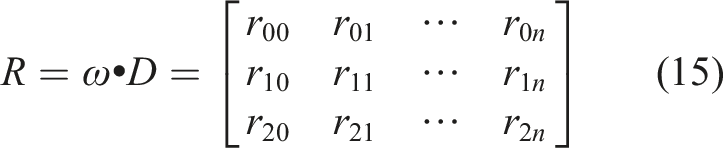
Next, calculate the maximum and minimum values of each weighted parameter:

Since the indicators have been forward normalized, it could be assumed that the maximum value present for each parameter is the optimal solution, and the minimum value is the worst solution. Euclidean distance is used to express the optimal degree of solutions for each scheme under various factors: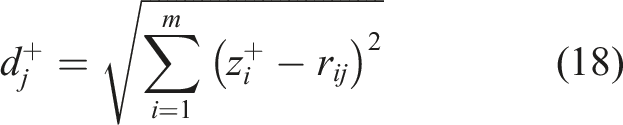
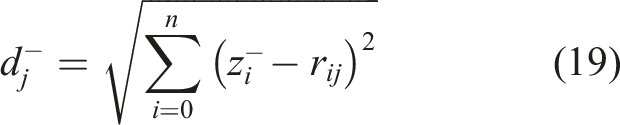
The comprehensive evaluation value for the solution j is: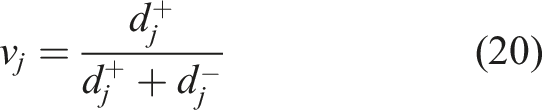
Simulation and experiments
Simulation conditions
This study utilized the "reference office" proposed by Christoph
26
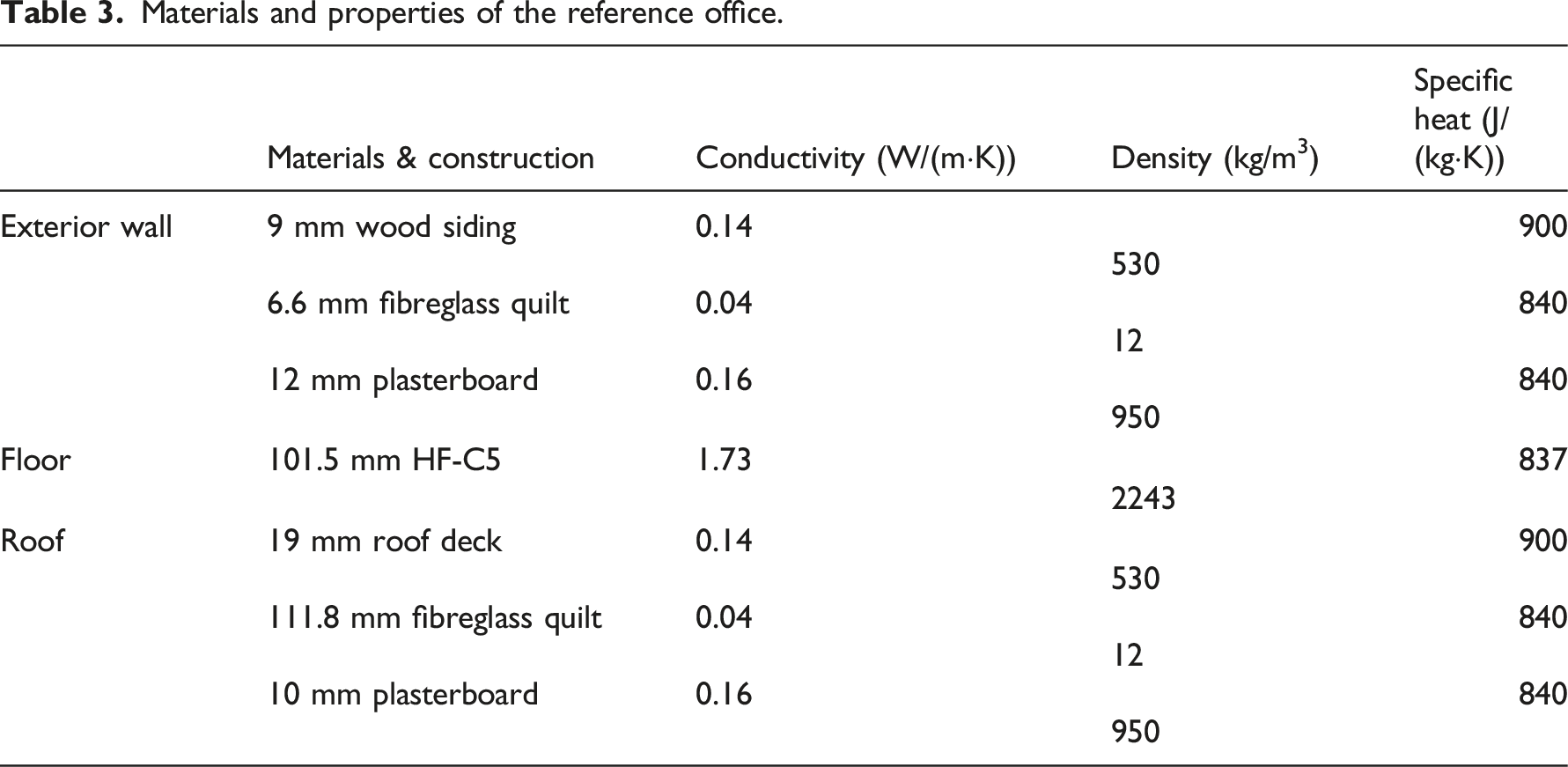
as the simulation conditions. As shown in Figure 6, the reference office is a typical "shoebox" model that is commonly used in conceptual design explorations. The shoebox is long enough, more than three times the window head height, to allow for the resolution of blinds control strategies. The material and detailed properties of the reference office, defined in EnergyPlus, are presented in Tables 3 and 4. Reference office. Materials and properties of the reference office. Properties of the window.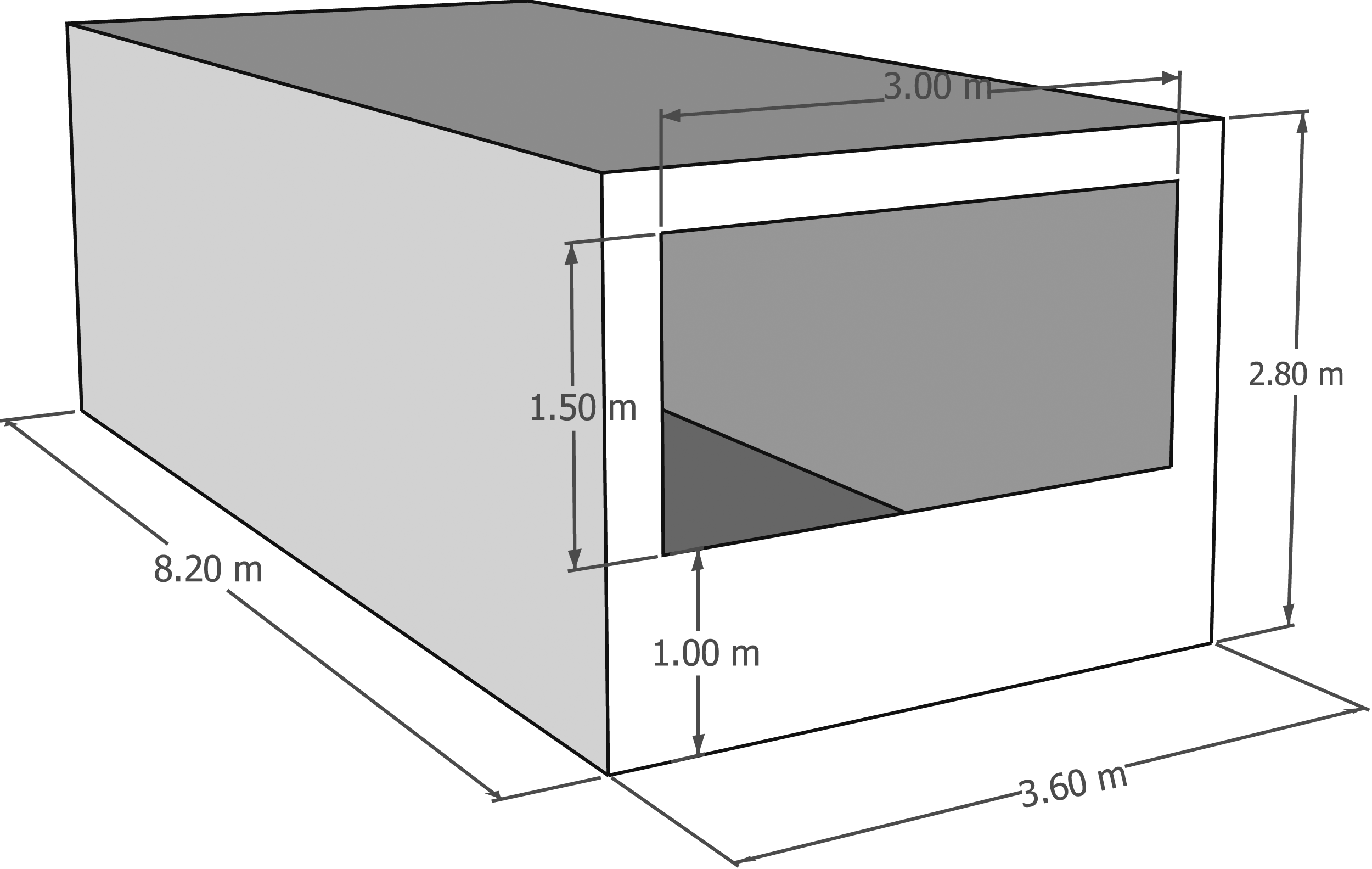

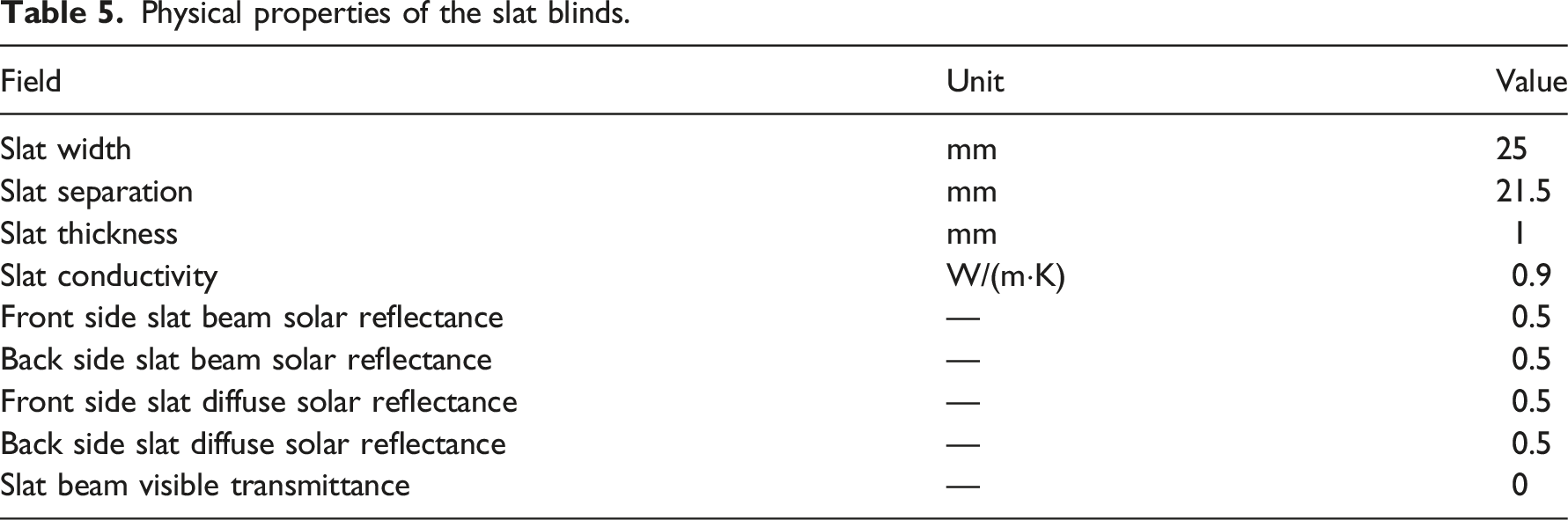
Physical properties of the slat blinds.
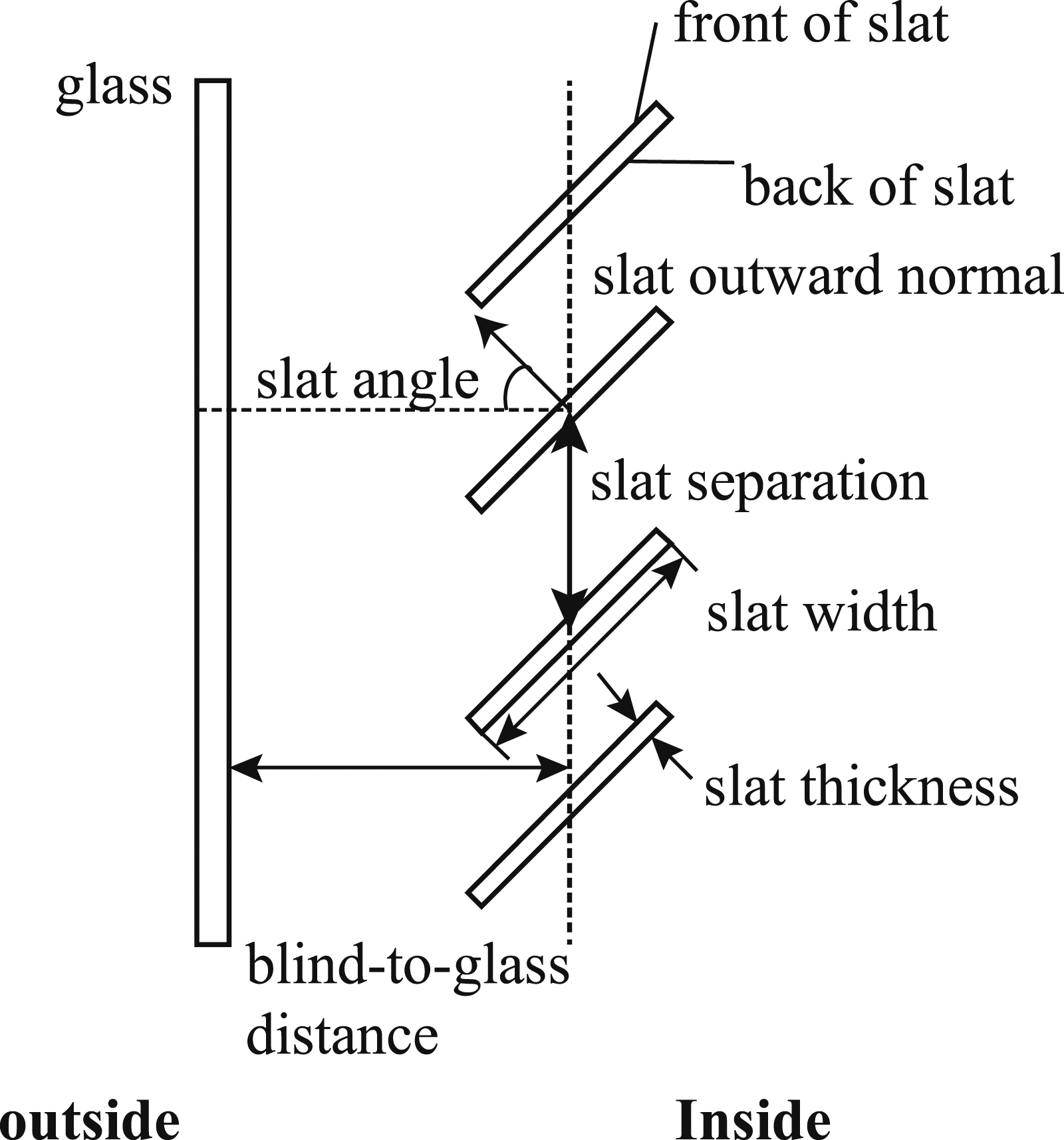
The definition of slats angle.
Development of BP network
To collect solar radiation energy data, the first step is to perform annual simulations using EnergyPlus. The building's structure and materials have been described previously. Assuming the office is in Shanghai, China, the typical meteorological year (TMY) data can be obtained from the EnergyPlus website. The thermostat’s heating set-point is always 24°C, and the cooling set-point is always 21°C. During a single-time simulation, the angle of the blind slats is fixed. Under the simulation conditions described above, this research increases the slat angle by 5° from 0 to 180°. This generates 35,040 data points for the annual simulation. Then all the simulation data are integrated into a dataset and divided 80% as a training set, with the remaining 20% as testing data. This research applies a learning rate of 0.001, momentum of 0.9, batch size of 12, and train for 200 epochs. After iteration, the minimum loss is about 0.0001. Figure 8 compares the solar radiation energy calculated by the artificial neural network to the EnergyPlus simulation on July 22 under angles of 40°, 90°, and 130°, specifically from 08:00 to 18:00. Prediction results compare to simulation for solar radiation energy.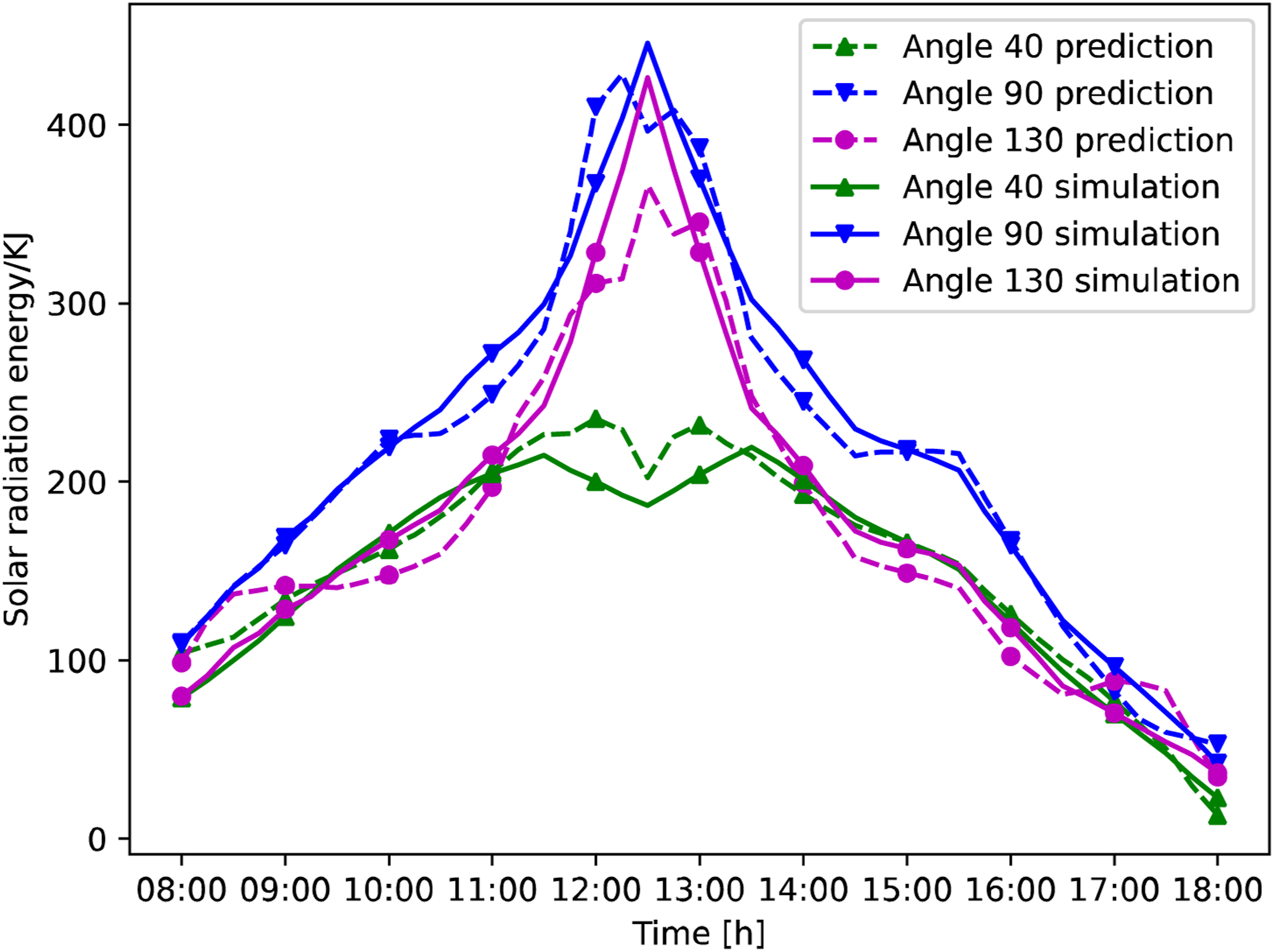
Results and analysis
To demonstrate the effectiveness of blinds control methods based on dynamic radiance and solar radiation energy prediction (DREP) in conserving energy and enhancing daylight comfort, this study examines four control strategies for comparison: fully retracted blinds, blinds with slat angles fixed at 40, 90, and 130°. An angle of 40 or 130° indicates the blinds are partially opened, while a slat angle of 90° signifies complete openness. The study compares the energy consumption, average illumination, and HVAC system consistency under different control strategies. It is important to note that these data are derived from annual simulations with fixed slat angles rather than continuous control, thereby disregarding the influence of building material heat capacity on energy consumption. The results will be discussed separately for the cooling and heating seasons.
Figure 9 illustrates a comparison of control effects in Shanghai during the summer on June 18, specifically from 08:00 to 18:00. Figure 9(a)–(c), respectively depict the blinds angle controlled by the algorithm proposed in this paper, the uniformity of illuminance, and the average illumination of the working plane calculated using the Dynamic Radiance method. Additionally, Figure 9(d) displays the predicted solar radiation energy. Figure 10 presents the energy consumption of the ideal HVAC system under five different control strategies, while Table 6 provides the total energy consumption data. Control effects from 08:00 to 18:00 on June 18 in summer:(a) Blind slat angle through DREP; (b) Average illumination.; (c) illuminance uniformity; (d) Solar radiation energy. HAVC energy consumption from 08:00 to 18:00 on June 18 in summer. Total HAVC energy consumption from 08:00 to 18:00 on June 18 in summer.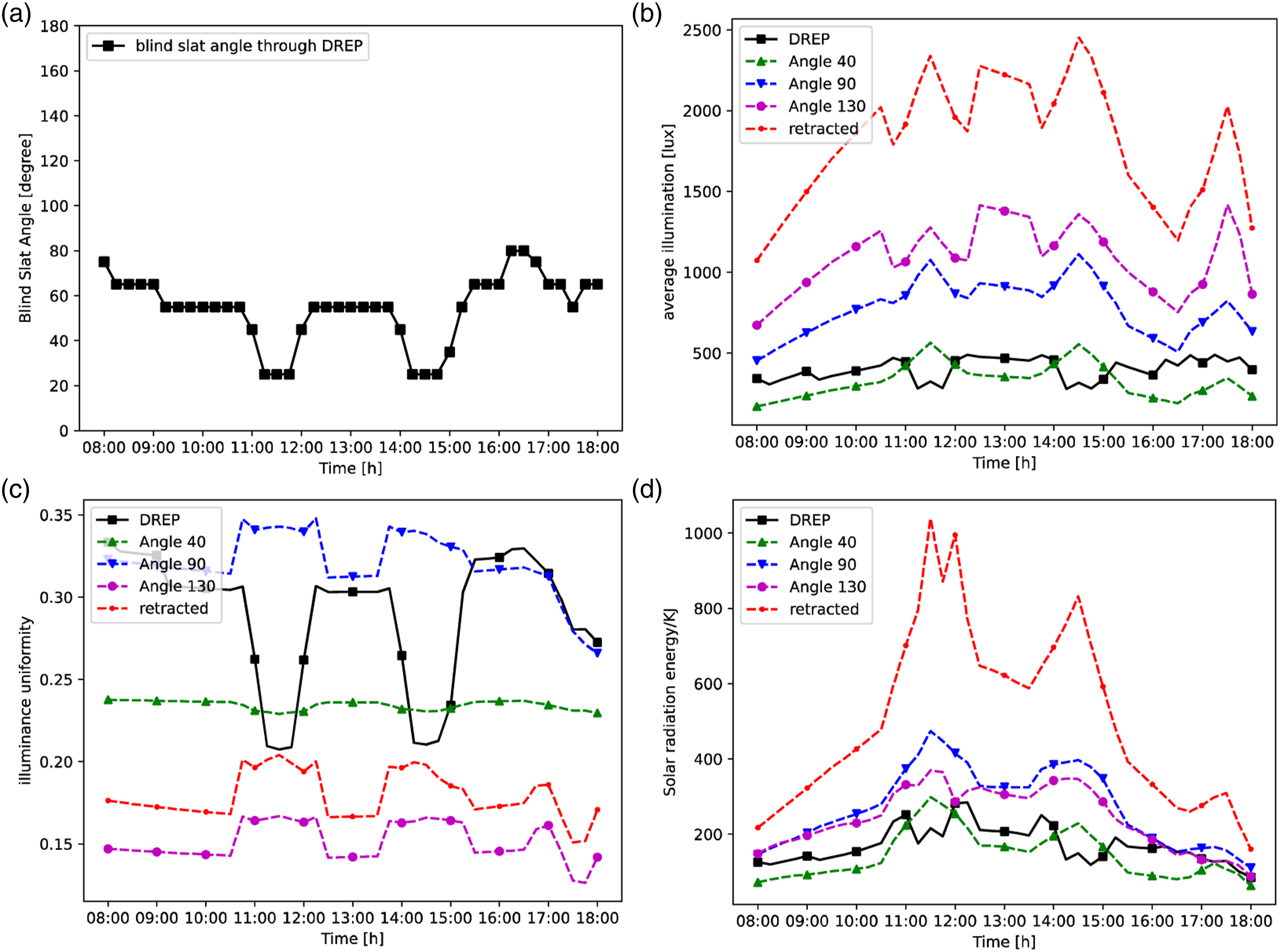
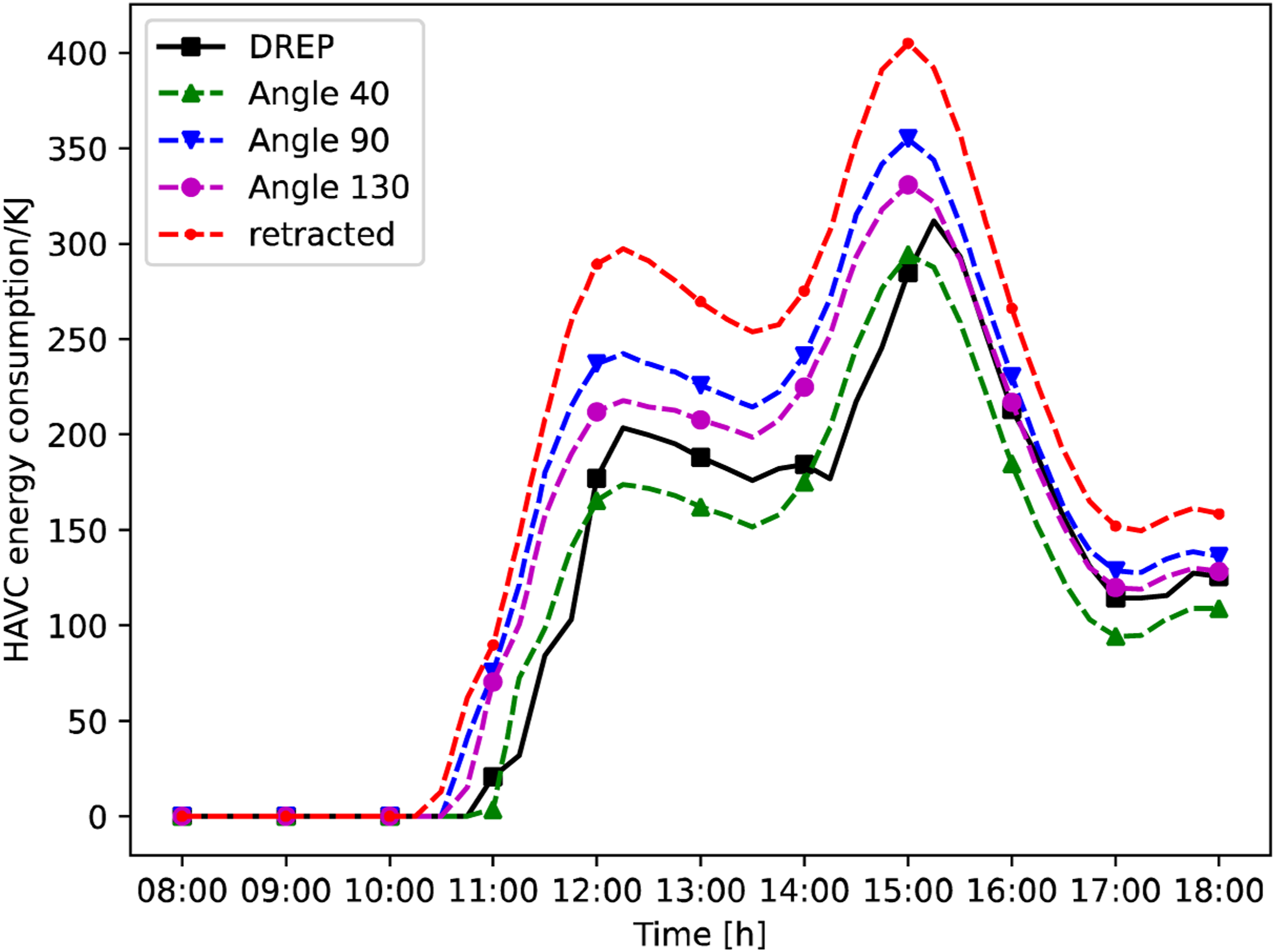

The blinds remained at a low angle throughout the day, with two noticeable troughs, as analyzed in Figure 9(a). These periods align with the peak solar radiation heat, as indicated in Figure 9(d), and are reflected in the energy consumption curve shown in Figure 10. The DREP method effectively reduces the demand for average illumination and uniformity, decreasing the HVAC system's energy consumption when solar radiation is high. According to the total energy consumption of the HVAC system in Table 6, compared to the retracted blinds, fixed angles of 40°, 90°, and 130° can reduce energy consumption by approximately 37%, 15%, and 22%, respectively, while the DREP method proposed in this study reduces energy consumption by about 32%. According to Figure 9, fixed angles of 180 and 130° have poor energy-saving effects and result in excessively high daylight illuminance. The fixed angle of 130° achieves energy savings better than the DREP method but performs worse in daylight uniformity. The DREP method proposed in this study ensures both energy efficiency and daylighting quality.
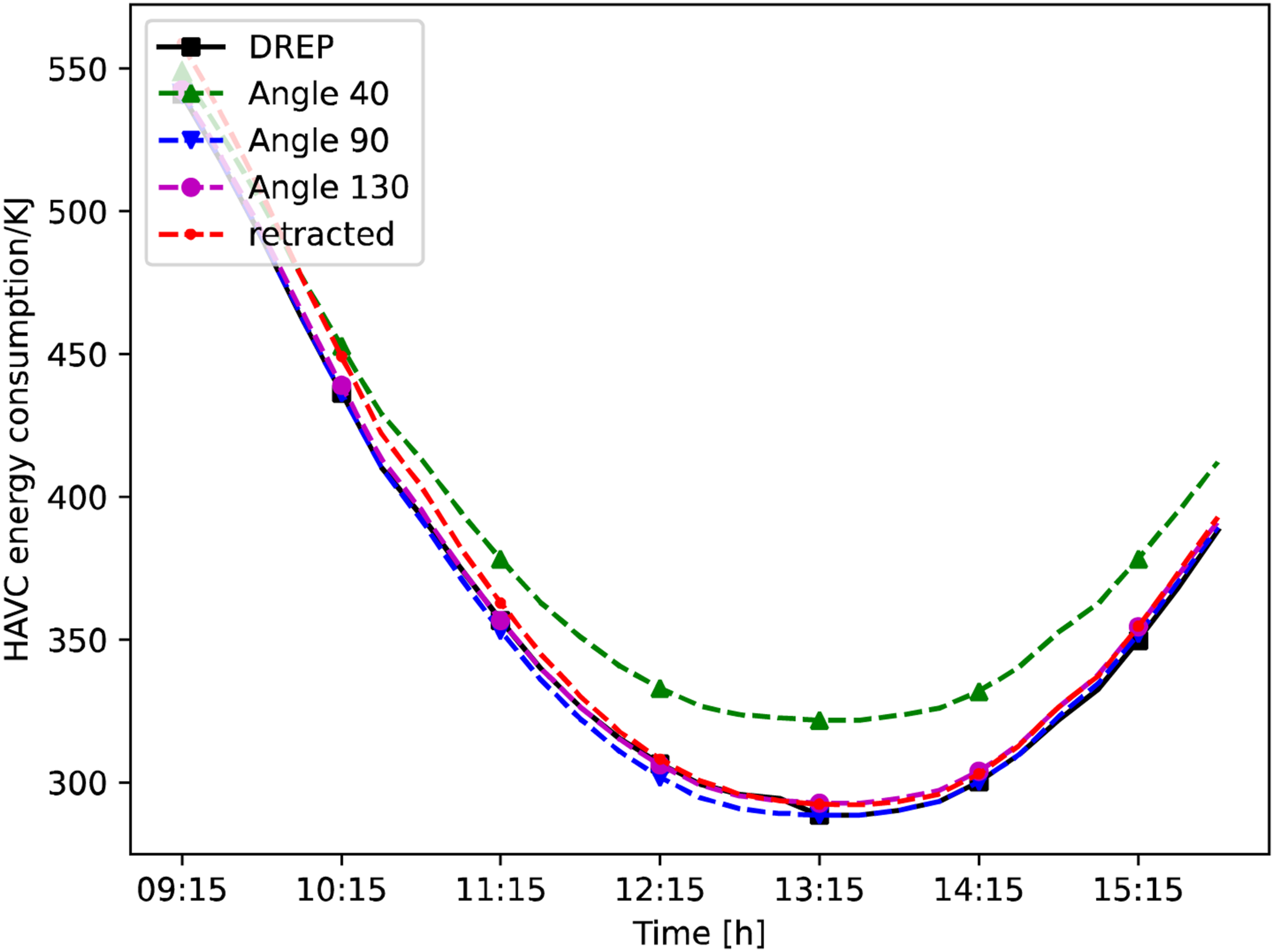
Figure 11 comprehensively compares the effects of five control strategies on typical meteorological data in Shanghai during the winter season. The comparison is conducted for January 12, from 09:15 to 15:45. Figure 12 presents a detailed analysis of the energy consumption of the HVAC system for that specific day. The total energy consumption of all five control strategies is outlined in Table 7. The energy consumption among the five strategies is relatively similar. This can primarily be attributed to the significant heat loss through the windows, which contributes to the overall energy requirements of the HVAC system. The average illumination levels remain within the recommended range for all control strategies. Utilizing the DREP strategy yields high uniformity in the illumination distribution. This indicates that the DREP strategy effectively achieves a balanced and consistent daylight level throughout the space. Control effects from 09:15 to 15:15 on January 12 in winter:(a) Blind slat angle through DREP; (b) Average illumination.; (c) illuminance uniformity; (d) Solar radiation energy. HAVC energy consumption from 09:15 to 15:15 on January 12 in winter. Total HAVC energy consumption from 09:15 to 15:15 on January 12 in winter.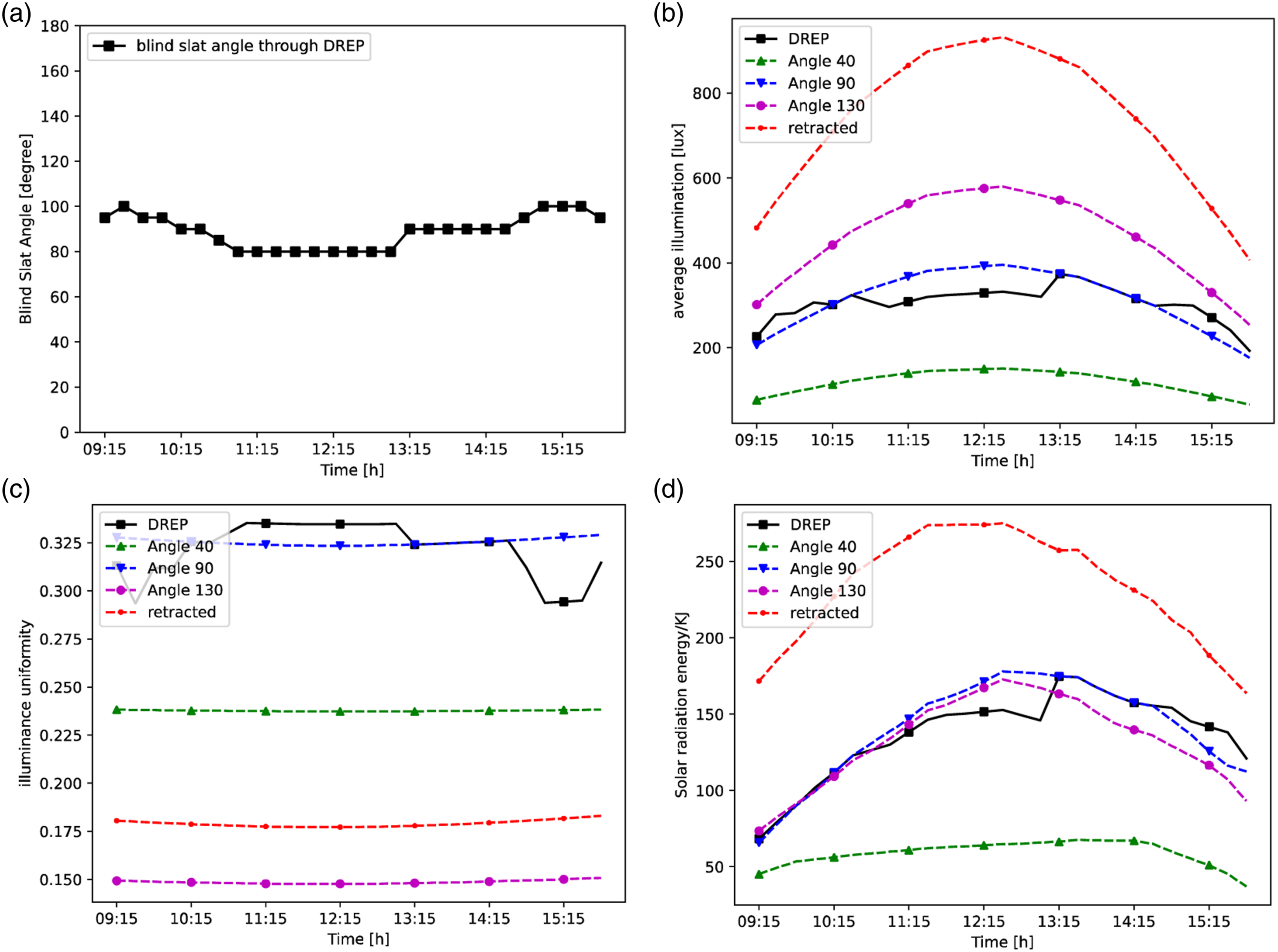

Conclusions
This paper introduces a novel approach for blinds control that leverages dynamic Radiance and solar radiation energy prediction. In contrast to traditional methods, the proposed approach in this research utilizes the dynamic Radiance method to calculate indoor illumination, eliminating the need for indoor sensors. The neural networks are employed to predict solar radiation energy, allowing us to quantify the potential for energy savings. These make the proposed approach well-suited for integration into building control systems.
The simulation experiment in this study was conducted at a reference office located in Shanghai, China. The simulation results during the cooling season indicate that fixed angles of 40°, 90°, and 130° can reduce energy consumption by approximately 37%, 15%, and 22%, respectively, but they cannot guarantee daylighting quality. By adopting the control method proposed in this study, energy consumption can be reduced by about 34% while maintaining daylighting evaluation within the recommended range. The simulation results during the cooling season suggest that the energy-saving effect is insignificant due to the substantial heat loss through the windows.
The current experiments only consider simplified building models and more complex factors must be considered for practical applications. In future research, the approach in this research can be extended to incorporate multi-window linkage control and integrate it with building energy management systems. The current method still requires manual parameter settings and does not explicitly address building occupants' diverse needs and preferences. This aspect warrants further investigation and consideration.
Overall, the proposed approach in this research shows promise in achieving energy savings and efficient blinds control. With further development and refinement, it has the potential to contribute to advancements in building energy management and occupant comfort.
Footnotes
Declaration of conflicting interests
The author(s) declared no potential conflicts of interest with respect to the research, authorship, and/or publication of this article.
Funding
The author(s) received no financial support for the research, authorship, and/or publication of this article.
