




Abstract
Adequate sleep is crucial to human health and well-being and elevated night-time temperatures can degrade sleep quality. European countries with temperate climates use temperature thresholds between 25°C and 28°C to identify homes that are overheated. The current UK bedroom threshold of 26°C, is based on one small study, which is now over 45 years old. An extensive literature review indicated that with modern summertime bedding and bedwear, which enables body coverage to be easily adjusted, thermal comfort can be achieved for night-time bedroom temperatures up to approximately 29°C. Temperatures measured in 591 bedrooms during England’s hottest ever summer, 2018, are re-analysed. The prevalences of night-time overheating generated by alternative criteria are compared with the prevalences generated by the established adaptive overheating criterion. Comparisons are made for homes with different dwelling and household characteristics. Finally, a new overheating criterion is proposed based on the mean night-time bedroom temperature, with thresholds between 26°C and 29°C depending on the application of the criterion. The allowable exceedance of the chosen threshold is limited to seven nights between May and September. Adopting thresholds of 27°C for vulnerable households and 28°C for others, 23% (5.5 million) of the main bedrooms in English homes were deemed to be overheated in the hot summer of 2018, far fewer than the 69% obtained using the current UK bedroom criterion. Irrespective of the threshold chosen, there were clear, consistent and significant differences in overheating prevalence depending on dwelling and household characteristics. The proposed new overheating criterion is applicable to unconditioned bedrooms in temperate regions. It seeks to strike a balance between the risk that hot bedrooms will be air-conditioned and the risk of temperatures detrimental to a “good nights’ sleep”.
Practical Application
A new overheating criterion is proposed to identify overheated bedrooms. It adopts the familiar format of a temperature threshold and an allowable exceedance. It is applicable in temperate climates when people are asleep in unconditioned bedrooms. The criterion is intended to aid the interpretation of night-time temperatures predicted by dynamic thermal models and temperature measurements in existing bedrooms. It is applicable to individuals of different heat sensitivity, the design of new homes or the refurbishment of existing homes. With further testing and refinement, it offers a credible replacement to the existing UK bedroom criterion given in CIBSE Guide A, TM59 and in other guides. It can thus underpin the new overheating regulations, Part O, for the design of new dwellings in England.
Introduction
We spend almost a third of our life sleeping. Good quality sleep is essential for our health and well-being. 1 Almost every major disease in the developed world – Alzheimer’s, cancer, obesity, and diabetes – shows a causal link to lack of sleep. 2 Sleep loss degrades mental health, reduces work-place productivity, increases absenteeism, and elevates the risk of accidents. 3 It therefore undermines independent living and increases the burden on health and social care systems. 4 Both lifestyle and environmental factors lead to sleep disruption. The World Health Organisation (WHO) cites sleep disturbance as one of the most serious consequences of environmental noise and elevated temperatures, 5 with poor air quality also being a factor. 6
Excess deaths attributable to summer heat are expected to triple in the UK, to c7,000pa by 2050. 4 High night-time temperatures have been repeatedly shown to have a negative impact on sleep. 7 Higher temperatures can degrade ‘sleep adequacy’ in working adults, 8 ‘sleep quality’ in older people, 9 and exacerbate pre-existing sleep disorders across all ages 10 1 . The WHO notes that, ‘protection against outdoor heat is a key characteristic of healthy housing’. 5
Climate change is increasing the risk of summertime overheating, even in dwellings in temperate regions as they were not, and often still are not, designed with heat mitigation in mind. 11 Based on self-reports, it was estimated that 4.1million English households had main bedrooms that overheat in a typical summer of the 2050s.12,13 The UK Climate Change Committee has classified overheating in homes in its highest risk to health and well-being category. 14
Air-conditioning provides an obvious, and apparently convenient, solution. However, air-conditioning would increase summertime energy demands, potentially increase greenhouse gas emission, and exacerbate urban heat islands. 2 Air-conditioning is also costly to operate, placing a particularly heavy financial burden on society’s poorest, the very sector that is most exposed to summertime heat. 13 Therefore, the thrust of European initiatives is to design new homes that are resilient to summertime heat 3 and to promote passive heat mitigation techniques such as external shading, noise-controlled ventilation, urban greening, etc.; air-conditioning is seen as a last resort, except when needed to provide a safe-haven for the thermally vulnerable. 15
To develop a bedroom overheating criterion that balances the need for quality summertime sleep whilst avoiding the unnecessary uptake of air-conditioning, firstly, existing overheating criteria are reviewed. Then, the documented evidence of the effects of heat on sleep is synthesised and a framework for a new bedroom overheating criterion outlined. Potential new criteria are then formulated and evaluated using a large data set of summertime temperatures measured in English bedrooms. Finally, the applicability of the proposed criterion for both measuring and predicting overheating risk is discussed.
The work is of relevance to many countries, especially those with temperate or cool climates where concerns about climatically-driven overheating is a concern.
Background
Overheating criteria
Overheating criteria were proposed for assessing the predictions of dynamic thermal models in the late 1980s. Different European countries adopted different criteria.16,17 4 Typically, these had a common format: a fixed, static, 5 threshold temperature and an allowable exceedance of this threshold. 6 Today, these same criteria are also used to interpret measured temperatures in existing dwellings.
The threshold temperatures currently used in five European countries 7 vary from 25°C to 28°C, and in Germany different regions use different thresholds.18,19 More significantly, the magnitude of allowable exceedances differs substantially. For example, the German and French limits of 1200Kh and 1250Kh per year respectively, permit perhaps 10 times more hours above the threshold temperature 8 than the 1% of annual occupied hours stated for bedrooms in the UK guide Technical Memorandum TM59 20 and CIBSE Guide A. 21 It is perhaps, the absence of measured summertime temperatures in dwellings, that leads to this diversity of criteria. A recent systematic review by the WHO 5 concluded that there was no clear evidence on which to define an indoor temperature above which health is affected.
In the UK, an overheating criterion was first specified in the CIBSE Guide A in 1999 22 and a static bedroom criterion has been retained ever since, e.g., Guide A 21 and TM59. 20 A mandatory regulation, an Approved Document (AD) of the Building Regulations for England, Part O, aims to prevent overheating in new homes by requiring the adoption of adequate passive heat mitigation measures. 23 Part O refers to TM59 for the overheating criteria to be used. Part O is the first AD that has permitted, indeed recommended, dynamic thermal simulation as a route to demonstrating regulatory compliance.
For assessing living rooms, and bedrooms when people are awake, TM59 provides an adaptive overheating criterion. Adaptive criteria have a solid research pedigree, 9 stretching back through CIBSE TM52, 24 and European and British Standards BS EN 16798-1 and 16789-225,26 and their predecessor BS EN 15251. 27 A similar adaptive standard is recommended in ANSI/ASHRAE Standard 55. 28 10 These are all based on the pioneering work of Humphreys and Nicol (e.g., 29), de Dear and Brager (e.g., 30) and others who gathered, assembled and analysed thousands of temperature and comfort measurements from buildings across the world (e.g., McCartney and Nicol). 31
To assess overheating when people are asleep, the long-established, static, 26°C/1%, criterion quoted in CIBSE Guides A since 2006 (e.g., 21,32) is used in TM59: “to guarantee comfort during the sleeping hours the operative temperature in the bedroom from 10 p.m. to 7 a.m. shall not exceed 26 °C for more than 1% of annual hours”. For the stated occupancy, 1% of annual hours equates to 33 hours a year.
Whereas the adaptive criterion has a sound empirical basis, the static bedroom criterion is based on a single study, now over 45 years old. 33 The study involved just 21 adult participants (10 men and 11 women) drawn from narrow socio-economic and cultural backgrounds who slept using, what was then, conventional bedding, i.e., sheets, blankets and eiderdowns. 11 Those that slept under a duvet, the current bedding norm, were explicitly excluded from the analysis. Previous researchers have cast doubt over the credibility, contemporary relevance and cross-society applicability of the criterion, notably, in the UK, the Zero Carbon Hub. 34 Humphreys himself has observed that the static criterion may not reflect the effects of temperature on sleep today. 35 It seems that the bedroom overheating criterion has a weak evidence base and remains embedded in guidelines purely through custom and practice and for want of a credible alternative.
The impact of current overheating criteria on overheating in English bedrooms
Comparison of the prevalence of overheating in English bedrooms, as derived from the adaptive and static bedroom overheating criteria, revealed stark differences.
The comparison was undertaken using data collected as part of the 2017 Energy Follow-up Survey (EFUS) to the English Housing Survey. For a full description of the EFUS2017 methodology see the methodology report produced by BEIS. 36 Field monitoring provided half-hourly main bedroom temperatures for 591 homes spread across England together with matching weather data for the calendar year 2018. At the time, 2018 had the warmest English summer on record. 37 Between June 25 and August 09 there were four heatwaves that lasted between three and 11 days. 38 This is a summer which could be normal by the 2050s. 39
A physical survey and household questionnaires provided information on the characteristics of the dwelling (e.g., location, age, size, energy efficiency, etc.) and household (number of people, income, tenure, etc.). At the end of 2017 the households were asked, “In a typical summer (June to August), how often does the main bedroom feel uncomfortably warm?”. Six possible responses were offered: 1. Never, 2. Rarely, 3. Sometimes, 4. Often, 5. All the time, 6. Don’t know. There were 2538 responses to this question. The summer of 2017 was much cooler than the 2018 summer.
Each home in the EFUS sample represents between 4000 and 225,000 other English homes, so analysis of the measured temperatures12,13,40 enables an estimate of the prevalence of overheating in the whole stock of 24 million English main bedrooms.41,42 Using the TM59 adaptive criterion, and Cat.I 12 for the 53% of EFUS households with vulnerable members 13 and Cat.II for the others, 19% (4.6 million) main bedrooms were deemed to overheat. In contrast, the TM59 26°C/1% static criterion resulted in 69% of all English main bedrooms being deemed to overheat. In the cooler summer of 2017, 17% of households reported their main bedroom was uncomfortably hot often or all the time.
The seemingly implausibly high prevalence of overheating derived using the static overheating criterion brought the credibility of the criterion into sharp focus. The result also confirmed the pre-existing concerns of modellers, who found it very difficult to design unconditioned new dwellings located in the SE of England that would pass the criterion; thereby increasing the specification of domestic air-conditioning systems in new homes.
The impact of heat on sleep: a review
Ideally, the development of a suitable criterion would be resolved through the analysis of extensive field trials in which the bedroom environment is monitored alongside sleep quality. In 2018, the WHO reported that there were very ‘few studies of the direct effect of high indoor temperature on health’. 5 Work in the area has, however, accelerated in recent years with a recent review revealing 11 studies across the world in which indoor temperature and sleep assessments were undertaken simultaneously. 7 These studies provide consistent and compelling evidence of the negative effect of heat on sleep. However, the many interacting human and environment factors, together with differences in the method of sleep monitoring, the period of measurement, the participant characteristics, and data analysis methods, make it difficult to use the data to deduce suitable overheating criteria for UK homes.
Controlled laboratory and field experiments, and calibrated thermo-physiological models provide a clearer route to criterion derivation. The proposed new criterion was therefore shaped by a review of literature from such studies. The review included over 50 articles drawn from peer-reviewed journals and other reputable publications. The aim was to define a suitable threshold temperature for sleeping people, whether the threshold should be fixed or variable (as in adaptive criteria), and whether it should differ depending on the heat sensitivity of different people or, indeed, any other factors.
Ideal thermal conditions for sleep
To achieve a good night’s sleep, we must cocoon our body in a stable, warm environment, and we adjust clothing and bedding to achieve this. This thermally neutral temperature is around 30°C but changes a little as the near-body relative humidity decreases or increases. MacFarlane 43 referred to this condition as his ‘ecological niche’. The same niche temperature has been reported in literature stretching back 60 years or more, e.g.: MacFarlane, 43 29–32°C; MacPherson, 44 30°C; Candas et al., 45 28.6–30.9°C as the ambient temperature varied from 16 to 25°C; and Muzet et al., 46 29.6°C as ambient temperature changed from 19 to 22°C. It is thus reasonably well established that the ideal near-body temperature for sleep is about 30°C.
In experiments, naked subjects woke due to cold when the ambient temperature was 26°C, 46 and others have reported subjects waking when the in-bed temperature dropped to 26°C. 47 Thus 26°C, the threshold in the current CIBSE night-time criterion, is not only 4K lower than the ideal niche temperature for naked sleepers, it is a temperature at which they will feel cold and suffer disrupted sleep.
In many countries people sleep on a mattress, which provides insulation, and people generally wear night clothes and sleep under bedding, which also insulates. Therefore, to sustain the steady loss of c70W 14 generated by a typical sleeping person, and thus achieve the preferred, steady niche temperature, the ambient (room) temperature must be lower than 30°C (see below).
Quite small deviations from the niche temperature appear to cause thermal discomfort. Information about tolerable deviations from thermal neutrality is limited, but their magnitude is generally thought to be less than when people are awake. Lan et al. 48 assume a heat load tolerance just 20% of that for awake people. 15 Wang et al. 49 recorded the thermal sensation votes of 12 Chinese students using the 7-point ASHRAE scale. 28 Deviations of 0.8 K around their mean thermally neutral temperature of 30.4°C resulted in votes ranging from slightly cool to slightly warm (−1<PMV<+1).
A very similar thermally neutral temperature has been recorded for both men and women and for people of different ethnicity. Likewise, this same ‘niche’ temperature applies to people across a wide age range. However, in their review of sleep in elderly men, Okamoto-Mizuno and Mizuno 50 report that even mild heat exposure increases wakefulness 51 and external stimuli are more likely to cause arousal. 52 Older people may also wear more clothing at night. 53 All of which suggests that older people may find particular benefit from cooler and more stable bedroom temperatures than required by younger healthy people.
There is no evidence that the ideal niche temperature is affected by prior exposure to different, higher or lower temperatures, i.e., there is no reported progressive thermal adaptation. For example, Okamoto-Mizuno and Mizuno 50 quote Libert et al., 54 as follows, ‘Heat-related sleep disruptions do not adapt even after 5 days of continuous daytime and nocturnal heat exposure’. The evidence base on this matter is, however, limited, and would benefit from further investigation. For now, though, it would seem that an appropriate static threshold temperature, rather than a threshold related to prior temperature experience, is more appropriate for sleeping persons.
To maintain the niche temperature in the face of different ambient temperatures, human beings may make both conscious adaptations and subconscious adjustments to their bedroom environment, bedwear and bedding. Seasonally, people may adapt by wearing thick, long-sleeved, long-legged pyjamas and use a high tog-rated duvet in winter, but in summer wear a thin, short-sleeved top with shorts and use a lighter duvet or sheet. Night-by-night adaptations of the bedroom environment might include opening or closing windows or turning a fan on or off, or even sleeping in a different cooler room in summer.
Subconscious within-night adjustments may also be made: changes in body posture, curling up or stretching out; moving closer to, or further away from a sleeping partner; and, importantly, changing the proportion of their body that is covered by bedding. Rather small changes in the body coverage of a duvet enable very large changes in thermal insulation (see below). Some commentators contend that within-night adjustments impact sleep quality. The present authors question this view, arguing that adjustments during sleep are a natural human trait, do not unduly disrupt sleep, and are actually crucial to maintaining the ideal, in-bed, niche temperature and so achievement a good night’s sleep.
Some contemporary researchers offer support to this view: “behavioral thermoregulation is active during sleep and […] bed cover behaviors and body position may have an important role” 50 ; and, as the air temperature increases or decreases, sleepers “significantly decrease or increase, respectively, the areas of the body covered by bed covers, with the neck, shoulder and upper extremities showing higher sensitivity than lower extremities and the trunk”. 51 In fact, in the mid-1970s, following presentation of the work that led to the current UK bedroom criterion, Humphreys explained that participants using duvets were excluded from his analysis ‘because there is no practical method of monitoring the minute-to-minute variations of insulation of the quilt’. He also noted that “There was a tendency for these subjects to discard the quilt at the higher temperatures or to use just a sheet for covering.” 33
Any new overheating criterion for sleeping people needs to recognise the upper limit of temperature for comfortable sleep, but also the potential for conscious pre-sleep adaptation and subconscious, within-sleep adjustment, something that existing static overheating criteria do not do.
The effect of bedding and bedwear on the neutral temperature
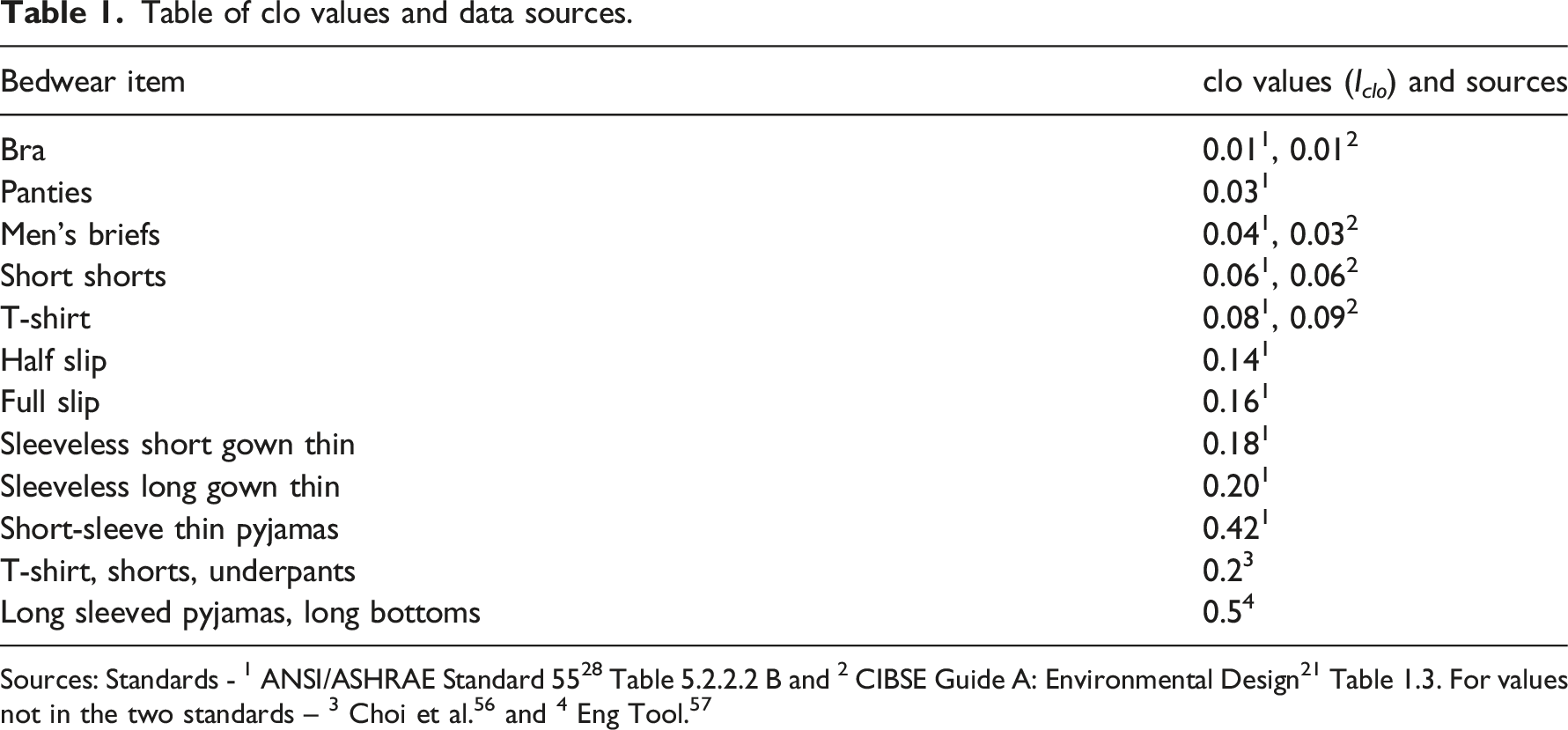
Table of clo values and data sources.
Effective clo values for different levels of body coverage bedding and bedwear, air speed <0.15 m/s and 50% relative humidity (source Lin and Deng). 55
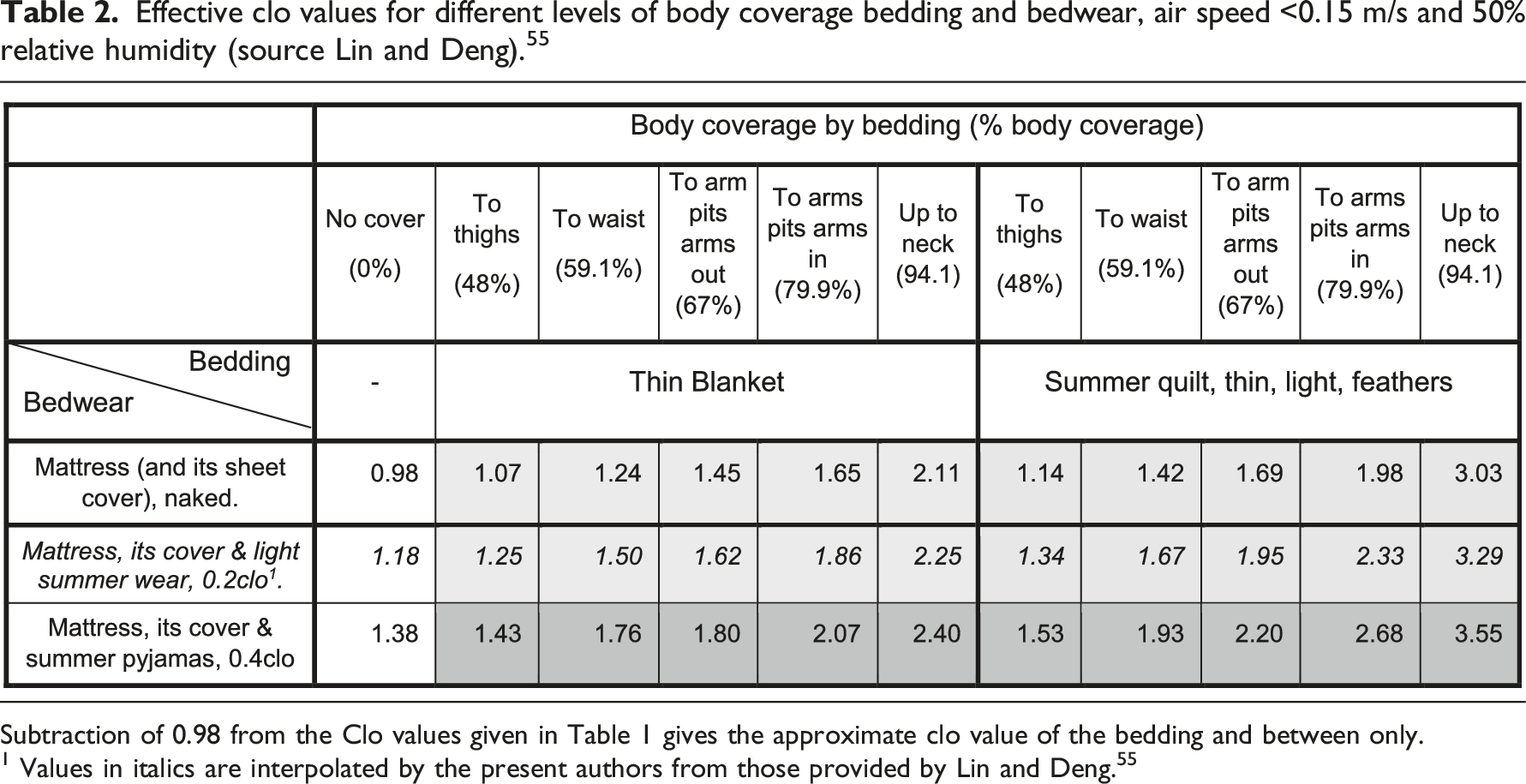
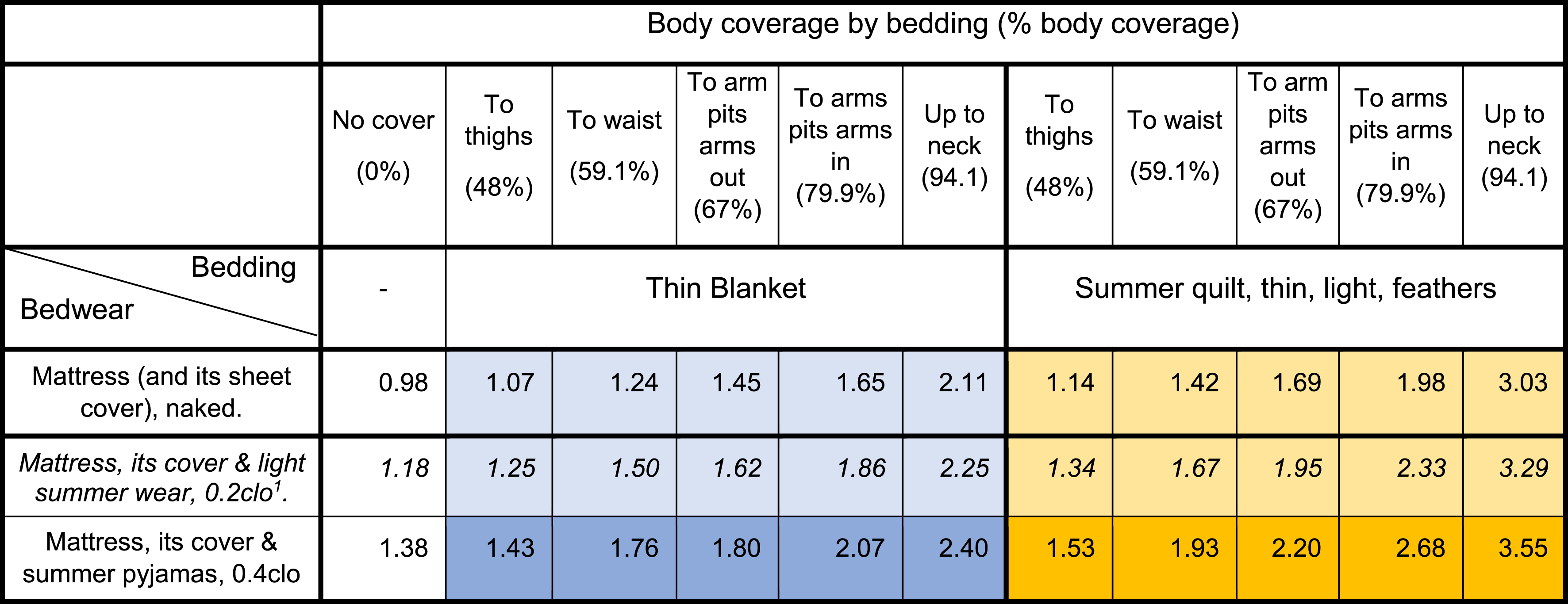
Subtraction of 0.98 from the Clo values given in Table 1 gives the approximate clo value of the bedding and between only.
1 Values in italics are interpolated by the present authors from those provided by Lin and Deng. 55
The clearest information about the effects of bedding and temperature on sleep comes from the laboratory studies in which the space temperature was controlled, the bedwear and bedding specified, and the sleeping subjects closely monitored. Lan et al. 58 reported that Chinese students sleeping with an estimated 1.64clo of bedding and bedwear reported significantly better “calmness of sleep”, “freshness after awakening” and “satisfaction about sleep” at 26°C than at 30°C. They also perceived it to be easier to fall asleep at 26°C than at 30°C. The subjects more frequently reported insufficient sleep at 23°C or 30°C than at 26°C (p < 0.05). In a subsequent study, also using Chinese students, Lan et al. 59 found that there was no significant difference in sleep quality compared to the 26°C condition, when the air temperature changed during the night, either rising then falling or falling then rising in the range from 26°C to 28°C. The insulation level was again 1.64clo (bedwear only 0.36clo); it is unclear if the students did or did not adapt their body coverage during the night.
To consolidate the available evidence and provide a general understanding of the relationship between space temperature, bedding and bedwear insulation, and sleep, models have been developed. 16 Model authors have demonstrated the reliability of model predictions by comparison with experimental data. The work of Lin and Deng, 60 which was based on Fanger’s model, 61 demonstrated that for operative temperatures between 26 and 32°C, a 1K increase in operative temperature could be compensated for by a 0.19clo decrease in bedding and bedwear. At 1.0clo (the approximate insulation value of a mattress only) the operative temperature for thermal neutrality was 29.5°C at 50% rh.
In an effort to improve on the Lin and Deng model, Lan et al.
48
developed a model based on the Gagge two-node approach.
62
According to Lan et al. the model provides better results compared to measured data than the Lin and Deng model. The sensitivity to operative temperature, 1K for each 0.19clo change, is similar to that of the Deng model (Figure 1). In this figure, and in the tables and results that follow, clo values are given for the bedding and bedwear only, i.e., excluding the insulation of the mattress (approximately 1.0 clo). Relationship between the neutral operative room temperature of sleeping people and the clo value of the bedwear and bedding, air speed <0.15 m/s (after Lan et al.).
48
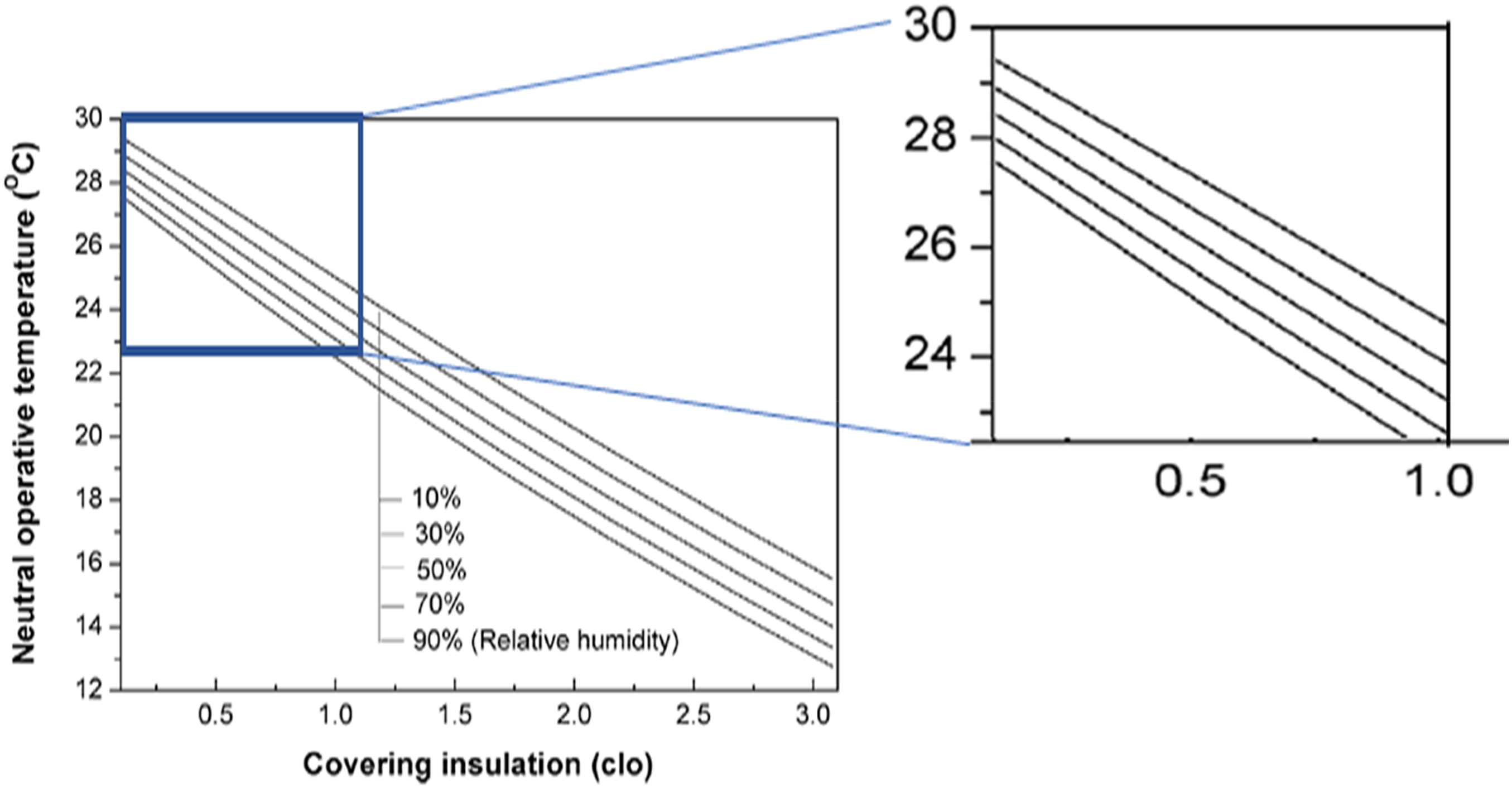
Changes in relative humidity and air speed influence the ideal operative temperature. A change of relative humidity of ±10% is equivalent to an operative temperature change of 0.3 K. Lan et al. 48 have illustrated the sensitivity to air speeds above 0.15 m/s. For sleepers in summer bedwear and bedding (<0.6clo) an air speed of c0.4 m/s (at 50% rh) increased the neutral operative temperature by about 0.9 K, the effect was greater at lower clo values as more body area is exposed to the air movement.
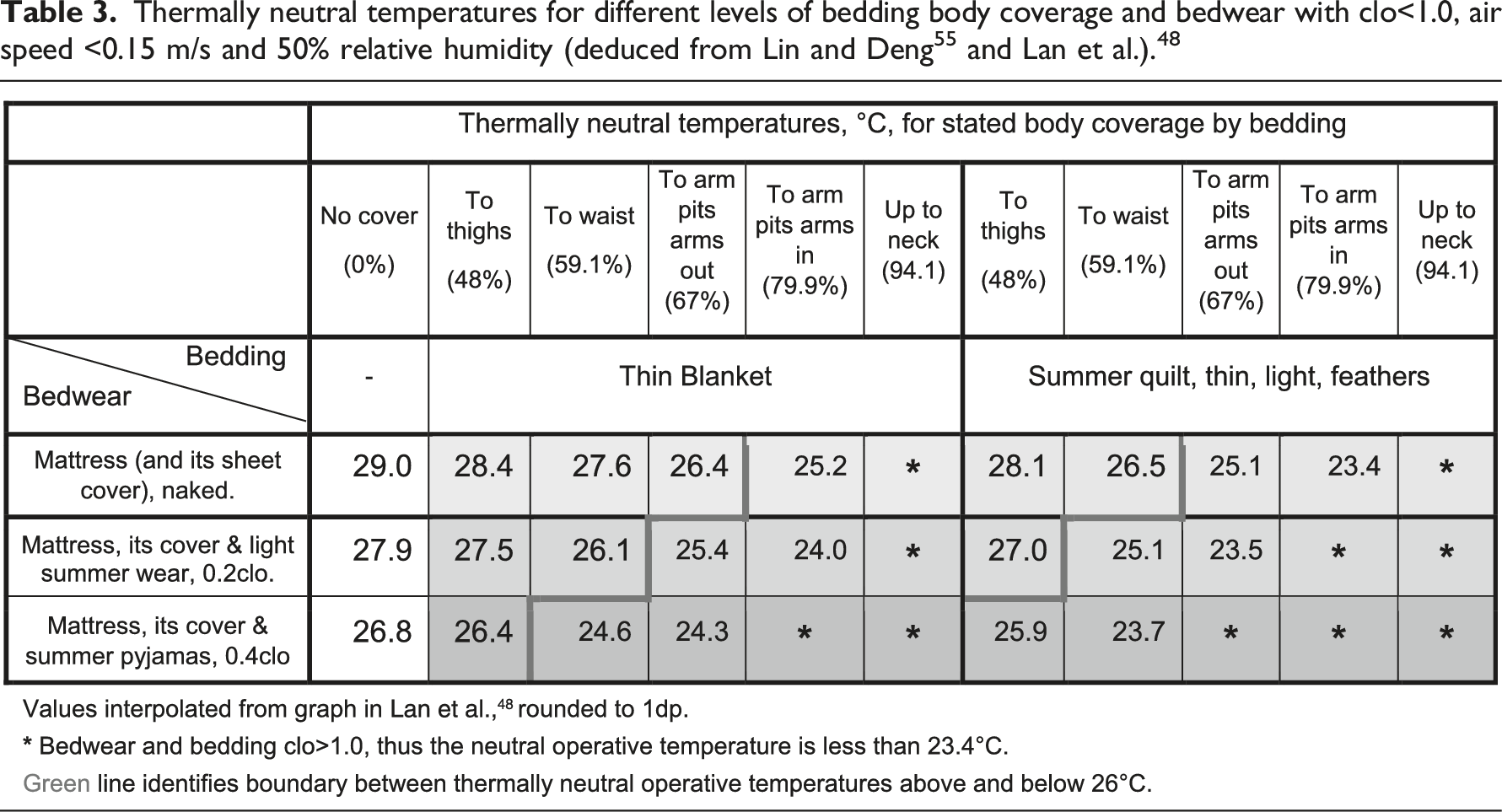
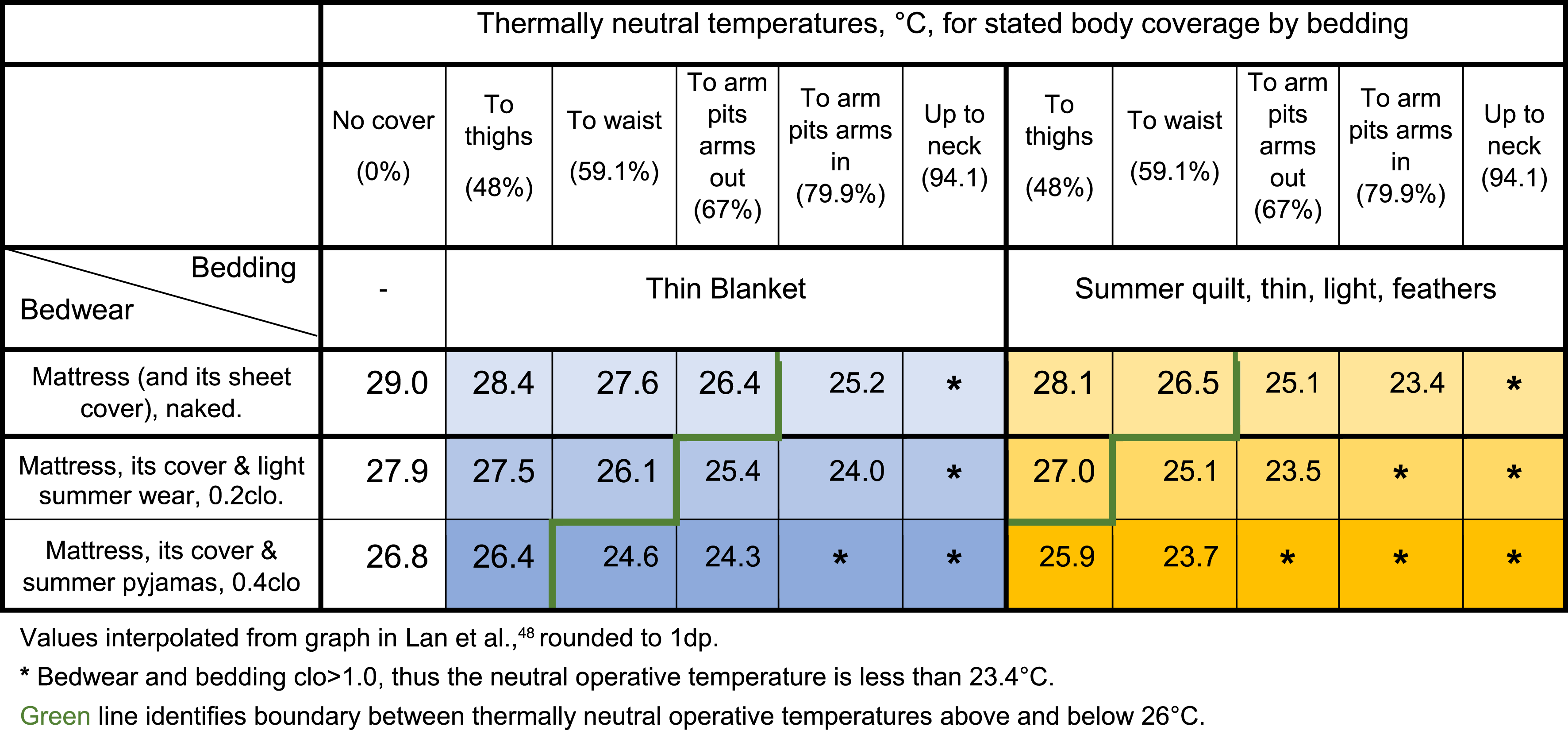
Small deviations away from thermally neutral may be tolerable without unduly affecting sleep or provoking changes to body coverage. However, compared to people who are awake and active, only a small thermal load might be tolerated (see above). Lan et al. 48 suggest allowable temperature increments above the thermally neutral temperature of: 0.5 K for persons with high expectations; 1K for persons with normal expectations; and 1.5 K for persons with moderate expectations. 17 Thus, with bedding and bedwear of 0.6clo, and so a thermally neutral operative temperature of 25.6°C, they suggest thresholds of 26, 26.5 and 27.5°C for high, normal and moderate expectations respectively. 18 The experimental evidence for such assumptions is sparce.
Implications for a night-time overheating criterion
Based on this review, the structure of a suitable bedroom overheating criterion can be developed.
Based on these ideas, a suitable criterion for overheating in bedrooms might have the following form: “To provide thermally acceptable temperatures during the night, there shall be no more than
To understand if, and how the choice of
Reanalysis of overheating in English bedrooms
The EFUS2017 survey provides reliable data on the half-hourly internal temperatures in the main bedrooms of 591 homes between May and September 2018. The reanalysis of the data sheds light on how values for
The period of the year when bedrooms overheat
It is instructive to examine when, during the year, temperatures exceed the proposed new sleep and existing adaptive threshold temperatures. This is especially interesting for 2018 as it was England’s hottest summer on record
37
and typical of the summers expected in the 2050s.
39
To illustrate the temperatures between May and September, the daily mean Central England Temperature (CET)
21
is shown in Figure 2(a) and (b). Also indicated are the four heatwaves which lasted between 3 and 11 days. The peak daily mean CET temperature of 22.5°C occurred towards the end of the third heatwave. Influence of threshold temperature definition on the nightly prevalence of bedroom overheating in the English housing stock: (a) exceedance of adaptive temperature thresholds; (b) exceedance of mean night-time temperature thresholds.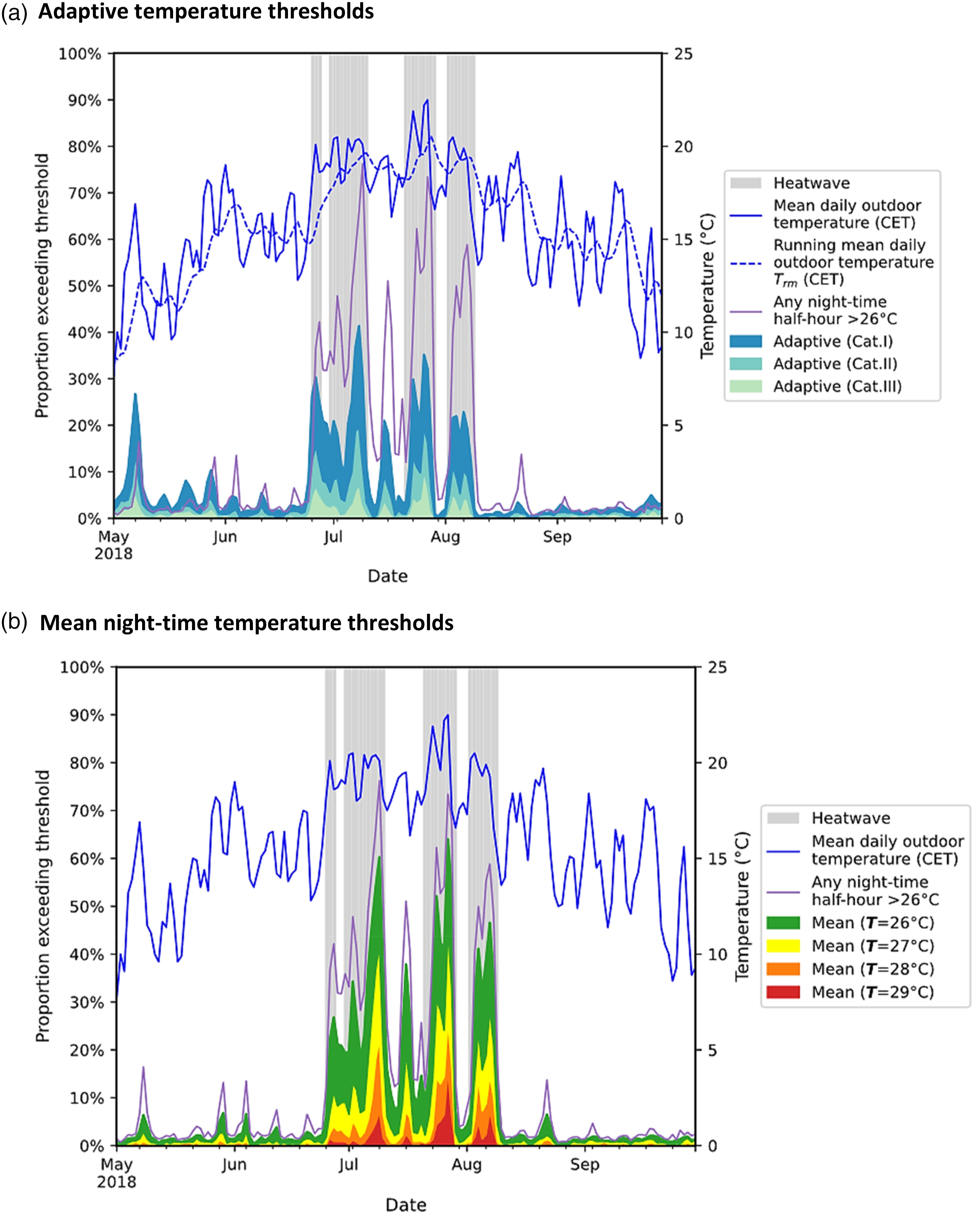
The upper graph, Figure 2(a), shows the proportion of bedrooms that exceed the adaptive Cat.I, Cat.II and Cat.III thresholds on at least one half-hour during the night (22:00–07:00). It also illustrates the running mean of the daily mean CET temperature,
It is clear that the high bedroom temperatures occur primarily during the heatwaves and that the prevalence of overheating is greatest if a threshold of 26°C is used to indicate overheating. At the end of the second heatwave, around 76% of English main bedrooms had at least one half-hourly temperature in excess of 26°C.
The adaptive approach produces a much lower prevalence of nightly overheating during the heatwaves than the hourly 26°C threshold temperature, reaching a peak of 37% Cat.I, 19% Cat.II and 6% Cat.III (Figure 2(a)). The adaptive approach also produces spikes of overheating outside the heatwave periods. This is because the running mean of daily mean temperature,
When overheating is based on the mean night-time temperature (Figure 2(b)) the recording of overheating during the brief periods of warm weather in May (not a heatwave) is much less pronounced than when half-hourly values over 26°C or adaptive thresholds are used to signal overheating. The prevalence of overheating is greatest at the end of the third heatwave. At the end of the second heatwave, the prevalence of overheating at mean temperature thresholds,
Influence of allowable exceedance on the prevalence of overheating
To help frame the problem of selecting a suitable maximum exceedance, Influence on the prevalence of overheating in English bedrooms of the allowable nights of exceedance, N, for different threshold temperatures, T.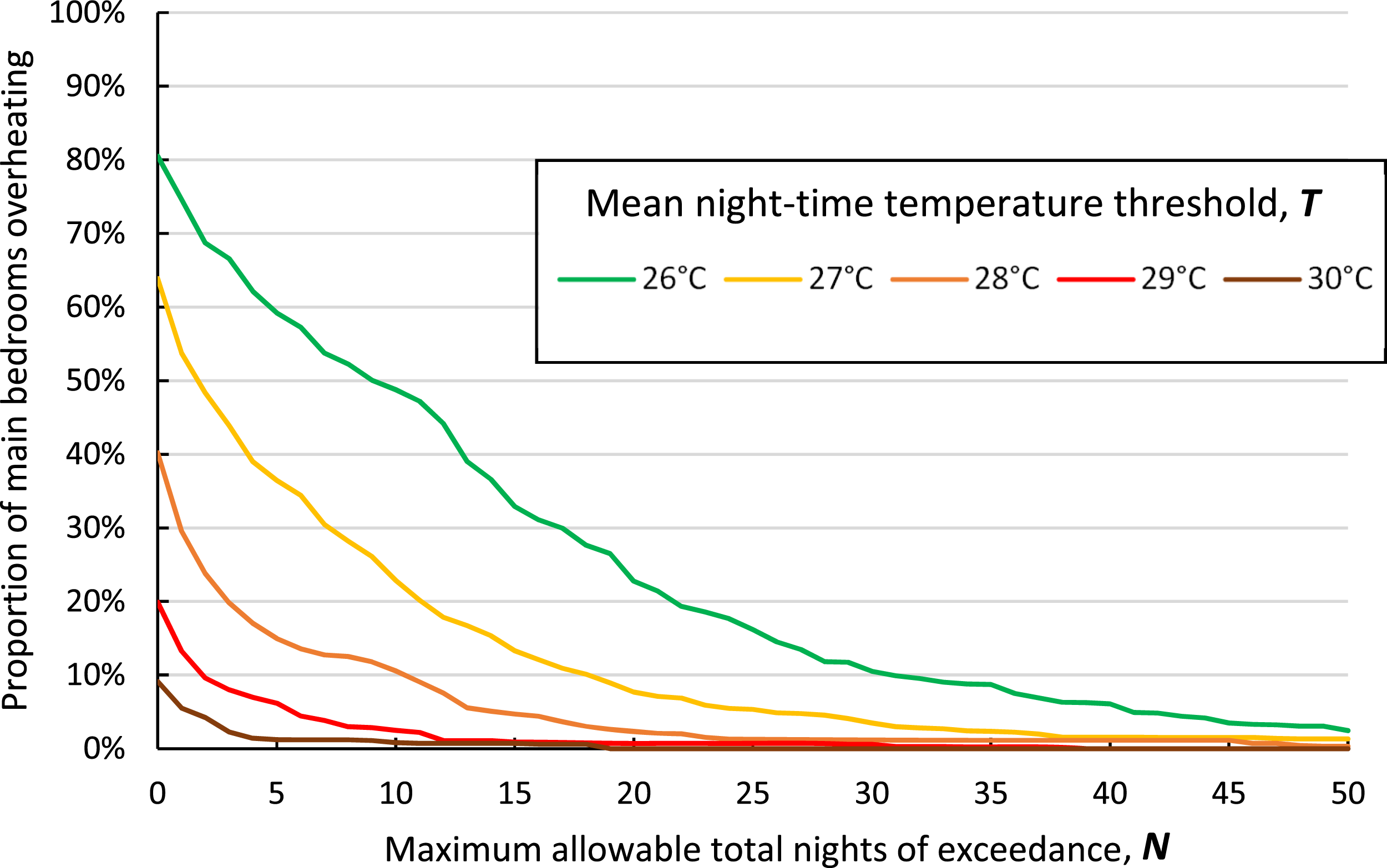
Allowing only one of the 153 nights between May and September to exceed a chosen threshold temperature seems rather restrictive, as one hot summer night is unlikely to be too disruptive and consequential for health and well-being. (For a threshold of
Values of allowable exceedance of 3–5% are widely used in European overheating standards (e.g., 18) and are the values suggested in BS EN 15251
27
for use with adaptive thresholds. Taking such values as a guide, a limit of 5% of nights overheating between May and September is adopted in this paper, i.e.,
Influence of threshold temperature on the prevalence of overheating
The prevalence of bedroom overheating in English bedrooms with mean night-time temperature thresholds, Comparison of prevalence of overheating in English bedrooms between May and September when using the TM59 adaptive overheating criterion (and temperature thresholds for Cat.I, II, III and Sel.Cat.) and a mean night-time temperature criterion (temperature thresholds, T, between 26°C to 30°C with an allowable exceedance, N, of 7 nights).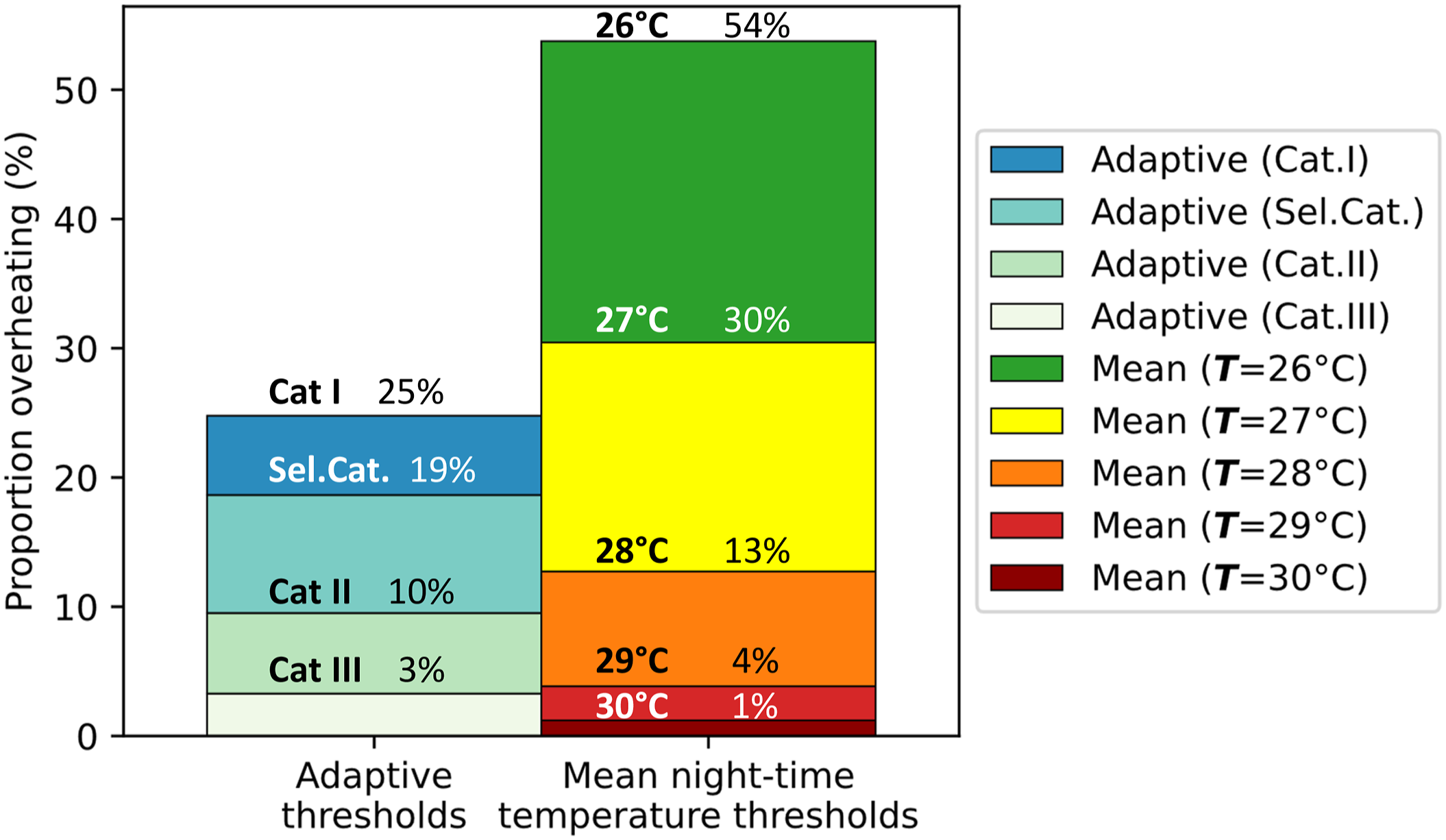
Interestingly, the different values of
This alignment is useful. It means that approximately the same prevalence of overheating within dwelling stocks might be obtained irrespective of whether people are assumed to be awake (an adaptive approach) or asleep (mean night-time temperature approach). 24 It remains to be seen whether the same alignment occurs for individual bedrooms.
Influence of threshold temperature on patterns of overheating
To enable robust assessments of overheating risk and the formulation of overheating mitigation measures, it is helpful if the characteristics of dwellings and households that lead to significantly more, or less, bedroom overheating are not sensitive to the choice of mean night-time temperature threshold. It is also helpful if a mean temperature criterion produces the same, or similar, pattern of overheating as the adaptive criterion so that decisions about whether people are asleep or not asleep does not influence the identification of overheated dwellings.
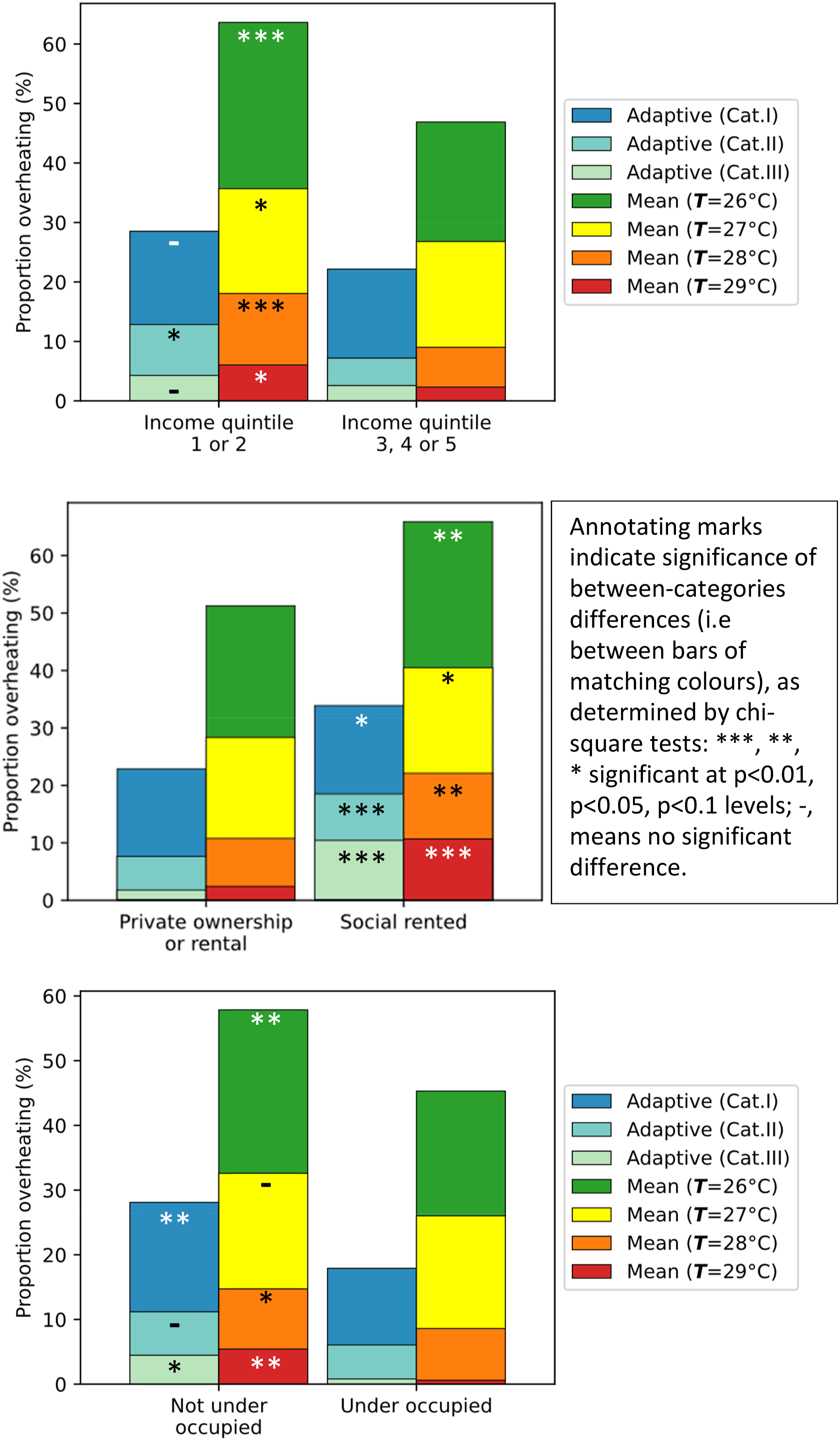
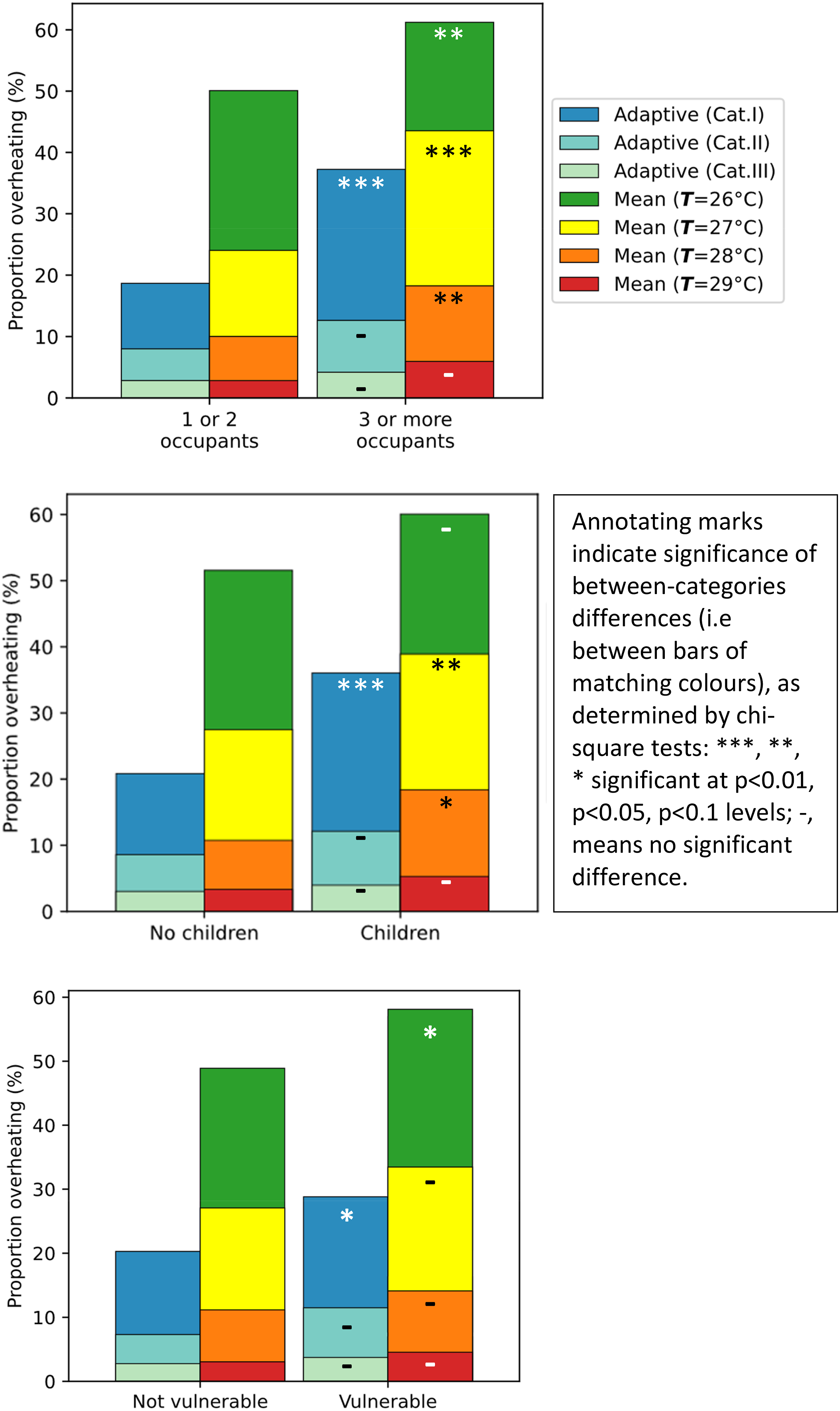
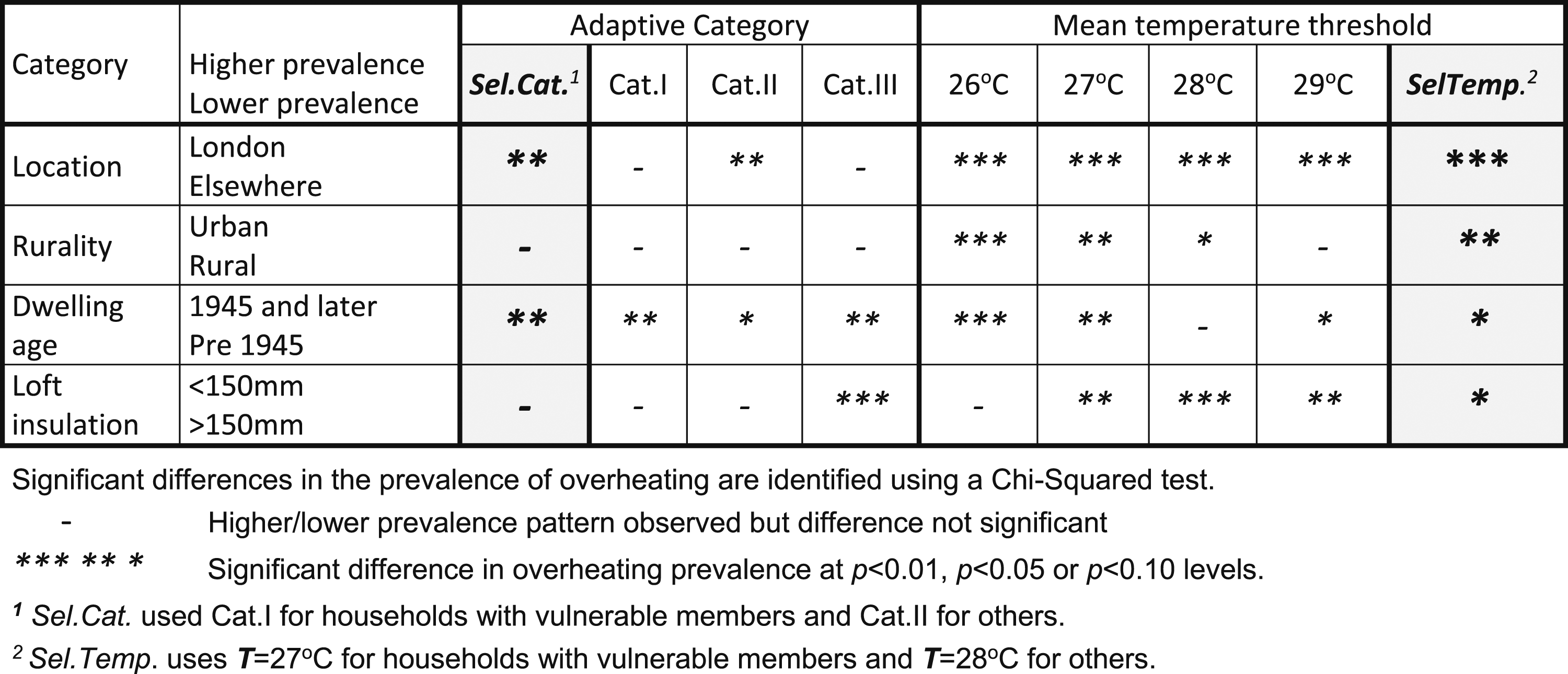
The patterns of main bedroom overheating were calculated for 13 different dwelling categories (covering location, type, size, age, construction and energy efficiency) and 11 household categories (covering household size, composition, income and tenure, and members’ age and vulnerability). The analysis was undertaken for an allowable exceedance, Influence of dwelling characteristics on the prevalence of overheating in English bedrooms for different overheating criteria. Analysis for May to September using the TM59 adaptive overheating criterion (and temperature thresholds for Cat.I, II, III and Sel.Cat.) and a mean night-time temperature criterion (temperature thresholds, T, between 26°C to 29°C with an allowable exceedance, N, of 7 nights). Influence of household characteristics related to wealth on the prevalence of overheating in English bedrooms. Analysis for May to September using the TM59 adaptive overheating criterion (thresholds Cat.I, II, III) and mean night-time temperature criterion (thresholds, T, between 26°C to 29°C with an allowable exceedance, N, of 7 nights). Influence of characteristics related to household composition on the prevalence of overheating in English bedrooms. Analysis for May to September using the TM59 adaptive overheating criterion (thresholds Cat.I, II, III) and a mean night-time temperature criterion (thresholds, T, between 26°C to 29°C with an allowable exceedance, N, of 7 nights).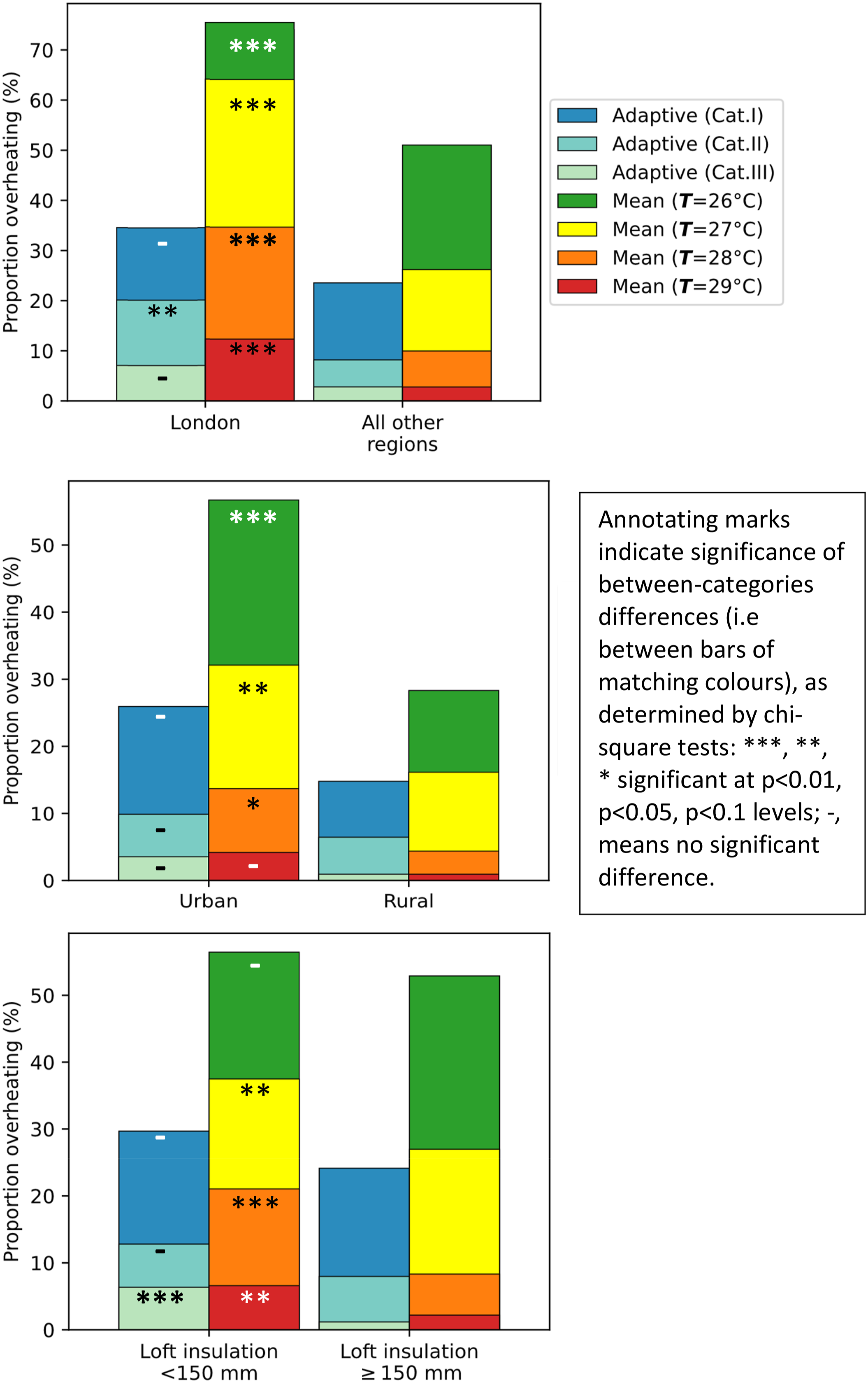
Dwelling characteristics
For both the adaptive and mean temperature criteria, there was a significantly greater prevalence of bedroom overheating in dwellings located in London compared to elsewhere (p < 0.01 all
In general, the mean night-time temperature approach made a sharper (and clearer) distinction than the adaptive approach, between the dwelling characteristics for which there is significantly more (or less) overheating (Figure 5). Importantly, broadly the same dwelling characteristics are deemed to lead to a greater prevalence of overheating irrespective of the mean night-time temperature threshold use. Clearly, however, the number of homes that might be deemed to overheat was heavily influenced by the choice of mean threshold temperature.
Household characteristics
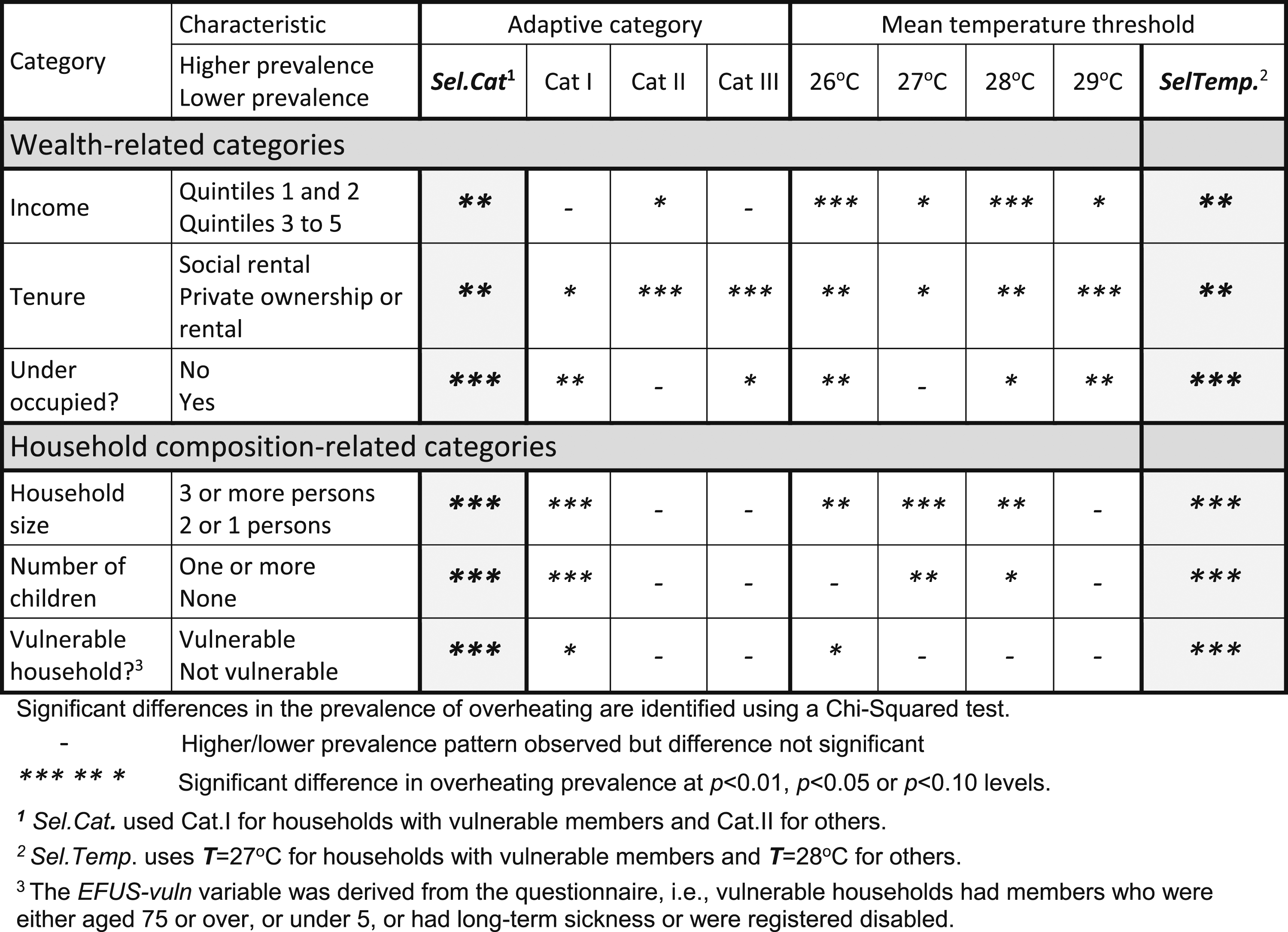
For both the adaptive and mean temperature criteria, there were also clear, significant differences in the prevalence of bedroom overheating for household characteristics related to either income (Figure 6) or household composition (Figure 7). However, as with dwelling characteristics, the mean temperature criteria more clearly revealed any differences (Appendix A2).
Significant differences (p < 0.01 or p < 0.05) were revealed for one or more mean temperature thresholds,
Significant differences (p < 0.01 or p < 0.05) were also revealed for one or more of the adaptive Cat. thresholds related to: household tenure; number and density of occupants; and the presence of children. There were just isolated occurrences of weak significance (0.05 < p < 0.10) for the other household characteristics examined. 67
Comparison with self-reported overheating
It is instructive to compare the prevalence of overheating as reported by households (see The Impact of Current Overheating Criteria on Overheating in English Bedrooms section) with the measured prevalence of overheating as determined using the adaptive and mean night-time temperature approaches. The comparisons need to be made cautiously, firstly, because the self-reports were made following the 2017 summer, which was much cooler than 2018, with August 2017 being particularly cool; secondly, because subjective reports can be unreliable, in particular older people tend to under-report elevated temperatures compared to younger people; 13 and thirdly, because of the subjective nature of self-reports, and especially the challenge of reporting retrospectively about ‘a typical summer’.
Reports of bedrooms being uncomfortably warm often or all the time, are compared with those reports of bedrooms being sometimes, rarely or never uncomfortably warm in Figure 8. For all the adaptive categories and for all mean night-time temperature thresholds, The prevalence of overheating determined using different adaptive categories and mean night-time temperature thresholds (N = 7) for homes felt to be uncomfortably warm often or all the time and those felt to be less frequently warm. Self-reports followed the summer of 2017, adaptive and mean temperature assessments are for May to September 2018.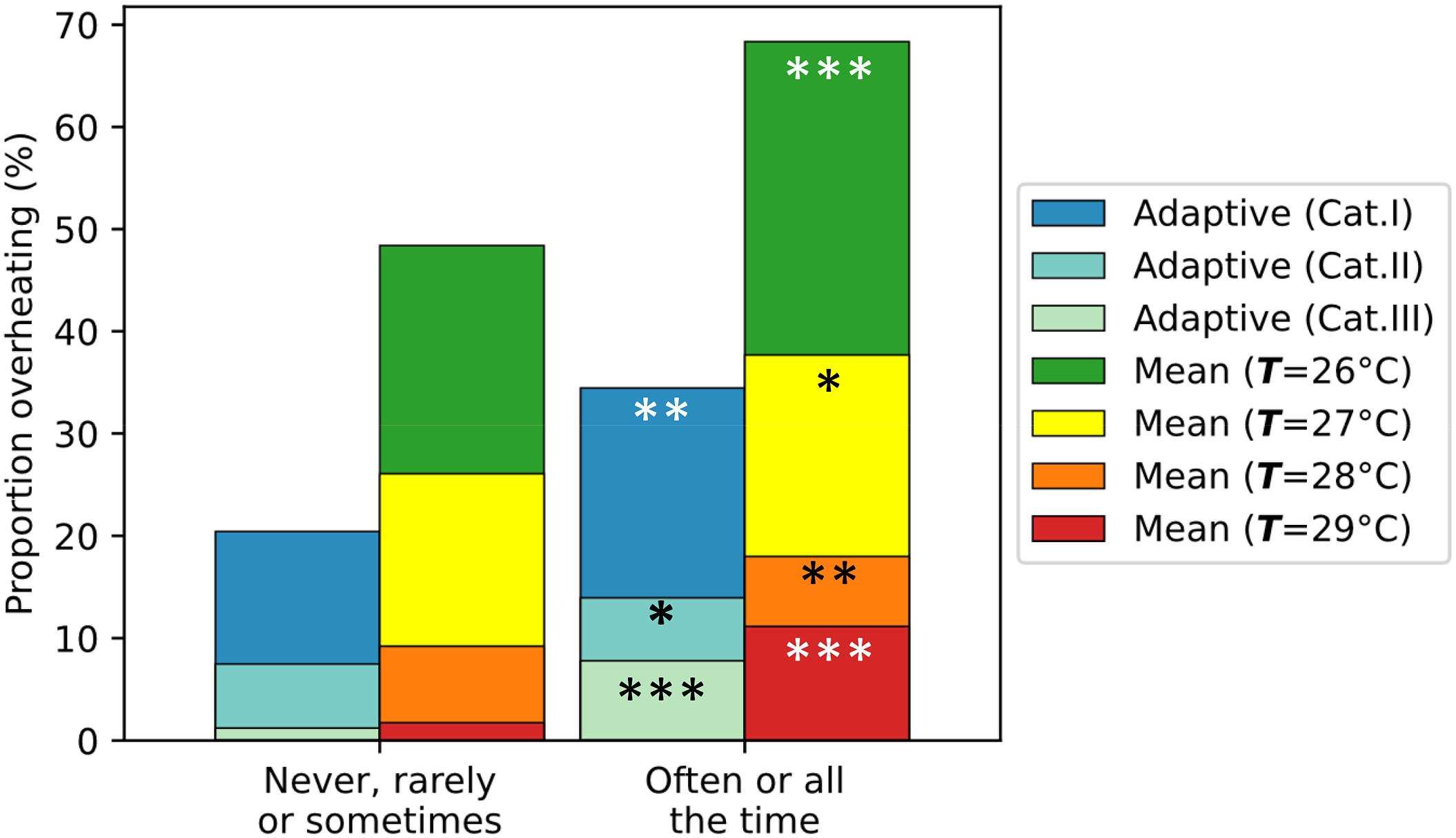
Choosing threshold temperatures
Because people have different sensitivity to, or vulnerability to heat, it could be helpful to offer alternative mean temperature thresholds depending on bedroom occupants’ characteristics. Such an approach would mimic that offered by adaptive criteria. For example, TM59 20 says that “the thermal comfort category assumed …. should be Cat. II by default, but Cat. I for vulnerable residents”, which follows the recommendations of BS EN 16798-2. 26 For designing new dwellings, guidelines and standards might consider which threshold is appropriate given the likely occupancy over the lifetime of the dwelling.
Different temperature thresholds might also be adopted to interpret measurements made in different types of existing building. Again, BS EN 16798-2 suggests this for the adaptive approach, “In older buildings the category III temperature limits should be used as a baseline, in newer buildings (less than 10 years old) in most cases the category II limits should be used.” (26, p33). 27
Importantly, as noted above, the choice of threshold temperature is unlikely to influence identification of which bedrooms are more or less likely to overheat.
Proposed mean night-time temperature thresholds
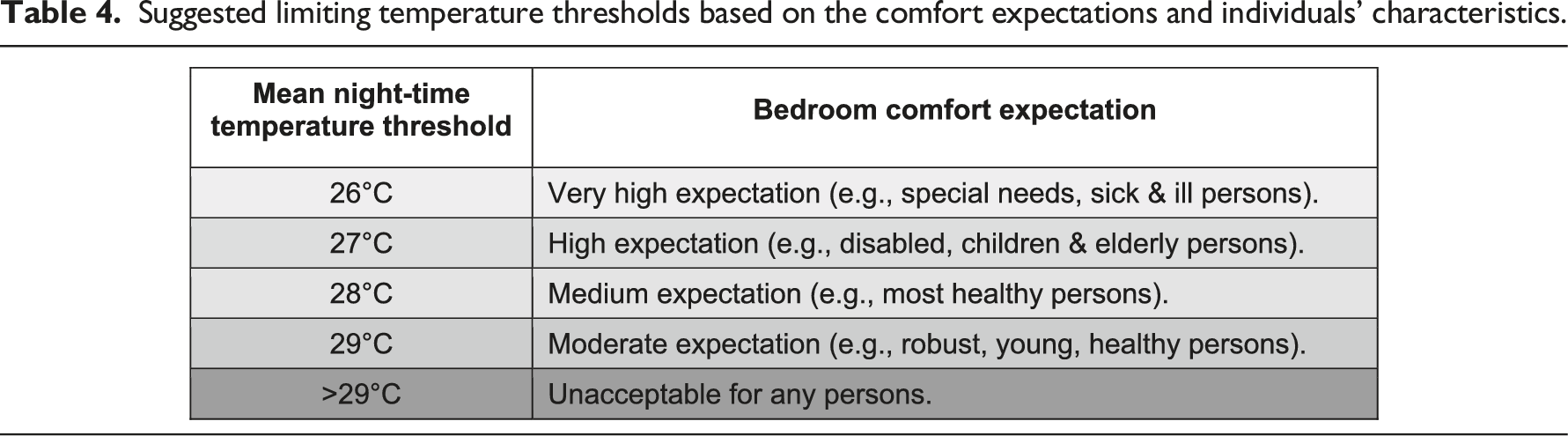
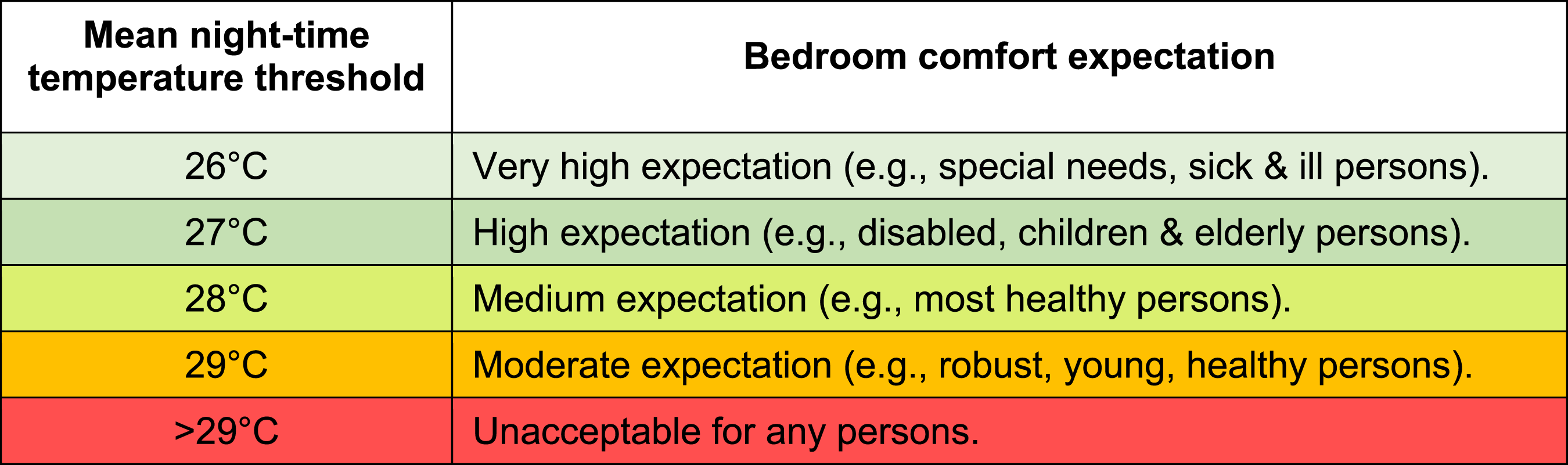
Suggested limiting temperature thresholds based on the comfort expectations and individuals’ characteristics.
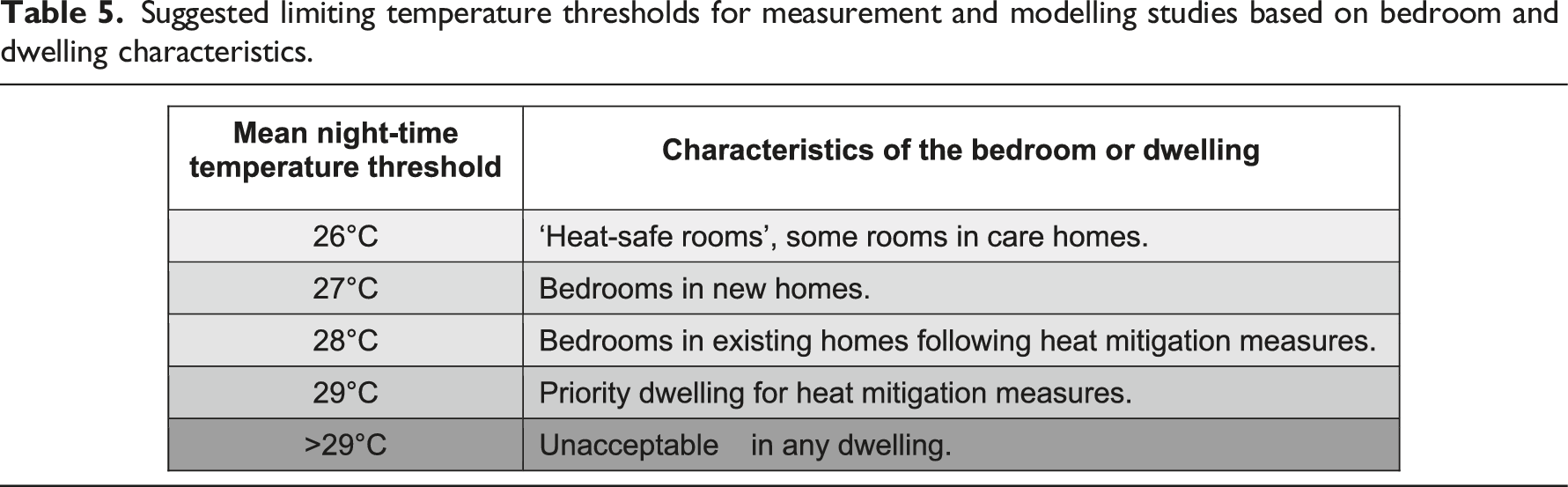
Suggested limiting temperature thresholds for measurement and modelling studies based on bedroom and dwelling characteristics.
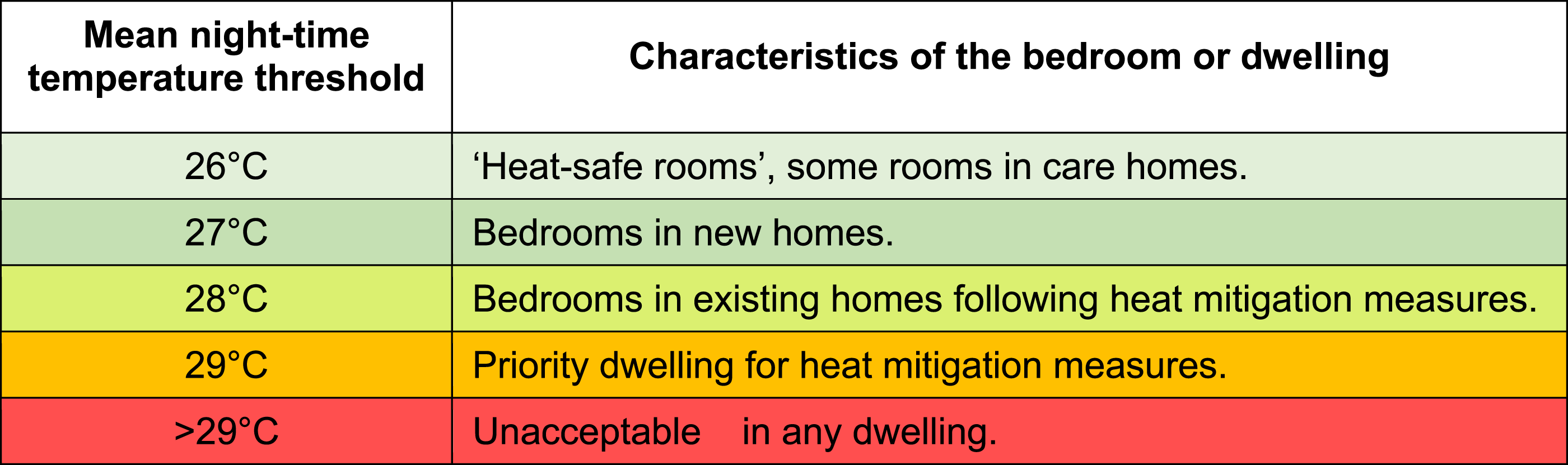
Effect of using different threshold temperatures for different people
The proposed bedroom overheating criterion was applied to the main bedroom data using a mean temperature threshold of 27°C for the 53% of households with vulnerable members
13
and a threshold of 28°C for other households; we termed this the selective mean temperature approach, Sel.Temp. (Figure 9). The approach mirrors the adaptive comfort Sel.Cat. approach (see Influence of Threshold Temperature on the Prevalence of Overheating section) which used Cat.I for vulnerable households and Cat.II for others. Comparison of overheating in English bedrooms as self-reported in 2017 and as measured in 2018 using the adaptive, Sel.Cat., and mean night-time temperature, Sel.Temp., approaches.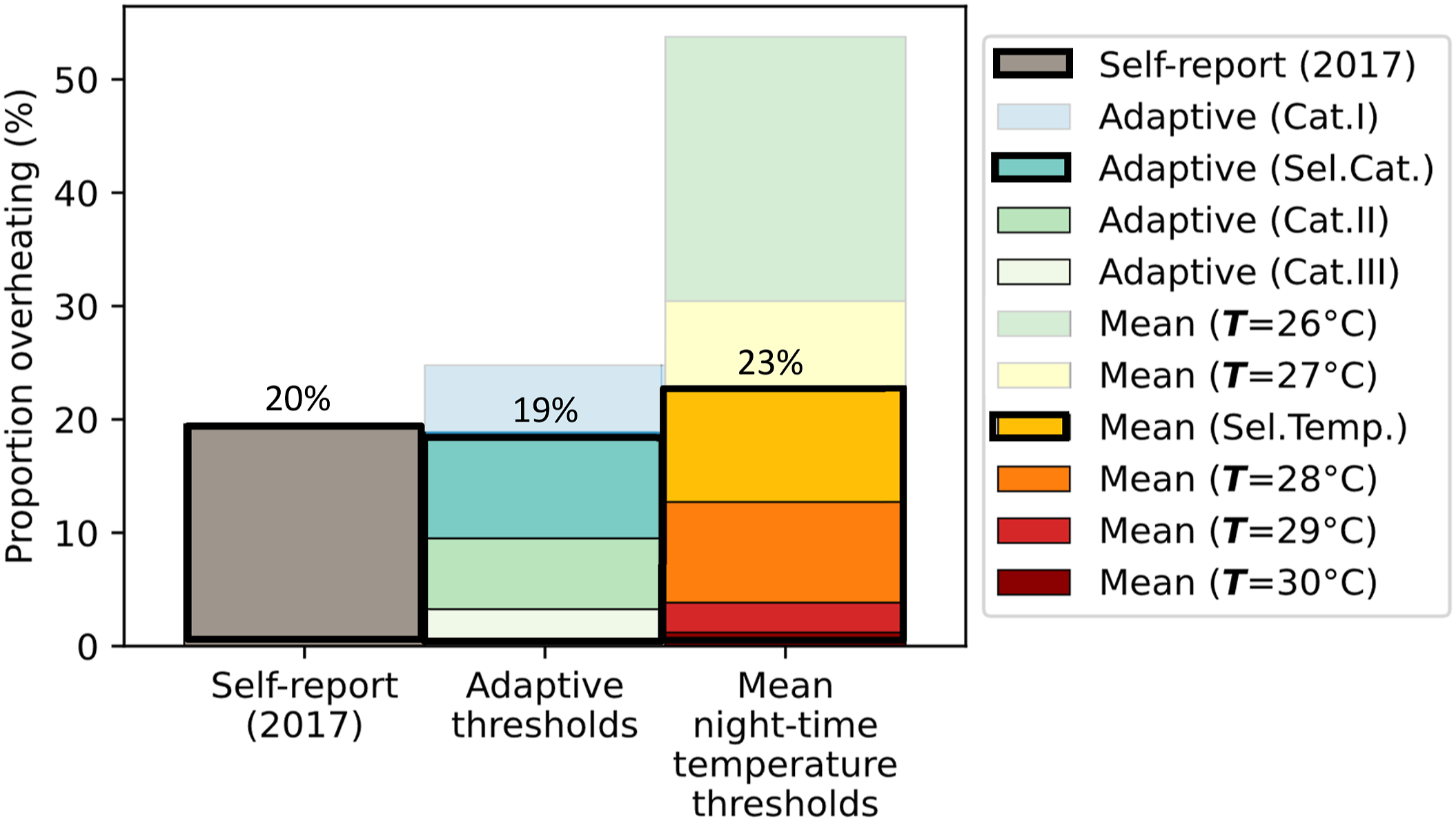
Significance of the differences in the prevalence of overheating with dwelling and household characteristics as indicated by the Sel.Cat. and Sel.Temp. approaches.
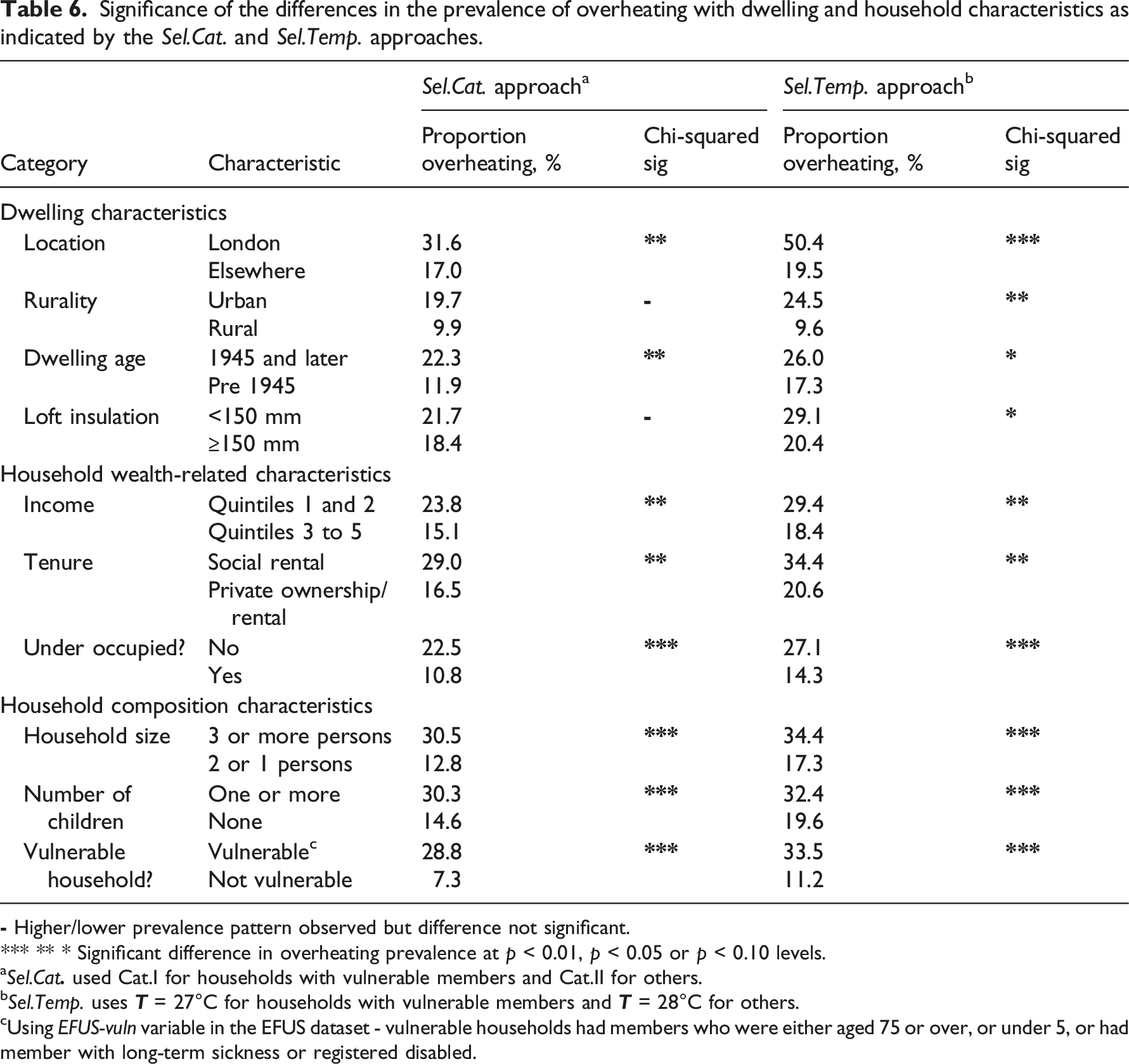
*** ** * Significant difference in overheating prevalence at p < 0.01, p < 0.05 or p < 0.10 levels.
aSel.Cat
bSel.Temp. uses
cUsing EFUS-vuln variable in the EFUS dataset - vulnerable households had members who were either aged 75 or over, or under 5, or had member with long-term sickness or registered disabled.
There was also comparability in the prevalence and patterns of overheating between the Sel.Temp. and Sel.Cat. approaches for both dwelling and household characteristics (Table 6). For the dwelling characteristics, the Sel.Temp. approach revealed more sharply than the Sel.Cat. approach the differences in the overheating prevalence between categories. This was especially so for comparisons between London and the other regions of England. In London 50% of bedrooms were deemed to overheat, 2.5 times more than throughout the rest of England.
For the six categories related to household wealth and composition, the two methods produced estimates of overheating prevalence within 5.5 percentage points of each other. The differences in the prevalence of overheating with changing household characteristics were also similar and so too, therefore, were the significances of these differences (p < 0.01 or p < 0.05).
Discussion
The newly proposed bedroom overheating criterion states that: “To provide thermally acceptable temperatures during the night, there shall be no more than seven nights between May and September inc. during which the mean operative temperature exceeds
It is useful to reflect on the credibility and applicability of this criterion and the limitations of the data on which it is based.
Reflections on the proposed overheating criterion
Use of a mean night-time temperature threshold
The mean night-time operative 29 temperature is the chosen metric of measurement because evidence of sleep disruption is available from either laboratory experiments, in which the temperature to which participants were exposed was fixed, or field experiments in which a mean temperature is calculated. Deviations from a thermally neutral state will impose a thermal load on sleeping people, although the literature is unclear about the magnitude of deviation that might be tolerable without affecting sleep quality.
The use of a mean temperature might be criticised as it fails to register hours of the night with temperatures above the mean, which might affect sleep. To investigate this matter, the changes in night-time temperatures, during the 153 nights from May to September, in all 591 main bedrooms in the EFUS2017 dataset were examined (for details see Appendix B). It was discovered that on 90% of dwelling-nights, the maximum night-time temperature was no more than 1.1 K above the mean, and the minimum no more than 1.1 K below the mean. The highest night-time temperatures occurred towards the beginning of the night, on 71% of the dwelling-nights before midnight.
The mean temperature therefore encapsulates, in a single value, a description of a frequently occurring night-time bedroom temperature regimen, and when people go to bed, they can adjust bedding and bedwear with the expectation that the bedroom will get progressively cooler. Importantly, even on nights with a mean night-time temperature of 29°C, which is the highest suggested temperature threshold, adjustments to bedding, together with any natural tolerance of temperatures above thermally neutral, should enable an acceptable in-bed temperature to be achieved.
In passing, it is sobering to observe how small the decrease in night-time temperature was, less than 2K in 89% of the main bedrooms. It would be interesting to know what degree of night-time cooling would be possible if more diligent night-time ventilation cooling behaviour were undertaken and, in new build, if effective, noise-controlled, night-time ventilation devices were commonly installed.
Alignment with existing overheating criteria
The allowable nights of exceedance,
Retaining the TM59 definition of night-time, 22:00 to 07:00, avoids confusion between the existing adaptive criterion and the proposed new criterion. This 9 hour period might be considered to represent the core night-time period during which acceptable thermal conditions are to be provided in new homes or sought in existing homes, even if people actually sleep at different times. Likewise, for consistency, the same period of the year, May to September, is adopted in the new criterion. This also means that the same weather data files can be used to model both living rooms and bedrooms irrespective of whether people are presumed to be awake (adaptive criterion) or asleep (new criterion).
The proposed threshold temperatures (Tables 4 and 5) derive directly from available empirical (or other) evidence. This retains clarity and traceability to the underpinning research and enables changes to be made straightforwardly as new evidence becomes available. In contrast, the adaptive overheating criteria in both TM59 and TM52 effectively change the temperature thresholds defined in standard BS EN 16798-1. In TM59, only hourly temperatures that exceed the standard’s thresholds by 1K are counted. In TM52, the 1K exceedance is used and, in addition, hourly differences between operative and threshold temperatures must firstly be rounded to the nearest whole number (°C) before applying the criterion; these two ‘adjustments’ effectively raise the adaptive thresholds by 0.5 K. 30 Such embellishments sever the link between the threshold temperatures and the evidence base and give the false impression that the thresholds in TM52, TM59 and the EN BS standard are the same.
Other possible criteria
The proposed criterion gives each night equal weight irrespective of the temperature on preceding nights. However, successive warm nights that cause sleep disruption are more likely to be detrimental to health and well-being than an isolated night of poor sleep. It has therefore been suggested that a criterion that limits the number of consecutive nights above a threshold temperature might be a useful additional criterion; perhaps with three successive nights over the relevant threshold temperature being considered unacceptable. TM52, which uses three criteria to limit the frequency, duration and severity of overheating, offers a precedent for such a multi-criterion approach. 31
Multiple criteria, and a successive nights criterion in particular do, though, pose problems. Firstly, and most importantly, there is an absence of data by which to define a credible threshold and the allowable successive nights of overheating. Secondly, rules must be invented to define which, and/or how many, criteria must be failed to deem a room overheated. Thirdly, as researchers using the TM52 criteria have observed, one or other of the criteria can be more onerous to satisfy than another, rendering one or more criteria effectively redundant. (For example, in the EFUS data set, there were 226 main bedrooms in which the mean night-time temperature exceeded the 27°C threshold on three or more consecutive nights, which scales to 37% of the whole English stock of main bedrooms. Of these 226 bedrooms, 80% also had more than 7 nights with a mean temperature over 27°C, but 20% did not.) Fourthly, a successive-nights criterion would place onerous requirements on the creation of the weather files used with dynamic thermal models. In particular, the duration of the heat waves, and perhaps their frequency and intensity, would need to be faithfully represented, even in future weather files. Simply counting the number of nights over a mean temperature threshold removes this difficulty. Finally, a successive night criterion is not readily applied to measured bedroom temperature data, which is entirely dependent on the prevailing weather at the time of monitoring. Despite these difficulties, further investigation of a multi-night criterion for use in modelling the performance of new and retrofitted dwellings might be worthwhile.
Acceptability of the criterion
One aim of this work was to develop a new night-time criterion that could be readily assimilated by dwelling design consultants and others. The proposed criterion has a number of features that enable this. Firstly, the framing of the criterion mirrors the format of the existing adaptive criterion in TM59, which is used when people are awake. Secondly, the approximate alignment of the adaptive and mean temperature overheating assessments of bedrooms, at least at English stock level and with 2018 weather data, which is similar to that expected in the 2050s, means that the outcome of analyses may be relatively insensitive to decisions about whether people use a room for sleeping, or some other purpose, for example a study. Thirdly, the chosen mean temperature threshold does not unduly affect the patterns of overheating with dwelling and household characteristics. Thus, in new build design, the relative influence of design options on overheating is unlikely to be affected by the (presumed) heat sensitivity of the household occupants, likewise too, the relative effects of different retrofit interventions in existing homes. Of course, whether the absolute number of nights of overheating exceeds seven or not will depend on the chosen threshold (see Tables 4 and 5).
Importantly, the proposed night-time criterion is likely to classify far fewer bedrooms as overheated than the existing static TM59 bedroom criterion. Thus, fewer new homes might be specified with air-conditioning. The new criterion should therefore be welcomed by policy makers, local authorities, the housebuilding industry and others, and so be acceptable for future guidelines, standards and building regulations, such as any future versions of the Building Regulation, Part O.
Limitations and further research
Whilst effort has been directed to making the new criterion as credible as possible, the empirical evidence on which it is based has limitations. Notably, most of the data that clearly defines the relationship between heat and sleep quality, comes from controlled experimental studies, predominantly studies using young, healthy people in East Asia.
There is limited empirical data for older people and the very young, although that which is available suggests a greater sensitivity to heat. Therefore, in common with the adaptive comfort approach, a lower mean temperature threshold has been proposed for older people and children (Table 4).
In the last few years, much more data from people sleeping in unconditioned bedrooms in natural settings (their own home, bedroom and bed) has become available. 7 These data may enable the proposed criteria to be tested. At present, there has been no such study in the UK, so a large survey of people sleeping in warm homes, which records ‘sleep quality’, together with confounding variables such as ambient noise and light, would be valuable.
There is a need for design consultants and others to trial the criterion proposed here using different dynamic thermal models. Such investigations might examine different dwelling types and different occupancy profiles, as well as different weather conditions - including anticipated future weather. Such work may reveal technical problems in applying the criterion to models’ predictions or abnormalities in the predictions themselves.
As with many other research findings, the proposed night-time overheating criterion should be seen as provisional, and open to amendment as new and compelling data on heat and sleep becomes available. 32
Conclusions
A blueprint for a new bedroom overheating criterion has been proposed for use in interpreting summertime temperatures obtained through field measurements and as predicted by dynamic thermal models. The proposed criterion is intended for use in unconditioned bedrooms in temperate climates.
Thresholds of thermal comfort for sleeping people, were obtained from a review of over 50 research papers that describe laboratory experiments, calibrated models of human thermal comfort, and a small number of field trials. Potential new overheating criteria were tested using half-hourly temperatures measured in the main bedrooms of 591 English homes during the hot English summer of 2018. The national prevalence of overheating in the entire English housing stock using different bedroom overheating criteria was derived. • The bedroom overheating criterion currently used in the UK limits the annual night-time hours with temperatures over 26°C to 1%. The threshold is based on a small field survey, now over 45 years old, which is not relevant to current sleeping habits. • The thermally neutral temperature for sleeping persons depends on their bedwear, bedding and body coverage. It is argued that people subconsciously adjust bedding during the night to achieve comfort without detriment to sleep quality. • Thermally comfortable sleeping conditions can be readily achieved by healthy individuals for bedroom temperatures up to approximately 28°C. For naked individuals lying on a mattress, the thermally neutral temperature is approximately 29°C. • There is little reliable evidence about the way deviations of temperatures from thermal neutrality affect sleep quality. Therefore, the new criterion places upper limits on the mean night-time bedroom temperature such that in-bed thermal comfort can be achieved. • Mean night-time bedroom temperature thresholds between 27°C and 29°C are tentatively proposed. The lower value for thermally sensitive, vulnerable and elderly people, higher values for healthy and robust people. Different target thresholds are also suggested for different applications, e.g., the design of a new dwelling or refurbishment of an existing dwelling. A lower threshold of 26°C might be adopted for rooms to protect ill, medicated or otherwise very thermally sensitive people. • The prevalence of overheating in stocks of homes is sensitive to the allowable number of nights that exceed the mean threshold temperature. The new criterion limits the allowable exceedance to no more than seven (5%) of the nights between May and September. • The prevalence of overheating in the main bedrooms of English homes in the summer of 2018, when using mean-temperature thresholds of 27°C for vulnerable households (53%) and 28°C for others, was 23% (5.5 million). This is comparable to the prevalence of 19% determined using the existing UK adaptive overheating criterion, which assumes that people in the bedroom are awake during the night. • The patterns of bedroom overheating, as dwelling and household characteristics changed, were similar irrespective of the mean temperature threshold adopted, and similar to the patterns achieved using the adaptive overheating criterion. • For all mean temperature thresholds, there was a significantly greater prevalence of bedroom overheating in London than in all the other English regions combined (p < 0.01). The prevalence of bedroom overheating was significantly less at mean temperature thresholds of 27°C and above (p < 0.05) in homes with more than 150 mm of loft insulation. The prevalence of bedroom overheating tended to be significantly greater for households on lower income, living in socially rented housing, or with three or more occupants. (The significance level varied with mean temperature threshold.)
The proposed criterion is grounded on the available empirical evidence, but there is a need for further work. • Most importantly, there is a need for a large-scale survey to gather data that matches sleep quality with summer-time bedroom temperatures for people sleeping in their natural setting. • The usability of the new criterion for interpreting temperature predictions made by dynamic thermal models needs to be tested and thus the implications for the design of new dwellings and the refurbishment of existing dwellings determined. This will clarify the benefits of adopting the new criterion within building regulations that seek to limit the risk of overheating in English homes.
Overheating criteria for use in temperate climates need to strike a balance between being overly conservative, and thus precipitating the widespread uptake of domestic air-conditioning, and being too relaxed, and thus exposing too many people, too often, to poor quality sleep, with consequential effects on health and well-being. The new criterion proposed here aims to strikes the correct balance.
Supplemental Material
Supplemental Material - An overheating criterion for bedrooms in temperate climates: Derivation and application
Supplemental Material for An overheating criterion for bedrooms in temperate climates: Derivation and application by Kevin J Lomas and Matthew G Li in Building Services Engineering Research & Technology
Footnotes
Acknowledgements
This work benefitted substantially from the interest, support and advice provided by the Chartered Institution of Building Services Engineers, the UK Government Department for Business, Energy and Industrial Strategy and the Department for Levelling-up, Housing and Communities, and also from engineering consultants Arup and Inkling LLP. The analysis was greatly assisted by previous work to collect, clean, organise and curate the EFUS2017 dataset, which was undertaken by collaborators at the UK Building Research Establishment (BRE) and colleagues in the Building Energy Research Group (BERG) at Loughborough University, in particular Dr Stephen Watson and Mr Paul Drury.
Declaration of conflicting interests
The author(s) declared no potential conflicts of interest with respect to the research, authorship, and/or publication of this article.
Funding
The author(s) disclosed receipt of the following financial support for the research, authorship, and/or publication of this article: Funding from the EPSRC Impact Acceleration Account [Grant Ref. EP/R511572/1] via Loughborough University’s Enterprise Projects Group; and financial aid from the Research Fund of the Chartered Institution of Building Services Engineers. Prior work, to organise, clean and analyse the EFUS dataset, which provided a platform for this paper, was funded by the Department for Business, Energy and Industrial Strategy and the Engineering and Physical Sciences Research Council [Grant Ref. EP/L01517X/1].

Supplemental Material
Supplemental material for this article is available online.
Notes
AppendixAppendix A. Significant differences in the prevalence of overheating with dwelling and household characteristics for different overheating criteria.
Significance in the difference of overheating prevalence with dwelling characteristics.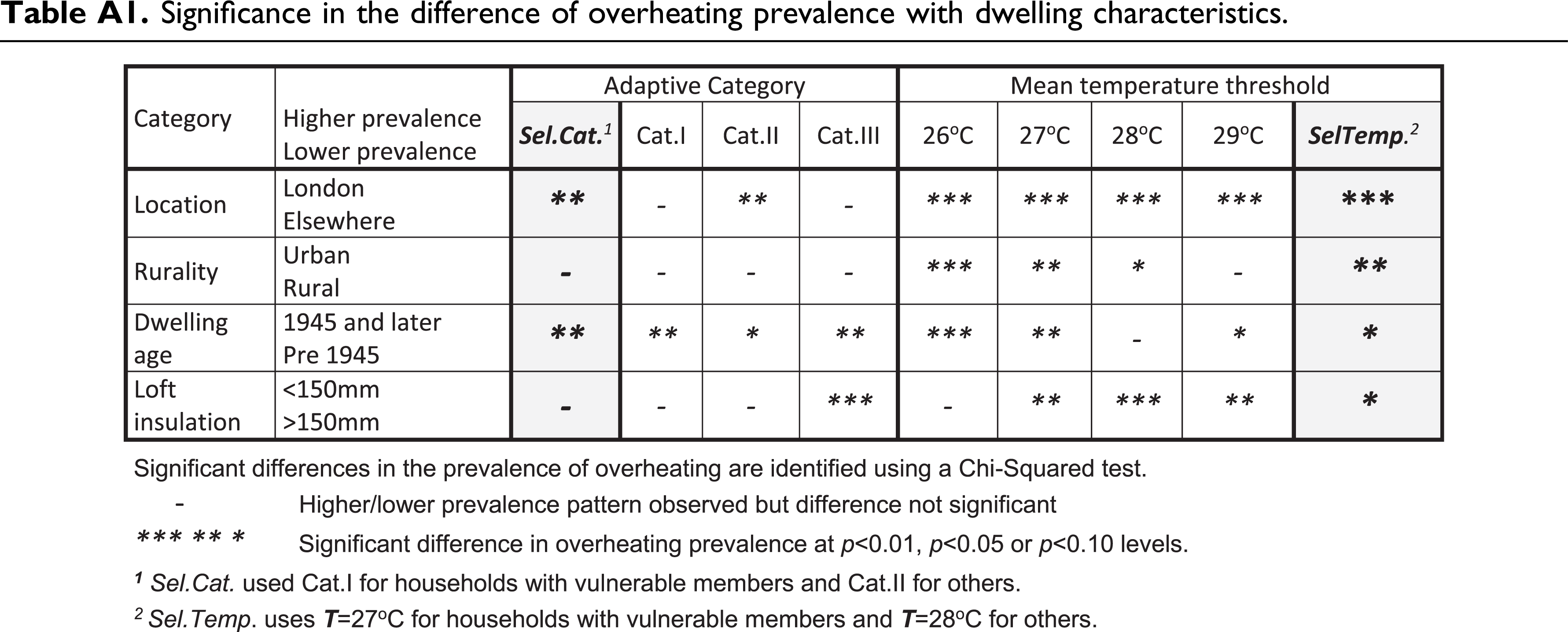
Significance in the difference of overheating prevalence with household characteristics.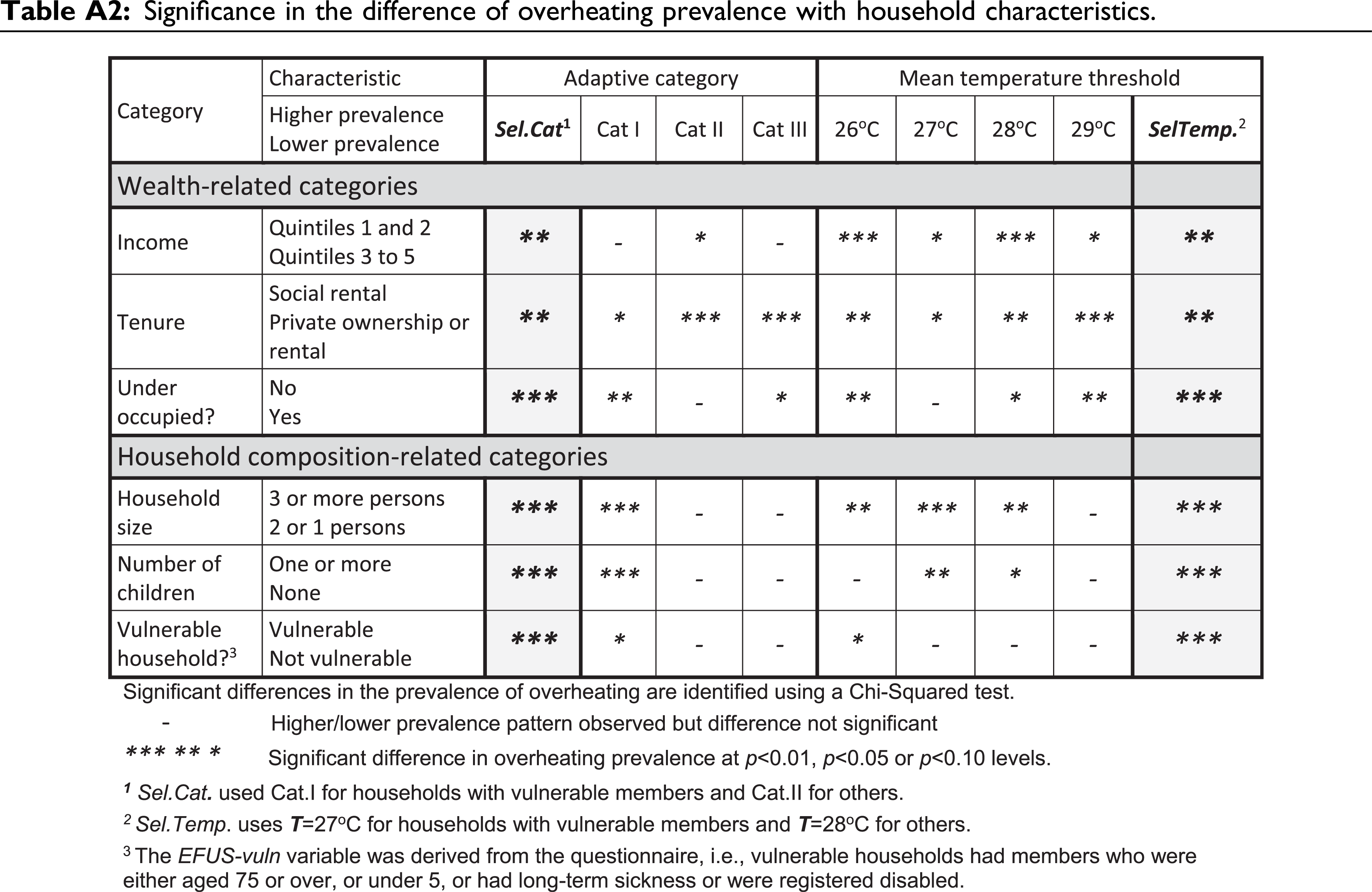
Appendix B. The variation in temperature during summer nights in English homes
References
Supplementary Material
Please find the following supplemental material available below.
For Open Access articles published under a Creative Commons License, all supplemental material carries the same license as the article it is associated with.
For non-Open Access articles published, all supplemental material carries a non-exclusive license, and permission requests for re-use of supplemental material or any part of supplemental material shall be sent directly to the copyright owner as specified in the copyright notice associated with the article.
