




Abstract
Wellbeing and mental health are important pillars of sustainability, as recognised by the WELL Building Standards. With higher education facing a mental health crisis, which has been exacerbated by the pandemic, all potential solutions must be investigated. Applying WELL to educational spaces could help to improve student and staff wellbeing. However, the constant change in occupancy of teaching spaces within higher education alters how design factors influence wellbeing outcomes as compared to standard office or domestic occupancy. This study collects student and staff responses on their experience of wellbeing in educational spaces, together with indoor environment quality data for validation. It found that whilst the perception of the quality of spaces did not necessarily align with the measured quality, it was the perceived quality that impacted wellbeing.
Practical application
Design for wellbeing is a growing market and a costly investment, it is important therefore that this investment is having the impact anticipated. This research demonstrates the importance of designing a space taking into account user perception rather than focusing solely on space performance, and perceived space quality impacts on occupant wellbeing.
Introduction
Wellbeing and mental health are important pillars of sustainability, as recognised by WELL, the International WELL Building Institute. However, few WELL projects have focussed on higher education institutions. This is perhaps due to students generally occupying each learning space for 1–2 h at a time. Contrastingly, office occupants typically spend 8 h at once in the same space. However, cumulatively students can spend similar hours in learning environments to office occupants over a week. Furthermore, a recent poll of almost 38,000 UK students at UK universities shows deteriorating mental health which has resulted in ‘alarmingly high’ psychological distress levels. 1 The same study indicated that 33.9% of the students interviewed had experienced serious psychological issues that require professional help. This shows the importance of addressing student wellbeing, and as such this study focusses on the impact of wellbeing standards on student and staff wellbeing in higher education. Given the transitory nature of teaching spaces at university, the constant change in occupancy of educational spaces is likely to alter which design factors have the greatest influence on outcomes and indeed how these outcomes manifest. As such, this research collects student and staff responses on their experience with wellbeing in educational spaces, while relating it to indoor environment quality data. The study takes place in the School of Engineering at Warwick University because engineering students spend upwards of 18 timetabled hours in learning spaces per week and this space was accessible to the researchers.
Project aims
The purpose of this study was to analyse the extent of the impact that educational spaces have on the wellbeing of students at the university. This research was funded by the Institute for Advanced Teaching and Learning (IATL) at Warwick University and investigated the need for re-designing learning spaces on campus to improve how they cater for the wellbeing of students and staff.
There were two main aims of this study. The first aim was to engage with students and staff in the School of Engineering to gain an understanding of their perceptions of wellbeing, and how Warwick’s learning spaces influence it. The second aim was to collect quantitative data on the indoor environmental quality (IEQ) regarding room D0.02; a teaching space in the engineering building at the University of Warwick. This data was collected during both the holiday and term time, and was used to analyse whether the following variables: thermal comfort, lighting, and ventilation satisfy the WELL Building Standards.
Having gathered this data, the study reviewed the quantitative data on the environmental quality of the space against the qualitative data on people’s perception of the space to see if any correlation could be identified. These were reviewed against the WELL Building Standard in order to quantify the quality of the space and make recommendations for improvements.
Literature review
The definition of wellbeing, according to the Cambridge Dictionary is: “The state of feeling healthy and happy.” 2 From a philosophical standpoint, wellbeing can be understood through a hedonic and a eudemonic way. 3 The former is based on the subjective notion which is used to denote a happy or good life. The cognitive component associated with this point of view consists of satisfaction with life. The consensus lies with the idea that happiness is achieved when both pleasure and satisfaction are high. Eudemonic wellbeing on the other hand, strongly advocates Maslow’s hierarchy of needs, which aims to achieve self-actualisation. As such, wellbeing and happiness depends on the premise that people experience purpose, challenge, and growth in life. This fulfils the Self Determination Theory which strongly suggests that happiness is linked with autonomy and competence. 4 From this we can see that productivity is an important aspect of eudemonic wellbeing.
The CIBSE article: Evaluating Dynamic Lighting by Paul Littlefair and Cosmin Ticleanu highlights the importance of appropriate lighting in work environments as it enhances the productivity of occupants. 5 One of the key solutions highlighted in their study was the incorporation of Dynamic Circadian Lighting, which aligned with circadian rhythms. This type of lighting varies in colour and intensity during the day to mimic natural day light, in order to improve the alertness of occupants. The article discusses the impact of lighting on alertness level by measuring the equivalent melanopic lux (EML), which is the weighted spectral response of cells in the eye that help control the body’s daily rhythm. Blue lighting in the daytime helps to synchronise the “circadian clock” which allows people to stay alert during the daytime, and yellow tones in the evening help people sleep sufficiently during the night. Occupants of the workspace in which the study was performed took computerised cognitive tests to assess their reaction times. Results showed that brighter and bluer lighting improved their alertness and therefore productivity at work, linking back into eudemonic wellbeing.
Wellbeing is an area of research that has captured the attention of corporate organisations, to ensure the employee’s healthy state of mind. There has been a shift in wellbeing solely associated with physical health and environment, to include the spiritual and occupational health of people. This is further explored by the World Health Organisation who defines wellbeing as: “A state of complete physical, mental and social well-being, and not merely the absence of disease and infirmity.” 6
A successful example of a corporate organisation improving wellbeing can be noted through Airbnb’s installation of indoor air quality sensors as a response to a rise in Volatile Organic Compounds (VOCs) in their corporate office in San Francisco. 7 The data from these enabled an increase in immediate and effective changes in faulty systems such as the air purifying system, resulting in an overall global increase in the health and wellbeing of surroundings in varying Airbnb offices around the world.
Beyond corporate adoption, it is also important to recognize the importance regional culture plays in the consideration of wellbeing in buildings. For example, Swedish companies are more likely to fulfil the prerequisites of WELL Standards, because they have an employee wellbeing focus culture. 6
From these studies, it is clear that traditionally wellbeing and comfort related aspects of space design, such as lighting and temperature, have a measurable impact on productivity. It also shows that wellbeing measures are being addressed and improved within corporate organisations. With employees spending eight or more hours, per day, in the workplace and students in higher education, especially in the STEM fields, experiencing an increasing number of contact hours and sessions, often upwards of 44 h per week in educational spaces in University, optimising wellbeing is essential.
WELL building standards
Alongside the increase in wellbeing research has come the development of wellbeing standards and guidelines. The WELL Building Standards, pioneered in the USA, are the first set of construction guidelines which focus on a building’s impact on occupant health and wellbeing. The standards were developed by integrating engineering and medical research as well as literature on environmental health and demographic risk factors that affect health, along with leading building design practices. 6 This development has resulted in a framework for improving wellbeing in workspaces both in the industry and in educational institutions.
The WELL Standards are on the rise and there have been many global projects that have implemented them to improve employee satisfaction at work. They focus on eleven concepts to capture a holistic understanding of wellbeing including air, water, nourishment, light, movement, thermal comfort, sound, materials, community, innovation, and the mind. So far, there have been successful incorporation of wellbeing standards in corporate organisations. Notable examples include: SL Green’s success in the certification of 15 properties to WELL standards, JLL Asia Pacific’s focus on their property footprint using the WELL Portfolio Pilot, while assisting clients in their journey towards better health and wellbeing, and finally Investa, who have used the portfolio pathway to enable best practice towards health and wellbeing outcomes using the WELL v2 scorecard. 8
Methodology
This study was divided into two sections: (a) the qualitative thematic analysis of student and staff interview responses on their understanding of wellbeing, and (b) the quantitative evaluation of indoor environmental quality (IEQ) using IEQ sensors. For this data points were segregated into timetabled, i.e. occupied, time and unoccupied, weekend, time. They were then compared to WELL and other standards.
The teaching space, D0.02 (Flexible Teaching Lab), was selected as the most frequently used and highly populated teaching space within the School of Engineering, excluding computer suites. D0.02 is a seminar room used for groups of up to 60 students and three staff for timetabled sessions of 1–2 h. It is situated on the mezzanine floor of the basement of the School of Engineering, with internal windows over-looking the mechanical workshops and ceiling windows providing natural light. None of the windows are openable.
The room can be seen in the following figures. Figure 1 shows a photograph of the typical arrangement of the room, including the partitions, lighting, seating and floor diffusers for supplying air. The photograph was taken from the rear of the room, looking towards the internal windows. Figure 2 shows a layout of the room.
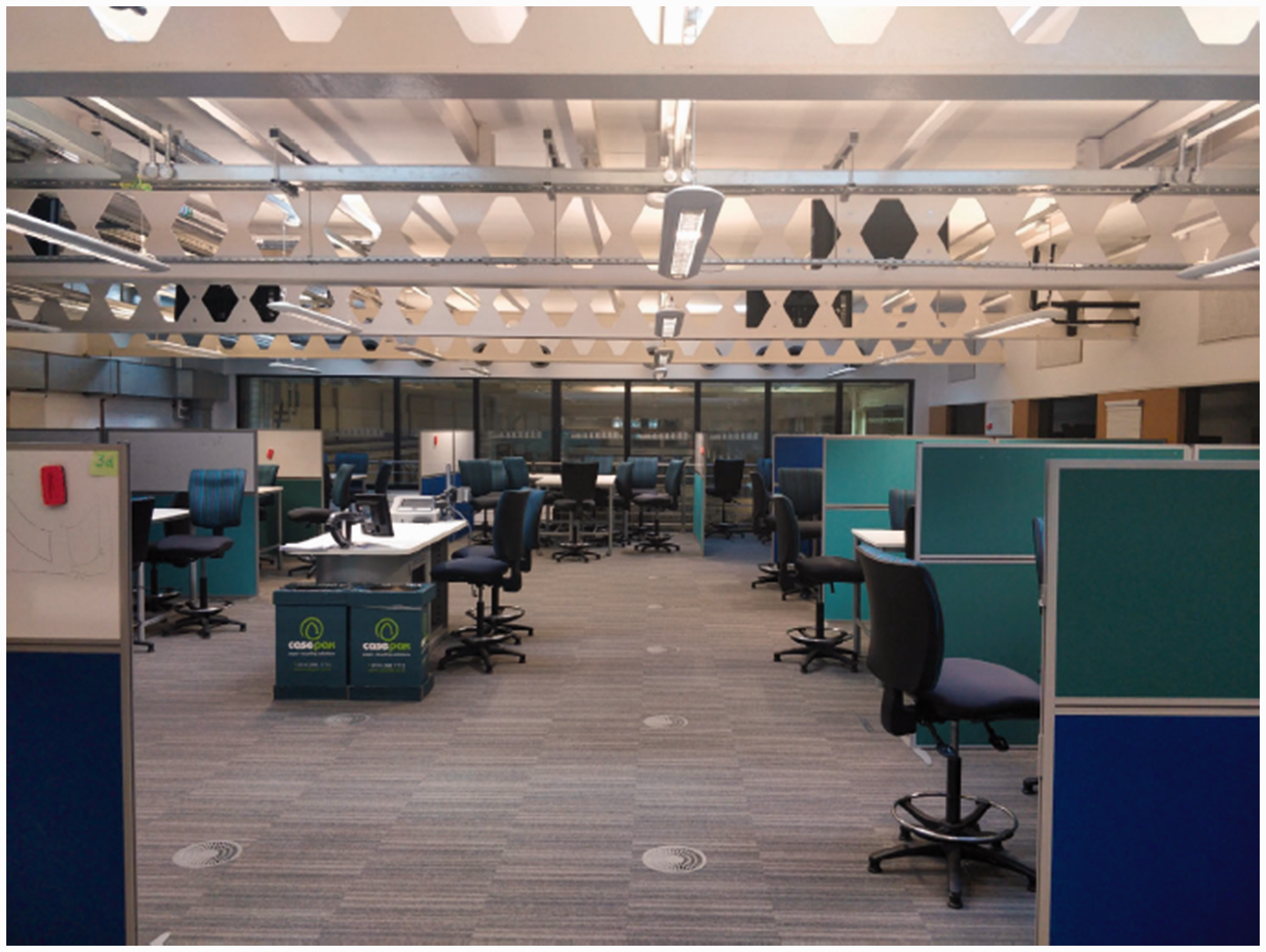
Photograph of D002.
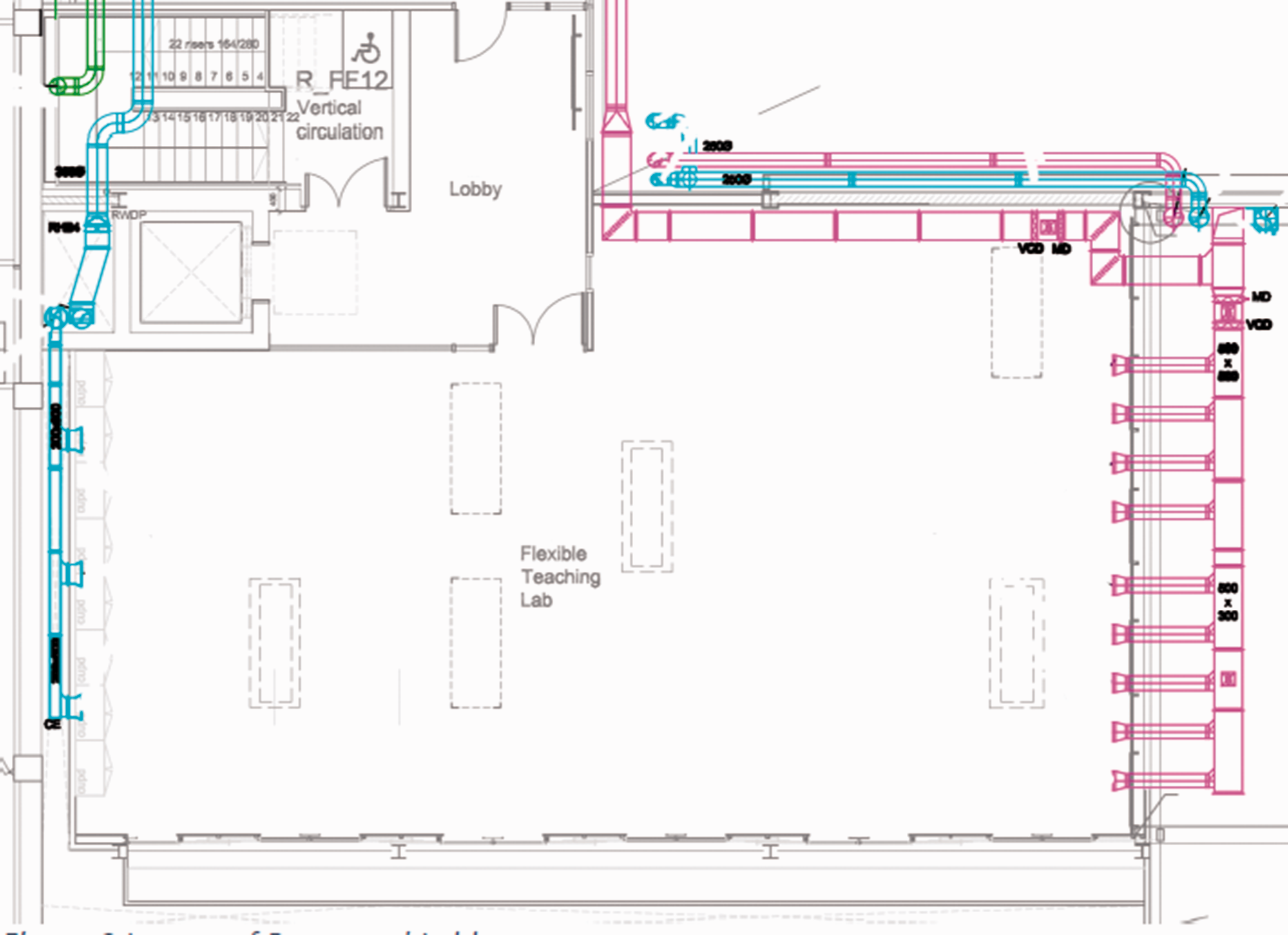
Layout of room and lobby.
In the ventilation layout in Figure 2 below, the ceiling windows are shown as grey dashed rectangles, whilst the air supply and extract ducts are shown in blue and pink respectively. The internal windows to the adjacent workshop space are located below the extract ducts:
For the qualitative part of the study, student and staff interviews were carried out individually. Participants were asked about their understanding of wellbeing by providing a definition, followed by questions about the teaching space. This included asking the participants to rate the ventilation, lighting and thermal comfort in the room given their previous experience in the room during seminar sessions. Teaching staff were given an extended set of questions that also covered topics such as the impact of their teaching styles on creating a compassionate environment for the wellbeing of students. The study concluded by asking all participants their opinions on how other educational spaces on campus compared to the rooms of study from a wellbeing perspective. The open-ended questions asked of the participants were based on a previous internal study on wellbeing conducted at the University; “Improving students’ wellbeing in the teaching and learning environment”, published internally, and take a phenomenological approach to interviewing. As this is intended as a pilot study and therefore has a small sample size it was important to gather a range of perspectives and experiences in order to better guide future studies.
For the quantitative part of the project, a manufacturer pre-calibrated Awair Omni environmental quality sensor was used, loaned to the University by Cundall. The sensor collected data on the following variables: temperature (°C), humidity (%), CO2 (ppm), total VOCs (µg/m³) gathered through passive sampling, PM2.5 (µg/m³), light (lux), and noise (dBA). Ranges for this are given in Figure 3. These accuracies are found to be 21% rather than 15% by a study published in 2020, 9 where the Awair Omni was found to be the most accurate low cost particulate matter monitor available on the market for the PM2.5 ranges measured during our study, this can been seen in Figure 4. It should be noted therefore that readings could been assumed to have a range 33% greater than that listed in Figure 3. The sensor was in situ for 82 days, from 21 August 2019 to 11 November 2019, and data was collected during both holiday and term time in order to study the room in both occupied and unoccupied states and through a variety of external temperatures. The sensor was located in three different positions in the room (floor height, desk height in the same position, desk height in an alternative location on the other side of the room relative to the ventilation positioning) through the study and the range and average readings did not vary significantly in each location. This data was then compared to the WELL guidelines, Building Regulations and other standards in order to gauge the IEQ.
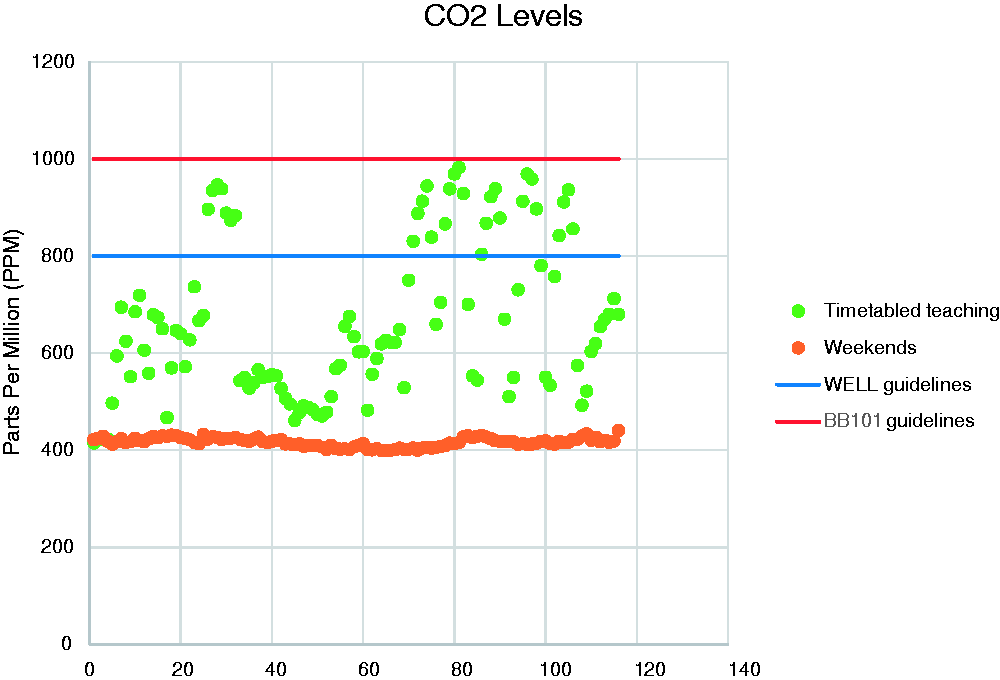
Carbon dioxide levels in D0.02.
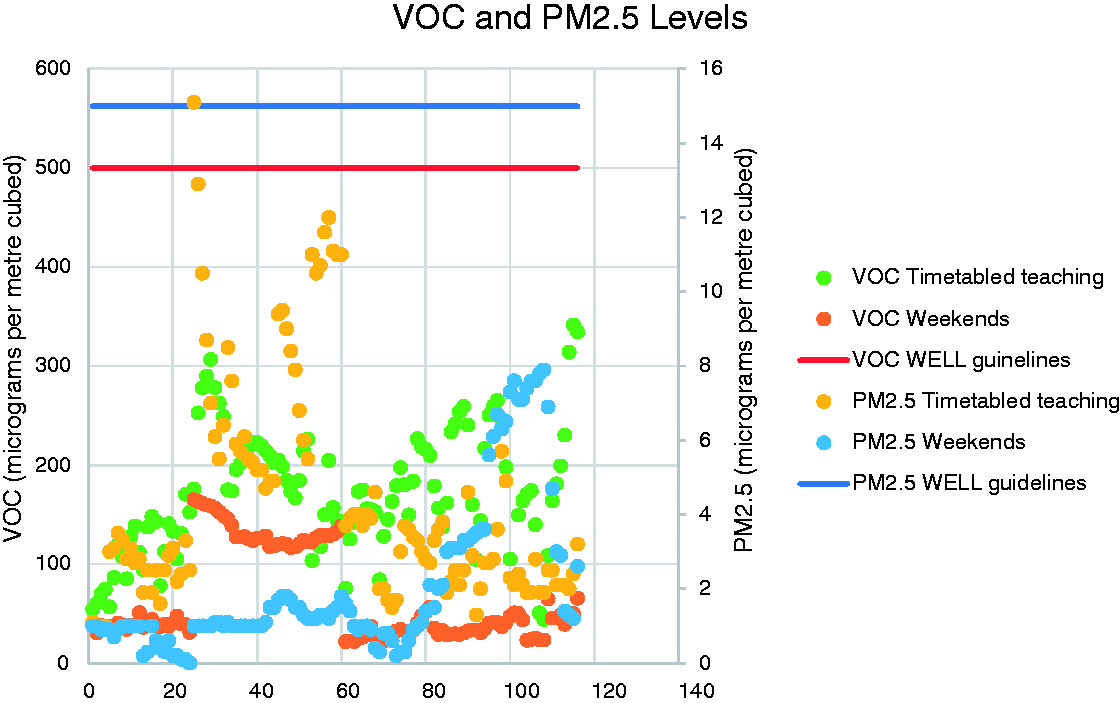
VOC and PM2.5 levels in D0.02.
Scope of participation
Ethical approval was granted for this study from the Biomedical and Scientific Research Ethics Committee at the University of Warwick. This ensured the questionnaire contained only approved queries, and that responses were anonymised. The participants were recruited via mass email through the School of Engineering mailing lists and were not coerced into participation. Questions were developed to draw out information about the participants perceptions of the space from the previous times they had occupied it. The questions focused on common factors identified by the WELL standards and other building guidelines.
Eight interviews were collected of which four were faculty members who had previously taught in the space and four were students who had participated in seminars in the space. A further six interviews were carried out with engineering PhD students who work in the adjacent office, which has been refurbished to the same standard and shares an air handling unit. Each participant had been scheduled in the space or adjacent office for over 10 h cumulatively. The PhD interviews were used for questions which were not about the specific teaching space only. Out of all the interviews, three participants identified themselves as international (i.e. not British).
The study comprised of 10–20-min interviews and participants were each given an ethical consent form to agree to and sign before conducting the interview. The ethical consent form outlined that the audio of the interviews would be recorded, to enable accurate capture of their responses for analysis during the later stages of the study.
Limitations of the study
The study was designed to capture a range of responses that addressed the extent to which wellbeing is currently being implemented in educational spaces at the University of Warwick. However, the scope of this study has limitations which have influenced the reliability of the results.
In terms of the questionnaire, the sample size for the study was small and therefore is not necessarily representative of the opinions and experiences of wellbeing of the majority of students in the School of Engineering. This was in part due to the lack of students who were able to physically participate in an interview, as many were away from campus for the summer. Ideally, a larger sample size of students and staff would more accurately capture the opinions on wellbeing. Secondly, there was a lack of diversity in the sample size since there were only three international participants. This limited the scope of analysis to cover a wider range of perspectives on wellbeing such as the way culture impacts how international students and staff adapt to the environmental conditions in educational spaces, and how this affects their productivity. Further research in this area would pave the way for the University of Warwick to enhance their approach to diversity and inclusion, given that 25% of the undergraduate student population comes from international countries. Furthermore, the representation of self-identifying disabled participants (mentally or physically) was nil, and therefore conclusions drawn from this study remain biased towards non-disabled participants. It should be noted that the participants did speculate as to how the impact of wellbeing on disabled members of the School of Engineering community, but this should be corroborated by relevant members of the community.
In terms of the IEQ data, the sensor gathered data in one location only. For certain aspects where levels will vary drastically from one part of the room to another, such as lighting, further study to test uniformity would be beneficial. For lighting in particular, the sensor is located on the front, measuring ambient lux. This could vary quite significantly from the light level measured on working surfaces, as per WELL guidance. The IEQ sensor also measures only the quantities of VOCs and particulates; further study into the make-up of these pollutants would give more insight into the potential impact of the pollutants present.
Analysis and discussion of results
The research aim was to gather student and staff perspectives on wellbeing, to ascertain how it was influenced by the teaching environment and to identify whether this correlated with the IEQ.
Through the questionnaires, the student and staff understanding of wellbeing was found to be minimal and varied, but predominantly eudemonic (i.e. relating to productivity). This is seen not only in their explicit responses to direct questions on the topic, but also from responses to questions around how wellbeing is considered within their teaching environment or by University policy. Responses to these questions focused on teaching and assessment logistics and rules. Few responses were able to draw on examples of space design and discuss their impact on wellbeing. As well as highlighting the productivity related interpretation of wellbeing within the higher education sector, or at least within engineering education, this also showed the broad and variable nature of occupant comprehension of wellbeing. This in itself gives further credence to the importance of using well-researched standards such as WELL to address wellbeing, rather than information from occupants which may be varied and ill-informed. However, 86% of questionnaire participants acknowledged some link between the teaching space and/or environmental conditions and their productivity or wellbeing. This relationship further highlights the importance of addressing the teaching space with respect to wellbeing standards.
In order to focus on the impact of the specific room standards on occupant wellbeing, data, both IEQ and questionnaire based, was gathered on ventilation, lighting and temperature in the two spaces. When participants were asked specifically about these individual factors of environmental condition, the link to self-measured productivity was brought up repeatedly. It is clear that staff and students in higher education settings experience a perceived variance in productivity in different environmental conditions. Given that these same participants also indicated a eudemonic understanding of wellbeing, the perceived environmental conditions will therefore be affecting their wellbeing. The productivity and environmental conditions links are particularly clear with both lighting and heating.
The room was found to provide a good air quality, based on WELL and BB101, the UK government Building Bulletin on ventilation, thermal comfort and indoor air quality in schools. CO2 levels were always within BB101 levels, and were within WELL levels for 74% of occupied time, as can be seen in Figure 3. The VOC and PM2.5 levels remained below WELL levels except for one data reading which can be taken to be anomalous. Temperatures ranged from 19.9 to 24.6°C during timetabled teaching sessions. The temperatures remain between the CIBSE Guide A recommended temperatures for teaching spaces during timetabled teaching sessions; the acceptable temperature band shown on the graph in Figure 5 extends from winter minimum to summer maximum as the readings were taken over the course of an autumn term. CIBSE guidelines were chosen here as WELL does not provide specific temperature guidelines. Humidity was found to be within the WELL recommendations of 30–50%RH for 89% of the timetabled teaching time, as is shown in Figure 6. Whilst these figures and graphs, measure a good IEQ, it was found that participants did not perceive them as such.
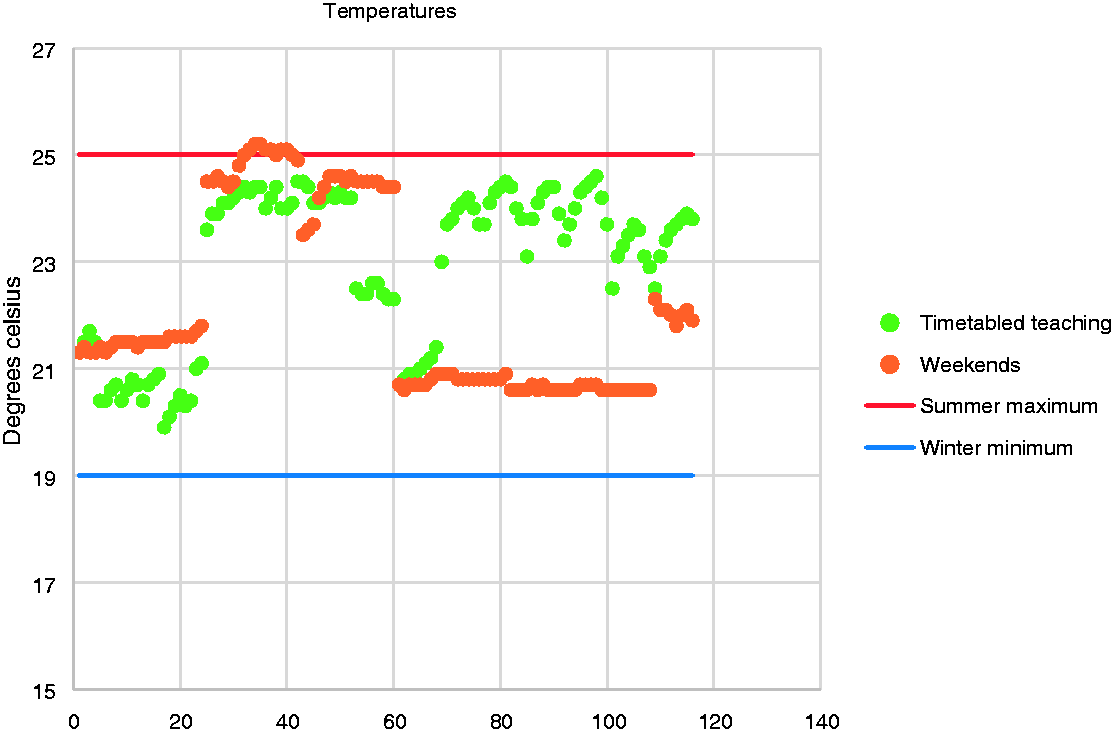
Temperatures in D0.02.
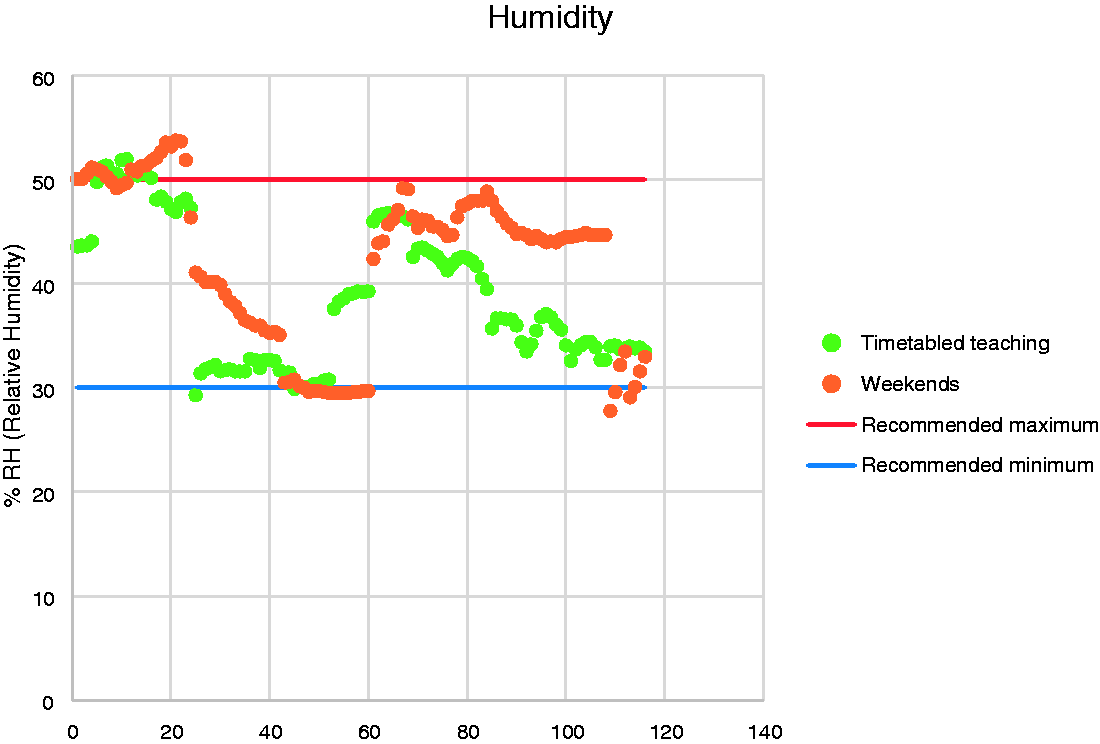
Relative humidity in D0.02.
Temperature
D0.02 was reported to be cold during wintertime by 80% of participants. It is possible that the data collection did not extend far enough into wintertime to measure these low temperatures, as collection ended in November, but students are taught in this space in January and February. This could be explained in one of two ways; either that the participants prefer a temperature higher than 19.9°C, or that they perceive the space as being cold, potentially due to its grey and blue colour tones and lack of visible heating. The hue-heat hypothesis, which is supported by the findings of Wang et al., 10 correlates cool colour tones with occupants perceiving temperatures as being lower than in spaces with warm colour tones.
However, although the majority of participants reported the space as being cold, only 20% of participants related this to their wellbeing or productivity. This could relate to a variety of factors such as; The transitory nature of the occupancy of the space. As occupants only experience any discomfort for 1–2 h, they may be able to be more resilient to the effects. Furthermore, as the occupants of a transitory space are equipped for a day of moving around between spaces, they are often wearing more layers including outerwear. This could mean that temperature is less of a priority for the development of teaching spaces than lighting. Gender differences. Only one participant reporting on D0.02 identified as female, and they link the cold temperature to reduced engagement in the teaching session. Studies show that women tend to feel colder than men do because, for given body weight, women produce less muscle tissue to generate heat to keep them warm. Moreover, the impact of the female oestrogen hormone thickens blood which makes it difficult for it to reach capillaries in the skin. As a result, some women’s body parts including hands, feet, and ears can be up to 3°C colder than men at given room temperature.
11
Further research is needed to ascertain if this is a factor in educational space design, and if so, how it should be addressed. It should be noted that, due to the current gender balance of the School of Engineering,” approximately 75% of the users of the space are male. Cultural differences, evident in participant responses about “being English about it and putting on a jumper.” If it is only our British male students who feel comfortable in this space, and not our students from warmer regions, then more inclusive space design is a necessity. This potential lack of consideration for our multi-cultural student and staff base is also highlighted in responses to questions about diversity where only disabilities were considered for inclusion. This highlights the importance of space design and wellbeing work being done at a central level rather than by individual staff at a grass roots level where diversity may not be holistically accounted for by all.
Ventilation
Contradictory to the air quality data gathered using the IEQ monitors discussed above, 56% of participants reported negatively about the ventilation. This included comments such as “No, I don’t think the ventilation in this room is sufficient. They don’t have stations for air conditioning and so the air is a little bit warm inside here.” and “It’s stuffy when you’ve sat in another end of the room away from the ventilation nozzles.”. Given the good standard of the air quality in the room, it is likely that the difference between measured and perceived data demonstrates the unreliability of participant/occupant data for reporting factors with which the participants are unfamiliar with judging. Study participants are more likely to have experience of adjusting the heating and lighting of their spaces to suit their requirements than they are of adjusting the ventilation. However, given participants also related “stuffiness” to reduced productivity, this discrepancy in perception versus reality is one which may be impacting occupant wellbeing.
Light
The light levels measured in the space were extremely low, falling below CIBSE recommendations at all timetabled teaching times, and falling below 200 lux 97% of the teaching time. This can be seen in Figure 7. The light sensor on the Awair monitoring device is located on its front face, measuring ambient light levels, where WELL and CIBSE discuss the light levels on the working plane and as such the measurement cannot directly be correlated with the guidelines. However, 50% of participants reported D0.02 as under lit, describing it as “dingy” and “anonymous.” In addition to the low lighting levels, this may also relate to the type of lighting. The fittings in the room are all intended for the horizontal plane whereas cylindrical illuminance has been found better for the interpretation of facial features, 12 which is crucial for both group working and teaching and would help to reduce anonymity.
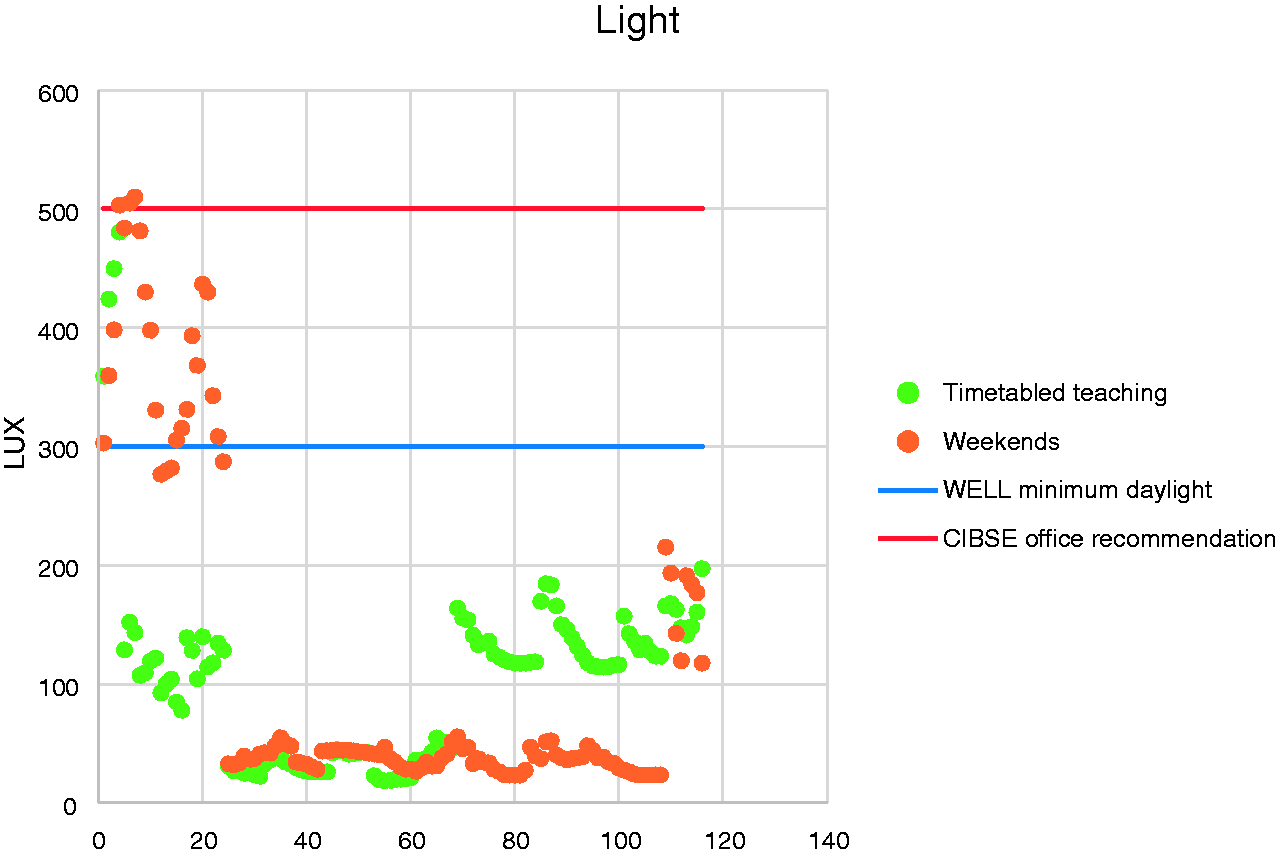
Light levels in D0.02.
Noise
Noise exceeded the WELL guidelines for classrooms at all times and the WELL guidelines for open workspaces 80% of the time, as shown in Figure 8. It is interesting to note that none of the study participants mentioned noise as a factor affecting their wellbeing. The study itself did not explicitly ask about noise, though there were many opportunities for participants to discuss other factors in open-ended questions. This could indicate inaccuracies in the noise levels measured, or a lack of consideration by the participants of all factors affecting their wellbeing, due to the way the questions were written and a lack of wellbeing education or knowledge, or it could simply indicate that noise does not significantly affect wellbeing in this setting.
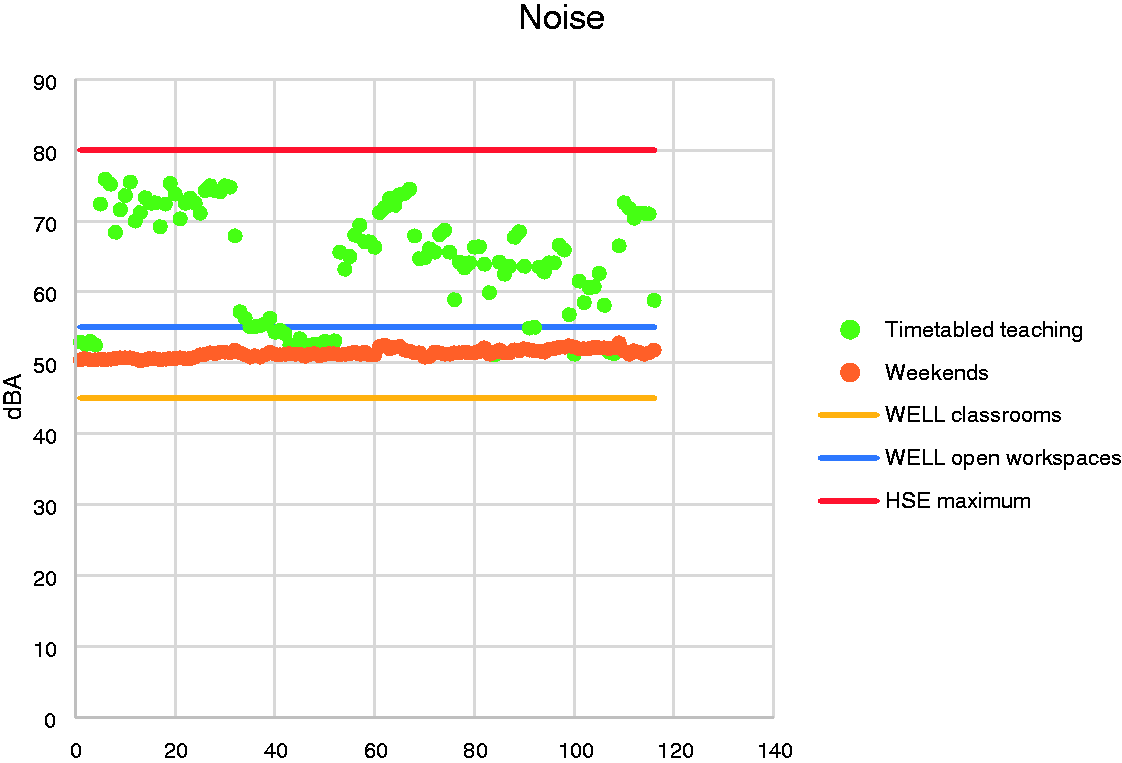
Noise levels in D0.02.
Summary
Overall, the study found there was disparity between the conditions measured by the IEQ sensor and those perceived by the participants. Participants rated the room more negatively than the IEQ data suggested. This could relate to: The colours the room has been painted, relating to the hue-heat hypothesis. The lack of windows giving an external view, which would be supported by research such as that by Leather et al.
13
showing that windows with an external view reduce stress and improve wellbeing. A lack of comprehensive IEQ data, as sensors were only in place for five weeks of term. A lack of participant understanding or experience of rating a space in these terms, and no provision within the space to inform occupants of how the heating and ventilation works, or whether it is currently functioning correctly.
Recommendations
The study showed two key areas that should be addressed; participant knowledge of wellbeing, and the discrepancy between occupant perception of a space and the measured qualities of a space. Both of these factors may lead to a space having an unnecessary detrimental impact on occupant wellbeing.
In terms of participant knowledge of wellbeing, a fairly minimal awareness of wellbeing is demonstrated, which could be addressed by greater inclusion of wellbeing education in the curriculum. Staff training on wellbeing in terms of their own wellbeing, embedding wellbeing into the curriculum and wellbeing pedagogies would also be beneficial. These actions would empower both students and staff to nurture their own wellbeing.
With regard to the discrepancy between the perceived qualities of the space and the measured data there are several different actions which could be taken. One immediate action would be to provide signage or information about how the room functions, showing occupants evidence of the good quality which is provided. This is particularly relevant as the occupants are engineers and engineering students, who are likely to be influenced by the provision of facts and data. This could be supplemented by an IEQ sensor linked to a display showing current levels. Further research could be undertaken; To see if the addition of signage or IEQ displays affects perceived IEQ and associated wellbeing, and whether this effect correlates with actual IEQ or only stated IEQ. To investigate whether the discrepancy in perceived temperature relates to room colour, according to the hue-heat hypothesis. To determine whether the presence of windows, in particular those with a view, impact on the perceived room quality and/or the wellbeing of occupants in a higher education setting. To increase quantity of participants and study spaces to validate these findings.
In addition, the space owners may wish to gather longer term data to ensure the room remains within the guidelines throughout the teaching year, as well as conducting a study to check lighting levels at the working plane to investigate the participant comments around “dinginess” in the room.
Conclusion
Recognising the current wellbeing crisis which exists in higher education, it is critical to act to improve wellbeing wherever possible, and action via educational spaces is currently an untapped avenue. What this report finds is that the action required is not necessarily the expensive and disruptive activity of a major refurbishment of services but instead we need to address the occupant perception of the spaces they use. In an engineering education setting in particular, this could be achieved through improving education and communication about the building services provision. More broadly, user perception should be considered during design and could be measured as part of the hand-over process in order to obtain the most from our spaces and ensure the wellbeing of our students and staff.
Footnotes
Acknowledgements
The authors received industry guidance and support, as well as the loan of AWAIR sensors from Cundall. Third-year dissertation students, Udokama Iwumene and Alice Davis, continuing to research the topic at the time of writing provided additional data, such as room photographs and occupied room data. James Agg provided proof reading.
Declaration of conflicting interests
The author(s) declared no potential conflicts of interest with respect to the research, authorship, and/or publication of this article.
Funding
The author(s) received no financial support for the research, authorship, and/or publication of this article.
