



Abstract
In most industrialized countries, the buildings sector is the largest contributor to energy consumption and associated carbon emissions. These emissions can be reduced by a combination of energy efficiency and the use of building integrated renewables. Additionally, either singularly or as a group, buildings can provide energy network services by timing their use and production of energy. Such grid-aware or grid-responsive buildings have been termed Active Buildings. The recent UK Government investment of £36m in the Active Building Centre is a demonstration that such buildings are of considerable interest. One problem with the concept, however, is that there is no clear definition of Active Buildings, nor a building code to design or research against. Here we develop and test an initial novel code, called ABCode1. It is based on the need to encourage: (i) the minimisation of energy consumption; (ii) building-integrated generation; (iii) the provision of grid services; and (iv) the minimisation of embodied carbon. For grid services, we find that a lack of a precise, quantifiable measure, or definition, of such services means that for the time being, theoretical hours of autonomy of the building is the most reasonable proxy for these services within such a code.
Practical application
Buildings have a special role in the transition to a sustainable energy infrastructure and a decarbonised society. They can become an active part of energy networks by leveraging strategies and technologies that are already available, but are not yet articulated in an integrated scheme that facilitates their uptake at scale. This work provides a review of the issues and opportunities, and introduces a practical framework aimed at helping designers and researchers study and deliver such buildings, and in particular the buildings that will form the exemplars in the first wave of Active Buildings.
Introduction
The building sector is responsible for 40% of final energy consumption a and 36% of greenhouse gas (GHG) emissions in Europe. 1 With approximately 80% of final energy consumption in buildings being supplied by fossil fuels such as coal, oil and natural gas, 2 the building sector clearly needs to change its relationship with the energy-services sector.
To minimise CO2 emissions in the EU, the Energy Performance of Buildings Directive (EPBD) 3 states that buildings should have a ‘very high energy performance’ (page 153/18), with renewable energy playing a fundamental role. By producing renewable energy, buildings have the potential to actively contribute to the vision for clean energy. Going further, thanks to the integration of storage systems and the connectivity to electric vehicles, buildings could be more flexible components of the energy system, adapting to the needs of the electricity grid through load shifting and peak shavings. 4 However, there have been difficulties materialising these aspirations due to ambiguity of definitions, 5 , 6 and most implementations have neglected the potential buildings have to support the grid. 7
In the UK, the Government has an aspiration to halve the energy use of new buildings by 2030, 8 b and Parliament now requires net zero GHG emissions by 2050, 9 as advised by the Committee on Climate Change. 10 Determining how to deliver high-performing buildings that support the wider energy network and achieve significant CO2 emission reductions is thus critical.
To define such a pathway, this paper explores the concept of Active Buildings (ABs), which have been portrayed as ‘power stations’ thanks to their ability to generate, store and release energy in response to their own demand and the needs of the local grid. 11 Promoted as part of the SPECIFIC project, the concept was subsequently demonstrated in buildings such as the Active Classroom and Active Office. 12 Nowadays, ABs are advertised as buildings that “support the wider energy system by intelligently integrating renewable energy technologies for heat, power and transport”. 13 This was not an isolated effort, but part of an emerging field that recognises the potential for buildings to support the energy infrastructure, with similar initiatives in the US under the so-called Grid-interactive Efficient Buildings, 14 among others.
However, it is questionable how lessons learned from pioneering experiences can be upscaled to transform the construction and energy sectors, to meet the societal and environmental agendas. Equally important, any barriers preventing a timely transition must be acknowledged, along with potential solutions. To these ends, the UK Research and Innovation 15 established the Active Building Centre (ABC) consortium.
This paper explores a way forward for the AB concept. The section “Background to buildings and energy networks” sets the background to the relationship between buildings and energy networks by reviewing related concepts and discussing how buildings can promote a net positive environmental impact. “Discussion” considers the issues of grid-supporting buildings, and indicates why there has been limited progress to date. “ABCode: A proposition for an active building code” introduces a novel approach to ABs around an Active Building Code to enable progress while helping gather the evidence required to inform future developments. Formulated as an active code itself (one that may change in the future based on such evidence), an initial proposition, called ABCode1, is presented to explore how previous gaps could be bridged in a way relevant to all stakeholders, together with the evaluation of twenty demonstrators. Lastly, the section “Limitations and future perspectives” discusses future perspectives and “Conclusions” summarises the findings of this study.
Background to buildings and energy networks
This section presents the background to the relationship between buildings and energy networks. The review focuses on existing building design approaches, definitions and ways in which buildings could support energy networks to enable a more positive environmental impact.
Building design approaches
Approaches to designing buildings with a net positive environmental impact have been typically concerned with the following aspects:
A complementary aspect is how energy is delivered to the building, either with or without a connection to an external energy network (Figure 1). There are buildings that meet their energy demand through on-site energy generation only (autarkic, autonomous or grid-isolated buildings) and others that import at least some of the required energy from an energy network (grid-connected buildings c ). Autarkic buildings can be viewed as a ‘pure’ example of zero-energy buildings, evoking the ideal of pre-industrial buildings. 6 This appears to be a viable approach only if the energy demand of the building is controlled carefully and its generation and storage systems are meticulously sized. 16 , 17 Although advantages include no utility bills and increased levels of resilience in regions with a poor infrastructure, it can lead to over-engineering, hence becoming an unattractive solution financially. Most buildings in countries with developed economies are therefore connected to energy networks (Figure 1).
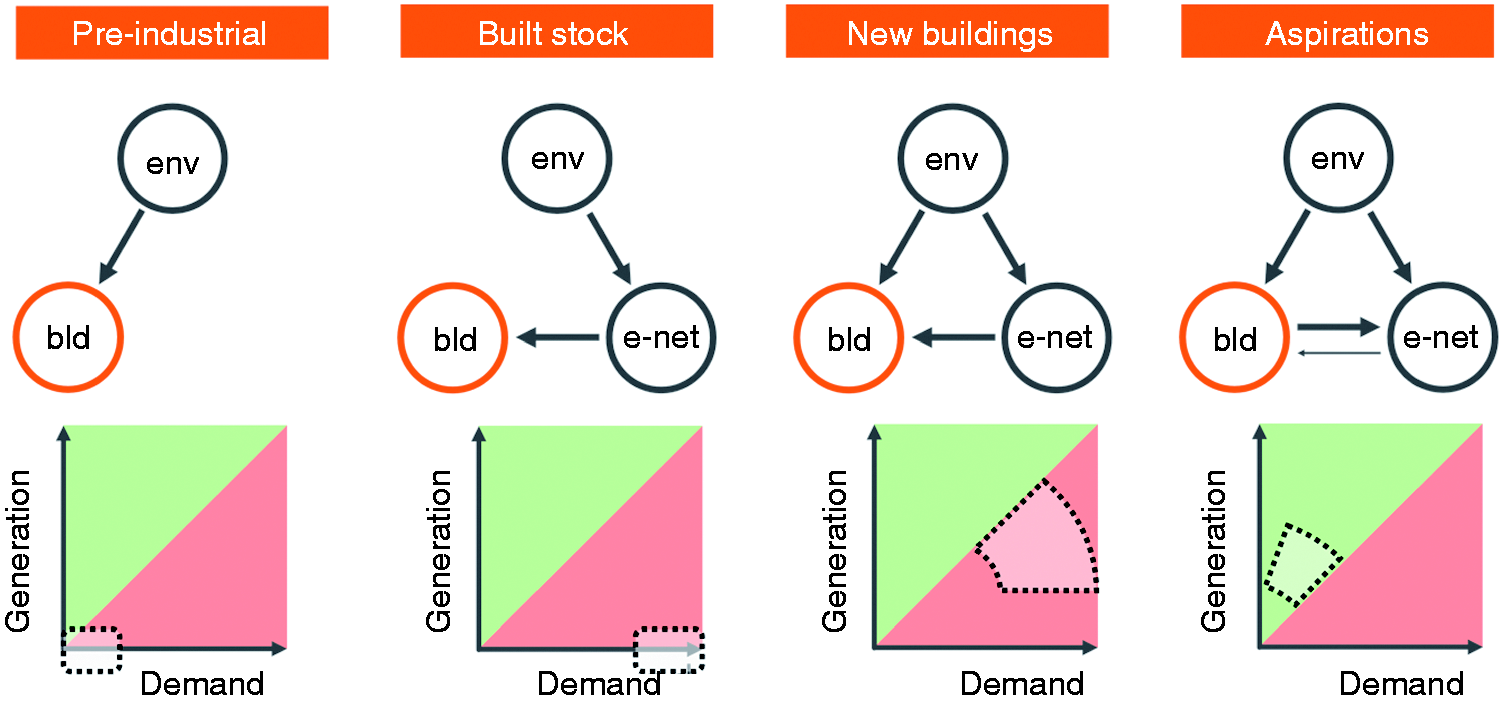
Overview of the relationship between the building (bld), environment (env) and energy networks (e-net) and the corresponding mapping between energy demand and generation of buildings (with a dashed line) over time. The green area indicates net positive buildings. The red area signifies buildings that consume more energy than they produce.
There is an aspiration to transition to low-energy buildings, mainly through a tighter control of energy demand. Taken further, net zero energy buildings produce as much energy as they consume and net positive (or net plus) energy buildings have a net surplus than can be exported to the grid. Currently, the construction and energy sectors pay attention to low, net zero and net positive carbon buildings, which address both operational and embodied carbon.18–20 d
Regulations, standards and definitions
There are numerous building regulations and standards worldwide that aim to deal with the energy and environmental performance of buildings, 6 , 21 with dozens of definitions being suggested or investigated in relevant studies (see representative examples in Supplemental Material). However, definitions are not necessarily accompanied by a calculation method, therefore hindering their adoption and practical application. 22 , 23 Examples of commercially successful initiatives include BREEAM (UK, 1990), Passivhaus (Germany, 1991) and LEED (US, 1998).
Torcellini et al. 24 draw the attention to why definitions and their performance targets matter by recalling that (i) they help designers make informed design decisions and that (ii) they set a clear goal for stakeholders, which can be methodically attained during the design process. For example, this is the case for the Passivhaus Standard, which sets 15 kWh·m−2·a−1 as the maximum allowable value for heating energy demand and 120 kWh·m−2·a−1 for primary energy demand. Parkin et al. 5 investigated how different definitions related to net zero energy and carbon constrain the design space for architects, finding that zero-carbon targets offer more design options than zero-energy ones. As an example, a low-energy building with a total energy demand of just 40 kWh·m−2·a−1 needs to be under 3 storeys if expected to run on PV panels on its own roof. This points to the need to create a realistic rating standard which incorporates buildings that are not necessarily net zero energy, and that is most likely based on a scale, rather than a simple pass/fail philosophy unless we are to overly constrain the design space.
The lack of a uniform definition of high-performing buildings as well as of a global design standard has resulted in an ambiguity in the definition of performance targets, and hence of design spaces. Studies analysing regulatory frameworks and definitions identified this as a source of confusion for stakeholders and an insurmountable issue when attempting to cross-validate results from different rating systems. Sartori et al. 22 questioned what aspects need to be considered when designing net zero energy buildings (Figure 2). For example, grid interaction is one of these aspects but this is commonly neglected in practice due to challenges such as the spatial variability in the carbon intensity of electricity generation (Figure 3) or its technology-sensitive cost (Figure 4).
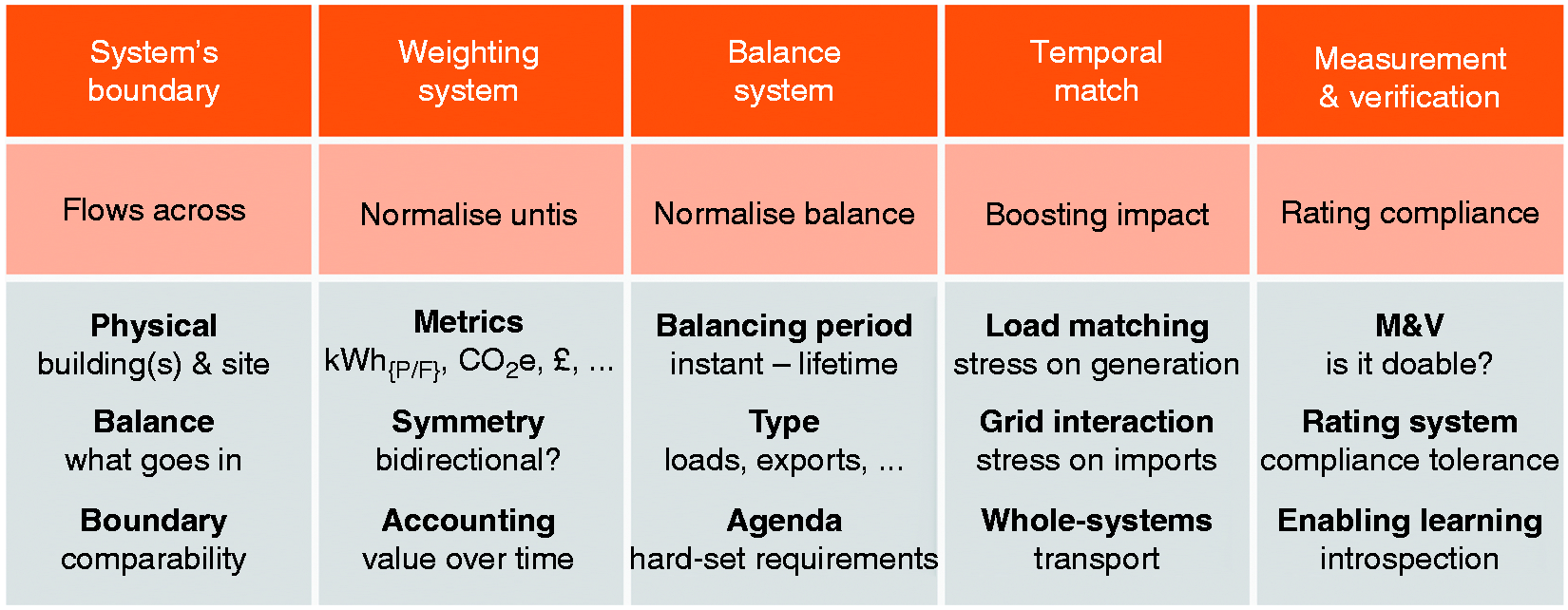
Framework for the definition of net-zero energy buildings (diagram based on the work by Sartori et al. 22 ).
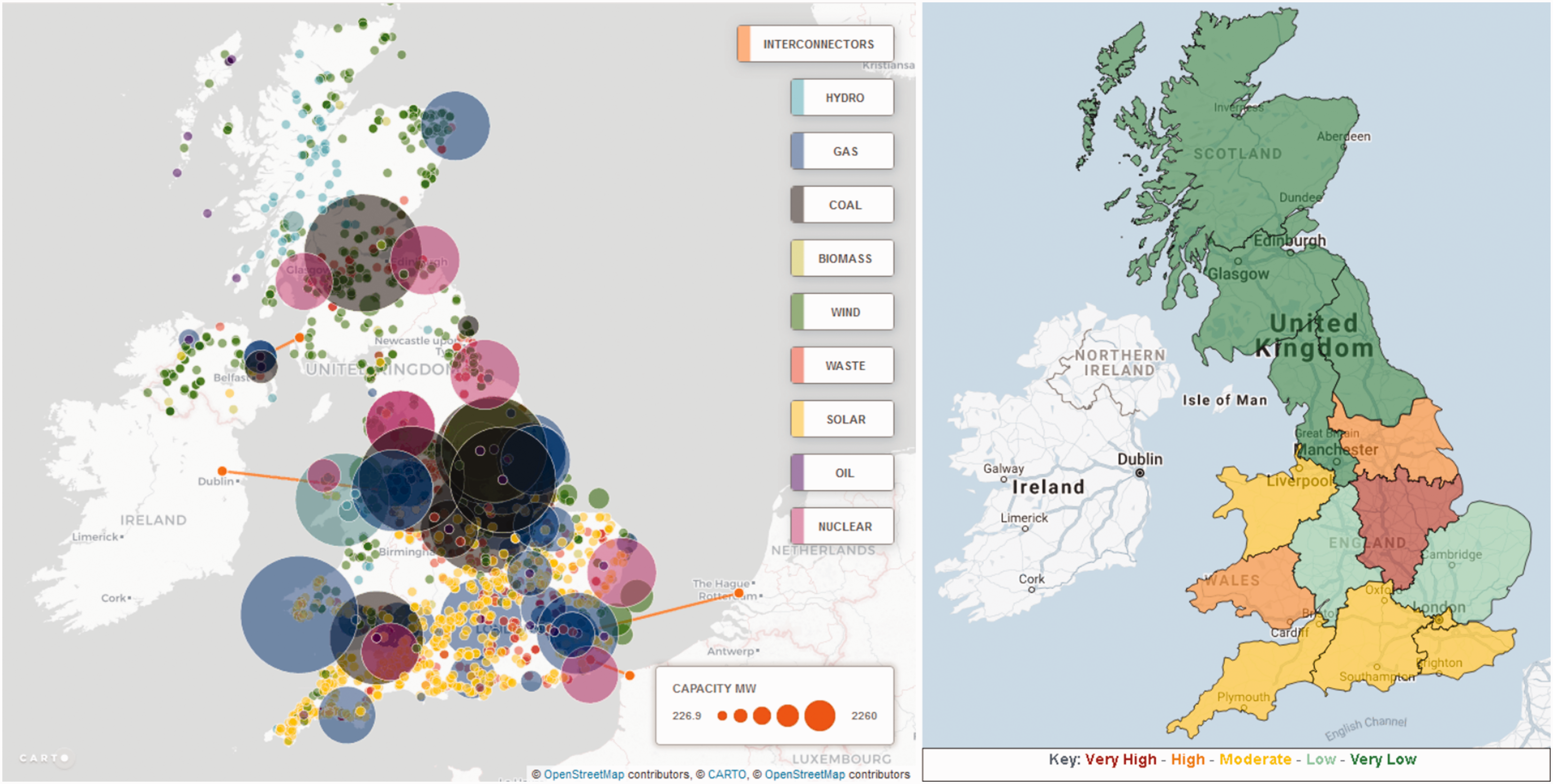
Overview of UK’s electricity generation plants and resulting regional carbon intensity. Left: Overview of UK?s electricity generation plants.28 Image under CC BY-NC-ND 4.0 International license, by Rosamund Pearce. Right: Snapshot of the carbon intensity of Great Britain?s electricity generation.29 Estimated values at 2020-03-09 18:30; carbon intensity groups defined by gCO2?kWh-1 as Very High (360+), High (260-359), Moderate (160-259), Low (60-159) and Very Low (0-59)). Basemap by GeoBasis-DE/BKG (©2009), Google, Inst. Geogr. Nacional.
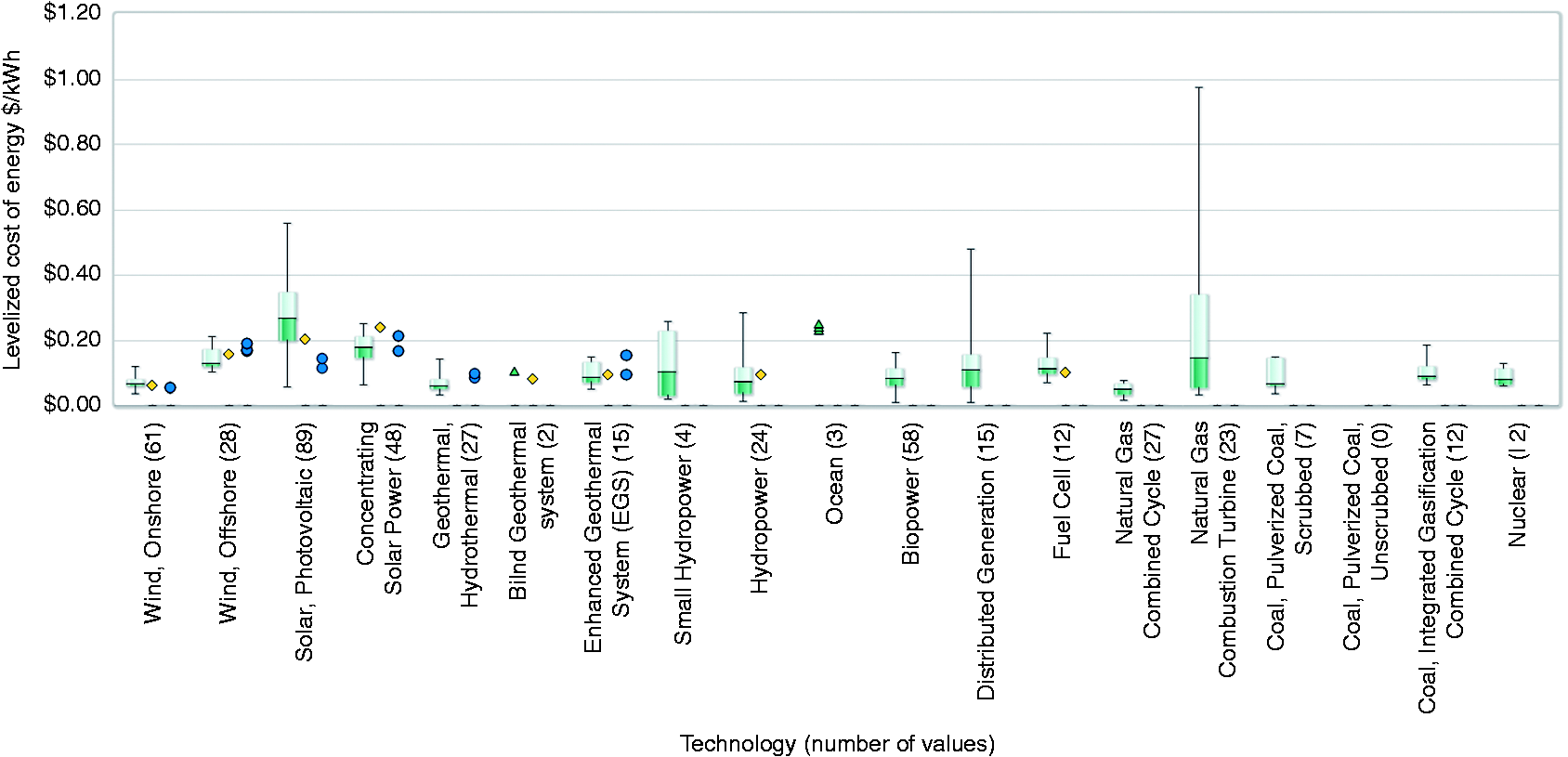
Focusing on metrics, in the UK, whole-life carbon strategies are becoming increasingly important given the Parliament’s net-zero emissions target by 2050, 9 similarly to other countries. 20 , 26 , 27 The section “The needs of energy networks” discusses how buildings can also support the decarbonisation of energy networks to promote a net positive environmental impact of both the construction and energy sectors.
The needs of energy networks
Although there are several energy networks (e.g. electricity, gas), past discussions around grid-servicing buildings have focused almost exclusively on the electricity grid arguably due to its ubiquity and versatility to meet energy needs in buildings. As a whole, the UK’s electricity network will need to overcome three main challenges to transition to a low-carbon economy: the retirement of existing generators, the rapid installation of new low-carbon and renewable generators, and a significant increase in electricity demand. 30 This is being translated into three core themes: decarbonisation, decentralisation and digitalisation. 31 At the same time, electricity demand is expected to increase further and rapidly as space heating and road transport shift to electricity. 10 , 32
New low-carbon and renewable generators are not simply drop-in replacements because many are non-dispatchable by themselves (generation depends on weather conditions rather than the energy demanded) and their characteristics allow for a decentralised implementation in the network. 33 This means that a reinforced and extended network is needed to support the connection of these new generators as well as new operational challenges to balance the network to deliver a consistent energy supply (voltage and frequency) 34 that is still flexible to adapt to changes in demand. 31 The “duck-shaped” net-load curve illustrates the need for flexibility in energy demand to reduce temporal imbalances (Figure 5). 35 Here, buildings could reduce, shift and flatten their energy demand through demand-side management strategies (Figure 6), giving rise to a synergetic relationship with the grid and opening new market opportunities (Table 1).
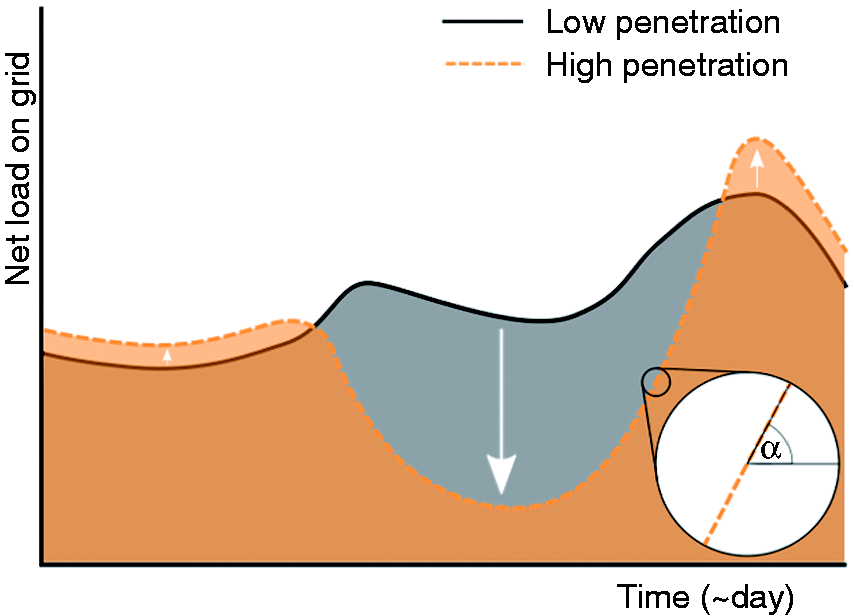
Example load curves illustrating grid instability due to high penetration of solar energy production without energy storage systems compared to a low-penetration baseline based on California ISO. 35 The two main issues to the high-penetration scenario are the risk of over-generation and rapid changes in net load (depicted by slope α of the tangent line).
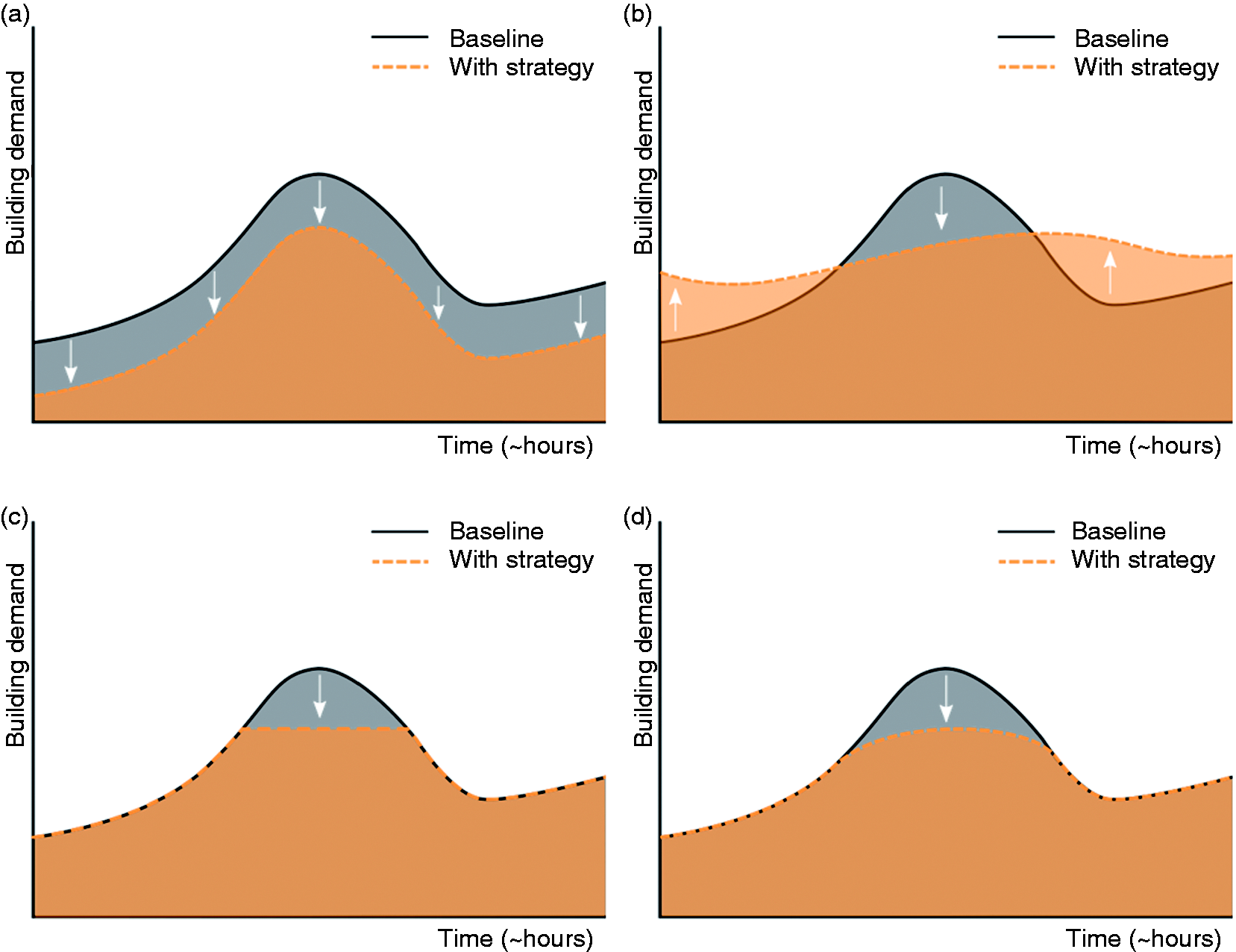
Overview of selected demand side management strategies and their influence on the final energy demand of the building. (a) Energy efficiency, (b) Load shifting, (c) Load shedding and (d) On-site energy production.
Summary of the “potential grid services provided by demand-side management in buildings” identified in the US Department of Energy overview on grid-interactive efficient buildings; 14 besides the characteristics of the US grid, potential market size evaluation considers current valuations by their regional transmission organisations and independent systems operators into large (L), moderate (M) and small (S).
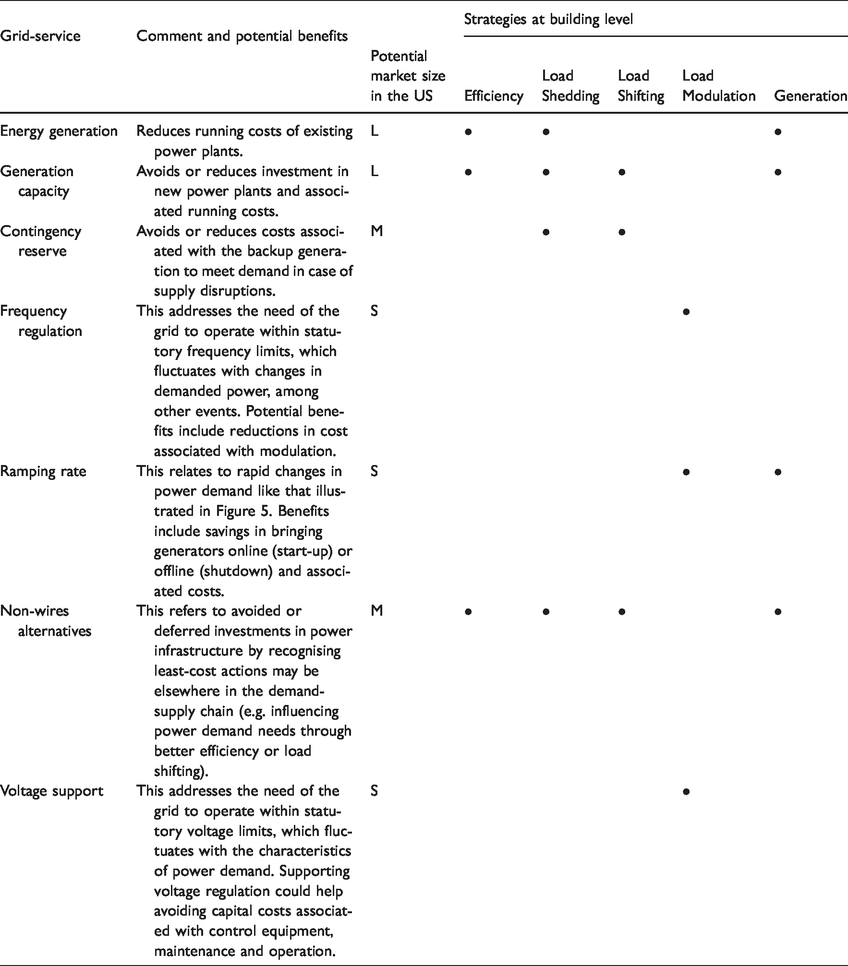
Grid-supporting buildings represent a great opportunity for the flexibility of the network thanks to their potential to store and release their self-produced energy in a timely manner (Table 1), accelerating the transition to a low-carbon grid. 36 Buildings can also decentralise energy supply by shifting from passive users to active parts of the energy infrastructure. This can enhance energy quality and security 37 for example by offering faster responses to the changing levels of renewable generation or reducing transmission losses. 38 By developing a dynamic, two-way interaction with the grid (aspirations in Figure 1) and integrating electric vehicles, buildings can support the energy network while meeting occupant needs and minimising their carbon footprint. 39 Despite their potential and critical role in smart energy networks, 40 their role as active agents in the grid is often overlooked in definitions of low-energy and low-carbon buildings, and undefined in relevant design standards (see sections “Building design approaches” and “Regulations, standards and definitions”).
A key consideration for grid-supporting buildings is how to articulate their potential contributions in the market. Considering the privatized UK market with (1) generators, (2) transmission network, (3) distribution network and (4) consumers, suppliers typically purchase energy in the wholesale market to generators to then sell it in the retail one to consumers. 41 The advent of on-site small-scale distributed generators has been translated in limited retail market access via savings in purchased energy or in payments through specific schemes such as Feed-In Tariffs, 42 but the new possibilities associated with net-zero carbon energy networks have not yet been realised. 43 This has been partly addressed with the transition of the Distribution Network Operators (the owners of the distribution network) to the so-called Distribution System Operators, a name that reflects the new role they can play balancing this part of the grid thanks to innovations such as smart-metering. 41 This opens the door to new relationships with those consumers that could proactively support the network, which benefits the whole system as the grid features a tight integration of all its elements. However, possibilities have not yet converged to solutions that values and encourages grid-supporting contributions from such consumers (including access to the ancillary services market). 43 , 44
Although consumers might be able to offer some grid-supporting services in the context of distribution networks, further potential can be unlocked if several join under the same umbrella in energy aggregators. 45 The benefits include not only the possibility of enhanced management of its members (trading energy internally) or benefitting from the economy of scales (shared generation and storage infrastructure), but also being perceived as virtual power plants by the wider energy network thanks to their overall size. As such, they are better positioned to meet the technical requirements needed for system operators to rely on them as grid-balancing agents in the transmission network. 45 , 46 This, for instance, is already a route to market in the UK, where the National Grid Energy System Operator welcomes their participation to some grid-balancing services as part of its privatised energy system. 34 However, to encourage their participation in the network, further efforts are also needed here in terms of regulatory framework (access to wholesale and ancillary services markets), advanced metering infrastructure (similarly to the decentralisation and digitalisation challenges for system operators) and improvements of generation forecasts (central in distributed low-carbon networks). 31 , 44 , 47
Discussion
This section discusses how buildings could help decarbonise energy networks. It considers how associated challenges may jeopardise benefits for energy networks and the environment and the roles building design standards and their rating systems play in these regards.
Buildings and energy networks: Needs and challenges
Integrating renewables into the wider energy networks is required for a cleaner electricity sector across Europe, 1 with energy generation at building level being one of the most promising opportunities. 48 The EPBD 3 dictates the use of energy from renewable sources, but it does not mandate its share in the final energy consumption. In this regard, the Buildings Performance Institute Europe suggests that the minimum share of energy from renewable sources in final energy consumption should be 50–90% 49 and even encourages energy positive buildings. 50 Achieving the latter may, however, restrict designs to single-storey buildings 51 — indeed most energy positive ones are — even though the building type plays a pivotal role in this regard (for example, warehouses with minimal plug loads compared to hospitals). 52
To reduce their carbon footprint but also their bills, consumers are often encouraged to participate in the electricity market by becoming ‘prosumers’: that is, producers and consumers of renewable energy. 53 This is reinforced by the fact that PV systems are already at grid parity 54 in several European countries such as Italy 55 or Germany, 56 while others like the UK are expected to follow next. 57 g Maximising self-consumption can also improve the stability of the grid by flattening the curve of net energy demand, if generation naturally aligns with demand or if energy storage systems mediate interactions. 4 In addition, reductions in peak demand help avoid investments in infrastructure that would have been needed otherwise (the net effect of existing buildings is to increase the stress on the grid). 58 With the extensive electrification of transport and heating being fundamental to achieving a net zero economy by 2050, 10 the use of electric vehicles and heat pumps are anticipated to be rapidly expanded, thus further stressing local electrical networks.
Buildings can provide energy flexibility through distributed online energy storage systems, 59 which could increase the resilience of the network at the expense of a more complex peer-to-peer communication infrastructure. Here, Weckx et al. 38 advocate for a combination of local and centralised strategies to balance the cost-effectiveness of solutions. Energy aggregators are argued to be best placed to provide flexibility and facilitate the uptake of grid-supporting buildings because (1) the economies of scale and scopes makes them cost-effective; (2) they can collect the evidence of how distributed systems work in practice to allow the market converge to superior solutions; (3) they can facilitate at present access to the retail, wholesale and ancillary services markets. 45 , 60 At the same time, innovations in the way systems operators balance the grid mean that they will be able to operate a distributed low-carbon grid thanks to digitalisation, which in the UK is expected to happen by 2025 31 (although the annual carbon intensity may not drop to net-zero until 2030 in the best-case scenario 61 ). Hence, the technical barriers for the adoption of grid-supporting buildings are already being removed.
From a building design perspective, these discussions presume data are available to judge how ABs could interact with the local network, but at design stage this is unlikely to be the case.62–65 Overall, quantifying the impact of building strategies on the energy network is difficult. This is because (i) it depends on the characteristics of the local grid and (ii), there is insufficient evidence given that such strategies have been adopted in pioneering projects in which retailers did not necessarily have a valuation scheme in place. In the US, the Department of Energy is supporting the research of “Grid-interactive Efficient Buildings” to explore opportunities and identify potential market sizes (Table 1 and Supplemental Material). 14 , 64 ,66–68 These are but illustrative estimates because the local features of networks, policy, regulations and economic schemes will ultimately influence value streams.
Existing standards and rating systems: What is missing?
Design stage
A net-zero carbon economy needs buildings with reduced whole-life carbon emissions. 20 Operational carbon is already being influenced by building regulations, 69 which try to reduce the energy demand of at least some energy end-uses. This is typically based on a notional building of the same size and shape as the actual building, an approach criticised for accepting poor design decisions and overall performance, as reductions in emissions are quantified relative to the building’s particular shape and size.70–72 An alternative is given by the Passivhaus Standard, which influences many more building design aspects by establishing absolute performance goals. 73 Yet, the risk entailed by a pass-or-fail certification philosophy hinders a broader adoption of the standard, 74 while others like BREEAM or LEED have opted for non-binary rating systems that are more flexible. Moreover, renewable energy generation is fundamental to offset operational carbon while energy networks decarbonise. 19 Taking into consideration the wider network interaction is, however, necessary to ensure buildings play a supportive role according to the state of the grid, 75 this needing information that is unlikely to be known at the early design stages 62 and that is expected to change over time. Unfortunately, design standards do not currently support community-based concepts where prosumers trade energy. 76
A crucial omission from current building standards is embodied carbon. h However, the landscape is changing rapidly, following improvements in embodied carbon analysis tools and the increasing pressure to pursue net-zero carbon buildings. 20 , 77 , 78 Thus, any new building code aiming to drive a move to net-zero carbon buildings — such as the one we propose here (see section “ABCode: A proposition for an active building code”) — must include embodied carbon.
In-use stage
At this stage the key variable is energy because it can be measured directly and is the proxy for operational carbon once construction has been completed. The only predictions available at design stage in countries like the UK come from design-based compliance procedures, which do not intend to predict actual in-use energy performance (believing that is the case leads to a prediction gap where in-use buildings perform demonstrably worse than what compliance modelling may imply due to key differences in scope and assumptions).79–81 Additional efforts are required to estimate in-use energy performance during the design stages to be then followed up by POE to ensure performance targets are met or lessons are being learned for future projects. 82 However these are activities rarely pursued in practice 18 , 83 , 84 and, when they are, it is not surprising to discover a significant performance gap. 80
To achieve net zero operational carbon, the UK House of Commons advocates the use of mandatory operational ratings to promote energy savings. 79 In the UK, the Energy Performance Certificates (EPCs) include the mandatory design compliance ratings that, like the previous, do not intend to estimate in-use performance, this sparking the general criticism of such certificates. 80 On the contrary, the Display Energy Certificates (DECs) do target operational ratings, but they are only a requirement for some public buildings.
Overall, the literature often suggests making the Building Regulations more stringent to improve operational performance. 85 A notorious example is set by the Passivhaus approach given not only its headline requirements but also by its compulsory quality assurance procedure at all stages that minimises potential performance gaps between intended and operational energy use. 85 Considering the influence stakeholders such as building owners and occupants have in operational energy use, even in Passivhaus, standards need to provide incentives for well-performing buildings, 86 and/or penalties for not meeting performance targets. 87 These aspects are however missing in the majority of the building regulations of European countries 88 and building standards such as BREEAM and LEED.
ABCode: A proposition for an active building code
As buildings ought to have a more dynamic relationship with the energy sector, a way of evaluating such a relationship is required. The lack of a definition of what an active building is seriously curtails the ability to do research on such buildings, as the problem space is unbounded, and particularly for teams to compare results. However, as low carbon networks evolve and network-supporting technologies mature, any rating system will need to evolve as well: not only will active buildings need to be active and responsive, but any active building code will need to be active and responsive too. Hence, we define: an Active Building is one that was rated as ‘active’ by the Active Building Code at the time the building was designed and built (RIBA Stage 6 or similar). This then raises the question: what should the Active Building Code include? This section is an initial proposition, called ABCode1 (Figure 7).
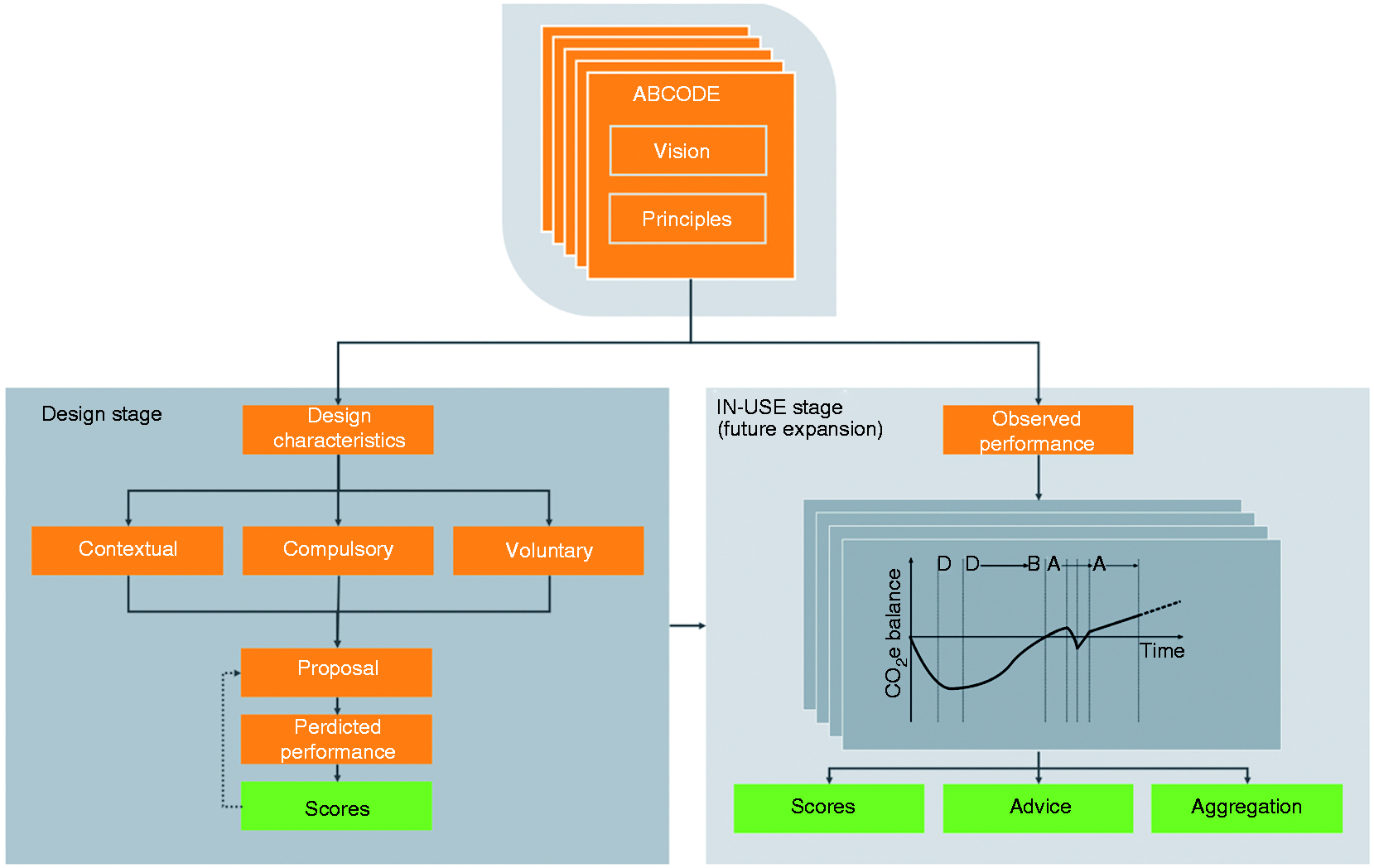
Overview of the active building code. Its first iteration (ABCode1) focuses on the design stage (left).
Vision and principles
The vision for the ABCode is to deliver at scale buildings that ‘do no harm’ according to the non-defornocere principle.
89
Accordingly, we suggest ABs abide by the following general principles:
Design standard
ABs need to provide a clear pathway for impact in the building sector and thus need to make technical, economical, and environmental sense under the non-defornocere vision. In this initial proposition, the ABCode1 is a design standard for new buildings, either individual ones or from a development involving a single site and owner for the sake of simplicity. However, the general principle of energy network support may require the aggregation of several ABs in a community (see the “Discussion” section).
We propose the following design principles to implement the two general principles presented in “Vision and principles” section and inform how buildings should be designed, operated, maintained and demolished or recycled:
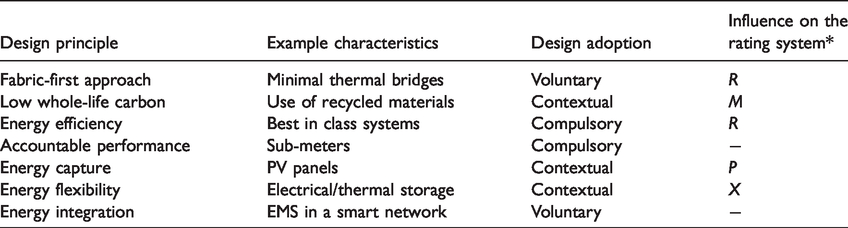
Design principles can be translated into specific design characteristics, which are divided into (Table 2):
Examples of the envisaged relationship between design principles and their influence on the suggested rating system. Labels correspond to the metrics of the rating system introduced in Table 3 (*).
Since accountability is a key principle for ABs, performance must be knowable to assist ABs in reducing a potential performance gap. A built-in monitoring platform should hence be developed to report operational energy use.
Rating system
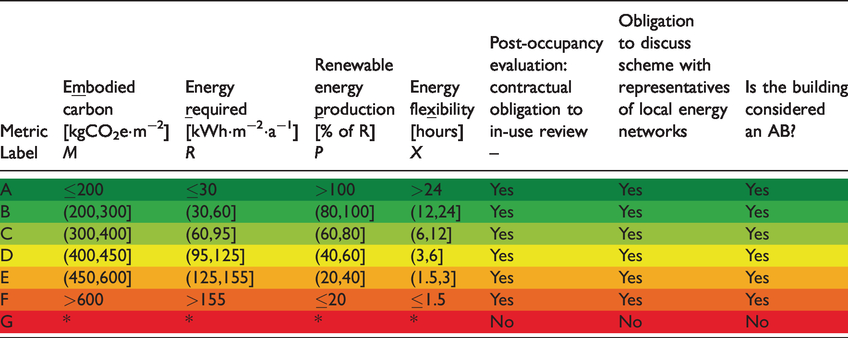
A barrier to the broad dissemination of buildings that are certified to the Passivhaus Standard is the inherent insecurity of its pass-or-fail philosophy (see the section “Existing standards and rating systems: what is missing?”). Hence, we propose a rating system similar to European energy labelling that considers the general principles of ABs. This is based on four metrics: embodied carbon; energy consumption; renewable energy production; and energy flexibility (Table 3). The intention of the ABCode is to balance permanent design aspects, which set the baseline for environmental performance, with the more ephemeral ones, which depend on the current needs of the energy network and technology available. Overall, these metrics rate ABs as consumers, producers and traders of energy and carbon. An overall performance value is computed as the weighted average of all metrics to express succinctly the relative merits of the design:

The suggested rating system for assessing building performance during the design process. In all cases, m2 refers to treated floor area as defined in the Passivhaus Standard. In the ABCode1, an active building (AB) is one that meets the specifications in labels
The weighted average is proposed for two reasons. Firstly, it provides an overall label that can be communicated easily (varying from
We propose that labels
In addition to POE, labels
As a result, it is proposed that Active Buildings are those meeting the ABCode1 criteria for labels
The individual values that correspond to labels
Embodied carbon (M)
ABCode1 considers as embodied carbon emissions all those that occur up to the point of practical completion (life cycle stages A1-A5 in EN15978
90
). Very few datasets report the embodied carbon of buildings and those who do draw values from different assessment methods, preventing cross-comparisons. To define the embodied carbon scale, the dataset of the Carbon Leadership Forum (CLF) was used, as this is an open, peer-reviewed dataset with a reasonably large number of samples (
First, the empirical distribution of carbon intensity was divided into equally spaced quantiles (as many as there are labels in the scale) and numbers were rounded to the nearest multiple of 50 kgCO2e·m−2 for usability. This makes each label equally challenging in practice. The scale is ambitious considering that current standard practices are estimated to entail about 800–1,000 kgCO2e·m−2, but necessarily so to advance the delivery of whole-life net zero carbon buildings. Although the representativeness of the dataset for the building stock is unknown, the resulting scale is in agreement with current industry-led initiatives in the UK, and thus considered cognisant of the practical challenges that arise in the design and construction. 71 , 77 , 92 Particular ways to achieve a good score are not prescribed, but these will necessarily entail the efficient use of low-impact materials such as recycled or biogenic ones.
Energy required (R)
Energy required (life cycle stage B6 in EN15978) is favoured in ABCode1 to operational carbon intensity to avoid designing energy profligate buildings that passively benefit from an increasingly decarbonised energy network. Datasets reporting the total energy consumption of the building stock feature similar limitations. This is approached through the Display Energy Certificates
93
(DECs) database (
To create the scale, the overall metered fuel and electricity use of buildings (kWh·m−2·a−1) was calculated, and its lowest half selected to incentivise low-energy buildings. Data was split linearly since this dataset is biased towards older buildings (the UK features one of the oldest building stocks in the world), while ABCode1 focuses on the design of new buildings. Lastly, data was rounded to the nearest multiple of 5 kWh·m−2·a−1 for readability. The resulting first two categories of
Renewable energy production (P)
The metric to evaluate generation is derived from others quantifying energy as a proxy not only for carbon but also for the potential to alleviate stress in the local energy network. Aspirations for energy generation (heat and/or electricity) at a building scale vary substantially in the literature. Although domestic buildings have the potential to be net energy positive, this could be more challenging, and often not cost-effective, for other building types. Considering this and the lack of representative empirical datasets to inform values, the resulting scale for production expresses the ratio of the value for metric
Energy flexibility (X)
Despite the numerous ways available to express energy flexibility, it is unknown which ones should be used in practice given the lack of empirical evidence. It is still unclear what performance aspirations should be defined to account for the needs of the built environment and energy networks, and how they would influence the more permanent aspects of building design.
ABCode1 considers energy flexibility as the number of typical hours the building could run autonomously, theoretically, without demanding energy from the network or producing on-site energy (considering all forms of energy consumed in the building). Label
What truly represents energy flexibility is in the way the stored energy and the building are used. This could be coordinated by (i) control systems
64
— including both the hardware (sensors, meters, actuators) and software (strategy, as informed by representatives of the energy networks) — and (ii) occupant behaviour. These aspects are envisioned as parts of a unified building-user system that governs the way in which energy is exchanged with the networks, but one that cannot be fully addressed until more information about the practicalities of ABs is gathered. Until then, the value of the
The value for
ABCode1 focuses on short-term storage (hours) rather than the longer seasonal storage (months) given the uncertainty to establish general initial guidelines for a variety of new buildings types and the market readiness of long-term storage solutions at scale. Nevertheless, this aligns with the timescales at which most building-level grid-services are useful to the grid, 14 that is, from minutes to day(s).
Discussion
Future revisions of the code (ABCode2 etc.) could refine the rating system to reflect the performance achieved by demonstrator buildings, as well as the state-of-the-art in the building sector and energy network. For example, on-site renewable energy production might be useful at present for the UK power grid but, this might no longer be a desirable design strategy once a low-carbon grid is available, nor a crucial metric for the rating system. Since the ABCode is active itself, it could support such a transition, adjusting its design principles and rating system (scales and weights) to reflect the real needs of the built environment and energy networks.
The energy required (
As applied below, the ABCode is based on a single building. It is however likely that ABs will be developed as collectives of buildings. Within the collective, the buildings might well support each other and provide different active services, either grossly, or temporally, and it might well make sense to maximise these on some buildings and not others (for example PV generation). Hence, we propose that ABCode can be reported at either the single or collective level, but not both at the same time. The reason for this is that allowing both has the potential to cause confusion, and the selective use of the labels. An example would be a collective that scored B from a mix of A and D buildings. It would be unreasonable for a developer or owner to simultaneously claim the collective was B, and that a particular building was an A, but by omission therefore suggest the D buildings were B.
Another issue is the use of generation or storage systems that cover more than the buildings being scored. For example, a district heating system might have been built to cover the heating needs of a new collective, yet have excess capacity and hence be plumbed into neighbouring pre-existing buildings. This excess might well not be serendipitous, in that, although the only reason for the creation of the district heating scheme was the new collective, it only made financial sense because it could sell excess to the older stock. Because of the temporal nature of demand, it might well be that the district heating system can only supply 50% of the annual demand of the new collective, yet in total it generates several times the annual demand of the new collective. We suggest that all generation of such a district heating scheme is counted as applying to the new collective (for the purpose of rating the collective with the ABCode). This is similar to the approach with electricity and net-zero energy buildings within an annual accountancy framework: all the electricity generated does not need to be used by the building in question, just an amount equal to that which it uses, with export at some times, and import at others.
It is not uncommon for buildings to be designed with an awareness of the future landscape. For example, including space for air conditioning to be added as the climate warms. With respect to ABs, one can imagine a similar approach, with buildings being designed so that PV or batteries would be particular easy to add. We feel though logical, any active-ready status would be too open to simple claims of “ready”. Therefore, such active-readiness should be encouraged, but not scored.
Although most will be interested in the overall score of the building, others will desire a more nuanced analysis. The approach laid out here automatically provides this in the form of the four metrics. For example, a building can either be described as a
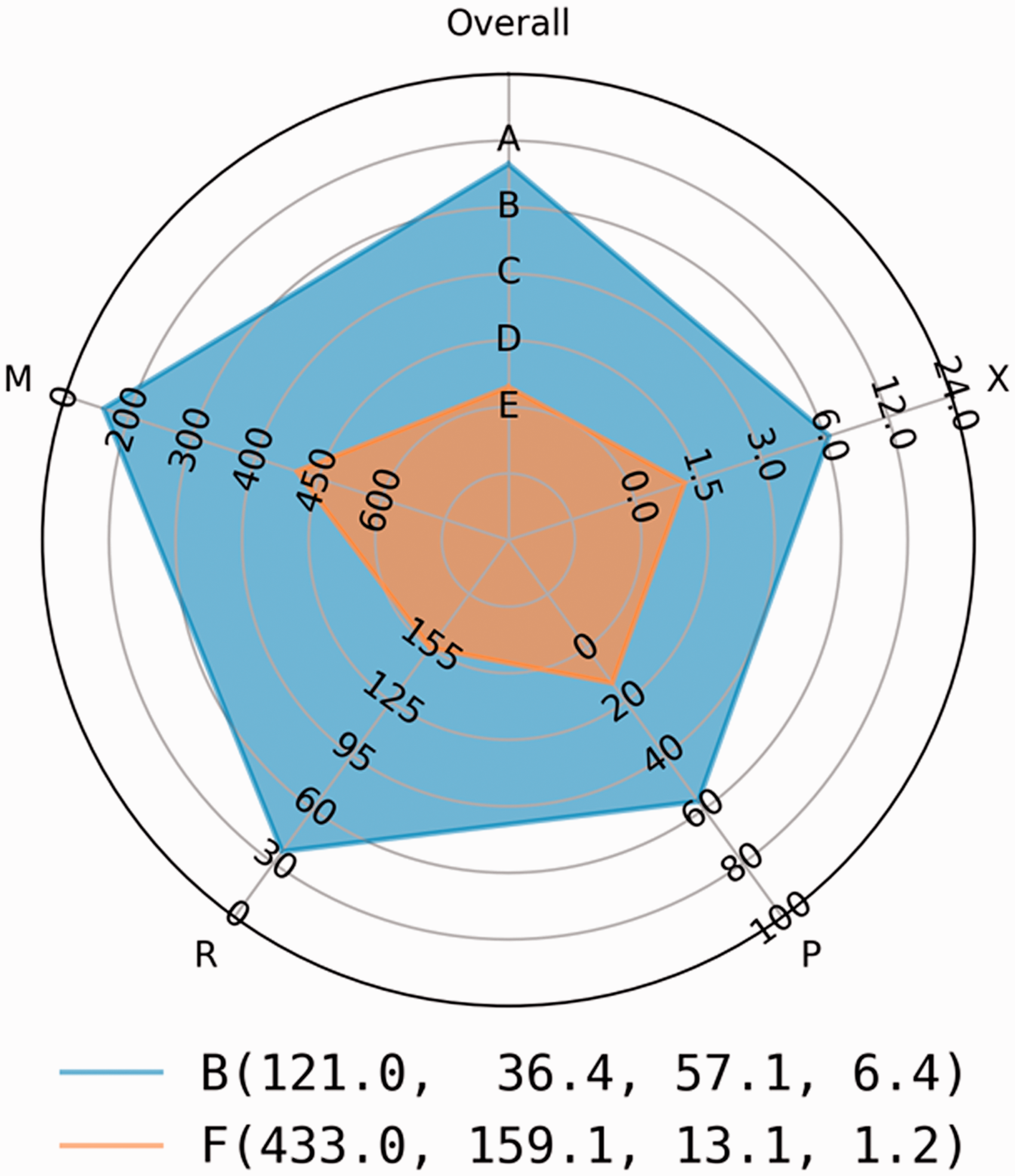
ABCode1 in practice
To support designers in assessing the performance of early-stage designs against the ABCode rating system, a monthly energy balance model called ZEBRA was developed (that is, Zero Energy Building Reduced Algorithm, where zero energy just signifies that the reduced algorithm is particularly suited to study buildings with a low energy demand for space conditioning). ZEBRA is a simplified version of PHPP, but a greater fitness for building design explorations, as it minimises the number of inputs at an early stage. The main difference, and limitation, is that ZEBRA does not at present account for auxiliary energy use nor energy losses in storage or other mechanical, electrical and plumbing systems. That would presume detailed knowledge of systems that have not yet been designed, nor influence early stage design as much as building envelope characteristics, but could be included through a safety coefficient based on prior experience in projects with similar systems as an initial estimate if need be.
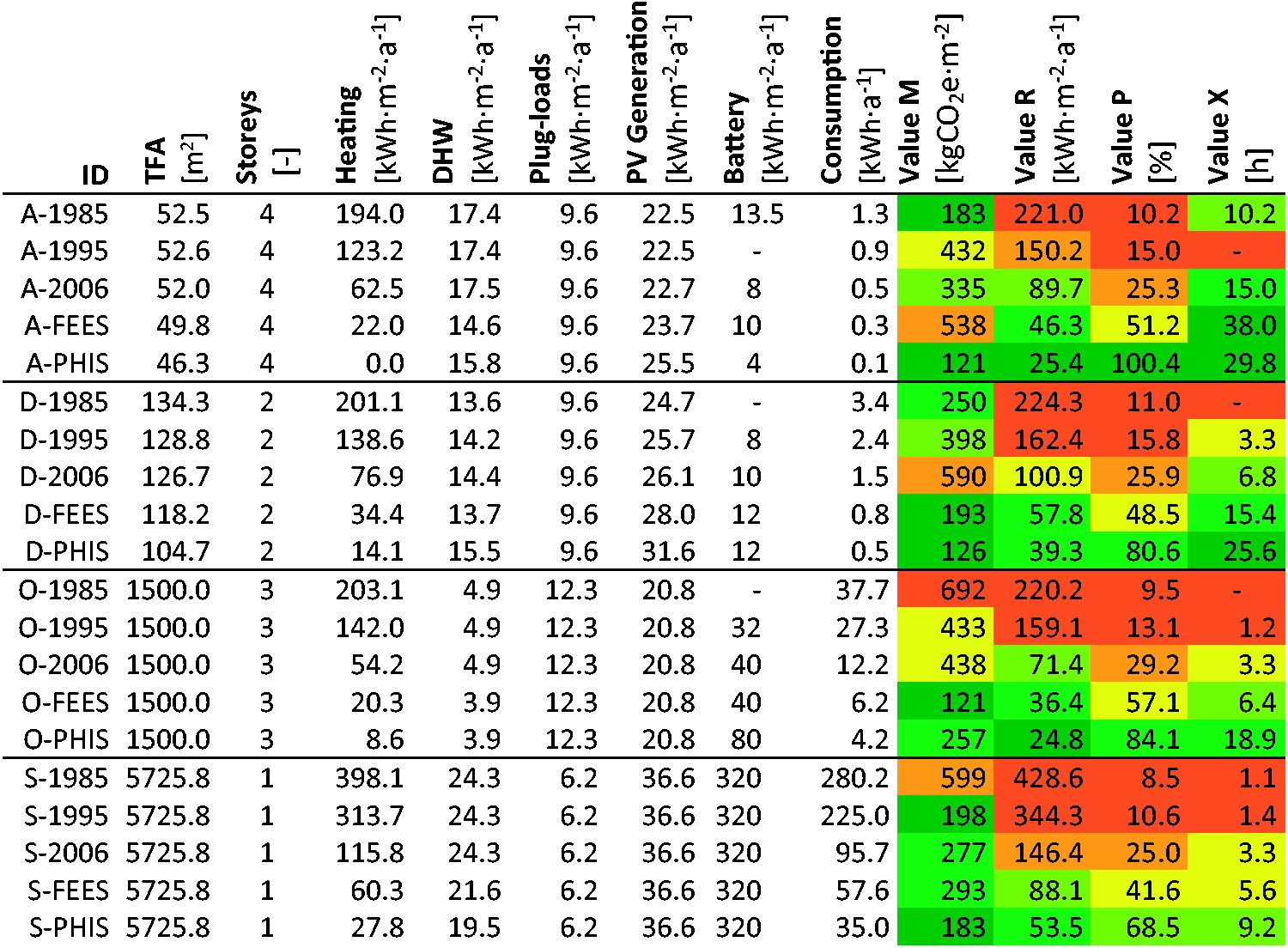
Evaluation of example buildings: key metrics (model inputs are specified in Supplemental Material and IDs are specified in Table 5; the apartment refers to a single unit within a four-storey block).

Labelling of example buildings (model inputs are specified in Supplemental Material).

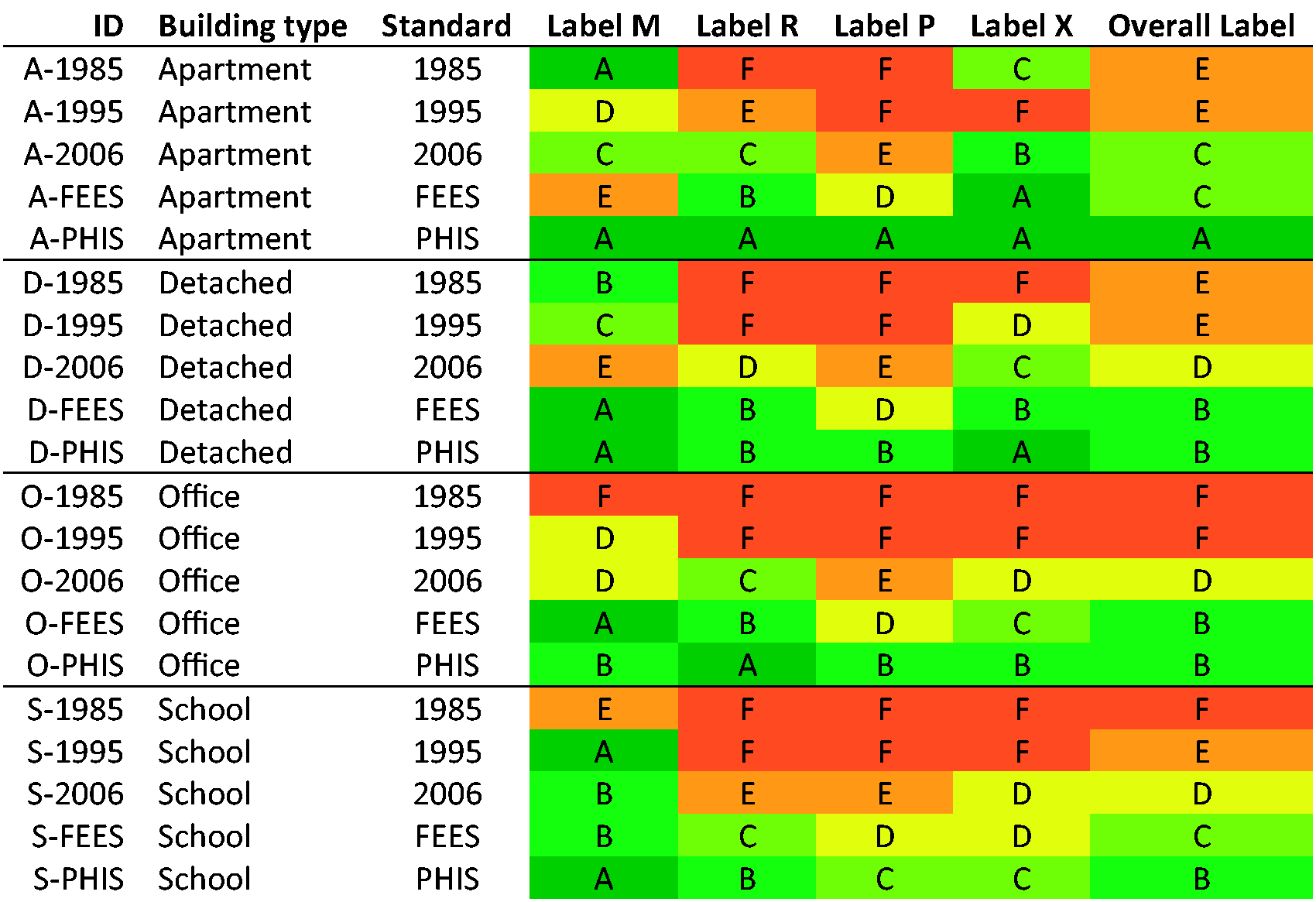
Results demonstrate a wide range of performance for each metric individually as well as overall (Tables 4 and 5). The rating system is able to reflect the diversity of the modelled buildings as, for instance, buildings having poor insulation receive an
Given the current limitations in publicly available datasets, ABCode1 defined a rating system that is agnostic to building type (see the section “Rating system”), but the calculated performance values were found to align with those in the DEC database. Achieving an
Limitations and future perspectives
Future revisions of the ABCode should consider the following aspects:
Focusing on the development of the rating system for assessing building performance, future revisions should address the following limitations:
Conclusions
Building design could play a pivotal role in decarbonisation by supporting the needs of the wider energy infrastructure. The aspirations for a synergetic relationship with the wider energy networks are underpinned by new design goals and, together with the knowledge and technology involved, ‘Active Buildings’ (ABs) represent promising opportunities for all stakeholders involved. This paper examines what ABs are, what opportunities they present, and how the concept could be adopted in practice and further developed.
A detailed examination of the precedents revealed several building regulations, standards and initiatives worldwide that aim to encourage the design of high-performing buildings as a response to the need for minimising GHG emissions. A number of design approaches have been proposed in recent decades, with net zero energy/carbon buildings now arising as widely acknowledged aspirations for both policy and industry. Nevertheless, pioneering studies and initiatives have started questioning if these are the only ways through which buildings could contribute to the aspired transformation of the construction and energy sectors. Such initiatives advocate an integrated energy-systems thinking, where buildings are not treated as passive consumers of energy, but as active entities that have the potential to support energy networks for both the benefit of the wider energy networks as well as building owners and occupants. Although some strategies (such as renewable energy generation) are already acknowledged in net zero energy/carbon design approaches and relevant building standards, these tend to be collateral benefits, rather than holistic solutions that account for the interaction of buildings with energy networks. For example, solar generation without local energy storage can effectively increase, rather than decrease, the variability in energy imports from energy networks, creating a greater problem rather than a means to support them.
Based on the momentum built by research, policy and industry, and the barriers identified in the literature, the development of a design standard, the Active Building Code (ABCode), is proposed to help channel these discussions towards a commonly agreed definition and evaluation for ABs for the first time. Considering the needs of the built environment and energy networks as well as the relevant shortcomings of existing design approaches, linking the definition of ABs with the ABCode itself would help ensure they remain true to their two general principles: whole-life sustainability and energy network support. Based on these, and in order to help designers judge the relative merits of design alternatives, a new rating system inspired by EU labels was suggested in ABCode1, an initial proposition for the ABCode. This is based around four metrics: embodied carbon, energy consumption, renewable energy production, and energy flexibility. To demonstrate the applicability of such a rating system, ABCode1 was integrated into an energy balance model, ZEBRA, and the predicted ratings of twenty example buildings were examined. Both the calculated values and the resulted labels revealed a wide range of performance (for each metric individually as well as overall), with the rating system hence being able to reflect the diversity of modelled buildings.
Future iterations of the code (ABCode2 etc.) will refine the rating system proposed in this paper to reflect the performance achieved by demonstrator buildings and address current and foreseeable needs and challenges. At the same time, the Active Building definition proposed in the code will help gather the fundamental evidence required to stimulate and inform discussions about how buildings could best support energy networks in practice, and how strategies should influence building design and operation. This aspect is found to be particularly important to help define and measure energy flexibility in a way that is both meaningful for building design and support of energy networks. Thanks to its active philosophy, the ABCode can evolve over time by adjusting its design principles and rating system to reflect the time-varying circumstances of the built environment and energy networks, advancing a timely shift towards a decarbonised society.
Supplemental Material
sj-pdf-1-bse-10.1177_0143624420974647 - Supplemental material for Towards active buildings: Rating grid-servicing buildings
Supplemental material, sj-pdf-1-bse-10.1177_0143624420974647 for Towards active buildings: Rating grid-servicing buildings by Daniel Fosas, Elli Nikolaidou, Matthew Roberts, Stephen Allen, Ian Walker and David Coley in Building Services Engineering Research & Technology
Footnotes
Acknowledgements
The authors would like to thank “The Active Building Centre Research Programme” consortium [EP/V012053/1] for their valuable feedback on the propositions presented in this paper, and in particular: Dr Grant Wilson (University of Birmingham); Professor Kevin Lomas, Dr David Allinson and Dr Stephen Watson (Loughborough University); Professor Goran Strbac, Professor Richard Green and Dr Matt Woolf (Imperial College London); Professor Nick Pidgeon, Professor Karen Henwood and Dr Kate O'Sullivan (Cardiff University); Professor Martin Mayfield (University of Sheffield); Tom Bassett and Dr Ahsan Khan (Active Building Centre, Swansea University).

Declaration of conflicting interests
The author(s) declared no potential conflicts of interest with respect to the research, authorship, and/or publication of this article.
Funding
The author(s) disclosed receipt of the following financial support for the research, authorship, and/or publication of this article: This research was funded by the Engineering and Physical Sciences Research Council (EPSRC) project “The Active Building Centre Research Programme” (EP/V012053/1).
Notes
References
Supplementary Material
Please find the following supplemental material available below.
For Open Access articles published under a Creative Commons License, all supplemental material carries the same license as the article it is associated with.
For non-Open Access articles published, all supplemental material carries a non-exclusive license, and permission requests for re-use of supplemental material or any part of supplemental material shall be sent directly to the copyright owner as specified in the copyright notice associated with the article.
