




Abstract
Attention to diversity in classrooms has become more prominent in recent years. Unfortunately, research shows that diverse students feel relatively unsafe and unprotected in schools compared to their peers. Perceptions of peer and adult acceptance of diversity have been shown to separately associate with school safety. The current study extends existing research by exploring how mediating role of peer acceptance of diversity between adult acceptance of diversity and a sense of school safety among Canadian high-school students. Participants included 233 high-school students in Canada (mean age = 14.76, 34.5% girls) who completed a self-report survey about their perceptions of peer and adult acceptance of diversity and school safety. A just-identified path analysis revealed a significant positive association between adult acceptance of diversity and peer acceptance of diversity (β = .679, p < .001). Perceived school safety was directly and positively associated with both adult acceptance of diversity (β = .338, p < .001) and peer acceptance of diversity (β = .303, p < .001). There was also a significant indirect association between adult acceptance of diversity and a sense of school safety via peer acceptance of diversity, 95% CI [.111, .310]. These findings emphasize the critical role that adults have on students’ perceptions of diversity and safety in the school context.
Keywords
Classrooms in North America are becoming increasingly diverse, including more students from different ethnic minoritized backgrounds and students who are gender-diverse (Ullman, 2017; Young et al., 2010). Increased diversity in schools has been associated with positive educational outcomes, such as higher academic achievement and engagement in school (Gurin et al., 2002; Hallinan, 1998; Tam & Bassett, 2004). It is important to note that students may possess a variety of minoritized and privileged identities simultaneously, such as students who hold both privileged sexual identities and racial minoritized identities (e.g., Black heterosexual students). Due to prejudices, biases, and stereotypes surrounding their identities, students with minoritized identities may face more barriers than their peers in school. For instance, students with minoritized identities are more frequently victimized by bullying (Berlan et al., 2010; Toomey & Russell, 2016; Xu et al., 2020). Furthermore, there is a consistently noted gap in academic achievement between students from ethnically minoritized backgrounds and their peers (Farkas, 2003; Gandara & Contreras, 2009), which has been linked to experiences of discrimination (Benner & Graham, 2011; Hill & Zhou, 2021). It is clear from this literature that further examination of school factors associated with positive outcomes for minoritized students is necessary to better understand how schools can work to benefit all students. One school factor that may be especially important for students with minoritized identities is how accepting school adults and peers are toward diversity. Given that how safe students feel at school is an important outcome for the well-being of all students, the current study seeks to explore how adult and peer acceptance of diversity may impact diverse students’ sense of school safety.
Acceptance of diversity in schools
Within the context of schools, acceptance of diversity broadly refers to how accepting teachers, staff, and students are towards students of various minoritized groups and identities (i.e., ethnicity, gender, sexuality, etc.). It is an important key element of school climate, which has been widely recognized as influential for students’ well-being and academic achievement (Konishi et al., 2017; Kwong & Davis, 2015; Wang & Degol, 2016). Acceptance of diversity is especially crucial for school-related outcomes of students with minoritized identities (e.g., gender-diverse, ethnic minorities). For instance, displays of nonacceptance in schools, such as ethnic victimization and discrimination, can be detrimental to students’ sense of school belonging and school engagement (Bottiani et al., 2020; D’hondt et al., 2015; Heikamp et al., 2020). Furthermore, schools that foster a sense of color evasiveness or assimilation regarding ethnic diversity show greater gaps in sense of school belonging and academic achievement between students with minoritized and privileged identities, in comparison with schools that utilize a more accepting, multiculturalist approach (Celeste et al., 2019). Regarding students of diverse sexualities, research indicates the importance of supportive peers, inclusive curricula, and active gay-straight alliance groups to these students’ sense of safety, as well as a reduction in victimization (D’Augelli, 2003; Kosciw et al., 2012; Snapp et al., 2015; Toomey et al., 2011). Further, a school environment that is accepting of gender and sexuality diversity has positive impacts for gender-diverse students’ sense of school belonging (Ullman, 2022). This literature indicates that acceptance of diversity is a critical component for the well-being of students with minoritized identities.
Peer acceptance of diversity
Acceptance of diversity within a school can be further considered in regard to the different social groups that can provide this acceptance, namely peers and teachers. Being accepted by one's peers has been widely recognized due to its influence on youth mental well-being, self-esteem, and positive self-perceptions of competence (Bianchi et al., 2021; Kistner et al., 1999; Nelson et al., 2005). In the absence of peer acceptance, youth may experience increased risk of negative mental health outcomes such as greater depression, poorer psychological maladjustment, increased experiences of violence, and higher risk of school dropout (Boivin et al., 1995; Hymel et al., 2002). Unfortunately, the struggle to be accepted by their peers is particularly more difficult among minoritized youth. Graham et al. (2009) indicated that youth tend to demonstrate an in-group preference for peers from the same ethnic background, suggesting that ethnic minoritized students may have a harder time gaining acceptance from privileged peers. Indeed, a study by Lubbers et al. (2006) found that boys who belonged to ethnic minoritized groups were less likely to receive peer acceptance than those in privileged ethnic groups. Further, students from ethnic and racial minoritized groups, as well as LGBTQ students, are at higher risk for bullying victimization, indicating the influence of bias and prejudice from peers against such groups (Berlan et al., 2010; Toomey & Russell, 2016; Xu et al., 2020). The discrepancy in peer acceptance for students with minoritized identities can have detrimental effects on their school performance, school adjustment, and psychological health (Buhs & Ladd, 2001; Hill & Zhou, 2021; Ladd & Troop-Gordon, 2003). In contrast, when students with minoritized identities report greater acceptance from their peers, there may be more likely to experience a variety of positive outcomes, such as higher self-esteem and less intention to drop out of school (Bianchi et al., 2021).
Teacher acceptance of diversity
Acceptance from teachers is also important for students. Broadly, support and acceptance from school-based adults, such as teachers, has been associated with better motivational and academic outcomes among students (Wentzel, 2009). These findings have been replicated among students with minoritized identities, including students with diverse gender and sexual identities (Goodenow et al., 2006; Kosciw et al., 2013; Ullman, 2015). Furthermore, gender-diverse students are more likely to feel connected to school if there is a school adult who they perceive as accepting and safe to talk to (Greytak et al., 2009; Ullman, 2017). Even when there is discrimination present in schools, negative effects of such discrimination on minoritized students’ school engagement may be buffered by culturally supportive teachers (Bottiani et al., 2020). However, non-accepting behaviours and attitudes from teachers, such as ethnic discrimination, are associated with negative outcomes for ethnic minoritized students, including lower academic achievement (Thomas et al., 2009).
Teachers also play an important role in setting examples of acceptable attitudes and behaviours, which influence students’ behaviours and attitudes towards their peers (Sanderse, 2013). For instance, Konishi and colleagues (2021) found that when students perceived school adults to be more supportive, responsive, and more accepting of diversity, students had greater motivation to intervene in bullying situations on behalf of the victims. Bierman (2011) further outlines how teachers’ attitudes and behaviors influence peer relationships, describing these attitudes and behaviors as the “invisible hand” of teachers (p. 298). The existing literature demonstrates how teachers have influence over students’ actions and attitudes, potentially including their acceptance of peer diversity.
Importance of school safety
Relationships with teachers, peers, and other personnel in a school contribute to an essential aspect of students’ school experiences, including feelings of safety (Demaray et al., 2012; Loukas, 2007). A safe and supportive school environment is one where all students feel that they can flourish emotionally, socially and academically. Students’ experiences of school safety, including both physical and social-emotional safety (National School Climate Center, 2007), are an essential component of school climate that is especially important to consider for students belonging to minoritized groups. In a study by Koth et al. (2008), students from racial and/or ethnic minoritized groups reported feeling less safe at school as well as lower levels of achievement and motivation than White students. Further, McGuire et al. (2010) found that 82% of transgender students reported hearing negative comments about gender presentation, and such negative comments were associated with lower levels of perceived safety at school. Feelings of school safety are also associated with students’ mental well-being (Aldridge & McChesney, 2018; Mori et al., 2021; Nijs et al., 2014), including internalizing problems such as depression and anxiety (Côté-Lussier & Fitzpatrick, 2016; Fite et al., 2019). Given the association of school safety with key student wellness outcomes, it is essential that we understand the factors that contribute to students’ sense of safety at school.
Relationship between acceptance of diversity and school safety
As previously summarized, acceptance of diversity in schools is associated with the overall climate of a school, including a sense of school safety. There is a wealth of literature indicating that minoritized students feel less safe at school than socially privileged students (e.g., Dessel et al., 2017; Russell et al., 2020; Wernick et al., 2017). Such research has been conducted with students with minoritized gender and sexual identities (e.g., Atteberry-Ash et al., 2019; Kosciw et al., 2020; Pampati et al., 2020; Rose et al., 2018) as well as students with minoritized racial identities (e.g., Hong et al., 2016; Voight et al., 2015). For example, Bellmore et al. (2012) found that a positive peer, teacher, and school interracial climate was associated with lower student reports of discrimination. In a narrative synthesis of 43 studies exploring the relationship between school safety and mental health, Mori et al. (2021) noted that when students perceive their teachers as caring, trustworthy, and fair, they reported higher perceptions of safety. In a study exploring the positive experiences of gender diverse students in schools, Evans and Rawlings (2021) found that significant others in the school environment (i.e., peers, educators and school personnel) who used students’ preferred pronouns and engaged in positive, affirming interactions were essential in fostering a safe space in school for gender diverse young people. Similarly, LGBTQ students with supportive staff experienced greater feelings of safety and less absenteeism (Kosciw et al., 2020). While previous studies have demonstrated that adults at school can foster acceptance of diversity among students by promoting a positive school climate and ensuring fair treatment of all students (e.g., Baysu et al., 2020; Sanderse, 2013), the present study extends this literature by exploring how peer acceptance of diversity in turn, may be also associated with students’ feelings of school safety. It is possible that peer acceptance of diversity may mediate the relationship between school adults’ acceptance of diversity and students’ perceptions of school safety, as both peer and adult relationships in schools are key to fostering a safe and positive school climate (e.g., Thapa et al., 2013; Wang & Degol, 2016). The school environment shapes how teachers interact with their students, how students view their teachers, and how students feel towards one another, all of which contribute to creating a safe space where all students feel safe, accepted, valued, and respected.
The present study
Given the bivariate relationships previously found between adult acceptance of diversity, peer acceptance of diversity, and school safety, this study aimed to synthesize these relationships using path analysis to examine a mediation model. Within the evolving demographic context of Canadian high schools, our model explored how adult and peer acceptance of diversity contribute to students’ feeling of safety in school. Specifically, we investigated whether adult acceptance predicts students’ feelings of school safety indirectly via peer acceptance. Accordingly, the main research questions (RQs) and corresponding hypotheses (Hs) guiding this study were as follows: (RQ1) Is there an association between adult/peer acceptance of diversity and students’ reports of school safety? (H1) Both adult acceptance of diversity and peer acceptance of diversity will be significantly positively associated with students’ perceptions of school safety. (RQ2-a) Is there an association between adult and peer acceptance of diversity? (H2-a) Adult and peer acceptance of diversity will be significantly positively associated with one another. (RQ2-b) Does peer acceptance of diversity mediate the association between adult acceptance and perceived school safety? (H2-b) Peer acceptance of diversity will significantly mediate the association between adult acceptance of diversity and school safety.
Method
Participants
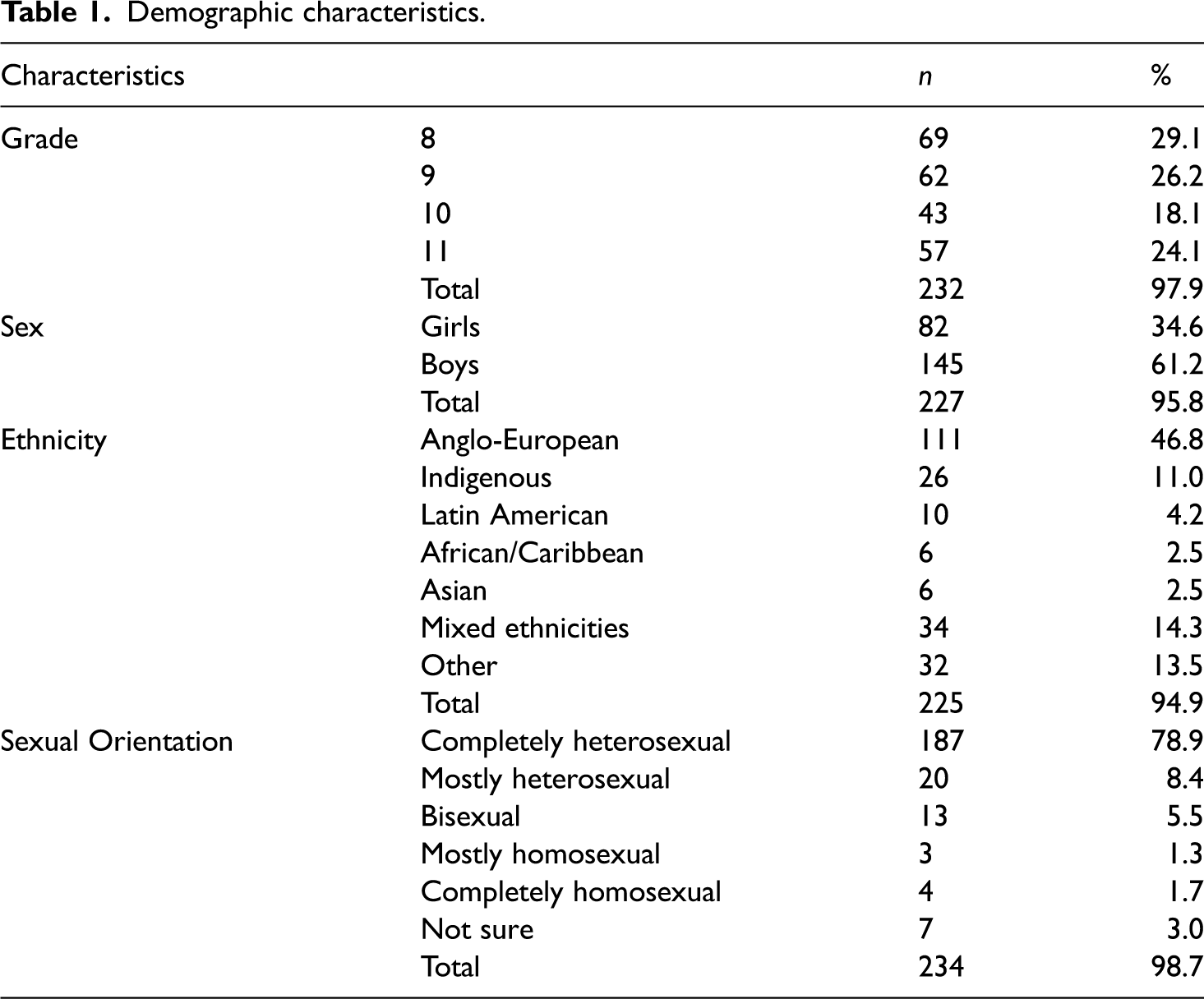
Participants were 233 Eastern Canadian high school students aged between 13 and 19 years old (M = 14.76, SD = 1.32) from grades 8–11. Table 1 summarized the demographic information of participants. Around 34.6% of participants were female students (n = 82). Among the participants, around 47% identified as Anglo-European, followed by 11% as Indigenous, 4% as Latin American, 3% as African/Caribbean, 3% as Asian and Middle Eastern, 14% as having mixed ethnic identities, and 14% as another group. Around 79% of participants identified as completely heterosexual, with 5.5% identifying as bisexual and 3% as homosexual.
Demographic characteristics.
Procedure
Prior to the implementation of the study, ethics approval was first obtained from the university and school district boards. Participants were recruited from one high school with the assistance of the school guidance counsellor. Approval and informed consent were then secured from the school principal and teachers. After explaining the purpose and nature of the study to students, students were asked to bring home a letter that detailed similar information for their parents. Interested students signed an informed assent agreement and obtained consent from their parents. After providing their assent and their parents’ consent, participants were asked to complete a set of measures in a single group-testing section that was about 30–50 min in length. All students who were recruited participated in the present study.
Measures
Adult and peer acceptance of diversity
To measure adult/student acceptance of diversity, participants completed two versions of the acceptance of diversity of subscale of the School Climate Questionnaire (Konishi et al., 2021, 2022). Both versions included the same six items for peer acceptance and adult acceptance, respectively. Items cover multiple aspects of diversity including race, sexual orientation, disability, academic ability, and family economic status. A sample item is “Adults/students at my school are accepting of all individuals regardless of their race, ethnicity or culture.” Participants were asked to rate their experiences at school in the current school year on a 7-point Likert-type scale ranging from 1 (‘Disagree Strongly) to 7 (‘Agree Strongly’). Mean scores for each subscale were computed, with higher scores indicating greater acceptance of diversity. Cronbach's alpha showed good reliability of the scale in the current sample (Adult: α = .89; Peer: α = .85).
School safety
School safety was measured using the safety subscale of the School-Climate Questionnaire (Konishi et al., 2021, 2022) including 7 items assessing students’ perceptions of safety across various school contexts. A sample item is “I feel safe at school”. Participants were asked to rate their experiences about school safety at school in the current school year on a 7-point Likert scale ranging from 1 (‘Disagree Strongly’) to 7 (‘Agree Strongly’). Mean scores were computed, with higher scores indicating higher levels of perceived school safety. Cronbach's alpha showed good reliability of the scale in the current sample (α = .93).
Analytical plan
Preliminary analyses were conducted using SPSS 29. Variables were first evaluated for adherence to the assumptions that underlie inferential statistics. Descriptive statistics and correlations were conducted to assess the sample characteristics and intercorrelations between the variables of the study. To test for the associations among the studied variables as well as the hypothesized mediation, a just-identified path analysis was conducted on Mplus 8.0 (Muthén & Muthén, 1998/2017). The model examines the direct effect of adult acceptance of diversity on peer acceptance of diversity, the direct effect of adult and peer acceptance of diversity on school safety, as well as the indirect effect of adult acceptance of diversity on school safety through peer acceptance of diversity (see Figure 1). Just-identified path analyses are a common approach to test mediation models, while the model fit indices for these models are not relevant (Hayes, 2013). The model was estimated using maximum likelihood estimation and missing data was handled using full information maximum likelihood (FIML) method. Bootstrapping with 5,000 resamples was performed as recommended by Preacher and Hayes (2008). The significance of the indirect effect was evaluated using the 95% confidence intervals.
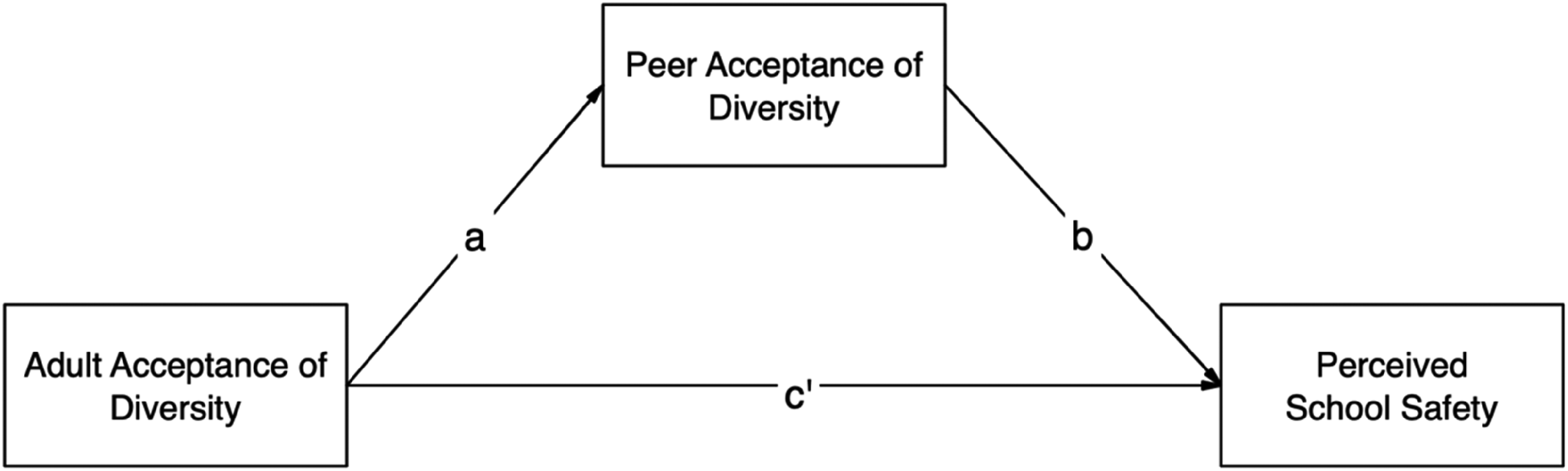
Hypothesized relationships Among study variables.
Results
Descriptives and correlations
Missing data were evident in 13 out of the 19 measurement items, ranging between 0.4% and 1.3%. Additionally, missing data were also found in all four demographic variables, ranging between 1.3% (sexual orientation) to 5.1% (ethnicity). The Little's MCAR test on measurement items showed a significant result, χ2= 302.563, p = .008, suggesting the data could be missing not at random. Separate variance t-tests showed no systematic relationship between missingness on the items and other indicator variables (with at least 5% missing). Considering only a few data points are missing and that no systematic missing patterns could be found (Tabachnick & Fidell, 2013), composite scores for each participant were calculated using the original data with no more than 20% of the items missing, leaving a final sample of 233 participants.
The correlations between the study variables were first assessed. Table 2 shows Pearson correlation coefficients, as well as descriptive statistic information. Results from the bivariate correlation analyses revealed a strong and positive correlation between adult and peer acceptance of diversity (r = .679, p < .001). Moreover, both adult and peer acceptance of diversity were significantly and positively correlated with perceived school safety. That is, the more students reported that the adults and peers at their school were accepting of diversity, the more likely they were to feel safe at their schools.
Descriptive statistics and bivariate correlations.
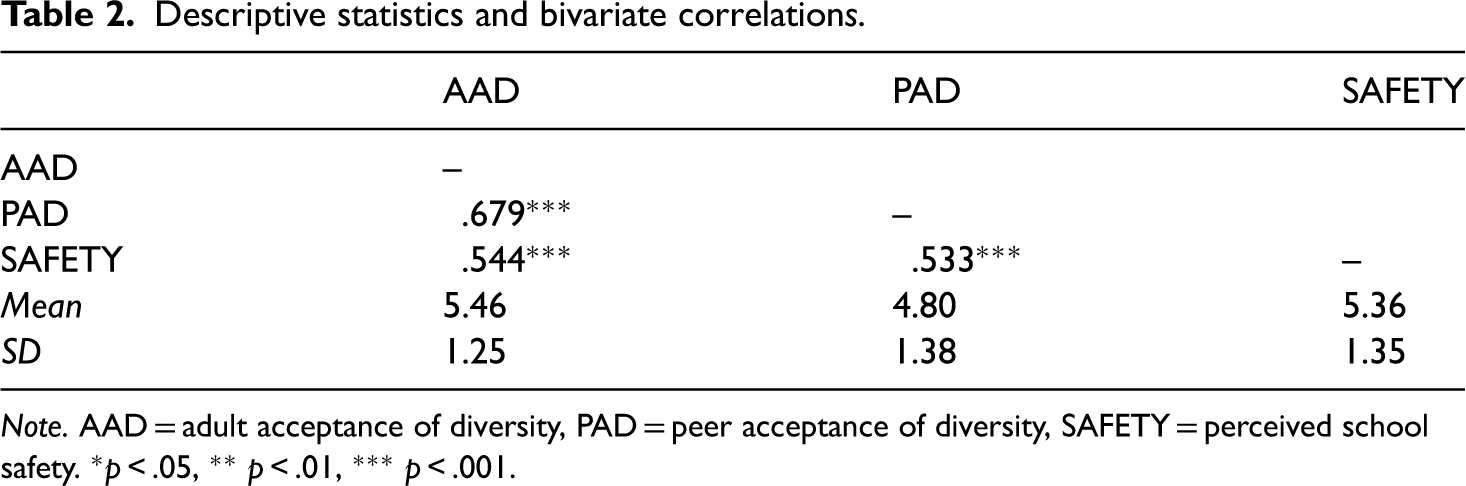
Note. AAD = adult acceptance of diversity, PAD = peer acceptance of diversity, SAFETY = perceived school safety. *p < .05, ** p < .01, *** p < .001.
Acceptance of diversity and perceived school safety
The main research questions and hypotheses of the current study were examined using a just-identified path analysis, as shown in Figure 2. To test the first hypothesis, we examined the associations of adult acceptance of diversity with perceived school safety and of peer acceptance of diversity with perceived school safety, respectively (H1). Results from the path analysis showed that perceived school safety was directly and positively associated with both adult acceptance of diversity (β = .338, SE = .073, p < .001) and peer acceptance of diversity (β = .303, SE = .068, p < .001).
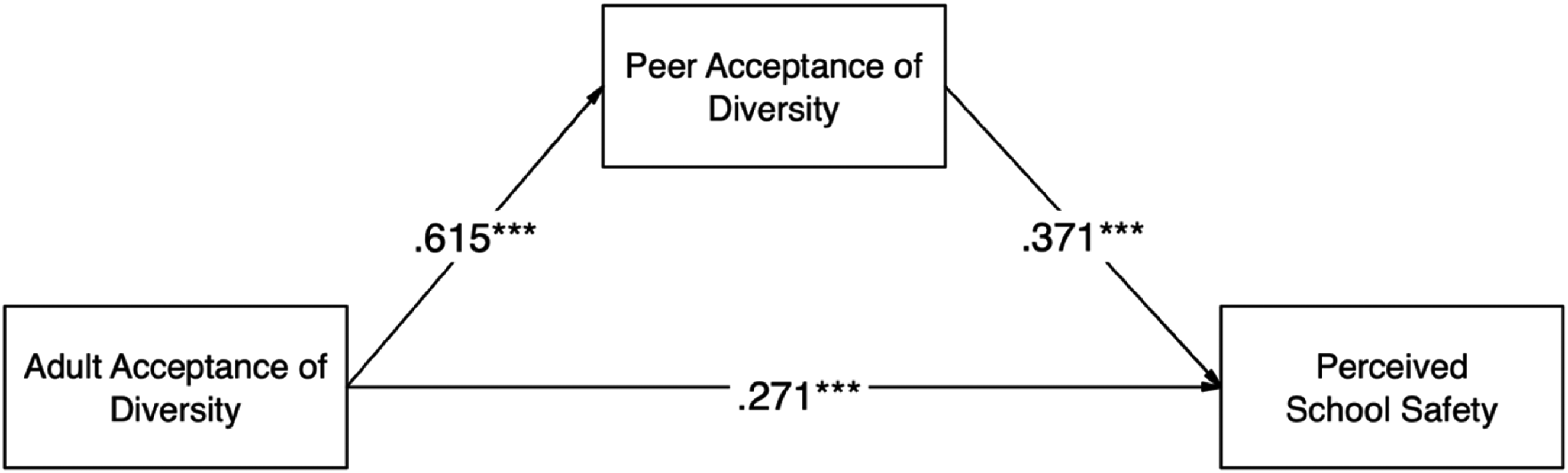
Standardized direct path coefficients
Adult and peer acceptance of diversity
In order to test the second hypothesis, we also examined the association between adult and peer acceptance of diversity (H2-a). Results suggested that adult acceptance of diversity was directly and positively associated with peer acceptance of diversity (β = .679, SE = .043, p < .001). Thus, students who reported higher acceptance of diversity from the adults in their school were also more likely to report higher acceptance of diversity from their peers.
Peer acceptance as a mediator
The results above showed that students who reported greater acceptance of diversity from adults at their schools also tended to report greater acceptance of diversity from peers; moreover, students who reported higher levels of adult and peer acceptance of diversity felt safer at school compared to those who reported lower levels of adult and peer acceptance of diversity. Thus, to test the second part of the second hypothesis, we examined the potential mediating role of peer acceptance of diversity in the association between adult acceptance of diversity and perceived school safety (H2-b). Results indicated a significant indirect association between adult acceptance of diversity and perceived school safety through peer acceptance of diversity (β = .206, SE = .051, p < .001, 95% CI [.111, .310]). Thus, the mediation analysis suggested that peer acceptance of diversity partially mediated the positive association between adult acceptance of diversity and perceived school safety.
Discussion
The purpose of this study was to examine how adult and peer acceptance of diversity together contribute to students’ sense of school safety in a sample of Canadian high school students. In line with the first hypothesis, the current findings extend the existing literature by demonstrating a significant positive association of students’ reports of school safety with adult and peer acceptance of diversity, respectively. When considering the adults at their schools, students have an expectation for their teachers to keep them safe and actively address discrimination in the classroom. Findings from Mori et al. (2021) reveal that students who feel that their teachers are caring, trustworthy, and fair are more likely to report feelings of safety in their schools. Similarly, when students feel accepted and cared for by their peers, they are more likely to perceive their school environment as being safe (e.g., Evans & Rawling, 2021; Russel et al., 2020). The findings continue to shed light on the important role that both adult and peer acceptance of diversity have in creating a school climate where students feel safe and accepted for who they are.
Moreover, this study suggests that school adults may have an important influence on students’ level of acceptance of diversity, although the direction of this relationship could not be confirmed in this study due to its cross-sectional design. In line with the second hypothesis, students who reported higher acceptance of diversity from school adults were also more likely to report higher acceptance of diversity from their peers. Within the classroom, educators have a responsibility to lead by example; by demonstrating affirming attitudes and behaviors towards all students in their classroom, they are in turn leading students to make similar decisions about the behaviors and attitudes they themselves will demonstrate towards their peers (Sanderse, 2013). Extending Konishi et al.'s (2021) findings, which demonstrated that students who perceived school adults to be more accepting of diversity had greater motivation to intervene in bullying situations on behalf of the victims, our findings suggest that accepting school adults may also have the ability to influence students’ views about diversity, encouraging them to be more accepting of all students regardless of their cultural background, ability, sexual orientation, gender, and other cultural identities.
Lastly, this study also examined whether peer acceptance of diversity would mediate the association between adult acceptance of diversity and perceived school safety. In line with our third hypothesis, results demonstrated that peer acceptance of diversity partially mediated the positive association between adult acceptance of diversity and perceived school safety. Again, while causality cannot be established in cross-sectional studies, it is plausible that school adults’ efforts to promote acceptance of individuals of all cultural backgrounds may foster greater peer acceptance of diversity, which in turn is associated with students being more likely to report feelings of safety at school. Conversely, students who report less acceptance of diversity from school adults and peers are less likely to feel a sense of school safety.
Our findings shed light on the importance of both adult and peer relationships on students’ overall sense of feeling safe within the school environment. It is critical for students to feel that the adults and students at their school are open to discussing sensitive topics, such as cultural, gender, sexuality, and disability issues, in order for them to feel safe on school premises. Further, these findings are especially important for students who belong to minoritized groups. Greytak et al., (2009) found that transgender students who reported being able to talk about sexuality and/or gender diversity issues at school, by either bringing up such topics in a class discussion with an accepting teacher or speaking about them with a school adult, were more likely to feel a sense of connection to the adults at their school. Feeling a sense of connection to teachers and other school staff members has also been found to be a significant predictor of students’ feelings of safety in school (McGuire et al., 2010).
Implications for school diversity practices
The present findings have important implications for school psychologists, educators, and other school personnel involved in fostering a positive school climate. School adults have a responsibility to provide all students with a safe learning environment where they can feel accepted and respected for who they are. School safety efforts must focus on antibullying and fostering educators’ positive and affirming attitudes about diversity-related topics (Leonardi & Staley, 2015). Moreover, it is crucial to encourage school staff to challenge prejudiced and disaffirming attitudes around diversity issues and to prepare them to intervene in discriminatory behaviors. School psychologists can be leaders in creating discrimination-based prevention efforts and intervention programs, as intervention strategies implemented by school psychologists and mental health professionals have the potential to support teachers in establishing safe classroom and school environments (Booren et al., 2011; Crepeau-Hobson et al., 2005). Accordingly, fostering acceptance of diversity among teachers through the implementation of adult social-emotional learning programs may be helpful. Social-emotional learning (SEL) is a multi-layered process whereby individuals develop and effectively apply the knowledge, attitudes, and skills required to identify and manage their emotions (i.e., self-awareness and self-management); understand and empathize with others from diverse backgrounds (i.e., social awareness); develop and sustain positive relationships (i.e., relationship skills); and make responsible decisions (i.e., responsible decision-making; Collaborative for Academic, Social and Emotional Learning [CASEL], 2020). Notably, SEL programming can be used to strengthen the competencies of both children and the adults who support them, such as teachers and school staff, highlighting its broad applicability across all age groups (CASEL, 2024). With regard to acceptance of diversity, fostering educators’ social awareness is key as they develop compassion for all students and reflect on broader historical and social norms for behaviour in different settings.
For students from minoritized groups to feel safe, it is essential they feel that school adults accept them for who they are. Moreover, adults must be skilled in initiating and guiding affirming discussions about diversity issues in their schools. In order for school adults to develop these skills and abilities, it is critical that they learn how to analyze social norms and dynamics, including unjust ones that may be affecting their students both in and out of the classroom. Ultimately, the relationships students have with their teachers can be powerful facilitators of change (Hattie, 2009), and classrooms led by teachers who promote group cohesion, mutual respect, and acceptance of diversity are essential for fostering positive and safe school climates for all students.
Limitations and future directions
This study acknowledges several limitations that could serve to guide future research. The sample included in the present study was not nationally representative of the diversity present in the Canadian population. It would thus be beneficial to replicate the study in various Canadian provinces, as this would contribute to better understanding how perceptions of school safety may vary across the country while also accounting for the fuller spectrum of diversity present in high schools across Canada. Relatedly, participants in the study came from one school, which limits the generalizability of our findings.
Additionally, data collected in this study were solely based on student self-report only, which may not fully or accurately capture school adults’ or peers’ attitudes. Future studies could consider including teacher reports of acceptance of diversity, as well as their perceptions of students’ acceptance of diversity, as these could both be beneficial for better understanding the topic. Finally, this study was based solely on cross-sectional data and as such, causal relations among student and adult acceptance of diversity and school safety cannot be established. Future research should further investigate causal relationships from a longitudinal perspective.
Footnotes
Declaration of conflicting interests
The authors declared no potential conflicts of interest with respect to the research, authorship, and/or publication of this article.
Funding
The authors disclosed receipt of the following financial support for the research, authorship, and/or publication of this article: This work was supported by the Social Sciences and Humanities Research Council (SSHRC), Fonds de recherche du Québec-Société et culture (FRQSC), (grant number N/A).
Ethic approval statement
The Research Ethics Board (REB) of McGill University provided approval for the study.
