




Abstract
The relationship between self-concept and academic achievement that is commonly cited has primarily been found in studies of students from Western countries with individualistic societies. Thus, this relationship may not be evident among students from non-Western countries, which are thought to largely adopt collectivist cultural values and behaviors that are inconsistent with the way that students from individualist nations perceive and evaluate their academic functioning. This lack of clarity motivates the present scoping review about the relationship between self-concept and academic achievement among students from collectivist countries who study in elementary, secondary, and post-secondary schools. A final review of 27 empirical articles involving student populations across educational levels and from several collectivist countries provided support for the same general relationship between self-concept and academic achievement that has been found in Western countries. Accordingly, the development of a favorable self-concept was associated with greater academic achievement. In some cases, this relationship was dependent on self-concept and academic achievement being measured in the context of a school-related discipline and on the time interval between the examination of both variables. Our findings provide insight into pathways to academic success that are effective across cultures, and we offer considerations for successful academic self-concept interventions for collectivist students.
Educational psychology scholarship is dominated by researchers, authors, and participants from Western countries in North America and Western Europe (Begeny et al., 2018, 2020; Wang et al., 2020). The overrepresentation of scholarship from the West limits the ways that scientific knowledge can be applied more globally, especially in non-Western regions of the world. To more effectively practice internationalization, which refers to producing scientific research that transcends a specific country, area, or culture, Begeny et al. (2020) recommended investigating research questions more globally and multiculturally. One aspect of such an endeavor is the reconsideration of traditional scientific models that are portrayed as cross-culturally relevant but are disproportionally based in Western populations. This involves rethinking evidence that is based primarily in Western countries (Marsh et al., 2022; Marsh & Martin, 2011; Wu et al., 2021), in which the populations that are studied are typically individualistic in the ways that they perceive and evaluate their academic functioning (Zhang et al., 2020). Conversely, the daily functioning of much of the rest of the world is collectivist. One example of such a model is that of self-concept and academic achievement (Huang, 2011; Marsh et al., 2022; Rüschenpöhler & Markic, 2019), according to which self-concepts, particularly academic self-concepts and academic achievement, are thought to be correlated across different levels of education and various cultural groups (Arens et al., 2017; Guay et al., 2003; Huang, 2011; Marsh et al., 2016; Marsh & Martin, 2011; Marsh & O’Mara, 2008; Niepel et al., 2022; Sewasew & Schroeders, 2019; Valentine et al., 2004; Wu et al., 2021). The implications of the relationship between the two constructs among students from non-Western regions of the world, in which cultural values and practices are typically rooted in collectivism (Hofstede, 2011), are unclear and need to be better understood to inform educational best practices more globally. In particular, it can guide the efforts of many educational stakeholders who face challenges in fostering the integration of the growing rates of non-Western immigrant learners in Western schools (Batalova, 2022; Pomianowicz, 2021; Riederer & Verwiebe, 2015).
The main goal of the current review is to identify and summarize the evidence about the relationship between self-concepts (global and academic) and academic achievement, specifically among students from non-Western and collectivist countries, including those found in Africa, Asia, the Caribbean, South America, Southeast Europe, and the Middle East (Hofstede, 2010). The findings of this review complement previous reviews that (a) are outdated (e.g., Marsh & Martin, 2011); (b) do not distinguish between the different domains of self-concept (e.g., Dulay, 2017); or (c) only include longitudinal studies (e.g., Wu et al., 2021). In addition, the findings provide insight into the extent to which the relationship between self-concepts and academic achievement transcends Western and individualistic cultures and is of relevance to students from a wide range of non-Western and collectivist backgrounds, living both locally and abroad.
Model of self-concept
Given its comprehensive structure, hierarchical organization, and multidimensional assessment of self-concept, Shavelson et al.'s (1976) model of self-concept continues to be typically used in educational psychology research (Arens et al., 2021; Rüschenpöhler & Markic, 2019). Other self-concept models, for example, schema models (e.g., Markus & Nurius, 1986) and neurocognitive models (e.g., Northoff et al., 2006), offer alternative perspectives and focus on specific aspects of self-concept. In Shavelson et al.'s model, an individual's self-views, self-perceptions, and self-descriptions are formed through experiences with their environment and significant others. Additionally, self-concept is a function of both self-esteem, which encompasses feelings and values about the self, and self-efficacy, which involves the perception of capacity and competence (Valentine et al., 2004; Wehrle & Fasbender, 2019).
Shavelson et al. (1976) identify key features in their conceptualization of self-concept. First, self-concept is organized and multifaceted, such that each facet represents an experience that is considered to be meaningful. It can be divided into categories related to academics (academic self-concept) and those that are not (nonacademic self-concept). Academic self-concept is further divided into self-concepts related to specific academic subjects, while nonacademic self-concept is comprised of social, emotional, and physical self-concepts. Second, this multifaceted structure of self-concept is hierarchically organized with general self-concept at the apex and domain-specific experiences at the base, thus suggesting that general (i.e., global) self-concept influences domain-specific self-concepts. Third, whereas the general self-concept is thought to be stable, self-concept becomes less stable as one descends the self-concept hierarchy toward specific facets or domains (e.g., academic self-concepts). Accordingly, changes in self-concept in a specific facet may not necessarily lead to changes in general self-concept. Fourth, self-concept is developmental in that as we get older, the construct becomes increasingly multifaceted, and positive outcomes in a domain are expected particularly when one experiences a positive self-concept within that corresponding domain. For example, a high self-concept in mathematics is expected to contribute to high academic achievement in mathematics. Fifth, self-concept includes both affective (self-descriptions) and cognitive (self-evaluations) evaluations of the self that are considered to be favorable or unfavorable by an individual. Sixth, self-concept differs from the concepts with which it is related. For example, in terms of academic self-concept, perceptions of ability in one subject (e.g., mathematics) are thought to be more closely related to achievement outcomes in that same subject than outcomes in another academic subject (e.g., English).
Academic self-concept
Shavelson's model of self-concept inspired various conceptualizations of academic self-concept (Brunner et al., 2010; Byrne, 2002; Marsh, 1990; Weidinger et al., 2019). In one extension, Marsh and Shavelson proposed the Model of Academic Self-concept, in which academic self-concept incorporates a hierarchy of two levels (Arens et al., 2021; Marsh, 1990). The higher global level includes the math-academic and verbal-academic self-concepts, whereas the lower is subdivided into academic subjects that are traditionally adopted in schools, ordered on a continuum ranging from those that require pure math skills (e.g., math) at one endpoint to those that require pure verbal skills (e.g., English). When applying this model across grade levels and in postsecondary education, students’ academic achievement was found to be more closely correlated with academic self-concepts than with global and nonacademic self-concepts (Marsh & Martin, 2011). These findings are based on a number of reviews of studies primarily involving students from a wide variety of Western countries, including Australia and those in North America and Europe, with only minimal representations of students from the East, notably China and Hong Kong (Huang, 2011; Marsh & Craven, 2006; Marsh & Martin, 2011; Rüschenpöhler & Markic, 2019; Valentine et al., 2004; Wu et al., 2021).
The relationship between academic self-concept and academic achievement was conceptualized in Marsh and Craven's (2006) Reciprocal Effects Model, according to which “prior self-concept affects subsequent achievement, and prior achievement affects subsequent self-concept” (p. 147). Academic self-concept and academic achievement are thus thought to be mutually reinforcing. Consistent with the notion that academic self-concept is considered to be multidimensional (Arens et al., 2021), a higher academic self-concept that is related to a specific core subject (e.g., mathematics or language) has been found to be associated with greater achievement in that same subject (Marsh & Martin, 2011; Möller et al., 2009, 2020; Valentine et al., 2004). Thus, enhancing self-concept is considered a protective factor and a goal of education in most academic contexts (Trautwein & Möller, 2016).
Self-concept and academic achievement among students from collectivist countries
The findings from the studies supporting the relationship between self-concept and academic achievement have primarily been conducted among students from Western cultures, such as those found in Western regions of Europe, North America, and Australia (e.g., Marsh & Martin, 2011; Niepel et al., 2022; Valentine et al., 2004; Wu et al., 2021). These cultures are considered individualistic in nature, as cultural values typically include placing an emphasis on the separateness and uniqueness of an individual (Greif, 1994; Hofstede, 2010). In contrast, many countries in South and East Europe, Asia, Africa, South America, and the Pacific islands are thought to be mainly collectivist in nature, as individuals view the self as defined in major part by the wellbeing of members in their close relationships and community (Hofstede, 2010, 2011; Juslin et al., 2016; Markus & Kitayama, 1991, 1998; Singelis, 1994). Thus, the notion of self tends to be centered around independence in individualist countries and around interdependence and connectedness with the broader social group in collectivist countries (Markus & Kitayama, 1991, 1998; Singelis, 1994). This difference in self-views between individualist and collectivist countries reflect the cultural practices and values that citizens favor and are further reflected in how academic knowledge is acquired and disseminated in schools (Alfred, 2009; Cvencek et al., 2018; Fryberg et al., 2013; Hammond, 2015; Juszczyk & Kim, 2017; Stephens et al., 2012).
The cultural differences in terms of the influences and measurement of self-views between individuals in individualistic and collectivist countries may lead to varying implications for the relationship between self-concept and academic achievement. For example, this relationship may be more influenced by social factors and external evaluations in collectivist countries, compared to individualist countries where this relationship may be more influenced by internal standards and individual motivations. Such variations in influences of the relationship between self-concept and academic achievement may further be linked to students’ mental health in that collectivist students may experience pressure from their families or communities, whereas individualistic students may feel pressure to meet personal goals and expectations. In terms of measurement, in educational psychology, the measure of self-concept is typically based on individualistic psychological constructs (Cokley & Patel, 2007) (examples of exceptions include Chen et al., 2020 and Yeung & Lee, 1999) that may be at odds with the in-group reference point valued by people from collectivist societies (Hofstede, 2011; Stephens et al., 2012; Weva et al., 2022).
The goal of this scoping review is to examine the extent, range, and nature of the findings on the relationship between self-concept and academic achievement among students from collectivist countries and across elementary, secondary, and postsecondary educational levels, and to address implications for educational practice. Munn et al. (2018) highlight that Scoping reviews conducted as precursors to systematic reviews may enable authors to identify the nature of a broad field of evidence so that ensuing reviews can be assured of locating adequate numbers of relevant studies for inclusion. They also enable the relevant outcomes and target group or population for example for a particular intervention to be identified. This can have particular practical benefits for review teams undertaking reviews on less familiar topics and can assist the team to avoid undertaking an “empty” review. (p.4)
Consistent with this viewpoint, in the present scoping review, we provide a summary of the key themes, findings, and limitations of the research that can inform the development of the research questions and inclusion criteria of future systematic reviews on self-concept and academic achievement across different societies.
Method
Objectives and eligibility criteria
The present scoping review followed the Preferred Reporting Items for Systematic Reviews and Meta-Analyses extension for Scoping Reviews (PRISMA-ScR: Tricco et al., 2018). This protocol includes 20 essential and 2 optional reporting items. In line with item 5, the current scoping review was preregistered on the Open Science Framework (osf.io/dr67v). With regard to items 4 (objectives) and 6 (eligibility criteria), the research question that guided the present review was, “What is the relationship between self-concepts and academic achievement among students from collectivist countries who study in elementary, secondary, and post-secondary schools?” To ensure that a broad variety of studies was captured, articles on self-concept, as measured by global, academic, or subject specific self-concepts, were included in the review. In terms of the identification of the collectivist countries included in this review, they were determined using recommendations from Hofstede (2010, 2011), a founder of comparative intercultural research who developed the six-dimensional (6-D) model of national culture. This model is based on six combinations of cultural dimensions, including the dimension of individualism versus collectivism. Using Hofstede's country comparison tool (Hofstede Insights, n.d.), the degree to which a nation values individualism versus collectivism can be measured, and scores can be compared among different nations. Within this system, nations that score high on individualism (above 50) are typically Western, whereas nations that score high on collectivism (below 50) are typically developing and non-Western.
Information sources and search strategy
Consistent with items 7 (information sources) and 8 (search), the articles reviewed were identified from an exhaustive search of electronic directories from the field of social sciences. The articles were chosen from the PsychINFO, MEDLINE, ERIC, and Scopus databases. The electronic search strategy was formulated under the supervision of a specialist librarian from McGill University. Two groups of keyword combinations were used and adapted to each database. For example, in the electronic search in the PsychINFO database, the search term “Academic Achievement” was combined in an interactive manner with “Self-Concept” or “Academic Self Concept”. The publication year was not restricted, and the search was conducted on January 6, 2022.
Selection of sources of evidence
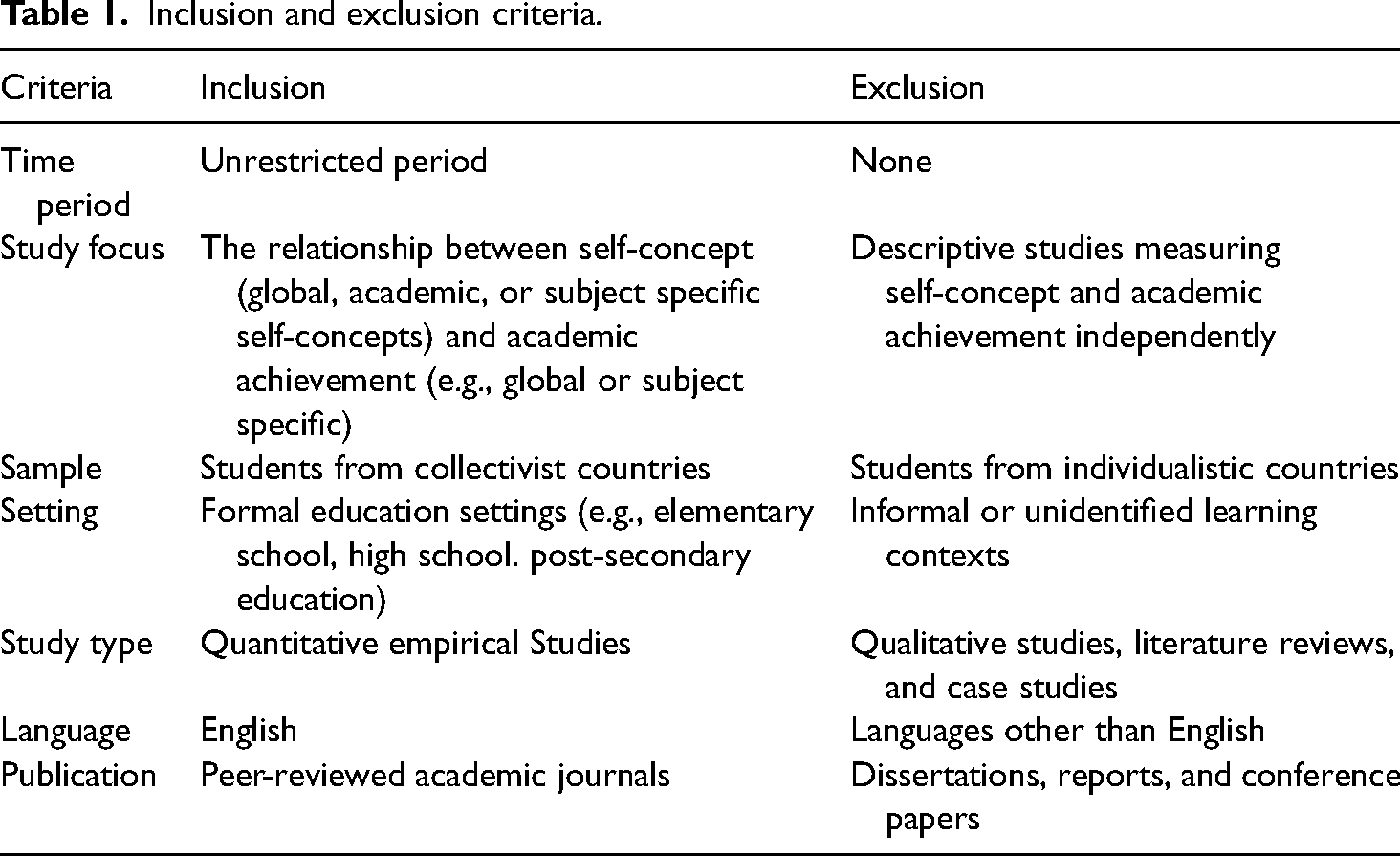
Regarding item 9 (selection of sources of evidence), the search and screening process was conducted by two independent reviewers (the first and third authors). First, study titles and abstracts were screened against the inclusion and exclusion criteria by both reviewers. Second, a number of studies were retained for full-text review by the screeners if they met the following inclusion criteria: (a) measured the relationship between self-concept and academic achievement; (b) included students from collectivist countries studying in a formal education setting; (c) included findings from quantitative analyses; (d) published in English (in order to focus on papers published in the language shared by all the reviewers and maintain a comprehensive and unbiased review process); and (e) published in peer-reviewed academic journals (due to significant challenges with gaining full-text access to grey literature). Further information on the inclusion and exclusion criteria is included in Table 1. If a record's title or abstract did not contain all of the information necessary to determine whether it met the criteria, it was kept for full-text review. The interrater reliability (IRR) was calculated by dividing the total number of agreed-upon records in the screening phase by the total number of records identified for inclusion by both reviewers (Gunning et al., 2019). During the original screening phase, an acceptable agreement level of 81% was attained (Belur et al., 2021). The reviewers then applied the inclusion criteria to the 59 full-text articles and agreement of 100% was obtained on the final set of 27 studies.
Inclusion and exclusion criteria.
Data charting
Data charting was completed in line with item 10 of the PRISMA-ScR protocol. Each study was summarized and analyzed in terms of the following characteristics: (a) author (year), (b) country, (c) participants, (d) self-concept and academic achievement measures, and (e) results of interest. The first author completed the data charting of the 27 articles included in the scoping review and the second author reviewed and summarized the reported table characteristics of 15 (55%) randomly selected studies, as per Tricco et al.'s (2018) recommendations. One hundred percent agreement was achieved on the IRR that was computed for the 75 elements derived from the 15 studies and the 5 data charting characteristics.
Data items and synthesis of results
Data were retrieved (item 11) for the following variables: global, academic, and subject-specific (e.g., math) self-concepts as well as global (e.g., grade point average [GPA]) and subject-specific (e.g., test scores) academic achievements. The relationship between self-concept and academic achievement is summarized and presented (item 13) based on educational level (elementary, secondary, and postsecondary schools) which is consistent with previous similar reviews that mainly reflect student populations in individualist countries.
Results
Sources of evidence
The findings reported in this scoping review reflect the PRISMA-ScR protocol's five recommended items (14 through 18) for reporting research results (Tricco et al., 2018). A total of 7,467 journal articles were identified in the search. EndNote 20 (The EndNote Team, 2013) was used to manage the references and remove duplicate records (n = 503). The remaining records (n = 6,964) were uploaded to Rayyan (Ouzzani et al., 2016), an electronic collaboration and research tool that was used by the reviewers, who were blinded to each other's inclusion and exclusion decisions, to screen titles and abstracts. Fifty-nine articles were selected to be read in full text. Finally, a total of 27 articles met the inclusion criteria for the present review. The study selection process in a PRISMA flow diagram (Page et al., 2021) is summarized in Figure 1. The characteristics of the studies that are included in the present review are presented in Appendix A. Most of the studies were published between 2012 and 2022 (n = 16), many studies included a measure of the relationship between subject-specific self-concept and achievement in that same subject (e.g., self-concept in mathematics and achievement in mathematics; n = 12), and three studies were longitudinal (Chen et al., 2015; Guo et al., 2021; Xu, 2018). In terms of geographical representation, the participants came from the following collectivist countries: Azerbaijan (n = 1), Botswana (n = 1), China (n = 5), India (n = 1), Korea (n = 1), Malaysia (n = 1), Nigeria (n = 2), Pakistan (n = 1), Philippines (n = 1), Puerto Rico (n = 1), South Africa 1 (n = 2), Spain 2 (n = 5), St. Lucia (n = 1), Taiwan (n = 2), and United Arab Emirates (n = 2). In terms of educational level, most studies included high school (or secondary school) students only (n = 17), four studies included postsecondary school (i.e., college or university) students only, and one study included elementary school (i.e., primary school) students only. The remaining studies (n = 5) included cohorts of students in different grade school levels (e.g., students in elementary and high school). The characteristics of the included studies are presented in Appendix A.
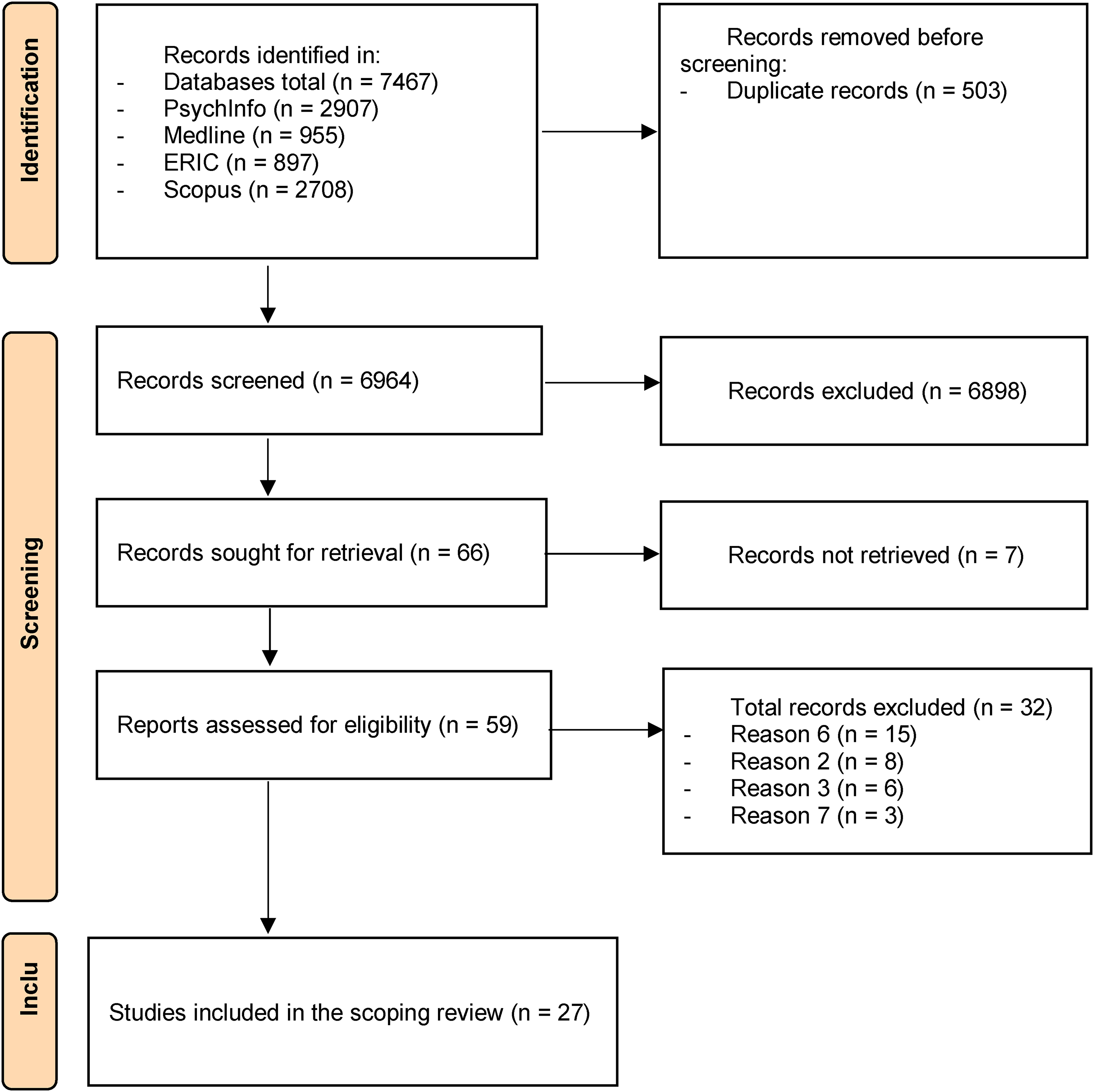
Identification of sources of evidence.
Students in elementary and secondary schools
Combined groups. Four studies were conducted with combined groups of students in elementary and secondary schools. Both Abadzi and Florez (1981) and Abu-Hilal (2000) found that global self-concept was positively correlated with GPA, and that self-concept in mathematics was positively correlated with achievement in mathematics among students in Puerto Rico. Among students in Spain, Gonzalez-Pienda et al. (2002) found that academic self-concept predicted academic achievement, but that achievement did not statistically predict academic self-concept. In Chen et al.'s (2013) 2-year longitudinal study of a cohort of Taiwanese students in elementary school (grades 5 and 6) and a separate one in high school (grades 10 and 11), subject-specific self-concepts (in Chinese language and mathematics) were positively correlated with achievement in the respective academic domain across timepoints and among both cohorts. In terms of the relationship between self-concept and academic achievement in unmatched academic domains, self-concept in Chinese and achievement in mathematics were not statistically correlated in either group, whereas self-concept in mathematics and achievement in Chinese were positively correlated in the elementary school group only.
Elementary Schools. Two studies were conducted with students in elementary school, specifically in grades 5 and 6. In Korea, Bong et al. (2012) found that self-concept in mathematics was positively associated with achievement in mathematics among students. In Spain, Herrera et al. (2020) found that academic self-concept positively predicted academic achievement in natural sciences, Spanish language and literature, as well as mathematics, and to a greater extent compared to the other statistically significant predictors of self-concept (i.e., family and physical self-concepts).
Secondary Schools. In terms of the relationship between global self-concept and academic achievement (in mathematics, English, or overall) in secondary school, the findings from four studies indicated a positive relationship between these variables among students in Nigeria (Abdullahi, 2013), South Africa (Cherian & Moeketsi, 1998), India (Lone & Lone, 2016), and Botswana (Maqsud & Rouhani, 1991). With regard to the relationship between subject-specific self-concept and global academic achievement, Veas et al. (2015) found a positive relationship among students in Spain when self-concept was measured in terms of the verbal, mathematics, and general academic domains. In the other studies, academic self-concept was also found to be a positive predictor of global academic achievement in Spain (Perez et al., 2012) and St. Lucia (Richardson & Lee, 1986), as well as achievement in mathematics, sciences, and history in South Africa (Mboya, 1999) and Spain (Suarez-Alvarez et al., 2014). In a study of students in The Philippines, Peteros et al. (2020) provided the only study of global self-concept in terms of the underlying mechanisms that contribute to its development. Three underlying elements of self-concept were identified—learned, organized, and dynamic—and all three were found to be positively correlated with achievement.
With regard to subject-specific self-concept and achievement, the outcomes from eight studies among high school students revealed positive relationships between matched self-concept and academic achievement in the United Arab Emirates (Areepattamannil et al., 2017), Pakistan (Awan et al., 2011), Azerbaijan (Karimova & Csapo, 2020), Taiwan (Wang & Liou, 2017), Korea (Bong et al., 2012), and China (Chao et al., 2019; McInerney et al., 2012; Xu, 2018). In the only longitudinal study of this relationship, Xu (2018) found that, over the course of an academic year, self-concept in mathematics positively predicted later achievement in mathematic among high school students in China. In the other two studies of high school students, the findings on the relationship between unmatched self-concept and academic disciplines (e.g., self-concept in English and achievement in mathematics) were mixed. Among students in China, Chao et al. (2019) found that self-concept in English positively predicted achievement in Chinese, but that self-concept in Chinese was not a statistically significant predictor of achievement in English. Among Azerbaijani students, Karimova and Csapo (2020) found that self-concept in Russian was positively correlated with achievement in mathematics and English, self-concept in mathematics was negatively correlated with achievement in English but not correlated with achievement in Russian, and self-concept in English was not correlated with achievement in mathematics nor Russian.
Students in postsecondary schools
Among students in college or university, the findings from three of the four studies indicated a relationship between self-concept and academic achievement. Among vocational college and undergraduate university students, academic self-concept was found to be positively correlated with general academic achievement in Taiwan (Chen et al., 2015) and achievement on a statistical exam in Nigeria (Anazonwu, 1995). In Guo et al.'s (2021) longitudinal three-wave study that was conducted in China with a 1-year interval between waves, Time-1 achievement and Time-2 academic self-concept were positively related, as was Time-2 academic self-concept with Time-3 achievement. In Ahmad et al.'s (2011) study among Malaysian students, global self-concept and academic achievement, as measured by cumulative GPA, were unrelated.
Discussion
Given the role of culture in educational experiences and the underrepresentation of school psychology scholarship from non-Western and collectivist nations (Begeny et al., 2020; Cvencek et al., 2018; Fryberg et al., 2013; Juszczyk & Kim, 2017; Wang et al., 2020), the goal of the present scoping review was to provide a more global and cross-cultural understanding of the relationship between self-concepts and academic achievement among students across educational levels from collectivist countries. The 27 studies identified in this scoping review involved student populations in Africa, Asia, Europe, and the Caribbean. The findings from these studies are consistent with those from studies based in Western countries, in which self-concept was found to be related to academic achievement across development in elementary, secondary, and postsecondary institutions (e.g., Wu et al., 2021). Additionally, in some cases, this relationship was dependent on the match between the self-concept and academic domains measured (e.g., self-concept in mathematics and achievement in mathematics), as well as on whether the study was longitudinal.
The influence of academic self-concept and longitudinal studies
The findings from our review highlighted that self-concept was more likely to influence academic achievement when measured in terms of an academic subject as opposed to globally or in relation to a nonacademic domain (e.g., Ahmad et al., 2011; Herrera et al., 2020). For example, findings from three studies among elementary and high school students in Spain (Herrera et al., 2020), South Africa (Mboya, 1999), and St. Lucia (Richardson & Lee, 1986) underscore the stronger relationship between academic self-concept and academic achievement, in comparison to global and nonacademic self-concepts (social, emotional, physical, and family) with academic achievement. Thus, the alignment between the self-concept and the academic domain plays a significant role in determining the impact on academic achievement. The temporal aspect of a study should also be considered when examining the reciprocal relationship between self-concept and academic achievement. For example, Gonzalez-Pienda et al. (2002) found no evidence of a reciprocal relationship between academic self-concept and academic achievement when these were measured at the same moment in time in their research among elementary and high school students in Spain. Accordingly, academic self-concept predicted academic achievement, but academic achievement did not predict academic self-concept. This failure to find a reciprocal relationship could be due to the single time point for data collection in Gonzale-Pienda et al.'s study, a strategy that was criticized by Marsh and Martin (2011) who argued that longitudinal studies, across at least two-time points, are necessary to examine prior academic self-concept and subsequent academic achievement. Thus, the relationship between self-concept and academic achievement is not static, and its dynamics can be influenced by the match between the self-concept and academic domains measured as well as the study design. These factors are crucial for a comprehensive understanding of how self-concept and academic achievement are interconnected and how they can impact student learning and mental health.
Effective self-concept interventions
Self-concept interventions can be implemented in schools by various practitioners, including school psychologists and other mental health and academic professionals (O’Mara et al., 2006; Trautwein & Möller, 2016). In systematic reviews of students across elementary to postsecondary education levels in various collectivist and individualist countries, several guidelines have been forwarded to foster the mutual relationship between academic self-concept and academic achievement through self-concept interventions. One, these interventions should include self-enhancement or skill development training (O’Mara et al., 2006). Two, interventions should be subject-specific, as global self-concept may not necessarily be related to academic achievement in the same way as academic self-concept or self-concept in a corresponding academic subject (Wu et al., 2021). Three, educational professionals should address self-concept across disciplines rather than only those in which students are having difficulties, because strengthening self-concept in one subject may negatively impact perceptions in another subject (Marsh et al., 2015).
Effective self-concept interventions for both students in collectivist and individualist countries can also target feedback, praise, and performance-comparison practices. For example, appropriate feedback and praise from significant others, such as parents, teachers, and peers, has been found to be protective of a favorable self-concept among students in China (Leung et al., 2013; Yang & Watkins, 2013), the United States (McPartlan et al., 2021), and Germany (Simonsmeier et al., 2020). For collectivist students, feedback, praise, and performance-comparison practices should be influenced by people in their environment, such as family members, extended relatives, community leaders, teachers, and classmates who are known to play a crucial role in shaping the self-views of collectivist individuals (Markus & Kitayama, 1991, 1998; Singelis, 1994). The development of self-concept interventions for collectivist students could thus consider the influence of their sociocultural group on shaping self-views.
Strengths, limitations, and directions for future research
One main strength of the scoping review is the transcontinental evidence highlighting the relationship between self-concepts and academic achievement among students from collectivist countries in Africa, Asia, Europe, and the Caribbean. This review also includes a developmental examination of the relationship between the constructs among students in elementary, secondary, and postsecondary schools. While our findings are consistent with those from Western populations, some limitations should be taken into account when interpreting our conclusions. This scoping review reflects the ongoing limitations in this area of research as expressed by Marsh and Martin (2011). First, only three studies were longitudinal. Second, some did not include multiple indicators of academic achievement, and third, the measures were not consistently validated among the participants. Future studies and reviews on the link between academic self-concept and academic achievement among different cultural groups should follow Marsh and Martin's (2011) recommendations to allow for an in-depth and standardized examination of the relationship's cross-cultural relevance. Moreover, to further enhance the inclusivity and scope of research about the relationship between self-concept and academic achievement among students in collectivist countries, future reviews can encompass grey literature and papers published in languages other than English.
Conclusion
The findings of the current scoping review highlight similarities between individualist and collectivist cultures in the way that self-concepts relate to academic achievement among students across educational levels. In addition to informing academic best practices across collectivist regions that are understudied in educational psychology (Begeny et al., 2020; Wang et al., 2020), our findings provide valuable insights for Western and individualist countries that struggle to meet the academic needs of the growing rates of immigrant learners from non-Western and collectivist countries (Batalova, 2022; Pomianowicz, 2021; Riederer & Verwiebe, 2015). Pertaining to the international community of school psychology, this review contributes to advancing the understanding of how self-concept relates to academic achievement across students from a broad representation of collectivist countries. Furthermore, by shedding light on the unique dynamics and cultural factors that typically influence the self-views of collectivist individuals, this review contributes to paving the way for more culturally sensitive and inclusive school psychology practices that will benefit students worldwide.
Supplemental Material
sj-docx-1-spi-10.1177_01430343231194735 - Supplemental material for Self-concept and the academic achievement of students from collectivist countries: A scoping review of empirical findings
Supplemental material, sj-docx-1-spi-10.1177_01430343231194735 for Self-concept and the academic achievement of students from collectivist countries: A scoping review of empirical findings by Vanessa K Weva, Jenilee-Sarah Napoleon, Karen Arias, Mariëtte Huizinga and Jacob A Burack in School Psychology International
Footnotes
Declaration of conflicting interests
The author(s) declared no potential conflicts of interest with respect to the research, authorship, and/or publication of this article.
Ethics approval
Ethics approval was not sought for the scoping review study as it was determined that the study did not involve direct interactions with human participants or primary data collection, thus not requiring ethics approval as per McGill University institutional guidelines.
Funding
The author(s) disclosed receipt of the following financial support for the research, authorship, and/or publication of this article: This research was supported by the Joseph-Armand Bombardier Canada Graduate Scholarships—Doctoral Scholarship (grant number 752-2019-1912), awarded to Vanessa K. Weva

Supplemental material
Supplemental material for this article is available online.
Notes
Author biographies
References
Supplementary Material
Please find the following supplemental material available below.
For Open Access articles published under a Creative Commons License, all supplemental material carries the same license as the article it is associated with.
For non-Open Access articles published, all supplemental material carries a non-exclusive license, and permission requests for re-use of supplemental material or any part of supplemental material shall be sent directly to the copyright owner as specified in the copyright notice associated with the article.
