




Abstract
Several studies have highlighted the mental health challenges of children and youth during the COVID-19 pandemic lockdown period, especially, in relation to an escalation of depression, anxiety, and stress. Whilst this may be the reality, it is unfortunate that most of the studies adopt a psychopathological point of departure often portraying doom and gloom. Adopting a social ecological resilience perspective the author focuses on the resilience of school-attending black South African youth during the COVID-19 lockdown period. The Child and Youth Resilience Measurement (CYRM-28) was completed by 4165 respondents in grades 4 to 12 (females = 2431, 58.4%; males = 1734, 41.6%) from the Gauteng, Mpumalanga and North-West provinces in South Africa. The findings indicate that school psychologists must consider gender, age and school levels when they design school-based resilience programmes for black South African children. Particular emphasis should be placed on contextual resilience highlighting spiritual, religious, cultural and educational factors. A major lesson for school psychologists is to ensure that school-based resiliency programmes adopt a whole school approach that includes children, their families and local communities for the successful promotion of resilience during adverse situations as postulated by the social ecological resilience model.
Keywords
Towards the end of 2019 a severe respiratory syndrome coronavirus 2 (SARS-CoV-2), globally known as COVID-19, was identified in Wuhan, China. In 2020 the World Health Organization (WHO, 2020) declared COVID-19 to be a global public health problem that led to the lockdown of most countries after a state of disaster was declared. The virus led to severe disruptions in the daily lives of people resulting in social disruption, financial insecurity, and increased burdens in medical and social care (Gayatri & Irawaty, 2021; Prime et al., 2020). Many academics rose to the occasion to investigate the medical and physical challenges that emerged through the virus (Papapanou et al., 2021). However, the focus on the psychological wellbeing and mental health of young people, during the COVID-19 lockdown period was lacking. When this became noticeable some researchers conducted studies on the psychological wellbeing of people during the COVID-19 lockdown period (Cerami et al., 2020; Favieri et al., 2021; Panzeri et al., 2021). The focus on young people is paramount because neglecting their mental health concerns can compromise their future development resulting in long-term effects carried into adulthood (Crews et al., 2016; Holmes et al., 2020; Qi et al., 2020; Wambua et al., 2018).
Several studies have highlighted mental health difficulties experienced by young people during the COVID-19 lockdown period, such as anxiety (Myruski & Buss, 2020), post-traumatic stress disorders (PTSD) (Cui et al., 2020; Henderson et al., 2020; Imran et al., 2020; Jefsen et al., 2020; Liang et al., 2020; Sethy & Mishra, 2020), depression and grief associated with loss (Guessoum et al., 2020; Nearchou et al., 2020). The mental health of young people during the COVID-19 lockdown escalated feelings of loneliness, hopelessness, helplessness and suicidal ideations and attempts (Cuartas, 2020). More young people presented with symptoms of stomach problems, eating, and sleeping disorders, learning difficulties, attention-deficit hyperactivity, conduct disorders and mood swings (Cui et al., 2020; Jefsen et al., 2020; Liang et al., 2020; Ramadhan et al., 2020). Most of these mental health problems emerged through risk factors associated with compulsory home confinement, the loss of loved ones, intra-familial violence, and excessive use of the internet and social media (Guessoum, et al., 2020). A systematic analysis of literature by researchers (Panzeri et al., 2021; Veer et al., 2021) show that most studies on psychosocial wellbeing and mental health of young people during the COVID-19 lockdown tended to focus on risks they were exposed to. Very few studies focused on resilience and protective factors (Panzeri et al., 2021) often presenting a psychopathological perspective on the mental health of young people. The absence of research on the mental health of young people during the COVID-19 lockdown in Africa is very conspicuous. Considering this, this study investigated the resilience factors that contributed to the mental health of young people in South Africa during the lockdown period. The aim was to shift from a psychopathological to a more resilient perspective that could mitigate success in dealing with the virus among young people.
Since this study is embedded in the social ecological resilience model developed by Windle (2011), the definition of resilience encompasses three different perspectives. First, it is viewed as a psychological trait that promotes psychological wellbeing within the context of this study (Panzeri et al., 2021; Rossi et al., 2007). Second, it is the capacity for young people to maintain stability in wellbeing despite the COVID-19 challenges. Third, resilience will be the ability of people to adapt and change or bounce back (Bennett, 2010). In essence, resilience
Method
Participants and procedure
The data file was split to separate the Black African respondents from the other groups as the overwhelming number of respondents were Black African. Data was collected through the CYRM-28 completed by 4165 Black African respondents (97.7%). Data was collected by fieldworkers from 74 primary and secondary schools, randomly selected in three districts in the Provinces of Mpumalanga and Northwest. This is estimated to be about 8.3% of the total public schools in these districts (DoBE, 2016). No response rate could be determined as data was collected by field workers who supervised data completion from respondents who were available and volunteered to participate after school hours. Data was then placed on an XL spreadsheet and placed into SPSS 27.0 for descriptive and inferential analysis of data. Strict Covid-19 regulations were also applicable. Data was collected over a period of about two months. There were 2431 (58.4%) females and 1734 (41.6%) males. Respondents were in grades 4 to 7 in primary schools (2069 or 49.7%) and grades 8 to 12 in secondary schools (2096 or 50.3%). The Black African learners were from two provinces in South Africa, namely: Mpumalanga (n = 4068 or 97.7%) and North-West (n = 95 or 2.3%). The discrepancies in numbers were caused by lack of accessibility to schools due to the COVID-19 lockdown rules. Field workers could only collect data from schools and provinces that allowed them to do so and this severely restricted access to schools especially in the Northwest Province. Most participants were from the Bohlabela (n = 2546 or 61.1%) and Ehlanzeni (n = 1522 or 36.5%) districts in Mpumalanga while 105 (2.3%) were from Bojanala in Northwest. Age of the Black African learners was recoded into two groups, namely ≤14 years (2319 or 55.7%) and 15 + -years (1846 or 44.3%). The age grouping was to accommodate the primary and secondary mandated ages in primary and secondary schools in South Africa. There is some overlap in the grade 7 and grade 8 groups regarding 13 and 14 years of age. The expected age in grade 7 is 13 years of age and for grade 8 it is 14years. However, due to grade failure and possibly some socio-economic reasons this ideal age is not always possible. The researches did a correspondence biplot analysis and the groupings were close to G 4 to G7 with 10- to 14 years and G8 to G12 with 15- to 19 years of age.
Analysis of CYRM-28 questionnaire
Van Rensburg et al. (2019) adjusted the CYRM-28 to include the subscales; cultural/ social and community/spiritual. This adaptation of the original CYRM-28 was then found to be valid and fitting for use in South Africa by Van Rensburg et al. (2019). This scale can be administered to persons between the ages of 9 and 24. The scale was a five-point interval scale, which asked participants “to what extent does the item describe you?” The response numbers were 1 (Not at all), 2 (A little), 3 (Somewhat), 4 (Quite a lot), 5 (A lot). The researcher then identified the items belonging to the various dimensions and sub-dimensions involved in the resilience measure using the manual from the Resilience Research Centre-sub-scales and questions on the CYRM, May 2016. However, this manual is silent on items 27 (I enjoy my community's traditions). Item 28 (I am a proud citizen of my country) was missing from the questionnaire. The items were grouped as suggested by Liebenberg et al. (2012). However, this researcher attempted a different EFA using PCA with Varimax rotation. The resulting eight first-order factors were subjected to a similar second-order procedure. Three second-order factors were formed. The first one included the first-order factors of personal, peer and social resilience which explained 58.47% of the variance present. It contained eight items with a Cronbach reliability of.653 and omega reliability of.618. Furthermore, it had an Average Variance Extracted (AVE) value of 0.58 suggesting converging validity. The composite reliability (CR) was 0.91. This second-order factor was named Individual resilience (FD2.1).
The second factor contained two first-order factors namely psychological- and physical care with seven items present. This second-order factor explained 75.65% of the variance present, had a Cronbach reliability of 0.719 and Omega of 0.708. It was named caregiver resilience (FD2.2). The caregiver resilience factor had an AVE of 0.55 indicating converging validity and a composite reliability (CR) of 0.88.
The third second-order factor had nine items and was composed of three first-order factors. These three first-order factors grouped to form one second-order factor which was named “contextual resilience” (FD2.3). The second-order factor (FD2.3) branded as contextual resilience had an alpha reliability of 0.713 with omega reliability of 0.712. The second-order contextual resilience had an AVE of 0.42 indicating that converging validity was problematical with items D19, D22 and D3 involved.
The researcher now attempted a confirmatory factor analysis (CFA) as he was interested in the structural part of the model to determine how these three latent second-order constructs influence the first-order factors. The model drawn in AMOS 27 is given in Figure 1 (for clarity the items and item errors have not been included).
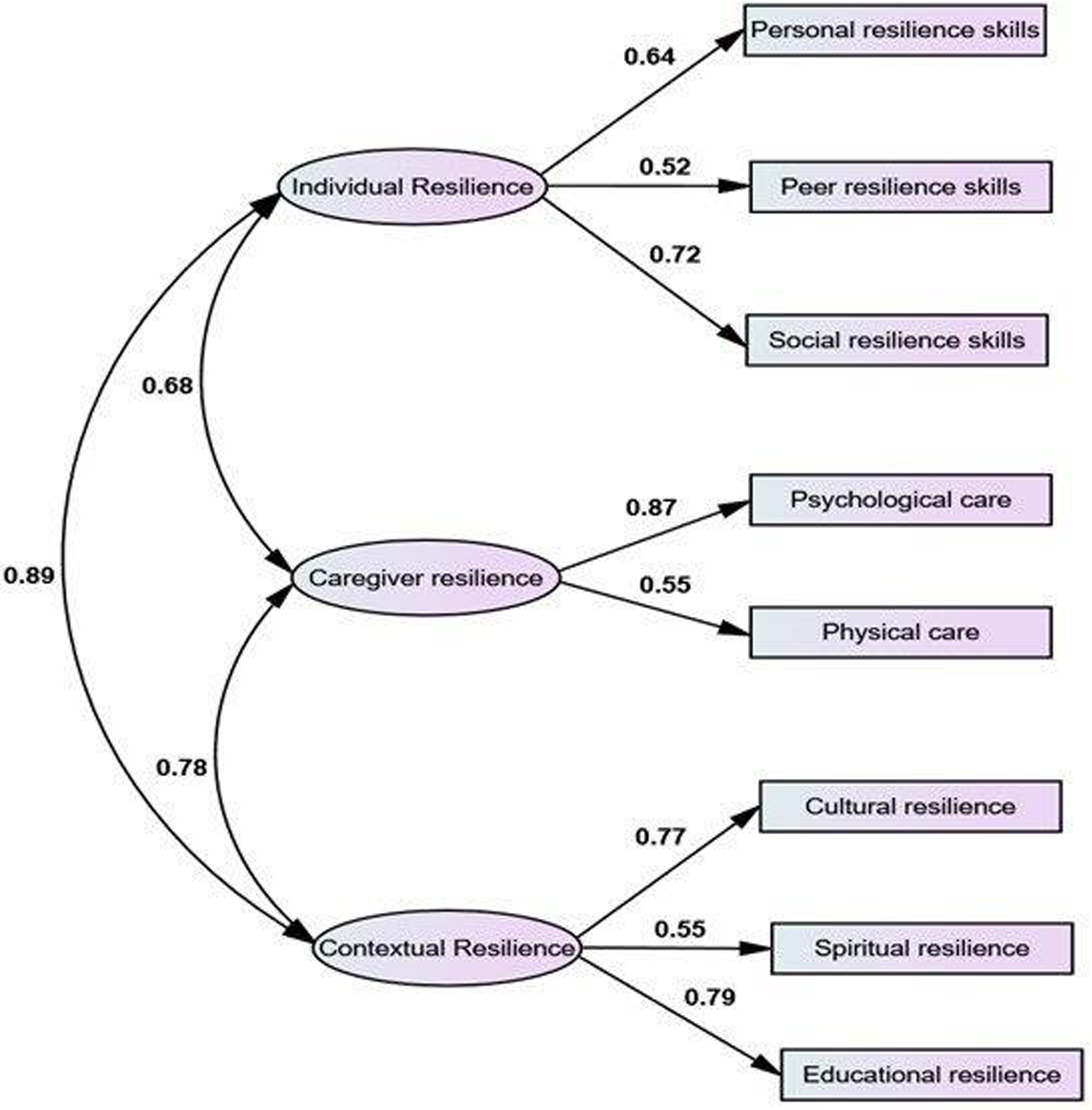
Second-order structure of resilience using CYRM −28 using AMOS 27.0. (Source-Liebenberg et al., 2012: 222).
The researcher made use of modification indices (MI) to obtain a better fit of data. The two model fit indices used were CFI and RMSEA (CFI = .751; RMSEA = .074 (Lo90 = .073, Hi90 = .080). The RMSEA values of <0.80 indicate a reasonable error of approximation (Arbuckle, 2007: 592).
Results
The data distribution in the total resilience factor is shown in Figure 2. The data distribution is negatively skew as most respondents perceived the total resilience factor to be “quite a bit true of them” with a mean score of 3.95, median of 4.00 and SD of 0.61.
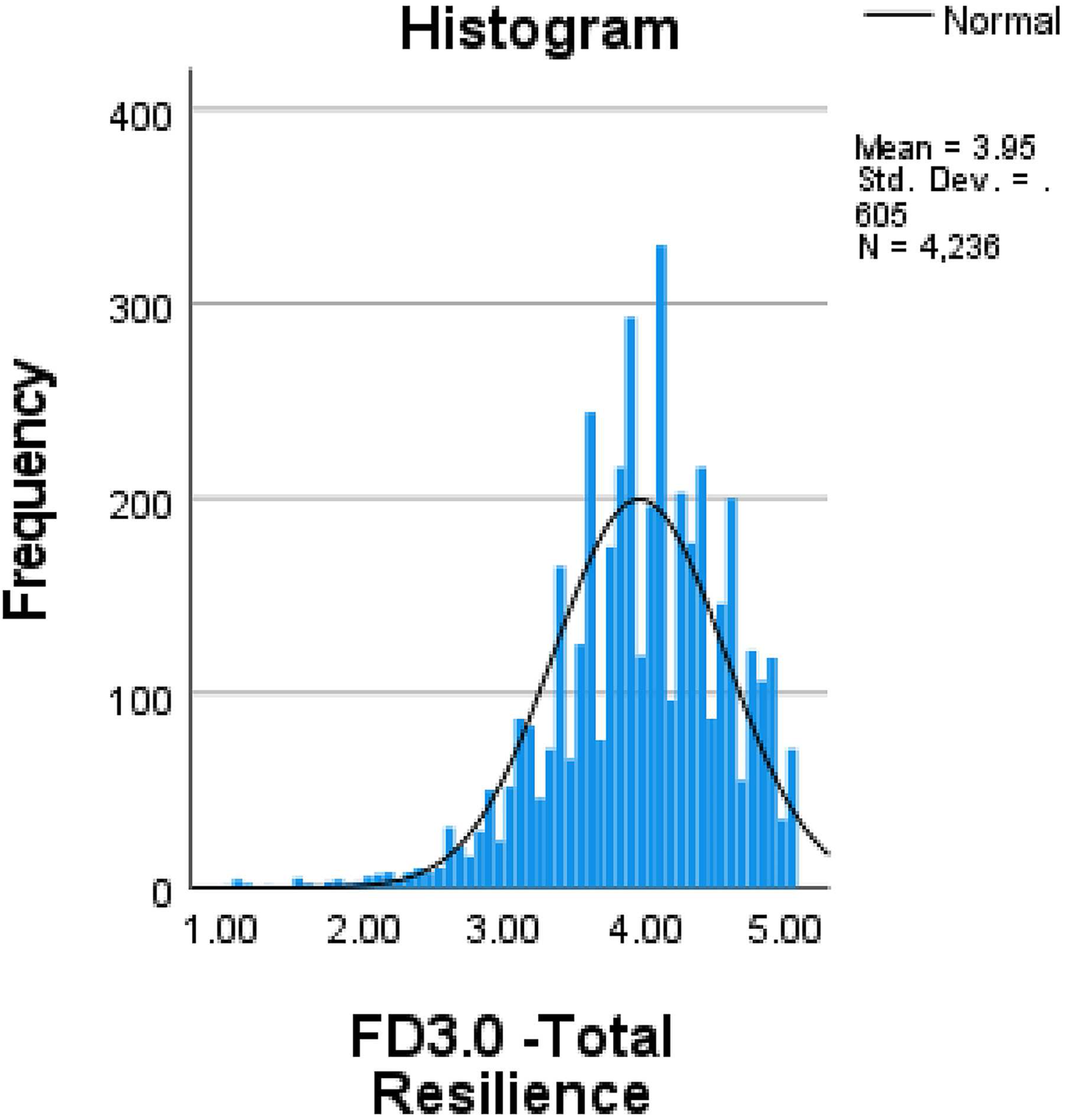
Histogram showing data distribution in the total resilience factor.
Significant differences between the independent groups and total resilience as dependent variable
The first variable analyzed was gender followed by age groups and school type.
Gender
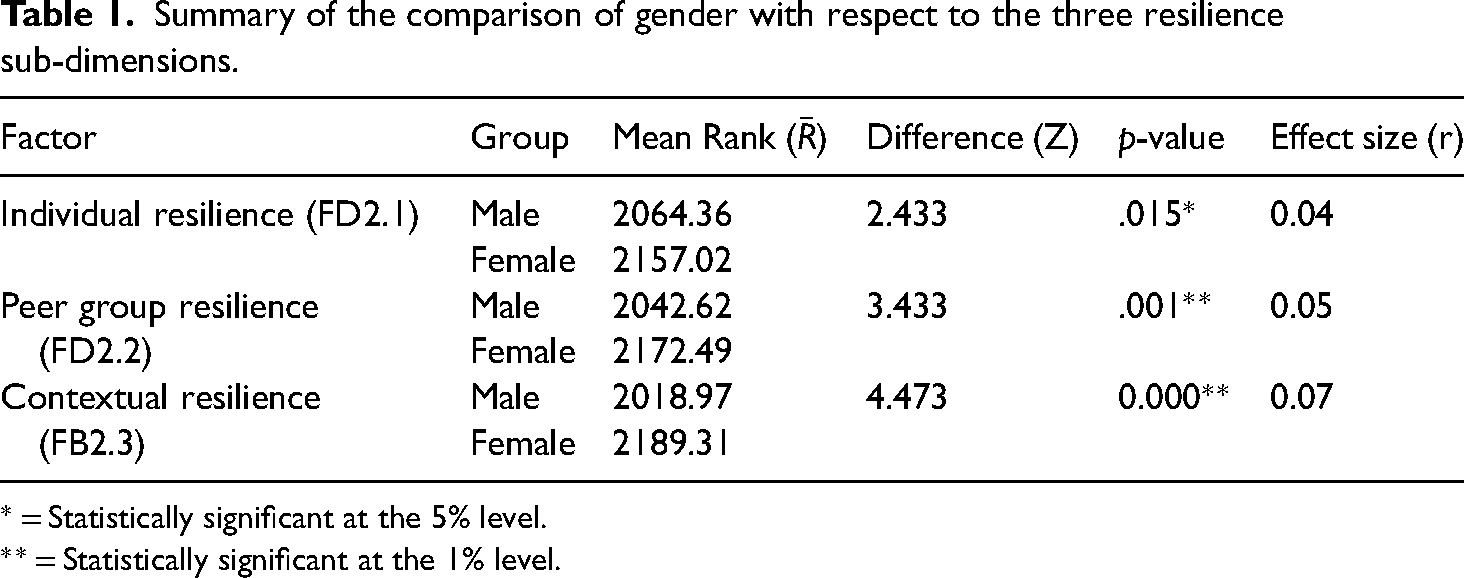
The summarized result of the Mann-Whitney U-test for gender were:

Summary of the comparison of gender with respect to the three resilience sub-dimensions.
* = Statistically significant at the 5% level.
** = Statistically significant at the 1% level.
The data in Table 1 shows that females perceived themselves as having higher levels of individual-, peer group-, and contextual resilience than male respondents. All the effect sizes were small but differences in contextual resilience were most important (r = .07) followed by peer resilience (r = .05) and then individual resilience (r = .04). Since contextual resilience had the largest effect size it was analysed further. From Figure 1 the contextual sub-dimension is composed of three factors namely spiritual-, educational- and cultural resilience. Using the same reasoning as used in Table 1 the educational and contextual factors had the largest effect size difference between gender groups with females having the larger perception and hence agreeing with the items in the factor most strongly. Further analysis down to the individual items showed that female respondents had more positive perceptions about item D3 (Getting an education is important to me),D16 (I feel I belong at my school) and D1(I have people to look up to) regarding the educational factor. In the contextual factor, which was composed of items D23, D19, D27 and D22 the most important difference as shown by the effect size was found D23 (I think it is important to serve my community) and D19 (I am treated fairly in my community). Many of these items relate to caring and nurturing behaviours, which society places value on, and which are traditionally associated more with women (Hofstede, 1991: 81).
Age groups
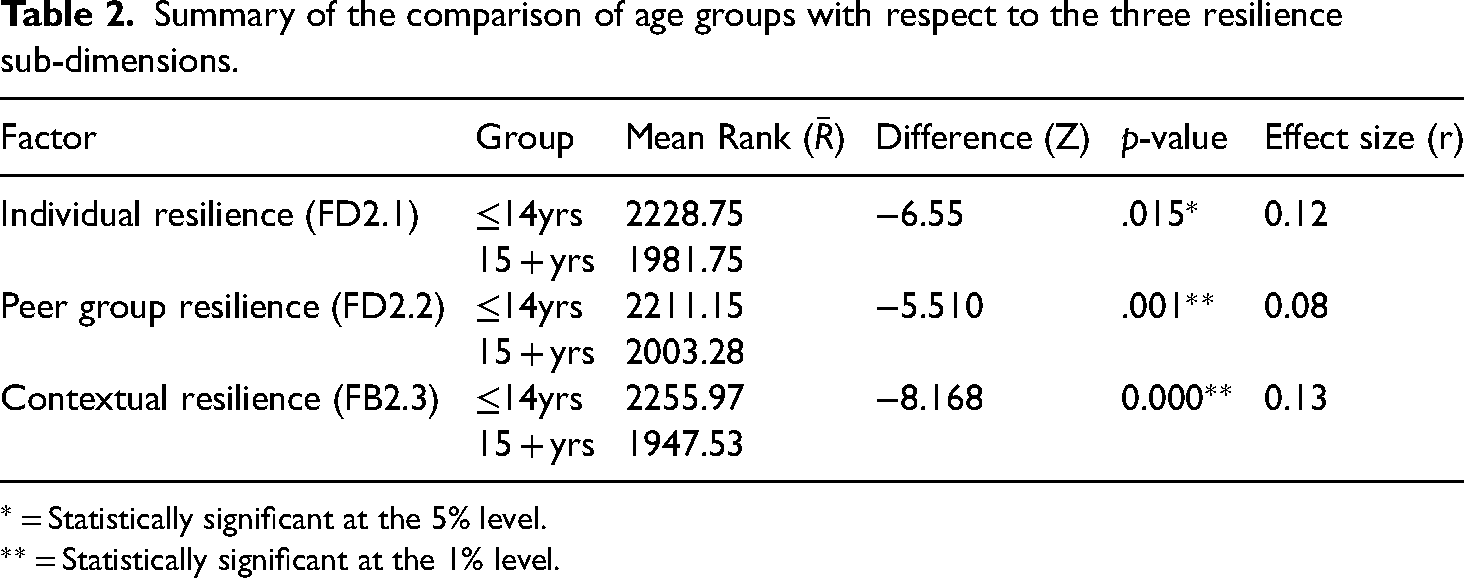
This researcher has already indicated why two age groups were chosen namely ≤14years and 15 + years. These two age groups were firstly tested against total resilience. The Mann-Whitney U-test gave the following results:
Summary of the comparison of age groups with respect to the three resilience sub-dimensions.
* = Statistically significant at the 5% level.
** = Statistically significant at the 1% level.
The younger age group have the higher mean rank in each of the three sub-dimensions involved in total resilience. If one uses the effect size difference, then contextual resilience has the largest effect size and could be seen as the most important of the three resilience sub-dimensions. However, each of the above sub-dimensions are comprised of other factors. As seen in Figure 1 contextual resilience is composed of spiritual-, educational- and cultural resilience. The younger age group of 14 -or less years of age obtained the higher mean rank in each of the spiritual-, educational- and cultural resilience factors. The spiritual factor had the largest effect size difference between the two age groups and hence the spiritual factor could be the most important of the three factors. The spiritual factor is in turn composed of item D9 (Spiritual beliefs are a source of strength for me) (r = 0.13) and item D10 (I am proud of my ethnic background) (r = 0.05). The younger age group of ≤14years had significantly higher perceptions of their individual- peer- group- and contextual resilience than the older group of 15 or more years of age. This evidence of younger children having more resilience seems to this researcher to correlate with older children gradually loosening the familial bonds as they become more independent while the younger age group are still more dependent on contextual and caregiver support. If this finding is correct, then children in primary schools should demonstrate greater resilience than those in secondary schools.
School type
Respondents who indicated that they were in Grades 4 to 7 were assigned to the primary school group and those in Grades 8 top 12 were placed in the secondary school group. There is thus some overlap with the two age groups discussed above as learners of 14 or more years should be in secondary school but could still be in primary school due to among other things, repeating a grade. One would, however, expect a similar pattern of results as found for the age groups.
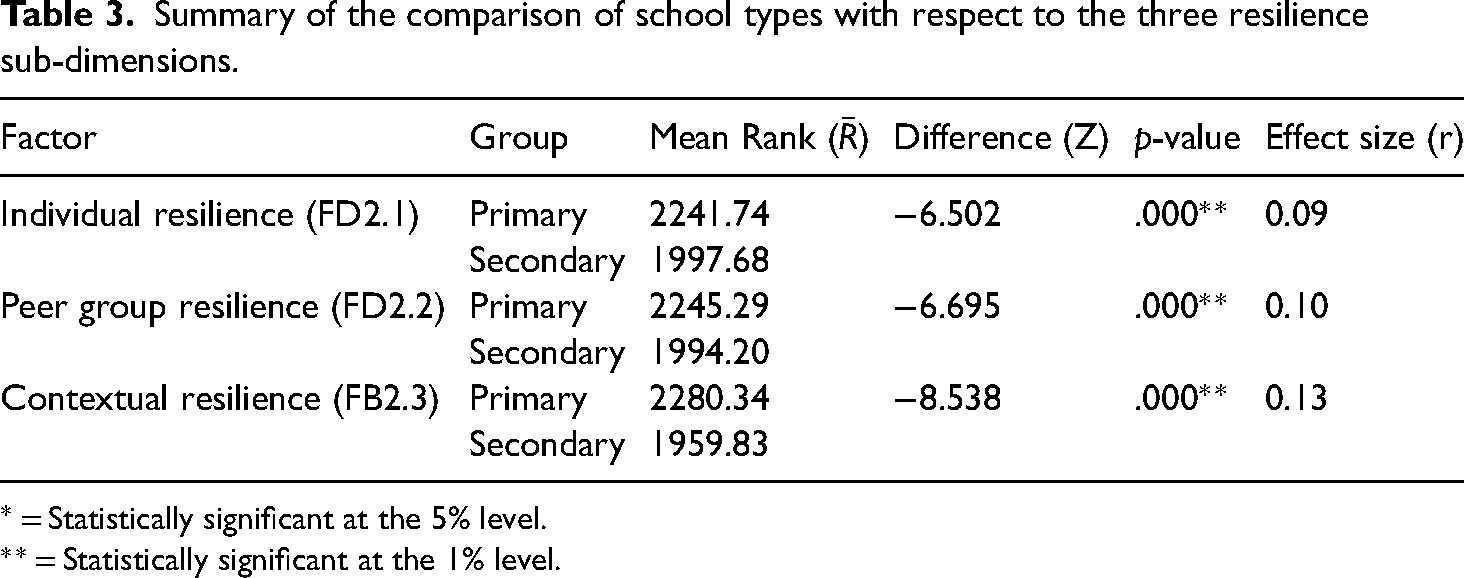
The two school types namely primary – and secondary school were firstly tested for total resilience. The Mann-Whitney U-test gave the following results:
Summary of the comparison of school types with respect to the three resilience sub-dimensions.
* = Statistically significant at the 5% level.
** = Statistically significant at the 1% level.
Respondents from primary schools had the highest mean rank scores in each of the resilience sub-dimensions. Using the effect size differences between mean ranks, the contextual resilience sub-dimension had the most important effect. Contextual resilience is composed of spiritual-, educational-, and cultural resilience and primary school respondents had significantly higher means in both the spiritual and cultural factors of resilience. The effect size for spiritual resilience was r = 0.15 and for cultural resistance it was r = 0.11. Spiritual resilience is based on two items namely D9 (Spiritual beliefs are a source of strength for me) and D10 (I am proud of my ethnic background). Item D 9 had the larger effect size namely r = 0.15, followed by D9 with r = 0.07
Discussion
The findings indicate that resilience in South African black youth during the COVID-19 lockdown are linked to three crucial aspects, namely, gender, age, and school type.
In terms of gender, it was found that female respondents viewed themselves as having higher levels of resilience in comparison to the male respondents in this study. This finding resonates with the study by Sun and Stewart (2007) who found Australian girls to be more resilient than boys. However, this may be an unexpected finding in South Africa since historically black females have been exposed to several forms of discrimination, oppression and exploitation that is more likely to make them less resilient. Some writers (Goodkind et al., 2020; Theron, 2017) have observed that many black females emerged resilient despite the adversities they have been exposed to. In fact, these adversities may have prepared them for crises like the COVID-19 pandemic contributing to their resilience. Young girls in this study may be modelling the resilience of their mothers and caregivers and this highlights the importance of positive adult role models.
Deeper data analysis revealed, in ranked order, contextual, peer and then individual resilience as significant in the experiences of the female respondents. Context refers to the social and physical environment in which the respondents live, and contextual resilience is composed of three factors namely spiritual-, educational- and cultural resilience. The spiritual factor indicates that they placed much trust in God to see them and their families through the COVID-19 crisis. This is a typical response of black people going through illnesses (Choi & Hastings, 2019) because spirituality, religious beliefs and coping mechanisms become paramount. Crawford et al. (2006) noted that religions nurture resilience in youth by promoting close human and spiritual relationships, social support, adherence to rituals, prayer, meditation, and belief systems that aspire hope and meaning to life. It is very typical of people to turn to God in their desperate times of need. The educational factor highlights the importance they placed on education to make a success of their lives despite the challenges they experienced in not attending school and being exposed to online learning. Their cultural resilience demonstrated the importance of their cultural values, beliefs, and traditions as well as a sense of belonging in their local communities that gave them the capacity and coping skills to bounce back after the challenges brought by COVID-19. Some writers (Masten, 2014b; Ungar, 2011, 2013) have argued that culture is infused in all levels of resilience that cut across family dynamics, education, beliefs, practices, traditions, and spirituality.
The findings in this study highlight the importance of religious, spiritual, cultural, and educational aspects that promote resilience in black female learners. However, the study by Sun and Stewart (2007) found that characteristics within their primary school female participants enhanced their resilience. Some of these characteristics were the abilities to communicate, be empathetic, seek help, have positive connections with others and focus on future goals. Such findings indicate that factors within the learners and their contexts must be taken into consideration for the promotion of their resilience. This is aligned to the social ecological model of resilience mentioned earlier which indicates that learners influence their environment and in turn are influenced by what happens in their environment.
Age groups
The findings indicated that respondents of 14 or less years of age viewed themselves as being more resilient than the 15 years or older age group. According to some researchers (Masten, 2015; Masten & Osofsky, 2010; Yoshikawa et al., 2020) the finding that younger children are more resilient in times of crises is not surprising because resilience is related to developmental stages in the life span of people. In the context of this study, it is possible that children 14 years and younger may not fully comprehend the magnitude of the difficulties and destruction caused by COVID-19 as well as its implications for the future. Also, it is possible that parents and caregivers protect their children from an overload of negative information about COVID-19.
Furthermore, most of the participants in this study were from middle and low-income families where access to the internet and social media may be limited. Children 15 years and above in this study were found to be less resilient than the younger participants and this could be due to their observance of the disasters caused by COVID-19 in their families, schools, and communities. Furthermore, they have more human and social capital in comparison to younger children (Masten & Motti-Stefanidi, 2020) exposing them to friends and people outside of their personal family context. As such, they are aware of the difficulties that emerged through COVID-19, such as, loss of lives, lack of access to food and other essential commodities and the effects of social isolation. Walsh (2016) points out the importance of family development in the life cycle of families and how this impacts on peoples’ responses to disasters, for example, the effects are likely to be different for families that have no children, very young children, school and university attending youth, very young or aging parents, and the many other family constellations which older children may be aware of and this may have an impact on their levels of resilience.
Contextual resilience in the 14 years and below age cohort was significantly high, followed by individual and then peer group resilience. Contextual resilience is composed of spiritual-, educational- and cultural resilience which are important to younger children, and this is like what was found among the female participants. The spiritual factor was identified as the most significant factor indicating that the younger group saw spiritual beliefs as a source of strength and that they often engaged in religious activities with their families. The importance of individual resilience comes as no surprise if their resilience is anchored in their faith in God. The influence of peers on the resilience of the young cohort could be limited since they could not have much interaction with peers during the hard lockdown period.
School type
The results indicate that respondents from the primary school cohort viewed themselves as having greater resilience than the secondary school cohort, which is synonymous with the finding that younger children were more resilient in this study. Again, contextual resilience was identified as high followed by peer group and individual resilience. The latter is notably different from the findings in the age factor where individual resilience was seen as higher than peer group resilience. However, in an African worldview the value of an individual is embedded in the collective where family and community are paramount (Kanu, 2020)
Lessons for school psychologists
The findings provide some lessons for school psychologists in promoting resilience particularly among black youth within the context of schools. The first lesson is that young females seem to be more resilient than young males so school psychologists must ensure that resilience- based programmes (RBPs) should be directed at further enhancing the resilience of girls. More importantly, RBPs should have a strong focus on building resilience in young males. The second lesson is that school psychologists should commence with RBPs from an early age since the respondents in this study showed that they are very capable of being resilient from the early years in their lives. However, the findings strongly indicate the need for a more deliberate focus on RBPs addressing the needs of children older than 14 years of age who were identified as less resilient. The third lesson for school psychologists is to take cognizance of the fact that there should be different RBPs for children in primary and secondary school levels. While there are some fundamental elements that are needed across the RBPs there are still things that are particularly needed according to age, grade and school levels. For example, young children mostly emulate their parents/caregivers while older children have the tendency to model their friends and peers. The fourth lesson for school psychologists working on RBPs is to ensure that contextual resilience is prominently built into the programme since it seems to have the most impact in promoting resilience among young people in this study. The programme must take spirituality, religion, culture, and education into consideration, which were evident as resilience promoters in this study.
All the above lessons should feed into the major overall lesson, which is to guide school psychologists into determining what should be the main components in school RBPs. They should not be prescriptive in creating a RBP that fits all school- attending children but should be aware that “different folks (children) need different strokes (RBPs)”. The findings in this study aptly point out that gender, age, grades, school levels, context (physical environment, religion, spirituality, culture, and education) are all fundamental aspects that must be considered in any school-based resiliency programme targeting black children in particular.
COVID-19 has significantly highlighted the need for RBPs in schools, however, such programmes should be designed in such a manner that they empower young people with a prerequisite set of skills and knowledge to face, manage and cope with any form of situation or crisis. One is aware that not much is known specifically on resilience to COVID-19 as yet, but research conducted with people fighting cancer (Seiler & Jenewein, 2019), leukemia (Hong & Park, 2015), and pneumonia (Quinton & Mizgerd, 2015), which have many similar medical effects to COVID-19, have shown resilience. Bartlett and Vivrette (2020) identified five factors that are essential to building resilience in children during the COVID-19 outbreak, which could easily be applied to any other crisis, namely, sensitivity, responsive caregiving, meeting basic needs, emotional support for children, support for caregiver well-being and social connectedness. Sensitivity, responsive caregiving, and social connectedness highlight the importance of children having a caring and sensitive adult during adverse situations. Children should not be exposed to social isolation that often leads to child abuse and neglect. Meeting the basic needs such as food, shelter, medical and mental health care of children and families are crucial during crisis situations. Emotional support for children is an essential factor to show them that their feelings are important and to reassure their hope to get through the bad situation. The provision of individual, group and family counselling at the school and community levels are needed to support children and their families. Since religions, spirituality and culture emerged as critical to resiliency building in young people in this study religious organizations, spiritual activities and cultural traditions should be incorporated into RBPs. School psychologists should promote the inclusion of spiritual resilience in the school curriculum and in all mental health support programmes. Furthermore, they should make educators aware of spiritual resilience as an important aspect of adolescent development. Protecting the physical and mental health of parents and caregivers during adverse situations is paramount for developing resiliency in children. All the factors mentioned poignantly point to the fact that all school-based resiliency programmes must be designed from a social ecological resilience perspective that takes all environmental, social and stakeholders into consideration for it to be successful.
School psychologists should recognize the great opportunity that schools have in building resilience among school-attending children, especially black children within the context of this study. Adopting a social ecological resilience framework inadvertently means that school psychologists have to ensure that RBPs are designed to target multiple levels, including the children, their interpersonal relationships with parents, caregivers, teachers and friends as well as the school community. As such, a whole school approach is needed for RBPs to be successful.
Limitations
Like any other study, this one had its limitations. The demographics of the respondents are reflective of black children and youth representative of the province and city in which they were located and are not necessarily representative of South Africa as a whole. The study was focused on black children, but future studies should focus on all children irrespective of race, gender, class, disability, and sexuality. It is important to note that the findings in this study may not necessarily apply to black adolescents outside the South African context since national and ethnic differences are expected. Only two provinces participated in the study, and this was due to the lack of access to schools during the COVID-19 lockdown period. Data was only collected from schools that were willing to participate in the study. Another limitation was the use of an online platform to collect data, which inhibited many schools from participating in the study because both schools and children did not have access to data bundles that was needed to complete the questionnaire. In most instances, this resulted in data being collected manually through respondents completing hard copies of the questionnaire that were administered by field workers.
The use of only one resilience test, the CYRM, was also a limitation. Further research should include other resiliency measures to make the findings more authentic. Lastly, the study focused on the emergence of COVID-19 during the last two years, and this did not allow for longitudinal studies, but the data collected provides the opportunity for further studies. If the findings do not reveal anything new in terms of young peoples’ resilience, then one may view this positively in the sense that they are able to overcome the effects of the COVID-19 pandemic as well.
Conclusion
In conclusion, the present study contributed to the knowledge of resilience to COVID-19 challenges by investigating the resilience of black children and youth during the lockdown period. The findings provided some useful lessons for school psychologists in designing school-based resilience programmes, namely, that gender, age, grade, and level of schooling are essential aspects of RBPs for black children. Contextual resilience encompassing individual, spiritual, religious, cultural, and educational factors are essential components for RBPs. Also, such programmes should involve multiple stakeholders at different levels adopting a whole school approach that includes young people, their families, as well as their local communities. These findings are embedded in the social ecological resilience model. Although the study was conducted in South Africa, the lessons for school psychologists to promote resilience in young people during adverse situations are likely to have global value.
Footnotes
Ethics declaration
Ethical approval for this study was obtained from the Ethics Committee, Faculty of Education, University of Johannesburg, Ethical Clearance Number: Sem 1 2019-033.
Declaration of conflicting interests
The author(s) declared no potential conflicts of interest with respect to the research, authorship, and/or publication of this article.
Funding
The author(s) disclosed receipt of the following financial support for the research, authorship, and/or publication of this article: This work is based on the research supported by the South African Research Chairs Initiative of the Department of Science and Innovation and the National Research Foundation of South Africa (Grant Number: 87300).
