




Abstract
This study investigates the association between classroom practices and individual social status outcomes in junior high. A nested design using 678 grade 7 and 8 students in 38 classrooms showed that classroom practices are associated with peer social status. Classrooms rated high on instruction were associated with a decreased probability of students with rejected status. In contrast, classrooms rated high on atmosphere and student engagement were associated with an increased probability of students with rejected and popular status. Student perceptions of classrooms revealed that social comparison was associated with an increased probability of students with both rejected and popular status, while competition was associated with an increased probability of students with popular status. Results inform intervention programs that target the peer ecology of the classroom by raising teachers’ awareness of the intersection between pedagogical practices and student social status among peers.
Navigating social status during adolescence can be a fraught experience. In addition to puberty, adolescents experience disruption in their peer affiliations because of school transitions and the social differences between junior high and elementary schools (Albrecht & Albrecht, 2010; ERO, 2016). These changes in peer relationships can affect adolescents’ social standing among their peers.
Individual and social factors (e.g., athletic prowess, socioeconomic status) related to social status have been studied (Coie et al., 1990; Sweeting & Hunt, 2014). More research is needed that examines contextual processes such as classroom practices that influence students’ social status among peers. Contextual processes in the classroom have impacted academic, behavioral, social, and motivational outcomes (Wentzel & Wigfield, 1998).
This study investigated the association between classroom practices and individual social status outcomes in junior high. Broad classroom domains (atmosphere, instruction, management, and student engagement) were explored using observer perspectives. The use of structured classroom observations permitted the researchers to objectively study these processes in the classroom, record detailed and precise evidence and produce findings that, we argue, provide the basis for a coherent, well-substantiated knowledge base about effective instruction (Soleste Hilberg et al., 2004). Additional classroom processes (teacher-student relationships (TSR), social comparison, and competition) as rated by students were also examined. From a phenomenological point of view, student-rated observations are most appropriate for assessing learning environments since behavior can be assumed to be more affected by students’ interpretation of the classroom context (Lüdtke et al., 2009). Together, student and research observers provided a robust evaluation of the classroom environment practices and how they relate to individual social status.
Social status and classrooms
Social status in the classroom has generally been assessed using sociometric tools indexing students’ social preferences. Students rated as ‘average’ or ‘popular' by their peers often display prosocial behaviors, are more socially competent, academically inclined, physically attractive, and have strong leadership skills (Coie et al., 1990). Popular students possess prosocial and agonistic qualities since they may use aggressive strategies to maintain dominance in a social hierarchy, especially in high school (Sijtsema et al., 2009). Students rated as 'rejected' may also display high levels of aggressive and disruptive behavior; however, they are less socially skilled and with few socially valued attributes (Bierman, 2004). While researchers have different conceptualizations of social status, this study focuses on a sociometric aspect of peer nominations for 'liking' or 'disliking'.
Rodkin and Gest (2011) claim that teaching practices and peer ecologies are interrelated systems within the micro systemic setting of the classroom. They proposed a developmental-contextual model to explain the dynamic relationship between instructional activities (teacher-student interactions), interpersonal roles, and social structures. The teacher-student interactions of the model included instructional and emotional support and classroom organization that influences classroom peer ecologies. Gest and Rodkin (2011) tested this model and found that teachers who demonstrated higher levels of emotional support had higher rates of friendship reciprocity in 1st, 3rd, and 5th -grade classrooms. Similarly, Mamas (2012) examined the impact of classroom atmosphere on social status. They found that a teaching pedagogy that used a collaborative approach (i.e., students as active participants, student interests, level of enjoyment, and teaching connected to the real world) was associated with increased social status among peers in elementary grades.
Evidence demonstrates the impact of classroom teaching practices on social outcomes and peer affiliations. However, much of the research has been conducted in elementary grades (Ahn et al., 2010; Gest & Rodkin, 2011; Hughes et al., 2014). Our study expanded on previous work and used a developmental-contextual framework to investigate the associations between exemplary teaching practices and peer social status outcomes in junior high. We observed broad domains of classroom practices (i.e., atmosphere, instruction, management, and student engagement) that represent effective teaching for development and its association with individual social status.
Student-Rated classroom processes
Teacher-student relationships (TSRs)
The quality of TSRs, provision of teacher support, and teacher-student conflicts are reference points from which students may implicitly learn how to evaluate and treat their peers in the classroom (Hughes et al., 2001). Status hierarchies in classrooms may result from teachers’ differential treatment of students, teachers informing the class group of peers’ differential values, and peer acceptance (Hughes et al., 2014). Hendrickx et al. (2016) found that fifth-grade students’ perception of teachers’ provision of support was associated with the richness of interpersonal ties and status hierarchies. In classrooms where teachers visibly demonstrated being generally supportive, students reported more liking for each other. In contrast, classrooms where teachers were viewed as concentrating more positive affect on specific students, were associated with a greater hierarchy in the peer ecology of the class.
Much of the research on TSR has focused on peer ecologies in elementary grades and behavioral outcomes such as bullying (Hughes et al., 2001; Wang et al., 2016). Research examining the impact of TSR on individual social status outcomes is still needed. We seek to add to this literature by measuring students’ perspectives of TSRs and how they relate to individual social status outcomes in junior high school classrooms.
Competition and social comparison
Competition is a means of gaining or maintaining social status in high school
Social comparison in the classroom allows students to compare their performances to others and determine their personal or social worth based on how they fare against their peers (Festinger, 1954). Students can make upward comparisons (i.e., comparing themselves to those they believe are better) or downward comparisons (i.e., comparing themselves to those they think are worse off). While upward comparisons can lead to better academic performance, they can also have negative consequences, reminding students they are inferior (Dijkstra et al., 2008). On the other hand, downward comparisons can make a student feel better, reminding them that they are superior. Teaching practices that allow for social comparison can perpetuate students’ feelings about themselves and their peers in the classroom. These evaluations against others draw attention to the individual's assets which can impact social status. To date, no known research examines the relationship between teaching practices that influence social comparison and peer likeability. Since high school classrooms provide more opportunities for competition and social comparison, these constructs are critical to examine when students are concerned with peer acceptability. This study uses social comparison, competition, and cooperation/interaction as separate indexes of the classroom environment to test social-contextual models and their association with peer social status outcomes.
The present study
The present study measures the sociometric status of likeability among individuals in two contexts (work and play) using three status categories: popular, rejected, and average. These statuses correlate with behavior styles that help understand the basis of peer acceptance versus rejection. Social status is measured in work and play contexts because students display different skills and abilities that can influence social interactions in each of these contexts. Students with an average social status are assessed with an equal number of nominations of likes or dislikes. They are typically not characterized as needing social power or lacking social skills and aggressive behavior (Ahn & Rodkin, 2014). There is heterogeneity in the behavioral features of students with rejected and popular status. For example, some rejected peers may be aggressive and disruptive, whereas others are withdrawn and submissive. Popular peers may be athletic, demonstrate prosocial behavior, and have a good sense of humor; however, they can also be aggressive and arrogant (McDonald & Asher, 2018).
This study used an 'average' status as the analysis's reference group to compare with students with a rejected or popular status. The 'work' and 'play' social status was measured by asking students how much they liked to work and how much they liked to hang out with each student listed on the class roster, respectively. The research questions for this study were as follows:
R.Q1) Which classroom practices (atmosphere, instruction, management, student engagement) are associated with average, popular, or rejected statuses in work and play? R.Q2) Which student-rated classroom practices (TSRs, social comparison, competition, cooperation/interaction) are associated with average, popular, or rejected statuses in work and play?
We hypothesize that classrooms with high scores in the observed practices will be associated with higher probabilities of average and popular social statuses and a lower probability of rejected social status. Classroom practices that create a positive atmosphere, provide high-quality instruction to meet student needs, and engage all learners, are essential for developing prosocial behaviors and inclusive and equal student opportunities.
For the student-rated classroom practices, we hypothesize that high scores for TSRs and cooperation/interaction will be associated with higher probabilities of average social statuses and lower probabilities of rejected and popular social status. With practices that promote cooperation and teacher support for all students, preferential treatment is less likely to influence peer ratings. In contrast, classrooms with high social comparison and competition scores will be associated with higher probabilities of rejected and popular statuses because these practices encourage competitive behavior that can be associated with aggression and accentuate individual abilities.
Method
The study used a convenience sample of 678 students in grades 7 (n = 355) and 8 (n = 323) in six junior high schools in Quebec, Canada. The response rate was 68%. The sample included 49% boys (n = 332) and 51% girls (n = 346) from 38 English language arts (ELA) classes. A total of 16 teachers with multiple classes participated in the study. The students’ ages ranged from 11 to 14 years (M = 12.82, SD = 0.72). The average teacher experience was 12 years (4.5–41 years). The ethnic proportions in the sample were compared to those from Statistics Canada, 2011 National Household Survey and evaluated using a chi-square test. Our sample broadly represented Quebec's ethnic and cultural diversity, χ2 (6, 678) = 11.94, p >.05. The principal investigator (PI) obtained consent from principals, teachers, parents of participating students, and students. The McGill University Ethics Board approved the project.
Measures
Student measures
Social status
The Social Inclusion Survey (SIS; Frederickson & Furnham, 1998a, 1998b) is a sociometric technique used to indicate how well each peer is accepted within the class group. The SIS comprises two short questionnaires, Like to Work (LITOW) and Like to Play (LITOP), for assessing social acceptance in two major social contexts of interaction: work and play. Since this study was conducted in junior high schools, "play" was replaced with "hanging out," and the reliability or validity of the measure is likely not affected since the manual states that ‘work' or 'play' can be substituted for age-appropriate words (Frederickson & Furnham, 1998a). Both the LITOP and LITOW questionnaire included the names of consenting students in the class with three schematic faces across each student's name: happy, sad, and neutral. For each name listed, students ticked the happy face if they enjoyed hanging out with that peer, the sad face if they did not enjoy hanging out with that peer, or the neutral face if they did not mind either way. The same procedure was used for LITOW.
Each peer on the list received a social acceptance score for each context (LITOP and LITOW). The sociometric score was adjusted for class size. For each sociometric category (popular, rejected, and average), there are cut-off scores based on the group (class) size published in the SIS manual.
The SIS assesses social acceptance across the major contexts of interaction in the school environment (play and work) and provides a differentiated profile of social inclusion across groups (same- and opposite-sex peers). The published test-retest reliability with a sample of 254 pupils aged 9–12 over five weeks is .70 to .78 for the proportion of smiles and frowns received on the LITOP. Over the same period, there was a 68% agreement between the two assessments in assigning social acceptance as popular, average, and rejected. The inter-rater consensus reliability was high because it provided an index of agreement between all peer raters in the rating of each classmate (Frederickson & Furnham, 1998a). The SIS assesses whole group classification; thus, peer nominations were cross-gendered. This is consistent with much of the recent work on social preference using sociometric procedures for nominating classroom peers (Farmer et al., 2011; Garandeau et al., 2011; Hendrickx et al., 2016; Hughes et al., 2014).
Classroom measures
Observations of the classroom environment
Classrooms were observed using the Classroom AIMS instrument (Roehrig et al., 2003). AIMS is a structured observational tool that rates teaching practices and classroom environment:
We used a refined version of AIMS, a 75-item observational instrument (atmosphere = 32 items; instruction = 26 items; management = 13 items; student engagement = 4 items) with evidence of construct validity for each of the categories (Roehrig & Christesen, 2010). In the present study, the construct validity of the subscales for the overall AIMS scale was significant and high (r = .70 to r = .87, p <.001). Cronbach's alpha demonstrated excellent reliability levels: atmosphere (α = .94), instruction (α = .95), management (α = .89), and student engagement (α = .86).
Each item was rated on a three-point scale: (1) seldom representative, (2) somewhat/inconsistently representative, and (3) consistently representative. If there was insufficient information to rate a specific item or practice, a score of zero was assigned. Items coded as zero were omitted from the calculated averages for each category, a procedure suggested by the author of the AIMS tool (A. Roehrig, personal communication, February 16, 2018). Notes taken during observations provided evidence in rating items. An average score for each category was calculated. In this study, the inter-rater reliability between the two observers were highly correlated (r = .88) based on the total AIMS score for the four categories (i.e., atmosphere, instruction, management, student engagement).
Student perception of the classroom environment
The Student Classroom Environment Measure (SCEM) samples student perceptions of the learning environment (Midgley et al., 1991). The SCEM has five composite subscales with a total of 18 items (cooperation/interaction = 5 items; competition = 2 items; social comparison = 2 items; TSR = 6 items; teacher-valuing of reading = 3 items) with moderate published internal consistency: cooperation/interaction, α = .65; competition, α = .68; social comparison, α = .59; TSR, α = .75; teacher-valuing of reading, α = .56 (Feldlaufer et al., 1988). In the present sample (n = 678), the reliability using Cronbach's alpha was acceptable for cooperation/interaction (.67), competition (.71), social comparison (.74), and TSRs (.78). Teacher-valuing of reading was not a focus of this study, and therefore not used in any of the analyses.
The SCEM items were rated on a 4-point scale, 1 = not very often to 4 = very often. For the TSR construct, most items were phrased so that strong agreement indicated a positive relationship with the teacher. Three items were reversed to make those items comparable to the rest of the scale items. A score for each composite was calculated by summing up all items within the subscale. Student average scores for the subscales were aggregated to create classroom averages for each subscale.
Procedure
The research comprised two phases of data collection. In phase one, student surveys (SIS and SCEM) were administered during class. Once all student data were gathered, we began phase two of the data collection: classroom observations using AIMS. English Language Arts classrooms were observed for two 75-min lessons using non-participant observation. We observed classrooms for 150 min, following the methodology outlined by Roehrig et al. (2003). Observers took detailed notes of all activities, verbalizations, behaviors, and interactions between teacher and students. For all classroom observations, there were two observers, which included the principal investigator (first author) as one of the observers. Inter-rater reliability was assessed using a two-way mixed, consistency, average-measures ICC (McGraw & Wong, 1996) to determine the degree to which observers provided consistency in their rating of Atmosphere, Instruction, Management, and Student Engagement across classrooms. The resulting ICC was in the excellent range, ICC = 0.94 (Cicchetti, 1994), indicating that observers had a high degree of agreement and that the classroom constructs were rated similarly across observers.
Data analytic plan
Hierarchical linear modeling (HLM; Raudenbush & Bryk, 2002) was used to test our research questions. Hierarchical linear modeling accounts for shared variance at the classroom level in estimating effects. Teachers with multiple classrooms who participated in the study taught class groups at various academic levels and thus implemented different classroom practices depending on the group level. Since this was a classroom-based project, we conducted our analysis using the classroom instead of teachers (as the unit of analysis). A sample of 16 teachers does not yield sufficient power to detect effects. We visually inspected means and standard deviations for classrooms and teachers to check for differences in teacher variance. The plotted distributions of classrooms and teachers overlapped with no detectable differences in means and variability. This indicated that the variance between classrooms was similar to the variance between teachers, which would yield similar findings whether clustering by classrooms or teachers.
Since social status as the dependent variable has multi-categorical outcomes (0 = rejected, 1 = popular, 2 = average), multinomial regression with a multinomial logit link was used. The outcome at level-1 was thus the log-odds of falling into a specific category (rejected or popular) relative to a reference category (average). We ran an unconditional model to test our hypotheses and to estimate whether significant between-classroom variation existed in the two outcomes: η0ij, the log-odds of being rejected (relative to average), and η1ij, the log-odds of being popular (relative to average), for LITOP and LITOW. For LITOP, the results revealed that the log-odds of rejected and popular statuses were significantly lower (relative to average status), γ00 (0)=-2.78, t = -12.73, p < .001, and γ00 (1)=-2.02, t = -11.35, p < .001, respectively. Similarly, for LITOW the log-odds of rejected and popular were significantly lower relative to average status, γ00 (0)=-3.66, t = -15.14, p < .001 and γ00 (1)=-1.46, t = -10.92, p < .001, respectively. The intraclass correlation coefficient (ICC) indicates how much of the total variation in the probability of attaining a social status is accounted for by the classroom: for LITOP and LITOW, ICC = .16 and ICC = .04, respectively. Therefore, there was a 16% total variation in social status across classrooms for LITOP and 4% for LITOW. This suggests that the classrooms differed on social status outcomes, justifying the examination of classroom practices that could explain the variability (Raudenbush & Bryk, 2002).
We proceeded with a multinomial regression model to test which aspects of the classroom environment (i.e., classroom practices and processes) assessed by AIMS and SCEM influenced individual social status outcomes. Conditional models with level-2 predictors of classroom indices for AIMS (i.e., observer model) and SCEM (i.e., student perception model) were tested to determine whether classroom indices were associated with individual social status outcomes for LITOP and LITOW. At level 1, each student's pair of log odds were equal to a classroom-specific intercept, and at level 2, the intercept was a function of the different classroom environment indices (AIMS and SCEM). The intercept at level-2 varied randomly. Separate models (observer and student perceptions), including indices of each classroom environment scale (AIMS and SCEM), were entered at level 2.
Results
Descriptive statistics
All measures of classroom practices for both AIMS and SCEM were available for the total sample of 38 classrooms. Descriptive statistics were examined to ensure that variables were normally distributed and assumptions of normality, specifically homogeneity of variance and linearity, were met using standard approaches (Tabachnick & Fidell, 2007). Residual files for specified models in HLM were visually inspected with graphs using Q-Q plots and scatterplots. Classroom-level variables were checked for collinearity for both AIMS and SCEM. The variance inflation factor for predictors was less than 2.5, indicating that the variance of an estimated regression coefficient would not be increased because of colinearity (Hair et al., 2006). Of 678 participant students, 677 were rated on the SIS peer acceptance survey for LITOW and LITOP. Table 1 displays the overall percentage of students for each social status outcome. Table 2 shows the classroom-level variables for AIMS and SCEM. For AIMS, scores ranged from 1 (seldom representative) to 3 (consistently representative), with a maximum score of 3 for each construct. The SCEM scores ranged from 1 (not very often) to 4 (very often). A total of all items in each construct of the SCEM was calculated, and maximum scores for each were as follows: Cooperation/interaction = 20; competition = 8; social comparison = 8; and TSRs = 36.
Percentages for social Status outcomes.

Note: LITOW = Like to Work; LITOP = Like to Play.
Descriptive statistics for classroom-level variables.
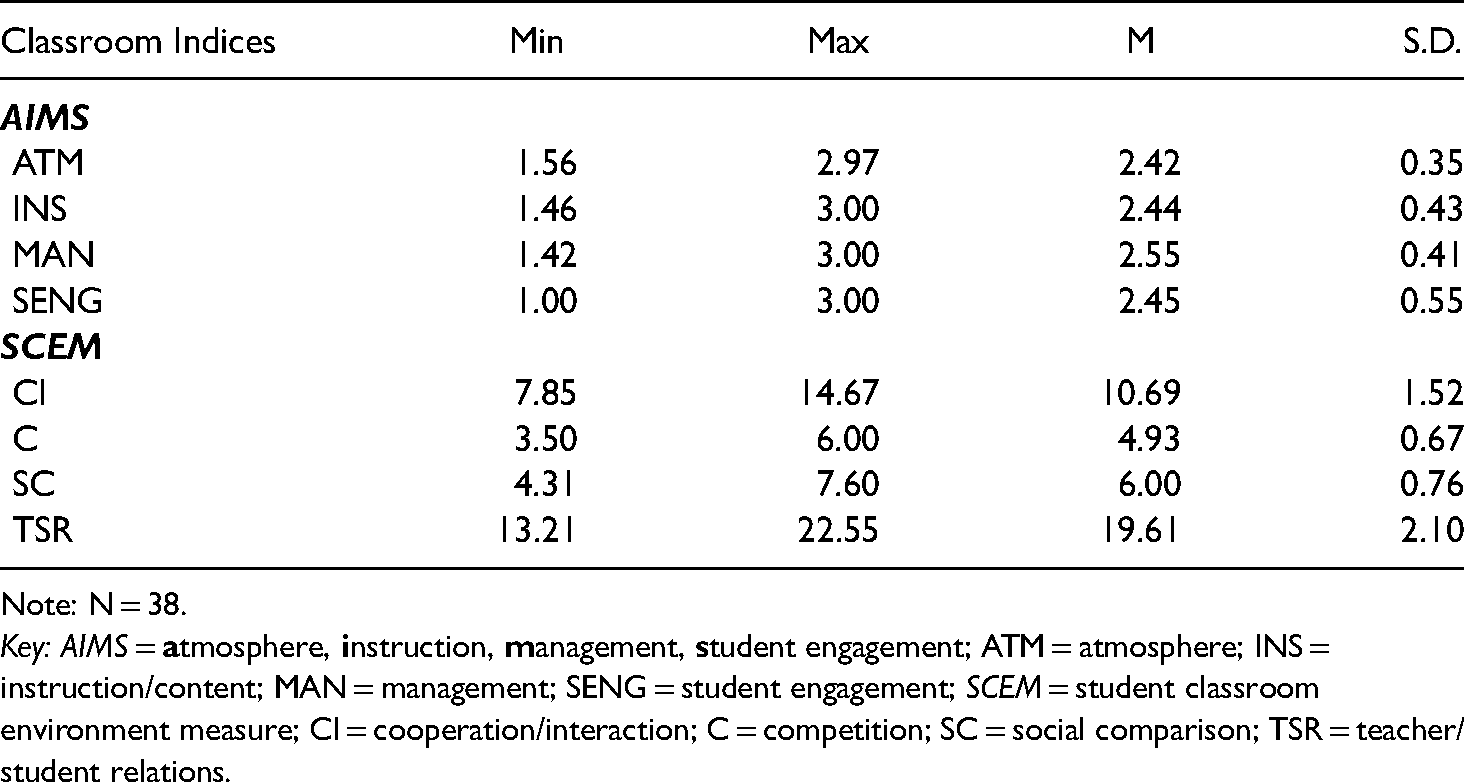
Note: N = 38.
Key: AIMS =
LITOP social status outcomes
Table 3 presents the results of the multinomial logit model for social status outcomes for LITOP with AIMS subscales as level-2 predictors. The multinomial results revealed significant associations between the atmosphere, student engagement, instruction, and the log-odds of a rejected social status outcome relative to the average social status outcome. For atmosphere and student engagement, the log-odds of being rejected were OR = 4.40 and OR = 11.51, respectively. A value greater than 1 indicates increased odds of a rejected social status (relative to average status). Therefore, classrooms rated higher on atmosphere and student engagement were associated with the increased odds of a rejected social status outcome. For instruction, the log-odds of being rejected were OR = 0.02. A value less than one indicates decreased odds of a rejected social status (relative to average). Thus, classrooms rated with a higher quality of instruction were associated with decreased odds of a rejected social status outcome. Student engagement was the only significant predictor for the popular social status, OR = 3.72, indicating that classrooms rated higher in student engagement were also associated with increased odds of a popular social status outcome (relative to average).
Multinomial logit model for ‘like to play’ [LITOP] outcomes associated with AIMS.
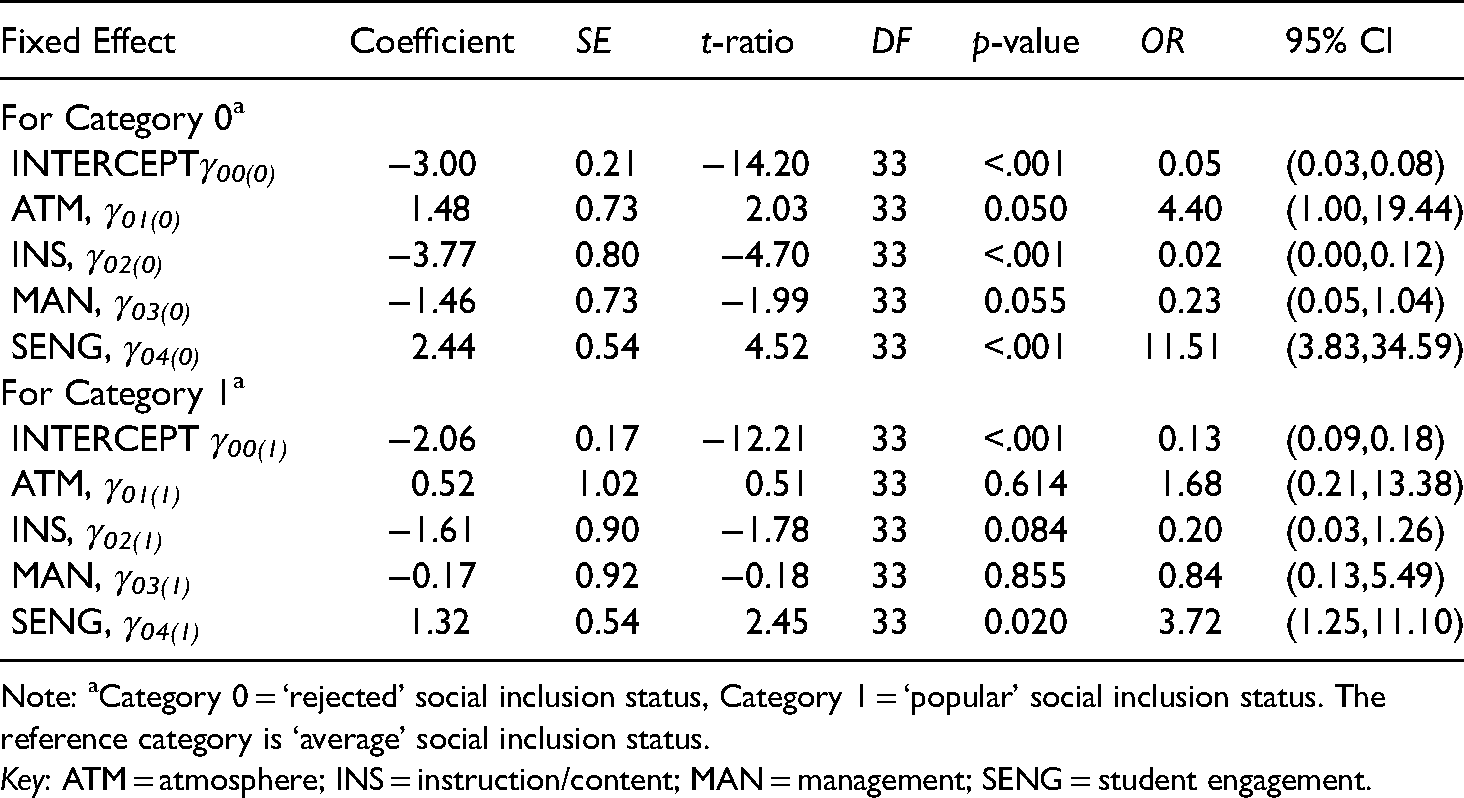
Note: aCategory 0 = ‘rejected’ social inclusion status, Category 1 = ‘popular’ social inclusion status. The reference category is ‘average’ social inclusion status.
Key: ATM = atmosphere; INS = instruction/content; MAN = management; SENG = student engagement.
Table 4 presents the results of the multinomial logit model for social status outcomes for LITOP with SCEM for social comparison. Student perceptions of the classroom environment, including composites of SCEM, were entered at level 2. Cooperation/interaction, competition, and TSRs did not reach significance. We removed those composites from the model to test a model with a single predictor. A final model with social comparison as a single classroom predictor entered in the level-2 equation resulted in a better-fit model. The value of the log-likelihood function of the restricted model (social comparison) was lower, indicating a better-fitted model. Thus, for social comparison, the log-odds of rejected and popular were significant, OR = 2.11 and OR = 2.23 (relative to average), respectively. These results demonstrated that classrooms rated high on social comparison were associated with increased odds of rejected and popular social status outcomes.
Multinomial logit model for ‘like to play’ [LITOP] outcomes associated with SCEM with social comparison as a single predictor.
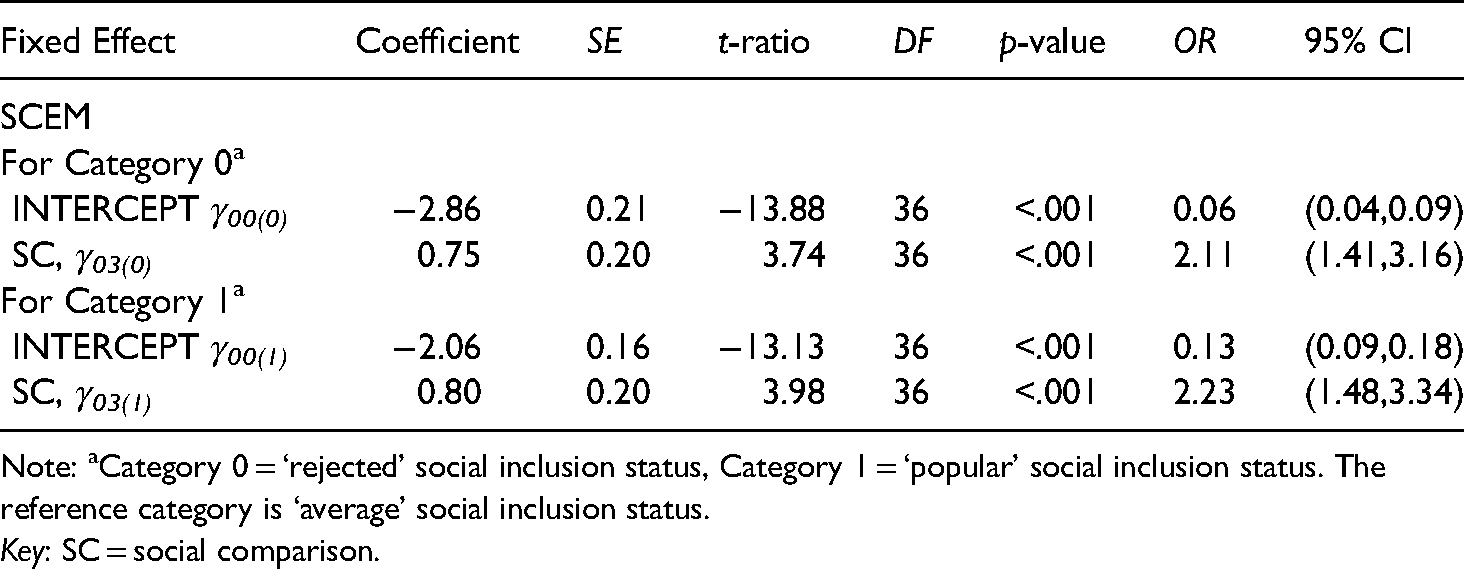
Note: aCategory 0 = ‘rejected’ social inclusion status, Category 1 = ‘popular’ social inclusion status. The reference category is ‘average’ social inclusion status.
Key: SC = social comparison.
LITOW social status outcomes
Table 5 presents the results of the multinomial logit model for social status outcomes for LITOW and AIMS subscales as level-2 predictors. The AIMS subcategories (atmosphere, instruction, management, and student engagement) were entered as level-2 effects. For instruction, the log-odds of being rejected were significant, OR = 0.04 (relative to average), indicating that higher-quality instruction was associated with decreased odds of a rejected social status outcome. Student engagement and atmosphere were also significant, OR = 7.58 and OR = 10.11 (relative to average), respectively. These results indicate that high classroom ratings on student engagement and atmosphere were associated with increased odds of a rejected social status outcome. There were no significant effects related to popular status.
Multinomial logit model for ‘like to work’ [LITOW] outcomes associated with AIMS.
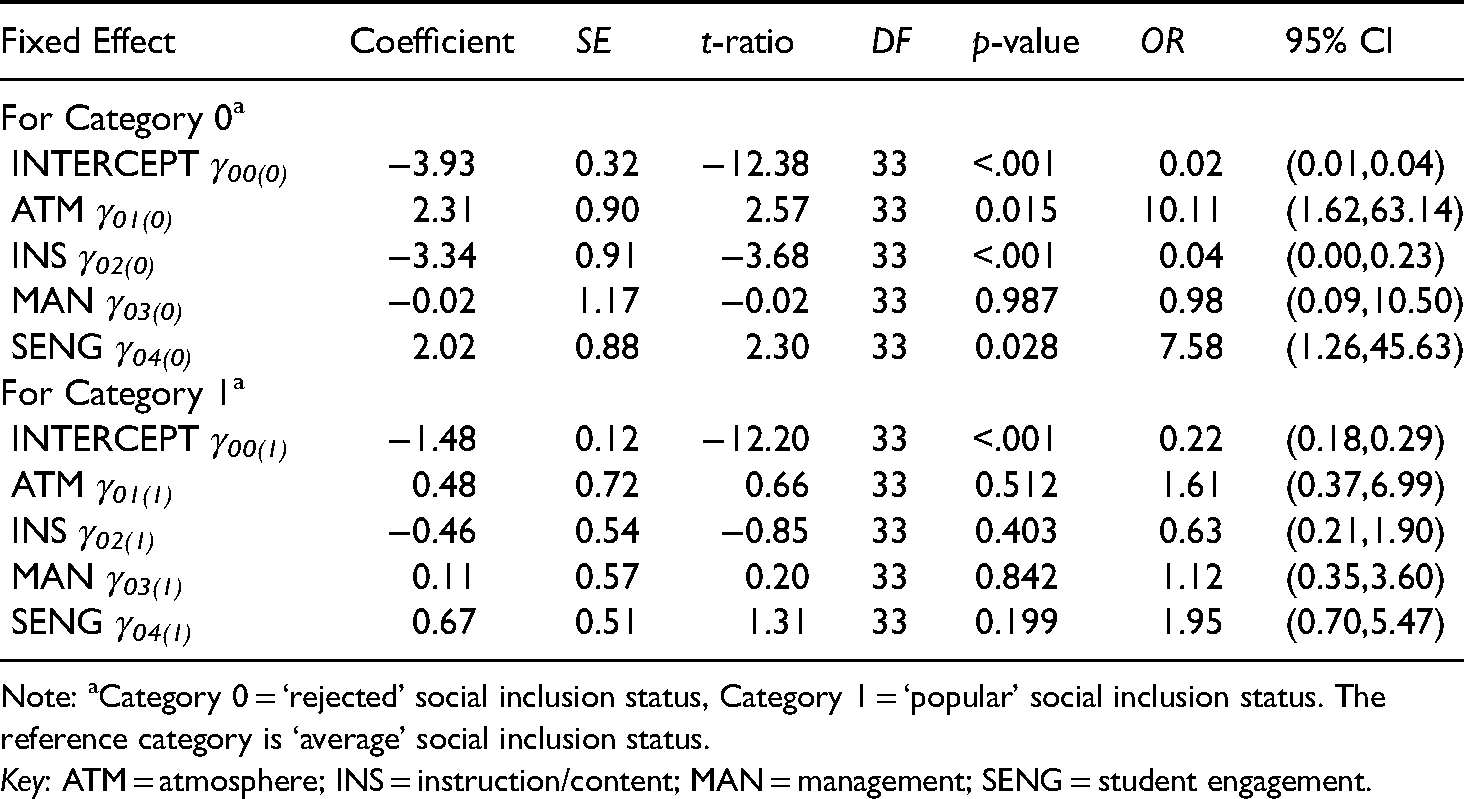
Note: aCategory 0 = ‘rejected’ social inclusion status, Category 1 = ‘popular’ social inclusion status. The reference category is ‘average’ social inclusion status.
Key: ATM = atmosphere; INS = instruction/content; MAN = management; SENG = student engagement.
Table 6 presents the results of the multinomial logit model for social status outcomes for LITOW and SCEM subscales as level-2 predictors. Student perception of the classroom environment was assessed using the SCEM subscales (cooperation/interaction, competition, social comparison, and TSRs) as level-2 predictors. Only competition was significantly associated with a rejected status, OR = 2.91 (relative to average), indicating that classrooms rated high in competition were associated with increased odds of a rejected social status outcome. There were no significant effects related to popular status.
Multinomial logit model for ‘like to work’ [LITOW] outcomes associated with SCEM.
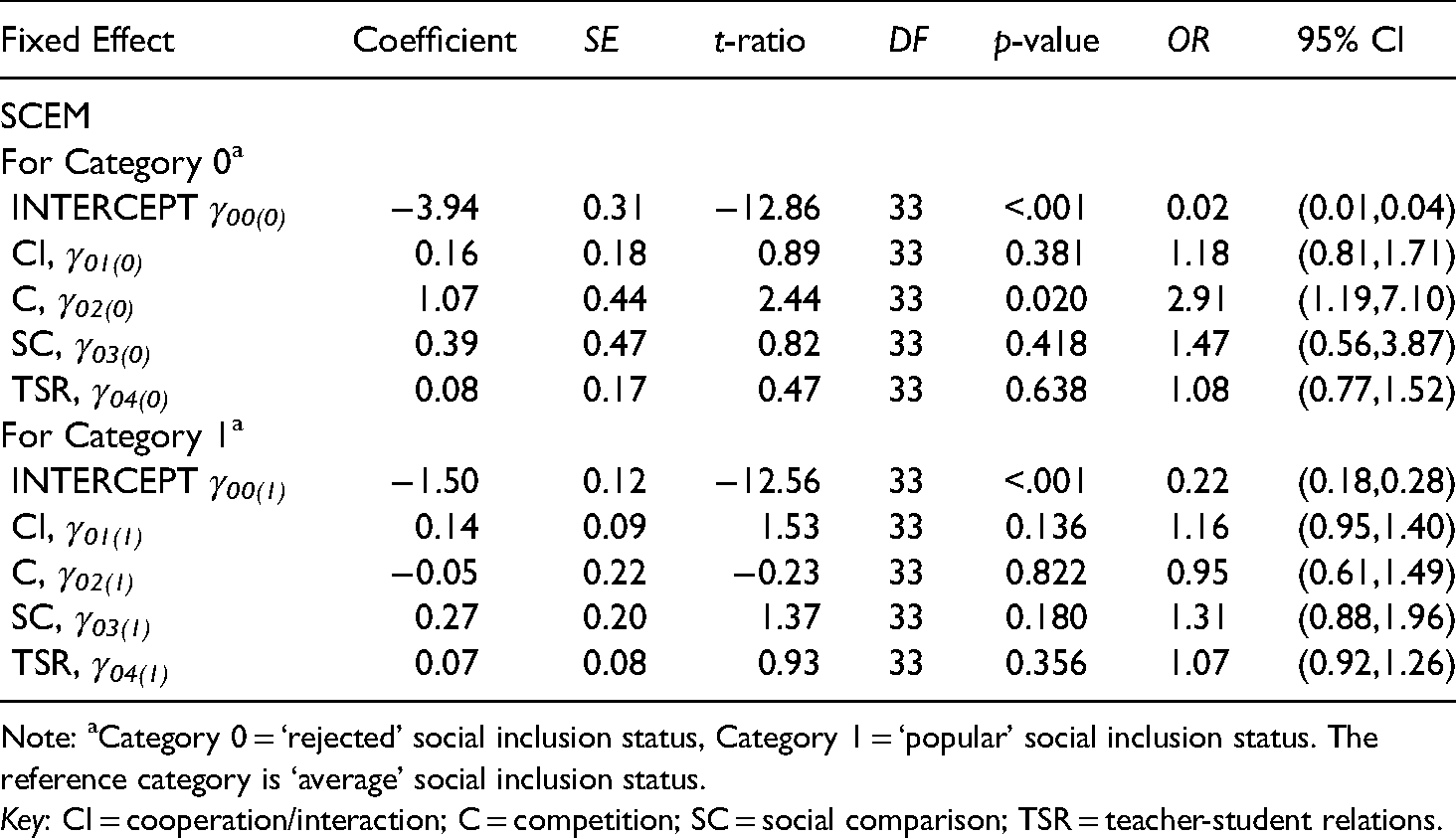
Note: aCategory 0 = ‘rejected’ social inclusion status, Category 1 = ‘popular’ social inclusion status. The reference category is ‘average’ social inclusion status.
Key: CI = cooperation/interaction; C = competition; SC = social comparison; TSR = teacher-student relations.
Discussion
This research examined the association between classroom practices and individual social status outcomes for grade 7 and 8 students using observer and student perceptions of the classroom environment. Our study revealed that broad domains of classroom practices such as instruction, atmosphere, student engagement, and student-rated classroom processes of social comparison and competition were associated with peer social status. These findings demonstrate (for the first known time) that exemplary AIMS (Roehrig & Christesen, 2010) classroom practices are related to high school's social status.
A notable preliminary finding is that significant classroom variation exists for individual social status in play and work. Thus, we examined classroom practices and processes that influence social status in each context. Our findings revealed that quality instruction is related to a lower probability of students with a rejected status in both play and work. Lower probabilities of a rejected status in the classroom can indicate that socially constructed processes of daily pedagogical activities carried out in the classroom transmit implicit social values to students. Classrooms rated high in quality instruction on AIMS underscore practices that engage students in content and provide scaffolding that uses differentiated teaching and a learner-centered approach. Perhaps when teachers use learner-centered instruction sensitive to students’ needs, it impacts students’ self-efficacy, leading to increased student success and thereby positively influencing students’ social preference for peers. Teachers’ use of learner-centered practices can mitigate the trajectory of children's social preferences and lead to less rigid peer hierarchies in classrooms (Mikami et al., 2010).
Our results suggest that classrooms with higher scores on student engagement were associated with a greater probability of a rejected social status outcome in play and work and a greater probability of a popular social status in play. This finding may show that individual abilities are more visible in classrooms where student engagement is high. Therefore, students who lag with academic and social skills inherent in work and play contexts are more likely to be rejected. Our findings showed that student engagement predicted the probability of being popular in social but not work contexts. We think this may be related to the heterogeneity of popular statuses. Because of their prosocial traits and good leadership skills, popular students can work collaboratively alongside their peers without necessarily having to outperform. However, in social contexts, students are more likely to exercise power and dominance to maintain status. When students enter high school, popularity is prioritized and defined as a social reputation characterized by dominance, social power, and visibility (Cillessen & Marks, 2011).
Classrooms rated high on atmosphere were associated with an increased probability of a rejected social status in play and work. In work by Gest and Rodkin (2011), emotional and organizational aspects of the classroom were linked to friendship reciprocity and lower disliking ratings among peers. The organizational and emotional constructs vary somewhat from the atmosphere construct tested in our study, including physical and interpersonal aspects. In our research, the AIMS atmosphere indexed democratic and reward-focused classroom structures, a sense of community with trust, empathy, diversity, respect, students’ interests, and teachers’ expectations. Even though these positive aspects could be assumed to foster equality among students, classrooms that are democratic may be represented by students who are more likely to voice opinions and less by reserved students. It would be critical for teachers to create an atmosphere supportive of students’ needs. Additionally, Gest and Rodkin's investigation was conducted in elementary grades. Thus, structural differences between elementary and junior high classrooms may account for the differences in our findings.
For student-rated classroom processes, our findings revealed that classrooms rated high on competition were associated with a greater probability of a rejected social status in the LITOW, and classrooms rated high on social comparison were associated with a greater probability of a rejected and popular social status in the LITOP. The competition construct emphasized academic performance, which discerns findings for competition in the work context. Inherent in the competition are 'winners’ and 'losers’, and where teachers set this up, they implicitly say that it is okay and can be visible. This can lead to a deficit expectation and cascading imbalances that lead to peer rejection. Similarly, in classrooms where social comparison is high, the climate allows students to engage in upward or downward comparisons and judgments that can lend to peer rejection or popularity.
These findings support social interpersonal perspectives stating that the structure of classroom goals can influence interactions, outcomes, and interdependencies between individuals (Johnson & Johnson, 2005). Roseth et al.'s (2008) study demonstrate that positive peer relationships are related to cooperative rather than competitive goal structures. Our findings align with Roseth et al.'s work in that competition is related to the social status outcome of rejection, which can often be challenging for peer relationships. Our work extends beyond the integrative and relational proximal links between students in classrooms (as explored by Roseth et al.) to contextual factors for predicting social status outcomes.
Although we did not have any significant findings for student-rated TSRs and social status outcomes, we anticipate that students’ perceptions of their teachers may have been swayed by their mood based on the teacher's behavior that day. Research demonstrates that teacher support, defined by the provision of choice, clarity of expectations, and affection, can influence emotions among students (Reddy et al., 2003; Skinner et al., 2008; Van Ryzin et al., 2009). Since teachers are susceptible to their environment, the support they provide daily can fluctuate. As a result, a teacher's immediate behavior may impact student ratings of TSR. We feel this construct is more likely to be influenced by students’ moods because of the interrelation aspect and the items measuring TSRs which include teachers’ differential treatment of students, their caring and friendly disposition, and fairness.
Limitations
Our cross-sectional study used data gathered at a one-time point and did not investigate behavior longitudinally. Consequently, the design does not disentangle the direction of effects between predictors and outcomes. For example, we are not sure whether classroom practices affect social status or whether the presence of rejected and popular students in a classroom affects classroom practices. Although our sample had adequate power to detect classroom effects, multilevel research usually employs larger sample sizes, which could detect smaller effects that could be conceptually interesting. Additionally, our analyses use the classroom as the unit of analysis. Since teachers taught several classrooms (of different ability levels), typical in junior high, future studies could recruit larger samples of teachers and analyze them at the teacher level. Nonetheless, in our research, an inspection of the means showed that the variation coded at the teacher level did not differ from that based on classroom-level means, suggesting that we had indeed indexed features of classrooms in this sample.
Attention should be drawn to the measurement and analysis of social status outcomes. The SIS measure has been chiefly used with younger children; therefore, the published inter-rater reliability was established with children up to 12 years old. In the present study, the average age of our students was 14 years old; however, the SIS instructional manual suggests that the measure can be used with older children. Descriptive statistics showed a large discrepancy in the percentage of students within the different categories. In particular, the rate of rejected students was low in both play (5.9%) and work (2.1%) which may restrict the reliability estimates for our analyses. However, a lower percentage of students in the rejected category may indicate that the classroom climate positively contributes to the low number of rejected students. Research would also unlikely reveal equal-sized categories for these ratings (Frederickson & Furnham, 1998a). Another limitation includes students who did not participate in the study and were part of the classroom, which may have influenced peer social status outcomes. The ICC for the LITOW was low, so contrasts across categories (LITOW and LITOP) should be considered. The SIS used in the study measures likeability, and does not provide information regarding the social structure, and may limit comparability with other sociometric measures used in similar studies (e.g., Coie et al., 1982). Also, we note that measures of peer social status are a broad index, with such judgments likely drawing upon many social features of individuals.
Social comparison was a significant predictor for the analysis model for student-rated processes; however, the full conditional model that included all the SCEM composites at level 2 yielded non-significant findings. We tested different models; the one with social comparison as a single predictor was significant and the best-fit model. Lastly, the classroom was a central focus of this research study. Classroom observations consisted of two class lectures of 75 min each, and information gathered from these observations was used to complete the observer rating scales. Although we closely followed the Roehrig et al. (2003) protocol for observations using AIMS, the time spent observing classrooms could be increased in future studies to capture classroom climate better.
Conclusion
This research provides evidence for a relationship between observed broad domains of exemplary classroom practices, student-rated classroom processes, and individual social status outcomes in junior high classrooms. Social and developmental- contextual frameworks that highlight interactions between classrooms and peers have implications for social outcomes for adolescents. The instructional aspects of the microsystemic classroom can reduce peer rejection among students, though other non-correlational work will be needed to establish causal relationships. Our study also demonstrated relationships between classroom processes such as social comparison and competition and peer social statuses associated with extreme ratings of like or dislike (popular and rejected) in junior high classrooms. Future work could explore the nature of this relationship.
Implications for future research
This study is the first to examine broad domains of classroom practices and their association with social status outcomes in junior high school. Its findings have important conceptual and practical implications. The results provide evidence of effective teaching practices as proximal classroom processes embedded in developmental-contextual frameworks that influence youth social development (Rodkin & Gest, 2011). Our study tested types of social interdependence (competition and cooperation), social comparison, and their outcomes. Classroom practices that increase social comparison and competition may influence students’ appraisal of their peers.
Future studies could more closely examine the social mapping of the classroom, specific aspects of atmosphere and student engagement, and their relationship with peer social status. Rejected and popular student social statuses may be complex to understand and require more nuanced theories and investigations of the effects of teaching practices. Examining how different social statuses in a classroom can impact classroom practices may also be necessary. Classrooms with a prosocial atmosphere and high student engagement would likely be higher in democracy. However, even in democratic classrooms, teachers need to avoid social rejection and ensure protection for potentially marginalized students. Beyond social status, future studies could examine other aspects of peer ecology, including classroom status hierarchies, embeddedness, and social networks as part of the classroom peer ecology.
Relevance to the practice of school psychology
This research identifies classroom practices that could better inform psychosocial intervention programs for youth's social and emotional development. While no causal claims can be drawn from this work, instructional approaches that challenge students, scaffold learning, and reduce the amount of competition and social comparison in the classroom can be related to adolescents’ social status. Researchers, scholars, and school practitioners can inform teacher education programs on a pedagogy that focuses on cooperative rather than competitive goals when structuring activities to minimize student differences and improve social connectedness and student well-being. School practitioners could develop prosocial interventions and effective bullying programs that focus on classroom pedagogy
Footnotes
Declaration of conflicting interests
The author(s) declared no potential conflicts of interest with respect to the research, authorship, and/or publication of this article.
Funding
The author(s) received no financial support for the research, authorship, and/or publication of this article.
