




Abstract
Bilingualism has multiple benefits, however, non-native English speakers in the United States often lose their minority language. Nevertheless, language attrition is preventable, as parental perceptions of bilingualism (PoB) contribute to a child’s active use of each language and influence proficiency. At present, there is a significant gap in understanding how different cultures and belief systems might influence the language development of autistic children from bilingual Latino families. Furthermore, research on PoB among parents of autistic children has mainly been qualitative in nature. The purpose of this study was to (a) employ a community-based participatory research (CBPR) approach to develop a culturally and linguistically appropriate scale for both Latino autistic and non-autistic populations to quantify parental PoB and (b) to assess the psychometric properties of the scale. The study used a cross-sectional mixed-methods approach comprised of two separate stages. The first stage followed a qualitative and CBPR framework to develop the scale, and the second stage involved psychometric testing to assess construct validity and reliability of the scale. Results from stage 1 yielded significant revisions to the scale, particularly highlighting the relationship between bilingualism and its emotional value. Results from stage 2 suggested that the revised scale possessed good internal consistency (α = .93). Exploratory Factor Analysis identified a three-factor structure explaining 71.86% of the variance: General PoB (54.78%), Cultural and Emotional Benefits (10.05%), and Value of Bilingualism in the United States (7.03%). The scale demonstrated high internal consistency (α = .93). The Bilingualism Reflections: Assessment of Values and Opinions scale provides a valid, reliable, and culturally sensitive measure of parental PoB, addressing significant gaps in bilingualism research among autistic Latino populations. The findings underscore the importance of stakeholder involvement and offer clinicians and educators valuable insights to support bilingual development strategies tailored to culturally diverse autistic children and their families.
Introduction
Using more than one language is becoming increasingly common in the United States, with almost 12 million children being raised in households where a language other than English is spoken, reflecting the nation’s rich array of linguistic variety (U.S. Census Bureau, 2019). This translates to approximately one in every four autistic 1 children being raised in a bilingual environment (Trelles & Castro, 2019), with Spanish-speaking Latino parents representing 71% of non-English-speaker parents in the United States (Pompa et al., 2017). Although unrelated, both bilingualism and autism have seen notable increases in prevalence in recent years (Lund et al., 2017), highlighting the growing importance of understanding how bilingualism intersects with autism.
Despite this demographic reality, parents of autistic children often receive conflicting recommendations regarding bilingual upbringing, with some clinicians suggesting potential language delays due to bilingual exposure (Park, 2014). However, existing research consistently demonstrates no detrimental effects of bilingualism on language development in autistic children (Beauchamp et al., 2020; Gilhuber et al., 2023). Instead, bilingualism offers numerous social and cultural benefits, including improved communication with family, preservation of heritage, and enhanced social integration (Collins et al., 2011; Lund et al., 2017). Nonetheless, despite evidence demonstrating that autistic children can successfully acquire multiple languages, many parents of autistic children remain concerned that bilingual upbringing may negatively impact their child’s language development (Kang-Yi et al., 2018). Given these persistent parental concerns and existing misconceptions, it is crucial to further investigate how bilingualism and parental beliefs influence language development in autistic children.
Bilingualism in autistic children
Autism spectrum disorder (ASD), hereafter autism, is a lifetime neurodevelopmental condition characterized by persistent challenges in social communication and repetitive behaviors (American Psychiatric Association [APA], 2023). Autistic individuals typically exhibit differences in communication, social-emotional reciprocity, understanding and maintaining friendships, as well as repetitive behavior patterns, focused interests, and hypo or hyper-reactivity to sensory stimuli (APA, 2023). Although some researchers have suggested that the social communication differences often present in autistic individuals, such as difficulty attending to voices and joint attention (Beauchamp et al., 2020), can affect their ability to develop language in bilingual environments (Hambly & Fombonne, 2012), overall, the literature in this area is scarce and inconsistent (Gilhuber et al., 2023). Systematic reviews of the literature indicate that bilingual exposure does not hinder language development in autistic children compared to their monolingual autistic peers (Garrido et al., 2024) These children seem to develop diverse language skills in both languages at a similar level to monolingual autistic children (Peristeri et al., 2020; Wang et al., 2018). Hambly and Fombonne (2012) reported that autistic children raised in a bilingual environment do not experience additional language delays when compared to autistic children exposed to a monolingual environment. Furthermore, they indicate that autistic characteristics often associated with language delays—such as reduced expressive or receptive language, atypical prosody, and pragmatic difficulties (e.g. challenges with conversational turn-taking or understanding figurative language)—may not necessarily result in additional vulnerabilities for autistic children raised bilingually when compared to their monolingual autistic peers. Similarly, Valicenti-McDermott et al. (2013) reviewed 80 multidisciplinary evaluations of bilingual and monolingual autistic toddlers to compare their expressive and receptive language skills and found no differences in language abilities between bilinguals and monolinguals. Additionally, results from their study indicated that autistic bilingual children (English–Spanish) produced more gestures than their monolingual English-speaking peers. Wang et al. (2018) found no evidence of an unfavorable effect of bilingualism on development and reported that autistic children in bilingual settings might show advantages in cognition, pragmatic language/communication, and expressive vocabulary. A study by Peristeri et al. (2020) found that bilingual autistic children outperformed their monolingual autistic peers in both the microstructure and macrostructure of their narrative production. Specifically, they achieved higher scores in story structure complexity, used fewer referentially ambiguous expressions, and used more adverbial clauses, which enhance the coherence of a story.
Although the current knowledge on the impact bilingualism has on language development in autistic children is largely mixed, there is no conclusive evidence that suggests that being exposed to more than one language has detrimental effects in the language development of autistic children (Beauchamp et al., 2020; Gilhuber et al., 2023; Hambly & Fombonne, 2012; Lund et al., 2017). Methodological considerations such as participant sampling (age range, inclusion of individuals with co-occurring conditions like language impairment or intellectual disability), the language measures used, and the characterization of bilingualism itself vary across studies, which can affect the interpretation of findings (Prévost & Tuller, 2022). Individual differences and various factors related to both autism and bilingualism, as well as the extended social context warrant careful consideration to refine our understanding in this important area.
Parental perceptions of bilingualism
According to Family Language Policy (King et al., 2008) and Harmonious Bilingual Development framework (De Houwer, 2013), it is imperative to consider parental language beliefs, attitudes, and practices, as well as how these are influenced by sociopolitical factors in order to understand the language outcomes of children in multilingual environments, and how these factors influence language choices and child-rearing at home. Language perceptions (favorable or unfavorable) are critical predictors of successful language learning as well as a factor in explaining first language attrition among adults (Howard et al., 2021; Surrain, 2021). Past research on perceptions of bilingualism (PoB) among parents of non-autistic children revealed that Latino mothers place high importance on the maintenance of their children’s minority language, given that they view this skill as preparation for better life opportunities and as a way to enhance communication with their family (Surrain, 2021; Worthy & Rodríguez-Galindo, 2006). Research has also suggested that parents who live in predominantly multilingual geographical areas have more positive attitudes toward bilingualism, even among English-speaking parents who had never tried to learn another language (Surrain & Luk, 2023). However, the experiences and perspectives of parents of non-autistic children do not necessarily generalize to parents of autistic individuals, as priorities might be significantly different. Parents’ choice to raise their child in a bilingual environment may be influenced by the severity of the child’s autism, the advice received, English being the dominant societal language, and fear of delays in child’s language (Howard et al., 2021). Notably, parents of autistic children whose native language is other than English are often met with recommendations to speak to their children in English to prevent language delays (y Garcia et al., 2012). As noted before, there is no definitive evidence to support this recommendation; on the contrary, being able to communicate in more than one language allows autistic children to immerse in their culture (Beauchamp & MacLeod, 2017), connect with their peers and family, and increase social and communication skills (Lund et al., 2017). Although parental beliefs significantly influence children’s bilingual development, guiding family language choices and exposure levels, research exploring parental PoB among families with autistic children remains limited and predominantly qualitative. This literature gap underscores the critical need for reliable quantitative tools that evaluate parental attitudes and beliefs toward bilingualism specifically within the autistic Latino community.
To address this gap, we employed a community-based participatory research (CBPR) approach to develop and validate the Bilingualism Reflections: Assessment of Values and Opinions (BRAVO) scale. CBPR is a collaborative approach that equitably involves community members, organizational representatives, and researchers throughout the research process. It emphasizes shared decision-making, co-learning, and mutual ownership of outcomes to promote health equity and social change (Shalowitz et al., 2009; Wallerstein et al., 2017). CBPR is particularly well-suited for research involving bilingual and autistic populations, given the cultural and linguistic diversity and the need for inclusive, context-sensitive methodologies. Autistic individuals from bilingual backgrounds often face unique barriers to accessing services and participating in research. CBPR helps ensure these communities are actively engaged in shaping research priorities, thereby enhancing the relevance and impact of findings (Chen et al., 2024).
The BRAVO scale is uniquely designed to quantify parental PoB among Latino parents of autistic and non-autistic children, emphasizing culturally and linguistically relevant elements previously unexplored in quantitative research. While the scale includes autism-relevant content and was informed by stakeholder input from parents of autistic children, it was intentionally developed as a general measure to ensure inclusivity and broader applicability. This decision reflects the diversity of bilingual Latino families and supports meaningful cross-group comparisons without reinforcing deficit-based assumptions often associated with disability-specific tools. The scale’s general structure addresses a critical gap in the literature: the absence of validated, inclusive tools that assess parental PoB across both autistic and non-autistic populations. Existing instruments are either qualitative or narrowly tailored to specific diagnostic groups, limiting their utility for comparative research and broader application (Howard et al., 2021; Surrain & Luk, 2023).
General bilingualism scales offer a flexible framework for capturing diverse language experiences and have been successfully applied in neurodiverse contexts (Marian et al., 2007; Veríssimo, 2021). By integrating autism-relevant content through stakeholder-informed adaptations, the BRAVO scale maintains sensitivity to the unique needs of families raising autistic children while preserving its broader applicability. This inclusive design enables researchers and practitioners to explore bilingualism in autism without reinforcing deficit-based assumptions and supports the development of culturally responsive interventions and policies.
Method
The study used a cross-sectional mixed-methods approach comprised of two separate stages (Figure 1). The first stage involved developing a culturally and linguistically appropriate scale to quantify parental PoB that is relevant and suitable for both autistic and non-autistic populations, by following a qualitative and CBPR framework. The second stage involved psychometric testing to assess construct validity and reliability of the scale. This project was reviewed and approved by the University of Texas Rio Grande Valley Institutional Review Board.
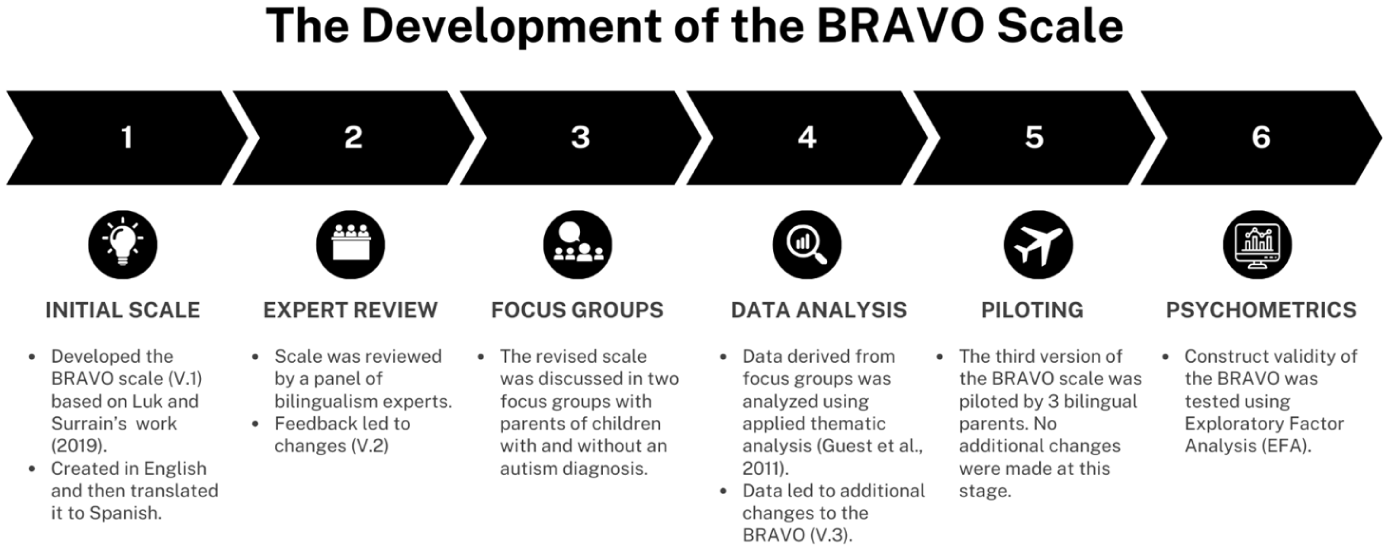
The development of the BRAVO scale.
Stage 1: Development of the BRAVO scale
Participants
Parents of both autistic (n = 6) and non-autistic (n = 6) individuals participated in stakeholder consultations via focus groups. To participate, parents needed to be at least 18 years old and have either an autistic or non-autistic child of any age. The mean age of participants was 42 years (standard deviation = 11.3), 92% (n = 11) identified as female, 66% (n = 8) self-identified as bilingual, and 50% reported having an autistic child (n = 6). Participants were recruited through local parent organizations, autism advocacy groups, social media platforms specific to autism and Latino communities, and personal referrals from participating families. This approach aimed to enhance community representation, though we acknowledge inherent limitations in fully capturing all subgroups within the Latino population.
Procedure
The BRAVO scale for parents was developed based on Surrain and Luk’s (2023) PoB scales. As the population of interest in this project included autistic individuals, Surrain (personal communication, May 31, 2020) recommended to modify the scale to include items relevant to children with disabilities as the PoB was not designed for this population. Consequently, the initial BRAVO scale contained 18 items—8 items from the PoB scales- as well as new ASD-related statements to which participants had to rate their level of agreement on a 7-point Likert scale. It comprised five dimensions of parental perceptions of the value of bilingualism: (a) general beliefs about bilingualism, (b) beliefs about bilingualism related to their child, (c) benefits of raising a child bilingually, (d) drawbacks of raising a child bilingually, and (e) experiences with providers and professionals. Initially, the BRAVO scale was developed in English and subsequently translated into Spanish by bilingual researchers familiar with the target Latino population and autism context (A.C.R. and C.M.N.). To ensure cultural and linguistic accuracy, we incorporated a rigorous adaptation process involving several iterative steps: (a) After a preliminary version of the BRAVO was obtained, it was then submitted to a panel of three bilingualism experts for review to establish content validity. (b) After incorporating the panel’s feedback, a second version of the scale was established and was subsequently discussed in two focus groups with parents of children with and without autism. One focus group was conducted in English (n = 6) and the other in Spanish (n = 6). Two trained bilingual facilitators led 90-min focus groups by following a script informed by previous literature. Focus groups were audio-recorded and transcribed verbatim. Parents who attended the focus groups were compensated with a $15 electronic gift card for their participation. (c) Data obtained from the focus groups resulted in a third version of the BRAVO scale, which was then piloted by three bilingual parents to further refine language clarity and item appropriateness. Though formal back-translation was not explicitly employed, continuous and iterative stakeholder consultation through bilingual expert reviews and community focus groups ensured both linguistic accuracy and cultural appropriateness. Supplemental Material 1 depicts changes made throughout the development process.
Data analysis
Focus group discussions were transcribed in their original language, and analyzed using applied thematic analysis (Guest et al., 2011). The research team independently reviewed transcripts to identify recurring themes and met to review and discuss coding frameworks, develop a preliminary codebook, and identify themes. Each transcript was coded by two independent coders. All changes made to the materials were recorded in an adaptation documentation form, and meeting minutes were kept, establishing an audit trail. The research team developed a summative grid of the emerging themes. Subsequently, they discussed and reached consensus regarding modifications to the scale based on the themes observed.
Stage 2: Construct validity and reliability of the BRAVO
Participants
Participants were recruited using a non-probabilistic purposive sampling framework targeting parents of bilingual (Spanish–English) and monolingual (English) school-aged children (6–12 years old), both autistic and neurotypical, residing in four counties of the Rio Grande Valley region (Cameron, Hidalgo, Starr, and Willacy). Inclusion criteria required that participants be the parent or legal guardian of a child who met the bilingual or monolingual classification and belonged to one of four groups: bilingual autistic, monolingual autistic, bilingual neurotypical, or monolingual neurotypical. Recruitment efforts focused on Spanish-speaking communities and were conducted through local school districts, community organizations, clinicians, universities, and social media. Although the study primarily targeted Latino families, some participants identified as non-Hispanic (e.g. White). These individuals were included because their child met the language and diagnostic criteria and often had a Hispanic co-parent or cultural affiliation relevant to the study’s aims. This approach ensured inclusivity while maintaining the study’s focus on bilingualism within culturally diverse family contexts.
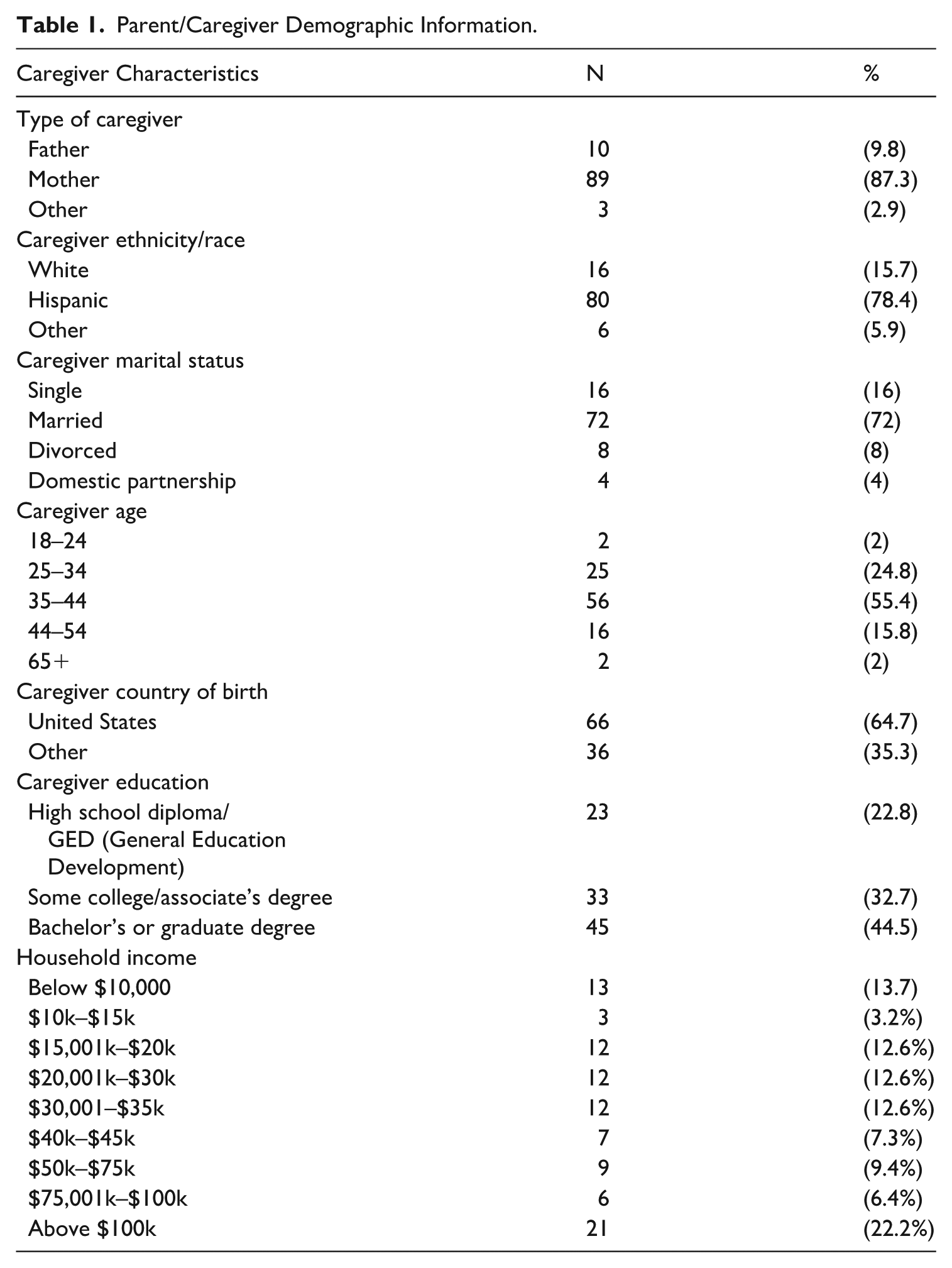
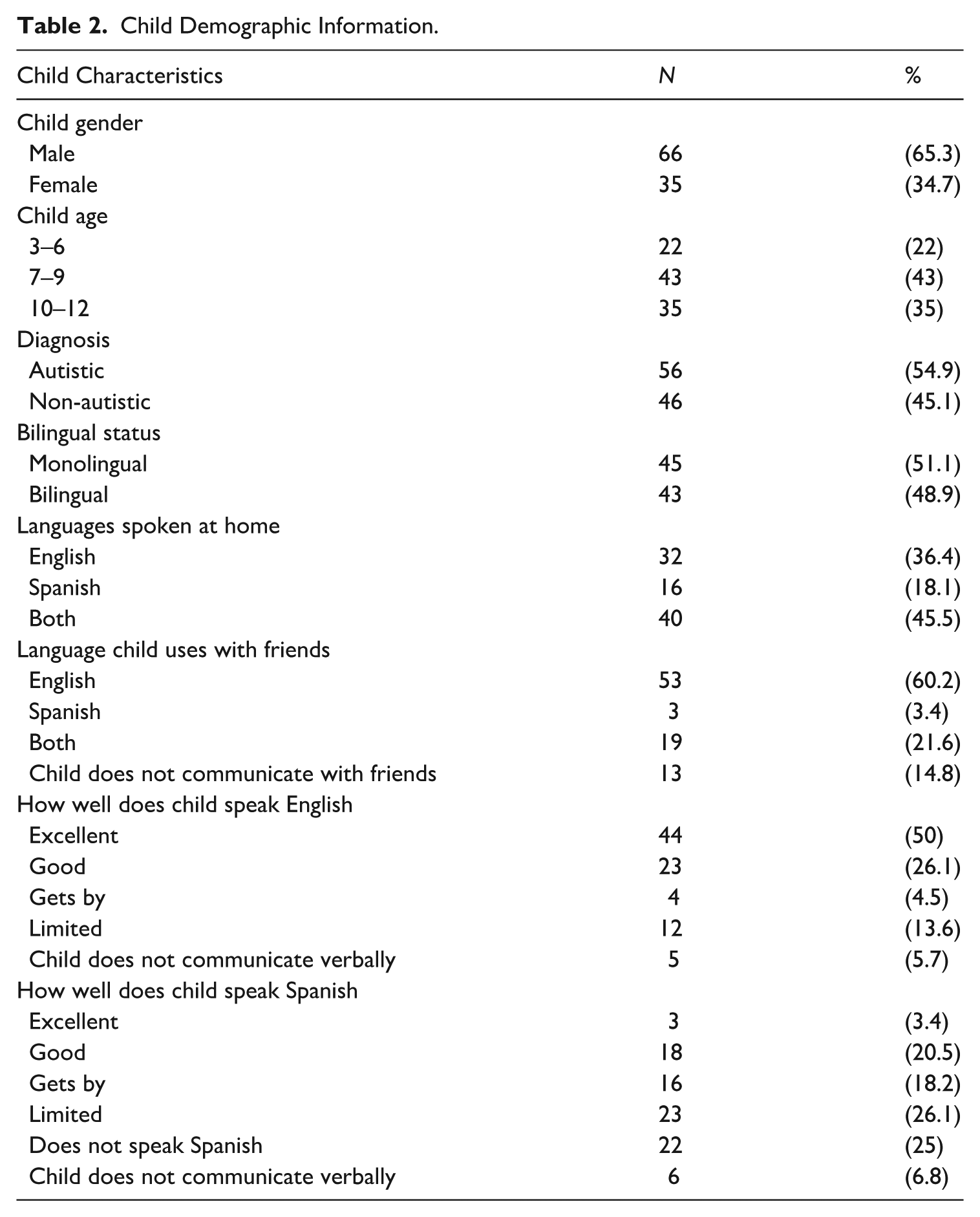
The revised scale was piloted among 102 parents. As shown in Table 1, 87.3% (n = 89) were mothers, 72% (n = 72) married, 78.4% (n = 80) Hispanic with 64.7% (n = 66) born in the United States. Furthermore, 44.5% (n = 45) had at least a bachelor’s degree. Parents who had an autistic child comprised 54.9% (n = 56) of the sample. Most children were males (n = 66, 65.3%), Hispanic (n = 77, 76.2%), and attending 2nd to 4th grade (n = 79, 89.8%). Regarding language preferences of the children, 49% (n = 43) were bilinguals (English–Spanish), and 51% (n = 45) were monolinguals (only English) as per the Child’s Language Exposure Questionnaire (CLEQ). (Table 2).
Parent/Caregiver Demographic Information.
Child Demographic Information.
Procedure
The study’s survey was conducted via an anonymous REDCap survey (Harris et al., 2009). Once participants accessed the survey link, they were provided a description of the study and informed consent information in both English and Spanish. Participants were then provided the option of completing the survey in either English or Spanish (Supplemental Material 3) and were asked to complete a total of four questionnaires described below. Upon completion, participants received a $15 electronic gift card.
Measures
In addition to the third version of the BRAVO scale, participants completed the following measures.
Demographic questionnaire
This section was comprised of 34 items, developed by the researchers to collect basic demographic data, as well as information pertaining to access to healthcare services.
Child Language Exposure Questionnaire
The CLEQ is a questionnaire used to capture current language use in different contexts and degree of lifetime exposure in each language from birth until their current age (Gonzalez-Barrero & Nadig, 2018). In terms of exposure, a percentage of exposure per year is calculated in each pertinent language, and an average across total years of life is then obtained to estimate lifetime exposure. The CLEQ has been utilized with both autistic and non-autistic samples. The questionnaire was translated to Spanish by the research team (A.C.R.) and was revised by the CLEQ’s author (A.M.G.B.). This questionnaire was also adapted to an online self-report format. For the purpose of this study, the CLEQ was used to determine participants’ bilingual status (i.e. whether they would belong to the bilingual or monolingual group). Participants with lifetime Spanish exposure ⩾30% were categorized as bilingual.
Social Communication Questionnaire—Lifetime
Social Communication Questionnaire (SCQ) is a 40-item, parent-report questionnaire designed for screening characteristics associated with autism in their children. All 40 items are administered in a dichotomous format (i.e. yes/no). This instrument possesses sufficient psychometric properties in terms of accuracy as a screener (Rutter et al., 2003). For this study, autism diagnosis in children was determined using the SCQ, employing a cutoff score greater than 11 to differentiate autistic from non-autistic children. This specific cutoff has been consistently validated and widely implemented in extensive public health research due to its optimal sensitivity and specificity in identifying ASDs in diverse samples (Schendel et al., 2012; Wiggins et al., 2015).
Data analysis
Analysis was conducted using IBM SPSS Statistics (Version 28). Construct validity of the BRAVO scale was assessed using Exploratory Factor Analysis (EFA) as part of Classical Test Theory evaluation. Bartlett’s test for sphericity ensured the correlation matrix was suitable for factor analysis, while the Kaiser–Meyer–Olkin (KMO) index verified sample adequacy (>0.50). Internal consistency for individual items and the overall scale was calculated using Cronbach’s alpha.
Following confirmation that the correlation matrix was factorable, we performed EFA using Principal Axis Factoring to identify latent factor structures (Fabrigar et al., 1999). Factor retention was guided by parallel analysis using O’Connor’s (2000) SPSS syntax, comparing observed eigenvalues with randomly generated eigenvalues to identify robust, meaningful factors. Given bilingualism’s theoretically interrelated nature, we employed an oblique rotation (Promax), allowing factors to correlate and thus more accurately capturing the construct’s underlying dimensions.
Criteria for factor retention included: (a) pattern coefficients ⩾0.40, indicating salient factor loadings; (b) exclusion of items with complex loadings (loading significantly on more than one factor) for parsimony; and (c) internal consistency reliability of each factor (Cronbach’s alpha ⩾.70), requiring at least three salient item loadings per factor and theoretical relevance. Item 2 was retained despite cross-loadings (0.45 on Factor 1, 0.42 on Factor 2) due to its theoretical importance in capturing general beliefs about bilingualism’s cognitive benefits, and removal reduced overall Cronbach’s α from .93 to .91. These comprehensive criteria ensured methodological transparency and strengthened the robustness and interpretability of our analytical results.
Results
Stage 1: Development of the BRAVO scale
Qualitative analysis from the initial stage of the study revealed four primary themes indicating the need for fundamental adaptations to the BRAVO scale in both English and Spanish versions. These themes—(a) School definitions of bilingualism, (b) Speaking versus communicating, (c) Affective domain of bilingualism, and (d) Response choices—emerged explicitly from stakeholder consultations involving bilingual parents of autistic and non-autistic children (Figure 2). Each theme highlighted specific areas requiring refinement to ensure the scale’s cultural appropriateness, linguistic accuracy, and relevance to participants in the studied geographical region.
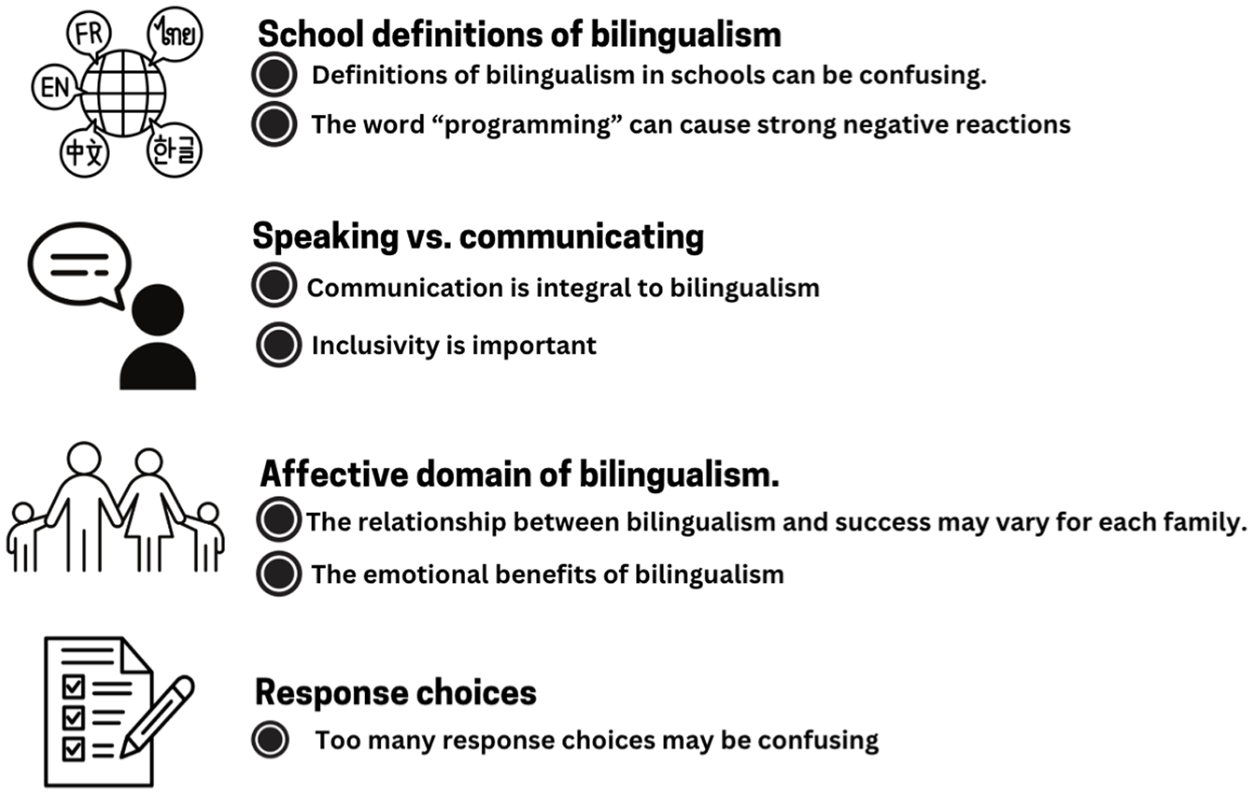
Focus group themes.
School definitions of bilingualism
Definitions of bilingualism in schools can be confusing
One of the original items Bilingual immersion programming should be offered in elementary public schools. (Bilingual immersion programs in the United States are those that promote speakers of a language other than English to maintain their native language as well as to teach English as a second language)
Generated significant discussion in both English and Spanish focus groups, as parents found the item confusing. Parents expressed confusion around items referencing school-based bilingual immersion programs, indicating variability and ambiguity in how these programs are implemented across different school districts.
The word “programming” can cause strong negative reactions
For the majority of the parents the original term “programming” was perceived negatively and as overly forceful. Given the consensus among parents indicating that this item, referring to bilingual immersion programming, may be confusing, we opted to remove it, as it is possible that it may not elicit reliable or valid responses.
Speaking versus communicating
Communication is integral to bilingualism
Most original items used verbiage such as “Speaking more than one language. . .” as proxies for bilingualism. However, stakeholders emphasized that the term “speaking” inadequately represented bilingualism, excluding non-verbal communication forms essential for autistic individuals. Communicating is not necessarily talking, as there are many ways to communicate. For that reason, per their suggestions, items were changed depending on the sentence, “speak” to “know” or “communicate,” to clarify and differentiate the meaning of the items.
Inclusivity is important
Given that this measure was meant to be used among diverse populations (including those autistic), parents of autistic children believed that the wording used was not inclusive. By using “knowing” or “communicating,” the items became relevant for non-verbal individuals, those using sign language, or pictograms.
Speaking, for me, indicates verbal speech. My children don’t communicate verbally, but they do communicate. . . Communication comes in many different forms (Parent of an autistic child).
Affective domain of bilingualism
The relationship between bilingualism and success may vary for each family
Parents commented on how the scale was designed to measure perceptions regarding the pragmatic aspects of knowing other languages, such as economic advantages. They identified an important gap in the affective dimension of bilingualism, noting the original scale overly emphasized pragmatic and economic outcomes.
What is our definition of success? In other words, not all success comes from work or earning more money. We’re talking about economic and job success. [. . .] there are children that speak English, and their mother speaks Spanish. So, what kind of family success can they have if parent-child are not able to communicate? (Parent of a neurotypical child)
The emotional benefits of bilingualism
According to parents, the decision to raise a child as a bilingual person is often related to emotional factors such as preserving their heritage, improving family connectedness, and fostering a healthy identity.
For me, it’s about the emotional part of them talking to their grandparents, that they are able to communicate, that they have their roots. (Parent of an autistic child) It is an element that constitutes the person’s identity. [. . .] I am sure, in many cases parents who choose to raise bilingual children do so not for something merely economical but strongly for the emotional side (Parent of an autistic child).
Parents highlighted emotional and cultural factors, as key motivators for raising bilingual children. Consequently, three new items were added to address these affective components (Items 10, 11, and 12, Table 3).
Summary of EFA Results for the BRAVO (n = 86).
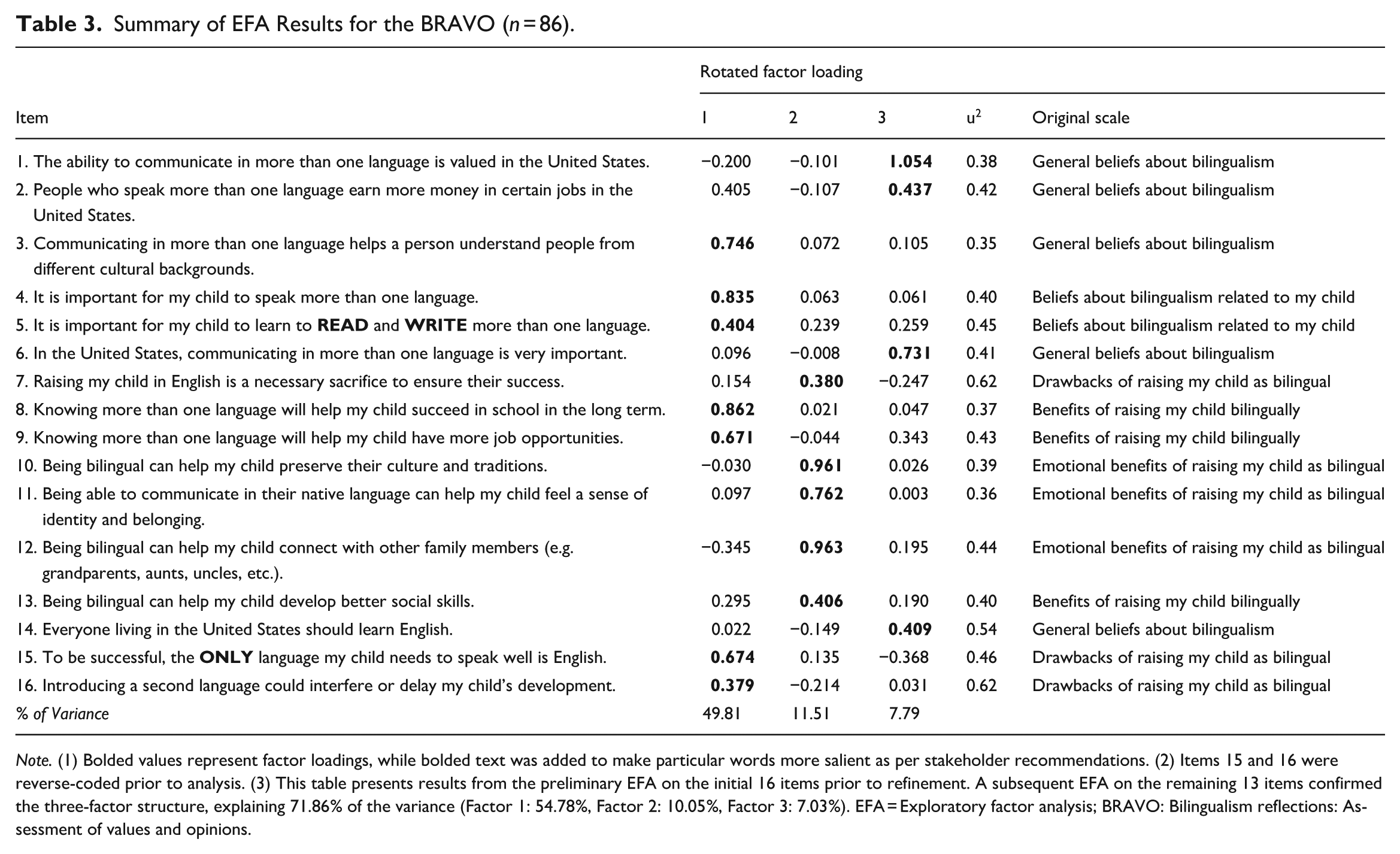
Note. (1) Bolded values represent factor loadings, while bolded text was added to make particular words more salient as per stakeholder recommendations. (2) Items 15 and 16 were reverse-coded prior to analysis. (3) This table presents results from the preliminary EFA on the initial 16 items prior to refinement. A subsequent EFA on the remaining 13 items confirmed the three-factor structure, explaining 71.86% of the variance (Factor 1: 54.78%, Factor 2: 10.05%, Factor 3: 7.03%). EFA = Exploratory factor analysis; BRAVO: Bilingualism reflections: Assessment of values and opinions.
Response choices
Too many response choices may be confusing
Parents suggested that having a very wide range of response options might be confusing for respondents and less efficient. Participants recommended reducing the number of response options from a 7-point Likert scale to a 5-point Likert scale to simplify the response process and improve response clarity and efficiency.
Modifications were made in order to incorporate stakeholder feedback into the BRAVO scale to ensure cultural appropriateness, acceptability, and readability. The revised scale was comprised of 17 items: 16 statements on a 5-point Likert scale and 1 open-ended question. Items 15 (“To be successful, the ONLY language my child needs to speak well is English”) and 16 (“Introducing a second language could interfere or delay my child’s development”) were reverse-coded prior to analysis to ensure consistency in interpretation across all items. A subsequent pilot test with three bilingual parents of autistic and non-autistic children required no further modifications, suggesting linguistic equivalence between the English and Spanish versions of the scale.
Stage 2: Construct validity and reliability of the BRAVO
Quantitative analyses evaluated the psychometric properties of the BRAVO scale. The KMO measure of sampling adequacy was 0.852, and Bartlett’s Test of Sphericity was significant (χ² = 1121.33, df = 153, p < .001), confirming the data’s suitability for factor analysis. Internal consistency of the original 16-item scale was robust (Cronbach’s α = .88).
Given the ordinal nature of Likert-scale items, we initially attempted to estimate a polychoric correlation matrix using POLYMAT-C (Lorenzo-Seva & Ferrando, 2015). However, due to sample size and response distribution limitations, this approach was not viable. We therefore used a Pearson correlation matrix, a common alternative when polychoric estimation is impractical (Preacher et al., 2013). The full correlation matrix is provided in Supplemental Material 2.
To determine the optimal number of factors for the BRAVO scale, we conducted parallel analysis, which supported a three-factor solution. As shown in Figure 3, the first three observed eigenvalues (7.97, 1.84, and 1.25) exceeded the simulated threshold and fell outside the 95% confidence interval, supporting the retention of a three-factor solution. However, consistent with best practices in EFA, we treated parallel analysis as one piece of evidence among several (Preacher et al., 2013). We conducted additional EFAs to compare 1-, 2-, and 3-factor models using Principal Axis Factoring with Promax rotation. The 1-factor model explained 49.81% of the variance, suggesting a strong general factor but lacking dimensional nuance. A two-factor model explained 64.83% of variance (Factor 1: 54.78%, Factor 2: 10.05%), allowing for clearer differentiation between item clusters; however, it merged cultural/emotional items with general perceptions, reducing interpretability.
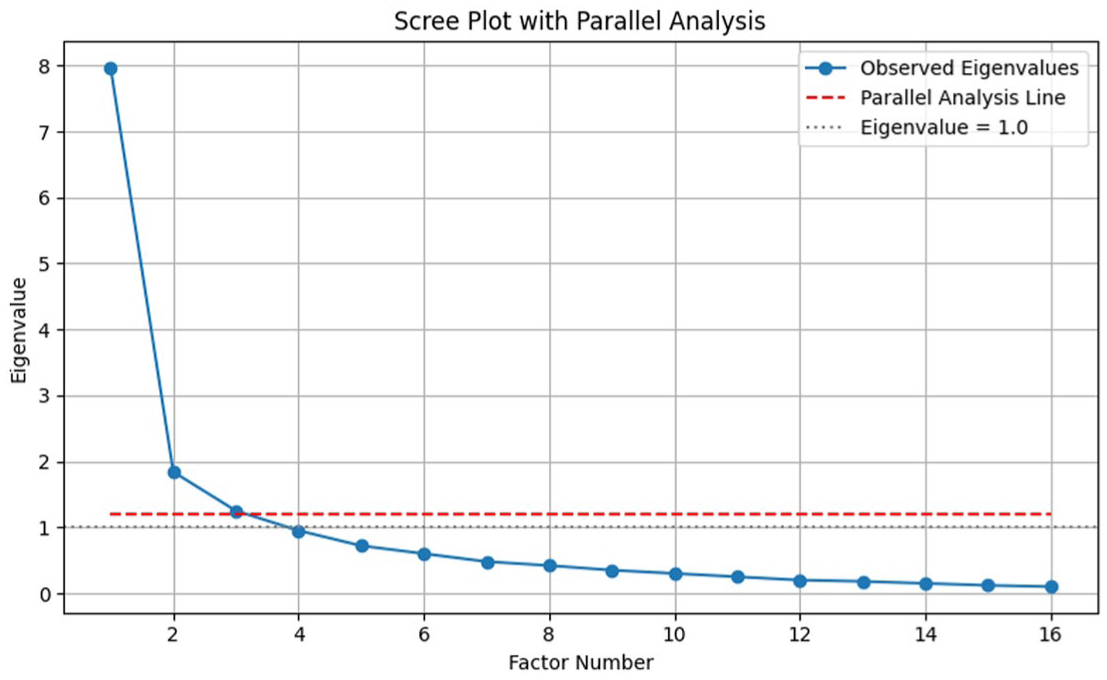
Scree plot with parallel analysis line (based on the initial 16-item EFA).
The initial three-factor solution better delineates distinct domains (General Perceptions, Cultural/Emotional Benefits, Value in the United States), aligning with bilingualism frameworks (Hamers & Blanc, 2000; Sun, 2023) and stakeholder input emphasizing affective aspects. The three-factor model explained 69.10% of the variance and aligned closely with stakeholder-informed domains, capturing general perceptions, emotional and cultural benefits, and societal value of bilingualism. Although the incremental gain in explained variance diminished with each additional factor, the conceptual clarity and interpretability of the three-factor model justified its selection. This multifaceted approach ensured that the final structure was both statistically sound and theoretically meaningful.
EFA results
The three-factor solution on all 16 items explained 69.10% of the variance (Factor 1: 49.81%, Factor 2: 11.51%, Factor 3: 7.78%). Table 3 presents the rotated factor loadings and item uniqueness scores (u²) from this preliminary analysis. Well-explained items (u² < 0.40) showed strong alignment with the factor structure, moderately explained items (u² ≈ 0.40–0.50) were reasonably captured but reflected potential additional dimensions, and less well-explained items (u² > 0.60) exhibited higher uniqueness, suggesting influence from individualized or contextual factors not fully represented. Factors were moderately correlated (Factor 1 and 3: r = .67; Factor 1 and 2: r = .42; Factor 2 and 3: r = .27).
Following rotation, Factor 1 (General PoB) included items related to general beliefs, child-specific perceptions, and perceived benefits and drawbacks, accounting for 49.81% of the variance. Factor 2 (Cultural and Emotional Benefits) captured emotional and cultural advantages (11.51%), and Factor 3 (Value of Bilingualism in the United States) addressed societal and integrative benefits (7.78%). Factors were moderately correlated (Factor 1 and 3: r = .67; Factor 1 and 2: r = .42; Factor 2 and 3: r = .27).
Inspection of the Pearson correlation matrix revealed several strong and statistically significant associations among BRAVO scale items. Notably, items reflecting cultural and emotional benefits of bilingualism—such as preserving heritage and fostering identity—showed high inter-item correlations (e.g. Item 10 and Item 11, r = .86, p < .001). These patterns support the coherence of the affective domain and align with the three-factor structure identified through EFA. A detailed correlation matrix is presented in Supplemental Material 2, highlighting item-level associations that support the scale’s factor structure. Based on the initial EFA, items with low or complex loadings and high u² (Items 7, 14, and 16) were removed for parsimony and to improve the model’s fit, as they did not align well with the emerging factors and risked introducing noise (criteria: pattern coefficients ⩾0.40, no complex loadings, Cronbach’s α ⩾.70 per factor). This removal was also theoretically justified, as these items did not strongly contribute to the core domains of bilingual perceptions identified through stakeholder input.
A subsequent EFA on the remaining 13 items confirmed the stability of the three-factor structure, with improved psychometric properties. This refined model explained 71.86% of the total variance (Factor 1: General PoB, 54.78%; Factor 2: Cultural and Emotional Benefits, 10.05%; Factor 3: Value of Bilingualism in the United States, 7.03%). Due to the oblique (Promax) rotation and factor correlations, the sum of the rotated sums of squared loadings (71.86%) reflects the contributions, including shared variance, while the extraction sums confirm the model’s robustness. The final scale demonstrated high internal consistency (α = .93). The three-factor structure aligned closely with stakeholder-informed domains, capturing general perceptions, emotional and cultural benefits, and societal value of bilingualism. The final validated scale consists of 13 items rated on a 5-point Likert scale and one open-ended question (Figure 4), structured around three coherent and theoretically grounded factors (Figure 3).
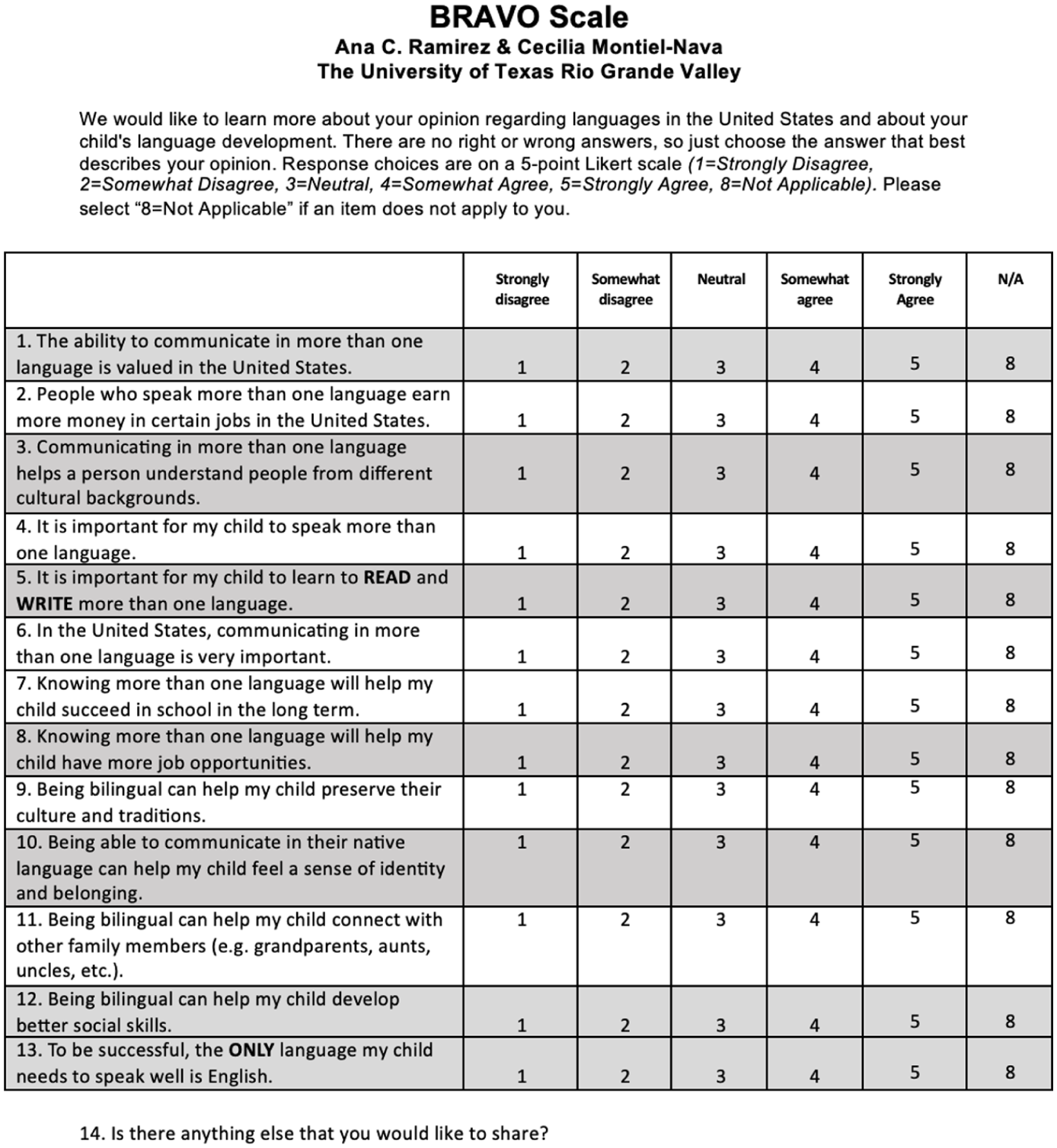
Final BRAVO scale.
Discussion
Our findings contribute to the growing body of research investigating bilingualism in autistic populations through the development and validation of the BRAVO scale—a culturally sensitive, psychometrically sound instrument designed to assess Latino parents’ PoB in both autistic and non-autistic children. With nearly 12 million U.S. children growing up in bilingual households (U.S. Census Bureau, 2019) and one in four autistic children raised bilingually (Trelles & Castro, 2019), understanding parental attitudes in this context is both timely and essential.
Scale development and cultural adaptations
Using a CBPR approach, the BRAVO scale was refined to ensure cultural relevance and clarity. Participants highlighted confusion around educational terminology, particularly bilingual immersion programs, reflecting district-level variability and echoing prior findings on inconsistent interpretations of bilingual education (Piller, 2016). Additionally, stakeholders emphasized the need to distinguish between “speaking” and “communicating,” advocating for language inclusive of non-verbal modalities—an essential consideration for autistic children (Botha & Gillespie-Lynch, 2022; Davies et al., 2024). Parents also underscored emotional and cultural motivations for bilingual upbringing, such as heritage preservation, family bonding, and identity formation—dimensions often overlooked in existing measures but well-supported in the literature (Farruggio, 2010; Mak et al., 2023; Surrain, 2021). These insights led to the inclusion of three affective items, enhancing the scale’s comprehensiveness. Methodological refinements, including shifting from a 7-point to a 5-point Likert scale, improved usability and response accuracy, particularly for culturally and linguistically diverse populations. Prior research has shown that response style can be influenced by factors such as literacy level, acculturation, and familiarity with survey formats (D’Alonzo, 2011; Davis et al., 2010). In Latino populations, tendencies toward extreme responding or social desirability may affect how Likert scales are interpreted (Marin et al., 1983). Therefore, the revised format aimed to reduce cognitive load and enhance response accuracy, particularly in a culturally and linguistically diverse sample. These targeted adaptations—terminology clarification, inclusive language, affective item inclusion, and response format revision—collectively enhanced the BRAVO scale’s ecological validity and relevance for Latino families raising autistic and non-autistic children.
Psychometric properties and theoretical implications
Quantitative validation revealed a robust three-factor structure: General PoB, Cultural and Emotional Benefits, and Value of Bilingualism in the United States. These factors collectively explained a substantial portion of variance (71.86%) and demonstrated strong internal consistency (Cronbach’s α = .93).
Factor 1, General Perceptions, aligns with extensive literature showing that parental beliefs significantly influence bilingual practices and language outcomes (Hwang et al., 2022; Indriani et al., 2021; King et al., 2008; Ronderos et al., 2022). These beliefs shape home language environments and children’s vocabulary development, underscoring the importance of equipping parents with accurate information about bilingualism (Hwang et al., 2022; Ronderos et al., 2022). Parents who value bilingualism tend to implement strategies to encourage their children’s bilingual development, even when children attend non-bilingual schools (Indriani et al., 2021). More recent research confirms that parental beliefs and knowledge about dual language learning significantly predict children’s exposure to and engagement with both languages at home (Luo et al., 2025). These findings reinforce the importance of equipping parents with accurate information about bilingual development to support optimal language outcomes.
Factor 2, Cultural and Emotional Benefits of Bilingualism, reflects a growing body of research emphasizing the affective dimensions of bilingual development. Parents from diverse linguistic backgrounds—including Mexican American and Chinese American families—consistently highlight the emotional and identity-related value of bilingualism, particularly in preserving heritage language and fostering intergenerational communication (Mak et al., 2023). These beliefs are not merely cultural preferences; they are empirically linked to measurable outcomes in children’s home language proficiency, literacy practices, and socio-emotional wellbeing (Farruggio, 2010; Mak et al., 2023; Sun, 2023). Bilingualism is inherently multidimensional, encompassing linguistic competence, cognitive organization, age of acquisition, and cultural identity (Hamers & Blanc, 2000). Recent conceptual frameworks, such as Harmonious Bilingual Experience (HBE), underscore how parental language use and beliefs shape not only children’s dual language proficiency but also their emotional adjustment and self-concept (Sun, 2023). The HBE framework further supports the role of parental language use in shaping emotional adjustment and self-concept (Sun, 2023), reinforcing the BRAVO scale’s integrative approach (Gabryś-Barker & Bielska, 2013; Otwinowska & De Angelis, 2014).
Factor 3, Value of Bilingualism in the United States, captures societal perspectives on bilingualism’s role in economic opportunity and cultural integration (Dewaele, 2015; Piller, 2016; Subtirelu, 2017). Recent research continues to highlight the economic relevance of bilingualism, particularly Spanish–English bilingualism, in the U.S. workforce. For example, Martínez García and Martínez García (2022) argue that bilingualism enhances individual job prospects and facilitates international trade; while also generating societal-level benefits by reducing barriers to communication and investment. Spanish–English bilingualism, in particular, is linked to job prospects and international trade (Martínez García & Martínez García, 2022), though economic returns vary based on literacy and fluency (Gándara, 2018; Shin & Alba, 2009). Bilingualism also supports academic resilience in low-socioeconomic status (SES) populations (Filippi et al., 2025) and challenges monolingual norms, promoting inclusive national narratives (Chibaka, 2018; Nuri, 2024). Nevertheless, societal bilingualism contributes positively to nation-building and social cohesion, challenging the “one nation, one language” ideology and promoting inclusive narratives of linguistic diversity (Chibaka, 2018). The psychometric analysis revealed an interesting pattern for Item 14 (“Everyone living in the United States should learn English”), which showed negative correlations with other items but a positive loading on Factor 3 (Value of Bilingualism in the United States). This likely stems from its phrasing, which reflects societal pressures for English proficiency prevalent in the U.S. context. Latino parents, particularly those raising autistic children, may agree with this item due to perceived expectations to prioritize English to avoid language delays, as noted in prior research (Howard et al., 2021). However, its positive loading suggests that, within the latent structure, Item 14 captures a nuanced aspect of bilingualism’s societal value, aligning with the broader construct of navigating linguistic diversity in a monolingual-dominant society (Piller, 2016; Surrain, 2021). This highlights the complex interplay of cultural and societal factors shaping parental perceptions.
The BRAVO scale’s findings reinforce the critical role of parental beliefs in shaping bilingual family practices and language outcomes, underscoring how these beliefs are influenced by broader societal expectations, personal experiences, and cultural dynamics.
To our knowledge, this study is the first to quantitatively assess parental PoB among parents of autistic children using a psychometrically validated instrument. The BRAVO scale’s robust three-factor structure offers a nuanced understanding of how parents conceptualize bilingualism within diverse family contexts. Notably, the findings reveal substantial overlap in perceptions between parents of autistic and non-autistic children, particularly in the affective domain. Both groups consistently emphasized emotional benefits such as preserving cultural heritage, strengthening family connectedness, and fostering a sense of identity, underscoring the universal relevance of these motivations in bilingual upbringing (Farruggio, 2010; Mak et al., 2023; Sun, 2023).
The scale’s strong internal consistency (α = .93) and its alignment with theoretical frameworks such as Family Language Policy (King et al., 2008) and Harmonious Bilingual Development (De Houwer, 2013) affirm its reliability and conceptual soundness. Importantly, the inclusion of items that reflect the emotional and cultural dimensions of bilingualism—often overlooked in traditional measures—ensures that the BRAVO scale captures the lived experiences of Latino families raising autistic children. These insights are particularly valuable in the U.S. context, where monolingual norms often dominate educational and clinical recommendations, and where Spanish–English bilingualism intersects with issues of equity, access, and identity (Gándara, 2018; Piller, 2016). By providing a culturally sensitive and inclusive tool, the BRAVO scale enables researchers, clinicians, and educators to better understand and support bilingual development in autistic children. Its application can inform family-centered interventions, guide language policy decisions, and challenge deficit-based assumptions that have historically marginalized bilingual autistic populations (Beauchamp & MacLeod, 2017; Howard et al., 2021). Furthermore, the study’s inclusion of economically diverse families amplifies the voices of low-income Latino communities, who are frequently underrepresented in autism research, thereby enhancing the ecological validity of the findings and supporting the development of more equitable and responsive practices.
While the current study offers valuable insights into parental PoB among Latino families, several limitations warrant consideration. First, the reliance on self-report measures introduces potential biases, including social desirability and response style effects, which may influence how participants interpret and respond to survey items. Although efforts were made to reduce cognitive load and enhance clarity through scale adaptation, self-report data inherently reflect subjective perceptions that may not fully capture actual language practices or outcomes. Second, the sample was relatively well-educated, with nearly half of the participants holding at least a bachelor’s degree. This demographic profile may not be representative of the broader Latino population, particularly those with lower levels of formal education or limited access to bilingual resources. Higher educational attainment is often associated with increased awareness of bilingual benefits and greater advocacy for language maintenance, which could skew perceptions in favor of bilingualism. As such, the generalizability of the findings to more socioeconomically diverse populations should be interpreted with caution. Future research should aim to recruit more varied samples in terms of educational background, socioeconomic status, and geographic location to better understand how these factors shape parental beliefs and bilingual development trajectories in autistic children.
Future directions
To strengthen the BRAVO scale’s generalizability, future research should replicate and extend its validation across more diverse educational and geographic populations. Examining the predictive validity of parental perceptions in relation to actual bilingual outcomes for autistic children would offer critical insights into how beliefs translate into developmental trajectories. Longitudinal studies could further illuminate how these perceptions evolve and shape bilingual practices over time.
Although developed within the U.S. Spanish–English Latino context, the BRAVO framework holds promise for broader application. Adapting the scale for families speaking languages such as Mandarin, Arabic, or Indigenous tongues requires culturally responsive modifications informed by stakeholder input (Macbeth et al., 2022; Marian & Hayakawa, 2021; Surrain & Luk, 2023). Sociolinguistic factors—including language prestige, institutional support, and educational structures—can significantly influence parental beliefs and bilingual development (Nocus, 2024). Emotional and cultural dimensions central to BRAVO may also manifest differently across communities, underscoring the need for context-specific validation.
Expanding BRAVO’s reach will contribute to a more inclusive understanding of bilingualism and support the development of tools that reflect the multilingual realities of families both within and beyond the United States.
Conclusion
The BRAVO scale constitutes a meaningful advancement in bilingualism and autism research by offering a psychometrically sound, culturally responsive, and theoretically grounded instrument for quantifying parental PoB among Latino families. Its development through a CBPR framework ensures that the scale reflects the lived experiences and values of both autistic and non-autistic populations, thereby enhancing its ecological validity and relevance. By capturing emotional, cultural, and societal dimensions of bilingualism—domains often underrepresented in existing measures—the BRAVO scale provides a critical tool for informing evidence-based clinical practices, educational programming, and policy initiatives. Its application holds particular promise for supporting bilingual development in autistic children, challenging deficit-based assumptions, and promoting inclusive, family-centered approaches within linguistically diverse communities across the United States.
Supplemental Material
sj-docx-1-fla-10.1177_01427237251407502 – Supplemental material for A Community-Based Participatory Research Approach to Evaluating Perceptions of Bilingualism Among Latino Parents of Autistic Children
Supplemental material, sj-docx-1-fla-10.1177_01427237251407502 for A Community-Based Participatory Research Approach to Evaluating Perceptions of Bilingualism Among Latino Parents of Autistic Children by Ana C. Ramirez, Philip G. Gasquoine, Amy A. Weimer, Gabriel Gonzalez-Nunez, Juan R. Maldonado-Coronado, Sarah Surrain, Ana M. Gonzalez-Barrero and Cecilia Montiel-Nava in First Language
Footnotes
Acknowledgements
We are deeply thankful to “Autismo en mi Vida” and the parents of autistic children in the RGV community for their generous support and meaningful contributions to this project.

Ethical Considerations
Ethical approval was obtained from The University of Texas Rio Grande Valley Institutional Review Board (IRB-21-0092).
Consent to Participate
Written informed consent was obtained from the participants prior to their involvement in this study.
Author Contributions
Funding
The authors disclosed receipt of the following financial support for the research, authorship, and/or publication of this article: Research reported in this publication was supported by the Organization of Autism Research (OAR) under Award Number 2021G10 and the National Institute of General Medical Sciences of the National Institutes of Health under Award Number SC2GM144163. The content is solely the responsibility of the authors and does not necessarily represent the official views of the National Institutes of Health or OAR.
Declaration of Conflicting Interests
The authors declared no potential conflicts of interest with respect to the research, authorship, and/or publication of this article.
Data Availability Statement
The data that support the findings of this study are available on request from the corresponding author, A.C.R. The data are not publicly available due to containing information that could compromise the privacy of research participants.
Supplemental Material
Supplemental material for this article is available online.
Notes
References
Supplementary Material
Please find the following supplemental material available below.
For Open Access articles published under a Creative Commons License, all supplemental material carries the same license as the article it is associated with.
For non-Open Access articles published, all supplemental material carries a non-exclusive license, and permission requests for re-use of supplemental material or any part of supplemental material shall be sent directly to the copyright owner as specified in the copyright notice associated with the article.
