




Abstract
Research suggests that girls acquire language faster than boys, with gender differences most pronounced in vocabulary acquisition during early childhood. This study examines the role of gender in the acquisition of vocabulary and morphosyntax in Palestinian Arabic-speaking children aged 18 to 36 months. Using the Palestinian Arabic Communicative Development Inventories, this study analyzes lexical and morphosyntactic development in 1399 children, highlighting month-by-month differences between boys and girls. Significant gender differences favoring girls were observed in both lexical and morphosyntactic abilities, with girls outperforming boys in vocabulary production and morphosyntactic ability at various stages, even after excluding gendered words from the analysis; however, effect sizes were small. The gender gap diminished by 36 months. These findings align with previous studies on European languages and contribute to our understanding of early language acquisition in Arabic, suggesting that both biological and sociocultural factors may account for the observed gender differences.
Keywords
Introduction
Girls have been reported to acquire language faster than boys. They speak earlier, have a larger vocabulary, use grammar earlier, and produce longer utterances than boys do (Bouchard et al., 2009; Eriksson et al., 2012, Eriksson, 2017; Fenson et al., 1994, 2007; Frank et al., 2021; Kas et al., 2022). This small yet significant difference was mostly observed in vocabulary production and decreased with age, eventually vanishing around the age of 36 months (Lange et al., 2016; Le Normand et al., 2008). However, some studies, such as those by Abdelwahab et al. (2021), Berglund and Eriksson (2000), and Cadime et al. (2021), found no gender effect, attributing this lack of effect to biological, socialization, and cultural factors. Most of these studies were conducted on English or other European languages, with a few exceptions, and often focused on a single language domain.
The present study aims to improve our understanding of the nature and causes of the gender effect by bringing new insights from a study of over a thousand bicultural Palestinian Arab children, ages 18 to 36 months, residing in Israel. Exploring the month-by-month effect of gender on lexical and morphosyntactic acquisition in Palestinian Arabic (PA), using the Palestinian Arabic Communicative Development Inventories (PA-CDI; Hashoul-Essa & Armon-Lotem, 2024), we intend to delve into how gender impacts vocabulary and morphosyntax acquisition and examine whether the exclusion of gendered words could potentially impact the gender gap.
Gender effects on vocabulary development, morphosyntax, and syntax
Gender differences in vocabulary acquisition up to age 3 have been studied using the MacArthur-Bates Communicative Development Inventories (MB-CDI, Fenson et al., 1994, 2007) and its adaptations. Significant gender differences were observed overall as well as at specific ages. Fenson et al. (1994) found that girls aged 8 to 30 months had higher receptive and expressive vocabulary than boys, being approximately 1 to 2 months ahead on most measures. Gendler-Shalev and Dromi (2022) reported for Hebrew that girls had larger expressive vocabularies and used more gestures than boys during the second year of life. Likewise, Arabic-speaking girls outperformed boys in vocabulary scores (Hashoul-Essa & Armon Lotem, 2024). Differences in pace of word acquisition were also reported by Huttenlocher et al. (1991) for English speaking girls between 14 and 26 months, by Nylund et al. (2023) for Finnish speaking girls at 13 and 24 months, by Eriksson et al. (2012) for European girls from 10 non-English language communities between 8 and 16 months, and increasing up to 24 months, and by Bauer et al. (2002) for English speaking girls, who were found to be outpacing boys from 8 to 14 months. Nelson (1973) found that girls acquired 50 words at 18 months, while boys reached this at 22 months. These differences persisted in the late second year (Bornstein & Haynes, 1998; Galsworthy et al., 2000) and into the fifth year (Andersson et al., 2011; Bornstein, Hahn, et al., 2004, Bornstein, Leach, et al., 2004). Similar effects were found for French (Le Normand et al., 2008), Slovenian (Umek et al., 2008), Faroese (Rasmussen & Bleses, 2018), Finnish (Stolt, 2023), and Norwegian children (Holm et al., 2023).
Most research using the CDI focuses on overall language competence measures rather than preferences for particular grammatical or semantic categories. However, Frank et al. (2021) found that in English and across languages, the largest male biases were for vehicles and objects linked to traditional male activities, and the largest female biases were clothing and toys. Wallentin and Trecca (2023) found significant differences in the semantic categories of vocabulary produced by boys and girls before the age of 3. Girls were more likely to use higher frequency nouns associated with clothing, animals, body parts, games, and toys, reflecting a focus on nurturing and social interaction. In contrast, boys predominantly produced nouns and verbs related to vehicles and outdoor activities, indicating a preference for exploration and physical play. This was also reflected in the choice of grammatical categories of words used by boys and girls: girls used more pronouns that facilitate social interaction, while boys used more verbs related to outdoor activities.
The gender difference diminished within the third year. Huttenlocher et al. (1991) reported differences declining between 20 and 24 months, and Bouchard et al. (2009) found differences vanish by 28 to 29 months in Quebec French children, with boys surpassing girls by 30 months. Le Normand et al. (2008) reported advantages for French girls declining at 36 months. Likewise, Lange et al. (2016) reported this advantage to decrease around school age for German children.
Yet, some studies found no gender differences. Berglund and Eriksson (2000) found none for Swedish children at 16 to 28 months, nor did Marjanovič-Umek et al. (2016) for Slovenian children between 16 and 31 months. Umek and Fekonja-Peklaj (2017) stated that similarities between Slovenian boys and girls outweigh differences. Abdelwahab et al. (2021) found no differences for Arabic-speaking children between 8 and 30 months, nor did Musa et al. (2021) for Sudanese Arabic-speaking children between 2 and 8 years.
Studies using the MB-CDI have shown a slight advantage for girls in early syntax and morphosyntactic development (Fenson et al., 1994). Girls seemed to combine words earlier, produce longer and more complex utterances, and use more correct morphosyntactic features. Fenson et al. (1994) found English-speaking girls were 2 months ahead of males in word combinations, while Özçalişkan and Goldin-Meadow (2010) found a 3-month advantage. Eriksson et al. (2012) observed this advantage across 10 non-English language communities, most prominently between 19 and 27 months (and see also Özçalişkan & Goldin-Meadow, 2010; Van Hulle et al., 2004). For morphosyntax acquisition, Bouchard et al. (2009) found Canadian French-speaking girls scored higher in morphological markers, word forms, irregular words, and complexity between 16 and 27 months. This advantage typically vanished by 36 months or earlier (Bouchard et al., 2009). By contrast, Hashoul-Essa and Armon-Lotem (2024) and Holm et al. (2023) did not find any effects of gender on morphosyntax or grammar.
In sum, research has shown some gender differences in early language development, with girls outperforming boys in lexical, morphosyntactic, and syntactic development. However, there is no consensus on lexical acquisition differences, and these differences typically disappear by 36 months.
Possible reasons for the gender difference
Some researchers attribute girls outperforming boys to biological factors (Huttenlocher et al., 1991), citing faster brain maturation in girls (Bornstein, Hahn, et al., 2004; Gendler-Shalev & Dromi, 2022; Rinaldi et al., 2023) and different brain organization and function (Kimura, 1992). Neuroimaging research supports this, showing that girls have more advanced structural connectivity in language areas during early childhood (Schmithorst et al., 2008). Others suggest that socialization factors, such as communication styles and relationships (Bouchard et al., 2009; Maccoby & Jacklin, 1974; Wehberg et al., 2008), yield different linguistic experiences. Gender-role stereotypes may influence life experiences, affecting lexical development. Caldera et al. (1989), for example, argue that parents’ choice of gendered toys affects interaction patterns and lexical acquisition. This might explain Fenson et al.’s (1994) finding of gender-specific advantages in certain vocabulary subscales, potentially reflecting gender stereotypes. Parental and caregiver behavior may also contribute, with girls receiving more verbal interaction opportunities (Bornstein, Leach, et al., 2004; Clarke-Stewart & Allhusen, 2002; Clearfield & Nelson, 2006; Ladegaard & Bleses, 2003; Leaper et al., 1998). Gendler-Shalev and Dromi (2022) suggest that cultural expectations might play a role, where parents may unconsciously expect girls to speak earlier and therefore pay more attention to their verbal development. The biopsychosocial model proposed by Miller and Halpern (2014) emphasizes the interplay of biological, psychological, and social factors in shaping cognitive abilities, which may influence brain development and language skills, lead girls to engage more in verbal interactions enhancing their language abilities, and shape language development by providing varied levels of verbal encouragement.
Abdelwahab et al. (2021) posed an open question regarding cultural profiles, asking whether gender effects differ in Middle Eastern versus Western cultures. As they found no gender differences, they suggested that factors like authoritarian parenting and devaluation of girls’ education might reduce or reverse typical gender gaps. However, they acknowledge the need for further research before drawing any conclusions. Indeed, Arab culture is often characterized as collectivist, authoritarian, patriarchal, and traditional (Dwairy & Ibrahim, 2016), with many families exhibiting a preference for male children (Sharaf et al., 2019). This male preference can manifest in behaviors that undermine the welfare, health, and survival of girls and women (El-Gilany & Shady, 2007). However, the situation may differ for Arabs in Israel, where gender equality is emphasized, and education is mandatory from an early age. As Azaiza (2008) notes, Israeli Arabs are undergoing a process of modernization, transitioning from a collectivist to a more individualistic society. Dwairy et al. (2006) found a mixed and inconsistent pattern in the parenting styles of Israeli Arab parents, suggesting that exposure to Western cultural influence is shaping their approaches. Furthermore, Haj Yahia-Abu Ahmad (2006), in studying three generations of Israeli Arabs, observed that the younger generation exhibited less traditional, more egalitarian, and permissive attitudes, preferring an authoritative parenting style rather than the traditional authoritarian approach. This highlights the potential for cultural shifts and the adoption of more progressive gender norms within the Arab community in Israel.
Finally, researchers attribute gender differences to methodological factors, such as children’s age at testing, language aspects assessed, and research methods used (Bouchard et al., 2009; Fenson et al., 1994; Marjanovič-Umek et al., 2011; Markovic, 2007; Simonsen et al., 2014; Umek et al., 2017). Bouchard et al. (2009) questioned parent-report measures, suggesting potential bias in scoring daughters higher than sons. Marjanovič-Umek et al. (2011) found discrepancies between parent and preschool teacher assessments, with teachers showing no significant gender differences. They suggested that parents’ implicit beliefs may reinforce gender stereotypes, while teachers provided more comparable language use opportunities. Some researchers argued that specific items may yield differences and caution against assessing certain words in children. Rinaldi et al. (2023) suggest that the differences in language skills are influenced by individual variability among boys, claiming that the greater variability in language competence among boys may result in a higher representation of boys among those with poor verbal abilities, but also allows for a range of development that can lead to catching up over time. Bouchard et al. (2009) suggested that gendered words reflect children’s understanding of their environment and may be characteristic of their gender. They found distinctive gender-associated characteristics in the acquisition of the first 100 words, proposing that differences in interests or socialization may affect word types rather than production numbers. Stennes et al. (2005) found that girls’ vocabularies contained significantly more gender-typed words than boys’, with both genders using more same-gender-typed words. Marjanovič-Umek et al. (2016) observed an increase in gender-typed words with age, related to increasing vocabulary size. Until 18 months, girls spoke more gender-typed words, but the differences were not statistically significant. Umek and Fekonja-Peklaj (2017) argued that gender differences depend on the aspect of language ability measured and emphasize providing equal opportunities for language development for both genders.
In conclusion, gendered words may contribute to small yet significant gender differences in early vocabulary acquisition. A qualitative analysis of lexical items, excluding gendered vocabulary, is needed to better understand these differences.
Palestinian Arabic
Arabic exhibits diglossia, with Modern Standard Arabic (MSA) and spoken vernacular varieties coexisting (Ferguson, 1959). PA is the colloquial vernacular of the Arabic speakers in Israel and comprises multiple dialects (Henkin, 2000). This diglossic nature of Arabic impacts the way children acquire the language. However, before the age of 3, children have minimal exposure to MSA, which is the more formal written standard. Therefore, MSA is expected to have minimal influence on the speech production of children under 3 years old, who are primarily exposed to the spoken PA variety at this early age. Likewise, despite being a minority in a Hebrew-speaking country, most of the Arab population lives in enclaved communities where children are only exposed to Arabic, and Hebrew is only acquired at school.
As a Semitic language, Arabic has rich nonconcatenative morphology, characterized by roots and templates for word formation (Saiegh-Haddad & Henkin-Roitfarb, 2014). The root carries the core meaning of a word but cannot stand on its own. Inserting the root within the template produces a lexical item with its unique meaning and grammatical category (Saiegh-Haddad & Henkin-Roitfarb, 2014). Morphosyntactic inflectional patterns are also used in the conjugation of the verb for tense, person, number, gender, and mood. Nouns also undergo inflections that mark gender, number, and case.
The acquisition of Arabic
In Arabic, as in other languages, nouns comprise the highest percentage of a child’s early lexicon, followed by verbs and prepositions (Bates et al., 1994; Elgibali, 2003; Hashoul-Essa & Armon-Lotem, 2024; Karam El-Deen, 1989; Nelson, 1973). Hashoul-Essa and Armon-Lotem (2024) found that children’s production in PA follows this pattern, with connecting words being the least frequent. Children’s early vocabulary typically includes words from their immediate environment, such as food, people, and routines (Clark, 2009). In PA, children start using these categories around 24 months (Hashoul-Essa, 2017).
Verb acquisition in Arabic begins with simple forms lacking concatenative morphemes (Elgibali, 2003). The simplest conjugations (e.g., fa’ala and fa’’ala) are produced first (Tallas-Mahajna et al., 2023), followed by more complex forms. Children start producing frozen inflected forms for gender, number, person, and tense as early as 18 months (Hashoul-Essa & Armon-Lotem, 2024), with frequency and accuracy of inflections increasing with age (Aljenai, 2010). Gender and number are produced first (Hashoul-Essa & Armon-Lotem, 2024), followed by person and tense (Basaffar & Safi, 2012). Masculine forms are produced better than feminine forms (Basaffar & Safi, 2012; Hashoul-Essa & Armon Lotem, 2024), and first and third person emerge before the second (Hashoul-Essa & Armon Lotem, 2024; Kadry, 2009). By the age of 3, children have mastered the production of verb inflections (Rosenhouse, 2000).
In the nominal system, feminine plural is produced first and is the most preferred, followed by broken plural, while masculine plural is acquired last (Abdalla et al., 2013; Abdo & Helo, 2010; Daana, 2009; Hashoul-Essa & Armon-Lotem, 2024; Ravid & Farah, 1999; Saiegh-Haddad et al., 2012). Children tend to overgeneralize the use of the feminine plural suffix (Al-Buainain, 1999; Kadry, 2009; Omar, 1973; Ravid & Farah, 1999; Saiegh-Haddad et al., 2012). All forms of plural are produced as early as 20 months (Omar, 1973; Ravid & Farah, 1999; Rosenhouse, 1998), with feminine plural fully developed by age 3 and broken plural by age 5 (Omar, 1973). The dual is acquired later and gradually (Abdo & Helo, 2010; Rosenhouse, 2000).
The current study
A few studies have examined gender differences in Arabic acquisition. Abdelwahab et al. (2021) observed no gender differences using a short adaptation of the MacArthur-Bates CDI for children aged 8 to 30 months. The adaptation focused on words only and assessed comprehension and production of a list of 100 words in 17 main dialects of Arabic with data from 604 children. By contrast, Hashoul-Essa and Armon-Lotem (2024) reported that gender contributed to lexical development (with girls outperforming boys) but not to morphosyntactic acquisition, yet they avoided any detailed analysis by lexical or grammatical category and did not discuss the reasons for gender differences across lexical development.
The current study aims to fill this gap and provide a detailed examination of gender differences by comparing both lexical and morphosyntactic abilities of boys and girls, contributing to our understanding of the impact of gender on the acquisition of vocabulary and morphosyntax in PA. Two main research questions are addressed:
Are there gender-related differences in the acquisition of vocabulary? Is there a significant difference in the number of vocabulary items between boys and girls across different semantic categories (e.g., animals, toys, body parts) and grammatical categories (e.g., nouns, verbs, adjectives)? Are these differences restricted to specific ages? Does the difference between boys and girls disappear once gendered words are removed?
Are there gender-related differences in the acquisition of morphosyntactic development? Is there a significant difference between girls and boys in morphosyntactic production, and is it restricted to specific structures, such as verbal morphosyntax or nominal morphosyntax, or specific ages?
In our recent work (Hashoul-Essa & Armon-Lotem, 2024), we reported the initial findings from this dataset, where we examined multiple aspects of language development in PA. While the preliminary analysis of gender differences indicated effects in lexical development, the morphosyntactic differences were less clear. The current study presents a focused, in-depth analysis of gender effects in both domains, allowing us to examine these differences more thoroughly and systematically. Based on previous literature showing gender effects in both lexical and morphosyntactic development across languages (e.g., Bouchard et al., 2009; Fenson et al., 1994), we hypothesized that girls would outperform boys in both vocabulary and morphosyntactic development, with differences in the impact of gender between different semantic and grammatical classes. However, we expected that once gender-specific vocabulary items were removed, there would be no significant difference between the vocabularies of boys and girls. Moreover, we anticipated that age would impact the gap between boys and girls, with both genders exhibiting similar lexical and morphosyntactic development by the age of 36 months.
Method
Participants
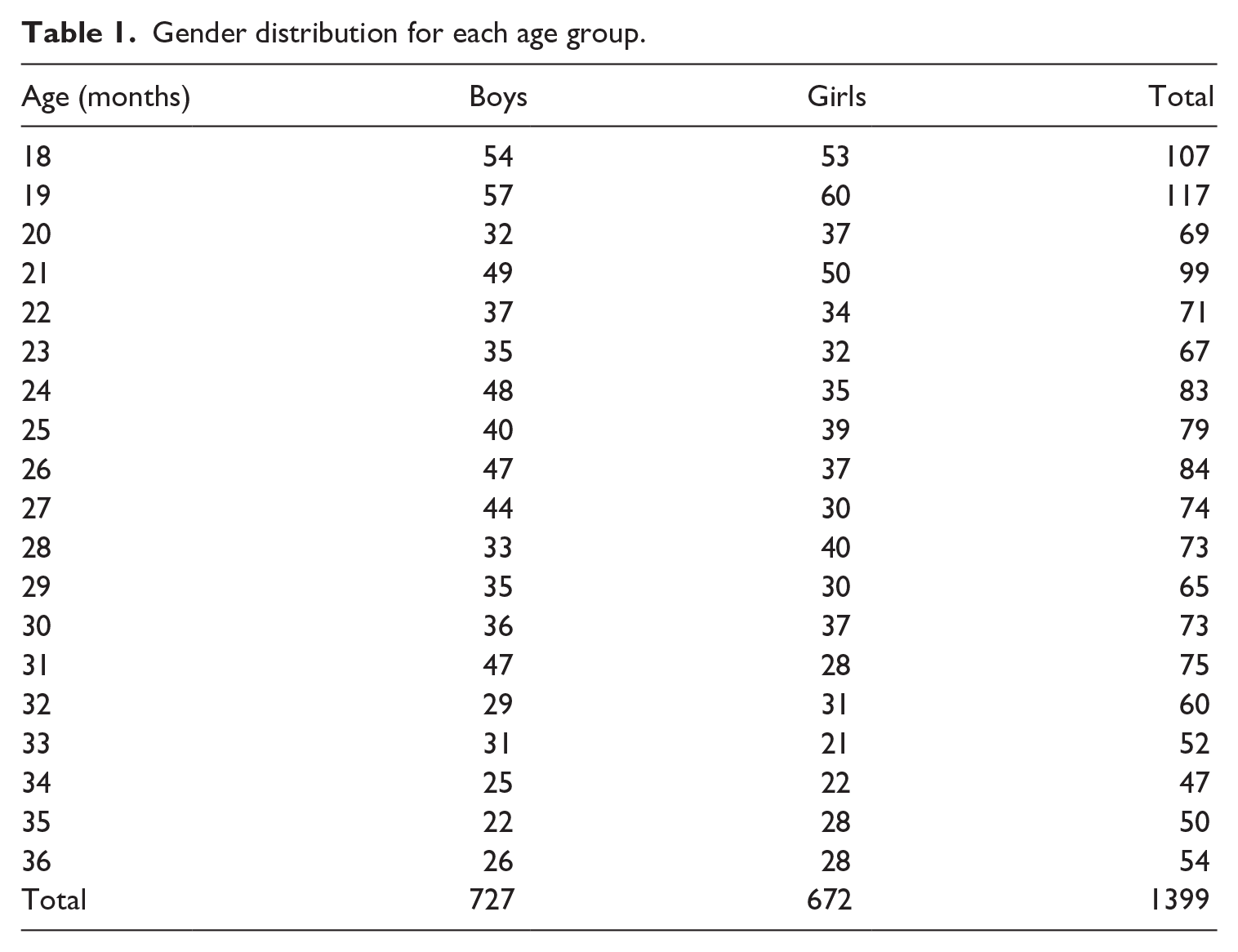
For this research, 3500 mothers of PA-speaking children living in Israel were recruited via Facebook and Instagram. Out of those, 2101 mothers either did not complete the questionnaire or their children fell outside the target age range of 18 to 36 months. The final study sample consisted of 1399 questionnaires filled out by mothers of 672 girls and 727 boys aged between 18 and 36 months. All participants reported that Arabic was the sole household language, with minimal exposure to English or Hebrew except through watching cartoons. Table 1 presents the distribution of participants by age in months and gender.
Gender distribution for each age group.
Material
An online version of the PA-CDI (Hashoul-Essa & Armon-Lotem, 2024) was used to explore early lexical and morphosyntactic development in PA-speaking children ages 18 to 36 months. The web version of the PA-CDI caters to different dialects of PA, providing alternatives for vocabulary items and targeting morphosyntactic knowledge that is used similarly across dialects. This study does not address MSA. While the instructions for the questionnaire were provided in MSA, vocabulary items as well as morphosyntactic structures were presented in the spoken vernacular dialects.
The PA-CDI follows the Words and Sentences questionnaire and has two main sections. The first section assesses the production of 658 vocabulary items. Additionally, there are five items that assess the extent to which children use words to refer to the past or future, or to missing or absent objects and people. The second section evaluates children’s morphosyntactic language development through 19 questions addressing particular features of Arabic morphosyntax in the nominal domain (dual, regular plural, broken plural, and construct-state noun), the verbal domain (past, present, and future tenses, gender, number, and person), the use of negation of the verb, and the marking of object clitics on the verb. Finally, the three longest utterances of the children are reported to obtain a measure of their Mean Length of Utterance (MLUs). A background information questionnaire is also included in the PA-CDI to gather demographic information and information on early milestones.
Procedure
Recruitment was conducted through Facebook and Instagram advertisements targeting Arabic-speaking women aged 18 to 45 in Israel. The web version was designed for multiple devices. Participation was incentivized with a printable certificate showing the child’s word count. Upon accessing the website (www.pacdi.online), parents received instructions and provided their consent. The study was exempt from an approval process by the authors’ Institutional Review Board as it involved only anonymous data collection from adult participants through an online questionnaire. Participants then entered basic information about their child and proceeded to complete the questionnaire’s three sections: lexical development, morphosyntactic development, and demographic information. After completion, parents could access a summary of their child’s vocabulary size.
Data analysis
A database was created from the completed questionnaires and analyzed to examine early lexical and morphosyntactic development across genders. The questionnaire features an automatic scoring system that eliminates scorer judgment, making the scoring process straightforward and reliable. For lexical development, we examined the total number of words within the 21 categories. The word categories were analyzed in three ways. The first is by word categories as appeared in the questionnaire, which included all 21 categories including sounds and routines, regardless of their grammatical or semantic category; the second is by nominal semantic categories, in which only nominal categories were analyzed by their semantics (such as animals, vehicles, toys, etc.); the third is by grammatical categories, which included the nominal category as a single category and eight other grammatical categories (such as pronouns, verbs, and adjectives). Regarding morphosyntactic categories, answers were scored as 1 for correct usage and 0 for incorrect usage, reflecting appropriate application of the morphosyntactic categories. Morphosyntactic categories were studied as a whole, and then, nominal and verbal inflections were studied separately. Correlations with background and demographic variables were also considered.
To illustrate the developmental trajectory of language acquisition, highlighting both age-related progress and gender differences, descriptive tables presenting a comparative analysis of language production for boys and girls from 18 to 36 months were generated. To capture both the emergence of the categories and their acquisition to mastery, data were divided into multiple tiers, representing the percentage of production for boys and girls. Tier 1 (10%–49%) represents the emergence phase of vocabulary acquisition. It captures the initial appearances of words within a category, highlighting the earliest stages of language development when vocabulary production is just beginning to take shape. Tier 2 (50%–79%) provides insight into the transitional point where a vocabulary category starts to be used more consistently. While 50% is traditionally used as an age of acquisition marker for individual words (Hansen, 2017), we recognize that this benchmark requires careful interpretation when applied to broader categories. The threshold of 80% was carefully selected for tier 3 to capture a more robust representation of developmental progress. While the CDC threshold for milestone is 75% (Zubler et al., 2022), recent studies suggest that 80% may be more appropriate for developmental milestones in the Israeli context (Sadaka et al., 2022). Finally, widely recognized in semantic category research (Brown, 1973; So & Dodd, 1995; Tang et al., 2024), the threshold of 90% represents a criterion for true mastery and was selected for tier 4, ensuring that we are capturing a comprehensive and stable use of vocabulary within a given category.
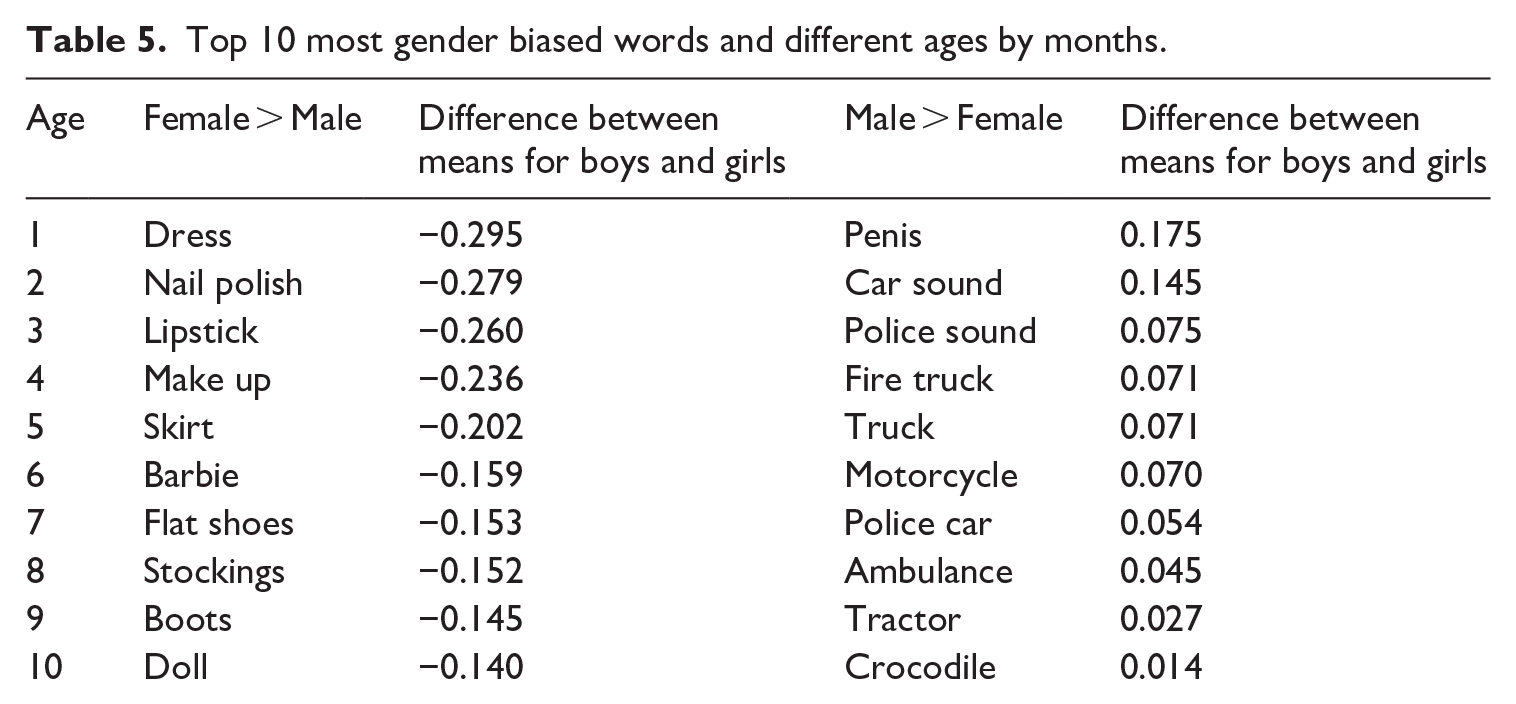
For statistical analysis, the data were divided by months and generalized linear models (GLMs) were used to compare groups across the different sections, followed by post hoc tests. Statistical analyses were conducted using R. To account for the wide normative variability in language development, we implemented Growth Charts Regression Quantiles using the quantregGrowth package. The quantregGrowth package (Muggeo et al., 2020), developed by Vito M. R. Muggeo and colleagues, was used. It provides tools for fitting non-crossing regression quantiles using B-splines with L1-norm difference penalties. We calculated the 0.50 quantile for both boys and girls to represent central tendencies more accurately than means. In order to decide which words and categories were mostly favored by each gender, mean values were compared between boys and girls across different categories and items in the dataset. Positive differences indicate higher scores for boys, while negative differences indicate higher scores for girls. The largest differences favoring boys were observed in the words penis, car sound, police sound, firetruck, truck, motorcycle, police car, ambulance, tractor, and crocodile. The largest differences favoring girls were observed in the words dress, nail polish, lipstick, make up, skirt, Barbie, flat shoes, stockings, boots, and doll. Variability across items suggests category-specific gender differences in scores. To investigate whether gender differences in vocabulary were driven by gender-specific words, we conducted an additional analysis where only the top 10 words with female advantage were removed from each child’s overall word count, and an additional vocabulary list excluding them was created. This targeted analysis was performed specifically to test the hypothesis that gendered vocabulary might explain observed differences between boys and girls. All other analyses in this study were conducted on the complete vocabulary data. We chose to remove only the female-biased words in our targeted analysis because our primary finding showed girls outperforming boys in vocabulary production. By removing words that strongly favored girls, we could test whether the gender gap persisted even when these items were excluded. If the gap remained significant after removing female-biased words, this would suggest that the gender difference was not merely an artifact of the specific vocabulary items included in our assessment. We did not remove male-biased words because this would potentially further enhance rather than test the observed gender difference favoring girls.
Given the large sample size, we recognize that the high statistical power of our analyses increases the likelihood of detecting small effects as statistically significant. This may contribute to false positives, which is a well-known issue in large-sample studies. As a result, we focus not only on statistical significance but also on effect sizes, as they offer a better measure of practical significance. Effect sizes were calculated using partial eta-squared (η²). Following Cohen (1988), we interpreted η² values of 0.01 as small effects, 0.06 as medium effects, and 0.14 as large effects. Given our large sample size, we paid particular attention to effect sizes to assess practical significance beyond statistical significance.
Results
Gender and the acquisition of the lexicon
The first research question explores gender differences in the acquisition of vocabulary. Investigating the difference in the number of vocabulary items between boys and girls, Figure 1 presents a growth curve of the means of vocabulary items produced by boys and girls in each age group.
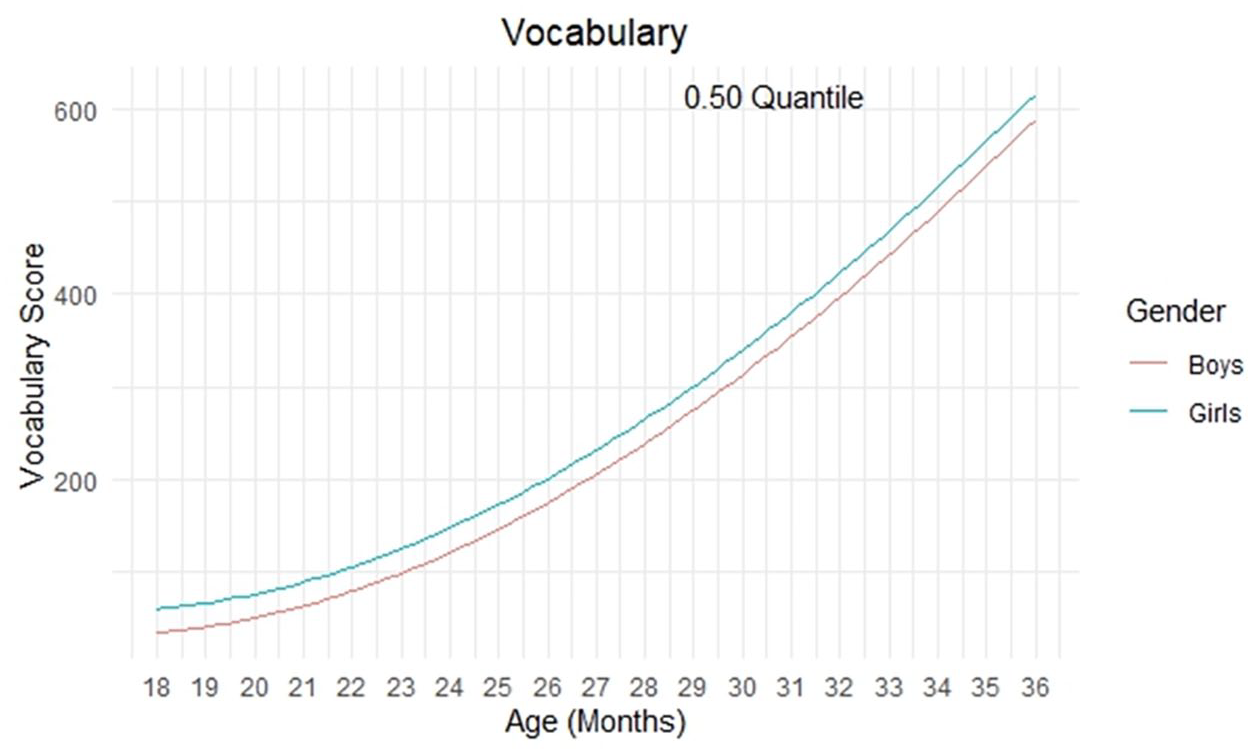
Vocabulary mean for boys and girls.
A GLM with age and gender as independent variables and vocabulary score as the dependent variable revealed that gender had a statistically significant effect on vocabulary acquisition (F[1, 1185] = 18.91, p < .001, η² = 0.016); however, the effect size was small. Age showed a much stronger influence (F[1, 1185] = 81.34, p < .001, η² = 0.553). The interaction between age and gender produced a small effect (F[1, 1185] = 1.53, p = 0.071, η² = 0.023). The following boxplot graph shows the distribution of responses within each age group as well as the outliers.
Figure 2 shows the great variance in children’s production within each age group. Significant differences in the lexical production of boys and girls, favoring girls, were observed at the ages of 19 months (t[1, 115] = −2.61, p = .010, η² = .056), 23 months (t[1, 65] = −2.32, p = .024, η² = .076), 31 months (t[1, 73] = −2.63, p = .022, η² = .070), and 34 months (t[1, 45] = −2.26, p = .029, η² = .101).
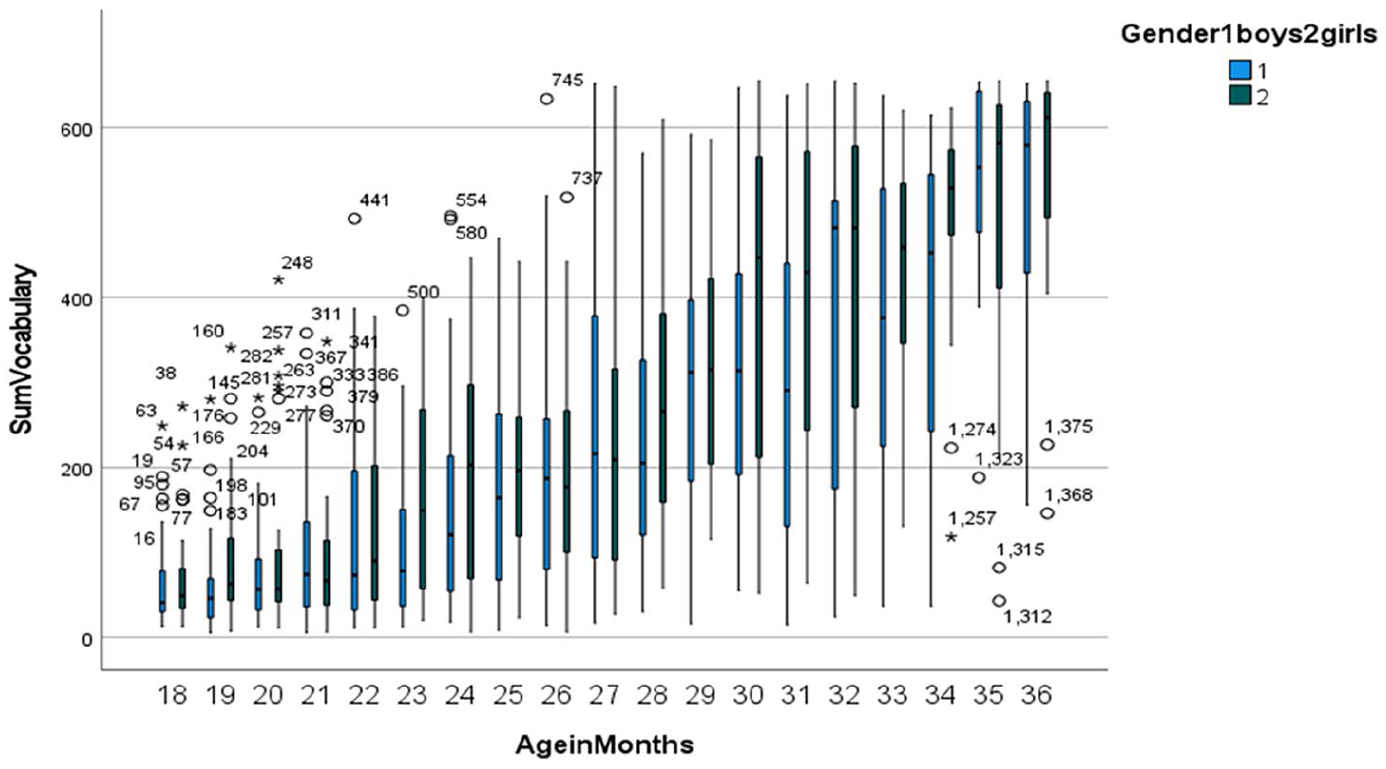
Distribution of responses for vocabulary.
Turning to the different word categories, Table 2 presents Mean (SD) number of lexical items for the 21-word categories for boys and girls, and the F-values and significance within the different categories in the order they appear in the questionnaire.
Mean (SD) number of lexical items for boys and girls, F-value, and significance.

p < .05. **p < .01. ***p < .001.
Significant differences were observed across the board with higher vocabulary scores for girls than for boys except in two categories: vehicles and sounds, where the difference was not significant. The interaction with age was significant for connectors (F = 1.77, p = .025, η² = 0.023), pronouns (F = 1.76, p = 0.026, η² = 0.023), Adjectives (F = 2.36, p = .001, η² = 0.030), Verbs (F = 1.70, p = .034, η² = 0.022), time (F = 1.66, p = .040, η² = 0.022), and places (F = 1.67, p = .038, η² = 0.022). These significant group differences did not always show up at all ages. For example, for time, a significant difference was found, but no significant differences were observed within each age group. Yet for other categories, the difference was identified in some age groups but not others.
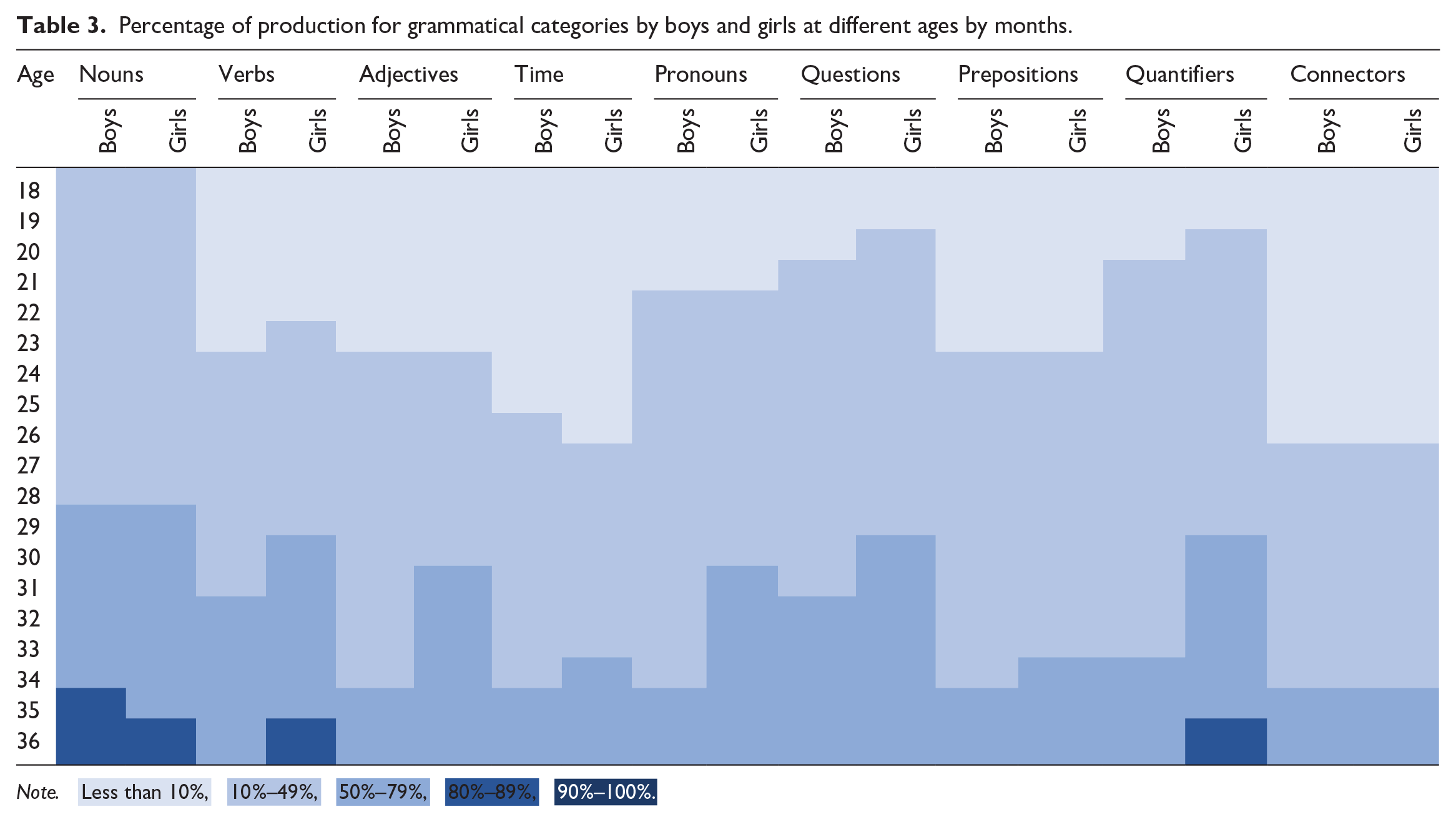
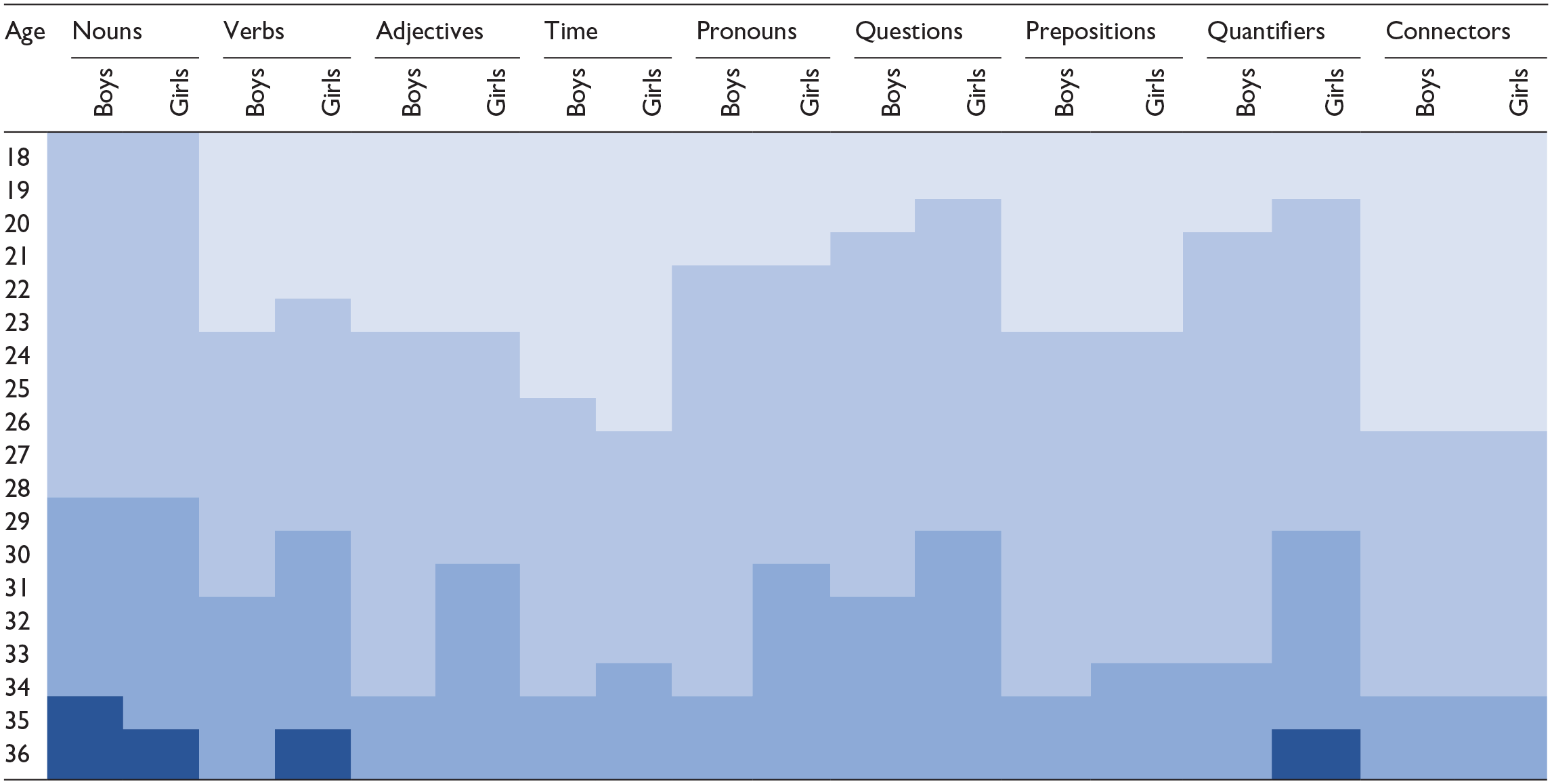
Table 3 presents a comparative descriptive analysis of language production across different grammatical categories for boys and girls from 18 to 36 months. It illustrates the developmental trajectory of language acquisition, highlighting both age-related progress and gender differences, dividing the data into four tiers.
Percentage of production for grammatical categories by boys and girls at different ages by months.
Note. 



At 18 to 24 months, girls show slightly higher language production percentages across most categories. Both genders increase production with age, nouns being most frequent. At 25 to 30 months, the gender gap widens, with girls leading in nouns and verbs, while boys occasionally surpass girls in some categories. At 31 to 36 months, both genders show substantial growth, with the gap narrowing. By 36 months, both produce high percentages across all categories. These differences were significant favoring girls in all grammatical categories, Girls performed better in: connectors (31 months, χ² = 12.91, p = .012), prepositions (28 months, χ² = 11.67, p = .020), questions (19 months, χ² = 4.95, p = 0.026 and 30 months, χ² = 14.17, p = .007), adjectives (30 months, χ² = 13.01, p = 0.011), and verbs (30 months, χ² = 10.75, p = .030). By 32 months, despite girls’ better performance, no significant differences remain between genders.
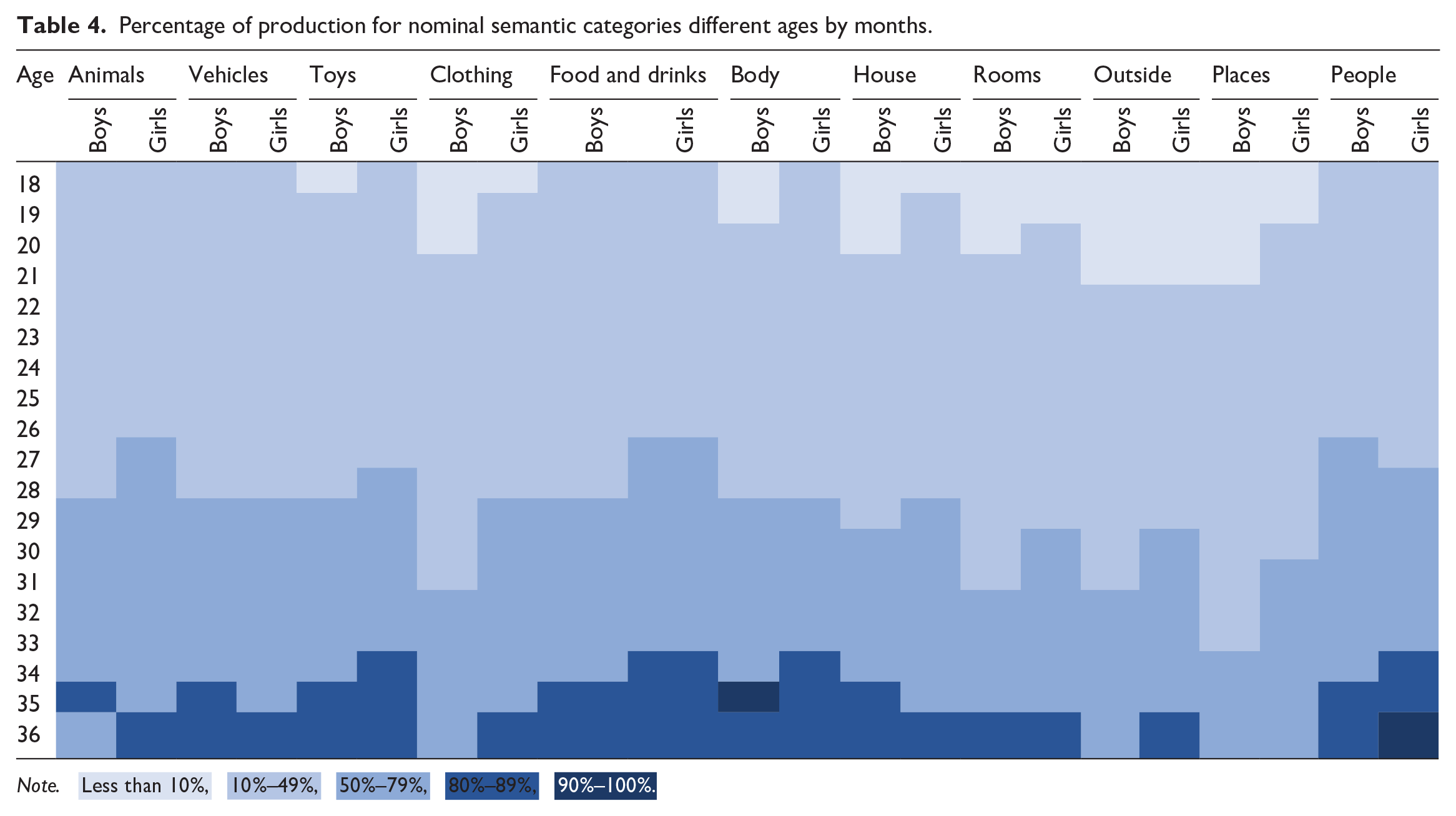
Focusing on the nominal semantic categories, Table 4 presents the percentages of production for the different categories produced by boys (left column for each word category) and girls (right column). It illustrates the developmental trajectory, dividing the data into four tiers.
Percentage of production for nominal semantic categories different ages by months.
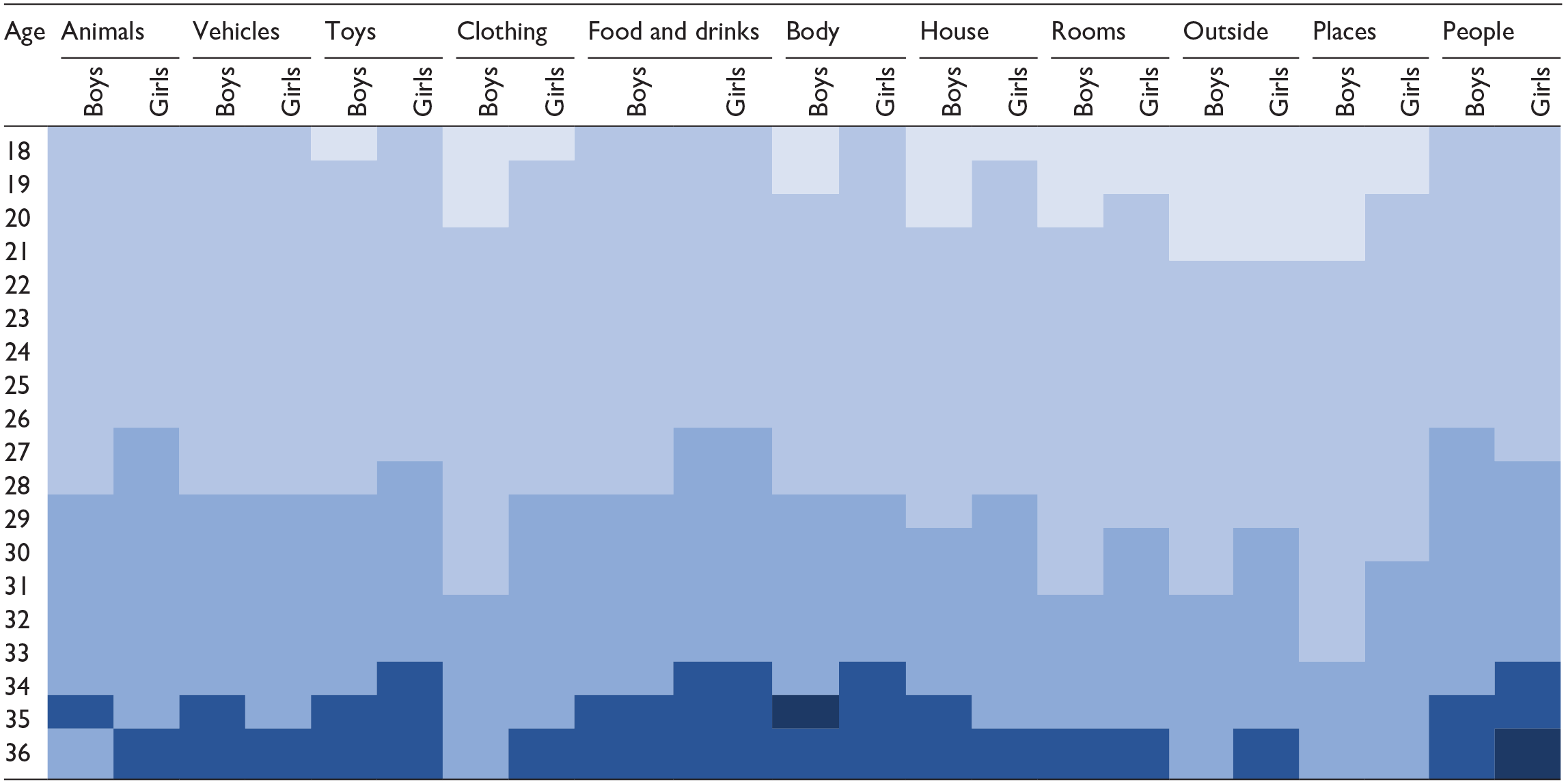
Note.
From 18 to 36 months, both genders show increasing production across noun categories. Girls generally lead, particularly in ‘body’, ‘toys’, and ‘food’. ‘People’ is consistently most produced. At 25 to 30 months, the gap varies, with boys sometimes surpassing girls. By 36 months, both genders approach 80% production in most categories, though this apparent convergence should be interpreted cautiously as it may reflect a ceiling effect in the measurement tool rather than true equivalence in language abilities. Girls outperform boys significantly in all categories except vehicles. Significant differences favoring girls were observed at various ages for specific categories: in people (30 months, χ² = 12.12, p = .016), place (23 months, χ² = 7.23, p = .027), outside (23 months, χ² = 8.55, p = .036 and 30 months, χ² = 10.68, p = .030), room (21 months, χ² = 6.43, p = .040), body (19 months, χ² = 9.69, p = .021 and 33 months, χ² = 9.51, p = .050), food (18 months, χ² = 5.99, p = .050; 30 months χ² = 9.91, p = .042; and 31 months, χ² = 15.85, p = .003), clothing (29 months, χ² = 11.02, p = .026 and 31 months, χ² = 12.28, p = .015), toys (30 months, χ² = 12.53, p = .014), and sound (19 months, χ² = 12.10, p = .017). Boys performed better only in vehicles (25 months, χ² = 17.17, p = .002). The gender gap in nominal semantic categories disappears by 34 months, while for grammatical categories, convergence occurs at 32 months.
A closer inspection of the top 10 items with female advantage showed that they were from the clothes and toy categories: dress, nail polish, lipstick, make-up, skirt, Barbie, flat shoes, stockings, boots, and doll. Boys, on the other hand, had an advantage mostly in vehicles and sounds connected to vehicles. Table 5 shows the top 10 items most biased in each direction.
Top 10 most gender biased words and different ages by months.
To test the role of gendered words, the top 10 words with female advantage were excluded, and a new mean of vocabulary items was calculated. After removing gendered words from the analysis, gender differences remained statistically significant but maintained a small effect size (F[1, 1185] = 17.11, p < .001, η² = 0.014), while age continued to show a large effect (F[1, 1185] = 80.92, p < .001, η² = 0.552). The difference in clothes remained significant. The new means are presented in Figure 3, demonstrating the gap.
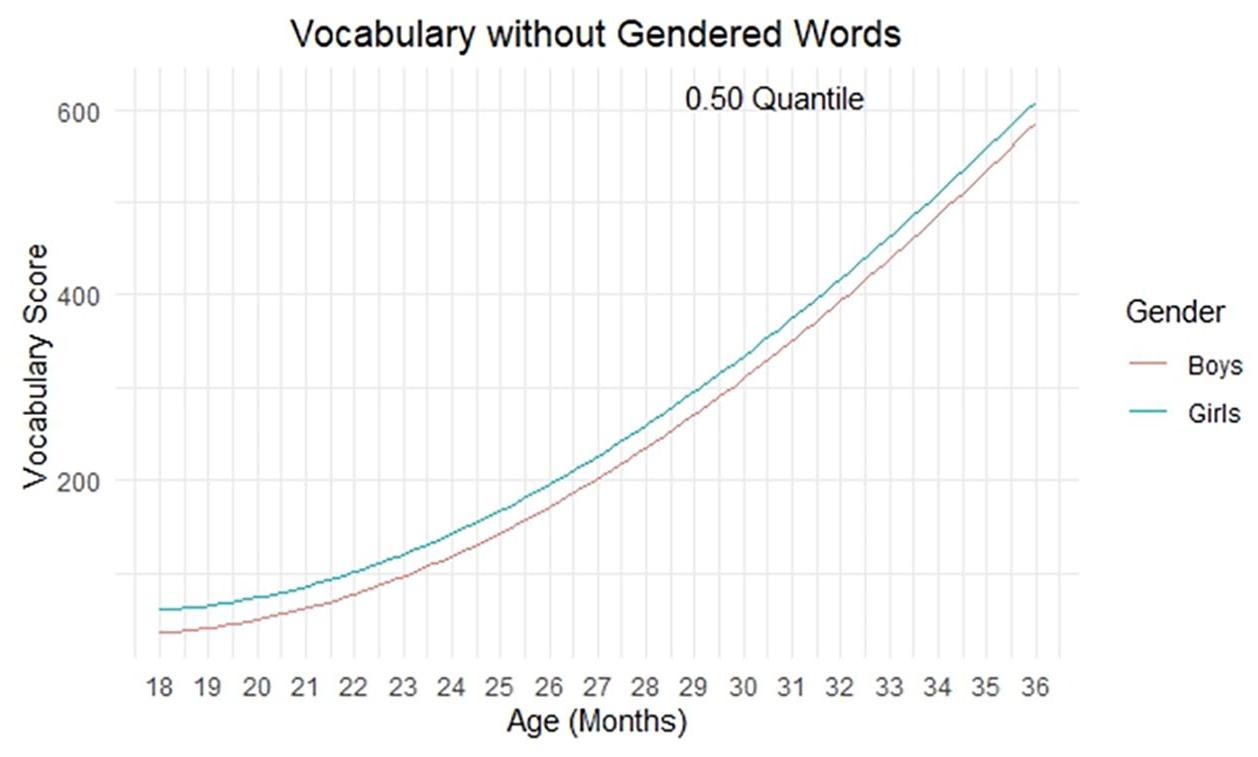
Mean of vocabulary after removing gendered words.
Gender and the acquisition of morphosyntax
The second research question explored gender differences in the acquisition of morphosyntax. We were interested in investigating whether there is a significant difference between girls and boys in morphosyntactic production and whether this difference is restricted to the verbal domain or the nominal domain. Figure 4 presents the mean of morphosyntax for boys and girls in each age group.
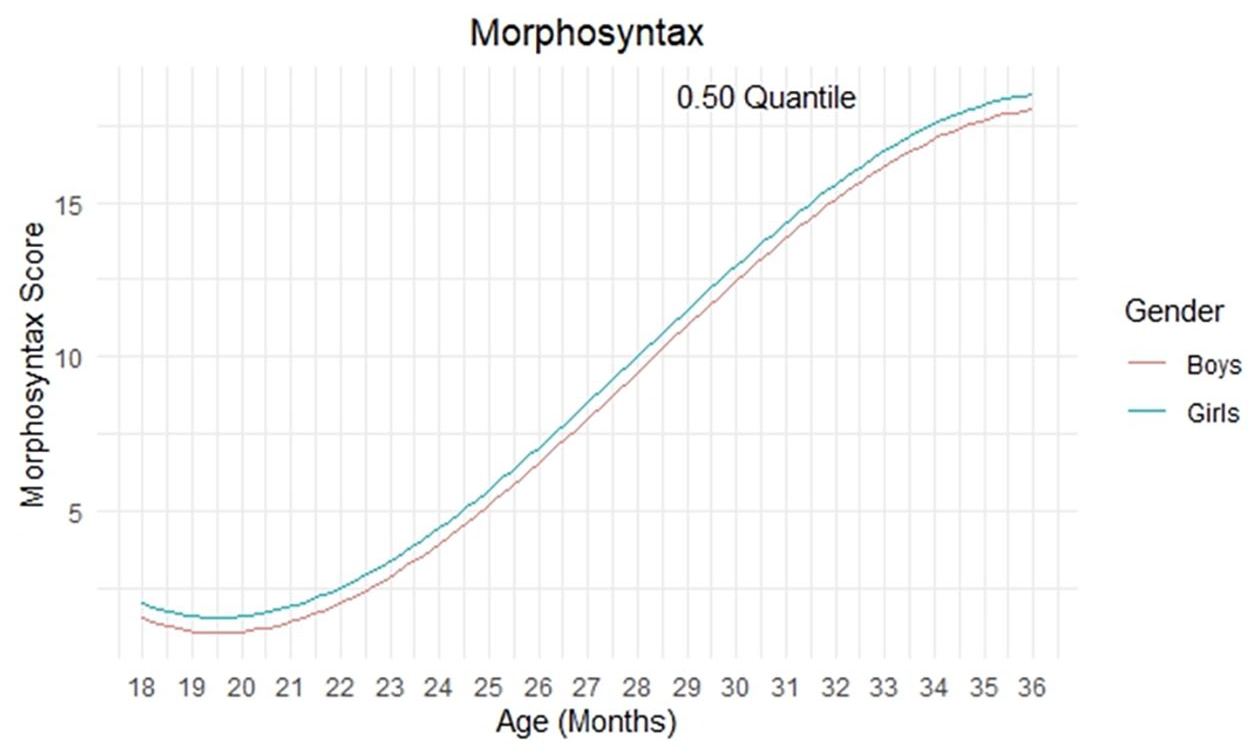
Mean of morphosyntax for girls and boys.
A GLM with age and gender as independent variables and morphosyntax as the dependent variable showed that gender again showed significant but small effects. For morphosyntax, there was a small but reliable gender effect (F[1, 1185] = 19.32, p < .001, η² = 0.016), while age showed a much larger effect (F[1, 1185] = 72.04, p < .001, η² = 0.523). The interaction between age and gender was not significant (F[1, 1185] = 1.20, p = .257, η² = 0.018). Post hoc analyses indicated significant differences observed at the ages of 19 months (t[1, 115] = −2.44, p = .016, η² = .049), 24 months (t[1, 81] = −2.29, p = .025, η² = .061), 30 months, (t[1, 71] = −2.59, p = .012, η² = .086), and 34 months (t[1, 45] = −2.48, p = .017, η² = .120).
The boxplot graph in Figure 5 shows the distribution of the responses within each age group as well as the outliers, demonstrating the great variance in children’s production at each age group.
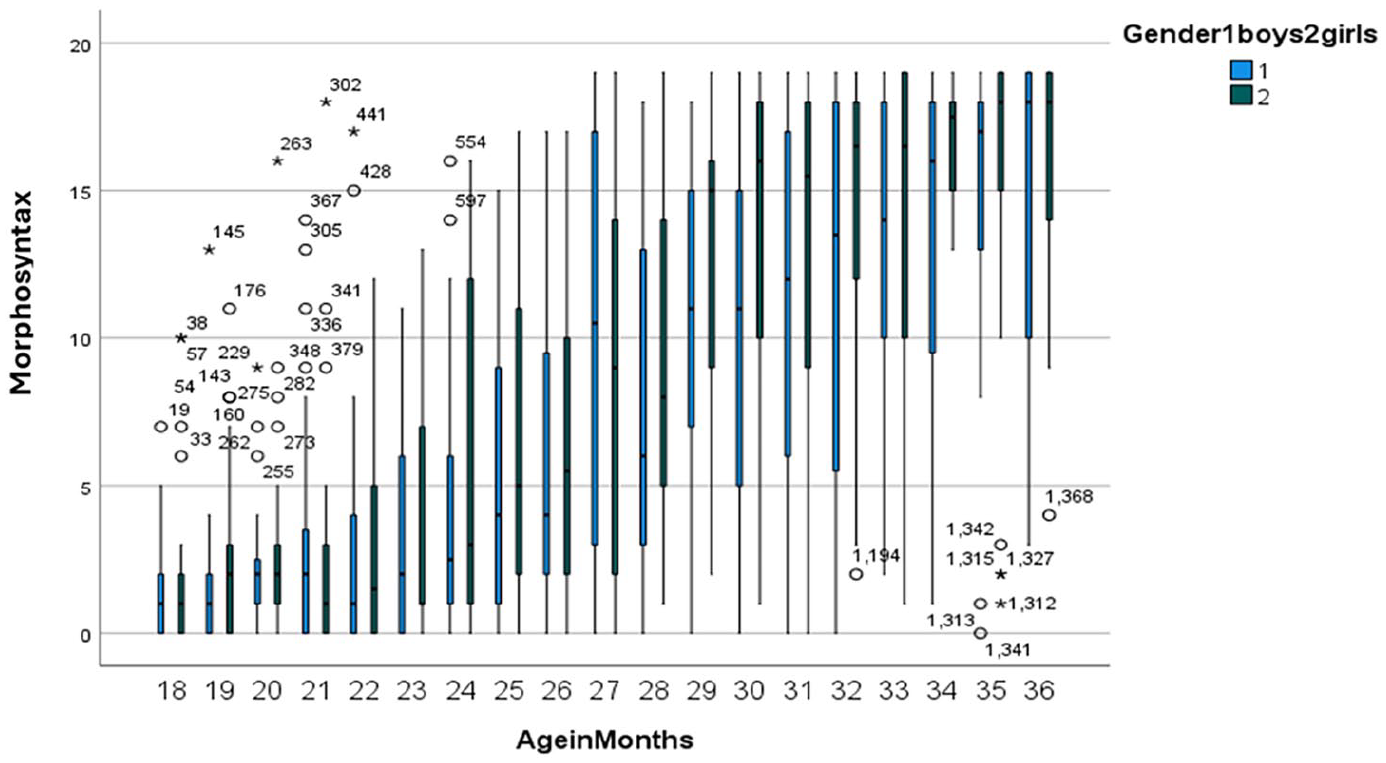
Distribution of responses for morphosyntax.
To test for differences in specific structures, we focus next on nominal morphosyntax (dual and masculine, feminine, and broken plural) and verbal morphosyntax (past, present, and future tenses). The same girl advantage was observed for both the nominal and verbal morphosyntax. For the nominal morphosyntax, a GLM with age and gender as independent variables and nominal morphosyntax as the dependent variable was applied. Nominal morphosyntax showed a small gender effect (F[1, 1185] = 13.00, p < .001, η² = 0.011) and a large age effect (F[1, 1185] = 46.38, p < .001, η² = 0.413), with a small but significant age-by-gender interaction (F[1, 1185] = 1.88, p = .014, η² = 0.028). Post hoc analyses demonstrated significant differences at the ages of 30 months (t[1, 71] = −3.76, p < .001, η² = .166), 31 months (t[1, 73] = −2.17, p = .033, η² = .061), and 34 months (t[1, 45] = −2.20, p = .033, η² = .097). Similarly, verbal morphosyntax demonstrated a small gender effect (F[1, 1185] = 17.19, p < .001, η² = 0.014) and a large age effect (F[1, 1185] = 64.40, p < .001, η² = 0.494), but no significant age-by-gender interaction (F[1, 1185] = 0.98, p = .585, η² = 0.015). Post hoc analyses showed significant differences at 19 months (t[1, 115] = −2.18, p = .031, η² = .040), 24 months (t[1, 81] = −2.43, p = .017, η² = .068), and 34 months (t[1, 45] = −2.54, p = .015, η² = .125).
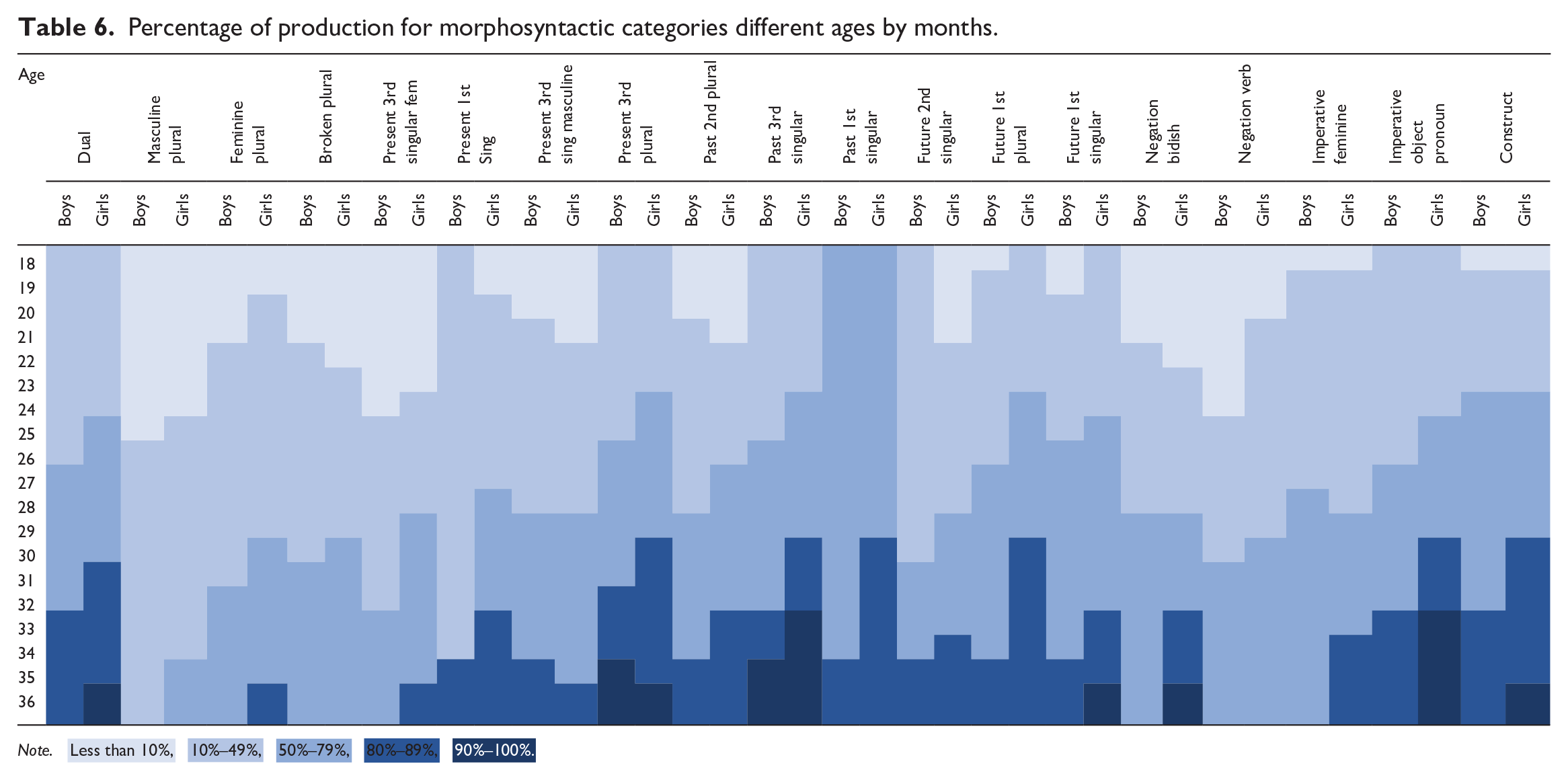
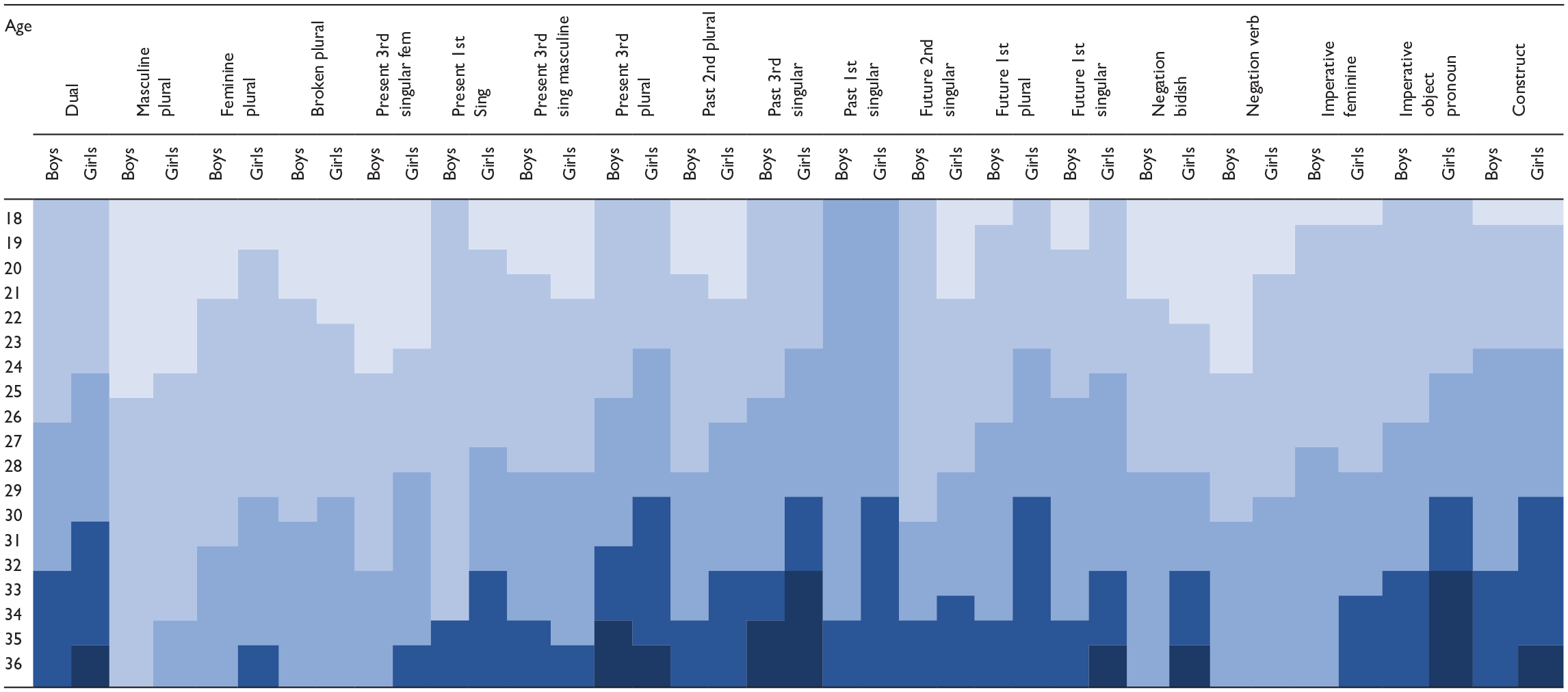
Finally, turning to the different morphosyntactic categories, Table 6 presents the percentages of production for the different morphosyntactic categories produced by boys and girls for each age category, illustrating the developmental trajectory by dividing the data into four tiers.
Percentage of production for morphosyntactic categories different ages by months.
Note.
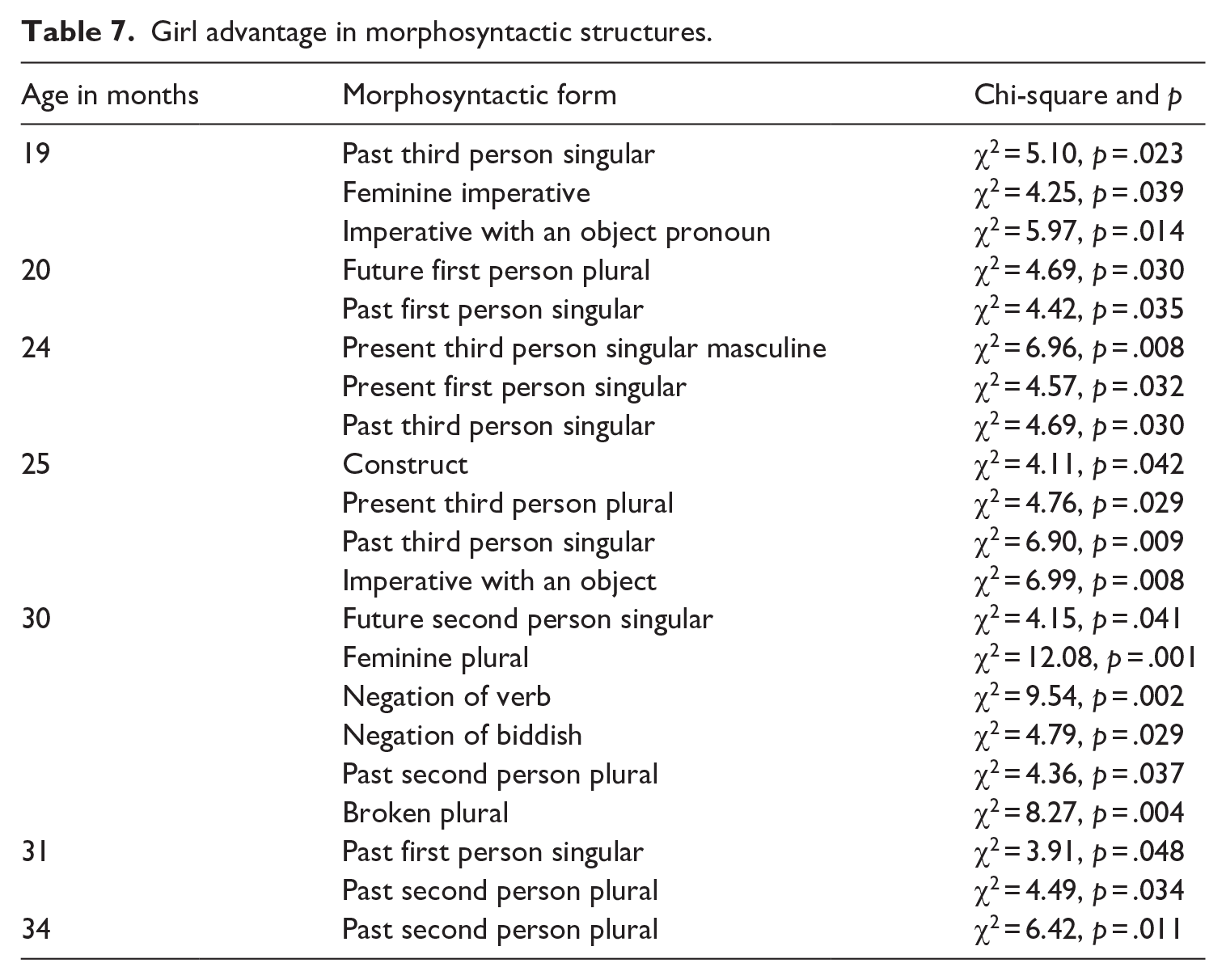
Three key developmental points with gender gaps were observed: one approaching significance at 19 months (t[1, 115] = −1.84, p = .06, η² = .029), and two reaching statistical significance at 24 months (t[1, 81] = −2.07, p = .04, η² = .050) and at 31 months (t[1, 73] = −2.11, p = .03, η² = .057). Girls consistently showed advantages across many categories, as shown in Table 7, whereas boys displayed advantages over girls only at 31 months in masculine plural (χ2 = 7.81, p = .005). By 35 months of age, the gender gap in morphosyntactic categories was no longer observable.
Girl advantage in morphosyntactic structures.
Discussion
The primary objective of this study was to examine the role of children’s gender in PA language acquisition. Our results demonstrate a clear advantage for girls over boys in both lexical and morphosyntactic development, contributing valuable insights to the ongoing debate about gender differences in language acquisition.
In lexical development, our data show that girls consistently outperform boys. While contradicting the results of Abdelwahab et al. (2021), who found no gender differences in lexical acquisition for Arabic-speaking children, the results of the present study align with a substantial body of previous research conducted on Hebrew speaking children in Israel (Gendler-Shalev & Dromi, 2022) and on speakers of other languages (Andersson et al., 2011; Bornstein, Leach, et al., 2004; Bouchard et al., 2009; Eriksson et al., 2012; Fenson et al., 1994, 2007; Galsworthy et al., 2000; Le Normand et al., 2008; Marjanovič-Umek et al., 2011; Umek et al., 2008).
The analysis of specific semantic and grammatical categories revealed varying patterns of gender differences. Girls showed particular advantages in social-oriented semantic categories like people and routines, while also demonstrating stronger performance in grammatical categories like verbs and adjectives. These findings align with previous research by Eriksson et al. (2012) who found similar category-specific advantages for girls across languages. The stronger performance in social-semantic categories might reflect different socialization patterns, as suggested by Stennes et al. (2005), while the advantages in grammatical categories like verbs could indicate earlier development of more complex linguistic structures. These category-specific differences provide a more nuanced understanding of how gender influences language acquisition, suggesting that gender effects are not uniform across all aspects of language development but rather vary by semantic domain and grammatical category. Our analysis also aligns with Frank et al.’s (2021) cross-linguistic findings on gender advantages in language production. Within clothing and toy categories, our findings show clear gender-specific trends. Girl advantage reveals a concentration in clothing and toys, whereas male advantage manifests primarily in vehicle-related vocabulary and associated sounds.
Significant differences were observed across 19 lexical categories, with girls showing advantages at specific ages (19, 23, 31, and 34 months). Interestingly, by 36 months, these differences largely disappeared, except for the ‘clothes’ category. However, this apparent convergence warrants careful interpretation as it may be partially attributable to a ceiling effect. This convergence around 3 years of age is consistent with findings from Bornstein, Leach, et al. (2004), although it occurs slightly later than reported by some researchers (Bouchard et al., 2009; Huttenlocher et al., 1991). Unlike Bouchard et al. (2009) who found that these differences vanish by 28 to 29 months, and Huttenlocher et al. (1991) who found that these differences start declining at an even younger age, between 20 and 24 months, our data showed that this difference vanishes by the age of 34 months.
Contrary to our hypothesis, the removal of gendered words did not eliminate the significant difference in lexical production between boys and girls. This finding contradicts Marjanovič-Umek et al. (2016), who found no statistical differences between boys and girls in their lexical development, and nor statistical differences upon analyzing gendered words. Our finding suggests that the gender gap in vocabulary acquisition is not solely attributable to socialization practices related to gender-specific items but may reflect broader developmental or environmental factors.
For morphosyntactic development, we observed significant differences across age groups, with girls outperforming boys in various structures, as hypothesized. These differences disappeared by 35 months, aligning with findings from Bornstein, Leach, et al. (2004) and Bouchard et al. (2009). The advantage for girls was evident in both nominal and verbal morphosyntax, echoing Fenson et al.’s (1994) observations of girls' superior performance in producing bound morphemes, function words, and early complex sentence forms. Notably, we identified specific age margins where girls outperformed boys on multiple measures: 24 and 31 months, with a trend approaching significance at 19 months. These ‘developmental spurts’ in girls’ language abilities could be particularly interesting for future research, as they may indicate critical periods in language acquisition where gender differences are most pronounced.
While gender differences were statistically significant across all measures, the effect sizes were consistently small, explaining only 1% to 2% of the variance. In contrast, age showed large effects, accounting for 41% to 55% of the variance in language development. Following Cohen’s guidelines for partial eta-squared, these findings suggest that while gender differences are reliable, they have limited practical significance compared to developmental effects.
Possible reasons for the gender difference in lexical and morphosyntactic abilities
Recent research suggests that gender differences in language acquisition stem from an interaction between biological predisposition and environmental factors (Miller & Halpern, 2014). Our findings with PA-speaking children support this view, showing differences that align with both biological factors and sociocultural influences unique to Arab-Israeli society.
Biological factors are not unique to this population and could play a significant role. Girls’ faster brain maturation (Bornstein, Hahn, et al., 2004) and different brain organization and function (Kimura, 1992) may contribute to their early advantage in language acquisition. Neuroimaging studies have shown that girls tend to have more advanced structural connectivity in language areas of the brain during early childhood (Schmithorst et al., 2008).
Sociocultural factors extend beyond vocabulary to broader socialization practices. Parents’ beliefs and expectations about girls’ verbal abilities might influence their attention to the girls’ verbal development and reporting, potentially inflating observed gender differences (Gendler-Shalev & Dromi, 2022). This can impact parents’ choices of toys (Caldera et al., 1989) and significantly affect interaction patterns and language development. Toys traditionally given to girls may elicit more verbal interaction and imaginative play. Gendered toys and clothes were only a small part of the data, and our study found that removing them did not eliminate the gender gap. This suggests that, indeed, it is not the toys themselves that make a difference but the interaction they elicit. Differences in interests and communication styles between genders (Bouchard et al., 2009; Maccoby & Jacklin, 1974; Wehberg et al., 2008) may also influence language acquisition, alongside other aspects of children’s linguistic experiences and physical environments that might impact the quantity and quality of language input. Girls may have more learning opportunities due to spending more time with their mothers (Bornstein, Leach, et al., 2004), who often engage in more conversation with daughters than sons (Clearfield & Nelson, 2006). Parents (Leaper et al., 1998) and caregivers (Ladegaard & Bleses, 2003) tend to address boys and girls differently, with girls receiving more attention in daycare settings (Clarke-Stewart & Allhusen, 2002).
The cultural context in which PA is used might help in understanding our results. The role of extended family in Arab society may also contribute to girls' language advantage. Girls often spend more time with adult women during family gatherings, providing more opportunities for language input and social engagement (Hadley et al., 2011; Huttenlocher et al., 1991). Moreover, while Arab culture has been characterized as collectivist, authoritarian, and patriarchal (Dwairy & Ibrahim, 2016), with a preference for male children (Sharaf et al., 2019), Arabs in Israel are undergoing a process of modernization and transition from a collectivist to a more individualistic society (Azaiza, 2008). Dwairy et al. (2006) found mixed patterns in parenting styles among Israeli Arab parents, indicating Western cultural influences. Haj Yahia-Abu Ahmad (2006) observed generational shifts toward more egalitarian attitudes and authoritative parenting styles among younger Israeli Arabs. The superior language acquisition in girls could be a result of this modernization process and exposure to Western influences, which may be counteracting traditional gender biases. Thus, our finding may provide insight into the ongoing cultural shifts within the Arab community in Israel. It seems that the observed gender differences in lexical and morphosyntactic development among PA-speaking children in Israel likely result from a complex interplay of biological, sociocultural, and environmental factors.
Limitations
While this study demonstrates a clear gender effect, it is limited by not examining socioeconomic status (SES) and sociocultural factors, nor factors like language input and birth order. The online administration of the PA-CDI excludes mothers without internet access or literacy. Future studies should consider SES and parental education. Furthermore, parental report tools like the CDI have limitations, such as potential bias in parents scoring their children’s abilities. Future research could combine parental reports with direct child assessments.
Moreover, our sample included parents of PA-speaking children in Israel, living in a dual Middle Eastern and Israeli Western culture with diverse religious backgrounds. Parenting styles and gender attitudes vary significantly across these communities but were not taken into consideration in the current research. Further research is needed to understand the interplay between cultural factors and language acquisition in this population, potentially comparing different Arab communities or investigating long-term effects of early language differences.
By 36 months, gender differences appeared to diminish; however, this may be partially attributable to a ceiling effect. As children approach the maximum possible scores on the PA-CDI, the instrument may become less sensitive to subtle differences in language ability. This interpretation aligns with previous research by Bornstein, Hahn, et al. (2004) and Eriksson et al. (2012), who noted similar ceiling effects in CDI studies. Future research using more sensitive measures for advanced language skills might reveal continuing gender differences beyond this age.
The presence of unequal variances between gender groups in vocabulary scores, with girls showing higher variability, may affect the robustness of our results despite their statistical significance. While we controlled for several potential confounding variables, future studies should consider employing more robust statistical methods to account for these variance differences, particularly when examining gender effects on language development.
Finally, while the statistical significance of the results was noted, it is important to consider that the effect sizes in this study were relatively small. These small effect sizes suggest that, although gender differences were statistically significant, their practical significance should be interpreted with caution, remembering the large sample size. Yet, comparisons within each age group with smaller sample sizes also yield significance, suggesting that this effect is robust.
Conclusions
The study confirms the existence of gender differences in PA language acquisition. It presents detailed growth curves divided by gender and highlights the impact of gender on the order of lexical and morphosyntactic development in PA, a less commonly studied language. It further provides solid evidence supporting the advantage of girls over boys across and within linguistic domains. Yet, effect sizes indicate that these differences are small in practical terms. Age emerged as the dominant factor in language development, explaining substantially more variance than gender. These findings suggest that while gender differences are statistically reliable, they should be treated with cautiousness in educational or clinical contexts.
The study further demonstrates the effectiveness of the PA-CDI as a valuable assessment tool while offering important practical implications for families and practitioners. Understanding the gender differences in the typical trajectory can help set appropriate expectations, with practitioners and caregivers mindful that while girls may show earlier mastery of certain linguistic skills, both genders typically achieve similar proficiency by age 36 months. Early childhood professionals can use these findings to adjust their assessment and intervention approaches while ensuring equal language learning opportunities, taking into consideration the unique cultural context, as suggested for PA speakers in Israel that are undergoing cultural transition. Although biological factors in gender differences were not addressed directly, examination of sociocultural factors through gendered words showed that gendered words were not the source of the lexical difference. Our findings could suggest that these gender differences likely result from a complex interplay of biological, sociocultural, and environmental factors, warranting further investigation into how these elements interact in language development. Moreover, future research could benefit from a more comprehensive examination of direct observations of child–caregiver interactions, analysis of language input, and consideration of broader cultural and environmental influences to better understand our results and enhance the detection of potential language delays. Category-specific analysis revealed that gender differences varied across semantic and grammatical domains. A direct observation of semantic and grammatical categories in caregivers’ input can help determining whether the source is biological, sociocultural, or environmental factors.
Footnotes
Acknowledgements
The authors extend their heartfelt gratitude to the participants and deeply appreciate their invaluable full cooperation. Their willingness to cooperate and grant consent was instrumental in realizing this research.
Author contributions
Data availability statement
The authors will provide the foundational data that support the findings of this article upon request.
Declaration of conflicting interests
The author declared no potential conflicts of interest with respect to the research, authorship, and/or publication of this article.
Funding
The author(s) disclosed receipt of the following financial support for the research, authorship, and/or publication of this article: This research was partially supported by ISF 454/18.
Ethical approval and informed consent statement
The study was exempt from an approval process as it involved only anonymous data collection from adult participants who gave informed consent upon accessing the online questionnaire.
