




Abstract

What is the Medical Training Initiative scheme?
Since its inception, the National Health Service (NHS) has been dependent on overseas clinicians. Even today, almost one in three doctors working in the NHS has completed their primary medical degree outside the UK. 1 Arguably, as important has been the reliance on international medical graduates (IMGs) who return to their country of origin after spending time in the UK. Historically, they have come to advance their careers and receive education and training, and in turn enrich the NHS with skills, enthusiasm and commitment. On returning home, many forge long-standing training and research links for the benefit of their local population and for the wider community, as well as acting as ambassadors for UK medicine. 2
In 2006, concerns about unemployment among IMGs resulted in withdrawal of the Permit Free Visa, making it challenging for them to work in the UK. In addition, IMGs were often used purely for service provision, with little consideration given to their training needs.3,4 Pressure from the medical Royal Colleges and other educational bodies ultimately led to the launch of the revamped Medical Training Initiative (MTI) scheme in 2009. 5 This provides the opportunity for trainees, primarily from the previous Department for International Development’s designated ‘priority’ countries in South Asia and Africa, who have broadly similar medical training programmes to the UK (Table 1, in italics and Figure 1), to spend up to two years in a sponsored NHS training post. Thereafter, they are mandated to return to their country of ordinary residence. Over 4000 doctors have been through the MTI scheme thus far.
MTI trainees in the UK as per country of origin.
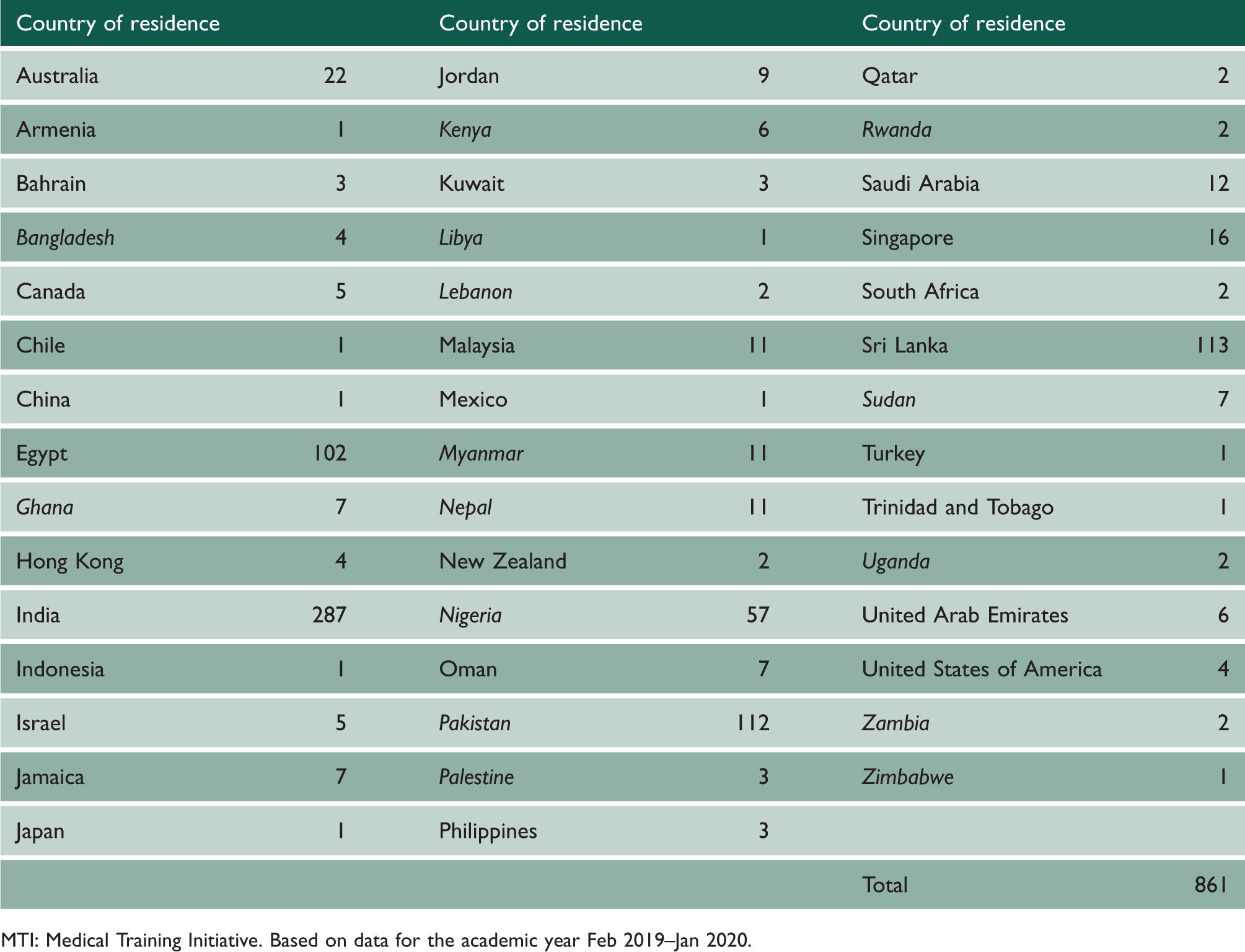
MTI: Medical Training Initiative. Based on data for the academic year Feb 2019–Jan 2020.
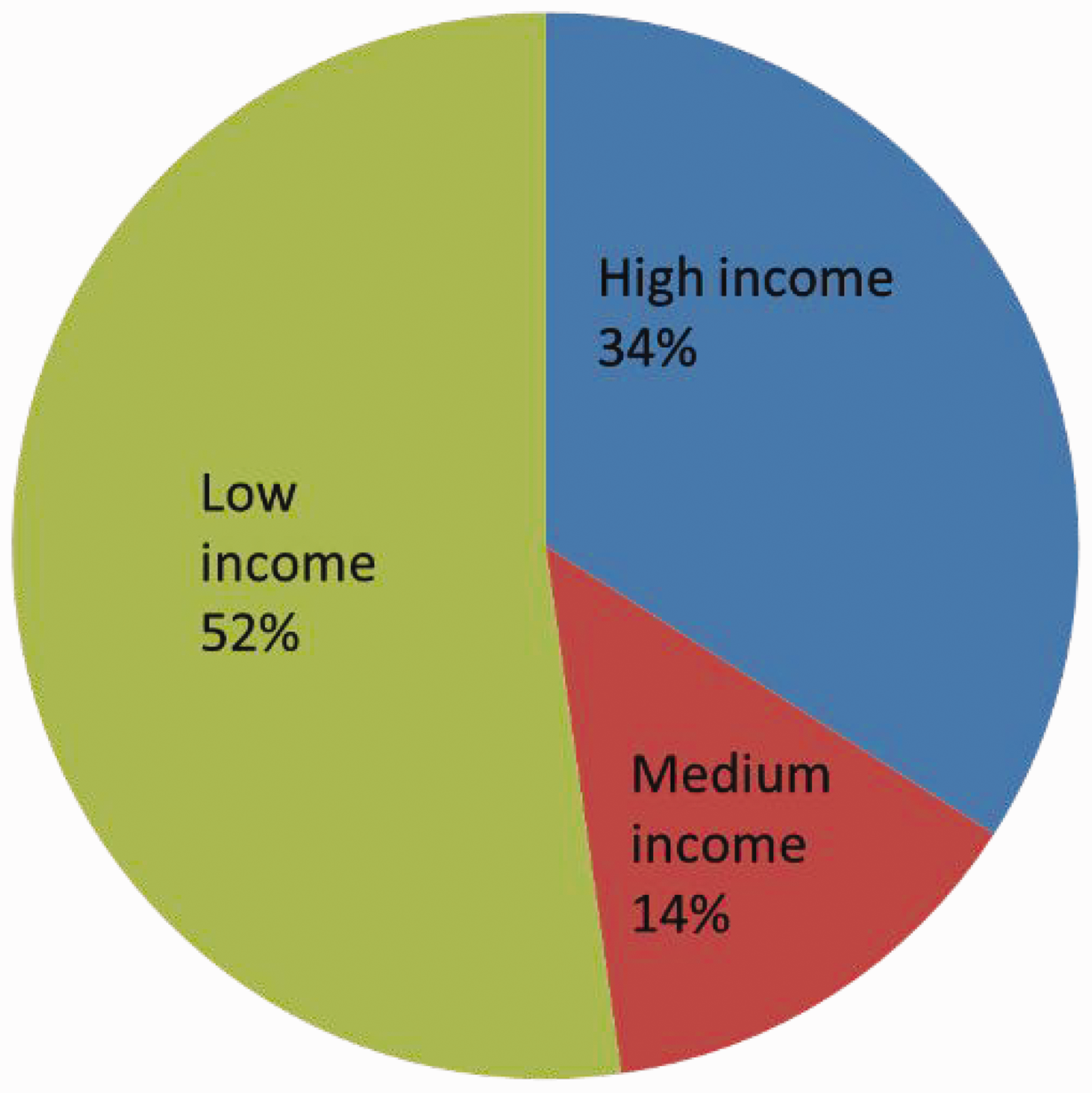
Medical Training Initiative trainees in the UK as per country of origin (based on data for the academic year Feb 2019–Jan 2020).Source: Academy of Medical Royal Colleges.
The impact of the United Kingdom’s so-called ‘Brexit’ on European-origin doctors working in the NHS has been a cause for concern ever since the referendum in June 2016. In addition, the fall-out from the junior doctors’ contract disputes has resulted in many reportedly taking career breaks, leaving medicine or the UK altogether. 6 As a whole, these factors potentially augur exceptionally difficult circumstances with regard to filling training posts. The promise of hundreds of extra home-grown doctors will not materialise for a number of years and even then, external support will, in all certainty, continue to be required. 7
In 2018, the government announced the lifting of the cap on doctors and nurses coming to the UK under the auspices of the Tier 2 visa setup. 8 The MTI scheme, which operates under the auspices of a sponsored Tier 5 visa (Table 2), has a cap of 1500 across all medical specialties. The main difference between Tier 2 and Tier 5 visas is that the latter grants exemption from the General Medical Council’s (GMC) Professional and Linguistic Assessments Board (PLAB) test. 9 It is also linked to a formally approved training post that is time-limited to a maximum of two years. Another plus point is that it serves to prevent ‘brain-drain’ from countries that are not as well resourced as the UK.
The differences between Tier 2 and Tier 5 visa schemes.
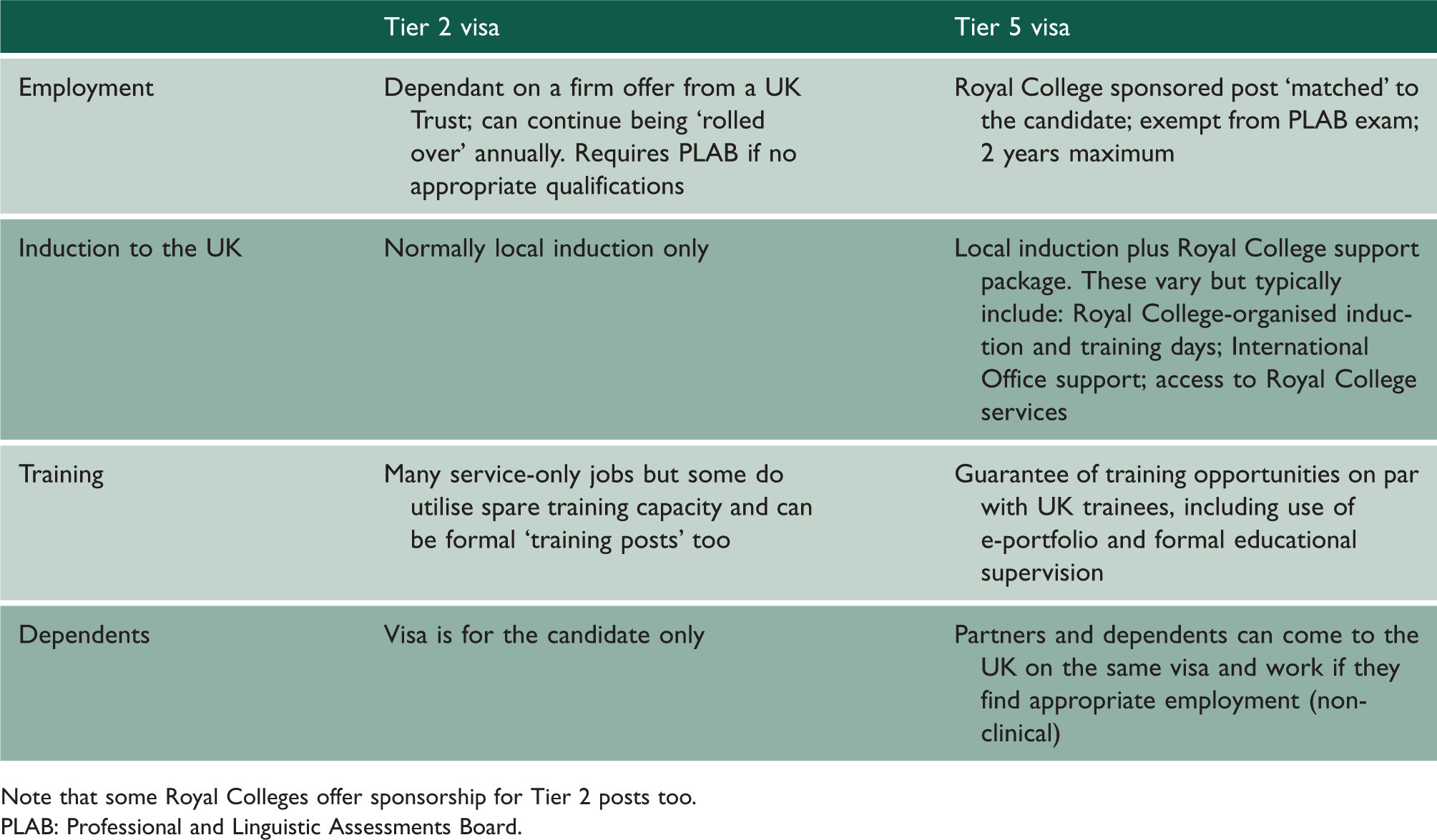
Note that some Royal Colleges offer sponsorship for Tier 2 posts too.
PLAB: Professional and Linguistic Assessments Board.
The popularity of the MTI scheme is variable across the UK, with London and the Midlands proving to be particularly attractive destinations for candidates (Figure 2).
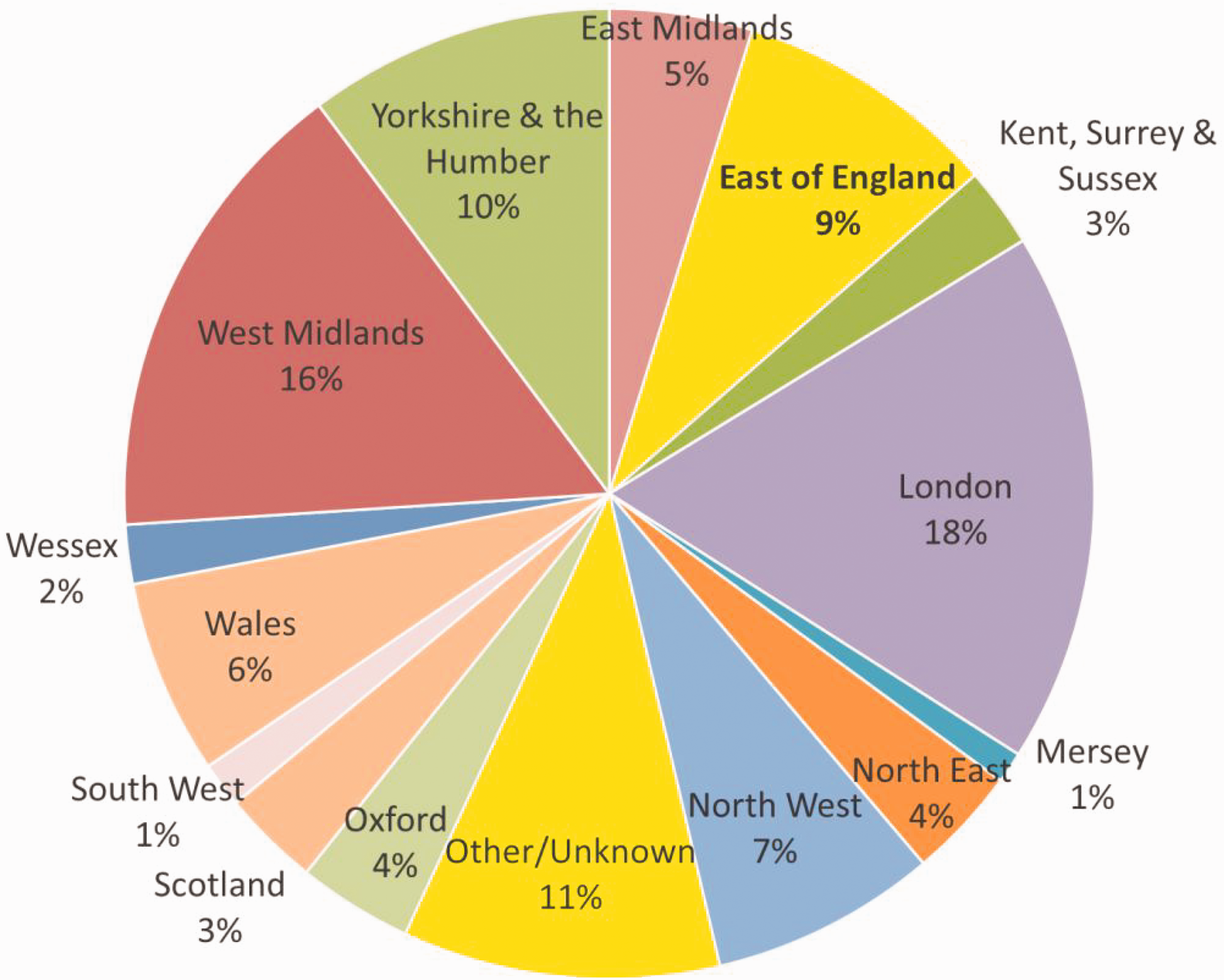
Medical Training Initiative trainees across the UK (based on data for the academic year Feb 2019–Jan 2020).Source: Academy of Royal Medical Colleges.
How does the MTI scheme work?
The MTI scheme is run by Health Education England (HEE) on behalf of the Department of Health (the Government sponsor) and operates under the Home Office Tier 5 Government Authorised Exchange visa scheme. The Academy of Medical Royal Colleges provides a Certificate of Sponsorship, which in turn is used by individual Royal Colleges and other MTI partners to support an applicant’s Tier 5 visa request (Table 3). This International Sponsorship Scheme supports the granting of Tier 5 visas and allows for full GMC registration such that candidates do not need to pass the PLAB test.
A breakdown of MTI trainees according to sponsoring institution, Feb 2019–Jan 2020.
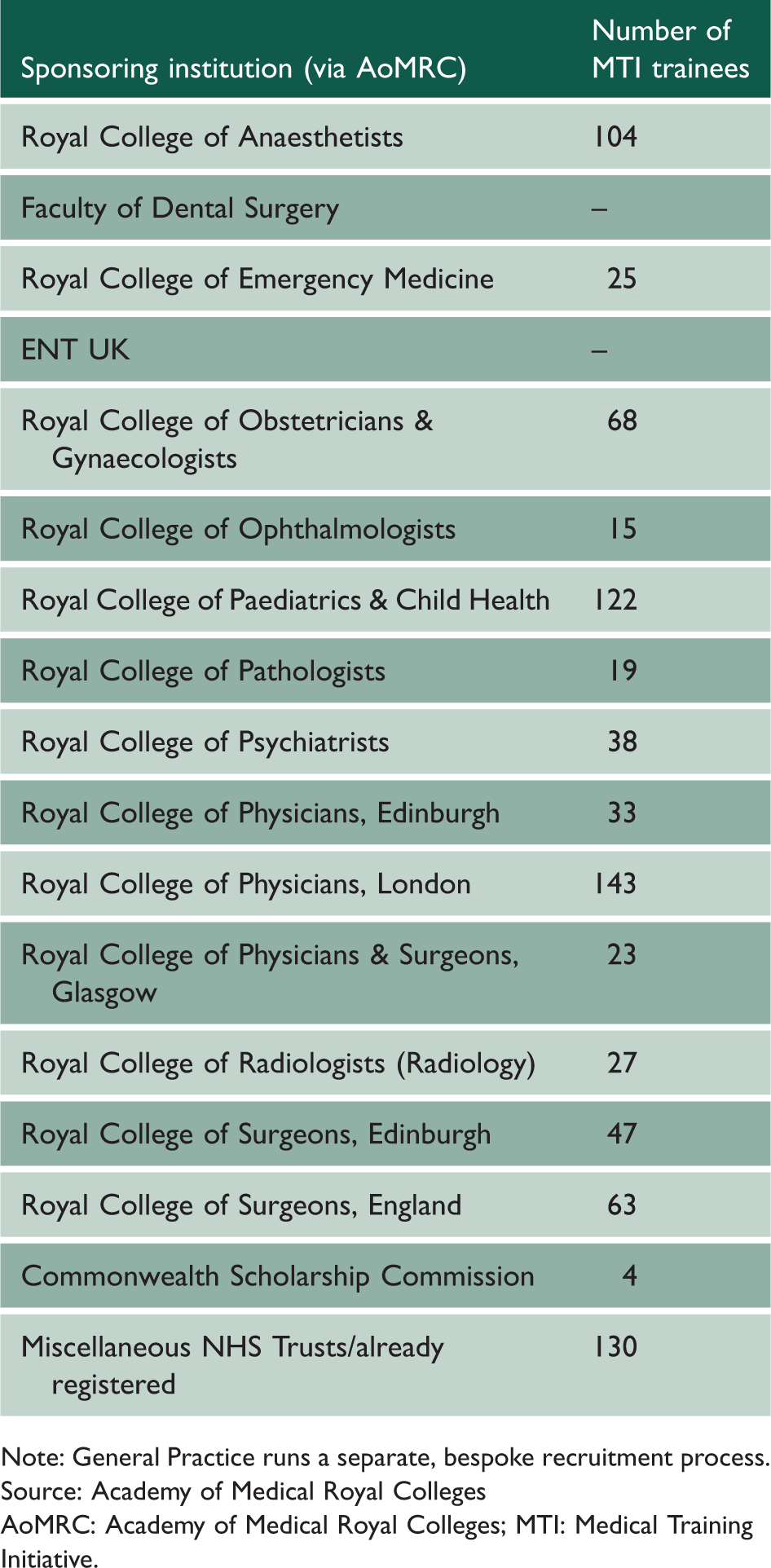
Note: General Practice runs a separate, bespoke recruitment process. Source: Academy of Medical Royal Colleges
AoMRC: Academy of Medical Royal Colleges; MTI: Medical Training Initiative.
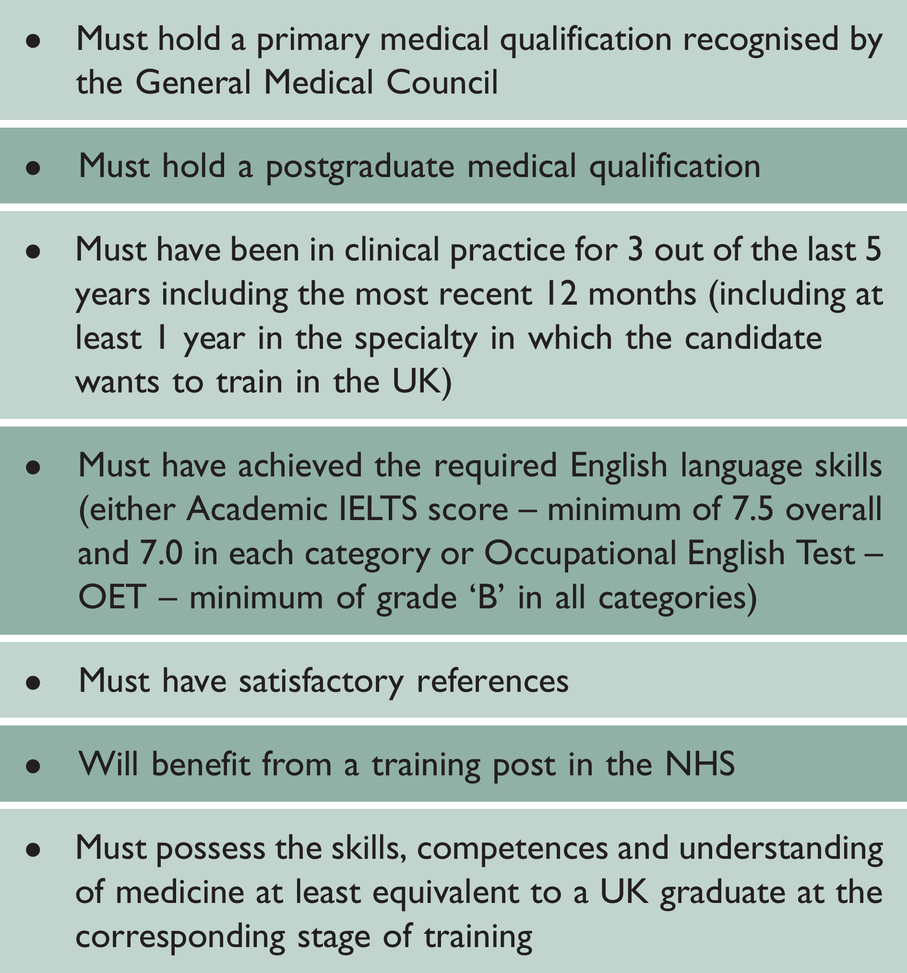
To qualify for the scheme, the candidate must satisfy a number of criteria (Box 1). Royal Colleges also assist IMGs who have already obtained a post in the UK through their own contacts, provided the above criteria are met. Eligible candidates are usually short-listed in conjunction with local partner organisations and then invited for interview. These are conducted either in person or via videoconference. The panel will normally comprise Royal College representatives as well as relevant senior clinicians, either local to the candidate or from the appointing Trust/deanery.
The interviews consist of clinical scenarios and an emphasis on assessing communication skills (Figure 3). The appointments offered are at Core Training or Higher Specialty Training levels, depending on the applicants’ skills and experience. The posts are signed off by the local deanery leads, guaranteeing quality training and no adverse impact on UK trainees, with the employing Trust providing the Responsible Officer. Most positions are in acute/medical specialties (e.g. Acute Medicine, Geriatrics) rather than the so-called ‘craft’ or surgical specialties.
Eligibility criteria for the Medical Training Initiative scheme.
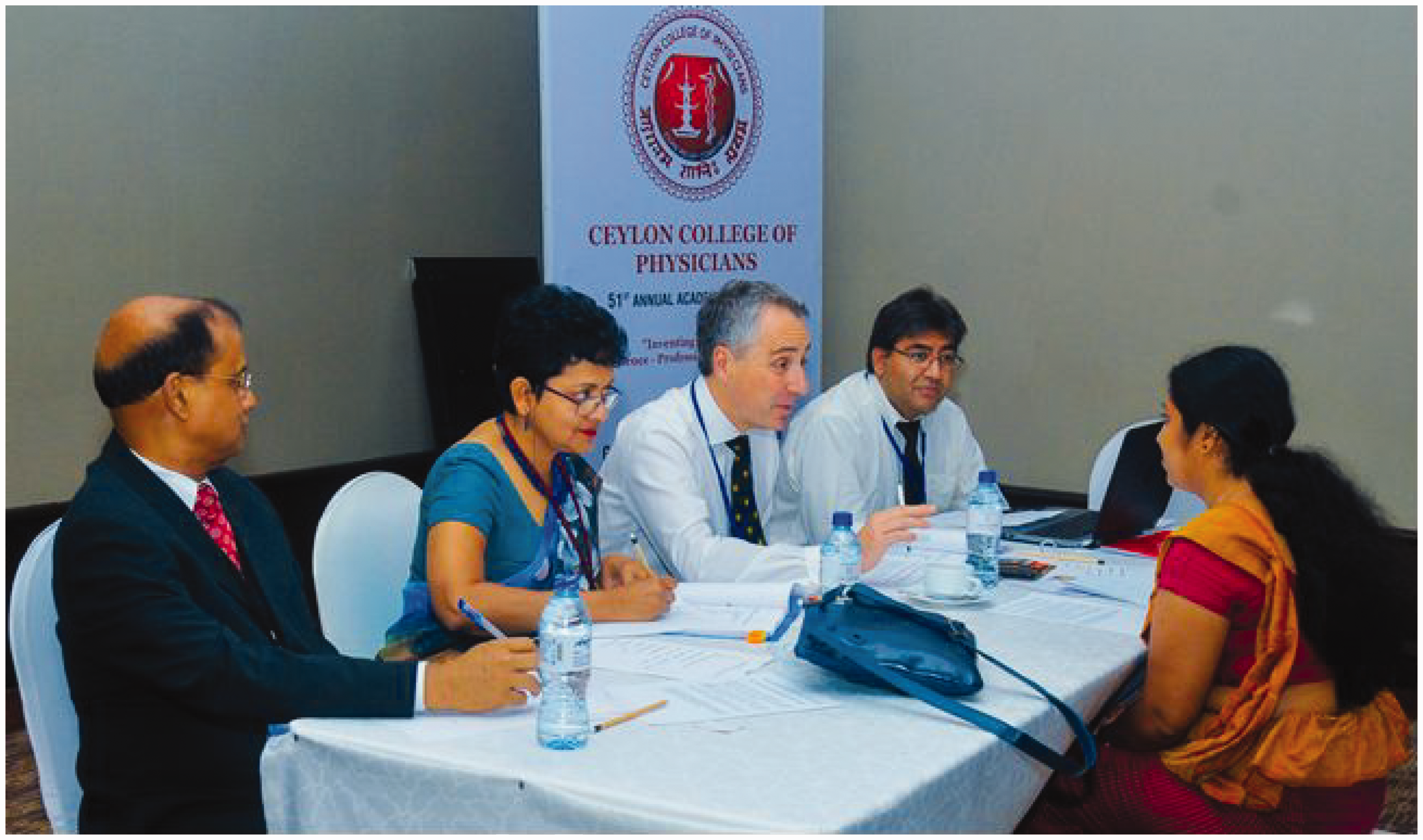
Medical Training Initiative interviews in Colombo, Sri Lanka, September 2018 (all photographed individuals have consented to the use of the image).
Funding for the scheme varies between the Royal Colleges – some charge a one-off fee to the employing Trust for each trainee placed; others are fully funded by other mechanisms. Most posts need to be salaried by the employing Trust but some trainees may come in to the scheme with a stipend from their country of origin which effectively means they are supernumerary. Even so, the MTI scheme remains a cost-effective and more favourable mechanism of recruiting more doctors compared to expensive locum appointments. Overall, the minimum time from interview to starting work in the UK is around two to three months.
What can MTI trainees expect?
In short, trainees can expect a working experience of the British model of healthcare, culture and society that satisfies the IMGs’ desire to spend time training abroad in the UK. MTI doctors have identical clinical responsibilities to UK doctors, which will normally include out-of-hours on-call duties. Trusts are advised to give the candidate at least a two- to three-month run-in period during which duties will be limited while the candidate accustoms themselves to UK working practices and is supervised more closely by trainers. MTI doctors are paid at standard rates of pay, similar to UK trainees with similar experience, unless they come with funding from their country of origin. 10
The Royal Colleges and HEE take training of MTI doctors very seriously. All IMGs are matched to training posts which they will benefit from and allocated an educational supervisor. They can be signed up to the training e-portfolio, which allows documentation of educational progress not just in their specialty but also in generic skills including 360° appraisal by peers, patients and associated health professionals. Trusts and deaneries are encouraged to provide specific induction training and support programmes (the so-called ‘on-boarding’ packages) for all new appointments. The Royal Colleges often offer tailored inductions too.
How does the UK benefit?
The aim of the scheme is to provide mutual benefit to both the IMGs and the NHS, ultimately benefiting patients in both countries by forming lasting ‘links’. By attracting highly qualified doctors, the scheme also allows IMGs to share their experiences and expertise with UK colleagues. They have often practised for a number of years in healthcare systems that are less well resourced than the NHS. Indeed, the Hindi term jugaad (a flexible approach to problem-solving that uses limited resources in an innovative way) has even entered the English lexicon. 11 IMGs often have a valuable understanding of doing ‘more with less’ in an ambulatory setting, tropical medicine, toxicology, infectious diseases and dealing with higher volumes of patients. The concept of ‘generalism’ in medicine and surgery as well as same-day emergency care is the norm in countries like India and Nigeria and something from which the UK could learn. In future, it is hoped that UK trainees may also be able to train more readily abroad under more relaxed training requirements. The main stumbling blocks remain funding and formal recognition of training time abroad. In addition, an MTI scheme for research would also be very welcome and undoubtedly prove fruitful with high-quality epidemiological data readily accessible and ripe for publication. Furthermore, joint conferences and meetings would serve to further cement links between UK institutions and those in MTI ‘donor’ countries.
What do the MTI recruits think of the scheme?
In general, candidates speak very positively of their experience (Box 2). There may be difficulties for some. For example, it can take some weeks to get used to life in a new country and a different medical system but help is available in the hospital from peers, their educational supervisor and from the Colleges themselves. Often they will have family or friends in the UK who can also provide valuable support and assistance as can a multitude of UK diaspora groups.
MTI trainee feedback.
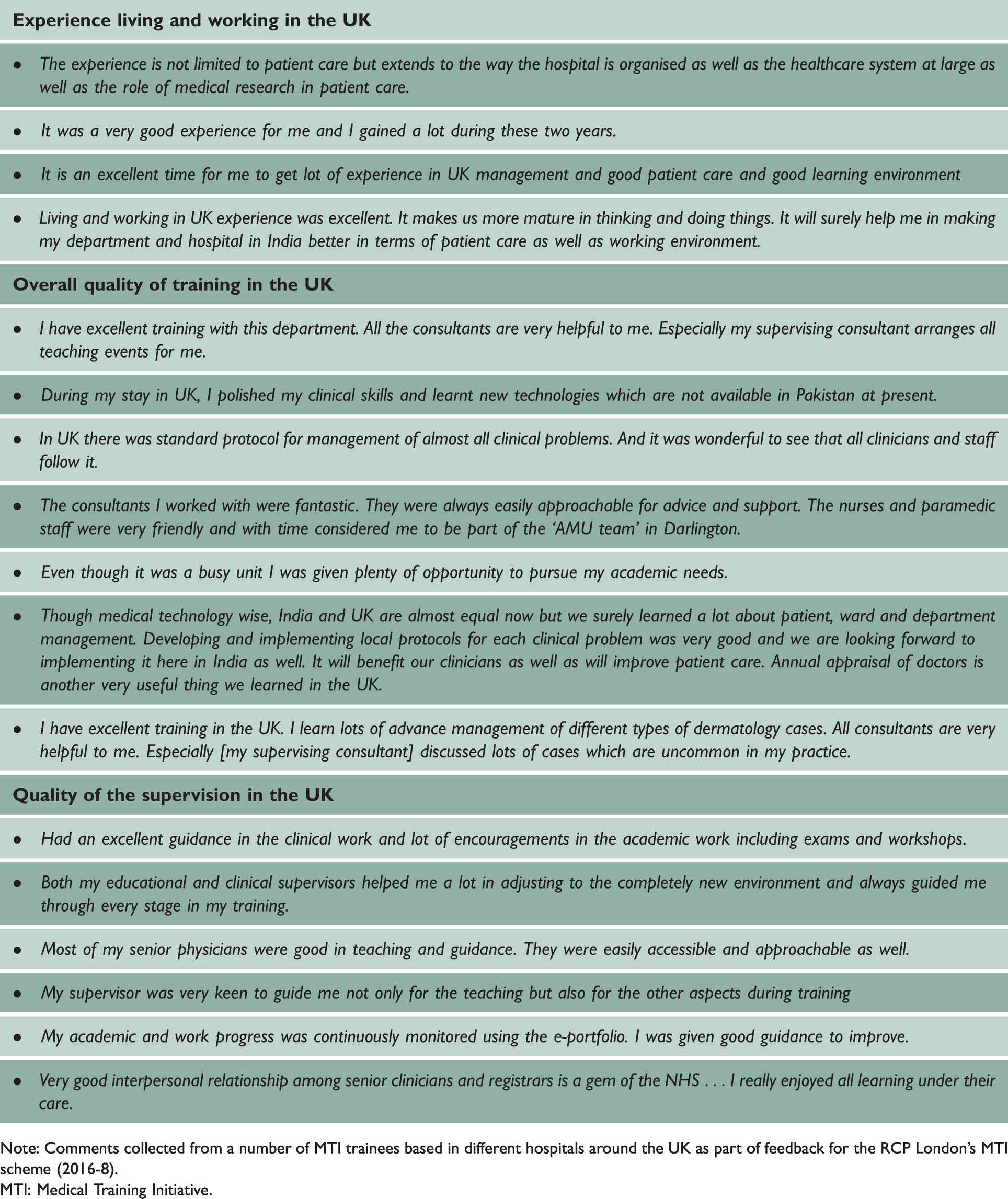
Note: Comments collected from a number of MTI trainees based in different hospitals around the UK as part of feedback for the RCP London’s MTI scheme (2016-8).MTI: Medical Training Initiative.
Summary of how the MTI scheme works.
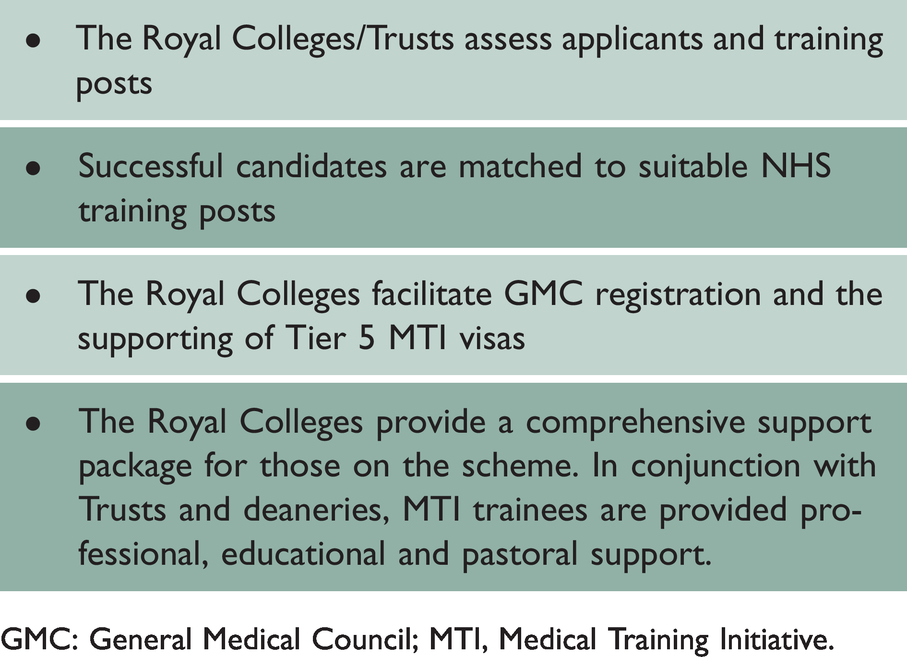
GMC: General Medical Council; MTI, Medical Training Initiative.
What do patients think of the scheme?
This is an area ready for exploration. Although not formally surveyed more broadly, informal feedback of MTI trainees from patients in a Cambridge hospital has been overwhelmingly positive. The patients valued the important role the trainees were playing. As long as they were assured of the doctors’ competence in clinical and communication skills, they felt comfortable being under the care of MTI doctors, just like any other clinician.
The future
Efforts are underway to simplify and streamline the MTI scheme and its processes. Given the current workforce circumstances, it is likely that the importance of the MTI scheme will increase. Better awareness of the scheme, with a greater emphasis on its benefits and advantages to individual trainees, their countries of origin, the NHS and patients globally will continue to ensure its popularity, and hopefully, expansion. It is ethically more palatable than attracting doctors from resource-challenged countries on Tier 2 visas indefinitely. Consequently, an increase in the cap for Tier 5 visas is urgently needed. Indeed, comments from the new Health Secretary could be seen as being supportive on IMG recruitment too. 12 Longer term, a reciprocal arrangement via which UK trainees can gain clinical and academic experiences abroad would also be welcome. Building stronger research links via the MTI scheme, especially in epidemiology and public health, is likely to be of significant mutual benefit.
Patient involvement
While not surveyed formally, informal feedback of MTI trainees from patients in a Cambridge hospital has been overwhelmingly positive. The patients valued the important role the trainees were playing. As long as they were assured of the doctors’ competence in clinical and communication skills, they felt comfortable being under the care of MTI doctors, just like any other clinician.
Key messages
The MTI is a UK government-sponsored Tier 5 visa scheme via which IMGs can work and train in the UK for a maximum of up to two years.
The scheme is ideal for doctors at core and higher specialty level and has a number of benefits compared to the larger Tier 2 visa scheme.
It is of mutual benefit to MTI clinicians and the NHS.