




Abstract
Summary
Assisted dying is a highly controversial moral issue incorporating both physician-assisted dying (PAD) and voluntary active euthanasia. End-of-life practices are debated in many countries, with assisted dying receiving different consideration across various jurisdictions. In this paper, we provide an analytic framework of the current position and the main arguments related to the rights and moral principles concerning assisted dying. Assisted dying proponents focus on the respect of autonomy, self-determination and forestalling suffering. On the other hand, concerns are raised regarding the interpretation of the constitutional right to life and balancing this with the premise of assisted dying, alongside the impacts of assisted dying on the doctor–patient relationship, which is fundamentally based on trust, mutual respect and the premise of ‘first do no harm’. Our review is underpinning the interpretation of constitutional rights and the Hippocratic Oath with the premise of assisted dying, alongside the impacts of assisted dying on the doctor–patient relationship. Most clinicians remain untrained in such decision making, with fears against crossing key ethical divides. Due to the increasing number of cases of assisted dying and lack of consensus, our review enables the integration of ethical and legal aspects and facilitates decision making.
Introduction
Assisted dying remains a highly controversial moral issue, with clinical, legal, political, religious and ethical considerations playing an important role. Lack of consensus and ongoing debate are features of modern life, while the law generally sustains a broader, pluralist outlook. Advances in both life-prolonging treatments and palliative care in recent years are inextricably intertwined with this complex topic, resulting in the continuing demand for amendments on current legislations. 1 This review presents an overview of the current status of this topical debate.
Definition and current legal framework
Assisted dying is a general term that incorporates both physician-assisted dying and voluntary active euthanasia. Voluntary active euthanasia includes a physician (or third person) intentionally ending a person’s life normally through the administration of drugs, at that person’s voluntary and competent request.2,3 Facilitating a person’s death without their prior consent incorporates both non-voluntary euthanasia (when the patient is not capable of providing informed consent, e.g. vegetative state, young child) and involuntary euthanasia (against patient’s will). Physician-assisted dying is defined as follows: a physician intentionally helping a person to terminate their life by providing drugs for self-administration, at that person’s voluntary and competent request.2,3 Consequently, in the first case a third person acts resulting in patient’s death, whereas in physician-assisted dying the action is undertaken by the patient who is given lethal medication by a physician. 2
Discussion regarding withholding or withdrawing treatment and requesting assisted death has emerged in association with the simultaneous expansion of palliative care across the world. The World Health Organization defines palliative care is an approach that improves the quality of life of patients and their families facing the problem associated with life-threatening illness, through the prevention and relief of suffering by means of early identification and impeccable assessment and treatment of pain and other problems, physical, psychosocial and spiritual.
4
It intends to neither hasten nor postpone death. Nonetheless, in practice, terminally ill patients – often with full mental capacity – may develop a loss of self-determination as their condition deteriorates and express a desire for assisted dying to alleviate intractable physical symptoms.
Assisted dying is an emotionally and ethically challenging subject, which understandably receives varying degrees of acceptance among different global jurisdictions. Currently, there is legal provision for assisted dying (or variants) in only four European countries (the Netherlands, Belgium, Switzerland and Luxemburg), Canada, Colombia and the United States of America (USA) states of Oregon, Washington, Montana, Vermont, California, Colorado and Washington, DC, representing nearly 18% of the US population.5,6 Switzerland is the only country which permits the act of assisted dying performed by a non-physician. Moreover, non-Swiss citizens can exploit the Swiss law by visiting Switzerland in order to access assisted dying. 7 In these more tolerant jurisdictions, palliative care is seen as an important link in the same chain as assisted dying in caring for terminally ill individuals, rather than an alternative. Elsewhere in the world, an assisted death remains a criminal offence, prosecutable through various legal routes. For example, in the UK, all forms of assisted dying remain illegal and can be considered under criminal laws of manslaughter or murder, or under the Suicide Act (1961), depending on the circumstances. 6 Prosecution guidelines were first issued by the Director of Public Prosecutions in 2009 following House of Lords ruling in the case of Debbie Purdy, which stated that there was ambiguous guidance regarding when people would be prosecuted for encouraging or assisting suicide. The guidelines suggest that while each case will be assessed on its relative merits, individuals acting in the capacity of a healthcare professional are more likely to be prosecuted for assisting or encouraging suicide, although to date no report-providing doctor or accompanying individual has been prosecuted for helping patients to travel abroad from the UK to end their life. 8 In England and Scotland, three assisted dying bills have been proposed and debated, largely based on the Oregon Death with Dignity Act (1997) from the USA, which permits assisted dying; none were passed.
Methods
We performed a systematic search of MEDLINE and EMBASE databases from conception to January 2018. The search terms used were ‘euthanasia’, ‘assisted dying OR death’, ‘assisted suicide’, ‘medical ethics’, ‘autonomy’, ‘end of life’ and ‘sanctity of life’. We also combined free text searching with Medical Subject Headings (MeSH) terms and no restrictions were set in publication date, study design and publication status.
Principles of bioethics
Autonomy and right to life
Beauchamp and Childress developed a standard approach to bioethics and advocated for four principles that lie at the heart of healthcare ethics and underpin decision-making.9,10 Respect for autonomy is one of the fundamental concepts, in combination with justice, beneficence and non-maleficence.
In medical practice, autonomy describes the right of competent adults to make informed decisions about their own medical care, prior to any investigation or treatment taking place. For a physician, respect for autonomy includes acknowledging and preserving a patient’s right to self-determination and providing the necessary guidance, which would allow for an informed and independent choice, free of coercion.
However, autonomy is far from a straightforward consideration. Onora O'Neill, in an attempt to scrutinise the context of autonomy in her Gifford lectures, makes a clear and compelling distinction between the approach of John Stuart Mill and Kant regarding the subject of autonomy. 11 As O’Neill vividly describes, Mill stretches the bound of choice and ‘sees individuals not merely as choosing to implement whatever desires they happen to have at a given moment, but as taking charge of those desires, as reflecting on and selecting among them in distinctive ways’. 11 The Kantian version of autonomy is guided by a ‘practical reason’. Kant views autonomy as ‘a matter of acting on certain sorts of principles, and specifically on principles of obligation’ rather than a form of self-expression and supports that ‘there can be no possibility of freedom for any one individual if that person acts without reference to all other moral agents’. 12 O’Neill embraces the Kantian view and contextualises it as ‘principled autonomy’ compared to ‘individualistic autonomy’. O’Neill’s work vigorously illustrates the fragility of the concept of autonomy and its contingency on a number of other considerations, particularly the network of human relationships within which it features.
Article 8: Right to respect for private and family life.
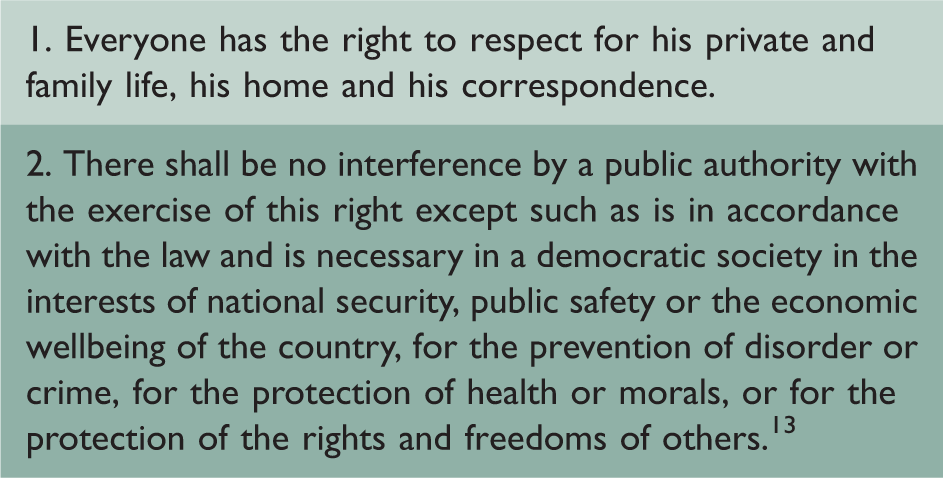
Taking the above into consideration, Article 8 encompasses inter alia the right to personal development. In a technical legal sense within the jurisdiction of Swiss law, it includes a patient’s choice to avoid what they consider an undignified and severe end to their life. 14 Proponents of this highly contentious argument claim that seriously ill patients should have a choice in whether or not they wish to continue living with a condition that undermines their inherent dignity and personal identity, 15 without violating the principle of sanctity of life. Therefore, it can be argued that respecting autonomy inherently involves the prima facie right of a patient to control the circumstances and time of death by requesting help in dying. This could minimise the suffering of an individual or their family and improve the quality of the end of the patient’s life, as their wishes would be respected and dignity would be preserved.16,17
A further dimension that can be considered is the treating clinician’s ethical beliefs and values. During their training, most practising clinicians have not experienced the concept of assisted dying as an expected duty in the context of patients’ autonomy. 18 Nevertheless, it is important to consider the magnitude of patients’ autonomy within modern society. Individual liberty ought not to be viewed as absolute and exceptions to Article 8 should be provided in favour of preservation and reverence to life.17,18
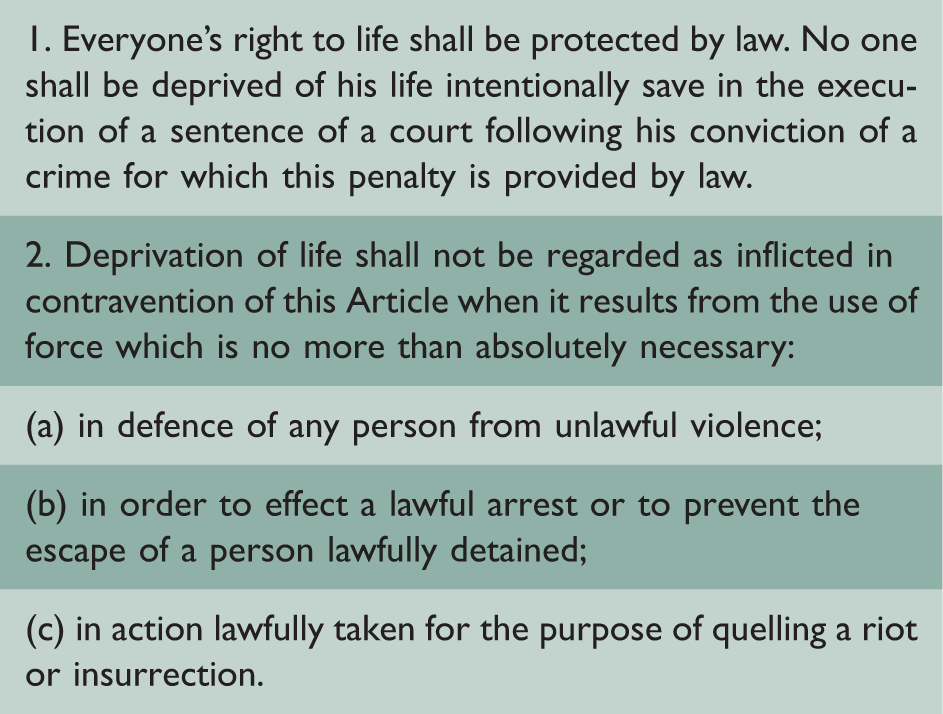
Article 2: Right to life.
Article 3: Prohibition of torture.

This argument is often associated, but not fully equated, with religious and cultural traditions that generally object to assisted death, because human life is viewed as God’s sovereign creation. From a religious perspective, God is considered the only one who can determine the beginning and end of human life. The sanctity of life is a value also clearly mirrored under Article 9 of the European Convention on Human Rights, which refers to freedom of thought, conscience and religion. 13 It is notable, though, that Article 2 does not encompass assisted dying, i.e. in situations where a person’s decision to end their life has been taken independently and with absolute perception of what it implied.
The crucial issue is therefore one of balance. Patient autonomy has to be balanced against the principle of sanctity of life. It should be acknowledged though that the autonomy argument is secondary in its applicability on whether assisted dying is ethically permissible and cannot solely guide decisions on what is morally impermissible, as it constitutes only a piece of the puzzle. The right to end a life that an individual finds intolerable has to be considered in association with its resulting impact on other rights, regulations and the responsibilities of healthcare professionals in facilitating assisted dying. 18
Justice
As discussed, justice constitutes one of the main four fundamental principles of medical ethics. All individuals in a society should be treated equally and impartially. One of the arguments that has monopolised the debate concerning assisted dying is the ‘slippery slope’. According to this, should assisted suicide be established, then it might be applied in circumstances that fall outside the scope of morally permissible cases, such as in patients who may not be fully competent. 17 Furthermore, if a person is motivated by means other than his own will, for example through external coercion, then patient autonomy is infringed.
In this regard, concerns are raised about vulnerable populations, such as the terminally ill, the mentally incapacitated and the elderly. There remains the understandable fear that assisted dying could potentially lead society toward an attitude that suffering should not be a part of life, interdependency is a burden and the lives of disabled of terminally ill individuals are not worth living. 20 The implications of such an attitude on vulnerable populations is clear, with individuals potentially forced or coerced into assisted dying for reasons other than their own free will.
The slippery slope argument is inordinately complex and controversial evidence exists in the literature in favour of both sides. Cases of assisted dying in the Netherlands grew from 1882 in 2002 to 5306 in 2014. 21 Eight-one cases were concerned with dementia and 41 with mental health-related reasons only in 2014. 6 In the light of data from Holland, the slippery slope argument is supported in a number of respects, e.g. concerns about legislation ‘creep’, lack of availability of good palliative care and fears in the vulnerable and elderly. Early data published from Oregon were also concordant. The number of physician-assisted deaths progressively rose from 16 in 1998 to 71 during 2011; loss of autonomy (88.7%) and ability to participate in enjoyable activities (90.1%) were the two most commonly reported end-of life concerns. 22 In increasingly financially constrained health and social care systems, fears have also been raised regarding the impact of budget-cutting trends and their potential impact on terminally ill individuals for whom the alternatives are only high-cost life-prolonging or quality-enhancing (rather than curative) treatments.
However, recent data summarising the 20 years’ experience in Oregon suggest the opposite. According to the authors, patients requesting an assisted death allegedly belong to a higher than average socioeconomic class and have a higher than average education level. 23 Oregon, the first state in the US to allow assisted dying, employed strict criteria that had an influential role in other jurisdictions. 5 The criteria comprised the agreement of another doctor, the assessment of the patient’s mental capacity and the presence of a terminal illness with less than six months to live. 24 Additional measures to ensure an informed and unforced decision involved adequate pain relief and access to end-of-life care. 25 Assisted dying proponents support that safeguards and regulations in place are very powerful since only one in 50 terminally ill patients have a discussion about the process with their doctor and even fewer complete it. 26
Rhetoric from opponents has raised concerns of whether such safeguards could ever be adequate, which appears to be a key argument in the debate in some jurisdictions as well. Consequently, any future legal permissibility of assisted dying should be developed in conjunction with clear regulatory safeguards to ensure the abuse of assisted dying and protect vulnerable individuals from coercion. 3 . Such safeguards must also preserve societal justice and ensure equitability and availability of healthcare is not a deciding factor in assisted dying decision-making.
The Hippocratic Oath and the principles of beneficence and non-maleficence
The principles of beneficence and non-maleficence, plainly described in the Hippocratic Oath, have been the foundation of medical ethics for many centuries. Beneficence states that a doctor should act in the best interest of the patient. Non-maleficence states ‘first, do no harm’ – ‘primum non nocere’. 27 Conformation to these fundamental principles is enshrined within Hippocratic Oath, which involve aiming to benefit, or perhaps most importantly, not doing any harm to a patient. Moreover, modern medical education in most countries follows legal and cultural opposition to an assisted death. Healthcare professionals are therefore currently not adequately trained to participate in assisted dying. Professional opinion also remains divided on whether further involvement would benefit or damage public perception of the profession, given the potential conflict between these two ethical principles. The UK’s medical representative body, the British Medical Association (BMA), has acknowledged this lack of consensus, but clearly concludes with their view that assisted dying should not be made legal in the UK. 28
However, the evolution of decision-making processes in modern medicine, particularly regarding end-of-life decisions, and with patients increasingly at the heart of shared decision-making (e.g. the UK NHS’ ‘no decision about me, without me’ policy), have applied pressure on clinicians to reconsider their collective professional stance on assisted dying. Indeed, an increasing number of legal challenges from patients and assisted dying representative organisations are taking place worldwide to challenge local legislation against an assisted death.
Assisted dying therefore challenges the conflict faced between the ultimate purpose of modern medical and social care and its founding ethical principles. Relief of suffering through an assisted death can be argued as a distinct entity to palliative care, with the former – if safely and carefully considered – potentially an important way of fulfilling a clinician’s duty to preserve autonomy and do good for a patient – for example, in cases where alternatives are treatments which provide no benefit or do not prolong or improve the quality of life of a terminally ill patient.27,29 A further consideration is that of an individual doctor’s ethical and moral beliefs, which are also an important factor should a patient request an assisted death; indeed, the British Medical Association has proposed that should assisted dying legislation be derived, then there should be a clear demarcation between those physicians who do and do not offer this option. 30
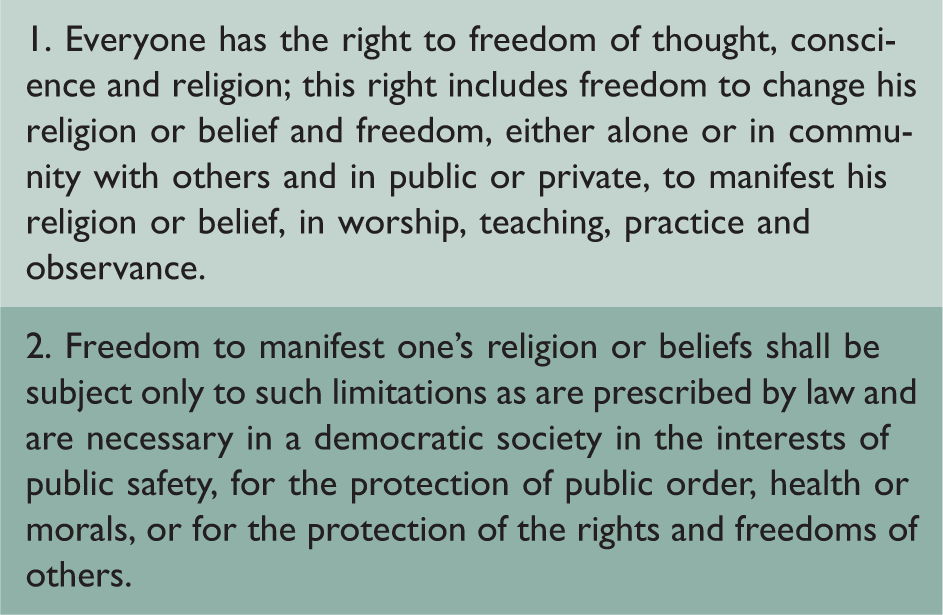
Freedom of thought, conscience and religion
A further controversial issue is raised by Article 9 of the European Convention on Human Rights, which protects the rights of freedom of thought, conscience and religion. Its impact on the assisted dying debate centres on whether requesting an assisted, dignified death constitutes a manifestation of belief, therefore falling within the remit of Article 9. Several European Court decisions have determined that individual views are entitled to protection only if they ‘attain a certain level of cogency, seriousness, cohesion and importance’. 31
Seriousness and importance are undoubtedly justified when considering an individual’s decision to end their life. On the other hand, an informed desire to die with dignity may well constitute a coherent and cogent view. For instance, it remains debatable whether approaching death through a solely palliative care lens constitutes a less dignified way to die than assisted dying. 31 Article 9 may therefore provide a preferable framework for decisions relating to the right to die with dignity than Article 8, which focuses on a patients’ autonomy; while the former aims to protect truly coherent and cogent decisions, it may be argued that the latter in isolation could potentially open a bigger door to a broader attitude towards assisted dying. 13
Article 9: Freedom of thought, conscience and religion.
Implications of assisted dying in the doctor–patient relationship
As discussed, a key concern of the medical profession remains the impact of legalisation of assisted dying on the doctor–patient relationship. This relationship is fundamentally based on trust. Although aspects of assisted dying may be considered in conflict with certain underlying ethical obligations placed upon doctors, considering a patient’s autonomous wishes, alongside the moral perspectives of the doctor, is also an important aspect of this relationship.32,33 This quandary is recognised by the Swiss Academy of Medical Sciences in their ethical guidelines, which acknowledges that ‘in certain special cases a doctor’s personal decision to assist a dying patient to commit suicide is in accordance with his or her conscience and has to be respected’. 18
The delicate balance between the views of patients, doctors and society can pose an ethical dilemma, with the potential to serve a disruptive influence on the sanctity of the doctor–patient relationship and negatively distorting how society perceives the role and motives of healthcare professionals. For example, as previously considered, particularly in healthcare systems where doctors play the role of gatekeeper to healthcare, a doctor’s support for an assisted death for a terminally ill individual might be negatively interpreted as a conflict of interest, with a desire to help relieve the social and economic burden of a patient’s illness upon society overriding the patient’s individual interests. Ultimately, should appropriate safeguarding measures be deployed alongside relevant legislation, assisted dying may risk eroding doctors’ professional integrity. 34
Current position of doctors’ professional groups in the UK and the USA
As expected, the discussion around adopting assisted dying has caused much controversy among the doctors’ professional groups and bodies. Several professional organisations in the UK have clearly expressed their opposing views to assisted dying such as the British Medical Association, the Royal College of General Practitioners and the Royal College of Surgeons of England, whereas others maintain a neutral position including the Royal College of Nursing, the Royal College of Psychiatrists and the Royal Pharmaceutical Society. 5 The Royal Society of Medicine has no policy on the issue since ‘its remit is the education of doctors and health professionals and the promotion of debate, not the making of policy’. 35
In the US, the American Medical Association, representing nearly 250,000 members, vehemently opposes legalisation of assisted dying as does the American College of Physicians with more than 150,000 members. 6
Conclusions
The debate surrounding assisted dying is never far from the headlines, particularly while its legal status in most jurisdictions remains inadequate and discursive. However, alongside the evolution of palliative care, there appears to be an increasingly vocal desire for legislation to support assisted dying in selected cases. 21 Developing a sensitive balance between established cultural norms and a progressive, well-balanced, transparent and safe attitude towards assisted dying is key. 24 More patient-centred attitudes towards health and social care increasingly place patients – quite rightly – at the heart of everything health professionals do. Patients’ needs, attitudes and beliefs must be therefore at the forefront of decision-making. However, when considering these alongside the fundamental principles of bioethics as well as legislation and doctors’ own beliefs, conflict can arise, thereby leaving the assisted dying debate in a state of limbo. Whether assisted dying should be legalised (albeit with stringent controls) remains controversial; as considered in this essay, even the basic moral principles can conflict when considering the arguments for and against supporting an assisted death, making consensus building far from straightforward.
Ultimately, individual patients’ autonomy should be balanced with a fundamental right to life, impacts on the individual doctor–patient relationship and wider society and the safeguards required to prevent misuse of any assisted dying regulations. The challenge remains for society to decide where this balance lies, guided by regional religious, cultural and legislative perspectives.
Developing the required ethical competencies among medical professionals is also key; given the current absence of legal support for assisted dying in most jurisdictions, most clinicians remain untrained in such decision-making. Indeed with understandable fears against crossing key ethical divides, physician support for an assisted death tends to be lower than that of patients. 36 Dying is a natural part of human life. With growing demand worldwide, the assisted dying debate will increasingly come to the fore – something healthcare professionals, politicians and legislators cannot ignore.