




Abstract
Objective
We wished to explore how UK national newspapers had covered the creation and operation of the Cancer Drugs Fund from 2010 to 2015. This was introduced to provide cancer patients in England with access to drugs not appraised or approved by the National Institute for health and Care Excellence.
Design
We sought stories in nine newspapers from the Factiva database, and copied their salient details to a spreadsheet. They were categorised by whether they were supportive or critical of the Cancer Drugs Fund and their main arguments, which drugs they mentioned and for which cancers.
Settings
Not applicable
Participants
Not applicable
Main outcome results
Press coverage was mainly very positive, arguing for the Cancer Drugs Fund's extension to Scotland and Wales, and a bigger budget, but neglecting the lack of patient benefit and the severe side effects that sometimes occurred. Leading this support was the Daily Mail, whose influence (measured by the product of number of stories and the paper's circulation) was almost greater than that of the other newspapers combined.
Results
Press coverage was mainly very positive, arguing for the Cancer Drugs Fund’s extension to Scotland and Wales, and a bigger budget, but neglecting the lack of patient benefits and the severe side effects that sometimes occurred. Leading this support was the Daily Mail, whose influence (measured by the product of number of stories and the paper’s circulation) was almost greater than that of the other newspapers combined.
Conclusions
Although there was some critical analysis of the Cancer Drugs Fund, our analysis shows that most press coverage was largely positive and unrepresentative in comparison with the lack of overall benefits to patients and society. It is likely that it contributed to the Cancer Drugs Fund’s continuation despite mounting evidence of its ineffectiveness.
Background
The Cancer Drugs Fund was established by the UK coalition government in 2010 to provide access to drugs not available through the English NHS. Some of the drugs available through the fund awaited formal assessment by the National Institute of Health and Care Excellence, while others had been previously appraised but not recommended for routine funding by the NHS. In 2011, the Cancer Drugs Fund had an annual budget of £200 m. The lifespan of the fund was extended over time, along with its budget (increasing to £340 million in 2015–2016). However, even though two re-prioritisation exercises were undertaken, the final out-turn position for 2015–2016 was £466 m – an overspend of £126 m (37%). Close to £1.4 billion in total has been spent on cancer drugs through this fund.1,2 The Cancer Drugs Fund has subsequently been reconfigured and is now under the control of the National Institute of Health and Care Excellence. 2
An analysis of the Cancer Drugs Fund between 2010 and 2015 has shown that it delivered poor value for tax payers and for patients, with only 38% of approved drugs achieving a statistically significant improvement in overall survival and only 18% meeting thresholds for a clinically meaningful benefit according to value scales developed by professional bodies. 3 Put simply, many of these drugs did not offer any benefit with respect to prolongation of life or improvement in quality of life, and access was achieved at considerable financial and opportunity cost with little evidence that patients on the fund benefited.
The Cancer Drugs Fund was created following intense public and political pressure to provide access no matter what the cost or the evidence for their benefit. This was a debate played out in the media, which resulted in a changing role for the National Institute of Health and Care Excellence and the creation of the Cancer Drugs Fund. 4 In this analysis, we have sought to investigate the volume and representativeness of media reporting about the Cancer Drugs Fund between 2010 and 2015, specifically highlighting the key differences between media outlets in their support for, or opposition to, the fund and the likely impact on public and political perception given the ‘impact’ or ‘influence’ of particular newspapers. We also assessed the drugs most frequently cited in newspaper reports to see whether any concordance existed with actual prescribing patterns.
Methods
Inclusion criteria
Amount of influence of individual newspapers in their stories about the Cancer Drugs Fund, based on product of circulation in 2014, number of stories and mean length in words.
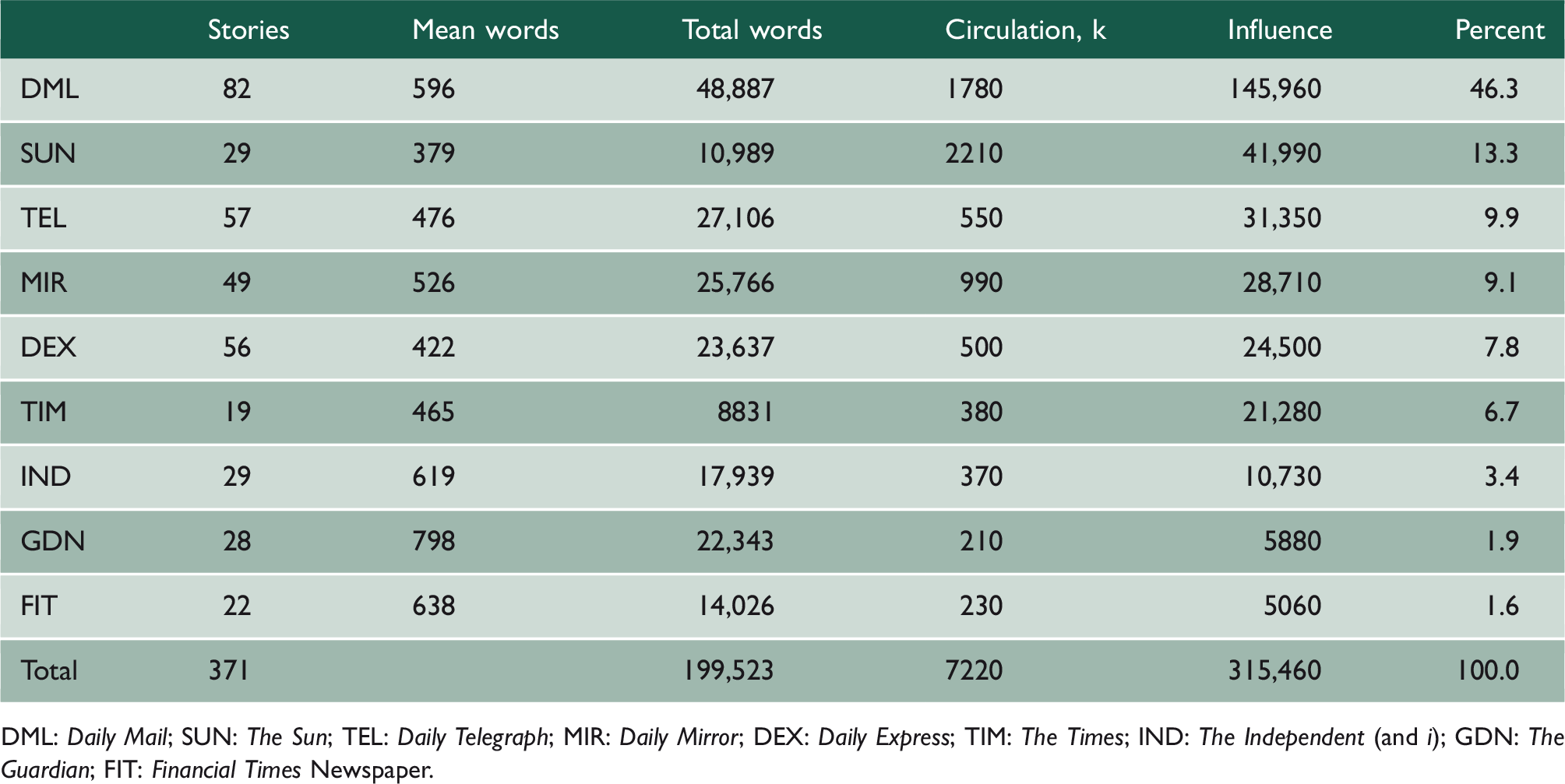
DML: Daily Mail; SUN: The Sun; TEL: Daily Telegraph; MIR: Daily Mirror; DEX: Daily Express; TIM: The Times; IND: The Independent (and i); GDN: The Guardian; FIT: Financial Times Newspaper.
The full text of each story meeting the inclusion criteria was analysed thematically and the following information collected: the story's date; the newspaper; the headline and the synopsis; as well as the word count. Details of the journalist’s name and position (if given), the names of the drugs and the cancer site for which they were intended to be used were also recorded. Higher thematic codes were derived as either positive (supporting the Cancer Drugs Fund), neutral or negative (critical of it). In conjunction with the higher ‘sentiment’ themes, subject area themes were also coded. The codes were modified iteratively 5 during the analysis of the stories. The codings were developed by PR and RS, and if there was disagreement, there was discussion with AA and GL to resolve the issue. For example, positive newspaper stories were identified that advocated a widening of the geographical coverage of the Cancer Drugs Fund beyond England to the other devolved territories (e.g. Wales). Similarly, negative stories about the Cancer Drugs Fund were identified that focused on the effect that the Cancer Drugs Fund had in re-directing money away from other areas of the NHS. Further analyses sought to measure the comparative ‘influence’ of each newspaper’s reporting of the Cancer Drugs Fund with a metric specifically developed for this evaluation. This was determined for each of the nine newspapers as the product of its circulation (obtained from the Audit Bureau of Circulation, https://www.abc.org.uk/) and the number of stories. Influence was calculated with and without the inclusion of the length of the article (word count).
In addition, we analysed whether there was any concordance between the types of cancer mentioned in the newspaper reports and the burden of disease from each tumour type in the UK in 2010 measured in disability-adjusted life years. 6 This indicator sums the reduction in life expectancy (e.g. premature mortality compared with Japan, with the highest life expectancy) and the number of years spent living at less than full health (disability). The disability-adjusted life year gives a better measure of disease burden from different cancers by including morbidity and mortality. The analysis is designed to assess whether newspaper coverage of particular tumour types correlates with their health burden on the population.
Results
Outputs of stories in the different newspapers
Out of a total of 1692 stories that mentioned the Cancer Drugs Fund, we excluded 1310 that were about other topics and only mentioned the Cancer Drugs Fund peripherally. In the 382 media stories retained for analysis that discussed the Cancer Drugs Fund in some detail, 44 different cancer drugs were identified, 16 different cancer sites were mentioned and 142 different journalists were named as authors. Following the launch of the Cancer Drugs Fund in 2010, coverage (the number of published stories) was fairly steady from 2010 to 2012 and then increased from 2012 to 2015 (Figure 1). The Daily Mail had the greatest calculated influence (based on frequency of stories and newspapers circulation (Table 1)). Including article length, which quantified whether an article was a minor item or feature story, made no difference to the rank of Cancer Drugs Fund reported ‘influence’; therefore, the simpler, frequency of story × circulation calculation is used. The table makes clear that the Daily Mail had almost as much influence as the other eight daily papers together, and that this was more than three times the influence of any other paper according to our metric.
Numbers of stories about the Cancer Drugs Fund in nine national UK newspapers, 2010–2015.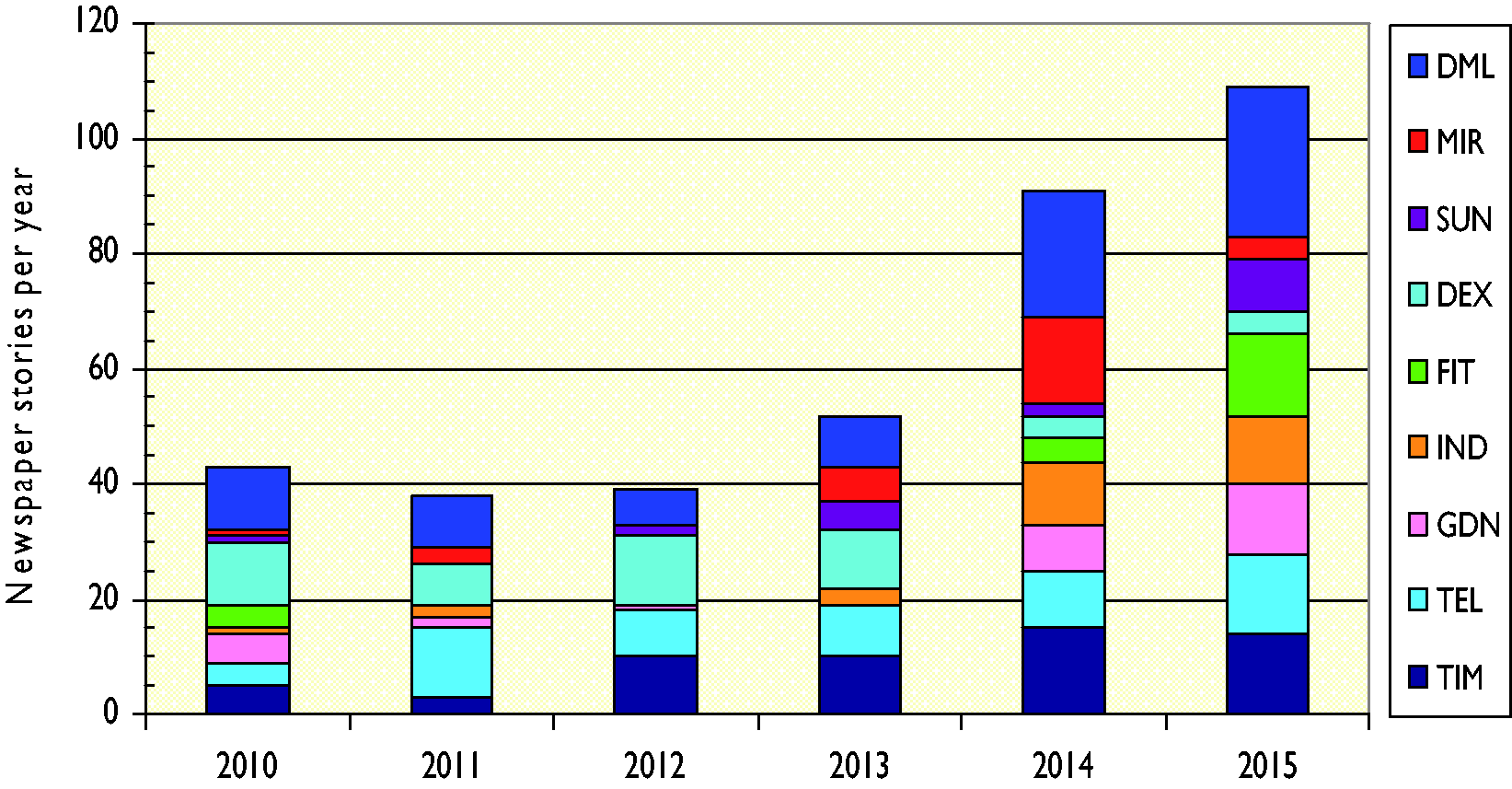
The tone of the stories and the weight of opinion
Qualitative codes for Cancer Drugs Fund stories.
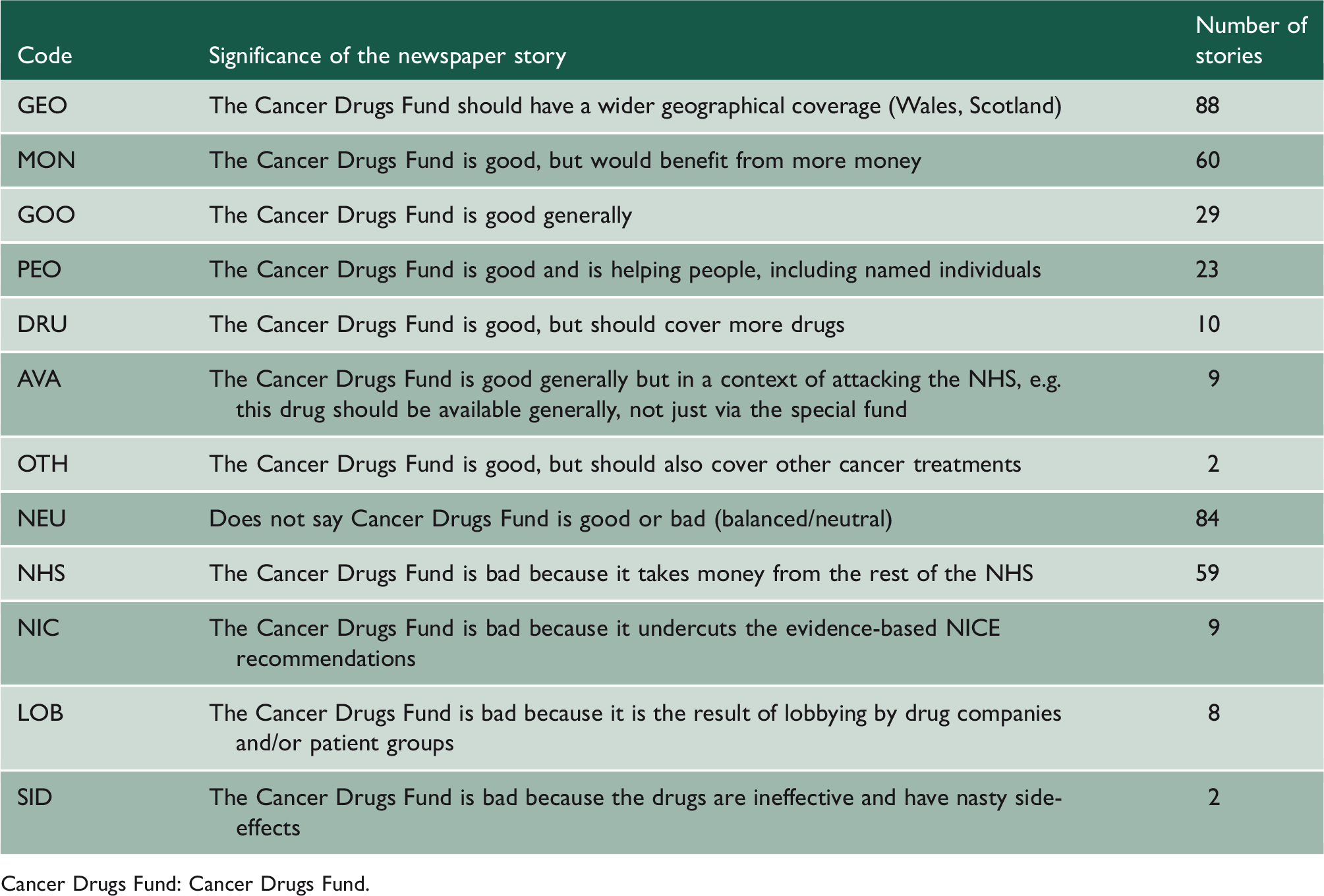
Cancer Drugs Fund: Cancer Drugs Fund.
Figure 2 demonstrates the editorial balance of stories about the Cancer Drugs Fund (positive, neutral and negative) for each individual newspaper. For four newspapers, the majority of their stories were consistently positive regarding the Cancer Drugs Fund (Daily Mail, The Sun, Daily Express and Daily Mirror), one was more negative (Financial Times) and the four remaining newspapers showed a mixed picture of positive, negative and neutral tones in their stories. The combination of this chart, Table 2 and the influence scores shown in Table 1, illustrates the significant positive reportage of the Cancer Drugs Fund overall, particularly in the Daily Mail.
The tone of the Cancer Drugs Fund stories in the nine newspapers, 2010–2015. For story character codes, see Table 2. Green solid/shaded: positive reporting of Cancer Drugs Fund; white: neutral or balanced; red-pink solid/shaded: negative reporting of Cancer Drugs Fund.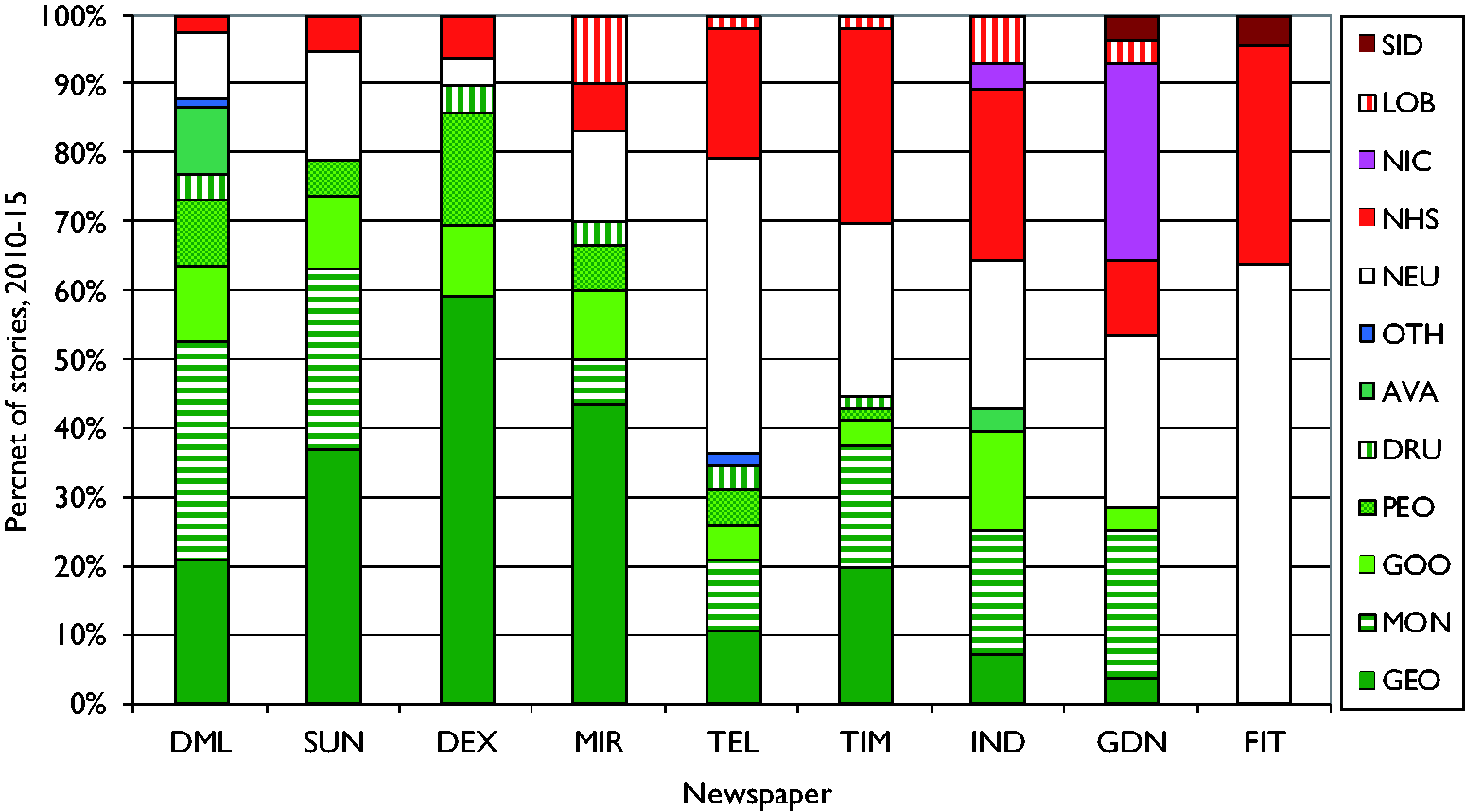
The dominant narrative was one of the praises for the Cancer Drugs Fund in providing access to drugs that were needed by cancer patients but had previously been denied. Where the narrative was not wholly supportive, the following trade-offs were described: (1) There was a view that the Cancer Drugs Fund was great, but since it only applied to England, and not Wales or Scotland, it was unfair. (2) Although the Cancer Drugs Fund benefitted some patients, it also distorted NHS spending and was limited to helping only a small group of patients. Possible side effects from the new drugs were only mentioned in one story in the Financial Times and one in The Guardian.
The cancer drugs and cancer types most often mentioned
Individual cancer drugs mentioned in the newspaper stories, with numbers of mentions.
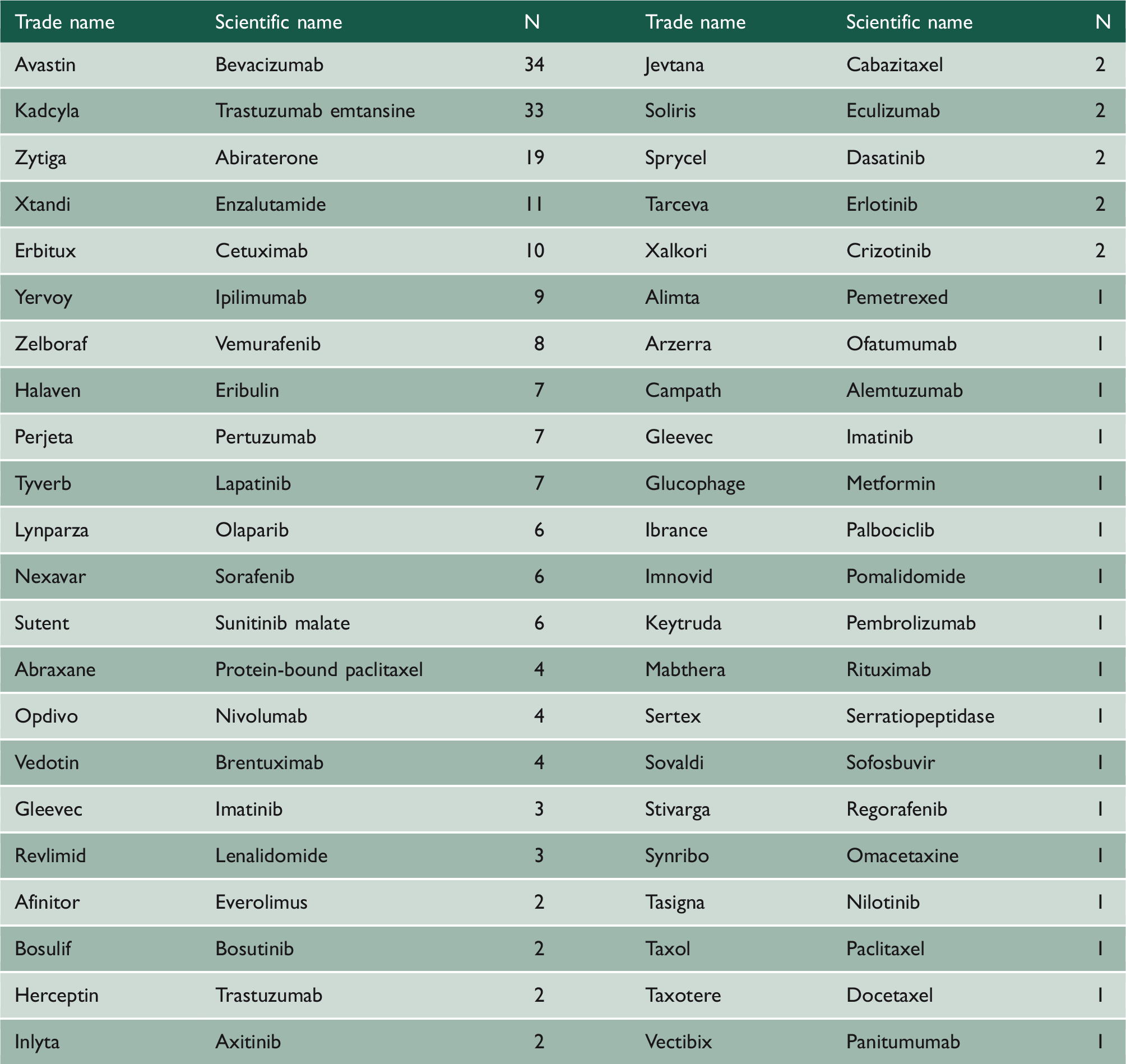
A particular concern relates to the prescribing of bevacizumab. It was approved for up to nine indications in the Cancer Drugs Fund for a variety of tumour types including colorectal, breast, ovarian and cervical cancers. A recent analysis found that none of these indications would have met European Society for Medical Oncology clinical thresholds for meaningful benefit, and only one indication would meet American Society of Clinical Oncology criteria. 3
In addition, coverage of affected cancer sites did not reflect the most commonly occurring cancers (incidence) nor those causing the greatest burden, measured in disability-adjusted life years.
6
Figure 3 compares the numbers of mentions of individual cancer sites with the burden of disease in the UK in 2010 relative to all cancers. Breast, prostate and colorectal cancer received significantly greater media coverage than other cancer sites, and in particular, lung cancer. This is in keeping with breast cancer's greater proportional coverage among all cancer stories: it has the most research stories on the BBC and in European newspapers.8,9 Lung cancer, by contrast, is the leading cause of cancer mortality and disease burden,
6
but was only mentioned four times.
Comparison of numbers of mentions of cancer sites in Cancer Drugs Fund stories, 2010–2015, with relative disease burden in the UK from cancers at these sites, 2010.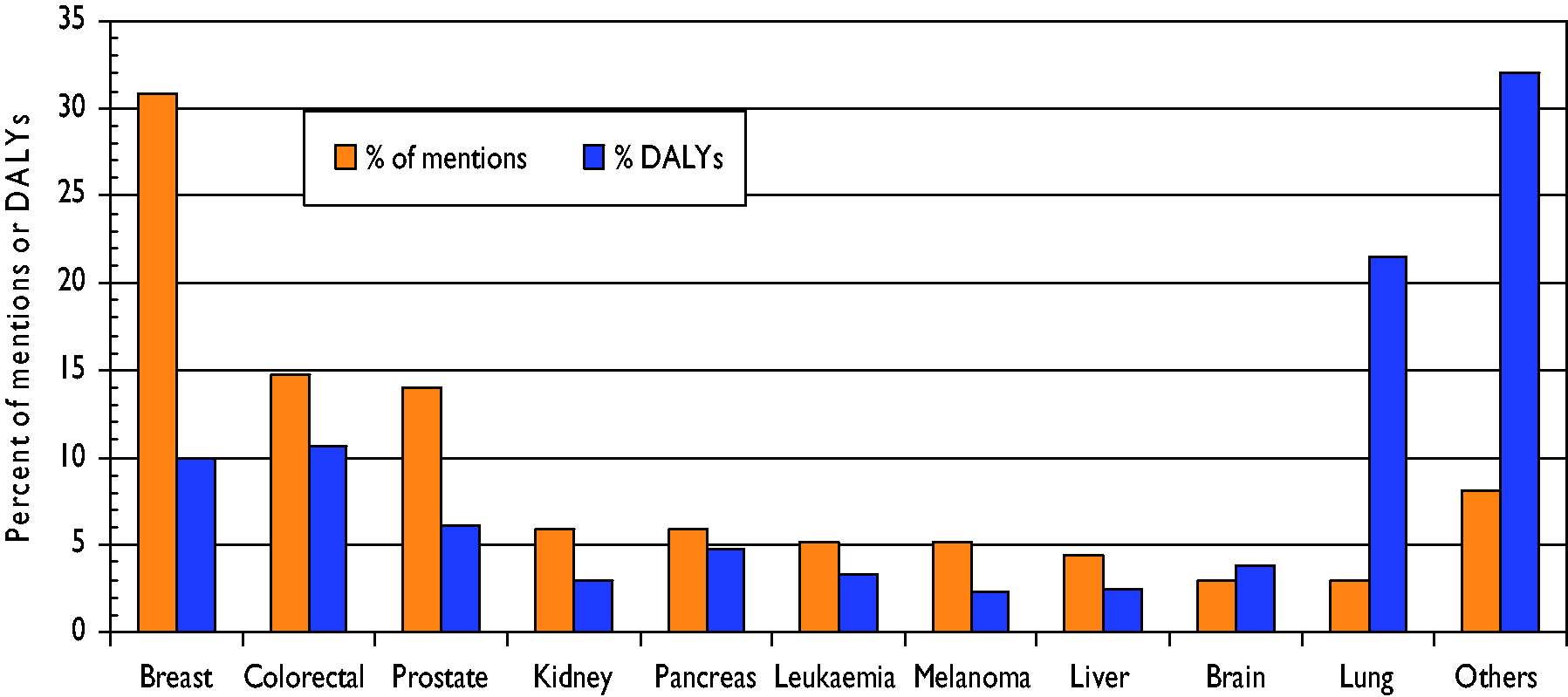
Discussion
Our analysis has shown that there was substantial newspaper media support for the Cancer Drugs Fund, with our ‘influence’ measure, based on the product of number of articles published and newspaper circulation, showing three times as much in favour as against. There is a potential concern therefore about the influence of media reporting on both demand for and subsequent access to the drug through the Cancer Drugs Fund, although a causal link cannot be proved.
In light of the return of the Cancer Drugs Fund to the National Institute of Health and Care Excellence cost-effectiveness umbrella from July 2016, it is important to reflect on the potential influence of reporting on the execution of the public policy that led to the Cancer Drugs Fund. Media reports did not scrutinise the discrepancy between those drugs available on the Cancer Drugs Fund and those diseases with the greatest health burden, the toxicities of the medicines, nor the opportunity cost of the Cancer Drugs Fund for other cancer treatments. Reportage in some of the most influential newspapers also failed to appraise why some cancer medicines were funded and others were not in the context of a publicly funded health system and public preferences for care in incurable disease. Access at any cost was a clear totem around which the pro-Cancer Drugs Fund media based its coverage. The views of experts who pointed out the intrinsic unfairness of the Cancer Drugs Fund or the lack of efficacy of, and unpleasant side effects from, many of the drugs seem to have counted for little against the human interest stories of individual patients. This is in keeping with evidence from an analysis of American media coverage of cancer which found that adverse events from cancer treatment were rarely discussed. 10
In many respects, the extensive coverage of the Cancer Drugs Fund closely mirrors a major media preoccupation with cancer. Although cancer is responsible for only 21% of disability-adjusted life years in the UK, there are many more newspaper stories about research on cancer than about the other main causes of the UK disease burden, cardiovascular disease (including stroke) and mental disorders.6,11 Furthermore, the focus on cancer medicines is also notable. The preponderance of stories on chemotherapy, 8 compared with surgery and radiotherapy, has probably contributed to a strong public perception that the best way to help cancer patients and improve outcomes is to allow them access to new (and expensive) medicines, whose performance is often hyped and gives rise to unreasonable expectations.12–15 The reason for the pre-eminence of chemotherapy in cancer journalism is not clear but is likely to be related to the volume of press releases by both public and private sectors on the outputs of the global cancer research endeavour, which is disproportionally focused on fundamental cancer biology, new medicines and biomarkers.16,17
In an era of ‘alternative facts’, it is imperative that health journalists maintain their credibility by being critical of the ‘next big thing’ or ‘game changer’ and that the research funders and institutions assist them in their work. In the face of the escalating costs of the Cancer Drugs Fund and its failure to demonstrate measurable improvements in life expectancy or quality of life for the patients who were treated, it is important to consider whether unrepresentative media coverage contributed to the longevity of the Cancer Drugs Fund and the policy mis-direction that occurred. In addition to highlighting editorial policies in the print media, this study also draws attention to the failure of many public organisations, including charitable research funders in the UK, to publicise the shortcomings of the Cancer Drugs Fund. This also must be considered in the context that there is no evidence that ring-fencing drug-only spending for cancer will improve outcomes for cancer patients over and above greater investment in the whole cancer management pathway (screening, diagnostics, radiotherapy, surgery and palliative care).
Our study was limited to the reportage in nine national newspapers and did not cover other sources of public information such as broadcasts and social media. The exclusion of newspapers from the other UK territories was justifiable because the Cancer Drugs Fund operated only in England. It is also important to stress that we are not able to prove causality between media reporting and the longevity of the Cancer Drugs Fund. In future, it would be desirable to complement this study with a qualitative analysis of how the media affected the policy-makers and physicians who were principally involved. It would also be worthwhile to interview some of the leading journalists in order to discover the frames and drivers that they experienced for their reportage.
In summary, our analysis demonstrates that the media coverage around the NHS Cancer Drugs Fund was largely positive and unrepresentative in comparison with the lack of overall benefits to patients and society of the Cancer Drugs Fund, which has since undergone a substantial overhaul. In addition, many of the articles espoused the virtues of particular drugs such as bevacizumab, which failed to deliver improvement in survival or quality of life for several tumour types according to the original trial evidence. It is possible that the skewed media coverage influenced demand and subsequent access for particular drugs through the fund, and therefore brings into question the fairness from a public policy perspective of the NHS Cancer Drugs Fund. However, it is important to point out that a number of senior correspondents, commentators and media outlets (e.g. The Guardian) did attempt to redress the balance. But compared with the positive reporting and wide distribution of the other UK national newspapers, they were lone voices in the wilderness.
Key messages
The Daily Mail, the Daily Telegraph and The Times published the greatest volume of news stories regarding the Cancer Drugs Fund The Daily Mail had the greatest ‘influence’ of the newspapers, based on the product of number of stories and circulation The majority of news stories regarding the Cancer Drugs Fund were positive calling for an increase in coverage to the devolved UK territories and for greater funding. Of the news stories mentioning specific drugs, abiraterone, bevacizumab and trastuzumab were the most frequently cited. Cancer Drugs Fund stories related to particular tumour types were not in keeping with their relative burden as measured by disability-adjusted life years, with breast cancer over-represented in news articles compared to lung cancer which was under-represented.