




Abstract
In 2008, American academics Richard Thaler and Cass Sunstein published Nudge: Improving Health, Wealth and Happiness. 1 The book was a worldwide bestseller and provided readers – including many policymakers – with an engaging introduction to the field of behavioural economics. Increasing interest has subsequently been shown in policies that ‘nudge’ people in particular directions; drawing on major advances in our understanding that behaviour is strongly influenced (in largely automatic ways) by the context or situation in which it is placed.2,3 Nudging articulates the idea that people can be persuaded to make better decisions by simple, non-coercive changes in the ‘choice architecture’. 1 An example of a ‘nudge’ type policy is making participation onto the organ donor register opt out rather than opt in. This is based on the finding that people have a tendency to stick with the default option, even if it implies very different consequences. 4
Looking beyond conventional nudging encompassing multiple behavioural contexts, research findings from the behavioural sciences are now being translated into the design of products, services and places, to encourage behaviour change. ‘Behavioural design’ describes the process of transforming our better understanding of human behaviour into innovative practical solutions that promote social benefit. Design-led interventions can make better choices easier or constrain behaviours by making certain actions more difficult. In everyday life, microwaves are manufactured so they do not start unless the door is closed, nozzles from diesel pumps can stop drivers putting petrol in their car and ATM machines do not dispense cash until the card and collected to prevent it being left behind. 5
Similar thinking could lead to interventions that bridge the gap between our more sophisticated understanding of health-related behaviours and practice. In common with other areas of public policy, many existing interventions in healthcare have sought to influence decision-making by encouraging people to reflect on the choices available to them. But in many cases, it may be more effective and easier to redesign products, services and places given the recognition that physical environments contribute to health-related behaviours and correspondingly, altering them can be an important catalyst for behaviour change. 6
We can see the potential impact of good design when considering how to challenge the problem of violence and aggression in emergency departments. Hospital chiefs can use a variety of strategies to reduce unsettling episodes. They can erect physical barriers between staff and service users or put up signs warning visitors of arrest for problem behaviour. But in a project supported by the Design Council, substantial improvements in patient experience and reductions in aggression and hostility were seen in two NHS emergency departments following the introduction of design-led solutions built on insights from psychologists spending time in departments identifying potential triggers of frustration and aggression. Specific changes in the physical environment included the provision of more comfortable seating and displaying live information on waiting times and the number of patients being looked after. 7 Similar approaches have shown how design-led choice architecture can encourage healthier food choices. 8 Most of us are aware of our tendency to pick food items placed at the end of aisles or at the checkout, but a host of other phenomenon have been identified that are important in decisions about the types and quantities of food we eat. Recognising that people consume fewer calories when using smaller containers and utensils could encourage changes in the size of plates and glasses made available in public eating venues. 9
As a result of interest in ‘behavioural design’, two centres have recently been established in the UK that seek to unite behavioural science with design thinking for social benefit. Warwick Business School and the Design Council have launched an initiative known as the Behavioural Design Lab while Imperial College London and the Royal College of Art have together launched the Health Innovation Exchange (HELIX Centre). HELIX, with the support of substantial research grants, brings together designers, technologists and clinicians within a clinical environment to develop new healthcare products that seek to influence health-related behaviours. A design studio is being built outside the main entrance of St Mary’s Hospital, Paddington, to ensure hospital staff and academics can engage with the design team (see Figure 1).
Proposed HELIX studio outside St Mary’s Hospital.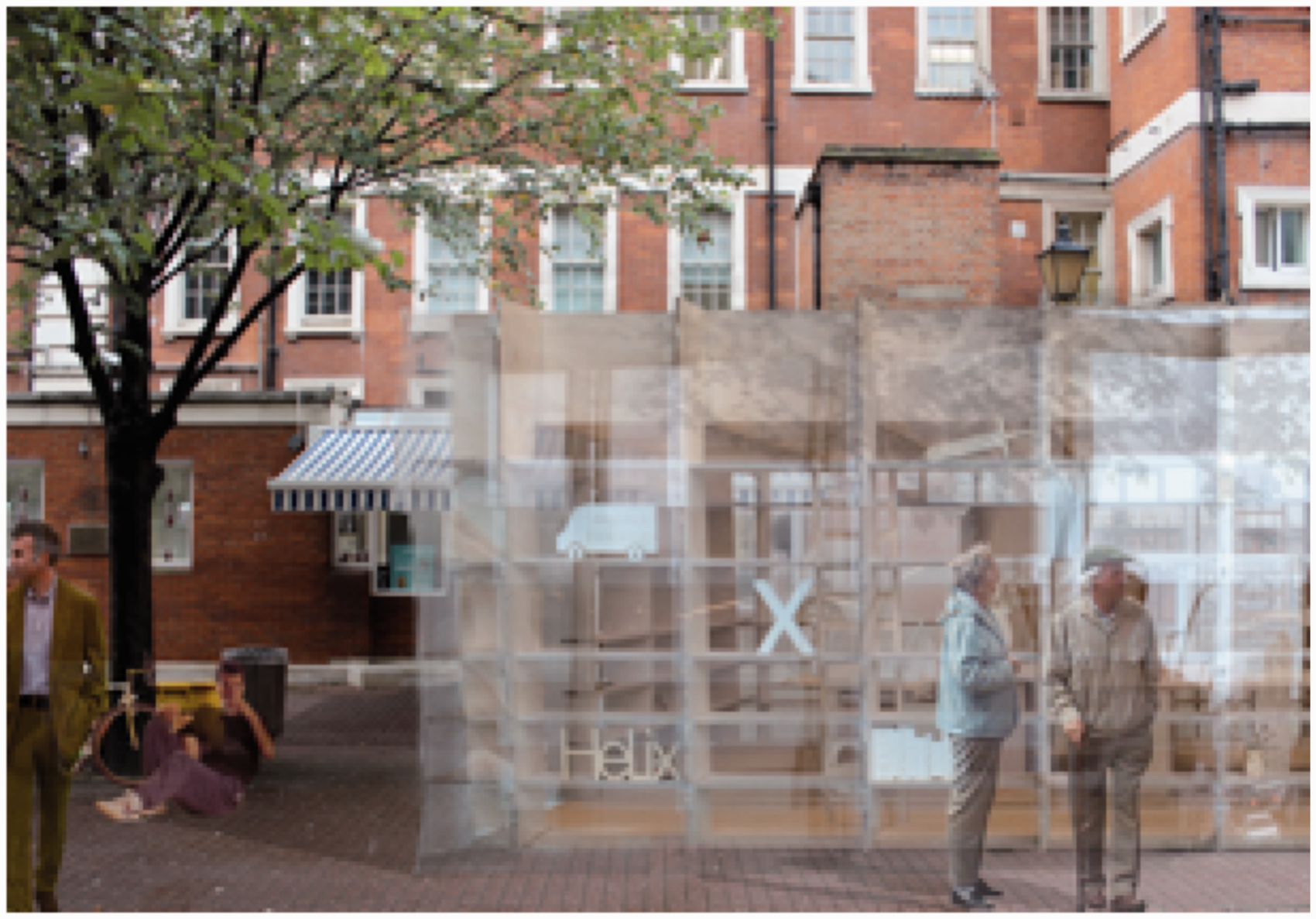
Despite the potential in designers translating insights from behavioural science into life-enhancing products and services, there are concerns and unanswered questions about these approaches. There are important considerations in behaviour change interventions targeting subconscious cognitive processes. It is also unclear how long lasting these interventions can be, how effects that work in one set of circumstances will work in another, and whether effects that work well with one segment of the population will work with another. However, these issues may reinforce the need for more, rather than less, thinking and research in this field, and we are confident that design-led solutions will be increasingly used to meet some of the most pressing challenges faced in healthcare.