




Abstract

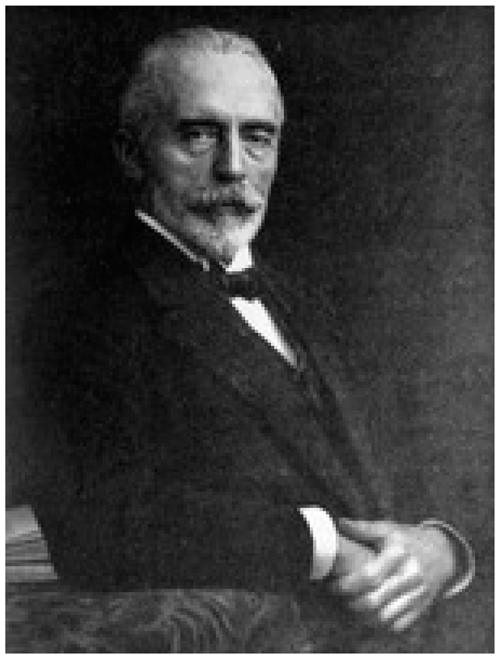
While on a study trip (1865–1866), he met Bernhard von Langenbeck, and volunteered to work in Rudolf Virchow’s laboratory, in Berlin. In London, he observed Spencer Wells paving the way for surgical intervention in the abdominal cavity, previously avoided for fear of lethal infections. Wells’s ‘cleanliness-and-cold-water’ surgery and frank statistics contrasted sharply with the ‘dirty’ surgery Kocher saw in Paris, where professors did not inform students about the fate of operated patients.
After graduation, Kocher became the sole assistant in the Surgical Clinic of Bern University (1866–1869) and applied Lister’s anti-septic methods successfully (1867), as confirmed – inadequately! – by the clinic’s decreasing rate of operative mortality. Induced to open a private practice because his marriage to a wealthy young woman demanded that he earn something himself, Kocher studied haemostasis privately in animals. In cadaver experiments, he also invented a method for reducing shoulder subluxations. Kocher was the first Swiss to hold a surgical chair, when succeeding his former chief in Bern, Albert Lücke, as professor of surgery (1872). Despite attempts to persuade him to move to Prague, Vienna and Berlin, Kocher remained in Bern, and was active there until his death on 27 July 1917.
Kocher was anglophile, which was quite exceptional for a continental surgeon of his – and later – times. This was motivated by the impact of Spencer Wells’s approach to abdominal surgery in the 1860s. As a young professor, he wrote to Lister promptly and soon travelled again to London (1875). He visited the UK another eight times till 1913, either for international medical congresses, meetings of the British Medical Association or of the Royal College of Surgeons of England, or to give the annual oration of the Medical Society of London. The Society conferred on him in 1889 the first of 31 honorary memberships, four of which were in London. He liked to write letters to his wife in English.
Kocher's surgery was initially based on morbid anatomy, and aimed to remove diseased tissue. He began resecting tuberculous foci in bones and joints, a procedure challenged from the 1890s by conservative high alpine climate therapy and after 1910 by radiotherapy. Early in his career he also began systematising the technique of goiter extirpation. By the end of his life he had performed more than 4000 goiter operations. His discovery that his complete removal of goitrous thyroids had led to the development of cretinism particularly in young patients1–3 led him to consider functional aspects of surgical therapy and to resume physiological research.
From 1883, he implanted human thyroid tissue, attempting to correct the loss of postulated thyroid functions (which he later assessed with a blood test). These interests have led him to become recognised as a pioneer of organ transplantation. 4 As a surgeon, he was exceptional in approaching an understanding of thyroid function using chemistry in an attempt to isolate, albeit in vain, an active principle from the gland. He was awarded the 1909 5 Nobel Prize in Medicine, accordingly, for his contributions to physiology, pathology and surgery of the thyroid, and thus for initiating endocrinology,3,6 both in theory and in practice. The thyroid problem had also confronted him harshly with the ancient ethical imperative of avoiding harm. Kocher attempted to master the resulting conflicts scientifically, by promoting research, and morally, by falling back on his Christian faith.
As a result of painstaking clinical-pathological observations he contributed to clinico-diagnostic neurophysiology by publishing the first complete chart of human dermatomes in 1896.7,8 This was important before the development of neuro-radiology.
Kocher's slow, ‘physiological’ operating techniques and painstaking haemostasis (using ‘Kocher clamps’) were adopted by his younger American friend, William Halsted of Johns Hopkins. From the mid-1880s, based on animal experiments by the Bern physiologist Hugo Kronecker, Kocher combated ‘shock’ during surgery by administering warm ‘physiological’ saline intravenously. This approach was later taken up by George Crile, another of his American visitors.
Kocher 9 also wrote a monograph on brain surgery using results of experiments on endocranial pressure performed in Bern by Halsted's pupil, Harvey Cushing, who was also impressed by his host's intraoperative blood-pressure measurements. Through these prominent Americans, Kocher’s influence on a whole generation of US surgeons was enormous. This was reflected in the constant stream of Americans visiting his clinic in Bern, on average 40 every year between 1909 and 1914. 6
Kocher created his own ‘system of safe surgery’, described in five increasingly voluminous German editions of a textbook on surgical operations (1892–1907), 10 which was translated into six languages. A world leader in the ‘golden age of modern surgery’, he was elected first president of the International Society of Surgery, which was founded in 1903. Ten years later he quite naturally became the founding president of the Swiss Society of Surgery.
Kocher donated his Nobel Prize money for a research institute, which, together with a street, still bears his name in Bern. 6
Further details of Kocher’s life and works are available in Tröhler7,11,12 and Boschung. 13