




Abstract
In this article, the therapeutic uses of five Chinese medicines that contain orchids are discussed, together with a brief report of some of the animal experimentation undertaken. The impression that these preparations have no therapeutic use may be incorrect. However, herbal preparations have not usually been subject to the rigorous characterization and standardization necessary for clinical study, and persuading practitioners that substances in use for many centuries still need to be tested in randomized controlled clinical trials is proving a significant challenge.
Introduction
In an earlier article CJB suggested that the use of orchid products in medicine is only useful as a vanilla flavouring to encourage patients on dialysis to eat more. 1 However, orchids, especially Gastrodia elata, Dendrobium species and Bletilla striata, continue to be grown commercially in China as a part of a large herbal medicine industry. This article takes a detailed look at the uses of orchids in Chinese medicine.
Biological Basis for Orchids as Medicine
Certain constituents of orchids suggest biological activity. Alkaloids are nitrogenous organic heterocyclic molecules that have pharmacological effects on humans and other animals. They are secondary metabolites of plants and are of amino acid origin. Well-known alkaloids include strychnine, morphine, codeine, nicotine, atropine, cocaine, quinine, methamphetamine, reserpine, caffeine and theophylline. In orchids, 214 species in 64 genera contain 0.1% or more alkaloids. 2 In China, 8% of Dendrobium species, 18% of Eria species and 42% of Liparis species have this degree of alkaloid content. 2 Thus it is quite possible that orchids grown in China have medicinal or toxic properties when consumed by man. However, no herbal Chinese product has been subjected to the tests for efficacy and safety that would be required to satisfy the world medicine regulatory authorities. Nevertheless we have started to examine the evidence and our preliminary findings are reported in this paper.
Traditional Medicine in China
Traditional Chinese medicine not only employs a different classification of diseases (yin and yang, or wood, fire, soil, metal and water) to that employed in Western medicine, but also concentrates more on prevention than on treatment. We must remember that herbal products may also be useful as a foodstuff rather than a medicine.
Needham illustrates a Chinese Materia Medica dealing largely with prevention that included fish products (25%), shrubs (23%), herbs (19%), bird products (17%), mammal products (10%), reptile products (4%) and minerals (2%).3,4 Foods were also important and Needham quotes some sentiments from the Shou chhin yang lao hsin shu 5 that are important in caring for the elderly, even today.
‘If it is possible to know the [medicinal] characteristics of foods and regulate them properly, they can be twice as good as drugs. That is because old people are generally averse to taking medicine but enjoy eating, so that treating their complaints through diet is more effective. Furthermore, in geriatric diseases, one must be cautious about purging old people, which makes treatment by diet even more desirable. In general, when an aged person is suffering, the physician should resort to nutritional therapy first, and call for drugs only if this fails. This is the great rule in caring for the elderly.’ 5
These comments are especially pertinent if you include probiotics and vitamins under the heading of ‘foods’. 6
Orchid Treatments
Needham reports that the nutritional literature in early China was very extensive. Nevertheless, it appears that orchids were mainly employed as treatments and not as foods. We are able to report on five products (Table 1), which are discussed below.
The use of five treatments derived from orchids
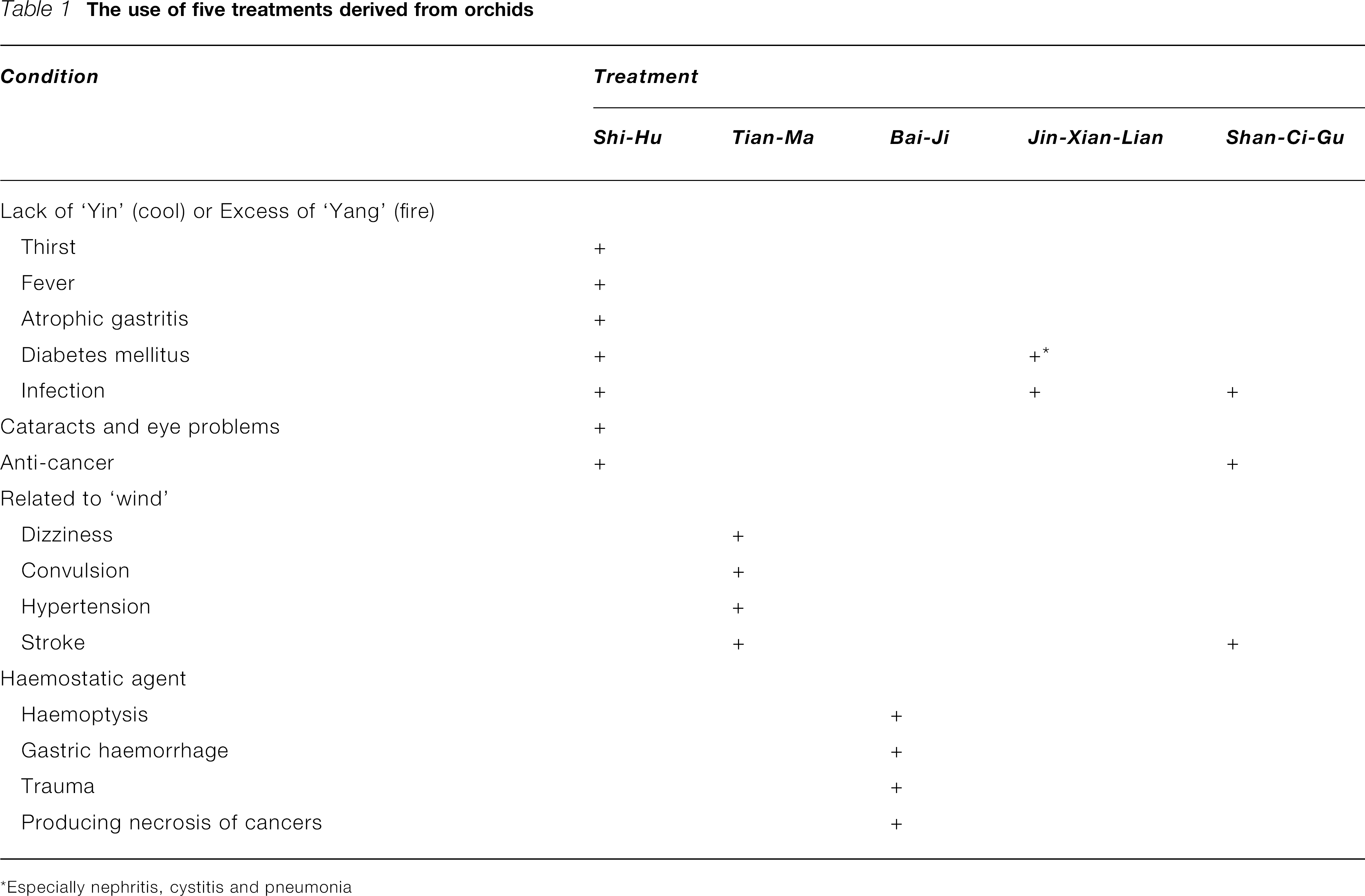
Especially nephritis, cystitis and pneumonia
Shi-Hu
Shi-Hu is considered an important herb for replenishing yin (coldness, moistness etc.) and is commonly used in Chinese medicine. Five Dendrobium species are included in the Chinese pharmacopoeia. They are assumed to be effective in some diseases or syndromes related to the deficiency of yin in the kidney, lung and stomach—such as thirst, fever, red tongue, faucitis, atrophic gastritis and diabetes. 7 Experimental studies showed that Shi-Hu could promote the secretion of acid in the stomach. A prepared Dendrobium compound decreases the level of blood glucose, promotes the secretion of insulin and increases insulin sensitivity in diabetic rat models and patients.8,9 Shi-Hu is also a main substance in the Shi-Hu Ye Guang Wan, a preparation for cataracts, poor sight and other eye problems. 10 Recent studies show that the alkaloids in the Dendrobium species, such as dendrobine, are a weak anti-pyretic and analgesic and it has been suggested that these preparations may increase immunity, decrease the oxidant stress in aging and have anti-cancer activity. Thus, Shi-Hu has also been recently used in the treatment of stomach and lung cancer. 7 Nevertheless, proof of efficacy and safety are lacking and a recent review of eye treatments concluded that ‘the available evidence does not support the use of herbal medicines for any of these ocular diseases’. 11
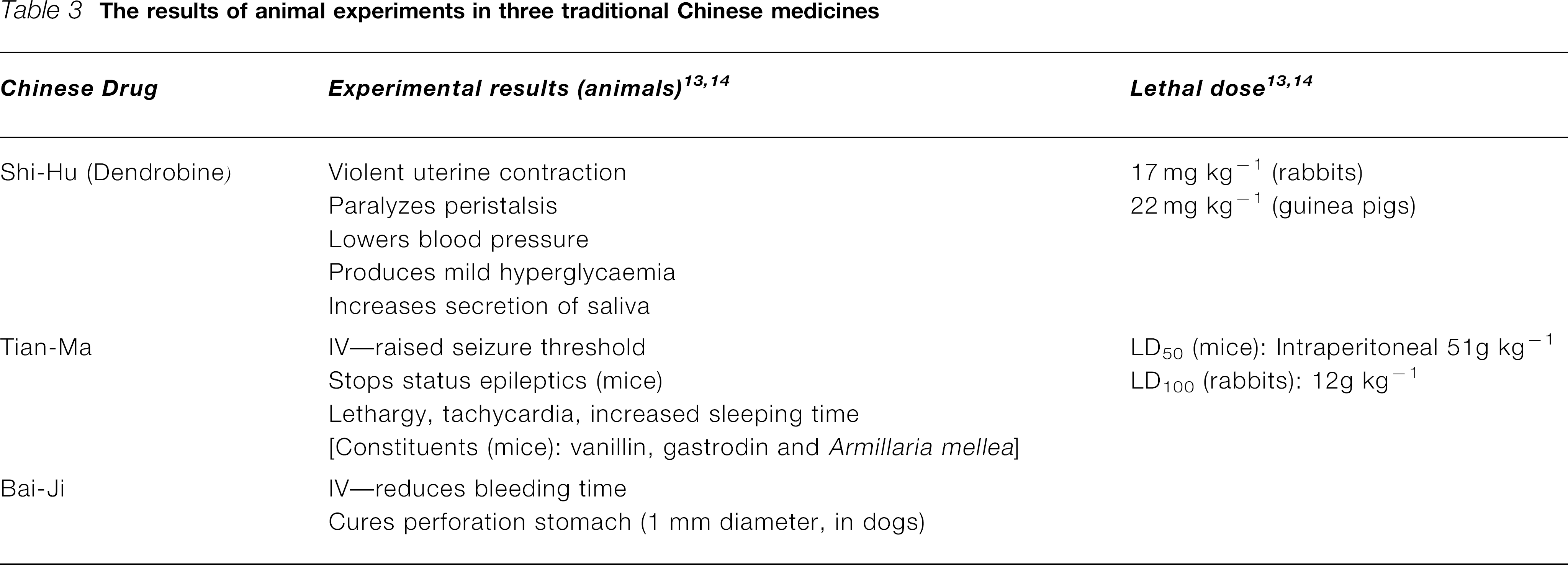
Figure 1 illustrates Dendrobium moniliforme, a major constituent of Shi-Hu, and Tables 2 and 3 give a tabulation of the active ingredients, claimed uses, results of animal studies and lethal doses for Shi-Hu.
Dendrobium monilforme. From: Morren C (ed). Annals de la Société royale d’ Agriculture et de Botanique de Gand. 1847; volume 3. Plate reproduced courtesy of Antiquariaat Jan Meemelink, flower books and prints, Den Haag (www.meemelink.com). (In colour online.)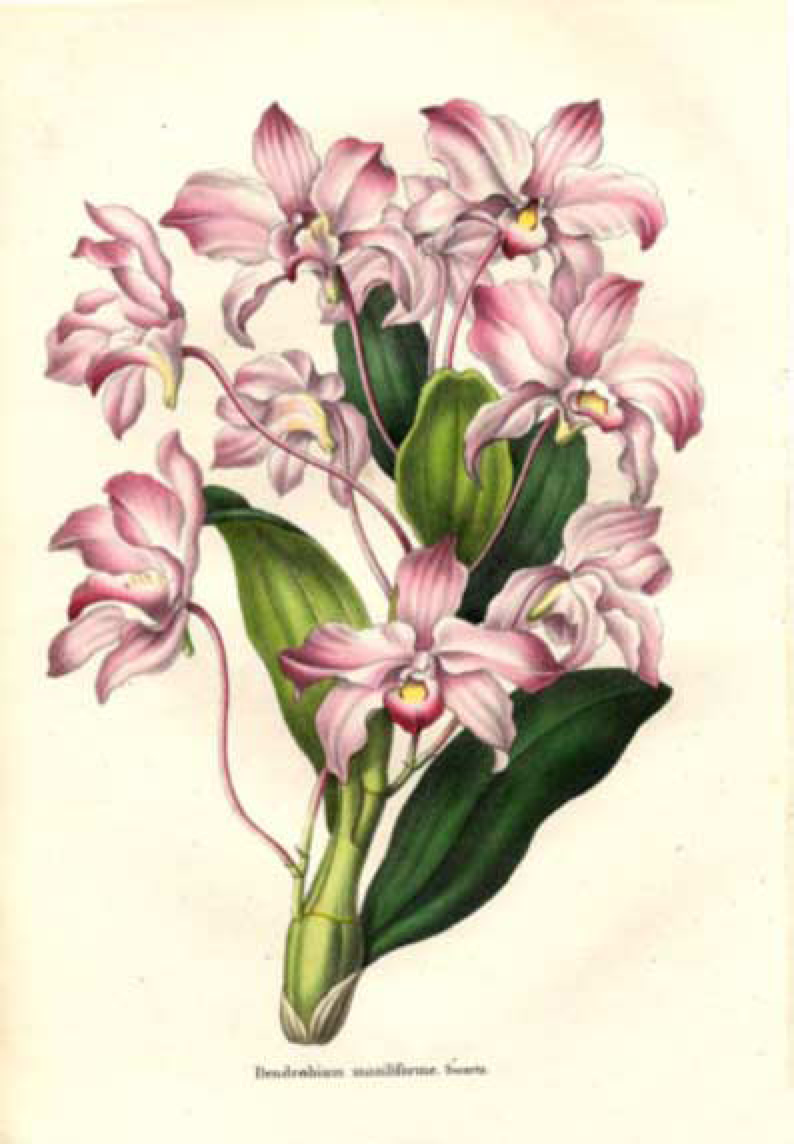
Plant species used in three traditional Chinese Medicines, their possibly active ingredients and a summary of claimed uses
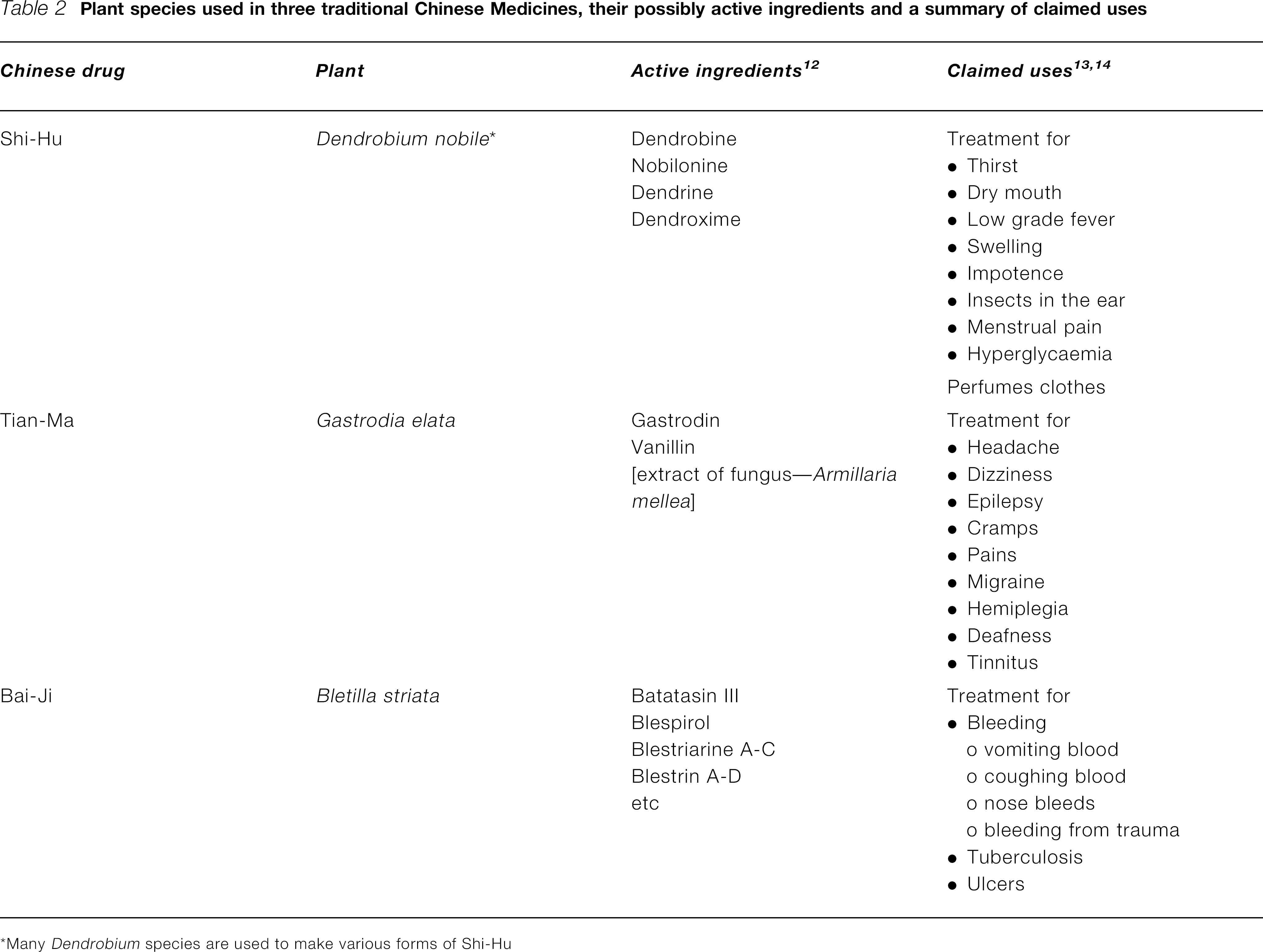
Many Dendrobium species are used to make various forms of Shi-Hu
The results of animal experiments in three traditional Chinese medicines
Tian-Ma
The tubers of Gastrodia elata (Figure 2) are called ‘Tian-Ma’ in Chinese medicine. Together with other herbs, they are widely used to treat some syndromes or diseases related to ‘wind’ e.g. wind blowing on the brain to give dizziness, convulsion, hypertension or stroke. Gastrodin is the main effective substance of Tian-Ma.
15
Experimental studies show that gastrodin has anti-delirium and anti-convulsive effects. It may lower blood pressure and protect the central nervous system by modulating the expression of excitatory amino acids and the nitric oxide system.
16
It is reported to increase glutamine, reduce gamma amino butyric acid, increase asparagine and act as a vasodilator. High blood pressure may be prevented in spontaneously hypertensive rats (SHRs).
17
However the tubers also include vanillin and the fungus Armilleria mellea. In animal studies all three compounds appear able to increase sleeping time and prevent convulsions (Tables 2 and 3). Chang and But
18
are also reported
14
to have given injections of Tian-Ma to improve supraorbital neuralgia and sciatica, but Armilleria mellea fermentation liquid also has benefits in improving dizziness, tinnitus and deafness. Vanillin is an interesting alkaloid and it is the active principle of Vanilla plants. However, nine other orchid species are known to contain vanillin,
14
including Gastrodia elata. In the past vanilla has had an incredible reputation as a medicine and an aphrodisiac. This reputation has been lost but some still consider it to have anticonvulsive properties.19,20
Gastrodia elata. Photograph by Kazuo Yamasaki, reproduced with permission from home.hiroshima-u.ac.jp. (In colour online.)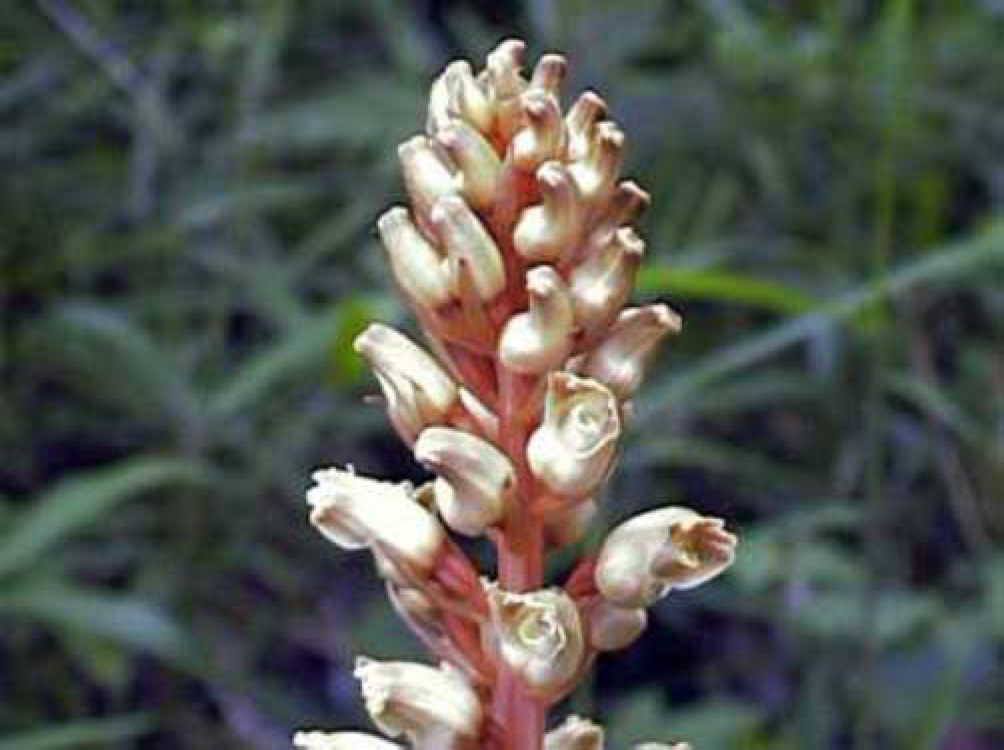
Bai-Ji
Bletilla striata (Figure 3) is used as a traditional haemostatic agent for haemorrhage from any cause in Chinese medicine. It is now widely used in haemoptysis, and haemorrhage from gastric ulcer and trauma. Experimental studies showed that ‘Bai-Ji Jiao’, the main effective substance in Bai-Ji, shortens the coagulation time, inhibits the degradation of fibrin, and promotes thrombosis and the closure of the wound
21
. Bai-Ji is very sticky and it may inflate when it meets water. Nowadays, it is also widely used intraarterially in the treatment of cancer of the liver, kidney and uterus. This way, Bai-Ji induces the necrosis of carcinoma in combination with other anti-cancer drugs.
22
Bai-Ji has been tested in a controlled study and reported to be better than gelfoam embolization.
23
Further suggested properties of Bai-Ji are given in Tables 2 and 3.
Bletilla striata.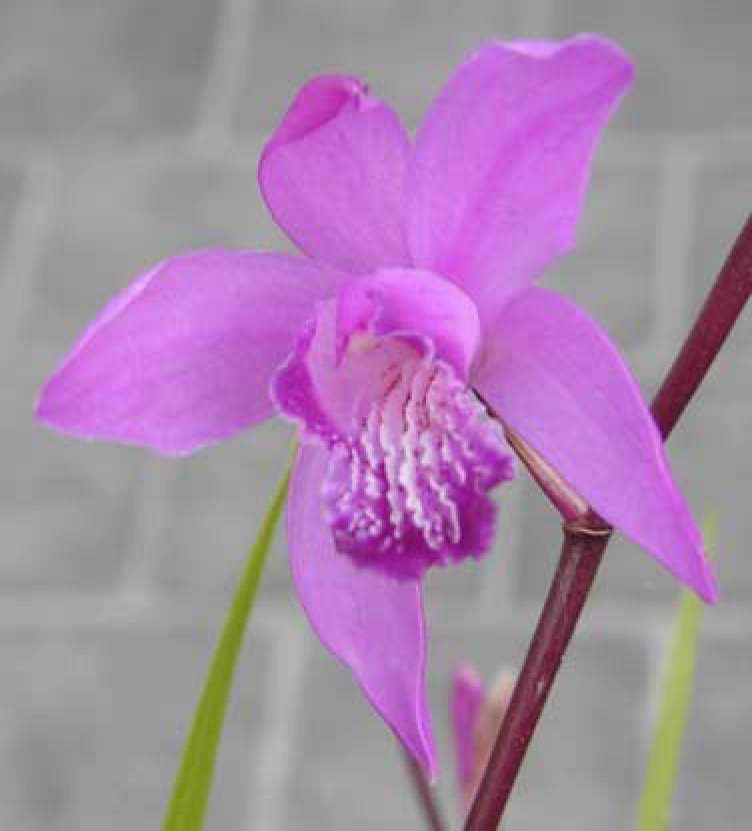
Jin-Xian-Lian
Jin-Xian-Lian is derived from the genus Anoectochilus. Two species are well recognized: Anoectochilus formosanus (Figure 4) and A. koshunensis. Although not included in the current Chinese pharmacopoeia, Jin-Xian-Lian is widely used in Southern China to treat nephritis, cystitis, and pneumonia. In Chinese medicine, Jin-Xian-Lian is considered to treat some infections or diseases related to ‘fire’. Experimental studies show that Jin-Xian-Lian decreases blood glucose levels and is hence used to treat diabetes.
24
Anoectochilus formosanus.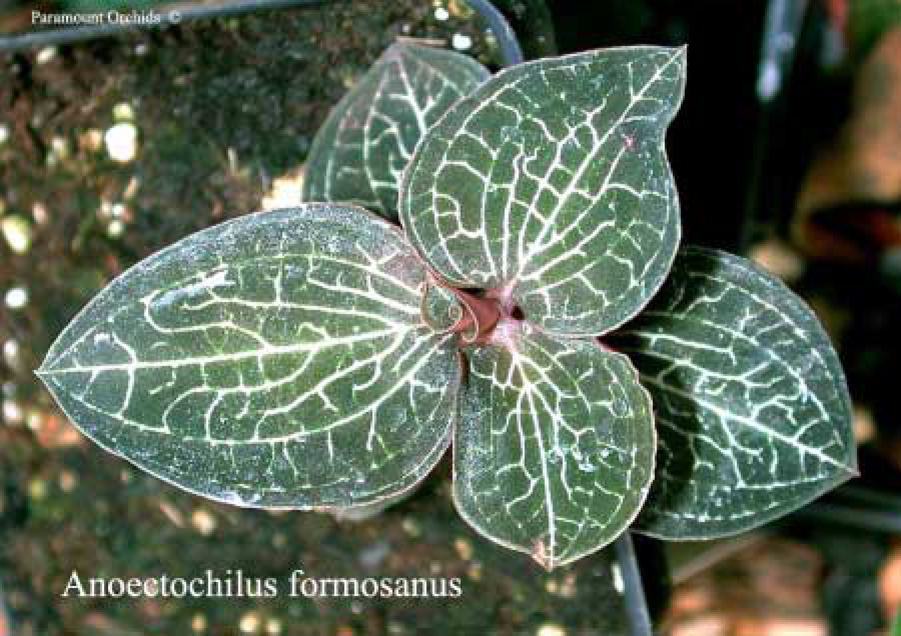
Shan-Ci-Gu
Cremastra appendiculata is called Shan-Ci-Gu in China and, although it is an orchid, known as the Chinese tulip, it is thought to be ‘cold’ and treats several diseases related to ‘fire’ and ‘toxin’, such as faucitis, tonsillitis, hypertension and cancer.25–27
A website 28 reports that Shan-Ci-Gu may also include Pleione bulbocodioides, Pleione yunnanensis, and, inadvertently, Iphigenia indica (a member of the Colchicineae family). This site supports its use in the treatment of infection and cancer. Apparently the main active ingredient in Shan-Gi Gu is colchicine and a second website 29 warns that as colchicine is extremely toxic, the dose must be limited to 3–6 grams per day. Certainly colchicine is a mitotic inhibitor but ‘colchicine has proven to have a fairly narrow range of effectiveness as a chemotherapic agent, so its only FDA-approved use is to treat gout’. 30 In western medicine colchicine is prepared from the autumn crocus, Colchicum autumnale, a member of the Liliaceae family. It was used in the Byzantine Empire for arthritis and the Arabs used it to treat gout. 31 Nevertheless, in Shan-Ci-Gu colchicine appears to be derived from a contaminant and not an orchid.
Discussion
We have described the uses of orchids in Chinese medicine and these are presented in Tables 1 and 2. Despite the lack of randomized trials, the alkaloids in orchids may have biological actions. Clinical research in man does support dendrobine as a weak anti-pyretic and analgesic. Two medicinal preparations may lower blood sugar and two may lower blood pressure (those containing gastrodin and colchicine). As Bai-Ji is a haemostatic powerful enough to necrotize tumours, this agent has obvious therapeutic use.22,23
A weakness of our conclusions is that Chinese herbal medicines do not have the rigorous characterization and standardization necessary for clinical study. 32 Indeed one product of Tian Ma includes eight other non orchid preparations and is blended according to the Yuen Dynasty Herbal Therapy formulation. 33 Nevertheless, animal experiments (Table 3) support the concept that the active ingredients may have both therapeutic and toxic effects.
Hew, Arditti and Lin 13 tried to reconcile Chinese and Western pharmacology by suggesting that the major groupings (Qi groupings) of Chinese medicines into hot, warm, cool, cold etc may relate to their superoxide producing or scavenging ability. Certainly the Chinese believe that a hot disease should be cooled and vice versa. Shi-Hu is apparently a ‘cool’ drug used for hot diseases such as fever. It also produces superoxide and may have antimicrobial activity. 18 In contrast Tian-Ma is a ‘warm’ drug that has anti-oxidant actions and Liu and Mori 34 have attributed its claimed antiepileptic activity to this effect. To our knowledge these ideas have not been substantiated, and further research is required.
Conclusion
The original impression, that orchids have no use in medicine, is not fully supported by an examination of the use of Chinese orchids. However, with the exception of Bai-Ji, we are lacking proof of efficacy from controlled studies, and we lack precise ingredients and standardization. We also lack information on safety, and the interactions between herbal medicines and ‘western’ medicines are legendary. 35 The jury remains out on the use of Chinese orchid medicines.
Ethical approval Not required for a literature review.
Guarantor CJB.
Contributorship CJB had the idea for the paper. YL and JW wrote the first draft, and CJB and PFB wrote the final draft. All authors reviewed and approved the final manuscript.
Footnotes
Competing interests CJB is the Chairman of the Orchid Society of Great Britain and PFB is a committee member.