




Abstract
Canada has developed a comprehensive immigration policy to accept different types of immigrants under its economic, family and humanitarian immigration categories. Canada invites over a quarter-million immigrants in a year. Many of these immigrants do not find suitable jobs upon arrival in Canada. Some of these immigrants choose to open their own businesses and eventually become entrepreneurs. Drawing on the experiences of Bangladeshi immigrants in Canada, this paper examines how immigrants reposition themselves to become immigrant entrepreneurs in the settlement process. Findings suggest that immigrant entrepreneurship is embedded within the dynamics of immigration trajectory and the broader context of the receiving society. Even though Bangladeshis are driven toward the lower end of the economy, innovations have expanded the breadth and depth of their businesses and made their businesses different and rewarding.
Introduction
Canada's history as a nation-state is associated with immigrant settlement. Indeed, both the history and the economic development of Canada have been closely intertwined with immigrants and immigration. In the 1990s, Canada invited an average of approximately 250,000 immigrants per year, rising to between 250,000 and 300,000 in the two decades since then (Immigration, Refugees and Citizenship Canada (IRCC), 2016). Canada embraces all cultures and religions as part of its multiculturalism policy, and the country is also ranked among the world's top countries in terms of its integration of immigrants (Organisation for Economic Co-operation and Development (OECD)/European Union, 2015). 1 According to the OECD Better Life Index, Canada performs very well relative to most other OECD countries on many measures of well-being. Among the OECD countries, Canada ranks above average in housing, subjective well-being, personal security, health status, income and wealth, social connections, environmental quality, jobs and earnings, education and skills, work–life balance and civic engagement (OECD, 2014). 2 These are some of the pull factors that explain why Canada attracts thousands of new immigrants every year.
In the 1950s and 1960s, Canada attracted immigrants primarily from Western European nations. However, changes in Canada's federal immigration policies in the 1960s resulted in the internationalization of immigration, with the major source countries shifting from Europe to Asia, Latin America, the Caribbean and Africa (for details, see Teixeira et al., 2007). As a result, in the subsequent decades, we observe an increasing number of immigrants coming from the global South. Broadly, Canada pursues a transparent immigration policy that can be divided into three basic administrative classes: economic, family and humanitarian (for details, see Vineberg, 2011; Hawkins, 1972; Whitaker, 1991; Dirks, 1995). The largest number of immigrants enter the country under the economic class, which can broadly be subdivided into two categories: the skilled worker category and the business category. The largest category is the skilled worker program, designed to attract highly educated individuals from around the world. Equipped with higher educational credentials and professional experience, skilled individuals immigrate to Canada to join the labor market and settle in the country permanently. In the business category, a few sub-categories have been created in an effort to attract immigrants with capital and entrepreneurial experience.
It is imperative to make a distinction between the business and skilled worker classes. The business class is designed to attract individuals who have genuine business experience, an entrepreneurial spirit and start-up capital. This category is introduced to facilitate the entry into Canada of small-scale entrepreneurs from around the world, and they are expected to establish a business immediately and become self-employed in Canada. In brief, they are expected to take care of their own needs in the labor market. On the other hand, skilled workers are invited on the basis of their demographic characteristics and human capital. Points-based admission criteria are applied to ensure that skilled workers are qualified to adapt to the Canadian labor market upon arrival. It is important to note that many potential emigrants from developing countries cannot afford to apply for business class immigration to Canada because of lack of financial capital and relevant high-end business experiences. To them, skilled and family immigration categories are relatively easier and obtainable, especially to the educated class from the developing world. As a result, when they immigrate to Canada on a non-business class category, they are also open to other economic opportunities beyond their professional experience.
Mainstream immigrant entrepreneurship research in Canada tends to focus on those immigrant communities that have a long history of immigration, such as the Chinese and Jews (Li, 1993, 1998; Li et al., 2016; Hiebert, 1993; Wong, 2002). In addition to traditional immigrant groups, we notice a surge of research on business class immigrants in recent decades (for details, see Kwak and Hiebert, 2010; Hiebert, 2002; Ley, 2006, 2003; Wong and Ng, 1998). We also find some recent studies that focused on different aspects of new immigrant entrepreneurship which document the experiences of Koreans, Indians, Pakistanis, Chinese and different African immigrant groups (Agrawal, 2016; Golob and Giles, 2017; Lin and Tao, 2012; Lo and Teixeira, 2015; Kwak, 2013; Perreault et al., 2007; Kariv et al., 2009; Malik et al., 2017; Vissak and Zhang, 2014; Saul and Pelican, 2014).
Bangladeshi immigrants are among the new immigrants who have been observed running a variety of small businesses across Canada (Ullah, 2013). They open up micro-enterprises to serve co-national, South Asian and mainstream markets. Notwithstanding their marginal character, Bangladeshi enterprises are flourishing, due to the resourcefulness of the individuals involved and their willingness to innovate. Despite their considerable engagement in micro-enterprises, there is hardly any research centering on the entrepreneurship of Bangladeshi immigrants in Canada.
The primary objective of this research is to explore the development of immigrant entrepreneurship among recent Bangladeshi immigrants in Canada. I argue that the development of immigrant entrepreneurs is a complex process that needs to be understood in the light of the characteristics of individual immigrants, the opportunity structure that Canada offers to new immigrants, and the innovative strategies that immigrants adopt in their businesses. The paper addresses the following questions: Who are these immigrant entrepreneurs? Why do immigrants seek to pursue micro-enterprises? How do they arrange start-up capital for their businesses? What types of businesses do they run? Where and how do they employ innovations in their businesses? This paper addresses those Bangladeshi entrepreneurs who have been involved in micro-enterprises.
The next section addresses immigrant entrepreneurship from a theoretical perspective. I highlight the significance of opportunity structure, cultural conditions and innovative practices in the development of immigrant businesses. After the theoretical discussion, I provide an overview of the immigration policy in Canada. I then turn to examining the individual characteristics and opportunity structure in Canada, which enable the emergence of Bangladeshi businesses, followed by an explanation of the various innovative strategies that respondents employed to make their enterprises successful. The paper concludes with a discussion of the significance of the findings.
Theoretical perspectives
Extensive research has been conducted on immigrant entrepreneurship in North America and Europe (for a review, see Portes, 1995; Thornton, 1999; Kloosterman et al., 1999; Zhou, 2004). In the course of academic research, important concepts have been developed to reflect on immigrant/ethnic entrepreneurship research in the West—for instance, ‘class and ethnic resources’ (Light, 1984), ‘middlemen minority’ (Bonacich, 1973), ‘ethnic economy’ (Light, 1972, 1994; Bonacich and Modell, 1980; Light and Gold, 2000), ‘enclave economy’ (Portes and Bach, 1985; Wilson and Portes, 1980), ‘social embeddedness’ (Granovetter, 1985), ‘bounded solidarity’ and ‘enforceable trust’ (Portes and Zhou, 1992), and ‘mixed embeddedness’ (Kloosterman et al., 1999). These concepts not only reveal the richness and breadth of immigrant entrepreneurship research, but also suggest the complexity and diversity of explanations underlying immigrant entrepreneurship today.
In general, the theoretical developments can be grouped into three broad categories. The first category is often described as the cultural approach, focusing on groups’ cultural properties and ethnic resources. This includes demographic features (e.g., mean age, sex ratio and number) and socio-cultural resources, such as socially oriented action patterns, embeddedness transactions, social networks and social capital (for details, see Bonacich and Modell, 1980; Light and Rosenstein, 1995). Several theses have been advanced to account for immigrant entrepreneurship at the individual level, such as the transplanted cultural thesis (Light, 1972; Goldberg, 1985), sojourner thesis (Siu, 1952) and the ‘class and ethnic resources’ approach (Light, 1984). These studies provide valuable insights into the group dynamics of the development of immigrant entrepreneurship.
The second theoretical perspective emphasizes the contextual or external forces of society, and the constraints and opportunities in the development of ethnic entrepreneurship (for details, see Light and Rosenstein, 1995; Bonacich and Modell, 1980; Li, 1993; Light, 1972; Portes and Bach, 1985). The demand-side explanation mainly focuses on the opportunity structure or market conditions of the host country, seen as responsible for the emergence of ethnic/immigrant entrepreneurship. The demand-side perspective advances the study of entrepreneurship by asking what entrepreneurs actually do—the decisions they make within social settings that are changing over time. At the structural level we find the blocked mobility thesis, which posits that discrimination and racial barriers in a host society produce unfavorable labor market conditions for ethnic minorities (Bonacich and Modell, 1980; Li, 1976). The common argument is that ethnic minorities seek economic refuge in ethnic businesses in order to avoid competition and hostility from the dominant group (Li, 1988; Barrett et al., 1996). Blocked mobility still continues to serve as a powerful explanatory variable for the development of immigrant entrepreneurship.
A third approach, often dubbed the ‘interactive model,’ is an attempt to integrate culture with structure, ethnic resources with opportunity structure and supply with demand (Waldinger, 1989; Waldinger et al., 1990). The integrative approach takes account of socio-cultural features as well as the economic and institutional environment in which these entrepreneurs operate. In order to explain the sources of ethnic entrepreneurial success, three distinctive explanations are given. Firstly, this approach emphasizes the characteristics that immigrants bring with them and which predispose them to do well in business. Secondly, it emphasizes the importance of opportunity structures as a condition of business success. Thirdly, and finally, it points to the interaction between the predisposing characteristics and the opportunities that immigrants encounter (Waldinger, 1989; Waldinger et al., 1990). The three key components of the interactive model offer a broader analytical framework for research on immigrant entrepreneurship and they are widely used in immigrant entrepreneurship research today. This paper also draws heavily on theoretical insights from the interactive model.
A relevant but often neglected question in the study of immigrant businesses is how immigrant businesses become thriving enterprises. Broadly speaking, what transforms ‘immigrant business’ into ‘immigrant entrepreneurship’ is the deployment of innovation in businesses. Innovation makes businesses different and rewarding. Although the management literature on entrepreneurship focuses on innovation (Caves and Porter, 1977; Porter, 1998), ethnic business studies tend to overlook the importance of this factor (Aldrich and Waldinger, 1990: 112). Engelen suggests that this is probably due to the marginality of most ethnic and immigrant businesses (Engelen, 2001: 211). To Schumpeter, entrepreneurship consists of recombining one's available resources in new ways (Schumpeter, 1934: 74). For Schumpeter, innovation is the raison d’être of the entrepreneur (Swedberg, 2009). It is fundamental to entrepreneurship that an entrepreneur always has to make a profit: according to Swedberg, innovation without profit is unviable (Swedberg, 2009: 196). Schumpeter identifies five types of innovation: ‘a new good,’ ‘a new method of production,’ ‘a new market,’ ‘a new source of supply of raw material’ and ‘a new organization of an industry’ (Schumpeter, 1934: 66). Even today, we find that entrepreneurs employ one or more of these five types of innovation in their enterprise, irrespective of the scale of their operations.
Bangladeshi micro-enterprises in Canada are characterized by low entry barriers. Ewald Engelen argues that low entry barriers are usually synonymous with high levels of competition because the market is easily accessible and the number of buyers and sellers is usually large (Engelen, 2001: 217). We notice that immigrant entrepreneurs employ different innovative strategies to access wider clientele and penetrate new and rewarding markets. Drawing on the work of Porter (1998) and Schumpeter (1934), Ewald Engelen suggests that there are various areas where innovation may take place in immigrant businesses, such as product, process, marketing, sales, distribution, integration and co-operation (Engelen, 2001: 213–215). However, these are contingent on a number of factors, including the nature of the businesses, types of markets, ethnic origin of clientele and the locations of businesses. For instance, Bangladeshi immigrant entrepreneurs introduced innovation principally in products, sale and distribution in their businesses in Japan, South Korea and Malaysia (Rahman and Lian, 2011; Lian and Rahman, 2014; Muniandy, 2015). Thus, building on the existing theoretical developments, this paper explains the making of Bangladeshi entrepreneurship by highlighting group characteristics, opportunity structure and innovation.
Research methods
This research is based on a qualitative study of 35 Bangladeshi immigrant entrepreneurs in Ontario, Canada. I define ‘immigrant entrepreneurs’ operationally, as owners or operators of micro-enterprises who run or operate businesses with a share in both investment and profit. By micro-enterprises, I mean those enterprises that are run by owners alone or with the assistance of a few employees. Interestingly, all surveyed entrepreneurs were non-business class immigrants, such as skilled workers, family sponsorship or asylum seekers. It is imperative that I did not target non-business class immigrant-turn-entrepreneurs for this research. My primary objective was to understand the making of Bangladeshi immigrant enterprises in Canada. Therefore, the surveyed entrepreneurs were selected based solely on the nature of their businesses which must be micro-enterprises.
The reason for having all non-business-category immigrants as entrepreneur respondents in the survey is obvious. There will be very few Bangladeshi immigrants who can afford to immigrate to Canada on a business category. This is because the legal transfer of financial capital from Bangladesh to other international destinations is restricted, limiting the possibility of business immigration from Bangladesh. If any Bangladeshi managed to immigrate to Canada under the business category through some unusual channel, they might have accumulated adequate start-up capital to invest in high-end businesses. Since this study targeted micro-enterprises that usually involve low start-up capital, business immigrants would not be generally involved in such micro-enterprises.
These 35 respondents were purposively selected for interviews in Hamilton, Brantford, London, St. Catharines, Burlington, Toronto and other smaller nearby cities in Ontario. The study covers Bangladeshi entrepreneurs in the cities of Ontario province because Toronto, the principal city of Ontario province, is considered the key ‘port of entry’ for new immigrants in Canada. Ontario is also the most populous province in Canada. I have not included more than five entrepreneurs from the same type of businesses in order to capture the diversity of their businesses. I used a semi-structured questionnaire, one that was constructed after participant observation and informal discussions with immigrants and immigrant entrepreneurs. The semi-structured questionnaire was designed to elicit detailed information on socio-demographic characteristics, nature of businesses, mobilization of resources, business environment, the challenges of opening businesses and finally, the strategies employed to overcome barriers. The fieldwork was conducted between June 2014 and April 2015.
Interviews were carried out at their sites of business or residence through face-to-face encounters. The questionnaire survey was supplemented by participant observation and informal discussions, as well as a few small focus-group discussions with immigrants and immigrants-turned-entrepreneurs. Immigrant entrepreneurs were interviewed in Bengali, the mother tongue of Bangladeshis, and the responses later translated into English. Interviews were conducted with the assistance of a Bangladeshi student from Hamilton, Ontario. In addition to migrants-turned-entrepreneurs, I also talked to some Bangladeshi skilled immigrants who were working in the formal sector in order to understand why many skilled immigrants chose to go into business. Such informal discussions with professionals also provided fascinating, complementary insights into the development of immigrant entrepreneurship among Bangladeshis.
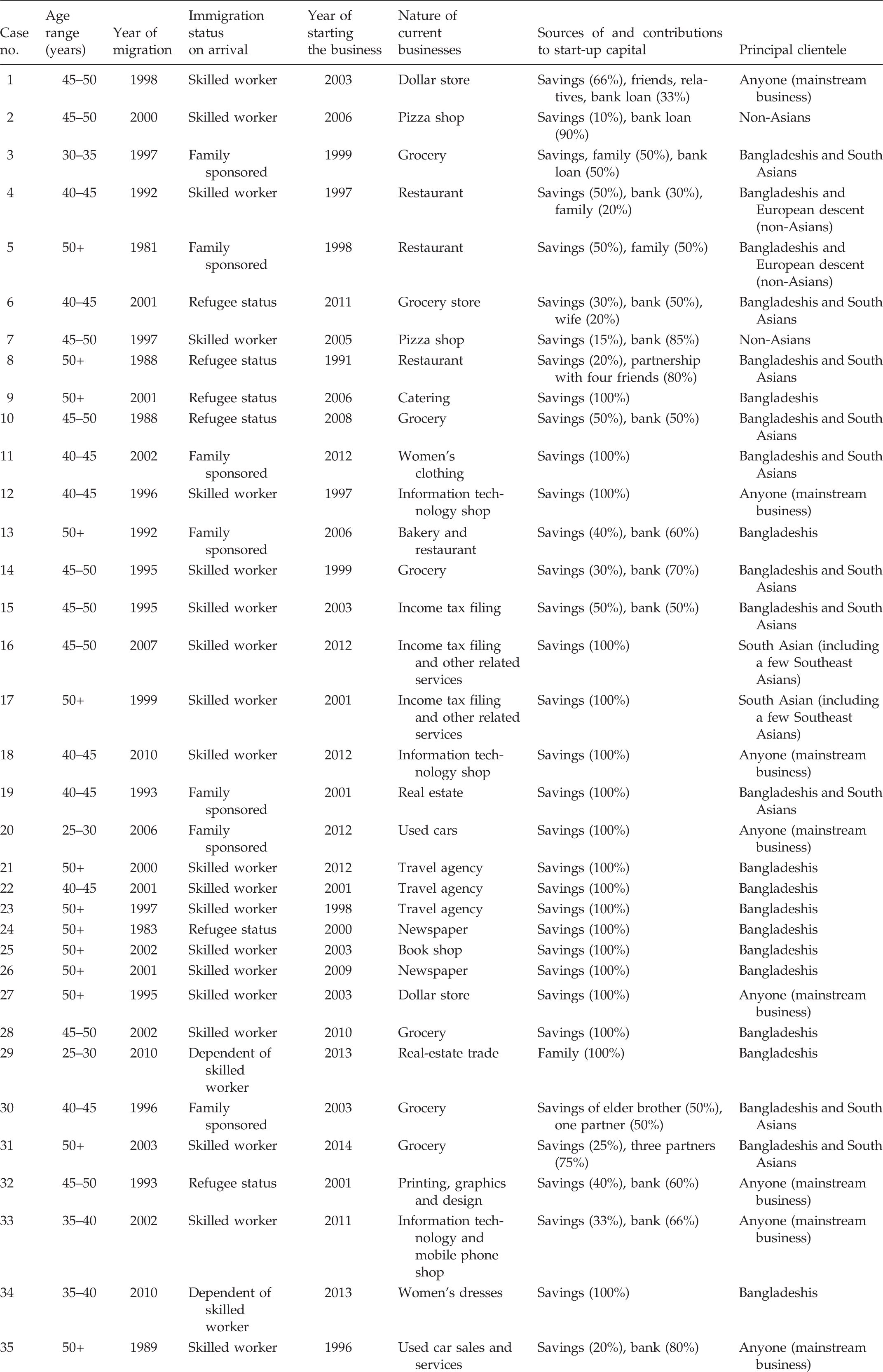
The immigrant entrepreneurs' trajectories: Profile of 35 selected Bangladeshis in Canada.
The Canadian immigration framework
It is widely argued that Canada's immigration policy until the 1960s was explicitly racist and exclusionary (for details, see Vineberg, 2011; Hiebert, 2002; Hawkins, 1972; Kelley and Treblicock, 1998; Whitaker, 1991; Dirks, 1995). Three groups, namely British subjects, Northern Europeans and selected Central and Southern Europeans were given priority for admission to Canada, and people from the rest of the world could only immigrate to Canada under special circumstances. R. Veneberg argues that the first step in breaking down those barriers actually began with Prime Minister William Lyon Mackenzie King's 1947 statement on immigration policy (for details, see Vineberg, 2011). It is widely accepted that Mackenzie King's statement shaped the 1966 White Paper on Immigration Policy, which led to the 1967 immigration regulations and to the substantial change in immigration legislation in the 1976 Immigration Act (Vineberg, 2011: 215).
Canada's immigration policy can be broadly categorized into three programs: economic, family and humanitarian. Firstly, the economic class is based on a points system, and individuals with suitable human capital and adequate financial capital are eligible to apply for immigration under this rubric. It can be further divided into the skilled worker class and the business class, where the former is designed to attract skilled immigrants from around the world, and the latter to attract the self-employed, entrepreneurs and investors. Secondly, the family sponsorship class is designed for Canadian citizens and permanent residents to invite their immediate family members to Canada for permanent settlement. This relationship is largely confined to spouse, partner, dependent, parents, grandparents, adopted children and siblings within defined age ranges. Thirdly, the refugee program reflects humanitarian concerns, with those in need of asylum being allowed entry into Canada in limited numbers. The Canadian refugee system has two main parts: the refugee and humanitarian resettlement program, for people outside Canada who need protection, and the In-Canada asylum program for people making refugee protection claims from within Canada. My respondents came to Canada under the skilled worker and dependents of skilled workers program, family sponsorship and the In-Canada asylum program.
According to The Canadian Magazine of Immigration (CMI) (online publication) published in April 2017, 296,340 new permanent residents landed in Canada from over 190 countries in 2016 (Figure 1). The Philippines and India were the top source countries of immigrants to Canada while Bangladesh ranked the 16th source country of immigrants, accounting for 3,230 or around 1.1 percent of the total intake in 2016. Because Bangladesh became an independent country in 1971, there is hardly any reliable data on early Bangladeshi immigrants, especially those immigrants who came before 1947 during the British Raj, or before 1971 during the Pakistani period.
3
Although many Bangladeshis came to Canada in the 1970s and 1980s, significant Bangladeshi immigration to Canada actually started in the early 1990s (Halder, 2012; Ahsan Ullah, 2013). Some available statistics suggest that between 1991 and 2018, around 68,500 Bangladeshis landed in Canada as permanent residents.
4
Thus, in the last 25 years, on average nearly 2,500 Bangladeshis have come to live in Canada annually. Based on various CMI publications, Bangladesh has consistently been one of the top 25 source countries for permanent residents in Canada.
Permanent residents—the top 25 source countries.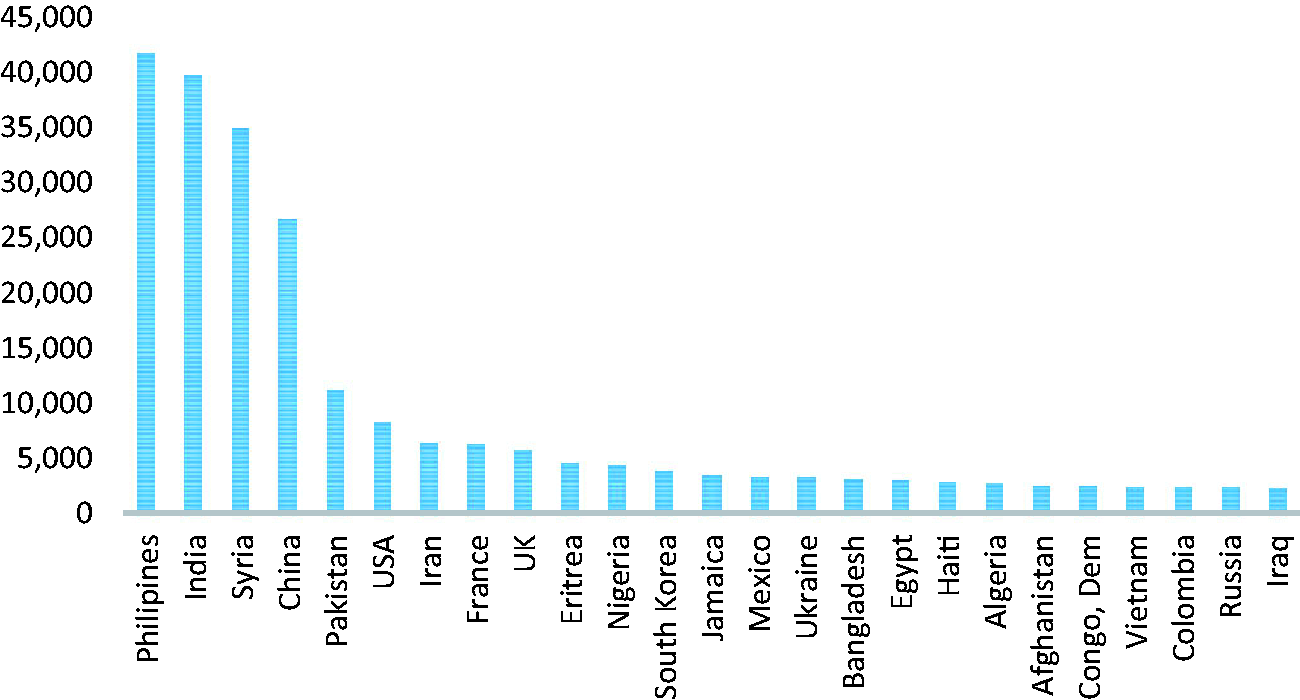
However, many Bangladeshis who came to study or visit Canada and later secured permanent residence status through family sponsorship, economic class and refugee claims (In-Canada category) are not included in the above statistics. Second-generation Bangladeshis comprise another group contributing to the growth of the Bangladeshi-Canadian population, which is not included in the above statistics. Most Bangladeshis tend to concentrate in Ontario province. As per the CMI report published on 20 October 2016, three-quarters of Bangladeshi immigrants chose to live in Ontario between 2001 and 2011. 5 According to some Bangladeshi ethnic newspapers in Toronto (Bengali Times, Weekly Bangla Kagoj and Weekly Aajkal), 6 and some of my respondents, Bangladeshi immigrants number over 70,000 in Ontario province. The presence of such a sizable ethnic population is sufficient to create a sustained demand for ethnic goods and services and to attract co-ethnic entrepreneurs to meet the demand, creating opportunities for immigrant entrepreneurship among community members.
Some predisposing factors
At the individual level, research has broadly addressed two questions: Why do immigrants emerge as entrepreneurs? How do they mobilize resources on foreign land? Waldinger and his colleagues deal with these two questions by addressing predisposing factors and resource mobilization for business (Waldinger et al., 1990). As regards my own interviewees, Table 1 presents the individual immigrants' trajectory to becoming an entrepreneur by selected attributes such as age, education, year of immigration, immigration status on arrival, year of starting the current business, sources of start-up capital including approximate contributions of different sources and finally, origins of clientele. Some other relevant information that I could not present in Table 1 due to space constraints is discussed in the text; for instance, gender, marital status, family size, prior business experience, years taken to start the current business, number of employees and occupations pursued before starting the current business.
Among my 35 respondents, all were males except for two—one female in her 20s and the other female in her 30s—who immigrated to Canada as dependents, both in 2010 (Case nos. 29 and 34). Most respondents were aged over 40; 17 were in their 40s and 13 in their 50s (Table 1). Most respondents had bachelor or master's degrees; six only had matriculation and intermediate degrees (pre-university degree)—these six respondents had come to Canada under family sponsorship or the In-Canada refugee program. With regard to immigration category, 24 respondents had immigrated to Canada under the skilled worker class and the remaining 11 via other channels such as family sponsorship and refugee claims. All respondents were married and living with their families in Canada. The average family size of the respondents was 4.48.
Because of their prior experience, immigrants with some sort of business exposure are supposed to have strong motivation to start business ventures compared to those who sought higher education and never engaged in business. Among the surveyed respondents, only 10 out of 35 respondents had some sort of business experience prior to immigration to Canada. The types of business engaged in before immigration were different from the business they are currently engaged in Canada. The remaining 25 respondents opened up business enterprises without prior business experience or a family business background. Since all respondents came in under a non-business category, their overt motivation for immigration was not linked to their potential for business engagement.
The period of time they took to engage in their current businesses also suggests that they were not motivated to migrate for business. Immigrants took an average of 6.85 years to start the current business. Only seven respondents started their businesses between one and two years of arrival in Canada.
A related question that arises here is what kind of economic activities respondents pursued in the period between arrival and the current business venture. Prior to starting a business, 25 respondents engaged in non-professional work and 10 secured some sort of professional job. All 10 respondents discontinued their professional jobs after becoming involved in business, except for one who continued his professional job after engaging in an ethnic newspaper business. In the early years of immigration, just before starting the current business, respondents often pursued more than one occupation: nine respondents worked in only one occupation while 21 respondents worked in two or more occupations. Only one respondent did not seek a job but opened his business immediately after migrating to Canada (Case no. 22). Working in others' small businesses was often a strategy to understand the market and gain business experience. In some cases, respondents who initially worked in the restaurant, information technology, grocery, income tax or used car businesses, later started similar businesses of their own.
Most of my respondents neither desired nor anticipated such labor market conditions before emigrating to Canada. At the structural level, then, we find that the blocked mobility thesis suggests why immigrants turn to ethnic business (Bonacich and Modell, 1980; Li, 1976; Borjas, 1994). However, in the course of my fieldwork, I also found some other trends that seem to influence immigrants' occupational choices and their entry into immigrant business. I noticed that most immigrants were not satisfied with the jobs that they found in Canada; this is because such jobs were often not consistent with their prior jobs and the privileges they enjoyed in Bangladesh.
Work has cultural significance for Bangladeshis. Some types of work bring prestige to individuals and their families, while others bring disgrace if performed by individuals of higher human capital. Bangladeshis commonly divide work into bhalo kaz (good work) and mandha kaz (dirty work) (for details, see Gardner, 1995; Rahman, 2017: 75–76). By bhalo kaz, Bangladeshis generally mean those types of work where an individual's social position is compatible with his/her human capital (status-consistent work). In contrast, mandha kaz means those types of work that are beneath one's social position and human capital (status-inconsistent work). Therefore, doing mandha kaz by an immigrant with high human capital is not something that she or he is expected to sustain for long.
For human-capital-rich immigrants, choosing an occupation in Canada is not always a matter of choosing between a stable, status-consistent job, or a micro-enterprise. In reality, it may be the other way around, that is, choosing between either a volatile and status-inconsistent job, or a micro-enterprise. The status-inconsistent job merits further clarification in the context of Bangladeshi society in general and Bangladeshi immigrant community in particular. Apart from the social division of vhalo kaz between mandha kaz, educational attainment influences notions of work. Immigrants with high education are expected to perform work that educated people do, which is captured by the Bengali expression, shikit manuser kaz (work for educated people). Immigrants with high education are not expected to engage in blue-collar work because such work is not consistent with their educational attainment. The cultural notion of work and education among Bangladeshi immigrants puts them in a dilemma and influences their economic life.
After immigrating to Canada, many highly educated migrants realized they had slim chances of getting a status-consistent professional career. Although their professional careers would suffer a setback in Canada, thereby challenging their aspirations for a ‘better life,’ they see improved life-chances and a bright future for their children. The hope for a ‘better life’ both for themselves and their children motivated their decision to migrate. Due to the lack of status-consistent, well-paying jobs, many respondents took up alternative sources of income, including starting their own business. When asked why they did not take up professional jobs that were consistent with their human capital, the common response was, ‘there is no job.’ After making numerous applications over a considerable period, at a certain stage, they became frustrated and ceased searching for a job that matches their education and/or experience. One respondent who was employed by a bank stated, ‘my salary was low, so I chose to change profession and started a business’ (Case no 27).
Resource mobilization
Mobilizing the capital to start a business is unarguably one of the biggest challenges in the process of business creation, especially for new immigrants. Table 1 presents the different sources of start-up capital, the percentages given in the table being mostly approximate or indicative. Immigrants used two or more sources to raise the financial capital for business, such as personal savings, bank loans and reliance on relatives and friends. Moreover, they arrange the start-up capital from two or more of the abovementioned sources. However, one of the predominant sources of start-up capital is the migrants' own savings. Savings are not only widely used as a source for business financing, but also a major contributing factor. Out of 35 respondents, 18 respondents gathered 100 percent of their start-up capital for business from their own savings. In six cases, personal savings contributed from 50 to 80 percent of start-up capital. Ten respondents relied heavily on bank loans, while a very few sourced start-up capital from their friends and relatives.
Personal savings and bank loans were crucial for the start-up capital, while friends and family sources played a minimal role. The literature on ethnic or immigrant entrepreneurship often claim that immigrants draw heavily on their family and ethnic resources to mobilize initial start-up capital (Walton-Roberts and Hiebert, 1997; Teixeira, 1998). The findings from this study seem to contradict the mainstream literature. There may be two key reasons for the extensive use of personal savings: the nature of migration and the newness of Bangladeshi immigration to Canada.
Firstly, this is a permanent form of migration, in which individuals and their immediate family members leave the origin country to settle elsewhere. Before departing the origin country, emigrants tend to settle their financial relations with their siblings and others, including shares of the family property. This usually leads to disposing fixed assets for cash. Potential emigrants also tend to convert fixed assets into cash so that they can easily carry them when they finally depart. Emigrants who for any reason cannot liquidate assets at the time of departure, make return journeys and slowly but steadily transfer their capital to Canada. This leads to an accumulation of personal savings in Canada, which some immigrants use for start-up capital.
Secondly, Bangladeshi immigration to Canada is a recent phenomenon, and only a few thousand immigrants emigrate to Canada annually, often under the economic category, which is also known as the ‘independent category’ as an individual's demographics and possession of human and financial capital are primarily assessed for admission. This affects family and kinship-based immigration. Moreover, Bangladeshis come from different parts of the country, reflecting geographical diversity and reducing kinship-based social bonds among the immigrants. As a result, family and regional factors for enhanced cooperation are not prevalent among new immigrants, forcing immigrant entrepreneurs to rely on other sources for start-up capital.
In addition to personal savings, several immigrants used bank loans to arrange the start-up capital. There is no legal barrier for legal immigrants to apply for bank loans in Canada. However, the bank appraises individual credit-worthiness, and Bangladeshi immigrants are well aware of the importance of maintaining a good credit record, resulting in such immigrant entrepreneurs having easy access to bank loans. Thus, personal savings and bank credit contribute much to their start-up capital.
Nature of Bangladeshi businesses
The opportunity structure for the development of immigrant businesses primarily comprises market conditions and access to ownership (for details, see Waldinger et al., 1990). Market conditions may favor products and services oriented toward co-nationals, and situating businesses where a wider, non-national market might be served. Opportunity structures also include the routes through which immigrants obtain access to ownership. However, access to ownership in Canada is relatively favorable for immigrants with legal status. Respondents frequently reported that they did not face any legal barriers to opening and running their businesses. Therefore, I turn now to discuss the market conditions for immigrant businesses.
For an immigrant business to arise, there must be some demand for the goods and services it is able to offer. The development of different types of Bangladeshi businesses suggests that there is a demand for the products or services of these micro-enterprises. Some businesses that are run and owned by Bangladeshis are dollar shops, pizza shops, groceries, restaurants, food catering, women's apparel, income tax filing businesses, car finance brokers, electronic shops, real estate brokers, used cars, travel agencies, ethnic newspapers, ethnic bookshops, vegetable and fish shops, printing and design shops, mobile phone and accessory shops and ready-made garment shops. However, this is not an exhaustive list. Bangladeshis are involved in many other types of businesses that this study could not cover.
We find diversity not only in immigrant businesses but also in their clientele. Based on the predominance of clientele, two broad types of businesses can be distinguished: businesses that develop primarily to cater to the needs of compatriots and businesses that primarily serve the broader regional immigrants and mainstream market. Among the Bangladeshi-oriented businesses are grocery stores, restaurants, ethnic newspapers and bookstores, women's apparel and used car and real-estate brokers. Grocery stores usually sell products of Bangladesh and South Asian origin, especially India and Pakistan, comprising various culinary items, food items, vegetables and fish and many other products that are unique to Bangladeshis. Another immigrant business that mainly targets Bangladeshis is restaurants. These restaurants do not serve pork; as a result, such halal restaurants appeal to Muslim clientele in general. There is a demand for ethnic news, and a few enterprising immigrants publish ethnic newspapers. In addition to ethnic newspapers, there is a demand for Bengali books and other cultural products such as music, artifacts, paintings and so on. To serve such demand, one respondent has opened a book store that sells not only books but other such cultural products as well (Case no. 25).
Bangladeshi women wear some traditional dresses that are not found in mainstream markets, generating a demand for ethnic women's dresses. A female respondent and a male respondent have come up with a home-based women's apparel business to serve the demand (Case nos. 34 and 11). Given the sustained inflows of immigrants to Canada, there is a huge demand for houses and cars among immigrants. Identifying the demand for real-estate and car businesses, a few immigrants have started real-estate and used-car businesses. Again, both businesses require substantial financial capital to get going. Several respondents started financial consultancy services in response to the needs of immigrants. Although this is a permanent form of immigration, immigrants today do not completely cut off relations with their home countries. They travel back and forth at regular intervals, creating a demand for ethnic travel services. In my sample, three respondents were running travel agencies to meet the demand of the Bangladeshi community (Case nos. 21, 22 and 23).
In the case of the non-national market, Bangladeshi entrepreneurs target those businesses that have relatively low entry costs, such as accounting, consultancy, tax and financial services, electronic products shops, dollar shops (cheap products), printing, graphic and designing shops, and mobile phones and accessories. Firms that provide accounting, consultancy, tax and financial services are in high demand among immigrants because they lack experience or knowledge in fulfilling these tasks, especially tax filing. Many new immigrants from developing countries encounter difficulty in filing the tax report. Two respondents opened such firms to facilitate tax filing and provide other financial consultancy advice. (Case nos. 15, 16 and 17). Two other respondents with experience in Information Technology opened shops to sell electronic gadgets (Case nos. 12 and 18). They offer a wide range of electronic products for the mainstream market, for instance notebooks, desktops, tablets, computer accessories, software and repair services with online facilities.
A dollar shop is an example of business that offers common products at a cheap price primarily to customers of a certain income level (Case nos. 1 and 27). Similarly, in response to a locally specific demand, one respondent has started a photocopying and printing shop in order to provide cheap services in a convenient location (Case no. 32). Unlike the dollar shop and copying services, mobile phones and services have no particular clientele, generating a broader clientele base. One of my respondents identified the demand for mobile phone-related products and started a mobile phone shop for various brands of mobile phones, their accessories and repairing services, including locking and unlocking of mobile phones and calling cards (Case no. 33). Thus, Bangladeshi immigrants are engaged in various types of micro-businesses, and market conditions afford them the opportunities to open and run such enterprises. However, since they are engaged in low-entry markets, they face stiff competition, driving them to innovate.
Innovation in Bangladeshi immigrants' micro-enterprises
Immigrant micro-enterprises usually confront cut-throat competition because of the very nature of such businesses, being characterized by minimal entrance rules, low capital requirements and with a focus on the retail market. Confronted with such business challenges, Bangladeshi entrepreneurs employ innovations in their businesses in order to make their businesses different and rewarding. Considering the nature of immigrant businesses in Canada, this paper highlights innovations in products, sales and distribution. Product innovations are found in several areas: creating new products, offering alternative products, introducing ‘old’ products at ‘new’ locations and ensuring authenticity in products. Ethnic grocery shops are not only a mainstay for immigrant businesses but also a key market place for product innovations. Grocery store owners sell a variety of products, such as bakery items, snacks, rice, culinary goods, confectionary, drinks, frozen fish items and meat products. These products are supplied to grocery stores by Bangladeshi, Indian and Pakistani wholesalers, leading to diversity in products at the stores. Bangladeshi community members can choose from a wide range of similar products of South Asian origin, to which they had no access when they were in Bangladesh. Similarly, this is also true for Indian and Pakistani immigrants. In a broader sense, a grocery shop becomes a common marketplace for South Asians.
Fish occupies an important place in Bangladeshi food, with some species of fish being particularly popular. Although there are several varieties available in the fish markets of Canada, Bangladeshis like to buy certain Bangladeshi fish. Recognizing the demand for Bangladeshi fish, some Bangladeshi wholesalers import varieties from Bangladesh and supply them to ethnic grocery stores, including my respondents. Whenever these grocers receive a supply of Bangladeshi fish, they inform the Bangladeshi community members by short message service and thus reach a wider clientele.
Bangladeshi businessmen add innovation to their ethnic restaurants in two ways: varieties of dishes and authenticity of dishes. Restaurants offer various South Asian dishes prepared by South Asian cooks. Competition with other ethnic restaurants is overcome by hiring experienced South Asian cooks and offering various main Bangladeshi, Indian and Pakistani dishes. The variety of dishes prepared by authentic South Asian cooks widen the customer base beyond Bangladeshis, reaching also nationals of India and Pakistan. Furthermore, respondents name the restaurants after Indian landmarks in such a way that it sounds more like an Indian restaurant than a Bangladeshi one, this being a deliberate strategy to reach a wider market beyond South Asian customers, such as Canadians of European descent. For instance, the names of my respondents’ restaurants are ‘Gate of India’ (Case no. 4) and ‘Indian Garden Restaurant’ (Case no. 5).
Travel agencies that usually serve co-nationals compete with online ticket purchasing and other travel agencies from the region. Despite increasing online booking and ticket purchasing facilities, my respondents have survived and flourished because of their cultural and social embeddedness in the community (Case nos. 21–23). They provide culturally convenient services to their customers. Another way that they attempt to buy loyalty from Bangladeshi community members is to actively sponsor various Bangladeshi cultural events in Toronto, and thus to remain visible to the community members. They also use ethnic newspapers advertise special deals or promotional prices.
Bangladeshi ready-made garments are popular in the North American market. Well-known brands sell garments made in Bangladesh in the mainstream market. The type of traditional dresses that Bangladeshi women generally wear are not sold in the mainstream market, creating a demand for women's apparel among Bangladeshi women immigrants. Two of my respondents serve that demand in the market: they bring ready-made women's dresses from Bangladesh and sell them to the women customers through personal contacts. Interestingly, a female immigrant entrepreneur is leading this business in Toronto (Case no. 34). Women's dresses are brought from Dhaka, regularly keeping up with the changes in fashion in the capital city. Thus, respondents are selling the most recent fashion products in Canada.
Despite the rise of electronic news media, the importance of the newspaper has not waned. A few Bangladeshi entrepreneurs have started ethnic newspapers in Canada, targeting both Bengali and English readers. To reach a wider clientele, they publish Bangladeshi community news in Canada and news from Bangladesh. In order to expand the market, they also report about what is going on in the Bangladeshi communities in the United States. Local advertisements are a key source of income for such newspapers. In addition to newspapers, one of my respondents runs a book store with a variety of cultural products from Bangladesh. The products that they sell include Bengali language and literature books, popular South Asian English-published books, maps, stationery, paintings, audio and video CDs and other cultural products.
Bangladeshi businessmen have also introduced some non-traditional businesses, such as income tax services, dollar shops and printing services. Tax filing is something new to Bangladeshis as well as other Asian immigrants. After completion of specialized courses on income tax filing, a few immigrants have started their own income tax service firms to serve individuals as well as companies. Such firms have also widened the scope of services to increase their clientele, such as through accounting, consultancy and financial services. Bangladeshi entrepreneurs have broken out from their traditional ethnic businesses to open dollar stores to cater to the needs and budget of lower to lower-middle class client base. This also provides an example of how immigrants compete with the mainstream market by offering similar goods at lower prices.
One respondent has introduced printing, photocopying and graphic design services. It is important to note that the copy service is extremely popular among customers, especially students and small-business owners who cannot afford to buy a photocopying machine for their own use. It is also cheaper, and provides overnight services to students. For instance, if a student is required to photocopy notes for a course or module, they can leave the material in the shop and come to collect a copy the next day. The service is thus not only cheap but also convenient. Bangladeshi immigrants have opened phone shops, and they add innovation by combining various products and services associated with mobile phones. Similarly, we find enterprises focusing on electronic gadgets that combine the selling of laptops, desktops and computer software with installation and repair services. By combining the selling of new products with repair services, they are able to cultivate long-term relationships with their customers.
Immigrant entrepreneurs add innovation in sales and distribution through spatial, temporal and modality strategies. Spatial strategies include attempts to relocate firms to access more rewarding markets (Engelen, 2001: 215). For most respondents, the location of business is particularly important; they set up businesses in popular places or on popular streets. Since in Canada there is no Bengali enclave, Bangladeshi businesses are scattered across various locations. Because business competition is stiffer in Toronto, many immigrants have opened businesses in nearby cities in order to cut operational costs; they can be found in Mississauga, Brampton, Hamilton, Brantford, St. Catharines, London, Guelph and others. In addition to the location of businesses, the availability of parking space for customers is crucial, especially for businesses such as restaurants, grocery stores, travel agencies and book shops. It was found that one Bangladeshi restaurant could not survive because of lack of a parking space for customers. Home-based business has also changed the logic of spatial strategies in business. Some respondents are involved in home-based businesses such as women's dresses, catering services, real-estate brokerage and loan brokerage.
Temporal strategies refer to modifying selling or production hours (Engelen, 2001: 215). Temporal strategies for immigrant entrepreneurs are tied to irregular work hours; they tend to keep the shop open as long as they can. Some businesses do not follow regular opening hours, such as pizza shops, women's attires and real-estate. These businesses are open for longer hours depending on the demand and the season. Strategies that immigrants employ to change the modality of sales and distribution are on-line shopping, take-away services, tele-sales and home deliveries. One convenient and widespread practice is to place orders for goods and services over the phone. Many immigrants do not have time to physically visit the shops to place an order. Thus they place orders over the phone, and goods are delivered to their homes at a convenient time, often without additional charges. Another service offered to Bangladeshi customers is ‘buy now and pay later.’ Thus, we see that Bangladeshi businessmen introduce innovations in their micro-enterprises in numerous ways as a strategy to make their businesses different and lucrative.
Conclusion
This paper has examined the development of Bangladeshi immigrant businesses in Canada by shedding light on group characteristics, opportunity structure and innovations. Through tracing Bangladeshi entrepreneurs' trajectories from non-business immigrants to immigrant entrepreneurs, the paper has highlighted the dynamic nature of the immigrants' economic lives. The paper also discussed Canada's immigration policy, especially its three broad immigrant classes, the economic, family and humanitarian classes. While it is expected that skilled workers will join the labor market as professional workers and immigrants of the business category will run their own businesses, in reality, many skilled workers or immigrants of the non-business category start micro-enterprises for a living.
To shed light on why some skilled immigrants seek to pursue business, this paper has highlighted the sacrifices of first-generation immigrants, the perception of a ‘better life’ in Canada and the cultural notion of work in Bangladeshi society. Despite substantial educational and work experience, respondents could not secure a professional job. Also, they gradually realize that their children might have a better future in Canada, but that their own professional future looked bleak. The reason for choosing business also had a cultural dimension. The cultural notion of work in Bangladeshi society is shaped by vhalo kaz (good work) and mandha kaz (dirty work), and an immigrant is not expected to carry out mandha kaz in wage employment for long. It was the hope for a ‘better life’ that fundamentally shaped their motivation to immigrate to Canada, and when they realized that a better life was difficult for an individual jostling for position in the occupational hierarchy of the evolving Bangladeshi community in Canada, they turned to self-employment. Becoming an entrepreneur is thus the last resort, or more of a necessity. Unable to find professional, status-consistent jobs and progress in the Canadian labor market, they shifted to immigrant business.
The biggest challenge to opening a business in a new country of settlement is to mobilize the requisite capital. Respondents navigated the capital constraint by pooling resources from multiple sources. This study has reported the predominance of personal savings and bank loans for start-up capital, and the minimal role of traditional sources such as family and friends. Permanent immigration involves moving one's personal savings and family inheritance from the origin country to the new country of settlement, which has led to the accumulation of substantial personal savings in Canada. The recent history of Bangladeshi immigration and the geographical diversity in emigration as well as settlement might have prevented the development of family and kinship-based networks as a source of financial support to new immigrants. Formal bank loans have come to replace the role of family and kinship-based networks in resource mobilization.
Given the nature of micro-enterprises, which are generally synonymous with high levels of competition, Bangladeshi businessmen have to be innovative in order to out-compete co-nationals as well as non-compatriot entrepreneurs. Faced with such stiff competition, they have introduced innovations in products, sales and distribution. Through a whole range of product innovations—creating new products, offering alternative products, introducing old products at new locations and ensuring authenticity—entrepreneurs have widened the scope of their businesses and their clientele base. They have been able to attract co-national and co-regional (South Asian) clientele, as well as non-compatriot and mainstream customers. Innovations in sales and distribution have further expanded the breadth and depth of the businesses and made their businesses dissimilar and rewarding.
There is limited research on entrepreneurship among new immigrant groups in Canada. Research based on individual case studies as well as comparative research involving other new immigrant groups has the potential to identify the causes and patterns of evolution of immigrant entrepreneurship among new immigrant groups in Canada. While this study makes an attempt to understand the complexity of immigrant entrepreneurship within a new immigrant group like Bangladeshis, much work is required to theoretically and empirically understand the development of entrepreneurship among such groups, who are screened for their human capital.
Footnotes
Acknowledgments
I would like to thank Md Nour Hossain for his assistance in data collection in Canada. A special thanks go to Professor AKM Ahsan Ullah for his support in the research process in Canada. I am very grateful to anonymous reviewers of the Asian and Pacific Migration Journal for their valuable comments and suggestions.
Declaration of conflicting interests
The authors declared no potential conflicts of interest with respect to the research, authorship and/or publication of this paper.
Funding
This research received no specific grant from any funding agency in the public, commercial or not-for-profit sectors.
1
2
3
Halder argues that Bangladeshi immigrants first came to Canada in the early 1950s and 1960s. However, before 1947, Bangladeshi Bengalis used to migrate transnationally with an Indian passport, and commonly claimed their ethnic and cultural identities as Bengalis from East Bengal. After the partition of India in 1947 and before the independence of Bangladesh in 1971, Bangladeshi Bengalis (part of East Pakistan) used a Pakistani national identity. Consequently, before 1971 it is difficult to find any statistical data on Bengalis from Bangladesh migrating to Canada because they carried different national identities (for details, see Halder, 2012: 97–105).
4
Compiled from different sources: The High Commission of Bangladesh in Ottawa, Canada: https://www.bdhcottawa.ca/bilateral-relations/bangladesh-diaspora-in-canada and The Canadian Magazine of Immigration published on 20 October 2016 (
6
These three popular Toronto-based Bangladeshi newspapers have their own websites: the Bengali Times: http://www.thebengalitimes.com, the Bangla Kagoj: http://www.banglakagoj.com and the Weekly Aajkal: