




Abstract

Dr. Michael Wertheimer, Professor Emeritus of Psychology at the University of Colorado Boulder, passed away on December 23, 2022 in Boulder, Colorado at the age of 95 (Figure 1). Professor Wertheimer was born March 20, 1927 in Berlin, Germany to Max Wertheimer, the visionary psychologist who led the development of Gestalt psychology, and Anni Caro Wertheimer. He came to the United States in 1933 as his Jewish family fled the Holocaust, from which not even his father's international reputation could protect them.
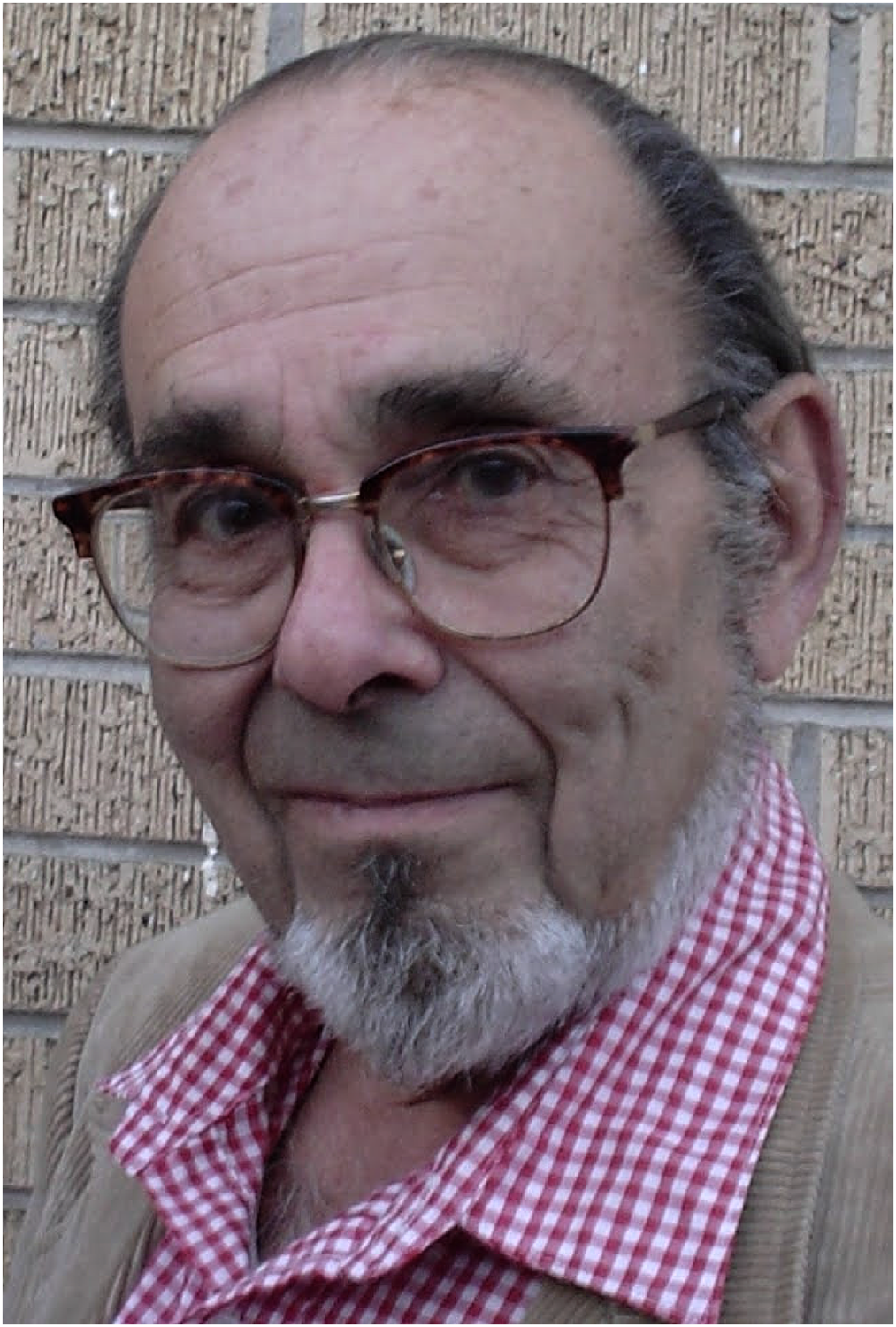
Professor Michael Wertheimer.
Although we may consider 1951 to be the start of Professor Wertheimer's career as a teacher-scholar—the year he published his first peer-reviewed articles (Garner & Wertheimer, 1951; Wertheimer, 1951)—his interactions with the teaching of psychology started much earlier. Even as a child, Michael Wertheimer contributed to psychological theory and application, albeit unintentionally. For example, he and his older brother Val were the players in the “Two Boys Play Badminton” chapter in Productive Thinking (Wertheimer, 1982), one of the chapters in this foundational book that depicted Gestalt Principles in everyday events. Val, who was two years older, kept decisively beating Michael, who was as distressed as a younger sibling would be (Personal communication, 1995). Although Productive Thinking described the changes as coming from the boys, it was their father who productively reorganized the game so that instead of trying to score points against each other they attempted to keep the birdie aloft as long as possible (cf. footbag or hacky sack; Wertheimer, 2020). Professor Wertheimer also described his growing understanding, as a 16-year-old, that his father was internationally prominent. Visitors to the Wertheimer home in New Rochelle, New York included Solomon Asch, Rudolph Arnheim, and Abraham S. Luchins, among many other luminaries in psychology, and the Wertheimer children were always encouraged to join in dinner conversation, even with prestigious guests (Wertheimer, 2020).
Professor Wertheimer's interactions with prominent psychologists expanded after he left home. He took his first college psychology class from Wolfgang Köhler at Swarthmore, and in his graduate programs at Johns Hopkins and Harvard he studied with Fred, Gary, and Smitty (i.e., B. F. Skinner, Edwin Garrigues Boring, and S. S. Stevens), among others (Wertheimer, 2020). He earned his doctoral degree in experimental psychology from Harvard in 1951, and he worked at Wesleyan University until he moved to the University of Colorado at Boulder in 1955, where he remained for the rest of his career.
Professor Wertheimer's career accomplishments are legion. Among many other service roles to the American Psychological Association and related organizations, he served as President of the Society for the Teaching of Psychology (1965-1966) and as President of three other APA Divisions (i.e., 1—General Psychology, 26—History of Psychology, and twice for 24—Theoretical and Philosophical Psychology) as well as President of Psi Chi (1990-1991) and the Rocky Mountain Psychological Association (1981-1982). His hundreds of publications extend from 1951 through the present (Wertheimer & Puente, 2020) and include nearly 60 books (Wertheimer, 2020). Alongside these accomplishments, Professor Wertheimer became a legendary teacher of psychology.
Although much of his career unfolded before widespread use of the term scholarship of teaching and learning, Professor Wertheimer emphasized these evidence-based foundations and, of course, precision in his teaching. Despite a typical doctoral experience in the early 1950s, which did not include education on the methods, ethics, or scholarship of teaching (Wertheimer & Woody, 2017), he applied his lifelong emphasis on precision and rigorous assessment to his teaching and the larger field of the teaching of psychology. Despite his own professed doubts about his classroom abilities (Wertheimer & Woody, 2017), he received numerous teaching and advising awards in his career, including the Distinguished Teaching in Psychology Award from the American Psychological Foundation (now the Charles L. Brewer Distinguished Teaching of Psychology Award). These well-earned recognitions, however, cannot capture the teaching values that Professor Wertheimer brought into every classroom.
I had the opportunity to watch Professor Wertheimer's values unfold in ways that continue to shape my own life and teaching. In 1995, I was a student in the doctoral-level Gestalt Psychology seminar taught by Professor Wertheimer and Dr. D. Brett King. We were several weeks into this demanding seminar, reading original Gestalt sources, secondary sources, and working drafts of the book manuscript that would become King and Wertheimer (2005). Professor Wertheimer's ability to build stacks of paper is well-known (to clarify, I refer to literal stacks—or rather towers—of individuals sheets of paper, sometimes reaching above his head), and his teaching materials typically included an annotated mass of readings and other materials that revealed hours of preparation for each class. At the start of one class session, a student hesitantly raised their hand and acknowledged that they were struggling to understand the foundations of Gestalt theory; other students concurred. Beyond specific details or biographical events, how should psychologists understand the Gestalt worldview? I looked at the imposing stack of papers that Professor Wertheimer had carefully prepared for the day's class. Without a second of hesitation, Professor Wertheimer pushed his carefully prepared notes to one side, leaned forward, and focused entirely on the student's question for the next hour of class, an hour that was clearly transformative for many in the room, including me.
This event, alongside countless similar events, demonstrates Professor Wertheimer's dedication to students and teaching in ways that reach beyond typical conventions. For him, and for those inspired by him, the student's learning and success transcend any other goals, including one's own preparations and one's own ideas, research, and theories (cf. Wertheimer’s [2020] early interactions with Hebb, pp. 101–103). He leaves us with a core teaching value that extends across academic generations: the success and learning of the student supersede everything.
Professor Wertheimer's identity shaped his teaching legacy. At the center of his contributions are his values alongside his lifelong emphasis on precision in all endeavors—not simply writing, research, or analysis but in teaching, practice, and thinking. His foundations also include compassion for one's community, including his family and personal community and the larger professional community. His balance of work and life, remaining productive while sharing the wilderness with his children, grandchildren, and others, inspirationally demonstrates the ways to live well while contributing to the science and teaching of psychology (Woody, 2023).
I conclude this obituary with another important emphasis that ran through every aspect of Professor Wertheimer's life: his love of and joy in music. Music has long been a foundational example of Gestalt principles and a powerful teaching tool; Max Wertheimer famously had a piano in his classroom. Professor Michael Wertheimer's love for music ran through every part of his life and was nearly omnipresent at his memorial. For example, a colleague (Wayne Viney, personal communication, February 12, 2023) shared an example of Professor Wertheimer asking about Viney's favorite hymn and then singing it loudly and boldly all the way across campus, disregarding the stares of curious students. Professor Wertheimer's children talked about his joy in music ranging from classical orchestral arrangements to modern piano music to harmonicas and table-top finger drumming. In ways that appear like his love and joy for teaching, his family noted that music shaped everything. As his daughter noted, “There was music inside my father's head pretty much every day. Sometimes it came out” (K Watkins, personal communication, February 14, 2023). Teachers and scholars in the field of psychology will always remain grateful for Professor Wertheimer and the ways that music, scientific precision, Gestalt theory, and student-centered teaching always came out.
Footnotes
Declaration of Conflicting Interests
The author declared no potential conflicts of interest with respect to the research, authorship, and/or publication of this article.
Funding
The author received no financial support for the research, authorship, and/or publication of this article.
Correction (2024):
This article has been updated with minor grammatical or style corrections since its original publication.