




Abstract
Background
An increasing number of undergraduate positive psychology courses offer students a holistic view of the broader discipline of psychology. Even short-term participation in positive psychology activities as part of a taught course may improve psychological well-being and lower stress. However, there is a dearth of qualitative evidence on how students experience this learning process.
Objective
This study aimed to explore UAE-based undergraduate students’ reflections on their experiences of an elective positive psychology course and their participation in various positive psychology interventions (PPIs).
Method
This qualitative study explored 21 UAE-based undergraduate students’ reflections on taking a semester-long positive psychology course, in which they participated in PPIs. The rich data from semi-structured interviews were analyzed using reflexive thematic analysis.
Results
Three main themes emerged, namely rethinking positive psychology, changes in perspective on happiness and search for positivity, and enhanced relationships.
Conclusion and Teaching Implications
The study suggests that positive psychology may reach past the time and space of the taught course and have at least a short-term positive impact on students' mental and social lives. Findings from this study imply the potential of positive psychology in higher education and point towards further integration of such courses in undergraduate programs in the UAE and beyond.
Keywords
Although some evidence suggests that genetics play a role in determining well-being (Baselmans et al., 2019; Keyes et al., 2010), the extent to which this occurs can be augmented through one’s actions (Lyubomirsky et al., 2005; Sin & Lyubomirsky, 2009), suggesting that people can modify their well-being. One contemporary model for conceptualizing and measuring well-being, based on well-being theory, is the PERMA 1 model (Seligman, 2011). Research has demonstrated significant associations between PERMA dimensions/pathways and well-being (Butler & Kern, 2016; Green, 2022; Lambert et al., 2019). An effort to focus on human strengths has signaled a reaction against the conventional disease model’s emphasis on social deficits, flaws, and disorders (Seligman et al., 2005; Sin & Lyubomirsky, 2009). While acknowledging the existence of negative emotions, positive psychology shifts focus to promoting personal growth and positive adaptation (Cohrs et al., 2013). An established body of research supports the value of positive psychology interventions (PPIs) in enhancing general well-being (Bolier et al., 2013; Mongrain & Anselmo-Matthews, 2012; Sin & Lyubomirsky, 2009). Significantly, even short-term interventions can boost happiness through activation of positive, self-relevant information (Mongrain & Anselmo-Matthews, 2012). Among other benefits, PPIs have effectively alleviated anxiety and depression, and enhanced well-being (Antoine et al., 2018; Bolier et al., 2013; Pluskota, 2014).
Types of Positive Psychology Interventions
The types of PPIs that can result in positive change are numerous and many are relatively simple to implement. Engaging in tasks that trigger feelings of gratitude (e.g., writing letters of thanks, counting one’s blessings), focusing on one’s strengths, and engaging in kind acts appear promising (Layous et al., 2017; Lyubomirsky & Layous, 2013). While the actual effect of PPIs may be overstated (White et al., 2019), well-controlled, experimental studies support the impact of positive activities on well-being and other important outcomes, such as improvement in peer relations, emotional and cognitive engagement, and grade point average scores (Lopes et al., 2016; Seligman et al., 2005; Shoshani et al., 2016). These findings prompted investigations into PPIs' moderating and mediating factors. For example, features of PPIs (e.g., variety and dosage), characteristics of participants such as personality, motivation, and effort, and one’s own actions can weaken or strengthen their impact (Lyubomirsky & Layous, 2013; Ng, 2015), implying that the outcome depends upon the level of motivation, efforts, and volitional acts. Although encouraging, most published studies in this area are quantitative. The field of positive psychology, which values experiences of individuals, lacks sufficiently explorative accounts.
Positive Psychology in Higher Education
The ostensible benefits of positive psychology have not been lost on higher education providers. The inclusion of positive psychology courses in undergraduate and postgraduate psychology programs demonstrates a growing acceptance of the need to focus on human virtues and well-being (Pluskota, 2014; Roth et al., 2017; Scoffham & Barnes, 2011). In addition to a more nuanced appreciation of psychology as a discipline, some studies suggest that this shift in focus can reap personal and academic gains for students (Goodmon et al., 2016; Maybury, 2013; Mongrain & Anselmo-Matthews, 2012; Seligman et al., 2009). Scoffham and Barnes (2011) recommend inculcating positive and affective science in current pedagogy. Furthermore, there may be professional benefits in including positive psychology in the training of future psychologists (Guse, 2010). Positive psychology involves reflecting on one’s weaknesses and strengths and how to capitalize on the latter. For aspiring psychology professionals, including those who hope to become therapists, knowing one’s weaknesses and strengths, and being able to work on these, is vital. Silvia and O’Brien (2004), note that self-awareness includes perspective-taking, understanding that others’ views may differ from one’s own. This insight may be instrumental in cross-cultural contexts, where clients and psychologists have differing worldviews. However, many studies on PPI exposure focus on western, educated, industrialized, rich, and democratic (WEIRD) populations (Henrich et al., 2010), attendant with surging numbers of these students studying positive psychology (Russo-Netzer & Ben-Shahar, 2011; Shimer, 2018). The experiences of students in non-Western contexts, including the United Arab Emirates (UAE), remain relatively unknown. It is vital to acknowledge that the discipline of psychology is in a nascent stage of development in the UAE and stigma towards mental illness still pervades (Petkari & Ortiz-Tallo, 2018; Vally et al., 2018). However, it is encouraging to observe a steady growth of PPI research in non-Western countries (Hendriks et al., 2019), including the UAE (Lambert et al., 2016, 2019).
The Current Study
Student well-being is at the forefront of a new era in higher education (Graham et al., 2016; Thorley, 2017), and positive psychology courses have demonstrated significant impact, including improved academic performance, increased happiness, and lowered stress (Goodmon et al., 2016; Maybury, 2013). While some noteworthy studies have focused on multicultural samples from the UAE (Lambert & Pasha-Zaidi, 2016; Lambert et al., 2019; Petkari & Ortiz-Tallo, 2018), they have not qualitatively explored student experiences of undertaking PPIs as part of an undergraduate degree program. Qualitative inquiry into human experience continues to gain acceptance (Ritchie & Spencer, 2002; Varpio & Meyer, 2017). Addressing a dearth of qualitative research on this topic, the current study adds significantly to emergent academic discourse on positive psychology in the region. Moreover, the UAE launched a national program for happiness and well-being in 2016 and is increasingly focused on Emirati and expatriate youth mental health; therefore, examining factors that could enhance these constructs is a pressing research issue. This study aimed to explore UAE-based undergraduate students’ reflections on taking a 12-week elective positive psychology course and their participation in a range of PPIs. Students’ involvement in class assignments (e.g., writing gratitude letters, focusing on ‘three good things’) may allow personal development and enhance wellbeing. These PPI task engagements such as participating in class group discussion and debates may also reflect their journey of changing perspective towards positive psychology. This study therefore investigates the following exploratory research questions: 1. To what extent, if any, did positive psychology task engagement improve students’ overall self-reported well-being and happiness? 2. How did students’ beliefs about positive psychology evolve?
Method
Research Framework
This study adopted a qualitative, exploratory research framework. Qualitative research is preferred when exploring a comparatively new area of research, or one which has not yet been studied with specific populations (Creswell, 2003), such as the experiences of multicultural UAE-based students in the current study. This research took a social constructivist approach, which assumes that realities are constructed using subjective experiences and that these are dynamic. This approach, therefore, is justified since the study aimed to examine students’ uniquely personal reflections 1 month after completing a positive psychology course and engaging in five PPIs (see ‘materials and measures’ for further details).
Context of the Research and Recruitment of Participants
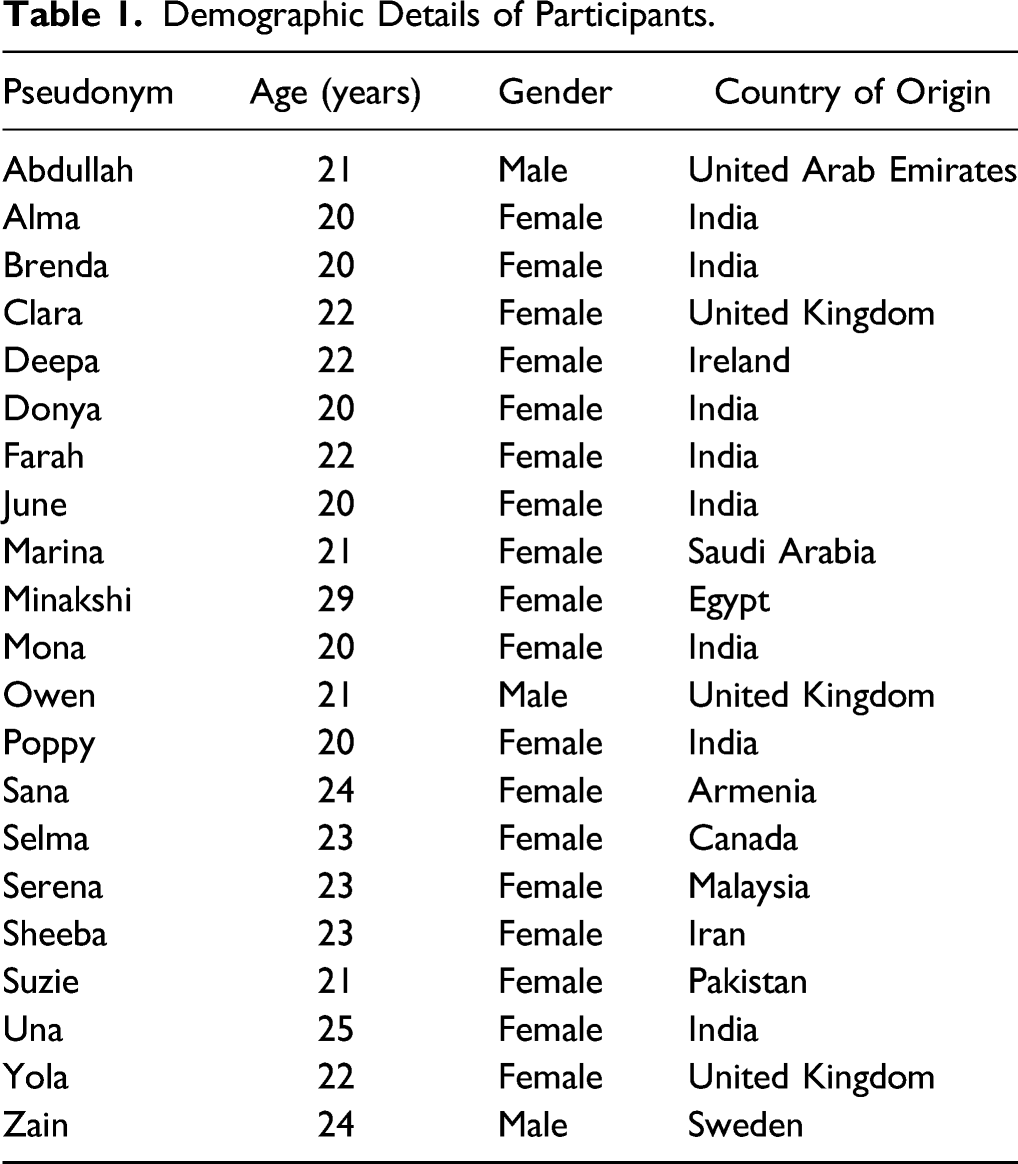
Demographic Details of Participants.
Materials and Measures
In consultation with the academic literature, researchers developed an interview schedule to gather qualitative data. Five open-ended discussion points centered on students’ overall experience of exposure to a positive psychology course 1-month after course completion: 1. Please reflect upon your expectations (if any) prior to taking this course. Please tell us about these. 2. Describe your experience of taking the positive psychology course. 3. Please reflect upon the most personally meaningful part of this course to you (e.g., specific positive psychology construct). Explore/elaborate what this meant for you in the time since you have taken this course. 4. Please discuss in what ways (if any) these constructs may play a role in your future personal growth. 5. Thank you very much for your participation. If there is anything else you would like to discuss about your experiences of this course, please feel free to do so.
This allowed students to reflect upon their experiences of engaging in their positive psychology course and their engagement in the following tasks: 1. Writing three good things: Students maintained a daily journal for 1 week, in which they had to identify three ‘good things’ that happened to them each day. These activities could have included anything (they were personal to the students’ experiences) but included diverse ‘good things’ like receiving appreciation and submitting an assignment on time. These journals entries were discussed with peers. 2. Performing random acts of kindness: Students engaged in spontaneous acts of kindness (e.g., offering up their seat on public transport). Students were required to provide a short description (approximately 300 words), in which they discuss a single random act of kindness and reflect on their action. 3. Writing letters of gratitude: Towards the end of the course, students wrote a letter of gratitude (approximately 400 words) to someone who had been influential in their lives. 4. Evaluating themselves on PERMA, optimism, and character strengths: Students completed online self-assessment of PERMA, optimism, and character strengths, and reflected upon how these relate to their personality. 5. Engaging in class activities: Students engaged in class-based activities (e.g., discussing the importance of cooperativeness) and related these with their own experiences. Sharing their personal stories and discussing them with their peers was intended to help students link theoretical constructs to their daily life experiences.
Procedure
Following institutional ethical approval, semi-structured interviews were conducted, lasting approximately 30 minutes (averaging 5–7 minutes for each question, although this naturally varied considerably per interviewee). The interviews were conducted by a faculty member who was not involved in delivery or assessment of this course. This was purposely done to reduce the likelihood of socially desirable responding. All interviews were audio-recorded and were transcribed verbatim for later analysis.
Coding and Analysis
Researchers (LH and HA) analyzed the data using reflexive thematic analysis (RTA) espoused by Braun and Clarke (2006; 2021). Distinct from other forms of thematic analysis (TA) such as codebook TA (e.g., framework analysis) and coding reliability TA (which adopts a stance closer to positivism), RTA was deemed most appropriate for this study due to its organic process of theme development (Braun & Clark, 2021; Braun et al., 2022; Byrne, 2021; Terry et al., 2017). The analysis involved six phases. Firstly, familiarization with the data was reached through repeated reading of the transcribed interviews. This was followed by coding each individual transcript; both semantic and latent codes were created in this process. The recursive process of RTA meant that some codes were retained as important in the construction of themes, and others were discarded. After completing all coding, the theme generation phase involved codes from across the data set being reviewed based on their shared meanings. These were then clustered into themes and sub-themes which were drafted into an initial thematic map. Subsequently, these themes were reviewed and, in some cases, revised or discarded. In the latter case, themes that were idiosyncratic to one participant, or which showed external homogeneity with other themes, were discarded. The penultimate stage involved defining and naming themes, and lastly, the findings were reported in synthesis with previous literature (Byrne, 2021; Terry et al., 2017). As noted by Braun et al. (2022), these RTA phases have been discussed at length in the literature, but researchers should focus on ‘how’ they engaged with the data.
Having taught these students on different courses, LH (who conducted the interviews) had an established rapport with participants. Knowing the participants beforehand meant that during the phase of familiarization with data, LH could focus on their responses, the nuances in language, the tones of voice, and the fluidity of responses. This previously established relationship assisted not only in the interviews but later, in the generation of initial codes and the development of themes. HA did not personally know the participants; the two positions of the researchers worked in a complementary manner. An ongoing process of critical discussion (Smith & McGannon, 2018) on the plausibility of interpretation enhanced the trustworthiness of analysis and the rigor of this research (Golafshani, 2003; Lincoln & Guba, 1985). The purpose of this dialogue was not to reach inter-rater reliability. The realist/positivist connotations of calculating reliability and the issue of saturation are antithetical to reflexive thematic analysis (Braun & Clarke, 2021; Braun et al., 2022). Instead, researchers discussed the diversity of participants’ accounts, and their real-life experiences, of participating in a positive psychology course.
Thematic Findings and Discussion
Three themes emerged through a process of reflexive thematic analysis, namely ‘rethinking positive psychology’, ‘changes in perspective on happiness and search for positivity’, and ‘enhanced relationships’. These will be discussed sequentially below (framed in accordance with the corresponding research questions) and will focus on participants' experiences.
Theme 1: Rethinking Positive Psychology
This theme explores the second research question; “How did students’ beliefs about positive psychology evolve?”
One of the main themes evident from participants’ accounts was how they viewed the field of positive psychology. This theme encapsulates an apparent shift from their initial expectations (and, in some cases, erroneous beliefs) to their experienced reality of taking this course. Although participants shared curiosity towards this field, the main impetus for eight of the interviewed students in choosing this elective was to learn something other than psychopathology. They recognized the limitations of focusing only on the negative aspects of human psychology; they believed that positive psychology offered something that they would enjoy, as it would be different from the content of other classes. For participants like Deepa and Poppy, this was an essential factor in opting for this course: Since the beginning of university, we’ve focused on everything that is wrong. I felt that instead of focusing on bad things that happen, the negative aspects of psychology, I felt that it would be good for me to understand psychology from a different perspective. I took positive psychology because I felt I needed positivity in my life at that point. (Poppy)
Something different than looking at disorders, problems, the negative side. (Deepa)
Indeed, extending upon the experiences of their classmates, Meenakshi and Susie viewed positive psychology as the future of the discipline, noting a need to step away from the deficit model of longer-established fields such as clinical and counselling psychology: I’m really considering going into positive psychology. I think that it's the way for the future. I think that because psychology has such a negative image people think that you have to be sick to see a psychologist. Positive psychology is quite the opposite - it helps you be happy if you choose you have to be happy, by means that you already have. (Susie) After taking the course I was happy to know that psychology could also be looked at, you know, in the positive perspective also. Dealing with happiness and positive emotions of people and basically concentrating on the strengths and virtues of the person. Rather than, you know, what the problems are. (Meenakshi)
The participants’ experiences are particularly relevant given the cultural context of the current study. Although considerable efforts to reduce the issue of stigma towards mental illness are ongoing, this issue remains prevalent in the Middle East (Sewilam et al., 2015; Taghva et al., 2017), even among students of psychology (Petkari & Ortiz-Tallo, 2018; Zolezzi et al., 2017). Worryingly, some students’ families discourage them from studying psychology for this very reason. By focusing on less ‘controversial’ aspects of psychology, students may be supported in their career decisions to a greater extent.
The participants reported a moderate level of familiarity with positive psychology. Some had independently researched this elective; others knew little about the course, perceiving it to focus on personal development or self-help. Many hoped that participation in this course would bring something different to the set of skills and theoretical knowledge they had gained in other courses. Like Susie, Clara contrasts positive psychology with other previous university courses, but she believed it to lack the scientific basis of other fields of psychology: It was completely new, and I was actually quite surprised that they were offering it as an option ‘cos up until now everything’s been very scientific, whereas positive psychology is more philosophical. I was instantly drawn to it, because to be honest the scientific side of psychology, it’s never come particularly naturally to me. (Clara)
Other students also shared the initial, albeit erroneous, belief that positive psychology focused on self-help. Many were eager to try something new but did not fully understand the course or its content. Surprisingly, despite this being an optional elective course, some students who chose to take it had negative expectations about its potential focus. Zain shared his initial perception that positive psychology equated with pop psychology and that it did not have an evidence base: Well, because I didn’t know much about positive psychology to begin with, I didn’t have high expectations. I believed some of the myths about positive psychology. I believed it was part of ‘pop psychology’, rather than an empirical, scientific discipline, and I certainly didn’t know about the amount of research and the rigor and all that. I didn’t want it to be lectures on ‘self-help’. (Zain) I thought it would be about learning to be positive… be better. (June)
This inaccurate assumption about positive psychology has, to a certain extent, permeated academia and indeed, student perceptions. Hart and Sasso (2011, p. 91) refer to a “unidimensional popular understanding” of positive psychology and suggest that it influences students’ decisions in choosing to study this course. For some students, the evolution of their perceptions regarding positive psychology stemmed from participation in the module, their exposure to new course content which challenged (although, in some cases, reinforced) their expectations and previous beliefs.
Theme 2: Changes in Perspective on Happiness and Search for Positivity
This theme explores the first research question; “To what extent, if any, did positive psychology task engagement improve students’ overall self-reported well-being and happiness?”
A process of internal reflective change was evident among participants. For some, an apparent psychological change had already occurred, while others showed a willingness for future change: If you had interviewed me a year ago, I wouldn’t have been giving the same answers. If I have to compare myself 1 year before going for the course and right now, I feel that there’s been a huge change in the way that I think. I have seen a huge change and I appreciate the course. At first, I thought [positive psychology] was just a course I’m going to do. It is just going to get over, but it’s actually helped me. If I had to do the course again, I’d do it. (Sheeba) It has already made a positive impact on my life, the course. I think for personal growth, the course has helped me a lot with introducing concepts like happiness, gratitude, everything and how I can apply it in my own life. I think basically it’s a change of the person. (Meenakshi) It was a very interesting course, full of things about me. Things that I noticed and needed to be changed, and I need to work on more. (Marina) There were a lot of theories and things that I didn’t know about positivity. You know, the PERMA model, and each week we had to do questionnaires. Which was nice because it was more of a self-reflection to see, you know, okay this is where you need to work on. I remember getting one score on ‘hope’ and it was really low, and I was like ‘okay’… (Alma)
This drive towards internal change for Meenakshi, Marina, and others seemed to be a product of self-reflection encouraged by the PPIs. Pondering the meaning of happiness, participants showed a seemingly incongruous sense of acceptance and a willingness to work on their perceived deficits into the future. The PERMA model was a central component of the positive psychology course prompting self-reflection about happiness. Past research found an impact on individuals' positivity, happiness, and overall well-being after applying the PERMA model of positive psychology in schools (Seligman, 2011; Shoshani et al., 2016). The broader impact on the psychological lives of students was discernable in the interview data. Interestingly, students showed a pragmatic acceptance that things will not always go their way, that life has challenges, and that happiness has limits. I learned to appreciate the smaller things in my life. I think I’m more hopeful. (Farah) Yeah, even happiness has its limits as well. You learn about the biological limits of happiness and stuff. (Owen) I think just continuing to be intentional about choosing to be happy despite circumstances because I think as, as we grow life definitely gets a little harder. Umm… but then being intentional about it, choosing to be hopeful. I was brought up in a very faith-filled home so like my parents have drilled it into me, you know, that it’s going to, you know life is going to be hard but it’s going to be okay. There is hope. (Alma)
Participants discussed the daily stresses of university life and shared that taking positive psychology/engaging in PPIs helped them cope better with these stressors: You have a lot of things on your mind, and you have a lot of things to do and so it can be very stressful, so I guess the kind of activities that we did, and just the kind of topics that we talked about, kinda helped us. (Serena) Now I do things, I pray more consciously, right. A lot of the practices, some of which are religious some are not, are just purely spiritual. They’ve become more conscious. I know the benefit they have on the general population and being, you know, not very different, um they should have the same effect on me and I have experienced that already. (Zain) We had a few exercises like three good things, three kind things, so it was helping us focus on like everyday tasks and like schedules we were overlooking. It like helped us feel better about our day, feel better about ourselves even though we are pretty stressed. (Selma)
This finding is not surprising. Previous research on PPIs among school students found positive psychology improved academic performance and reduced student distress (Waters, 2011). Similarly, the three blessings (three good things) program promoted positive emotions in school children which, in turn, led to improvements in social skills and their ability to cope with stress and negative emotions (Pluskota, 2014).
Theme 3: Enhanced Relationships
This theme explores the first research question; “To what extent, if any, did positive psychology task engagement improve students’ overall self-reported well-being and happiness?”.
Apart from the intra-psychic effects of participating in a positive psychology course, suggesting change within the individual, participants reported tangible changes in their interpersonal relationships with friends and family. Farah reports that emotive communication within her family is unusual and that sharing her feelings with her mother is out of character: I wrote to my mother… we’re not that type. You know, we don’t really talk about how much we love each other and all. So, when I wrote that letter it was helpful like I told her how much I appreciate her and everything she’s done you know, and it felt good to put all of them into words, because I wanted to tell her but I don’t really want to bring up negative stuff, you know, so writing that was really helpful you know thanking her for everything she’s done for us. (Farah) My mom started telling me that ‘You’re being very nice to me’. I do small, small, gestures here and there just to make her feel like you know what she’s doing is really… like I’m really grateful to her for doing that. (June)
As shown by Farah and June, these small gestures are beneficial for both the giver and the recipient. This finding supports the suggestion of Lambert et al. (2010a) that expressing gratitude enhances collective strength, serving an important function for the giver and the recipient-making the latter ‘feel good’ and encouraging future positive behaviors - a virtuous cycle. The impact on relationships extended beyond close friends and family. Some students focused on their relationships with more distal, yet prominent figures in their lives. Like Farah’s experience of doing something out of the ordinary, Brenda says that thanking her old school principal for all she had done for her was “awkward”: I just stopped to really thank her for the relationship and for everything that she’s done. It was kind of awkward to have to do it but I found that doing it kind of grounded and brought it back to the personal aspect of why I’m in touch with her this whole time and why I appreciate the friendship. Because otherwise the relationship is like ‘What are you doing? How is this? How is that?’, but showing gratitude made it more personal for the two of us. (Brenda)
Some participants noted an inner realization of gratitude, a genuine appreciation for others, and an understanding of why loved ones behave as they do. This increased awareness of others may come from a growth in awareness of the self. Positive psychology teaching can have a ripple effect of promoting self-awareness which in turn leads to positive peer relationships (Williams et al., 2018). As shown in the excerpt from June, gratitude stemmed from a new understanding of the sibling bond as more than a familial obligation: What I really learned was gratitude. Like, I’ve always been thankful to others but you don’t really realize what people do. Like the things they do is not out of … like, for example, my brother does things for me. But it’s not because he’s my brother, it’s because he loves me and he cares for me. Not all brothers do that. So, I understood that you know you should feel gratitude towards others, because they do it since they care for you. Not just because it’s their duty. (June)
Conclusions Drawn from the Themes
This study aimed to explore the experiences of UAE-based students who participated in PPIs as part of their positive psychology course. While many well-controlled experimental and non-experimental quantitative studies demonstrate outcomes stemming from PPI participation, qualitative accounts are scarce. Exploring this topic through the experiences of a student sample in the UAE offers additional insight into the literature on positive psychology courses and PPI exposure. The findings of this study shine a light on the decision-making process of students electing to take a positive psychology course and their subsequent experiences.
The first theme illustrated participants’ rationale for choosing to study positive psychology and how their initial beliefs about this course changed over time. Unsurprisingly, the choice to take this course was influenced by a wish to counteract the psychopathology-focus in other courses, thus demonstrating how these students preferred a more holistic view of psychology. This may have additional benefits beyond a student’s personal inclination to learn something different and may extend to their future careers in psychology. Stigma towards mental illness remains a concern in the Middle East (Petkari & Ortiz-Tallo, 2018; Vally et al., 2018). However, there are encouraging signs that this may be changing (Vogel et al., 2017), in part, stemming from growing numbers seeking psychological services for non-psychopathology related issues. For this reason, positive psychology may play an essential role in the future of mental health service provision in this region (Crookes, 2018), and other regions where the profession of psychology is at an early stage of development and acceptance.
In line with Hart and Sasso (2011), an issue of concern was that several students initially viewed positive psychology as lacking in scientific basis. Interestingly, this did not dissuade them from taking the course, but it may well have deterred others. Although those who took the course had an opportunity to change these initial beliefs, their peers may retain an erroneous association between pop psychology and positive psychology. The latter can benefit personal and social well-being, and indeed, enhance future professional opportunities. Students should clearly understand what positive psychology entails before deciding upon this as an elective. Although the effects of PPIs may be smaller than previously assumed (White et al., 2019), students must be made aware that there is a scientific foundation at its core. Researchers in positive psychology, just as in other realms of psychology, engage in the scientific process. Thus, the onus is on institutions offering such courses to dispel misapprehensions about positive psychology and emphasize the applicability of positive psychology in the future development of the discipline.
The second theme relates to newly gained perspectives on happiness, increased self-awareness, and a resultant impetus for future personal development. Through participating in the course, students learned about themselves and their strengths, with the PERMA model central to this process. Although students reported greater awareness of personal attributes on which they needed to ‘work’ (i.e., improve), there was no sense of self-criticism in their discourse. Even though much of the past literature focuses on the negatives of self-awareness (e.g., increased anxiety), it also offers several positive outcomes such as perspective-taking, self-control, creative accomplishment, and pride/high self-esteem (Silvia & O’Brien, 2004). Students believed their development to be in their control, perhaps countering any adverse outcome of this new insight into perceived personal deficits. Of all the positive outcomes Silvia and O’Brien (2004) noted, perspective-taking may be particularly relevant for psychology students who plan to practice in a multicultural environment. With the simultaneous demands of academic workload and preparation for postgraduate study and future career, opportunities for self-reflection are rare among students in their final year of university. The PPIs were regarded as buffers against university-related stress and hope was cited as necessary, in line with findings of Selvaraj and Bhat (2018). Some students noted ‘choosing’ to be more hopeful. Reflections of students in the current study showed rational acceptance that happiness is not an outcome in itself, but rather is an active ‘choice’ to value the small things in life.
The final theme demonstrates how several students perceived their relationships to have improved because of their participation in the PPIs. Although there were multiple reasons given for this, it primarily resulted from the gratitude letter they wrote to an ‘important’ person in their lives. In line with previous research by O’Connell et al. (2016), gratitude and kindness-based PPIs increased relationship satisfaction and improved existing friendships. Family relationships are essential in a young adult’s sense of belonging and meaning in life (Lambert et al., 2010b), and nurturing existing relationships may provide students with a resource for their future. Again, this has implications for both personal and professional development. On a personal level, these skills may be useful in generating and fostering one’s own interpersonal relationships. On a professional level, the therapeutic alliance, defined as the collaborative and affective bond between therapist and client (Martin et al., 2000), has relationships at its core. Undeniably, the quality of the therapist-client relationship can significantly impact treatment outcomes across a range of psychological disorders and treatment modalities (Cameron et al., 2018; Clarke et al., 2016; Dunster-Page et al., 2017; Friedlander et al., 2018). Future research could explore whether the experience of participating in PPIs and becoming equipped with skills to improve relationship quality offers an additional, albeit delayed, benefit to psychology students who hope to become therapists.
Teaching Implications, Limitations, and Future Directions
This study focused on the experiences of students within the UAE, an as-yet underrepresented population in the academic psychology literature. Outcomes of engagement in PPIs should be explored in multiple cultural contexts. Overall, UAE-based students’ reflections of taking a positive psychology course were highly favorable, with benefits to psychological and social well-being, in line with previous findings (Guse, 2010; Maybury, 2013). This study provides evidence supporting the inclusion of positive psychology as a course in the undergraduate curriculum. However, the researchers acknowledge that this is a small scale, exploratory study and that there is a need for further research into this, particularly over the longer term when the initial beneficial effects may subside. An initial increase in psychological and social well-being could, of course, peter out in the longer term.
Additionally, it is necessary to acknowledge that if students in the current study had been mandated to take this course as a core component of their degree program, their experiences could have been very different. The researchers concede that those electing to take a positive psychology course may likely differ from those who do not. For example, they may be more reflective or philosophical; they may be actively seeking positivity or more open to new experiences. It was beyond the scope of the current study to assess whether students who chose this elective differed from those who did not. While we certainly do not intend that the findings from this small-scale, qualitative study be generalized, we accept that the sample composition, including the underrepresentation of male students, may have implications for the findings and suggest that future studies consider this, where possible.
A salient outcome of this study was the impact that positive psychology interventions had on relationships. Relationships with peers are of significance in developing a sense of ‘belongingness’ at university, with implications for areas as diverse as increased academic engagement (Furrer & Skinner, 2003; Wilson et al., 2015), and retention (Bowles & Brindle, 2017), and mental health (Arslan et al., 2020). Although the current research was conducted with a sample of final year students, early intervention in relationship-building accrues more benefit. Future studies might assess how first-year (freshmen) students perceive positive psychology and whether it has longer-term benefits such as those outlined above. Lastly, this study focused on the experiences of students in the UAE. While it was beyond the remit of the current study, it may be beneficial for researchers to assess whether the impact of PPIs is culture-informed.
No longer seen as avant-garde, but not yet mainstream, positive psychology complements the typically pathology-focused courses in undergraduate psychology curricula. Much time has passed since Fredrickson (1998) noted that positive emotions are marginalized, and the potential of positive psychology has since been well-documented in the academic literature. However, it remains dogged by myths which are propagated by its continued position at the fringe of psychology, relative to other domains. Greater clarity is long overdue from universities and practitioners regarding what positive psychology can offer students and, importantly, what it can offer the future of the discipline.
Footnotes
Declaration of Conflicting Interests
The authors declared no potential conflicts of interest with respect to the research, authorship, and/or publication of this article.
Funding
The authors received no financial support for the research, authorship, and/or publication of this article.
