




Abstract
Background:
The experiential and reflective nature of psychotherapeutic training is not always captured in undergraduate psychology teaching, therefore, there is a need for educational strategies that provide opportunities for deeper understanding of the therapeutic process.
Objective:
This article evaluates one such strategy—A Book Club, to support the understanding of psychotherapeutic practice and mental health in Psychology undergraduate students at a private university in Dubai, UAE.
Method:
Psychotherapy-related books were assigned as prior reading each month, which were then discussed in the group meetings facilitated by clinically experienced Psychology lecturers. Fifteen semi-structured interviews were carried out with students and analyzed using thematic analysis.
Results:
Four primary themes were generated—(1) Diversity in perspectives, (2) Autonomous learning environment, (3) Reality orientation, and (4) Sparking self-insight. The results highlight that Book Clubs are useful in fostering deeper conceptualizations of the therapeutic relationship, visualizing future careers in psychotherapy, and promoting self-awareness among students.
Conclusion:
Discussions centred around books can provide students with discourse opportunities that enhance students’ interpersonal skills and improve student engagement.
Teaching Implication:
Book clubs can be a useful platform for teachers to help students connect the knowledge that they have previously acquired in the classroom with real-life experiences of psychotherapists described in books.
Keywords
Psychology as a discipline has become an increasingly popular choice among students in the Middle East, particularly in United Arab Emirates (Petkari, 2017). While undergraduate programs in the region do focus on preparing students for a career in Clinical and Counselling psychology, there is an overall lack of experiential learning opportunities because (a) unlike other countries with highly advanced mental health care systems or universities’ affiliation with hospitals, students in the Gulf region have limited opportunities to apply the skills learned in class through internships or volunteering, (b) large class sizes leave less room for discussion, (c) application of knowledge can be challenging in this cultural context because the taught content is derived from western theory and research. Moreover, the curricula may take longer to reflect the advancements that are being made in the field of psychotherapy practice and research (Aljurf et al., 2020). Bearing this in mind, it is imperative to explore avenues that extend beyond the traditional classroom setting in the teaching of psychology (Satterfield & Abramson, 1998).
Book Club: An Educational Space for Psychology Students
The book club design uses a learner-focused pedagogy (Hensley et al., 2020) and was inspired by Ryan and Deci's (2000) self-determination theory, which focuses on the development of three learning components—autonomy, competence and relatedness. The Book Club functioned as a space where students could blend their interpretations of the book with their pre-existing knowledge, and then build upon this further by discussing it with their peers. Discussions have been shown to bring about a shift in the dynamic from teacher-centric to a more student-centric classroom while simultaneously increasing text comprehension, critical thinking, and reasoning (Murphy et al., 2009).
Based on previous research, it is apparent that reflective reading contributes to the development of psychotherapeutic skills such as, increased self-awareness (Afolayan, 1992), empathy (Adler & Foster, 1997), increased appreciation of different points of view and cultures (Bernstein & Rudman, 1989), emotional maturity, and interpersonal skills (Afolayan, 1992; Pehrsson & McMillen, 2005). Recent evidence also suggests that Book Clubs can be used to cultivate a shared sense of belongingness in vulnerable populations (MacGillivray et al., 2019) such as incarcerated youth (Green, 2018). Segrist and Meinz (2018) have previously evaluated the effectiveness of a similar undergraduate Psychology Book Club and found that students reported having a very positive participation experience. However, despite sharing some similarities, their book club was designed differently. Their study presents the quantitative (not qualitative) evaluation of a book club, which itself was not as closely integrated with the curriculum and provided a more general overview of psychology instead of focusing directly on psychotherapy. Moreover, our students participated more frequently (every month vs. once a semester) and consistently throughout their last 2 years of undergraduate studies.
Thus, previous research about the use of additional group platforms in psychology education has focused more on student engagement, however, to our knowledge no previous study has explored the use of book clubs in the teaching of counseling psychology. This paper aims to qualitatively evaluate the usefulness of Book Clubs as a supportive teaching platform for enhancing knowledge about psychotherapy in undergraduate Psychology students.
Method
Participants
Second- and third-year undergraduate students enrolled in counseling and mental health modules, were invited to voluntarily sign up to participate in the “Psychology Book Club” to engage in deeper reflection, reading and extracurricular discussions about psychotherapy and mental health. Seventeen students joined the book club, which represents 12.14% of the second- and third-year cohort and these students had mostly distinction and merit grades. Data was collected from 15 undergraduate psychology students (N = 15) from an international branch campus of a British university in Dubai, United Arab Emirates. Thirteen participants were females, and two were males, with a mean age of 22.67 (SD = 3.87). The sample was very diverse in terms of nationalities, which illustrates the ethnic diversity of the UAE’s educational sector: three participants were European, one was South-African, two were Middle Eastern, and the remaining nine were South Asian.
Design
Qualitative methodology focuses on developing descriptions of participants’ perceptions (Patton, 2002), which is useful to gain a deep understanding and provide extensive data that can be utilized to further develop the Book Club initiative. The researchers decided not to use quantifiable measurements of learning benefits (such as grades or coursework) as Segrist and Meinz (2018) have previously found that this may be limited in scope and does not reflect the true effects of Book Club participation. The qualitative data was analyzed using Thematic Analysis (TA), as this is a widely used method in psychology and social science, which provides an accessible, rigorous, and systematic approach to coding and theme development (Braun et al., 2019; Howitt, 2010).
Materials
The interview schedule was carefully constructed using previous qualitative research about book clubs (Green, 2018; Segrist & Meinz, 2018) and using the guidelines recommended by Given (2008). It consisted of 13 non-suggestive, open-ended questions addressing: (1) The experience of reading the assigned books and the Book Club as a learning environment; (2) Student’s understanding of psychotherapy and mental health; (3) General feedback about Book Club experiences. Examples of the questions include “What motivated you to join the Psychology book?” and “How was your experience of reading the books and participating in the group discussions?” A book club discussion agenda was created before each meeting, containing questions/comments/quotes and other discussion points about the book and its relation to psychotherapy. These agendas along with the interview schedule, can be found in Khokhlova and Bhatia (2021, April 11).
Procedure
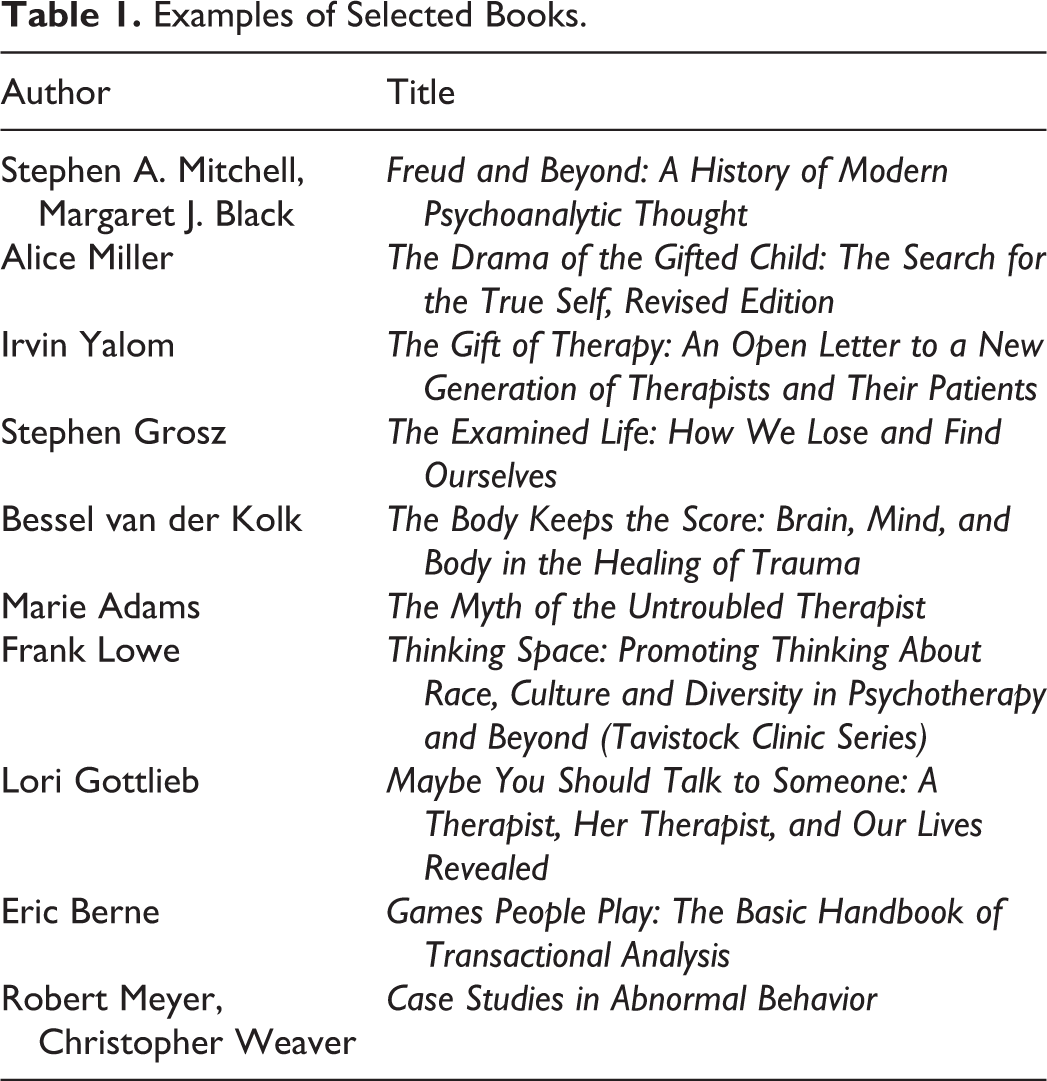
The book club meetings took place once a month, lasting for about 90 min each. The books were selected by mentors based on relevance to course material, novelty of approaches (not discussed in the curricula) and based on student suggestions. These books were non-academic texts, containing author’s experiences as psychotherapists, case studies and other conceptual frameworks (see Table 1), and a specific discussion agenda (see Figure 1 for an example). We organized, set-up and facilitated the book club ourselves, drawing on our clinical experiences while moderating the group discussions. The seating arrangement was designed to resemble a group therapeutic setting (sitting in a circle facing each other), however, it was also clarified upon joining that the meetings were not a substitute for personal therapy and referrals were made to student counseling services, when needed. Registration for the book club was capped at 17 students (as per the recommendations by McMahon & Raphael, 1997) to allow for a rich discussion.
Examples of Selected Books.
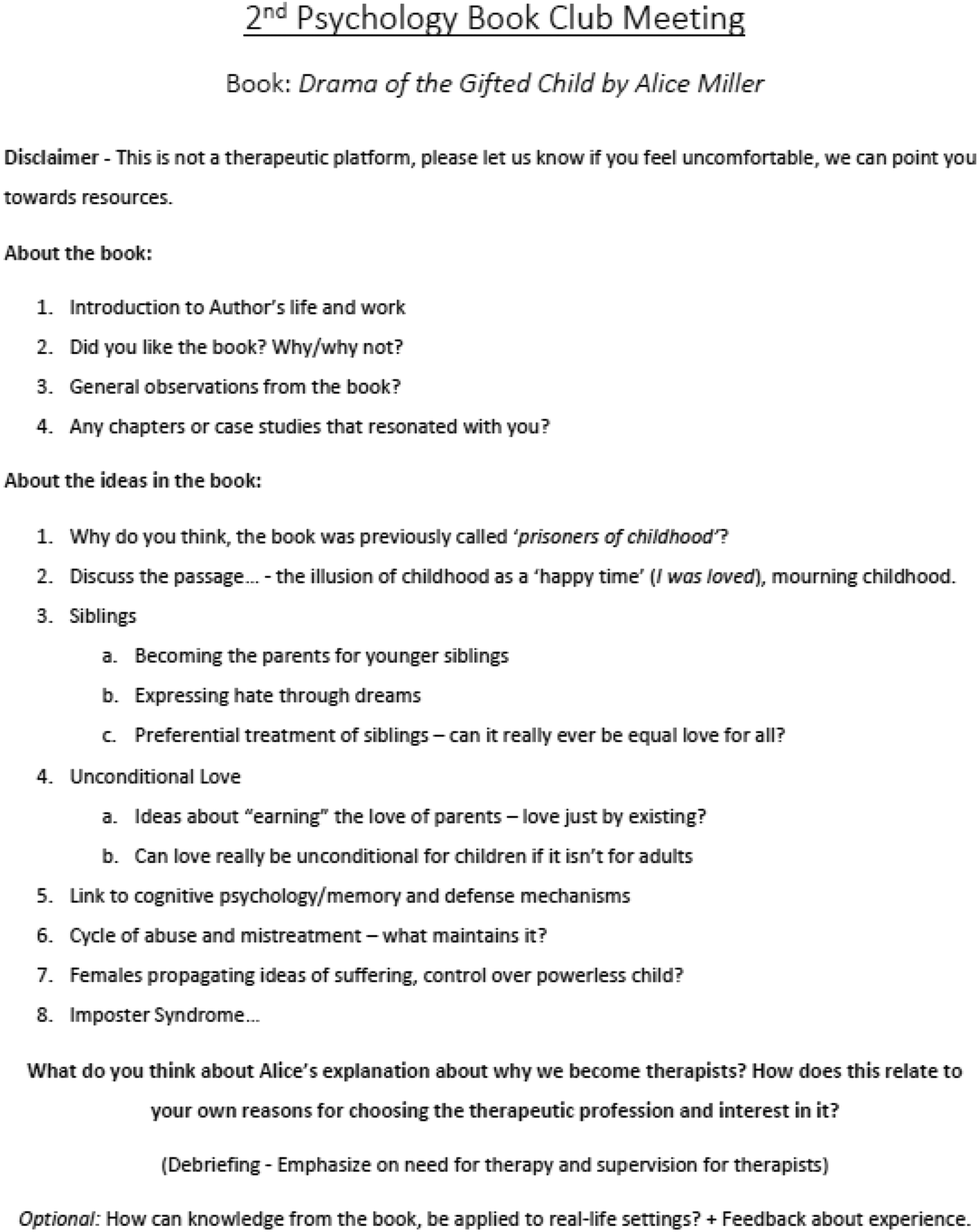
Example of meeting agenda.
After the last book club meeting for the academic year, and receiving institutional ethics approval, 15 students participated in individual semi-structured interviews. Participants were selected if they had attended at least 10 meetings and two participants were excluded from the study due to irregular attendance. No incentives were provided for participating in the study, and participation was entirely voluntary, and confidentiality was guaranteed. Students were recruited via voluntary sign up after they were briefed about the study at the end of one of the meetings. The interviews lasted for 15–25 min, were audio-recorded and transcribed for further examination. In the interest of trustworthiness, the researchers recognize and acknowledge their dual role as both researchers and teachers, and hence deliberately ensured that we created a safe and comfortable environment for students to share their experiences, while also emphasizing consent and right to withdraw, without any potential impact on their academic standing.
Analysis
The iterative coding and theme generation process was based on the recommendations of Braun et al. (2019), which consisted of six steps outlined for TA: data familiarization, initial codes generation, searching for themes, reviewing themes, generating theme names/definitions and producing the report. Following transcription and data familiarization, we blind coded the interviews and reached a shared understanding of the constructs that would guide the initial coding, keeping in mind the purpose of the study. Each transcript was read several times, and analysis commenced with line-by-line open coding, followed by an examination of resulting initial codes, which led to the formulation of categories and emergent themes were identified in participant narratives constituting the central organizing concepts (Flick, 1998). During this recursive process, codes were revisited and those which did not align with the central organizing concepts were eliminated. Themes were identified based on the frequency of their occurrence in participant narratives. The analysis was conducted by both authors and they were in agreement about coding and theme generation.
Results
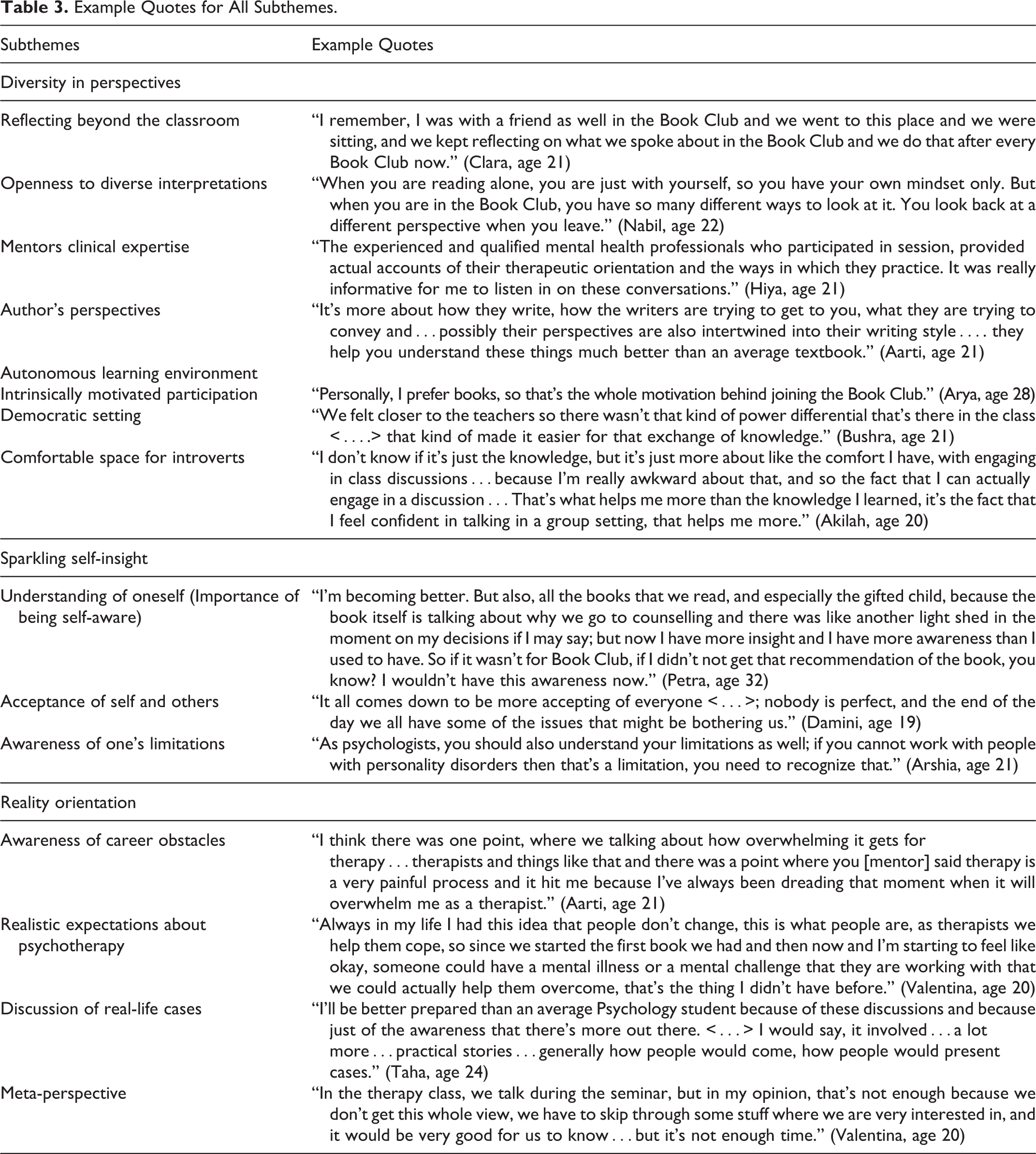
Four main themes were identified: diversity in perspectives, autonomous learning environment, sparking self-insight, and reality orientation (see Table 2). Each theme is described below in order of prevalence, using very brief quotes from student interview data to illustrate the learning experiences and insights that students had in the book club, and how these relate to their understanding of psychotherapy. Further examples of quotes for each sub theme are provided in Table 3.
Main Themes, Subthemes, and Frequencies.
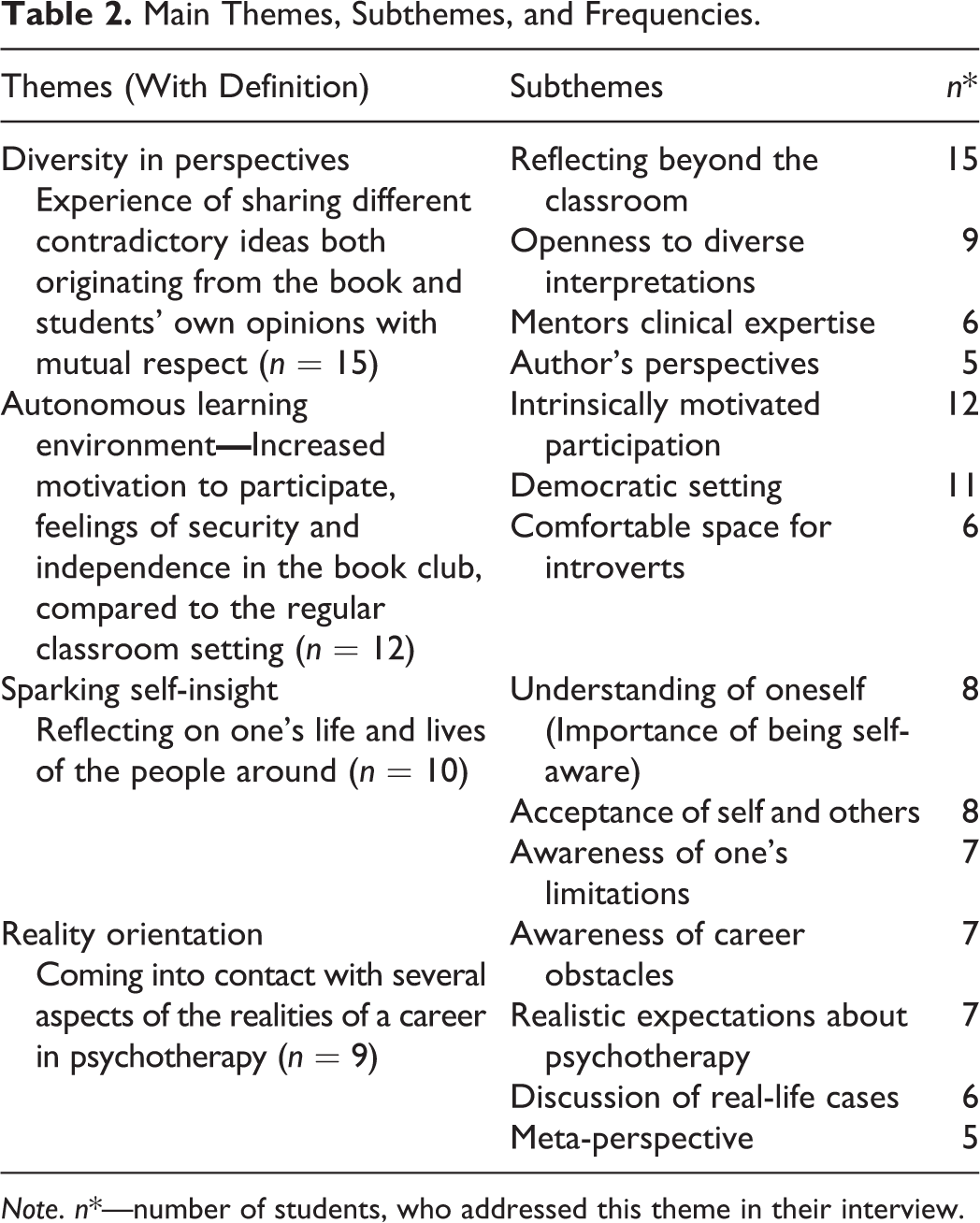
Note. n*—number of students, who addressed this theme in their interview.
Example Quotes for All Subthemes.
Diversity in Perspectives
Students valued and respected difference of opinion in the book club, which incidentally is an important quality of a psychotherapist, along with genuine interest and curiosity about others’ perspectives. The first subtheme—reflecting beyond the classroom indicated that most students found themselves continuing casual conversations with other friends and family members about the questions raised in the Book Club discussions, “we keep reflecting on what we spoke about in the Book Club.” Some students also expressed that they engaged in further reading or research on a particular topic after the meetings. The second subtheme—openness to diverse interpretations suggested that the Book Club discussions provided many students with an opportunity to build upon their personal understanding of psychotherapy through an extended dialog with other members and mentors, or as one student puts it—“so many different ways to look at things.” As one student described: “There were many different opinions, and I was challenged in that way, so I really liked that…I could see the other side of the coin and that was good.”
An important contributor to the Book Club’s overall success was the clinical expertise provided by the mentors, which became our third subtheme (mentors’ clinical expertise). We added to the discussions, our own experiences of working with clients in relation to the content of the books, which some of the students found to be “quite enlightening.” Our final subtheme addressed importance of author’s perspectives, as we spent some time in each meeting, discussing the author’s psychotherapeutic orientations and motivations to write the books. These discussions gave students a deeper understanding of the books’ content and allowed them to critically evaluate the author’s contributions. Students highlighted that author’s perspectives “help to understand things much better than an average textbook.”
Autonomous Learning Environment
The book club models a warm and trustworthy atmosphere, like the one that students may need to recreate in their own future work with clients. In addition to that, this theme highlights the importance of the right setting in education, which can enable students’ growth and learning through discourse opportunities. Our first subtheme—intrinsically motivated participation was identified as the most common subtheme in student’s narratives. Book Club participation was entirely voluntary for students, as their learning was not formally assessed. Majority of the students attended out of their own volition and their “love for books”. This allowed us to have much deeper discussions on the subject matter in comparison to regular classes, where many other students are passive social passengers. Not only were students themselves motivated to engage, but they also appreciated that “everyone read the same thing” and therefore they “are all at the same level” in terms of preparation, ready “to interpret and discuss the book.”
Our second subtheme—democratic setting highlighted that many students enjoyed that they could discuss their ideas with their mentors and peers as equals “with no power differential”, and due to this, it was easier for them to open up and express themselves without the fear of being judged. The group was comfortable following a line of thought, as one participant called it “exchange of knowledge” that emerged naturally as the discussions progressed, which is not something that the structure of a traditional classroom setting often allows for. Both the students and the mentors were pleasantly surprised to discover that some students who never spoke in the class were quite vocal in the Book Club discussions, which was discussed as our third subtheme—comfortable space for introverts. For example, one of our more introverted participants said: “I think Book Club is one place where I actually spoke quite a lot compared to my general class interactions.” This implies that the setting itself was experienced to be facilitative to the introverted students to speak their minds and develop their confidence “to talk in a group setting.” We personally observed that Book Club participation was transformative to the extent that these typically introverted students began to speak more than usual even in their regular classes.
Sparking Self-insight
Students gained insights about themselves, people around them, their families, and their reasons to pursue a career in Psychology, as a direct result of Book Club participation. This newly acquired knowledge is important for their future career in psychotherapy, because knowing oneself is one of the key requirements for psychotherapeutic work. The importance of being self-aware was apparent in the interviews as the book club enabled reflexivity and self-awareness for students and they were able to learn about themselves through the new material, which some called “a life-changing experience”. In the interviews, many students provided examples of epiphanies they had while reading or discussing the books, in relation to their own self, personalities and for many of our participants coming from collectivistic cultures—their own family and community dynamics.
Acceptance of self and others was our second subtheme, which was derived from student narratives about greater self-acceptance, self-awareness and self-compassion following book club discussions. Moreover, some students even reported that they found themselves being more accepting and “a bit softer” toward others. This was articulated by one of the students—“It all comes down to be more accepting of everyone <…>; nobody is perfect, and the end of the day we all have some issues that might be bothering us.” The final subtheme addressed the awareness of one’s limitations because we found that enhanced self-awareness was accompanied by an understanding of one’s own limitations and the importance of taking into account students’ own personal qualities. Many of them understood that although psychotherapy is a so-called “helping” profession, they will not always be able to help others and should be able to recognize their own professional boundaries. For example, one student said—“As psychologists, you should also understand your limitations as well; if you find it difficult to work with people with personality disorders then that’s a limitation, you need to recognize that.”
Reality Orientation
This theme suggests that the book fostered their professional development, providing them with the opportunity to apply their knowledge in a more practical way while making them aware of possible challenges that come with a career in psychotherapy. The first subtheme was awareness of career obstacles, as reading books and discussions helped quite a few students visualize their future careers, “get more insights generally” and reflect on the personal and professional obstacles they might face as psychotherapists in the future. Several participants expressed that the Book Club discussions were enlightening, enriched their understanding of psychotherapy, and what they can and cannot expect from it, which became our second subtheme—realistic expectations about psychotherapy. As one student described:
In my life I always had this idea that people don’t change, this is what people are, as therapists we help them cope, so since we started the first book we had and then now—I’m starting to feel like okay, someone could have a mental illness that they are working with that we could actually help them overcome, that’s the thing I didn’t believe before.
Our next subtheme—discussion of real-life cases suggests that not only were the students exposed to many case studies, but they also took part in their discussion and critique. This made them feel like they “will be better prepared than an average Psychology student” to work with a variety of clients. The Book Club allowed students to develop a holistic view on the weekly material covered in class, by making connections between different concepts and theories, thus giving rise to our final subtheme—meta-perspective. As one student stated: “In the therapy class, we talk during the seminar, but in my opinion, that’s not enough because we don’t get this whole view, we have to skip through some stuff where we are very interested in.” Some of the students also stated that their understanding of common mental illnesses was deepened as they “grasp the true impact of certain mental illnesses” as a direct result of the experiential nature of the readings and discussions in the Book Club.
Discussion
Overall, our results indicate that students acknowledged the benefit obtained by their participation with regard to the learning experience, pointing out the real-life orientation of the Book Club and the importance of the opportunity to combine their previously acquired knowledge with practical examples of mental illness and counseling work. In addition to that, student narratives show that the Book Club enriched their knowledge and gave them a meta-perspective by helping them to connect different concepts, which are usually discussed separately in different courses, as suggested by the theme reality orientation Our findings are also in line with previous research by Segrist and Meinz (2018), who had found that Psychology Book Clubs enhance student-faculty relationships, which have been associated with increased student satisfaction and higher motivation to pursue educational goals (Pascarella et al., 2004).
For many participants, this platform was their first opportunity to explore a small group setting, as the one commonly seen in therapeutic work and supervision. The frame was very similar to group therapy in terms of group size, non-judgmental atmosphere, healthy dialog, established trust between the participants. Capuzzi and Stauffer (2016) have previously found that this is quite advantageous for psychotherapeutic work. Therefore, the reported benefits extended beyond educational utility and also included personal changes (Pascual-Leone et al., 2012). The student interviews reflected that they were able to grasp the interpenetrative nature of therapeutic work, where the psychotherapist is also emotionally impacted by their own work. The theme sparking self-insight suggests that participation in the Book Club was helpful with regard to interpersonal skills and emotional maturity, all of which are crucial in a psychotherapy career.
Although a large classroom lecture format, where information is simply transmitted to students, is still commonly used on-campus (Tricio et al., 2019), a vast amount of previous research suggests that a small group environment significantly improves the effectiveness of learning (Al Achkar & Davies, 2016; Arja et al., 2020). Our study further complements these findings, and we suggest that students will benefit more from tailor-made activities that challenge them intellectually. This is particularly the case for universities situated in the Middle East, as they can provide an extensive network of support to students that find their courses challenging, however, the students who are already highly engaged and motivated can sometimes be overlooked (Patrick et al., 2015). Our theme autonomous learning environment implies that rethinking the traditional university classroom setting, especially in fields where critical thinking is necessary (Norcross & Karpiak, 2012), might be useful as small groups allow room for greater self-expression. Moreover, our findings suggest that book clubs enhance a sense of belongingness among members (as previously highlighted by Álvarez, 2014) and encourage satisfactory social relationships in the context of the diverse UAE population (as indicated by the theme diversity in perspectives).
The authors understand the limitation of their positionality as both researchers and teachers, however, we found that this did not interfere but facilitated the creation of a more intentionally open and safe atmosphere within the book club. This is further evidenced by the fact that students have continued to attend the book club meetings, some even after graduating. One possible limitation of the book club format is that it is most effective in smaller groups, thus making it challenging to evaluate student learning through large scale quantitative evaluation. In this case, it was difficult to directly assess the changes in student’s knowledge about psychotherapy, due to the experiential nature of book club participation. However, we believe that a social group connected by a common goal of knowledge-sharing, is still a powerful way of engaging in respectful and meaningful dialogue for learning, particularly in the current divisive political climate across the world (Nelson et al., 2017).
In learning contexts where access to resources is limited or educational systems are underdeveloped, a book club can be an easy and cost-effective form of vicarious learning, that prepares students for a professional career. Book Clubs can be easily transformed to function online, thus making education more accessible in situations where physical meetings are not a possibility, such as in the current COVID-19 crisis or even in rural areas. This is pertinent because teachers and students across the globe are facing similar challenges, such as increased class size with lesser learning resources and restrictions on fieldwork and internships due to risk of infection (Kamaruddin et al., 2020). It may also be of interest to future researchers to evaluate the use of other forms of media (movies, social media, or podcasts) in a similar group discussion setting, to supplement the teaching of psychotherapy, for which the existing literature already provides some evidence (Petkari, 2017). In line with our findings, Murphy et al. (2009) and Segrist and Meinz (2018) have previously found that such strategies have a positive impact on overall student engagement.
To the author’s knowledge, this is one of the first studies conducted in the UAE to evaluate the effectiveness of Book Clubs and has found them to be a powerful educational tool for students based on qualitative evaluation. Findings suggest that the students can not only gain more information about the field they are passionate about, but also have an opportunity to connect previously acquired knowledge and apply it. Psychology Book Club is also highly practice-oriented that enables future career visualization. Given World Health Organization (WHO, 2020) data about the global burden of disease contributed by mental illnesses, combined with the American Psychological Association (APA, 2018) projections about the increasing demand for psychologists, educational tools that help to acquire practice-oriented knowledge about psychotherapy, are crucial for society.
Overall, the research findings highlight the role of student experiences in guiding the construction of newer forms of teaching or evaluating pre-existing methods that best work for them, thus increasing student agency and choice in their own education. In conclusion, the Book Club can be a promising new addition to a student’s educational experience at the university, one that may revive the joys of reading and learning through stories.
Supplemental Material
Supplemental Material, sj-pdf-1-top-10.1177_00986283211014179 - Bringing Books Back: Enhancing the Understanding of Psychotherapy in Psychology Students Through Book Club Participation
Supplemental Material, sj-pdf-1-top-10.1177_00986283211014179 for Bringing Books Back: Enhancing the Understanding of Psychotherapy in Psychology Students Through Book Club Participation by Olga Khokhlova and Aditi Bhatia in Teaching of Psychology
Footnotes
Declaration of Conflicting Interests
The authors declared no potential conflicts of interest with respect to the research, authorship, and/or publication of this article.
Funding
The authors received no financial support for the research, authorship, and/or publication of this article.

References
Supplementary Material
Please find the following supplemental material available below.
For Open Access articles published under a Creative Commons License, all supplemental material carries the same license as the article it is associated with.
For non-Open Access articles published, all supplemental material carries a non-exclusive license, and permission requests for re-use of supplemental material or any part of supplemental material shall be sent directly to the copyright owner as specified in the copyright notice associated with the article.
