




Abstract
After digesting lessons from US operations during the Fukushima Daiichi accident in Japan, the White House National Security Council staff created several interagency working groups to examine procedural issues associated with responding to international chemical, biological, radiological, and nuclear (CBRN) incidents. What emerged were best practices and lessons learned designed to transform data to decisions across the many levels of government during an international CBRN incident for those people making life-saving and life-sustaining choices. Actions at both the strategic and operational levels are needed to enable a country to more effectively transfer its domestic response capabilities and infrastructure to an international consequence management response. International complications include varying organizational relationships and legal authorities; resource limitations in overseas jurisdictions; nonstandard sources and formats of information; differing public health and protection standards; and language barriers. The technical data needed for emergency personnel to safely and effectively respond to CBRN incidents are especially difficult to obtain, require specialized analytical tools to process, and demand particular procedures for sharing in an international context. Without addressing these issues up front, any country responding to a CBRN event beyond its borders may struggle to effectively respond.
Keywords
A dirty bomb blasts debris into the air. A damaged nuclear power plant vents radioactive materials skyward. A terrorist sprays a biological agent in a subway. A chemical plant is on fire. These frightening scenarios are more than movie scripts. Chemical, biological, radiological, and nuclear (CBRN) experts around the world aim to prevent and mitigate the effect of these types of incidents every day. Notably, the costs of these events are not necessarily limited to just one country, but can cross political boundaries and have far-reaching significance. Lost lives, compromised security, degraded environments, tumbling markets, and damaged industries—the consequences of major chemical, biological, radiological, and nuclear events are myriad and affect hometown and worldwide interests. While countries already aid one another during these incidents, improving technical aspects of these responses, particularly in regard to information management, would help save lives and minimize damage. Obtaining data on the nature and the extent of any release, exposure, or contamination is critical to decision making at the local, national, and international levels.
Although a low-probability event, if a major chemical, biological, radiological, or nuclear incident does occur, it will be devastating. Such incidents may originate in one country, but they would create risks and hazards in many countries and require responses from these and other countries (see Figure 1). Involvement of multiple jurisdictions requires well-established processes for getting the best data to and from field responders, incident commanders, and policy makers. Without addressing these communications issues up front, any country responding to such an event will likely struggle.
International CBRN responses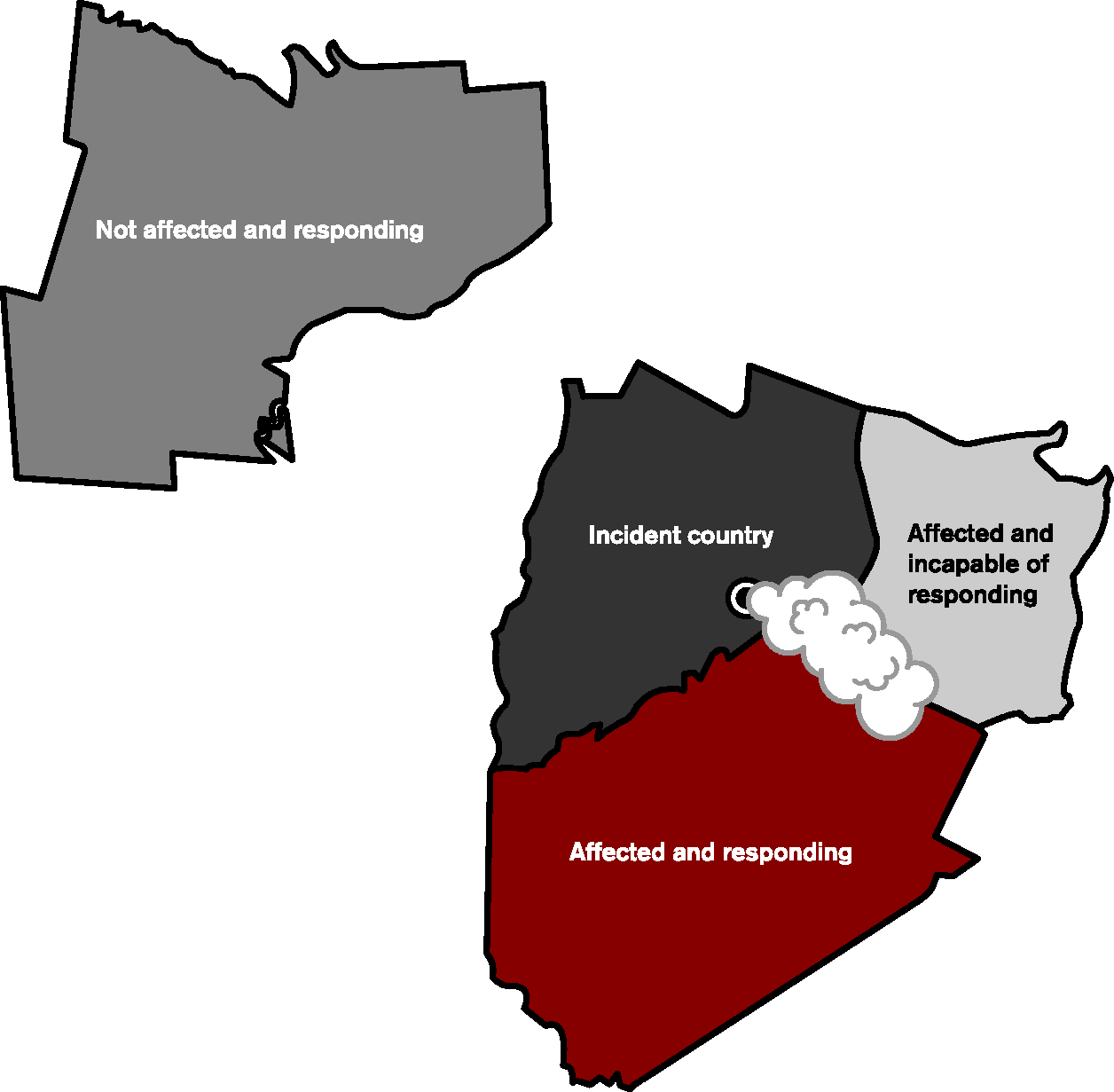
A few countries have established response capabilities and infrastructure for responding to domestic chemical, biological, radiological, and nuclear incidents. For example, countries with developed nuclear energy programs have well-developed procedures and tools for responding to radiological or nuclear incidents. Not all of these capabilities readily apply to an international response, however, because international complications are potentially many. They include varying organizational relationships and legal authorities; resource limitations; nonstandard sources and formats of information; different public health and protection standards; and language barriers. Gathering, analyzing, and disseminating the technical data needed for emergency personnel to safely and effectively respond to such incidents are affected by each of these complications.
After digesting lessons from US operations during the Fukushima Daiichi accident in Japan, the White House National Security Council staff created several interagency working groups to examine procedural issues associated with responding to international chemical, biological, radiological, and nuclear incidents. One of these expert groups, led by the US Energy Department’s National Nuclear Security Administration (NNSA), developed recommendations—a combination of best practices and lessons learned—for dealing with data during an international emergency response. The consensus among the experts was that collecting the right data and getting them to the appropriate decision makers during an international CBRN event is an essential and underdeveloped capability—even though the United States can perform these tasks domestically. What emerged were recommendations designed to transform consequence management data to decisions through the many levels of government during an international CBRN incident for those people making life-saving and life-sustaining choices (Interagency Working Group on Data Management Best Practices, 2012).
Some of the recommendations seem self-evident, others are quite innovative, and all fall within one of two categories—strategic or operational—that are aimed specifically at policy makers, emergency managers, and those serving in relevant international organizations. The strategic recommendations are cross-cutting and link operational activities with policy goals, while the operational recommendations, grouped into data gathering, analyzing, and sharing, support tactical actions (see Figure 2). 1 To help support a life-saving response to a major chemical, biological, radiological, or nuclear event, the working group suggests, leaders will need to create a data collection plan that gathers accurate information in standardized formats that serve officials at varying levels of technical expertise and allow reliable data to be retained over time. Those leaders will also need to define, ahead of time, what information is appropriate for particular audiences, especially the public, because maximizing information transparency during an emergency is key to helping officials and the public respond effectively.
Cases and context
History is filled with chemical, biological, radiological, and nuclear events that caused local damage, threatened multiple countries, and drew international responses. For a recent example, in March 2011, a massive earthquake off the coast of Japan resulted in a tsunami that crippled the Fukushima Daiichi nuclear power plant. Even as emergency responders sought to aid those injured and displaced by the tsunami, the plant’s damaged reactors were discharging radioactive material and presenting a complex public health threat (Makinen and Hall, 2011). One hundred and sixteen countries and 28 multilateral organizations offered assistance to Japan (Thomson Reuters Foundation, 2011). Governments around the world, meanwhile, closely tracked radioactive plumes and evaluated the effect on their territories (Sainsbury, 2011). Given the intensely technical nature of the response, challenges associated with data collection, analysis, and distribution forced responders to adapt quickly and improvise (Jaczko, 2012). For instance, the government of Japan initially posted data on the internet as scanned PDF files in Japanese; consequently, American analysts needed translators to assist them in transcribing data into existing US data management systems. Eventually, data were shared as spreadsheets and the two governments along with international organizations collaborated on formatting.
Chemical or biological incidents are no less complex. In December 1984, a leak at the Union Carbide India Limited pesticide plant exposed residents of Bhopal, India, to methyl isocyanate gas and other toxic materials. More than 3,000 initial deaths and tens of thousands of injuries were attributed to the leak (BBC, 2009). Local businesses closed for three weeks and lost up to $65 million. The plant, valued at $25 million, was shuttered and mass evacuations occurred, resulting in greater economic loss (Shrivastava, 1996). In this case, the response featured extensive private-sector involvement, especially from Union Carbide, the company at fault. Indeed, CBRN incidents may feature information gathering, analysis, and sharing among many public and private organizations, which presents distinctive response coordination challenges. Because the responding parties may have different priorities (e.g., protecting their workers and minimizing liability compared with general public health and safety), they may need different data or use information in different ways. If the government creates one set of data products and the owner creates another, conflicting protective action decisions can occur. Greater efficiency may result when a cohesive, validated data set is available to the various decision makers in the public and private sectors.
A CBRN incident triggers what is known, in the parlance of disaster response, as consequence management, the effort to protect health, ensure safety, restore essential government services, and provide emergency relief to those affected (Blanchard, 2008). Consequence management activities occur in the immediate hours, days, and weeks following a natural or human-made disaster and are part of a larger response effort. These activities require gathering, analyzing, and sharing technical data about the size, scope, and dangers associated with the release of CBRN materials in order to protect health and safety. In short, consequence management is all about the data during a CBRN technical response. To enhance the effectiveness of a response, countries implement best practices or lessons learned from prior activities. 2
In the broad area of international consequence management, several experts have recognized the need for more-comprehensive, standardized best practices. 3 Current research does not, however, explore technical aspects associated with international consequence management responses. How domestic chemical, biological, radiological, and nuclear response capabilities might apply to an international environment is a point in particular need of study. The following recommendations, based on practice rather than research, attempt to fill some of that research shortfall and bear consideration by any government, nongovernmental organization, or coordinating body engaged in multinational efforts in international consequence management.
Strategic considerations
Because strategic decisions will frame operational and even tactical aspects of consequence management abroad, they are a natural starting point for efforts to enhance international responses to chemical, biological, radiological, and nuclear events. Before any emergency, planners must carefully plot how field personnel might respond to such an incident and agree on response plans for the many parts of government with consequence management responsibilities. Such plans are needed to quickly prioritize responsibilities and activate assets in an emergency. Existing domestic responsibilities may serve as a useful starting point, but statutory, logistical, and communications challenges associated with international responses require modifications to domestic response regimes. For example, while the Federal Emergency Management Agency would coordinate any national response in the United States, the US State Department or Defense Department would spearhead activities abroad, depending on the population affected. Additionally, the authorities and funding mechanisms for responding agencies often differ between domestic and international responses (e.g., Stafford Act funds are available only for domestic responses).
Once an incident occurs, time for initial strategic decision making will be in short supply. Leadership will need to set its initial consequence management data requirements and weigh the needs of the international response against potential needs at home. After all, dangerously degrading reserve consequence management capabilities at home for the sake of helping abroad could potentially place more people at risk. For instance, cascading effects can lead to a hazard in another country impacting the United States directly if contaminated individuals seek refuge in the United States or commercial products are insufficiently monitored upon arrival. Of even greater concern, in the case of a malevolent act, is a second terrorist attack that directly affects health and safety at home. Making the assessment of domestic versus international needs will require taking quick stock of the international incident and its needs at precisely the moment when information will be most limited. Data requirements at the incident site and domestic contingency needs will inform the specifics of initial consequence management resources activated; however, these will need to be revisited as the incident progresses and needs evolve.
International consequence management strategies must also consider standing international treaties, agreements, and legal obligations. Many of these agreements are tied to international organizations and long-standing bilateral relationships, all of which provide valuable conduits of information for countries seeking to coordinate a response to an international chemical, biological, radiological, or nuclear event. Still, these information channels might be strengthened. By cataloging relevant international agreements prior to a CBRN event, leaders can clarify roles and responsibilities across countries and international organizations and better understand the capabilities each might bring to a response. In particular, the capabilities of organizations like the International Atomic Energy Agency (IAEA) and World Health Organization should be factored into any bilateral CBRN response planning. And in all strategic planning, the more countries rely on pre-existing agreements and understandings, the smoother the response will be.
Operational responses
Strategic decisions are critical to establish the goals and objectives of a country’s response activities and allocate its consequence management resources. A country intending to respond to a CBRN event will use these strategic decisions to guide its operational considerations—the data to be collected, the analyses to be conducted on those data, and the resulting information products to be created and shared. Only once the appropriate leaders identify the questions that need to be answered can consequence management assets successfully gather, analyze, and share data. What information is most important? What decisions will it affect? Scientists are in the best position to foresee the evolution of a CBRN event and help answer these questions, but they will provide the most relevant technical products only if national leaders have set clear consequence management goals ahead of time and explained impending decision points.
Among the first operational activities during an international response to a CBRN event will be the establishment of a data collection plan. Strategic-level data requirements will drive prioritization of data gathering and analysis. For example, should collected data samples primarily serve the needs of the affected countries, other countries involved in response to an event, or both equally? The collection plan will need to reflect the answers to these questions while ensuring accurate, standardized data that will be useful not just for the response, but also for prosecuting any future criminal cases or lawsuits. Indeed, the types of data gathered, the locations from which they are accumulated, and the resources dedicated to each collection effort will determine the types of data products that can be produced for decision making. Some of these products will be useful in answering only specific questions, while others might serve more general purposes. Given the limited resources available during an international response, strategic priorities will determine whether data are collected to support any particular request for information. Not every request will get all the support it demands. An important component for prioritizing activities is the establishment of a group of national-level decision makers with the responsibility of providing advice on prioritizing, gathering, and disseminating information, domestically and abroad.
Other operational issues are rooted in technical considerations. For example, response leaders will need to establish a standard chain of custody for data collected from the field and stress the importance of retaining data and their identifying information. This will help ensure the veracity of data and repeatability of analysis in the future. It also enables meeting new or emerging analysis needs more easily. Additionally, consistent formats for technical data collected in the field should be adopted through the interagency process, with consideration given to using international standards. For example, the IAEA is promulgating the International Radiological Information Exchange standard to make data formatting consistent regardless of the incident country or responding countries involved. The use of templates and formats that have been developed in advance can ensure more consistent data entry and more reliable, faster analysis. Web-accessible tools further these goals. Responders, analysts, and decision makers are likely to be geographically distributed, so web-based applications that consolidate information and communications from many disparate locations can help ensure timely data sharing, maintain version control of data sets, and lessen susceptibility to losing data or introducing errors.
With the assistance of their technical advisers, leaders will need to establish data quality standards. With these come trade-offs. Often, the more accurate the data, the more time they take to collect. In a response situation, it may be advantageous to sacrifice some quality for speed in an effort to gather more information over a wider area or enable a time-sensitive response. Leaders’ information priorities, which guide this trade-off, should be codified in a situation-specific data collection plan designed to save valuable time and preserve the integrity of data. Furthermore, all countries participating in the response need to institute quality control processes for data that are gathered. Response plans should consider procedures for using atypical or non-traditional data sources, especially given the proliferation of social media and connectivity. Radiation detection applications on smartphones can provide a flood of unvalidated data into the public realm. The ability to benefit from such data sources will require application of appropriate quality controls, as with all other data.
Collection planning will be meaningless if the data amassed during consequence management operations are not adequately analyzed and presented to leaders. While the technical communities associated with chemical, biological, radiological, and nuclear incidents know how to collect and analyze data, which analysis is performed must be driven by the needs of decision makers, and analyses must be made digestible for them.
Operational-level leaders will use data during a CBRN event to inform their decisions and to advise political leaders. But how leaders at all levels receive information will affect how they use it. For example, when scientists share data products, they should be explicit about their assumptions and include not just worst-case analysis. Making decisions based on the worst-case scenario will often have debilitating effects on field activities and may put people in unnecessary danger. Imagine thousands of evacuations occurring in areas that are 99 percent unlikely to face dangerous effects from a CBRN event. The inevitable traffic and supply needs will unnecessarily change the dynamic of a response and expose people to new hazards like car accidents or social unrest. Instead, scientists should explain several potential situations to senior leaders, providing most-likely and least-likely scenarios alongside any worst-case projections. Regardless of the scenario, data products shared with decision makers should always note assumptions, especially weather, that are built into the analysis underpinning them.
Scientists engaged in a CBRN response need to explain data products carefully to policy makers with various degrees of technological knowledge. Technical experts need not only make themselves readily available to the policy makers consuming their analytical products; they should also be prepared to answer policy-relevant questions and gear their analysis to meet policy needs. Rather than letting data products stand alone, technical experts must make explicit connections between the science feeding the products and operational needs. For example, data products should be explained with an eye toward answering practical questions about evacuation zones or food contamination or other critical issues. Technical experts will want to ensure that data products—especially multipurpose graphics or detailed data visualizations—are explained clearly for non-technical responders. A picture may speak a thousand words, but in the case of a major chemical, biological, radiological, or nuclear event, a well-labeled data product saves lives.
Several other technical considerations, especially data dissemination, affect a range of response activities. Data must be shared with appropriate policy makers in a host country and among relevant responders from countries providing assistance, but sharing information haphazardly or without appropriate approvals will hinder field activities and create difficult political situations. For scientists, part of anticipating the needs of leaders is determining just how often technical products require updates. Those making decisions during a CBRN event need timely technical data from their technical experts and must act quickly once the data are received. CBRN incidents change over time, and both operational and political leaders must recognize that data may get outdated quickly and are most useful when delivered rapidly from the field and used immediately to inform decision making. Yet, updating technical products that demonstrate complex data is no quick thing, and in some cases it requires tremendous computing power. Scientists doing analysis should establish a process for updating these products that maximizes their usefulness to field activities while minimizing the number of updates required.
To help minimize potential data-dissemination problems, technical, operational, and political leaders will need to define what information is appropriate for particular audiences, especially the public, and to design a system of approvals for public information releases. Maximizing information transparency during an emergency may calm an anxious public and provides useful information to relevant parties. But given the possibility of misunderstandings about CBRN incidents, potential security concerns, and political sensitivities, a country gathering technical data abroad should clearly define standard data-release requirements and root them in pre-established guidelines. These requirements should be coordinated with the host country so information-control measures are synced and only jointly approved information is released. If such coordination is not arranged, different types of information, such as raw data and old visual or technical products, may be released and harm the response effort by worrying the public unnecessarily or undermining local authorities.
The next Fukushima?
These recommendations are especially relevant today. Despite the initial hesitation of policy makers to support nuclear power following the 2011 Fukushima Daiichi accident, many countries around the world continue to build new nuclear reactors at a steady pace. A larger number of nuclear reactors increases the potential sources of a radiological emergency. Production of chemicals is a central part of several economies around the globe and continues to expand. Both China and India will see their chemical production increase more than 50 percent by 2020 (UNEP, 2012). An explosion or release of dangerous materials from chemical production facilities or from the many industrial centers that use these materials could threaten thousands of lives and disrupt international supply chains. Likewise, biological threats are expanding. Increased trade by emerging economies around the world and ready availability of international travel bring with them new challenges for those tracking viruses, bacteria, and other biological material that could potentially present health risks. Meanwhile, the threat of chemical, biological, radiological, or nuclear terrorism may lurk worldwide.
Given the numerous potential sources of hazardous materials, sooner or later another incident will require international consequence management. World leaders will again call on the scientists to help address international CBRN events and to save lives and property. Consequently, response capabilities should be maintained and enhanced. The recommendations identified by the NNSA-led team serve this purpose. While some of them are already being enacted by governments around the world, countries seeking to effectively assist other countries during a CBRN event would do well to consider their inclusion in national and international response plans. Spreading these best practices throughout the governments likely to respond to a CBRN event will enhance operational capabilities and encourage standardized practices across countries that may one day find themselves working together.
These recommendations, building on experiences from responding to international CBRN incidents, are a starting point. Some of them also require a complete international CBRN response protocol for successful implementation. No single department or ministry in any one country has the resources, responsibility, or capability to implement all of these recommendations on its own; such implementation requires an interagency effort to craft a complete CBRN response strategy. This effort should place special attention on command and control, communications, and logistics while actively weaving consequence management best practices and lessons learned together into a larger, complete response that features not only technical assets but also all of the support functions needed to keep people safe during a major disaster. Only when this holistic strategy exists might countries respond to an international CBRN event in a way that will keep the most people safe.
The policy implementation tree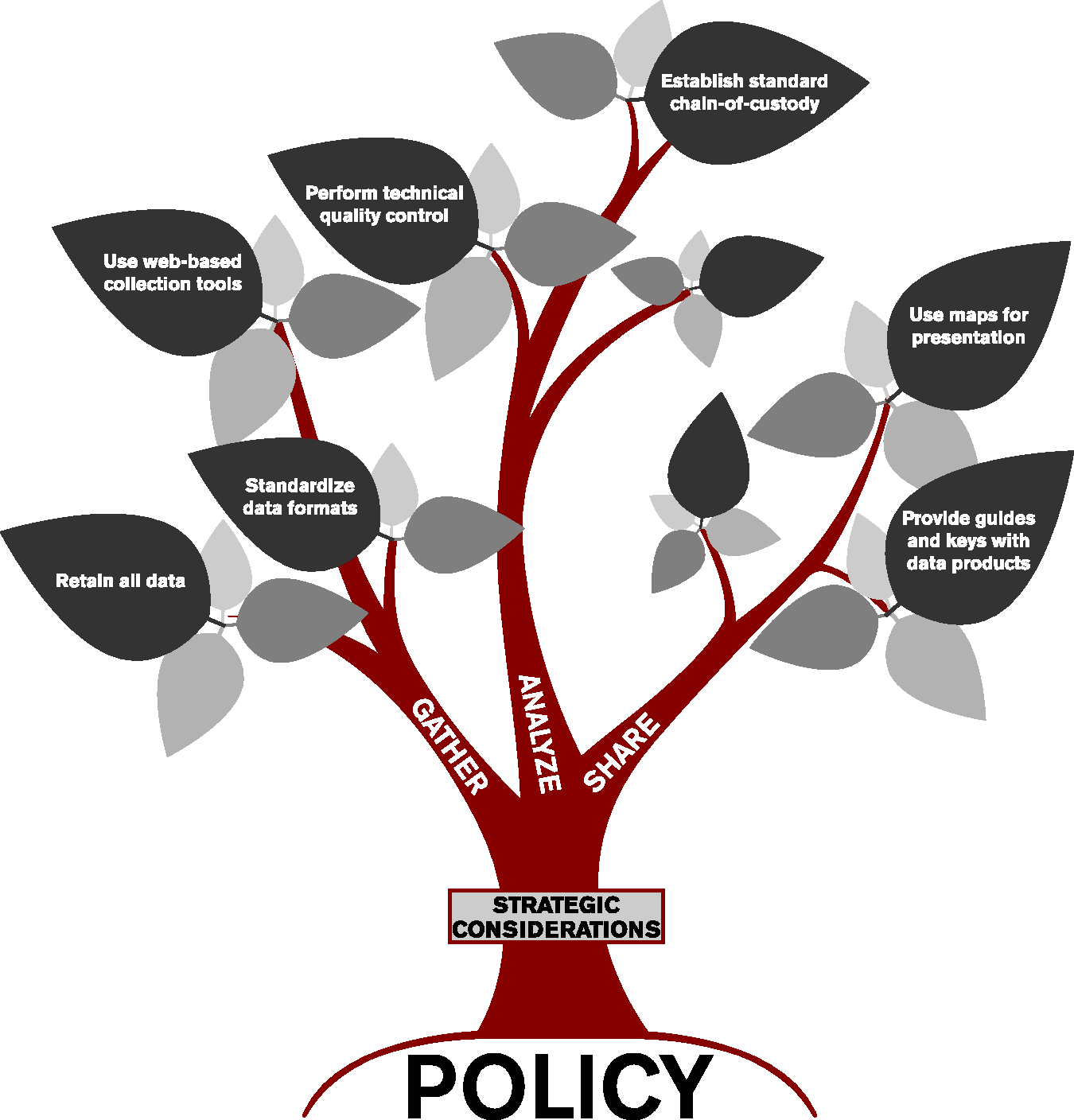
Footnotes
Acknowledgements
The authors appreciate the research and editorial support of Sarah Christophe, Ariana Guy, and Marina Powers.
Funding
Part of this document was prepared as an account of work sponsored by the United States government funded under US Department of Energy (DOE) contract number DE-AC05-06OR23100 between the DOE and Oak Ridge Associated Universities which operates the Oak Ridge Institute for Science and Education (ORISE) for the DOE.