



Abstract
This article examines how the materiality of the public mortuary reshaped the urban governance of death and gave rise to the hygienic modernity in modern Shanghai. Since the mid-nineteenth century, the Shanghai Municipal Council had built mortuaries in the Shanghai International Settlement to uphold public health and facilitate the administration of justice. As the number of Chinese people in the Settlement skyrocketed, the Council endeavored to extend mortuary-based death management from the Westerners to the Chinese population. The public mortuary functioned as a node within Shanghai’s expanding urban infrastructure system, including the hospital, cemetery, and police force. Meanwhile, the mortuary exposed the contestation between the Shanghai Municipal Council, the medical professionals, Chinese local authorities, and Chinese residents, whose cultural and material practices concerning corpse examination and death rituals often diverged from the mortuary-based ones. By foregrounding the materiality and infrastructural politics of death management, this article argues that the public mortuary constituted a contested site through which various actors negotiated and appropriated the meanings of death and ultimately contributed to the local formation of hygienic modernity in modern Shanghai.
The professionalization of criminal investigation and the intervention of medical expertise in early nineteenth-century Europe led to the growing importance of forensic examination conducted by trained doctors. 1 As a result, a set of specialized infrastructure for inquest and postmortem examination, such as hospitals and morgues/mortuaries, became more desirable places than public streets or private houses. 2 The public mortuar became a central place for storing corpses, identifying the deceased, performing postmortem examinations in the International Settlement, and maintaining the order of criminal proceedings. The relocation of death management and postmortem examination in the mid-late nineteenth century took place not only at the European metropoles but also at its colonies and informal empire, such as Melbourne and Shanghai Settlement. 3 While the British sought to govern an interracially populated Shanghai modeled on the urban death management and inquest in nineteenth-century England, mortuaries became the essential infrastructure.
The mortuaries run by Shanghai Municipal Council were initially alien and suspicious to the Chinese residents in Shanghai and local authorities of the Qing (-1911) and then the Republican state (1912-1937). However, it was deeply entangled with the semi-colonial governance, nationalist politics, and lived experience of ordinary people. 4 In a sense, the public mortuary has become the site of contested death management between Chinese and Western, colonial and local, expertise and lay, and so on. Drawing on the official documents, including The Minutes of the Board Committee of Shanghai Municipal Council, Shanghai Municipal Council’s Report and Budget, and the official gazettes of Shanghai medical professional associations and Shanghai local government, this article attempts to answer the questions: how did public mortuary change urban governance and shape the Chinese pattern of death management in modern Shanghai? What were the sociocultural, political, and technological motives of the Chinese response to the public mortuary from the 1850s to the 1930s?
This article examines the history of public mortuary in modern Shanghai through the lens of urban infrastructure. In the last few decades, urban history has shifted from “black boxing” the implication of technology in the city as the background, outcome, and determinant of sociopolitical transformation to rediscovering the “material power” of urban infrastructure. In this sense, the material power of infrastructure was neither constructed by political and social actors nor did it determine the pattern of urban governance. 5 Instead, the urban infrastructure itself is central to the unforeseen tension between the intended functions designed by colonizers/technocrats and the local use of city residents and other related actors. 6 Bringing back the materiality of urban infrastructure enables us to better understand the plurality of techno-politics in the urban context. 7 This article shows how the closure and hygiene of public mortuary stemmed from the colonial technical consideration, on the one hand facilitated the expansion of medical expertise and urban governance in the Shanghai International Settlement . The Republican local authorities in Shanghai, on the other hand, capitalized on and even innovately altered the material features of Western-style mortuary to address the long-standing issues of judicial administration, like protecting the officials of postmortem examination from public harassment after 1927. 8 The materiality of mortuary in modern Shanghai constituted a site of contestation, agency, and innovation surrounding death management.
This article also engages with the discussion of hygienic modernity through revisiting the infrastructural context of public mortuary in modern Shanghai. The rise of mortuary as the infrastructure of urban death management was associated with the emerging discourse of hygienic modernity in the nineteenth century at a global scale. As the colonial powers imposed a range of hygiene practices on non-Western societies, the way of being hygienic became the key distinction between inferior and modern civilizations/states. 9 The pursuit of hygienic modernity in modern China was also intertwined with Chinese struggles over sovereignty, science, and modern state-building. 10 Among this scholarship, the urban infrastructure to underpin hygienic routines and disease control, like sewer system, hospital, and waste disposal, has been well discussed. 11 This article argues that the distinctive materiality of the public mortuary effectively contributed to the local making of hygienic modernity within the broader expansion of Shanghai’s urban medical and hygienic infrastructure, including institutions such as the Shantung Road Hospital and the Pootung Westerners’ Cemetery.
I organize the sections of this article chronologically to demonstrate the continuities and changes in terms of the material practices and the underlying perceptions toward mortuary-based death management in modern Shanghai. This article starts from the 1860s, when the semi-colonial power, the Shanghai Municipal Council (SMC), established the first public mortuary. While connecting mortuary with a set of hygienic infrastructure in the Shanghai International Settlement, the SMC gradually expanded mortuary-based death management to the Chinese populace in the Settlement after 1911. In fact, during the Qing dynasty and the early Republican period, the practices of death and burial were primarily overseen by social organizations. Local authorities intervened only when a suspicious death was reported from below. 12 The limited scope of state intervention was rooted in the Qing state’s pragmatic but non-specialized infrastructure for managing death—epitomized by the use of outdoor, public spaces for postmortem examinations. However, as the death management was associated with the hygienic modernity and the justification for colonial intervention, the Nationalist government showed strong motives to reform it institutionally and technologically. In the last section, I conclude this article by examining how the Chinese authorities in Shanghai appropriated the modernity of mortuary and aligned the designs of mortuary with China’s traditional pattern of forensic examination.
Building the Infrastructure of Death Management in Modern Shanghai
Shanghai was a central hub of east-south coastal Chinese shipping in the mid-late nineteenth century. 13 During the Late Qing, Shanghai was divided into three administrative entities: the International Settlement (1863-1943) which was amalgamated from the British and American concession in 1863; French Concession (1849-1943) ruled by French consul in Shanghai; and the Chinese Walled City of Shanghai (also known as Shanghai county) under the jurisdiction of China’s local authorities (see Figure 1). 14 To serve their commercial interests in the International Settlement and protect them from outside unrest, British land renters established the Shanghai Municipal Council (SMC) and the Shanghai Municipal Police Force (SMP) in 1854. 15
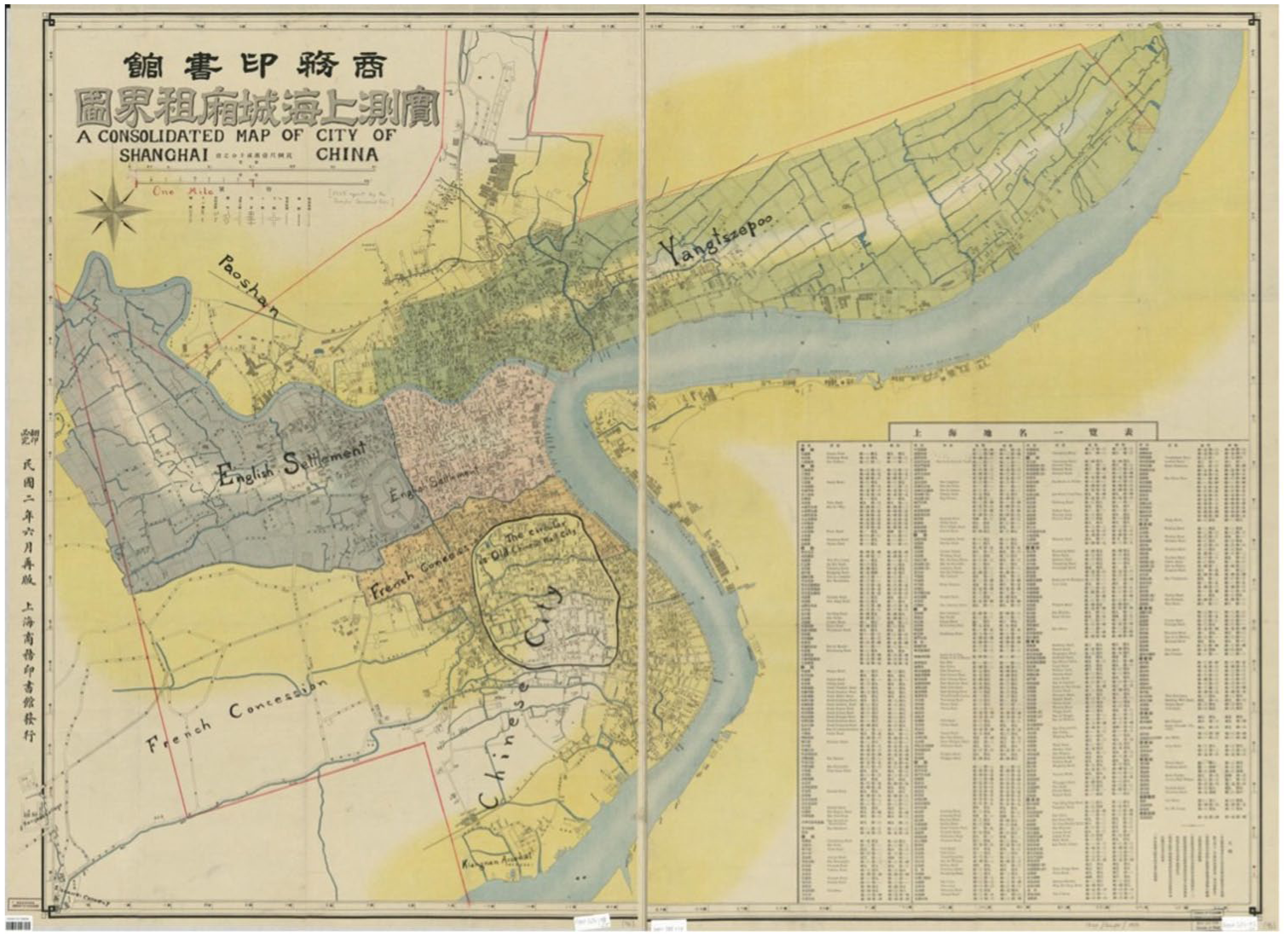
A consolidated map of city of Shanghai.
In the 1840s, the SMC was only responsible for road construction and policing within the limits of the Settlement. However, the amendments to the Land Regulations by the British and American consuls in 1854, 1869, and 1898, respectively, enabled the SMC to assume broader jurisdiction over areas such as taxation, public health administration, labor regulation, and the administration of justice within the International Settlement. 16 After the mid-nineteenth century, death management in the Shanghai International Settlement—including birth registration, death certification for deceased foreigners, and the regulation of Western burials and cemeteries—became a domain increasingly overseen by the SMC. As Kerrie MacPherson demonstrates, western doctors in Shanghai, like James Henderson (1829-1865), along with the western hospitals, like Shantung Road Hospital (1864) and Hongkew Hospital (1866), provided the administrative and medical infrastructure for the vital statistics on foreigners in the International Settlement. 17 In addition to the hospital, to enhance the municipality’s still-limited authority over the deaths of foreigners, the SMC established the earliest public cemeteries in the International Settlement, including Pootung Cemetery in 1859 and Bubbling Well Cemetery in 1898. These municipally controlled cemeteries not only reinforced the authority of the SMC but also embodied colonial policies that codified social hierarchies and ethnic differentiation. 18 In a sense, the rising power of urban death governance largely benefited from this hygienic infrastructure by the late nineteenth century.
In addition to the hospital and public cemetery, the mortuary was also instrumental to the urban death management of SMC and British judicial administration in the Shanghai International Settlement. Since the early-nineteenth century, public mortuary had emerged as one of the most essential and specialized facilities for storing corpses and conducting postmortems in Britain and France, replacing the postmortem examination at ad hoc spaces, including outdoor public sites and private places. 19 The coroner in England, which was the key position elected by local residents to investigate and establish the facts of suspicious death, came to the fore in the establishment of mortuaries in the mid-nineteenth century. Coroners’ advocacy of public mortuaries was largely welcomed by public health experts and doctors, as well as by the police desiring to improve their working environment for postmortem examinations. 20
In contrast to the English model, the development of mortuary-based urban death management in the Shanghai International Settlement was shaped not by the judicial authorities, such as the coroner or consul associated with the British Consulate-General, but rather by the SMP and British medical officers employed by the SMC. In the International Settlement, the Pootung Public Mortuary, the Old Mortuary Chapel, and the Shantung Road Mortuary, run by Shanghai Municipal Council, had been in operation since the 1860s, 1880s, and 1890s, respectively. 21 Despite their different institutional origins, English and Shanghai mortuaries were similar in terms of their function of improving urban hygiene. Several renovation plans starting from the late nineteenth century revealed that these mortuaries were preliminary in terms of the quality of building and equipment. The major facilities of these mortuaries mainly included autopsy tables where the SMP and medical staff could examine bodies. 22
The infrastructure power of the public mortuary was heavily reliant on its interconnection with the expanding Shanghai’s urban medical and semi-colonial administrative institutions. The earliest mortuaries in the Shanghai International Settlement were located near either the cemeteries or the hospitals. For instance, Shantung Road Mortuary was close to the earliest western cemeteries and the first western hospital accommodating Chinese patients (Shantung Road Hospital) in Shanghai. Pootung Mortuary, which opened in the late nineteenth century, also had geographic proximity to the remote Pootung (Pudong) westerners’ cemetery.
23
Located at 37 Fearon Road in the northeastern section of the Shanghai International Settlement, the Fearon Road Mortuary also functioned as a connecting infrastructure between the hospital and burial or funeral institutions. The following is a detailed depiction of the mortuary as it appeared in 1933: On the side of the mortuary facing the street are 12 such rooms reserved for bodies brought in from the outside, while the other end of the mortuary building is used for corpses from the isolation hospital . . . all accident cases that succumb at local hospitals as well as those that die through violence are taken to the public morgue for investigation or hearing before being turning over to morticians or benevolent societies.
24
From this description and the image of Fearon Road Mortuary (Figure 2), it was not a decent place that brought peace to the deceased but an infrastructure that strengthened urban governance of death and upheld colonial hygienic modernity. Under this infrastructural and spatial arrangement, the Western deceased could be efficiently moved from hospital to the mortuary or the cemetery which significantly reduced the possibility of exposing examined corpses to the public.
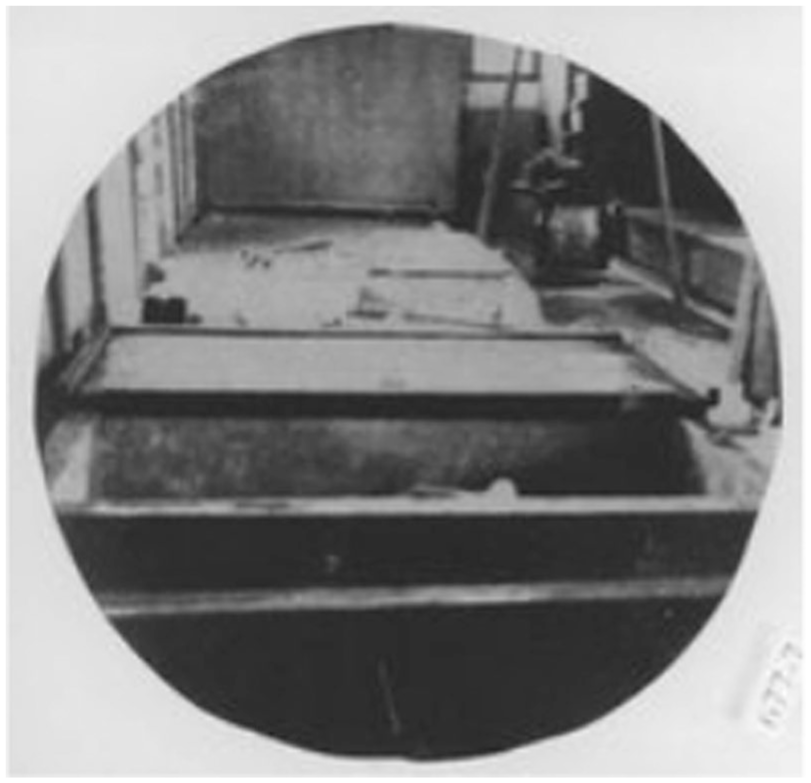
Cement Corpse Storage Boxes of the Shanghai Municipality’s Mortuary.
In conjunction with the medical and urban hygienic infrastructure, the public mortuary strengthened the SMC’s administration of criminal justice within the International Settlement as well. In 1884, the annual report and budget for Shanghai Municipal Council revealed that the earliest public mortuary in the Settlement, the Mortuary Chapel in the Old Cemetery, had been repaired to “suit the requirements of the Municipal surgeon at postmortem examination.” 25 On June 6, 1890, the health officer of SMC, Edward Henderson, further suggested adding the function of doing laboratory work for Pasteurian inoculation against hydrophobia to the existing role of postmortem examination and corpse storing at the Old Mortuary Chapel. 26 Public mortuary had been instrumental to the semi-colonial urban administration in the Settlement since the 1880s.
The efficiency of integrating the public mortuary into the broader infrastructure of judicial administration becomes even more apparent when compared to non-mortuary practices, such as conducting examinations at crime scenes. On November 25, 1926, the assistant health officer negotiated with the secretary of the SMC and the Deputy Commissioner of Police on the inquest fees that were charged by medical staff. They agreed to the following fees: twenty-five taels for an autopsy/dissection, ten for inspecting a body at the site of the incident and furnishing a report on the external injuries, and five for inspecting a body in the public mortuary and furnishing a report on external injuries. According to correspondence among SMC officials, conducting postmortem examinations in the mortuary—rather than at ad hoc locations such as accident or crime scenes—significantly reduced the time and effort required of medical personnel, who were often burdened with numerous other hygienic responsibilities. 27 By and large, the advent of public mortuary consolidates the hygienic and judicial infrastructures of urban death management in Shanghai International Settlement.
Contested Space of Chinese Death Management in Semi-Colonial Context
As Qing officials and Sino-foreign treaties prohibited British (foreign) consuls and doctors from examining deceased Chinese in the Late Qing period (-1911), western mortuaries at the International Settlement mainly accommodated death and postmortem examinations of the westerners’ corpses. 28 According to reports in Shenbao 申报, during the Late-Qing period, the county magistrates of Qing together with the charity halls at Shanghai routinely handled Chinese death and performed postmortem examination. 29 Throughout the Qing dynasty, it was largely the Chinese county magistrate that had discretion in choosing the sites of postmortem examinations. 30 Due to the ambiguity of The Qing Code and forensic guidebooks, county magistrates possessed a certain level of discretion in choosing the site of examination. In fact, they mostly conducted postmortem examination in outdoor, bright, and ad hoc places near where the deceased were found. 31 The preference for such sites also reveals the distinctive infrastructural politics that constrained Qing local authorities’ approaches to managing suspicious deaths from the eighteenth to nineteenth centuries.
County magistrates mostly performed postmortem examination in the foul air while tolerating the smell of decomposing corpse. The Qing Code indeed stipulated that the county magistrate was obliged to head to the site of corpse immediately once he was briefed the report of homicide case. 32 However, delayed postmortem was quite common in practice, since many homicide cases occurred in the remote regions that were difficult for magistrates to arrive from the walled city. The delays usually led to accelerated decay of the body. 33 To disperse the stench, some legal specialists suggested Qing local officials apply woody fragrance and nasal obstruction 辟秽苍木甘松及塞鼻阿魏艾丸, as well as move the corpse to an outdoor (usually nearby) site and upwind place向上风坐定 for forensic examination. 34 Some other tools, like a towel with spirit, were also used to prevent the stink. 35 In 1730, the Qing central government promoted the compilation and publication of an officially sanctioned guidebook called Zhouxianshiyi 州县事宜 (Affairs of the County). 36 It mentioned that magistrates always resented the stink of corpses and avoided staying too close to the site of postmortem examination. 37 In a sense, the intolerable odor of corpses had been a salient problem in Qing county-level death management and postmortem examination since the early eighteenth century. Choosing an outdoor site for postmortem was an effective method to mitigate the odor (Figure 3).
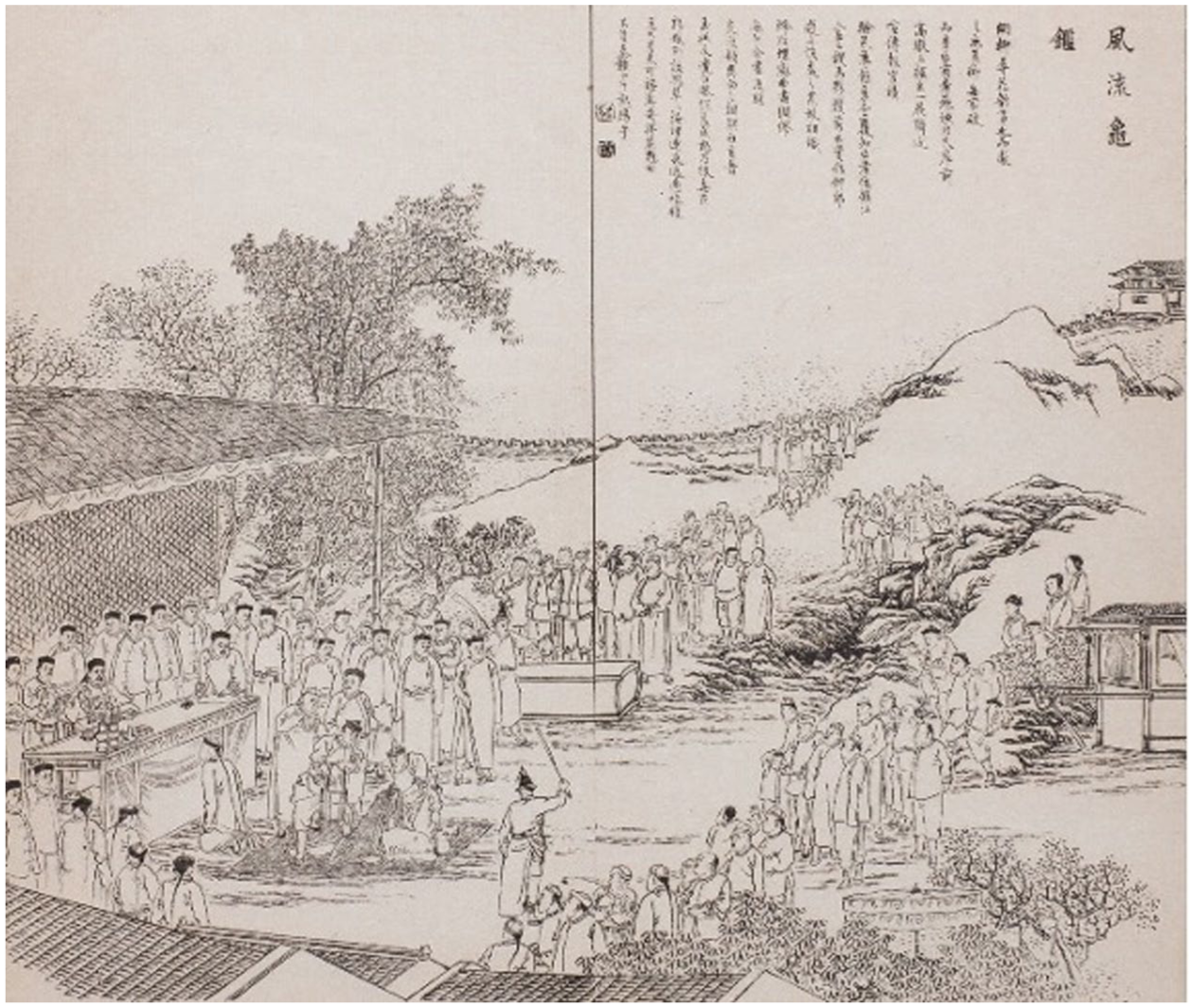
Public inquest and postmortem examination (“Testimony to the illicit affairs”, Fengliu Guijian) (1884).
The outdoor postmortem in the Qing period, despite their effectiveness in keeping officials from the odor of corpses, led to infrastructural risk and sociopolitical implication. Since the late imperial era, the site of postmortem examination had been mainly unguarded and chaotic. These ad hoc sites for postmortem examination caused undesirable official-commoner interactions and even conflicts during suspicious death management. In the Qing era, shiqin 尸亲 (relatives of the deceased) and curious spectators were likely to interfere with the postmortem examination, causing trouble and even small-scale riots when they were dissatisfied with the procedure or result of the postmortem. 38 To solve this problem, some administrative and judicial experts, who dedicated themselves to serving the local authorities of the Qing, offered some technical solutions based on their field experience. 39 For example, Huang Liuhong 黄六鸿, an experienced local official in the seventeenth century, suggested that local county magistrates shall exclude any irrelevant spectators from the site of postmortem. He also advised the county magistrate to order yamen runners to police the site of the postmortem and maintain order during the examination. 40 Fang Dashi’s (方大湜 1821-1887) brought up this issue again in his official handbook Pingpingyan 平平言, which suggested that local officials shall prudently handle riots at the site of postmortem with the assistance of yamen runners. 41 These recurring suggestions in influential official handbooks reveal that local Qing officials commonly failed to maintain the order of postmortem examination in the Qing era. The strategies of policing the site and excluding irrelevant people rarely made a huge difference in preventing chaos and official-commoner conflicts.
Amid rapid urban growth and a rising number of unclaimed deaths in nineteenth-century Shanghai, the outdoor and public postmortem by the local government became less effective. In response, officially assigned the social organizations, such as charity halls, to fill the gaps left by overburdened county magistrates. As the city’s key infrastructure of death management organized by local Chinese gentry during the late Qing and early Republican periods, charity halls provided burial and temporary storage for unclaimed or impoverished Chinese corpses, such as migrants, laborers, and the destitute. Charity halls in Late Qing Shanghai often possessed their own burial spaces and coffin repositories, which enabled them to provide proper space for local authorities’ postmortem examination in the urban area. 42
One of the largest charity halls in the International Settlement and Shanghai county was Tongren Fuyuantang (同仁辅元堂), established in the early nineteenth century and funded by merchant donations and temple revenues. Authorized by Shanghai officials with the consent of the SMC, Tongren Fuyuantang was responsible for burying poor and unclaimed Chinese deceased and reporting suspicious deaths to local authorities for forensic examination. The operation of charity halls was primarily underpinned by the imperative to maintain social harmony, uphold local governance, and avoid the polluting effects of corpse exposure. 43 However, the internal structure and facilities of Tongren Fuyuantang were backward and poorly maintained, often resulting in delays in the examination of corpses and posing significant hygienic risks. 44 In fact, unlike the public mortuary and western hospital that embodied the medical expertise in the urban setting, the charity hall’s mission was mainly philanthropic and semi-governmental in Late Qing Shanghai.
With the rise of Western medicalized death practices and new institutions such as public mortuaries, hospitals, and cemeteries regulated by colonial or semi-colonial authorities, the legitimacy and efficiency of China’s existing infrastructure of death management were further undermined by the booming population, and increased mortality and criminality in the Shanghai International Settlement. 45 The SMC and Western doctors continued discrediting the Chinese manner of death management and forensic examination in the Settlement (Figure 4). For instance, on March 20, 1893, health officer Edward Henderson addressed the chairman of SMC to file a complaint that too many Chinese corpses and coffins with the risk of infectious disease were disposed in the Settlement without proper management. Henderson, therefore, suggested that “all possible care is taken to effect the safe and prompt removal of the body from the Settlement.” 46 Western doctors in Shanghai also called for taking care and examining Chinese corpses in the public mortuary in 1908. 47 However, the Intendant of the Circuit of Shanghai 上海道台, the high-ranking Qing official taking charge of the diplomatic affairs at Shanghai, rebutted this proposal and considered it as willful intrusions of SMC on the status quo of administration in the International Settlements. 48
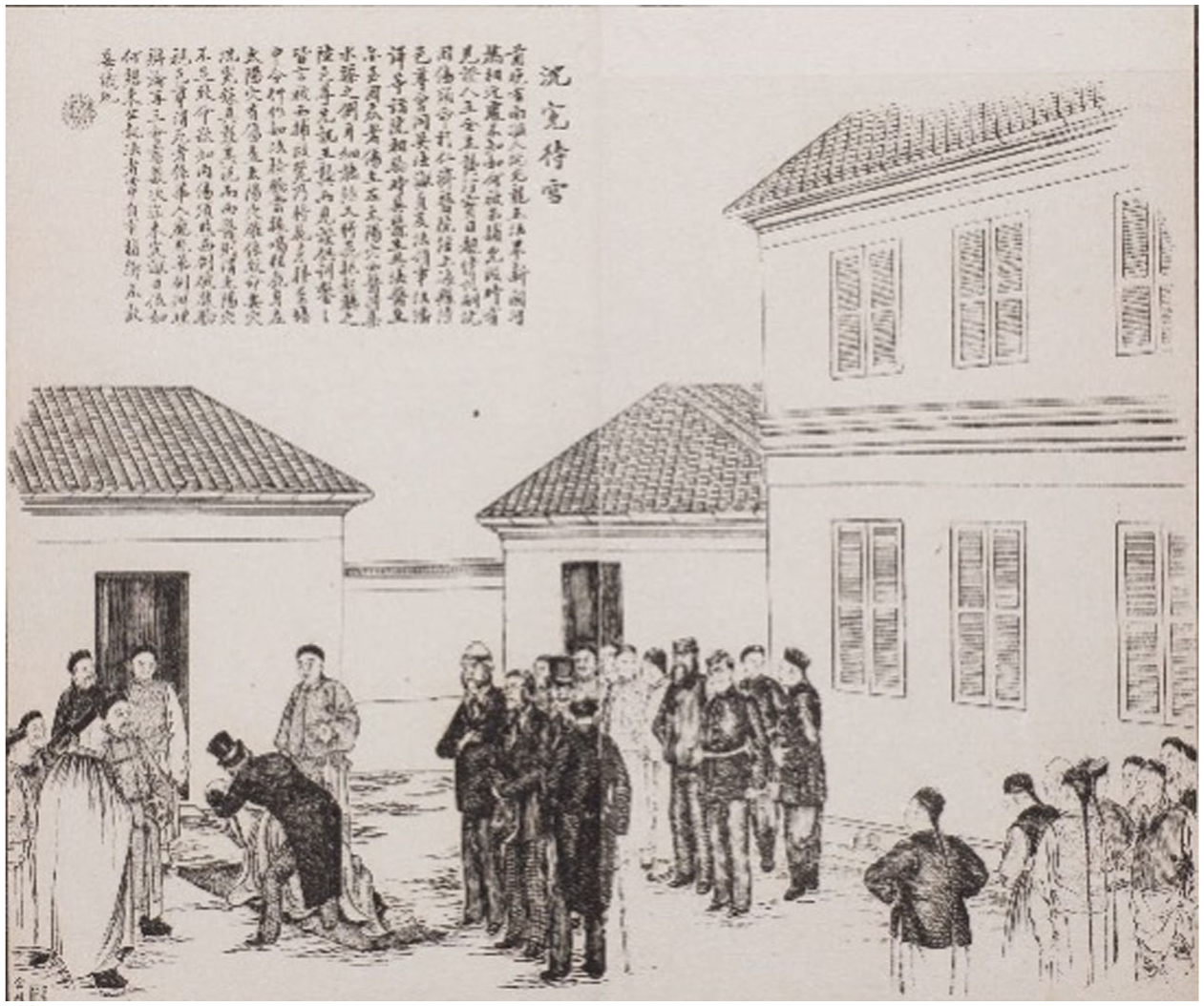
An outdoor joint inquest at French Concession (“Vindication”, Chenyuan daixue) (1891).
After the fall of the Qing in 1911, Chinese authorities in Shanghai lost control of the postmortem examination of Chinese deceased in the International Settlement. 49 Western assessors and Chinese judges in the Shanghai Mixed Court, appointed by foreign consuls, started to supervise the forensic examinations of Chinese deceased after 1912. 50 From 1912 to 1930, a new public mortuary on Fearon Road became the major site for forensic examination in the International Settlement. Meanwhile, the SMC’s professional medical officers and Chinese assessors in the Mixed Court, as well as the Shanghai Municipal Police inspectors (and sometimes foreign consuls), replaced local Chinese officials and wuzuo in undertaking forensic autopsies on Chinese. 51
The steady increase of Chinese bodies received in public mortuaries since 1912 gives us some clues on the rise of mortuary as the crucial site for Chinese death management and postmortem examinations in the International Settlement. In 1907, 33 “foreign bodies” and 33 “Chinese bodies” were handled at mortuaries. 52 This set of numbers rises to 73 (foreigner) and 195 (Chinese) in 1915 after the Qing regime collapsed. 53 Five years later, the Chinese bodies handled by the SMC in public mortuaries reached a higher level, 273 in total. 54 In 1929, 744 bodies were examined at the public mortuaries, and 677 of them were Chinese. 55 Given the rapid growth of the Chinese population and the limited capacity of the Shanghai Municipal Council (SMC) to conduct mortality statistics and inquests in the International Settlement before the 1940s, it remains difficult to determine the proportion of Chinese deaths that were managed through mortuaries (Figure 5).
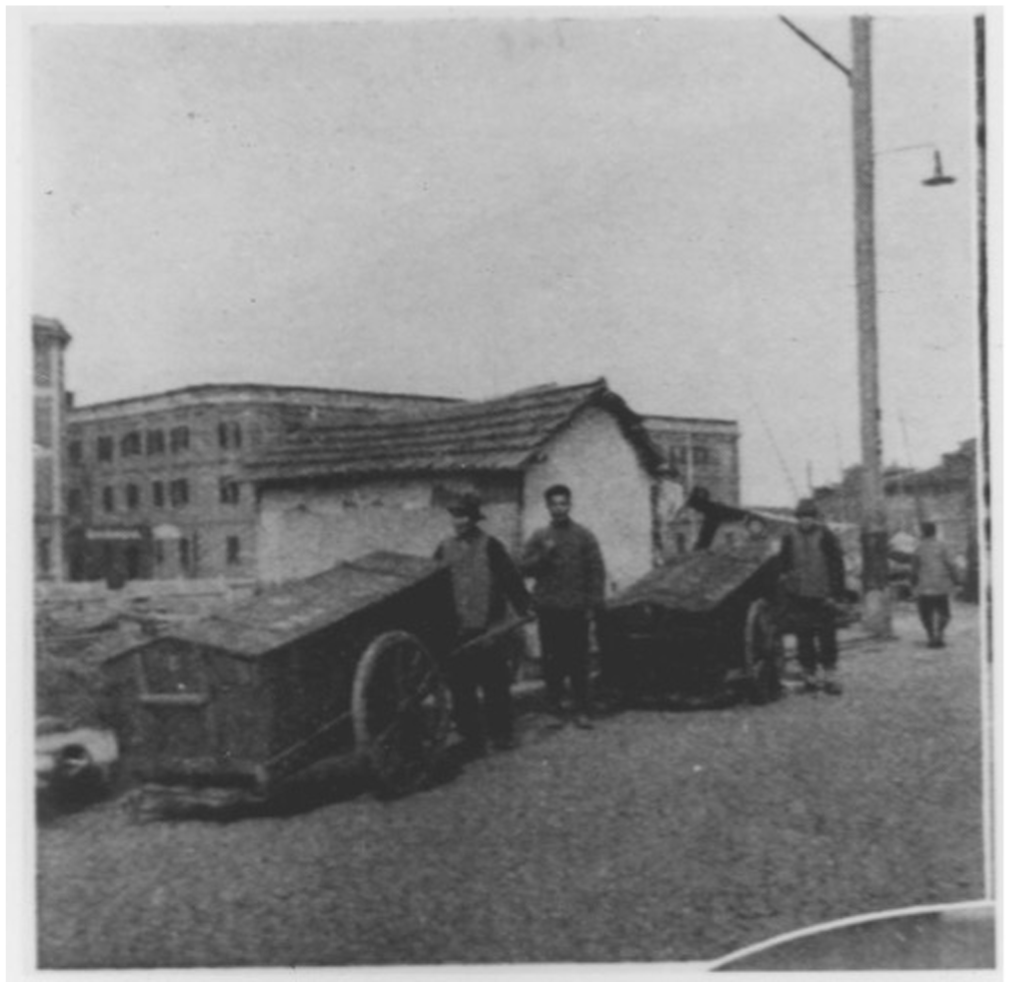
Corpse Carts of the Shanghai Municipality’s Mortuary.
Nevertheless, the increasing public mortuaries’ influence on Chinese death management failed to expose the underlying contestation surrounding the infrastructural politics of urban governance and in the Shanghai International Settlement. The newly established mortuaries in the Settlement, despite their emphasis on closeness and privacy, were not so different from the Qing’s “outdated” and unhygienic counterpart in terms of their inherently infrastructural politics. Like the ad hoc and outdoor spaces used for postmortem examinations during the Qing era, mortuaries also constituted the site where semi-colonial authorities, such as the SMC and SMP, meticulously eliminated and negotiated with the local suspicion and resistance from below.
On May 30, 1925, in the International Settlement, well-armed Shanghai Municipal Police Force’s policemen shot Chinese protestors at the gate of the Laozha police station with no warning. In this notorious May Thirtieth Massacre 五卅惨案, four Chinese citizens were killed at the scene and several later died of severe wounds. 56 The SMP swiftly moved the bodies of these protestors to a public mortuary at the corner of Fearon Road and Range Roads. To establish the causes of death and ascertain the identity of the deceased, the SMP’s officers, accompanied by several Western doctors and judges of the Mixed Court, all headed to this mortuary and performed a postmortem examination. Relatives of the deceased and several witnesses were also summoned to the mortuary to make depositions and identify the body. It is interesting to note that a squad of the SMP’s policemen lined up around the mortuary, as they had been informed that there would be a demonstration targeting this mortuary. It appears that the SMP and the courts anticipated dissatisfaction from protesters regarding the autopsy results at the mortuary and thus required them to observe the procedure. Ironically, the perceived threat proved unfounded: only a single representative from a student union arrived at the mortuary to stage a peaceful and non-violent protest. 57 Against the backdrop of the rising anti-imperialist and anti-colonial movements of the 1920s, this episode not only showcases the growing political tensions between local Chinese and the SMP but also underscores the significance of the mortuary’s material and infrastructural characteristics—its walled and excluded structure—in instigating the suspicion and shaping the semi-colonial politics.
In other cases, such tension took the form of local resistance. For instance, in 1928, a Chinese woman died in a traffic accident. She was taken back to her own home at 450 Bubbling Well Road by her relatives, after a failed emergency treatment at Paulun Hospital. The incumbent coroner in International Settlement, Stevens, insisted on summoning doctors to conduct a postmortem examination in a public mortuary immediately. 58 The foreign lawyer hired by this family, however, claimed that there was no such regulation requiring bodies to be brought to the mortuary for an inquest, and that this “respected” family would be upset if the deceased were examined anywhere but her own home. For deaths that did not fall into the category of murder, like the woman who died in a traffic accident, examining the body in a mortuary would impose stigmatization. As a result, Stevens and Judge Koh agreed to come to the home of the family to conduct the postmortem examination. 59
The family of this woman challenged and successfully resisted a mortuary-based postmortem examination in a time when the different tiers of commercialized death management provided by funeral parlors, native-space associations, and charity organizations coexisted with state/colonial institutions. 60 The mortuary constituted not only a central part of hygienic modernity but also of the infrastructure of state and colonial power, through which medical expertise and semi-colonial authority intruded into the domain of society. In contrast to the death management conducted publicly and on-site, or in charity halls for unclaimed bodies, death in mortuaries was less visible and comprehensible to the public, therefore consolidating the power of the state in urban governance. Nevertheless, like many other aspects of Shanghai’s everydayness, 61 the materiality of mortuary oftentimes led to semi-colonial/local contestations. The moral and material basis of indigenous death management embodied by the fixation on conducting postmortem examination at a private home, persisted throughout the Republican era in Shanghai.
Appropriating the Material Power of Mortuary
Despite lingering suspicions and resistance against the mortuary-based death management, neither Chinese residents nor local authorities in the Shanghai district could utterly reject the material power of the mortuary—a centralized infrastructure of urban death governance that not only embodied hygienic modernity but also expanded the authority of judicial officials. With the surge of anti-imperialist movement at Chinese treaty ports from 1927 to 1937, Chinese reformers were eager to seek the proof of technological advancement and judicial modernity to justify the request of abolishing extraterritoriality and the Mixed Court. 62 By the late 1920s, Chinese reform-minded judicial officials and medical professionals had started to adapt the western-style technological designs of mortuary to Chinese patterns of judicial administration and urban death management. By examining the distinctive material features and the infrastructural politics of public mortuaries designed by Chinese authorities in Shanghai during the 1920s and 1930s, this section argues that the indigenization of the public mortuary in China was not merely the linear diffusion of western technology and hygienic modernity. 63 Rather, it involved the local appropriation of its material power, through which various actors reimagined and tinkered with the functions of the mortuary to serve their own interests.
From 1927 onwards, the nationalist government had started to establish public mortuary at major cities. One of the earliest schemes is known as the Scheme of Building Mortuary in Zhejiang Province (1928). The magistrates of six counties and several provincial officials collectively endorsed this scheme. It is worth noting that, although this scheme claimed to be modeled on the new Western-style facility at the Fearon Road Mortuary in the International Settlement, its technological design and material configuration revealed significant departures from that model. This scheme lists the required material and equipment needed for this mortuary. Unlike the public mortuary of the Shanghai International Settlement, which was equipped with autopsy tables and specialized chambers for storing corpses, this “Chinese-style” mortuary was fully designed using the technologies of Washing Away of Injustice 洗冤录. 64 For instance, it featured daxiao lu 大小炉 (the big and small stoves) for heating zaocu 糟醋 (white vinegar) to clean corpses, all very common facilities in traditional Chinese postmortem. The zhenlong 蒸笼 (giant food steamer) was also an indispensable tool for the delicate skill of examining bones. 65
This unique materiality of mortuary design was rooted in the continued prevalence of traditional Chinese forensic practices within the judicial system of the Nationalist government. By the early 1930s, the judicial apparatus of the Republican state—including local and high courts as well as prosecution offices—continued to rely on both anatomically trained forensic experts and traditional wuzuo 仵作 who practiced the techniques outlined in The Washing Away of Injustice. As Daniel Asen compellingly argues, this indigenous yet well-established forensic tradition persisted because Republican judicial officials regarded traditional forensic practices as pragmatic and manageable tools for consolidating their own professional authority. In fact, medical professionals never succeeded in wiping out the technologies of the Washing Away of Injustice in the Republican era. 66 The localized version of the public mortuary in Zhejiang showcased how the materiality of mortuary was appropriated to fit into the hybrid system of forensic examination in the Republican China.
The material appropriation of Western mortuary is also evident in terms of the infrastructural politics of its enclosure and indoor designs. As the last section demonstrates, the local officials during the Qing period often struggled to maintain order during postmortem examinations in public. Policing strategies were largely ineffective, and investigations into suspicious deaths frequently became public spectacles in late imperial rural society. 67 By the late nineteenth century, this problem lingered. In the 1880s, the Shanghai magistrate was involved in debates with an infuriated public, including relatives of the deceased, who expressed great discontent with official forensic examinations in Shanghai. In one case, their discontent eventually led to a small riot at the site of the postmortem. The county magistrate had to run away from the site. 68
The scheme of building mortuary in 1928 also highlighted this issue that the postmortem examination by Chinese county magistrates and wuzuo in outdoor and ad hoc sites were vulnerable to disturbance from the public and relatives of the deceased, especially when they were dissatisfied with the procedure or results of examination. According to the authors, a newly constructed walled and enclosed mortuary aimed to effectively safeguard judicial officials, forensic examiners, and the corpse itself from hostile crowds and potential assaults by the deceased’s relatives. To prevent public access to forensic examinations, the blueprint attached to the scheme deliberately marked the minimum height of the mortuary wall—four Chinese chi (approximately 1.3 m)—tall enough to isolate the postmortem examination and officials from the observer’s eyesight and intervention. This distinctive material design reveals the infrastructural politics embedded in its construction . 69
Indeed, the judicial officials who attempted to introduce public mortuary to China conceived this infrastructure not only as a symbol of hygienic modernity but also as an infrastructural solution to long-standing issues of judicial administration. Six years after the Zhejiang proposal, the influential Shanghai Physician Association 上海医师公会 also initiated a proposal for building mortuaries in Zhabei and Nanshi district in 1934. The ensuing governmental reports emphasized how this public mortuary would be essential to not only the public health of the city and the abolishment of extraterritoriality, but also preventing the chaos and disorder generated by the curious public watching the scene of postmortem examination on the street. 70
Conclusion
Similar to the other modern urban infrastructures that emerged from the nineteenth century, public mortuary became increasingly relevant to the modernity of urban governance in Europe and non-Western colonial cities. Mortuary signified a node of hygienic and efficient death management in the modern sprawling city. With the collaboration of medical experts, mortuary-based bureaucratic intervention on the urban dead, such as identifying unclaimed bodies and postmortem examinations, was intensified. As the first section of this article demonstrates, the SMC established mortuaries to enhance public health, colonial governance, and judicial efficiency in the International Settlement from the 1860s. Key facilities like Shantung Road Mortuary and Pootung Public Mortuary improved urban hygiene and administration by swiftly relocating corpses while streamlining medical procedures, reducing the workload of health officers and police in forensic examinations.
The second section of this article examines the different infrastructural politics of death management between the mortuary-based Western system and the Chinese outdoor style, revealing how the difference led to constant conflicts in modern Shanghai. In the Qing dynasty, forensic examinations of deceased Chinese were primarily conducted outdoors by county magistrates due to practical constraints. The Qing Code allowed magistrates discretion in choosing sites, often opting for outdoor, public space to mitigate corpse odors. However, Western authorities perceived the exposed Chinese bodies and forensic examinations performed by Chinese authorities in public space as China’s incapacity to govern urban death in modern Shanghai. Before the 1911 revolution, Chinese people and local officials largely succeeded in resisting the mortuary-based death management imposed by the SMC in the International Settlement. By 1912, after Qing rule ended, forensic examinations shifted to mortuaries managed by the SMC, reflecting colonial influences and tensions between traditional Chinese death practices and modern governance.
In the last section, this article highlights the continuity of the infrastructural politics of death management in modern China. Despite its initial resistance, it did not take very long for the Chinese judicial authorities and medical experts to embrace the central role of mortuary in urban death management. Nevertheless, some long-term issues entrenched in China’s death management since the Qing period persisted and found their way into the materiality and nationalist government’s language of the mortuary design in the 1930s. Public mortuaries were envisioned not only as hygienic and judicial advancements but also as tools to prevent public disorder during postmortems.
Footnotes
Acknowledgements
The author wishes to thank the anonymous reviewers as well as Hanchao Lu, Kristie Macrakis, Angela Ki Che Leung, and Linzhou Xing for their thoughtful feedback on this manuscript.
Declaration of Conflicting Interests
The author declared no potential conflicts of interest with respect to the research, authorship, and/or publication of this article.
Funding
The author received no financial support for the research, authorship, and/or publication of this article.
