




Abstract
Ladera, a postwar interracial housing cooperative, provides a compelling look at 1940s housing policies, exposing cultural norms of race in state lending structures. In contrast with most midcentury suburban developments, Ladera was architecturally progressive in design and egalitarian in scope, open to all regardless of race, class, or creed. The research examines the innovative planning and fiscal features of the community, followed by an explication of the 1940s lending landscape and state-sponsored financing process that ultimately reshaped Ladera’s development. As a necessary corrective to established narratives of California’s housing policies, this study reveals the influential intersection of racial and class dynamics prior to Palo Alto’s eventual transformation into the nexus of Silicon Valley, exposing the critical preconditions that produced the sprawling, segregated technopolis of today. The cooperative’s history is analyzed through archival materials, including the cooperative’s records, personal journals, architectural drawings, and the FHA’s internal memos and correspondence.
Introduction
Nestled into California’s Coast Range 30 miles south of San Francisco is a collection of sleek modernist houses situated along a curving lane. The low-slung buildings are composed of simple planar forms, with flat roofs, horizontal in line and material, with compact dimensions. Each house is a unique variation on a collective modern theme, with fine, precise detailing in a variety of materials; most are one story with exterior redwood siding and spare roman brick chimneys. What is remarkable about the architecture is the vast amount of glazing—expansive horizontal bands of floor-to-ceiling windows that overlook the surrounding sylvan landscape. Interior spaces open out onto sun-filled terraces partially shaded by wide overhangs and trellises, reflecting a selective integration of landscape and architecture. Although the area is semirural, with rolling grasslands and large stands of native oaks, a low-lying research facility is barely perceptible in a nearby valley; beyond that lies Stanford University’s Linear Accelerator Center. From the ridgetop lane, on a clear day, the views are spectacular: to the north, San Francisco and Mt. Tamalpais; to the east, the towns of Palo Alto and East Palo Alto, beyond them San Francisco Bay, and in the far distance Mt. Diablo. To the south, the panorama of Santa Clara Valley—today’s Silicon Valley—is spread below. Belying the natural setting, a sleek two-lane roadway provides residents access to the university, a ten-minute bike ride away, and onward to downtown Palo Alto where a Caltrain commuter station is located. Altogether, landscape and architecture, this community, dubbed Ladera by its founders, seems a vision of modern California living—unpretentious, wide open, and designed with understated style (Figure 1).
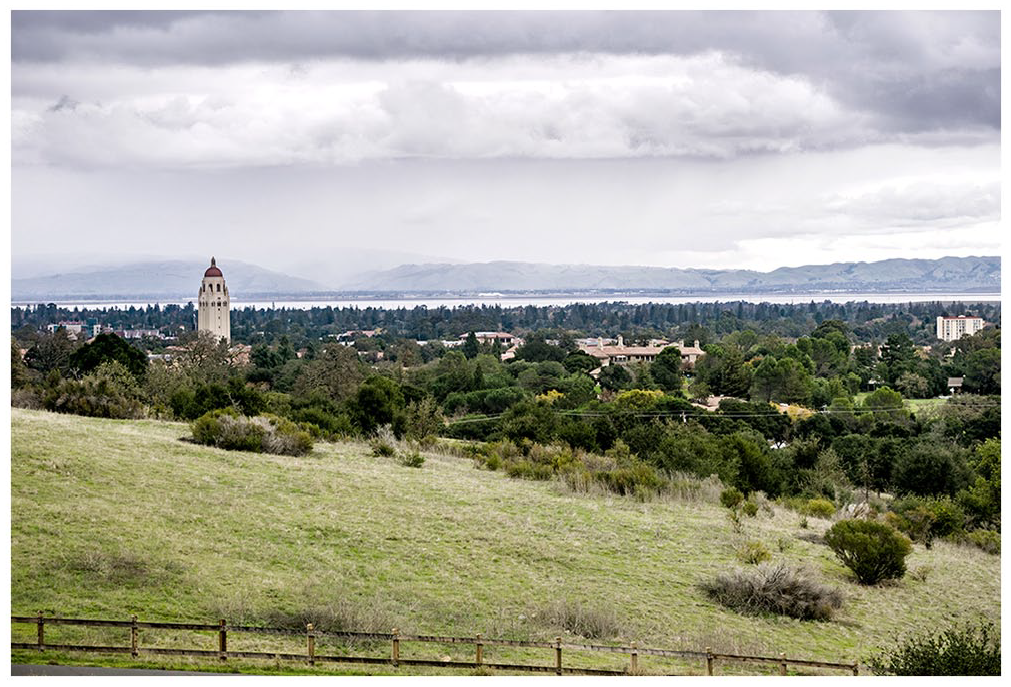
View toward Stanford University and San Francisco Bay, Palo Alto, CA. Sundry Photography, 2021©.
What I have described is only a portion of what was originally envisioned for the Peninsula Housing Cooperative’s (PHC’s) planned community. Created by a group of idealistic individuals and socially minded architects in the 1940s, this ambitious development was designed to comprise 400 homes, but only 15 percent of it was built to the original scheme of the architects, John Funk and Joseph Stein, and landscape architects Garrett Eckbo and Robert Royston. Conceived as a mixed-income and mixed-race cooperative development, the progressive community of Ladera would have been unlike any other housing development in America. In conception, it was an advanced exploration of ideas related to social and economic equality, as well as to the craft of construction as an aesthetic and environmentally responsible practice. The spare, modern houses were sited within a total community that was to include parks, schools, social centers, and retail shops. The cooperative’s comprehensive, inclusive vision embodied the potential of postwar suburbanization and would have had broad social and environmental implications (Figure 2).
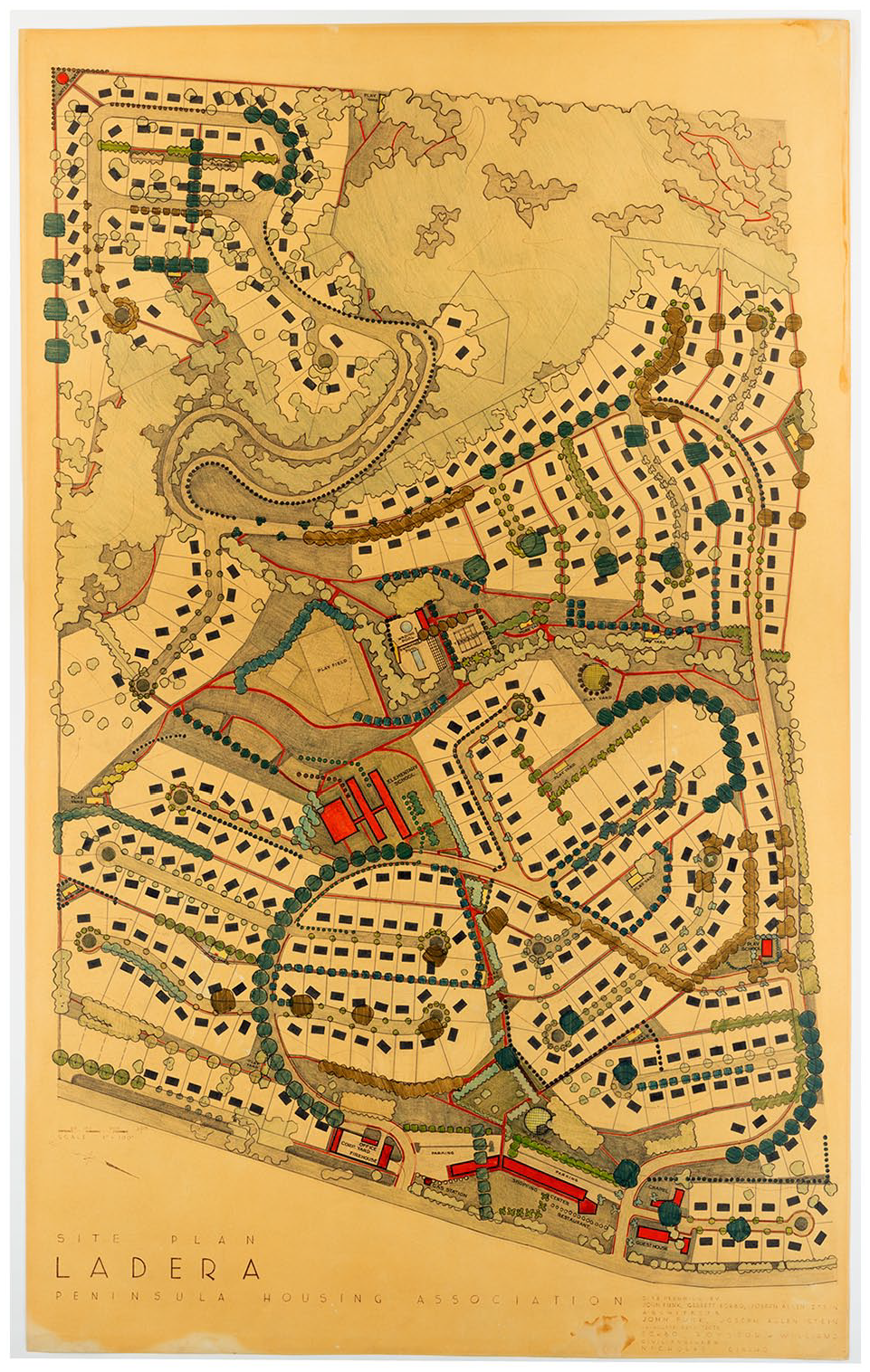
Ladera community site plan, colored pencil on paper, 1946. Garrett Eckbo Collection ©.
Yet Ladera was never fully realized. To answer why that was, this investigation more closely considers the lending landscape of the 1940s and the effects of the state-sponsored financing processes of that time. I argue that the Federal Housing Administration, in combination with local real estate, banking, and building industries, utilized an obscure practice known as “credit rationing” and thus played an instrumental role in the structural institutionalization of segregated suburbs. Here, credit rationing refers to unequal or differential lending practices that employed a set of criteria to restrict access to credit, typically on the basis of race, gender, religion, or national origin—the effect of which was the denial of loans or other financial supports to designated classes or to racially integrated developments. 1 Furthermore, due to those differential lending practices, California suburbs saw the same results as those of the formal “redlining” employed in the large metropolises of Chicago, New York, and Philadelphia. For planned suburban developments in the West, inexplicit rules and policies were just as effective as redlining in maintaining racial and class divisions.
Significant, misleading discrepancies exist in both popular accounts and the archives, suggesting that this critical episode in Silicon Valley’s planning history has yet to be fully revealed. I tell Ladera’s story in four thematic and chronological sections, based on archival research: The first section provides a brief contextual overview of Palo Alto, its cultural history, and its land use practices. The second section delves into the FHA’s regulatory environment during the 1940s with respect to suburban housing policies. The third section details the Peninsula Housing Association (PHA), its social and economic aspirations, and the architects’ innovative modernist strategies. Finally, the fourth section describes the impediments that blocked the full realization of the community—a set of contested interactions between the FHA, the NAACP, and the PHA.
Together, this interdisciplinary research demonstrates that suburban segregation in Northern California, by class and by race, was inexplicit, yet connected and deliberate. As a necessary corrective to established narratives of California’s housing policies, Ladera’s case study proffers a greater understanding of exclusionary planning and land use practices. Importantly, it also reveals the influential intersection of racial and class dynamics prior to Palo Alto’s eventual transformation into the nexus of Silicon Valley, exposing the critical preconditions that produced the sprawling, segregated technopolis of today.
Palo Alto 1900-1944: Pastoral Research Suburb
As is well known, prior to European contact, the local Ohlone peoples, the Puichon, dwelled in Santa Clara Valley for over 8,000 years. Post-European contact drives a narrative of disruption, settler colonialism, and dispossession: the Spanish missions and Mexican ranchos, followed by statehood, Anglo resource extraction, capital investment, and real estate speculation. Those trends prior to 1900 are already well documented, as is the founding of Stanford University in 1885, then envisioned as a populist school. 2 The purpose of this section is to provide a brief sociocultural background of Palo Alto from 1900 to 1944.
Long predating Palo Alto’s eventual rise as the technological center of Silicon Valley, in 1909, a Stanford engineering graduate, Cyril Elwell, founded Federal Telegraph Company, a research lab for long-distance radio and vacuum tube technology. Stanford University’s president provided financial backing, setting a standard model for future start-ups in the electronics industry. 3 By 1920, Palo Alto’s population had climbed to almost 6,000, and the town was experiencing relative prosperity: real estate investment was expanding, and housing construction was profitable, though not done on an industrial scale. 4
While the presence of the university contributed to an intellectual environment, with progressive scientists and an emerging heterodox community, Palo Alto’s culture developed in uneven and conflicting ways. In 1918, Jennie Moore Bass, Maude Natis, and Issac McDuffy founded the African Methodist Episcopal Zion Church at 819 Ramona Street (Figure 3). Located in a mixed-use section of Palo Alto with commercial businesses interspersed among residences, the AME Zion Church was the center of African American cultural activities, which included social clubs, the Garden City Women’s Club, and a NAACP chapter. Despite the latter, racial tensions tended to focus on the church’s members.
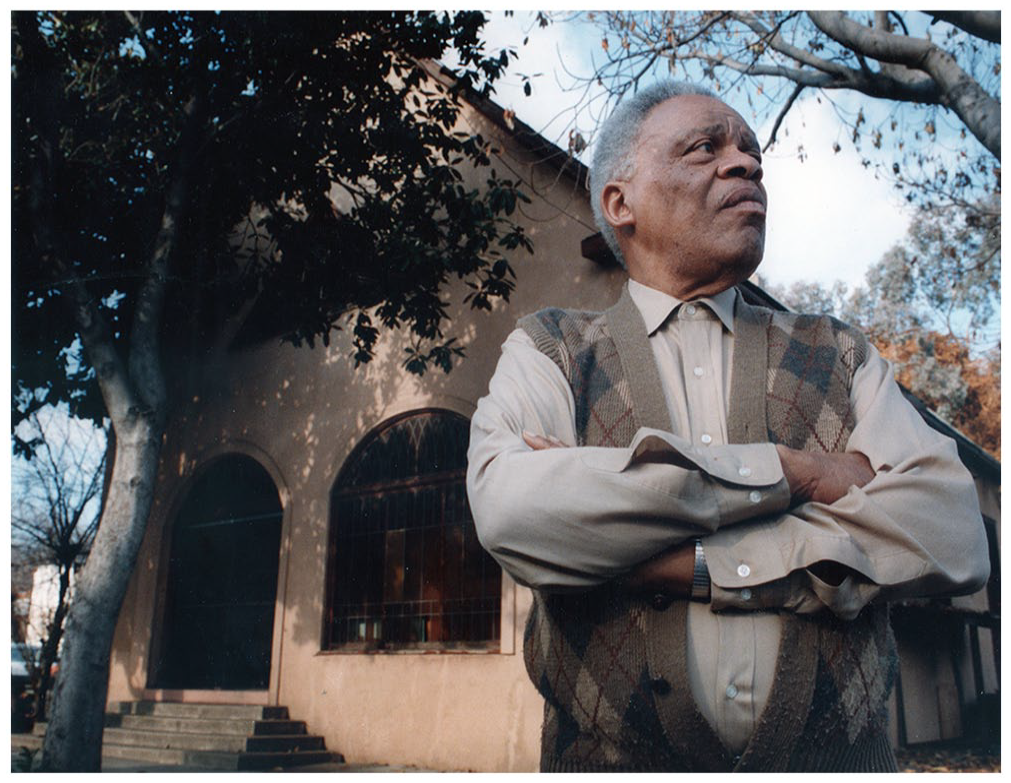
Cole Richmond stands outside the original African Methodist Episcopalian (AME) Zion Church, 819 Ramona Street, Palo Alto, 1991. Palo Alto Historical Association.
Although the percentage of Blacks in Palo Alto never rose above 1.5 percent of the population, 5 increases in the Asian and Black populations prompted the Chamber of Commerce to pass a resolution in 1920 to force all incoming minority residents into a segregated district. By August of 1924, the Ku Klux Klan had become increasingly prominent in Palo Alto, with three groups representing town, gown, and a women-only group. 6 A closely coordinated network of professional and institutional actors supported such beliefs, among them Stanford’s then-president David Starr Jordan, a vocal proponent of race pseudoscience and eugenics. 7
At the national level, the racially decisive Supreme Court ruling Corrigan v. Buckley (1926) only aggravated the situation, decreeing that, while states are barred from creating race-based legislation, the Fourteenth Amendment did not similarly affect private deeds and developer plat maps—a topic we will revisit in the next section. 8
During the 1930s and Great Depression, almost a quarter of the nation’s workforce—12,830,000 people—was unemployed. 9 Unable to meet mortgage payments, homeowners defaulted on their loans. Lending institutions held the opinion that housing was too risky to invest in, so little or no new housing was built in that decade. A housing shortage resulted, furthered in California by the state’s burgeoning agricultural production, which had attracted many in search of work. Palo Alto saw an influx of residents, and the population more than doubled from the previous decade to a total population of 13,652 persons; 188 were African American; and 348 were Asian. 10 The town sustained a travelers’ trailer camp, while Mary Belle Glover ran a homeless shelter called Hotel de Zink that provided free meals for an indigent population (Figure 4).
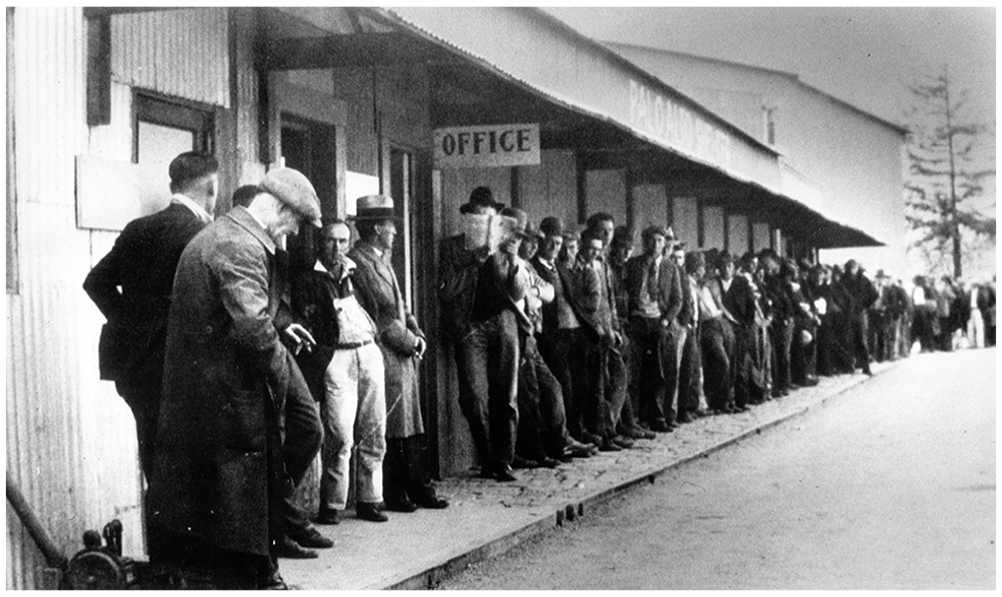
Mary Belle Glover, Hotel de Zink Soup Line, Palo Alto, CA, 1931. Palo Alto Historical Association.
By 1940, the city’s total population had climbed to 16,774; 239 were African American; 302 were Asian; and 122 were “other.” 11 With America’s entry into World War II, earlier biases against Chinese residents were transferred onto Japanese Americans, with disastrous results. As is now well known, prosperous Japanese American farmers east of Palo Alto were singled out for relocation centers; their homes and farmland were confiscated without compensation. The vacated houses were subsequently purchased by African Americans and Latinx. 12 Under the guise of patriotism, popular narratives of the time tended to overlook California’s racial strife and cultural conflict. 13 “Making Jim Crow invisible became a political and economic imperative,” argues historian Lynn Hudson. “Suppressing historical memory of white supremacy in California was also part of that legacy.” 14 Implicit with increased competition for employment and housing, racial lines divided the populace, signaling some of the complexities that existed in the mid-Peninsula region during the Depression and continued through the war years.
With the United States’ entry into World War II, California became the center of a rapidly expanding defense industry, a recipient of over half of the $70 billion federal defense budget—an event that permanently altered the state’s economic and social landscape. Between 1940 and 1946, the state’s population had increased by 40 percent, and that massive influx of workers precipitated a staggering housing shortage in California cities, not only for military personnel and war workers but also for civilians. 15 By 1943, Palo Alto residents had begun to consider alternative housing arrangements. The situation was so dire that Congress declared a national housing emergency, and President Roosevelt was granted special powers to respond to the problem. 16
Racializing Risk: The FHA Goes Suburban
The severe lack of residential housing was not only a California phenomenon—it was nationwide. The National Housing Act of 1934 empowered cities to create their own housing agencies to respond to local constituencies. In Northern California, the cities of San Francisco, Oakland, and San Jose established such housing agencies and constructed several public multifamily housing developments. Most were segregated. Although California had its own brand of exclusionary practices directed at Chinese residents, scholars such as Charlotte Brooks, Albert Broussard, and Ian Haney-Lopez disagree on their widespread use. 17 At the national level, Kevin Fox Gotham discusses how the changing racial geography of Depression-era cities shaped the political mobilization of real estate interests and subsequent New Deal housing legislation, 18 and Kenneth Jackson chronicles the larger forces of urban decentralization, federal subsidies, and racial tension. 19 Charles Abrams, Ruth Wilson Gilmore, and Paige Glotzer document how, toward the end of the 1930s, federal housing policies became racialized through discriminatory mortgage insurance, appraisal guidelines, and home-building subsidies for large-scale housing production. 20
To better understand the federal government’s intertwined involvement with the real estate industry, we have to revisit 1933 and look at the Home Owner’s Loan Corporation (HOLC), which refinanced home loans that were at risk of default and foreclosure. Following on the heels of HOLC, Congress passed the aforementioned National Housing Act, which in turn established the Federal Housing Administration. Its task was to inspect and evaluate a project’s eligibility for federally backed mortgage insurance, thus insuring the lending institution, not the homeowner, against the risk of default. Insurance premiums paid to the FHA would make it self-supporting, and for the homebuyer, the long-term low-interest mortgages made monthly payments often less than rent. 21 The FHA’s strictures, however, instituted a socioeconomic mechanism for suburban morphology, establishing development patterns and structuring neighborhoods based on race and class.
HOLC’s colored security maps have been widely discussed within urban historiography; less understood is their influence on suburban land use patterns. Scholars David Freund, Todd Michney, and LaDale C. Winling offer necessary corrections to the exaggerated claims regarding HOLC’s redlined security maps. 22 HOLC was disbanded in 1939, prior to the postwar housing boom, thus “HOLC could not have used the maps for loan denials, [but] did share them with the Federal Housing Administration but not with private industry, and highly improvised their production with numerous methodological inconsistencies, including with regard to race.” 23 A frequently ignored fact is that HOLC mapped only metropolitan areas—not undeveloped agricultural land. Thus, HOLC surveyed and mapped the city of San Jose but not Santa Clara Valley’s extant orchards and farms, the site of future suburban developments.
This is not to say the maps were inconsequential. HOLC’s survey methods are extremely relevant to the discussion in that they document how property value was conceptualized at the time. To better understand the FHA’s formulation of property values, let us examine two significant themes more closely: first, the mutually profitable interactions between banking, real estate, and building industries, what social geographer Jesus Hernandez calls a “theory of embeddedness”; 24 and second, a set of exclusionary technologies (the FHA Underwriting Manual, racially restrictive covenants, and public relations campaigns) that conflated race with property value while promoting a white vision of suburbia. 25
There exists an extensive narrative on the influence of the National Association of Real Estate Boards (NAREB) on forming national housing policy during the Depression. Scholars Matt Crespino, David Freund, Paige Glotzer, and Matthew Lassiter point out the fungible line between public and private actors, acknowledging that there were various ways the federal government endorsed racial discrimination beyond New Deal policy. 26 As Jeffery Hornstein attests, NAREB lobbied the federal government to drop the aforementioned public housing initiatives and instead outsource housing construction to private developers through guarantees, subsidies, and tax reliefs. 27 Jesus Hernandez’s theory of embeddedness explains how interrelated market interests and associational networks between the private sector and public institutions resulted in a nationwide discriminatory housing policy. 28 As a result, the real estate, banking, and construction industries’ historic embrace of racial discrimination became embedded within the FHA, setting up a preferential infrastructure for suburban segregation (Figure 5).
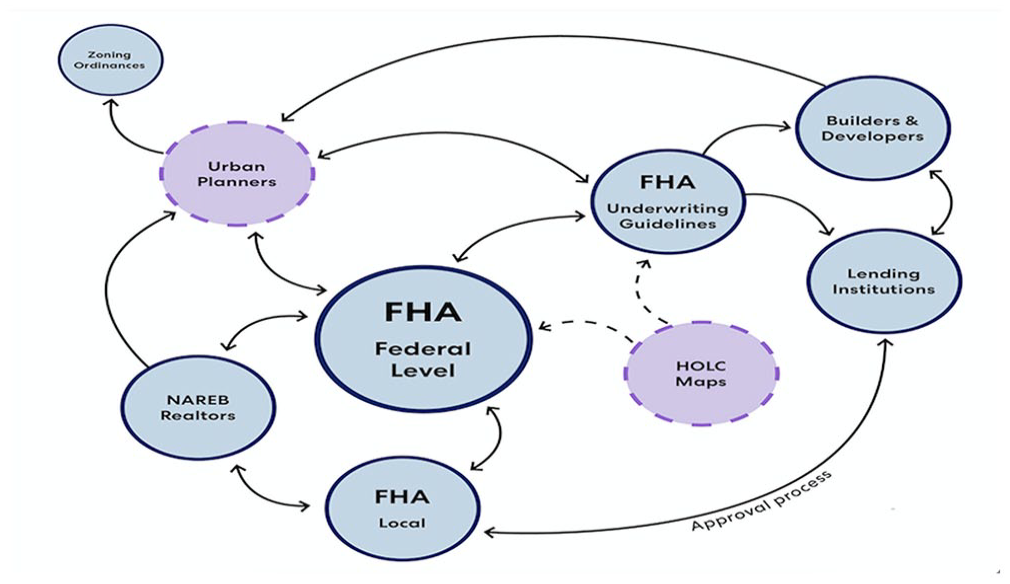
Federal Housing Administration: infrastructure of exclusion diagram, August 2022.
Former real estate professionals staffed the FHA, at both federal and local levels. Those agents were required to accept the profession’s racial strictures or face censureship, and they then transferred those norms into federal policy. 29 “Real estate executives were recruited to develop government housing policies because of their former roles within the private sector,” states historian Keeanga-Yamahatta Taylor. “Over time, the real-estate industry, in turn, would seek out former government employees for their valuable connections to the state. With this ‘revolving door’ in place, public and private networks formed an insular feedback loop mostly concerned with maintaining a brisk (and profitable) housing market.” 30
To follow the evolution of an exclusionary machine, actors had to find a way to legitimize and disguise their biases. The most far-reaching technology was the FHA’s Underwriting Manual (first published in 1936/1938 and revised in 1947), distributed privately within the lending industry. 31 By laying out a labyrinthine evaluation procedure (over 300 pages) the manual concealed how underwriting approval was actually arrived at. Furthermore, its language contained the explicit requirement for each property to include a proviso for “protection from . . . inharmonious racial groups” as a major condition for mortgage insurance. In other words, protection meant the “recommended” inclusion of racially restricted covenants. 32 The FHA’s faulty conflation of race and ethnicity with property value incorporated serious biases into the underwriting process 33 (Figure 6A and B).
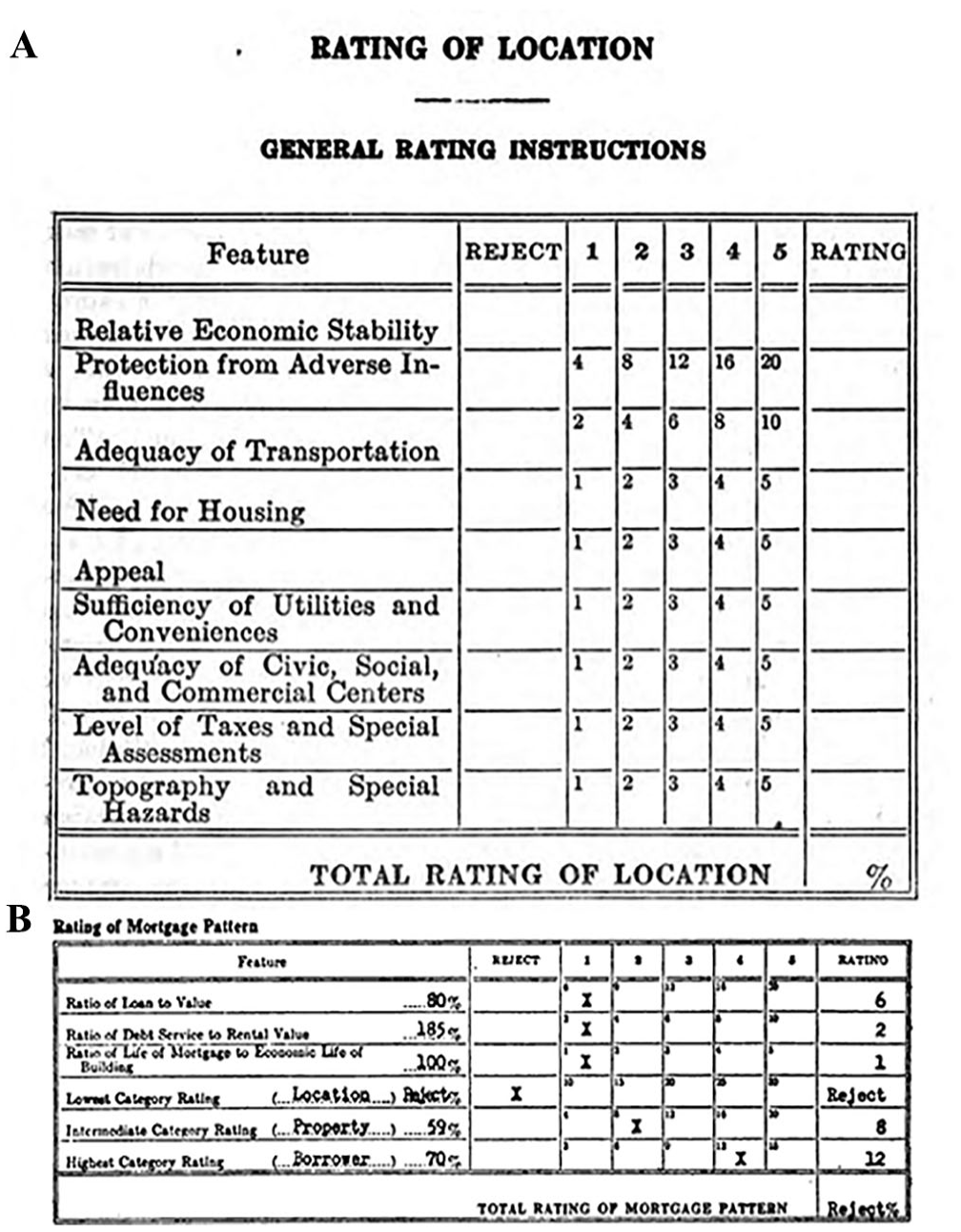
(A) Rating of location chart, from Babcock’s Mortgage Risk Rating for Neighborhood Analysis (1938) in use until 1960s. Note the second category titled “Protection from Adverse Influences” which measures the potential of ethnic minority encroachment—defined by the FHA as protecting a desirable neighborhood from “the infiltration of business and industrial uses, lower class occupancy, and inharmonious racial groups.” It is the heaviest weighted of all categories. (B) FHA Rating of Mortgage Pattern Charts (1938) in use until 1960s. Note the fourth category “Location” represents the presence of ethnic or other minorities worth 30 percent of total. A rejection in “Location” results in a rejection of the loan. Source: Federal Housing Administration, Underwriting Manual: Underwriting and Valuation Procedure Under Title II of the National Housing Act; 1936/38 (Washington, D.C.), Part II, Section 9, Rating of Location.
In Palo Alto and across the country, social biases were clearly operating in lockstep with economic challenges, but federal policies systematized the racial contract in space. From the FHA’s earliest formation, realtors, developers, and various lending institutions were intertwined in creating a financial infrastructure threaded through with racial assumptions but able to publicly deny any culpability. According to federal agencies and private lenders, real estate was a profit-making investment; it was not for solving the humanitarian issue of lack of housing. 34 The implications for Ladera and other cooperative suburban developments were vast: implicit rules and policies would become just as effective as explicit redlining in maintaining racial segregation.
Peninsula Housing Association: Formative Beginnings
Northern California was disproportionately affected by the wartime housing shortage, given its emergence as a military research center. The Navy Air Forces had completed an experimental aeronautics laboratory at Moffett Field and was pressed to house new employees 35 (Figure 7). In Palo Alto, Stanford University could not find accommodation for faculty and staff, let alone new students.
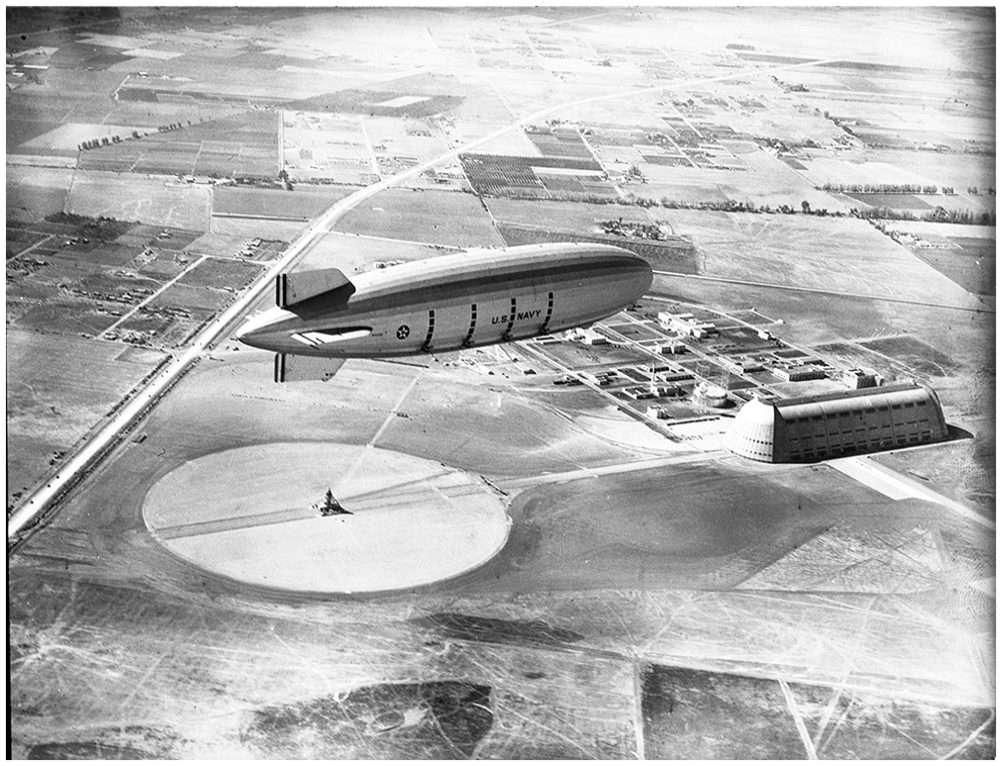
The USS Macon Airship arrives at Moffett Field with Hanger 1, Highway 101, and San Francisco Bay in the background, U.S. Navy Air Force Base, Moffett Federal Air Field, CA. 1934. Moffett Field Historical Society.
The university attracted an eclectic group of inventors and philosophers to Palo Alto. One of them, J. Murray Luck, a Stanford biochemist and expert on global food justice, had a prescient understanding of population growth in relation to nonsustainable resources. As a student at Cambridge University, Luck had studied the Chartists Movement and Rochdale Pioneers, England’s first cooperative founded by Manchester textile workers in the mid-1800s, which shaped his thinking about cooperatives; he wrote The War on Malnutrition and Poverty: The Role of the Consumer Cooperative, which was published in 1946. 36 As science attaché to the United States in Switzerland, much of his work was directed toward solving food scarcity in India and the Global South. Importantly, Luck believed in the application of knowledge to effect social change with a special interest in more equitable food production and distribution systems for under-resourced communities. 37 During his lecture travels, he became convinced that cooperatives, defined as an economic system based on economic cooperation, could be a way to better manage resources. Nonetheless, at the height of the Depression, when a quarter of the labor force was out of work, 38 and many more undernourished, there was still little appropriate legislation for consumer cooperative societies in California.
Yet, in 1943, galvanized by Luck’s progressive ideas about food justice, discussions arose concerning the possibility of establishing such a cooperative in Palo Alto. Luck looked into the legal aspects, and along with other local residents, established the Palo Alto Consumers Cooperative Society, supporting a grocery store, gas station, and credit union, 39 and by the end of 1944, enthusiasm was running high.
The consumer cooperative’s overwhelming success encouraged many newer faculty members to approach Luck to discuss the lack of affordable housing. A few months earlier, Luck had been invited to conduct a winter workshop at Asilomar, along with the Los Angeles architect and designer of Case Study House 2, Sumner Spaulding. 40 Over several meetings, the two shared the conviction that cooperatives were a realistic solution to solving California’s housing crisis.
Luck was joined by another influential proponent of cooperative organizations, the inventor Sigurd Varian (Figure 8). His father was an Irish philosopher, and his mother a socialist. The family belonged to the Palo Alto Theosophist group, composed of cosmopolitan intellectuals, artists, writers, and composers. The family then moved to the humanist community of Halcyon, where they had a long friendship with Ansel Adams and other early members of the Sierra Club. Sigurd and his brother Russell founded the pioneering electronics firm, Varian Associates, which was run democratically and equitably. 41 Another prominent member of the cooperative, novelist and environmentalist Wallace Stegner, founded Stanford’s creative writing program; he was later awarded the Pulitzer Prize for fiction.
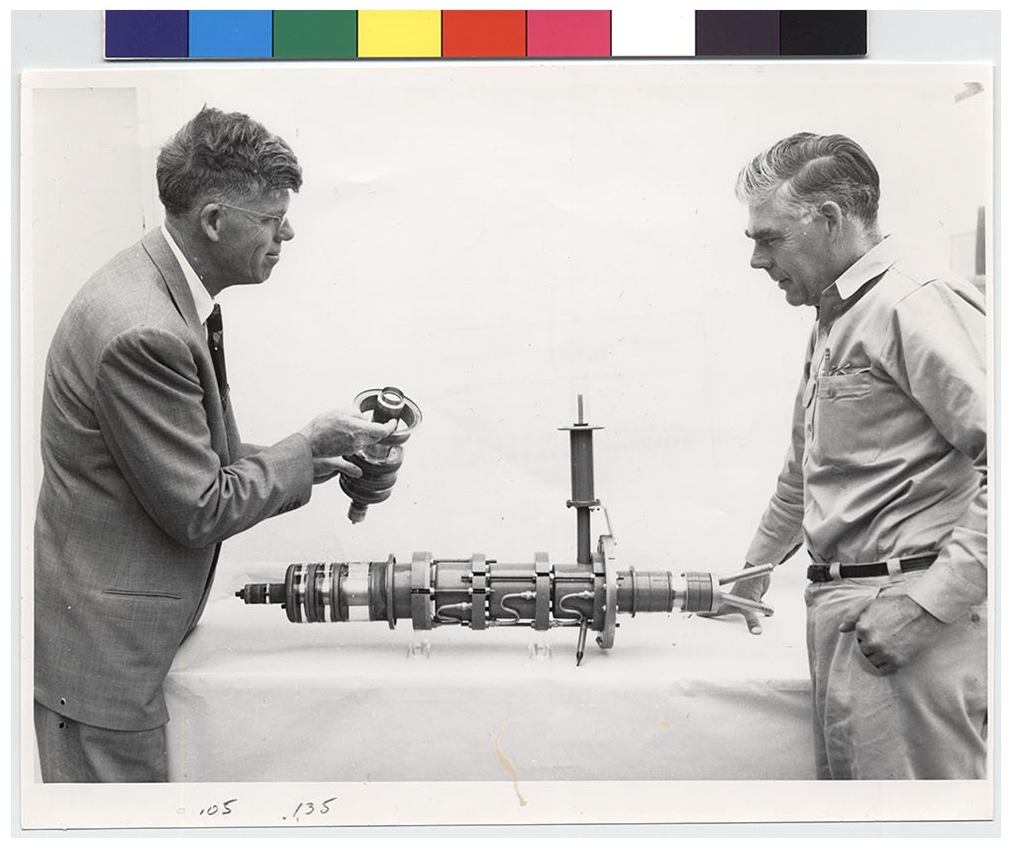
Sigurd and Russell Varian with Klystron (1953), Perham Collection, Museum History San Jose, San Jose, CA.
Responding to the low interest rates offered by the government, Luck, along with Stanford faculty members, students, defense workers, and the wider community, founded the Peninsula Housing Association (PHA) in 1943. 42 Luck was elected president; Sigurd Varian, vice president; David Bonner, secretary; and Betty Lundquist, office secretary. Membership was socioeconomically diverse, with many creative individuals alongside contractors, carpenters, engineers, printers, professors, nurses, accountants, attorneys, shipyard workers, scientists, civil servants, teachers, and others. What they had in common was the enthusiasm to work together to create an egalitarian community.
Women, of course, played a strong part, although their contributions are not fully documented in the historical account, and when individual women are mentioned, it is often by their husband’s name (e.g., Mrs. John Smith), as was common at the time. Nonetheless, we know that Rebecca Anderson (wife of Frederick) and Aletha Baker were founding members of the cooperative. In that role, they each donated $200 in legal fees to draft the original articles of incorporation, in 1944. Many of the organizational tasks and the bimonthly newsletter were administered by women members, as were community outreach efforts, which were spearheaded by Mrs. A. F. Bell, who taught an adult education course on cooperatives for new and prospective PHA members at Palo Alto High School.
The original members’ income ranged from $4,000 to $8,500 per year, and most had two children. 43 By 1944, the PHA had incorporated as a limited equity housing cooperative and was selling memberships for $200 each ($150 refundable upon withdrawal). Each member could then purchase, for $500, certificates of interest as negotiable securities that could be exchanged for a deed to a specific lot—collectively those funds would pay for property development of 400 homes. 44 With the coop purchasing the land directly and acting as its own developer, significant savings would be generated for homeowners.
The cooperative’s motto was “Production for use, not for profit.” By owning the means of production and distribution, the coop provided economic security for members. According to Luck, The Co-operative Movement was born in poverty. People of the lowest income groups who eventually learned that they could do much started it. The history of the cooperative movement is a vigorous testimony to his (or her) ability to organize his own retail, wholesale, and productive enterprises and in so doing to give security of tenure to employees; at the same time to give to the economic structure of society the stability that is indispensable to the success of any far-reaching plan for social security.
45
For progressive members such as Luck and Varian, the coop was not simply an economic model but also a social model: Social capital relates to the resources available within communities in networks of mutual support, reciprocity, and trust. It is a contributor to community strength. Social capital can be accumulated when people interact with each other in families, workplaces, neighborhoods, local associations, interest groups, government, and a range of informal and formal meeting places.
46
According to Wallace Stegner, the cooperative “had a spirit that used to animate barn-raisings when democracy was younger and simpler.” 47
Importantly, California’s housing cooperatives were more broadly conceptualized as critical alternatives to the widely adopted for-profit suburban tract development—in terms of both design and social vision. 48 Unlike conventional tract housing, Ladera’s design would emphasize a dual integration of not only architecture and natural landscape but also social and class integration. Social interaction was key to the success of a cooperative in which members shared responsibilities and resources. While each house was owned individually, the community center, recreational areas, and open land were to be held in common. In addition, the cooperative residents would also collectively own and manage a grocery store, credit union, and gas station, with profits returned to coop members.
In contrast with earlier planned suburban communities, which routinely restricted African Americans, Latinx, Asians, Jews, Catholics—even people with disabilities—coops were egalitarian in scope and open to all regardless of race, class, or religion, without any restrictive covenants on membership. Housing cooperatives were beginning to gain ground in California; along with the PHA, there were four others. 49 They shared several important features: a communal organizational structure; a social commitment to racial integration; a total planned community concept, including parks, schools, social centers, and retail; and an allegiance to modern design. “A close reading of the cooperative projects reveals fairly explicit links between formal innovation and political resistance,” contends architect Anthony Denzer. “Moreover, the differences among the cooperatives may show a more finely tuned alignment between progressive politics and progressive design.” 50
By 1945, the PHA had 150 members. The question of where they would site the planned community was gaining urgency. Santa Clara Valley’s agricultural land was rapidly being bought up by land speculators. In Atherton, orchards were being demolished for elite housing on large lots. 51 Within the city limits of Palo Alto, new tract housing was already under construction. Typical of the time, an advertisement for a Crescent Park housing tract read “Palo Alto’s LAST High-Class Restricted Residential Section,” a sales promotion that used coded language to persuade potential homebuyers that racial segregation was a desirable feature of the neighborhood. 52
Coop member and real estate agent Norwood Smith, along with attorney Williard Johnston, began searching for available sites on which to build. Members preferred a location proximate to the university. Smith and Johnston greatly admired a 256-acre site, the Ormandale Ranch, owned by the McDonough estate (Figure 9). The advantages were several: it had rolling grasslands with stands of native oaks. The site was bounded on one side by Stanford University and on another by Alpine Boulevard, a winding thoroughfare connecting to the university and downtown Palo Alto. The views spanned an expansive panorama of San Francisco Bay, with what would become Silicon Valley spread out below.
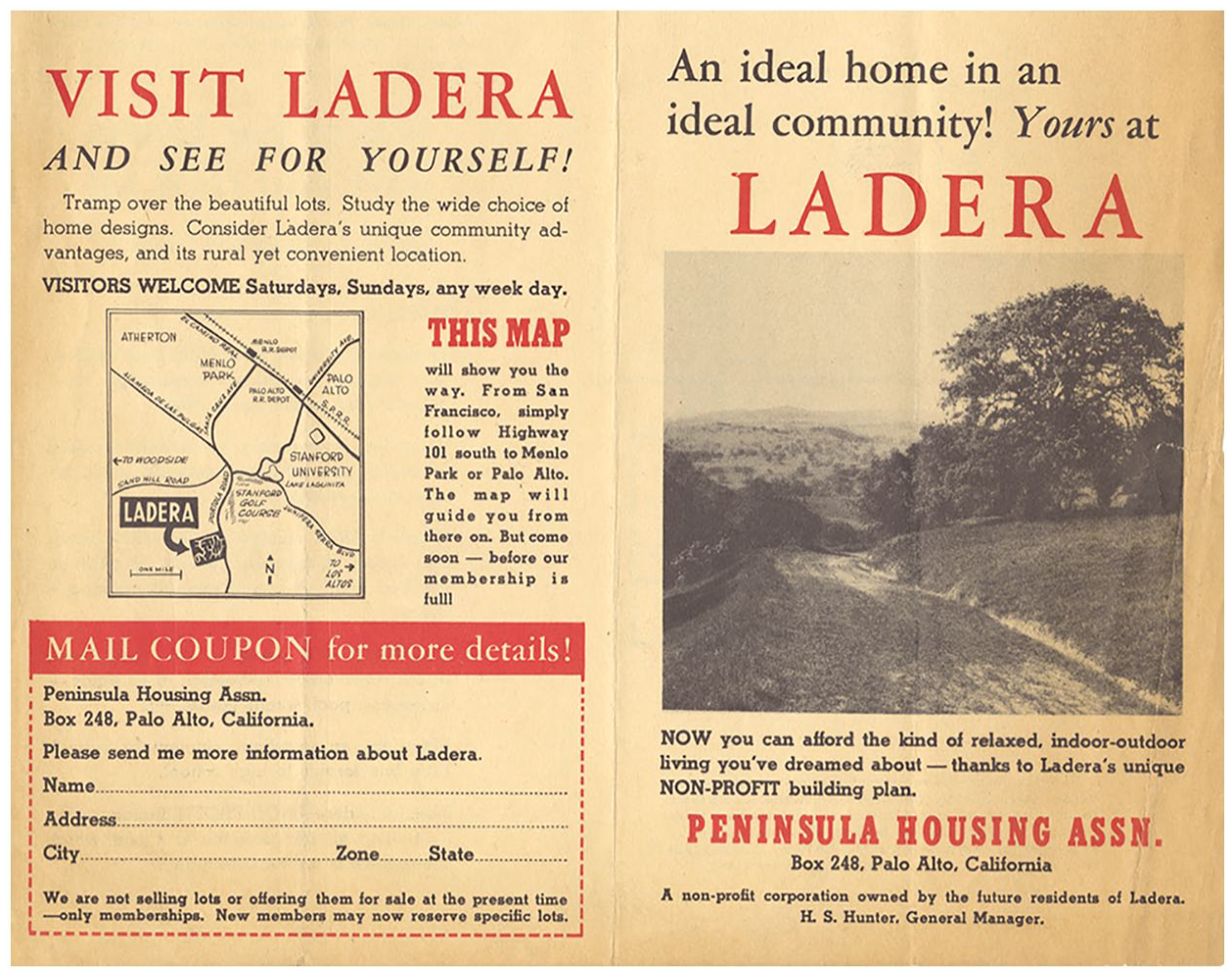
Brochure cover, PHA cooperative, 1946, ©The Regents of the University of California, permission of Environmental Design Archives, University of California, Berkeley.
On October 28, 1946, over a hundred coop members and others braved a chill wind to gather for a picnic at the rural parcel. Luck gave an inspiring speech. Then the treasurer, Erik Heelgaard, answered various questions regarding membership fees and house pricing. 53 After a majority vote, the coop was ready to place a bid at a public auction for $112,000 ($78,000 for the land and $34,000 for the water hookup) using funds from its treasury. However, other established property developers, including a San Francisco real estate consortium, were eyeing the ranch as well. The bidding was extremely competitive, and in the end, the coop paid more than it had budgeted for $155,000. 54
One month later (November 5, 1946), PHA’s board of directors formulated membership policies “accepting membership applications from people of all races” and the procedures for handling such applications. 55 Voting was ninety-three in favor to forty-two against. The coop held an “architectural jam session” shortly thereafter, where members discussed site planning. A flyer was distributed extolling their shared goals for “country living . . . without high costs, isolation, and inconveniences we would face if we each tried to go it alone.” 56 With newfound confidence, the coop held a contest to name the village. Many suggestions were variations on Rochdale, England’s first cooperative, founded by Manchester textile workers in the mid-1800s—New Rochdale and Rochdale Heights, among them. A few quirky names—Lark Hill, Lucky Acres, Panvista, and Progress Range—were also floated. Spanish place names were the most prevalent: Loma Verde, Los Modelos, Picos Gemelos, Buena Vista, and Ladera, which in Spanish meant “hillside” or “slope,” and won out. 57
While the McDonough estate and Ormandale Ranch were in probate, the PHA’s architecture committee began its selection process. Committee members were familiar with the literature on modern California architectural design. They concurred with John Entenza, editor of Art & Architecture and sponsor of the Case Study Houses, who opined that he was glad to see “the decline of the midget Norman Castle and strangulated hacienda,” referring to earlier 1920s romanticism. As an alternative, he proposed, “we must continue to develop a constant enrichment of the idea of ‘house’ as it relates to people and the way that they live” (italics mine). 58
Simply put, the PHA members wanted a modern, socially integrated, planned community. Committee members had been inspired by Telesis’s critically acclaimed exhibition Space for Living (1940) held at the San Francisco Museum of Art. For the first time, the exhibition presented various aspects of urban living into a holistic, modern approach at all scales from dwelling to region, as reflected in the name selected by the group’s members: Telesis, meaning “progress intelligently planned and directed” (Figure 10). Telesis introduced a new concept to urbanism—that of “environmental design,” uniting the different disciplines of architecture and landscape. 59 Lauded by architectural critic Roger Williams, Telesis’s designs were “responsive to local conditions, climate and geography” instead of merely reproducing the dominant International Style advocated by Philip Johnson and Russell Hitchcock. 60
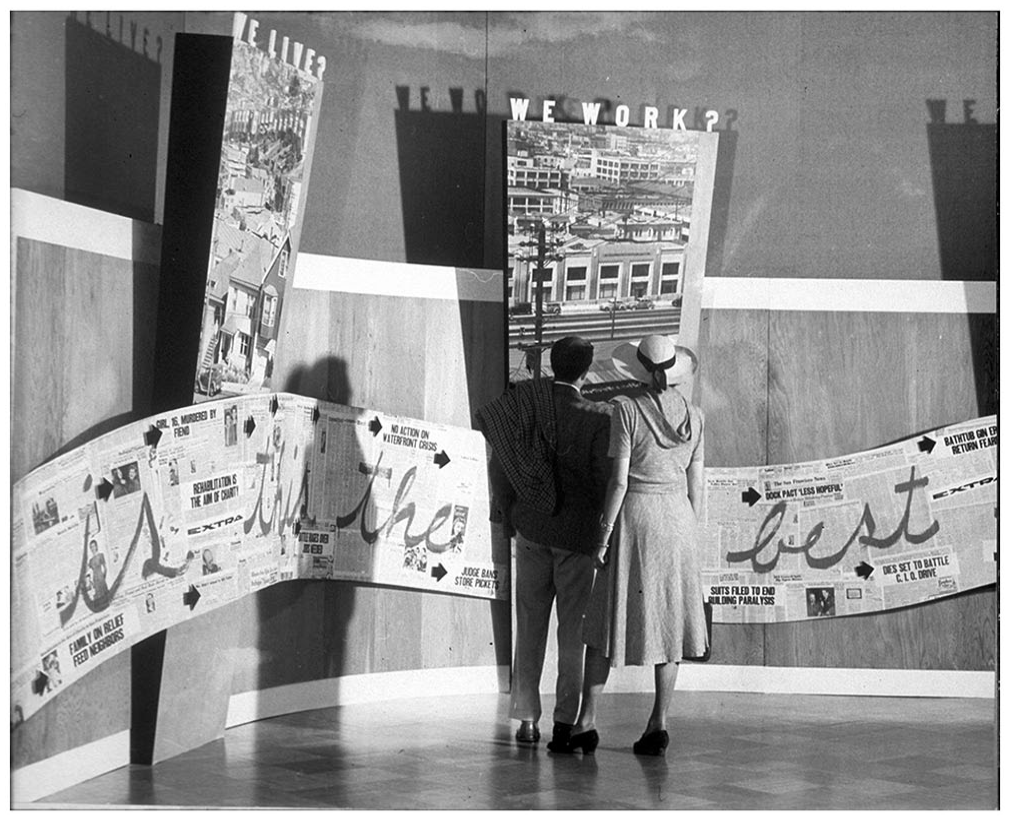
Telesis exhibition, San Francisco Museum of Modern Art, 1940.
Methods of construction were also changing. After the war, some defense suppliers transferred their logistical expertise to engineering an industrial housing market. Industrial-level construction, according to Keller Easterling, meant there was little or no choice in housing. Across the nation, suburban tract housing had become merely a repeatable spatial product.
61
As mentioned in San Francisco Chronicle, “The Model T type of house, an out of date box . . . mass produced by too many builders, is supported by the low appraisal standards of the FHA.”
62
In contrast with then-prevailing attitudes, however, the cooperative extolled that, Quality of life should not be a luxury commodity for the few. We have heard a good deal . . . about postwar homes. The prospects have been glowing. But what kinds of houses are now being built? And what about the developments that those cracker boxes are being jammed into?
63
With a chance to rethink dwelling, what type of house was PHA’s architecture committee considering? The committee only interviewed a few architects. The socially progressive architect, Richard Neutra, was the first. His designs were Bauhaus modern and often constructed of concrete; the committee concluded that his houses were “too stark, white cubicles.” 64 In contrast, the house designs in Berkeley of another candidate, John Funk, were not only admired but internationally recognized for their innovative response to California’s unique climate and geography. 65
Influential members of Telesis, Funk, and Joseph Stein had opened a small practice on Maiden Lane in San Francisco, sharing an interest in smaller, simpler, more efficient structures that used fewer resources. 66 In line with Telesis’s commitment to environmental stewardship, Stein and Funk belonged to the Second Bay Region’s “organic stream,” emphasizing a contextual expression of site, materials, and informal way of living. 67 Stein also saw repetitive tract housing design as problematic—which of course, the clients, PHA, did too. With the Cooperative, John Funk and Joseph Stein had found their ideological match, and in 1947, they were commissioned to design the planned community of Ladera.
During the Depression Stein and landscape architect Garrett Eckbo designed comprehensive farm labor communities under the auspices of the Farm Security Administration (FSA). Under Vernon DeMars’s leadership, Stein developed highly efficient, low-cost prototypes for small houses. In collaboration with Eckbo, Stein was emboldened to do more than simply provide shelter; the two strove to create communities that could rebuild the close-knit rural ties that the destitute farming families had left behind. During their tenure with the FSA, Stein and Eckbo completed hundreds of designs, and crucially, saw those designs realized, making it possible for them to continually refine their experimental ideas on community planning. Some of those later prototype projects became the precursors of modern suburban housing, such as William Wurster’s Carquinez Heights Defense Housing, in Vallejo, California, reflecting a simple modernist approach to design and planning 68 (Figure 11).
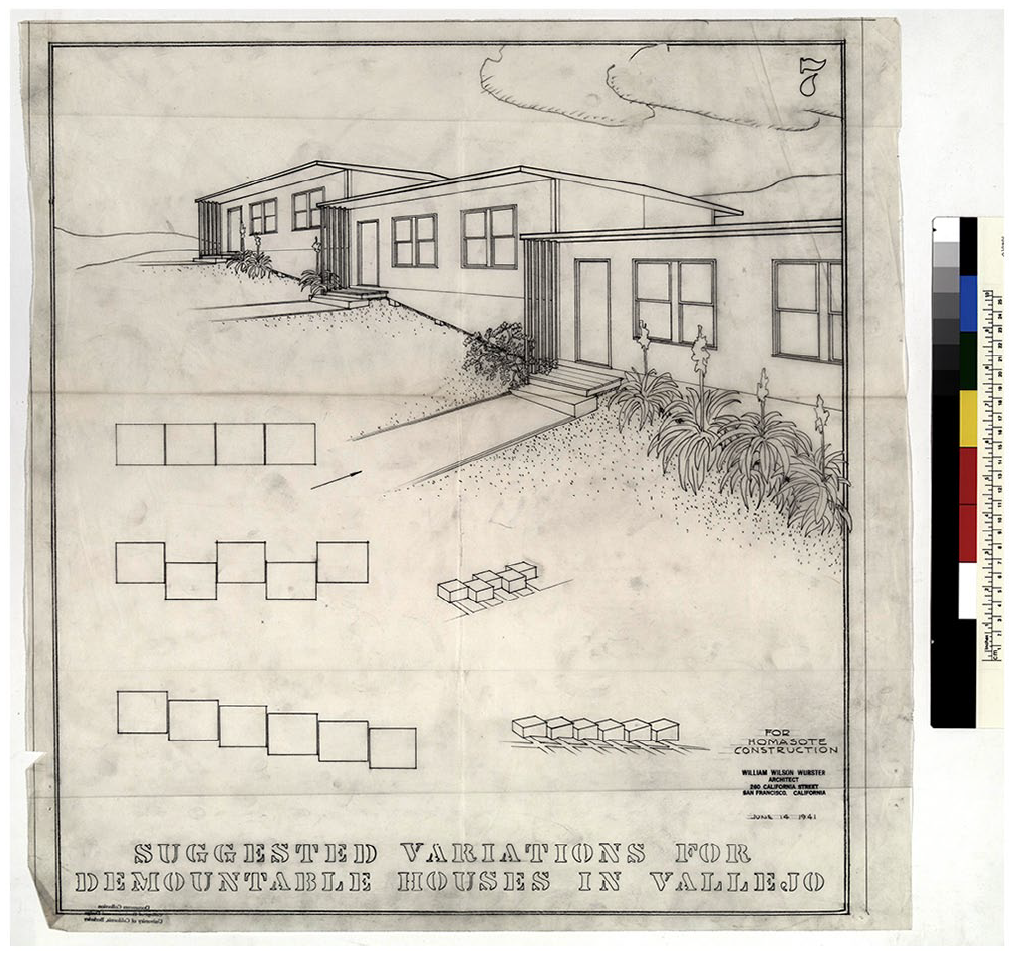
Carquinez Heights defense housing, Vallejo, CA, 1941-1942.
The coop then held a public meeting with 175 people in attendance. Eckbo, who viewed landscapes as vehicles for social change, predictably had been selected as landscape architect, along with his partners, Robert Royston and Edward Williams. 69 The design team presented their preliminary planning framework, emphasizing the importance of creating an integrated design that synthesized architecture and topography. Eckbo presented his ideas first—the community would be organized around a central commons with a swimming pool and playing fields. 70 Then Royston advanced his concept of a “landscape matrix,” in which an integrated framework of hierarchical circulation and open space would unify disparate formal elements. As envisioned, the matrix established options for land use, as well as costs and values. Together, the matrix would create strong and sensitive connections between buildings, establish social spaces for interaction, and preserve the surrounding natural environment (Figure 12).
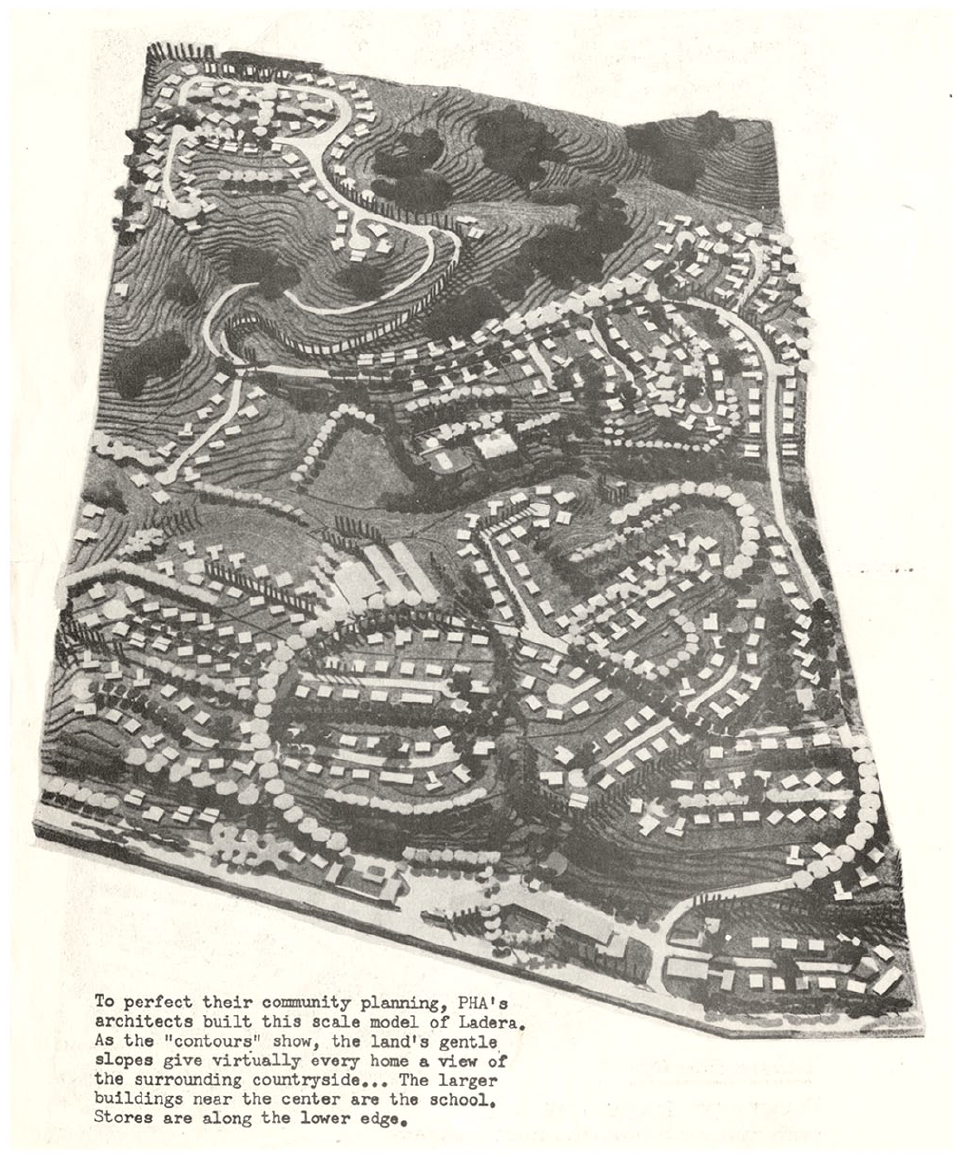
Ladera community site model, cardboard, 1944.
Building on Royston’s matrix, the hierarchical circulation system would have two meandering main arteries with secondary roads branching off of them, each terminating in a cul-de-sac. Each secondary road was conceptualized as a neighborhood and had a small pocket park where residents could meet and socialize informally. In a flatter area that was equally accessible to the overall community, the commons would be located, including recreational facilities—swimming pool, playing fields—and a meeting house, fostering further social integration. Where the topography was steeper and covered with native oaks, the land would remain untouched except for hiking trails. Importantly, primary automobile circulation was interwoven with secondary circulation in the form of a contoured grid of pedestrian and bike pathways located behind and between houses. There was no need to cross any major streets to reach schools, community centers, or markets. Ladera was eminently radical because it integrated good design with low cost—the latter a necessity because the coop members were from all economic levels. Along with affordable housing, the commercial and municipal services would be owned and managed in common: a coop market and credit union, rentable commercial spaces, a corporation yard, and a firehouse. 71
Although the International Style dominated East Coast architectural circles, Stein’s goal was in line with the Second Bay Region’s aesthetic to “blend functionalism (modernism) with regionalism,” as a means to create architecture that was appropriate to its time and place. “Modern architecture . . . is not incompatible at all with sensitivity for site and ecological awareness, and sensitivity to nuances of culture.” 72 Suburban tracts, Stein further argued, should avoid monotony. With Ladera, the topography created variety; each home had a different size site with different design potentials responding to optimum conditions of sun, shade, slope, view, and conservation of natural features.
Stein also “was obsessed with designing a prototype low-cost, quickly built, yet elegant, tract house.” 73 While typical suburban tracts utilized simple repetition, Stein believed that the best way to meet the client’s goals for low cost could be best realized not by repetition but by “a more highly rationalized building industry.” 74 Though small, the house would seem spacious because of generous glazing, an open floor plan and garden setting 75 (Figure 13). The result, as originally envisioned: Ladera would be the largest and most comprehensive example of American modern architecture within a planned unit development in the United States.
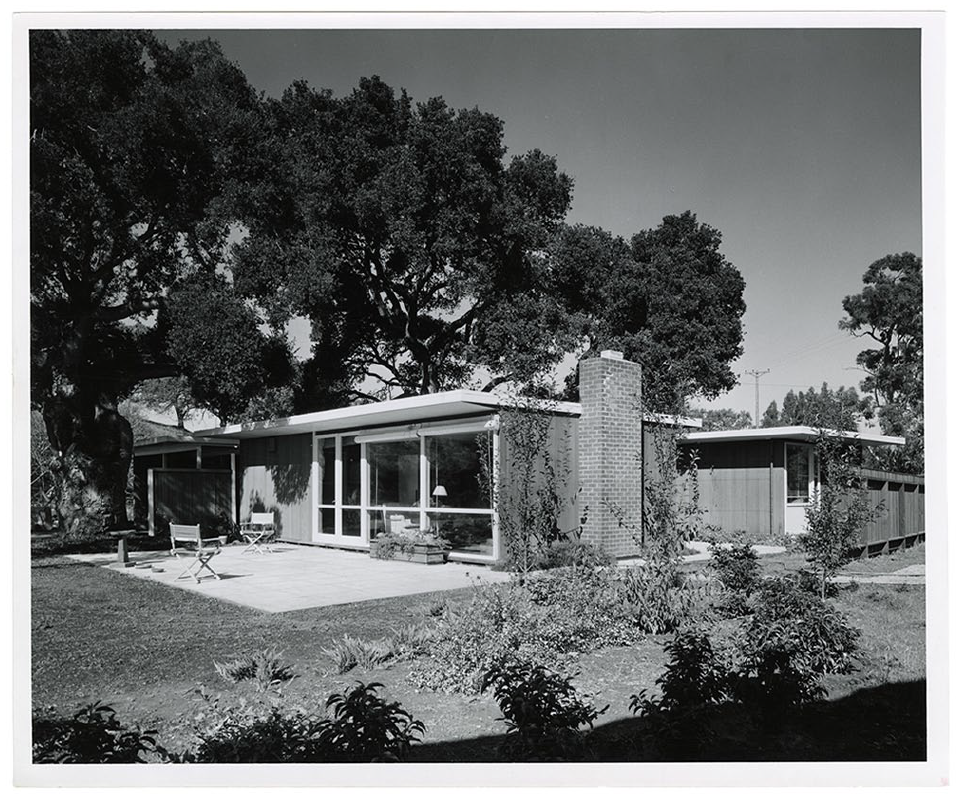
Exterior glazed elevation, Ladera, CA, 1947-1949.
The architects employed several novel design strategies. Funk believed in a democratized method of design and sought input from the coop members by way of user surveys. Questionnaires were sent to 164 coop members inquiring about their expectations. Prototypical plans were included, and members voted on their preferences. The results were counted, and after the responses were analyzed, the architects produced a typology of thirteen plans with seven variations responding to the suggestions in the questionnaires. Those basic types were categorized by their topographical siting and varied in size from 1,000 to 1,800 square feet, with innumerable variations, so that each house could reflect the desires of each individual family.
To make this strategy cost-effective, Stein established a rigorous modular structural system borrowed from his prior designs for FSA farm worker housing. 76 First, a planning grid was established, with a design module of 3 feet and 4 inches used throughout. Windows, doors, and wall panels were all interchangeable, allowing for infinite individuality. More importantly, the modular system meant that the building components could be milled and fabricated off-site as a kit of parts, later delivered, and then assembled on-site 77 (Figure 14A-C, Composite).
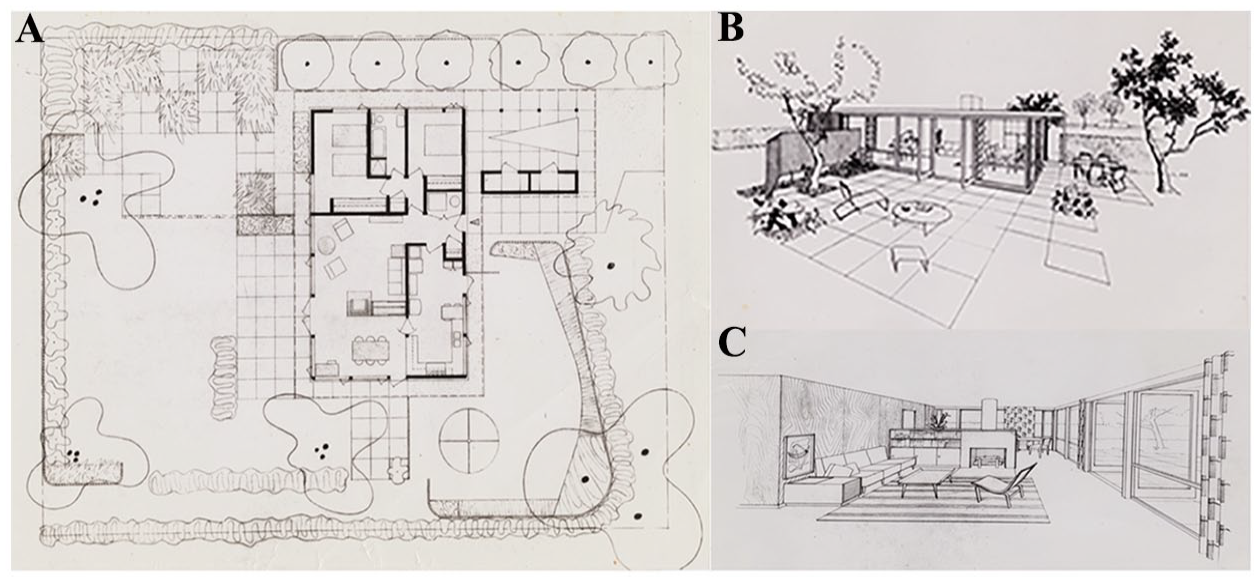
(A-C) House Plan 3 with landscape, ink on vellum, Ladera, CA, 1947-1949.
Stein explained, The feeling of a more generous space in 1,260 sq ft is simply a matter of good planning. There are only four doors in the entire house; all the rest of the house is open, uncluttered and free, permitting flexible, varied use of space and the rearrangement of furniture.
78
Large floor-to-ceiling windows created a greater sense of space by expanding the visual depth of the field, while the social space of the living room extended outdoors to a landscaped patio (Figure 15). Stein’s design philosophy was simple: “The house is brought into the garden and the garden into the house.” 79 To accomplish this design objective, Eckbo and Royston sited houses close to the front property lines, leaving a large private garden in back.
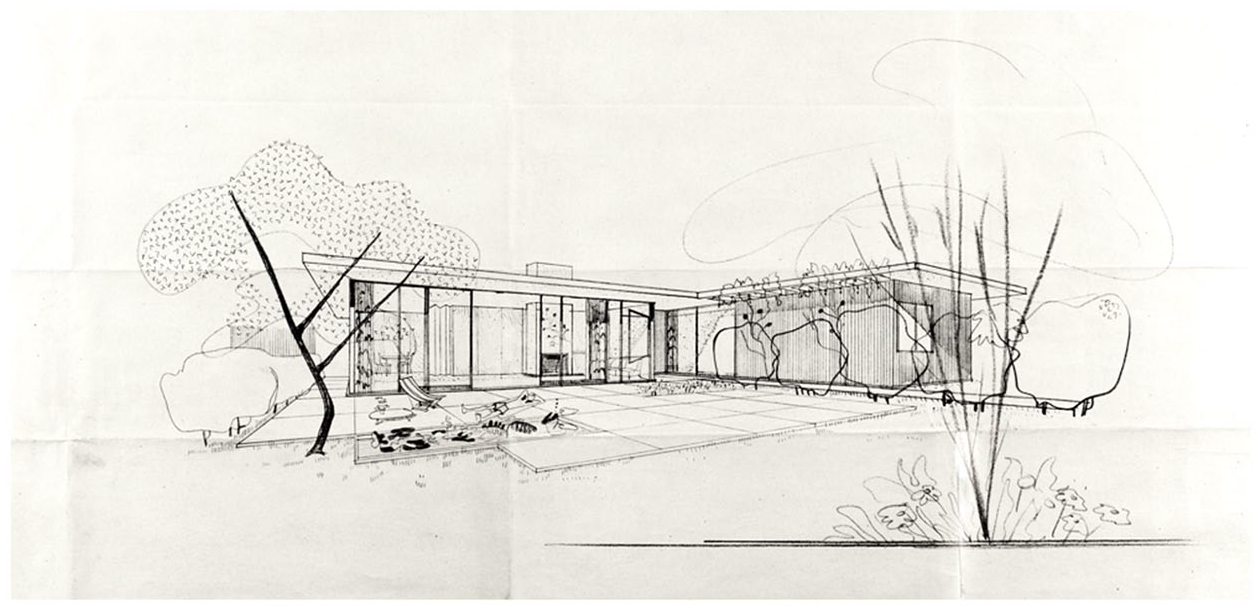
Perspectival drawing of Exterior Patio with sunbather, ink on vellum, 1947-1949.
Similar to Frank Lloyd Wright, the architects specified unadorned, locally sourced materials, what are called “integral materials” that never require painting. The living room had smooth clear heart redwood paneling, along with exposed brick fireplaces and built-in bookcases, all constructed with precision and craftsmanship. And to soften the look and feel of slab-on-grade concrete, hardwood floors and cork tiles were installed (Figure 16). Eager to explore new methods and materials, Stein implemented novel energy systems, as well as sustainable passive systems. The houses employed radiant heating for the winter months and natural ventilation in the summer. Natural daylight was utilized wherever possible to save energy.
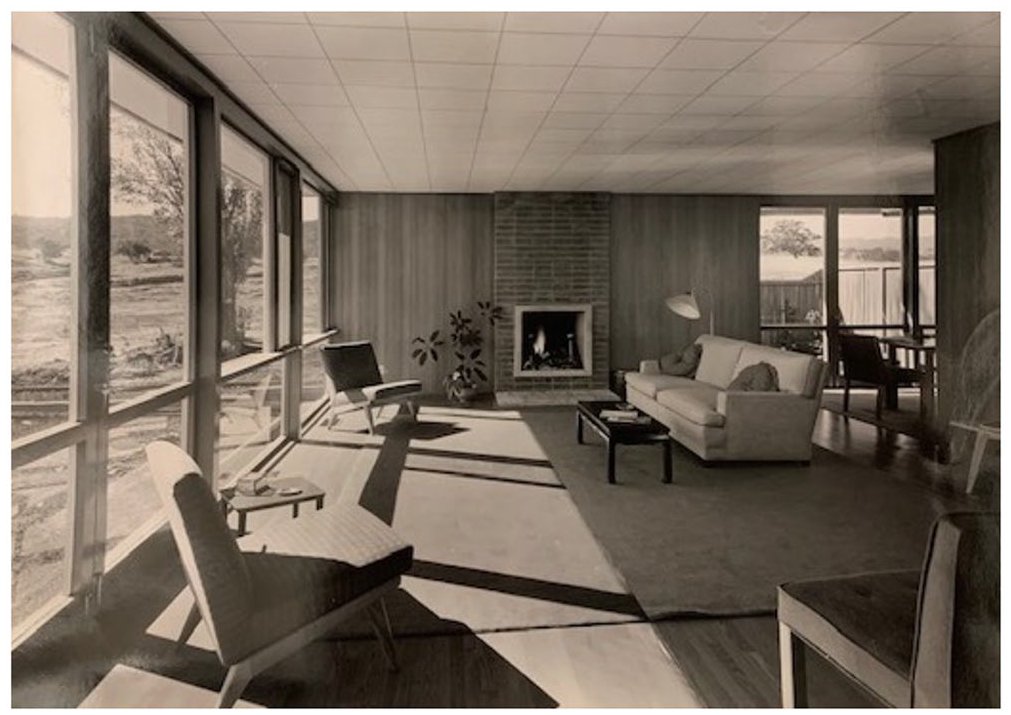
Interior of living room, 1949.
The idea of a fully integrated planned community was revolutionary at the time. Ladera was fundamentally different from other single-family suburban tract developments in the 1940s, which were simple reductive houses, without the social elements that contribute to a community. Most merchant-builder developments had no schools, no parks, or cultural amenities, such as libraries, theaters, swimming pools, or retail. Ladera’s landscape matrix not only integrated formal elements such as buildings and parks but also established a social matrix by integrating the commonly held spaces. Even today, few tract developments are as comprehensively designed as Ladera was. 80
Popular media of the time extolled California as a “vast incubator of new designs.” 81 On the pages of Art & Architecture, John Entenza championed Stein and Funk’s vision of “attainable simplicity.” Entenza emphasized that a comprehensive planned unit development—a total community—had not been tried before. Featuring houses that were modern, with flat roofs and deep eaves, organized around a patio—to “bring the inside outside”—Ladera integrated the house and grounds. More importantly, Stein had learned from Eckbo that providing shelter was not enough; architects must also provide spaces to bring the community together, including informal social spaces where they could meet casually—pocket parks, markets, footpaths—as well as the more formal settings of school and community events (Figure 17).
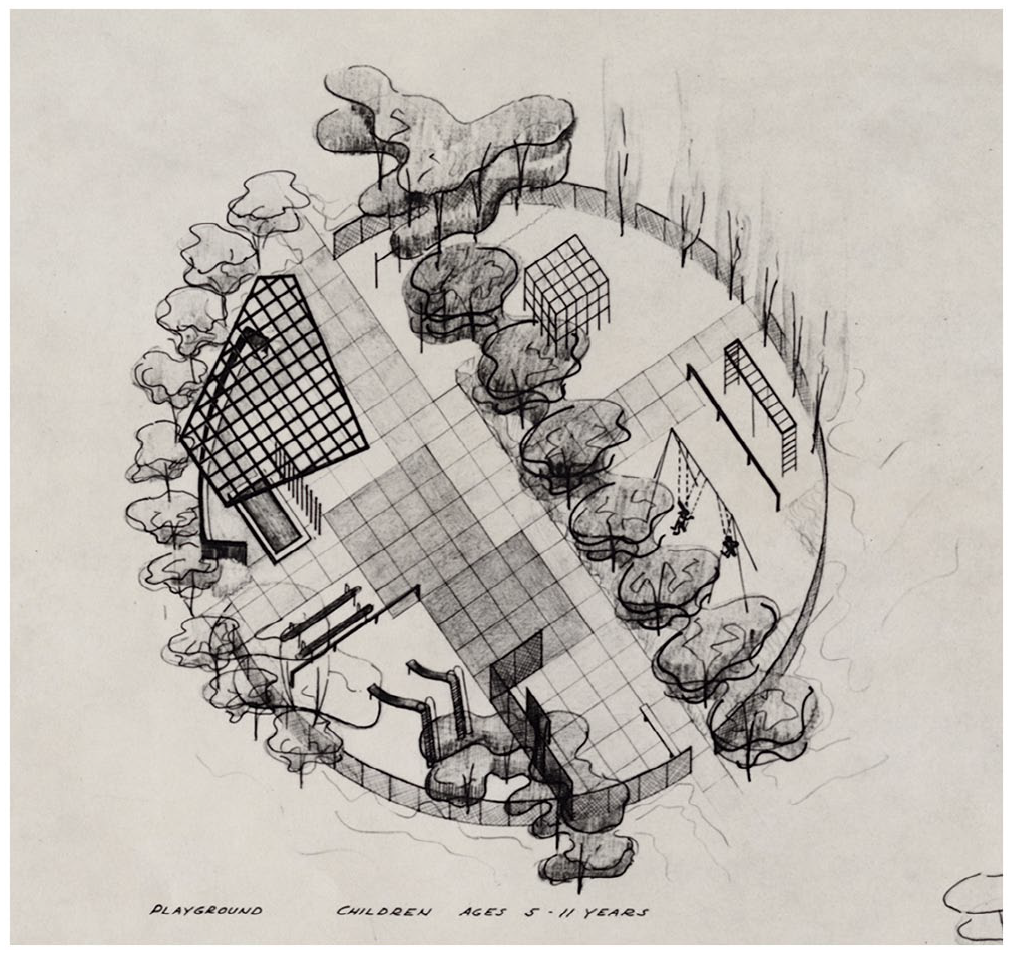
Axonometric of neighborhood parklet for children ages 5-11 years, Ladera Housing Cooperative, CA, pencil on paper, 1944.
With the land purchased, the design approved, and a promise of a construction loan from a local lending institution, in 1947, the PHA was ready to break ground. The next section explores the inevitable conflict that occurred when PHA’s egalitarian philosophy clashed with the FHA’s discriminatory practices (Figure 18).
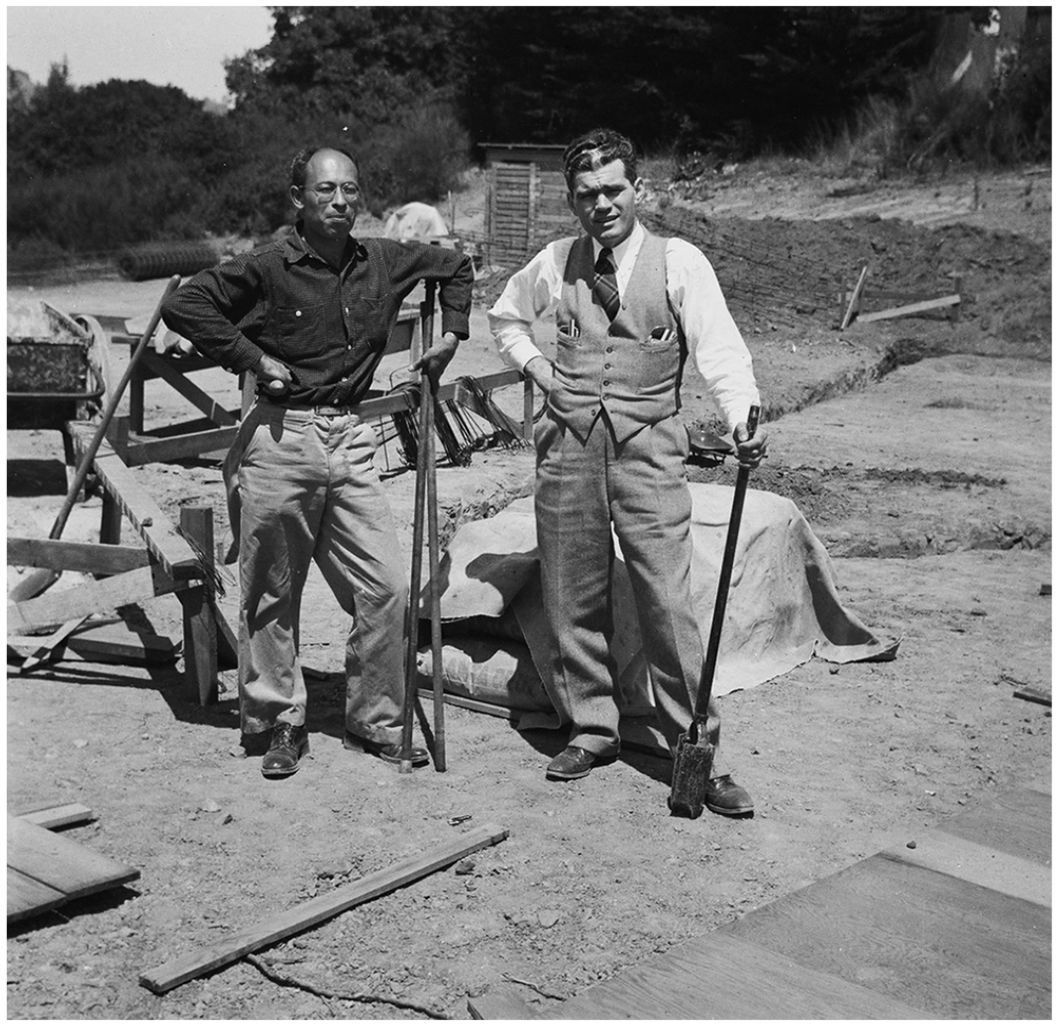
Joseph Stein, architect, and Nicholas Cirino, structural engineer, breaking ground at Ladera, CA, 1947.
The FHA, the PHA, and NAACP
In the second section of this paper, I examined the complicity between federal agencies and private institutions—a preferential economic infrastructure made up of real estate, lending, and building industries that contributed to exclusionary land use patterns. But how did racial considerations factor into California’s lending practices? And how widely were they distributed? As mentioned, although a local lending institution had approved the PHA’s construction loan, the necessary underwriting insurance from the FHA was not forthcoming. 82 Why was that?
Thurgood Marshall, then special counsel for the National Association for the Advancement of Colored People (NAACP), had previously questioned the FHA’s irregular underwriting practices numerous times. The official response in 1940 was that economic risk, not race, influenced FHA decisions, and furthermore, “all references to race in the Manual had been removed several years ago.” 83 Yet internal memos reveal that it was not until October 15, 1945, that Curt Mack, chief underwriter, was instructed to remove racially “offensive phraseology,” and even then the instruction did not include the portion with the proviso for “protection from adverse influences”—in other words, from racial integration. 84
Since Ladera was sited on unencumbered open land in an undeveloped rural area, there were no adjacent “adverse influences,” so that provision would not seem applicable. However, the NAACP previously observed that “all open areas have become or are rapidly being considered as ‘white areas’ generally confining Negroes in the already overcrowded and congested [urban] neighborhoods.” 85 Similarly, in response to an inquiry from the National Housing Association regarding rural land, National FHA Commissioner Raymond Foley said that the FHA “took the position that [rural] property should be part of a neighborhood . . . established with proper safeguards,” with the suggestion that open land is white land. 86
As written in the PHA’s bylaws, membership was open to all ethnicities, races, and religions without restriction. In addition to coop members from different backgrounds and economic levels, there were at least three Black families who were members of the PHA: Mr. and Mrs. Clarence Braden, Mr. and Mrs. Felix Natis, and Mr. and Mrs. William H. White; there was also an Asian family. 87 Fearing that their nondiscriminatory membership policy might be the unspoken issue, Luck called a general meeting in November 1946. The final entry in Murray Luck’s notebook expressed his intention to call a meeting of the coop members and their attorney, “We must find out what the trouble is and get it straightened out.”
On May 5, 1947, Murray Luck resigned without completing his term. Pages were torn out of Luck’s PHA notebook. 88 The minutes of the meeting provide a glimpse into the contentious debate regarding open membership. Despite heated discussion, when the vote was held, open membership was narrowly retained. 89 But as the project continued to stall, pragmatists persisted. Anxious to move forward, they proposed the most controversial action yet. The bylaws were modified, inserting a clause that the coop would accept minority members in the same proportion as the population of California, which was 2 percent. On January 12, 1948, the vote was 78 for and 75 against; the quota statement passed and was included as part 4L. Although the community would still be integrated, the inclusion of a racial quota statement marked a slippery slope with serious ethical and legal considerations. Nonetheless, this compromise to their cooperative principles did nothing to break the stalemate. The local FHA remained uncommunicative and intractable.
With unwarranted optimism, the coop went forward with site improvements—streets and sidewalks, sewer, and water lines completed at a cost of $100,792. In October 1948, the coop recorded their subdivision map, including racial quotas, so that deeds could be transferred from the PHA to individual members. 90 Many coop members had been waiting years, and some were unable or unwilling to wait any longer. 91 Undeterred by the FHA’s unresponsiveness, Varian and five other coop members commenced housing construction with private financing. 92 The cooperative’s plan was to construct an additional six houses each week until all houses were finished, in November 1949. However, problems with the FHA intensified. The local office’s decisions were entirely discretionary; they repeatedly devised obstacles to sabotage the project, demanding innumerable revisions to the site plan, adding unexpected expenses, and stalling construction. 93
The NAACP continued to advocate on behalf of groups, including the PHA. Yet in response to a request for a review, Commissioner Foley claimed no knowledge of the PHA: The PHA “could not be identified by our office with any filed application or even with any conversations thereto,” and “it is not the policy to refuse to approve any subdivision . . . for mortgage insurance on the ground that its occupants are to be of more than one race.” 94
The latter statement is belied by letters and internal memorandums housed in the National Archives that document the routine practice of rejecting applications for racially integrated communities. Moreover, internal memos also describe complaints related to the refusal of mortgage insurance to “Jews, Negroes, Japanese.”
95
A 1948 letter to President Truman from the NAACP asserts that the FHA has . . . a policy of refusing to approve a loan to any subdivision, regardless of its other features, if its occupants are to be of more than one race. The FHA has informed applicants in Chicago, in California, in the Nation’s Capital, and undoubtedly elsewhere that, the presence of a minority race establishes without other evidence, the financial insecurity of the proposed loan.
96
By 1949, most of the community plan had been executed, and a grouping of houses was in place. Twenty-five former coop members constructed houses with private financing along the southeast corner, following the original drawings by Stein, Funk and Eckbo, Royston. Due to the lack of economies of scale, because the houses were built one at a time, Stein’s modular construction system could not be implemented. The remaining houses were constructed with conventional methods making them more expensive to build (Figure 19).
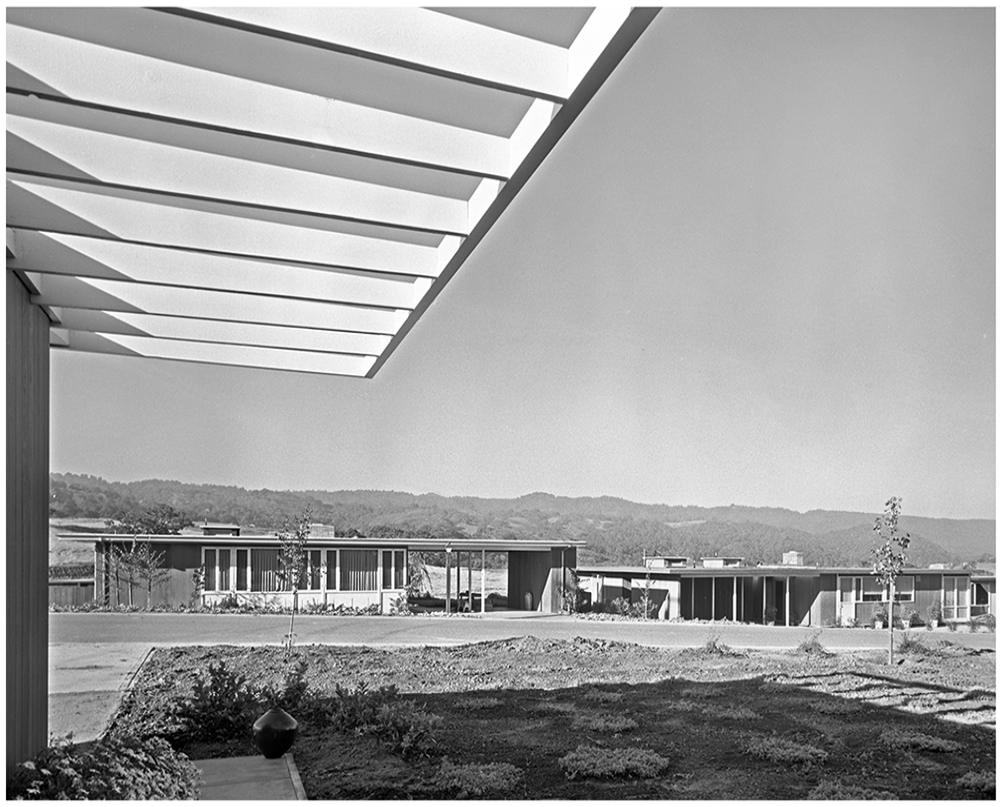
Ladera cooperative housing, as built houses, 1948.
The FHA’s local field office never responded or provided a justification for withholding insurance to the PHA. 97 Ultimately, once site grading and roads were completed, the PHA was over $500,000 in debt, and without FHA insurance it faced bankruptcy. The reasons for their financial difficulty were multiple and contested: Luck conceded that the democratic decision-making process was painstakingly slow. Rapid inflation increased costs. The coop had spent too much on land acquisition, architectural design, and site improvements, among other factors. 98 But there is no denying that the innumerable delays imposed by local ordinances and the FHA ultimately ran the clock down. Unable to achieve their aims, the cooperative was dissolved. 99 Members later recalled, “those were sad days for the [cooperative] and the memory of Ladera had been a dearly held dream, and its failure was a strong emotional experience for many.” 100
Facing bankruptcy, on March 24, 1950, the coop made the difficult decision to sell. A representative contacted Ryland Kelley of Hare, Brewer & Kelley to purchase the property. “As a condition for a loan imposed by the American Trust Company, a racial restrictive clause had to be imposed,” such that all minority coop members were asked to recuse themselves prior to the deed transfer. 101 “Mrs. William H. White, Jr., a Black member, recalls the day a PHA member came to her home to explain the situation to her. She said there was nothing they could do but withdraw—they couldn’t be the cause of their friends losing their investment.” 102
On May 11, 1950, the tract was sold to a for-profit developer, the Portola Land Development Company, an adjunct of Hare, Brewer & Kelly, for $500,000. How was it possible that, two years after the Supreme Court’s crucial Shelley v. Kraemer decision, the Santa Clara office of the American Trust Company could require racial restrictive covenants as a condition of loan approval? The Supreme Court decision made racially restrictive covenants unenforceable, but not illegal, thus Shelley v. Kraemer was ineffective in Ladera’s case because the ruling was ignored or simply not enforced. “The FHA also employed a degree of vagueness in its language in order to allow its support for restrictive covenants and other segregationist measures to remain on the books,” contends Kimble. 103 Given the clarity with which the FHA had administered their preferential mortgage insurance for over fifteen years, lending institutions knew what was expected of them.
Although the FHA removed explicit racial language in 1949, NAREB continued to defend racial restrictions and encouraged their use, albeit implicitly. “Developers by and large anticipated that their restrictions would go unchallenged in court,” Paige Glotzer states. “Crucially, the very idea of restrictions continued to be endorsed by lenders and Realtors. The removal of explicit language at the FHA, NAREB, and in restrictive covenants, masked rather than stopped active discriminatory practices.” 104 As a result, tacit understandings within local real estate agencies, lending institutions, and municipal planning departments continued to segregate minorities, concretizing racial separation in their effort to halt African Americans, Latinx, and Asians from moving into Palo Alto’s new, predominately white, housing developments. As Ladera’s history demonstrates, developers, lending institutions, and government agencies continued to limit access to credit by equating property value with race.
In a final bitter twist, the Portola Land Development appointed C. E. Jefferies, a former San Francisco FHA employee, to manage the Ladera project and complete site engineering, construction, and coordination with architects, financed by a new loan containing the aforementioned “recommended” racial restrictive covenants, and construction proceeded unimpeded. 105 The construction of the elementary school, commercial, and recreational areas went ahead according to Eckbo’s site plan, and a church was added as well. Portola Land Development hired new architects, one of them Joseph Eichler, to complete the development over the next several years.
Even in 1950, the rejection of PHA’s mortgage insurance application was not an isolated phenomenon; Southern California cooperatives experienced similar interactions with the FHA but found a workaround to resolve them. Founded by session musicians and other creatives within the film industry, Crestwood Hills had the same progressive open membership policy as PHA. Their FHA insurance was also stalled by the “recommended” inclusion of racially restrictive deed covenants to “protect from inharmonious racial groups.” 106 Eventually, Crestwood Hills members voted to include racial restrictions in order to obtain necessary FHA insurance on their construction loan. But, undeterred from integrating their community, white members stepped forward to purchase houses and later resold them to Japanese colleagues—one of whom was Albert Nasaki, an art director at Paramount Films. 107
In 1954, the United Auto Workers Union and American Friends Service Committee of Quakers jointly developed the Sunnyhills Housing Cooperative near the new Ford Assembly Plant in Milpitas, across the bay from Palo Alto. UAW Local 560 appointed Ben Gross, a colleague of Catherine Bauer Wurster, to chair the housing committee. The cooperative would provide housing for African American and other minority employees who were racially restricted from purchasing homes locally. 108 The interracial cooperative faced numerous hurdles from the city of Milpitas and local developers who wanted to keep the town white; it eventually took ten years to obtain planning approval for construction. 109 Thus, during the 1940s and into the 1950s, suburban cooperatives faced unique challenges in their pursuit of racial integration. 110
Although they were in violation of the Fourteenth Amendment, racially restrictive covenants withstood legal challenges until 1948 as private transactions between private individuals, and persisted through the 1950s and 1960s, until the 1968 Fair Housing Act was passed. 111 In response to repeated inquiries, the FHA obfuscated in response to charges of discrimination, placing the responsibility on lending institutions, housing developers, or the private market, never acknowledging its complicity. Although the FHA guaranteed $120 billion of loans with public money, less than 2 percent went to nonwhite housing—and virtually none of that was for nonwhite suburban development. 112 Racially restrictive covenants were implicitly required to obtain coveted FHA financing, reifying race into segregated communities.
How extensive were discriminatory practices in Santa Clara Valley? During the postwar building boom that resulted from housing 1.3 million new California residents, the practice was so widespread that in the majority of Northern California subdivisions—in cities such as Palo Alto, Menlo Park, Cupertino, and San Mateo—property titles contained the following clause: “No person not wholly of the white Caucasian race shall use or occupy such property unless such person or persons are employed as servants of the occupants.” 113 The virtual universal application of restrictive deed covenants established a legal framework for spatial exclusion. And once a racial restrictive covenant was put into place, an exclusionary residential pattern was set. Without that state-sponsored institutional backup, segregated suburbs would not exist as they do today.
Both federal agencies and private institutions rationed credit at both the state and local levels, contributing to exclusionary land use patterns in Santa Clara Valley. Masquerading as a public service institution, the FHA used its power and resources to spatially and socially control ethnic and racial minorities throughout California, and indeed, the entire country. Through the uneven application of federally backed mortgage insurance, the FHA codified and disseminated practices of residential exclusion. While currents of individual prejudice were certainly present in the 1940s, personal bias alone does not account for the institutional underpinnings that were so crucial to cementing residential segregation. “For the first 16 years of its life, FHA itself actually encouraged the use of racial restrictive covenants. It not only acquiesced in their use, but in fact, contributed to perfecting them,” according to the 1959 annual report of the U.S. Commission on Civil Rights. 114 Over time, the FHA perfected its lending technologies as a means of controlling how and where people of color could buy homes. This pattern is reflected today in the segregated suburbs of Silicon Valley.
Conclusion
Ladera was envisioned as an interracial community without any restrictions, a truly revolutionary idea in the United States before legal desegregation, and for decades later when much discrimination was (and continues) to be more or less de facto. —David Weinstein
115
In 1944, a group of socially conscious individuals founded a housing cooperative, “an example of community planning—done by the community itself.” 116 Housing cooperatives such as Ladera represented a new paradigm in community design, one in which modest modern houses were individually designed, efficiently built, affordable, and sited responsibly in the landscape. The designers Stein, Funk, Eckbo, and Royston called their approach “Contemporary Californian.” 117 Altogether Ladera was a community conceived in social, economic, and environmental justice, with broad implications for racially inclusive housing, sustainable land ethics, and design equity—principles that are as important today as they were in the 1940s since the movement toward the suburbs is not only a historical phenomenon but still occurring.
Innovative in its social and formal design response, Ladera represents one of the most comprehensive expressions of American modern community planning. As a model of single-family residential development, Ladera would have occupied a space that is now accorded to Levittown, which had no social nor architectural ambitions. Stein, Funk, and Eckbo were early adopters of environmental sustainability and land ethics and held a committed interest in smaller, simpler, more efficient structures that used fewer resources. While many of Stein’s ideas are now accepted doctrine within the architectural canon, they were radical when first introduced: user-oriented design methodologies, transit-oriented development, preengineered modularity for labor-saving construction (several years prior to Levittown), and design integration with nature for an environmentally sustainable future. Unlike most for-profit housing developments, Eckbo and Royston’s vision provided all the social components for a thriving community, with a school, stores, parks, and recreation. They interwove pedestrian paths with communal outdoor spaces for increased social interaction. The coop’s open membership policy and voluntary service were intended to enrich residents’ lives, demonstrating a creative expression of common interests and sharing culture.
Ladera was one of the first comprehensively planned unit developments in this country; which, if fully realized, could have changed the course of suburban history. Architectural critic Florence MacFarlane concurs: “This enterprise should be the beginning of much further experiments for living.” 118 Rather than the disciplinary insufficiencies of industrialized tract housing critiqued by scholars—formal monotony, rigid social conformance, and a for-profit economic model—there could have been a different world: a suburban environment that was affordable, ethnically diverse, socioeconomically inclusive, and environmentally responsive. In the same way that Ebenezer Howard’s idea of the garden city inspired countless generations of urban planners, so too Ladera could have stood out as an alternative design path for other planners to emulate.
Ladera’s significance lies in more than simply good design. Its importance survives in its vision to create a community that aspires to be fully integrated into both race and class. Yet the egalitarian cooperative of Ladera was not fully realized. Within the context of a liberal college town with progressive aspirations, Ladera could not be integrated. Why did it not? In the lending landscape of the 1940s and the state-sponsored financing process that underlaid it, a collusion of vested interests, both state and private, undermined Ladera’s realization. The FHA, in combination with local real estate, banking, and building industries, wielded the financial weapon of credit rationing to control suburban development according to its discriminatory protocols, which denied the insurance that was crucial to obtaining a low-cost construction loan. 119 Cold War fears further enflamed suspicions that cooperatives might be linked to communism. In fact, Joseph Stein was subpoenaed to testify before the House Un-American Activities Committee, which later led to his leaving the country permanently. 120
Determinations that equated race with property value represented a rationalization of exclusionary lending practices with serious consequences for African Americans and other minorities in education, healthcare, and employment opportunities that are evident today. In the United States, where education funding is directly linked to property taxes, neighborhoods with lower real estate values have fewer resources available for schools. Healthcare facilities tend to be limited there, while environmental conditions are often compromised. 121 Moreover, the effects of lack of access to the equity that could have been gained from home ownership over time persist. Understanding the missed opportunities represented by our suburban history is particularly important as we strive to recognize the core aspects of systemic racism across our nation and work to remove them from our institutions and infrastructure going forward.
Footnotes
Acknowledgements
This research would not have been possible without the support of the Graham Foundation for Advanced Studies in the Fine Arts. I would like to extend special thanks to Mitchell Schwarzer who generously read the first drafts and offered valuable suggestions. I would also like to thank Christina Crawford, Jesus Hernandez, and John Kimble for their encouragement during the pandemic, and to Walter Hood, Andrew Shanken, Brandi Summers, and the reviewers at the Journal of Urban History.
Declaration of Conflicting Interests
The author(s) declared no potential conflicts of interest with respect to the research, authorship, and/or publication of this article.
Funding
The author disclosed receipt of the following financial support for the research, authorship, and/or publication of this article: The author received a research and development grant from The Graham Foundation for Advanced Studies in the Fine Arts, Chicago, Il.
Notes
Author Biography
 . Tierney serves on the editorial board of The Bartlett’s ARENA Journal of Architectural Research (University College London). She has been published widely, Intelligent Infrastructure: Zipcars, Invisible Networks and Urban Transformation (UVa Press 2017); The Public Space of Social Media: Connected Cultures of Network Society (Routledge 2013), which was a finalist for the Jane Jacobs Award, in addition to numerous journal articles. Tierney holds a PhD in Architecture from the University of California Berkeley and a BArch from California College of the Arts.