




Abstract
Despite the severe implications of loneliness on racialized older adults’ well-being, little is known about this experience among Black older adults. This paper explores how Black older adults in Canada frame the (un)availability of different social provisions and their interplay with loneliness experiences, drawing on the firsthand experiences of 13 Black older adults (n = 5 male and n = 8 female) with a mean age of 63.8, who were purposefully recruited using narrative inquiry methodology. Analysis of narratives by Black older adults revealed that getting involved with people, intimacy, and belongingness are crucial in establishing a reliable social provision. While many participants emphasized the critical role of social connections and reliable relationships in alleviating loneliness, disparities in access to these essential social ties were noted among Black older adults. This highlights the urgent need to establish more inclusive and supportive environments that effectively address loneliness and social isolation for this population.
Loneliness, a pervasive social and public health concern, is a shared experience among older adults worldwide making it a fundamental aspect of the human condition that transcends borders and cultures (De Jong Gierveld et al., 2015). Although the definition of loneliness is equivocal, it is often characterized as a negative and undesirable subjective feeling arising from perceived discrepancy between desired and available social and emotional needs (Ojembe et al., 2022). Recognizing that loneliness arises from unfulfilled social and intimate needs underscores its multidimensional nature, including social, emotional, and cultural dimensions.
The psychological characteristic of loneliness is a significant factor for its varied impact on individuals, particularly older adults. Some of the impacts among older adults span across multiple dimensions, including social (Ojembe et al., 2022), mental and physical well-being (Czaja et al., 2021), and spiritual health (Thauvoye et al., 2018), ultimately leading to poor quality of life. Over the years, many factors have been identified as predictors for loneliness among older adults including race, ethnicity, class, sex, disability, or language (De Jong Gierveld et al., 2015; Koehn et al., 2020; Victor et al., 2021). While these factors impact older adults in varying ways, some seem to contribute to a notably higher prevalence of loneliness in specific groups of older adults more than the other, particularly when examining differences across racial demographics (Taylor et al., 2024; Victor et al., 2021). For instance, in an exploratory study among ethnic minoritized groups aged 65+ in Great Britain, the prevalence of loneliness was shown to be highest among Africans (50%), followed by Chinese (40%), and Caribbean people (24%) (Victor et al., 2021).
Specific to North America, a recent scoping review on loneliness among Black older adults revealed that Canada continues to trail the United States in research focusing on loneliness in older ethnic minoritized and racialized groups, despite the significant immigrants’ population in Canada (Ojembe et al., 2022). Canada’s multicultural landscape, driven by its immigration policies, comprises a broad range of diverse ethnic groups (Chaze et al., 2015). For example, data by Statistics Canada reported that the population of older immigrants in Canada increased from 20% in 2011 to 31% in 2016 (Kei et al., 2019). However, many older immigrants often face life challenges that increase their vulnerability to loneliness, social isolation, and exclusion (Koehn et al., 2020). Such that they often have a hard time coping and integrating into their new country due to socio-cultural differences, changes in connection to family, friends, and communities, and difficulty in optimizing the potential that their new environment presents (De Jong Gierveld et al., 2015) and lack of sense of place (Koehn et al., 2020; Ojembe et al., 2023a).
While there is evidence about the different aspects of loneliness and its prevalence among some ethnic groups in the United Kingdom and the United States, research on loneliness within and between diverse ethnic groups in Canada is notably sparse, presenting a unique opportunity for exploration. The limited studies that have examined loneliness among older Canadians have often focused on specific populations such as Europeans (De Jong Gierveld et al., 2015), Asians/Indians (Alvi & Zaidi, 2017; Hanley et al., 2024), and Koreans and Filipinos (Koehn et al., 2020). These studies often lump the other racialized and minoritized ethnic groups, for example, Blacks and Latinos, together as “others” (De Jong Gierveld et al., 2015; Wu & Penning, 2015). The “Others” category often includes only a small number of Black participants (Garcia Diaz et al., 2019), which research has shown to experience loneliness in distinct ways (Salma & Salami, 2020; Victor et al., 2021). The “othering” of certain groups in the empirical literature limits the opportunity to fully understand the unique experiences of each of these groups, particularly Black older adults who are often less represented in the literature. This study aims to bridge this gap and shed light on this under-researched area.
Therefore, I analyzed interview data from 13 Black older adults aged 55+ years living in Hamilton and Windsor, Ontario, Canada. I added to previous research in the field of loneliness by adopting a qualitative narrative inquiry grounded in the social provisions framework and foregrounded in Black older adults’ narrative and framing of the influence of social provisions in shaping their experience of loneliness. Thus, this study particularly aimed to examine how Black older adults aged 55 years and above in Canada frame the (un)availability of different social provisions and their interplay with their overall experience of loneliness. Following this section, I provide a brief overview of existing literature on Black older adults' experience of loneliness, identifying key gaps in this area of study, especially in Canada.
Research Evidence on Loneliness Among Black Older Adults
Research on the experience of loneliness among Black older adults globally is scarce. A study by Finlay and Kobayashi (2018) in the United States found that Black groups were less likely to report loneliness or social isolation than White and Hispanic groups. However, in the United Kingdom, the experience was starkly different. Loneliness was found to be highest (20–50%) among older adults from Africa, the Caribbean, Pakistan, Bangladesh, and China, with Africans reporting the highest levels of loneliness (50%) (Victor et al., 2021). Several factors contribute to these conflicting findings. For example, research in the United States suggests that Black older adults experience less loneliness due to their resilience stemming from historical, socioeconomic, and health disadvantage (Finlay & Kobayashi, 2018). Secondly, a closer family relationship and interaction, along with the value Black older adults place on these relationships over other social contacts or relationships, serve as a strong predictor for reduced loneliness (Taylor et al., 2019). Typically, Black individuals have larger families and tend to live in a communal or collectivist culture helping to increase their psychological health (Johnson & Carter, 2020) and ameliorate their social loneliness or isolation.
However, when socioeconomic factors (e.g., household income) and health status are controlled for, Black participants tend to have a higher level of loneliness than White and Hispanic participants (Taylor et al., 2019). When Black older adults report a higher prevalence of loneliness, it is often positively related to poor self-rated health, stress, and depressive symptoms (Taylor, 2021), poor cognitive function (Han et al., 2017), poor physical function (Vásquez et al., 2020), perceived low income, and fear of neighborhood crime (Taylor et al., 2023). Similarly, in the Global South, loneliness among Black older adults in sub-Saharan Africa has also been linked to bereavement, marital status, lack of engagement in religious activities (Kwegyir Tsiboe, 2020), living or being alone, disability, weak family ties, and poor social network (Ojembe & Ebe Kalu, 2018).
Furthermore, although the adverse effects of loneliness have been found to be similar across ethnic groups, the negative effects are higher among Black older adults, as some are less likely to seek help due to perceived and internalized racism (Willis et al., 2021), exclusion (Salma & Salami, 2020), and lack of sense of belongingness (Ojembe et al., 2023a). Although these studies have highlighted the experience of Black older adults in the United States, the United Kingdom, and some African countries, such as Nigeria, Ghana, South Africa, and Uganda, there is limited research on loneliness among Black older adults in Canada. In addition, there is a lack of exploration regarding the available social provisions and their role in shaping the experience of loneliness among this population. In the current study, I draw upon the social provisions framework by Weiss (1973) to understand the interplay between loneliness and the availability and/or lack of relational gains particularly among Black older adults. I consider that Black older adults’ framing of these provisions uncovers what is significant to concentrate on when designing interventions for addressing loneliness among this population.
Theoretical Framework: Social Provisions Framework
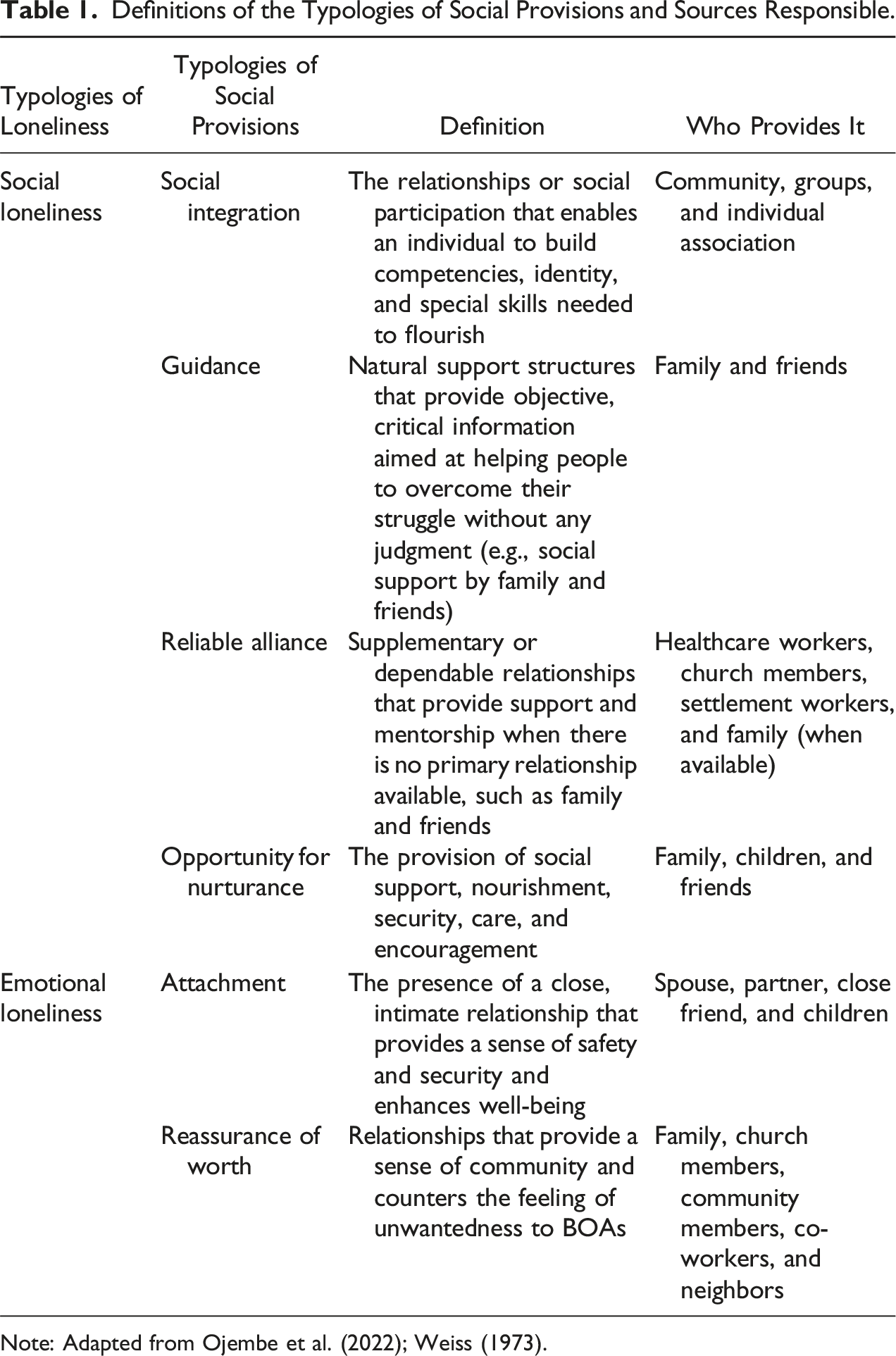
The social provisions framework (SPF), also known as Weiss’ typology of social and emotional loneliness (Weiss, 1973), the theory of the function of social relationships (Perera, 2016), or the interactionist theory of loneliness (Ojembe & Ebe Kalu, 2018), is a crucial multidimensional theory in the field of psychology. It is deeply rooted in Bowlby’s (1981) attachment theory. The SPF, which recognizes both the availability and lack of relational gains, is based on the understanding of what individuals derive from their relationships with others categorized into six social provisions: attachment, reassurance of worth, social integration, reliable alliance (relationship), guidance, and opportunity for nurturance.
Attachment and reassurance of worth can be categorized as emotional loneliness. In contrast, social integration, reliable alliance, and guidance can be seen as remedies for social loneliness. The absence of opportunity for nurturance can potentially lead to emotional or social loneliness (see Figure 1). Definitions of each social provision are outlined in Table 1. The social provisions framework is premised on what people gain from their social relationships and how the lack of these gains can have psychosocial implications and result in loneliness. The framework pinpoints what triggers loneliness in an individual’s life and what type of loneliness is experienced. Hence, relational deficits can result in the deprivation of these gains. Schematic representation of the experience of loneliness using the social provisions framework. Note: This figure describes the six elements of the social provisions framework. Adapted from Loneliness: The experience of emotional and social isolation,” by Weiss (1973). MIT Press: Cambridge, Massachusetts. Definitions of the Typologies of Social Provisions and Sources Responsible. Note: Adapted from Ojembe et al. (2022); Weiss (1973).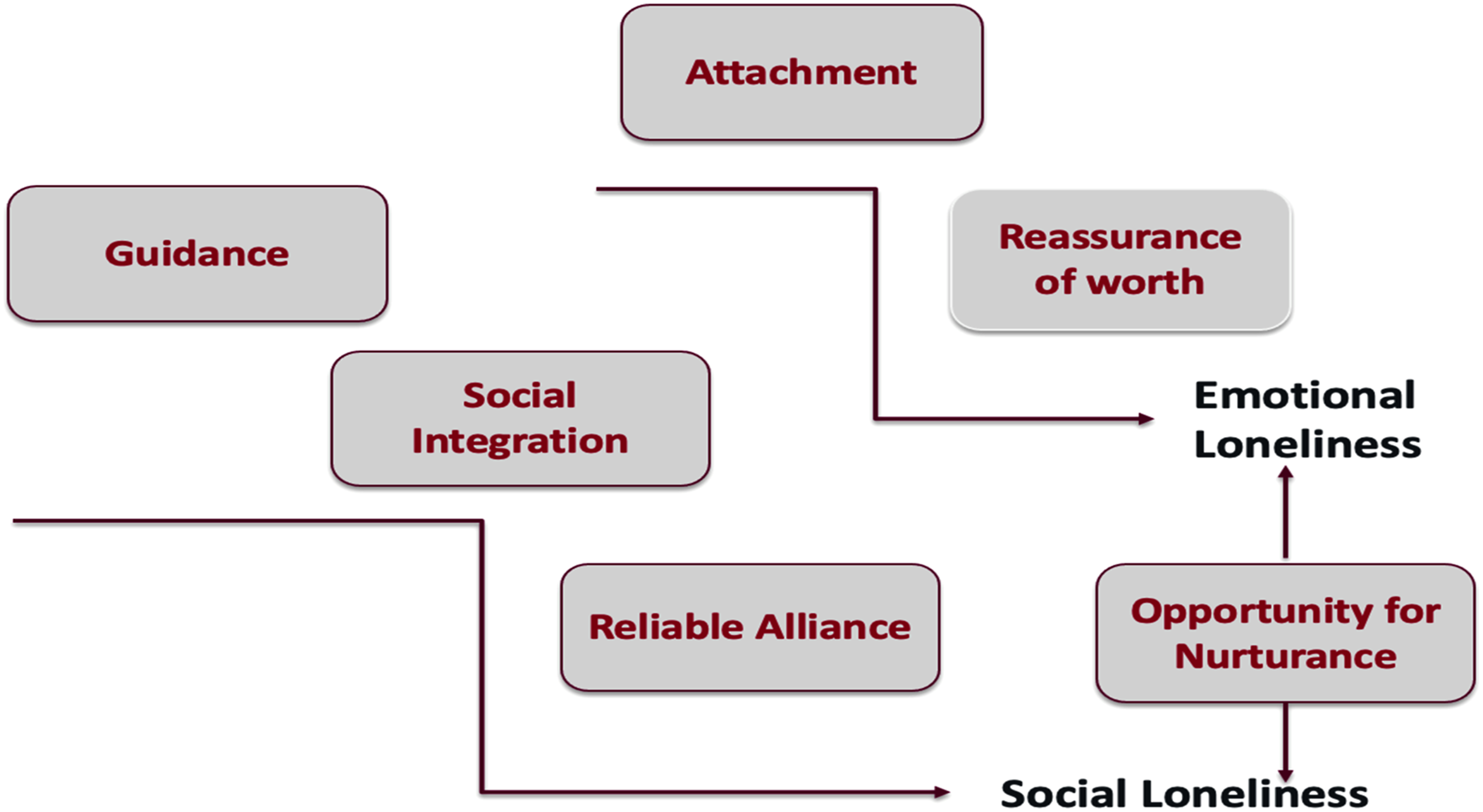
Clearly, an increase in one provision cannot compensate for the deficiency in another provision, which explains the occurrence of loneliness (Drennan et al., 2008). Therefore, due to the inherent assumptions within each social provision, and because different types of loneliness can only be alleviated by the appropriate provision, social relationships must focus on the specific provision that it aims to fulfill. In essence, no single relationship can meet all the needs arising from loneliness, hence, the complexity of the phenomenon. However, the social provisions framework offers dimensions that might assist in addressing various forms of loneliness and lack of social support among diverse populations.
The Current Study
While a plethora of studies in Canada and beyond have documented the experience of loneliness among older adults, few have focused on or included Black older adults. Specific to studies that have focused on Black older adults, there seems to be a dearth of scholarship on the interplay between loneliness and the availability and/or lack of relational gains. Therefore, this study is driven by the pressing need to fill this gap, understand the crucial role played by the different social provisions in shaping the experience of loneliness among Black older adults, and build on the author’s groundbreaking studies on loneliness among Black older adults in Canada. Understanding this interplay can facilitate the construction and the comprehension of the experience of loneliness among Black older adults in several ways, provide context-dependent information that could inform social services and programs to alleviate loneliness among Black older adults in Canada, and potentially inform policy and practice to better address the issue of loneliness among diverse ethnic groups in Ontario and beyond. Data analysis of semi-structured interviews with 13 Black older adults aged 55+ years living in Hamilton and Ontario, Canada is used to answer the research question: How do Black older adults aged 55 years and older in Canada frame the (un)availability of different social provisions and their interplay with loneliness experiences?
Method
Research Design
Narrative inquiry, the methodology at the heart of this study, is a collaborative process that strongly emphasizes the particularity of experience over generality (Chase, 2008). This paper, firmly situated within the constructivist epistemological approach, aims to foster a shared understanding of the diverse constructions of people’s world experiences, focusing on driving social change (Lincoln & Guba, 2016). In this approach, knowledge construction is a joint effort, drawing from the personal experiences of both the researched and the researcher, the various interpretations of the phenomenon by the participants, and the creation of an interpretive understanding of their reality, not as perceived by others.
It is a more pervasive view among narrative researchers that answering a research question should not be the sole interest of narrative inquiry (Clandinin, 2016), as expected of other traditional qualitative and quantitative methods. One dominant thought is that research puzzles guide narrative studies, and researchers do not go into the field with pre-defined expectations of an answer; instead, they go into the interview with “a sense of a search, a ‘re-search,’ and a searching again” (Clandinin, 2016, p. 42). The unfolding of the puzzle and the transactional conversation between the researcher and the participant are shaped by the overarching aim of the research. Hence, this study focuses on the framing of loneliness by Black older adults and how their stories help to address the often-overlooked disadvantaged aging experiences that Black older adults grapple with across their life course; this paper seeks to answer the research question.
Participants
A criteria-based purposive and snow sampling was employed in selecting 13 Black older adults (n = 5 male and n = 8 female) living in Hamilton (n = 3) and Windsor (n = 10), Ontario, Canada, who have had or are experiencing loneliness. Participants who (a) were 55 years and above, (b) were self-identified as Black, (c) were self-identified as being lonely, and (d) could communicate in English, broken English, or Pidgin English were included. Evidence has shown that language difficulty is one of the significant challenges faced by racialized older adults in Canada (Boutmira, 2021). The criterion-based selection was beneficial because it offered detailed information and high accuracy, especially with the relatively small number of participants used in the study (Sarantakos, 2013). I also included the snowballing technique as a recruitment strategy to enable participants and gatekeepers to refer people with relevant characteristics (Atkinson & Flint, 2001) and maximum variation to ensure demographically diverse participants were purposefully selected, with the consideration of variations in age, gender, education, health status, geographical location, and immigration status. When the author in collaboration with other partners observed that recruitment was skewed toward a particular demographic, focus was adjusted accordingly. For example, at the beginning of recruitment, most participants were aged 55–65. To provide opportunities for other age groups to participate in the study, the partner community organizations engaged in the research were requested to specifically seek out participants aged 70–90. This approach was similarly applied to country of birth (East Africa, West Africa, and the Caribbean), gender, and immigration status.
Demographic Information of Participants (N = 13).
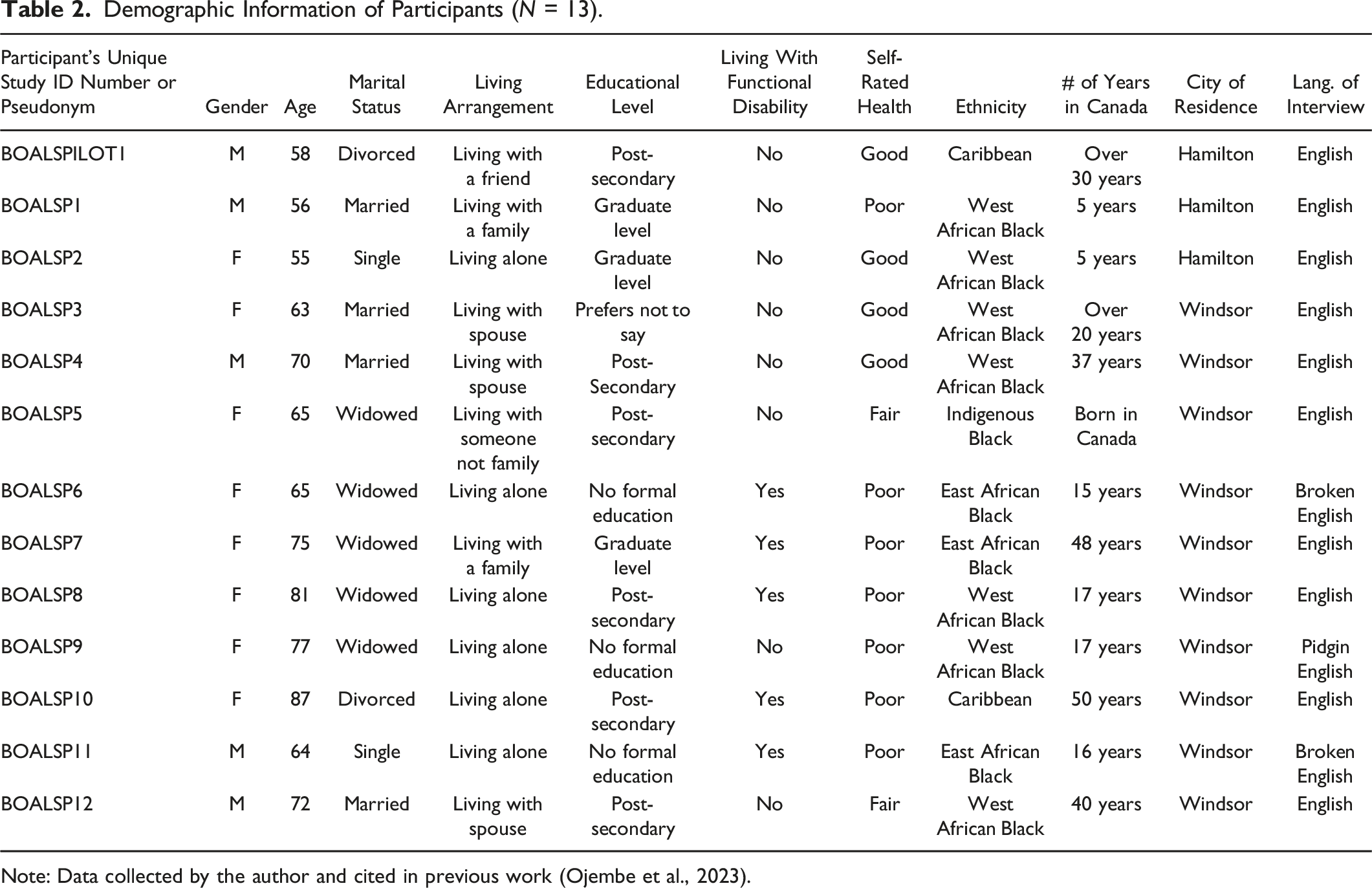
Note: Data collected by the author and cited in previous work (Ojembe et al., 2023).
Procedure
After obtaining REB approval from the McMaster University Research Ethics Board #5476, the study was advertised through various religious institutions and ethnic associations in Ontario, including the Federation of Black Canadians, and shared on the author's social media accounts, such as Twitter, Facebook, and Instagram. The study was also announced on the websites and social media platforms of some social service and aging research agencies in Hamilton, including the Young Women Christian Association (YWCA), the Gilbrea Centre for Studies on Aging, and the McMaster Institute on Aging. The aim was to recruit participants from as many cities as possible within Ontario, but only participants in Windsor, Ontario volunteered to participate in the study. Individuals interested in participating in the study contacted the author via email or phone call, and participants were screened with the short form of the Social and Emotional Loneliness Scale for Adults (SELSA-S) to ensure they have experienced loneliness and met the inclusion criteria. The exact way this was conducted is described elsewhere (Ojembe et al., 2023a). When participants met the inclusion criteria, interviews were scheduled.
Interview Protocol
Narrative interviewing adopts a semi-structured and unstructured method (Anderson & Kirkpatrick, 2016). The initial phase of the first interview was unstructured. As the conversation progressed in both interview sessions, the interviewer (BO) adopted a semi-structured method, allowing for follow-up and probing on some gray areas of their stories. Interviews were conducted via telephone (Lechuga, 2011) or virtually (Crichton & Kinash, 2003) depending on the participant’s choice and their comfort level with the technology. Five participants opted to be interviewed over the phone because they did not know how to use Zoom. The remaining eight participants were interviewed on Zoom. All but one participant was interviewed twice. The interviews focused on four broader aspects outlined by Anderson and Kirkpatrick (2016): the introduction and explanations about the research, the narrative, the questioning phases comprising a combination of semi-structured and unstructured interview questions, and the conclusion. The interview guide, which was developed by the author and her doctoral advisory committee members, was made up of three sections: (1) Perception of loneliness, (2) Experience with loneliness, and (3) Relationship with others (see Supplemental Appendix A for detailed questions asked). The interview guide was pilot tested with one Black older adult (man, aged 58 years), and the tool was revised after the pilot testing.
The author, who also conducted the interview, demonstrated a high level of adaptability, responding to specific aspects and topics that emerged during the interview. This flexibility enhanced a deeper understanding of the participant’s experience of the phenomenon (Clandinin & Connelly, 2000). Each interview lasted between 60 and 120 minutes. Participation was voluntary, and participants gave their verbal consent before and on the interview day. The identification number chosen by the participants is used here for privacy. All interviews were recorded digitally (with the respondent’s consent) and manually transcribed verbatim for the analysis.
Researchers’ Characteristics and Reflexivity
The author, who identifies as Black, brings a unique perspective to the study. This insider knowledge, stemming from her racial similarities to the study participants, may have influenced their interests in the study and their openness to the interview questions (Bishop & Shepherd, 2011). Additionally, as a social gerontologist, the author’s prior training about aging, existing knowledge on loneliness among Black older adults in other countries, and insights into possible ways older adults communicate their expectations have all contributed to the study’s depth and richness. While this might have influenced the construction of leading and follow-up questions, the author was careful to ensure that participants’ storied experiences were given precedence.
Through reflexivity, the author was able to identify, reflect on, and address the issues of power and positionality between the participants and the researcher. This commitment to reflexivity ensured transparency and sustained the quality of the study throughout the process, maintaining the element of “apparency, verisimilitude and transferability” (Connelly & Clandinin, 1990, p. 7). The author also paid meticulous attention to the crucial markers of quality in qualitative research, including rich rigor, sincerity, and credibility. This was achieved through detailed memoing and team validation (Tracy, 2010), further enhancing the study’s reliability and trustworthiness.
Data Analysis
Data were managed in NVivo 12 and analyzed inductively using thematic narrative analysis (Riessman, 2008), focusing on the content of what was said within and between cases rather than the structure. For this study, data was analyzed following responses to the following questions: (a) How do you think your relationships with others influence your experience of loneliness?, (b) What do you think about these relationships?, (c) Which of these relationships do you value most and why?, and (d) How do you think having someone to share your concerns with or not affects your loneliness? Following these questions, I explored the moments when the stories by Black older adults portrayed the interplay between their experience of loneliness and the narrative of the social provisions (relational gains) available to them. This allowed for theorizing across cases and considering each story’s significance (Riessman, 2008). Data saturation was not applied in the data analysis because of the study’s interest in the particularity of every story and narrative told by each participant. Therefore, to ensure that the analysis was data-driven, I sought not to subdue the particularity of the participants’ experiences while seeking similarity in the data and showing how they enable the understanding of how loneliness is shaped by the presence and the absence of different relational gains (Chase, 2008).
The analytical process was not a one-time event but an iterative journey that was done in collaboration with the author's doctoral research committee members. The analytical steps involved: (a) Transcribing the interviews which was done by the author manually; (b) Reading the interview transcripts, field notes, and memos several times to be immersed in the data and gain a comprehensive understanding; (c) Inductively generating a coding tree that revealed patterns, meanings, and relevant narrative elements represented by themes and subthemes (this thorough approach was done using NVivo and triangulated with the author's doctoral research committee members; this ensured that no significant detail was overlooked in the analysis); and (d) Drawing conclusions and verifying with relevant persons in collaboration with team members and participants to ensure research rigor.
Results
Overall, the analysis of the data underscored Black older adults’ varying narratives and meaning-making of social provisions within and outside the family. Specifically, three themes depicting patterns of meanings and relevant narrative elements about Black older adults' framing of (un)availability of social provisions and its influence on their experience of loneliness were identified: (a) getting involved with people, (b dynamics of social provisions and intimacy, and (c) belongingness. I have provided the relevant themes below, supported by direct participants’ quotes (see Figure 2), and highlight how deficits in relational gains can contribute to varied and multidimensional loneliness among Black older adults. The results are reported using pseudonyms for all the participants. A schematic representation of perceptions and narratives of loneliness and social provisions by Black older adults.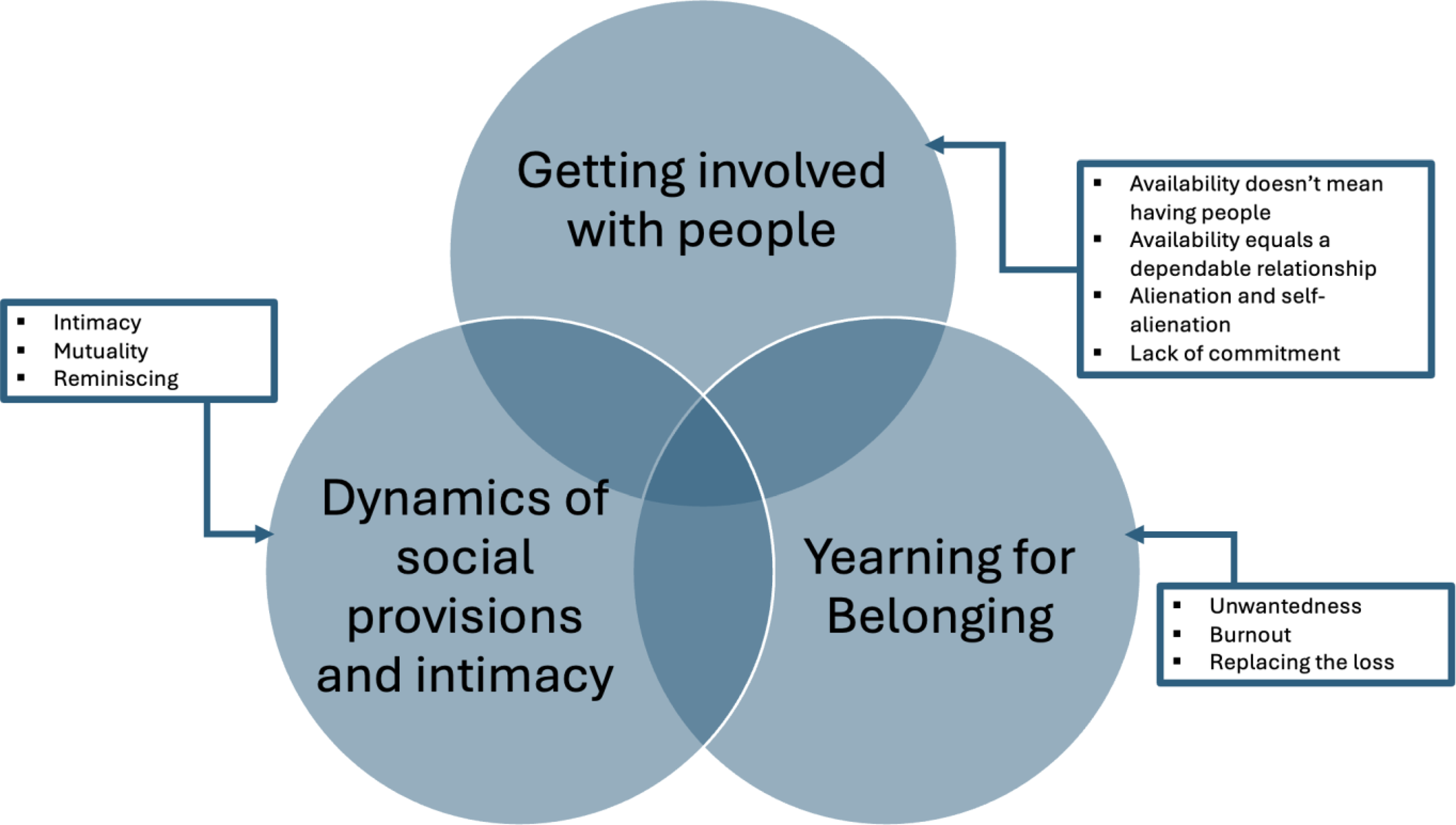
Getting Involved With People
The first theme highlights nuances around building connection with others and the importance to mitigating loneliness. There were four key narratives supporting the idea of getting involved as a key element for determining the role of social provisions in shaping the experience of Black older adults: availability of people doesn’t mean having people, availability equals a dependable relationship, alienation and self-alienation, and lack of commitment.
Availability of people doesn’t mean having people is maintained by the participants’ narratives that social relationships could serve as crucial social provision and help alleviate loneliness only when they connect with people who give them a sense of belonging, either culturally or religiously. In essence, availability of people does not mean that they provide the social provision that Black older adults need to thrive, as noted by BOALSP3 below. Being among people doesn’t mean that you have people. That is why I said, “not having people.” I didn’t say not being with people. One can be in a crowd and still feel lonely. My definition of having people is that when you pick up the phone, you have people to call, and if you don’t pick up the phone to call, someone will call you instead. But if you are constantly calling and nobody calls you, that is still having nobody, and if you are calling people and they don’t call you back, that is still not having people. That you have their names and phone numbers doesn’t mean that you have them. (BOALSP3, 63 years, female)
Similarly, further highlighting the less significance of quantity in social relationship and provision, many participants believed they do not need to integrate with everybody but rather with groups of people who share the same purpose. According to the participants, this could entail connecting with people from the same religious group, as Black older adults tend to be more religiously involved than other racial groups (Thauvoye et al., 2018), and belonging to a religious group and religious attendance provides social integration and social support, thus reducing loneliness (Rote et al., 2013). It also involves connecting with people who share the same cultural belief or ideology. Participants believe such connections could be made in places like a community center for Black older adults where they can engage in common social activities like dancing, singing, and cooking. Then, social provision is said to be more provided by “being with people” “who will be good to you” rather than just “having people,” as an increase in one provision cannot compensate for the deficiency in another provision. In essence, by increasing the number of social contacts available to an individual, the burden of loneliness would not suddenly disappear. You need to be around specific people because it’s not all people you need. You have to observe the person to see what they are doing and decide if you want to get involved. So, you need people that you have the same purpose with. (BOALSP11, 64 years, male) We need a community centre where… we can have a small gathering among us as Black seniors… We can share with each other on a regular basis. We can sing our African songs, dance, and forget our sorrows. (BOALSP7, 75 years, female)
Participants’ narratives emphasized how availability equals dependability. Specific narratives by Black older adults highlight how the importance of a dependable relationship relates to trust and reliability. In narrating what a reliable relationship means to them, some Black older adults who are immigrants described opportunities such as having someone mentor them as new immigrants and refugees, look out for them, and guide them in making health decisions, for example, healthcare workers, church members, and settlement service providers. As shown by one of the excerpts by one of the participants, Black older adults sometimes deem their reliable contact to be more informed than their family members. Other times, for Black older adults without families in Canada, the transference of dependability to non family members is not because they want to, but is enforced by the unavailability of family members. In essence, what informs this reliability as a key social provision in this context is both the unavailability of family members and the availability of non-family members, and the level of information they possess: … if you have a nursing background, I can appoint you to be my decision-maker when it comes to my health…with your background, you will know what to do and what decision to make more than my son could. (BOALSPILOT, 58 years, male) I have PSWs that come to keep me company and help me with my medications and other things…I don’t know what I would have done without them…I also have my fellow Christians in the church where I worship…Some of them come here to prepare food that will last me for one week and fill the freezer. (BOALPS8, 81 years, female)
Participants who spoke about transferring trust to non-family members were primarily older immigrants with lifelong mobility limitations that prevent them from connecting with others. Some of these participants migrated to Canada later in life. For them, loneliness is not just the absence of connection but also lack of access to people. Therefore, having a dependable alliance (social provision) was a way to ensure that they protect themselves and look out for themselves, especially if they do not have any family member living close by or in the same country. Thus, through building a dependable relationship, Black older adults were able to connect and engage with others, thus reducing their experience of loneliness. …The loneliness was not that I didn’t have people to talk to, but because I didn’t have people to lean on… (BOALSP3, 63 years, female) Meanwhile, when I came in those days, I was totally alone. There was nobody, and it was very difficult. But now, it’s better than ever before… Now, I have people that I can depend on… I have some friends in our group, and they are always there for me. (BOALSP8, 81 years, female)
The narratives around social provision and dependability also centered on being cautious and “selective…when trying to establish relationships that are credible, not just every Dick and Tom” (BOALSP4, 70 years, Male). In essence, when trying to form a dependable and credible social provision, the target should be establishing a quality relationship and not quantity. Loneliness doesn’t mean that you don’t have people, but that you do not have quality relationships with people. It’s just having someone you can call, chat with and make each other laugh or even cry to or pray with or go hang out with, whatever. Sometimes, it becomes stressful if you have too many people. (BOALSP3, 63 years, female) I was in Jamaica, and he was here in Canada… but he maintained the connection and looked out for me. That reassured me that I’m not in this all by myself. I’m not all alone. (BOALSPILOT, 58 years, male)
Alienation and Self-Alienation
For some Black older adults, unavailable social provision is perceived as alienation and closely related to social exclusion and discrimination. For Black older adults, being alienated is an outright denial of the relational gain that is otherwise provided by social provisions, social contacts, and community members. Black older adults narrated how alienation and unavailable social provision often limit their social integration and lead to self-isolation and loneliness. To some Black older adults having available social provision is related to when they are acknowledged in their community rather than merely seen as existing. As narrated by Black older adults, this explicit acknowledgement includes, but is not limited to, seeking their opinion when developing services and programs related to Black older adults and receiving government support that recognizes the historical, social inequality, and exclusion in accessing social services. According to Black older adults, when they are acknowledged, they feel socially integrated and are stimulated to participate in social activities to reduce loneliness, as shown by the comment below: Well, there is self-alienation that people don’t just bring upon themselves. They must have experienced something that led to it. Either because of the poor treatment, they received from society or the fear of the unknown and not just that, but how some people treated them and made them feel unwanted. So, things like that will make them alienate themselves. (BOALSP4, 70 years, male)
Lack of Commitment
In trying to understand the link between social provisions, connection, and alienation, tension around lack of commitment from some Black older adults was observable. This subtheme highlights how the unavailability of social provision might be due to personal factors. For example, BOALSP5 believes that sometimes people have some standards that prevent them from integrating and connecting with others. Similarly, BOALSP1 pointed out that social connection entails some level of commitment to participate and engage with others or a group that brings some sense of ownership, as shown by the comments below: Feeling lonely in a group, umm, I don’t know. Do you have your walls up? Are you participating? With a group, you have to interact; you can’t just isolate yourself and then think that people are mind readers. Be a little more open … If they can get in a group, … you learn how to participate and interact. (BOALSP5, 65 years, female) You should not wait to be invited before you get involved… If you sit down in your house waiting for people to always visit you, you end up doing yourself a disservice, and the end result is loneliness …you have a part to play… It is when people interact with you, they sit down with you, they talk with you, and they do something with you; that’s how they see how you feel. (BOALSP1, 56 years, Male)
The participants each spoke of social provisions as an integral element in the experience of loneliness among culturally diverse immigrant older adults and noted that providing adequate social provisions requires collective action on a micro- and macro-level, as one of the participants points out, “everyone has a part to play in making sure that we reduce the experience of loneliness” (BOALSP4, 70 years, male).
The Dynamics of Social Provisions and Intimacy
The key subthemes that are dominant in the narratives of Black older adults while framing the dynamics of social provision include intimacy, mutuality, and reminiscing.
Intimacy as Crucial Social Provision
Black older adults perceived having someone to share intimate things with as a crucial social provision that lessens the burden one must bear alone, since loneliness creates a feeling of an empty nest. To some of these participants, this might be someone with similar characteristics such as age and music preference, and whose personal and temporal experiences can resonate with their own. In essence, being without a valuable social provision “is more like being without someone to share intimate moments with” (BOALSP2, 55 years, female). There are times that I just craved someone my own age to interact with. To just have that relationship and understanding… someone I could identify with and have companionship and interact with. You know, who knew the same music that I knew…I have been lonely. I thank God that he has never left me there (BOALSP5, 65 years, female)
Social Provision Is Mutual
Black older adults also talked about social provision as reciprocal. To Black older adults, this act of reciprocity is a responsibility that entails a collective effort to make it work, without any intention to take advantage of each other, as captured by the quotes below: …Give and take. One that you can give to and take from…sometimes you’re the giver, and sometimes you’re the taker…It’s a balance, and you actually have to work at it. It doesn’t just happen naturally. It’s a job. (BOALSP5, 65 years, female) … in establishing relationships with people, one needs to be careful not to get involved with people who are out to take advantage of you without benefitting you in any way. And your loneliness will increase instead of decrease. (BOALSP4, 70 years, male)
Reminiscing About Lost Social Provision
While narrating about unavailable social provision, some Black older adults talked about the loss of someone to share with and how this was a social provision they enjoyed in the past but have lost because of death, divorce, or separation. Irrespective of how long it has been, stories by Black older adults around grieving a lost or failed relationship were narrated as an event that remains fresh and is discussed with a sense of regret, fear, displeasure, or indignation, depending on the type of grief. For men and women who are separated or divorced, it is more of a regret and indignation, and for Black older adults who are bereaved, there seems to be a sense of fear, displeasure, and guilt (Scheinfeld et al., 2021). So basically, you can say that my middle name is now lonely. Yeah, I’m sorry, but that is the way it is…because…I have been married before me, and I can say that I’m lonely because I don't have my companion with me anymore. (BOALSP2, 55 years, female) …loneliness can put you into a deep mental state… because you have lost a loved one, and you are now by yourself, and you don't even want to replace that wife or the husband with anyone else. (BOALSPILOT, 58 years, male)
Yearning for Belonging
Black older adults' narratives on this theme highlight loneliness as the absence of social provisions that promote the feeling of unwantedness and burnout while trying to prove oneself worthy of external acceptance, and the process of replacing social provisions when inaccessible.
Feeling Unwanted
Black older adults' narratives highlighted that the inability to access social provision, which can enforce a sense of belonging for them and help them deal with the maladaptive social cognition that can result in, can lead to a feeling of unwantedness, low self-esteem, and withdrawal from social participation and engagement, as depicted in the excerpt below: … feeling unloved and unwelcomed or not valued can lead to alienation which can lead to loneliness. (BOALSP5, 65 years, female) Loneliness is something that destroys confidence and self-esteem in people… It makes one feel probably unloved and sometimes unwanted by society or among certain groups of people or even the community. (BOALSP4, 70 years, male)
Burnout
When the assurance of being cared for is lacking, participants tend to bury themselves in work or activities that can occupy them and reinforce their withdrawal from spaces where they feel unloved or unwanted. As one participant mentioned, people can burn themselves out trying to enforce belongingness and fill the vacuum and emptiness that accompanies this type of loneliness. Oftentimes, Black older adults are left with the option to either accept or fight it, and for most Black older adults, they often resolve to show resilience, maintain positive thoughts about themselves, and do not dwell on the negativities of life, as stated by BOALSP5. …It sorts of boxes you in a way. And then at some point…I overloaded myself with so much work because I was trying as much as possible to be so busy that my head was not feeling that vacuum. It even began to affect me mentally. (BOALSP2, 55 years, female) I’m just so proud to be black, and I’m proud to be a woman and finding more positive information day by day. There’s a lot of negative stuff out there, but if you really look, it’s minuscule compared to the positive and the attributes that we have. (BOALSP5, 65 years, female)
Replacing the Loss
Participants’ narratives uncovered the process of replacing the loss and unavailability of social provisions. While talking about their loss of social provisions and the loneliness it brings which negatively affects their mental health, Black older adults’ narration revealed the replacement of human connection and interaction—especially when unavailable—with habits and activities like excessive watching of television, spending much time praying, and reading the Bible. For some Black older adults, especially women without partners and irrespective of age, although these routines have become an addiction, the engagement in these activities prevents them from nursing suicidal ideations and feeling extreme loneliness and socially disconnected from the outside world. For me, I am addicted to my TV and my phone because I am lonely and because I don’t have anyone to talk to... (BOALSP6, 65 years, female) …or when I’m watching Television. That is why I always have the television on. It makes me feel like I have someone around. Like I’m listening to somebody talking. Anytime I’m doing the dishes, the television is on, and someone is talking…Just hearing somebody talking makes me feel better. And like that, I don’t feel lonely. (BOALSP10, 87 years, female)
While activities such as watching television is soothing to Black older adults, there has been evidence to support the relationship between time spent watching television, increased depression, and reduced physical functioning among older women (Lucas et al., 2011) and the likelihood of Black older adults having a higher prevalence of mobility limitations (Vasquez et al., 2020), as well as older Black women developing functional limitations much earlier in their 50s and 60s as compared to other racial and ethnic groups (Warner & Brown, 2011). The true causality of the early onset of disability among Black women remains largely unclear. However, insight can be gleaned from the debilitating jobs and higher occupational stress leading to poor health among Blacks than non-Black racial groups (Assari & Bazargan, 2019), which is not the focus of this paper. Nonetheless, the findings on excessive time spent watching television could provide a partial answer to the early onset of physical limitation among Black women. In this sense, the need to mitigate loneliness by watching television contributes to developing functional disability, as these participants are not actively engaged.
Discussion
This narrative qualitative study is part of many others by the researcher that have been reported elsewhere exploring the unique experience of loneliness among Black older adults (African, Caribbean, and Indigenous Black) living in Canada (Ojembe et al., 2023a, 2023b). The purpose of this study was to understand the framing of the (un)availability of different social provisions (what people gain or derive from their relationship with others—relational gain) by Black older adults and their interplay with their overall experience of loneliness. Guided by the social provisions framework (SPF) categorized as attachment, reassurance of worth, social integration, reliable alliance (relationship), guidance, and opportunity for nurturance, detailed findings from this study suggest ways that different social provisions can enrich social relationships and their significance in addressing various forms of loneliness among demographically diverse Black older adults and potentially other groups.
Analyzing personal narratives of loneliness allowed for an understanding of how loneliness is shaped and interpreted from personal meaning-making and shaped by cultural identity. Collectively, three dominant themes with subthemes uncovering the framing of social provisions and their significance in shaping the experience of loneliness by Black older adults were identified from the data analysis: getting involved with people, dynamics of social provisions and intimacy, and belongingness. However, this section will highlight the substantive findings identified across the data and describe their implication for research, policy, and practice.
Quality-Over-Quantity Social Relationships
The findings highlight having a quality relationship with someone else, family or not, as the most significant relational gain to Black older adults and a crucial element in social provisions, supporting the findings by previous research that active maintenance of a small number of emotionally meaningful relationships provides a foundation for reduced loneliness (Dahlberg et al., 2021). Previous studies have reported quality-over-quantity social relationships or interpersonal connections (Hyland et al., 2019). However, such studies need more clarity on the meaning of the construct to Black older adults. This study provides an in-depth analysis of what the construct of quality-over-quantity means to Black older adults within the context of loneliness. Specifically, quality-over-quantity highlights the importance of availability and access to reliable relationships which is a key category of SPF compared to having a larger social network, which sometimes differs from the individual’s needs.
This finding has significant implications in the context of the development of interventions or strategies to reduce loneliness among Black older adults. In essence, it is not about placing Black older adults in an intervention or groups that provide access to many people but about ensuring access to reliable and dependable connections (Ojembe et al., 2022). Findings from previous reviews reported that interventions targeting loneliness and promoting social participation tend to focus more on activities that encourage group connections, explicitly focusing on enhancing social skills and support, increasing social contact opportunities, and addressing maladaptive social cognition (Gardiner et al., 2018; Quan et al., 2020), with none focusing on improving the quality of social relationships, which this study has identified as an important social provision and vital to reducing loneliness.
Shifting Preference for Sources of Social Provisions
Narratives from Black older adults underscored a shifting preference for who provides social provisions for them. In essence, the narratives of Black older adults showed the way that the priority of quality relationships and who provides other needed social provisions is placed on people outside their families, especially when such social provisions cannot be received from the family. This finding no doubt contradicts the norms of a collectivist culture where family relationships and ties are most sacrosanct (Johnson & Carter, 2020). However, it raises a question of what the role of the family is in the experience of loneliness among all ethnic minoritized and immigrant older adults, not just the Black older adults. Evidence has shown that the family plays an active role in reducing loneliness among their older family members (Taylor et al., 2019) and at the same time increasing it due to neglect (Ojembe & Ebe Kalu, 2018). However, there is limited evidence to understand the impact of these roles and its relationship to loneliness among older immigrant adults who are not living close to their family members or among transnational family members. Further research is required in this area.
Furthermore, Black older adults emphasized receiving significant social provisions from non-family members (such as church members, ethnic community members, friends, and Personal Support Workers), enabling them to overcome their loneliness and highlighting the need to make them more available to Black older adults and other ethnic minoritized older adults. In essence, when the family is not forthcoming, either because of lack of availability due to distance or other competing interests, there should be an alternative social support structure that Black older adults can fall back on to provide needed social provisions such as attachment, reliable alliance, social integration, and guidance, as suggested by Black older adults who participated in this study. Examples include establishing peer-based community centers and adult day programs targeting Black older adults. It could also involve intensified macro-level culturally focused initiatives by existing programs to attract more racialized and ethnically minoritized groups. A recent randomized control trial shows that such a peer-based initiative has effectively reduced loneliness and increased resilience among Chinese Hong Kong older adults in Calgary, Canada (Lai et al., 2020). Also, previous research has emphasized the importance of such initiatives in stimulating identity and belonging and eradicating perceived discrimination among immigrant older adults (Liu & Gallois, 2021).
Promoting Social-Relational Health Across the Life Course
Finally, the findings of this research underscore the importance of social-relational health not just in old age but from one’s early life and across one’s life course. Promoting social-relational health can be achieved by developing and sustaining meaningful connections with reliable social support within and beyond the family (Wilson et al., 2019). My research with Black older adults revealed the challenges of establishing such social provision in old age, which are further complicated by the death of peers, the busy engagement of family members, and a lack of integration. The impact of the lack of such reliable connections in old age is felt by both immigrants and Canadian-born individuals. In essence, the formation and sustenance of meaningful relationships, both in early life and in old age, are crucial for a healthy social life, aligning with previous studies (Wilson et al., 2019). Unfortunately, the formation of such relationships is often hindered by factors such as lack of commitment, language barriers, self-alienation or isolation, and lack of sense of belonging and sometimes by personality traits such as higher neuroticism, lower extroversion, which have been shown to predict loneliness among older adults (Tapia-Munoz et al., 2023). The intention is not to suggest that people should change their personality, but recognizing how these factors might predispose one to loneliness could play a significant role in being intentional about forming meaningful and reliable relationships within and beyond the family across one’s life course.
Limitations
Although the utilization of thematic narrative analysis allowed for the extraction and showing of common patterns across stories, it is possible that some uniqueness or particularities of individuals’ stories were omitted. The author tried to ensure that this was covered by observing and reporting some observed tensions while analyzing the data. By including only 13 participants, the study might have excluded some participants whose stories may have further contributed to the richness of this paper. For example, only participants who could speak in English, Pidgin English, or broken English were included, making it difficult for Black older adults experiencing loneliness and do not speak any of the eligible languages to be excluded, even though a language barrier is a risk factor for loneliness among immigrant older adults in Canada (Boutmira, 2021). Also, only the author coded the transcripts; however, peer-member validation was conducted through meetings with the supervisors which aided in the development of codes and themes, providing new insight into the data analysis.
Implications for Research and Practice
Based on the findings that Black older adults value access to reliable connections over a more extensive social network, I propose that interventions targeting loneliness among Black older adults should focus less on prioritizing large group interventions and more on one-on-one or small group interventions that could promote quality relationships, especially for older adults from collectivist cultures, who tend to revere intimate interpersonal relationships. In addition, as suggested by Black older adults, the establishment of peer-based community centers or adult day programs specifically for Black or ethnically minoritized groups is a vital step in fostering connection, building resilience, and reducing loneliness (Lai et al., 2020). These programs can provide safe spaces where individuals can build meaningful relationships with peers outside their family circle, enhancing their sense of belonging and collective identity. Finally, clinical and practice interventions should integrate the assessment of the types of relationships available to an older adult or suggest a person-centered and cultural-appropriate social prescribing intervention that will facilitate the establishment and sustenance of such relationships for older adults particularly Black, immigrants, and other ethnically minoritized older adults.
Since older refugees in this study reported more loneliness and reduced access to social provisions, future studies should focus on understanding the role of cross-country or transnational family members of older refugees living in Canada and connection to loneliness, mental health, and overall well-being. Studies on older refugees in Canada tend to focus less on the Black population (Boutmira, 2021; Hanley et al., 2024). Further, this study underscores the importance of exploring the underlying causes of early onset of functional disability that is reported to be higher among Black women and how this can contribute to loneliness. A longitudinal study design would be effective for this investigation, allowing for tracking of changes over time and identification of patterns related to disability onset, social connections, and mental health outcomes. Finally, this study and many others by this author have laid a crucial foundation for Black aging research in Canada. However, there remains significant need to increase interest and investment in this area. Conducting quantitative and larger-scale studies on Black older adults in Canada could provide deeper insights into their unique experiences of loneliness and specific challenges.
Conclusion
The narratives of the participants reveal that, for Black older adults, loneliness is intricately tied to the (un)availability of social provisions, such as access to meaningful relationships and opportunities for intimacy and belonging across one’s life course, more so for older adults without available family members. The participants’ emphasis on the importance of intimacy and belongingness speaks to a deeper need for emotional and social connection and quality relationships that go beyond mere proximity to others. Despite the recognition of the critical role that supportive relationships play in providing valuable social provisions and alleviating loneliness, the study highlights significant disparities in the availability and accessibility of these connections for Black older adults, revealing a gap in social support that may be exacerbated by the personal, social, economic, and institutional barriers that limit access to meaningful social relationship and provisions for Black older adults. These disparities in availability and accessibility to social provisions highlight the impact of social locations and systemic inequalities that contribute to varying degrees of loneliness within this demographic. Ultimately, this study emphasizes that fostering meaningful social connections anchored in community commitment to understanding and addressing Black older adults’ needs and creating opportunities to improve their belongingness is crucial in combating loneliness and improving the quality of life for Black older adults. In essence, this research serves as a timely reminder for scholars and professionals invested in promoting Black mental and physical health. Particularly, it is crucial to understand that addressing the mental health challenges faced by Black older adults requires a multifaceted approach that includes developing targeted interventions and inclusive policies that fosters equitable social environments. This will increase access to meaningful connections and opportunities for Black older adults to receive social provisions that will enhance their overall quality of life, creating a supportive society for all.
Supplemental Material
Supplemental Material - (Un)availability of Social Provisions and the Framing of Loneliness by Black Older Adults in Canada: A Qualitative Narrative Study
Supplemental Material for (Un)availability of Social Provisions and the Framing of Loneliness by Black Older Adults in Canada: A Qualitative Narrative Study by Blessing Ugochi Ojembe in The Journal of Black Psychology
Footnotes
Acknowledgments
The author wants to appreciate the supervisory committee members for their support and mentorship during the author’s doctoral studies. The author is also grateful to the 13 BOAs who participated and shared their stories for the success of the study.
Declaration of Conflicting Interests
The author(s) declared no potential conflicts of interest with respect to the research, authorship, and/or publication of this article.
Funding
The author(s) received no financial support for the research, authorship, and/or publication of this article.
Institutional Review Board (IRB)
This is part of my PhD papers and was approved by McMaster University Research Ethics Board #5476.

Supplemental Material
Supplemental material for this article is available online.
References
Supplementary Material
Please find the following supplemental material available below.
For Open Access articles published under a Creative Commons License, all supplemental material carries the same license as the article it is associated with.
For non-Open Access articles published, all supplemental material carries a non-exclusive license, and permission requests for re-use of supplemental material or any part of supplemental material shall be sent directly to the copyright owner as specified in the copyright notice associated with the article.
