




Abstract
We use Latent Dirichlet Allocation (LDA) topic modeling to review the articles published in JBP between 1975 and 2020. Doing so allowed us to estimate where JBP has been, and where it might go. We interpret our work within the framework of “Sankofa,” which is an Akan symbol for the integration of the past and present toward the future. Overall, we identified five major research themes that have characterized JBP over the past four decades: Racial Attitudes (i.e., how individuals think of themselves and others in the context of race and ethnicity), Health and Well-being (i.e., health disparities and community well-being), Education (i.e., learning and higher education experiences), Sexuality and Gender (i.e., how individuals think about gender, sexuality, and body image), and Resistance and Resilience (i.e., how people experience and cope with discrimination). The present research has implications for future research directions, including increasing the representation of Black communities outside the U.S. in the JBP literature, highlighting more holistic experiences of Black people of marginalized genders and sexualities, and generating and strengthening Black-centered constructs.
Black psychologists have constructed a body of literature whose breadth in itself is proof that Black lives matter, and that their contributions stand despite mainstream Western psychology’s foundations in white supremacy (Azibo, 1988; Cokley & Garba, 2018; Guthrie, 1976/2004; Roberts, 2022). The Black intellectual traditionally has entailed the traditional, reform, and radical, the deconstruction, reconstruction, and construction, and the descriptive, prescriptive, and corrective, all of which reflect the ability and desire of Black scientists to produce knowledge that speaks to the humanity of Black people (Banks, 1982; Marable, 2000). Cokley and Garba (2018) in particular highlight three methodologies that can describe the work of Black psychologists: deconstruction (of white supremacy), reconstruction (of Black self), and construction (of new paradigms for Black experiences). In psychology, there is perhaps no greater forum for such methodologies than the Journal of Black Psychology (JBP), which has elevated the perspectives and voices of Black editors, authors, and participants when mainstream and White-majority journals have not (Buchanan et al., 2021; Roberts et al., 2020). Here, guided by the Afrocentric process of Sankofa, and with an eye toward the future, we use Latent Dirichlet Allocation (LDA) topic modeling—a natural language processing technique to identify topics in text datasets—to review the history of JBP.
Sankofa refers to “integrating personal and collective pasts into the present and future” for marginalized groups that experience systemic oppression (Jones & Leitner, 2015, p. 198). Psychological research demonstrates the importance of acknowledging one’s history when fighting contemporary systems of oppression (Nelson et al., 2013). Indeed, recent research suggests that in the U.S., beliefs about the past play an integral role in contemporary Black identity (Roberts et al., 2021), and other research suggests that analyses of the past play an integral role in understanding the scientific contributions of Black psychologists.
In one content analysis, Cokley et al. (2001) analyzed 245 articles published in JBP between 1985 and 1999. They found that most articles focused on personality, physiological functioning, social behavior, and reactions and commentaries to other articles, and they called for more research in other areas (e.g., education, theory development, and mental health). More recently, Cokley et al. (2013) analyzed 276 articles published in JBP between 2000 and 2011. They found that most articles focused on culture, mental health, physiological function, and racial identity, and noted that despite the sharp increase in articles on culture and mental health (compared to articles published between 1985 and 1999), few studies took an Afrocentric perspective. Collectively, these past content analyses demonstrated the development of research published in JBP between 1985 and 2011, thereby helping future generations of Black psychologists integrate the past, the present, and the future (i.e., Sankofa).
Although the previous content analyses provided important insights, more research is needed, for at least two reasons. First, the first 14 years of JBP, as well as the last decade, remain unanalyzed. Consequentially, a broader understanding of the evolution of the journal remains unattained. Second, Cokley et al. (2001, 2013) relied on the subjective judgments of human raters to code the content of the JBP articles. Although those judgments provided reliable and novel insights, those insights might have been limited by prior expectations of the research team, and they might have missed content that did not align with their prior expectations. Indeed, Cokley et al. (2001, 2013) called for additional research with different methodologies that might more objectively analyze how the content of JBP has changed over time.
To address these two gaps in the literature, we analyzed the entire history of JBP, from 1975 to 2020, to provide a broader review of the journal’s content, and we used topic models to formally analyze the research topics published in JBP. Topic models provide a rigorous and data-driven method for identifying patterns and trends in science and how those patterns and trends change over time (Cohen-Priva & Austerweil, 2015). Such techniques provide advantages over traditional content analysis approaches in that they involve a bottom-up approach in which analyses are not dependent on subjective human judgments that might be biased by human expectations (Eichstaedt et al., 2021; Jackson et al., 2021). Instead, topic models provide researchers with the opportunity to analyze large datasets and to detect patterns that human researchers might not be able to perceive. This technique does not suggest that human judgments are uninformative in this context, which they are not. Rather, it is only to suggest that different methodologies allow for different perspectives, with the potential of revealing corroborating (or contradictory) data points.
More specifically, topic models analyze every word in a set of documents (e.g., the abstracts of research articles), and then identify the probability that certain words cluster together (e.g., “depression,” “anxiety,” and “therapy” vs. “racism,” “bias,” and “discrimination”). The researchers then assign topic labels to these clusters (e.g., “mental health” and “racial discrimination”). Stated another way, documents can have numerous topics (e.g., one document can entail the topics “mental health” and “racial discrimination”) and topics are mixtures of words (e.g., the topic “mental health” can entail the words “depression,” “anxiety,” and “therapy”). The topic models can also incorporate document covariates (e.g., date of publication), which allows the researchers to map out certain processes, like the extent to which these topics have changed over time (see Vayansky & Kumar, 2020; Zhao et al., 2015).
As one example of the strength of topic modeling in analyzing the history of scientific journals, Cohen-Priva and Austerweil (2015) used topic models to analyze the 34-year history of Cognition (N = 3104 abstracts). They found, for example, that cognitive psychologists have been interested in the topic of “development” across the entirety of the journal’s history, whereas their interest in the topic of “morality” has increased over time. Notably, Roberts et al. (2020) recently documented that since 1974, Cognition has only published one brief article that focused on Black people (i.e., Bukach et al., 2012), and even that article compared Black participants to White participants, thereby reinforcing the notion that the psychology of Black people is only valuable or understandable in relation to the psychology of White people (Azibo, 1988). Thus, in the present research, we broaden the scope of LDA topic modeling by introducing it to JBP for the sake of reviewing and uplifting Black psychology. Notably, although our own methodology was modeled after Cohen-Priva and Austerweil (2015), similar workflows of topic modeling can be found in many studies, including those that focus on race and racism (e.g., Park et al., 2022).
Critically, we follow the tradition of employing tools and methodologies from an Afrocentric framework, rooting our research within a “science of liberation” that is mindful of the tension embedded in using Western scientific methods to address the Black experience (Cokley & Garba, 2018). That is, Western methodologies often have historical foundations in the dehumanization and systematic oppression of Black life (Guthrie, 1976/2004; Semaj, 1996). For example, early statisticians and educational psychologists, including, but not limited to, Karl Pearson, Charles Spearman, and Lewis Terman, espoused pseudoscientific methods and eugenicist ideologies to categorize Black people as intellectually and biologically inferior to White people (Guthrie, 1976/2004). Mindful of the history of psychological science, as well as the contemporary reality that Black psychologists (and participants) rarely enter mainstream psychological science (Buchanan et al., 2021), the present study introduced the topic of machine learning and topic modeling to JBP—yet another Western methodology—not as a means to oppress Black scholars or Black scholarship, but as a means to document and codify their important contributions. Thus, the present science is a science of liberation; it is cultural science in action (Cokley & Garba, 2018).
The present research is important for three reasons. First, it builds on the JBP’s tradition of self-review and the reflective Afrocentric process of Sankofa, which facilitates a continued Black intellectual tradition. Second, it applies machine learning techniques to better understand research on Black life, rather than exploit it, which contributes to a paradigm where students, teachers, researchers, and other “knowledge workers” consider ways to address algorithmic oppression (i.e., the notion that individual, institutional, and cultural forces are fundamental to the perpetuation of oppressive technology; Hampton, 2021; Noble, 2018). Third, it thoroughly documents the overall contribution of Black psychologists to the field as a whole over a wide timespan, which counters psychology’s prevailing white supremacist narrative (Guthrie, 1976/2004).
Method
Data Preprocessing
We downloaded the titles and abstracts of all articles published online in the JBP between 1975 and 2020, which resulted in 751 articles. We excluded any article that did not have an abstract (e.g., commentaries and book reviews). Using R (R Core Team, 2021), we combined the text from each title and abstract and removed any punctuation, standalone numbers, URL addresses, and single-character words. Then, using the lexicon package (Rinker, 2018), we collapsed words to their lemma or the core of which the word was derived using grammar rules (i.e., the words walks, walking, and walked are all forms of the word walk). This process allows the topic model to understand the association between words that are related but written in different ways (Denny & Spirling, 2018). Next, we removed the most frequently used words in the English dictionary and the words that were common across articles as these words can prevent the model from identifying distinct topics. After preprocessing, the resulting corpus contained 5524 unique words across 751 articles. The five most prevalent words by word count in the dataset were “racial” (n = 901), “self” (n = 633), “identity” (n = 549), “student” (n = 515), and “relationship” (n = 438). The average length of each document’s combined text (title and abstract) was 90 words, which approximates the precedent of 107 words per document in a previous analysis of the cognitive area (Cohen-Priva & Austerweil, 2015). 1
Topic Modeling
To determine the optimal number of topics to train our topic model, we used the searchK function of the stm package (Roberts et al., 2019) to evaluate the quality of topic models trained with various K (i.e., number of topics between 5 and 50) for our 751 articles. The search function provides diagnostic values (i.e., held-out likelihood, residuals, semantic coherence, and lowerbound) that can be used to measure the quality of topic models. While there is no agreed upon criteria to determine the optimal number of topics to train a topic model, we used the semantic coherence and residuals metrics to inform the number of topics selected to train our model. The semantic coherence metric provides a value that highlights the frequency in which highly probable words of a given topic co-occur in a given document (i.e., article abstract and title), and our models aim to maximize this value. The residuals metric provides a value that measures the variation in the data that is not accounted for by the topic model, and our models aim to minimize this value. We found that the topic model trained on 15 topics was superior to the other models in terms of diagnosed semantic coherence and residuals (see also Chang et al., 2009). 2 Additionally, we ran exploratory topic models with varying K (between 5 and 50) to examine the types of topics that emerged consistently over each iteration. Following a methodology similar to that of Cohen-Priva and Austerweil (2015), we categorized our generated topics (K = 15) into five themes which captured the overall type of topics in each assigned theme. Each theme was selected based on (1) their consistency to emerge among multiple iterations of topic models with varying K, (2) prevalence over time, and (3) our judgment of semantic coherence.3, 4 All data and code are publicly available via the Open Science Framework.
Results
The Themes Capturing the Types of Topics Used in our Analysis.
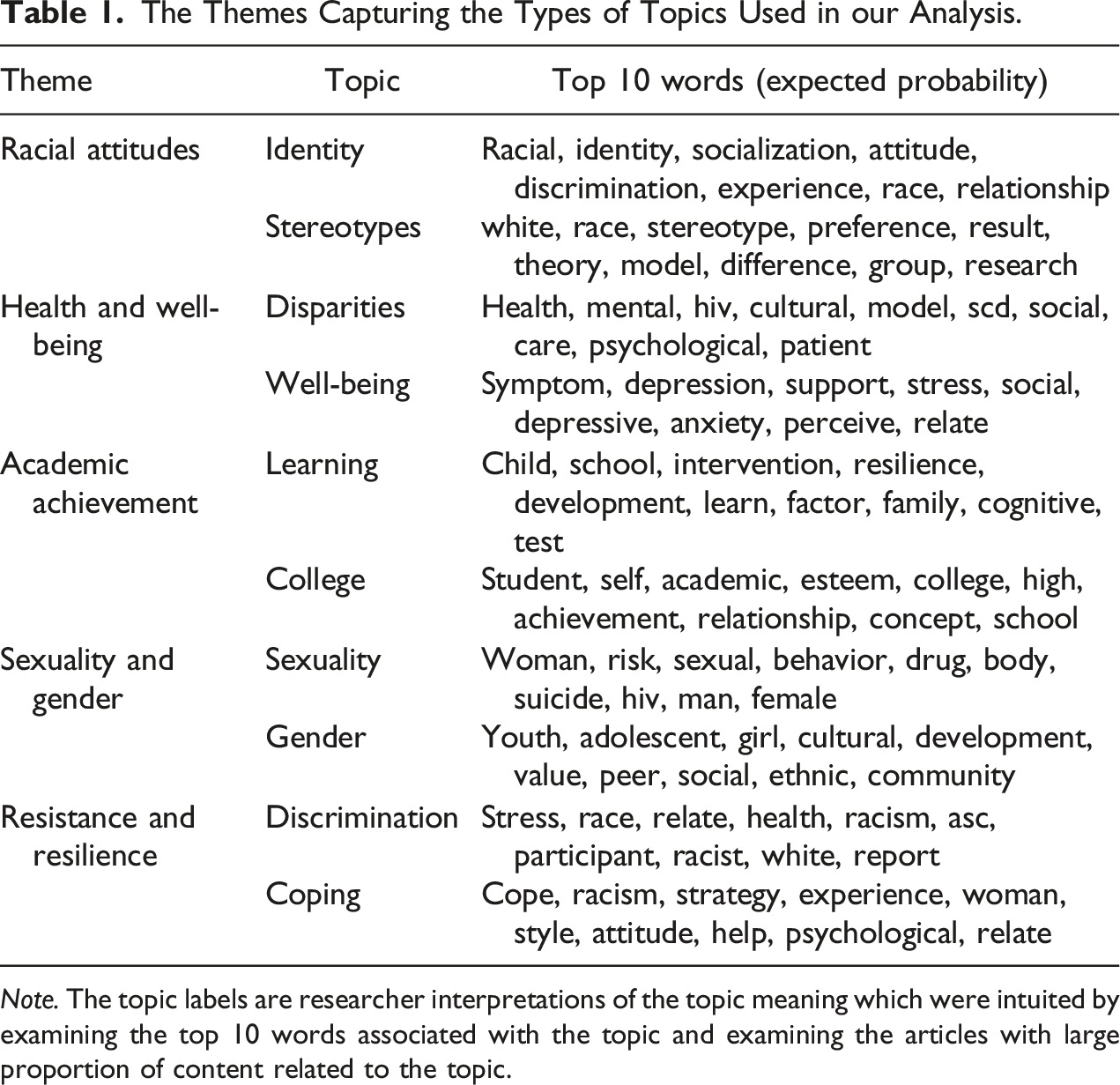
Note. The topic labels are researcher interpretations of the topic meaning which were intuited by examining the top 10 words associated with the topic and examining the articles with large proportion of content related to the topic.
Racial Attitudes
The first theme, which we labeled Racial Attitudes, represented approximately 14% of the entire corpus and consisted of topics related to racial identity and stereotypes. Articles with such content referred to various sources of racial identity and attitude formation. Sample article titles included for the identity component of this theme were: “Racial identity, racial context, and ingroup status: implications for attributions to discrimination among Black Canadians” (Outten et al., 2010) and “Racial identity and racial socialization attitudes of African American parents” (Thomas & Speight, 1999). Sample article titles for the stereotype component of this theme were: “Who’s stereotyping whom: A conceptual and analytical reinterpretation of the Sager and Schofield (1980) study” (Ghee, 1987) and “Generic, stereotypic, and collectivistic models of interpersonal resource exchange among African American couples” (Gaines, 1994). As depicted in Figure 1, there was a steady increase in journal content related to the identity component of this theme, starting from 5% of the journal content in the 1980s to about 12% of the journal content in the 2010s, and a steady decline in journal content related to the stereotype component of this theme, starting with 20% of journal content in late 1970s to accounting for less than 3% of content in 2010s. The Racial Attitudes theme contributed to 14% of journal content published between 1975 and 2020. The curves are topic proportion estimates fitted by local polynomial regression models using the loess R function and shaded area around the curves denote 95% confidence intervals. Note that the estimated topic proportions (solid lines) cannot be (and never were) less than zero, despite the depicted range of the 95% confidence intervals for the proportion estimates. Individual data points represent mean topic proportions for a given year.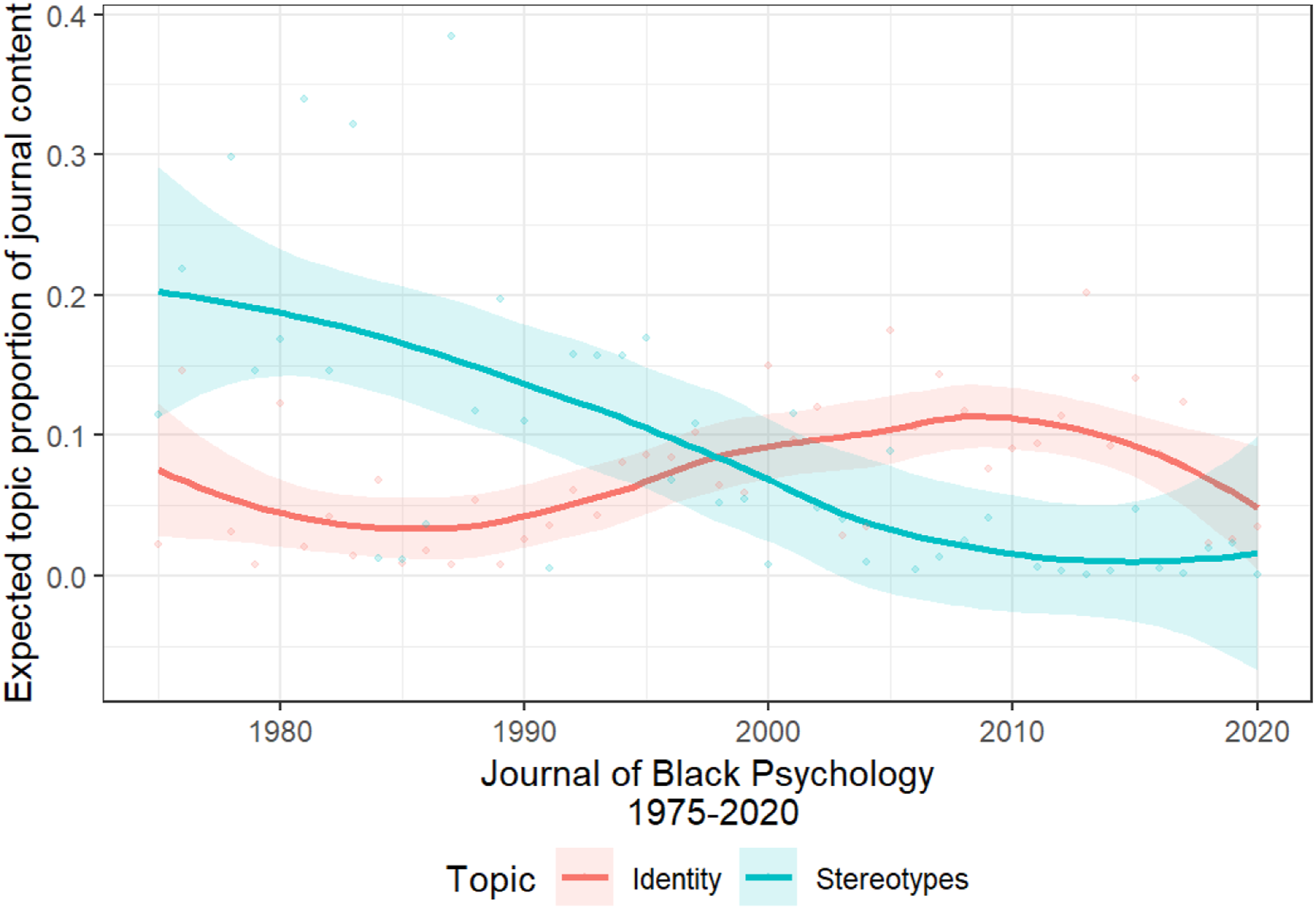
Health and Well-Being
The second theme, which we labeled Health and Well-being, represented about 14% of the entire corpus and consisted of topics related to mental health disparities and well-being. Overall, this theme focused on documenting the various health disparities that exist for Black communities, highlighting the mechanisms that reinforce such disparities, and/or providing evidence for interventions in reducing those disparities. For the disparities component of this theme, sample article titles included: “The global HIV/AIDS epidemic and related mental health issues: The crisis for Africans and Black Americans” (Fitzpatrick et al., 2004), and “The ‘undeserving poor’, racial bias, and Medicaid coverage of African Americans” (Snowden & Graaf, 2019). For the well-being component of this theme, sample article titles included: “Financial strain, negative interactions, and mastery: Pathways to mental health among older African Americans” (Lincoln, 2007) and “Stress and mental health: Moderating role of the strong Black woman stereotype” (Donovan & West, 2015). As depicted in Figure 2, the disparities topic accounted for approximately 5%–7% of the journal content since the 1980s, whereas the well-being topic has increased from less than 3% of journal content in the 1980s to approximately more than 15% of the journal content in the 2010s. The Health and Well-Being theme contributed to 14% of journal content published between 1975 and 2020. The curves are topic proportion estimates fitted by local polynomial regression models using the loess R function and shaded area around the curves denote 95% confidence intervals. Note that the estimated topic proportions (solid lines) cannot be (and never were) less than zero, despite the depicted range of the 95% confidence intervals for the proportion estimates. Individual data points represent mean topic proportions for a given year.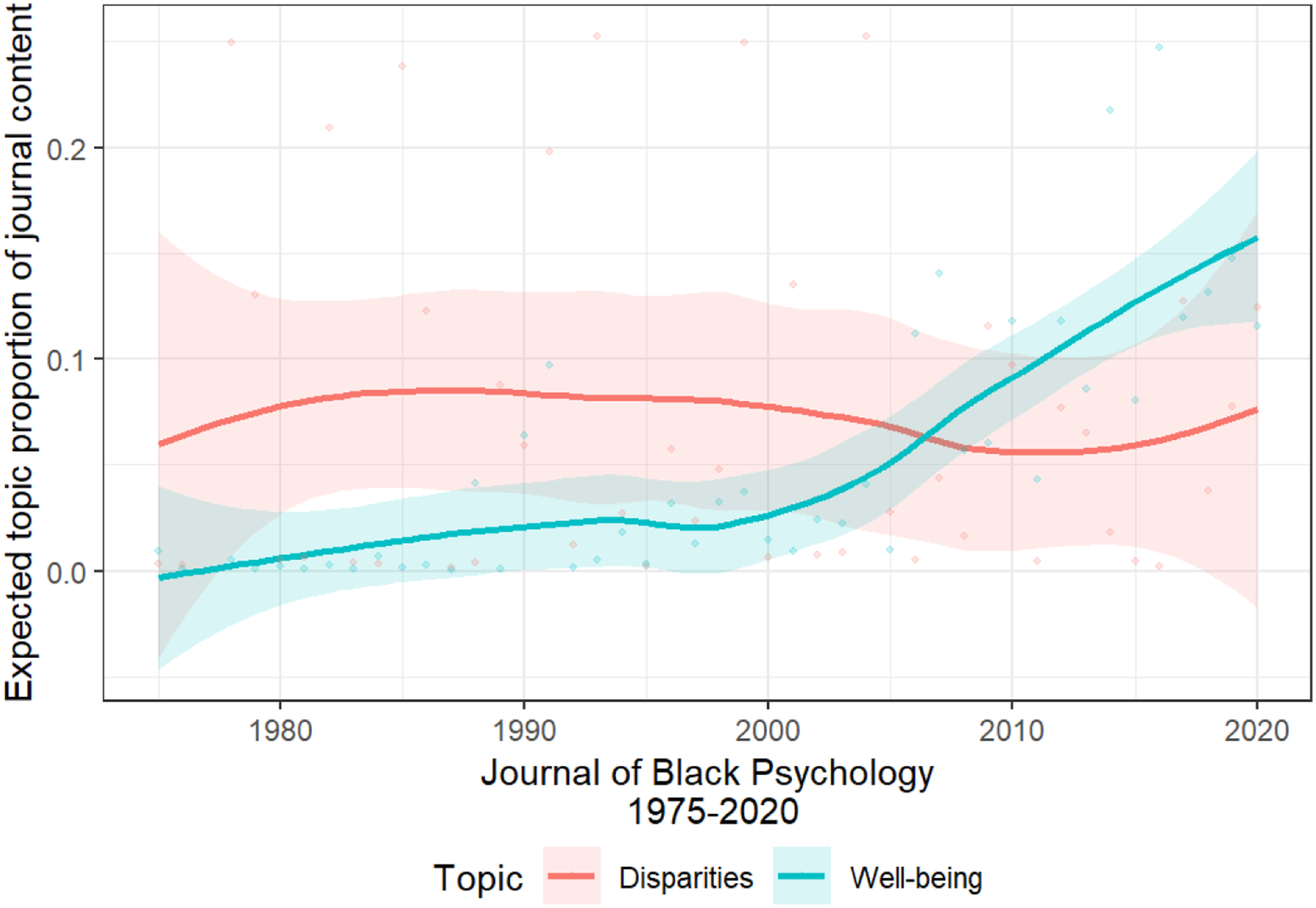
Academic Achievement
The third theme, which we labeled Academic Achievement, represented about 18% of the entire corpus and included topics related to learning and the college experience. Overall, articles within this theme related to the multitude of experiences that contribute to students’ growth and learning in academics, sports, and/or other extracurricular activities. Within the learning component of this theme, sample articles included: “A culturally sensitive analysis of Black learning style” (Bell, 1994) and “Learning styles of African American children: A Review of the literature and interventions” (Willis, 1989). Within the college experiences topic, sample articles included: “An investigation of academic self-concept and its relationship to academic achievement in African American college students” (Cokley, 2000) and “Dimensions of academic contingencies among African American college students” (Griffin et al., 2012). As depicted in Figure 3, learning-related research increased from approximately 4% in the 1980s to 10% in the mid-2000s, and then decreased to approximately 5% by 2020. Similarly, research related to the college experiences peaked around 1985, which is when it made up approximately 13% of the journal content, and again around 2005, when it made up around 12% of journal content, though it then declined to approximately 5% by 2020. The Academic Achievement theme contributed to 17% of journal content published between 1975 and 2020. The curves are topic proportion estimates fitted by local polynomial regression models using the loess R function and shaded area around the curves denote 95% confidence intervals. Note that the estimated topic proportions (solid lines) cannot be (and never were) less than zero, despite the depicted range of the 95% confidence intervals for the proportion estimates. Individual data points represent mean topic proportions for a given year.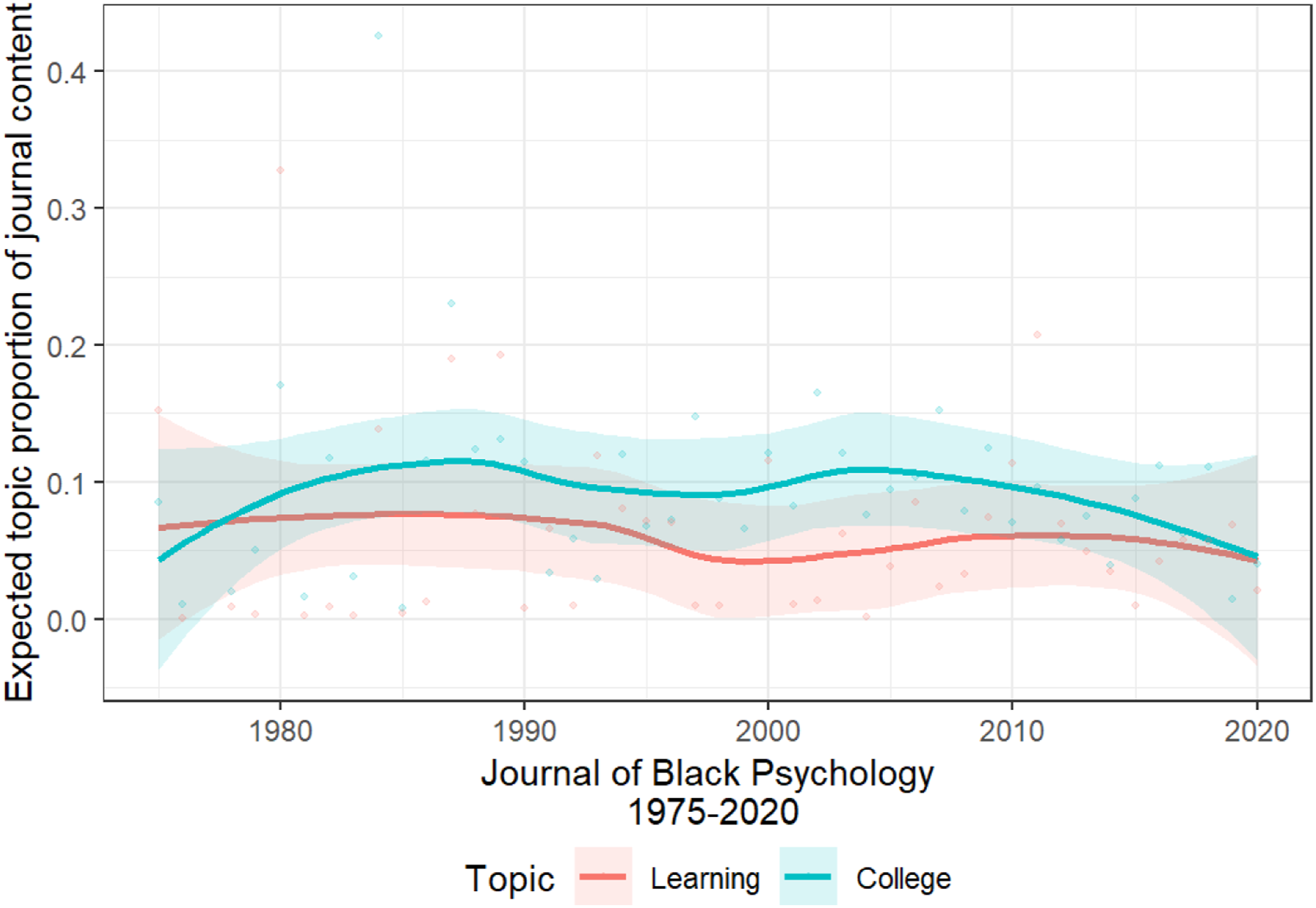
Sexuality and Gender
The fourth theme, which we labeled Sexuality and Gender, represented about 14% of the entire corpus and consisted of topics related to the role of sexuality and gender in culture and self-perception. Though many articles associated with this theme focused on sexual behavior, sexual orientation, and romantic relationships, many also focused on perceptions of the Black body image, particularly in romantic and gendered contexts. For example, in the topic related to sexuality, articles titles included: “Black dating professionals' perceptions of equity, satisfaction, power, and romantic alternatives and ideals” (Davis et al., 1997) and “Expanding our understanding of eating practices, body image, and appearance in African American women: A qualitative study” (Talleyrand et al., 2017). In the topic related to gender, sample article titles included: “An evaluation of Sisters of Nia: A cultural program for African American girls” (Belgrave et al., 2004) and “‘Street life’ as a site of resiliency: How street life–oriented Black men frame opportunity in the United States” (Arafat Payne, 2008). As shown in Figure 4, research related to the sexuality topic had made up less than 2% of journal content in the early 1980s and increased to approximately 7% of the journal content in the 2010s. Similarly, research related to the gender topic made up less than 3% of journal content in the early 1980s, but increased to approximately 10% of journal content by the late 2000s. The Sexuality and Gender theme contributed to 14% of journal content published between 1975 and 2020. The curves are topic proportion estimates fitted by local polynomial regression models using the loess R function and shaded area around the curves denote 95% confidence intervals. Note that the estimated topic proportions (solid lines) cannot be (and never were) less than zero, despite the depicted range of the 95% confidence intervals for the proportion estimates. Individual data points represent mean topic proportions for a given year.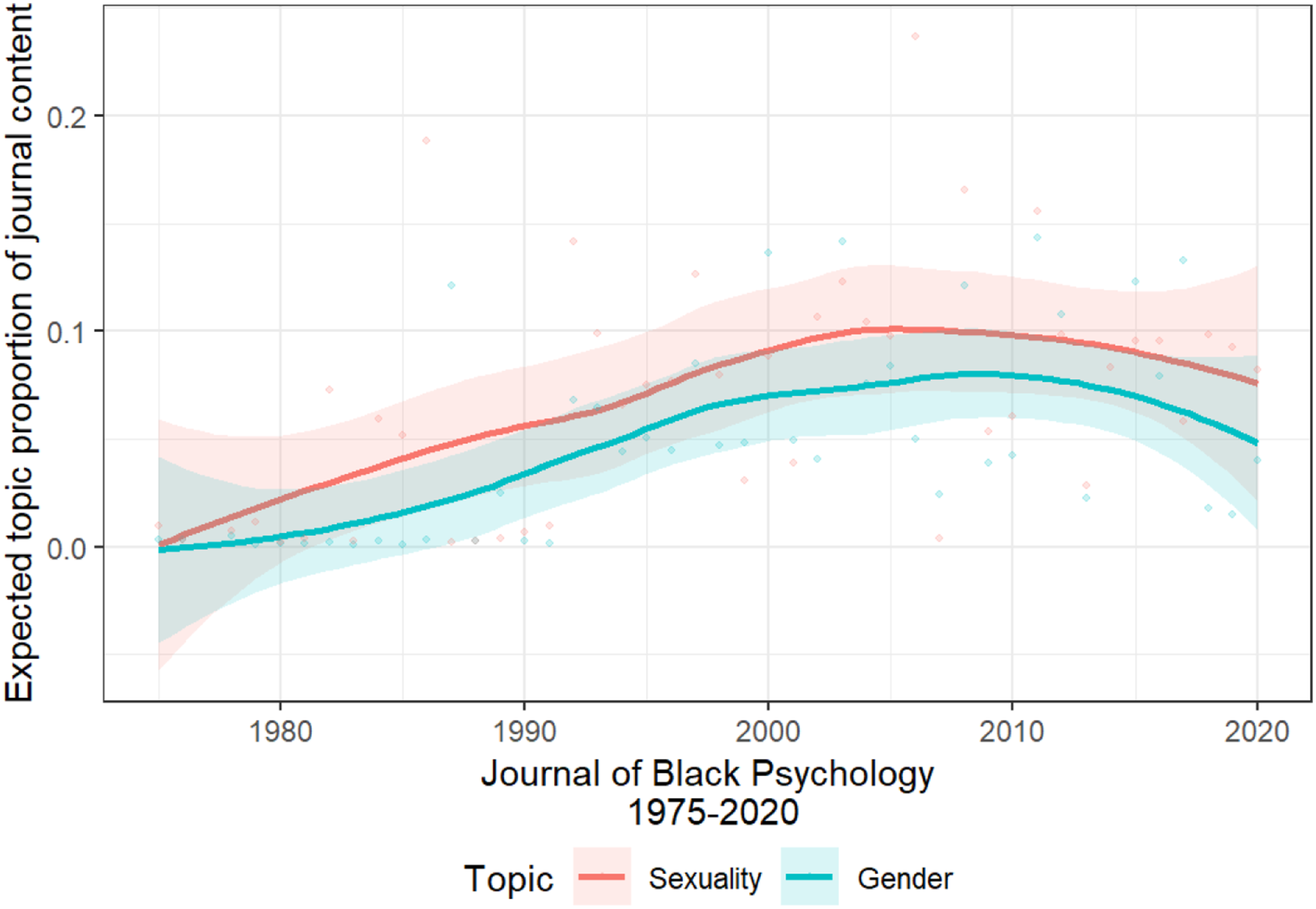
Resistance and Resilience
The fifth theme, which we labeled Resistance and Resilience, represented approximately 9% of the entire corpus and included topics related to experiencing and coping with discrimination. Articles related to these topics typically focused on the negative effects of discrimination on the Black community, and how the Black community can cope with those negative effects. Sample article titles included: “The schedule of racist events: A measure of racial discrimination and a study of its negative physical and mental health consequences” (Landrine & Klonoff, 1996) and “Coping with Hurricane Katrina: Psychological distress and resilience among African American evacuees” (Lee et al., 2009). “Dispositional versus situational coping: Are the coping strategies African Americans use different for general versus racism-related stressors?” (Brown et al., 2011) and “Multiple resistance strategies: how African American women cope with racism and sexism” had content related to coping strategies (Shorter-Gooden, 2004). Articles related to these topics typically described the negative effects of racialization on Black communities such as racism-related stress, while also discussing strategies for coping with racialization in different contexts. As shown in Figure 5, both the discrimination and coping topics made up less than 3% of the journal content in the 1980s and 1990s, but increased to approximately 5%–8% of topics by the 2010s. The Resistance and Resilience theme contributed to 9% of journal content published between 1975 and 2020. The curves are topic proportion estimates fitted by local polynomial regression models using the loess R function and shaded area around the curves denote 95% confidence intervals. Note that the estimated topic proportions (solid lines) cannot be (and never were) less than zero, despite the depicted range of the 95% confidence intervals for the proportion estimates. Individual data points represent mean topic proportions for a given year.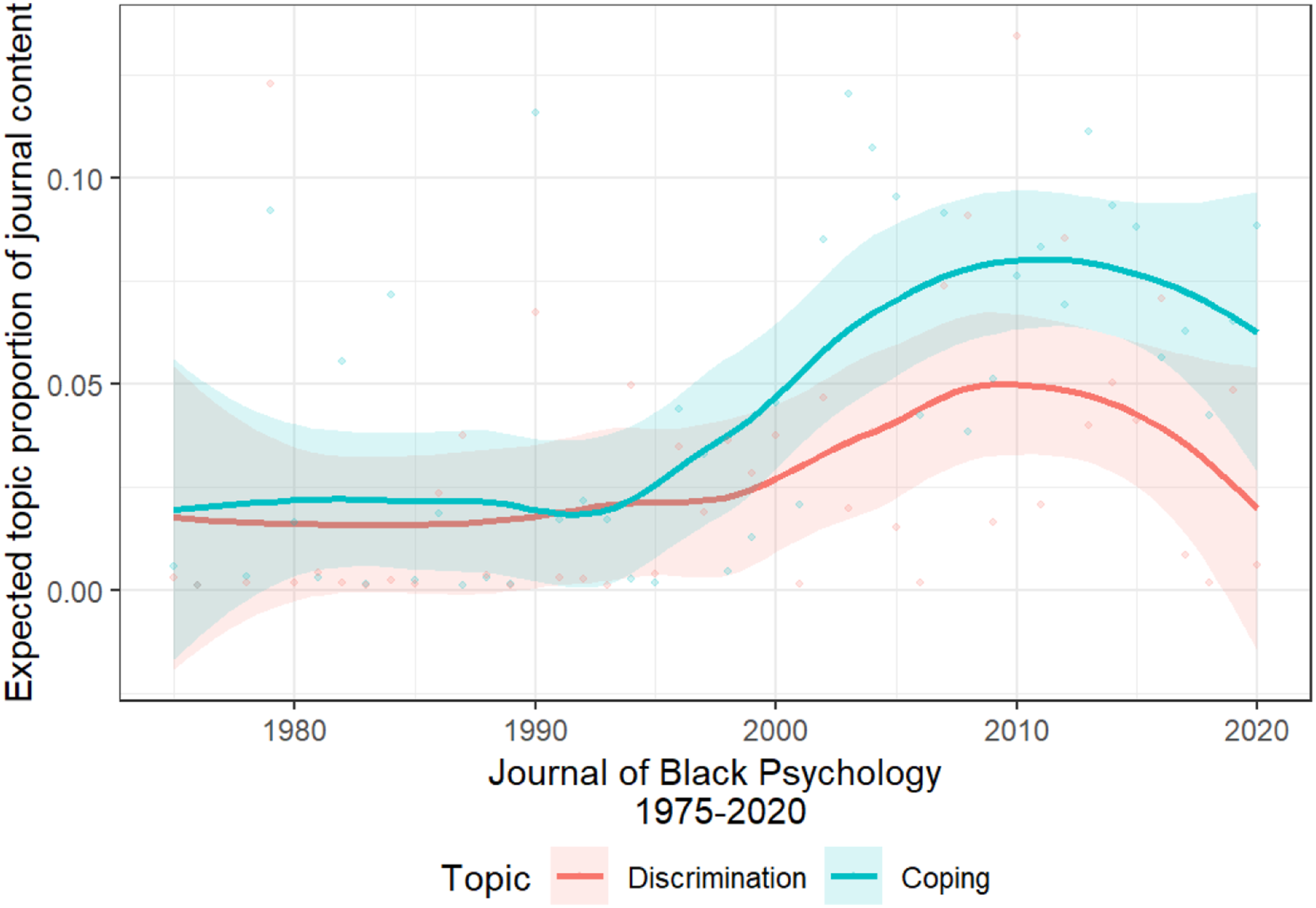
Discussion
We processed 751 articles from JBP between 1975 and 2020, entered them as documents in a corpus, and fed this corpus to a topic model to identify meaningful themes of content. This study contributes to past research in building on these rigorous qualitative methods previously published in the JBP (Cokley et al., 2001, 2013; Jamison, 2018; Grilss et al., 2018). The process of “Sankofa” guides the present content analysis and we enact it using topic modeling methodology. Jones and Leitner (2015) refer to the Sankofa process as the way Black individuals integrate individual and collective pasts into their present and future. In the present study, we extended Sankofa as a guiding principle of review for Black knowledge creation as a collective process. Critically, this process of knowledge creation has had to take place outside mainstream academic journals that have historically left the Black experience underexamined (Roberts et al., 2021). Therefore, topic modeling the body of work from a Black-centered journal like the JBP also helps to address the broader academic gap of understanding the Black experience. Even within Black academia, there remains more work to be done. Cokley and Garba (2018) called for “new avenues for theory building and empirical testing of African-centered constructs that are completely independent from Eurocentric psychology” (p. 712). With such calls for more constructionist and emancipatory work, we hope wielding the machine learning method of topic modeling to better understand the Black experience as documented in the JBP is a step in that direction. That is, machine learning provides a rich opportunity for the JBP community to analyze and understand broader themes and trends within the field.
Our five themes of Racial Attitudes, Health and Well-being, Academic Achievement, Sexuality and Gender, and Resistance and Resilience, synergize with, and differ from, categories from previous content analyses published in the JBP. Cokley et al. (2001, 2013) performed two content analyses of the JBP between 1985 and 2011 using human raters that included a total of 521 articles. The results of our topic modeling process as compared to the results from Cokley et al. (2001, 2013) speak to the breadth and interrelatedness of topics within Black psychology. For example, our Racial Attitudes theme overlaps with aspects of their “Personality and Identity” category, and our Academic Achievement theme overlaps with aspects of “Child and Adolescent Development” category. Indeed, the five themes our model produced incorporates many of the themes that human raters previously identified (e.g., those pertaining to identity development and academic success), which validates the breadth of Black psychology, as well as the way it has changed over time, especially given that our analysis includes 19 additional years of published material from the JBP.
Notably, our machine learning technique could not identify all of the topics in JBP. Thus, we emphasize here that although the five themes that we highlighted were the most prevalent, they were not the only themes that were relevant, nor are they necessarily the most important. Relatedly, our machine learning technique could not reveal why certain topics decreased or increased over time, but we offer here some speculation. We found that research related to Resistance and Resilience began to increase in the 2000s, which is precisely when Hurricane Katrina devastated the Black community in New Orleans and highlighted the (un) natural aspects of racial inequality (Lee et al., 2009). This event, and the national attention that it received, might have catalyzed researchers to increase the study of the resistance and resilience of Black Americans. Also, topics related to sexuality and gender increased over time, which could reflect a multitude of factors, including a growing recognition of the importance of the intersectionality of race and gender, and the importance of research with the LGBTQ+ communities (Cole, 2009). We also found that journal content related to the identity topic peaked in the early 2010s, which coincided with the election of the first non-White U.S. President, Barack Obama, and the U.S. Census allowing Americans to identify with two or more racial categories (U.S. Census, 2011). These national changes could have invigorated classic questions about what it means to be Black (Davis, 1991). Overall, our purpose here is not to make causal claims as to why the topics might have changed over time, but rather, to document how they have changed. We were unable to conduct more robust statistical analyses on these topic trends over time, mainly because we did not have the data to conduct such analyses (e.g., due to the relatively limited amount of documents in our analyses, any inferential analyses of trends over time would have had to assume that the number of documents, error rates, and variance has remained stable over time, which would have resulted in overly simplistic statistical assumptions). Future research with larger and more interdisciplinary datasets could provide more nuanced statistical insights, taking advantage of temporal analyses for topic models (e.g., dynamic topic modeling; Vayansky & Kumar, 2020). We nonetheless believe that our qualitative and descriptive analyses of these changes over time are important aspects of the Sankofa tradition of self-review and self-reflection, such that one cannot understand where one is, or is going, without understanding where one has been.
Critically, the articles with journal content related to a topic that we highlighted were not necessarily the most impactful articles in that topic. As an illustration, the articles that contained the largest proportion of journal content related to the learning topic were Bell (1994) and Willis (1989), which, as of February 2023, were cited 140 and 204 times, respectively. As just one comparison point, Cokley’s (2000) article, “An investigation of academic self-concept and its relationship to academic achievement in African American college students,” was cited 543 times. We highlight this comparison point to make clear that the most associated articles were those in which there existed a higher probability of keywords associated with a topic (e.g., academic, achievement, and student), and that this probability need not predict an article’s impact. As an analogy, if one were to analyze the content of song lyrics, “love songs” would certainly emerge as a common topic. However, the song with the highest probability of words related to love (e.g., kiss, romance, and desire) would not necessarily be the most popular love song of all time. In short, how well an article fits within a given topic need not predict the impact of that article, and we make no claims regarding the quality or impact of the articles mentioned (or not mentioned) in the present article.
Notably, we would like to see more work by and for communities of the African diaspora located outside the United States. That is, “Black” should not equal “African American.” Yet the term “African American” was the most prevalent among two-word phrases in our corpus, suggesting that this U.S.-specific ethnic identifier may be overrepresented compared to other ethnic identifiers like “Caribbean American” or “West African.” Therefore, there may be U.S.-centrism in the JBP, despite the journal’s stated global interest. Notably, JBP’s Special Issue: Mental Health and Wellness in the Caribbean (Volume 45, Issue 4, May 2019) is a step toward more global representation.
Our calls for the future join other scholars from the JBP who have called for a wide variety of future research directions in the area, including: more theory and empiricism for African-centered constructs, Pan African Black Psychology, Black Liberation Psychology in a scholar/activist tradition, and reinterrogation of proper naming for the entire “discipline of African human functioning” (Cokley & Garba, 2018; Jamison, 2018; Nobles, 2018). Examples of African-centered constructs include worldview systems rooted in racial identity, the African Self-Consciousness Scale which measures how much one embraces an Afrocentric cosmology, and the “cultural misorientation” scale which measures internalized Eurocentrism (Baldwin & Bell, 1985). According to Jamison (2018), the theory of Pan African Black Psychology centers “the importance of establishing a process for remembering the fractured identities as a result of the Maafa (great disaster of enslavement/oppression) and colonization” (p. 738).
Our study was in some ways limited by quantity of articles, the specificity of the JBP, and the generalizability of quantitative-leaning work. This study analyzed 751 articles, which surpasses the amount in previous content analyses, but is still fewer than what some scholars might recommend for LDA topic modeling (see Eichstaedt et al., 2021 for LDA topic model performance with various document sizes). Generally, scholars agree that the more documents included within a dataset, the better the model. Therefore, future research should seek a corpus with as many documents as possible to achieve more robust insights. Although prominent and longstanding, the JBP is only one journal indexing the Black experience. Future work could examine other journals or broader sources of knowledge, perhaps across and between disciplines, that can also speak to Black experiences (e.g., Journal of Black Studies, Review of Black Political Economy). And while topic modeling as a statistical machine learning technique offers strength to our content analysis and the validity of our topics, it cannot provide the rich nuances and complexities of qualitative methods of review that utilize the insights of trained human raters. In the present study, our most qualitative aspect of analysis was the process of labeling the themes and topics our model produced and interpreting the significance of articles with large proportion of topic-associated words. However, even these endeavors are guided by computational processes first, and then subject to our subjective understanding of Black psychology.
Notwithstanding these limitations, the present research remains important for three reasons. First, it continues the JBP’s tradition of self-review and the reflective Afrocentric process of Sankofa. These processes facilitate a Black intellectual tradition into perpetuity. Second, it strengthens the record demonstrating the overall contribution of Black psychologists to their field over a timespan wider than before, which helps diminish psychology’s prevailing white supremacist narrative (Guthrie, 1976/2004). Third, it wields machine learning techniques to better understand Black life, rather than extract from it, which contributes to a scholarly disposition where students, teachers, researchers, and other “knowledge workers” can begin to understand and address their relationship to algorithmic oppression (Hampton, 2021). We find this study’s method to the critically underemphasized and understudied area of Black psychology to be a beginning exercise in a “cultural science,” where scientific methods can combat marginalization and generate understandings toward liberation.
Footnotes

Declaration of Conflicting Interests
The author(s) declared no potential conflicts of interest with respect to the research, authorship, and/or publication of this article.
Funding
The author(s) received no financial support for the research, authorship, and/or publication of this article.