




Abstract
Colorism—systematic intragroup discrimination based on skin color—uniquely affects African American women. Using a sequential mixed methods design, this study explored perceptions of colorism and sun-related behavior among African American women in college. Study 1, which included 14 in-depth interviews, revealed perceptions that lighter skin is mostly preferred among African American women and that this preference can influence sun-related behavior. Study 2 featured a self-administered questionnaire (n = 187) based on interview commentary. Findings indicated an internalized status quo: Participants deemed colorism prevalent among African Americans and believed that preferences for lighter skin influenced daily life, including sun avoidance. Personal skin color preferences were less clear than participants’ perceptions of others’ preferences. Results pinpointed a possible connection between colorism and sun-related behavior, unveiling interrelationships among internalized beliefs, subjective norms, and behavior. Understanding colorism’s entrenched role and the social context of sun-related decisions extends colorism research from the psychosocial realm to the behavioral. Implications can increase practitioners’ awareness of colorism, enabling interventions to promote appropriate health education and wellbeing among African American women.
Anti-racism movements have prompted a reckoning in the beauty industry (Elan, 2020). Multinational corporations’ alleged hypocrisy for promoting narrow beauty ideals while supporting the Black Lives Matter movement has sparked numerous changes: Johnson & Johnson announced they would stop selling skin-whitening products; L’Oréal pledged to remove “light/lightening” and similar terms from their product lines; and Unilever renamed its best-selling Fair & Lovely brand as Glow & Lovely (Jones, 2020). Such rebranding speaks to the complex phenomenon of skin color—a physical trait with multiple connotations (Bond & Cash, 1992; Coard et al., 2001; Helms & Cook, 1999). In this study, we use “Black” to refer to dark-skinned people of African descent, no matter their nationality; we use “African American” (descendants of enslaved Africans in America who were born in the United States) to focus on one group within the Black population. Skin color has particular implications for African Americans (Norwood, 2014; Wilder & Cain, 2011): Lighter skin functions as social capital, which can be converted into economic or educational capital (Hunter, 1998; 2002; Keith, 2009). Skin color also affects African Americans’ perceptions of beauty (Bond & Cash, 1992). Modern colorism has partly arisen as a consequence of these beliefs (Abrams et al., 2020; Coard et al., 2001; Keith, 2009). For example, skin color preference has boosted the practice of skin bleaching (Glenn, 2009). More routinely, African American girls and young women are often advised not to play outside because sun exposure may darken their skin (Golden, 2004; Jablonski, 2012). Such guidance is informed by skin color–related attitudes but has received limited scholarly attention.
Sociocultural contexts shape the meanings of skin color (Craig, 2002; Cross, 1991). The purpose of the study was to explore perceptions of skin color within the African American community and to uncover relationships between skin color preferences (SCPs) and sun-related behavior (e.g., sun seeking and sun protection) among African American college women. By moving beyond social and psychological characteristics to focus on behavioral aspects, our findings present colorism through a new lens.
Sociocultural Values and Deep-Seated Meanings of Skin Color
Skin color has historically informed a hierarchy in which White is superior and Black is inferior (Jablonski, 2020). This ideology was perpetuated by slavery when Blackness was considered barbaric, whereas Whiteness denoted civility (Norwood, 2014). Thus, enslaved people with more European phenotypic traits or those of mixed ancestry commanded higher prices on the slave market and were more likely to be granted desirable domestic duties (Jablonski, 2020). Light-skinned Blacks were gradually seen as the social and economic elite of Black communities (Glenn, 2009; Hunter, 2002). Skin color has since become a trigger for racism (Hall, 2013; Jablonski, 2012; 2020), wherein individuals are divided by race and subjected to an uneven power distribution (Hunter, 2005; Norwood, 2014). Colorism, referring to differential treatment based on skin tone, further fuels skin color stratification in the Black community (Hunter, 2002; Keith & Herring, 1991; Monk, 2015) as lighter skin conveys idealized beauty (Abrams et al., 2020; Jablonski, 2020; Keith, 2009).
Colorism-Induced and Appearance-Related Behavior
Concerns over skin lightness may lead people to avoid the sun so as not to become darker (Golden, 2004; Hall, 2017). Lunsford et al. (2018) found that, among a sample of African Americans, many participants recalled that family discussions about sun protection had focused on discouraging “skin darkening” rather than on safety (e.g., preventing sunburn). These messages are often carried into adulthood. Yet, too little sun exposure can also have health consequences. For example, vitamin D deficiency is prevalent among African Americans (Harris, 2011).
Colorism is fluid (Hordge-Freeman, 2013; Hunter, 2002); SCPs may change with stages of racial identity (Cross, 1991; Tatum, 2017). In the late 20th century, a “Black is beautiful” campaign empowered African Americans to embrace their skin color, facial features, and natural hair, urging Black women to reject Eurocentric beauty standards (Craig, 2002). Darker skin was preferred within the Black community at this time and represented authentic Blackness (Craig, 2002). Lighter skin thus became less desirable under the assumption that “the Blacks don’t really want to accept [lighter-skinned people]” (Goering, 1971, p. 236). The relatively recent proliferation of videos, memes, and blogs addressing how skin tones are portrayed has further complicated how skin color intersects with class, race, and culture (Chen & Jablonski, 2021).
Current Study
Given the role of skin color in everyday life, it is imperative to understand how SCPs may drive African Americans’ sun-related behavior. Limited research has linked colorism to such behavior. We address this knowledge gap by exploring the dynamics between colorism and sun-related behavior. “Sun-related behavior” refers to sun seeking, sun avoidance, and sun protection behaviors such as sunscreen usage, indoor or outdoor recreation, and clothing choices intended to minimize or maximize sun exposure. We explore (a) individuals’ skin color perceptions and SCPs; and (b) the potential relationship between such perceptions/preferences and sun-related behavior. Participants were delimited to African American women in college for two reasons. First, although sociocultural norms around body image affect men and women, appearance-related pressure tends to be more pronounced for women (Herring et al., 2004; Hunter, 2005; Keith, 2009); they rarely escape others’ objectifying gazes (Fredrickson & Roberts, 1997) and are bombarded with beauty ideals in the media (Jha, 2015). Second, attitudes toward skin color shift throughout life. College marks a time when one considers their racial identity in self-construction (Chickering & Reisser, 1993; Cross, 1991). Per Cross’s (1991) racial identity model (spanning pre-encounter, encounter, immersion–emersion, internalization, and internalization–commitment stages), college students generally find comfort in social connections and display acceptance of the self and of others of differing races (Abrams & Trusty, 2004; Tatum, 2017). College students also tend to fall into emerging adulthood (ages 18–29), during which individuals often establish a more solid sense of self (Arnett, 2015). Their perceptions of appearance may be tied more closely to their identity (Arnett, 2015). Maintaining relationships may become especially important as college students prepare to enter the job market or select a partner (Dickstein, 1989). College-age women’s perceptions of skin color may thus particularly influence interpersonal interactions.
Exploring SCPs can clarify how women process associated social and cultural values. Additionally, African American college women’s skin color perceptions could inform strategies to fight implicit bias. The relationships between SCPs and sun-related behavior can further contextualize these women’s internalized meanings of skin color. Connecting colorism to behavior can also guide research on health factors associated with sun exposure, such as vitamin D status, bone density, and skin damage.
Research Overview
We adopted a two-phase sequential design to explore colorism and sun-related behavior with a small sample before expanding findings to a larger population (Plano Clark & Ivankova, 2016). Data from the qualitative study informed the development of a survey instrument (Creswell, 2014). As scant research has linked colorism to sun-related behavior among African Americans, the qualitative phase was conducted to gather insight into participants’ everyday experiences. These findings served as a reference for the quantitative phase, intended to produce generalizable results and to extend initial qualitative findings (Creswell & Plano Clark, 2011). This study is exploratory; as such, the qualitative phase was prioritized, and quantitative methods were secondary. Two interrelated sets of research questions, detailed below, respectively, underpinned each study.
Study 1
Study 1 Overview
Study 1 explored participants’ perceptions of skin color (e.g., lighter, medium, and darker) and their thoughts on the relationship between these perceptions/preferences and sun-related behavior. Research questions included the following: how do African American women in college perceive skin color (e.g., lighter, medium, and darker)? What do these women think about colorism and SCPs among contemporary African American women? How do these women frame the relationship between perceptions of/preferences for skin color (colorism) and sun-related behavior?
Method
We conducted semi-structured individual face-to-face interviews to explore participants’ perceptions of skin color, current SCPs among African American women, and participants’ thoughts on how African American women’s SCPs connect to sun-related behavior.
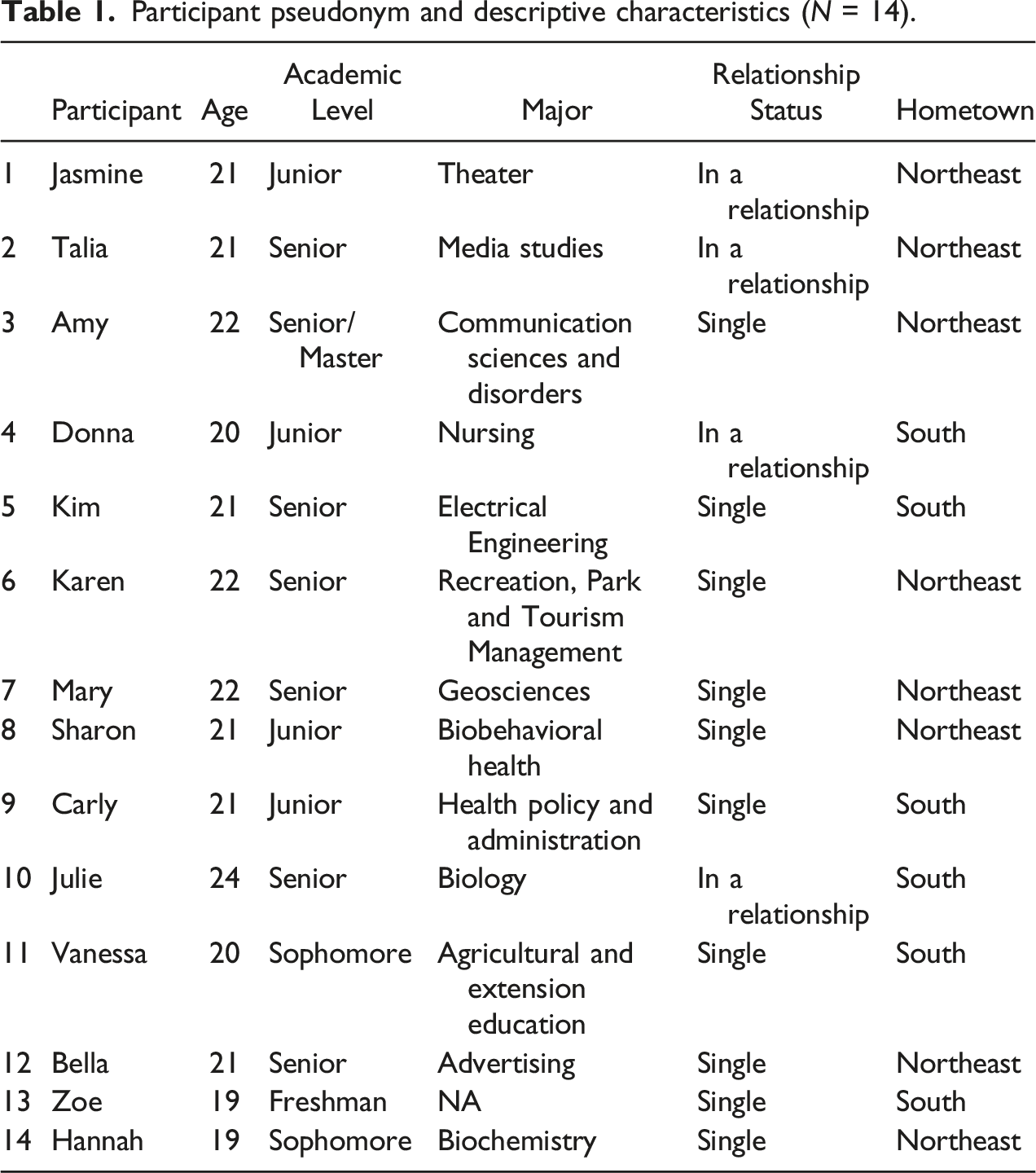
Participants
Participant pseudonym and descriptive characteristics (N = 14).
Procedures
After obtaining ethics approval from the university’s Institutional Review Board (IRB), the first author advertised the study through the university’s research website and listservs, fliers, social media, lectures, and African American student organizations. Recruitment messages included basic study information (e.g., topic, ethics information, research team’s contact details). Criterion-based sampling (Patton, 2002) identified eligible individuals who (a) were women in college upon recruitment and (b) self-identified as African American. Potential participants were directed to contact the first author to ensure they met recruitment criteria and to arrange interviews. Interviews were conducted by the first author, who was a Taiwanese Ph.D. candidate at the time; her native language is Mandarin Chinese, but she is proficient in English, having conducted several qualitative studies in English. The sample size was set to 12 based on the principle of data saturation (Guest et al., 2006) and was adjusted once data provided little new information. All interviews were conducted in library study rooms to ensure safety, privacy, and limited distractions (Tracy, 2013). Interviews lasted 65–180 minutes (M = 124, SD = 38). Participants each received a $25 retail gift card in exchange for their time. All signed the informed consent form and granted permission for their interviews to be recorded for transcription and analysis. Member checking (Creswell, 2014) was performed to ensure findings’ quality: Participants were asked if they would be willing to review a preliminary version of their results for accuracy.
Materials
The first author developed interview questions by drawing upon existing literature (Bond & Cash, 1992; Glenn, 2008; Hunter, 1998) and studies regarding SCPs and colorism (Chen et al., 2020; Chen & Jablonski, 2021). The interview protocol was iteratively vetted and revised: once the initial questions were drafted, the second author reviewed them. The IRB next reviewed the initial protocol to mitigate risk to participants. Two other experts with extensive research experience provided feedback on the protocol to ensure questions’ clarity and relevance. A pilot test was then performed with two graduate students to make sure the questions were understandable. After incorporating these students’ comments, a mock interview session was held with an African American woman student to finalize the protocol.
Interview Protocol
Interviews typically followed a deductive funnel design, with general questions followed by specific questions (Hennink et al., 2011). The interviewer accommodated dialog by adjusting the protocol as needed (e.g., adding questions, asking questions out of order). The interview protocol contained two main parts: (a) skin color perceptions and SCPs and (b) sun-related behavior.
Skin Color Perceptions and SCPs
Questions on SCPs addressed general perceptions before moving to personal preferences. Sample questions included, “Do you think that African American men/women prefer a particular skin color? If so, which color(s) do you think they prefer and why?” and “Do you think people’s skin color preference changes over time?” These questions depersonalized participants’ responses to provide an overview of relevant issues before more personal questions were posed. To guide participants in sharing their SCPs, participants were asked to choose the color from the Pantone SkinTone Guide (Pantone, n.d.) closest to their skin color. Further questions included, “If you could choose, which skin color would you prefer? Why did you choose that skin color?” This guide is a collection of 110 skin colors on a spectrum from lightest to darkest; it is used for color matching in the design industry as well as among researchers and prosthetic manufacturers (Jablonski, 2012). We used it to help participants demonstrate which colors they were referencing during interviews.
Sun-Related Behavior
Sample questions linking skin color perceptions and SCPs to sun-related behavior included “How do African American women maintain or achieve the skin color they prefer? Any example?” and “What do you think about sun exposure and skin color?” The questions then narrowed to personal experiences, such as “When are you usually exposed to the sun? Are there any sun protection precautions you take if you are going to be out in the sun?” Each participant was given an opportunity to share additional thoughts at the end of their interview.
Data Analysis (Coding)
Interviews were audio recorded and transcribed verbatim by the first author. Transcription ensures familiarity with the data, including based on non-textual information (e.g., emotional tone), initial notes (pre-coding) and analytical memos, and notable quotes and phrases (Markle et al., 2011). The first author imported the transcriptions, accompanying interview notes, memos, and reflexive journals written immediately after interviews into NVivo 11 (QSR International) for analysis. Data were first classified into (a) skin color perceptions and SCPs and (b) associated sun-related behavior, and subjected to initial coding. A generic thematic analysis was performed on each dataset to develop codes and categories, identify key themes, and frame themes theoretically (Marshall & Rossman, 2011). After initial coding, both authors collaborated to establish relationships between codes, connect them to emerging insights, identify themes, and develop a broad data overview. Three overarching themes were identified as follows: (a) cognitive aspects of cultural values and beliefs surrounding skin color; (b) perceptions of others’ and participants’ own color preferences; and (c) the potential relationship between colorism and sun-related behavior.
Themes were next refined based on the research questions. By moving beyond description to interpretation (Morse, 2008), themes were linked with extensive literature and culture-related theories. In particular, the authors analyzed patterns within participants’ accounts of how they perceived and experienced social phenomena. Interpretations appear in the Results and Discussion sections.
Positionality Statement and Reflexivity
Recognizing socialization and potential bias may influence how researchers interpret findings (Evans-Winters, 2019). Acknowledging where authors locate themselves can reveal differences in researchers’ and participants’ viewpoints. The lead author of this study self-identifies as an East Asian cisgender woman. She grew up in a relatively racially homogenous culture where colorism is prevalent among women. Her research has focused on cross-cultural perspectives on skin color and associated effects on individuals’ lived experiences. During this study, she constantly compared and reflected on colorism’s impacts on women from different backgrounds. The second author is a European American who has studied the history and social consequences of skin color–based concepts for nearly 40 years. She has led several scholarly initiatives in South Africa, the U.S., and Europe to discuss new approaches to the study of skin color and the mitigation of racism. Both authors were considered outsiders to the participants, which may have allowed participants to explain their experiences more fully. The authors collected memos to document the cognitive process of conducting this study and observations from interviews. In doing so, the authors considered colorism’s effects on African American women without allowing these assumptions to distort data analysis.
Trustworthiness and Credibility
Although subjectivity is inevitable, the authors incorporated several techniques to ensure this study’s rigor. Data collection and analysis involved continual peer debriefing between the authors. Both authors met regularly to discuss codes, emergent findings, and candidate themes. The critical friends technique (i.e., giving critical feedback, challenging viewpoints, and encouraging reflexivity in knowledge construction) was adopted due to the lack of a metric to calculate Cohen’s kappa for inter-rater reliability (Cowan & Taylor, 2016). In contrast to inter-rater reliability, the principle of critical friends considers different perspectives when interpreting data; such views are plausible but not explicitly applied in a study (Smith & McGannon, 2018), making them suitable for exploring a topic.
Notes, memos, reflections, discussions, and analytical decisions helped the authors maintain an audit trail (Creswell & Miller, 2000). Precise contextual descriptions will enable others replicating this study to (dis)confirm the phenomenon of interest, further ensuring transparency and transferability. Interview quotes were included to substantiate themes, explanations, and interpretations. Data saturation was reached after 10–12 interviews; however, the first author interviewed additional participants to improve themes’ trustworthiness (Creswell, 2014). Member checking reinforced the findings’ credibility (Hennink et al., 2011; Tracy, 2013). These strategies, alongside reflexivity, rendered the analysis more coherent and data-oriented (Creswell, 2014).
Results
This section first outlined results regarding participants’ perceptions of skin color to explore current thinking about colorism. Participants’ thoughts on the relationship between perceptions of/preferences for skin color (colorism) and sun-related behavior are then presented.
Perceptions of Skin Color
Nearly all participants (n = 13; 93%) agreed that lighter skin is preferable among African American women; many (n = 12; 86%) referred to phrases such as “light skin is the right skin” and “lighter is better.” They considered lighter skin “more beautiful” and “more attractive” while darker skin was implicitly considered the opposite. These perceptions were reinforced in mate/partner selection; many participants (n = 10; 74%) shared that African American men prefer red partners with lighter skin. Talia (age 21) said, “The people we date...are usually lighter-skinned.” Karen (age 22) shared, “One time my friend and I went out, I just made a joke that ‘Look at you, girl, all the guys are [flirting].’ … She was saying, ‘Only because I [have] light skin.’ The ideal of light skin is so ingrained.” Similarly, Sharon (age 21) stated, “So many times men said, ‘I only date light-skinned Black girls.’” Numerous participants referenced a common phrase, “You’re pretty for a dark-skinned girl,” indicating it was unusual for a dark-skinned woman to be considered beautiful. Yet other participants (n = 8; 58%) mentioned the phrase “The darker the berry, the sweeter the juice” to describe the positive connotations of darker skin. Three participants (Jasmine, Amy, Julie) elaborated, as in “Because [darker women] can’t be pretty outside…they can just be pretty inside, like kind, nice, inner beauty.”
Although participants perceived lighter skin to be largely associated with beauty among African Americans, it was also linked to negative personality traits, such as being “self-indulgent,” “standoffish,” “arrogant,” and “not easy to pursue dating-wise” because lighter-skinned women “think they are prettier.” Some participants (n = 8; 58%) shared stereotypical impressions among African Americans regarding how lighter-skinned girls “don’t return calls” or “never text back.” Due to negative behavior associated with lighter skin, participants stated that in casual conversation, one might say “stop acting so light-skinned!”, exemplifying the complex dynamics of skin color. Additionally, several participants (n = 6; 43%) mentioned that light-skinned individuals could feel rejected or question whether they were truly Black, suggesting that dark skin represents authenticity whereas light skin represents beauty and privilege.
In terms of SCPs, participants (n = 13; 93%) generally agreed that lighter skin is preferable, and most had witnessed others’ preferences for lighter skin. However, many participants (n =10; 71%) noted no SCPs for themselves. Jasmine (age 21) stated, “Most people prefer having lighter skin, but I don’t have a skin color preference…I love whatever I have.” Similarly, participants’ survey comments included, “All skin tones are beautiful, I don’t discriminate!” and “The…wiser African Americans get, the more accepting and loving they are of themselves.” These sentiments further reveal the complexity of cognitive and affective consonance around colorism as individuals acknowledge “acceptable” ways of thinking about skin color. Participants appeared to understand that treating people differently based on skin color was unacceptable and that they should accept themselves as they are. Echoing longstanding beauty standards surrounding lighter skin could also make them uncomfortable. These perceptions may relate to the pressure to be socially desirable, which can prevent individuals from recognizing implicit biases (FitzGerald & Hurst, 2017).
Skin Color Preferences (SCPs) and Sun-Related Behavior
When considering sun exposure, most participants referred to the beach, hiking, or swimming. Donna (age 20) noted she was “restricted from going swimming because my parents did not want my skin to become Black.” Kim (age 21) stated, “My cousin used to put up an umbrella … because she was afraid of getting darker.” Although participants seemed more comfortable sharing examples of their friends or others not wanting to tan, a few shared their own experiences. Carly (age 21) recalled being young and playing outside: “My mom would shout, ‘Get yourself outta the sun!’ because she [didn’t] want me to get darker.” Karen (age 22) stated, “Almost every African American friend I have has heard ‘Don’t play in the sun.’” This statement represented enduring beliefs about skin color and the connection between SCPs and sun-related behavior. Vanessa (age 20) explained, “‘Don’t play in the sun because you would get darker.’ … As if dark skin is a bad thing. Growing up I always heard ‘Black is beautiful’ but that’s clearly not the case.”
Participants also shared their perceptions of how colorism and sun-related behavior affected lighter- or darker-skinned individuals. On one hand, darker-skinned women seemed to care more about avoiding sun exposure. For instance, Sharon (age 21) mentioned, “My friend’s darker than me, and she is really the one who doesn’t want to get darker. She would avoid the sun during the daytime.” Zoe (age 19) explained why she thought darker-skinned people were more concerned: “If a light-skinned Black girl became ‘browner’ that would be OK, but if a dark-skinned girl became even darker, [it’s] probably not good.”
Meanwhile, participants perceived lighter-skinned women as experiencing more pressure to stay out of the sun. Carly (age 21) said, “Light-skinned Black women care more about not getting tanned because if they get darker, they lose their advantages … become less attractive or [get] less attention.” Mary (age 22) added an additional layer to the idea that being light is beautiful: “People who feel insecure about their skin tone, often dark-skinned women, will not participate in outside activities. They want to be viewed as pretty. … Fair and light-skinned women … want to tan to fit in and not be ‘too White.’ It is complicated.” Overall, as Karen (age 22) concluded, “The sun’s ability to make them darker does go through people’s minds when they are having fun outside, [especially] when darker skin isn’t deemed as beautiful in our society but too light could be treated as not Black enough.” These explanations revealed a sense of marginalization, in that being “too light” may seem inauthentic in the Black community, which may value dark skin as a more authentic form of Black embodiment.
Discussion
The purpose of Study 1 was to explore participants’ perceptions of skin color and their thoughts on the relationship between these perceptions/preferences and sun-related behavior. Participants perceived African Americans as holding widely accepted beliefs, such as lighter skin being preferred because it is more appreciated despite negative personality characteristics (e.g., arrogance) and behavioral traits (e.g., not returning calls) associated with lighter skin. Most participants did not personally commit to clear SCPs due to perceived failure to embrace who one is. Participants realized that the meanings of skin color are socially constructed, suggesting that a preference for lighter skin might be due to “ignorance.” Participants also argued that skin color should not contain ingrained values; everyone should embrace who they are, including in terms of their skin. Participants were additionally more willing to discuss others’ perceptions than their own. Colorism and SCPs persist but may represent a cultural secret within the African American community (Powell, 2013).
Regarding how these ideologies affect daily behavior, the phrase “Don’t play in the sun” was commonly recalled. However, statements following this adage were nuanced. Participants noted that “…because you will get darker” implies that sun exposure darkens the skin, whereas “…you are already dark enough” is more negative: it suggests that further darkening could place a person in a more disadvantaged position. Beyond these sentiments, participants’ commentaries revealed no consensus around whether people with lighter or darker skin cared more about sun exposure. Individuals with lighter skin might strive to maintain this shade to preserve associated privileges and thus might be more cognizant of sun exposure. Comparatively, individuals with darker skin may wish not to become darker. Colorism and a desire for lighter skin hence can affect African Americans of varying shades. The degree of an individual’s concern about SCPs and how strongly this ideology influenced sun-related behavior depended on how that person prioritized skin color.
Although the extent to which participants were concerned with skin color and sun exposure relied on their prioritization of beauty, self-esteem, and other factors, their reasoning for why those with darker or lighter skin aimed to avoid becoming darker reflects the complexity of cultural cues behind skin color and how these values guide social interaction (Chen & Jablonski, 2021). Once participants thought of examples, they soon realized how many everyday activities were related to sun exposure and occurred subconsciously.
Study 2
Study 2 Overview
Building on findings from Study 1, an online self-administered questionnaire was developed in Study 2 to explore (a) African American college women’s thoughts about skin color perceptions among African American women and themselves and (b) whether they discerned connections between SCPs (colorism) and sun-related behavior. Responses deepened understanding of the prevalence of SCPs and sun-related behavior among African American women in college (Creswell & Plano Clark, 2011). This design also helped the authors overcome color-blindness and the sensitivity surrounding skin color in African American college women’s lived experiences; some interview participants had been hesitant to share their thoughts (Chen et al., 2020). Because questionnaires offer anonymity, self-administered online surveys may elicit greater disclosure and less social desirability bias than other methods (Joinson, 1999). An online survey can also reach more respondents and provide statistical data for replication (Creswell, 2014). Our questionnaire was based on the same themes as the interview protocol: perceptions of skin color, SCPs, and sun-related behavior.
Method
Participants
The study sample included 187 self-identified African American women in college (Mage = 20, SD = 1.6; age range: 18–24 years): 27 freshmen, 34 sophomores, 36 juniors, 61 seniors, 18 fifth years, and 11 others. The majority (n = 106, 57%) grew up in the Northeast, followed by the South (n = 51, 27%), Midwest (n = 20, 11%), and West (n = 10, 5%). Most respondents (n = 139, 74%) were single, followed by those in a relationship (n = 46, 25%); only two were married (1%). Respondents were enrolled across 76 majors, with the top five being the sciences (n = 23, 12%), psychology (n = 19, 10%), health and human behavior (n = 12, 6%), politics and criminology (n = 9, 5%), and communication (n = 8, 4%).
Procedures
The university IRB approved all study methods. The questionnaire was hosted on Qualtrics, and the QR code and survey link were included on study fliers. Advertisements were disseminated through the same channels as in Study 1. Recruitment messages outlined the study topic, ethics information, and research team’s contact details. Criterion-based sampling (Patton, 2002) was used to identify eligible individuals who (a) were women in college upon recruitment and (b) self-identified as African American. Respondents were kept anonymous and provided informed consent before the survey link was made available to them. Participation was voluntary, and respondents could withdraw from the study or skip questions without penalty. The survey took approximately 40 minutes to complete. All measures were administered in the same order. Once respondents completed the survey, they could be redirected (for anonymity protection) to provide their email address and receive a $5 eGift card from a coffee shop as an incentive.
Measures
The questionnaire design was informed by qualitative data from Study 1, intended to describe SCPs and sun-related behavior in a more quantifiable manner (Creswell & Plano Clark, 2011). Questions were based on salient qualitative themes. Previous studies provided a conceptual underpinning around SCPs and sun-related behavior. Survey sections covered respondents’ demographics, SCPs, and sun-related behavior.
Demographic Information
The 5-item demographics section asked about respondents’ age, academic year (freshman, sophomore, junior, senior, master, other/specify), major, hometown region (Northeast, Southwest, West, Southeast, Midwest), and relationship status (single, in a relationship, married, other). A textbox at the end of this section enabled respondents to share additional information regarding their demographics.
SCPs
Findings from Study 1 were transformed into multiple-choice and multiple-response questions. For perceptions of skin color, respondents were asked “Do you think that there is a skin color preference among African Americans?” (yes/no/I have more to say [textbox]). Branching logic was incorporated into this question; if the respondent chose “yes”, then the next question was “Which color do you think African Americans prefer?” (lighter/medium/darker/I have more to say [textbox]). An 8-point skin color chart (1 = lightest, 8 = darkest) was used to answer “Which color do you think African Americans women prefer most?” and “Which color would you prefer for yourself if you could choose?” A comment box was included for respondents to leave feedback at the end of this section.
Potential Relationships Between SCPs and Sun-Related Behavior
To explore respondents’ perceptions of relationships between SCPs and sun-related behavior, subsections included questions about the prevalence of phrases such as “don’t play in the sun”; how SCPs affected other African American women’s sun-related behavior; and individual sun-related behavior. To minimize framing effects (Levin et al., 1998) and explore additional aspects, several similar questions were asked more than once (on a collective and personal level) and phrased slightly differently. SCPs and sun-related behavior among others were explored at the collective level; the personal level addressed respondents’ own SCPs and sun-related behavior.
SCPs and Sun-Related Behavior Among Others
To understand the prevalence of the admonishment “don’t play in the sun” and how this ideology affects African American women in college, respondents were asked if they had heard the following statements: “Don’t play in the sun because it makes your skin get darker” and “Don’t play in the sun because you are already dark enough.” Respondents were then asked to rate the extent to which they thought African American women were affected by these statements on a 4-point Likert-type scale (1 = not at all, 2 = a little influence, 3 = some influence, 4 = a tremendous influence). Another set of questions asked “Do you think that there are any activities that African American females choose or do not choose to participate in because of concerns over sun exposure?” and “In general, do you think that there is a connection between African American females’ skin color preference and their daily activities?” To address close relationships, respondents were asked “Do you have African American friends who don’t want to go out in the sun because they don’t want to get darker?” and “Do you have African American friends who try to avoid going out during the day because they don’t want to get darker?” These findings contextualize the relationship between sun exposure and skin darkening and highlight the importance of not wanting to become darker along with willingness to be in the sun. A textbox was included for respondents to share additional thoughts about these questions at the end of the section.
SCPs and Personal Sun-Related Behavior
Questions on respondents’ own perceptions about the relationship between SCPs and sun-related behavior included “How much do you think that you are affected/influenced by the statement ‘Don’t play in the sun because it makes your skin get darker’?” and “How much do you think you are affected by the statement ‘Don’t play in the sun because you are already dark enough’?” (1 = not at all, 2 = a little influence, 3 = some influence, 4 = a tremendous influence). Respondents were then asked “Do you think that there are any activities you choose or do not choose to participate in because of concern over sun exposure?” and “In general, do you think that there is a connection between your skin color preference and your daily activities?” A textbox was included for respondents to share additional thoughts at the end of the section. The complete questionnaire is available upon request; a summary of key questions appears in supplementary data uploaded to the university’s research site.
Data Analysis
Data were processed in SPSS v22 (IBM Corporation; Armonk, USA). Quantitative analysis helped the authors interpret, generalize, and determine the distribution of qualitative findings (Creswell & Plano Clark, 2011). Descriptive statistics were used to identify general trends, indicate the prevalence of exploratory findings, and highlight potential relationships (Plano Clark & Ivankova, 2016).
Results
Preliminary Analysis and Data Management
Although 241 respondents began the survey, 11 did not consent to participate, 13 only completed the demographic questions, and 7 did not complete any part. Listwise deletion excluded cases with missing data (Graham, 2009); 23 more were excluded in this manner. The final sample contained 187 respondents. A boxplot revealed no outliers.
Descriptive Statistics
Exploratory data analysis (Tukey, 1977) was applied to produce basic descriptive statistics, such as frequency tables, cross-tabulations, and bar charts, to explore this study’s research questions.
Preferences for Skin Color
Participants’ perceptions of skin color preferences among African Americans and themselves.
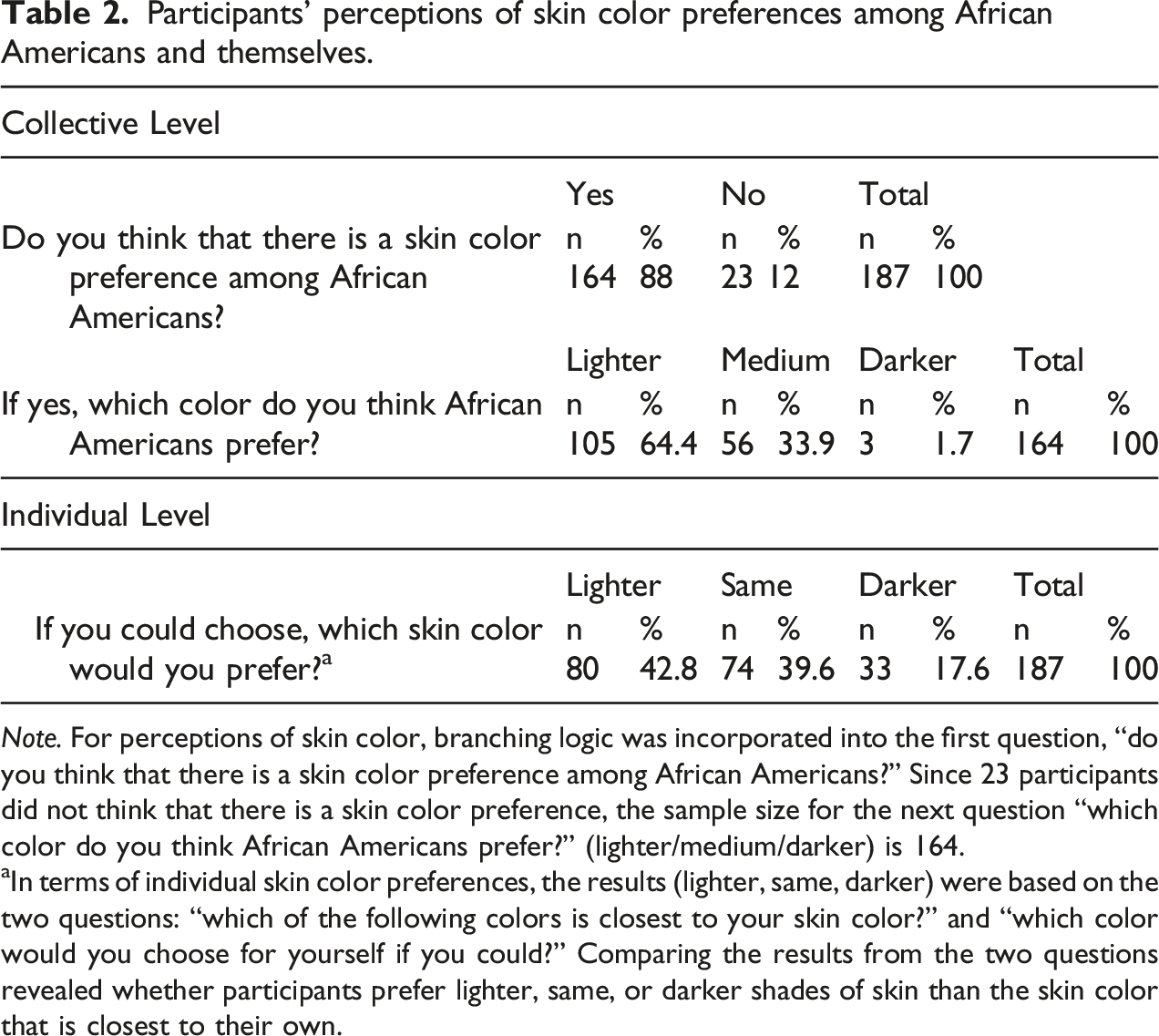
Note. For perceptions of skin color, branching logic was incorporated into the first question, “do you think that there is a skin color preference among African Americans?” Since 23 participants did not think that there is a skin color preference, the sample size for the next question “which color do you think African Americans prefer?” (lighter/medium/darker) is 164.
aIn terms of individual skin color preferences, the results (lighter, same, darker) were based on the two questions: “which of the following colors is closest to your skin color?” and “which color would you choose for yourself if you could?” Comparing the results from the two questions revealed whether participants prefer lighter, same, or darker shades of skin than the skin color that is closest to their own.
Sun-Related Behavior
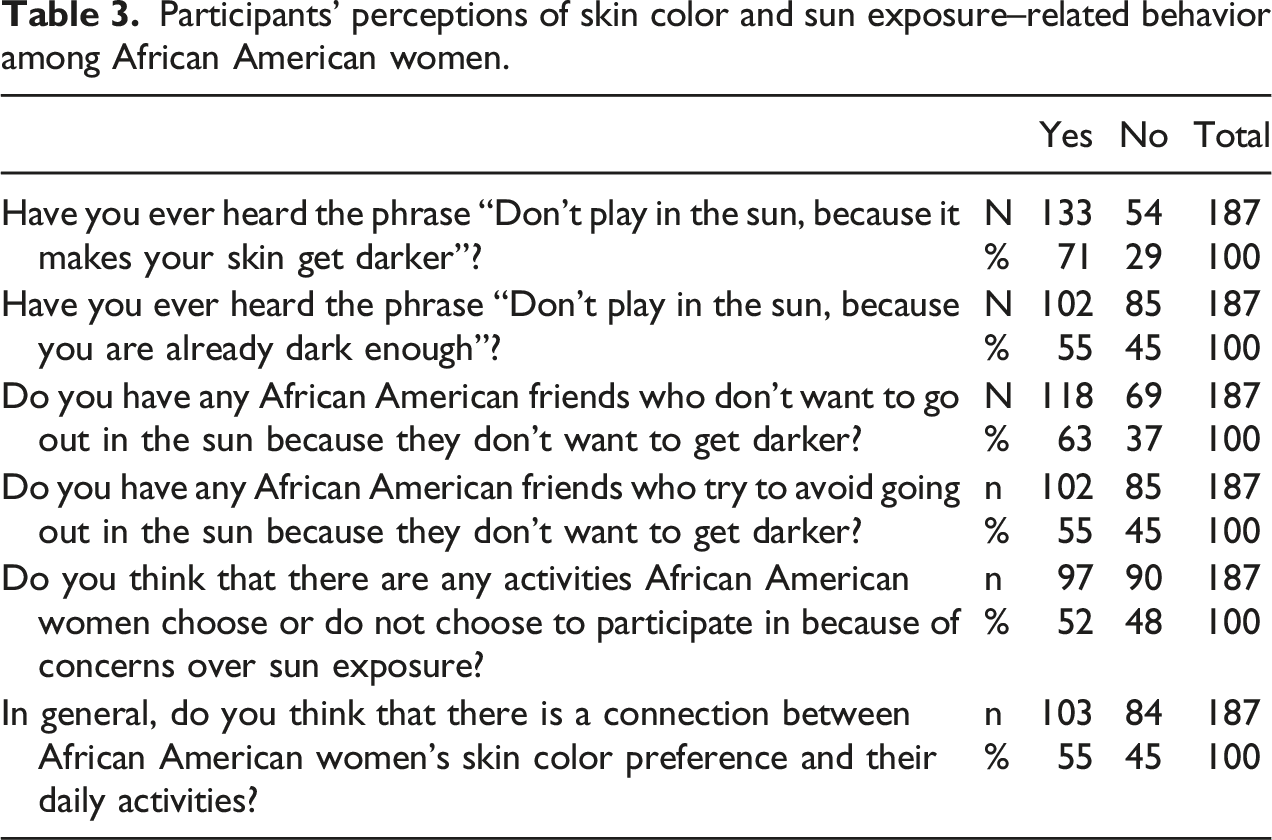
Because sun exposure darkens skin, perceptions of “Don’t play in the sun” demonstrated a link between skin color and sun-related behavior. Most respondents (n = 133, 71%) had heard the phrase “Don’t play in the sun because it makes your skin get darker,” and more than half (n = 102, 55%) had heard “Don’t play in the sun because you are already dark enough.” Most (n = 152, 81%) believed that these statements affected African Americans. Similarly, many respondents (n = 118, 63%) had African American friends who did not want to go out in the sun because they did not want to get darker; more than half (n = 102, 55%) had African American friends who tried to avoid going out in the sun for the same reason. Despite the nuances differences between these two statements (the latter statement suggests active avoidance of sun exposure), these findings contextualize the relationship between sun exposure and skin darkening. More importantly, for African American women, these results highlight the importance of not wanting to become darker along with their willingness to be in the sun.
Participants’ perceptions of skin color and sun exposure–related behavior among African American women.
Participants’ perceptions on how the admonishment “don’t play in the sun” may influence African American women and themselves.
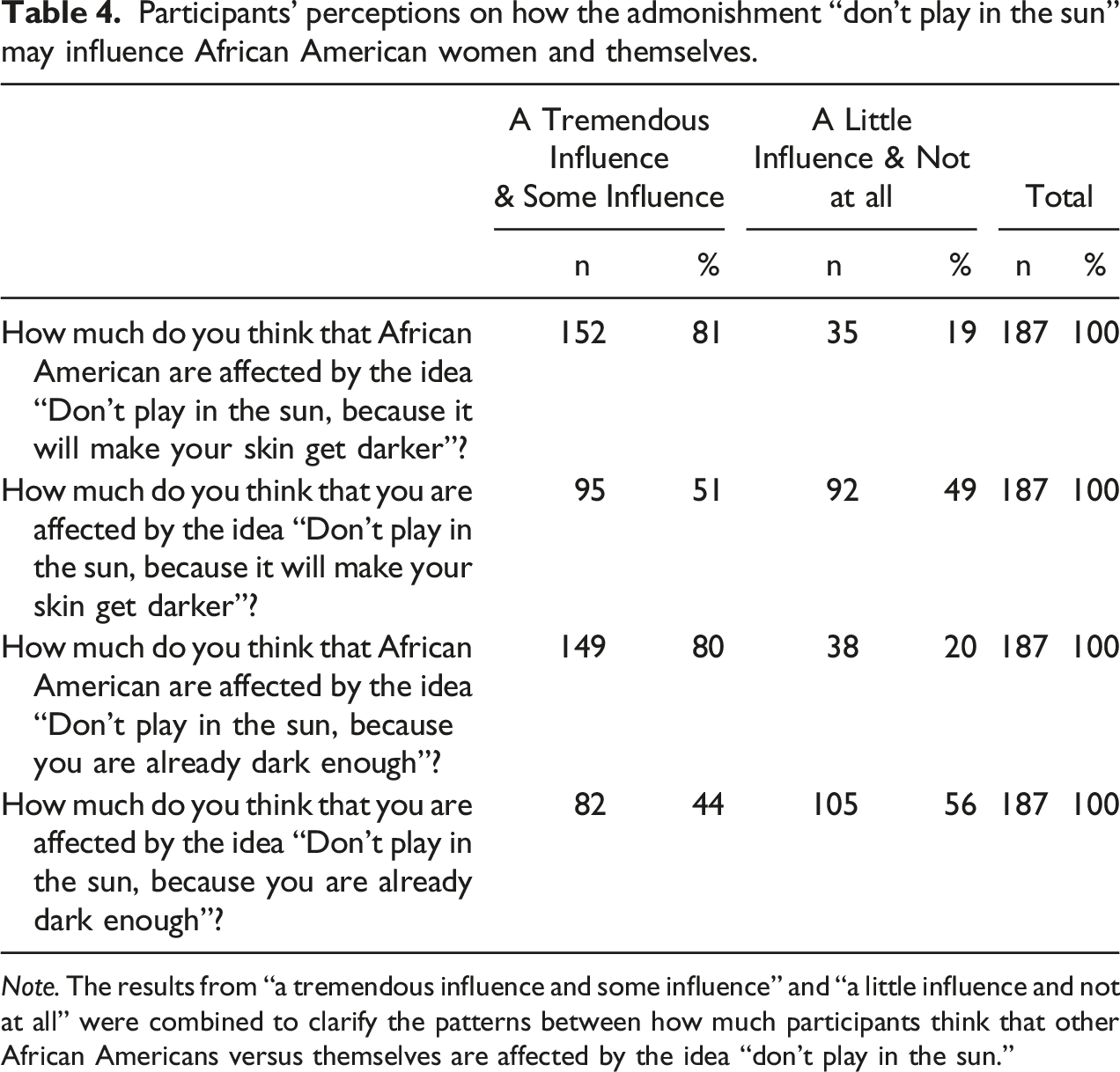
Note. The results from “a tremendous influence and some influence” and “a little influence and not at all” were combined to clarify the patterns between how much participants think that other African Americans versus themselves are affected by the idea “don’t play in the sun.”
Participants’ thoughts and experience on the potential dynamics between skin color and sun-related behavior.
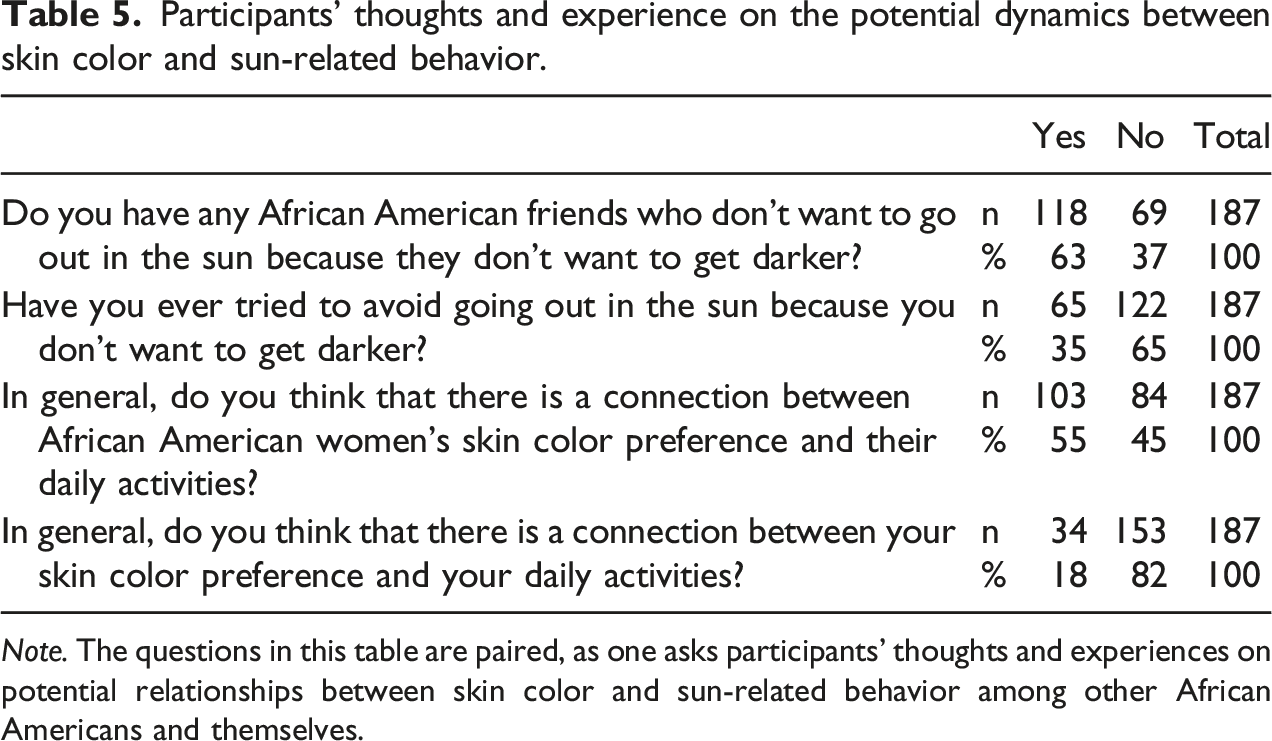
Note. The questions in this table are paired, as one asks participants’ thoughts and experiences on potential relationships between skin color and sun-related behavior among other African Americans and themselves.
Differences were observed in respondents’ thoughts about others versus themselves in terms of SCPs and the possible link between SCPs and sun-related behavior. To determine if what participants thought about other African Americans differed from what they thought about themselves, the McNemar’s test was used for a paired comparison (i.e., comparing the same participants’ reported thoughts about others with that same participants’ reported thoughts about themselves). The test statistic, X(1) = 47.56, p < .001, was significant. Results indicated that participants were more likely to think about that there was a connection between SCPs and sun-related behavior among other African Americans than there was a connection between SCPs and sun-related behavior for themselves (OR = 8.0, 95% confidence interval [CI] = 3.99, 18.20], p < .001).
Discussion of Study 2
Study 2 aimed to reach more individuals via an anonymous survey. Findings showed whether lighter skin was preferred and whether respondents believed that SCPs influence African American women’s sun-related behavior. Lighter skin appeared to be favored among African American women; nearly half of respondents preferred a tone lighter than their actual skin, conveying implicit preferences for lighter skin.
Although the potential relationship between skin color and sun-related behavior was based on respondents’ thoughts and not actual behavior, results indicated respondents’ overall belief that SCPs (colorism) may link to sun-related behavior. Respondents perceived preferences for lighter skin as leading people to minimize sun exposure. Few studies have explicitly explored colorism and sun-related behavior (Chen et al., 2020); our series of priming, eliciting, and stimulating questions clarified how attitudes toward skin color may inform sun-related behavior. Respondents believed most African Americans had been affected by phrases such as “don’t play in the sun.” A series of similar yet distinct questions triangulated the association between SCPs and sun-related behavior: Lighter skin was generally favored, and concerns about becoming darker were thought to influence sun-related behavior. Findings also illuminated the difference between how individuals believed colorism affected others’ sun-related behavior versus their own. Most respondents stated that colorism had a profound impact on other African Americans; fewer thought they were affected themselves. These findings imply a relationship between colorism/SCPs and sun-related behavior and underscore the need for research exploring this association directly.
General Discussion
Colorism is pervasive in the African American community (Hunter, 2002). Using a sequential mixed method exploratory design, we investigated African American college women’s skin color perceptions and SCPs and the potential relationships between these and sun-related behavior. Most participants believed lighter skin to be more accepted while darker skin carried negative connotations. As such, lighter skin was thought preferable within the Black community, and a relationship between such preferences and sun-related behavior was observed. A few points merit in-depth discussion. First, in Study 1, participants were fairly open to discussing other African Americans’ SCPs and sun-related behavior but seemed reluctant to share their preferences. Such hesitancy may result from a fear of appearing racist or shallow (Jablonski, 2012). Participants believed they needed to take a stand against colorism and learn to love themselves. These attitudes may suggest that colorism no longer exists, impeding a full understanding of the topic. Respondents were transparent in Study 2 when SCP-related questions were posed indirectly. These patterns reveal issues in colorism, as participants were either unaware of or did not want to acknowledge preferences. Therefore, instead of asking participants to report their SCPs directly, tactful questions (“What’s your skin color?” and “Which color would you like if you could choose?”) may present a better option; this approach enabled participants to express opinions without committing to a preference immediately. Sensitive topics should thus be broached carefully to elicit honest feedback.
Second, participants’ thoughts about skin color perceptions and SCPs and how such preferences relate to sun-related behavior revealed an interesting finding: More participants believed that SCPs influenced other African Americans; fewer believed that SCPs influenced their own selves. Similarly, most women referred to other people’s experiences instead of their own when sharing examples. Investigating these discrepancies can help researchers discern the role of colorism in African Americans’ lives. Based on existing theories, the differences between what people think about others versus themselves may arise from (a) misperceived norms; (b) disparities between claimed versus actual thoughts and behavior; (c) social desirability and conformity; and (d) reality not matching widespread beliefs about colorism.
Misperceived Norms
Misperceived norms imply that people mistakenly believe that their own attitudes and behavior differ from others’ (Perkins, 2003); for instance, participants noted that “Other people care about skin color but I don’t” or “Skin color influences others but not me.” These comparisons were based on participants’ perceptions of norms that may not be accurate. Perceived norms refer to individuals’ perceptions of the extent to which peers engage in a behavior or hold a certain belief (Cialdini et al., 1990; Perkins, 2003). Results might also be linked to misconceptions about construction of the self and others (Krueger, 1998). For instance, studies have demonstrated that college students tend to overestimate peers’ alcohol consumption (Baer et al., 1991; Perkins & Wechsler, 1996; Segrist et al., 2007; 2018). The same pattern applies to the self-reported frequency of drug use and students’ perceptions of others’ frequency (Perkins, 2003).
Disparities Between Claimed versus Actual Thoughts and Behavior
Individuals’ statements may not reflect their thoughts or behavior; actual and self-reported behavior are often inconsistent (Baumeister et al., 2007). Scholars have also identified contradictory attitudes about skin tone. African American women in our study believed that light skin was neither important nor better than dark skin; however, in reality, light-skinned individuals are more likely to marry and be economically successful (Keith & Herring, 1991; Monk, 2015). This gap between perceptions and opportunities indicates that even if people do not consider lighter skin important, they may still desire the positive outcomes associated with it (Hunter, 2002). Behavior-related studies have shown inconsistencies between what people think they do versus what they actually do (Martens et al., 2006). In this study, participants shared information about sun-related behavior, but their actual behavior could differ from reports. Findings should thus be interpreted as informed impressions rather than facts. Sun avoidance may be habitual or subconscious; less obvious behavior may not prompt specific thoughts (Chen et al., 2020). Feelings are also flexible, in that affective vocabulary may vary with time, context, and culture (Bondi, 2005). Per Saraswati (2013), participants might no longer harbor specific feelings about past moments and instead offer generalities during interviews.
Social Desirability and Conformity
Another possible explanation relates to social desirability and feelings about one’s body. Participants indicated that people should love themselves. They also said that wiser people tend to be more accepting of themselves than less wiser ones, suggesting a social force behind valuing one’s appearance. One participant reported being sad on realizing she would prefer to have lighter skin. This reaction reveals dissonance between what individuals recognize as socially acceptable and what they truly believe. While the “Black is beautiful” movement led more African American women to wear their hair naturally and embrace their darker skin, it also brought women more pressure to conform (Wilder, 2015). Women who favored lighter skin could be labeled as self-hating, having low self-esteem, or not having a solid sense of Blackness, which may elicit personal guilt about their preferences (Glenn, 2009). Yet, despite efforts to reclaim Black beauty, light-skinned African Americans are predominantly considered attractive. Such complexity may reflect the theory of double consciousness among African Americans (Meer, 2019). Internal conflict in an oppressive society—being caught between one’s self-concept as an American (national identity) and a person of African descent (racial identity)—may affect many African Americans (Lyubansky & Eidelson, 2005). Double consciousness values lighter skin (e.g., for beauty and social capital) but can readily evoke appearance-related guilt and perceived ostracization (Boyd-Franklin, 1991; Craig, 2002; Goering, 1971). This concept captures how disenfranchisement can blend into one’s identity, evoking pain among Black Americans: Lightness connotes superiority, but light-skinned individuals may be labeled “not Black enough” and stigmatized as lacking solidarity with other African Americans (Maxwell et al., 2015; Monk, 2015; Russell et al., 1992).
Reality Not Matching Widespread Beliefs About Colorism
Most participants may not have actually cared about skin color. Self-esteem is an important concept within African American psychology (Oney et al., 2011); it is positively related to women’s body attitudes and is derived from a strong racial identity (Harter, 2001). Holding positive attitudes toward one’s racial group (Rowley et al., 1998) has been found to contribute to higher self-esteem among African Americans. Thus, they may be truly satisfied with their bodies. The foregoing discussion attempts to elucidate why participants believed that lighter skin preferences and sun avoidance greatly affected other African Americans but not themselves. Participants also tended not to avoid sun exposure, potentially because doing so could maintain their complexion but not help them look lighter.
Sun seeking and sun avoidance are each related to health. For example, although cutaneous malignancies are rare in African Americans, relative unawareness of skin cancer risk may delay diagnosis, leading to a lower 5-year survival rate versus White individuals (Byrd et al., 2004). African Americans who avoid sun exposure can also experience negative health outcomes, such as vitamin D deficiency, which is related to osteoporosis. Clinicians must be cognizant of how attitudes toward skin color may influence sun-related behavior, which can have health implications. When developing healthy sun exposure strategies, public health practitioners and clinical service providers should consider the social meanings of skin color in terms of gender, race, and colorism. Interventions might then be more effective at eliciting behavior changes and maximizing healthy sun exposure.
Skin color can strike at the core of African Americans’ identity and self-esteem (Pérez et al., 1996). As noted, complex reasons and double consciousness may complicate discussions of African Americans’ SCPs. Although research has revealed unfavorable perceptions of dark skin (Dixon & Telles, 2017), including dark-skinned women’s dissatisfaction with their skin tone (Hall, 2017), Coard et al. (2001) presented a contradictory picture: Skin tone satisfaction was higher among dark-skinned than light-skinned women. The complex values associated with skin color continue to shape African American women’s lives, reinforcing the need for more research to unpack colorism in cognitive, psychological, and behavioral respects.
We explored participants’ thoughts on the interrelationship between colorism and sun-related behavior. Results showed how African American women in college perceived skin color (e.g., lighter, medium, and darker), how these women framed current SCPs among other African American women and themselves, and what these women thought about the relationships between skin color perceptions and SCPs and sun-related behavior. Findings contribute to knowledge of colorism among African Americans in two major ways. First, culturally constructed perceptions of skin color affect social interactions via a visual chain of perception, assessment, comparison with one’s experience, and value judgements. Comprehending the gaps between perceptions of colorism and SCPs on a collective level (i.e., opinions about other African Americans) versus the individual level (i.e., opinions about themselves) may indicate how colorism-related issues have evolved among African American women. Second, connecting skin color perceptions and SCPs to sun-related behavior may yield valuable insight into the attitude–behavior model by linking colorism to behavioral outcomes. Exploring perceptions of colorism among the Black community, along with these individuals’ thoughts about themselves, demonstrates how ideas of skin color can shape one’s understanding of their social position. Results also clarify how colorism is perceived and underline the need to acknowledge the intricacies of colorism.
Study Limitations
Although our research uncovered participants’ thoughts about the relationship between colorism and sun-related behavior, several limitations exist. First, attitudes toward skin color and SCPs depend on contexts and life stages (Adams et al., 2016). Social desirability could have influenced participants’ responses. Second, although participants were prompted to ponder daily activities involving sun exposure, results were based on their experiences; recall bias can obscure actual behavior. Third, due to a relatively small sample size and non-probability sampling, findings should be interpreted cautiously. Study 2 extended Study 1, but we only performed descriptive analysis; we can neither make inferences nor draw conclusions about relationships’ statistical significance. We also did not operationalize SCPs or sun-related behavior, further precluding statistical analysis. Scholars should create a questionnaire suitable for inferential statistical analysis to provide more generalizable results. In addition, drawing participants from a predominantly White university limited findings’ applicability. Fourth, within-group variance was not considered: participants’ socioeconomic backgrounds, family and peer influences, self-esteem, and other factors may influence attitudes toward skin color. Sixth, skin color descriptors such as “paleness,” “lightness,” “fairness,” and “brightness” may carry implications about which skin colors are most appealing, belying historical bias that could have extended to participants. We followed the terms participants used in interviews (not strictly “African American” or “Black” as defined in the introduction).
Directions for Future Research
As skin color perceptions and SCPs are dynamic, subsequent research could involve a longitudinal design to explore how such preferences evolve. In addition, attitudes toward skin color or body image may be influenced by interpersonal relations; scholars should include diverse genders and peer groups to more closely examine gaps between how individuals perceive their skin color versus others’ opinions. Moreover, because skin color discrimination is tied to class (Hunter, 2011), studies should account for participants’ socioeconomic status and family background to understand the intersections of colorism, aesthetic attitudes, and sexism. Research could also incorporate more objective devices to measure skin color and compare participants’ perceptions. Relevant topics to consider include one’s perceptions versus reality and why two people with the same skin color exhibit different perceptions and wellbeing. In terms of sun-related behavior, researchers could employ ecological momentary assessments (EMAs) to reduce bias and increase ecological validity, especially as sun-related behavior can be influenced by the weather, UV index, temperature, and exposure concerns. Sun-related behavior also influences health through bone density and vitamin D levels; scholars could track daily sun exposure to better understand related health consequences. People’s knowledge about the health implications of sun exposure may result in more conscious sun-related behavior; future research should integrate sun-related health knowledge to assess this behavior more thoroughly.
Contributions and Practical Implications
Skin tone bias remains an issue for contemporary African Americans: the meanings of skin color influence various life domains. The use of mixed methods to explore individual skin color perceptions and SCPs, and how these relate to sun-related behavior, enhances understanding of colorism and its associations with behavior. Our findings shed light on how sun-related behavior is tied to social and cultural meanings of skin color, reflecting African Americans’ aesthetic attitudes and body image. These results enrich the extant literature and provide a basis for work in related fields by further contextualizing societal, racial, and cultural issues. Our approach can also serve as a reference for research involving a biocultural framework to examine skin color in relation to psychosocial or cultural value–induced stress, body image satisfaction, and self-esteem, which intersect with health and wellbeing.
Our findings have practical implications, such as potentially expanding educational and social topics involving culture, race, and diversity. Additionally, as sun-related behavior may affect health outcomes, our research can guide subsequent work on the interplay between biological aspects of skin color and environmental factors (e.g., sociocultural value systems) to bring biocultural studies into behavioral research and public health access for minority populations. Our stimulus questions that indirectly asked participants about SCPs could be adapted for similar studies; these stimuli represent a methodological contribution in that they can elicit subconscious thoughts that would otherwise remain unarticulated. Using stimuli together with indirect questioning facilitates discussion of sensitive subjects, such as colorism (Borgers et al., 2003). Finally, due to the covert nature of colorism inside and outside the Black community, our results should be useful for clinicians working with African American women in communicating the risks and benefits of sun exposure along with the importance of sun protection.
Footnotes
Acknowledgements
Thanks to Drs. Garry Chick and Careen Yarnal for their invaluable comments and suggestions, especially regarding interview protocol and survey development. Also, thanks to the members of the Human Evolution and Diversity Lab (Tina Lasisi, Sandra Koch, Tess Wilson, Emily Bramel, Elizabeth Wright, George Chaplin) and the anonymous reviewers for their constructive feedback on earlier versions of this manuscript. This study was supported by the Africana Research Center at The Pennsylvania State University.
Declaration of Conflicting Interests
The author(s) declared no potential conflicts of interest with respect to the research, authorship, and/or publication of this article.
Funding
The author(s) disclosed receipt of the following financial support for the research, authorship, and/or publication of this article: This work was supported by the research from the Africana Research Center (ARC) at The Pennsylvania State University.
