




Abstract
Public sector organizations increasingly use digital platforms to foster value co-creation among diverse stakeholders and to address complex societal challenges, such as those related to sustainable development. Different kinds of digital platforms have been recognized as potential drivers of the societal transition toward a circular economy. However, little is known about the organization, governance, and circular value outcomes of such platforms, especially those provided by public sector organizations. Following a case-study strategy, we explore how multisided digital government platforms can promote a circular economy as marketplaces for residual resources. We outline the advantages and limitations inherent in public sector organizations as platform orchestrators within circular economy ecosystems. By uncovering essential factors that influence the success of government platforms in enhancing sustainability goals, this study provides both novel theoretical insights and practical guidance for the implementation of similar initiatives.
Keywords
Introduction
Public sector organizations increasingly use different kinds of digital platforms to orchestrate and leverage underutilized resources in local communities to find new solutions to complex societal problems and facilitate the co-creation of public value (Haveri & Anttiroiko, 2021; Meijer & Boon, 2021). According to Meijer and Boon (2021, p. 235), “Digital platforms for co-creation of public value are platforms, supported by information and communication technologies and rules of exchange, that provide resources for its affiliates or users to flexibly engage in the creation of solutions for public problems.”
Such platforms have the capacity to bring together governmental and nongovernmental organizations, which is particularly relevant to addressing societal challenges, such as those in the area of sustainable development (G. George et al., 2021; Janowski et al., 2018) and the circular economy (CE) (Berg & Wilts, 2019; Patala et al., 2022). The exchange of residual resources, such as waste and side streams, requires the establishment of a close collaboration between the public and private sectors, as the platforms are privately owned but can incur collective ecological costs (Patala et al., 2022). For this reason, the public sector often plays a focal role in CE ecosystems and has an incentive to run a digital platform for material circulation (Berg & Wilts, 2019).
Recent research has recognized the ability of different types of digital platforms to advance CE (Antikainen et al., 2018; Konietzko et al., 2019; Pizzi et al., 2021). In particular, researchers have suggested that digital platforms that operate in multisided markets have high potential to facilitate CE practices (Berg & Wilts, 2019; Blackburn et al., 2023; Ciulli et al., 2020). Multisided platforms (MSPs) create value by acting as market intermediaries and facilitating transactions between two or more user groups. They offer several economic benefits, including reduced barriers to interactions and lower transaction costs, which allow various actors to establish new forms of value-adding arrangements (Gawer, 2010; Kenney et al., 2019). Ansell and Miura (2020) note that in the public context are referred to as “matchmaking platforms.” Much like business platforms, such platforma mobilize underutilized resources by bringing together users and enabling multisided interactions and resource exchanges (Ansell & Miura, 2020).
Although the business literature has widely explored the drivers of, barriers to, and preconditions for value creation on MSPs, extant studies fail to provide many insights into the organization, governance, and circular value outcomes of platforms that aim to address CE-related questions despite their recognized potential (Blackburn et al., 2023; Ciulli et al., 2020; Konietzko et al., 2019). Moreover, in contrast to the extensive business-oriented research on MSPs, their potential in the public administration field has received relatively little attention (Ansell & Miura, 2020; Sahamies et al., 2022). Consequently, there is a lack of understanding of public sector organizations as platform orchestrators in the CE context, although they often play a focal role (Berg & Wilts, 2019). Given these complexities, this study explores how multisided digital government platforms can promote CE. More specifically, we address the following research questions:
What orchestration mechanisms are utilized to attract users to such platforms?
What are the preconditions for and barriers to publicly provided MSPs acting as drivers of CE ecosystems?
Drawing on the analytical framework of orchestration and brokerage roles in multisided CE platforms (Blackburn et al., 2023; Ciulli et al., 2020), we focus on public sector organizations as platform orchestrators (Ansell & Miura, 2020; Haveri & Anttiroiko, 2021). Methodologically, our study is based on a rich set of qualitative empirical materials that stem from semi-structured interviews, a user survey, participant observations, and document analyses. We employ a case-study strategy to investigate Materiaalitori (“marketplace for materials” in Finnish), a digital platform provided by the Finnish Ministry of the Environment. On this platform, private companies and other organizations can search for and offer residual resources, including waste and production side streams as well as specialist services in CE and waste management.
Theoretical Background: Governance of Platform-Enabled CE Ecosystems
The Role of the Platform Orchestrator
Creating a robust network of actors that are linked through a digital platform, a “platform ecosystem,” has been recognized as a precondition for attracting users (Gawer, 2010; Kenney et al., 2019). In MSPs, the main groups of actors are typically supply- and demand-side users. The platform orchestrator—usually the platform owner—is an organizational entity that controls the platform, thus playing a distinct role within the platform ecosystem (Blackburn et al., 2023; Heimburg & Wiesche, 2022). Although users make independent decisions about their transactions, the platform orchestrator represents the main source of authority and power within the ecosystem. It oversees the technological architecture at the ecosystem’s center as well as the platform’s overall governance and coordination. The orchestrator is also responsible for motivating actors in the ecosystem through various incentives, thereby supporting transactions among participants (Kretschmer et al., 2020). The platform orchestrator’s role tends to be accentuated in business-to-business (B2B) MSPs, since they typically require resource-intensive orchestration, including dyadic contracting (Ritala & Jovanovic, 2023), offering significant potential for promoting material circulation in the CE context (Berg & Wilts, 2019).
Orchestration Mechanisms in CE Platforms
Blackburn et al. (2023) identified five orchestration mechanisms that MSPs use to facilitate sharing and material circulation within platform ecosystems. First, the platform orchestrator must establish a core structure that facilitates interaction among users on different sides of the multisided markets. This involves building and continuously improving digital architecture based on user feedback. The platform orchestrator also needs to clearly define the platform’s value proposition and localize platform offerings (Blackburn et al., 2023).
Second, the platform orchestrator must develop and maintain a clear and compelling platform identity. This includes establishing rules that enable safe transactions, motivating users, and leveraging sustainability branding to make the platform attractive to potential users (Blackburn et al., 2023). This can involve, for example, informing potential business users about brand benefits (Ciulli et al., 2020).
Third, the orchestrator needs to expand the platform ecosystem by attracting users through various means, including cross-platform marketing, peer referrals, and direct contact (Blackburn et al., 2023). When targeting businesses as potential users, it is essential to inform them about the economic benefits of joining the platform. This requires understanding the specific needs of these businesses, forming direct relationships, and tailoring communication with them (Blackburn et al., 2023; Ciulli et al., 2020). Moreover, efforts must be made to lower the barriers of entry, thereby ensuring easy access, a user-friendly platform design, and the integration of the platform with existing technologies and systems in the ecosystem (Blackburn et al., 2023; Ciulli et al., 2020). Attracting a critical mass of users is a precondition for leveraging network effects.
The fourth orchestration mechanism that Blackburn et al. (2023) identified relates to accumulating network effects. Network effects occur when a rising number of users on one side of the platform attracts more users on the same or other side of the market (Hagiu & Wright, 2015). In particular, B2B platform users often have their own networks, which can bring in more potential users (Blackburn et al., 2023).
Fifth, the platform orchestrator must ensure that the circular aspect of its business model is actualized. This involves paying attention to the platform’s environmental efficiency, identifying and addressing possible inefficiencies in the value chain, and supporting behavioral changes among users (Blackburn et al., 2023).
Brokerage Roles of Platforms in CE Ecosystems
In addition to orchestrating the activities within the platform ecosystem, platform orchestrators may pursue an important role in larger CE ecosystems and society. For instance, Patala et al. (2022) observed that resource-exchange platforms were introduced to facilitate collaborative agency in existing CE ecosystems, which involved actors from the public, private, and third sectors. Similarly, Ciulli et al. (2020) investigated how digital platforms can function as circularity brokers in these ecosystems, especially efforts to reduce food waste. They identified six brokerage roles that MSPs assume in CE ecosystems: connecting, informing, integrating, mobilizing, measuring, and protecting.
Many of the brokerage roles that Ciulli et al. (2020) listed overlap with the orchestration mechanisms that Blackburn et al. (2023) outlined. Platform orchestrators bridge circularity gaps by connecting users on the supply and demand sides and by informing them about the business benefits of adopting CE practices. They integrate the platform with their existing technologies and processes and establish direct relationships. Moreover, platform orchestrators mobilize users to leverage their networks to facilitate audience building, and they measure the environmental and economic impacts of the platform. In addition, Ciulli et al. (2020) noted that platforms protect their users by, for instance, establishing guidelines to ensure waste quality, verifying organizations that join the platform, and ensuring safe transactions.
Platform orchestrators also can utilize brokerage roles to bridge circularity gaps beyond the immediate platform ecosystem—that is, within broader CE ecosystems—and to promote CE in society at large. According to Ciulli et al. (2020), the informing role can involve educating various audiences about the safe use of waste and raising awareness of the environmental and social impacts of waste recovery. Moreover, they noted that the integrating role may involve sharing knowledge and competences and co-creating new solutions for waste recovery with suppliers. In addition, mobilizing is not always about bringing new users to the platform; it can involve supporting volunteers’ efforts to act autonomously and advocate for governmental institutions to take action on waste reduction (Ciulli et al., 2020). Table 1 synthesizes the frameworks of orchestration mechanisms that Blackburn et al. (2023) highlight and the brokerage roles of platform orchestrators in CE ecosystems Ciulli et al. (2020) introduce.
Analytical Framework of Platform-Orchestration Mechanisms in CE Ecosystems (Based on Blackburn et al., 2023; Ciulli et al., 2020).

Public Sector Organizations as Platform Orchestrators
Many of the orchestration mechanisms associated with platforms are not typically implemented by public sector organizations. The use of MSPs, then, brings new elements to the role of the public sector (Ansell & Miura, 2020; Haveri & Anttiroiko, 2021; Janowski et al., 2018). For example, although user selection based on a shared organizational identity is not a typical orchestration mechanism in the public sector, platforms have introduced this feature into public governance (Sahamies et al., 2022).
Traditionally, the development of public governance has been depicted as a continuum of three governance paradigms: hierarchy-based public administration (PA), the New Public Management (NPM) approach, and a group of approaches often referred to as New Public Governance (NPG). Despite frequently being simplified as a linear progression, elements of these three stages coexist and overlap in most public organizations (e.g., Osborne, 2006). In short, NPM is characterized by the adoption of market-based management techniques and reductions in government’s role as the central public policy actor (Hood, 1991). NPG focuses on the connections among organizations and centers on the co-creation of public value and interorganizational relationships in multi-actor networks (Bryson et al., 2014; Haveri & Anttiroiko, 2021; Osborne, 2006). In contrast to the governance of rather stable networks of interdependent actors that NPG highlights, digital platforms enable the rapid reorganization of actors seeking to find new connections and opportunities for value creation (Sahamies et al., 2022). Therefore, when public sector organizations provide platforms, their role becomes facilitative and enabling (Haveri & Anttiroiko, 2021; Janowski et al., 2018). This is particularly evident when public sector organizations create MSP-based marketplaces that bring actors together to find new value-creation opportunities (Ansell & Miura, 2020).
Nevertheless, although platforms can be used to leverage distributed social action (Ansell & Miura, 2020), it is important to underscore that public sector organizations acting as platform orchestrator have centralized power and authority over the activities within the platform ecosystem. Platform orchestrators set the rules and standards for participation, and they are responsible for actor motivation and platform coordination (Blackburn et al., 2023; Kretschmer et al., 2020). Hoffman and Karpiuk (2022) have even suggested that centrally operated platforms can be interpreted as new “soft” tools of centralization. Notably, the platform approach does not serve as a replacement for previous public-governance approaches. Instead, it essentially entails a blend of previously utilized elements and new features (Haveri & Anttiroiko, 2021; Sahamies et al., 2022).
In this study, we delve deeper into the use of digital platforms in public governance and explore how multisided government platforms can promote CE. We draw from the analytical framework of orchestration mechanisms that platform orchestrators in CE ecosystems employ (see Table 1), and we investigate the distinct role of public sector organizations as platform orchestrators in relation to public-governance paradigms.
Research Design, Data, and Methods
Single-Case Study Strategy
To address our research questions, we follow a case-study strategy. One of the main advantages of case studies is that they enable researchers to analyze “qualitatively complex events and take into account numerous variables” (A. L. George & Bennett, 2005, p. 46). They also provide “a high degree of explanatory richness” (A. L. George & Bennett, 2005, p. 37). In essence, case studies do not necessarily provide “statistical” generalization; rather, they may allow for “analytic” generalization (Yin, 2014). In other words, case studies should not aim for representativeness of diverse populations; case selection should be based on suitability for analyzing the specific theme or question (A. L. George & Bennett, 2005; Mariotto et al., 2014).
When selecting the case for building an in-depth understanding of how multisided digital government platforms can promote CE, our intention was to choose an instrumental case that would “do a better job than others” to “maximize what we can learn” (Stake, 1995, p. 4). For this reason, we investigate Materiaalitori, a digital platform that serves as a marketplace for residual resources in Finland.
Case Description
We focused on Finland as the empirical setting for several reasons. First, Finland presents an interesting institutional context, as it has set an ambitious goal of fully transitioning to the CE model by 2035 and therefore is searching for new and innovative ways to enhance material circulation. One of the six main areas of the CE strategic program that the Finnish government defined is the creation of markets for circularity (Ministry of the Environment, 2021). Moreover, public authorities play a particularly prominent role in Finnish CE ecosystems (Patala et al., 2022), and they are pioneers in providing various types of platforms (e.g., Anttiroiko, 2016; Haveri & Anttiroiko, 2021; Sahamies et al., 2022).
Most importantly, in Finland, we found Materiaalitori—a compelling case of a publicly provided, multisided CE platform that served as a marketplace for residual resources—owned by the Ministry of the Environment and operated by Motiva Oy, a state-owned sustainable-development enterprise. Materiaalitori was selected for several reasons that enabled us to conduct an in-depth inquiry. First, it had an explicitly observable brokerage role within CE ecosystems, as it brought together many prominent actors in Finland’s CE ecosystems, including companies, universities, and public authorities at the national and local levels. Second, having been launched in 2019, Materiaalitori had a relatively long history, considering that the majority of MSPs have a short lifespan owing to their reliance on successfully leveraging network effects (Yoffie et al., 2019). Third, Materiaalitori had an established status in Finnish CE ecosystems due to its statutory task.
Essentially, Materiaalitori had two main functions: a statutory function stemming from the Waste Act (646/2011) and an industrial symbiosis function. The statutory function was related to the organization of waste management services in Finland. An amendment to the Waste Act (646/2011, Section 143a) that came into effect in 2020 indicated that the platform should be used to confirm the lack of market-based waste management services, which was a prerequisite for businesses to utilize the waste disposal services that municipalities offered (Waste Act 646/2011, Section 33). This requirement was based on the demand for competition neutrality stemming from competition legislation. While public sector organizations, such as publicly owned municipal waste management companies, could operate in markets, they could not have unfair competitive advantages over their private sector counterparts. In addition to its statutory function, Materiaalitori served as a free platform for the exchange of all kinds of residual resources, including waste and side streams (Waste Act 646/2011, Section 143a). In this sense, it functioned as a circularity broker (Ciulli et al., 2020) and thus had the potential to become an important player in Finland’s CE.
Data Collection
Empirically, we supported the validity of the single-case study with a comprehensive, “thick” description of the case generated through data triangulation (Mariotto et al., 2014). The evidence was derived from semi-structured interviews, participant observations, and document analyses (see Table A1 in Appendix 1).
From May 2022 to March 2023, we conducted 13 in-depth, individual interviews with key stakeholders involved in the platform’s organization, governance, and audience building (see Table A1 in Appendix 1). The interviewees were mainly selected through a snowball approach and from a known pool of focal actors affiliated with the platform. The interview outline included questions related to the platform’s creation; the constellation of focal actors and their relationships; and the preconditions, barriers, challenges, and future directions of the platform’s development (see Appendix 2). Particular emphasis was placed on the orchestration mechanisms and methods used to attract potential users. The interviews lasted an average of 1 hr and were conducted primarily in English in an online format, after which we transcribed and analyzed them manually.
To supplement the interview data, one author engaged in participant observation on two occasions. The first was an online workshop held in November 2022 for companies that were interested in using the Materiaalitori platform. The second, an online stakeholder network meeting about digital solutions for CE, took place in May 2023 (see Table A1 in Appendix 1). At both events, the researcher adopted the role of a “peripheral member” (Musante & DeWalt, 2010), taking notes on interactions among the participants without engaging in the discussion.
The results of a user survey served as an additional source of data (see Table A1 in Appendix 1). Motiva, the state-owned enterprise that ran the platform, conducted a user survey from October to November 2022. Although the survey encompassed both qualitative and quantitative elements, we primarily utilized the qualitative data owing to their rich descriptive nature. One of the authors translated the written answers to open-ended questions from Finnish to English, and the research team members discussed them. In addition, we reviewed the results of the user survey in a separate conversation with a specialist from Motiva (I2, Motiva) to deepen our understanding of the responses and obtain necessary clarifications.
Moreover, we collected and analyzed statistics on different types of announcements posted on the Materiaalitori website from 2019 to 2023. One author collected the raw data that were publicly available on the platform and carried out simple calculations on them. The results provided an overview of the activity on and usage of the platform over time as well as an understanding of the main data categories, trends, and patterns (e.g., the number of side streams and amount of waste being posted on the platform). Finally, to develop a comprehensive understanding of the regulatory context and empirical setting in which the digital platform operated, we collected and analyzed a wide range of relevant documents, including waste-related legislation and government proposals (see Table A1 in Appendix 1).
Data Analysis
We adopted an abductive approach, as we engaged in interactive processes while constructing a close “theory–empirical material relationship” (Alvesson & Kärreman, 2007, p. 1265) during data collection and analysis. Due to the novelty of the phenomenon (i.e., a digital platform in the area of CE), our study is exploratory in nature. Therefore, the data are tightly linked with the problematization of the theoretical ideas (Alvesson & Kärreman, 2007) found in the extant literature. Methodologically, this study combines elements from theory- and data-driven qualitative analysis. Working with multiple data sources, we employed thematic analysis, which was suitable for our abductive research design. Following the thematic analysis procedures that Braun and Clarke (2006) suggested, we familiarized ourselves with the data and then generated initial codes. Based on the coding, we searched for repetitive themes, after which we reviewed, defined, and wrote up the recognized themes.
Findings
Focal Actors: Roles and Relations
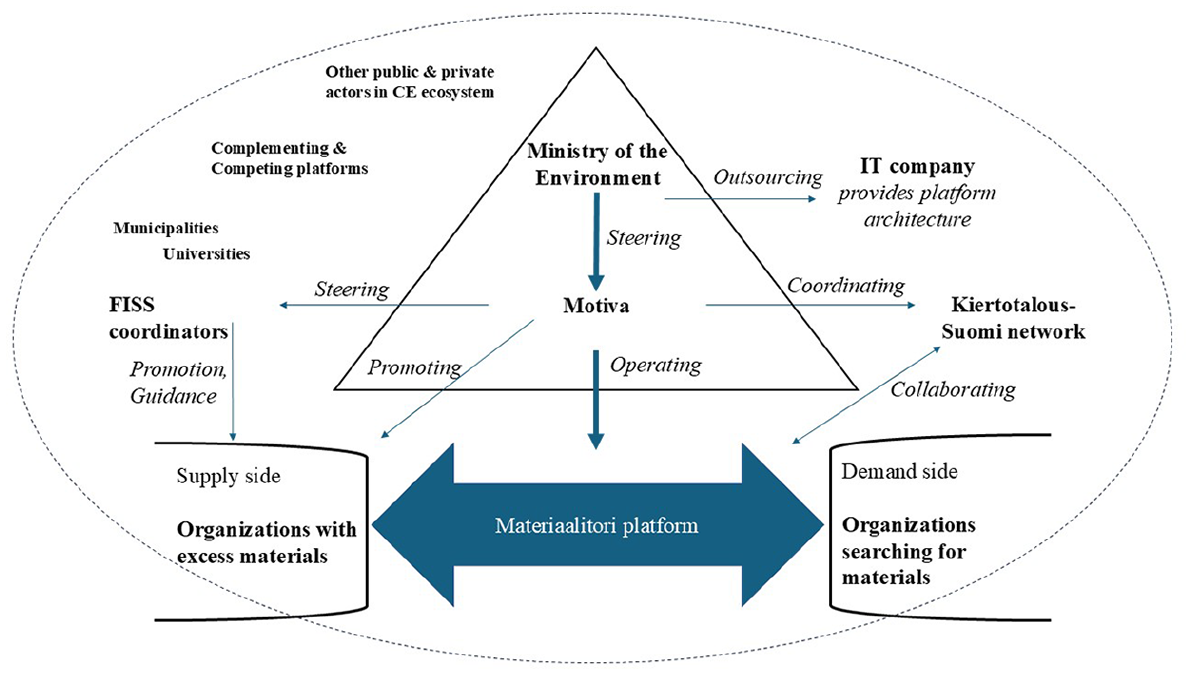
The Finnish Ministry of the Environment and Motiva Oy (Waste Act 646/2011, Section 143a) collaboratively maintained Materiaalitori. Both played key roles in the platform’s coordination and shared the role of platform orchestrator. As the platform owner, the Ministry of the Environment had ultimate responsibility and authority for the regulation, development, and operations of Materiaalitori. The ministry outsourced the creation and maintenance of the digital architecture to a private information technology (IT) company. For coordination, the ministry established two steering groups: One involved Motiva and the ministry, and the other included the ministry, Motiva, and the IT company.
Motiva was responsible for the platform’s expansion. While the ministry’s primary interest was the smooth functioning of Materiaalitori for statutory purposes, Motiva attempted to promote the non-statutory use of the platform. It mainly promoted Materiaalitori through external networks: Motiva is responsible for things like [communication with the Finnish Industrial Symbiosis (FISS) network] and user support . . . and [other] communication. I think it’s a good division of labor. (. . .) We [the ministry] handle more of the drafting legislation and legislative work. At the ministerial level, we don’t want to be providing support for operating systems and keeping systems in working order; we want to outsource those activities to different operators. (I3, Ministry)
The most important external networks included the Kiertotalous–Suomi network and the FISS network. Kiertotalous–Suomi, a Finnish CE network jointly led and coordinated by Motiva and the Finnish Environment Institute, was dedicated to facilitating the cross-sector exchange of information and knowledge. FISS was a network consisting of regional coordinators who typically worked for municipal development companies dedicated to serving local businesses or on CE-related projects at various universities of applied sciences, with FISS tasks constituting a small portion of their responsibilities.
The main goal of the FISS network was to help companies in their geographical areas recognize opportunities for industrial symbiosis: Our goal is to help companies utilize the opportunities they have with this industrial symbiosis. We are kind of linking parties and [are] doing the background search and trying to make the material flows visible in the region. (I8, FISS)
After the launch of Materiaalitori in 2019, FISS coordinators began providing guidance on how to use the platform based on Motiva’s instructions. They “introduced this Materiaalitori to companies and tried to motivate them to use the service” (I7, FISS). However, FISS coordinators did not receive directly allocated funding for this task from Motiva or the Ministry of the Environment. Instead, they independently applied for project funding for FISS activities from external sources, such as EU structural funds (I7–11, FISS). Although the FISS coordinators were not explicitly involved in platform management, they were important external partners in the platform ecosystem, as they facilitated the building of connections between potential users from the supply and demand sides and “tried to marry the companies together” (I7, FISS).
The platform was developed through collaborative action among various stakeholders, while Motiva played an important role from the outset, leveraging its existing connections with companies to pilot the platform (I1, Motiva). Figure 1 provides a schematic representation of the constellation of the focal actors and their relation to the platform’s management.
Simplified structure of the relations among focal actors.
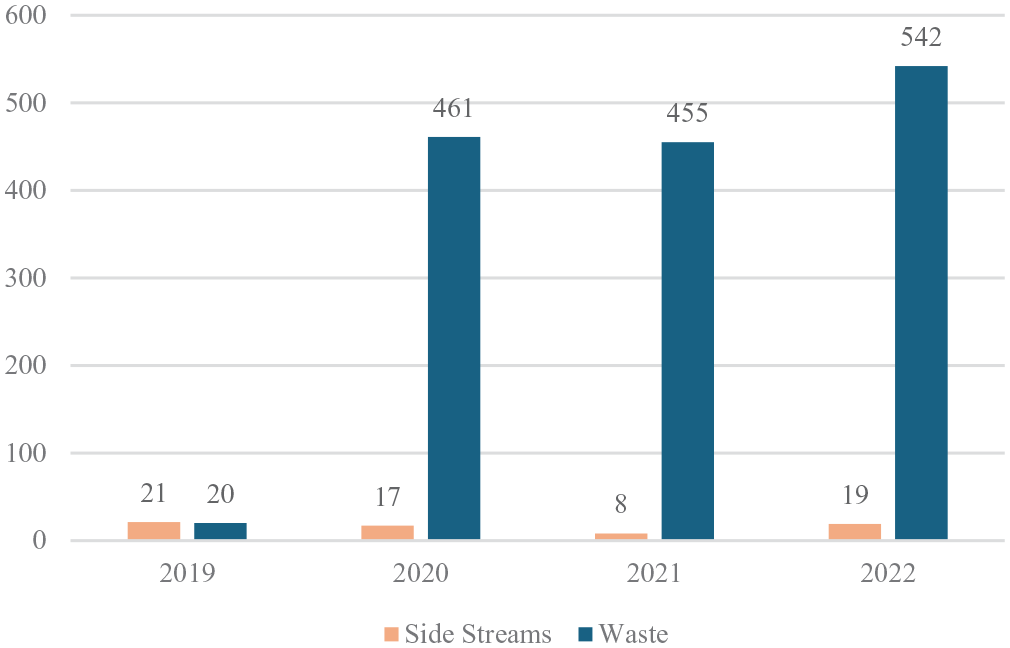
Materiaalitori users came from different types of organizations operating in Finland. On the supply side, Materiaalitori users offered residual resources, which they needed to classify as either waste or side streams. The demand side for waste included private and public waste management companies. The demand side for side streams comprised diverse organizations seeking materials for further use. As of January 2023, Materiaalitori had nearly 2,200 registered users from over 1,700 companies. The user base was growing fast; in 2022, the number of registered users grew by 43% (Motiva, 2023). Yet, this growth was not reflected in the number of posts on the website. In particular, the number of posts related to side streams was low (see Figure 2 for data that the authors compiled from the Materiaalitori website: https://www.materiaalitori.fi/).
Materials offered, number of posts per year.
Orchestration Mechanisms and Barriers to Expansion
In this section, we analyze the orchestration mechanisms that the platform orchestrators utilized in CE ecosystems based on the analytical framework presented in Table 1.
Institutional Pressure
One noteworthy aspect that the framework did not include was legislation as an external pressure that drove Materiaalitori’s development and usage. Institutional support and political steering were seen as preconditions for launching the platform. If the platform had no statutory function, the ministry would likely have received financing solely to enhance material circulation and not for the platform itself, as it would have been difficult to demonstrate the platform’s economic benefits (I3, Ministry).
The statutory function was a primary factor that motivated users to join the platform. Yet, although this ensured a consistent user base, users indicated that the intricate waste regulations and requirements to use Materiaalitori in certain cases led to increased bureaucracy. Consequently, a negative perception of the platform emerged, which extended to its non-statutory use: That comes from the law—that we have to have a tool, nationwide, to make companies show that there is no commercial service available. That is the main thing, but it makes promotion a bit difficult because . . . you have to tell the wide audience about that: “Here is a service that you have to use if you want to use municipality waste management, if you are a company.” At the same time, we say that “this is a really good service that you should be using in any case.” That is a bit of a challenge for us. (I6, Ministry)
Although the negative perception of Materiaalitori can be largely attributed to “this legislation thing” (I1, Motiva), the FISS coordinators noticed some hesitancy in relation to public sector services in general. More specifically, some users associated public services with rigidity and slowness in adapting to evolving business environments: I think that some businesses may have a somewhat reserved attitude toward public services. That is also evident in some of the discussions we are having with them. (. . .) Maybe it is more about the flexibility and the speed of development. (. . .) On the private side, maybe they are able to make quicker changes when things are not working. (I8, FISS)
Creating Connections
The core feature of MSPs is their ability to connect the supply and demand sides of multisided markets. The Materiaalitori platform achieves this objective as “a kind of material Tinder” (I1, Motiva). Despite the problems associated with the complex waste legislation, the platform assisted waste management companies in discovering new customer opportunities (I5, Ministry). Moreover, users acknowledged Materiaalitori’s potential to evolve into a useful marketplace for residual resources. The survey responses indicated that the digital platform was “a good channel to seek out specific materials for material circulation that otherwise would be energy waste.” According to one of the workshop participants, the process of linking supply and demand sometimes even resulted in “innovative win–win solutions” for effectively utilizing side-stream resources.
Consolidating Platform Architecture
Motiva collected user feedback through questionnaires focused on platform outcomes and the user feedback survey, with the latter forming part of the data in this study. In addition, FISS coordinators frequently received feedback from users. However, as the coordinators were not directly involved in the platform’s coordination or development, Motiva served as an intermediary. It transmitted this user feedback to the ministry, which could then consider possible changes that the IT company could implement in the user interface. The complex feedback loop created challenges in prioritizing user experiences: “The information goes from companies to you, from you to Motiva, and then from Motiva to the Ministry of the Environment. How bureaucratic that is! Really!” (I9, FISS).
Representatives of the Ministry of the Environment and Motiva as well as FISS coordinators noted the importance of connectivity as a precondition for Materiaalitori’s growth, especially in relation to other public services and databases and other digital marketplaces. The platform had been integrated with several other services, including the official service for public-procurement notices in Finland. In addition, efforts were underway to establish a connection between Materiaalitori and an existing pre-demolition audit database, which would enable users to predict the availability of building materials on the market. Interviewees (I2, Motiva; I4–I6, Ministry; I11, FISS), however, emphasized remaining opportunities to connect Materiaalitori to other public databases. One interviewee (I2, Motiva) pointed out that “there are a lot of open interfaces for public information, and we also need to learn how to use that information.” According to the interviewees and experts involved in the stakeholder network meeting, several local and field-specific MSPs that were similar to Materiaalitori were operating in Finland, which could pose a challenge in terms of reaching a critical mass of users. As a result, Materiaalitori had already been integrated with some of them (I2, Motiva; I5, Ministry; I8, FISS).
Network Promotion Strategy
According to our informants and user survey responses, a key factor contributing to the lack of a critical mass of users was that companies in Finland generally were not familiar with the platform. An interviewee (I6) from the Ministry noted that “the municipalities are telling us that companies really don’t know about Materiaalitori.” To raise awareness about the platform, Motiva, FISS, and Kiertotalous–Suomi promoted it in their networks. However, these efforts fell short of expectations, as they mainly reached companies that already were interested in CE matters (I7–I8, I11, FISS). Informants emphasized the need for more large-scale promotion in mainstream channels but pointed out the lack of resources that were allocated to this (I11, FISS).
Direct Audience Building
As the informants indicated, another significant factor that helped account for the inadequate user base was that companies often failed to recognize the value of the platform beyond its statutory function (I7, FISS; I8, FISS, I2, Motiva). Motiva and regional FISS coordinators maintained direct communication with users through workshops and seminars that FISS coordinators organized in their respective areas in line with Motiva’s guidelines, offering information and hands-on guidance on using the platform. However, they were not viewed as a successful way to attract new users: It’s very hard to get companies to attend, for example, webinars or seminars. When we arrange something like that, we always see the same companies but never new ones. Those are the companies that are already interested in the circular economy. (I7, FISS)
FISS coordinators also actively engaged with companies outside of these workshops to discuss the potential use of their side streams. Although these efforts frequently were carried out as part of the coordinators’ own projects or responsibilities, they promoted the Materiaalitori platform. One FISS coordinator stressed that “personal contact is a much better way to promote the platform and side streams—[working] together with the companies to discuss who can use their side streams” (I10, FISS).
According to the FISS coordinators, if companies are not contacted directly, they are not as motivated to make their side streams available. FISS coordinators worked to convince businesses to join the platform and use it in ways that extended beyond the statutory function, with a focus on potential financial gains: “Money is the language that everyone understands. If you can sell to them so that they can make some money through these choices, then it is much easier to talk about it” (I7, FISS). However, this proved to be a complex task. The interviews and participant observations suggested that helping companies view side streams as valuable resources and encouraging them to seek industrial symbiosis were time-consuming tasks that required personal contacts, tailored interactions, and articulation of the company-specific benefits of such practices (I8, FISS; I9, FISS; 11, FISS). As one coordinator (I9, FISS) highlighted, “You have to know by yourself what the benefit would be for each company and tell them about it.”
The regional coordinators, who had local company connections and insights into companies’ specific needs, could therefore play a pivotal role in building Materiaalitori’s user base. Yet, a major obstacle is that the FISS coordinators’ role remained somewhat uncertain, as they operated only occasionally and required project-based funding that they had to acquire themselves (e.g., from the EU). This resulted in a lack of continuity in the audience-building process.
Reframing the Meaning of Waste
Although the potential financial benefits were considered the primary incentive for companies to use the platform for non-statutory purposes, according to informants some companies joined owing to environmental considerations (I7, FISS; I1, Motiva), even though Materiaalitori did not actively promote these features in its general promotion campaign or through direct audience building. Only one interviewee raised this issue: “That is what we are trying to explain to them—that it is also good for their brand” (I1, Motiva).
Strengthening the Ecosystem
Motiva and the Ministry of the Environment stressed the importance of external partners, including the FISS coordinators and Kiertotalous–Suomi, in promoting the platform to “make it easier for people to find Materiaalitori” (I6, Ministry). Some respondents also suggested new collaborations with external networks and organizations that could help reach companies that had not yet been integrated into CE ecosystems. For example, one FISS coordinator proposed involving well-known reputable organizations, such as the Finnish Innovation Fund, in the platform’s promotion (I8, FISS). Furthermore, some respondents pointed to the need for closer collaboration with city governments and local business networks, including entrepreneurial associations and chambers of commerce (I9, FISS; I2, Motiva): We discussed that in our workshop, and these “company people” said that it would be important to involve cities and authorities in order to share this information and activate companies. (. . .) Another suggestion was to utilize yrittäjäyhdistykset [“entrepreneurial associations” in Finnish]. (I9, FISS)
The FISS coordinators also adopted another approach to strengthening the ecosystem: They helped companies identify potential side streams. When coordinators contacted the companies, they shared their knowledge and competences while actively developing new solutions with companies (I7–I9, FISS), which can be classified as a form of co-creation (Ciulli et al., 2020).
Guaranteed Provision of User Security
Several initiatives to ensure the secure utilization of the platform were implemented, including the requirement of a Finnish business ID for platform access (I5, Ministry). Moreover, the general level of trust in public institutions was strong in Finland, as the following observation illustrates: “We highly value them, and we trust them” (I8, FISS). Consequently, the fact that the platform was publicly provided served as an indicator of reliability for certain users (I8, FISS; I11, FISS).
Measuring and Actualizing CE Benefits
Materiaalitori enabled the supply and demand sides to connect. However, the actual transactions took place beyond the platform. Therefore, the outcomes were not measured automatically but instead evaluated through user surveys (I1, Motiva). As a result, the measurements of the CE impact were not reliable. Moreover, the user surveys created an additional burden for users and further hindered user-friendliness.
In addition, Materiaalitori offered open data about the number of announcements posted on the platform annually as well as those related to waste and side streams (see Figure 2). Motiva monitored these data and informed the Ministry of the Environment about overall user engagement. Representatives from the Ministry, however, seemed poorly informed about the limited number of side-stream-related users. The Ministry even considered the possibility of Materiaalitori attaining financial independence through user fees pertaining to its non-statutory use. Given the existing user constraints, such fees could further diminish the platform’s appeal.
Summary of Key Findings
The frameworks that Ciulli et al. (2020) and Blackburn et al. (2023) developed highlighted a set of platform orchestration mechanisms. Through an examination of the Materiaalitori case, we were able to empirically elucidate how these mechanisms manifest when public sector organizations act as platform orchestrators. Moreover, we identified additional orchestration mechanisms specific to the government platform context that previous research had not captured.
Despite the implementation of the orchestration mechanisms summarized in Table 2, we uncovered a number of barriers that hindered Materiaalitori’s growth. Due to the insufficient user base, especially in the context of its non-statutory function, Materiaalitori struggled to generate positive network effects for its users and thereby actualize a circular business model (Blackburn et al., 2023). The informants primarily attributed the lack of a critical mass of users to two factors: inadequate promotion and a failure to convince potential users of the platform’s value.
Summary of Materiaalitori Platform-Orchestration Mechanisms in CE Ecosystems.

Although promotion through networks was considered beneficial, it mainly reached companies that were already interested in CE issues, and the promotion to wider audiences was deemed insufficient. Similar notions did not appear in the frameworks that Ciulli et al. (2020) and Blackburn et al. (2023) introduced, which discussed privately provided multisided CE platforms.
The interviews suggested that directly reaching out to potential users was an effective way to convince them of the platform’s economic benefits. This approach has been noted as particularly crucial for B2B platforms (Blackburn et al., 2023; Ritala & Jovanovic, 2023). In the case of Materiaalitori, direct contact relied heavily on external networks—namely, FISS coordinators. However, the challenges stemmed from their uncertain roles and funding ultimately created obstacles to direct engagement with businesses.
In addition, prior research has emphasized that framing the use of residual resources in a favorable manner and highlighting the business benefits associated with sustainability (for, e.g., brand reputation) can attract companies to CE platforms (Blackburn et al., 2023; Ciulli et al., 2020). Although this approach was widely used in privately provided multisided CE platforms (Blackburn et al., 2023; Ciulli et al., 2020), it was not actively employed for the Materiaalitori government platform.
Limitations in the technical architecture also prevented reliable measurements of the CE’s benefits, which Ciulli et al. (2020) indicated could motivate users to continue using the platform. Moreover, challenges within the chain of communication related to user feedback and development were evident.
Concluding Discussion
Scope of the Study
Contemprary scholarship has highlighted the potential of MSPs to facilitate material circulation, capturing the role of platforms as circularity brokers (Ciulli et al., 2020), platform-enabled circular business models (Blackburn et al., 2023), and digital B2B marketplaces in which companies interact to exchange materials and goods in value-creation networks (Berg & Wilts, 2019). Public sector organizations often play a crucial role in CE ecosystems and thus have incentives to provide such platforms (Berg & Wilts, 2019; Patala et al., 2022). However, little is known about their role as platform orchestrators in the context of CE. This article investigates the potential of multisided government platforms to promote CE, focusing on the role of public sector organizations as platform orchestrators in relation to public-governance paradigms (Haveri & Anttiroiko, 2021; Janowski et al., 2018) while identifying the mechanisms utilized to attract users and analyzing the preconditions for and barriers to such platforms serving as drivers of CE aspirations.
Advantages and Disadvantages of Public Sector Organizations as Platform Orchestrators in CE Ecosystems
Berg and Wilts (2019) noted that governmental actors are suitable candidates for providing MSPs for material circulation, as they are likely to have the capacity to bear these platforms’ launch-related costs. Notably, this study shows that the public sector’s role as a platform orchestrator not only offers a range of advantages but also exacerbates some of the barriers described above.
First, although public sector organizations play a vital role in enhancing CE and successfully governing the circulation of privately owned residual resources, they must be actively engaged in making adjustments related to governance logic and roles. For instance, they must increase their own flexibility and adopt a more enabling role (Patala et al., 2022). In the Materiaalitori case, the platform’s statutory function meant that these adjustments were limited, leading some users to perceive the platform as inflexible and bureaucratic. This led to problems with user experience and created unnecessary barriers to entry (Blackburn et al., 2023), which limited the platform’s potential for further expansion.
Second, a publicly provided platform may lack funding for expansion through active promotion and direct audience building, as the public sector may be more hesitant than private businesses to allocate resources to advertising and branding. Placing a stronger focus on brand building in relation to sustainability could help create a more appealing platform identity.
Conversely, as platform orchestrators, public sector organizations have access to a substantial number of preexisting networks and partner entities in the CE context, as the case of Materiaalitori demonstrates. This ensures connections with various governmental actors, municipalities, and universities, which each have their own networks in various business areas that can serve as a strategy for accessing a broader user base and fostering network effects (Blackburn et al., 2023; Ciulli et al., 2020). Local actors play a significant role in this process, as they can directly engage with companies and provide tailored information about the potential economic benefits of circular practices (Blackburn et al., 2023; Ciulli et al., 2020). In the Materiaalitori case, the affiliation of national, regional, and local levels offered incentives for companies to join the platform.
In addition, integration with existing technologies is an important factor in audience building on CE platforms (Blackburn et al., 2023; Ciulli et al., 2020). Government platforms may have the possibility of being integrated with public databases, which could be beneficial for users. Moreover, users deemed Materiaalitori trustworthy owing to its nature as an open, publicly provided platform.
CE Platforms and Public-Governance Paradigms
The Materiaalitori case also illustrates how platforms combine elements of the public-governance paradigms (PA, NPM, and NPG), which are characterized by hierarchies, markets, and networks, respectively. At the same time, the platforms introduce new features, thus requiring the use of multiple coordination mechanisms in a blended manner (Haveri & Anttiroiko, 2021). First, platform orchestrators have centralized authority within platform ecosystems (Kretschmer et al., 2020). This authority shares similarities with the traditional hierarchy-based PA. Materiaalitori’s statutory function further reinforced this aspect of the platform. However, enhancing the material circulation of privately owned residual resources requires horizontal collaboration among the actors in the larger CE ecosystem and mutual adjustments to their governance logic (Patala et al., 2022). Otherwise, as Hoffman and Karpiuk (2022) have pointed out, the platform may become a “soft” tool for centralization.
Second, the core management of Materiaalitori featured governance mechanisms associated with NPM, including contracting and outsourcing in relation to building the platform’s architecture and operational management. Moreover, as Materiaalitori served as a B2B platform, users expected the adaptability and user-friendliness associated with market-based management techniques.
Third, collaborative relations and co-creation within CE networks were a core feature of the audience building for Materiaalitori, reflecting features of NPG. Leveraging existing networks is important, as creating an ecosystem of actors around a platform has been recognized as a precondition for attracting users (Gawer, 2010; Kenney et al., 2019).
Fourth, Materiaalitori’s operating logic, which was based on facilitating the exchange of external resources to achieve CE objectives, highlighted the novel features that platforms bring to the classic depiction of public-governance paradigms. More specifically, it demonstrates the enabling and generative role of public governance over platforms (Haveri & Anttiroiko, 2021) and how the platform architecture can be deployed to leverage distributed social action (Ansell & Miura, 2020). This was evident in Materiaalitori’s function as a structure that enabled the formation of new, innovative solutions and value creation to enhance sustainability (Janowski et al., 2018).
In conclusion, the Materiaalitori case shows that merely providing platform architecture is not enough to harness the resources of the local communities. The enhancement of material circulation through MSPs requires a profound understanding of platform-economy dynamics; continual audience-building efforts; prioritization of the user experience; insights into the target audience’s needs; and collaboration with external networks, especially local and regional actors. This, in turn, requires a combination of elements that are rooted in different governance paradigms.
Theoretical Implications and Avenues for Future Research
This study makes several contributions to existing scholarship. First, it contributes to the literature on public governance by enhancing understanding of the potential of platforms to help achieve public-governance objectives related to CE and the novel elements that MSPs bring to public governance. Second, expanding knowledge of the role of MSPs in building CE ecosystems, we extend the discourse on platforms as circularity brokers and demonstrate how they can serve as tools for promoting CE aspirations in a national context. Overall, by combining the literature on multisided platforms as circularity brokers with public-governance theory, this article introduces a distinctive perspective and paves a path for future research.
The single-case study strategy provided heuristic frameworks for identifying relevant variables in complex environments, making it particularly useful for developing a theoretical understanding of a novel phenomenon, such as the subject of this study (A. L. George & Bennett, 2005; Mariotto et al., 2014). It might have some limitations—related namely to its subjectivity and external validity. Nevertheless, the validity of a single-case study can be significantly enhanced by employing data triangulation and increasing analytical rigor (Mariotto et al., 2014). In this study, we did so by utilizing multiple data sources and following the thematic analysis procedures that Braun and Clarke (2006) suggested.
In addition, single-case studies are sometimes criticized based on their limited generalizability (Mariotto et al., 2014). In this regard, it is noteworthy that this study did not aim to provide “statistical generalization” but centered instead on “analytic generalization”—that is, on “being generalizable to theoretical propositions and not to populations and universes” (Yin, 2014, p. 15). This means that transferring or generalizing the findings to other cases requires consideration of the contextual characteristics of each case (Mariotto et al., 2014; Stake, 1995). Thus, as a next step in creating a holistic understanding of the connection between public governance and MSPs in CE ecosystems, further research should be carried out in contexts that differ from Finland’s. For instance, comparative case studies from countries with different administrative traditions and different attitudes toward CE would likely provide useful insights and uncover other features and patterns in the construction of CE ecosystems by the public sector and other actors.
Practical and Policy Implications
Our research offers a number of insights that are relevant to policymakers and practitioners who are interested in utilizing publicly provided MSPs to advance sustainability goals and enhance the circulation of residual resources in local communities. By uncovering the factors that influence the expansion of such platforms, we provide practical guidance for the development and implementation of similar government initiatives. Specifically, we outline the advantages and limitations inherent in public sector organizations as platform orchestrators, thereby equipping practitioners with the knowledge needed to navigate potential challenges and effectively enhance the circulation of residual resources through these platforms.
Footnotes
Appendices
Data Availability Statement
Data sharing not applicable to this article as no datasets were generated or analyzed during the current study.
Declaration of Conflicting Interests
The author(s) declared no potential conflicts of interest with respect to the research, authorship, and/or publication of this article.
Funding
The author(s) received no financial support for the research, authorship, and/or publication of this article.
