



Abstract
In this study we investigate Citizen Initiated Contacts (CICs) as a common mode of political participation. CICs arise when citizens contact local government departments for services or to make complaints. Yet, increasingly citizens are contacting their political representatives to resolve their issues rather than local government departments. Using a quantitative approach based on questionnaire data collected from two city local governments in Pakistan, we investigate this phenomenon. Our findings reveal that knowledge and accessibility of local government departments supplemented by perceived need juxtaposed between unresponsive and difficult to contact local government services resulted in citizens contacting their political representatives to resolve their issues. Policy and practical considerations are suggested to improve the effectiveness of CICs in public participation exercises.
Introduction
Citizen-initiated contacts (CICs) are an important and prevalent form of civic engagement and political participation where citizens reach out to government representatives or agencies to request services, voice concerns, or resolve issues (Hero, 1986; J. Thomas, 1982; Wang et al., 2021). As local governance structures have decentralized in many developing countries, understanding citizen outreach to local leaders rather than bureaucrats provides insights into accountability relations and drivers of civic participation (Agresti, 1990; Johnson et al., 2005). Yet research on CICs in developing contexts remains limited (Wang et al., 2021). This study helps fill this gap through its quantitative analysis of factors shaping whether citizens contact local councilors or administrators in two city districts of Pakistan. The Musharraf-era local government reforms (2001–2009) provide the context for examining decentralized services and political representation (Cheema et al., 2006).
The study is grounded in political participation theory, particularly the civic volunteerism and parabolic model, but also incorporates recent advancements in the field. The relevance of this study lies in its potential to inform decentralization policy and participatory governance: priorities for developing countries like Pakistan. Although local government reforms were discontinued in 2010, the relationships explored in this study serves as a foundation for future decentralization efforts when local systems are reintroduced. Understanding citizen-initiated contacts is crucial as it shapes citizen-representative linkages and influences the effectiveness of local governance.
The CIC research in developing countries requires more attention as prior work has focused on Western contexts (Wang et al., 2021). This study contributes distinctive and robust evidence from Pakistan, which is a scarcely researched setting and so advances conceptual debates. It tests established theoretical propositions while highlighting the significant role of bureaucratic responsiveness often overlooked in earlier models. By integrating state effects into participation frameworks, this study offers insights to inform decentralization policies for effective participatory local governance: a topic of immense scholarly and public policy importance in reforming developing countries.
The analysis tests established theorizations around need and awareness as drivers of participation while also assessing the role of bureaucratic responsiveness. The findings provide evidence on participation dynamics during a major governance decentralization. Our results generally confirm the role of perceived need in motivating citizen outreach but more strongly demonstrate the influence of citizen satisfaction and accessibility in determining contact choices. This highlights the limitations of traditional participation models, emphasizing the need to integrate governmental impacts into the framework. Our paper contributes evidence and advances conceptual debates by incorporating the role of bureaucratic responsiveness and integrating state effects into participation frameworks. The findings have implications for decentralization policies and participatory local governance in reforming developing countries. The paper is structured as follows. Section 2 reviews CIC literature and sets out hypotheses. Section 3 outlines the context, data, and methods. Section 4 presents the results. Finally, section 5 discusses the findings, contributions, and limitations.
Context
The research context is Pakistan, which has undergone multiple phases of local government reform since its independence in 1947 (Farooqi & Forbes, 2019). The last major reform was the Devolution Plan 2000 (National Reconstruction Bureau, 2000), which devolved administrative, political, and fiscal powers to local government at various levels (Paracha, 2003). Local government elections were held under this framework in 2001, 2005, and 2009 before the reforms were discontinued: no elections have occurred since 2010. Although more recent data would provide an updated picture, the use of historical data from the Devolution Plan period is justified because we examine the impact of a major decentralization reform initiated in 2001. These data serve as a baseline for future decentralization policy when local systems are reintroduced. The relationships found in the data are also likely to resurface when local government is reconstituted. Thus, the historical data provide valuable insights given that they stem from the most recent local governance framework in Pakistan. The use of historical data from 2013 to 2014 is also justified by the continuing relevance of the primary focus on citizen-initiated contacts in the context of local governance dynamics. Citizen-initiated contacts remain an essential mode of political participation and problem resolution, making the study’s focus relevant for both scholarship and practical policy development (Oser & Boulianne 2020; Sjoberg et al., 2017).
Theoretical Framework and Hypotheses
The study’s theoretical framework draws on various established political participation models including the socioeconomic, parabolic, and clientele participation models (Campbell et al., 1960; Jones et al., 1977; J. C. Thomas & Melkers, 1999). While these models have provided valuable insights into citizen engagement, they have also been criticized for their limitations in explaining the complexities of contemporary civic participation.
The socioeconomic model, which links an individual’s social status and resources to political participation, has faced criticism for lacking explanatory power. It suggests that higher socioeconomic status leads to greater political efficacy and skills and so enables participation. However, this model overlooks subjective motivations and the governmental impacts that shape behaviors, limiting its ability to fully explain citizen engagement (Coulter, 1992).
The parabolic model, which emphasizes the role of awareness and need in determining participation, also has been scrutinized. Although it proposes that both awareness and need are necessary to translate needs into action, it relies on status proxies rather than assessing actual knowledge. This limitation hinders its ability to fully capture the nuanced factors influencing civic engagement (Jones et al., 1977).
Similarly, the clientele model, which incorporates awareness of government services and political connections, has been criticized for focusing narrowly on citizen attributes. It overlooks emerging evidence that governmental impacts, such as bureaucratic accessibility and responsiveness, play a critical role in shaping citizen engagement by creating opportunities for participation (J. C. Thomas & Melkers, 1999).
Recent scholarship has highlighted the need to move beyond citizen-centric perspectives and consider the impacts of government actions on civic engagement. Jakobsen and Calleja (2021) highlight how conventional CIC models focused on citizen motivations and resources overlook the significant role of government-related factors like institutional trust. Their study finds that trust shapes contacting politicians versus bureaucrats. They argue positive bureaucratic experiences constructively encourage future engagement. The findings affirm calls to adapt traditional CIC concepts by incorporating overlooked impacts of governmental openness, responsiveness, and other institutional factors that critically shape participation pathways. Such features provide impetus for theoretical integration state effects alongside established citizen attributes.
Studies also now recognize bureaucratic responsiveness and communication as significant factors that shape participation by constructing positive experiences that encourage future engagement. Porumbescu (2015) highlights how traditional CIC models have focused narrowly on citizen motivations, overlooking contextual factors like bureaucratic transparency. Our study finds transparency encourages bureaucratic contacting and trust and constructs positive participation experiences. Porumbescu (2015) argues bureaucratic communications and responsiveness fundamentally shape engagement pathways alongside citizen motivations and calls for an integrative CIC framework including these overlooked governmental impacts with universal psychological factors.
Similarly, Oser (2017) suggests traditional citizen-initiated contact (CIC) models, such as the civic volunteerism and socioeconomic models, are too focused on the individual and overlook the significant impact of government actions on shaping behavior. He emphasizes bureaucratic responsiveness and communication in shaping positive participation experiences. This would encourage continued engagement, and he calls for updating CIC concepts to take into account changing norms in digitally mediated and episodic forms of engagement. Only by integrating citizen motivations, such as needs, with governmental factors like bureaucratic accessibility can there be better understanding of contemporary engagement patterns. Traditional CIC models have also not adequately considered the role of government impacts in shaping citizen behavior. For example, bureaucratic responsiveness and communication are influential drivers of citizen engagement that previous models have overlooked. Here Oser (2017) emphasizes the role that digital media can play on enabling episodic peer-driven engagement that can reveal sizable disengaged groups. Overall, his study suggests changing traditional CIC models by incorporating governmental and contextual factors that can shape contemporary participation pathways with empirical evidence questioning assumptions in established concepts that underscore the need to integrate state impacts and new media into explanations of civic behavior. Overall, recent scholarship highlights the importance of updating CIC models to better understand contemporary civic engagement dynamics, including the impacts of government actions and changing participatory norms in the digital age.
Our study synthesizes established frameworks focused on awareness and needs with emerging emphases on bureaucratic influences. Accessibility to and knowledge of local services are hypothesized to sustain direct bureaucratic engagement (H1a; J. C. Thomas & Melkers, 1999). Having unmet needs with local bureaucracies will increase councilor contacting (H1b), viewing them as alternate problem-solvers when bureaucratic channels fail (Faguet, 2014). Positive helpfulness experiences will encourage continued usage of those channels (H1c and H1d) based on research on interactions shaping behavior (Lipsky, 1980).
Incorporating perceived needs with bureaucratic impacts thus represents an evolution from conventional frameworks that focus narrowly on socioeconomic resources or psychological motivations. This synthesis aligns with recent conceptual perspectives recognizing participation as shaped by multidimensional interactions between citizen goals and system factors (Oser, 2017). Doing so this addresses the limitations of traditional models and offers a more comprehensive and nuanced understanding of citizen-initiated contacts (Oser, 2017). This study’s framework develops a more comprehensive and dynamic approach to explaining citizen-initiated contacts that contributes to the ongoing scholarly debate of understanding evolving patterns of political participation (Wang et al., 2021).
We propose the following hypotheses:
H1a. The greater a citizen’s access to and knowledge of local government departments, the greater the likelihood of them contacting local government rather than their political representatives to meet their needs.
H1b. The greater that citizens perceive their needs are not being met by local government departments, the greater the likelihood that they will contact their political representatives.
H1c. The greater that citizens perceive that local government departments are unhelpful when approached, the greater the likelihood that they will contact their political representatives.
H1d. The greater a citizen's level of dissatisfaction with the response of local government departments when approached will increase their likelihood of contacting their political representatives.
Figure 1 presents the theoretical framework for the research. In our framework citizens contact their local political representatives due to: (a) a lack of knowledge of or access to local government services; (b) the helpfulness or otherwise of local government departments when contacted; and (c) the outcome or satisfaction of meetings with local government departments. Based on these factors we examined (d) awareness of services provided by local government departments; (e) the helpfulness of local government officials when contacted; and (f) satisfaction with outcomes of contacts with local government departments. Our results suggest that expectations of CICs with local government have a direct effect on whether citizens approach their political representatives to meet their needs.
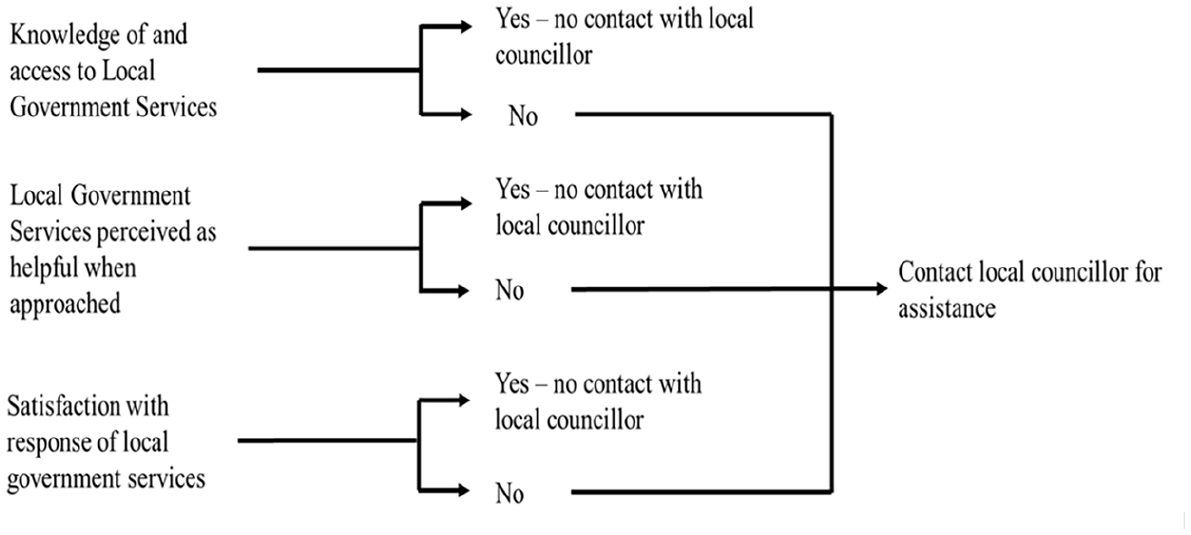
Citizen initiated contact with local councilor: theoretical model.
Research Design
The study utilized a quantitative survey-based approach to examine citizen-initiated contacts in Pakistan. Two local government city district areas were chosen for the study: Lahore (CDGL) and Faislabad (CDGF) with a total sample size of 200 respondents, 100 from each area. Although a larger, more representative sample would be ideal, the feasibility constraints of conducting research in a developing country with security concerns at the time necessitated a small purposive sample. At the same time, this enables insightful exploratory research into an understudied area to be carried out (Wang et al., 2021). The two district cases allowed in-depth interrogation of participation dynamics within a defined context rather than more superficial analysis across multiple settings (Porumbescu, 2015). The similar socioeconomic and governance profiles of the local government districts also provide a controlled setting for hypothesis testing (Jakobsen & Calleja 2021).
The questionnaire instrument collected data on key variables grounded in established theory and measures, allowing quantitative hypothesis examination (Oser, 2017). The qualitative aspects of citizens’ contact experiences were captured through open-ended questions. Such mixed methods provided rigor while also eliciting subjective insights (Christensen & Levinsen, 2021). Longitudinal data would have been preferable for evaluating reforms. Yet allowing time for the changes to become embedded provided a stronger basis for assessing impacts compared to immediate evaluation (Nayyar-Stone et al., 2006). Additionally, the Musharraf era represents the last significant local government reform, making the data policy relevant despite their age (Kardar, 2006). The use of older data from 2013 to 2014 is justified since the study examines the reported impacts of a major decentralization reform initiated in 2001. This time lag allowed assessing impacts during the second phase of reforms once changes had taken root. Pakistan has experienced significant political uncertainty and turnover since 2010, with local government largely absent. This makes more recent data unavailable. However, the 2000 Devolution Plan period represents the last major local governance reform. Our findings thus remain relevant for understanding possible effects of decentralization. Further, data from the established second phase of reforms offer a useful baseline to guide future decentralization policy when local systems are reintroduced. In summary, though not without limitations, the research design balances depth and rigor with the constraints of a developing country context. It provide a strong basis to advance scholarship in an underexplored area to generate practical insights for improving participatory governance in Pakistan and similar settings.
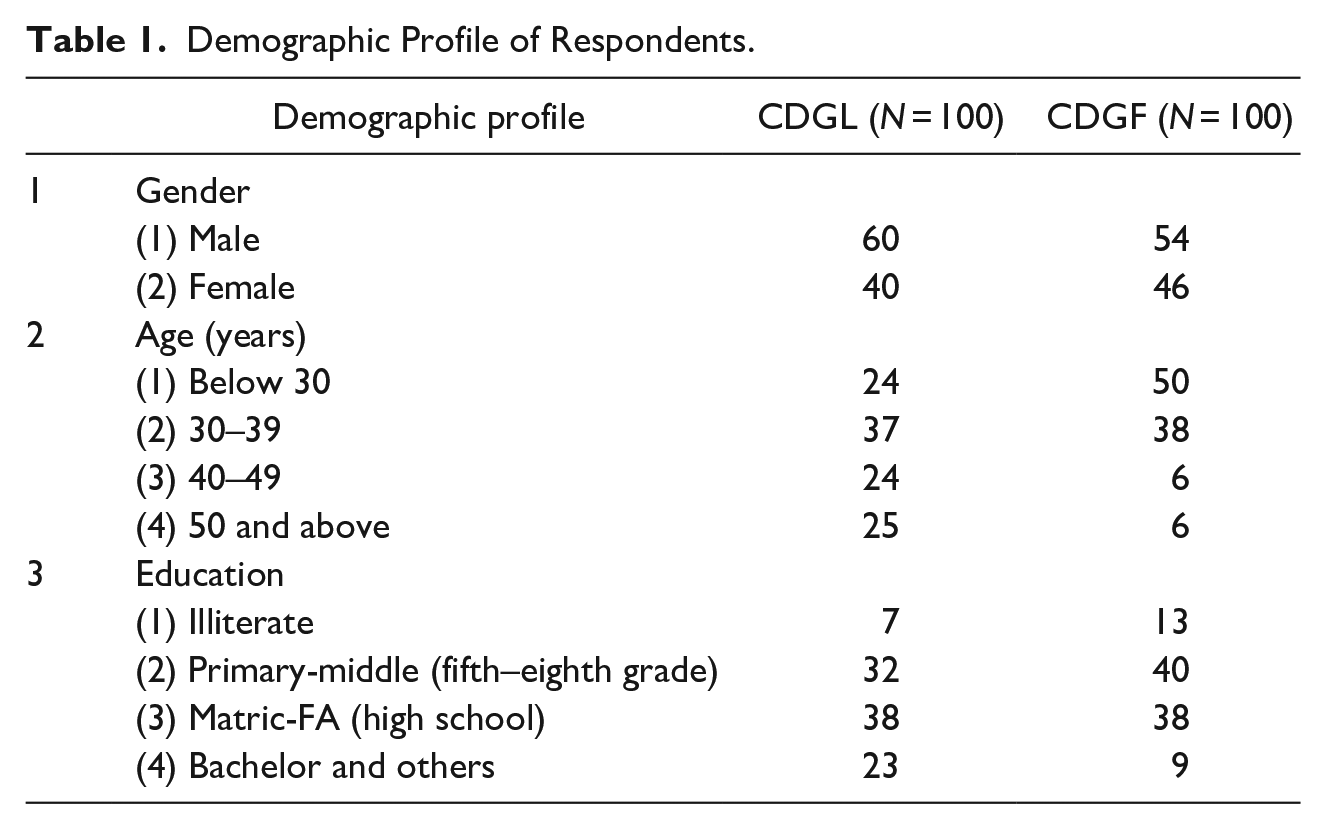
Table 1 provides the demographic profile of the respondents. In CDGL, the sample consisted of 60% males and 40% females compared to 54% males and 46% females in CDGF. The variation in the ages of respondents in CDGF reflects the researcher commuting daily to Faisalabad between 11 am and 7 pm to collect data. In contrast, for the CDGL sample, the researcher resided in the city, making it possible to visit later in the day when more men were at home.
Demographic Profile of Respondents.
Measurement
Citizen-initiated contacts were measured using a survey instrument that directly asked respondents whether they had contacted local officials or councilors in the previous year, following established approaches (Oser, 2017; J. C. Thomas & Melkers, 1999). Binary yes/no questions tapped whether a contact occurred (Jakobsen & Calleja, 2021). The survey further asked those reporting contacts about their experiences in terms of access, helpfulness, and satisfaction. This aligns with recent research emphasizing perceptions of interactions as key to understanding engagement (Porumbescu, 2015). Multiple questions on contact purposes provided a validated composite scale of perceived needs (Wang et al., 2021).
Developing the Models
This study utilized logistic regression given the dichotomous contacting behavior dependent variables and focused on explaining participation choices (Christensen & Levinsen, 2021). Logistic regression is appropriate and widely used for modeling binary civic engagement decisions (Oser & Boulianne, 2020). The choice of independent variables such as needs, awareness, and satisfaction built on recent multidimensional measurement frameworks that capture motivational and governmental factors shaping behaviors (Oser, 2017). The model aligns with calls for explaining contacts through interactions between citizen attributes and governmental actions (Jakobsen & Calleja, 2021). Two models distinguished between contacting political representatives and local bureaucrats. This reflects emerging scholarship arguing contacts are strategic decisions shaped by citizen goals and expectations (Wang et al., 2021). In summary, the measures and model align with and build upon recent advancements in studying citizen-initiated contacts by encompassing multidimensional explanations spanning citizen and government actions.
The two logistic models designed to explain CICs with local bureaucracy (local government departments) and politicians (elected councilors) are:
(Political contacts) = B0 + B1 perceived citizen needs + B2 Knowledge of local government departments + B3 satisfaction with local government officials + B4 helpfulness of local bureaucracy + B5 satisfaction with the local politicians + B6 helpfulness of local politicians + B7 political involvement + B8 demographic variables + B9 local government + error
Model 2:
(Local government contacts) = B0 + B1 perceived citizen needs + B2 knowledge of local government departments + B3 satisfaction with local government officials + B4 helpfulness of local bureaucracy + B5 satisfaction with elected councilors + B6 helpfulness of elected councilors + B7 political involvement + B8 demographic variables + B9 Local Government + error
Identification and Construction of Variables
Dependent Variables
Citizen-Initiated Contacts (CIC)
Citizen-initiated contact (CIC) was measured as a binary variable, capturing whether respondents contacted local representatives in the past year. This aligns with established approaches to quantifying engagement behaviors (Jakobsen & Calleja, 2021; Oser, 2017). For instance, citizens were asked if they had contacted their local councilors in the previous 12 months with a request for service or a complaint. They were also asked how helpful and courteous individuals in those offices were in response to their concerns. The affirmative responses were coded as 1 and 0 if otherwise. The survey also had some follow-up questions asking respondents, for example, “what was the specific reason for contacting?” Follow up on contact reasons enabled analysis of multidimensional perceived needs aligned with recent measurement advancements (Wang et al., 2021).
Independent Variables
Citizen-Perceived Needs
Previous studies relied on socioeconomic proxies like income rather than subjective needs (Jones et al., 1977). Using service satisfaction scales better captures relative deprivation motivating contacts and is consistent with contemporary subjectivity emphases (Porumbescu, 2015); this is relevant as well given the importance of perceived needs in participation models (J. C. Thomas & Melkers, 1999). In this study perceived needs were measured through service satisfaction scales (count of citizen service-specific needs based on the level of use and satisfaction with three specific city district government services: provision of education, water, and sanitation). This moved beyond income proxies to capture subjective relative deprivation recognized as motivating CICs (Serra, 1995). This is a summary measure based on citizen contact about a specific need (J. C. Thomas & Melkers, 1999). J. Thomas (1982) suggests that perceived needs for municipal services may not be distributed in any consistent manner across a population (at least according to socioeconomic status). Hence rather than focusing on the entire municipal services like previous studies (J. C. Thomas & Melkers, 1999), we focused on four main services that had devolved to local government after the devolution reforms—water and sewage, refuse collection, health, and education—that we considered the most significant areas. In addition, we asked respondents about their satisfaction with the overall provision of local government services.
Knowledge of Local Government
Past research used education attainment as an awareness proxy (Serra, 1995). Here, however, knowledge was operationalized using questions on respondents’ awareness of how to access officials, overcoming criticisms that education is an invalid proxy for actual civic awareness (Oser, 2017). Asking directly about knowledge overcomes limitations also is critical for testing the parabolic model’s emphasis on awareness enabling needs conversion (Jones et al., 1977; Oser, 2017).
We asked respondents about their knowledge of local government offices and created a variable based on two-part questions that asked respondents: (a) if they knew how to access local government offices for relevant information and (b) if local governments disseminated information about how to contact them. An affirmative answer (1 = yes) indicated having knowledge of how to contact municipal officials, especially less visible administrators, and negative responses reflecting lack of knowledge of local bureaucracy (0 = No).
Satisfaction With Local Bureaucracy/Elected Councilor
To assess bureaucratic responsiveness, the study utilized a set of satisfaction and helpfulness questions incorporating multiple indicators to ensure reliable measurements of this key predictor (Porumbescu, 2015). Respondents who reported they had contacted local government officials or elected councilors were asked about their level of satisfaction with the outcome of the meeting. Responses were coded 1 if they were satisfied and 0 if they were dissatisfied. This approach allowed the researchers to gauge how citizens perceived the responsiveness of the government and how satisfied they were with the outcomes of their interactions.
Helpfulness of Local Bureaucracy/Elected Councilors
Lipsky (1980) highlights the significance of street-level bureaucracy and citizens’ interpersonal interactions as they play a crucial role in determining citizens’ inclination to initiate contact. In developing countries, lower-class citizens often face challenges such as long waiting times for appointments or being ignored (Manning et al., 2003). To measure this aspect the study considered reports of helpfulness and fairness when citizens contacted local government offices or elected councilors. If a citizen reported contacting a local government department or elected councilor, they then were asked about the helpfulness and fairness of the response, with responses coded 1 for helpful and 0 for unhelpful. Previous research has focused more on citizen attributes and less on the impacts of governmental factors (J. C. Thomas & Melkers, 1999). By incorporating measures of responsiveness and communication, this study aligns with recent research that emphasizes the influence of bureaucratic factors (Jakobsen & Calleja, 2021). We aim to test whether citizens’ experiences with local government shape their engagement behaviors as suggested by the newer theoretical frameworks discussed earlier (Porumbescu, 2015).
Control Variables
Political Involvement
Social and political involvement are considered influential in traditional political participation (Hirlinger, 1992). The literature suggests that individuals who are more engaged with social groups and politics are more likely to participate in various forms of political involvement (J. C. Thomas & Melkers, 1999). Previous studies also have identified local political or civic involvement as a significant factor, with socially and politically active citizens being more inclined to initiate contacts (Hirlinger, 1992; Moon et al., 1993; Peterson, 1988). To address concerns about social desirability bias in single indicators, involvement was tapped using multiple participation forms (Jakobsen & Calleja, 2021). Political involvement was measured using three questions: (1) respondents’ knowledge of citizen participation forums, such as school councils or citizen community boards to determine their awareness of avenues to complain about municipal services; (2) whether citizens were members of any citizen forums; and (3) their attendance at neighborhood meetings within the last 12 months. Affirmative responses were coded as 1 and others 0. These responses were later combined to create a composite variable called “Political involvement,” coded as 1 if they responded positively to any of the questions, and 0 if not. The use of multiple participation forms improves the reliability and validity of the assessment (Oser, 2017).
Demographic and City District Government Variables
The study incorporated demographic and district controls to consider contextual and socioeconomic factors, which aligns with recent mixed-effects conceptualizations (Wang et al., 2021). The two city district governments, Lahore and Faisalabad, are included in the model to account for specific local government contexts.
Overall, the selected variables align with and expand upon recent advancements in the field that stress considering multidimensional measures of motivations, capabilities, and government actions that influence citizens’ decisions to engage (Wang et al., 2021).
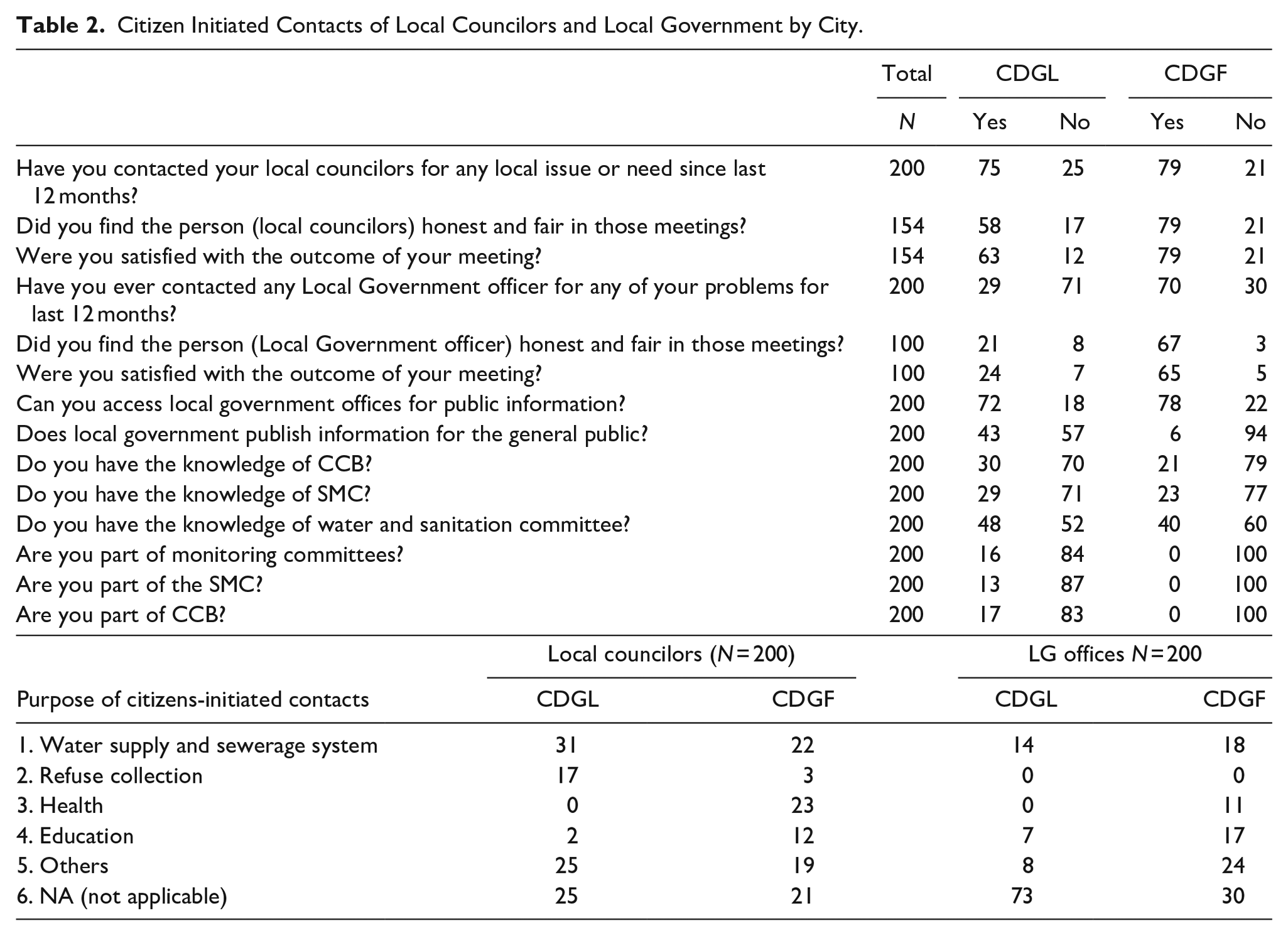
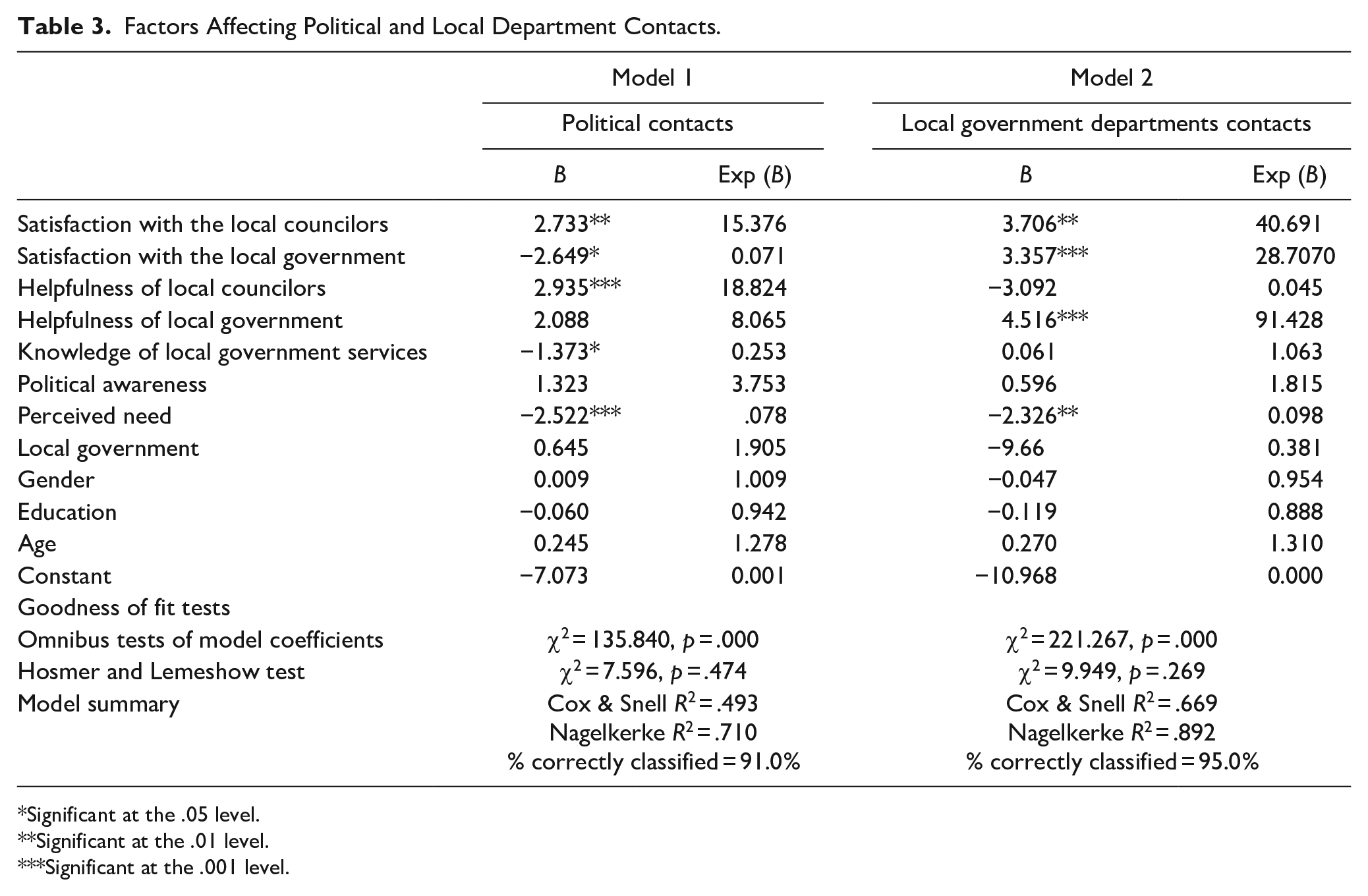
Table 2 describes the CICs of local councilors and local government, and Table 3 reports the regression results.
Citizen Initiated Contacts of Local Councilors and Local Government by City.
Factors Affecting Political and Local Department Contacts.
Significant at the .05 level.
Significant at the .01 level.
Significant at the .001 level.
Findings
The data analysis shows that citizens are more likely to contact political representatives (councilors) rather than bureaucratic officials. About 75% of respondents in CDGL and 79% in CDGF contacted councilors, while only 29% in CDGL and 70% in CDGF reached out to local government departments. Satisfaction levels with councilor contacts were generally high, with 58% in CDGL and 79% in CDGF expressing satisfaction. However, satisfaction with bureaucratic contacts varied, with 21% in CDGL and 67% in CDGF reporting satisfaction. Awareness of and membership in new participatory forums introduced by the reforms like School Councils (SCs) and Citizen Community Boards (CCBs) were low, with only 30% in CDGL and 21% in CDGF aware of SCs and 29% in CDGL and 23% in CDGF aware of CCBs. Direct participation through membership in these forums was even lower: 13% for SCs and 17% for CCBs in CDGL and no reported membership in CDGF. Overall, the findings highlight preference for councilor contacts over bureaucratic interactions and the challenges in promoting citizen engagement through the new participatory structures.
Logistic Regression Analysis
The goodness-of-fit tests indicate the logistic regression models demonstrate satisfactory performance. The Hosmer-Lemeshow test shows good model fit, while the Cox & Snell and Nagelkerke R-squared values suggest the models explain a substantial portion of variance in the outcome variable. This provides evidence that the models have reasonable predictive strength.
The positive effect of councilor satisfaction on political contacting (Model 1: B = 2.733, p < .01; Model 2: B = 3.706, p < .01) supports H1b, affirming satisfaction as a key driver and aligning with research on satisfaction’s role in participation (J. C. Thomas & Melkers, 1999; Yan & Pandy, 2011; Yang & Callahan, 2005). This provides evidence that unmet needs with bureaucratic services shift citizens to councilors, likely viewing them as alternate problem-solvers when local channels are unresponsive (Faguet, 2014). The model, however, overlooks how such bureaucratic impacts can endogenously shape behavior. This result reveals responsiveness as a significant influence absent from traditional concepts that focus more on universal psychological motivations (Jakobsen & Calleja, 2021).
The negative link between bureaucratic satisfaction and political contacting link (Model 1: B = −2.649, p < .05) supports H1d, echoing criticisms of unresponsive bureaucratic models (Grace 1984; Osborne & Gaebler, 1992). The positive bureaucratic satisfaction-bureaucratic contacting relationship (Model 2: B = 3.357, p < .001) provides further evidence that satisfaction sustains direct engagement as hypothesized.
The analysis also revealed nuances in effects across contexts. The asymmetric results highlight that specific interactions between citizen goals and system factors shape pathway choices rather than universal expectationd (Porumbescu, 2015). Councilor helpfulness predicting political contacting (Model 1: B = 2.935, p < .001) supports H1c, affirming that helpfulness enables engagement (Lipsky, 1980). The lack of statistical significance of the relationship of awareness with political contacts (Model 2: B = 0.061, p > .05) and political involvement provides impetus to re-examine views about their roles as drivers (Oser, 2017). This inconsistency between predictions and evidence can catalyze conceptual evolution.
The study’s analysis largely validates the importance of perceived needs as a driver of citizen-initiated contacts, in line with prior literature (Jakobsen & Calleja, 2021; Oser, 2017). However, the limited impact of awareness and political involvement raises questions about their general motivational roles, calling for conceptual evolution to align models with emerging evidence (Wang et al., 2021). This research provides novel evidence from an under-researched developing country context, enriching understanding of the contextual factors shaping contemporary civic engagement patterns (Smoke, 2015). Despite some statistically insignificant relationships, the analysis highlights the complexity of citizen-state interactions and indicates the need for contextual consideration in understanding participation pathways (Jakobsen & Calleja, 2021).
Discussion and Conclusions
The studys conceptual framework draws on political participation theory that emphasizes perceived needs and awareness of government services as drivers of citizen-initiated contacting behavior (J. C. Thomas & Melkers, 1999). The findings generally support the importance of perceived needs, aligning with evidence that need perception motivates engagement (Jakobsen & Calleja, 2021). However, the non-significant role of political involvement contrasts with the framework’s prediction, which warrants further investigation (Oser, 2017). The theoretical framework posits that perceived need, satisfaction with local representatives and political awareness are key factors influencing citizen-initiated contacts with the regression analysis largely supporting these expectations (J. C. Thomas & Melkers, 1999).
The findings contribute fresh evidence that call for critical review of existing theoretical frameworks. Although views like the civic volunteerism and parabolic models offer useful starting points, the divergences observed here between established models and actual participation patterns underscore the need for evolution (Oser, 2017). The lack of statistically significant effects of some variables, such as political awareness, raise questions about their role in citizen-initiated contacts (J. C. Thomas & Melkers, 1999). Future research should explore evolving dynamics between citizens and governments across different settings to more fully capture the complexities of participatory local governance (Liao & Schachter, 2018). Additionally, the relationship between perceived need and the likelihood of contacting local councilors as well as or instead of local government aligns with theoretical expectations, suggesting that citizens with higher perceived needs may seek help from their elected representatives when bureaucratic channels are perceived as unresponsive or inefficient (Jones et al., 1977; J. C. Thomas & Melkers, 1999).
This study serves as a valuable starting point for investigating participatory local governance in reforming developing country contexts in which reform has taken place.
Regarding politician-citizen dynamics, the finding that bureaucratic dissatisfaction was associated with increased political outreach hints at a grievance resolution role for representatives. However, further qualitative research is required to unpack the strategic motivations driving interaction choices on both sides (Moon et al., 1993). Surveys or interviews examining citizens’ rationales for their selections of contacts could elucidate whether they purposefully leverage politicians when bureaucracies fail. Meanwhile, investigating representatives’ reasons for responding to citizen needs could reveal whether they constructively address grievances or exploit them opportunistically (Brancati, 2014). Moving beyond regression associations to explore causal motivations via qualitative data would also provide richer insights into these relationships. Our analysis supported aspects of the framework like need salience but the lack of significant awareness effects contrast with the model’s expectations, suggesting limitations in established concepts and underscoring the need to capture contemporary participation norms (Oser, 2017).
Although the analysis largely validated the framework’s emphasis on needs and satisfaction as drivers, omission of key variables such as income, digital access, and prior political involvement may well bias results (Oser, 2017). Controlling for socioeconomic status could reveal its effects on information access and bureaucratic navigation that influence contact choices (Hirlinger, 1992). Similarly, political involvement may shape perceived self-efficacy and in turn affect behavior (Olowu, 2003; J. C. Thomas & Melkers, 1999). Their exclusion limits fully explaining the complex motivations shaping engagement. Overall, incorporating omitted variables and qualitative data in future research may permit a causal analysis to better elucidate the multidimensional drivers of participation pathways.
Nonetheless, the study’s findings offer valuable insights into citizen-representative interactions, and they have implications for governance accountability and responsiveness (Farooqi & Forbes, 2019; Hirlinger, 1992). By better understanding how citizens’ interactions with representatives influence their political behaviors, policymakers could better design more inclusive and effective channels for citizen engagement. Future research incorporating omitted variables could provide a more robust model to more fully explain the multidimensional motivations and resources shaping engagement pathways.
Finally, the study makes an important contextual contribution by providing rare evidence on civic engagement dynamics in Pakistan. Despite its limitations, the relevance of the study lies in informing future decentralization policy when local governance is reconstituted after a long absence. Understanding CICs remains pertinent for strengthening participatory local governance, reinforcing its scholarly and practical significance (Faguet, 2014).
In conclusion, the study contributes valuable insights into citizen engagement and governance dynamics in developing countries. Although some findings align with existing theoretical expectations, the divergences highlight the need for updated conceptualizations to better explain contemporary participation patterns. Further research, both qualitative and comparative, is warranted to deepen our understanding of citizen-initiated contacts in different contexts and to refine theoretical frameworks to unravel evolving civic participation dynamics (Awortwi, 2011; Kwon, 2013). This research enriches our understanding of citizen-government interactions and holds significance for policymakers seeking to enhance citizen engagement and public service delivery (Devas & Grant, 2003; Roberts, 2004; Smoke, 2015).
Footnotes
Declaration of Conflicting Interests
The author(s) declared no potential conflicts of interest with respect to the research, authorship, and/or publication of this article.
Funding
The author(s) received no financial support for the research, authorship, and/or publication of this article.
