




Abstract
Women in Indonesia’s civil service (n = 320) were surveyed about their career advancement. Analysis of variance identified differences in career progression, and post-hoc comparisons were tested using Fisher’s Least Significant Difference method. We found that family support and interpersonal relationships, paired with superior education to men, were critical to women’s successful leadership progression, especially through the echelon ranks. Qualitative results suggest that interpretations of hadith outweighed more contemporary textual readings, which required strategic maneuvering if women wanted to advance. This is because women’s own career aspirations required their ongoing loyalty to men and strategic maneuvering among filial, societal, and organizational constraints.
This article reports on mixed methods research that explored women’s career advancement in the upper echelon ranks of the Indonesian civil service, specifically the opportunities and constraints reported by the women. While important to achieve equitable representation of women in leadership, the Indonesian civil service context is fraught with gendered personal and political issues. The careers paths of women through leadership ranks are full of obstacles and often blocked. Socio-cultural and policy factors contribute to inequitable numbers of women in decision-making roles in business, civil service, and non-government agencies. When there are few women in positions of power, the women they represent are effectively denied voice in the formulation of policies and programs affecting them. This is ethically unacceptable and detrimental to human rights. Inequitable representation risks rendering women in society voiceless, and unserved.
Commonly known as the glass ceiling, researchers agree on the existence of ever-present barriers that discriminate against women and prevent their progression to roles observable ahead of them (Cook & Glass, 2014; Lathabhavan & Balasubramanian, 2017). This is because stereotypes, gender bias, organizational architecture and structural barriers persist in privileging men for senior leadership positions (Loring, 2018; H. McLaren et al., 2019). Women who crack this glass ceiling are highly likely to encounter yet another glass ceiling in their attempts to advance further (Russo & Hassink, 2012; Traavik, 2018). This double glass ceiling phenomenon is no longer sufficient to capture the pervasiveness of women’s leadership progression journey, which Eagly (2007) more accurately calls a labyrinth. The beginning of a woman’s career is like entering a labyrinth in which the maze ahead moves and re-forms, and continuously blocks their way. The few women who navigate this labyrinth may become discursively pressured to join the ranks of men or be loyal to machismo to survive (Chinga, 2021; Faniko et al., 2017; Mavin et al., 2017). Inadvertently, some women may then limit opportunities for other women to follow.
While research exists on barriers experienced by women, less is known of the enabling factors for women that have succeeded in forging pathways to the top. A brief overview of the extant literature on women’s leadership is provided below prior to highlighting women’s career enablers and constraints in our study.
Leadership Careers and Constraints
Research establishes that individual and environmental factors, along with institutional conditions, can either enable or hinder women’s advancement. This is observable when societal interests are blended into organizational culture and bureaucracy (Busayo, 2017; Wickramaratne, 2013). In localities where patriarchal culture is strong, collective macro-level change is seen as critical to opening opportunities for women (Ndlovu & Gerwel Proches, 2019; Shockley et al., 2020). For example, Ohia and Nzewi (2016) examined the social structures in Nigeria that regulate and sustain public mindsets viewing male dominance in leadership as normal and natural. They found that women who succeeded in formerly male domains had to first negotiate the socio-cultural barriers external to the workplace, then survive within. While understanding how to navigate the male domain was a career enabler, more critical was the targeting of macro-level customary institutions maintaining gender inequity in the first place. A balanced composition may boost institutional efforts toward equality, diversity, and social inclusion, and help to dismantle barriers operating at all societal levels (Diehl & Dzubinski, 2016). However, in a recent study of women’s leadership, Caven et al. (2022) argued that an equal proportion of women does not guarantee that gender equality in society will be or has been established.
Authors focusing at the micro-system level argue that women would succeed in career advancement by participating in leadership development programs (Jugmohan & Muzvidziwa, 2017), receiving mentoring from colleagues or leaders (Khalid et al., 2017) or guidance to become leaders from other leaders in their organizations (Beeson & Valerio, 2012). Women’s personality traits are frequently provided as a reason for non-progression to leadership and some researchers argue that women need male role models, male mentors, or to act more like men, to succeed (Azmi et al., 2012; Kim & Cho, 2018). More like men means being “agentic,” with assertive, controlling, dominant, and competitive acumen (Boytos et al., 2020). However, Boytos et al. (2020) identified a paradox in which women leaders tend to operate from a stereotypically feminine modality in which collegiality and relationships are important in leadership, but these qualities are often constructed as deficits in women.
In overcoming so-called leadership deficiencies in women, researchers propose that girls should participate in leadership courses from a young age to equip them with appropriate tools, confidence and capacity as leaders later in life (Bowen & Miller, 2018; Mims & Kaler-Jones, 2020), likewise locating gender and not patriarchy as the problem. In response, researchers suggest that girls could be conditioned to be risk embracing and assertive, and proposing associations between women’s assertiveness and the capacity to garner the trust of their families and communities to pursue leadership careers (Guillén et al., 2018; Notwell, 2018). Such researchers argue that these conditions are necessary to progress in societies where male leadership is favored, irrespective of women’s leadership capacity. However, it is unlikely that these micro-level changes have the capacity to fix deep-seeded, macro-structures.
Many authors argue that the performance of female leaders has been demonstrated through the ability to effectively manage multiple demands in times of crisis (Andrea & Nicholas, 2020; Jennifer, 2020). For example, women have displayed superior skills leading the advancement of sustainable development goals, or when mobilizing whole communities in response to economic hardship, crisis and disaster (H. J. McLaren et al., 2020; Shinbrot et al., 2019). Studies indicate that women who are confident to drive development agendas, social change, and who create gender respectful environments, are likely to achieve the greatest career advancement success (Aja-Okorie, 2013; Yıldırım et al., 2019). When women collaborate, especially in driving positive outcomes for women, this is noted as a career enabler due to building confidence, self-worth and collectively achieving visible outcomes (Aja-Okorie, 2013; Yıldırım et al., 2019). These are the mechanisms, not simply more education and training, which are needed by women to traverse multiple barriers in advancing their senior careers. Studies reveal that collaborative nurturing climates and practices, solidarity, and women’s intra-gender friendships in workplaces can mitigate the impacts of masculine work culture (Abalkhail, 2020; Francis & Stulz, 2020; Kaeppel et al., 2020). Workplaces need to provide an environment where women feel supported, achievements are celebrated, and their confidence and self-worth are promoted, but this is difficult where patriarchy persists.
Women’s Leadership in the Indonesian Public Sector
The patriarchal society in Indonesia continues to view women foremost as wives, mothers and people with reproductive responsibilities instead of proficient leaders (Intentilia, 2020). This is similar to other Asian nations where patriarchy is entrenched deeply in family, social, and government systems rendering women’s career opportunities largely at the whim of men (H. McLaren, 2016a; Nguyen & McLaren, 2020). For example, Sunaryo et al. (2021) studied 201 Indonesian women civil servants and found that a perceived glass ceiling reduces women’s career prospects, organizational commitment, and job engagement. Organizational fairness also mediates the glass ceiling, simpact on career prospects and organizational commitment. Indonesian women in the public sector seeking to advance in their careers need to manage the double burden of productive and reproductive life, get permission from their husbands and extended families, adopt male leadership traits to gain support from colleagues, and recruit domestic help so that they can continue to advance (Cho et al., 2016; Coley et al., 2023; H. McLaren et al., 2019). While organizational supports, such as childcare facilities, may liberate women from some filial tasks, this does not address the mental workload associated with household management and childcare organizing responsibilities that continue to fall upon them (Azmi et al., 2012; H. McLaren et al., 2019).
Evidence shows a lack of staff diversity, unfair human resource practices, corruption from the village to national levels of government, and biased process in the Indonesian civil servants’ promotion (H. McLaren & Qonita, 2020; Saputra & Saputra, 2021; Widianingsih et al., 2018). Ali and Kusmana (2022) explored the phenomenon of civil service promotion. They found that there was unfairness and exposed the lack of transparency in promotion process, suggesting corruption, collusion, and nepotism, as well as diminishing employee performance in delivering public service.
The influence of gender on women’s career paths in civil service is rooted in Indonesia’s multifaceted culture. In the educational sector, for instance, Arquisola et al. (2020) found that female leaders in higher education viewed leading a division or institution as Amanah (the mandate is given to someone with trust and the expectation that it will be well-preserved and secure). In the Indonesian religio-cultural experience, Indonesian female academic leaders reflected on having to maintain both their career and family lives if they wanted career advancement (Toyibah, 2018, 2020). In terms of the influence of gender on transformational leadership, Kustiawan et al. (2022) found that transformational leadership has no gender moderating influence on job performance. Riantoputra et al. (2018) reported that a positive leader identity was linked to traits, especially extraversion and conscientiousness, but not to gender. While gender inequality is visible in Indonesian civil service career paths (Krissetyanti, 2018; Toyibah, 2018, 2020), the findings of prior studies reveal that Indonesian women generally do not view gender as an obstacle to becoming a leader. A study by Azmi et al. (2012) specifically discussed the factors contributing to civil servant women’s career success. These were experience, education, seniority, people skills, the capacity to question superiors, passion, and determination, and support from superiors, colleagues, and family. Some interpretations of Islam suggest that women should not lead men, but the faith does not restrict them from leading organizations. While skill and not gender is important, for women the family must come first.
The Indonesian public sector implements a meritocratic system, which is a personnel management system that emphasizes the basic considerations of competence for candidates who are appointed, placed, promoted, and retired in accordance with Law Number 5 of 2014 concerning the State Civil Apparatus (Krissetyanti, 2018). since 2012, the central government has also implemented an open recruitment and selection method, commonly known as open bidding, for the recruitment and selection of high-level structural officials. The system is expected to provide equal opportunities for males and females in the civil service but does not otherwise have diversity or inclusion targets for minority group recruitment or advancement. In Law No. 5/2014, Article 60 states that every Indonesian citizen has the same opportunity to apply to become a civil servant after fulfilling the requirements. Article 72 also states that the promotion of civil servants is conducted based on an objective comparison between the competencies, qualifications, and requirements needed by the position, assessment of work performance, leadership, cooperation, creativity, and considerations from the performance appraisal team of civil servants in government agencies, regardless of the gender, ethnicity, religion, race, and class of the individual.
While we acknowledge the intersecting barriers that persist, we recognize some opportunities for women as highlighted in the extant literature and Indonesia’s legislative frameworks. Understanding enabling factors, from the individual to the organization and society, has been of prime interest to women’s advocates and researchers. Evidence of the factors responsible for mobilizing women’s leadership career opportunities is crucial for Indonesia, given the specific focus of the United Nation’s Sustainable Development Goals on women’s empowerment for leading change. Where evidence is available for enablers, successful interventions can increase opportunities for women’s advancement to senior civil service leadership.
This leads to our investigation of enablers of women’s senior leadership career advancement. It is the lived experience of women, specifically of the opportunities and enablers experienced in their journeys to leadership, which is of specific interest to our research. To this end we provide the research question guiding our research is: What are the enabling factors and constraints germane to women’s career advancement in the Indonesian civil service?
Methodology
We conducted a cross-sectional study, involving a concurrent mixed-methods approach to provide greater depth and breadth of data which cannot be accomplished by utilizing a single approach in isolation (Creswell, 2018). A fixed concurrent triangulation mixed-methods survey design combined open and closed questions in one survey. Quantitative items include demographic questions and a list of questions to tap self-reported factors influencing women’s career progression opportunities and barriers in the public sector using 6-point Likert scales. Qualitative questions were designed to explore participants’ perspectives, for example, on how to attain a higher career path, the difficulties they faced and their strengths. The demographic survey and leadership progression questions were outcomes of co-design workshops in late 2018, involving Australian and Indonesian researchers and Indonesian Echelon II ranked civil servants, and conversations with Australian female senior public servants. The research itself was conducted in Bandung City, West Java, Indonesia.
Setting and Participants
Indonesia’s pyramid bureaucratic structure has remained relatively unchanged for most of the last century (Bailey, 2018; Park, 2019). According to the National Civil Service Agency (2021), Indonesia’s government offices employ more than 4.1 million civil servants. The Indonesian civil service system recognizes two types of positions: structural (managerial) positions and functional (non-managerial) positions. The structural positions are categorized based on Echelon ranks starting from Echelon I (the highest leadership position at the national government level) to Echelon V (the lowest in the sub-national government). In addition, two tiers of functional positions are occupied by professionally qualified employees (e.g., nurses and teachers) and lesser skilled workers (H. McLaren et al., 2019). It is possible to move from the functional to structural ranks. In 2020, approximately 11% of civil servants occupied structural positions, with the majority (71%) ranked as Echelon IV, with fewer as Echelon V (3%) since the rank is being phased out (National Civil Service Agency, 2021). The National Civil Service Agency (2021) documented that around 4% of Indonesia’s civil servants were ranked Echelon I and II, compared to 22% ranked Echelon III.
Indonesia’s civil service has no gender quota. The quota system only applies to political parties, where each political party is required to have 30% women representatives as electoral candidates (Kurniawati, 2015). Evenly spread across national and sub-national government, women occupied approximately 34% of civil service structural positions with few women in the most senior of ranks, accounting for only one-fifth of Echelon I positions (National Civil Service Agency, 2021). Since conducting this study, reforms aim to “flatten” the echelon ranks to two tiers (Ghaliya, 2019) through restructuring and attrition. These ongoing reforms have no bearing on the explanatory analysis and key theoretical arguments related to opportunities for women’s career advancement in leadership in Indonesia.
In total, 320 echelon ranked women participated in this study. They were from various government departments and agencies at the national and sub-national (province and city/municipality) levels. Most women in Indonesia are employed in the education or health fields (National Civil Service Agency, 2021) and the number of employees in each government department or agency vastly differs. For example, recent data showed that the Education Agency in West Java province had 35,262 civil servants, while the Liaison Agency has 36 civil servants (National Civil Service Agency, 2021). Civil service rotation systems require echelon ranked employees to undertake rotation to different departments and agencies after approximately two years, irrespective of their educational or departmental/agency background. The participants in our study had several rotations through diverse offices.
Data Collection
A survey was produced, loosely using a Delphi opinion consensus method (Dalkey, 1969) in a series of communications among women civil servants and Australian and Indonesian researchers. This took place via a series of workshops on women’s career advancement in Indonesia’s civil service, facilitated by the Australian researchers, with Indonesian women civil servants ranked Echelon II and Indonesian academics. The Australian researchers used the results of these workshops to compile a list of indicators related to women’s career civil service development and advancement. From these, we created a survey consisting of demographics and career-related questions to solicit the perceptions and experiences of echelon-ranked women in Indonesia’s civil service about their leadership progression opportunities. After translation into Bahasa, the survey was piloted with five Indonesian civil servants. Minor refinements were made in consultation with the Indonesian research team (academic staff and postgraduate research students) during 2019.
Demographic characteristics were collected, which included current rank, years of working experience in current position, times of rotation in current position, age, qualifications, total years of working experience, and career plan. The career progression survey comprised of 16 items that have been grouped into four categories: Workplace Culture, Inter-professional Relationships, Family Support, and Individual Knowledge and Skills. Qualitative open-ended questions asked for elaborations of “the reason for the chosen option of participants future career plan,” “the ways how to pursue higher Echelon rank,” “opportunities and barriers for career development,” “factors for successful leadership achievement,” “support sources for career advancement,” and “things needed for their successful leadership career.”
In August 2019, the Indonesian research members approached heads of government offices to facilitate survey participation. The purpose and rationale for the survey was explained, and approval was sought for its distribution in their offices. Paper-based surveys were personally distributed to echelon-ranked women in Bandung City, West Java, holding office in Indonesia’s national and sub-national governments at staff or group meetings. The Indonesian researchers waited for survey completion or returned the next day to collect. These Indonesian researchers entered survey data into SPSS Version 27. De-identified data were provided to the Australian researchers, where it was translated from Bahasa Indonesian to English and analyzed statistically.
Data Analysis
The SPSS Version 27 was used to perform. Descriptive statistics including means and standard deviation and frequencies were calculated for the participants’ demographic characteristics and for each item of the career progression survey. One-way ANOVA was employed to identify differences in career development opportunities by the participants’ demographic characteristics, and post-hoc multiple comparisons were calculated using LSD (Least Significant Difference) tests. Statistical tests were considered significant at p < .05.
Qualitative data from open-ended questions were imported into Voyant Tools version 2.4, an open-source online application for digital text analysis and visualization (Sinclair & Rockwell, 2016). Voyant Tools is a text reading and analysis software that is accessible over the web (https://voyant-tools.org) and can work with a collection of texts in a variety of formats; in this study we used MS Word. Voyant Tools has 28 different configuration tools which allowed us to extract statistical and linguistic information in several different ways and functionalities (Alhudithi, 2021; Sampsel, 2018). Our study used the Trends tool or the Term Frequencies Chart, which produces a graph of the most frequent words used in the corpus (uploaded text). By default, the graph is created by computing the relative frequencies of the word and is colored differently based on the word it represents. For analysis, we divided the texts into echelon groups to determine the relative importance of words/phrases used the most by Echelon III and Echelon IV respondents.
Ethical Considerations
Data collection was undertaken in Bandung City, West Java, by the Indonesian arm of the research team. Standard research ethics conventions applied, including informed consent, voluntariness, anonymity, and confidentiality. This also was achieved through return of surveys (either completed or unanswered) in sealed envelopes to the researchers. Research ethics approval was provided to the Indonesian researchers by the Dean of the Faculty of Social and Political Sciences, Universitas Padjadjaran. Research ethics approval for secondary data analysis of de-identified data by the Australian researchers was obtained from the Social and Behavioural Sciences Research Ethics Committee, Flinders University (ethics approval number 8318).
Results
Demographics
The demographic characteristics of the participants are presented in Table 1. A total of 320 echelon-ranked women, from national and sub-national offices in West Java, Indonesia, participated in the study. More than three quarters of the participants held positions in Echelon IV, an entry managerial level, and around one in four participants were in the middle managerial level, Echelon III. Women aged over 50 years represented the largest number of participants (55%), followed by women aged 41 to 50 at 35%. Based on their education, as many as 62% of the participants had postgraduate education, and approximately 37% of them had undergraduate degrees (a 3-year Diploma or Bachelor).
Demographic Characteristics of all Women Participants.
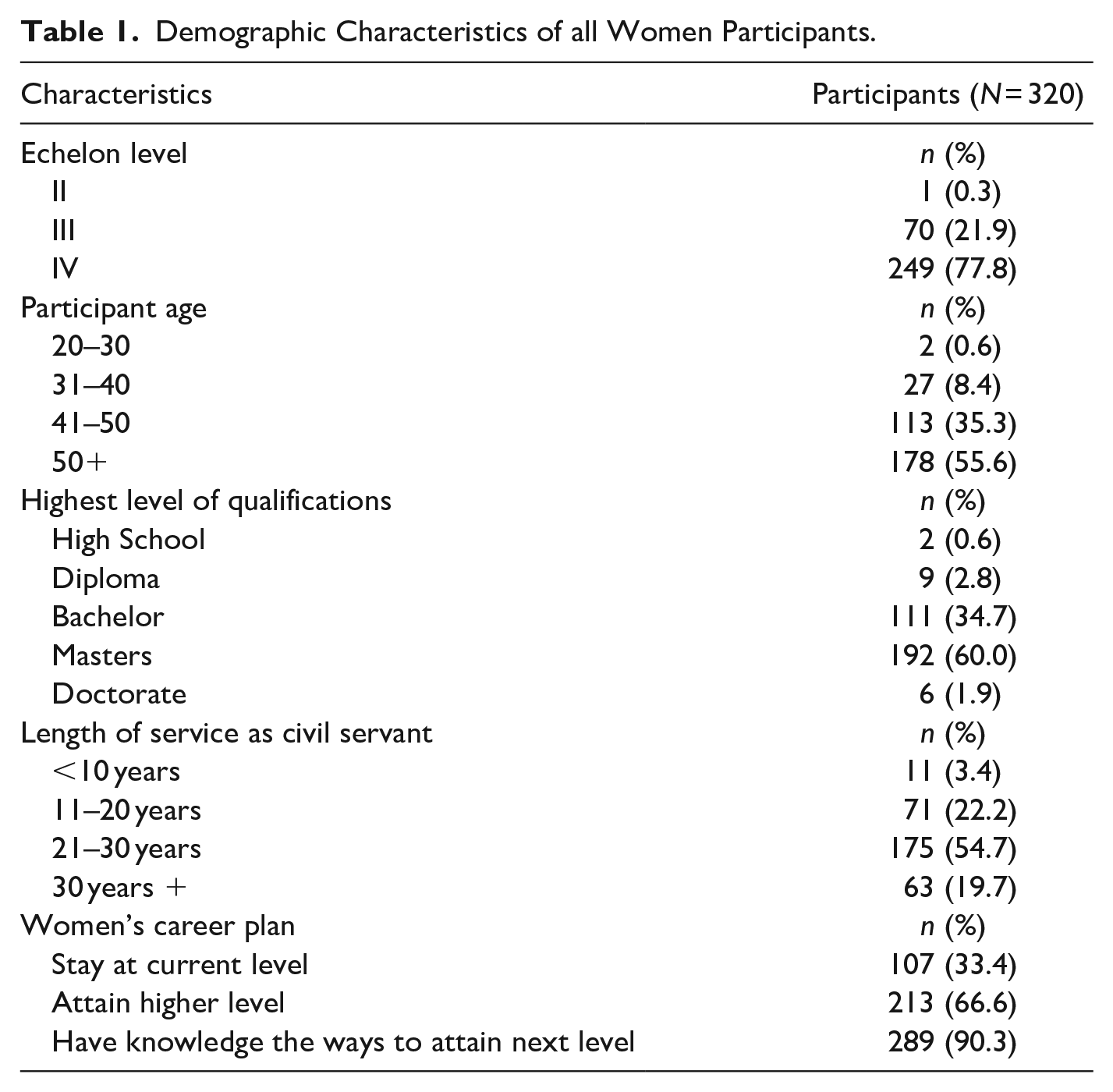
Working as a civil servant in Indonesia is a lifelong career; thus it is not surprising that more than 74% of the participants had worked for more than 20 years, and 62% indicated that they met the requirements for promotion. Table 1 shows that most women in the study aspire to advance in the Indonesian civil service, with 66.6% indicating their desire to do so. Moreover, 90.3% of participants demonstrated knowledge about the requirements for career advancement, indicating their proactive approach in seeking information. This is a positive indication that women are actively pursuing career advancement opportunities in senior ranks. While 33.4% of women are satisfied with their current level, it is understandable that career aspirations differ among individuals.
Qualitative responses, however, suggested that the women had different levels of knowledge or perceptions of priorities for gaining promotion. Women who were in entry-level positions view work performance as the most important factor, followed by loyalty to their supervisors. This was expressed by one participant who stated:
What needs to stand out now is demonstrating excellent performance and innovation, having a sense of motivation in behavior and attitudes to meet the expectation of the supervisor.
Open-bidding is a formal mechanism used in the appointment and placement of civil servants in higher leadership positions through open recruitment and selection (Barusman & Siswadi, 2018). One participant articulated the process as follows:
Apply the open bidding process that includes administrative selection, competency examination, psychometry, mental health test interview by an independent team, physical test, interview by the governor.
It should be noted that the commitment of political powers cannot be separated from gender inequality, which is a stand-alone institutional mechanism. The success of women in leadership career advancement, ultimately, is at the hands of whomever has the highest authority.
Figure 1 presents the result of the analysis of quantitative responses, comparing entry level (Echelon 4) with middle level (Echelon 3). For middle-level leaders, participating in open-bidding was the main factor.
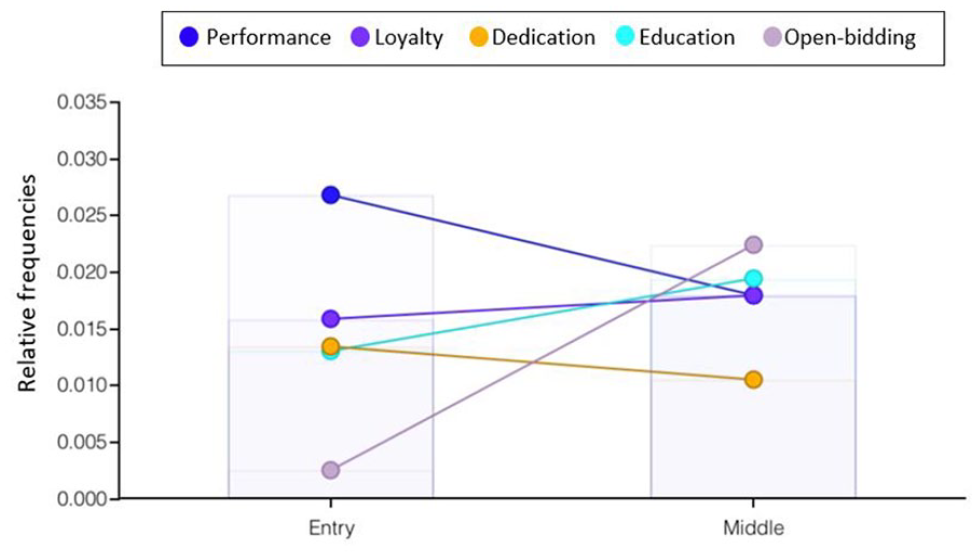
Perceptions on how to get promoted.
Table 2 presents findings about the career progression environment for echelon-ranked women civil servants. In this study, the environment was classified into four categories of opportunity: Workplace Culture; Interpersonal Relationships; Family Support; and Individual Knowledge and Skills. Statistical analysis identified two factors, Family Support, and Interpersonal Relationships, as the most enabling of career progression. In relation to Family Support, Supportive husband (Mean 5.16; SD 1.44) and Supportive mother (Mean 5.13; SD 1.46) were indicated as most beneficial for women’s career progression. Interpersonal Relationships had an overall mean of 4.71, with the two most enabling items being Supportive immediate manager (Mean 4.87; SD 0.91) and Supportive supervisee (Mean 4.79; SD 0.94), followed by Supportive female colleagues and Supportive male colleagues.
Opportunities for Echelon Ranked Civil Servants in Career Advancement.
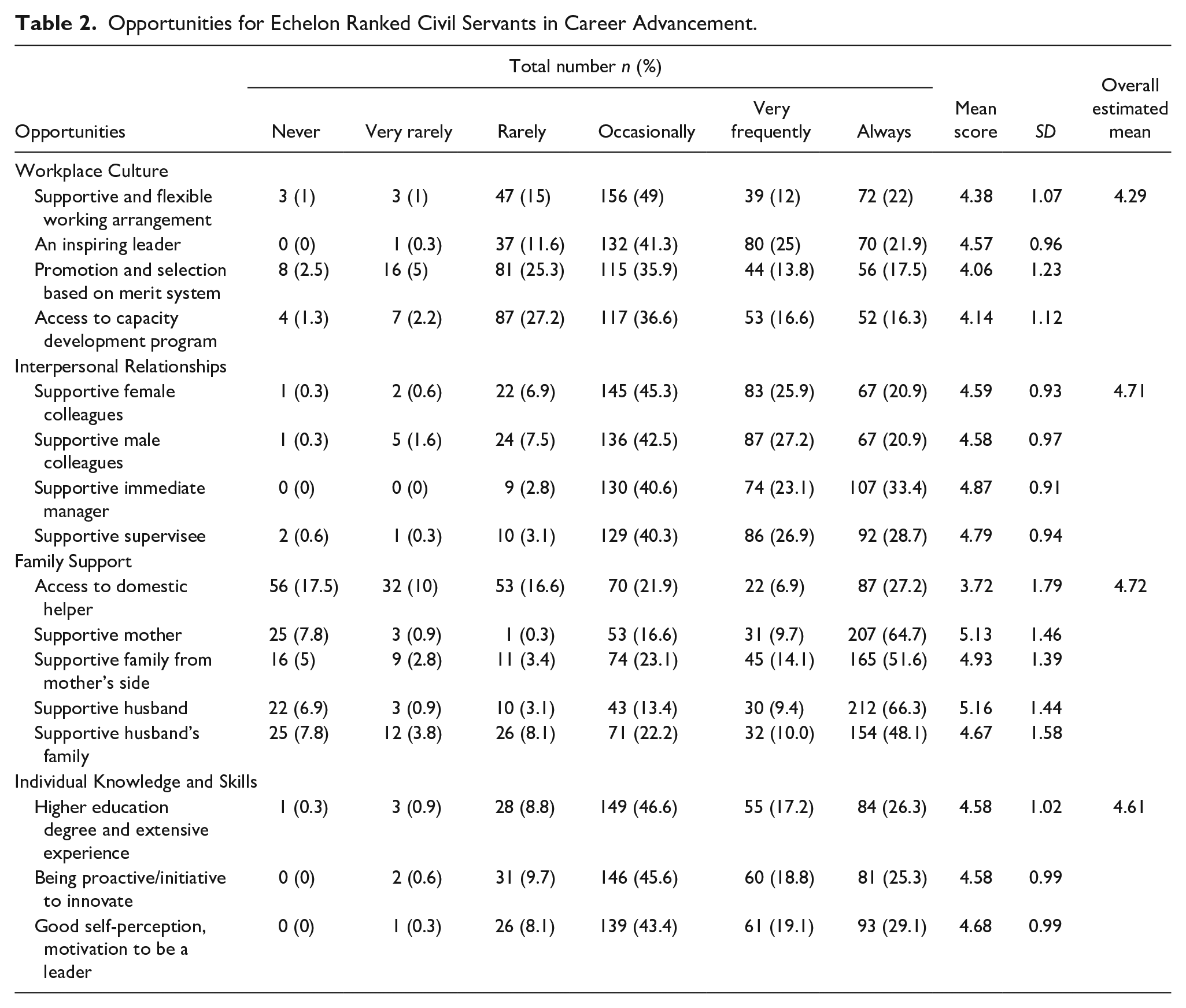
Individual Knowledge and Skills, the third ranked factor, highlighted important opportunities for women with an overall mean of 4.61. Items ranged from Good self-perception and motivation (Mean 4.68; SD 0.99) to Being proactive/initiative to innovate (Mean 4.58; SD 0.99) to Higher education degree and extensive experience (Mean 4.68; SD 1.02). Opportunities associated with Workplace Culture ranked the lowest of four factors with an average mean of 4.29, including an Inspiring leader (Mean 4.57; SD 0.96), Supportive and flexible working arrangement (Mean 4.38; SD 1.07) and Access to capacity development program (Mean 4.14; SD 1.12).
Qualitative data support these statistical results (Figure 2). Family is perceived as the main source of support for women’s career advancement for both entry and middle levels.
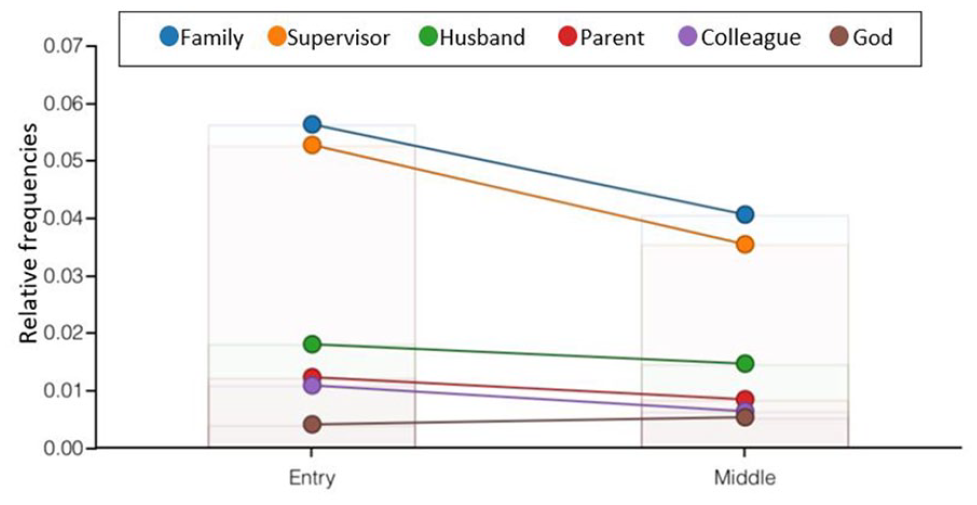
Source of support for women’s career advancement.
One of the reasons why family is important was stated by one participant: “Because it is with the family that the conflict around sharing time usually occurs.” Another participant said that support mostly comes from husbands and parents.
Husband, because without his consent the household will be chaotic, parents because their blessing is God’s blessing, supervisor, colleague, supervisee as they can support the smooth running of work.
In general, there were similarities in the order of support between entry and middle level positions. Participants stated that apart from family support, other support sources were supervisor, husband, parent, colleague, and God.
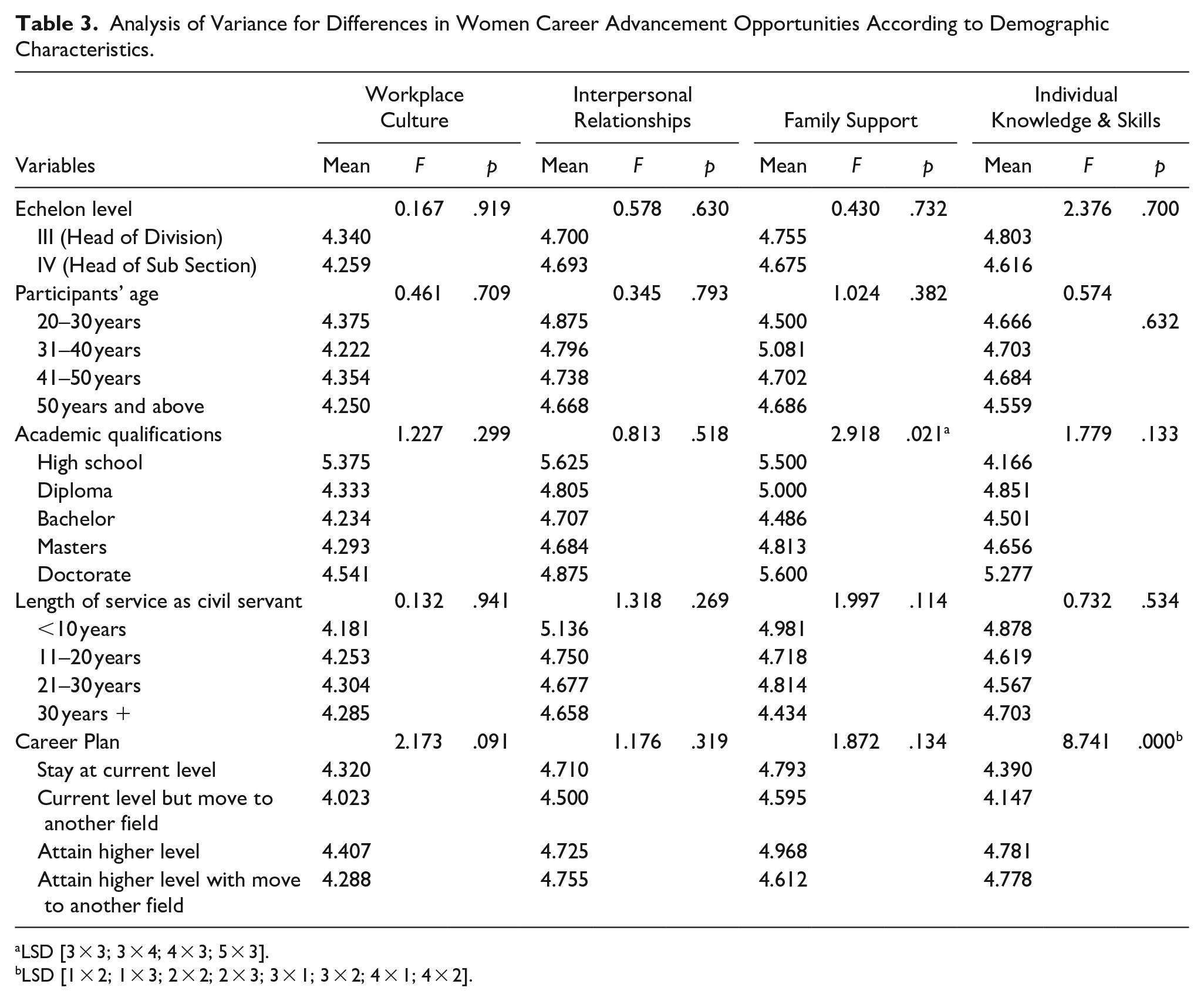
Table 3 demonstrates differences in the types of opportunities, factors, and items required for echelon-ranked women civil servants at distinct stages of their careers, according to their personal and professional characteristics. A Post-hoc comparison test was conducted using Fisher’s Least Significant Difference test. The categories of demographic characteristics were grouped together and used to add meaning to these career progression results.
Analysis of Variance for Differences in Women Career Advancement Opportunities According to Demographic Characteristics.
LSD [3 × 3; 3 × 4; 4 × 3; 5 × 3].
LSD [1 × 2; 1 × 3; 2 × 2; 2 × 3; 3 × 1; 3 × 2; 4 × 1; 4 × 2].
Statistically significant differences in Family Support were identified according to by level of academic qualifications (F = 2.918; p = .021). A difference was observed between women who had an undergraduate qualification compared to women with a postgraduate qualification. A mean score that was lower for undergraduate qualifications indicated fewer opportunities for these women. Doctorate-qualified scored the highest in contrast to Bachelor -qualified women. In terms of Career plan, the results indicated that women who wanted promotion to a higher level scored significantly higher in Individual Knowledge and Skills than their counterparts (p = .000). No significant differences were observed in terms of echelon level, participants’ age, and length of service.
We asked participants “what are the things that can help your career advancement?” According to Figure 3, the five most mentioned were capacity building, professional network, (women-friendly) policy support, continuing education opportunity, and supportive workplace. Responses differed between entry and middle level leaders about the importance of a supportive workplace, which ranked second to capacity building for middle level officials, and fifth for entry level civil servants. The importance of professional network was articulated by one of the entry level participants:
Professional network is one of the factors that determine one’s career development as they can very closely spot the potential that one possessed
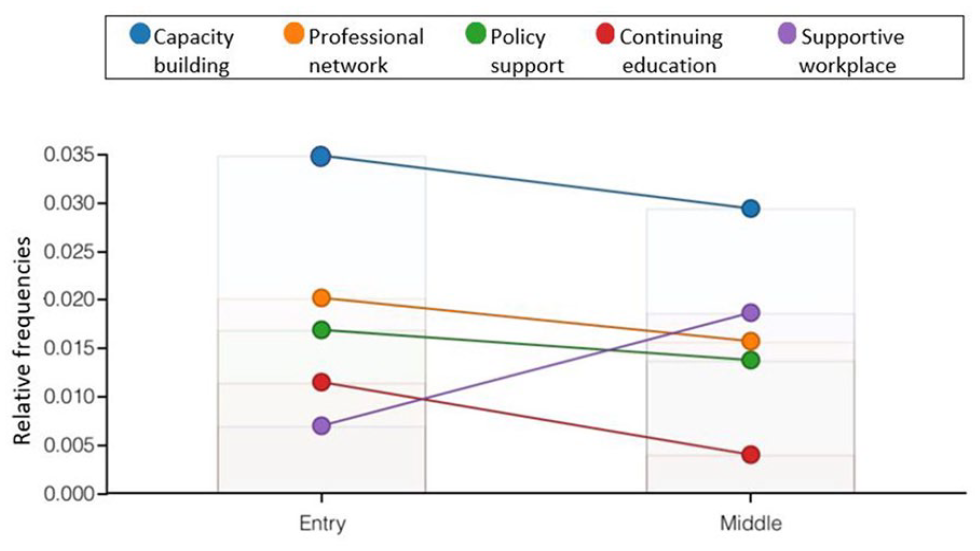
Perceived support needed by women for their career advancement.
Participants acknowledged that gender balance at the top leadership roles is still a distant target in the public sector. Strategic policy support to promote women leadership roles and gender equality was needed:
The supportive policy that provides women with opportunities to be a leader, proportional distribution of women leaders, give both men and women equal value and equal opportunity
Results suggest that women in the Indonesian public sector are proactive in seeking career advancement, so long as they have family support and also workplace relationships backing them to achieve aspired career goals. Workplace culture was identified as the least supportive factor. Entry-level women prioritize work performance and loyalty, while middle-level leaders prioritize open-bidding. Political powers have a crucial role in gender inequality, and the study found significant differences in family support based on academic qualifications.
Discussion
The sample was dominated by women over 50 years old, which corresponds to the national civil service population. Since a career in the civil service lasts a lifetime, the women in our sample became civil servants prior to legislation on the State Civil Apparatus (Krissetyanti, 2018), which focused on merit based, open recruitment, promotion and retirement of officials, when career advancement was arguably harder. Nonetheless, promotion mechanisms over the last decade have remained complex, and processes continue to lack fairness and suffer from charges of corruption (Ali & Kusmana, 2022; H. McLaren & Qonita, 2020; Saputra & Saputra, 2021; Widianingsih et al., 2018). The tiering mechanism in the career system in Indonesia’s public sector bases the rank or class of employees on qualifications at the time of entry, followed by length of service. To qualify for promotion to Echelon IV, a civil servant are must have a bachelors degree, 2 years’ probation, a minimum of five-years of field duties related to the position to be occupied.
To move through the Echelon ranks, a master’ s degree is required, along with experience in the previous echelon rank for at least two rotations across government departments, with a minimum of two years each. If entry to the civil service was at 25 years of age, then promotion to Echelon IV could not take place before the age of 32 years of age and also depends on other employees who may have higher rank, tenure, and educational qualifications. In this case, a 50-year-old female with higher rank and tenure will have a better chance of being promoted compared to the 32-year-old female. The minimum retirement age is 58 years, regardless of gender. If a civil servant reaches Echelon IV by age 50, they would likely retire as Echelon III. The career advancement of women in our research did not necessarily follow the expected time-track, leading to our interest in how they might have navigated their way to the echelon ranks. There is no chance of younger women reaching the echelon ranks. We hypothesize that the few younger women in our sample received their appointments due to nepotism. The majority we believe have navigated complex organizational, filial, and ideological structures.
Women’s career progression to and at the managerial level in Indonesia’s civil service, is full of challenges. Our study revealed that despite obstacles faced by women leaders, most aspired to achieve higher positions. The number of women civil servants in Indonesia is higher than men, approximately 53% and 47% (National Civil Service Agency, 2021). Yet representation of women in managerial positions is lower. On average, the representation of men in managerial positions is two times greater than that of women. The higher the position, the lower the proportion of women’s representation. At the Echelon I and II rank, women are only one-fifth of the male representation. Opportunities for women civil servants in Indonesia are at the discretion of the highest ranked politicians and civil servants (Azmi et al., 2012), who are predominantly men. Current Indonesian civil service system reforms are eliminating Echelon V, IV, and III ranks and transferring these positions to the functional ranks (Purwanto, 2020). The lower echelon ranks are where most women leaders are positioned and elimination of these ranks, which consequently presents less opportunity for women to be in senior leadership.
Women’s opportunities are influenced by their personal contexts, social systems, environment, and interactions of these contexts over time. Religious belief may also factor into governing personal, social and career formations (Tlaiss & Kauser, 2011). Muslim-majority populations have multiple axes of identity, difference and power that intersect, and influence views reinforced by different interpretations of Islam. Accordingly, organizations in these communities host diverse norms that can hinder or help women’s advancement (Pierskalla et al., 2021). A shift to moderate Islam in parts of Southeast Asia is suggested to have strengthened women’s political and civil service leadership opportunities (Fewkes, 2019; H. McLaren et al., 2019). However, the assumed right to allow or prevent opportunities for women is strengthened when Muslim scholars advise that women should not lead men (Jalajel, 2016), or hold the highest of political or civil service offices (Osmani et al., 2020). In the context of Indonesia, which is a Muslim majority society, scholars show that despite progress women’s leadership continues to be challenged by Islamist powers and trapped within ideological conflict (Oktaviani et al., 2021). This may help to explain that, while there is progress, there are still only few women in Indonesia who are ranked Echelon I or II.
This study revealed that Individual Knowledge and Skills are the main human capital available for women to ensure a higher chance of being promoted. Our finding that echelon-ranked women’s opportunities were greatest when with a high level of Individual Knowledge and Skills is consistent with other research on patriarchal societies. Women who stay in commonly male-dominated managerial levels, and are motivated to reach higher positions, have high levels of knowledge and skills (Buse et al., 2013; Edgar et al., 2021). Research indicates that the impact of knowledge and skills generated from women’s formal university education, pedagogical foundations for transformative learning, workplace skills learning, mentoring and guidance form senior colleagues, and also personal training on how women should maintain culturally accepted behaviors during leadership (Beeson & Valerio, 2012; Jugmohan & Muzvidziwa, 2017; Khalid et al., 2017) to enable their leadership chances.
It is frequently suggested in leadership research findings that women need to have more training and experience to arrive at the same job level as men (Christy & Wu, 2020; Kang & Uy, 2020). The notion that women place Individual Knowledge and Skills as the most important priority to achieve leadership progress may frame women as deficient. To the contrary, many authors note that women’s natural qualities in entrepreneurship provide rich opportunities for leadership (Adawiyah et al., 2020). Mahapatra and Gupta (2013) in their study of women’s leadership in India, observed women’s effective leadership in the way they exercised authority via the use of democratic decision making and consideration of others’ welfare. When seen as caring, Mahapatra and Gupta (2013) found greater societal support for women’s advancement into senior leadership roles. However, factors inhibiting women’s pathways to leadership meant that many were prevented from having opportunities to display their abilities in the first place.
Our study finds that opportunities for career advancement in Indonesia’s echelon ranks, especially for women with higher levels of Individual Knowledge and Skills, was greater when the people closest to them supported their careers, including their husband, mother, supervisee, and immediate manager. The existing literature suggests that immediate family support for women to progress into the echelon ranks of Indonesia’s civil service are more likely when women’s reproductive responsibilities are not seen to deviate from expected social norms (Azmi et al., 2012; H. McLaren et al., 2019). Our results specify that women’s higher levels of knowledge and skills on their own did not increase women’s opportunities for advancement. Women’s opportunities for senior civil service advancement were shaped by cultural norms that required maintaining their reproductive roles alongside productive roles, and the approval of critical social others—for example, a supportive husband and supportive mother.
Prioritizing family over career is a strong tension for women on the leadership track in countries where practicing intergenerational living and religious obedience is required to adhere to socio-cultural expectations (H. J. McLaren et al., 2020; Nguyen & McLaren, 2020). Intergenerational pressure from female forbears insists on gender-role conformity. This holds strong the gender status quo in which women’s responsibility for family hinders the uptake of career opportunities from one generation of women to the next. H. McLaren (2016c) noted that discourse intergenerationally compels women’s complicity in silence in many facets of life, and thereby perpetuates an ongoing cycle of disadvantage. This has likewise been observed in the Indonesian context where women leaders in the echelon ranks of civil service are predominantly Muslims, which influences social expectations and their decisions on family care versus leadership (H. McLaren et al., 2019). Moreover, Singh (2015) noted that religion has the potential to offer women moral guidance, agency, personal beliefs and social forming that is empowering, but it can also limit certain opportunities. As is evident in this study, women leaders described their husbands and mothers as private gatekeepers of their leadership ambitions. Muslim women feel bound by their belief that they must seek blessings from their parents, especially mothers, and their husbands if they want to pursue a career, since the blessings of mother and husband are the blessings of God (Arifeen & Gatrell, 2020). Support, or more appropriately permission, of partners and in-laws often underpins women’s release from filial responsibility.
Our study found differences among women in relation to this factor, Family Support, and its associations with academic qualifications. Academic qualifications are required for promotion. The higher their educational levels, the better chance for women to be selected and promoted (H. McLaren et al., 2019). Interestingly, women with undergraduate degrees did not see family support as the most important aspect, in contrast to women who had postgraduate degrees. This may be because undergraduates can only progress to a lower level of echelon where there are less implications for women’s fulfilment of family care responsibilities. Alternatively, women with higher education had experienced the level of family support required to participate in higher education and career progression.
This study discovered that women’s higher levels of knowledge and skills created opportunities for leadership careers and advancement when they had a supportive supervisee or supportive immediate manager. This indicates the importance of the Interpersonal Relations factor. The quality of supervisor-subordinate dyadic relationships is considered social capital for women’s career advancement (Choi, 2019). Researchers suggest that harmonious relationships between manager and subordinate create secure attachment, which contributes to women feeling valued, working harder and doing a better job (Jiang, 2017; Vîrgă et al., 2019). Ronen and Zuroff (2017) found that women who are appreciated by their colleagues have more positive attitudes toward work and are more likely to be awarded with promotion. It is possible that having higher levels of knowledge and skills, including on how to please immediate others in the workplace, was critical to women’s success.
This study reveals several implications for female leaders who work as civil servants in Indonesia, the organizational climate, and the leadership selection and promotion system to better support the representation of women in senior leadership positions. As well, we highlight the ways that women leaders internalize socio-political and religious ideals that can set limits for women’s career advancement. As Crenshaw (2017) suggests, workplace phenomena and the interconnections with cultural identities, traditions and values, including how these influence the attitudes of those with power. can either accommodate or veto opportunities for women leaders. While we did not explore the education levels of women’s families or work colleagues, scholarship indicates that more highly educated families and communities tend to host more modern religious views (Oktaviani et al., 2021; Osmani et al., 2020; Shah, 2016). We propose that intersections between socio-political and religious contexts, and the education levels of women’s family and social networks, have substantial influence over the nature of the women’s navigation of organizational climates and ability to advance their careers.
Conclusions
There are significantly less women in Indonesia’s civil service upper echelon ranks, compared to men. The disparity increases incrementally in the advance to higher echelon ranks. Descriptive and inferential statistics were used to understand the enablers of Indonesian women’s civil service careers. Our study drew from a sample of 320 echelon-ranked women and explored their career progression opportunities. Informed from a feminist perspective, our standpoint is that women’s leadership in the senior civil service is important to ensure equitable representation on socio-political matters relevant to Indonesian women.
We administered our career progression survey to echelon ranked women in Bandung, West Java, Indonesia. Our findings illustrate that Indonesian women need to have higher levels of formal education, knowledge, and skills than their counterparts, including men, to advance in their careers. Our main findings are consistent with international research on the opportunities for women’s senior leadership advancement in heavily patriarchal societies. We also found that women needed supportive colleagues and family to experience career advancement success. Women needed to ensure that they kept up their reproductive responsibilities if also pursuing the leadership track.
The combination of higher levels of education, and immediate social and workplace, supports provided the women in our study with the greatest opportunities for senior career advancement in Indonesia’s civil service. When these combinations of factors coexist, opportunities for women to achieve their leadership aspirations are stronger. When knowing the factors optimal to women’s advancement, this means that the civil service can foster these factors to facilitate advancement in women’s careers. In doing so, the achievement of a more equitable representation of women in the Indonesian civil service leadership may be possible.
The low proportion of women in top leadership can reduce women’s ability to influence and drive change. A more diverse workforce in public sector means a more diverse perspectives, insights, and skills which can lead to better problem solving and improved service performance to the public. Understanding these opportunities for Indonesian women’s advancement is important considering the focus of the United Nation’s Sustainable Development Goals on women’s empowerment and leading change, and women’s representation.
Our study considered the career advancement of women through the echelon ranks of Indonesia’s civil service, from the voice of women who held structural positions. The need for family support and permission to advance their careers appeared most important for the women in our study. When in the Indonesian context, it is middle-aged women who qualify for leadership. This group of women is commonly known as the sandwich generation due to having caring responsibility for children, or even grandchildren, on one hand and their elders on the other (Supriatna et al., 2022). The discourses surrounding Indonesian women’s reproductive burden appeared strong, and it seemed that the women participated in gendered discourses and also seek permission not to. While not well studied, this phenomenon has been mentioned in a couple studies of women’s leadership (Lyon et al., 2017; H. McLaren et al., 2019). It may be easier to simply participate in their own oppression by not advancing further in their careers when their male partners and immediate family members tell them to stop. In comparison, Indonesian men have greater mobility and do not need the same levels of permissions to move forward in their careers.
We propose that the attitudes and preferences of men shape the contexts in which women work and are promoted, however we did not ask women their perceptions of what men may think. This is a limitation of the study since it could provide additional understanding of the operation of heteronormative power in which women leaders in Indonesia may, paradoxically, be constructed with agency in deciding their career advancement while at the same time they assent to and deny the patriarchal pressures informing subjectivity and participate in their own oppression. This paradox of Michel Foucault’s work is explained by the first author of this paper in relation to other populations of women (H. McLaren, 2009; H. J. McLaren, 2013; H. McLaren, 2016b).
Future research could benefit from comparing what women think they need to do to get promoted compared to men’s views of characteristics informing the women’s career advancement. Likewise, it would be interesting to know what leaders in high political positions think leads to promotion, for whom and under what conditions. Our mixed-method research included a survey with unvalidated questionnaires. We decided not to make predictions via regression analysis as they may be inaccurate, which could be considered a methodological limitation of this study. As the initial findings of this study are interesting, we have the goal of developing a validated questionnaire to survey women civil servants in a broader context and predict their career plans. We acknowledge that the open-ended questions in the study survey have limitations in providing detailed and deep insights compared to other qualitative research methods. Further research is needed to gain a more comprehensive understanding of women’s experiences in their career advancement journeys in the Indonesian civil service.
Footnotes
Declaration of Conflicting Interests
The author(s) declared no potential conflicts of interest with respect to the research, authorship, and/or publication of this article.
Funding
The author(s) disclosed receipt of the following financial support for the research, authorship, and/or publication of this article: from the Australia-Indonesia Institute, Department of Foreign Affairs and Trade (DFAT), grant number AII2018/19033.
