




Abstract
Many governments provide goods and services that are deemed too sensitive for the private sector to deliver. This places public administrators in the difficult situation of having to sell products while also shaping consumer demand. Government agencies in Canada found themselves in this situation when the country legalized cannabis in 2018. Our findings suggest they responded with a demarketing approach, attempting to limit and shape, rather than increase, consumer demand. We conclude this demarketing strategy hinders public agencies’ ability to displace competitors in the illicit market, a key public policy objective.
In North America, governments have long delivered services and sold goods to the public. Many of these are viewed as too sensitive to leave to private business. From administering state lotteries to running liquor stores, governments across Canada and the United States routinely do business with their citizens. In some instances, they maintain a full monopoly; in others, they choose to compete with private firms. In many cases, governments seek to displace criminal enterprises in the black market and/or to control consumption of injurious goods. This can place governments and public administrators in a challenging position. On one hand, they face pressure to actively market their goods and services, whether to produce profit for government revenue or to seize market share from illicit actors. On the other hand, government actors are simultaneously charged with promoting responsible consumption of potentially harmful products. From this perspective, many public administrators view their role as implementers of public policy, not marketers.
Yet, when public administrators operate state lotteries or retail liquor stores, they are inevitably taking on the marketing function—that is, “the activity, set of institutions, and processes for creating, communicating, delivering, and exchanging offerings that have value for customers, clients, partners, and society at large” (American Marketing Association, 2020). Implicit in this definition is the potential for tension between delivering value to customers and, at the same time, society at large. For example, public administrators are tasked with promoting lotteries or liquor stores while also encouraging responsible gambling and drinking. This tension has been recognized in the marketing literature, and scholars have long argued that, from this perspective, marketing is the organizational function that is “concerned with the level and composition of demand” (Kotler & Levy, 1971). Put another way, although a layperson might think of marketing as focused on increasing demand, a more accurate conceptualization views it as the function responsible for managing demand along a continuum. At times, this means marketing aims to elevate demand by, for example, promoting lotteries and liquor sales to ensure financial viability. At other times, the goal is to reduce demand, often within specific market segments. For example, alcohol consumption is discouraged among minors, when driving, or while pregnant. Such strategies are known as demarketing—a type of marketing designed to discourage, lower, or even eliminate consumer demand (Kotler & Andreasen, 1991; Kotler & Levy, 1971, pp. 402–429). There are obvious trade-offs between the profit-seeking motives involved with marketing and the regulatory goals found in demarketing.
Our case study of the new Canadian cannabis market examines the tension created when public administrators are asked to simultaneously engage in marketing and demarketing. By virtue of the federal government’s decision to legalize recreational cannabis in 2018, all 10 provincial governments in Canada were required to design policy frameworks and strategies to sell the drug to their respective residents. This established a natural experiment in public-sector marketing and demarketing. The article begins by providing the context behind cannabis legalization in Canada, including the expedited, 3-year timeline during which provincial governments decided upon their sales approaches. The core theoretical frameworks are then described, with a focus on the role of branding, including brand extensions and brand personality, as a component of marketing relevant to both increasing and decreasing demand.
Following a description of our mixed-methods approach, the “Findings” section details how, without exception, Canadian provincial governments have pursued a demarketing approach toward cannabis sales. Some pursued a brand extension strategy, building on their liquor agencies’ reputations to establish a tone of control over cannabis sales. All governments chose subdued brand personalities for their cannabis retail agencies, again emphasizing responsible consumption over increased sales. Our concluding discussion argues that while this demarketing approach may have a short-term effect on public health, its lack of attention to displacing the illicit market may have long-term ill effects on public safety.
Context
Canada is a federation consisting of a central (federal) government responsible for matters of nationwide importance, like criminal law and drug control, and 10 subnational (provincial) governments responsible for local and regional matters, like health care, private commerce, and law enforcement. 1 Each order of government has a long history of public enterprises (or state-controlled businesses). Despite some privatization at the close of the last century, most jurisdictions maintain so-called “crown corporations” to handle a range of sensitive social, economic, and environmental matters deemed to be in the public interest. Most provincial governments have, at one point, established public control over sectors like insurance, energy, telecommunications, and other public utilities. These arms-length agencies tend to be managed by a board of directors appointed by the federal or provincial cabinet. They typically report to the legislature through a minister responsible for their overall performance (but not their day-to-day operations).
The most well known of these crown corporations operate at the provincial level, namely, the government-owned liquor commissions. Every provincial government has a monopoly on the distribution of liquor within its jurisdiction. Some extend this monopoly to include the sale of liquor to consumers. Whether they are in the retail business or not, the distribution and sale of alcohol are tightly controlled by every provincial government to promote “responsible consumption.” 2 The longevity and strength of these crown corporations made them attractive as purveyors of cannabis, when the federal government announced its intention to legalize the drug in 2015.
Decriminalization had long been on the political agenda for most progressive political parties in Canada, although the issue was not top-of-mind for most voters. The Liberal Party seized an opportunity to distinguish itself from its opponents when pledging to legalize the drug during the 2015 election (Potter, 2019). Once in government, the Liberals set out two main policy objectives: taking the proceeds of cannabis sales out of the hands of organized crime and other illegal actors (public safety) and keeping cannabis out of the hands of youth (public health). Both of these aims hinged on the ability to create a highly regulated legal market for recreational cannabis.
The federal government knew constitutional control over the sale and consumption of the product would be left almost entirely up to the provincial governments. As with liquor, this would mean the establishment of a patchwork of different laws and regulations rather than a fully integrated, national cannabis regime. As a result, cannabis legalization became the most intense national policymaking exercise Canada has undertaken in over a generation. Hundreds of strategic and operational policy decisions needed to be made across hundreds of public and private organizations before recreational cannabis was legalized on October 17, 2018. These choices spanned the spectrum from production and distribution to retail and consumption, touching everything from environmental conservation to questions of inadequate supply. They have also sparked heated debates over how best to price cannabis to control use and eliminate the illicit market. The federal government’s stringent timelines gave their provincial, territorial, Indigenous, municipal, and industry partners just 18 months to make them.
Fortunately for their federal counterpart, provincial governments accepted the dual focus on public health and public safety as legalization’s primary objectives. Provincial governments embedded these goals in their own legislation, regulations, and the mandates they provided to their newly formed cannabis agencies. In turn, these bodies internalized the policy objectives through their own values statements and operational guidelines that had already emphasized “responsible consumption” over aggressive sales and marketing. For instance, Alberta Liquor, Gaming, and Cannabis (AGLC) lists demarketing among specific segments in its guiding values: “We’re committed to keeping cannabis out of the hands of children and youth, protecting public health, promoting safety and limiting the illegal cannabis market. By adhering to these principles, we will continue to offer choices Albertans can trust.”
In quickly rolling out their cannabis regimes, provincial governments largely replicated their own, existing approaches to alcohol and tobacco regulation (Wesley, 2021). This was particularly true of consumption—with regulations largely mirroring tobacco regulations—and possession, distribution, and retail—largely mirroring alcohol rules. 3 As with alcohol, this meant that some provincial governments left the sale of recreational cannabis entirely to the private sector, whereas others entered the retail space themselves with crown corporations setting up online and/or storefront operations (see Table 1).
Retail Models for Liquor and Cannabis in the Canadian Provinces, 2019.
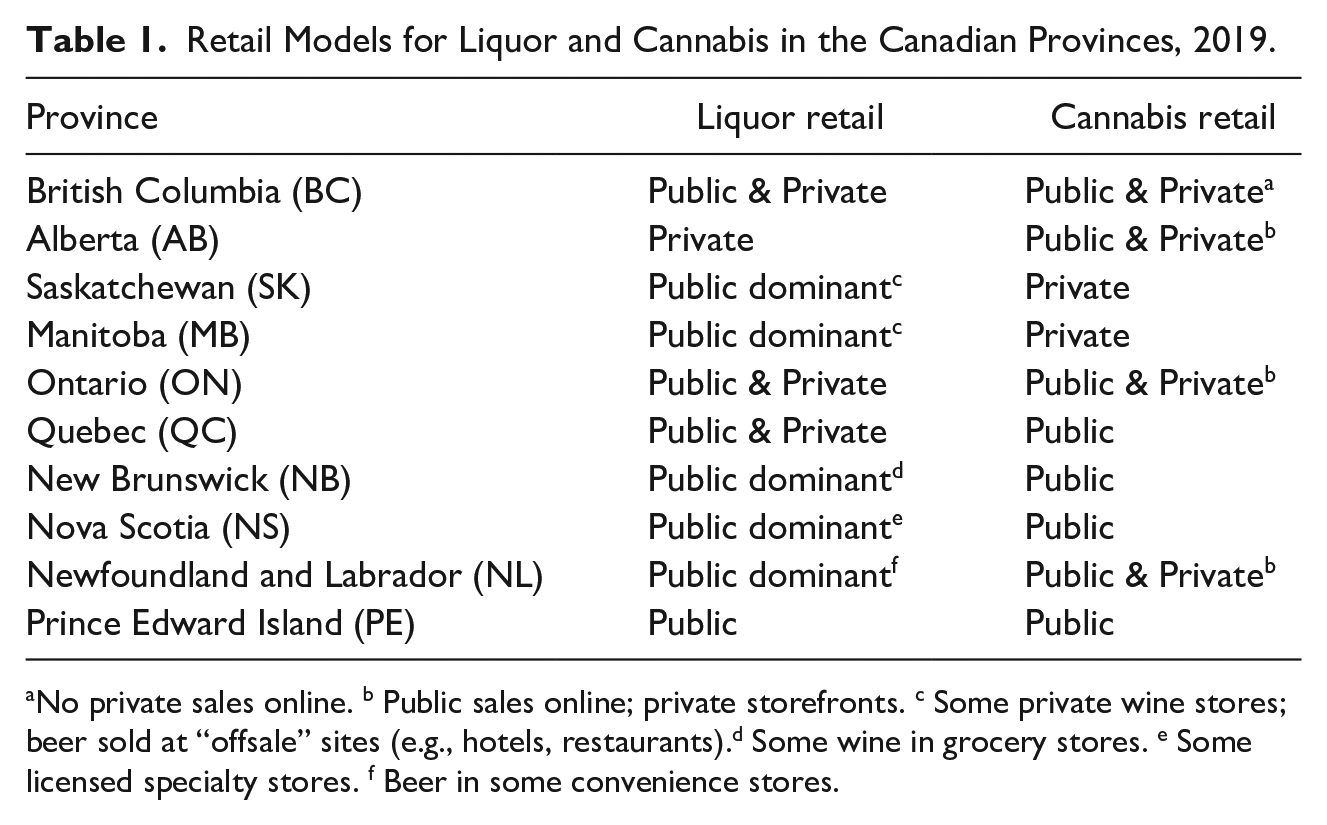
No private sales online. b Public sales online; private storefronts. c Some private wine stores; beer sold at “offsale” sites (e.g., hotels, restaurants).d Some wine in grocery stores. e Some licensed specialty stores. f Beer in some convenience stores.
Each province subscribed to one of three cannabis retail models. In general, those provinces that were least enthusiastic about the federal government’s plans to legalize cannabis chose a fully private model (Manitoba and Saskatchewan), leaving the legal market exclusively to highly regulated, government-licensed private businesses. Other provinces whose governments sought greater oversight over the postprohibition regime opted for a fully public model. This allowed government agencies to control the entire distribution-to-sale-to-consumption chain, setting and monitoring Canada’s strictest rules at each stage. In doing so, they have bucked the trend of privatization associated with many Western states when it comes to handling new and emerging markets (Rose, 2010). Under monopoly conditions, government bodies have little incentive to create a unique presence in the market, and even less motivation to develop full-scale branding strategies to attract and retain loyal customers. The remainder of the provinces selected a hybrid model, mixing private and public retailers the way most provinces do for liquor. Thus, upon legalization, eight of 10 provincial governments opted to enter the cannabis market as retailers. All of them mandated their respective liquor commissions to handle distribution and retail operations. 4
Theoretical Frameworks
As the provinces began to implement their chosen frameworks, they were faced with marketing decisions related to the level and composition of demand that each government aimed to achieve. Would they focus on marketing intended to increase demand for the new legal sales channels, thus generating revenue for the government and displacing the illicit market? Or would they lean toward the other end of the continuum and focus on demarketing to depress demand and promote responsible consumption? In answering these questions, provincial governments in Canada were, intentionally or not, crafting their brand images.
A brand image is the “perceptions about a brand as reflected by the brand associations held in consumer memory” (Keller, 1993, p. 3). Thus, governments getting into the cannabis business could be associated with factors that increase demand (friendly service, product quality and safety, etc.) or that decrease demand (risks of consumption, limited supply, etc.). Prior research has demonstrated that governments use branding as a marketing tactic on both sides of the demand continuum. For example, branding has been shown to be key to marketing governments as a whole (e.g., Rose, 2010), to selling jurisdictions as great places to travel or do business (e.g., Morgan et al., 2015), or—as we suggest—in promoting government-provided goods and services. In the cannabis market, governments are competing with black-market actors and the brands they develop are important in differentiating the new public offering from the existing illicit sales channel. In some cases, provincial governments are competing with private businesses within their jurisdictions or other retailers in neighboring jurisdictions.
Branding can, however, also play an important role in demarketing. For example, government-sponsored anti-smoking campaigns have used elements of traditional branding strategies to reduce positive perceptions of smoking and to also attach negative associations to the habit of smoking (Shiu et al., 2009; Siegel & Biener, 2000). The concept of demarketing was first introduced by Kotler and Levy (1971) and defined as “that aspect of marketing that deals with discouraging customers in general or a certain class of customers in particular on either a temporary or permanent basis” (p. 75). In the marketing literature, the focus has been on demarketing when the demand for the product or service is greater than the seller’s ability to supply it—for example, in domains such as health care and tourism (Beeton & Pinge, 2003; Medway et al., 2010).
Most studies of public-sector demarketing have focused on government efforts to reduce demand for products sold by private businesses (see Table 2). From tobacco (Chauhan & Setia, 2016; Inness et al., 2007; Shiu et al., 2009), alcohol (Wall, 2007), and junk food (Quelch et al., 2016) to fossil fuels and sport utility vehicles (SUVs; Varadarajan, 2014), governments have employed a wide range of demarketing strategies to discourage people from purchasing certain products from private firms (or encouraging them to choose healthier alternatives). Few scholars have turned their attention to governments’ efforts to demarket products that they sell themselves. In providing services like lotteries and gambling (Kesavan et al., 2019), and goods like alcohol (Wettlaufer et al., 2017), public-sector firms are often committed to managing, structuring, and harnessing demand for the public good. Some have referred to this as “protective demarketing,” as it aims to control but not entirely prevent or discourage consumption (Chaudhry et al., 2019). This often involves a deliberate and unique approach to branding. By building associations with responsible consumption and bureaucratic control into their brands, and/or purposefully dulling down the excitement of the products on offer, governments may seek to depress consumer demand or shape it to less destructive ends.
Public-Sector Marketing and Demarketing Techniques.
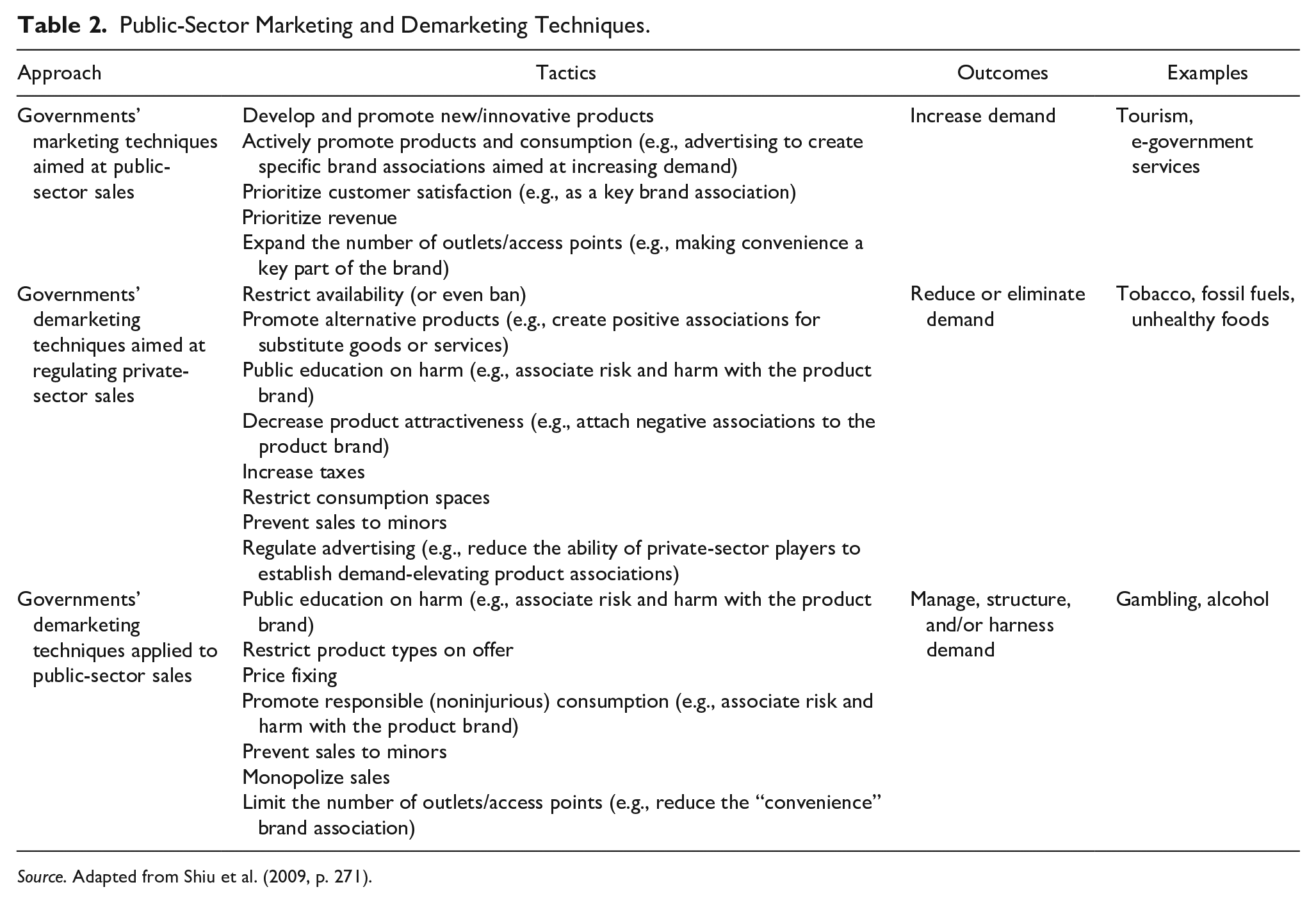
Source. Adapted from Shiu et al. (2009, p. 271).
Brand Extension
Prior work has established that provincial governments replicated their regulatory approach to alcohol sales, applying a similar set of policies (Wesley, 2021) and governance models (Wesley & Salomons, 2019) to the cannabis field. This makes sense, as provinces were under time pressure to finalize and implement their legalization plans. From a branding perspective, the need for expediency combined with preexisting brands in a closely related product category (alcohol) suggests the potential for a brand extension strategy—that is, the use of an established brand to move into a new product category (Aaker & Keller, 1990; Gierl & Huettl, 2011; Keller, 2016). In this way, brand extensions are a marketing technique that facilitates the transfer of brand associations from one product or service to another. As a branding strategy, extensions tend to be a less expensive and more efficient than attempting to build an entirely new brand image.
Prior research reveals that brand extensions depend heavily on the unique memory associations that consumers have with the retail organization (Park et al., 1991). For example, consumers have strong associations between Walmart and low prices, Tiffany and luxury jewelry, Apple and innovation, and McDonald’s and fast food. These associations make it easier for those retailers to extend their brands into new categories that fit with their existing associations. Examples include Walmart extending into e-commerce, Tiffany launching a new line of designer jewelry from Paloma Picasso, or Apple moving into original content television production. Similarly, provincial governments’ liquor commissions have existing consumer–brand associations that may affect their ability to connect with customers in the new cannabis market. These government agencies may have developed a reputation for promoting responsible consumption, for example, or they may be viewed as bureaucratic outlets as opposed to shopping experiences. Some brand associations may facilitate trust with consumers, whereas others may limit the government’s ability to successfully capture market share and displace illegal sellers. At the same time, provincial liquor commissions may have become known for providing less expensive or mass-produced products than those found in specialty wine and spirits stores. In this sense, their brand association of affordability may hinder their ability to carve out a niche in the craft or luxury cannabis market.
Brand Personality
Most studies of public-sector marketing assume governments have something they wish to sell and that public administrators have incentives or mandates to pursue value, trust, and profit in much the same way private-sector firms do (Temporal, 2015). To be successful in that regard, it may be necessary for governments to go beyond an alcohol-to-cannabis brand extension and adopt more sophisticated approaches to building a brand that can facilitate their demand management goals. In particular, it seems that in differentiating themselves from legal private retailers and illegal black-market dealers, governments may want to create a distinct personality for their cannabis brands.
Brand personality has been long been recognized by academics and practitioners as a powerful branding technique that facilitates differentiation in markets where competitors are selling the same or similar products. For example, in legalized cannabis markets, governments are often competing with private businesses selling the same products and with black-market dealers selling very similar products. Aaker (1996) has defined brand personality as the distinct human-like character of a product or service. Her work also introduced five fundamental dimensions of brand personality: sincerity, excitement, competence, sophistication, and ruggedness (Aaker, 1996). Each dimension was composed of descriptive traits or facets. For example, honest and wholesome were facets of sincerity, daring and spirited were facets of excitement, reliable and intelligent were facets of competence, upper class and charming were facets of sophistication, and outdoorsy and tough were facets of ruggedness.
These dimensions and facets of brand personality can be used to elevate demand by creating an image that consumers relate to or want to be associated with. For example, the Marlboro Man has a rugged character, Snuggle laundry detergent is sincere, Tiffany and Co. is sophisticated, Red Bull is exciting, and so on. Brand personalities have also been used to demarket once popular or common activities. For example, Mother’s Against Drunk Driving (MADD) has used a sincere and competent brand image to reduce drunk driving. Weight Watchers (WW) has also built a sincere and competent brand personality to lower their clients’ calorie consumption. The World Wildlife Fund (WWF) has built a rugged and sincere brand image to promote lower carbon emissions. Importantly, brand personalities can simultaneously aim to increase demand (e.g., WWF promotes getting outdoors, WW encourages an active lifestyle) and demarket or decrease demand (e.g., WWF lower emissions; WW lower caloric intake).
In the context of cannabis, we are interested in understanding whether, and to what extent, private- and public-sector marketing focuses on different dimensions of brand personality. For example, it may be natural for a governmental cannabis brand to adopt characteristics such as being sincere and competent. These brand personality dimensions are compatible with marketing efforts that aim to increase demand (a focus on the honest and reliable facets of the brand) or demarketing (reducing demand for illicit cannabis sales by differentiating the government’s honest and reliable product from that sold in the black market). In contrast, private-sector brands that aim primarily to increase demand may pursue associations related to excitement, despite government regulations that place strict limits on how cannabis can be marketed. It is also possible that private-sector brands will aim to establish personalities similar on some dimensions to government brands—for example, emphasizing competence and reliability, to differentiate themselves from the illicit market. Ultimately, these branding decisions set the table for differentiated competition between governments and the private sector, as well as the illegal market that they are aiming to displace.
In sum, based on the existing literature and their dual policy commitments to both help displace the illicit cannabis market in Canada and promote responsible consumption, we expected public administrators to pursue a mixture of marketing and demarketing strategies. Public-sector organizations that have existing liquor enterprises are expected to pursue brand extension strategies when entering the cannabis retail market (i.e., replicating their liquor brand). We also expected them to develop brand personalities that positioned their governments to compete with actors in the private sector and illicit market. Public-sector organizations in legal monopoly systems (i.e., where private organizations are prohibited from competing in the legal market) would be expected to develop relatively similar and subdued branding personalities across jurisdictions, as they may believe they have less need to differentiate themselves from competition and similar mandates to promote responsible consumption. Conversely, public-sector organizations in hybrid systems (i.e., where private- and public-sector firms compete for legal market share) would develop relatively differentiated branding personalities across jurisdictions, as they face unique sets of competitive pressures with private firms. Public-sector organizations in legal monopoly systems would develop qualitatively different branding personalities and strategies compared with public organizations in hybrid systems.
Research Design and Methodology
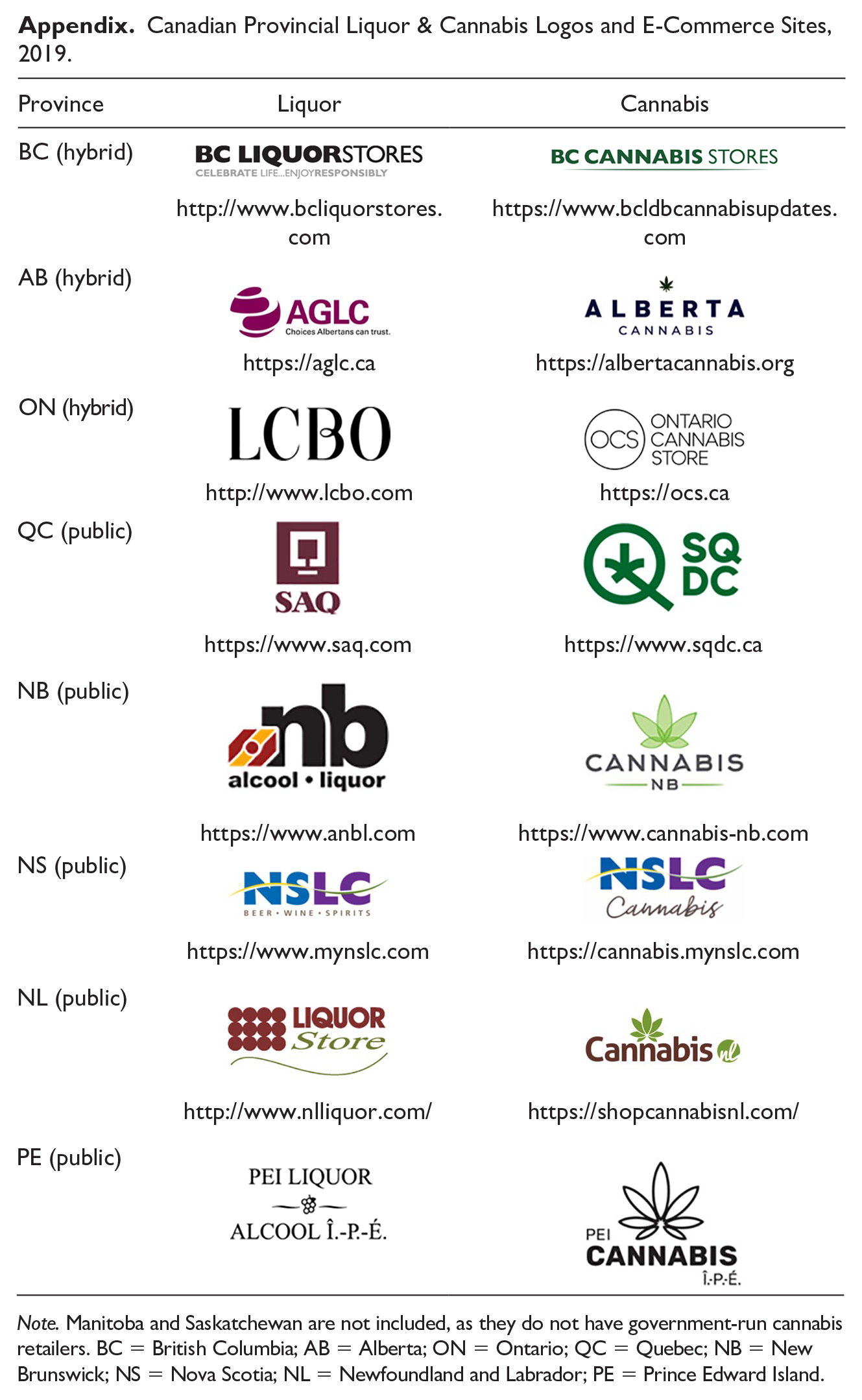
This study involves a comparative, mixed-method approach. Government brands are analyzed using a combination of qualitative content analysis of brand elements like logos, e-commerce platforms, and storefronts (see the appendix; Hsieh & Shannon, 2005). This analysis included a comparison of the core elements of each province’s liquor and cannabis brands, with a particular focus on colors, fonts, styles, and other stylistic components.
These interpretations have been checked wherever possible through a combination of sources. This includes publicly available information about the mission and values of each cannabis agency, as well as brand guides and marketing plans obtained through freedom of information requests. This evidence was supplemented by email correspondence with public administrators responsible for cannabis brand management and confidential, semi-structured interviews with government officials and branding consultants involved in public-sector cannabis retail efforts across Canada.
It is worth noting that most provincial government agencies were unwilling to participate in interviews related to this study. Despite 6 months of repeated requests for comment, a total of three interviews were conducted, one of which was off the record and two of which requested full anonymity. Reasons provided ranged from interpretations of provincial law that prohibit the agency from speaking publicly about its brand to wariness over revealing information that could hinder the agency’s ability to compete with private retailers. According to one British Columbia (BC) official, “Our brand and marketing efforts represent competitive business information that we are not comfortable sharing to a broad audience.” In declining to participate in our study, a public servant from Quebec’s cannabis retailer, Société québécoise du cannabis (SQDC), responded that “by law we’re not allowed to do any kind of promotion in any way, shape or form including discussing about our brand in a way that could be subjective or relate it to marketing efforts.” This response, itself, provides evidence of public administrators’ demarketing approach to selling cannabis.
These findings were compared across jurisdictions and with competitors in the (legal) private sector to determine how different governments approached the task of branding themselves to sell cannabis.
In terms of brand extension, of particular interest was the use of a similar brand logo to signal a link from the existing brand to a new product (Yeung & Wyer, 2005). We assessed the connection between the existing brand (alcohol agency) and the extension (cannabis agency) in terms of the similarity of their core brand identities (i.e., the logo and visual elements). The simplest linkage from the existing brand to the extension could involve retaining the name of the province. For example, extending from the Liquor Control Board of Ontario (LCBO) to the Ontario Cannabis Store with a new logo design that is distinct from the original LCBO brand identity. Alternatively, the new brand identity could reflect a design that is highly similar to the existing brand. This, for example, seems to be the case in the extension from BC Liquor Stores to BC Cannabis Stores, wherein a similar font, stylistic concepts, and color scheme were employed.
The authors’ assessments of brand extension were tested using a survey of 204 consumers on Amazon’s Mechanical Turk (MTurk, an online panel with respondents drawn from the United States and Canada), asking them to assess the extent to which each province’s liquor commission logo resembled that of its cannabis commission. All respondents were asked to consider each province’s liquor and cannabis logos and rate the level of similarity on a 0 (not at all similar) to 100 (very similar) slider-bar scale. The average age of the participants was 31 years old (ranging from 18 to 59) and 89.7% reported that their first language was English. The self-reported gender of the sample was 60.7% male, 38.7% female and 0.5% nonbinary.
This study models its analysis of brand personality on Aaker (1996), analyzing the extent to which provincial governments’ cannabis brands exude any of the following five high-level personality dimensions: sincerity, competence, ruggedness, excitement, and sophistication. Facets of brand personality, like ruggedness and excitement, were expected to be more closely connected to attempts to increase demand, whereas traits like sincerity and competence were considered more closely associated with demand management (i.e., a demarketing strategy). We checked our own assessments against the branding approaches reported by provincial officials in interviews, publicly available information (e.g., press releases, websites), and documents obtained through freedom of information requests. These findings were then compared with perceptions of the personality of Canadian private-sector cannabis brands.
Findings
Brand Extension
Given the parallels in operations, organizational overlap, and similar mandates, brand extension theory suggests most provincial governments would benefit from extending their retail alcohol brands to include cannabis. The tight timelines involved in rolling out a fully functional retail regime make it even more reasonable to expect those provinces with an existing liquor retail brand to extend it to cannabis sales. Interviews with provincial government officials and a thorough review of liquor authorities mission statements revealed that, without exception, all provincial/territorial liquor authorities brands emphasized the core concept of responsible consumption. This is a hallmark of demarketing strategy. Liquor store brand elements, including logos and slogans, reflected this key principle through subdued and professional themes. It was reasonable to expect that provincial government cannabis brands would follow very similar guidelines, including the use of similar language, fonts, colors, and so on. Alberta is an outlier in this instance; with no presence in the retail liquor market, the provincial government had no brand to extend to its online cannabis store.
Contrary to expectations, only two of the eight provincial government agencies clearly pursued a brand extension strategy when launching their cannabis retail operations. The remainder drew a distinction between how they sell cannabis and alcohol, resulting in either a parallel or entirely separate brand identity. The results of our MTurk survey indicate that consumers see a high level of similarity only in the British Columbia (paired-sample t tests; all p values < .001) and Nova Scotia logos (paired-sample t tests; all p values < .001) (see Figure 1). Brands in Prince Edward Island and Newfoundland and Labrador received moderately high scores based on choices to incorporate similar colors and fonts.
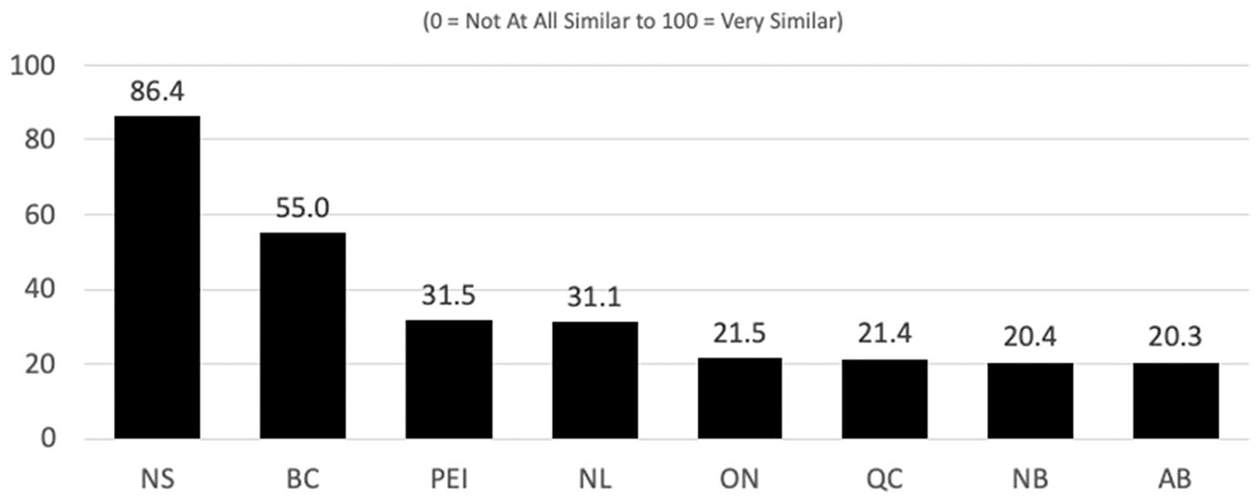
Provincial alcohol and cannabis logo similarity scores.
Nova Scotia’s approach represents the most fully integrated, in this regard. The province’s liquor commission, Nova Scotia Liquor Commission (NSLC), opted to extend its existing logo to apply to cannabis sales. Unlike Alberta, whose liquor and gaming commission (AGLC) changed its formal name to “Alberta Liquor, Gaming, and Cannabis,” the NSLC took no such step when it assumed control over cannabis sales. This is partially explained by the unique retail regulations established by the Nova Scotia government. At the time of writing, the province is the only jurisdiction in Canada to allow cannabis and liquor sales in the same premises; the NSLC’s co-location approach 5 meant that it had no immediate impetus to create a new brand for storefront signage. Unlike anywhere else in Canada, the Nova Scotia government’s cannabis and liquor operations were fully integrated into the same organization. It also meant that the design for its cannabis stores was fully aligned with the look and feel of its liquor outlets. For its e-commerce platform and the signage on its one stand-alone cannabis store, NSLC elected to replace the words “beer, wine, spirits” with a stylized “cannabis” in its logo; other than this, the NSLC brand was fully replicated.
British Columbia created a similar, parallel branding strategy when it established “BC Cannabis Stores” from “BC Liquor Stores.” The province intentionally maintained identical fonts and brand architecture. According to the British Columbia Branding Guide, “BC Cannabis Stores’ visual identity must take into account the BC Liquor Stores’ reputation, history and its unique characteristics.” Briefing notes obtained through an access to information request suggest the BC government considered some minor variations on the BC Liquor Stores logo (e.g., curved lettering, addition of a cannabis leaf), but rejected these in favor of extension.
The remaining jurisdictions pursued entirely new brands for the sale of cannabis to their residents. Some, like Newfoundland and Labrador and Prince Edward Island, chose to retain similar tone, style, and color in their logos. According to an interview with Newfoundland and Labrador officials, this retention was not intentional, but rather coincidental. Others, like Ontario, Quebec, and New Brunswick, went in entirely new directions. As discussed below, provincial governments outside Nova Scotia took a distinct demarketing approach to designing their cannabis storefronts and e-commerce sites compared with the marketing approach employed for their liquor operations.
Overall, our findings fail to support the notion that governments would pursue brand extension strategies when setting up their cannabis retail operations. Rather than combining their alcohol and cannabis sales under the same banner, most governments chose to keep the brands separate. This could reflect their interpretation of the law, which in most jurisdictions bars the sale of alcohol and cannabis on the same premises. It could also reflect public administrators’ reluctance to conflate the highly regulated and newly legal sale of recreational cannabis with their long-established, more accessible, and more publicly accepted alcohol operations. Failure of the former could affect the reputation of the latter. All of these explanations point to the provincial governments’ decisions to pursue a greater emphasis on demarketing cannabis (vs. their relatively heavier emphasis marketing liquor).
Brand Personality
For many Canadians, their provincial government’s cannabis brand offered an introduction to the legal market. In this sense, the personality (purpose, values, and tone) conveyed in brand elements like the provincial cannabis retailer’s logo and store design were crucial in establishing the tone of the government’s entire approach to legalization.
Provincial governments were not entirely unrestricted in their approach to branding. First and foremost, the federal government’s public framing of cannabis legalization as a matter of public health and safety, versus social justice or liberty, set a decidedly austere tone. It primed the country for a demarketing approach to the sale of cannabis. Corresponding federal regulations on sales to minors imposed another important set of constraints. By federal law, visitors to each province’s cannabis e-commerce site are greeted with an age-gated landing page. Similar rules place physical barriers between storefront cannabis consumers and the general public. Section 17 of Cannabis Act prohibits all public and private cannabis retailers from marketing the product in any way that “could be appealing to young persons” or that “evokes a positive or negative emotion or image of a way of life such as one that includes glamour, recreation, excitement, vitality, risk, or daring.”
Another set of federal and provincial regulations force most sellers to keep consumers from physically touching—and in some instances, even seeing—the product. Sniffing jars and padlocks are commonplace in cannabis stores across the country, which sets a decidedly restrained mood for the consumer experience. By the same token, federal laws forbid overt advertising and enforce plain-packaging when it comes to cannabis products, themselves. This limits the ability of suppliers to differentiate their products while also limiting the ability of retailers to decorate stores with the sort of colorful displays found in many liquor outlets. These are indicative of the federal government’s demarketing restrictions on the private sector (see Table 2), but they had the same effect on provincial governments who chose to enter the cannabis retail market. In short, even if a provincial government sought to pursue a brand personality based on elements like ruggedness and excitement, federal laws and their own regulations would constrain its ability to do so.
Overall, federal regulations help establish an authoritative, if not bureaucratic, tone for the user as they begin their cannabis shopping experience. This is clear when viewing government cannabis websites and in-store motifs, which feature very few colors and prioritize information over attraction. As one provincial cannabis official put it, “We had to play more safely and even conservatively—not fun and exciting. Health Canada regulations really put restrictions on us. We weren’t trying to push the envelope.” Beyond the age-gate, there is a noticeable difference between the architecture of provincial government stores and e-commerce sites devoted to selling liquor versus those offering access to cannabis. Whether online or in-store, provincial retail outlets feature bold promotional offers. Discounts, sales, and other price-related advertising are ubiquitous and indicative of a more traditional marketing approach to sales. Graphics and posters promote exotic experiences associated with drinking different types of beer, wine, and spirits. Some provinces, like Manitoba, even offer Air Miles as part of their marketing strategy, allowing them access to data on consumer behavior. This more conventional advertising approach may reflect the fact that, in almost every province, government liquor stores must compete with at least some private businesses. It could also reflect the social acceptability that has developed around alcohol purchase and consumption, and the corresponding acceptance that the government is expected to turn a profit through such sales. By contrast, cannabis prices are stated in a matter-of-fact manner on provincial government cannabis e-commerce platforms. Few discounts are offered, due as much to a difference in branding approach as a shortage of supply, according to interviews for this study. Both justifications point to a concerted effort to demarket. Overall, the public-sector brands used to frame the cannabis shopping experience are far more subdued than those associated with liquor.
Displayed in Table 3, as expected, provincial governments chose brand personality traits that emphasized what Aaker defined as sincerity (down-to-earth, honest, wholesome) and competence (reliable, intelligent). Terms like simple, informative, safe, responsible, and professional appeared frequently in interviews and branding guides across the country. Missing from the governments’ marketing efforts are Aaker’s (1996) other brand personality traits: excitement (daring, spirited, imaginative), sophisticated (upper class, charming), and ruggedness (outdoorsy, tough). British Columbia was an outlier as the brand associations that it aims to develop are more consistent with the dimension of excitement.
Public-Sector Cannabis Branding Approaches in Canadian Provinces, 2019.
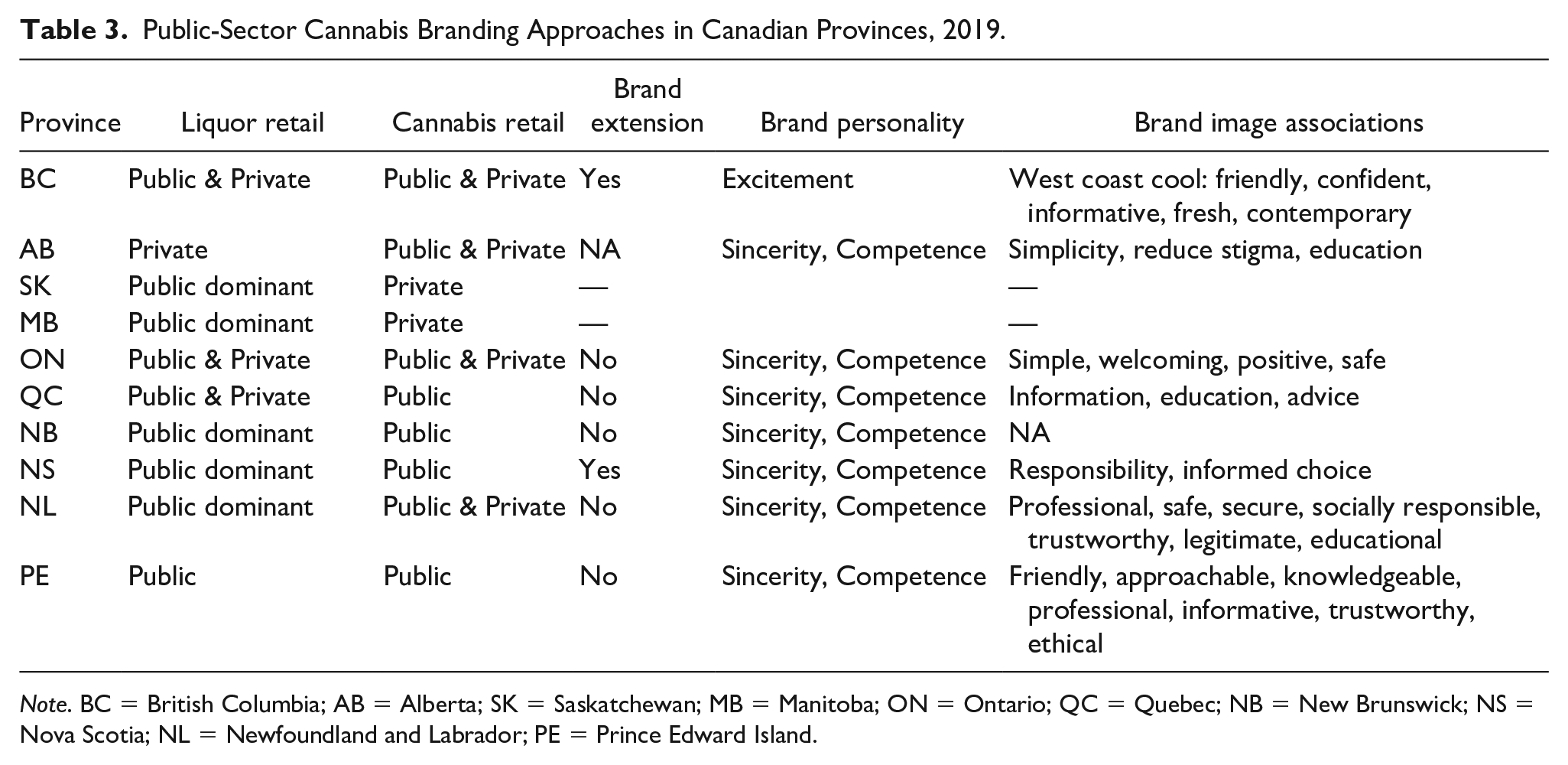
Note. BC = British Columbia; AB = Alberta; SK = Saskatchewan; MB = Manitoba; ON = Ontario; QC = Quebec; NB = New Brunswick; NS = Nova Scotia; NL = Newfoundland and Labrador; PE = Prince Edward Island.
These results suggest governments abandoned a more conventional approach to branding, which holds the sale of goods and services as a primary objective. According to our interviews and public comments from provincial officials across the country, their demarketing approach was less about stimulating demand or selling more cannabis and more about offering restricted access to, and shaping demand for, the product. No interviewees or documents expressed a desire to compete with private businesses or black-market dealers through aggressive advertising or promotions. As one provincial official from Atlantic Canada put it, We’re not allowed to market under our legislation . . . We always walk the line of responsibility, otherwise we don’t need to exist as a monopoly. Our core mandate is responsible sales—to keep these products out of the hands of minors . . . which is aligned with the policy mandate at the federal and provincial levels. We are able to operate in a retail environment under that lens, and it’s not about just “sell more” . . . We’re offering this product, we’re not quote-unquote “selling it.” The customer has made a decision to come in and purchase, so we’re not driving them in to create demand. Once they have made that decision to purchase, we then believe in giving them the best possible information so that they can make a good choice.
This sentiment is most clearly expressed in Quebec. Elected just weeks after legalization, the province’s conservative government set about stiffening its regulations around the sale, possession, and consumption of cannabis—rules which were already among the strictest in the country. In particular, the government increased the legal age to purchase and consume cannabis from 18 to 21 and halted plans to expand the number of government-operated stores. “My goal is not to make profits with cannabis and the Société québécoise du cannabis [SQDC],” Premier Francois Legault said (Canadian Press, 2019, para. 4). While the SQDC’s branding was developed before his government took office, Legault’s remarks are consistent with the plain, rather clinical feel of the logo. Designed to incorporate the “Q” found in most other Quebec government agency brands, the SQDC logo resembles a microscope examining a stylized cannabis leaf (see the appendix). It also matched the professional background of Legault’s predecessor, Premier Philippe Couillard, who was a neurosurgeon by training and among the most vocal critics of the pace and scope of federal legalization efforts. All of this points to a concerted effort among Quebec government leaders to pursue a demarketing approach to cannabis.
Other governments took a slightly less conservative approach to branding. Ontario was the first government retailer in the country to release its brand to the public, in March 2018. The Ontario Cannabis Store (OCS) brand was the subject of heated critique in the mainstream and social media for both its stylistic elements and its cost. Vice News reporter Rachel Browne (2018) used a freedom of information request to break the story of the Can$650,000 contract granted to Toronto advertising firm Leo Burnett to design the OCS logo and branding. As Browne (2018) reported, The Ontario Cannabis Store logo—featuring the acronym “OCS” with thin font inside a circle—has been met with mixed reactions since it was revealed in March: ridiculed for being too plain, and also praised for being nothing like the stereotypical trippy fonts and marijuana leaves of many illicit companies in the industry. (para. 6)
According to the branding guide itself, the approach aimed to make Ontarians more confident about consumption, it comes down to the brand creating a simple, welcoming and positive environment to learn and make a decision on consuming . . . From experienced consumers to those curious to try, they not only wanted to be guided and educated to the best product and the safe ways to [consume], but also made to feel accepted for their choice to consume. (pp. 23, 26)
Overall, the demarketing strategy aimed to convey “social acceptability, social responsibility, [and] distinctiveness from the current illicit market (p. 10)”.
Nova Scotia applied a similar approach to their brand, emphasizing their cannabis stores as places to learn more about the different experiences associated with various cannabis products. This was captured in the design of the NSLC stores, themselves (Thomson, 2018). After being greeted by a “host” (who verifies the consumer’s age), guests are led to a viewing wall divided into four main sections: relax, unwind, center, and enhanced. Each features a different assortment of cannabis strains, with information scrolling on giant televisions mounted on the wall. Much like an Apple Store, counterspace features tablets that allow consumers to acquire more information about the products. The layout speaks to the NSLC’s desire to support informed decision-making among its customers, and not necessarily to sell more product. Similarly, Prince Edward Island’s cannabis brand was designed to convey the promise of “safety,” with its staff “offering trusted expertise, support, and a convenient, pleasant shopping experience.” 6 The overall personality of the Prince Edward Island brand was to be “friendly, approachable, knowledgeable, professional, informative, trustworthy, and ethical,” and its tone was to be “modern, clean, uncluttered, and calm.” The Alberta Cannabis brand was also built on comparable principles of simplicity and education. NSLC and Alberta’s cannabis brands map onto Aaker’s (1996) personality dimensions of sincerity (i.e., honest information) and competence (i.e., reliable and safe products).
BC Cannabis Stores went furthest in terms of branding itself as an attractive place to purchase cannabis. Obtained through an access to information request, its Branding Guide describes its brand personality as “West coast cool: friendly, confident, informative, fresh, contemporary.” These themes more closely resemble what Aaker (1996) labeled “excitement.” This more progressive approach to retail is understandable as a response to the challenges facing the provincial government in terms of displacing a sizable illicit market in the province. It is also in keeping with the province’s political culture around cannabis, which has long been the most conducive to legalization in Canada (Stockwell et al., 2007).
In sum, Canadian provincial governments’ approaches to cannabis branding share several high-level common elements. Regardless of whether they operated in a legal monopoly system or competed with licensed private firms, public-sector cannabis retailers aimed to convey the same sense of social responsibility by providing consumers with a welcoming place to learn about safe cannabis consumption and make informed choices.
This demarketing approach to branding draws a stark contrast with their competitors in the private sector and illicit market. Many private business brands promoted personalities based on excitement (spirit, imagination, novelty, and friendliness). These approaches push the boundaries of the federal regulations discussed earlier, which explicitly forbid cannabis marketing strategies involving “glamour, recreation, excitement, vitality, risk, or daring,” which could expose the firms to legal action. Take, for example, Canna Cabana (in Alberta), which promotes an exciting brand personality with “curation by world-class budtenders” and “a next-level experience you won’t forget” using palm leaves and sunsets to trigger that sense of adventure. Similarly, in Manitoba, Meta Cannabis Supply Company is building associations based on being new, exciting, and the largest private cannabis chain in the country (at 17 stores). Meta promotes being “at the core of the cannabis frontier” and working to “ignite a passion” among consumers new to legal sales. Its branding includes bright colors, the use of neon-style lighting, and store design that conjures images of a futuristic laboratory. Jimmy’s Cannabis (in Saskatchewan) adopts a sincere brand personality, as a friendly neighborhood cannabis retailer that celebrates independence and local retailing. In general, private retailers are clearly differentiating their brand personalities as exciting (daring, spirited, imaginative, up-to-date) and, to a lesser extent, sincere (honest, down-to-earth) and rugged (outdoorsy, tough). This conventional marketing approach differs from most public-sector retailers, which lean toward demarketing. BC Cannabis Stores are a possible exception, as they tend to have a relatively more exciting brand personality.
Discussion
It is perhaps not surprising that public administrators in Canada’s cannabis agencies developed similar brand personalities focused on competence (honest, informed choice) and sincerity (reliable, responsible consumption). Provincial governments placed a common emphasis on demarketing to preserve public health and safety (vs. demand elevation, economic development of the cannabis industry or revenue generation). Moreover, they tasked regulatory agencies to sell the product (vs. stand-alone stores with mandates to generate profit).
Yet, questions remain as to whether this demarketing approach will help public administrators meet their stated policy objectives in terms of keeping cannabis out of the hands of youth and displacing the illicit market. Their marketing strategy, and the government regulations underpinning it, will be put to the test in the coming years as analysts determine how well public-sector organizations perform in these areas.
On one hand, governments will play a key role in building public trust and reducing the stigma related to cannabis use. This will involve projecting both public-sector and regulated private-sector cannabis stores as reputable places to make informed choices about purchasing and consuming the product. This is a crucial element of governments’ efforts to shape demand around the principle of responsible consumption. Brand personality traits that focus on competence (reliable, intelligent) and sincerity (down-to-earth, honest, wholesome) align well with these goals.
On the other hand, governments must compete with new private businesses and established sellers in the illicit market whose pricing, product, and brand image may appeal more to certain types of consumers, including youth. While the overall effectiveness of legal cannabis advertising remains in question (Rup et al., 2020), government brands that lack personality traits like excitement, sophistication, and ruggedness may fail to capture the level of market share that their stated policy objectives in public health and safety require. While illicit sellers are unconstrained by these rules, many private firms are pushing the boundaries when it comes to branding; government vendors are not and may be less effective marketers as a result. This is important because whether they operate in a legal monopoly or not, losing market share to private businesses and illicit sellers makes it more difficult for policy makers to control the flow of cannabis into the hands of youth and revenues into the hands of organized crime. This could make a demarketing approach ironically counterproductive.
At the time of writing, no definitive studies have examined the early results of Canada’s efforts to improve public health and public safety through cannabis legalization. As predicted, there has been sizable growth in the number of brick-and-mortar stores, licensed online retailers, and overall sales by public- and private-sector cannabis retailers in Canada (Statistics Canada, 2019). On the production side, however, early projections of a legal industry boom remain unrealized, suggesting that part of the black market may be surviving or even thriving in a postprohibition market (Austen, 2021). While brick-and-mortar black- and gray-market shops are less prevalent in Canadian cities, reports of burgeoning, illicit online sales also suggest sizable proceeds are flowing to nonlegal sellers (Bolan, 2020). This early evidence suggests that governments still have work ahead to meet their objective of decreasing the size of the black market for cannabis.
Not unlike rates of taxation, regulations on pricing, and other elements of public policy, the marketing decisions undertaken by public administrators can have a profound impact on the success of these government initiatives (Childs & Stevens, 2019). This is especially true in previously prohibited industries like cannabis, where governments use brands to set an appropriate tone and model appropriate retail practices for the new market. But it is equally applicable to areas where governments have a long-standing presence in the market. The way governments approach branding services like lotteries and goods like alcohol are not only a reflection, but ultimately affect the achievement, of public policy aims. Further research in these and other areas is needed if we are to understand the processes and implications involved in public-sector branding.
Conclusion
Compared with their private-sector counterparts, this study suggests public administrators take a distinct approach to branding potentially harmful products like cannabis. In this and other fields, public servants are tasked with providing goods and services to citizens in a responsible manner, as opposed to simply marketing them to consumers for profit. This explains why some, but not all, provincial governments have extended their brands from state-owned liquor stores to their new cannabis outlets. In so doing, they tend to prioritize brand personality traits like sincerity and competence, over ones dealing with excitement, ruggedness, and sophistication. The result has seen provincial government retailers in Canada position themselves not as “sellers” of the previously illicit product, but as protective “providers” of cannabis in a highly regulated consumer environment. This was the case across Canada, regardless of whether each government had granted itself a legal monopoly over cannabis sales or welcomed private-sector competitors.
Their demarketing approach raises important questions for the study of public-sector branding. The sale of seemingly sinful products and services requires striking a balance between promoting responsible consumption (demarketing to manage demand) and providing an attractive enough product to compete for market share with illicit retailers (marketing aimed at increasing demand). The two approaches are not dichotomous, but rather exist on a continuum. According to public administrators interviewed in this study, their choices are often dictated by the legislative mandates provided to public agencies, which in some cases prohibit the proactive “marketing” of goods and services altogether. According to this study, public administrators appeared more likely to abide by strict federal regulations than their counterparts in the private sector. While the former felt bound by a strict reading of the new federal laws, the latter were more likely to push the boundaries of acceptable marketing by taking a looser interpretation of terms like vitality, risk, and daring. To date, few (if any) private-sector companies have been sanctioned for these moves. Private-sector firms also had fewer incentives to engage in demarketing, aside from commitments to safe consumption and corporate social responsibility (Bouw, 2019).
The willingness and ability of government bodies to compete in a marketplace containing such private and illicit sellers is thus constrained. In policy areas involving risk to public health and safety, like cannabis, gambling, and alcohol, a loss of market share due to demarketing can hinder governments’ ability to meet their broader public policy goals. In the case of Canadian cannabis legalization, removing proceeds from the illicit market and preventing children from consuming cannabis are made more difficult when governments must balance their competitive and protective approaches. Findings from this study will help inform branding strategies in other countries where public-sector organizations are considering entering the cannabis marketplace, as well as those sectors where governments play a role in selling goods and services to citizens.
Footnotes
Appendix
Canadian Provincial Liquor & Cannabis Logos and E-Commerce Sites, 2019.
| Province | Liquor | Cannabis |
|---|---|---|
| BC (hybrid) |
http://www.bcliquorstores.com |
https://www.bcldbcannabisupdates.com |
| AB (hybrid) |
https://aglc.ca |
https://albertacannabis.org |
| ON (hybrid) |
http://www.lcbo.com |
https://ocs.ca |
| QC (public) |
https://www.saq.com |
https://www.sqdc.ca |
| NB (public) |
https://www.anbl.com |
https://www.cannabis-nb.com |
| NS (public) |
https://www.mynslc.com |
https://cannabis.mynslc.com |
| NL (public) |
http://www.nlliquor.com/ |
https://shopcannabisnl.com/ |
| PE (public) |
Note. Manitoba and Saskatchewan are not included, as they do not have government-run cannabis retailers. BC = British Columbia; AB = Alberta; ON = Ontario; QC = Quebec; NB = New Brunswick; NS = Nova Scotia; NL = Newfoundland and Labrador; PE = Prince Edward Island.
Declaration of Conflicting Interests
The author(s) declared no potential conflicts of interest with respect to the research, authorship, and/or publication of this article.
Funding
The author(s) received no financial support for the research, authorship, and/or publication of this article.
