




Abstract
Using novel data from a survey with 2,055 Brazilians (aged 16–26 years old), this article explores youth motives to voluntarily join military careers. Our results found that non-White men were more likely to enter the military. Economic affluence negatively influenced prospects for police careers while showing a non-significant positive effect on the armed forces. We also found that individuals with more conservative views and values are more likely to pursue roles in the military police or the armed forces. Interviewees with strong convictions about the negative effects of the COVID-19 pandemic on the job market also showed a higher likelihood of joining military careers. We interpret these findings in a context of extreme job insecurity and progressive militarization of Brazilian bureaucracy during Bolsonaro’s administration (2018–2022). This study offers new evidence of youths’ inclination to pursue a military career.
Which factors influence young men and women to choose a military career path? This question has been extensively addressed in the United States, where the interest in understanding potential enlistees dates back to the 1970s (Segal et al., 1998). The Department of Defence has for many years been collecting data through the Youth Poll, which provides the most comprehensive assessment of young people’s attitudes toward military service. The availability of disaggregated longitudinal data was key to advancing a research agenda on the characteristics associated with those individuals more likely to join the military. For example, a variety of studies have jointly considered income, parental education, race, and ethnicity to explain propensity to join a military career (Bartling & Eisenman, 1992; Griffin et al., 2020; Stender, 1972). Overall, these studies have shown that pathway selection is related to socioeconomic factors, such as parents’ low education attainment and mid–low household income predicting higher likelihood. External factors, such as economic downturns or foreign policies, can also temporarily increase youth interest in military careers (Eighmey, 2006, p. 307). Although U.S.-based studies have established links between enlistment propensity with socioeconomic, economic and foreign policy factors, the applicability of these findings to non-U.S. contexts remains understudied.
This article helps to fill this gap. The military in Brazil, which has been studied mainly in relation to budget allocation (De Rezende & Blackwell, 2019), political appointment (Hunter & Vega, 2021) and electoral growth (Macaulay, 2019), will be here investigated in relation to youth employment and career motivation. We followed Bachman et al. (2000) and designed a novel questionnaire to examine the Brazilian case which incorporates three analytical categories commonly employed in both the Youth Poll and the Monitoring the Future surveys: (a) family and socioeconomic background; (b) educational background; and (c) attitudes and views toward the military. 1
Brazil as a case study provides a novel opportunity to learn about the propensity to join the military and the innovation of our article can be described in five core points. First, our dataset itself is groundbreaking, as Brazil lacks surveys on young people’s interest in military careers. Second, we provide evidence that socioeconomic status is a key factor influencing young people’s interest in military careers in Brazil. This finding aligns with research from the United Kingdom and the United States (House of Commons Defence Committee, 2005; Spence et al., 2013), where military careers are often perceived as pathways to economic stability. Our third important finding reveals that economic factors are more strongly connected to careers in the military police, a profession generally considered less prestigious than the armed forces. In contrast, non-economic motivations, such as admiration for the profession, are more common among those interested in the armed forces.
Fourth, our findings suggest that individuals with a more conservative orientation are more inclined to choose a military career path, regardless of economic background. This fourth finding will have greater discussion in this study. By adding a wide range of items specifically designed to measure conservatism, this study advances understanding of the characteristics of young people who are inclined to pursue careers in the military. The relationship between military careers and far-right support has already been examined by Villamil et al. (2021), who discuss how members of military institutions in Spain are more inclined to support the far right. They show that military personnel are more likely to be conservative due to the occupation-based processes of socialization, including values such as patriotism, dominant masculinity, and entrenched admiration for nationalism and authoritarianism. What is new from our study is that while Villamil et al. (2021) show that occupational socialization makes participants more inclined toward the far-right, we show that participants who are more conservative are more likely to join the military in the first place.
A final novel contribution of our article relates to the timing of our data collection. This was carried out during a period when military personnel were being granted more positions in the corridors of power in Brazil. Between 2013 and 2022, and more so under Bolsonaro’s presidency (2018–2022), the number of military officers occupying government civilian positions increased 193% (de Holanda Schmidt, 2022). In 2021 alone, more than 6,000 military personnel occupied commissioned positions in the federal government, 18% of the total number available (Tribunal de Contas da União, 2020). In addition, this research took place at the time of the COVID-19 pandemic: young people in Brazil are a vulnerable group that usually face higher unemployment and informality rates in income generation (Seade, 2021), and during the pandemic the market worsened and there were fewer jobs available. Unemployment in the 15 to 29 years-old age group increased from 49.4% to 56.3% (Canzian, 2021), the period when we were conducting our survey. Our analysis revealed that interviewees who expressed strong concerns about the negative impact of the COVID-19 pandemic on the job market were more likely to consider a military career. This finding suggests that perceptions of economic instability and limited employment opportunities may drive individuals toward the job security associated with military service. In times of crisis, such as the pandemic, where career paths appear uncertain, the military emerges as an attractive alternative, offering structured and stable career prospects, in addition to health assistance and retirement benefits. This relationship highlights how external economic shocks, like the pandemic, can shape career decision-making, especially for institutions like the military, which are perceived as more resilient to market fluctuations and bringing social bonding opportunities (Office for National Statistics, 2015).
The remainder of the article is structured as follows. Next, we discuss the theoretical and empirical foundations of our survey. We also describe our hypothesis based on existing literature. This is followed by the data collection methodology. We then present the results of multiple regression models that control for the influence of demographic and sociocultural factors. Finally, we discuss how our findings contribute to contemporary scholarship and describe the limitations of our research design.
“Becoming or Getting by”: Theoretical Framework, Hypotheses, and Questionnaire Design
“Becoming military”—aspiring to the career because of affinity with it—or “getting by as military”—seeing the career as a stepping-stone to a better economic life—serve as the two foundational hypotheses for this study, inspiring the title of our research project: “Becoming or getting by”: Youth opportunities in times of economic crisis. The economic crisis that this research refers to is two-fold: first, during and immediately after the COVID-19 pandemic, it is widely understood that countries around the world faced economic decline, with young people, especially those not yet in the labor market, strongly hit by a combination of lack of available positions and lack of work experience. Second, in Brazil, young people out of the job market had already been struggling to find employment since the latest economic recession in 2016 (de Souza Santos, 2022), with many neither looking for a job nor working/studying. Considering both the economic decline in the years prior to the pandemic and the health emergency brought on by COVID-19, military recruitment could thrive as it is relatively easy to access, focused on young people, and almost universally present. Research on the growing militarization in countries like Brazil often misses a detailed analysis of how it relates to economic and career opportunities.
Hypothesis 1: The “Getting by” Hypothesis
A leading study on the motivating factors behind young Americans enlisting in the U.S. armed forces was conducted by Ginexi et al. (1994). This seminal work highlights the significance of qualitative research with findings drawn from a comprehensive analysis of 104 interviews with active recruits revealing the presence of distinct categories of motivational explanations, among them self-improvement, job/skill training, and money for education (seeing the service as a pathway to higher education). Some individuals enlist as a means of escaping or seeking refuge from adverse conditions, such as poverty or having no other job prospects. Following Ginexi et al. (1994) and various discussions that followed (such as Lawrence & Legree, 1996) we have designed our questionnaire considering ideas related to self-improvement and hopes for the future. This is based on the expectations regarding what tenure in the armed forces will equip youth with beyond skills, in terms of economic improvement. The idea is that disadvantaged groups may perceive military careers as an opportunity to fulfill economic aspirations, such as financial stability, the opportunity to travel, housing benefits, as well as health support, which would otherwise not be available to them. This hypothesis was tested in the context of 2020s Brazil. Unemployment rates among young people grew, while there was an increase in the number of candidates to join the military (Redação do Guia do Estudante, 2021), leading this team to hypothesize that more young people were considering a military career to escape the economic crisis. Understanding this correlation matters not only to shed light on the consequences of the economic and health crisis for long-term civilian–military relations in Brazil, but also because joining the army purely because of economic constraints may lead to higher early drop-out rates (Ford et al., 2013), a finding that may interest both young people and the military.
Hypothesis 2: The “Becoming” Hypothesis
Villamil et al. (2021) considered the relationship between military careers and far-right support. The study looked at how people who are in the military may identify with right-wing leaders. We add to the above by examining whether people with conservative attitudes are already more likely to choose a military career. In other words, we aimed to determine if conservative beliefs influence young people to pursue careers that align with these values through the socialization process in their chosen occupations. This question is important to begin a wider discussion about the socialization process within military careers; so far, the literature suggests that valuing hierarchy, strong patriotic values, and the idealization of “strong male” figures would lead to support for far-right movements. However, this situation could exemplify a problem of reciprocal causality. It is uncertain whether the socialization process in the military fosters conservative attitudes, or if an existing inclination toward far-right ideologies before enlistment drives a preference for military careers. We added questions related to the ideology spectrum vis-à-vis economic opportunity to explore conservative ideologies before enlistment.
Our hypotheses also concerns themes similar to Moskos’ (1977) discussion, which organized military careers by traditional or modern appeals. Traditional appeal would consist of values (honor, service, duty), and modern ones refer to economic benefits and skill accumulation. However, we also argue that the “traditional” and “modern” attractions are not mutually exclusive, and an individual who holds values such as patriotism, or is attracted to strong hierarchies and the military in general, may at the same time be motivated by job security. What becomes clear from our survey, rather than a separation between traditional and modern, are the sociodemographic profiles of respondents and their views and attitudes toward the career, which thus enable us to discuss career motivators for young people in a context where both values and economic needs matter.
We also included control variables in our questionnaire. Family guidance has been scrutinized as a multi-layered career influence. Gibson et al. (2007) draw attention to the role of parents in shaping decisions to enlist in the armed forces. They analyzed data collected in 2004 through telephone interviews with young people from 16 to 21 years living in the United States. For each interview, a parent was also interviewed. Parents emerge as prominent influential figures in this complex web of vocational decision-making. In the context of military enlistment, they significantly influence not only the willingness to enlist but also the actual act of enlistment and on a child’s perception of self-competence in military tasks. Normative pressures parents exert concerning military careers and the overall positive attitudes toward participating in such activities serve as robust predictors of their children’s intentions to enlist. Based on Gibson et al. (2007), we included in our questionnaire questions regarding parental influence on career choices. However, because of the large number of Brazilian families that are exclusively led by single parents, usually women (Marri & Wajnman, 2007; Schmidt et al., 2019), young males may look out for career advice from other relevant male figures outside the household, such as pastors, priests, friends, or teachers. In addition, given that our survey was conducted more than a decade after Gibson et al.’s (2007) study, we also wanted to investigate the role of social media, television, and other platforms in such decisions, following the more recent study by Griffin et al. (2020). However, our article did not explore these influences. We limited our analysis to socioeconomic and conservative motivations for pursuing a military career (Hypotheses 1 and 2), as well as the interactions between them (Hypothesis 3). The potential influence of family, such as having a relative already in the military, and of social media are important variables and for this reason included in the questionnaire. We provide a complete dataset for research groups interested in pursuing other related studies.
Race and education have also been considered alongside income to measure the propensity to join military careers in the United States (Bartling & Eisenman, 1992; Griffin et al., 2020; Stender, 1972). Likewise, we have controlled for socioeconomic status, parents’ and interviewees’ education, and race. Finally, we controlled our sample according to Brazil’s geographic regions in response to the available literature that considers regional discrepancies; for example, being from the South of the United States made respondents more likely to consider a military career (Bachman et al., 2000).
Our survey instrument was composed of 58 questions that generated 173 variables. Almost all items were closed-ended, most of them consisting of Likert-type scales as response options. The data is organized around eight analytical categories, namely: (a) Sociodemographic profile; (b) School and career trajectory; (c) Family background; (d) Work abilities and aspirations; (e) Perceptions of the job market; (f) Perceptions about military careers; (g) Propensity to join the military careers; and (h) Conservative attitudes and views (Figure 1). We have made the complete questionnaire as well as all data collection available in our data repository (de Souza Santos et al., 2025).
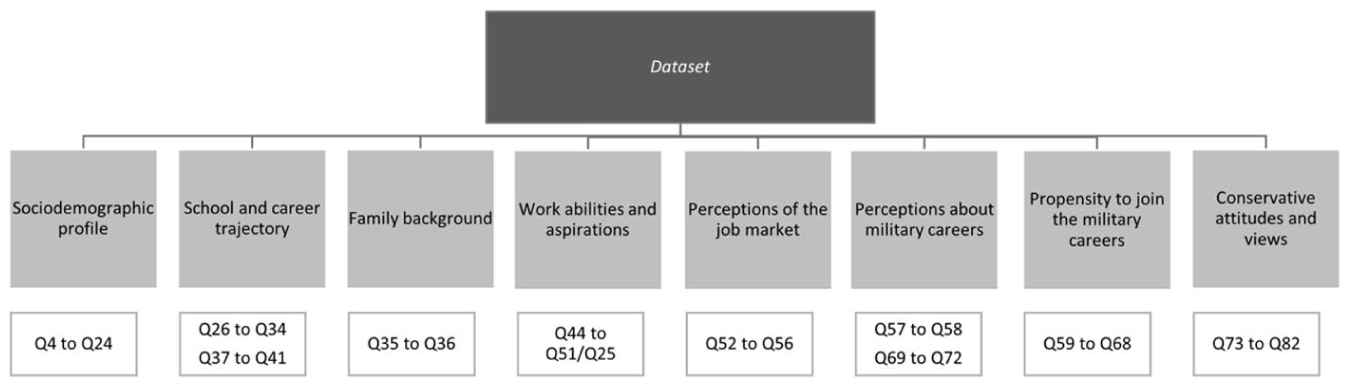
Dataset Framework.
Hypothesis 3: The “Becoming” AND “Getting by” Hypothesis
As a final analytical strategy, we tested the interaction effect between a key socioeconomic variable—mother’s level of education—and the conservatism index. Although careers in the armed forces or military police involve a certain level of exposure to violence, albeit regulated by institutional frameworks, such professions may not appeal to youth representing different socioeconomic backgrounds. Handling firearms or engaging with potential offenders can be perceived as dangerous, and we wanted to understand how that perception matters considering adverse socioeconomic conditions. We also investigate how individuals with stronger conservative attitudes may be less resistant to military-related roles and may retain interest in such careers.
Data Collection Methodology
This novel survey was designed by the authors and garnered a total of 2,055 responses from young people in Brazil using computer-assisted web interviewing technology from October 22 to November 8, 2021. The target audience included those aged between 16 and 26 who were Brazilian citizens and who had never had a military career. We have limited the scope of our analysis to Brazilians aged 16 to 26 based on military career entrance requirements, rather than focusing on a broader sociological discussion of youth. Although we would have liked to consider a wider age range to capture different definitions of “young people,” our focus followed the eligibility criteria to be able to enter a military career in Brazil. Age limits vary by branch with slight differences between the army (Instituto Militar de Engenharia [IME], 2025), the air force (Força Aérea Brasileira [FAB], 2025), and the navy (Serviço de Seleção de Pessoal da Marinha [SSPM], 2025), but the minimum and maximum age limit for entry into any of the forces spans 16 to 25 years old. The age limit to join the military police, also varies in age requirements across Brazil’s 26 states and the Federal District, generally ranging from 18 to 30 or 35 years. We adopted an age restriction up to 26 years old as extending beyond this range would mean potentially including interviewees who are no longer considering military careers due to age-related ineligibility.
That said, we are aware of the sociological challenges of defining “youth.” Honwana (2012) has coined the term waithood to define a prolonged and involuntary delay in reaching the age of employment and marriage or adulthood due to a lack of financial opportunities. Twixters, kidults, adultolescents, thresholders, and boomerang or yo-yo generations are some of the many denominations Honwana uses to discuss the widening years of youth and the socioeconomic conditions underlying this. Although we do not extend the age limit of our survey to account for people in their 30s or above who could still fit into the “youth” category, our survey does look at the issues surrounding “waithood.” At the core of this research is the question of how the economic, political, and pandemic context has changed employment conditions for young people, limiting job market possibilities.
In addition, the likelihood of young Brazilians to opt for a hierarchical career such as in the armed forced should be discussed in the context of Pinheiro-Machado et al.’s (2024) research in the social sciences, which found young people inclined toward working as entrepreneurs, especially in online environments. Our findings and those of Pinheiro-Machado et al. (2024) may be different manifestations of the same problem, which is lack of employability for young people, a situation that drives many to online unstable work or to look for military careers to get by.
With a confidence interval of 95% and maximum error of 2.2%, the sample was stratified by age, sex, educational level, and geopolitical region (North, Northeast, Midwest, Southeast, and South). Sample weights were calculated following young population distribution in the general population as reported by the second largest demographic research survey running in the country, and the most recent national survey at the time of our data collection, the National Household Sample Survey published by the Brazilian Institute of Geography and Statistics (2021a). Because young people are more likely to use several social networks concurrently (Roberts & Foehr, 2008), recruitment was carried out online from a panel, and the link to the questionnaire was generated through digital shots, following the standards of ISO 26,362—which govern online surveys (Fórum Brasileiro de Segurança Pública, 2020; Netquest, 2017). Data collection was carried out by FSBComunicação Company, hired by the authors of this study.
The increasing availability of mobile devices presents enormous opportunities for online data collection; this was especially important due to lockdown policies during the pandemic. However, a common problem of online surveys is the lack of readable and functional design which may reduce the likelihood of participants finishing the questionnaire (Mavletova & Couper, 2015). To mitigate this problem, we developed a survey equally suitable to be answered on various devices (mobile phones, tablets, or notebooks). Another problem that can affect response rates is access to the internet and connecting services. Although internet access is growing in Brazil, there are regional inequalities, and in the Northeast, access is below the national average. In addition to geographical variability, socioeconomic factors such as race, gender, and social class can affect internet access (Roberts & Foehr, 2008). However, access to the internet through mobile phones, as opposed to broadband, has increased in under-represented groups, particularly among those who are young (Brazilian Institute of Geography and Statistics, 2021b). To overcome digital inequality, we created a survey that requires between 15 and 25 min to be completed, thus allowing respondents with internet access exclusively on their phones to respond to the questions without overusing their data bundles. Ethical protocol for interviews with those between 16 and 26 years old followed the University of Oxford guidelines, including asking interviewees for consent, and the study was approved in September 2021. The Brazilian Centre for Analysis and Planning also validated the ethical process. The dataset was anonymized to protect individuals’ identities.
Using a regression model, we analyzed the answers to calculate the propensity to pursue a career in the armed forces or in the military police. Although both groups are understood as military careers, we hypothesized that there is a difference in how these groups are perceived, with potentially a more positive attitude toward the armed forces, which are less likely to enter direct conflict than the police in Brazil.
It is important to highlight that the armed forces are a nationwide career and the military police in Brazil is organized on a state level. Each of Brazil’s 26 states and the Federal District has its military police, serving as an auxiliary force to the armed forces under the Federal Constitution. Joining the military police requires passing a state-administered exam, with each state setting its own salary and career paths. Brazil’s militarized state police are present across the country, offering more accessible but lower-paid roles than the armed forces. The armed forces are therefore more competitive due to the availability of fewer positions. Understanding career interest in these institutions requires considering their different characteristics and opportunities.
Brazil’s armed forces have not participated in direct international conflict since World War II. Their current functions are largely administrative, logistical, or ceremonial—even when deployed domestically. This reinforces the image of military service as a more stable and less dangerous career, especially under administrations like that of Jair Bolsonaro, which brought military officers into prominent civilian government roles (Rocha et al., 2021).
In contrast, being part of the military police is a dangerous occupation across Brazil even when in comparison with other nations with serious public security issues (Zilli, 2022). Despite a recent decline in homicide rates, some states remain particularly affected by the intense activities of armed groups involved in the illegal drug and weapons trade. In addition, institutional violence and corruption continue to affect military police units (Hirata et al., 2023).
According to a recent report by Human Rights Watch (2024), military police officers in Brazil kill thousands of people every year. At the same time, military police officers themselves are routinely killed, especially during confrontations with heavily armed drug trafficking organizations in urban areas. This dual exposure, being both agents and victims of violence, contributes to a widespread perception of the military police as a high-risk occupation (Human Rights Watch, 2024). The scale of this problem becomes even more evident when compared with other countries. As noted by Zimring (2017) and Nunes (2018), in 2016 Brazil recorded approximately 2 deaths per 100,000 inhabitants due to police interventions, compared with just over 1 in South Africa, 0.3 in Mexico, and 0.13 in the United States—despite the United States having nearly twice as many active-duty police officers as Brazil. This scenario shows the exceptional level of military police violence and vulnerability in Brazil and contrasts sharply with that of the armed forces.
Composite Active Propensity
Following the Youth Attitude Tracking Study, the primary source of information regarding enlistment behavior in the United States and an international point of reference, we estimate the composite active propensity (CAP) by aggregating the percentage of youth saying they will enter military service (Bailey et al., 2002). To do so, we coded the variables which ask the following: “How likely is it that you would currently consider a military career (army, navy, air force) as a job and employment option?” and “How likely is it that you would currently consider a career in the military police as a job and employment option?.” The response options were presented in the following order: definitely, probably, probably not, definitely not, and I don’t know. CAP is the percentage of youth saying they will “definitely” or “probably” consider entering military service measures enlistment likelihood (Bailey et al., 2002). Our questionnaire model also considered that item order does not affect respondents’ selection for ordinal measures of intention (Bergstrom et al., 2014).
Sociodemographic and Socioeconomic Aspects
We separated our sample according to gender, grounded in the assumption that men exhibit a greater inclination to join a military career (Segal et al., 1998). Race was also an important variable in our analysis. In nations with a historical context of enslavement of the Black population, as is the case in Brazil, ethnic-racial identity plays a pivotal role in determining social and economic opportunities (França & Portella, 2023). Race shapes the trajectory of young individuals entering the job market and, by extension, pursuing a military career (Bartling & Eisenman, 1992; Bray et al., 1991). In the country, the Brazilian Institute of Geography and Statistics (IBGE) employs a racial classification comprising five color/race categories: “white,” “pardo/brown” (mixed ethnicity with diverse skin colors), “black,” “Asian” (East or Southeast Asian), and “indigenous” (Telles & Paschel, 2014). Aligning with this classification, our survey followed the same indicators in the regression models for respondent groups. To avoid overstating the impact of race in determining involvement with the army and military police, we replicate Gorman and Thomas’ (1993) methodology, incorporating various economic factors as covariates in our regression model. This approach allows us to make more accurate comparisons between individuals of similar socioeconomic status, irrespective of their race.
Considering that Brazil is predominantly a Christian country and that in recent years neo-Pentecostal religions have grown in number (Silva, 2019), a religion variable was introduced into the model as a covariate, with “no religion” serving as the reference category.
In a vast country like Brazil, socio-regional distinctions shape future career plans. Cultural patterns, economic potential, and prospects for education and employment vary across regions. Consequently, residential location was considered in the regression models to encompass whether respondents live in urban or rural areas and in which of the five Brazilian regions (“North,” “Northeast,” “Midwest,” “Southeast,” and “South”). In broad terms, the North and Northeast regions emerge as areas characterized by significant socioeconomic vulnerabilities, with the highest concentrations of Black and indigenous populations. In contrast, the Southeast region stands out as the nation’s economic center, housing Brazil’s largest cities, São Paulo and Rio de Janeiro.
Regarding socioeconomic aspects, the dataset include a family background variable derived from the mean of the highest education levels attained by both the father and mother. This metric was measured on a scale varying from “no education” (1) to “complete post-graduation” (10).
Perceptions About the Job Market
Perceptions regarding the likelihood of finding a job were part of our questionnaire. We constructed an index comprising three variables gauging the challenges to job acquisition (both in the participant’s city and in the entire country) and an assessment of the job opportunities available for youth in Brazil overall. These three variables were measured on 6-point scales ranging from the most optimistic to the most pessimistic perspectives and were aggregated into the “Perceptions about the job market” index, represented by their mean. In observing how the pandemic has affected the economic landscape, specifically the occupational insertion of young people in the job market, we also estimated CAP over the respondents’ perceptions of the negative effects of the pandemic on their professional expectations.
Conservative Attitudes and Views
Finally, in alignment with the reviewed literature, our questionnaire incorporates variables associated with conservative attitudes and political views. This encompasses a measure of a conservatism index, which we derived from averaging 10 items. These items encompassed views on customs and political positions. Regarding customs, participants expressed their perspectives on the role of women in childcare, the relationship between laziness and poverty, beliefs in God and personal qualities, the legalization of abortion, perceptions of homosexuality, and women’s work. From a political view, the items inquired about access to firearms, death penalty, the criminalization of drug use, and the role of the police in preventing crime.
Results
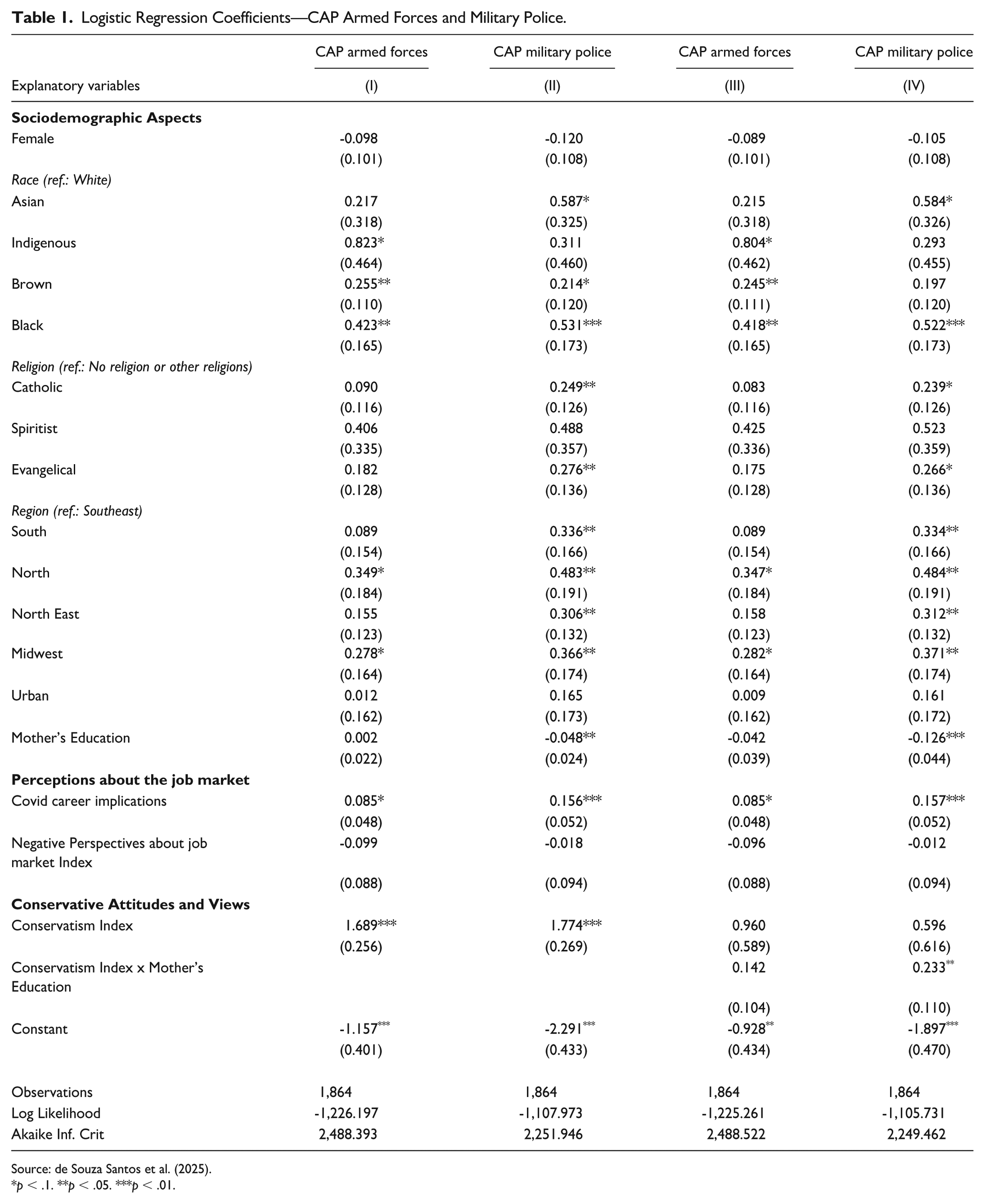
Table 1 shows logistic regression coefficients for two key dependent variables: CAP military (models I and III) and CAP police forces (models II and IV). Models III and IV differ from the first two by including an interaction term between the conservatism index and mother’s education. Our analysis explores the chance of considering these fields based on various factors, including geographic region, gender, race, job market perception, maternal education, the impact of COVID-19, religious affiliation, and conservatism.
Logistic Regression Coefficients—CAP Armed Forces and Military Police.
Source: de Souza Santos et al. (2025).
p < .1. **p < .05. ***p < .01.
As theoretically expected, our findings echo a familiar recruitment pattern in the military and police sectors, particularly as observed in the United States and supporting our “Getting by” hypothesis. Non-White individuals display a higher propensity to join the armed forces and the military police in our research and as observed elsewhere (Bartling & Eisenman, 1992; Griffin et al., 2020; Stender, 1972). The COVID-19 variable (perceiving the pandemic as a great career obstacle) is positively correlated with careers in both the military (β = 0.085) and police (β = 0.156), suggesting that the pandemic’s economic challenges may have heightened the appeal of these professions among Brazilian youth.
Moreover, Christians, have a mixed effect on interest in military careers in Brazil. Evangelicals are more inclined to pursue careers in the military police (β = 0.276). Catholics, too, exhibit a slightly higher preference for a military police career than those without any religious affiliation. This pattern highlights a distinct correlation between the Christian faith, especially among Evangelicals, and the pursuit of military occupations in Brazil. After controlling for all independent variables in the adjusted model, gender was not significantly associated with the propensity of considering a military career. Although a negative association was observed in the bivariate analyses, this effect did not remain significant in the multiple regression model.
Figure 2 shows the regression coefficients of key independent variables that correlate with the propensity to join the army and military police in Brazil.
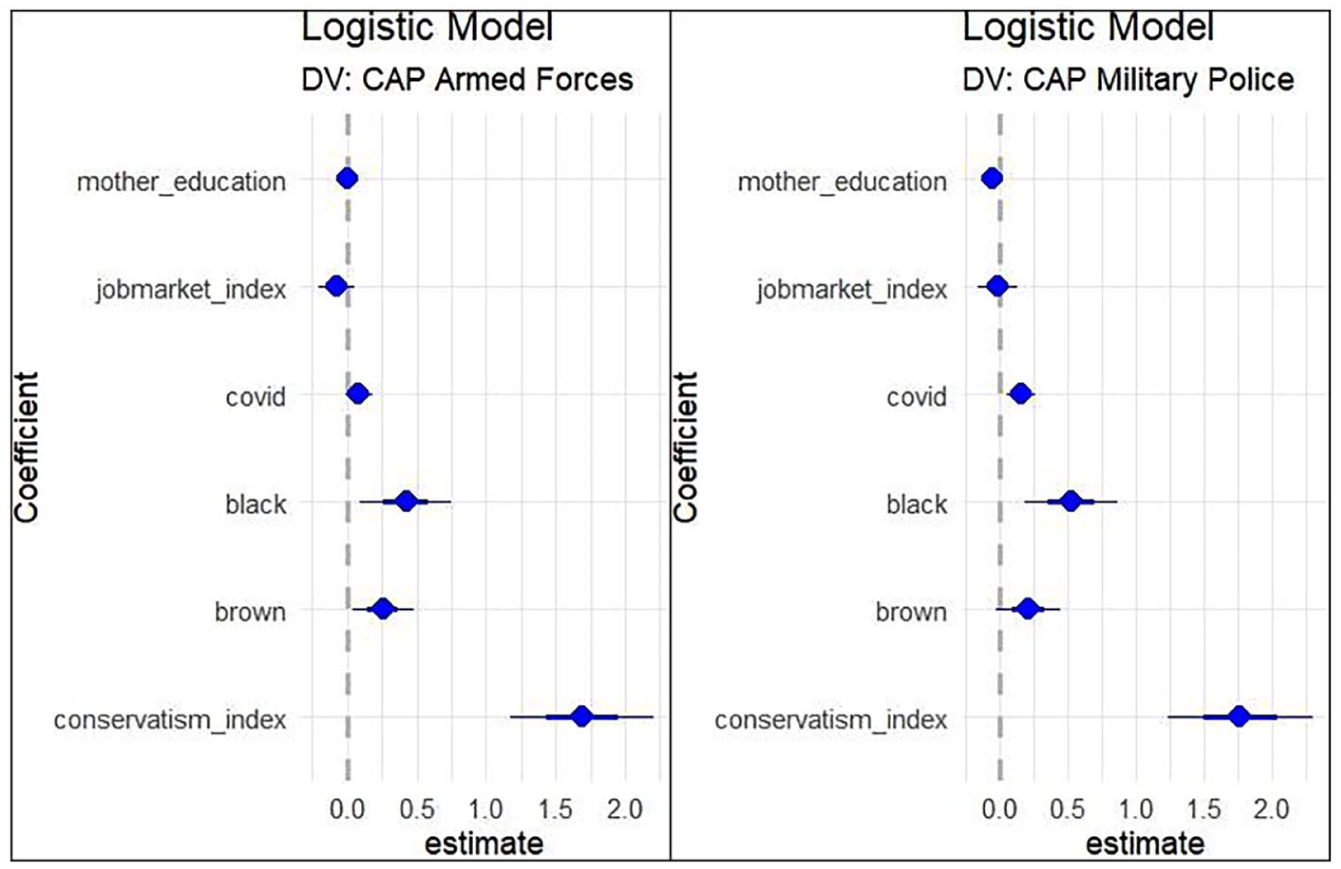
Key Independent Variables.
Mother’s education level also has a mixed association with the dependent variables, negatively influencing prospects for military police careers while showing a non-significant positive effect for armed forces careers (Models I and II). This suggests a socioeconomic stratification (with a slight variation among very conservative individuals as we address below in the discussion about the interaction of our hypotheses) in these career paths: less affluent individuals often opt for the military police, while those from wealthier backgrounds may lean toward armed forces careers. Ginexi et al. (1994) find that in the United States, a primary motivation for joining the armed forces is to escape poverty and joblessness. Extensive US-based research confirms the significant influence of socioeconomic status on military enlistment (Bachman et al., 2000; Bailey et al., 2002). In Brazil’s distinct institutional and cultural context, youth from vulnerable families are inclined toward careers in the military police, as indicated by a significant negative coefficient (β = -0.048; p-value < .05).
Figure 3 shows the correlation between mother’s education on the likelihood of joining either the armed forces or military police, controlling for all covariates. The probability for the armed forces remains mostly unchanged regardless of maternal education levels (β = 0.002; se = 0.022). However, for the military police, a higher mother’s education correlates with a lower probability of enlistment, as indicated by the descending line. The shaded areas suggest the confidence intervals for these probabilities.
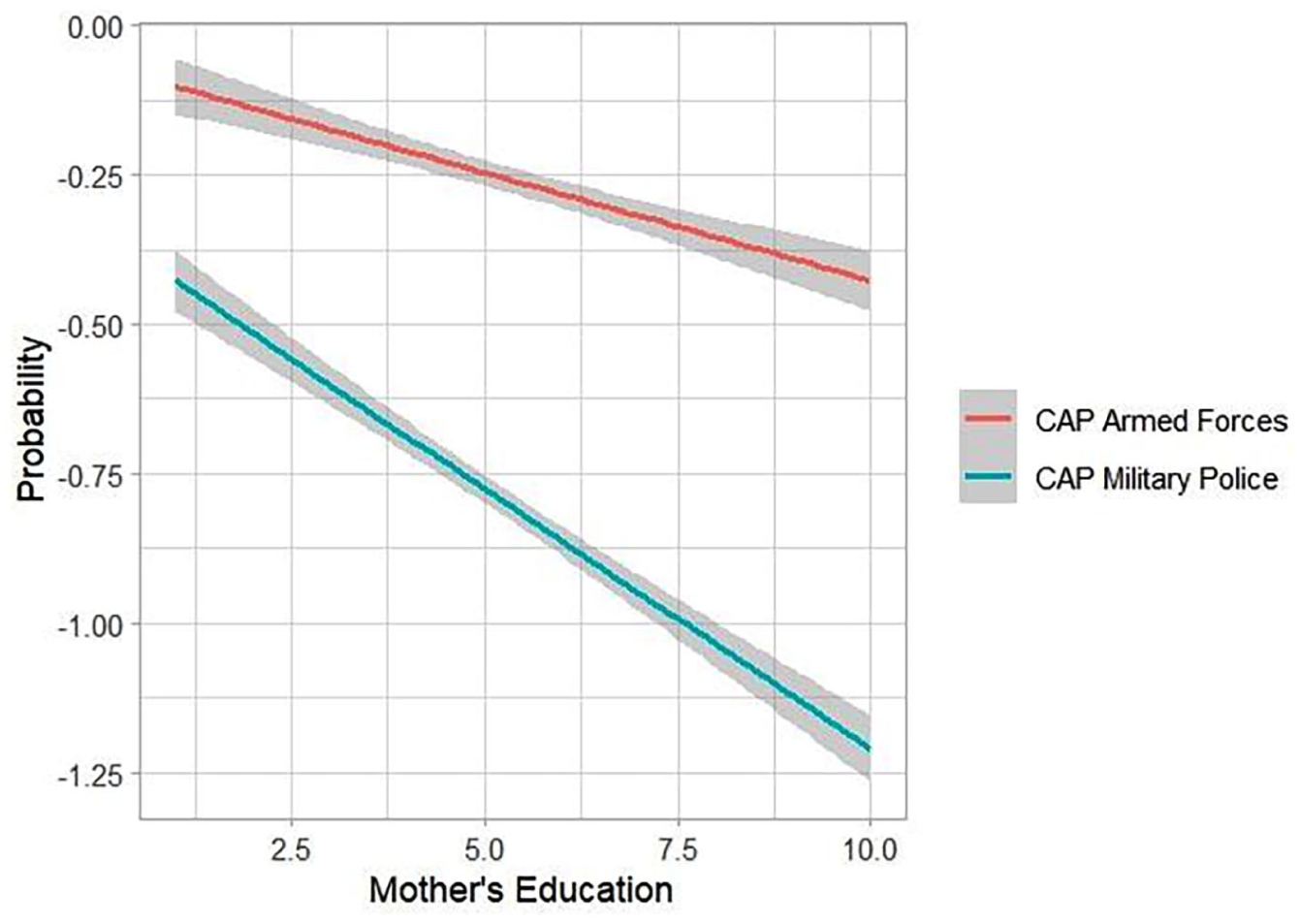
The Effect of Mother’s Education on CAP Armed Forces and Military Police.
We also find evidence to support the “Becoming” hypothesis. A novel aspect of our study is the observed correlation between conservatism and career choices in the armed forces or military police, which in our case supports that conservatism leads to military career choice (Models I and II). Figure 4 shows the impact of the conservatism index on the propensity to join the armed forces and military police while controlling for socioeconomic and regional factors.
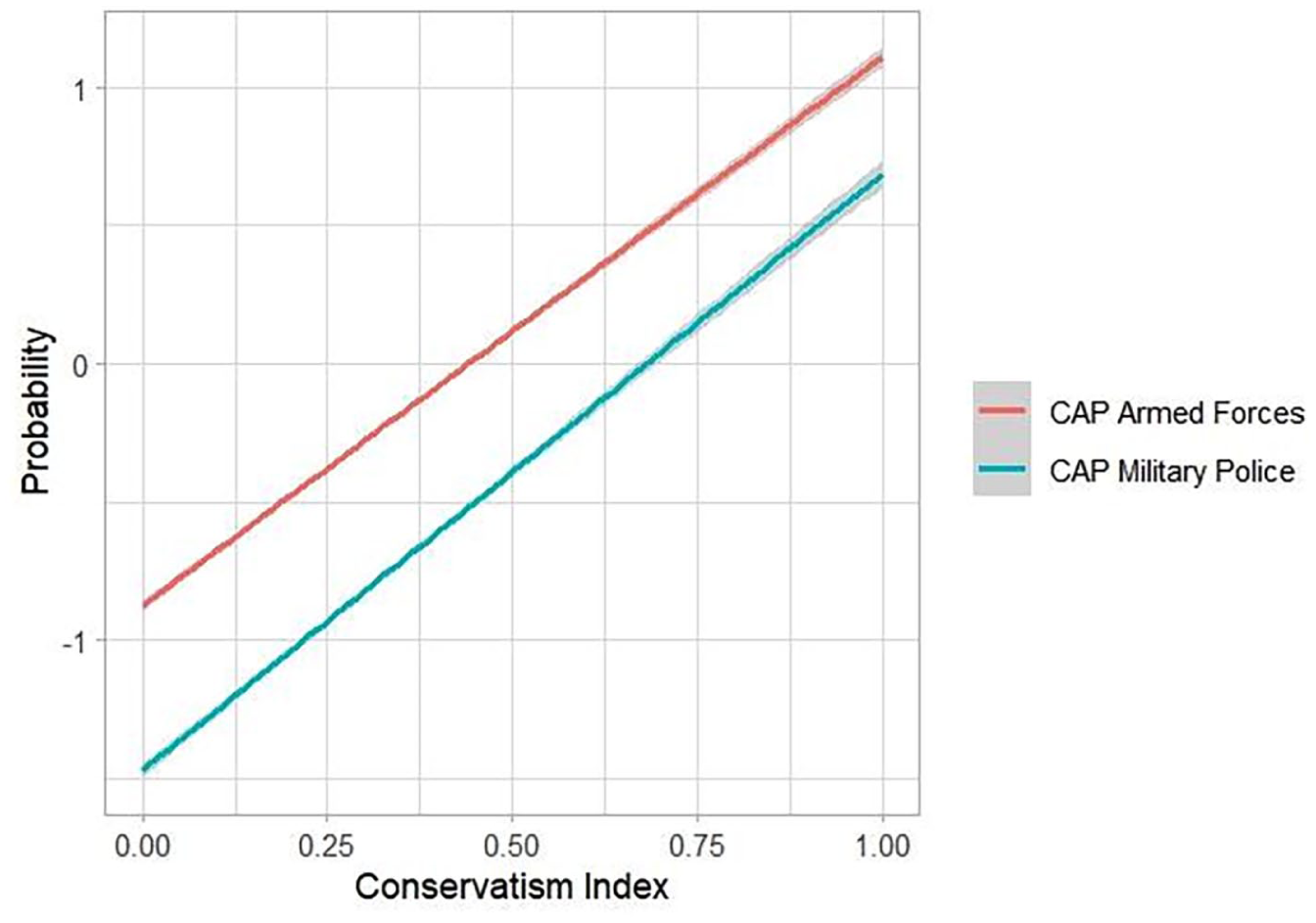
The Effect of the Conservatism Index on CAP Armed Forces and Military Police.
As Figure 4 shows, individuals with more conservative views and values are more likely to pursue roles in the military police (β = 1.774) or the armed forces (β = 1.689), showing the appeal of these traditionally conservative institutions to like-minded individuals. While existing literature links hierarchical processes and patriotic values to far-right support (Villamil et al., 2021), we consider whether conservatism predates military enlistment, potentially leading to such attitudes within military contexts being reinforced after such individuals enlist.
An important finding to highlight is that while maternal education levels correlate negatively with the likelihood of choosing a career in the military police force, there is an exception for individuals who scored high in conservatism values. Among this group, despite the higher level of maternal education, their inclination toward a military police career remained relatively high (see model IV and Figure 5).
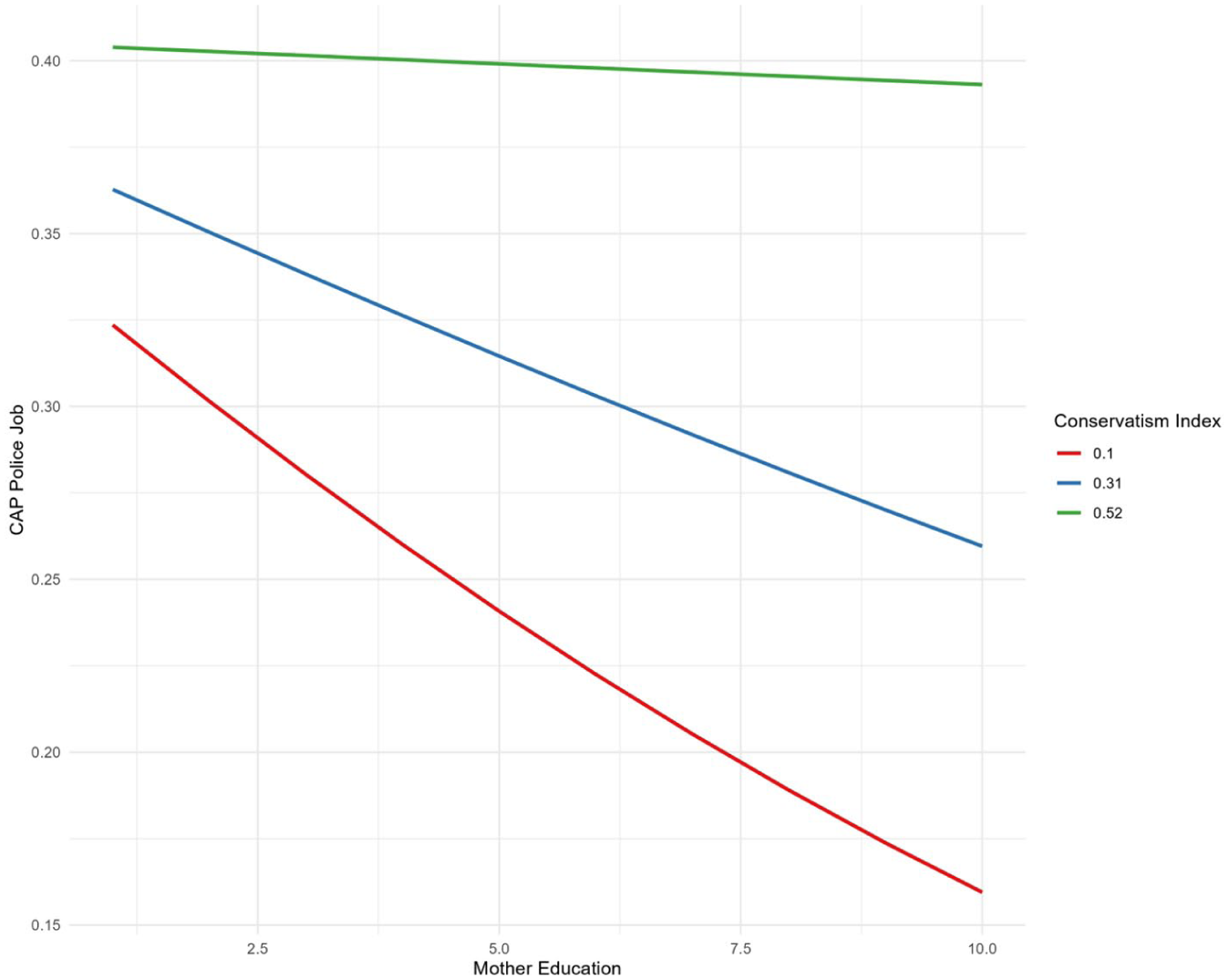
The Combined Effect of Mothers’ Education and Conservatism Index on the Likelihood to Join a Military Police Job.
This supports our “Becoming AND Getting By” hypothesis by showing that even among youth not exposed to economic vulnerability, those whose worldview aligns with military institutions may still be inclined to pursue a career in the military police, a choice that is pivotal for underprivileged youth. This dynamic contributes to bringing together individuals with different backgrounds under a shared interest in a military occupation.
Discussion
Young people emphasized in our survey appreciation for salary, stability, food allowance, and the material benefits of a military career. In addition, special retirement and pension packages available to military personnel in Brazil represent a significant long-term incentive. These regimes typically allow for earlier retirement, full salary pensions, and benefits extended to dependents, including widow and orphan pensions, with more favorable conditions than those available in civilian public service. These institutional guarantees reinforce the perception of the armed forces as a career of protection, privilege, and security, not only during active service but also across the life course—especially in a country marked by labor market instability and extreme income inequality. Besides the economic benefits, there is a civilian component, with many of those who are in the armed forces being allocated a civilian post in the government. This seems appealing to individuals and when we compared the appeal of the armed forces with that of the military police, who face more direct violent confrontations, the military police was less popular in general, being thus an option for individuals in greater financial need or highly conservative individuals, as our findings demonstrated.
Military police officers often face direct involvement in crime control, riots, and other high-stress, dangerous domestic environments. In addition, in Brazil, there is reliable evidence that people don’t show trust in the police, who are seen as unable/unwilling to protect or respect citizens’ rights (G. F. Silva & Beato, 2013). An original research called Social Perception Indicators System of Public Service, conducted in 2011 by the Institute for Applied Economic Research (IPEA), showed that only 4% of Brazilian people say they deeply trust the military police, while one-quarter say they do not trust them at all (de Oliveira Junior, 2011). In contrast, the armed forces hold a more prestigious social position, are highly trusted by the population, and, on average, pose fewer life-threatening risks.
However, a key point to discuss is that most of the police officers in the operational role, particularly at the entry level of the career, come from lower socioeconomic backgrounds, specially from Black families. This occupation offers this group, who are highly discriminated against in society and sit at the base of Brazil’s social pyramid, an exit from poverty. This is why although less popular in our research than the armed forces in general (32.16% of respondents expressed interest in a career in the military police, compared with 43.84% who showed interest in the armed forces), a career in the military police is still coveted by some. Sansone (2002) describes that in the State of Rio de Janeiro the police is an organization where Black and brown Brazilians are better represented than in any other private or public company. Brazilians feel attracted to this job because of its indirect benefits, employment stability, and being able to study while in employment, making it an effective path to better opportunities (Sansone, 2002). While for upper class White Brazilians the risks outweigh the benefits, for poor Black Brazilians the uniform offers economic and social mobility (Sansone, 2002, p. 524).
As briefly mentioned above, an important finding to discuss here is the interaction between maternal education and high conservatism. Although higher levels of maternal education would typically reduce the likelihood of considering a career in the military police, this effect is not observed among individuals with stronger conservative attitudes, for whom the inclination toward such a career remains (see Figure 5). Regarding the armed forces, maternal education was not found to be statistically significant. It is also important to point out that we chose to use solely the mother’s education level rather than also using the father’s to reduce data loss. A total of 18.83% (n = 387) of cases are missing data for the father’s education variable in the system, and these are not randomly distributed within the research sample. There is a bias linking these cases to youths from lower socioeconomic backgrounds. We attempted to apply a multiple imputation strategy; however, the adjustment of the logistic model was compromised. Given the evidence that the effect of both the mother’s and both parents’ education levels on children’s academic achievement is similar (Hill, 2015), we have adopted the mother’s education variable as the sole proxy.
There is a positive correlation between being Evangelical and being likely to join a military police career. Although the magnitude and statistical significance of the correlation between being Evangelical and interested in a military career is a pattern that deserves further discussion, one possible explanation comes from exploratory conversations with young people already in military careers conducted prior to the survey, when the authors of this study applied some questionnaire trials to test the relevance of our questions. What our interviewees told us is that within military careers, they have religious meetings, which socialize them, with most members joining Evangelical or Catholic services. Because it is widely held that these careers are quite conservative in faith and in social behavior, we believe there is a self-fulfilling prophecy where people knowing that heteronormative Brazilians with a religious background are the majority in the military leads to people with that same background professing interest in the career.
Another possible interpretation is that Evangelical respondents may perceive military careers as more institutionally legitimate or morally aligned with their worldview, especially in light of the political context in recent years. Under the Bolsonaro administration, the military was not only highly visible in public discourse but was often framed as a guarantor of stability, national sovereignty, and moral order—values that may hold importance among Evangelical communities. It is also worth noting that Evangelical support for authoritarian-leaning political figures has been consistently observed in Brazil, particularly in recent electoral cycles. In several public opinion polls during the 2022 presidential campaign, Jair Bolsonaro outperformed Luiz Inácio Lula da Silva among Evangelical voters, even in regions such as the Northeast, where the Workers’ Party (PT) has historically enjoyed strong support. This pattern suggests a distinct ideological alignment between segments of the Evangelical population and conservative or order-oriented narratives, which are often associated with military careers as guarantors of national stability and moral authority. Such preferences may help explain why Evangelical respondents in our study showed stronger interest in military police careers, a career with a more direct connection to law-enforcement and street-level authority (CNN Brasil, 2022; Prazeres, 2022).
Finally, our study also shows indigenous people as a group that has strong interest in military careers. This is a vastly understudied topic, but one possible explanation from de Queiroz Campos Araújo’s (2024) unpublished ethnography in this field is that indigenous lands are highly militarized. The interface between indigenous people and the state is often via armed forces—one potential reason why young people from indigenous communities choose to join military groups. Further analyses with a large sample of indigenous people should be done to evaluate to what extent these results hold or are due to our smaller sample size.
Conclusion
In this article, we presented a comprehensive analysis of the factors influencing Brazilian youths’ propensity to pursue military careers. Using novel data from a national survey, we find a complex interplay of socioeconomic variables, conservatism, and the impact of the COVID-19 pandemic in shaping career choices toward the armed forces or the military police.
One key finding is the significant influence of race. Consistent with previous studies traditionally conducted in the United States (Bartling & Eisenman, 1992; Griffin et al., 2020; Stender, 1972), non-White men, particularly Black and brown individuals, are more likely to enter a military career. This trend highlights the role of military institutions as avenues for upward mobility for minorities.
Our analysis of maternal education levels offers intriguing insights. The data reveals a nuanced impact of a mother’s educational attainment on their child’s propensity to pursue a career either in the military police or the armed forces. Specifically, higher maternal education levels correlate negatively with the likelihood of choosing a career in a military police force and exhibit a non-significant positive correlation with inclination toward military careers. This pattern hints at an underlying socioeconomic stratification embedded within these career choices. Typically, individuals from less affluent backgrounds tend to gravitate more toward the military police. In contrast, those from more economically advantaged backgrounds, measured by higher maternal education levels, show a propensity toward careers in the armed forces. One important nuance to that is that highly conservative individuals, despite their mother having a high level of education, may consider the police. This corroborates the findings we explain below.
Our study also highlights the role of conservatism in determining career choices. Individuals with conservative views are more likely to choose careers in the military police or armed forces, aligning with the institutions’ traditional values. These estimates are robust to different model specifications and statistical controls. This finding adds a new dimension to our understanding of the interplay between personal ideology and career choices, particularly in a militarized and politically polarized environment.
The impact of the COVID-19 pandemic cannot be understated. The heightened economic uncertainties and job insecurities during this period have evidently increased the attractiveness of military careers among the youth. This trend reflects the broader socioeconomic challenges Brazil faced during the pandemic, particularly among younger demographics who experienced high rates of unemployment and job market instabilities.
A few points in our findings deserve further examination and we will use this space to discuss our limitations and suggest further studies. We were guided by studies previously done in the United States and when adapting to the Brazilian context, we were vulnerable in possible omissions in both literature discussion and questionnaire design. We hope to conduct more rounds of this survey and create a long-term dataset and bibliographic review on the topic. We looked at parental education as a proxy for income given the difficulties of directly measuring income, such as informal labor and flexible gains, particularly in pandemic times (de Souza Santos, 2022). Considering the existing literature, we would expect that high educational attainment from parents would decrease the likelihood of their children joining military careers, but we have not seen that in the case of Brazil. The armed forces were viewed positively among educated (wealthier) Brazilians. It is understood that joining the police is considered a more dangerous career path, considering the violent nature of Brazil domestically, and the police was indeed considered a less prestigious choice among those of higher educational background. What requires further examination is the reason why education did not reduce the inclination to join such careers overall. Further studies might simply repeat the survey to investigate whether the effects of the pandemic offer an explanation, given the lack of stable jobs during that period. Another possibility is that higher education has increased in Brazil and may no longer be a good proxy for income unless the type of higher education institution is considered, with presumably a strong difference between private (more accessible to lower income Brazilians) and public institutions (more competitive and traditionally more elitist institutions). Finally, the ideological spectrum here matters, and Bolsonaro voters and more conservative sectors of Brazil make up a large proportion of the middle and upper classes, which would help explain why military careers may also be popular among those who are not socioeconomically disadvantaged.
Another notable observation from this study is the strong tendency among Evangelicals to show interest in military careers. Compared with other groups, they are more inclined to consider joining the military police. This increased interest among Evangelicals, and Christians in general, in pursuing military careers in Brazil deserves a closer look. Investigating this phenomenon could involve an ethnographic study of religion, focusing on how it intersects with the career aspirations of young people. David Lehmann, a sociologist specializing in Evangelical religion in Brazil, posits an interesting angle. Instead of questioning if Evangelical religion promotes political authoritarianism, Lehmann suggests that Evangelical churches might be more appealing to individuals with authoritarian tendencies (Lehmann, 2025). This perspective opens up the possibility of exploring whether a similar pattern exists in the context of military careers.
Our study also has practical implications: Bachman et al. (2000) find that propensity translates into enlistment, especially among those of somewhat below average socioeconomic background. Therefore, if young people in Brazil are more prone to enlisting, it is important to know the reason why. A strong intention to join and positive perception of the career can lead to longer career stay. In contrast, while negative perceptions of the job market can be a catalyst for a surge in interest in military careers, if the economic benefits alone are the driver for joining the military, the duration of such a career is more likely to be short, and recruits may feel like misfits (Ford et al., 2013).
In short, our study confirmed Bartling and Eisenman’s (1992) findings that non-White groups had a more favorable attitude toward military service than did White Brazilians; and military jobs may provide opportunities for minorities that are not as easily available in the wider society. What this study also shows is that there is a possible imbalance between perceptions of military and civil careers in Brazil in times of economic and health crisis. Although this means that more stable jobs may need to be created for Brazilian youth, there is evidence from the United States that military service is associated with a reduction in rates of delinquency, aggressive behavior, and drug use over time (Orak & Walker, 2019). Individually, military careers could constitute a positive career choice, particularly when other options are not available. However, socially, and in the context of Brazil, it is important to consider political implications when this becomes a central career path given the recent past of a military dictatorship in the country.
Footnotes
Declaration of Conflicting Interests
The authors declared no potential conflicts of interest with respect to the research, authorship, and/or publication of this article.
Funding
The authors disclosed receipt of the following financial support for the research, authorship, and/or publication of this article: Andreza and Gabriel wish to thank the University of Oxford’s John Fell Fund Grant number M3D00180.
