



Abstract
This study analyzes how military organizations navigate tensions between public accountability and internal learning processes through a detailed examination of two training accidents at the IDF. Using a mixed-methods analysis of media coverage spanning two decades, this research explores how organizational learning processes, transparency, and public trust interact during crises. The findings reveal inherent tensions between transparency and information security requirements, demonstrating how over-reliance on security arguments can backfire, leading to the loss of information control and erosion of public trust. The findings show that media discourse focusing on systemic failures rather than individual accountability leads to more significant organizational changes. The study introduces the concept of “second-order reliability”–the need for organizations not only to be reliable but also to be perceived as such by stakeholders. These findings offer guidance for organizations managing learning processes during crises, with implications for understanding contemporary challenges in military crisis management.
Keywords
Introduction
In complex organizational settings, accidents and crises can be viewed as windows into the fundamental dynamics of organizational learning, accountability, and institutional legitimacy. On July 17, 1990, during a live-fire brigade exercise, an artillery shell was fired toward a position occupied by reserve soldiers from the Oded Brigade, which resulted in five fatalities and 10 injuries. The accident became known as “Tze’elim A.” Subsequent investigations have revealed significant deficiencies in training management and safety protocols. Several officers, including the training battalion commander and the artillery coordination officer who authorized the fire order, faced military court proceedings, and the base commander received an official reprimand. The second accident, “Tze’elim B,” occurred on November 5, 1992, during a specialized training exercise by the military’s elite Special Forces Unit, Sayeret Matkal. At 6:10 AM, during what was explicitly designated as a “dry run” phase, where no live ammunition was permitted, missiles were accidentally launched inside a training structure occupied by the soldiers. The missiles, intended only for a subsequent “live” phase, when the structure would be vacant, killed five soldiers immediately, and wounded five others. Notably, senior military leadership, including the IDF Chief of Staff and his deputy, were present during this exercise. Foreign media subsequently reported, and Israel later confirmed in 2003, that the exercise was preparation for a planned operation targeting Iraqi President Saddam Hussein. Both accidents prompted formal investigations, including the Einan Committee for Tze’elim B, which operated alongside military police investigations. These inquiries led to various disciplinary actions, including the prosecution of officers involved in the accidents.
This study employs a comparative analysis of Tze’elim training accidents to examine organizational learning in high-reliability military institutions. These cases, occurring during a pivotal period in Israeli civil-military relations, illuminate three critical dimensions: how organizations transform failure into learning, how stakeholder trust is lost and rebuilt, and how institutions balance transparency with security requirements (Bundy & Pfarrer, 2015; Gillespie & Dietz, 2009; Greve et al., 2010; Madsen & Desai, 2010).
Drawing from Weick et al.’s (2008) concept of collective mindfulness and Bundy and Pfarrer’s (2015) social approval framework, this research examines how organizations navigate what we term “second-order reliability.” Through an analysis of the media discourse surrounding the Tze’elim accidents, we investigate how military organizations manage the complex interaction between organizational learning and external accountability. By examining how learning processes, transparency, and public trust were portrayed and discussed in the media during these cases, this research seeks to understand how public media dynamics influence an organization’s ability to learn and improve. These insights are particularly relevant for understanding the challenges facing the IDF and other defense organizations, especially regarding the tensions between transparency, public trust, and organizational learning, while recognizing that contemporary applications require adaptation to fundamentally different media environments. To this end, this study examined the following questions:
How does the need to restore public trust affect the IDF’s ability to learn and improve effectively after a crisis?
How does the IDF balanced the need for transparency and the maintenance of information security during a trust crisis?
How do media and public discourse influence organizational learning processes in the IDF following a significant failure?
The article begins with a literature review describing the background of civil-military relations in Israel, and then focuses on theories of organizational failures and learning, expanding on the interface between organizational failures and managing institutional legitimacy. The methodology section follows, detailing the discourse analysis approach and elaborating on the rationale for the case selection. Engaging with the research questions, the analysis focused on the impact of public discourse, media life cycle, and the tension between secrecy and transparency. Finally, the discussion offers applications of Tze’elim lessons learned, along with conclusions and recommendations for militaries and future research, as the current crisis, post October 7th, and its effects in this domain will be felt for many years.
Theoretical Framework
The central theories building the theoretical framework explain the challenges facing the IDF, focusing on civil-military relations in Israel, complex organizational accidents, crisis communication with an emphasis on institutional image and public trust, and their impact on learning processes in military organizations.
Civil-Military Relations and Organizational Learning
The distinctive nature of Israeli civil-military relations has become particularly salient in crises. The IDF, like other Western militaries, operates within a high-stakes institutional environment (Bundy & Pfarrer, 2015), where organizational legitimacy must be continuously negotiated between operational imperatives and civilian oversight demands. This dynamic stands in stark contrast to cases such as the Russian Kursk submarine disaster, in which all 118 sailors perished when the vessel sank to the bottom of the Barents Sea in August 2000. Russia’s approach to the Kursk crisis exemplifies how centralized governance structures can undermine institutional learning—restricting media access, minimizing civilian oversight, and preventing stakeholder engagement that catalyzes organizational reform (Barany, 2004; Leksin & Mock, 2018). There is institutional tension between maintaining operational security and satisfying intensified public demands for transparency and accountability. Unlike Western European contexts, where civil-military boundaries maintain relative institutional distance, and authoritarian systems, where military autonomy precludes substantial public oversight, the Israeli case represents a unique configuration of institutional accountability and social integration (Ben-Ari et al., 2018). Rather than viewing military organizations as isolated entities learning from failure, we conceptualize organizational learning as occurring within civil-military encounters–dynamic interactions between multiple stakeholder groups that transcend traditional civilian-military dichotomies (Cohen & Cohen, 2020). This allowed us to examine how the changing patterns of civil-military relations in Israel during the 1990s influenced both the public response to military failures and the IDF’s organizational learning processes after the accidents.
This period was characterized by increasing civilian encroachment on previously autonomous military domains. Levy’s (2003, 2012) analyses of Israeli civil-military relations document this period as a critical juncture in the civilization of military affairs. The first is the emergence of more critical media coverage of military affairs, moving beyond what Ben-Ari et al. (2018) describe as the traditionally deferential approach of Israeli journalism toward the IDF. Second, the growing willingness of the Supreme Court to intervene in military matters is exemplified by landmark decisions regarding gender integration and religious accommodation (Lebel, 2007). The third is the increasingly vocal role of soldiers’ parents in military affairs, particularly regarding training safety and operational decisions (Lebel, 2007).
These changes fundamentally altered the penetrability of civil-military boundaries in Israel. While the IDF has historically enjoyed significant autonomy in managing its internal affairs, this period witnessed the emergence of new forms of public oversight and accountability. As Madsen and Desai (2010) demonstrate in their analysis of learning from failure, organizational responses to crises are deeply shaped by the institutional context. In Israel’s case, the close coupling of the military and civilian spheres creates unique pressures for organizational adaptation. Military failures resonate deeply within Israeli society, with simultaneous pressure from media organizations, legal institutions, and civil society actors that shape both the process and outcomes of organizational learning efforts (Greve et al., 2010). Bundy and Pfarrer’s (2015) conceptualization of social approval assets helps explain how organizations across sectors–from military institutions to private corporations–must manage public perceptions while implementing internal learning processes. The U.S. military’s post-9/11 organizational transformation demonstrates how intelligence failures can drive fundamental institutional change and restore public trust (Chanley, 2013; Zegart, 2009).
Complex Organizational Accidents
The analysis of Tze’elim accidents draws primarily from two complementary theoretical perspectives that directly inform our understanding of military accidents and organizational responses. First, Perrow’s (1984) Normal Accident Theory (NAT), developed in the 1980s following the Three Mile Island nuclear accident. Perrow argued that in complex organizations with tight coupling between systems, accidents are inevitable, even in high-stakes environments such as nuclear facilities. Despite their catastrophic costs, he termed these “normal accidents.” The Tze’elim accidents exemplify what Perrow terms “interactive complexity” and “tight coupling” where specialized units, complex command hierarchies, and time-sensitive operations created environments where small errors could rapidly cascade into a disaster, as demonstrated in cases ranging from naval accidents to air defense failures (Sagan, 2004). Following this framework, Kayyem (2022) argues that increased investment in preparedness for extreme events reduces the likelihood of severe impacts, which, in turn, makes it harder to justify further preparedness investments because fewer impacts are felt, creating a false sense of security. This theory helps explain military organizations’ challenge of maintaining high readiness during periods of relative calm, particularly relevant, for example, to understanding the IDF’s pre-October 7 environment.
In contrast, Weick and Sutcliffe’s (2007) work on high-reliability organizations provides the second theoretical foundation for our analysis. They argued that organizations can operate safely and reliably, even in hazardous and complex environments. Their research, which included studies of aircraft carrier operations, air traffic, and military command centers, emphasizes the importance of “organizational mindfulness” the ability to identify and respond to early warning signs of potential problems. After Tze’elim A, investigation processes reflected a more limited “preoccupation with failure” (Weick and Sutcliffe, 2007), focusing primarily on procedural violations rather than systemic vulnerabilities. Following Tze’elim B, however, investigative processes eventually demonstrated greater “reluctance to simplify” (Weick and Sutcliffe, 2007), as external stakeholders forced more comprehensive examinations of underlying organizational factors.
These theories provide military organizations with tools to manage complexity and uncertainty. Argyris (1977, 2004) organizational learning theory identifies the distinction between “single-loop learning” (correcting errors within existing norms) and “double-loop learning” (examining and changing basic norms). The Tze’elim cases reveal how public discourse and stakeholder pressure can push military organizations from single-loop to double-loop learning when internal mechanisms are insufficient. This dynamic becomes particularly evident in the media cascade model identified in our findings.
While these theories provide insights into optimal organizational learning processes, they do not fully address the interface between public discourse, where organizational trust and reliability are determined, and internal organizational learning spaces.
Crisis Communication and Organizational Legitimacy
The media discourse surrounding the Tze’elim accidents reveals the IDF’s struggle to maintain what Suchman (1995) identifies as organizational legitimacy. He defined organizational legitimacy as the perception that organizational actions are desirable and appropriate within a social system of norms, values, and beliefs. Organizations, including militaries, must maintain three types of legitimacy:
Pragmatic legitimacy: Based on stakeholders’ self-interests
Moral legitimacy: Based on normative evaluation of organizational activities
Cognitive legitimacy: Based on comprehensibility and taken-for-grantedness
The tension between these legitimacy forms is evident in the contrasting media framings of the two accidents, where pragmatic concerns about operational readiness frequently conflict with moral evaluations of accountability and transparency.
Coombs’ (2007) Situational Crisis Communication Theory (SCCT) provides an analytical framework for understanding the IDF’s divergent response strategies following each accident. According to SCCT, organizations should align their crisis responses with stakeholders’ attributions of responsibility. Our analysis reveals that the IDF’s responses to Tze’elim A (primarily employing corrective action strategies) versus Tze’elim B (employing more defensive strategies centered on operational security) produced dramatically different outcomes in terms of media coverage and institutional learning.
Theoretical Integration
Integrating these theoretical perspectives enables us to conceptualize what we term “second-order reliability”—the requirement for military organizations to not only be operationally reliable but also to be perceived as such by their stakeholders. In the Israeli context, this concept illuminates the distinctive challenge faced by the IDF during the 1990s: maintaining operational effectiveness while simultaneously managing evolving public expectations for transparency and accountability.
Cohen and Cohen’s (2020) framework of civil-military encounters provides the crucial analytical bridge between organizational learning theories and crisis communication approaches. Their conception of military organizations as embedded within dynamic stakeholder networks helps explain the specific patterns observed in the Tze’elim cases, where media discourse, bereaved families’ advocacy, and institutional responses interacted to shape learning outcomes.
Our comparative analysis of the Tze’elim accidents tested three hypotheses derived from this integrated framework:
These hypotheses address critical gaps in our understanding of how military organizations balance operational learning while maintaining public trust in increasingly transparent institutional environments.
Research Design and Methodology
Through a systematic analysis of media coverage spanning two decades (1990–2011) this study examines how organizational learning processes in military institutions are shaped by public discourse and stakeholder interactions during crises. To explore our three hypotheses, we employ SCCT (Coombs, 2007) as our primary analytical framework for understanding how organizations navigate stakeholder attributions during crises and how public discourse shapes organizational adaptation processes.
We conducted a systematic comparative case analysis of media discourse surrounding the Tze’elim accidents (LaPorte & Consolini, 1991; Perrow, 1984 Rochlin, 1993; Weick & Sutcliffe, 2007) in three interconnected analytical stages. First, we examined how public attributions and organizational responses evolved over time in a mixed-methods approach to media discourse analysis (Alvesson & Karreman, 2000; Ebrahim, 2003; Hamad et al., 2016). Second, we analyze how changing patterns in civil-military relations shaped both crisis response strategies and learning processes. Finally, we examine how these dynamics influence institutional adaptation and reform. This integrated approach combines quantitative analysis to identify broad discourse patterns over time with qualitative analysis to understand their deeper implications for organizational learning and trust-building processes.
Data Collection
The main sources of data were daily newspaper and magazine articles, television and radio interviews, and official IDF spokesperson announcements. To extend the validity of the data collection, a variety of sources were included for methodological triangulation, including academic publications, books, and investigation committee protocols. (Levitt et al., 2017).
Our data corpus comprises 192 systematically collected Hebrew texts spanning from 1990 to 2011, a period chosen to capture the critical evolution of civil-military relations in Israel while maintaining analytical consistency in terms of media environment and institutional context. We selected Hebrew language sources, leveraging the cultural and linguistic expertise of the research team. This methodological choice aligns with recent organizational research emphasizing the importance of analyzing texts in their original language to preserve contextual nuances and institutional meanings, which is particularly important for military-specific terminology and cultural references (Srivastava & Goldberg, 2017). The full list of sources is presented in Table 1.
List of Sources for Data Collection.
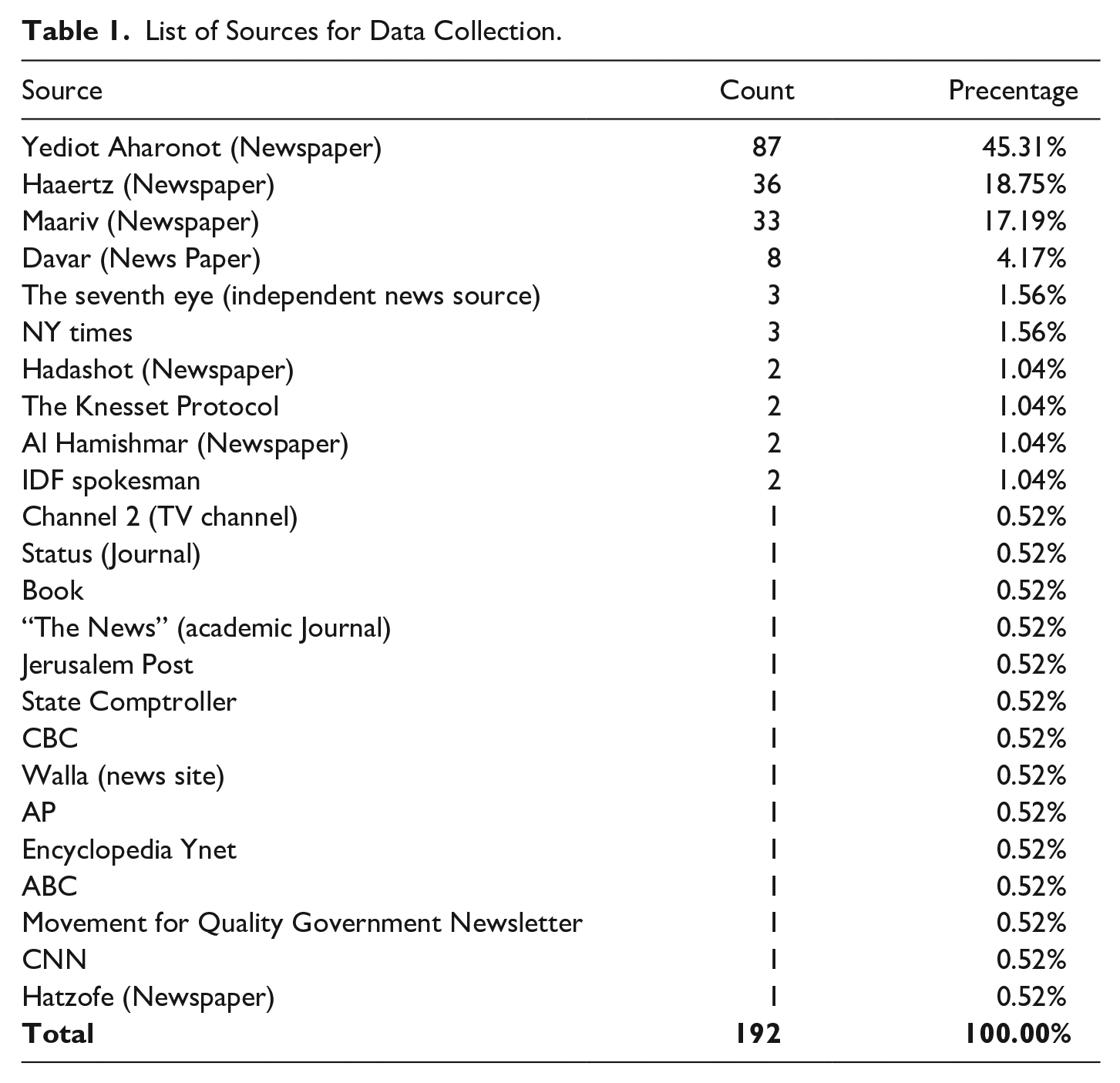
The selection of the temporal frame rather than retrospective accounts or internal documents reflects our theoretical interest in how public discourse shapes organizational adaptation in real time. While valuable historical accounts exist, including Assenheim’s 2012 book 1 and television documentary, 2 these retrospective analyses represent different forms of sensemaking that fall outside our analytical focus on the dynamic interplay between public discourse and organizational learning. This temporal span allows for the analysis of both immediate media response and long-term discourse development.
Data Analysis
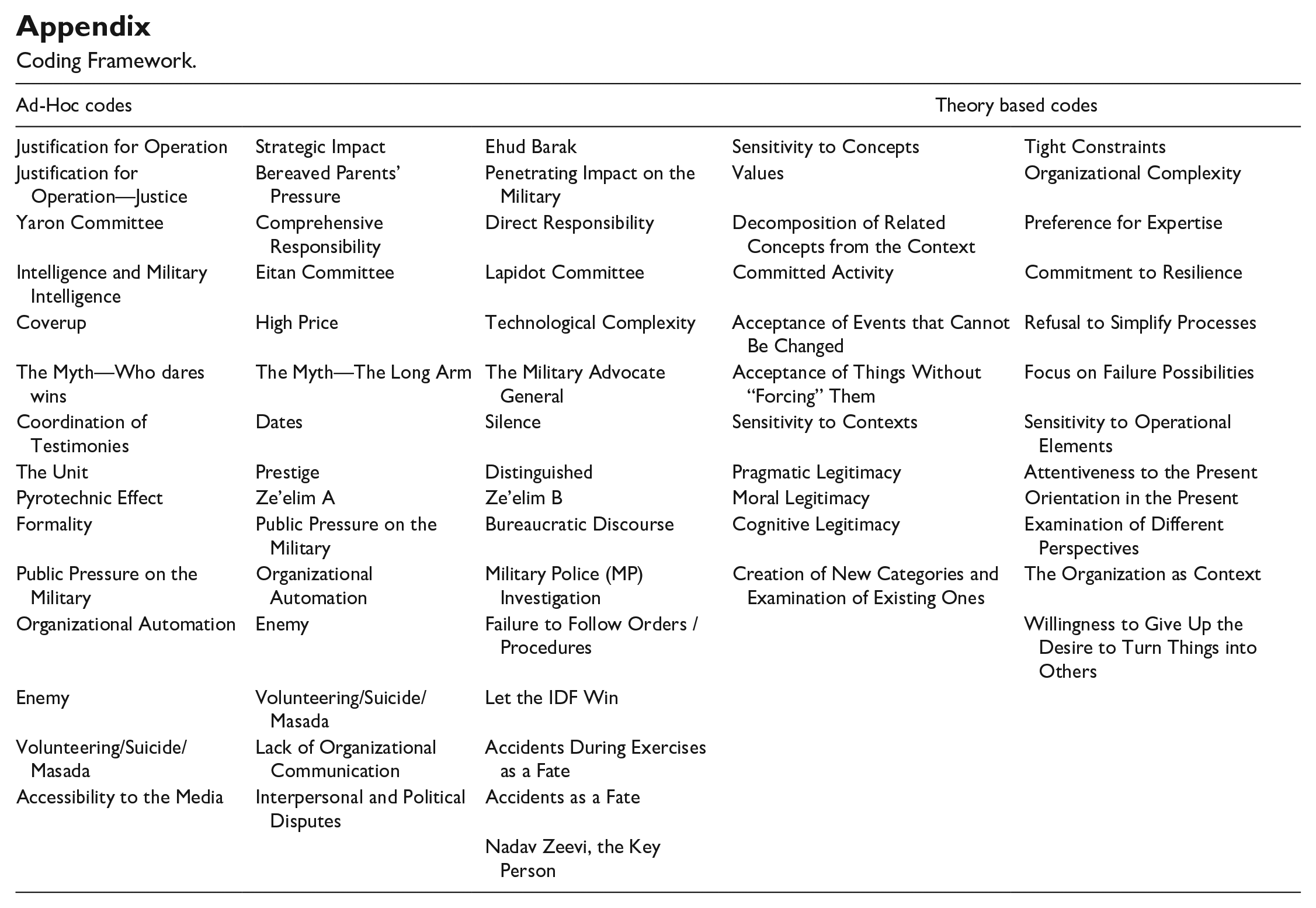
The coding process integrates both deductive and inductive approaches (Krippendorff, 2018; Skalski et al., 2017). Initial coding employed theoretically derived categories based on organizational learning and crisis communication frameworks. These were supplemented by emergent categories identified through iterative analysis. The final codebook comprised approximately 140 categories organized hierarchically to capture both broad themes and nuanced variations in discourse patterns (the codebook itself is available in the Appendix).
The study utilized ATLAS.ti software for systematic discourse analysis (ATLAS. Ti, 2018; Woolf & Silver, 2017). The software allowed simultaneous coding at multiple analytical levels, which is essential for examining the complex relationships between public discourse, organizational learning, and institutional trust. It also provided tools for temporal analysis, enabling the tracking of narrative evolution and theme development over the 20-year study period.
Methodological Limitations
This study acknowledges several methodological choices that require careful consideration. The cases studied (1990–2011) predate the social media era, potentially limiting direct application to contemporary military crisis communication (Akhgar et al., 2013; Castells, 2010; Fearn-Banks, 2011; Greenwood, 2022; Jost et al., 2018). Digital archive accessibility created source bias, particularly in newspaper representation. In addition, reliance on public sources may not fully capture internal organizational processes. Moreover, we also acknowledge that conducting analysis in Hebrew creates potential replication challenges for non-Hebrew-speaking researchers.
To address these limitations, this study employed systematic source triangulation, temporal comparison across cases, and integration of multiple theoretical frameworks. While the cases are specific to the Israeli context, the analysis emphasizes the underlying patterns of organizational learning and crisis responses that remain broadly relevant to military organizations. The complete Hebrew corpus was archived and made available upon request, and our methodological procedures were explicitly detailed to enable similar analyses in other linguistic contexts. These methodological controls enable meaningful insights while acknowledging the contextual boundaries of the research.
Findings
The analysis revealed significant patterns in how media coverage shaped and reflected organizational learning processes in the IDF following these training accidents. The findings are presented in three main sections: source analysis, media life cycle analysis, and cascade of influences following military failure.
Source Analysis and Distribution
Content analysis of 192 texts, comprising approximately 1,000 pages, revealed distinct patterns in media coverage. The distribution of sources showed that Tze’elim B received almost 10 times more coverage than Tze’elim A (see Table 2), suggesting significantly different organizational and public responses to these accidents.
Distribution of Sources by Case.
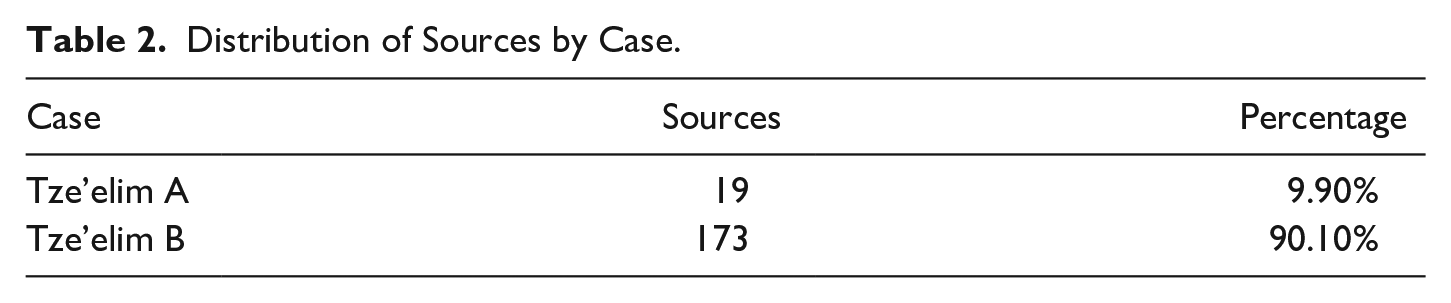
This disparity in coverage appears to be linked to two key factors. First, heightened public interest in accidents involving elite units that claim “high reliability” status—in this case, Sayeret Matkal, the IDF’s premier special forces unit. The gap between the unit’s prestigious reputation and the training accident created tension in public discourse. Second, paradoxically, attempts to restrict information about Tze’elim B appeared to backfire and generate increased media attention, as journalists sought to uncover details about the accident.
Quantitative Analysis of Media Density Over the Years
The comparative analysis of media coverage patterns reveals distinct trajectories in how organizational accidents evolve in public discourse. While both Tze’elim accidents generated immediate media attention, their subsequent development patterns differed significantly, offering insights into how organizational response strategies shape public discourse.
The media life cycle of Tze’elim A followed a conventional crisis pattern: an initial surge of coverage followed by a gradual decline, with a brief resurgence during legal proceedings and subsequent diminishment after the court ruling. This trajectory suggests successful institutional containment through traditional legal-bureaucratic channels. As seen in Figure 1.
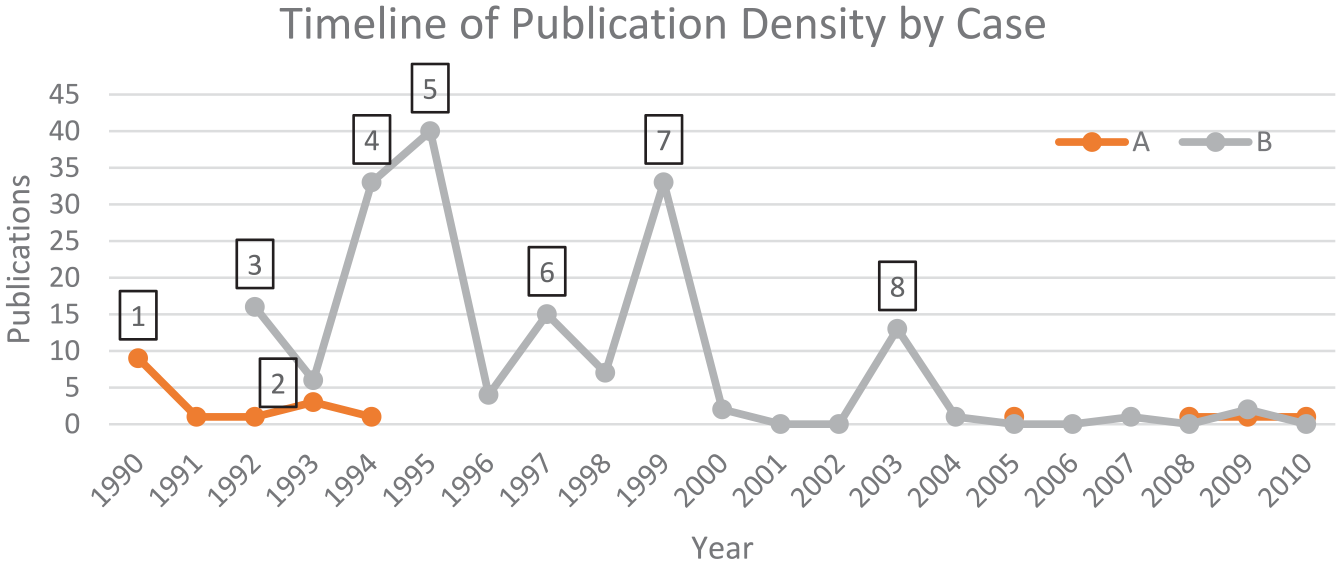
Timeline of Publication Density by Case. On the Graph Appears the List of Key Events.
Tze’elim B demonstrated a more complex pattern of sustained media attention that persisted beyond legal proceedings. The military court’s emphasis on operational security paradoxically intensified public interest. As described in the news article—“Military court judges rejected last night the request of bereaved parents from the Tze’elim B disaster to attend the trial against Major K and Captain A, and the trial will be held behind closed doors” (Yediot Aharonot, June 10, 1994). This dynamic called for intervention from additional oversight bodies, particularly the State Comptroller.
The paradox of disclosure: The evolution of the official narrative in Tze’elim B illustrates the known phenomenon that attempts to maintain information control can amplify public scrutiny (Sah, 2023; Seeger & Ulmer, 2002).
Semi-random resonance: We noticed a distinctive feature: periodic resurgences of media coverage triggered by tangentially related events. These included personal tragedies, such as murder of a man who had previously lost his father on Tze’elim A (Maariv, August 3, 2009), retrospective interviews with first responders on site in Tze’elim B (Yediot Aharonot, November 6, 2009), and the politicization of events through campaigns like “Ehud Ran Away.” 3 Each new disclosure, particularly following Saddam Hussein’s 2003 capture, generated fresh waves of media coverage and public response. These resonances, functioning as what Lacan terms “Points de Capiton,” (Evans, 1996), demonstrate how organizational accidents become enduring reference points in public discourse, continuously attracting attention and affecting institutional legitimacy.
Cascade of Influences Following Organizational Failure
The analysis revealed a systematic cascade of effects following military training accidents, progressing through distinct phases that shape organizational learning in the news article and responses, as seen in Figure 2.
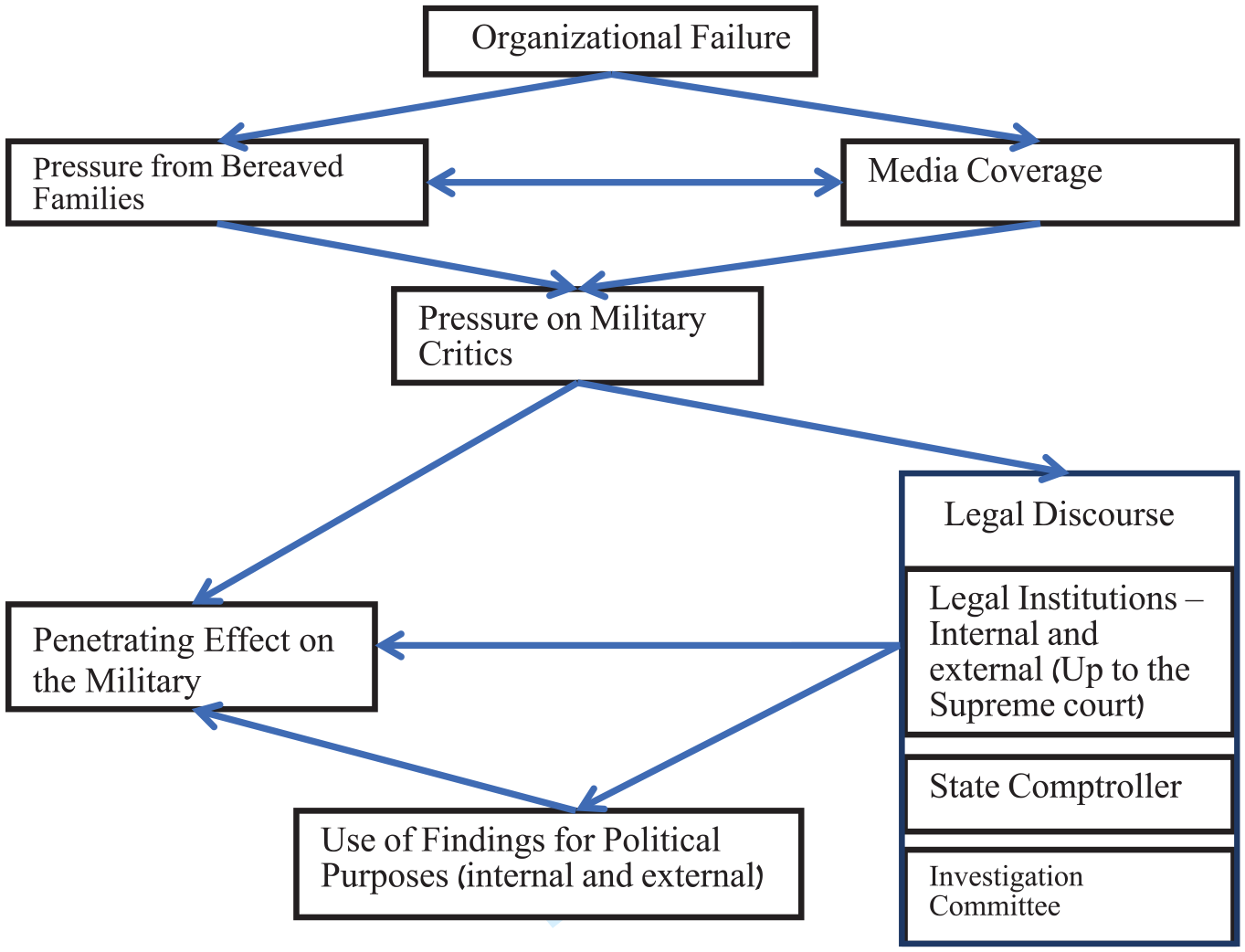
Cascade of Influences Following Organizational Failure.
Initial Media Exposure: The cascade begins with immediate media coverage. In Tze’elim A, reporting emerged within 24 hours, while in Tze’elim B, despite containment efforts, information reached the international media within days and only then was published nationally (Yediot Aharonot, November 10, 1992).
Bereaved Families’ Pressure: As investigations begin, bereaved families emerge as crucial stakeholders that drive public discourse. Their demands for accountability gain momentum through media coverage and even direct engagement with parliament members.
Military Response: The organization responds through internal investigations. The IDF established committees for both accidents: the Major General (MG) Sagi committee, which proved insufficient; a second committee under the MG (Reserve) Yaron for Tze’elim A; and the Einan Committee for Tze’elim B. These internal investigations often proved insufficient to address public concerns, as evidenced by committee member critique of “severe deficiencies” (Yediot Aharonot, July 7, 1995).
Legitimacy Preservation Through External Authority: The military seeks legitimacy through trusted external institutions while managing tensions between transparency and security requirements. This phase often involves complex negotiations between public accountability and operational security needs. .Parliamentary committees and the State Comptroller were involved, elevating scrutiny and the demand for comprehensive investigation. This external oversight often challenges initial military narratives and investigation findings.
Pressure-induced Organizational Change: The culmination of these pressures leads to significant organizational adaptations. Following the Tze’elim accidents, the IDF implemented substantial safety reforms, demonstrating how external pressure can drive internal changes (Oren, 2007).
Long-term Reputational Impact and Secondary usage (political and other) in the reports: These accidents continue to influence organizational reputation through periodic media references, affecting institutional legitimacy long after their occurrence. These references often emerge during unrelated events or political development (e.g., “Ehud ran away” slogan).
At the time of publication, early observations of the IDF’s investigation into events of October 7, for example, the fight at Kibbutz Be’eri combat, demonstrated similar dynamics, although they were accelerated and complicated by unique factors: managing relationships with hostage families and bereaved families, addressing community-wide trauma, and increased demands for transparency in an era of social media and alternative narratives (Bar-Gil, 2024b; Bnnvara, 2018; Castells, 2010; Chadwick, 2017; Jost et al., 2018; Karunakaran et al., 2022).
Between Secrecy and Transparency
An analysis of the IDF’s response strategies in both Tze’elim accidents revealed distinct approaches to crisis communication. In Tze’elim A, the organization employed what Benoit (1995, 2000) terms “corrective action,” characterized by rapid disclosure of investigation findings and procedural changes to prevent future accidents. In contrast, Tze’elim B featured strategies for responsibility evasion and accident downplaying, heavily utilizing security classifications. This divergence in approach significantly influenced public trust and organizational learning capacity, aligning with Coomb’s (2007) SCCT.
The tension between secrecy and transparency emerged most prominently in Tze’elim B, exemplified by a quote from Yediot Aharonot (June 12, 1994): “The state claims it has secrets to protect. . . The parents counter that the state isn’t protecting secrets, but rather its ability to manipulate the legal process.” Defense Minister Yitzhak Rabin issued a confidentiality order restricting information even from military court judges (Yediot Aharonot, June 26, 1994), paradoxically intensifying public mistrust. Excessive secrecy often backfires, reminiscent of Wegner’s (1994) ironic processing theory, where attempts to suppress information intensify public interest, as suggested by the paradox of disclosure (Sah, 2023; Seeger & Ulmer, 2002). The military’s use of censorship as an organizational defense mechanism became increasingly problematic, particularly when information control became politicized. This dynamic was evident in the selective disclosure of information regarding the operational intent of the Tze’elim B exercise—to assassinate Saddam Hussein, following his capture by the U.S. military (Yediot Aharonot, December 16, 2003)–demonstrating how security classification can serve institutional legitimacy and image interests beyond operational necessity.
Public Pressure’s Impact on Military Investigation and Learning Processes
The influence of public pressure on military investigation and learning processes, as reflected in the Tze’elim cases, provides crucial insights into military-society relations in Israel. In the Israeli context, bereaved families occupy a unique social position, wielding significant moral authority in matters of military accountability and organizational reform (Vinitzky-Seroussi & Ben-Ari, 2000).
During the Tze’elim accidents, public pressure, primarily led by bereaved families, significantly shaped the investigation and learning processes. As reported in Yediot Aharonot (October 14, 1994), “bereaved parents met with numerous parliament members and defense committee members, demanding immediate command accountability from involved officers.” This pressure extended beyond merely initiating investigations to influence their scope and depth. Combined with the publication of “The Great Cover-up” investigation (Yediot Aharonot, July 7, 1995), it prompted an additional investigation by the State Comptroller, demonstrating how media coverage can challenge established organizational narratives and force renewed examination.
However, this dynamic presents complex challenges for organizational learning. Professor Asa Kasher, both a prominent military ethicist and a bereaved parent himself, argued that public pressure sometimes prioritized finding individual culpability over systematic learning—“The question of who bears responsibility and who is culpable is not a legal question,” (Yediot Aharonot, October 31, 1997). His unique perspective highlighted how the public tendency to seek immediate accountability through legal measures might impede deeper organizational learning processes.
Our analysis revealed three primary categories of organizational change documented in public discourse following the Tze’elim accidents. First, procedural modifications included revised training protocols, enhanced safety procedures, and new mechanisms of oversight. Changes in training protocols included the IDF implementing mandatory quarterly safety days for all units, requiring written safety examinations before training exercises began, and establishing “training halt days” with dedicated safety analysis sessions (Davar, July 19, 1990). Second, structural changes involved the reorganization of training command hierarchies and modified reporting relationships. These included strengthening the safety bodies, integrating them, and developing specific investigation bodies (Knesset proceedings, July 25, 1990). This critique reflects not a general distrust of the IDF, but rather a specific concern with organizational processes that our “second-order reliability” framework captures.
Third, cultural shifts emerged in how the organization approached transparency and accountability during crisis events. The IDF’s approach to safety was fundamentally transformed, with elite units that were once considered exceptions to standard safety protocols, became “leaders in the IDF in the field of safety” (Haaretz, February 9, 2007)—demonstrating how organizational learning directly affected by this dimension.
Empirical evidence supports the effectiveness of these changes. According to the IDF spokesman, the documented annual average of training fatalities decreased from 42 deaths per year in the period 1978–1993 to 37 deaths per year in the following period. This reduction is particularly significant considering that the latter figures included fatalities during vacation, which comprised approximately two-thirds of the total and were not counted in earlier statistics (Oren, 2007). This quantifiable reduction demonstrates the tangible impact of public pressure on military safety reforms after the Tze’elim accidents. As quoted in Haaretz (February 9, 2007): “The safest place for a soldier is still in the army, under the responsibility of their commanders. On weekends, when they are on the roads, the risk is much greater.”
Discussion
The findings demonstrate that military organizations balance multiple forms of legitimacy while maintaining effective learning processes during crises. This balance becomes particularly crucial in contemporary contexts, where social media and digital communication have transformed the dynamics of public trust and organizational accountability.
The analysis through crisis communication theories reveals how organizational response strategies must align with public expectations while preserving operational capabilities. In both Tze’elim cases, the relationship between public trust and organizational legitimacy proved more complex than simply maintaining operational secrecy or providing immediate accountability.
The analysis provides a novel grounded approach to understanding how organizations maintain legitimacy while learning from failures. Unlike traditional concepts of organizational reliability that focus primarily on operational capabilities, second-order reliability acknowledges the dual challenge organizations face: they must not only be reliable in their operations but must also be perceived as reliable by their stakeholders. This distinction becomes particularly significant during crises when operational demands compete with public accountability needs. One evidence for this dual dimension of reliability is the modification of the IDF’s investigative protocols by legally protecting the confidentiality of operational debriefing as an organizational learning process while maintaining accountability mechanisms. 4 This legislative change represented an institutional recognition that effective learning requires balancing transparency with protected spaces for candid organizational reflection, a concrete manifestation of managing second-order reliability through formal policy reform.
The cases illuminate fundamental theoretical mechanisms in organizational learning and crisis management through networked accountability—the complex interplay between operational imperatives and public oversight. This analytical framework extends the existing theory in three key dimensions. First, our findings advance Madsen and Desai’s (2010) conceptualization of organizational learning from failure by demonstrating how institutional permeability shapes learning processes. In the context of high civil-military integration, crises can trigger accelerated learning cycles through intensified stakeholder engagement.
Second, our analysis suggests that organizational learning in military contexts requires maintaining both pragmatic and moral legitimacy throughout the learning process (Suchman, 1995). Third, our study contributes to theories of organizational transparency by revealing contextual transparency dynamics. Organizations that focus exclusively on restoring operational capabilities without addressing public trust concerns often face what we observed in the Tze’elim B case—a spiral of declining legitimacy that ultimately constrains their ability to implement necessary reforms. Conversely, organizations that maintain transparency and stakeholder engagement throughout their learning processes, while more initially vulnerable, often achieve more sustainable improvements in both capabilities and public trust.
An important methodological consideration emerges when examining documented public trust in military institutions following training accidents. As documented by Arian (1995, p. 254) and later by Tiargan-Orr and Eran-Jona (2016), conventional survey instruments that measure public trust in the IDF primarily capture trust in the military’s operational capabilities to provide security. These surveys are not typically influenced by publicized accidents or scandals. This empirical pattern reflects an important conceptual distinction: public evaluations of the IDF’s core security function remain distinct from assessments of its organizational processes, command structures, or safety protocols, the dimensions most relevant to training accidents (Dietsch et al., 2024). This distinction underscores the value of our “second-order reliability” concept, which specifically addresses unmeasured stakeholder perceptions of organizational processes rather than operational security capabilities.
Our analysis suggests critical refinements to the cascade model of crisis response. Modification is required to account for networked accountability dynamics, in which multiple stakeholder groups simultaneously influence organizational learning trajectories. Drawing from SCCT (Coombs, 2007), we demonstrate how stakeholder attributions fundamentally shape both the pace and depth of organizational adaptation. These theoretical refinements enhance the model’s utility for understanding how military organizations navigate crisis responses in the context of complex stakeholder engagement, while suggesting new directions for examining how digital transformation might further modify these dynamics.
Limitations and Future Research Directions
Our theoretical contribution to the understanding of organizational learning in crisis situations emerges from specific methodological choices that warrant explicit consideration. The focus on media discourse analysis illuminates what Madsen and Desai (2010) identify as the critical interface between accountability and organizational adaptation. While this approach necessarily limits the direct observation of internal processes, it reveals how external discourse shapes organizational learning mechanisms in the context of tight civil-military integration. Similar methodologies have been noted in studies of U.S. military organizational learning following the Vietnam War (Nagl, 2005).
Following Eisenhardt’s framework for case study research (Alvesson & Deetz, 1999; Eisenhardt, 1989), we recognize this analysis as a theoretical building block for understanding military organizational learning in crisis situations. The Israeli context required careful consideration of specific institutional boundary conditions. Our temporal scope captures crucial patterns in organizational learning while acknowledging the evolving dynamics in media environments and civil-military relations.
Our analysis suggests three promising directions for future research. First, comparative studies could examine how different civil-military configurations influence organizational learning processes, particularly in democratic versus authoritarian contexts. Second, mixed-methods approaches can integrate internal organizational data to investigate how public discourse interacts with institutional learning mechanisms. Third, research could explore how evolving media environments reshape the dynamics between organizational learning and public accountability in military institutions.
Implications for Military Organizations in the Digital Age
Our analysis of media discourse between 1990 and 2011 captures a distinct period in civil-military relations and organizational learning, characterized by traditional media channels and institutionalized patterns of public communication. However, the subsequent emergence of social media has potentially transformed crisis management and stakeholder relations in ways that warrant methodological acknowledgment. The speed of information dissemination has increased dramatically, whereas the boundaries between internal and external organizational communication have become increasingly permeable (Avtalion et al., 2024).
Contemporary crisis management must now contend with real-time information sharing, the rapid collective mobilization of stakeholder groups, and the proliferation of competing narratives. Social media platforms have created networked crowd-based accountability, where traditional information control mechanisms become increasingly ineffective (Karunakaran et al., 2022). While platforms such as social media complicate institutional message control, they also provide opportunities for direct stakeholder engagement, allowing military organizations to communicate directly with the public without traditional media intermediaries (Bennett & Segerberg, 2011; Karunakaran et al., 2022).
These changes suggest important boundary conditions for our findings while pointing toward future theoretical developments regarding how digital transformation shapes organizational learning processes in contemporary military institutions (Bar-Gil, 2024a; Castells, 2010; Hsiao, 2018). The emotional and immediate nature of social media discourse (boyd, 2015) requires military organizations to develop sophisticated digital communication strategies that can respond rapidly to misinformation while maintaining operational security (Bar-Gil, 2024b). These strategies must balance the need for quick response with measured, security-conscious communication, particularly during active crises.
These theoretical insights have specific practical applications for the current post-crisis response. The lessons learned include: (1) creating structured mechanisms for cross-unit comparative learning, similar to the safety integration bodies established after Tze’elim, that measurably reduced training accidents; (2) establishing differentiated transparency protocols for different stakeholder groups, addressing the Tze’elim lesson that excessive secrecy ultimately forced greater disclosure; and (3) updating the organizational ethos to integrate the crisis experience, facilitating growth and sense-making.
Conclusion
This study examines the dynamics between organizational learning and public trust in military institutions and highlights enduring patterns in how security organizations navigate complex stakeholder relationships during crisis periods. Although grounded in specific cases, that in the current pace of events in the Middle East might seem outdated, this research reveals broader insights into the intersection of organizational reliability, institutional legitimacy, and public accountability in security contexts.
The second-order reliability framework developed in this study contributes to our understanding of how organizations maintain effectiveness while fostering stakeholder trust. This dynamic proves particularly relevant for institutions operating in environments where security and public accountability create competing demands for organizational communication and learning processes. The research demonstrates how transparency can support rather than impede organizational development, particularly during periods of institutional adaptation.
The resonance of these patterns became starkly apparent following the events of October 7th, 2023, exposing tensions between organizational reliability, public trust, and institutional learning in times of crisis. The lessons learned from the Tze’elim accidents provide significant insights into the current challenges, despite the fundamental differences in scale and context.
In an era of increasing public scrutiny and rapid information flow, maintaining effective learning processes while fostering stakeholder trust is central to institutional effectiveness. The patterns identified in this research offer insights into managing these dynamics across varied institutional contexts, suggesting that successful organizational learning requires careful attention to both operational improvement and stakeholder relationship maintenance.
Footnotes
Appendix
Coding Framework.
| Ad-Hoc codes | Theory based codes | |||
|---|---|---|---|---|
| Justification for Operation | Strategic Impact | Ehud Barak | Sensitivity to Concepts | Tight Constraints |
| Justification for Operation—Justice | Bereaved Parents’ Pressure | Penetrating Impact on the Military | Values | Organizational Complexity |
| Yaron Committee | Comprehensive Responsibility | Direct Responsibility | Decomposition of Related Concepts from the Context | Preference for Expertise |
| Intelligence and Military Intelligence | Eitan Committee | Lapidot Committee | Committed Activity | Commitment to Resilience |
| Coverup | High Price | Technological Complexity | Acceptance of Events that Cannot Be Changed | Refusal to Simplify Processes |
| The Myth—Who dares wins | The Myth—The Long Arm | The Military Advocate General | Acceptance of Things Without “Forcing” Them | Focus on Failure Possibilities |
| Coordination of Testimonies | Dates | Silence | Sensitivity to Contexts | Sensitivity to Operational Elements |
| The Unit | Prestige | Distinguished | Pragmatic Legitimacy | Attentiveness to the Present |
| Pyrotechnic Effect | Ze’elim A | Ze’elim B | Moral Legitimacy | Orientation in the Present |
| Formality | Public Pressure on the Military | Bureaucratic Discourse | Cognitive Legitimacy | Examination of Different Perspectives |
| Public Pressure on the Military | Organizational Automation | Military Police (MP) Investigation | Creation of New Categories and Examination of Existing Ones | The Organization as Context |
| Organizational Automation | Enemy | Failure to Follow Orders / Procedures | Willingness to Give Up the Desire to Turn Things into Others | |
| Enemy | Volunteering/Suicide/Masada | Let the IDF Win | ||
| Volunteering/Suicide/Masada | Lack of Organizational Communication | Accidents During Exercises as a Fate | ||
| Accessibility to the Media | Interpersonal and Political Disputes | Accidents as a Fate | ||
| Nadav Zeevi, the Key Person | ||||
Acknowledgements
Part of this article is based on the work “Organizational Mindfulness in High Reliability Organizations,” which was written at the Hebrew University under the supervision of Professor Israel Katz. The author thanks the editorial team of this journal and the two anonymous reviewers for their constructive feedback and valuable contributions to improving this manuscript.
Data Availability Statement
The code book and list of sources are shared as supplemental materials. Other data underlying this article will be shared at reasonable request by the corresponding author.
Declaration of Conflicting Interests
The author declared no potential conflicts of interest with respect to the research, authorship, and/or publication of this article.
Funding
The author received no financial support for the research, authorship, and/or publication of this article.
Ethics Approval
The research presented in this article was approved by the Institutional Review Board (IRB) at the Hebrew University of Jerusalem.
Declaration of Generative AI in Scientific Writing
During the preparation of this work, the corresponding author used “Paperpal service” and “Claude” to copy-edit and proofread the article. After using this service, the author reviewed and edited the content as required and takes full responsibility for the content of the publication.
